

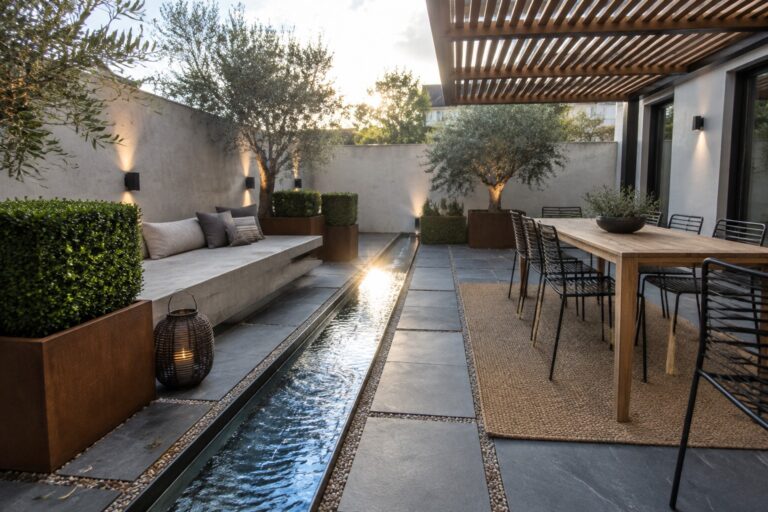
A patio garden works best when it feels like a natural extension of the home, with enough room to sit, move around, and enjoy the plants.
I notice the layout first, because clear paths and well-placed planters can make a small outdoor space feel calm rather than crowded.
Clean edges and repeated shapes bring order, while varied foliage keeps the garden from feeling too rigid.
I’d choose ideas that suit the patio’s light and the time I can spend caring for it, not just the ones that look neat in a photo.
The best designs offer a few details worth adapting to the way you actually use your outdoor space.
Add a Narrow Water Feature to a Patio
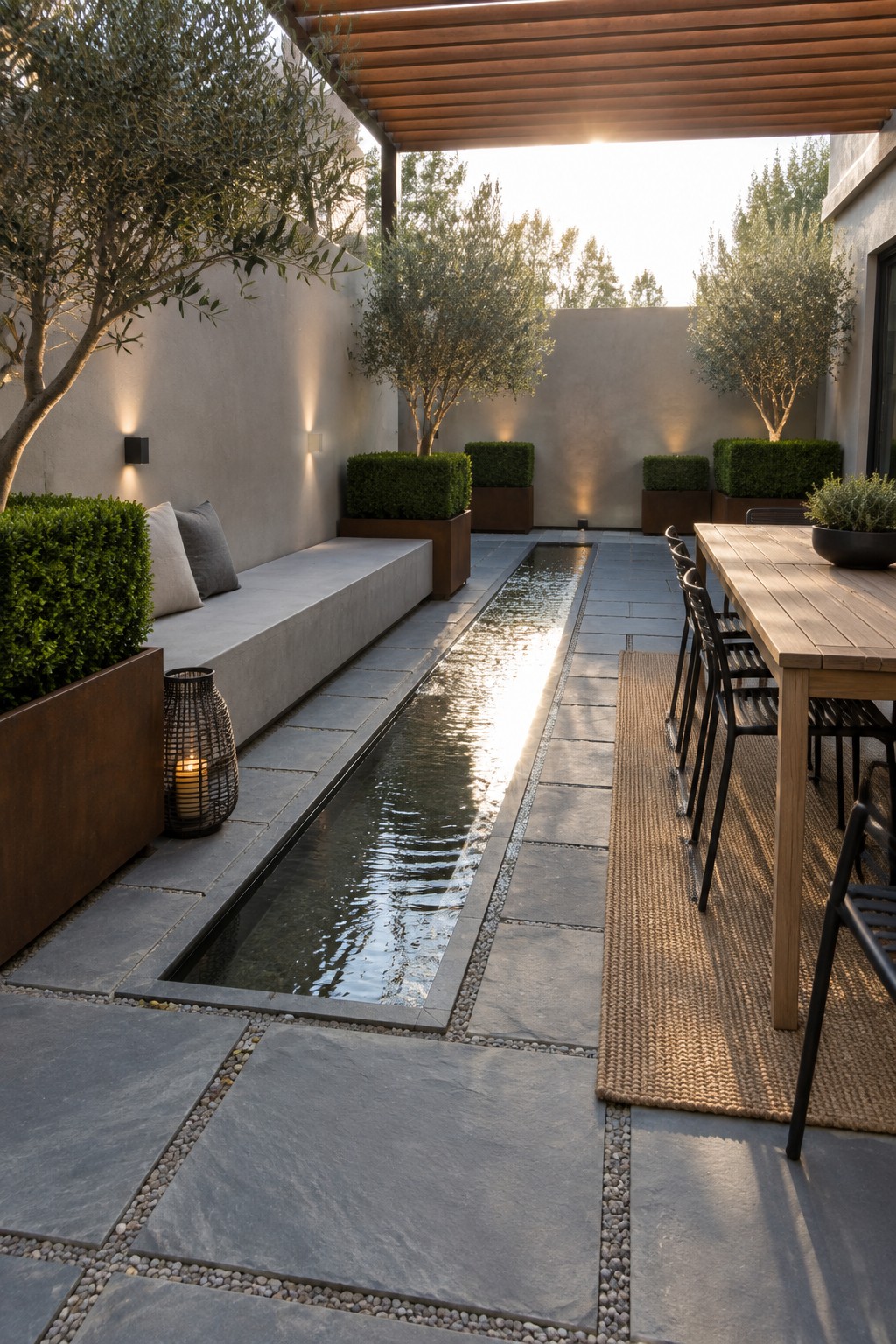
A slim water channel can give a patio a clear center line without taking up much room. It works especially well in a long, narrow space, where it helps define the route between seating and dining areas.
Keep the channel simple and leave enough paving beside it for comfortable walking. A long built-in bench can make good use of the remaining space, but avoid making the water feature so wide that it crowds the patio.
Create A Defined Seating Area
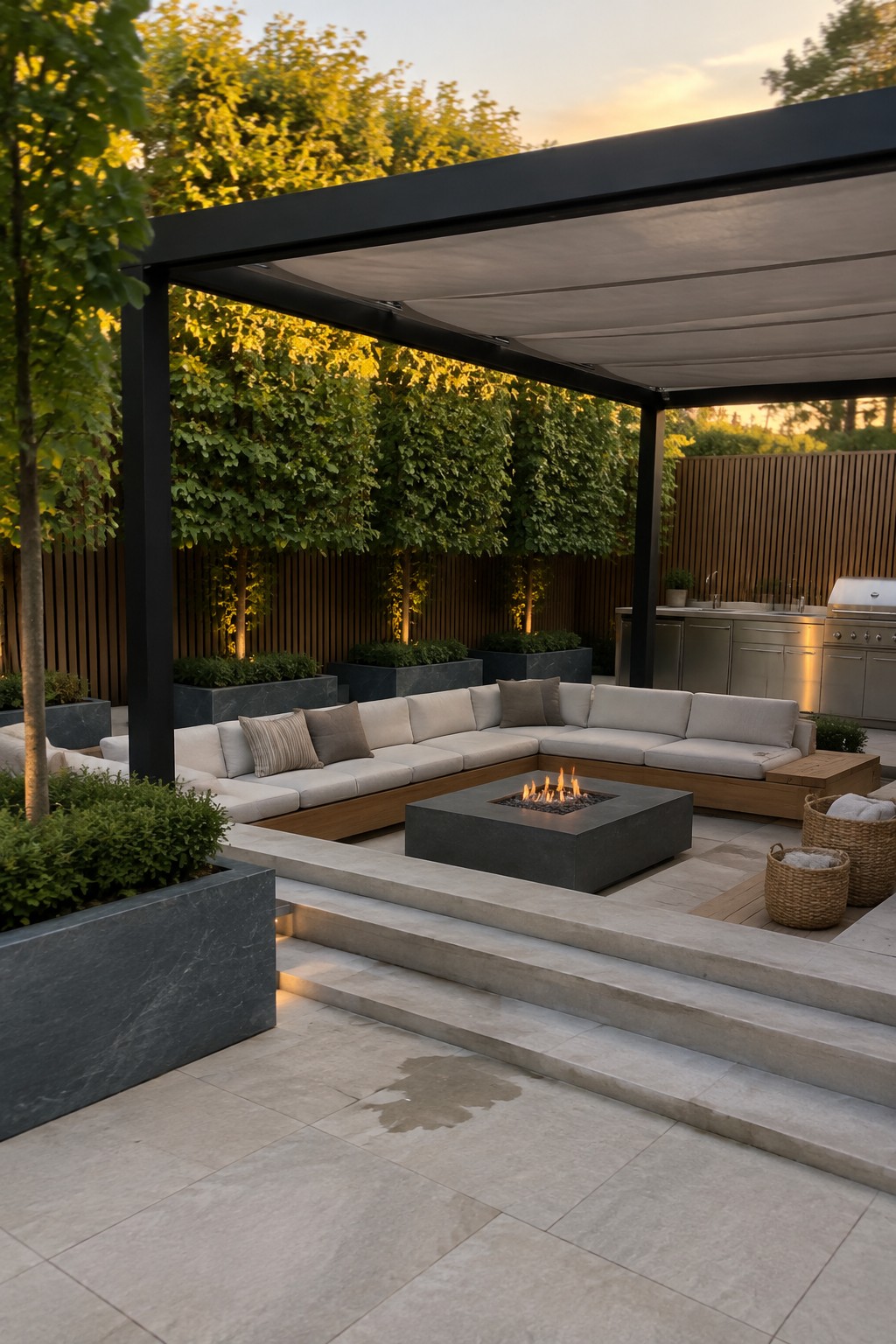
A covered patio can feel like a proper outdoor room when the seating is arranged around one clear focal point. Here, the sectional faces a low fire table, giving people a natural place to gather without making the layout complicated.
This setup works well on a larger terrace where there is room to leave a comfortable path around the seating. Keep the fire table low enough for conversation, and choose outdoor cushions that can handle regular use.
Use Stepping Stones To Keep A Narrow Garden Walkway Open
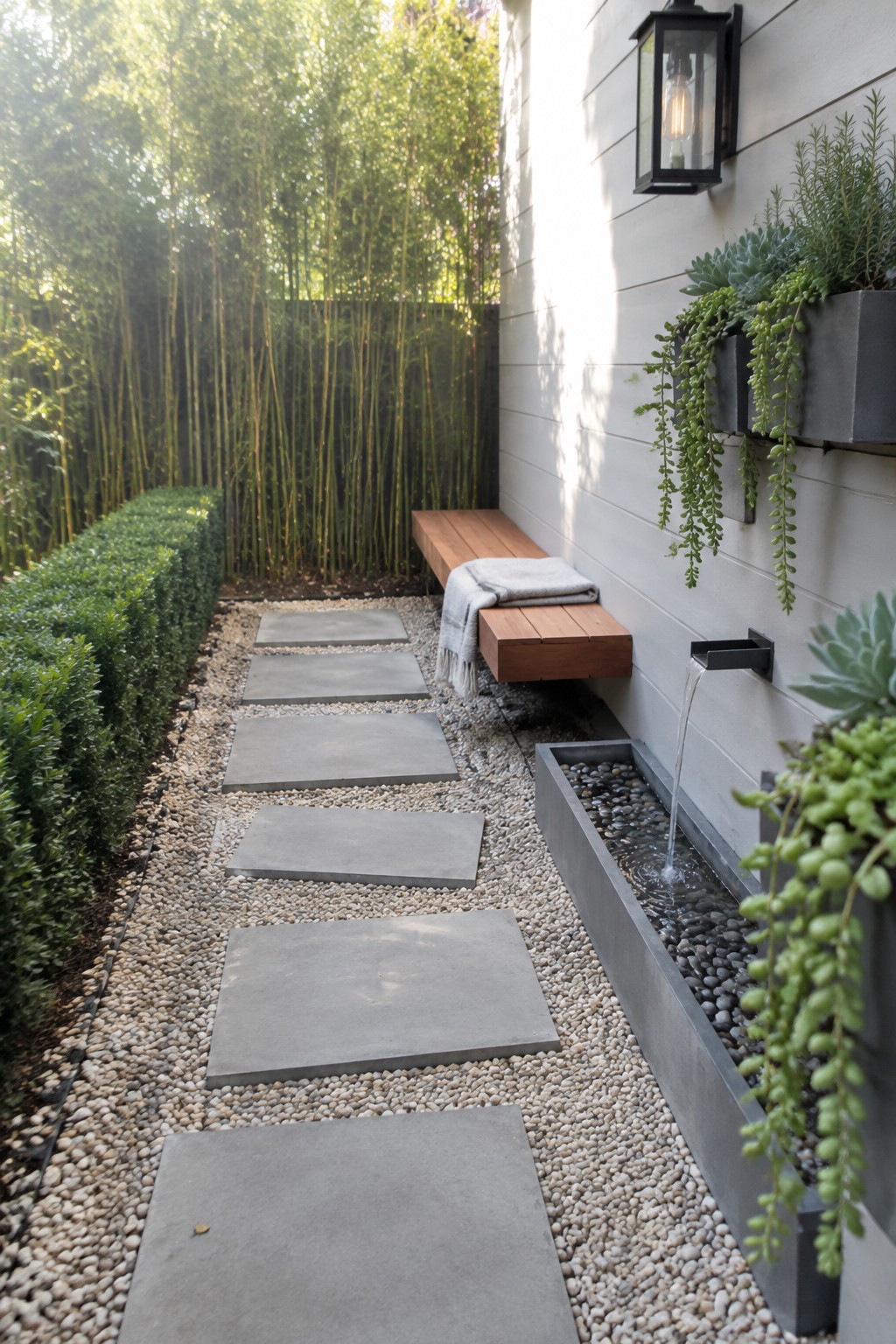
Large stepping stones set into gravel make a narrow side garden easier to walk through without paving the whole area. The gaps keep the path looking lighter, while the regular stone shapes give it a clear route.
For a similar walkway, leave enough space between stones for a comfortable stride and use compact gravel that stays in place. This approach suits side yards where a full-width patio would feel cramped.
Make Room For Outdoor Dining
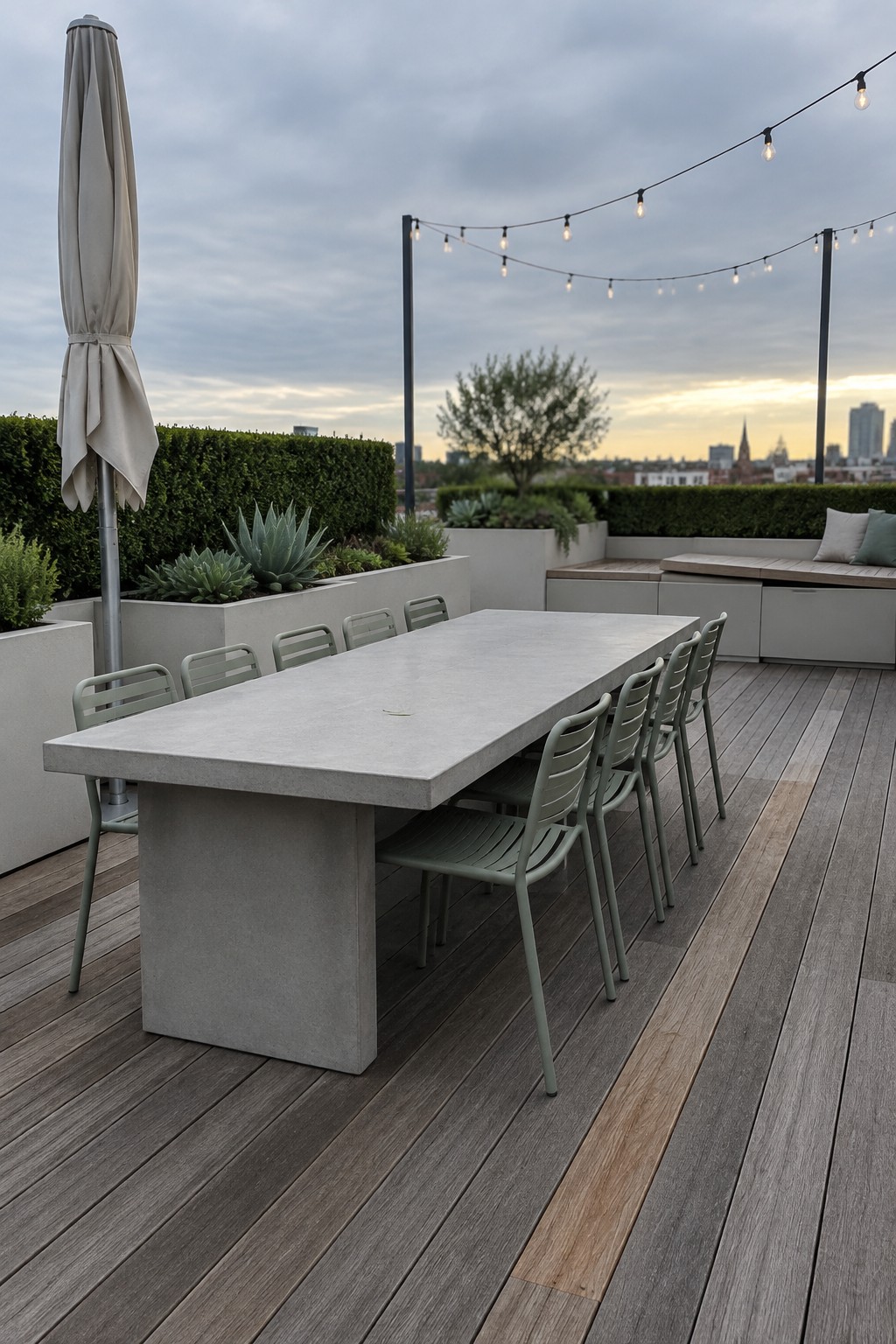
A long dining table can make a patio feel ready for everyday meals and larger get-togethers. Keeping the seating gathered around one table also leaves the rest of the deck open for moving around.
This setup works well on a roof terrace or a wide deck. Choose chairs that tuck in neatly, and leave enough space at the ends of the table to pull them out comfortably.
Add a Built-In Kitchen to a Narrow Patio
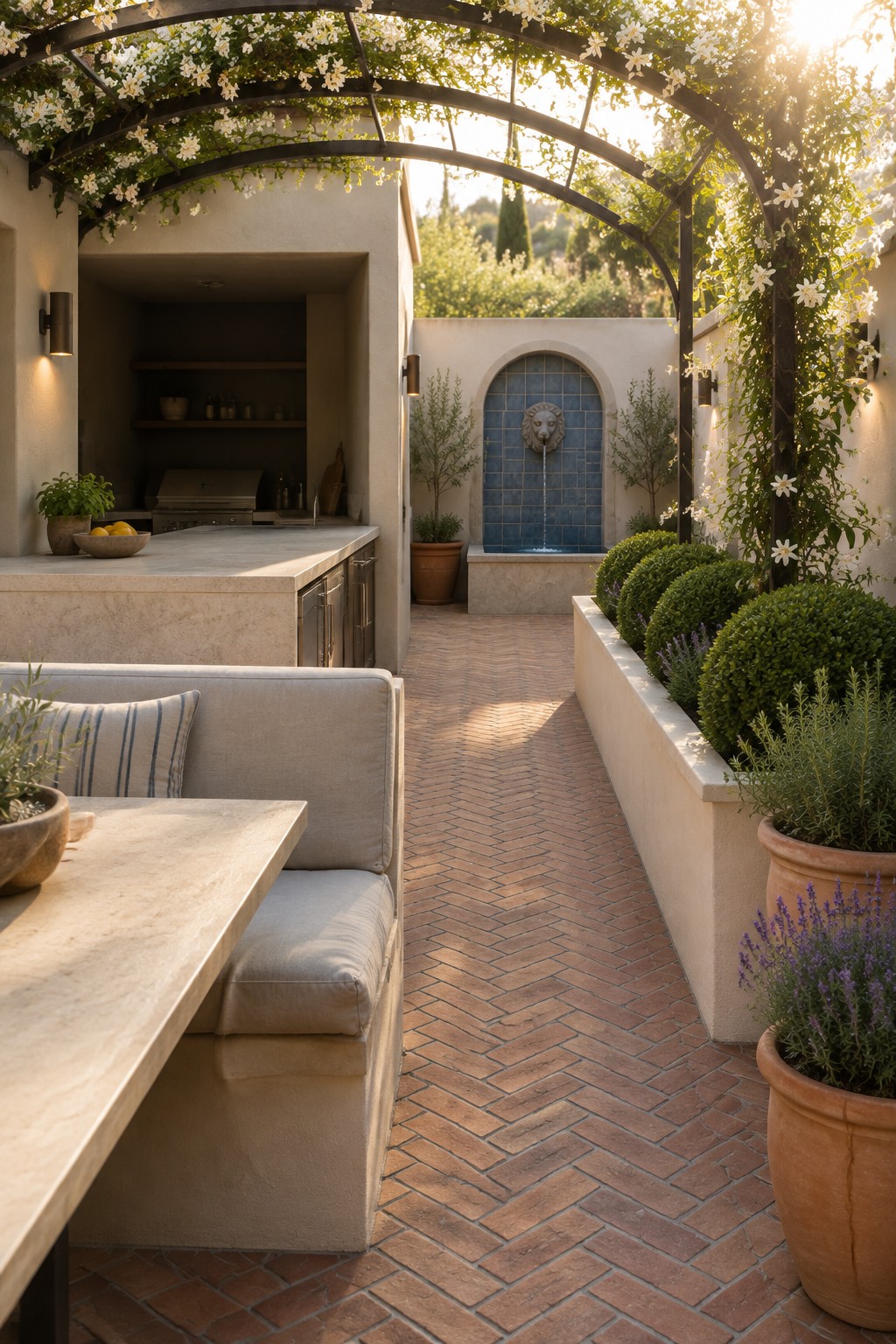
A compact outdoor kitchen can make a narrow patio more useful without taking space away from the main walkway. Keeping the counter and grill along one side leaves room to move through the space.
This setup works well beside the house, especially where a long, slim patio would not suit a large island. A built-in counter can provide prep space and storage, but keep its depth modest so the path stays comfortable.
Use a Pergola to Shade Patio Seating
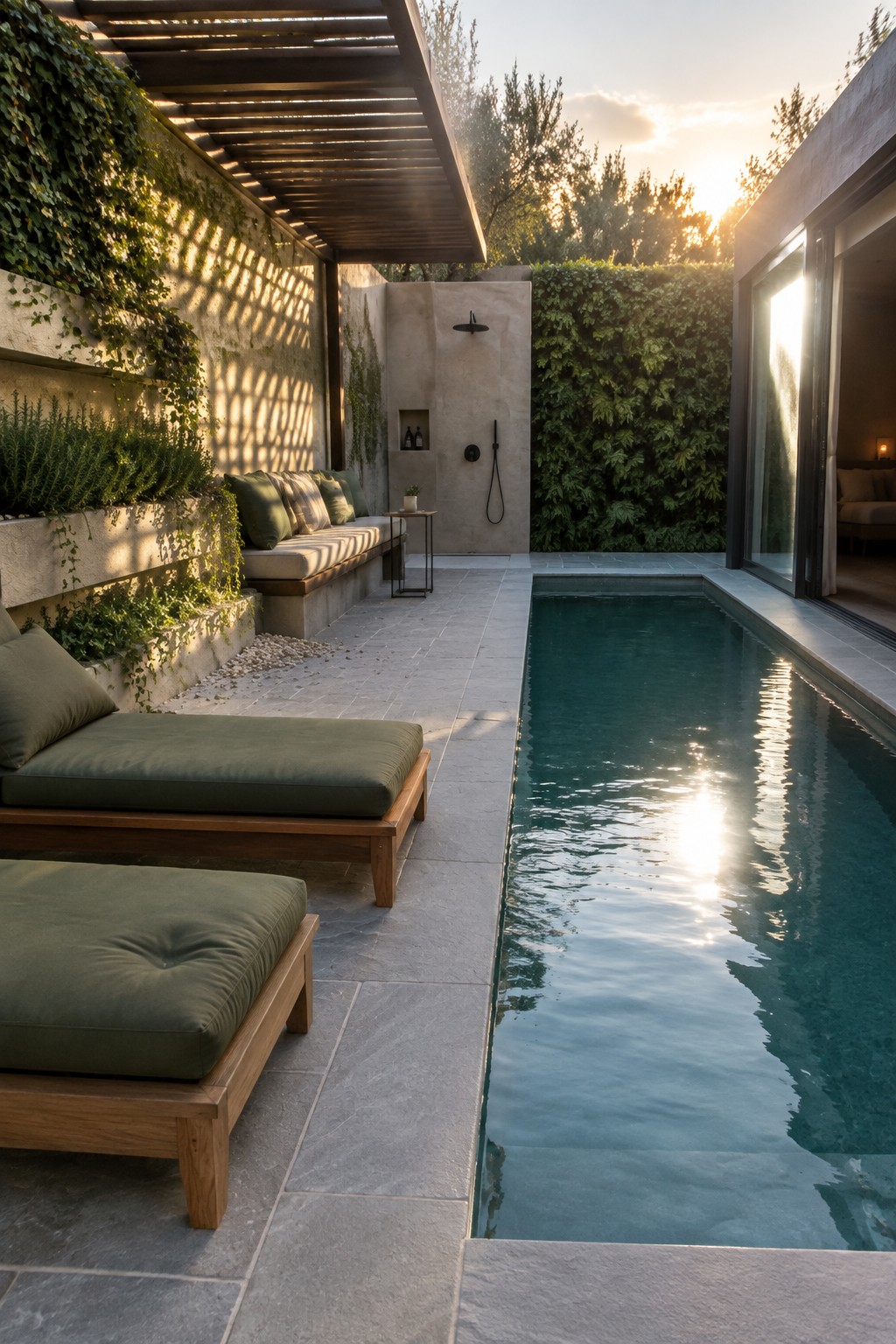
A slatted pergola makes a patio seating area more comfortable without closing it off. The open roof lets in some sun while casting useful shade, and the changing patterns of light give the space a bit of character.
This works well over a lounge area beside a pool or along a narrow patio. Choose a pergola size that leaves a clear walking route, and use climbing plants sparingly so the structure does not feel crowded.
Add a Built-In Fire Pit to a Patio Seating Area
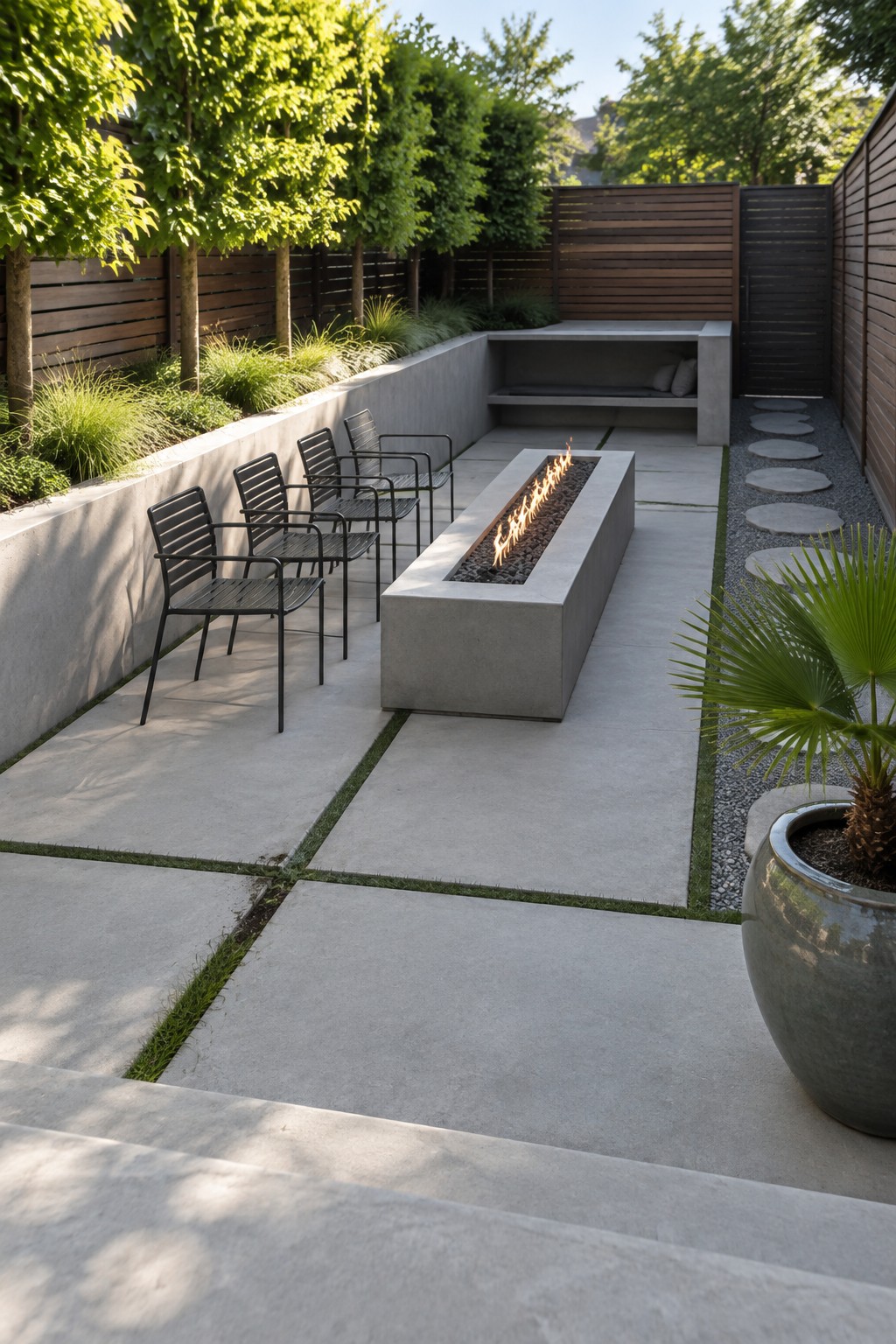
A built-in fire pit can give a patio a clear place to gather without taking up extra room with a separate fireplace. Here, the long, low design fits neatly into the seating layout and keeps the area open.
This setup works well in a narrow patio where movable furniture can feel crowded. Leave enough space around the fire pit for chairs and a clear walking route, and check local rules before installing a gas feature.
Add a Pergola Over an Outdoor Dining Area
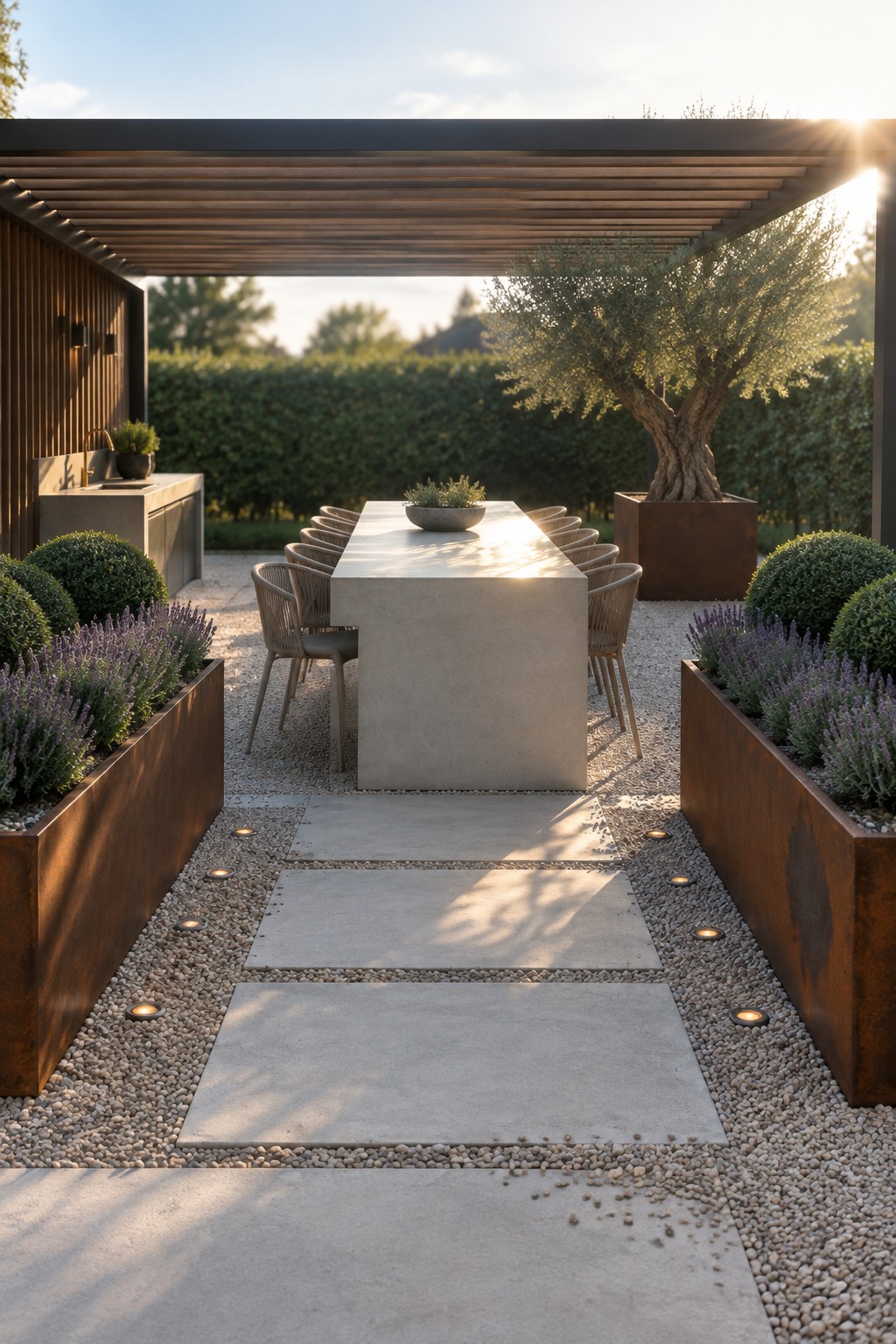
A pergola helps make an outdoor dining spot feel like a room without closing it in. The overhead slats give the table a clear place in the patio, while still letting in plenty of light.
This layout works well beside the house or in a larger garden where a dining area might otherwise feel exposed. Leave enough space around the table for chairs to pull out, and choose a pergola size that provides shade without overwhelming the patio.
Use a Straight Path to Organize a Garden
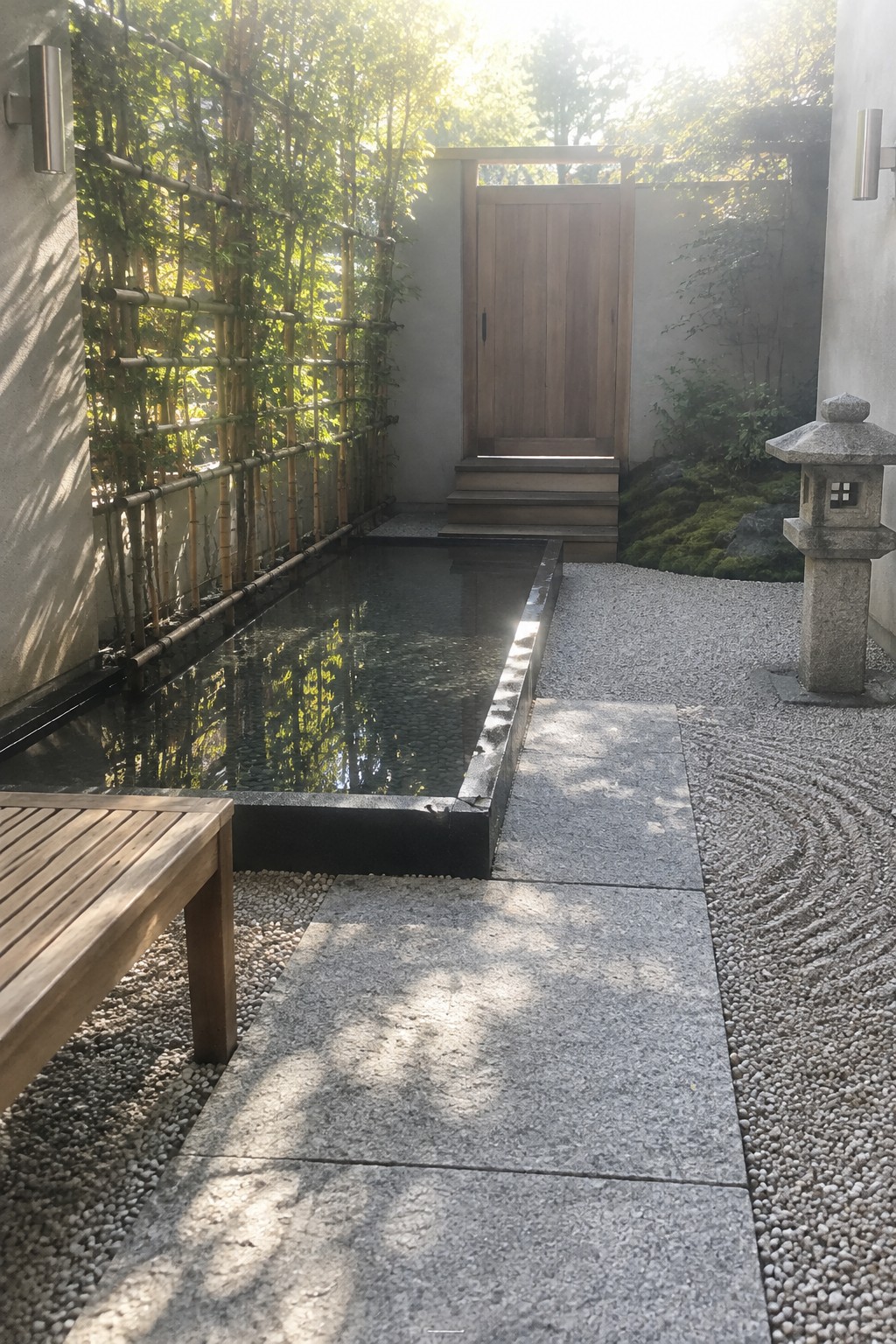
A simple stone path gives a small garden a clear route through the space. Its straight edges feel tidy, and the gravel beside it keeps the layout open rather than crowded.
Use large, evenly spaced slabs when you want a walkway that is easy to follow and comfortable to cross. This approach works well in a narrow courtyard, but leave enough room at the sides so the path does not take over.
Add Structured Planters for Privacy
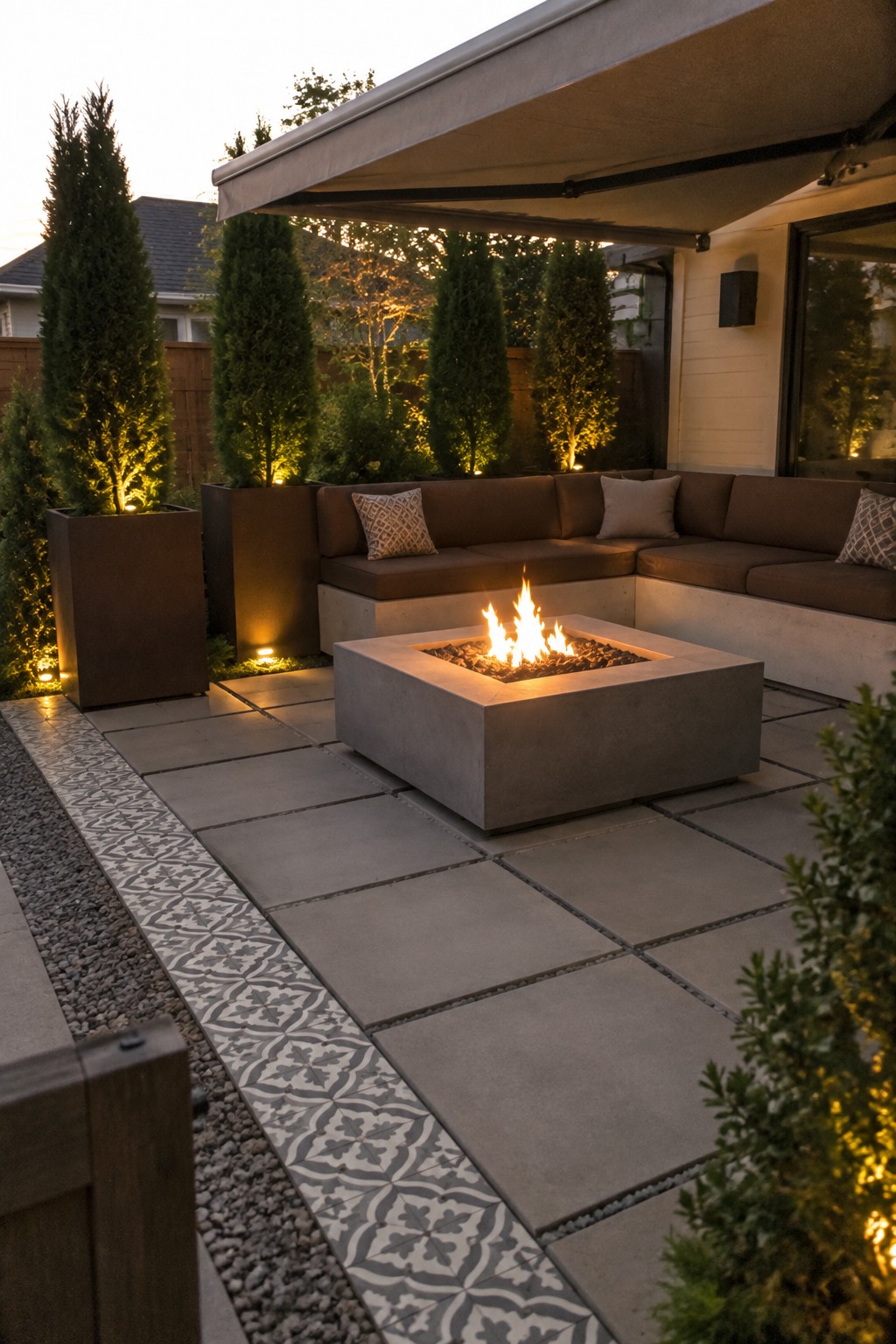
Tall, narrow planters can give a patio a little privacy without closing it off. Repeating them along the edge also makes the garden feel orderly, which suits a clean-lined space.
Choose upright evergreen plants and planters that fit the patio’s proportions. This approach works well beside a seating area, but leave enough room to walk comfortably around the containers.
Use Long Planters to Define a Patio Edge
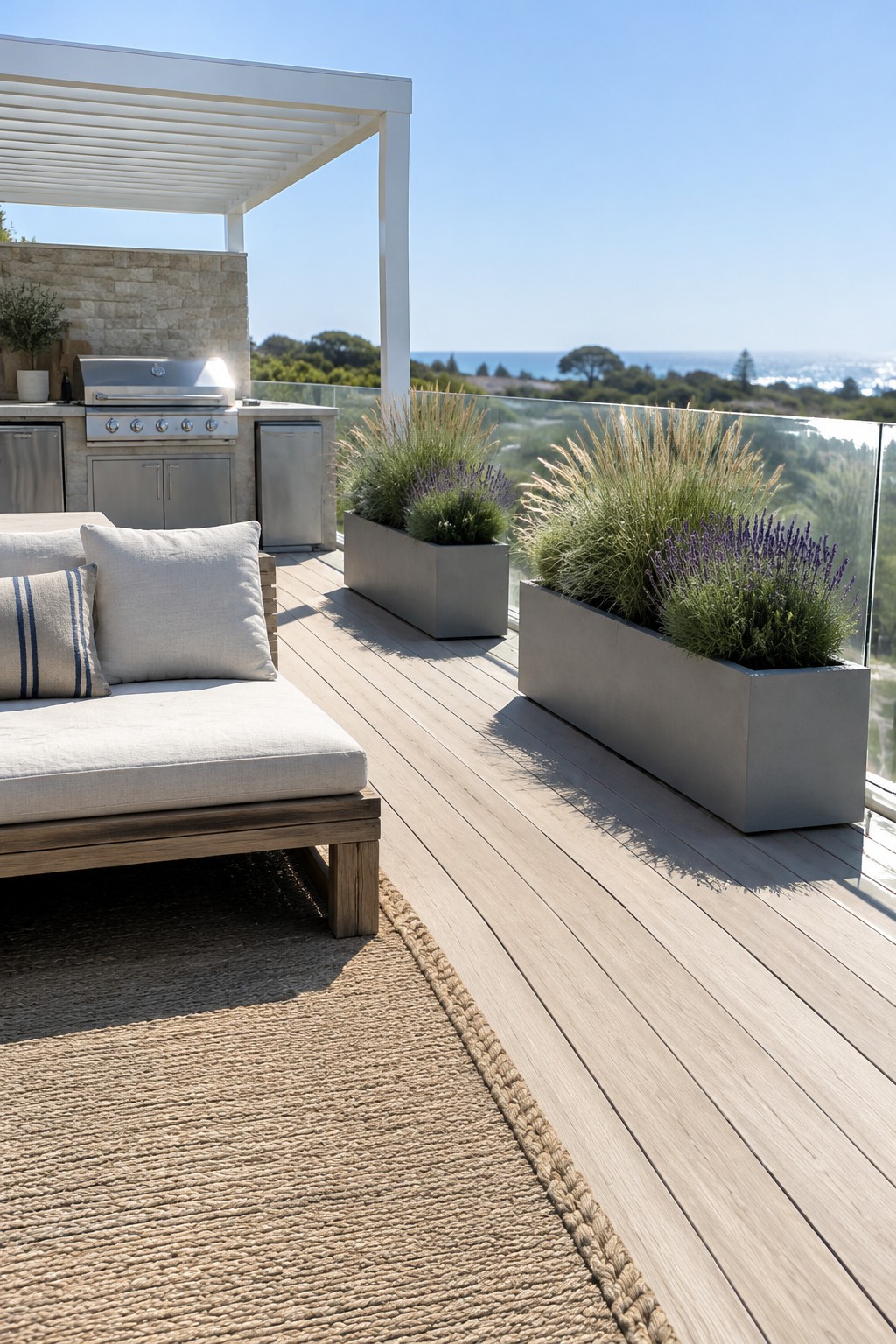
Long planters can give an open patio a clear boundary without closing it off. Here, they line the glass railing and bring a steady rhythm of greenery to the deck.
This works well on terraces and balconies where a hedge would take up too much room or block the view. Choose planters that are similar in shape, and leave enough space around them for walking and seating.
Use Planters to Add Privacy Around Patio Dining
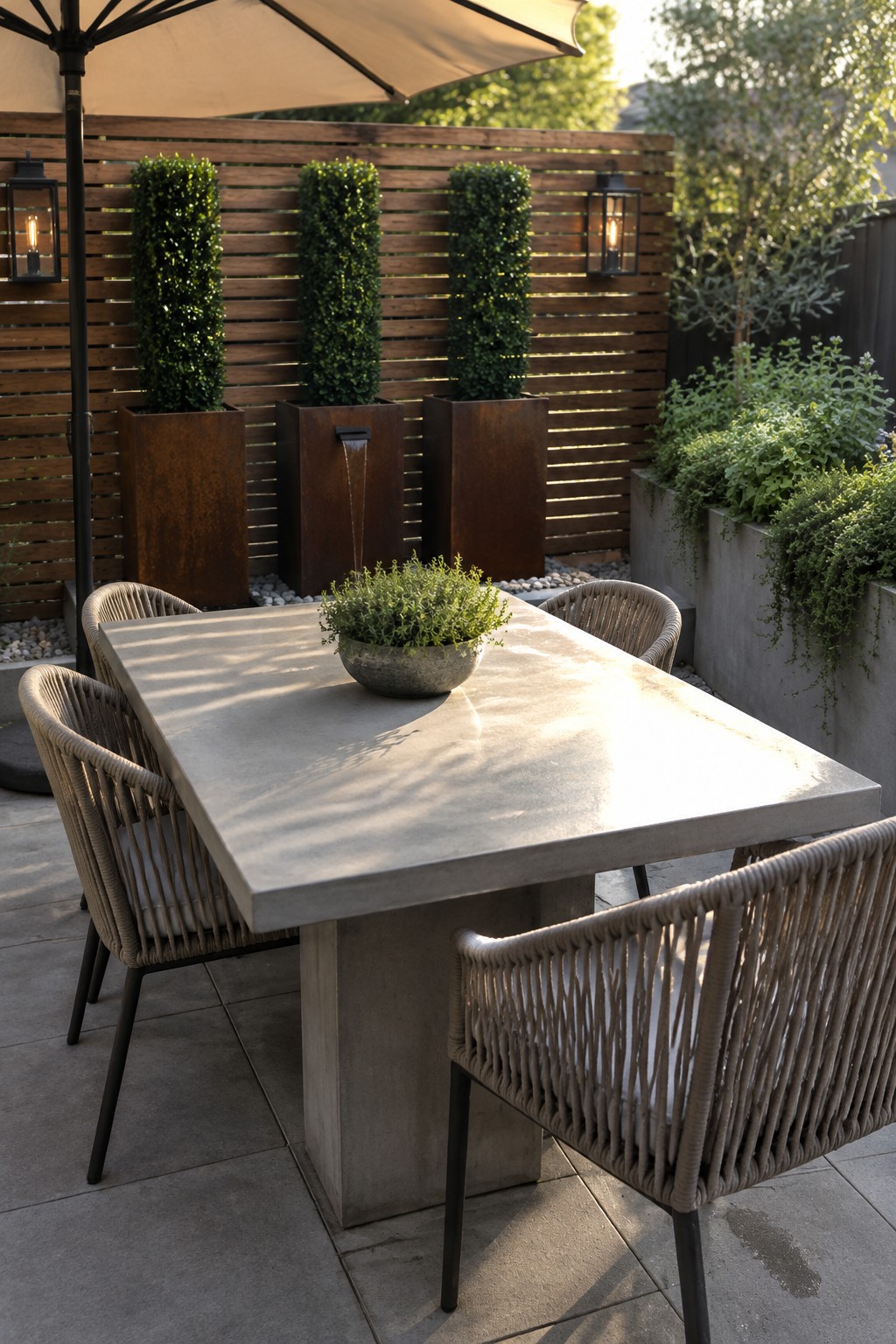
A row of tall planters can give an outdoor dining area more privacy without closing it off completely. This works especially well on patios where a fence or wall feels too solid, and the greenery brings a softer edge to the seating area.
Choose upright plants that suit the amount of sun the patio gets, and use sturdy containers that are easy to maintain. Keeping the planters in a neat row helps the space feel orderly without taking up too much room.
Create a Clear Route Through Patio Seating
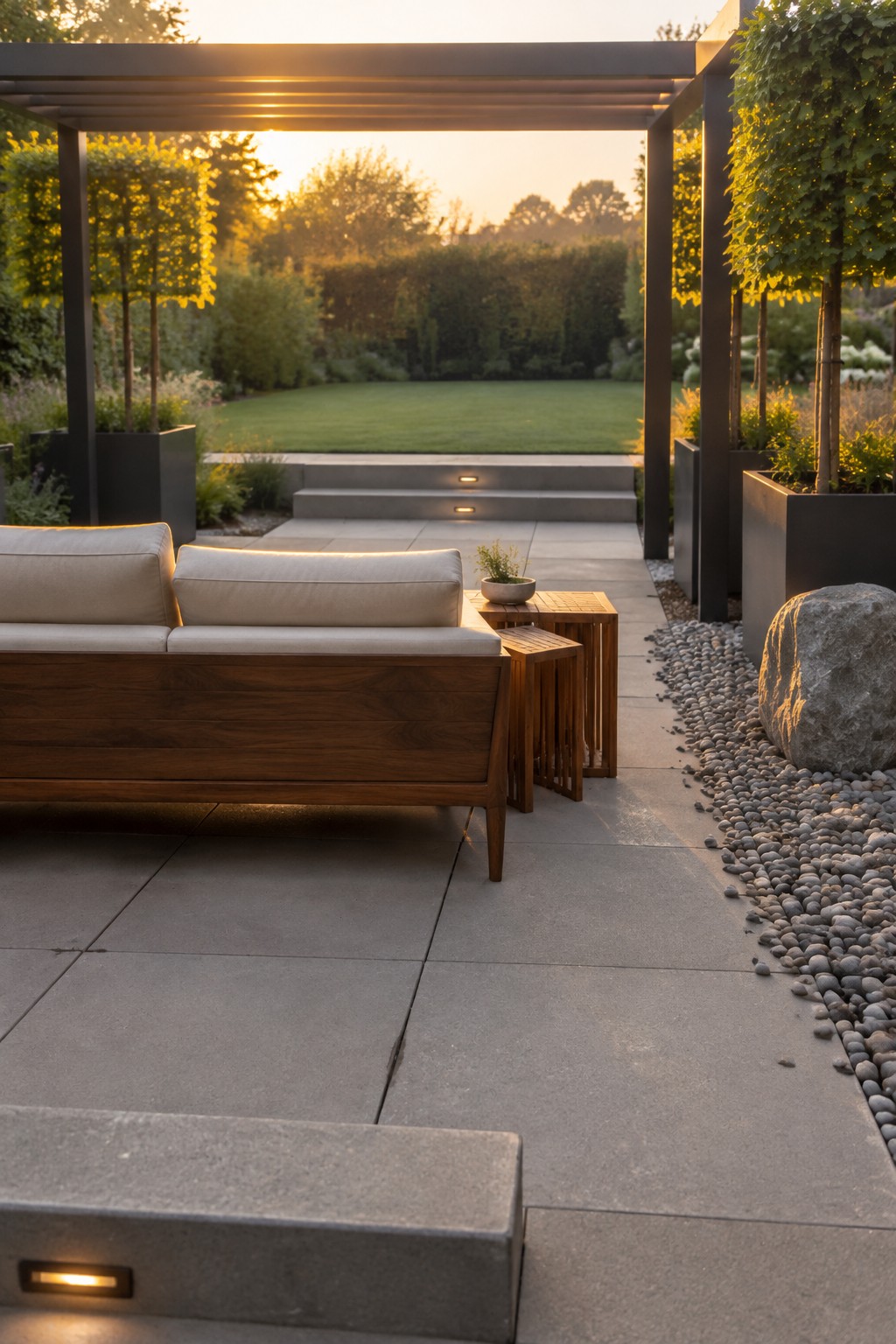
A straight paved route can make a patio easier to use, especially when it passes beside rather than through the main seating area. Here, the paving leads toward the lawn while leaving the sofa tucked to one side.
Use large, simple paving slabs to keep the route easy to follow, and leave enough room for people to pass without brushing against furniture. This approach suits patios that connect the house to a garden or lawn.
Use a Long Water Feature to Define a Patio
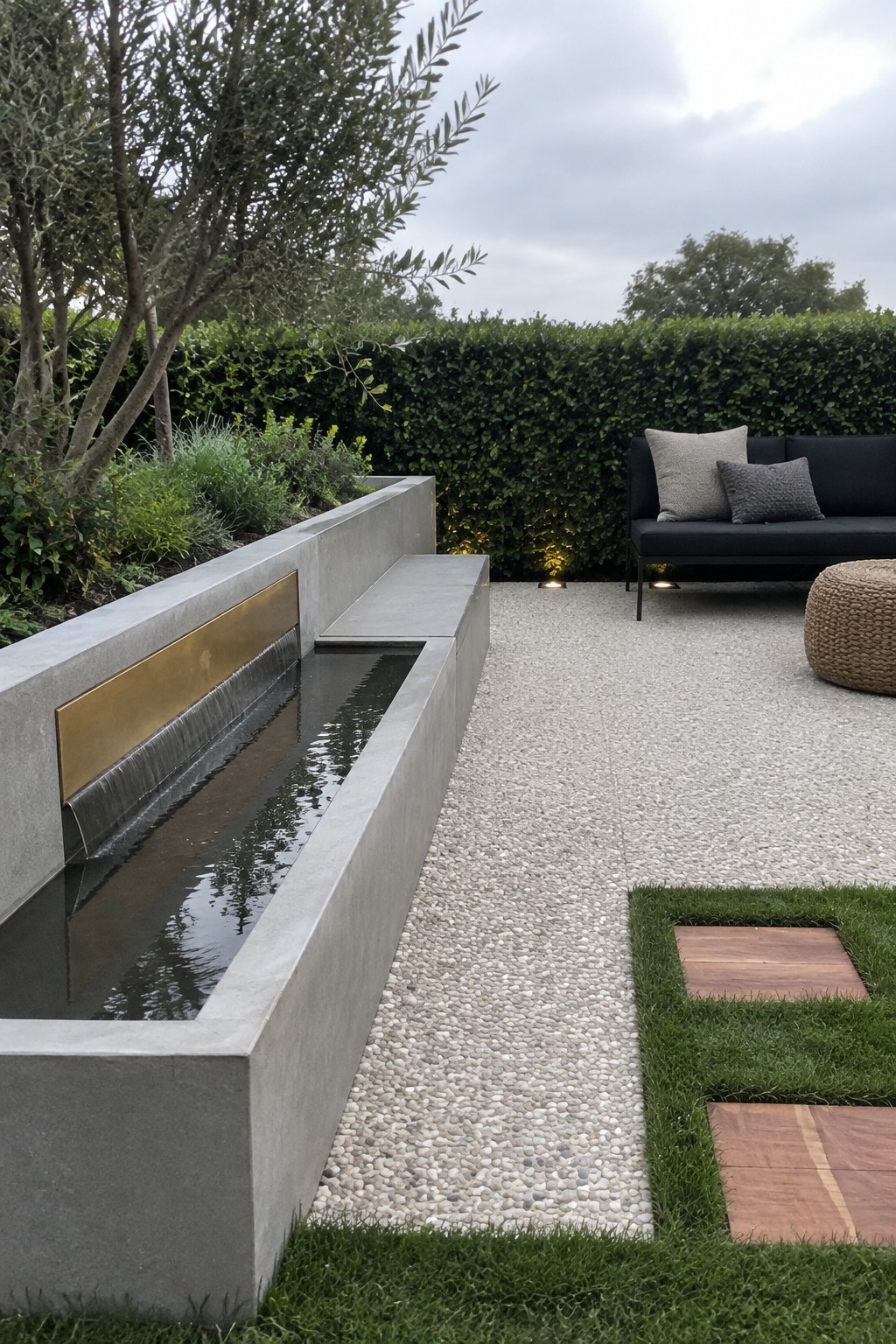
A narrow water feature can give a patio a clear edge without taking up much room. Here, the long concrete basin runs alongside the seating area, and its simple shape suits a garden with clean, orderly lines.
This idea works well in a compact patio where a larger pond would feel out of place. Keep the basin narrow and make sure there’s enough space beside it to walk comfortably and reach the seating.
Use a Pergola to Define an Outdoor Dining Area
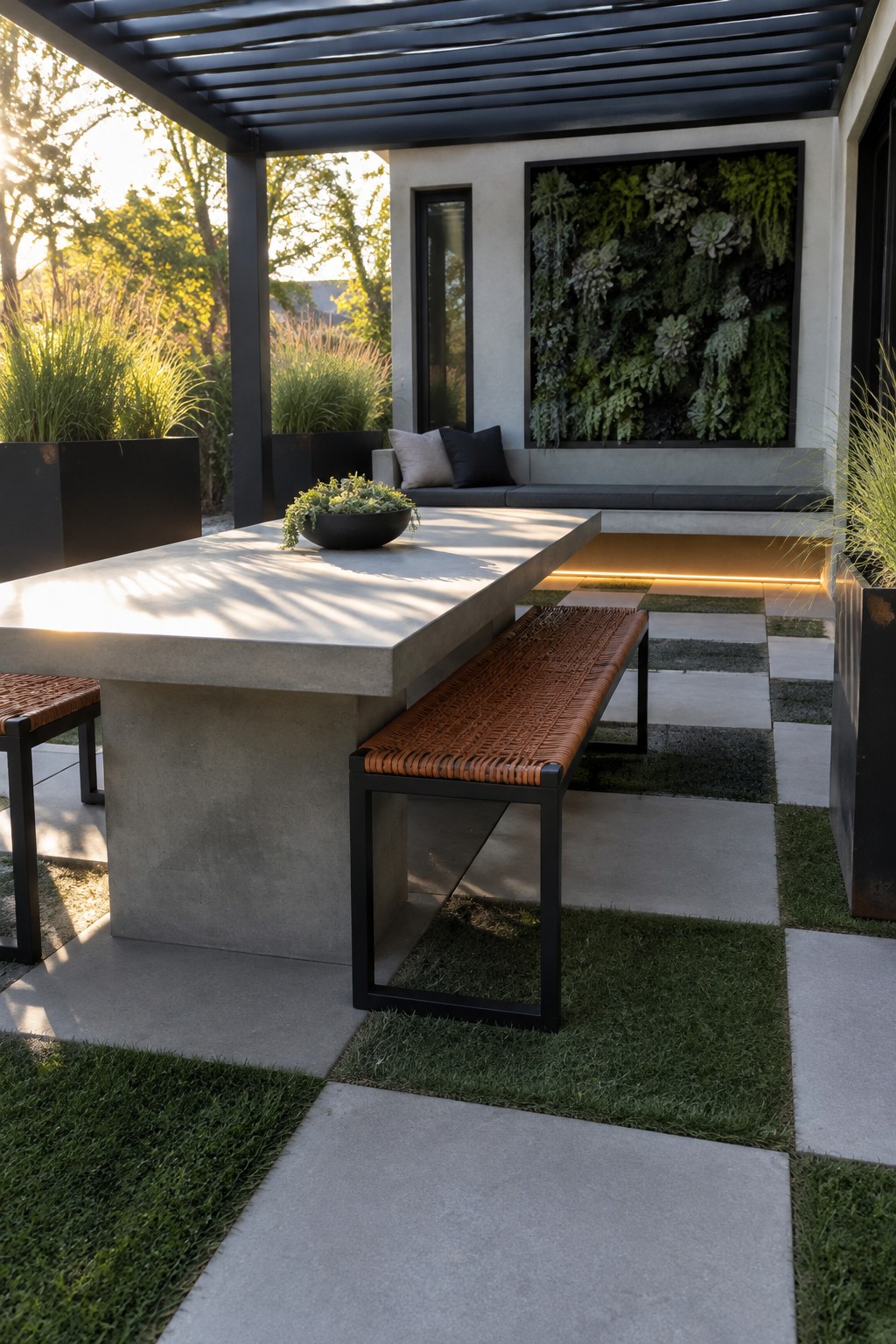
A pergola can make an outdoor dining spot feel like its own part of the patio. The overhead beams give the table some shelter and structure without closing off the space.
This works well beside a built-in bench or along a garden wall. Choose a sturdy material that suits the home, and leave enough room around the table for people to move comfortably.
Use a Long Fire Pit to Organize Patio Seating
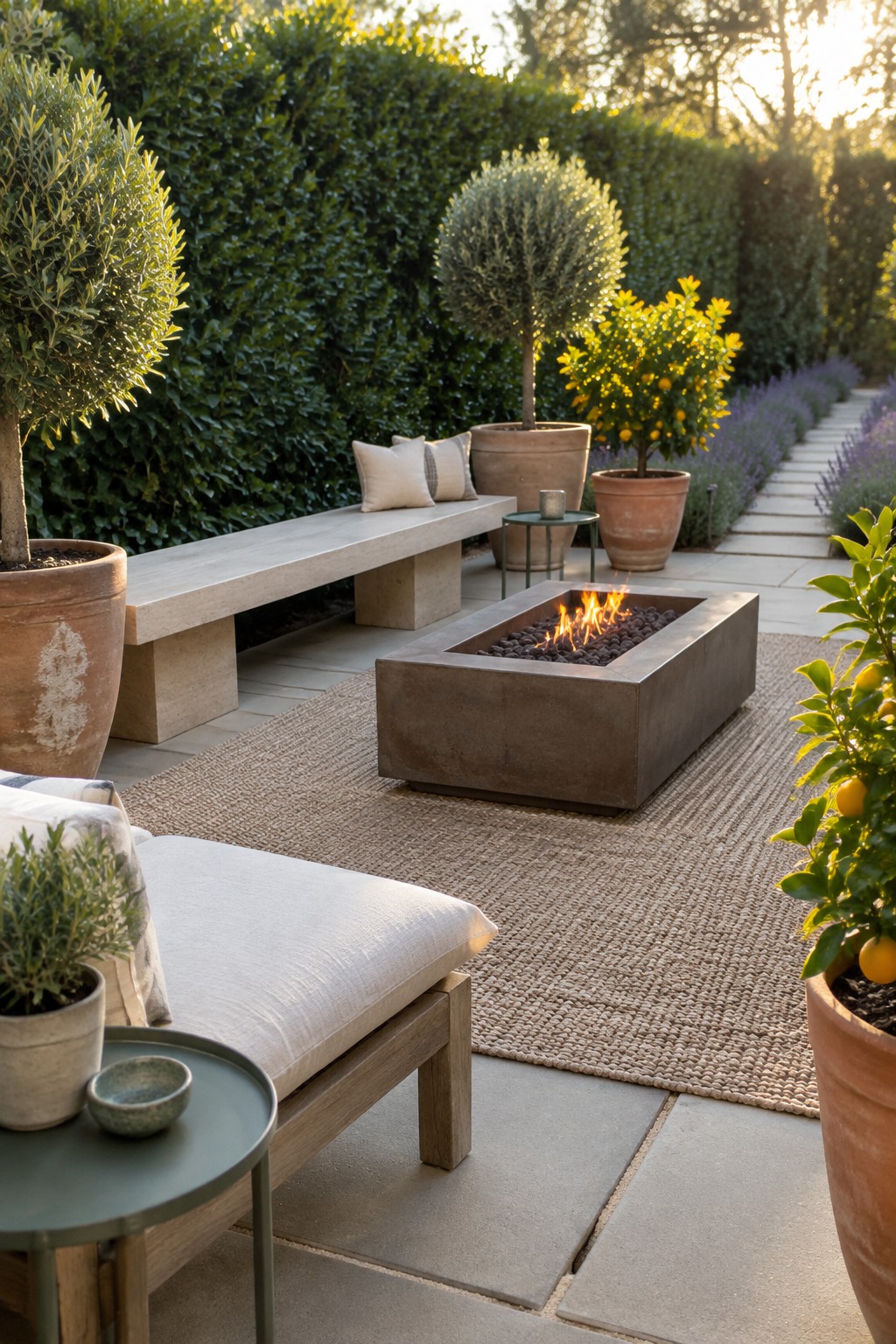
A rectangular fire pit can help give a patio seating area a clear center. Its long shape suits a narrow space, where it can sit between a bench and lounge chairs without taking over the whole layout.
Leave enough room to walk around it, and check the recommended clearances for the fire feature you choose. A simple stone or concrete finish works well when you want the planting and furniture to remain the main focus.
Use Separate Levels for Cooking and Dining
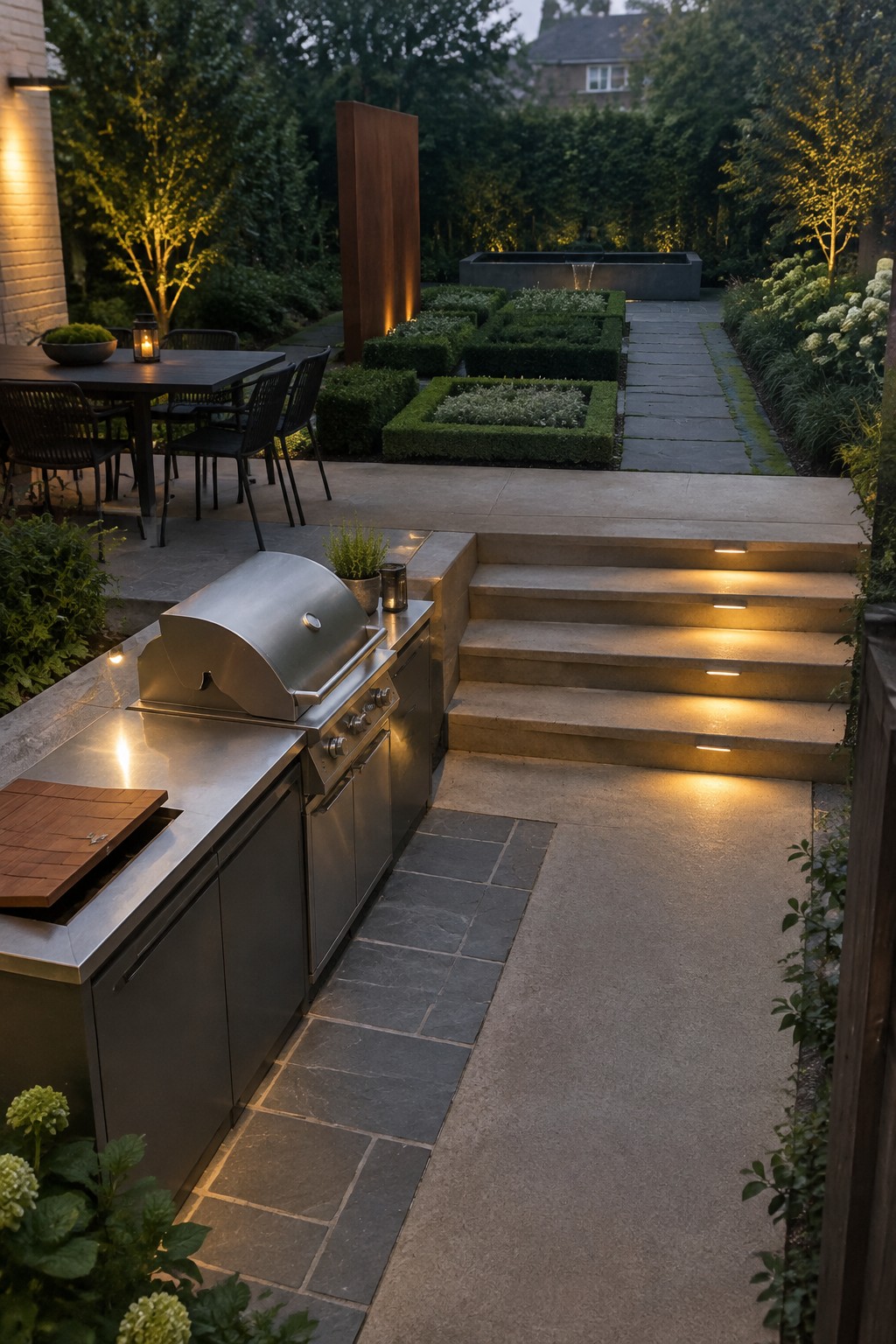
A raised dining patio and a lower outdoor kitchen make a compact garden easier to use. The change in level gives each activity its own place without needing extra walls or bulky dividers.
This layout suits a sloped yard or a narrow patio where one large surface would feel undefined. Keep the steps wide and easy to navigate, and add subtle lighting so the route between the two areas is clear after dark.
Add a Vertical Garden to a Small Balcony
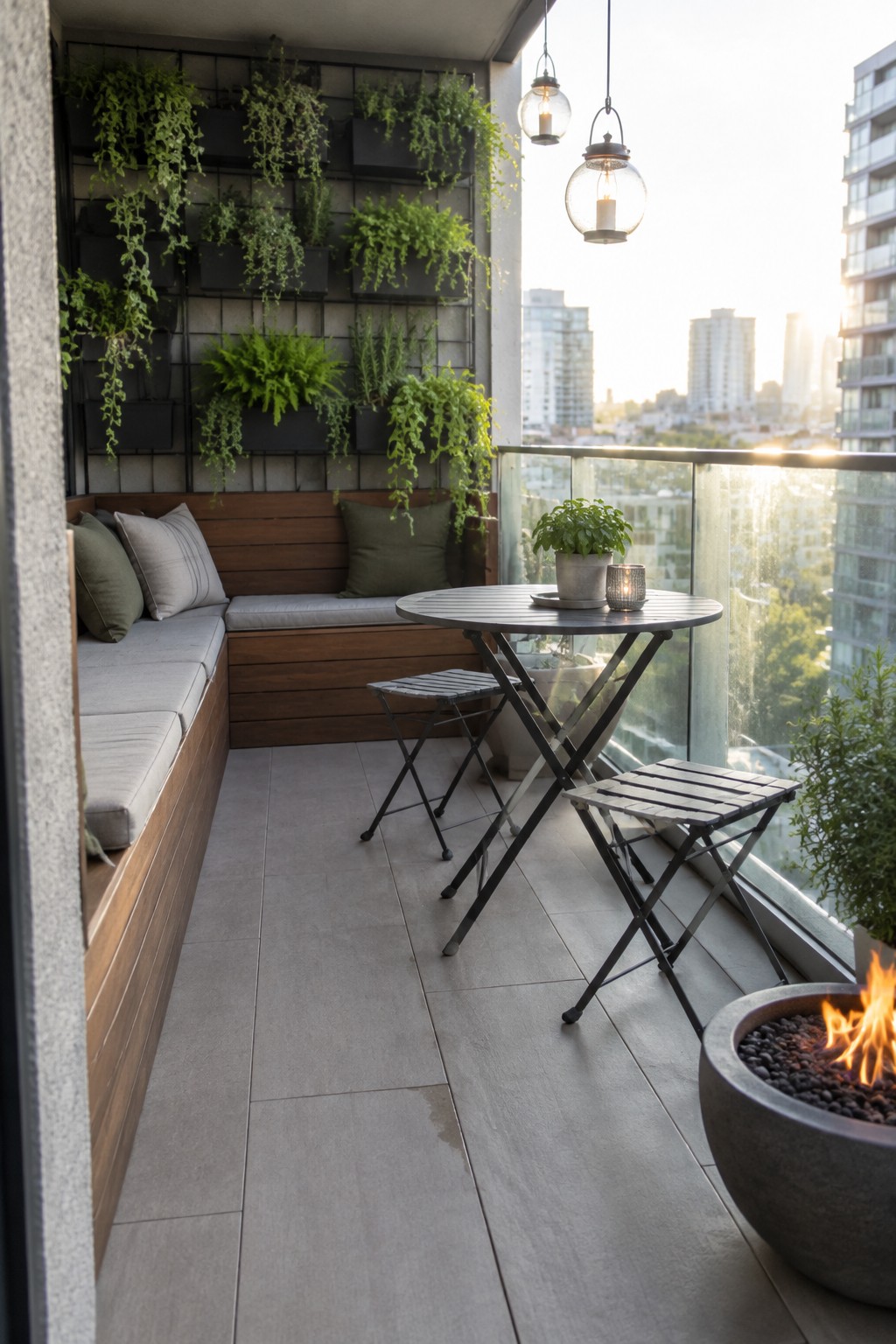
A wall-mounted garden is a practical way to bring greenery to a narrow balcony without giving up much floor space. It also makes a plain wall feel more considered, while keeping the seating area open.
Use sturdy wall planters or a modular grid, and choose plants that suit the balcony’s sunlight and wind. Trailing greenery works well along the edges, but leave enough room to water and trim it easily.
Frequently Asked Questions
Q: How do I make a small patio garden feel less crowded?
A: Keep the layout simple and leave a clear path through the space. A few larger pots usually look calmer than lots of small ones scattered around.
Q: What plants work well in a clean-lined patio garden?
A: Choose plants with strong shapes, such as ornamental grasses, clipped shrubs, or upright evergreens. Repeating a few types of plants helps the space feel tidy without making it look stiff.
Q: Can I get this look if my patio is mostly shaded?
A: Yes. Try shade-friendly plants like ferns, hostas, or heucheras, and use matching pots or raised planters to keep the structure. Just check how much light your patio gets before choosing plants.
Q: How do I keep patio pots from drying out too quickly?
A: Use pots with drainage holes and group them together so they’re easier to water. Larger containers also hold moisture longer than small ones.
