

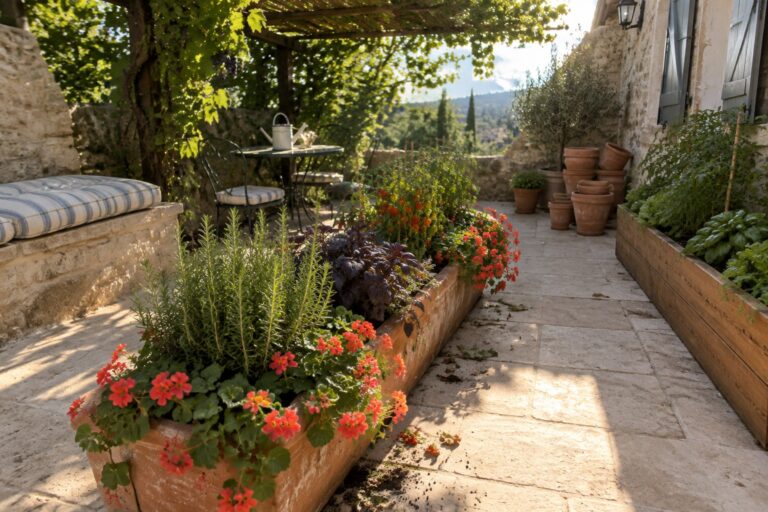
A patio garden works best when it feels like part of the space, not a collection of pots squeezed wherever they fit.
I like to start by noticing how much sun the patio gets and where people need room to sit, walk, or set down a cup.
From there, flowers can add color, while herbs and vegetables make the garden useful in everyday ways.
A mix of container sizes and plant heights can give the patio shape without making it feel crowded, especially when paths and seating stay clear.
Some ideas are easy to adapt to a small balcony or a larger terrace, and I’d start with the plants that suit the light and the time I can give them.
Make Room for Herbs and Flowers
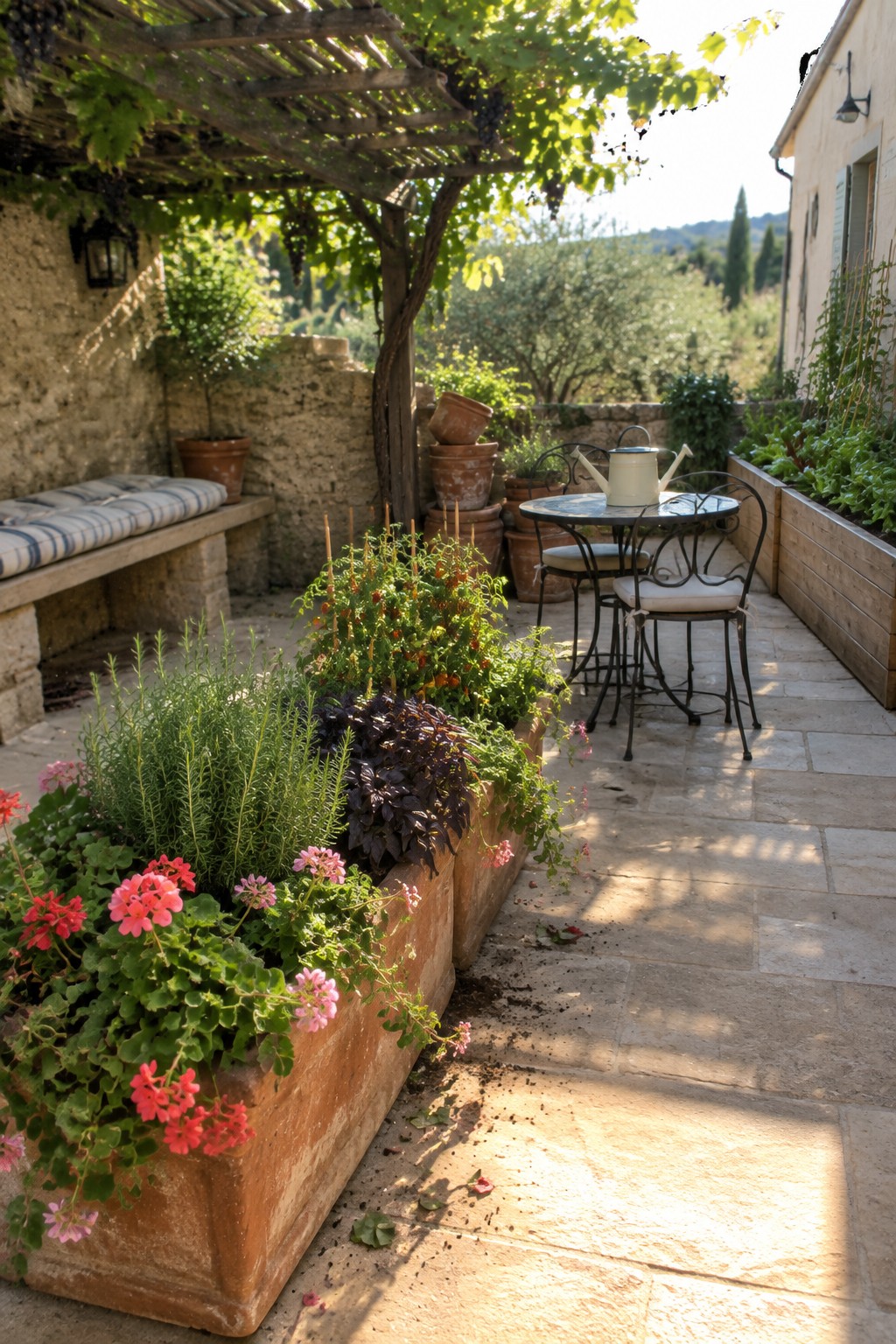
A long raised planter is a handy way to bring flowers and herbs into a small patio without using up much walking space. The plants add color along the edge, while the narrow bed keeps everything easy to reach.
Use a planter like this beside a path or seating area, and mix compact herbs with flowers that can spill slightly over the sides. Leave enough room for the plants to grow without narrowing the walkway.
Make Room For Herbs On A Small Patio
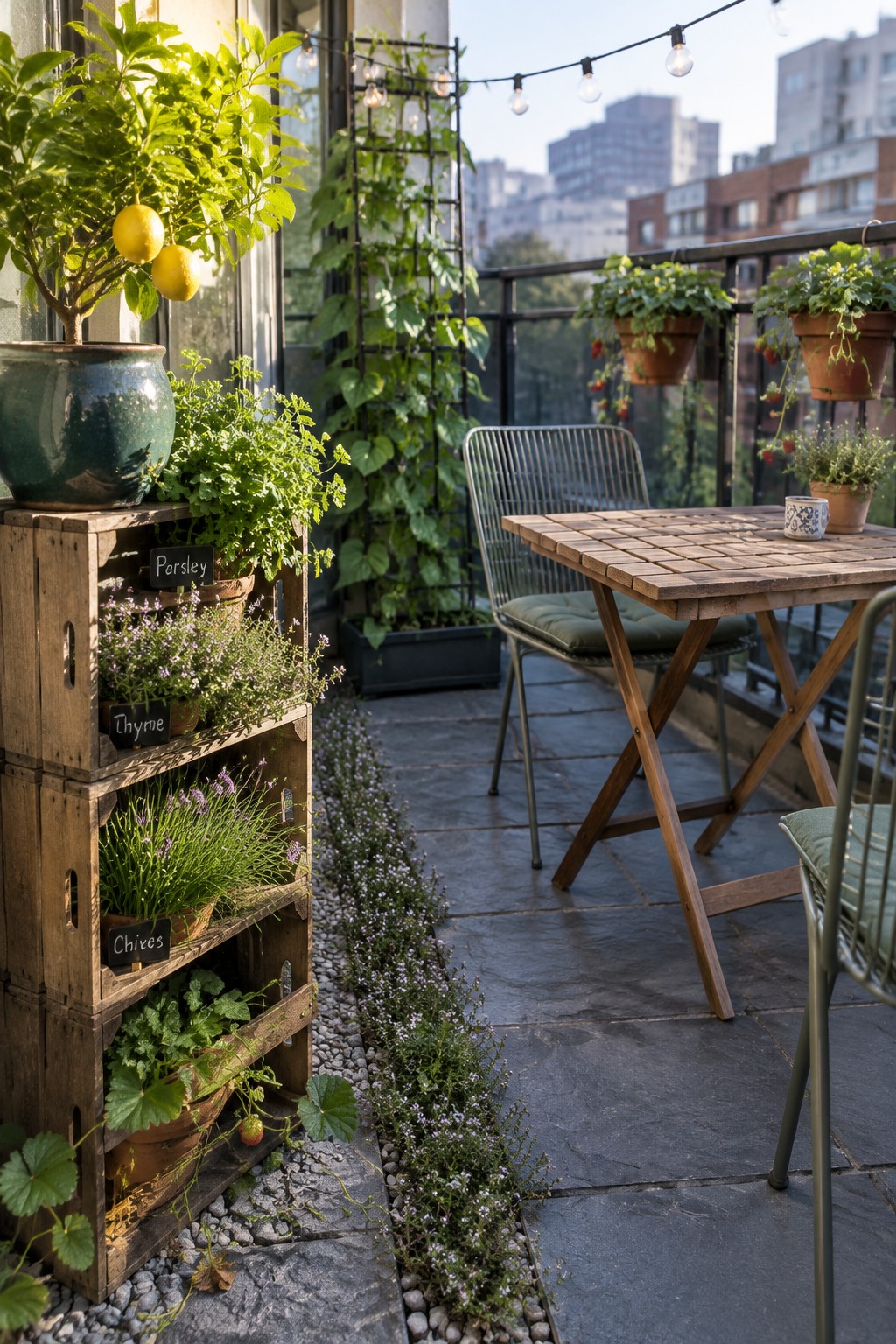
A vertical herb garden is a practical way to grow more when patio floor space is limited. A simple tiered planter keeps herbs easy to reach and gives each plant its own spot.
Use a narrow shelf or stacked crates near the edge of a balcony or terrace, and choose herbs you cook with often. Check that each level gets enough sun, and leave room to water without splashing the seating area.
Use Raised Beds to Grow Patio Garden Plants

Raised beds make it easier to grow flowers, herbs, and vegetables in a small patio garden. They keep plants together in a manageable area, and the added height can make tending and harvesting more comfortable.
Choose a bed size that leaves enough room to walk around it, and fill it with soil suited to the plants you want to grow. A divided wooden bed can help keep crops organized, while flowers at the edges bring color without taking over the growing space.
Make Room for Plants Along a Patio Path

A clear path can make a small patio garden easier to use without giving up space for planting. Large stepping slabs leave room for raised beds along the edge, so flowers, herbs, or vegetables stay close at hand.
This layout works well on narrow terraces and balconies where every bit of floor space matters. Keep the slabs wide enough for comfortable walking, and leave a little gravel between them for drainage and easy upkeep.
Grow Herbs in a Raised Brick Bed
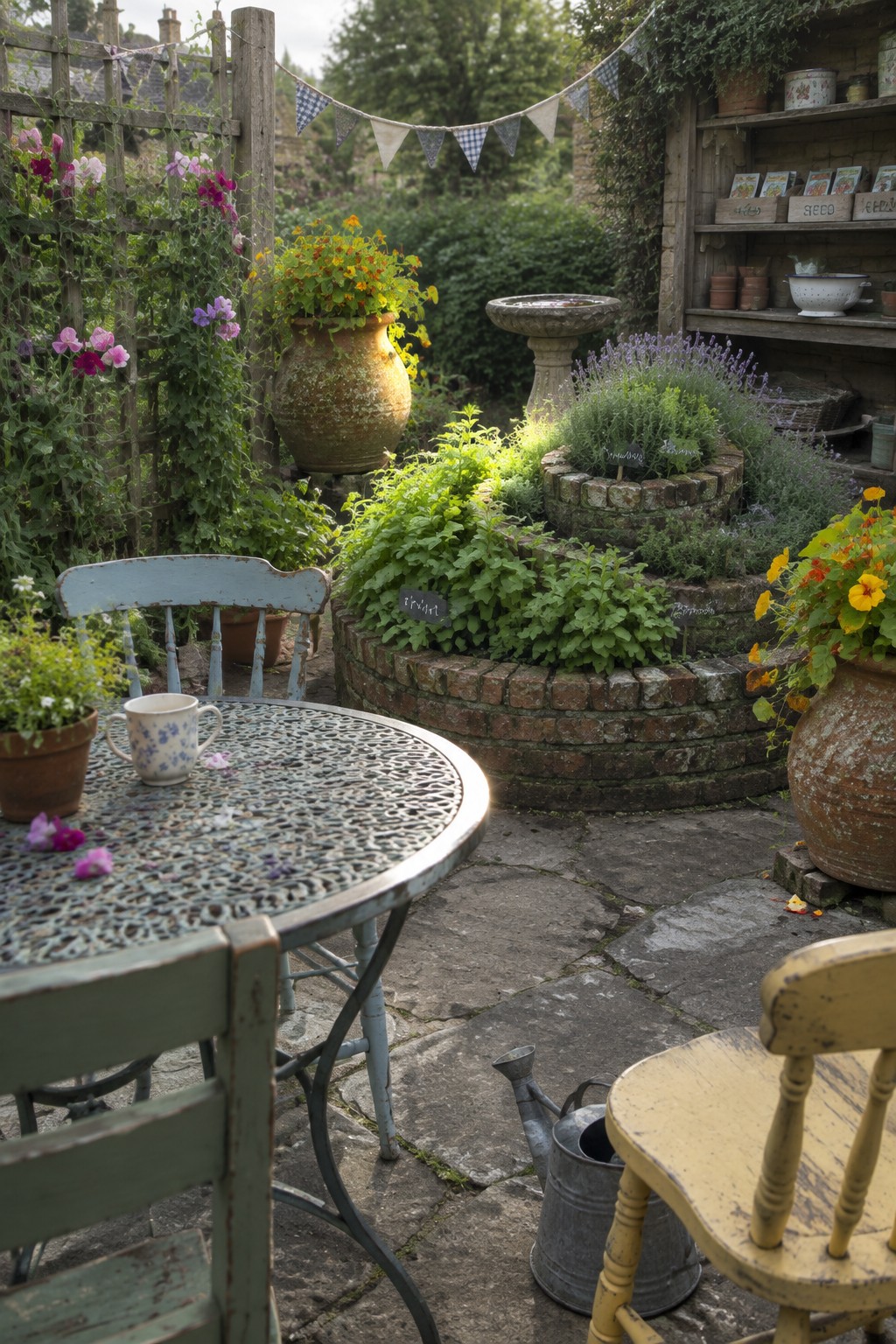
A low brick bed makes it easy to keep herbs together in one defined spot, while letting them spill a little over the edges. It’s a practical way to add planting space without giving up the whole patio.
Use a raised bed like this for herbs you reach for often, such as lavender or thyme. Check that it drains well, and leave enough room around it to tend the plants without blocking the seating area.
Build a Garden Around a Stone Path

A stone path can make a planted patio easier to use while giving the garden a clear shape. Broad stepping stones leave room for low plants and moss between them, so the hard surface feels connected to the planting rather than separate from it.
Keep the route wide and fairly even, especially if you’ll carry pots or garden tools through it. This approach suits a shady patio with established plants, but leave enough space around the stones to keep growth from making the path slippery.
Add Potted Herbs Around a Patio Fountain

Grouping potted herbs around a patio fountain is an easy way to bring useful plants into an outdoor living area. The pots make greenery part of the patio layout, while still leaving the paved floor open for dining and walking.
Choose herbs that suit the amount of sun your patio gets, and use pots with drainage holes. Olive trees in terracotta pots show how larger plants can help mark the edge of a feature, but keep containers clear of pathways and seating.
Grow a Vertical Garden on the Patio

A wall-mounted garden is a handy way to grow more when patio floor space is limited. Here, rows of planters make room for leafy greens, herbs, and flowers without taking up the seating area.
Use a sturdy slatted wall or trellis and choose planters that are easy to water and remove. This works especially well on a narrow patio, but check how much sun the wall gets before choosing plants.
Make a Fire Pit the Center of a Garden Patio

A fire pit can give a patio a natural place to gather, especially when seating faces inward around it. Here, the round concrete pit sits at the center, with woven stools and a bench nearby.
This setup works well on a small terrace where one shared seating area is more useful than several separate zones. Leave enough space to walk around the pit, and keep potted plants and other flammable items a safe distance from the flames.
Use Raised Beds to Organize a Patio Garden

Raised beds make it easier to grow flowers and vegetables without giving up the patio’s main walking space. Here, long wooden beds keep leafy crops and bright flowers together in a defined area.
This layout works well in a narrow patio or beside an outdoor kitchen, where loose planting beds would get in the way. Leave a clear path between the beds and work surfaces, and choose a height that’s comfortable for planting and harvesting.
Grow Flowers Alongside Patio Vegetables
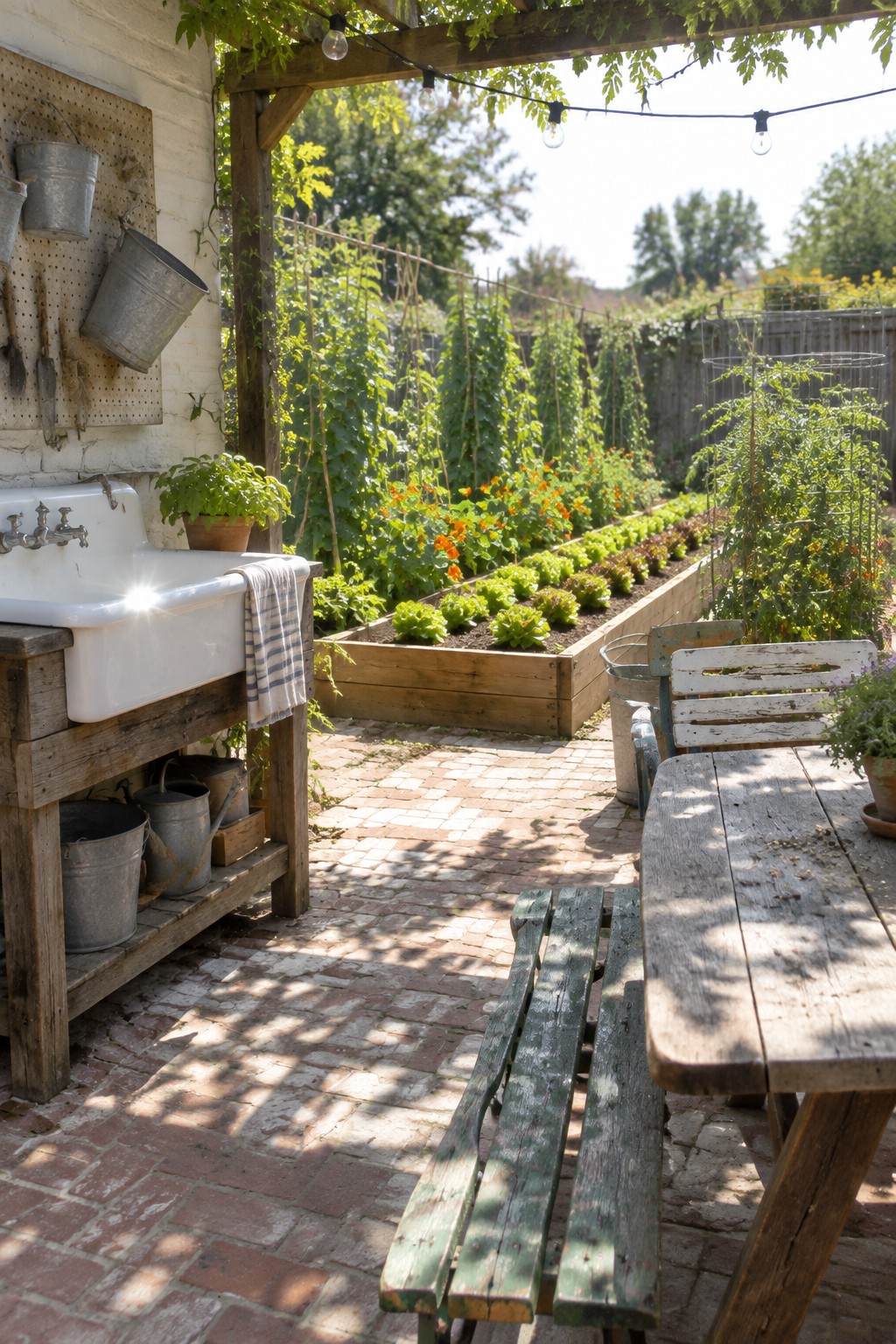
Mixing flowers into a vegetable garden makes the beds feel like part of the patio, not a separate growing area. Here, orange blooms grow beside rows of greens, bringing color into a practical planting plan.
Try this in a raised bed near a seating or dining spot, where flowers and vegetables are easy to enjoy and tend. Leave enough room for each plant to grow, and choose blooms and vegetables that suit the same amount of sun and water.
Use Window Boxes to Add Flowers to a Patio Garden

Window boxes are an easy way to grow flowers where patio space is limited. They make use of the house wall, leaving more room below for pots, seating, or a small vegetable bed.
Choose a box that suits the width of the window, and fill it with flowers that spill gently over the edge. Here, purple blooms and trailing greenery show how a window box can add color without taking over the patio.
Grow a Patio Garden in Raised Wooden Beds

Raised beds make it easier to organize a productive patio garden, especially when ground space is limited. Their defined edges keep vegetables and herbs in one place, while the soil is easy to reach for planting and picking.
Choose sturdy, untreated wood and size the beds so you can reach the middle from the path. A narrow gravel walkway with stepping stones works well between beds, but leave enough room to move a watering can or small garden cart through.
Grow Fruit Along a Garden Wall
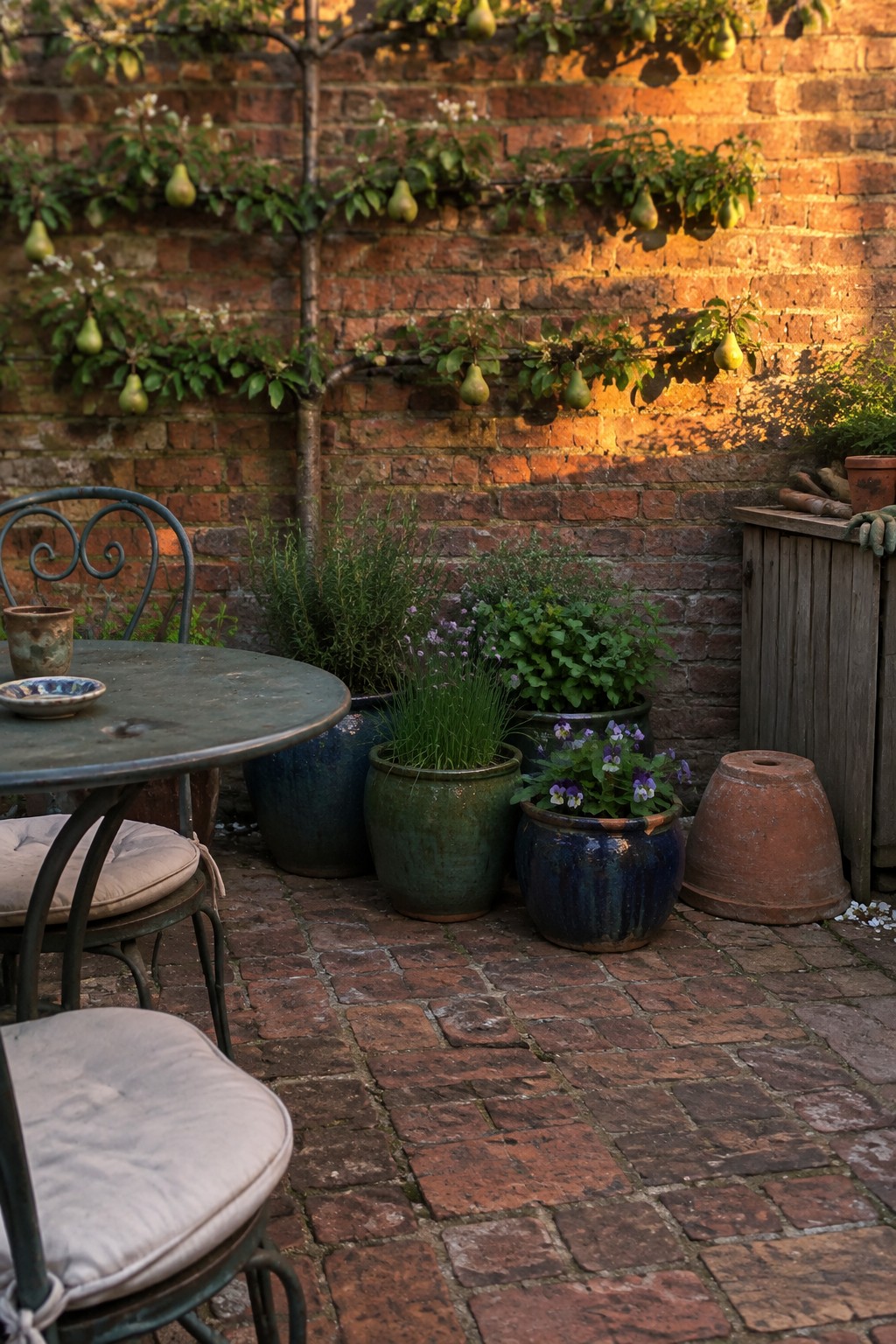
Training a fruit tree along a wall is a useful way to make a small patio garden more productive. A pear tree can spread across a narrow space instead of taking up room in the middle of the patio.
Use sturdy horizontal wires or supports, and tie in the branches as they grow. A sunny wall works best, but leave enough room to reach the fruit and prune the tree. It’s a practical choice for a courtyard where planting space is limited.
Set Up a Patio Garden for Outdoor Dining

A patio garden can make room for both growing plants and eating outdoors. Here, planters sit beside a long dining table, so herbs and flowers are close at hand without taking over the seating area.
For a similar setup, place sturdy planters along the edge of the dining zone and leave a clear path around the table. Herbs suit containers near the seats, while flowering plants can mark the patio’s edges. Check that the planters do not crowd chairs or block the route through the space.
Build a Patio Garden Around a Stone Planter

A raised stone planter can make a patio garden feel organized without taking up the whole space. Its curved shape gives plants a clear place to grow while leaving room to walk around it.
Use this idea in a courtyard or on a roomy patio where a built-in bed can become part of the layout. Keep the wall low enough to tend the plants easily, and leave a clear path around the planter.
Use a Potting Bench to Keep Patio Gardening Practical
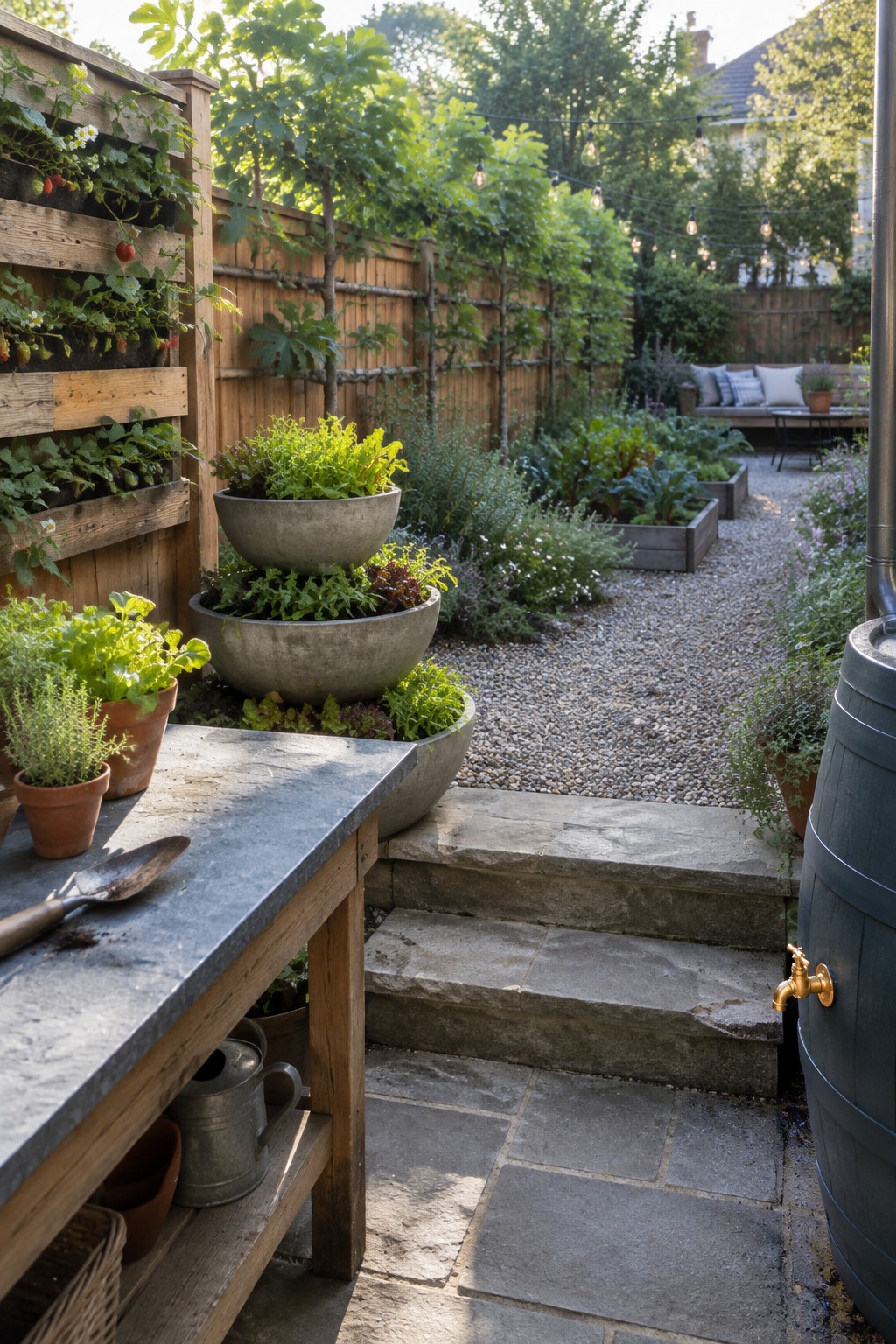
A potting bench gives a patio garden a handy place for planting and tending herbs, so you do not have to do every task on the ground. A sturdy work surface can also keep pots and tools close at hand.
Place the bench near your containers or raised beds, where you can reach plants easily. Leave enough room to work without narrowing the path, and choose a surface that can handle soil and water.
Use a Stone Path to Organize Patio Plantings
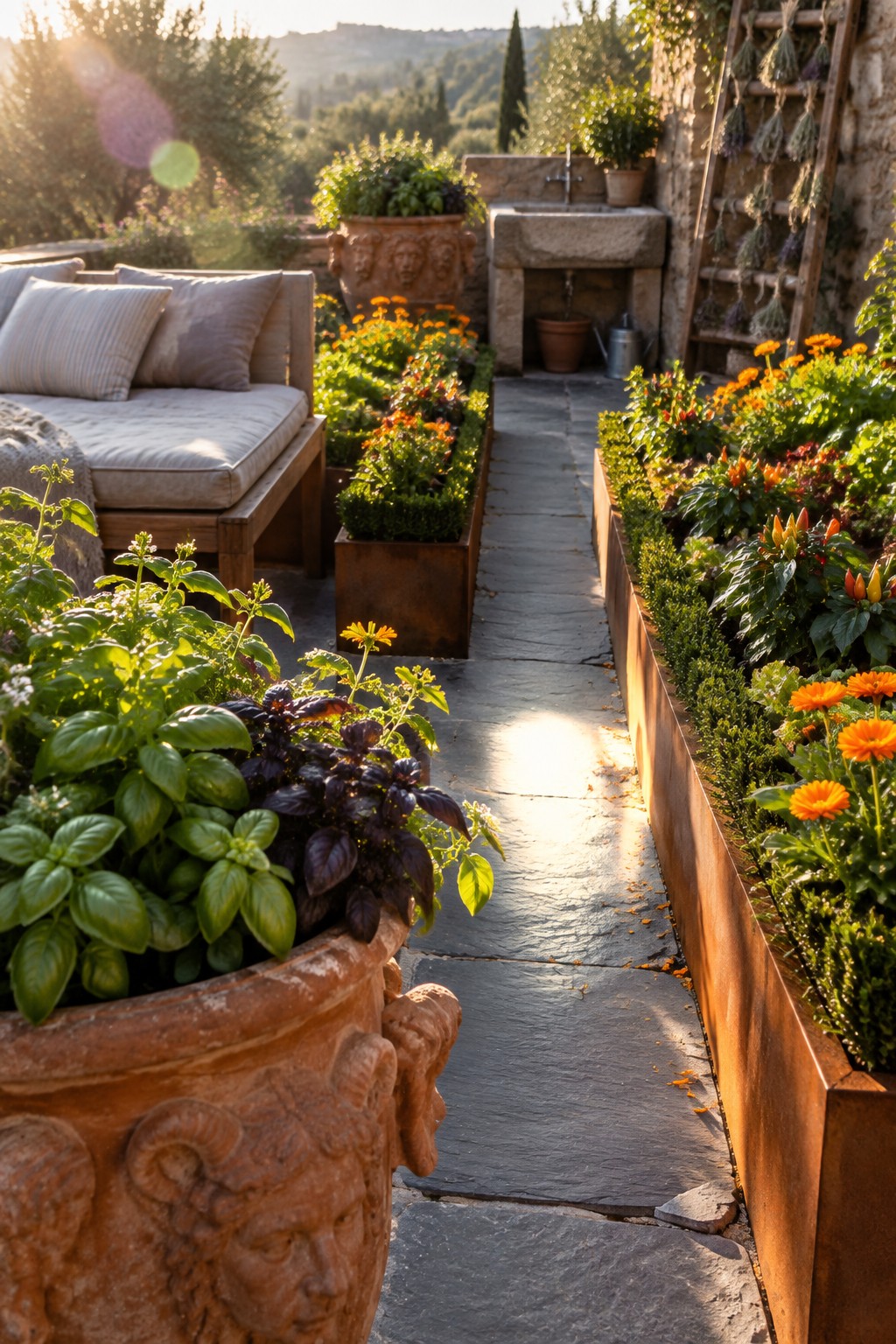
A stone path gives a patio garden a clear route through the plants, so the beds feel organized rather than crowded. It also makes it easier to reach flowers and herbs for watering or picking.
Leave enough room to walk comfortably, especially if the path runs between raised beds. This layout suits a narrow patio or side garden, and sturdy, level stones help keep it practical.
Grow Vegetables in a Vertical Patio Garden

A vertical garden makes good use of a narrow patio by moving some of the planting up the wall. Wall-mounted troughs can hold leafy greens and radishes, leaving more of the ground clear for walking or other garden tasks.
Choose sturdy containers and secure them well, since soil becomes heavy when wet. Herbs and compact vegetables are good choices, but check that each level gets enough sunlight and water.
Frequently Asked Questions
Q: How do I know which plants will get enough sun on my patio?
A: Watch the spot through the day and note how many hours of direct sunlight it gets. Fruiting plants like tomatoes usually need a sunnier spot, while leafy herbs and flowers such as impatiens can manage with less.
Q: Can I grow herbs and vegetables in the same container?
A: Yes, as long as they need similar amounts of sun and water. Try pairing basil with a tomato, but give mint its own pot since it spreads quickly.
Q: What should I do if my patio pots dry out too fast?
A: Use larger pots, which hold moisture longer than small ones, and check the soil with a finger before watering. If the top inch feels dry, give the plant a thorough drink.
Q: Which flowers are easiest to grow in patio containers?
A: Marigolds and petunias are cheerful, forgiving choices that do well in pots. Pick a variety that suits your patio’s light, and remove faded blooms to keep new flowers coming.
