

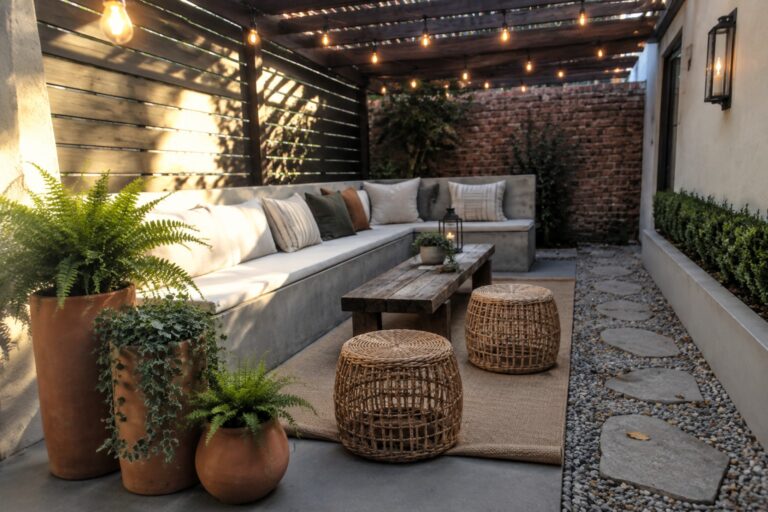
A patio can feel welcoming after dark when the light helps people find their way and gives plants a little definition.
I’ve found that harsh overhead lighting often flattens a space, while a few softer sources make seating areas and garden paths easier to use.
The best setups balance practical visibility with a comfortable glow, especially where steps, pots, or uneven paving need attention.
Small lights can make a big difference.
I’d start by noticing which parts of the patio disappear at night, then choose lighting that highlights those spots without washing out the whole garden.
Use String Lights To Define a Covered Patio
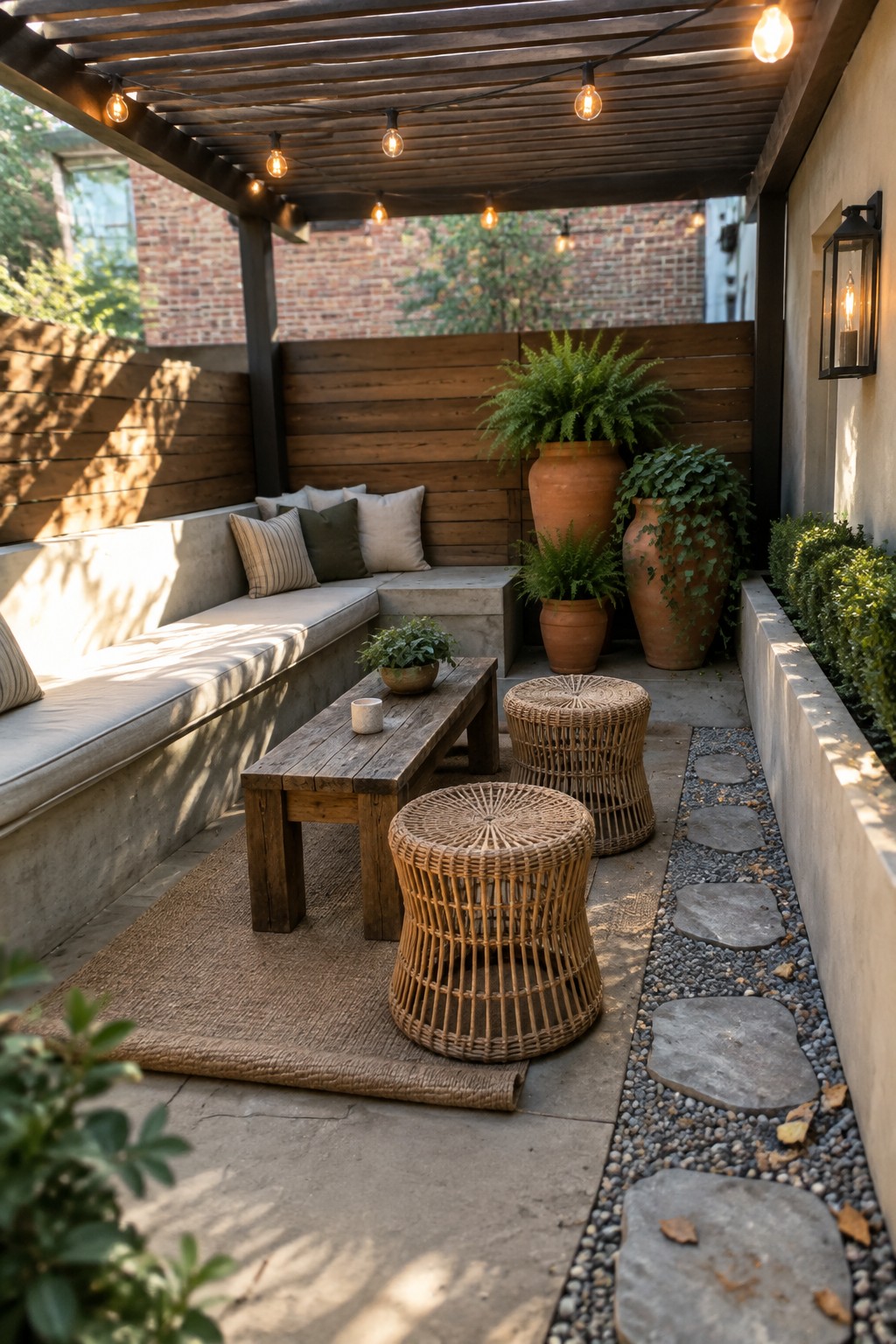
String lights can make a covered seating area useful after sunset without needing bright overhead fixtures. Here, the bulbs follow the pergola beams, so the light stays close to the seating and feels easy to live with.
For a similar setup, hang outdoor-rated lights along the beams and keep the bulbs evenly spaced. This works well over a small patio or porch, especially when the main seating area sits beneath a roof or pergola. Use a separate switch or timer so the lights are simple to turn off.
Add Lighting to the Seating Area
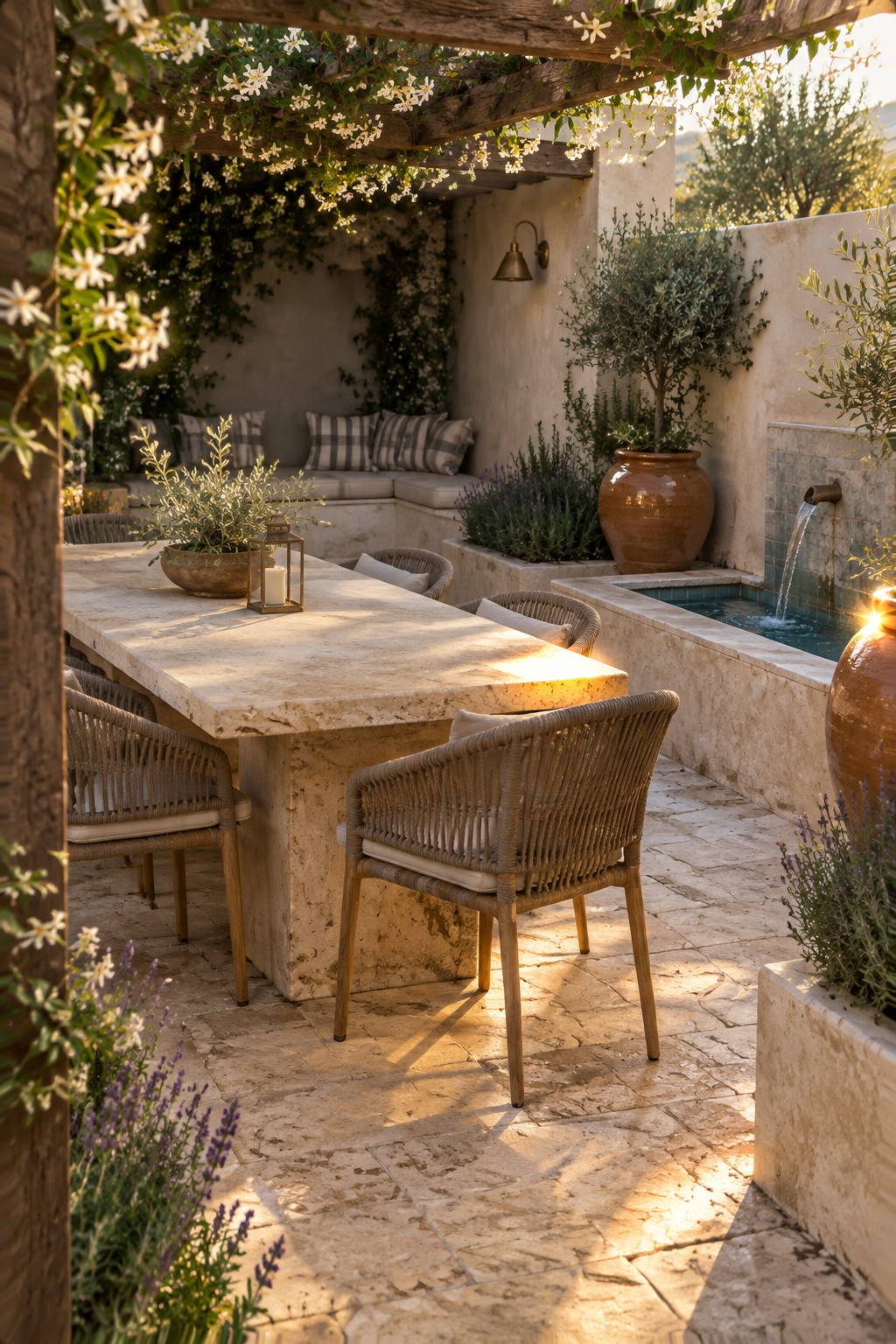
Patio lighting works best when it helps people use the space after sunset. A lantern on the dining table gives the seating area a gentle pool of light, while keeping the rest of the patio quieter.
Use a lantern or a small outdoor lamp where people gather, and add a low path light nearby if the route needs to stay clear. Choose fixtures made for outdoor use, and keep them far enough from plants and cushions to avoid heat or fire risks.
Use String Lights To Mark Patio Seating
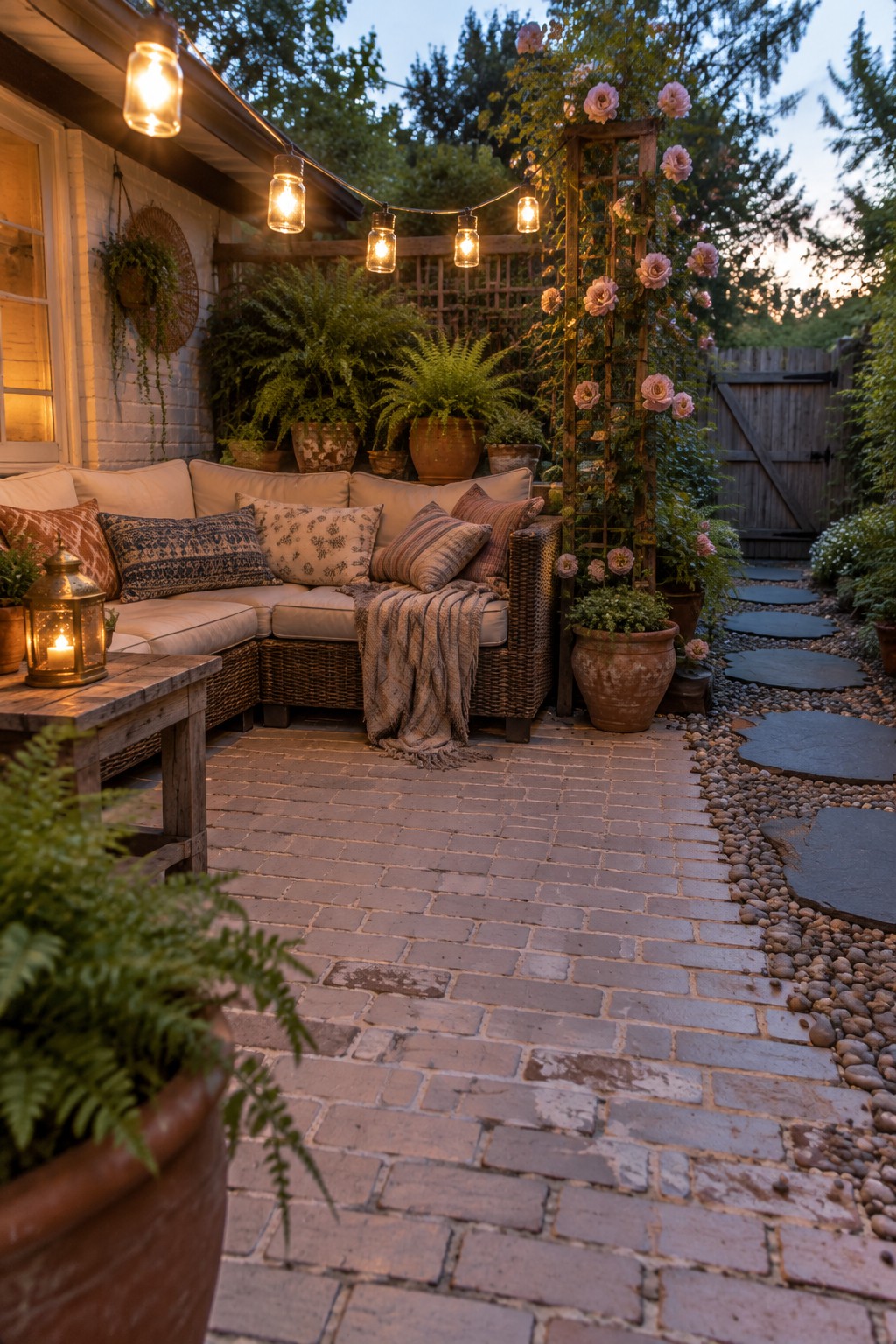
String lights can make an outdoor seating area easier to use after dusk without adding bulky fixtures. Hung above the sofa, they give the sitting spot a clear boundary and provide a gentle glow for relaxing.
For a similar setup, run outdoor-rated lights from the house to a sturdy post or pergola, keeping the bulbs clear of walkways and plants. A small lantern on the coffee table can add light where it is most useful.
Use Built-In Lighting Around Patio Seating

A low strip of light beneath a built-in bench makes the seating area easier to use after dark. It also gives the bench a clear outline without needing several bright fixtures.
For a similar setup, place weather-rated LED strip lighting under the front edge of a masonry or concrete seat. Keep the light warm and dimmable, and aim it down so it lights the paving without shining into anyone’s eyes.
Use Warm Bulbs Along Patio Beams

Hanging bulbs along the beams is a simple way to make a covered dining patio useful after dark. The light spreads across the table and seating without needing a lamp in the middle of the space.
For a similar setup, use outdoor-rated string lights and attach them securely to the structure. Keep the bulbs spaced evenly, and avoid placing them where guests might bump into them.
Use Small Lights Along the Balcony Rail
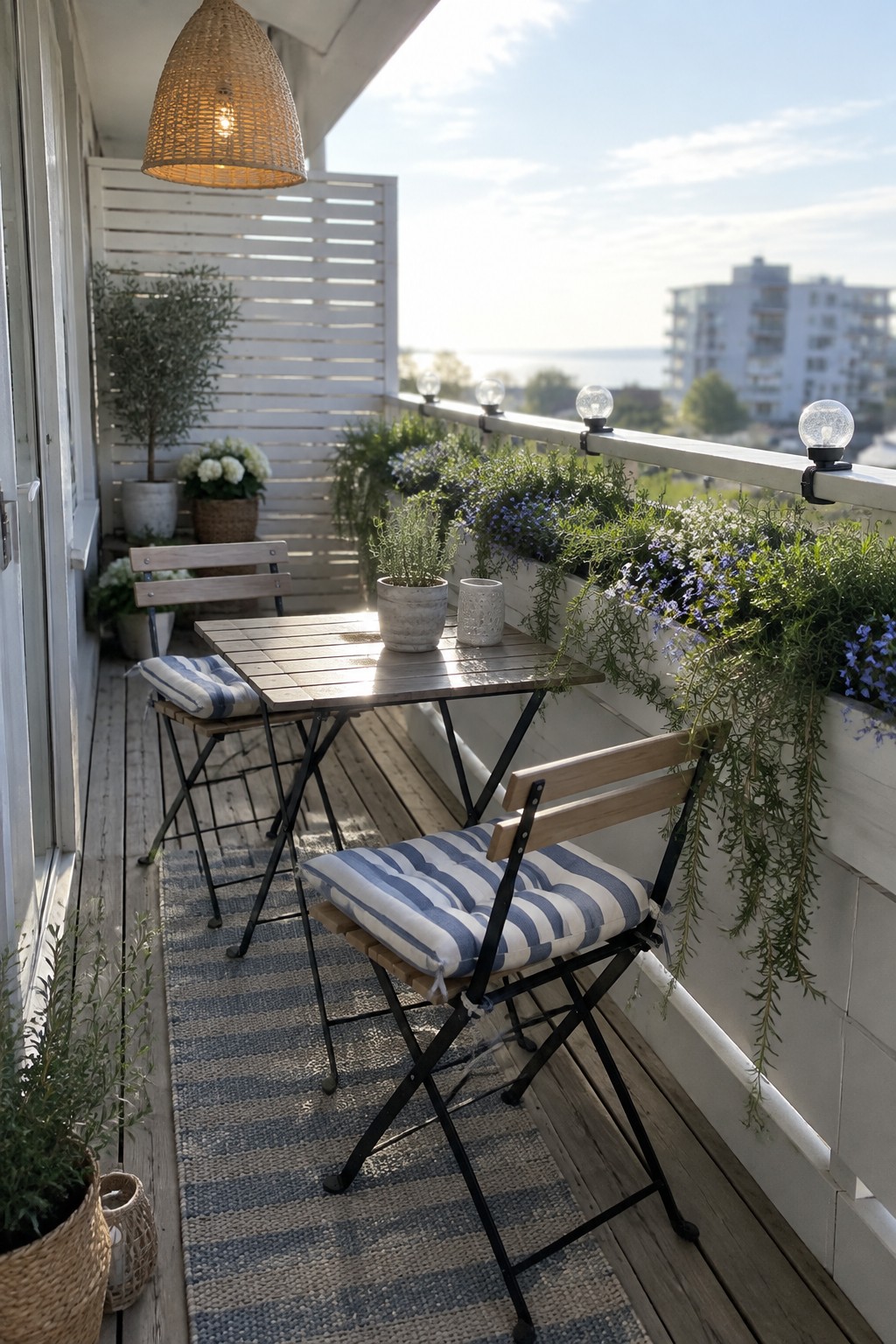
A few small lights along a balcony rail can make the seating area easier to use after dusk while keeping the glow close to the plants. It is a simple option when there is no room for floor lamps or larger fixtures.
Choose outdoor-rated lights that attach securely to the rail, and space them so the light feels even rather than crowded. They work well on narrow balconies, where clear floor space matters.
Light the Garden Path
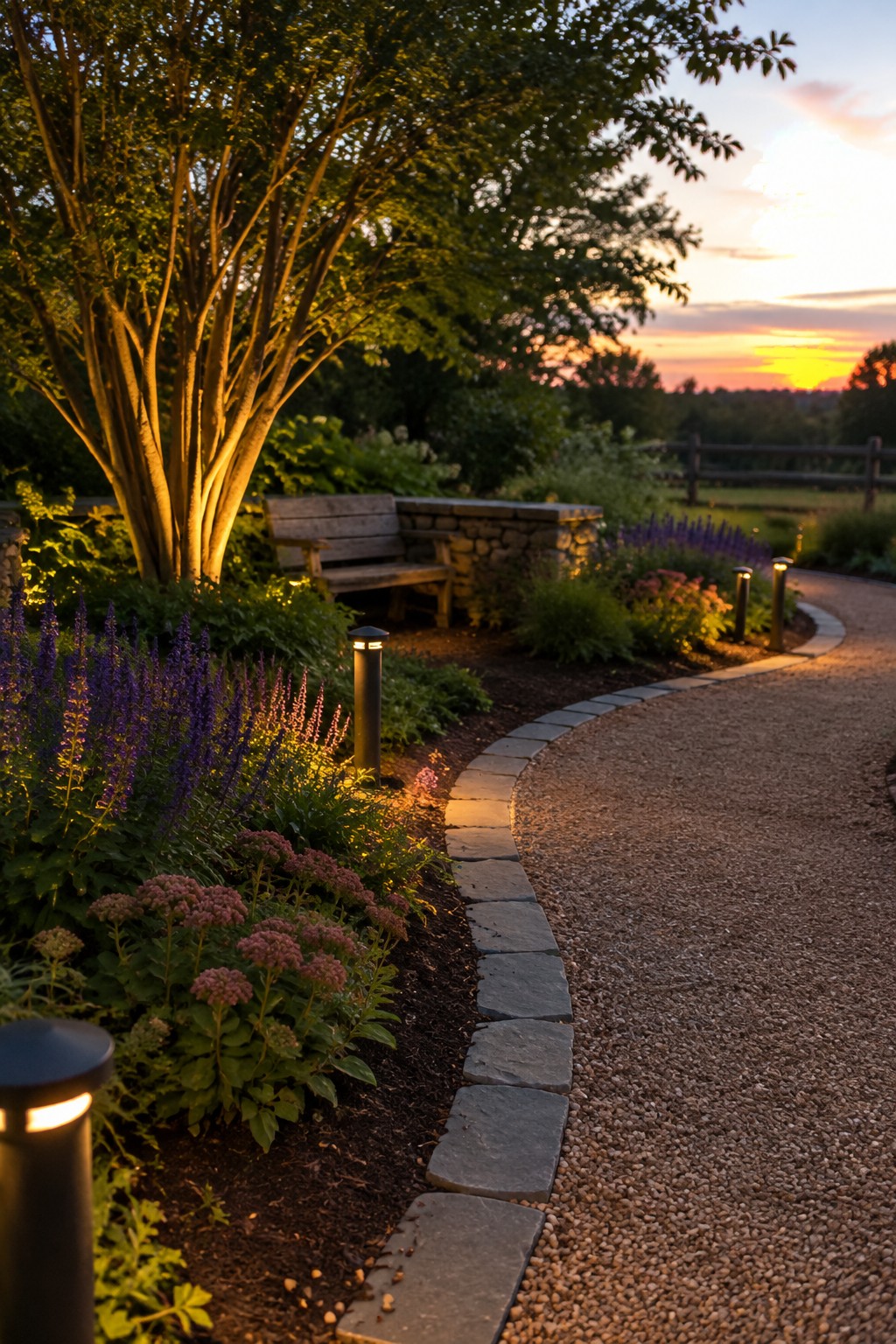
Low path lights make a garden walkway easier to follow after dark while highlighting the planting along its edge. Here, small lights mark the curved stone border without overpowering the flowers.
Use this approach along winding paths or garden beds where people need a clear route. Keep the fixtures low and space them out so the light guides the way without creating glare.
Use Recessed Lighting to Outline Sunken Seating
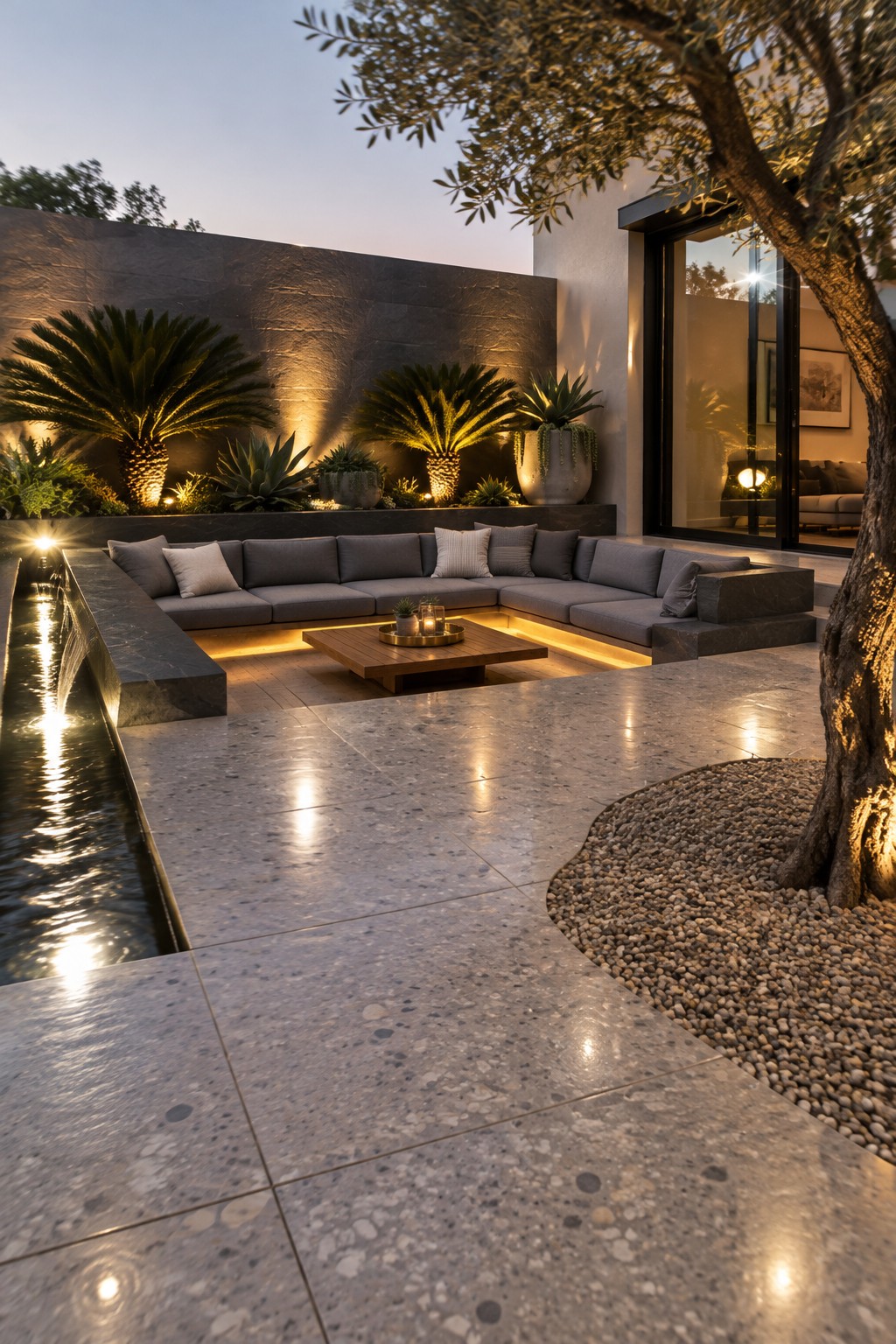
Low lighting built into the edge of a sunken patio seating area helps define the change in level and makes the space easier to use after dark. It also gives the seating a clear boundary without needing extra lamps or fixtures.
For a similar setup, place warm, low-voltage lights along the inner ledge or steps, where they can guide movement without shining into people’s eyes. This works best when the seating area is planned as part of the patio, rather than added as a separate feature.
Add Pendant Lights Above a Patio Bar

Pendant lights make a narrow patio bar easier to use after dark, while giving the seating area a clear purpose. Here, the black fixtures hang above a long wooden counter, so the light falls where people sit and gather.
This setup works well along a wall where floor space is limited. Hang the lights at a height that leaves room to sit comfortably, and choose outdoor-rated fixtures that can handle the elements.
Use String Lights Around a Patio Fire Pit
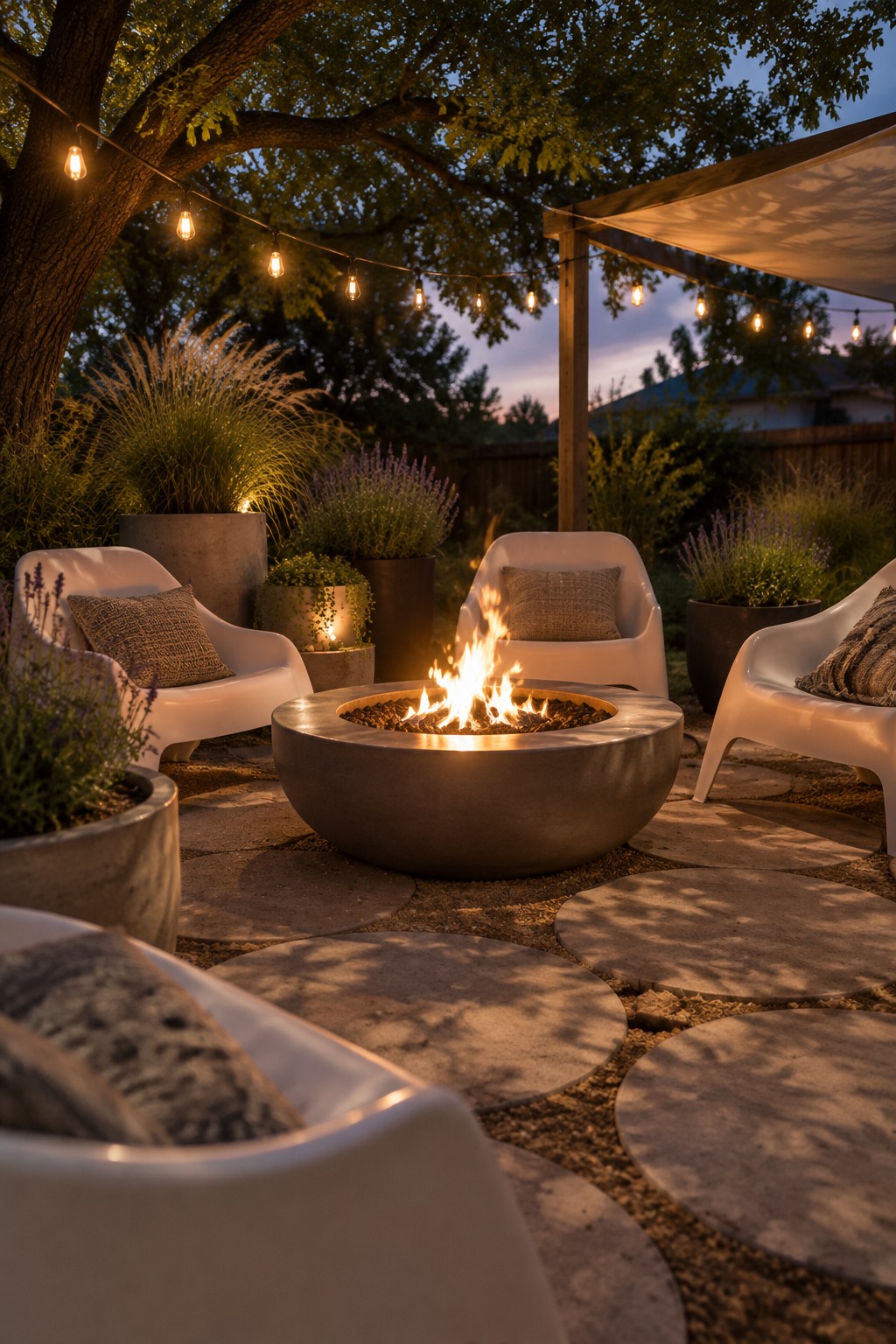
String lights can make a fire pit seating area usable after sunset without needing bright overhead fixtures. Here, the bulbs stretch across the patio and help define the spot where people gather.
For a similar setup, hang outdoor-rated lights from a sturdy tree or pergola post, and keep the bulbs clear of branches and the fire. Warm, low-glare bulbs work well around a seating area.
Light a Garden Path With Low Fixtures

Small, low lights make a narrow garden path easier to follow after dark without taking attention away from the plants. Spacing them along the edge gives the route a gentle rhythm, while keeping the light close to the ground helps avoid glare.
This works well in side yards and other slim walkways, especially where taller plants line the path. Use shielded fixtures and leave enough space between them so the route is clear without making the garden feel overly bright.
Use Poolside Lighting to Make Patio Seating More Usable
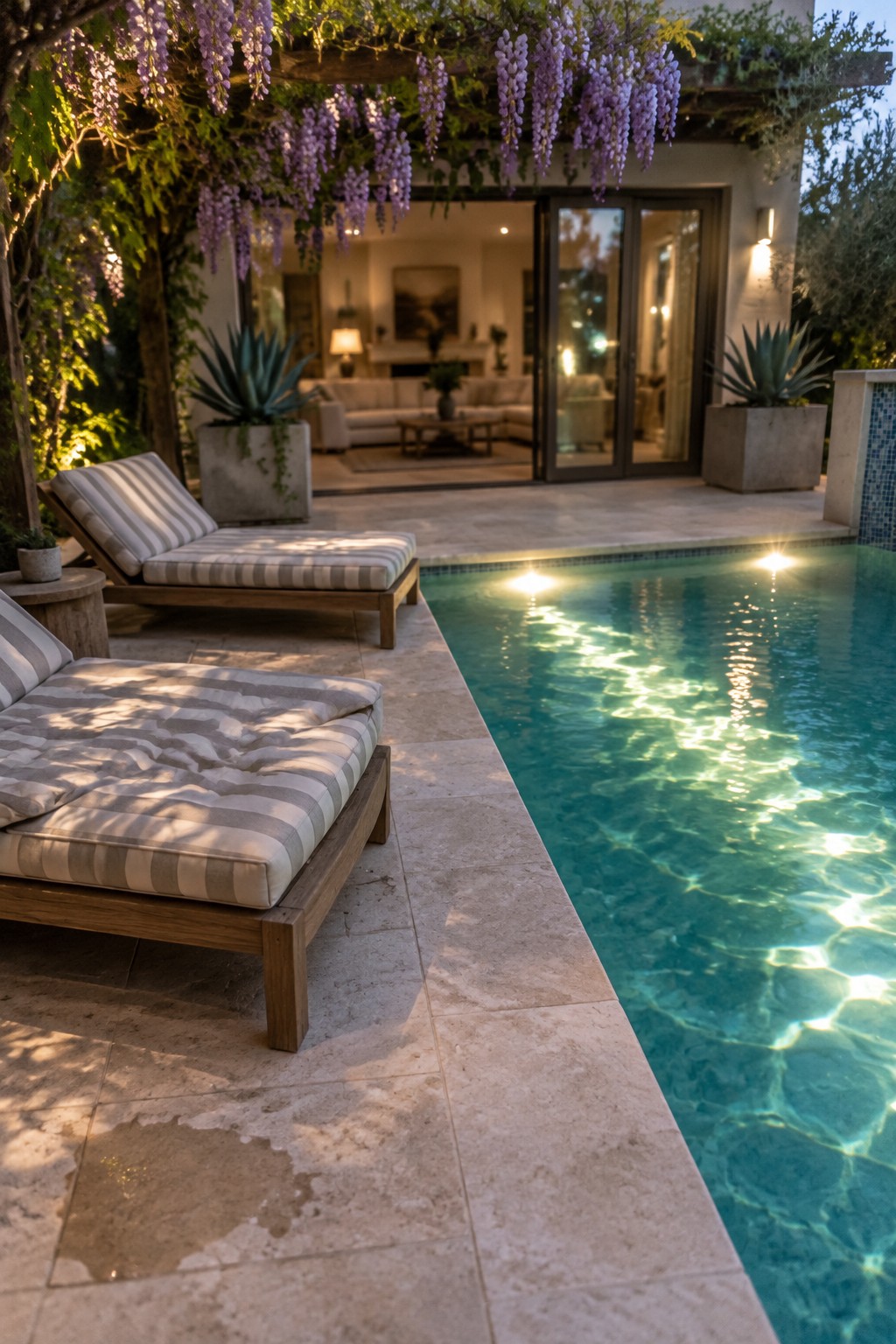
A few well-placed lights around a pool can make nearby seating useful after sunset. Here, the pool lights reflect across the water, while the patio stays softly lit rather than relying on one bright fixture.
For a similar setup, use low lights in or beside the pool and add gentle lighting near the seats. Keep the fixtures aimed away from people’s eyes, especially in a smaller patio where the water and lighting are close together.
Use Uplighting to Highlight a Garden Tree
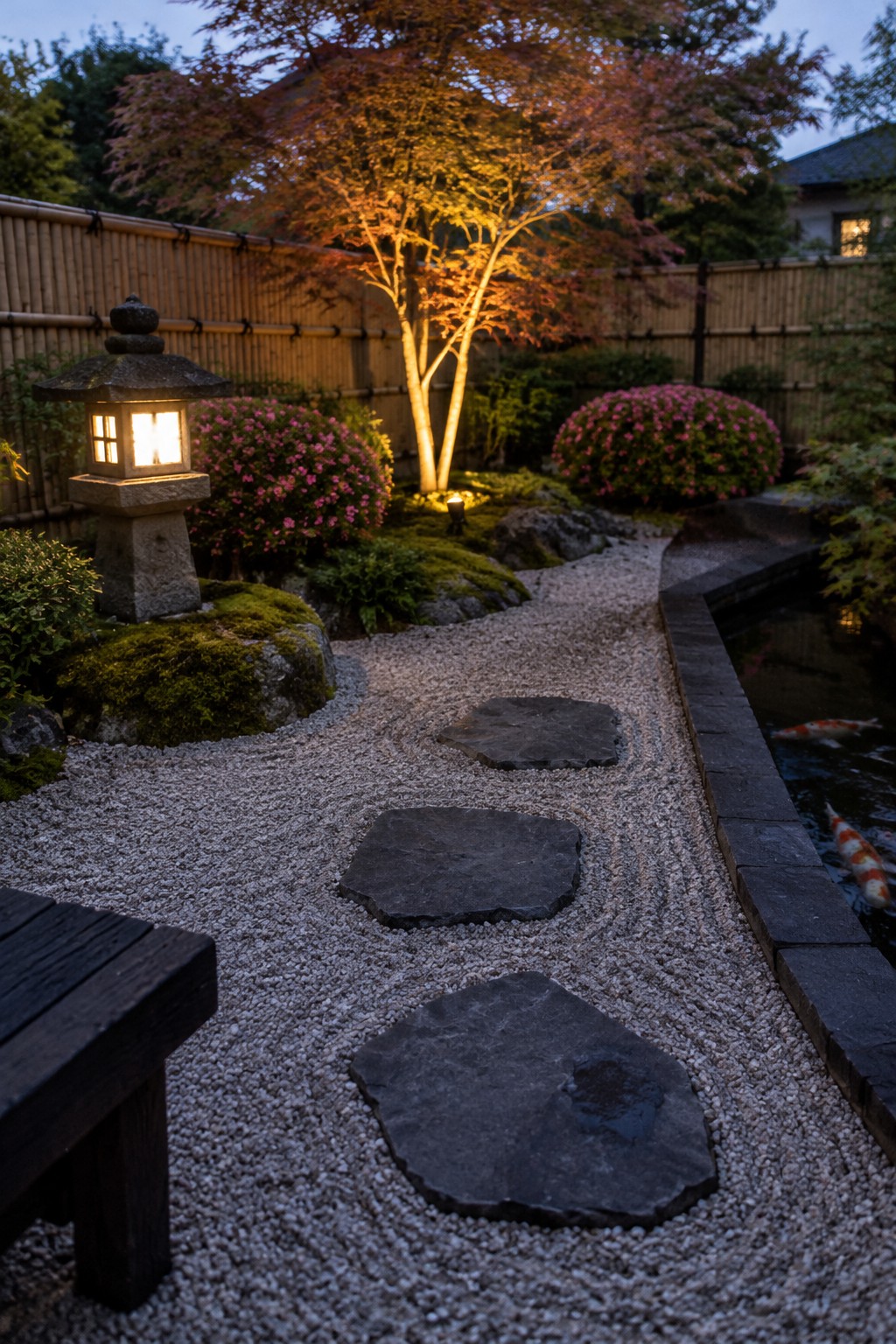
Uplighting a small tree is a simple way to give a garden path a clear focal point after dark. A ground light aimed up through the branches shows off the tree’s shape and brings a little light to the surrounding planting.
Place the fixture near the trunk and angle it upward, keeping the beam on the tree rather than shining it into nearby windows. This works especially well beside a gravel path or in a compact garden where one well-lit feature is enough.
Use Lanterns to Light a Covered Porch
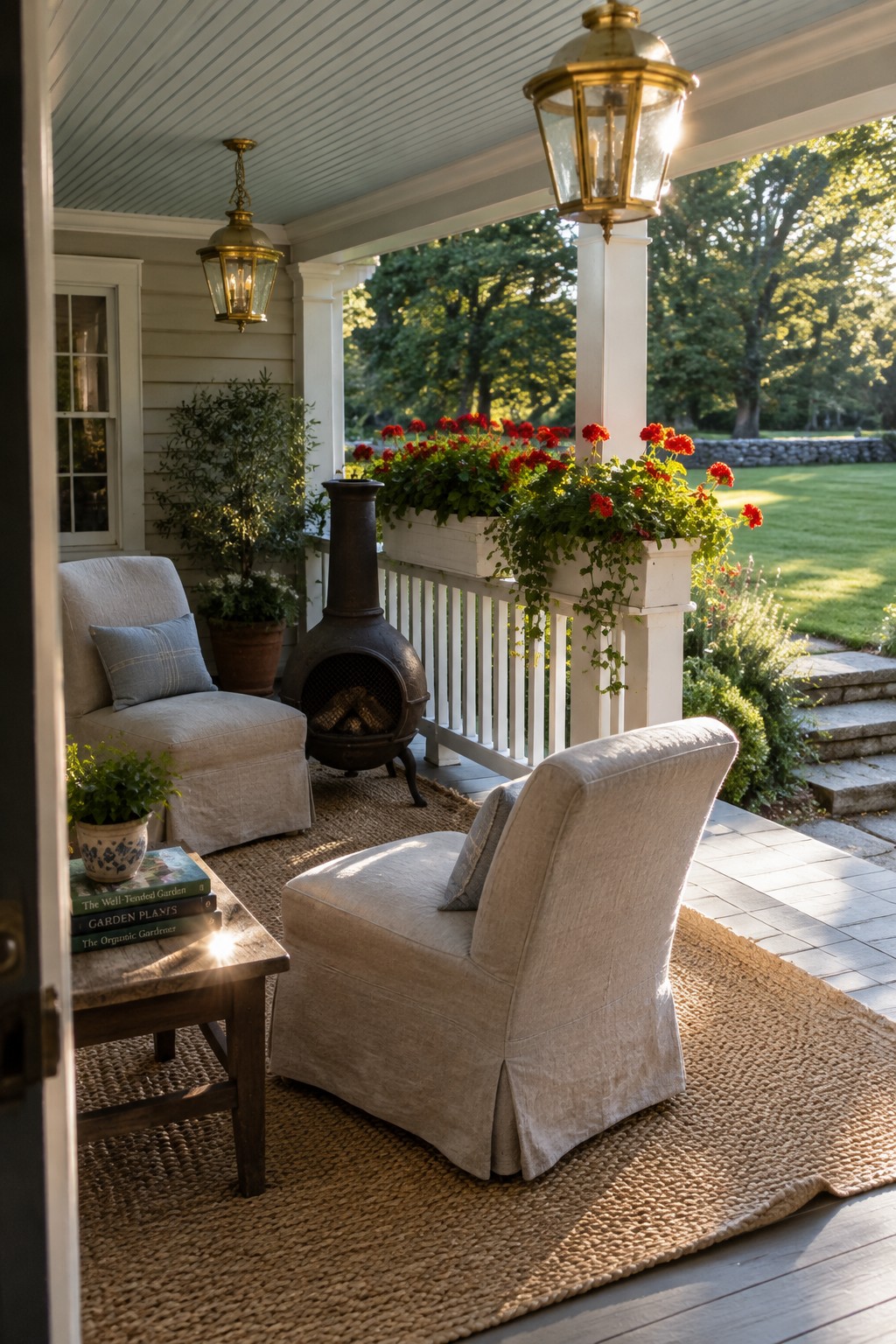
Hanging lanterns can provide useful light on a covered porch without taking up space around the seating. They also make the area easier to use after sunset, especially when placed where people sit or walk.
For a similar setup, hang lanterns from porch beams and choose bulbs that give off a warm, comfortable light. Check that the fixtures are rated for outdoor use, and avoid placing them so low that they obstruct the walkway.
Use Low Lights to Mark Patio Paths

Small recessed lights along a patio walkway help people see where to step without making the whole space feel brightly lit. They also give a large seating area a little more definition after dark.
Place fixtures near path edges or at changes in direction, and keep them spaced evenly. Warm, shielded lights work well here, especially when nearby seating already has string lights or lanterns.
Hang Pendant Lights Over an Outdoor Dining Table

Pendant lights make an outdoor dining area useful after the sun goes down, while giving the table a clear place in the patio layout. Woven shades bring a softer look than bare bulbs, and their focused light suits meals and conversation.
Hang them above the center of the table, making sure they leave enough headroom and do not swing into people. This works especially well beneath a pergola or other sturdy overhead structure, where the wiring can be safely installed and protected from the weather.
Use a Linear Fire Pit Beside Patio Seating
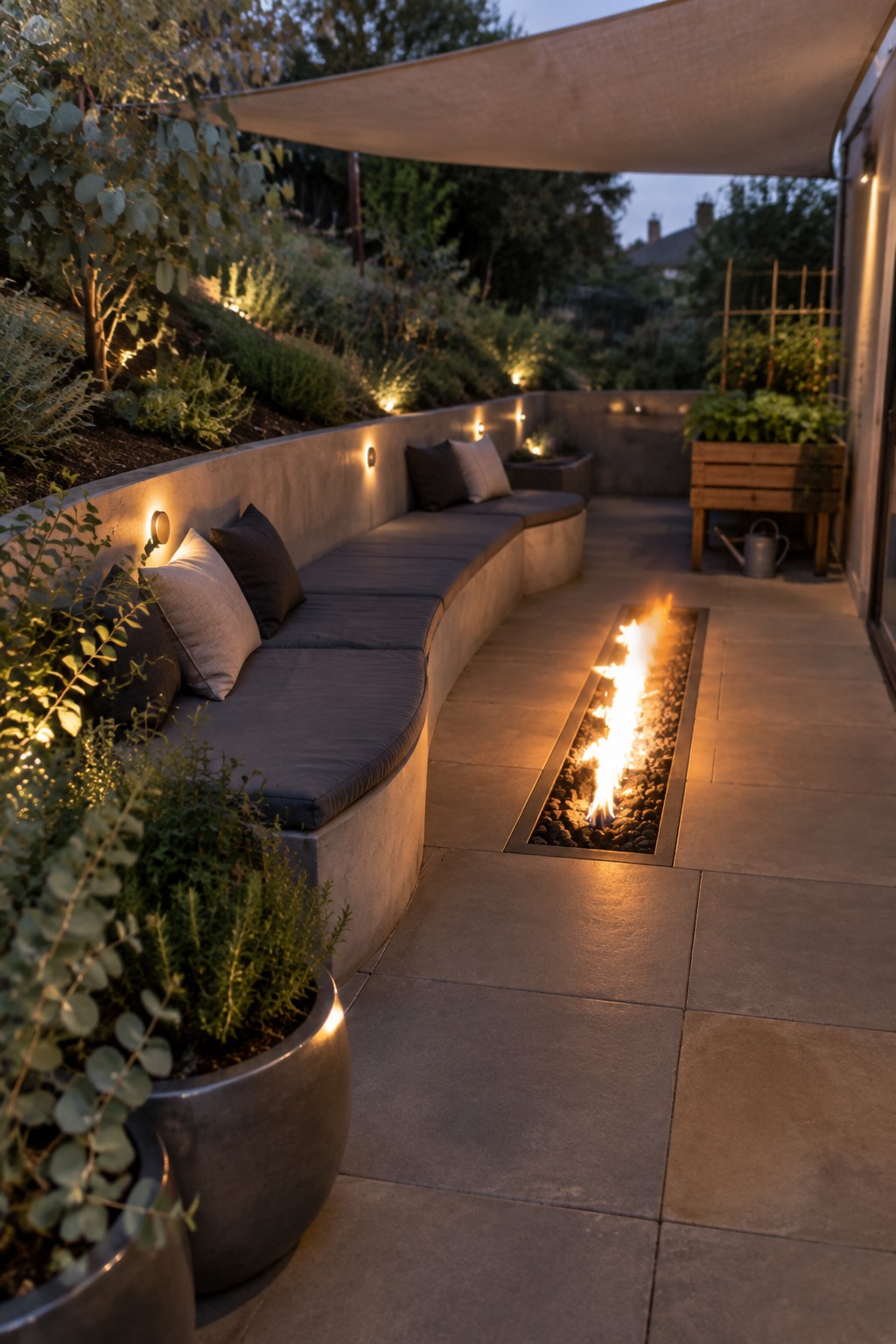
A long, narrow fire pit can work well beside a built-in patio bench. It gives people a clear place to gather without taking up the whole seating area, and its flame provides a practical source of light after dusk.
Keep enough room between the fire feature and the seats for people to move around comfortably. This setup suits a narrow terrace or courtyard, but the fire pit should be installed with proper clearances and a safe fuel supply.
Add Low Lights Along a Garden Path

Small path lights make an outdoor walkway easier to use after dark while giving the planting around it a gentle glow. Here, low fixtures sit beside irregular stone pavers, so the route is clear without needing bright overhead lighting.
Place lights along the edges of a path, especially near turns or changes in level. Keep them low and spaced out so they guide the way without shining directly into your eyes.
Use Step Lights To Mark Patio Levels

Lighting built into patio steps makes a change in level easier to see after dark. It also helps the steps feel like part of the seating area rather than a dark gap between the patio and path.
Place small, shielded fixtures along the risers, spaced evenly so the light is useful without being glaring. This works well on raised patios and garden terraces. Keep the glow aimed downward, especially near dining seats.
Add Lights to Stone Garden Steps

Low lights built into stone steps make a sloped garden path easier to use after dark. They mark each change in level without needing tall fixtures that can get in the way of plants or views.
This approach works well on outdoor stairs where the steps are already part of the landscape. Place a fixture near the edge of each riser, and keep the brightness gentle so the path is clear without glare.
Use Uplighting to Highlight Patio Plants

Uplights tucked into patio planters can make tall grasses stand out after dark and give a seating area a clear focal point. The light stays low, so it highlights the plants without taking over the space.
Try this with a few larger planters near a bench or sofa. Aim the fixtures up through the foliage, and choose warm, low-glare bulbs so the seating remains comfortable to use.
Frequently Asked Questions
Q: How can I light a small patio without making it feel crowded?
A: Choose a few small fixtures and place them where they do the most work, such as along a path or beside a favorite plant. A strand of warm lights overhead can add a soft glow without taking up floor space.
Q: What kind of lights work well around patio plants?
A: Low garden lights can gently highlight leafy borders, while a small spotlight can draw attention to a potted tree or a striking planter. Aim lights at the plants rather than shining them toward nearby seats.
Q: How do I keep patio lighting comfortable for sitting outside?
A: Use warm, indirect light near seating, like a lantern or a shaded wall light. Bright bare bulbs can feel harsh once the sun goes down.
Q: Do solar lights work in a shady patio garden?
A: They may not stay bright for long if the panels get little sunlight. Place the panel in the sunniest spot you can, or choose plug-in lights for areas that stay shaded.
