

A patio garden works best when it feels easy to use, not just pretty from the back door.
I’ve found that a clear path, a comfortable place to sit, and plants suited to the light can make a small outdoor space feel settled without adding much upkeep.
The first things I notice are whether the seating feels practical and whether the plants leave enough room to move around.
Containers, sturdy perennials, and simple edging can keep the layout tidy while cutting down on regular chores.
I’d start with ideas that match the patio’s sun and the time I actually want to spend caring for it, then adapt the details to fit the space.
Create a Simple Outdoor Dining Area

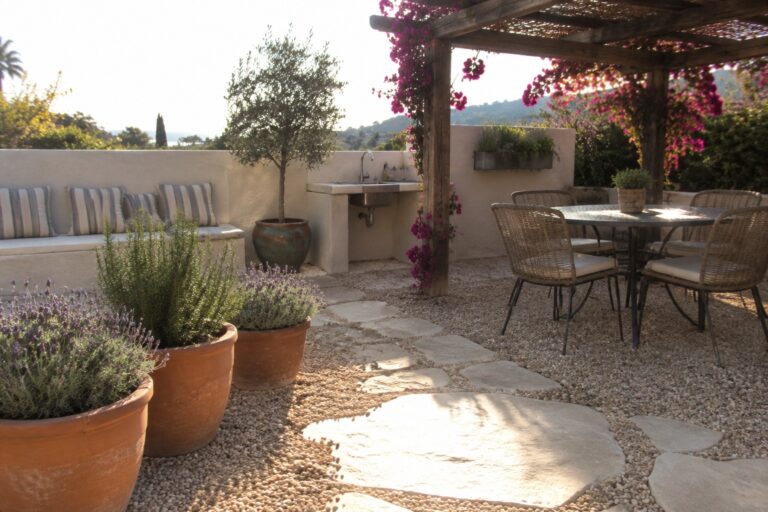
A small dining spot can make a patio more useful without adding much upkeep. A table beneath a pergola gives you a place to eat outside, while the shade structure helps define the seating area.
Choose a table and chairs that can handle outdoor conditions, and keep the layout easy to move around. This setup works well on patios where you want dining space without filling the whole area with furniture.
Make a Small Deck Work for Lounging
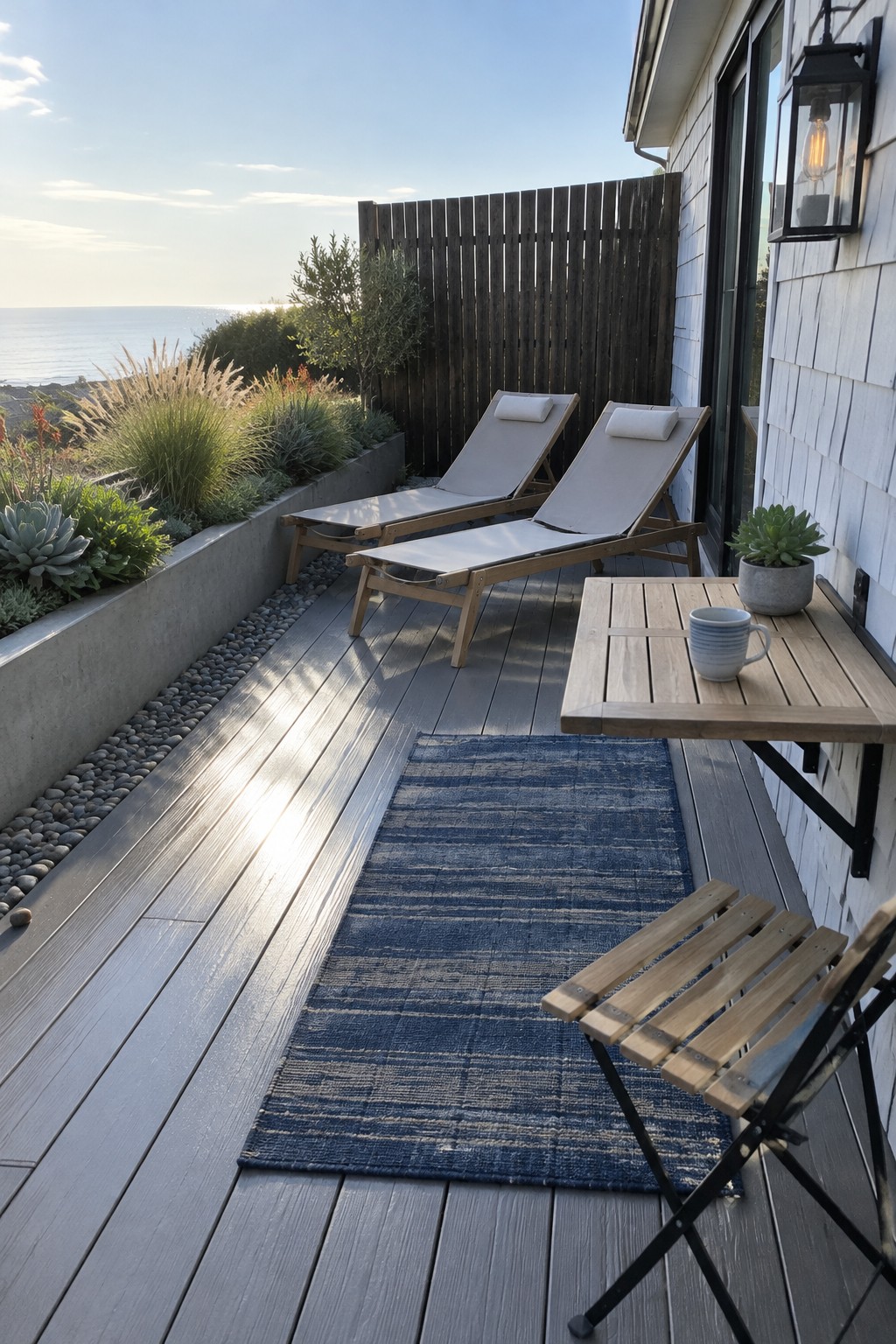
A narrow deck can still feel comfortable when the seating is arranged for relaxing rather than dining. Two slim chaise lounges leave a clear route through the space, so the patio stays usable without needing much furniture.
This layout works well beside a home where outdoor space is limited. Choose compact loungers and keep the main walkway open; a tall fence can also provide privacy without taking up floor space.
Keep the Fire Pit Close to the Seating
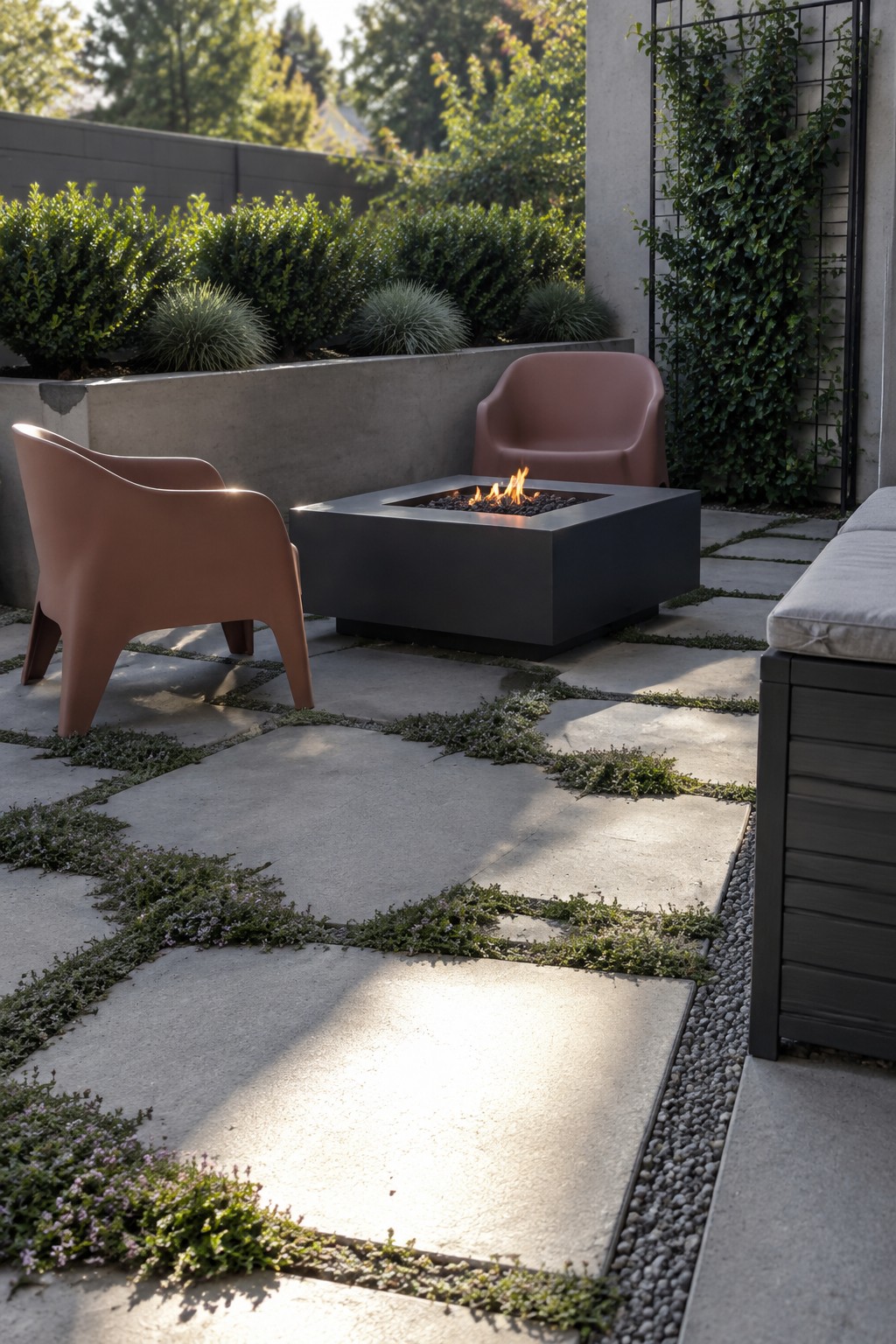
A fire pit works best when it sits within easy reach of the chairs, so people can talk comfortably and enjoy the warmth without crowding around it. A simple square design also makes a clear gathering spot on a patio.
Leave enough room to walk around the seating, and choose a fire pit suited to the space and its fuel source. This setup can work in a small courtyard or a larger patio, as long as the chairs stay a safe distance from the flames.
Use Gravel And Stepping Stones For An Easy-Care Patio
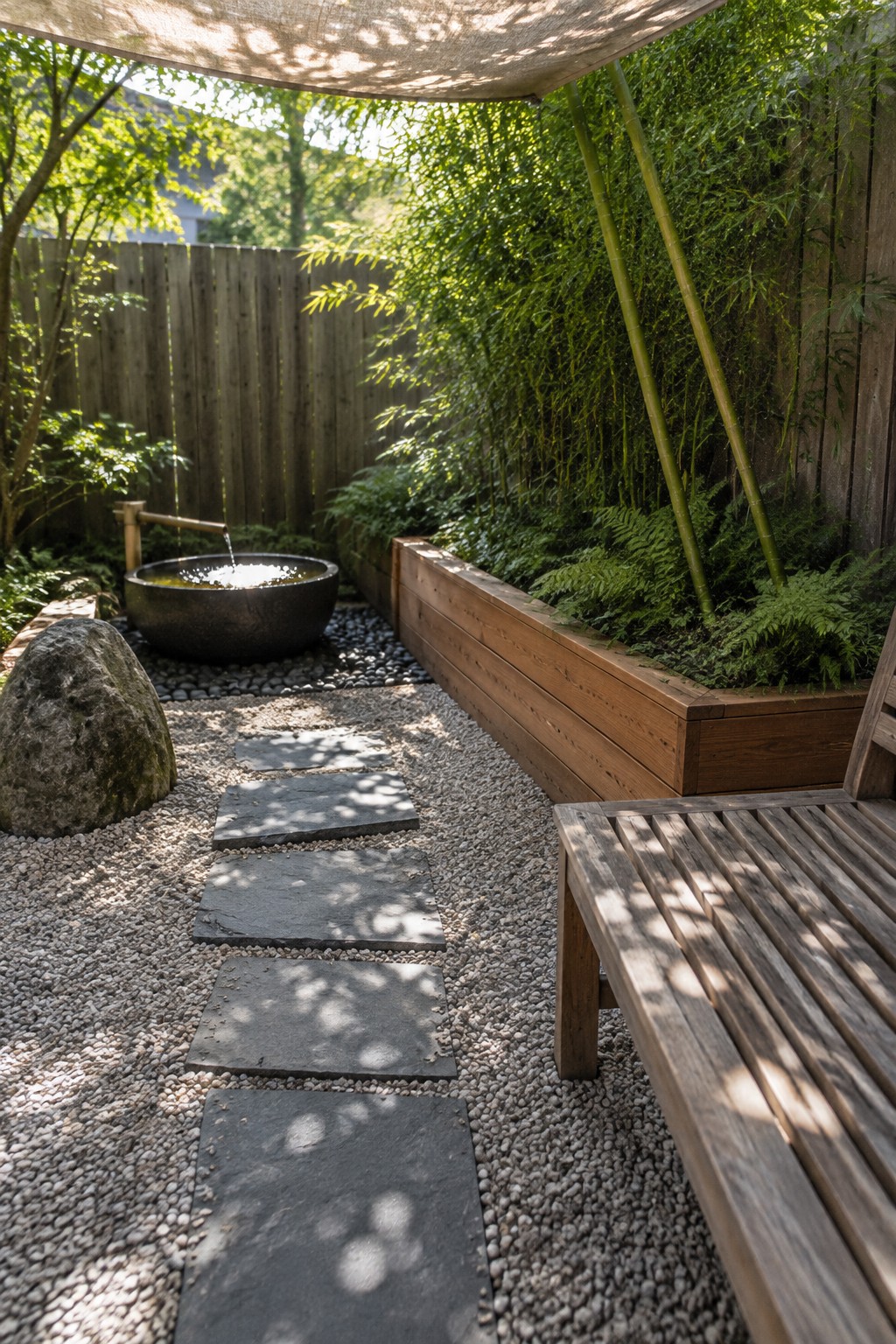
A gravel path with large stepping stones is a simple way to make a patio garden easier to care for. Gravel drains well and does not need mowing, while the stones give you a steady route through the space.
Use this approach in a small garden or along the side of a patio, and set the stones close enough for comfortable steps. A layer of landscape fabric beneath the gravel can help limit weeds, though occasional raking may still be needed.
Use a Small Table to Make Room for Conversation
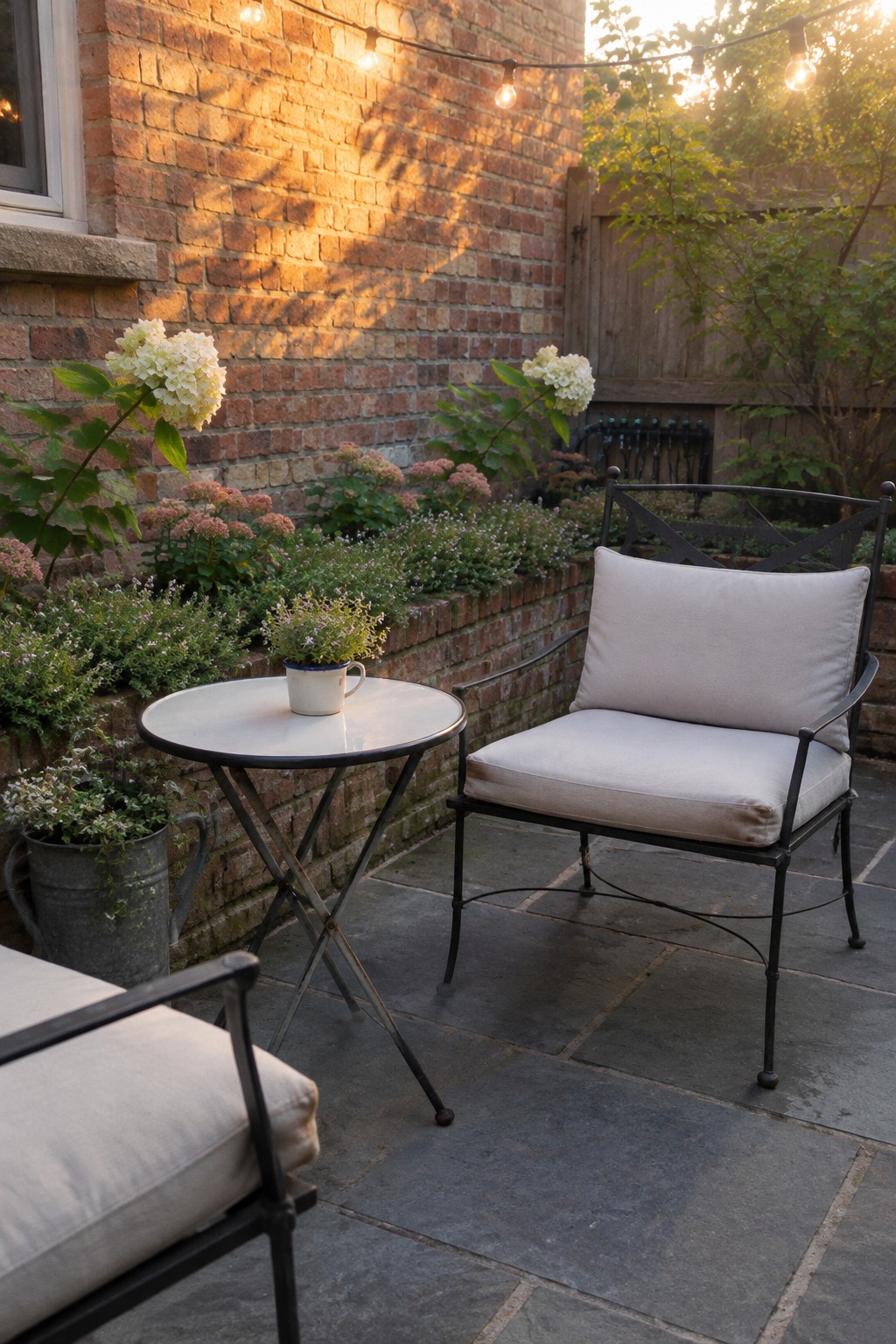
A compact patio table gives outdoor seating a useful shared spot without taking up much floor space. Here, a small round table sits between the chairs, leaving room to move around while keeping drinks or a book close at hand.
Choose a lightweight table that is easy to shift when you need more space. This setup works well in a narrow courtyard or on a small patio, where a larger dining table might crowd the seating area.
Use a Fire Bowl to Define a Seating Area

A fire bowl gives a patio a clear place to gather without needing a built-in fireplace. Here, it sits close to two chairs, making a simple seating area feel set apart from the garden.
Keep the bowl within easy reach of the seats, but leave enough room to walk around it safely. This setup works well on a gravel patio, where there’s no lawn to mow and the surface is straightforward to maintain.
Add Privacy With a Slatted Screen

A slatted screen can make a balcony feel more private without closing it off completely. It also gives the seating area a clear edge, which is useful when space is tight.
Use a screen behind a built-in bench or along the side that faces nearby homes. Choose outdoor-rated wood or a low-maintenance composite, and leave enough room to reach and care for any plants nearby.
Add a Water Feature To A Seating Patio

A simple waterfall can give a patio a focal point without taking up much usable space. Here, the water runs along a dark wall behind the chairs, keeping the seating area open and easy to use.
This setup works well in a compact courtyard or beside a low-maintenance patio. Choose a self-contained feature that is easy to access for cleaning, and make sure the pump and water supply are practical to maintain.
Add Shade With a Pergola

A pergola can make an outdoor dining area more comfortable without closing it off from the garden. Its open roof provides some relief from direct sun, while woven pendant shades or similar fixtures can make the table usable after dark.
This setup works well on a deck or patio where you want a clear dining spot. Choose sturdy, weather-resistant materials, and remember that an open pergola will not keep out heavy rain.
Use Large Pavers for an Easy-Care Patio

Large concrete pavers make a patio feel open and are simple to look after. Narrow planted joints add a little greenery without needing a full garden bed.
This approach works well in a compact outdoor living area where you want clear walking space around the seating. Choose sturdy pavers and keep the plants between them low-growing so they do not spread across the path.
Use Container Gardens for Easy-Care Patio Color

Potted succulents are a simple way to add greenery to a patio without creating large planting beds. They bring color and texture to the seating area, and containers make it easy to group plants where they are most useful.
Choose pots with drainage holes and use a free-draining mix, especially for succulents. A few larger containers, like the glazed pots here, can make a stronger display than lots of small ones, while still keeping planting easy to rearrange and maintain.
Use Built-In Planters Along a Patio Path
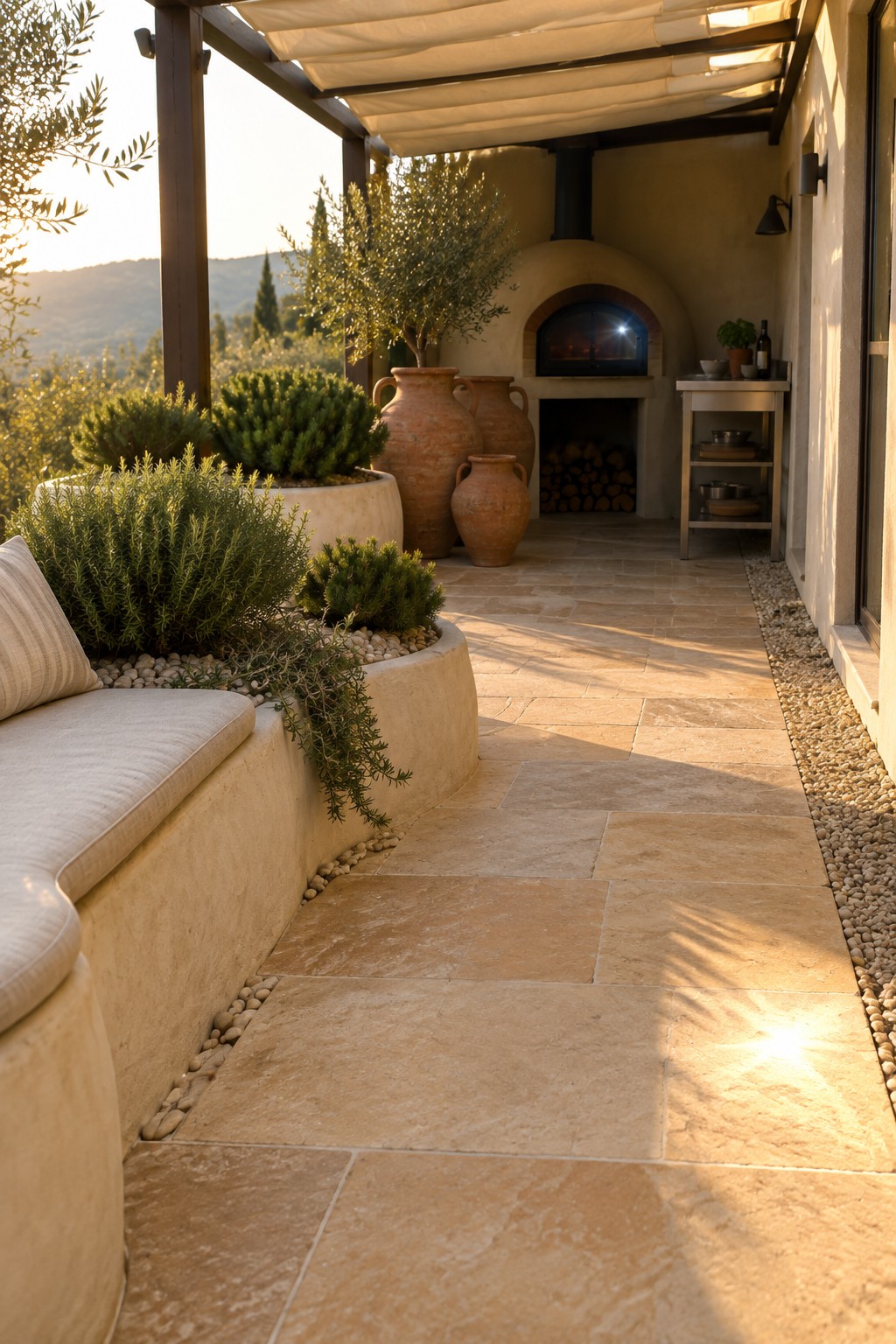
Built-in planters can bring greenery to a patio without adding lots of separate pots to move or maintain. Here, raised stone planters sit beside the walkway, leaving a clear route through the outdoor cooking area.
This idea suits a narrow terrace where space for freestanding containers is limited. Choose hardy shrubs or herbs that fit your climate, and leave enough room along the path for comfortable walking.
Use Artificial Turf for a Low-Maintenance Balcony

Artificial turf gives a small balcony a green surface without the mowing or watering that real grass needs. It also makes the area feel more comfortable underfoot, so it can work well for everyday dining or relaxing.
Choose outdoor-rated turf with drainage holes, and check that the balcony surface can dry properly beneath it. A compact table and chairs leave enough room to enjoy the space without making it feel crowded.
Add String Lights for Evening Use
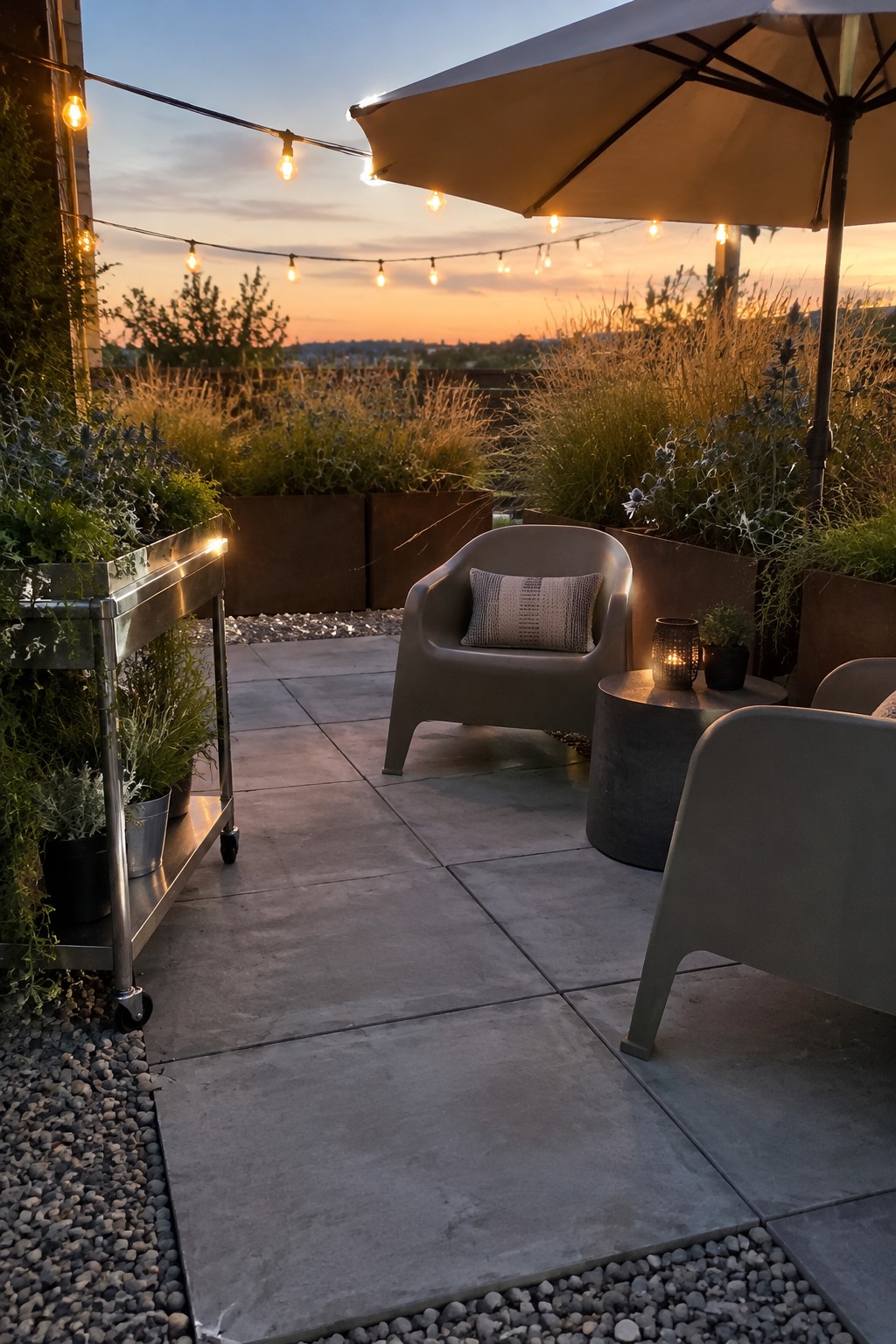
String lights make a patio easier to enjoy after sunset without adding much upkeep. Hang them above the seating area to provide a gentle glow where people gather.
Secure the lights to sturdy supports and keep the wiring clear of foot traffic. A simple strand can work on a small terrace or a larger patio, especially when there is already a nearby outlet.
Use Raised Planters to Keep Patio Gardening Tidy

Raised planters give a patio garden a clear edge without letting planting take over the walking space. They also make it easier to group herbs and other plants where you can reach them, while gravel and paving keep the main route simple to maintain.
This setup works well in a narrow patio or courtyard where ground-level beds would make movement awkward. Choose sturdy planters with good drainage, and leave enough room between them for a comfortable path.
Use Artificial Turf for a Low-Maintenance Seating Area

Artificial turf gives a patio seating area a neat green surface without the regular mowing or watering of a lawn. Here, it defines the lounge space and makes the chairs and fire table feel like a comfortable spot to gather.
This approach works well in small courtyards where a full lawn would be impractical. Choose good-quality turf and keep it clear of leaves and debris; it still needs occasional cleaning, but far less routine care than grass.
Use Durable Seating for a Relaxed Patio
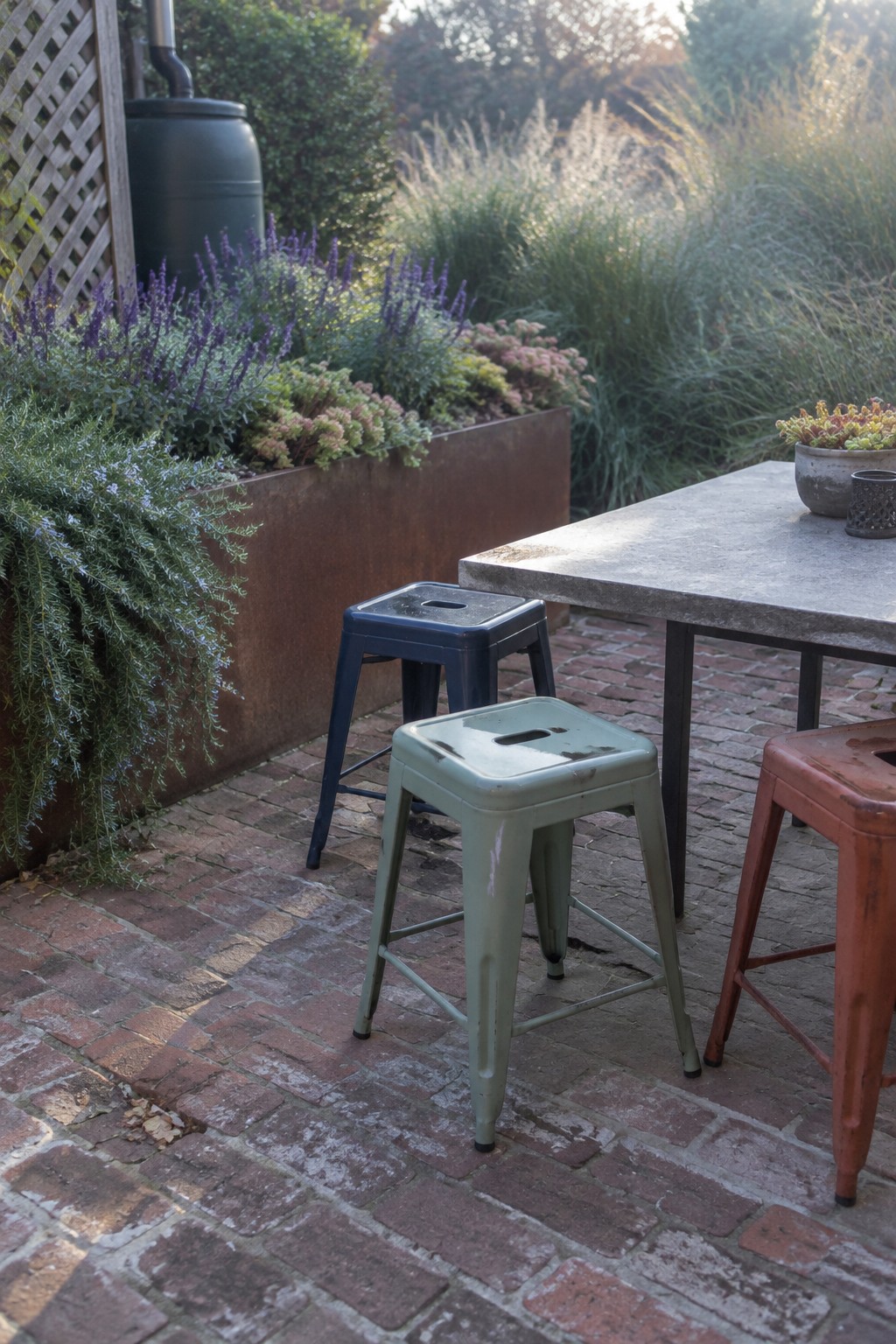
Metal stools are a practical choice for a patio dining area because they are sturdy and easy to move when the layout needs to change. Their simple shape also leaves more room to walk around a table.
Choose weather-resistant stools that are comfortable at the table height, and check that their feet sit securely on uneven paving. A few movable seats make a small patio more flexible without adding much to look after.
Choose Large Planters for Easy Patio Planting
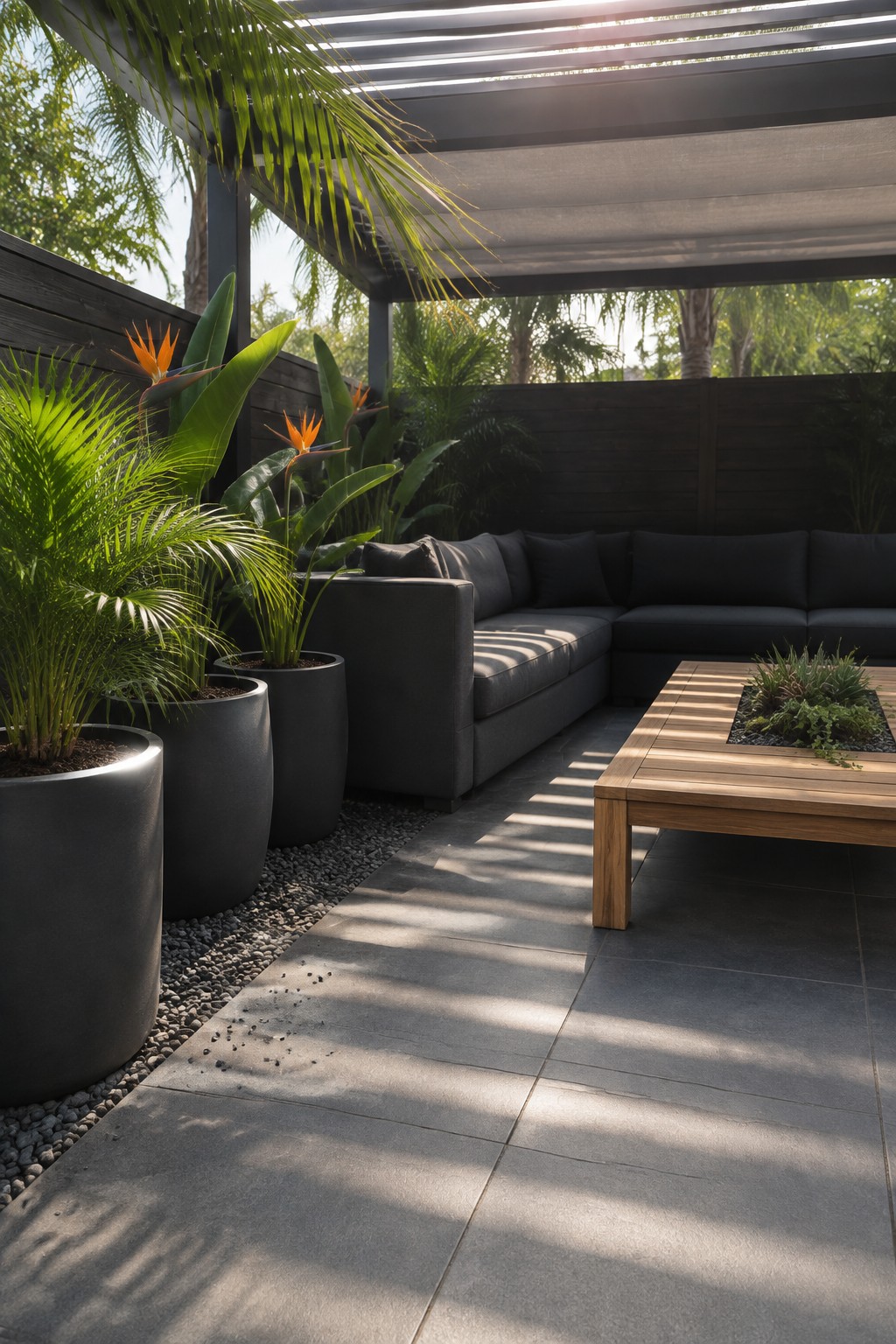
Large containers let you add greenery without digging beds or taking on much garden upkeep. Grouping a few sturdy planters beside patio seating gives plants a defined place and makes them easier to tend.
Choose containers with drainage holes and fill them with plants suited to the amount of sun your patio gets. A row of pots along a fence or seating area can work well in a small courtyard, too.
Use a Curving Stone Path Through the Garden

A stone path can make a patio garden easier to move through without adding much upkeep. Large, irregular pavers give the route a clear shape, while small gaps between them leave room for gravel or a little groundcover.
This approach suits a garden where planting beds sit close to the patio or fire feature. Keep the stones level and wide enough for comfortable walking, and leave enough space between plants and the path to avoid constant trimming.
Choose Durable Pavers for an Easy-Care Patio

Stone pavers make a practical patio surface that can handle regular use without needing much upkeep. Their individual sections are also easier to replace than one large slab if a spot gets damaged.
For a similar seating area, choose outdoor-rated pavers with a textured surface, which can be less slippery when wet. Keep the joints clear of weeds with occasional brushing or careful spot treatment.
Use a Vertical Trellis for Patio Privacy

A wall trellis lets climbing plants add privacy without taking up much patio floor space. Here, the greenery grows against a narrow strip beside the seating area, so the patio still has room to move around.
Attach a sturdy trellis to a wall or fence and choose climbers suited to your climate and how much sun the spot gets. A long planter can keep the roots contained, but check that it has good drainage and is easy to reach for occasional pruning.
Use Low-Voltage Lighting Along the Patio Edge

Lighting built into a patio’s planting edge makes the space easier to use after sunset without adding much upkeep. Small warm lights set among the grasses also make the boundary easy to see, so the patio feels defined without needing extra edging or decoration.
For a similar effect, use outdoor-rated low-voltage fixtures along a raised planter or path, and choose hardy plants that won’t cover the lights. Keep the fixtures accessible for occasional cleaning or replacement.
Add Built-In Seating to Make a Patio Easier to Use

Built-in seating makes a small patio feel organized without needing several separate chairs. Here, the corner bench also provides storage, so cushions and outdoor items can be tucked away when they are not in use.
This setup works well in narrow patios where movable furniture can get in the way. Choose weather-resistant materials, and leave enough room around a fire pit for safe, comfortable use.
Choose Large Pavers for an Easy-Care Patio
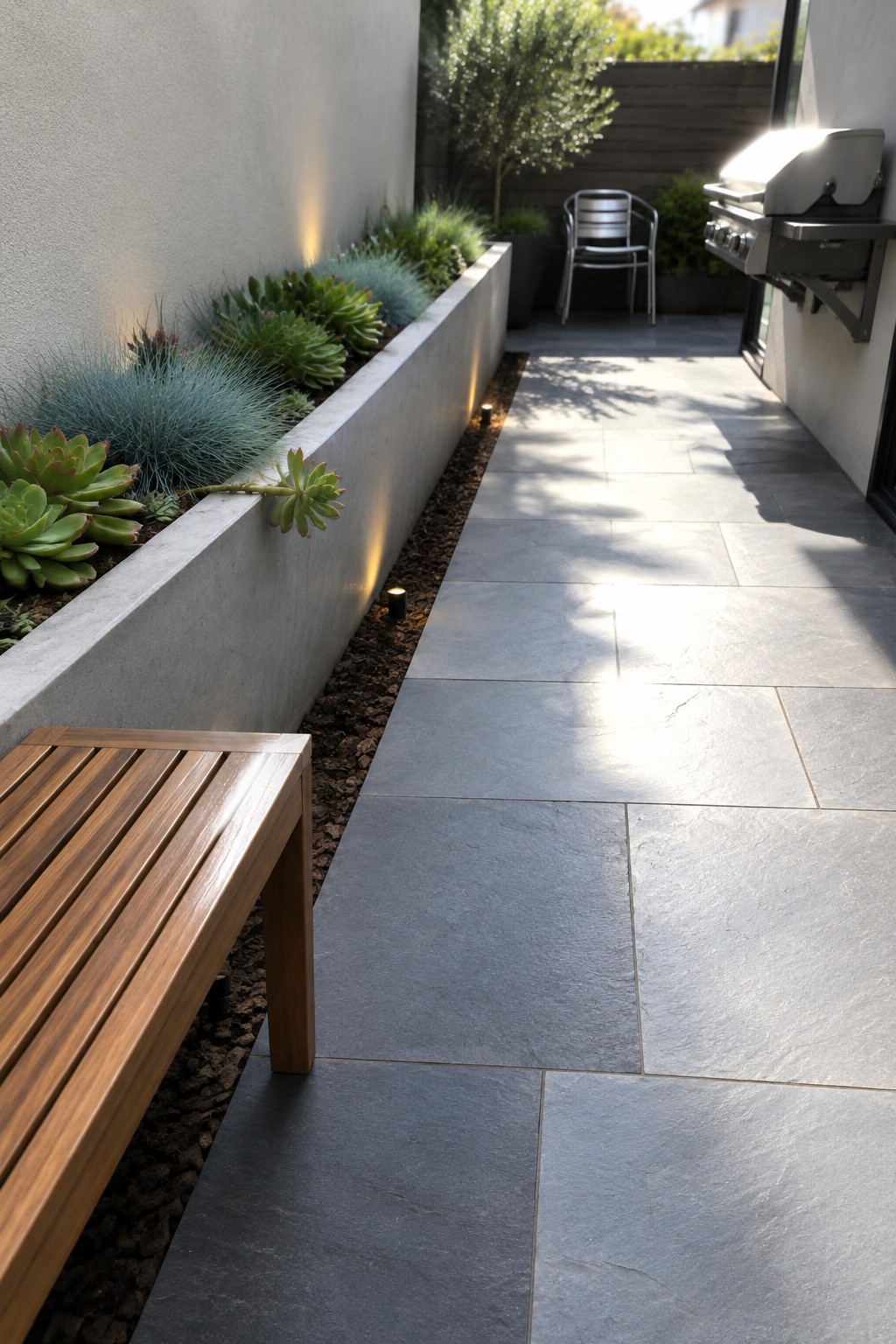
Large stone pavers make a patio easier to care for by reducing the number of joints where weeds and debris can collect. They also give a narrow outdoor space a simple, orderly layout.
Use durable, slip-resistant pavers in a finish that suits your home, and leave enough room between them for comfortable walking. A slim planting bed can run alongside the path without taking over the patio.
Use a Pergola to Shade a Patio Dining Area

A pergola can make an open patio more comfortable without closing it off. Its overhead beams provide some shade, while the space still feels airy. Here, a covered dining area also gives the patio a clear place to gather.
For a low-maintenance setup, keep the furniture simple and choose materials made for outdoor use. A pergola suits patios that get strong sun, but it may need a shade cloth if the open beams do not block enough of it.
Frequently Asked Questions
Q: What’s the easiest way to keep patio plants watered when I’m away?
A: Group pots with similar watering needs together, then add a simple drip line or self-watering planters. A layer of mulch also helps the soil stay damp longer.
Q: Can I grow a patio garden if it only gets a few hours of sun?
A: Yes. Try leafy greens, mint, parsley, or other plants that tolerate partial shade. Check how much direct sun your patio gets before choosing plants, since even a small shift can make a difference.
Q: How do I stop containers from drying out so quickly?
A: Choose larger pots, which hold moisture longer than small ones, and make sure each has drainage holes. Terracotta pots can dry out fast, so plastic or glazed containers may be easier to manage.
Q: What should I do with my patio garden in winter?
A: Bring tender plants indoors before frost, and leave hardy pots in a sheltered spot. Empty saucers so water doesn’t freeze around the roots.
