

A patio vegetable garden works best when the plants fit the space without making it hard to sit, move, or reach what needs tending.
I’ve found that a clear path and a sensible spot for watering matter just as much as choosing the right pots.
Even a small patio can hold a useful mix of vegetables when containers make good use of corners, railings, and sunny edges.
Some setups look appealing at first but become awkward once the plants grow, so I’d start with ideas that leave room for daily use.
The most practical designs are easy to adapt, and a few may be worth trying with the containers and space you already have.
Grow Vegetables Vertically in a Narrow Patio

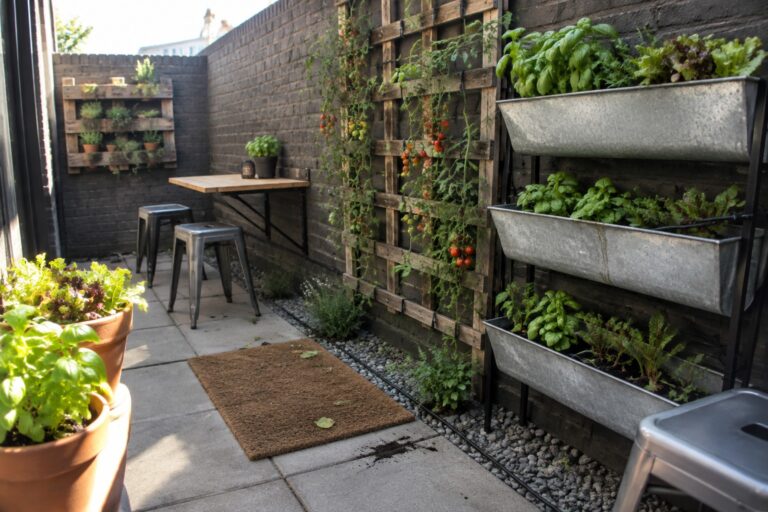
A vertical planter makes good use of a patio where floor space is limited. Here, wall-mounted troughs hold leafy greens below climbing tomato vines, leaving the walkway open.
Try this setup along a sunny wall, using sturdy supports and containers with drainage holes. Keep taller vines from shading smaller plants, and make sure you can reach each level for watering and harvesting.
Use Raised Beds for Compact Vegetable Gardens
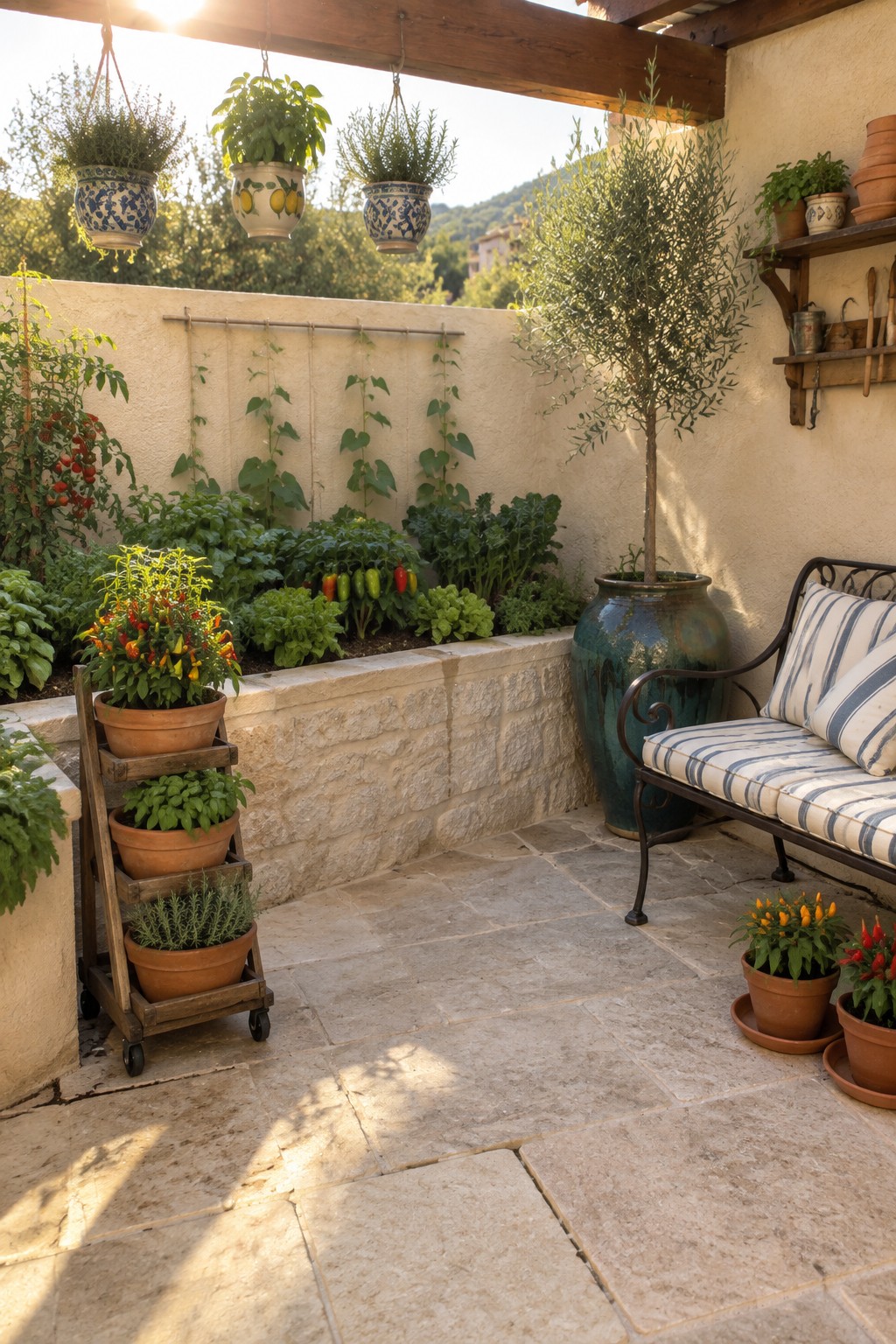
A raised bed can make a small patio garden easier to organize and tend. It keeps vegetables in one defined area, while leaving nearby paving open for walking or a chair.
Choose a bed that fits the patio without narrowing the main path, and grow upward where you can. A trellis can support climbing vegetables, making good use of a wall or fence.
Use Vertical Planters to Save Patio Space
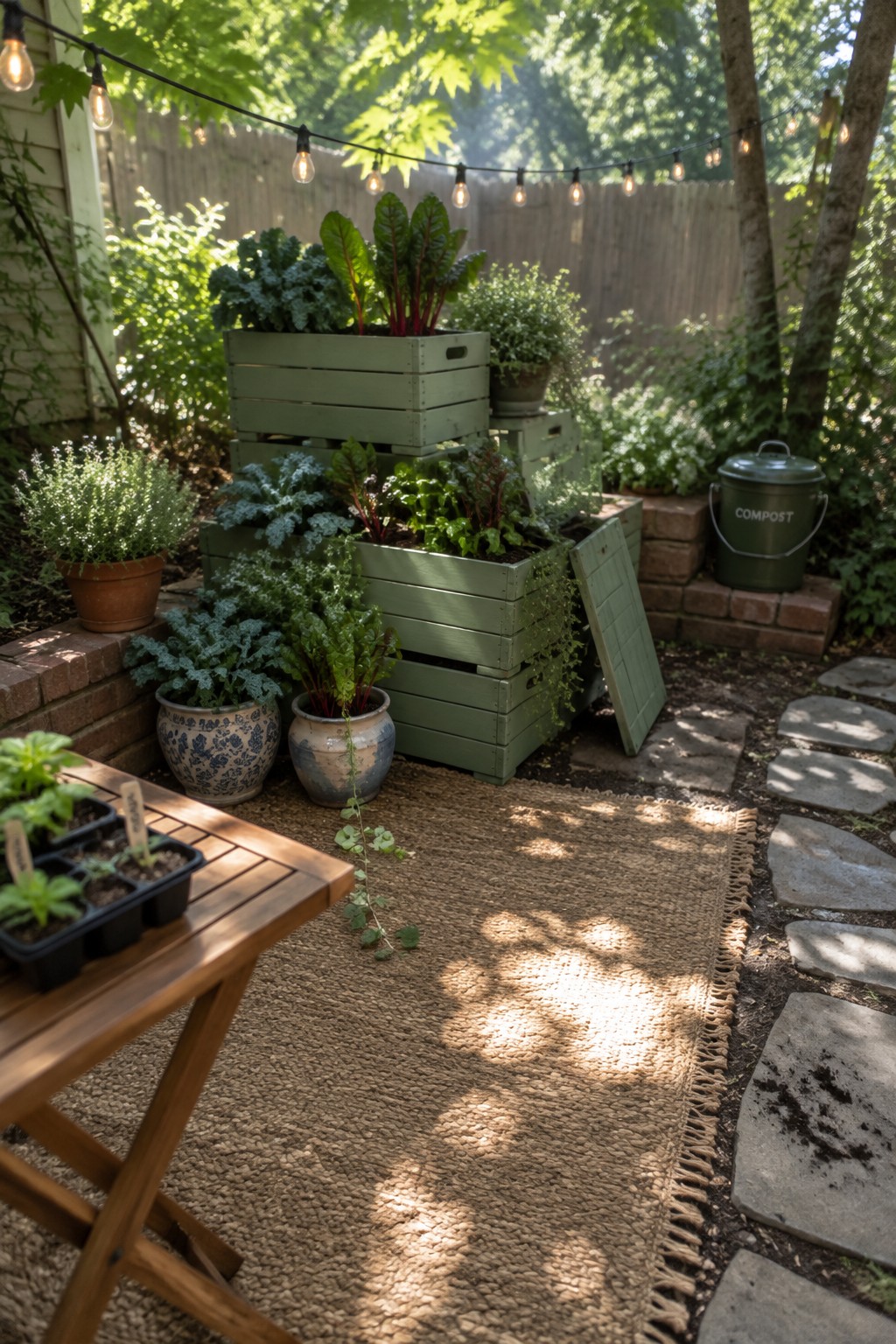
Stacked raised planters let you grow several vegetables without taking up much ground area. This is a handy setup for a small patio, especially when you want the beds close together and easy to tend.
Choose sturdy planters with enough soil depth for the crops you want to grow, and place them where they get suitable sunlight. Keep taller beds from shading shorter plants, and leave room to reach each level for watering and harvesting.
Use Rolling Planters To Make A Balcony Garden Flexible

Rolling planters make it easier to grow vegetables in a narrow outdoor space without giving up the whole walkway. They can be moved as plants grow or shifted aside when you need room to sit, which is especially useful on an apartment balcony.
Choose sturdy planters with locking wheels, and keep them on a firm, level surface. Long wooden boxes can hold several leafy vegetables or herbs, while a trellis gives climbing crops room to grow upward.
Use a Tower Planter for Patio Vegetables
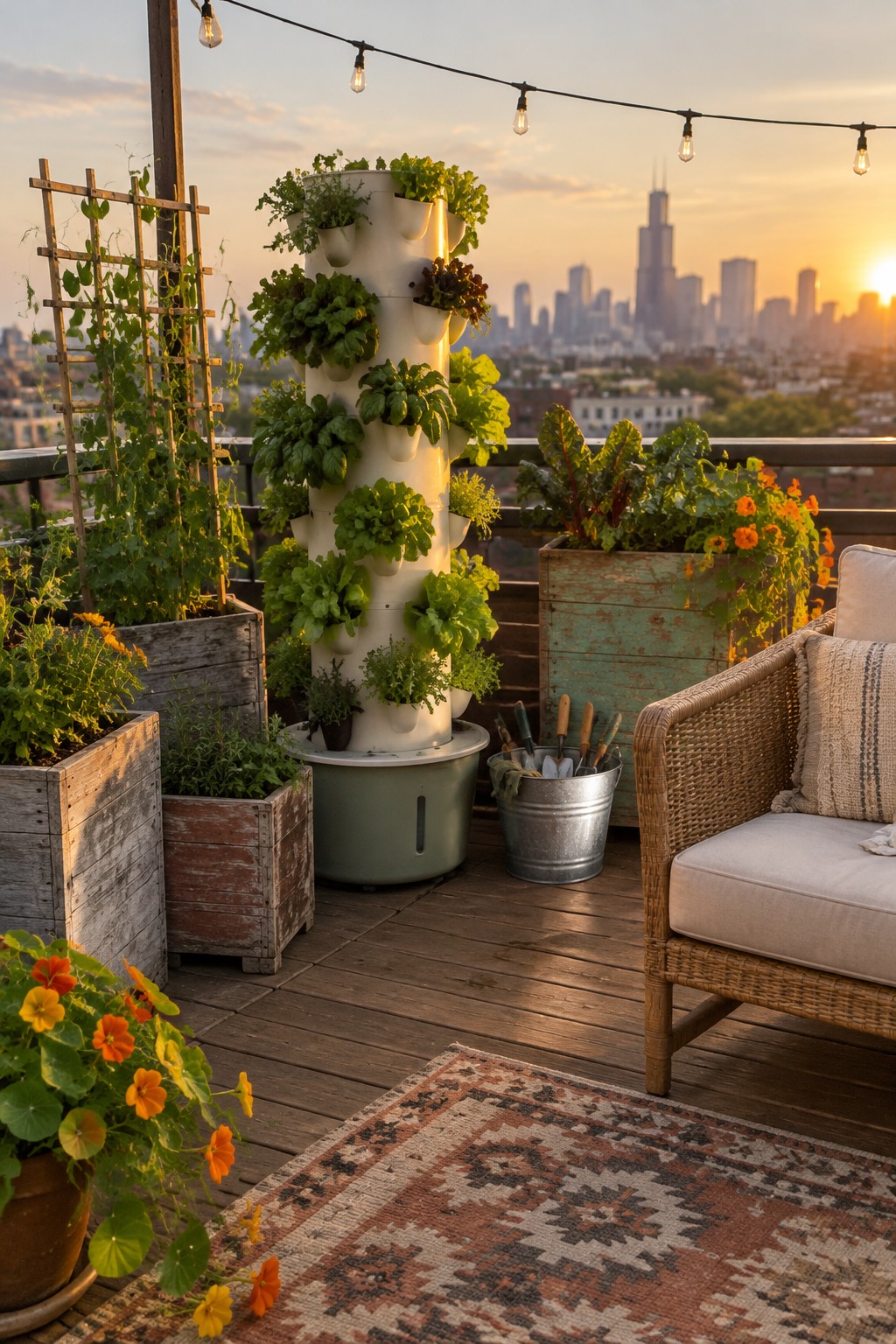
A tower planter lets you grow several crops in a small patio footprint. The stacked pockets make room for leafy greens and herbs without using up space needed for a chair or walking path.
Set it where the plants get enough sun and you can reach each pocket to water and harvest. A tower like this works especially well on a deck or balcony, though it needs a stable base when fully planted.
Grow Vegetables in Wall-Mounted Pockets

Fabric planting pockets make good use of a patio wall, leaving more floor space open for walking or a small work table. They suit herbs and compact vegetables, and the plants are easy to reach for watering and picking.
Hang the pockets where they’ll get enough sun, and check that the wall can handle the weight once the soil is wet. A mix of herbs and small pepper plants is a practical place to start.
Grow Vegetables in Tiered Patio Beds

Stacked raised beds make good use of a small patio by giving vegetables more than one level to grow in. This setup keeps different plants close at hand without taking up as much floor space as several separate beds.
Use the deeper lower beds for tomatoes or other larger plants, and reserve upper levels for herbs and leafy greens. Leave enough room to reach each tier comfortably, and check that the plants above won’t shade vegetables below.
Grow More Vegetables With a Tower Garden

A vertical garden tower lets you grow several crops in a small patio footprint. Here, leafy vegetables fill planting pockets along a single upright structure, leaving more floor space open than a row of separate pots would.
Choose a spot with enough sun and easy access for watering and harvesting. A tower can suit a narrow patio or balcony, but check that its base is stable and that the plants near the top won’t shade the ones below.
Add a Built-In Bench Along the Garden Bed

A bench built into the edge of a patio garden gives you a place to sit without taking up room for separate chairs. The raised bed behind the seat keeps vegetables close at hand, so watering and picking are easy.
This setup works well on a small deck or patio where every bit of floor space matters. Leave enough room for plants to grow and for you to reach into the bed comfortably.
Make a Patio Work as a Kitchen Garden
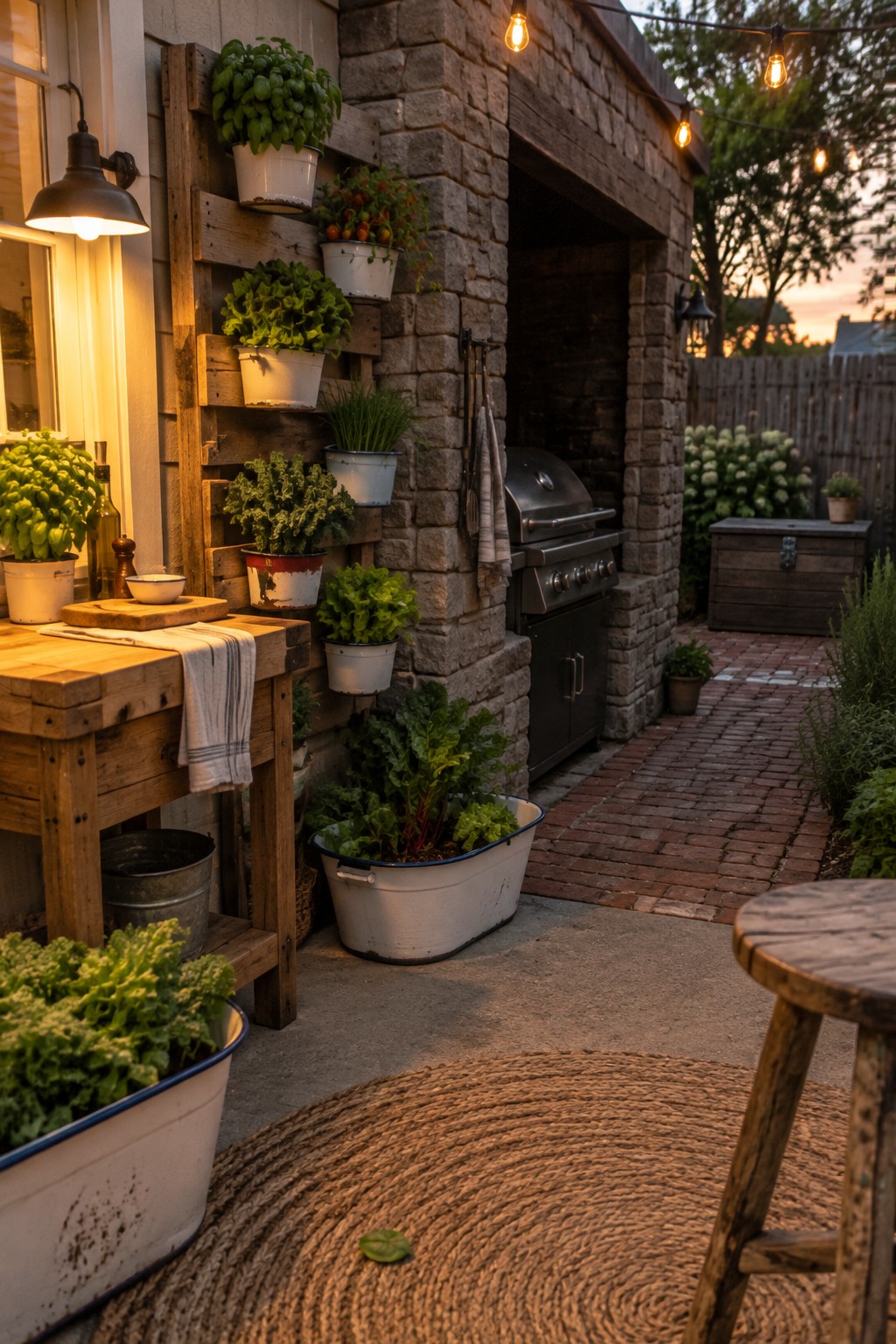
A patio can do more than provide a place to sit. A wall-mounted rack of herb pots makes use of vertical space, leaving the floor open while keeping fresh ingredients close at hand.
Use a sunny wall near the kitchen, and choose pots that are easy to water and reach. Herbs and compact greens suit this setup well, but leave enough room between plants for air to circulate.
Make a Balcony Dining Spot Part of the Garden

A small table and folding chairs can give a balcony garden a place to enjoy, not just a place to grow things. Here, planters run along the railing, leaving room for a compact dining area.
Use this layout when floor space is limited. Keep the seating easy to fold or move, and use railing planters for herbs or compact vegetables so the table stays clear.
Grow Vegetables in Staggered Raised Beds

Raised beds arranged at different heights make a narrow patio easier to garden. The tiers create room for several crops while keeping them within reach, so you can tend the plants without stepping into the growing area.
Use this approach along a wall or fence where floor space is limited. Leave a clear path beside the beds, and check that each level gets enough sun for the vegetables you plan to grow.
Use a Pergola to Make Room for Patio Vegetables

A pergola can support a small patio garden while leaving the floor open for a table, path, or planters. Here, raised planting shelves make use of the space along the sides, so vegetables can grow without taking over the seating area.
For a compact patio, place narrow beds or containers around the edges and keep the middle clear for moving through. Choose crops that suit the light under your pergola, since leafy greens may do better in partial shade than fruiting vegetables.
Use a Trellis to Grow Patio Vegetables Upward

A trellis lets climbing vegetables use wall space instead of taking over the patio floor. It’s a practical way to grow crops like cucumbers in a compact garden, and the plants are easier to reach when they’re trained along a sturdy support.
Set the trellis behind a raised bed or along a sunny fence, and leave enough room to tend the plants from below. A black metal grid like this one can support vines while keeping the growing area neat.
Grow Vegetables in Hanging Fabric Planters

Hanging fabric planters make use of the space above the patio floor, leaving a narrow area open for walking and working. They’re a handy way to grow herbs and smaller vegetables when there isn’t room for another raised bed.
Attach the planters to a sturdy frame or railing, and check that it can handle the weight of damp soil. Choose crops that suit the pocket size, and water regularly since fabric can dry out faster than solid containers.
Use a Pergola Trellis for Patio Tomatoes

A pergola trellis can turn the space above a narrow patio into growing room. Train vining tomatoes up a sturdy back panel and across the overhead grid, keeping the walkway clear while making use of vertical space.
This setup suits a small patio where floor space is limited. Choose a strong, weather-resistant structure, and leave enough room around the plants to reach fruit and prune vines as they grow.
Make Seating Part of a Compact Patio Garden

A small patio can do more than grow vegetables. A simple seating area makes it easier to spend time among the plants, and the space feels useful even when you are not tending the garden. Here, floor cushions and a low table keep the setup casual without taking up much room.
For a compact patio, choose seating that can move aside when you need access to containers or a clear path. Leave the sunniest spots for vegetables, and use the edges for a small seat or table. That way, the garden stays practical without giving up a place to sit.
Arrange Raised Beds in Tiers

Tiered raised beds make room for several kinds of vegetables without spreading containers across the whole patio. The staggered layout keeps each bed easy to reach and gives smaller spaces a clear place for growing.
Set the beds where they get enough sun, and leave room to walk around them for watering and harvesting. A trellis can help use the vertical space too, but keep taller crops from shading the lower beds.
Turn Patio Edges Into a Vegetable Garden
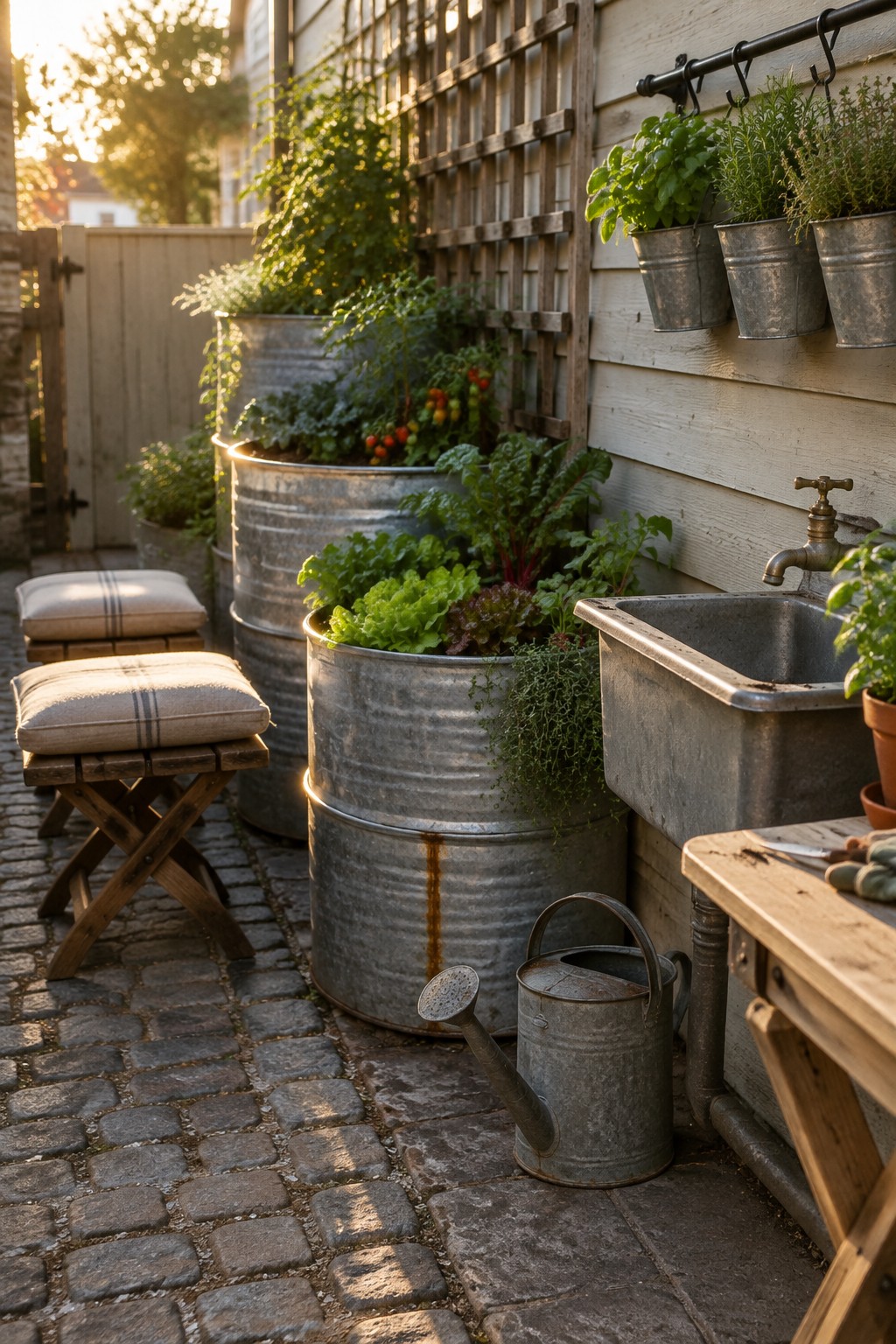
Using narrow patio edges for growing keeps the main walkway open while making room for a useful kitchen garden. Large metal tubs can hold several crops in a small footprint, and a trellis gives climbing vegetables room to grow upward.
Try this setup along a sunny wall or fence where containers won’t block the path. Choose tubs with drainage holes, and leave enough space to reach in and harvest without squeezing past them.
Use a Potting Shelf to Make Room for Patio Vegetables

A wall-mounted potting shelf gives a small patio a useful place to start seeds and keep herbs and supplies close at hand. It makes better use of the wall, leaving the floor open for a narrow planter or a chair.
Choose a sturdy shelf that can hold several pots, and keep it within easy reach of your growing area. A black seed tray fits neatly on the work surface, but leave enough room to pot plants without crowding the vegetables below.
Grow Vegetables on a Rolling Garden Cart

A rolling cart with several planting trays makes good use of a narrow patio. You can grow leafy greens and seedlings in a small footprint, while keeping the plants together and easy to reach.
Choose a sturdy cart with drainage holes, and leave enough room to wheel it along the path when you need to water or harvest. It works especially well on paved patios where garden beds are not practical.
Grow Vegetables in a Vertical Patio Garden

A vertical planter lets you grow several crops without giving up much floor space. It works especially well on a narrow patio, where a tower of planting pockets can make use of a sunny wall or corner.
Choose a stable planter with enough room for the roots, and keep thirsty leafy greens easy to reach for watering. Leave a little space around it so plants get airflow and you can tend them comfortably.
Use a Vertical Planter to Grow More in Less Space

A vertical planter makes it easier to grow several herbs and leafy vegetables without giving up much patio floor space. It works especially well in a small seating area, where a tall planting tower can fit beside a bench rather than taking up room for another wide container.
Choose a planter with pockets deep enough for the crops you want to grow, and check that each level gets enough light. Keep thirsty plants easy to water, since upper pockets can dry out faster than lower ones.
Grow Vegetables in a Vertical Wall Garden

A wall of planting pockets makes use of space that might otherwise sit empty. It keeps leafy vegetables and herbs close at hand while leaving the patio floor open for walking or a small chair.
Use a sturdy wall-mounted system where the plants can get enough sun, and choose shallow-rooted crops such as lettuce and herbs. Check that the wall and fixings can support the weight of damp soil, and make sure water can drain without running across the patio.
Build a Patio Kitchen Garden With Raised Beds

Raised beds can turn a narrow patio into a useful place to grow vegetables without taking over the seating area. Staggering the beds in tiers makes it easier to reach the plants and gives you more growing room in a compact footprint.
Choose beds that fit the patio’s width, leaving a clear route past them. A tiered setup works well along an open wall or railing, but make sure the beds get enough sun and are easy to water.
Frequently Asked Questions
Q: What vegetables are easiest to grow on a small patio?
A: Start with leafy greens, bush beans, radishes, or compact tomatoes. They grow well in containers and don’t need a big stretch of soil. Check the plant label for mature size so your pots don’t get crowded.
Q: How do I keep patio vegetables watered when I’m busy?
A: Check the soil with a finger before watering. If the top inch feels dry, water slowly until it drains from the bottom of the pot. A layer of mulch can help the soil hold moisture between waterings.
Q: Can I grow vegetables on a patio that only gets a few hours of sun?
A: Yes, but choose crops that tolerate some shade, such as lettuce, spinach, and herbs. Fruiting plants like peppers and tomatoes usually need more direct sun to produce well.
Q: What should I do with extra water draining from my containers?
A: Set pots on saucers or trays to catch runoff, then empty them after watering so roots don’t sit in water. If your patio has a drain, arrange pots so excess water can flow toward it.
