

Narrow patios can be tricky because every chair, planter, and path competes for space, and a layout that looks tidy on paper may feel cramped once you use it.
I’ve found that the first thing people notice is often whether they can move around comfortably, not how many plants fit along the edges.
A clear route through the patio, with seating placed where it makes sense, can make an awkward shape feel intentional while still leaving room to relax.
I’d focus on ideas that balance planting with everyday use, since even a small change in the position of a bench or planter can open up the whole space.
Some layouts may be worth adapting to your own patio, especially if you’re looking for a way to make an overlooked corner work harder.
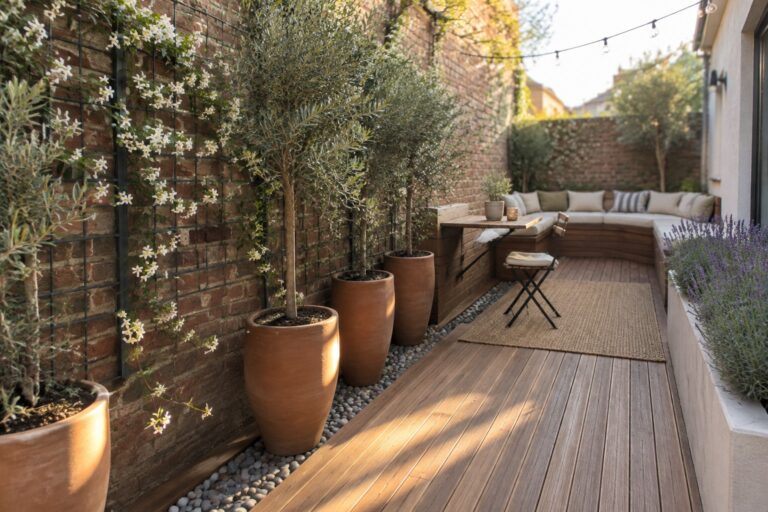
Use a Narrow Patio for a Simple Walkway Layout

A narrow patio can work better when the main path stays clear and seating sits along the edges. Here, a slim deck walkway runs between built-in benches and potted plants, making it easy to move through the space without giving up places to sit.
Try this layout in a long courtyard or side yard. Keep the path wide enough for comfortable walking, and use pots or narrow planting beds along the walls so they do not crowd the route.
Use A Straight Path To Make A Narrow Patio Work
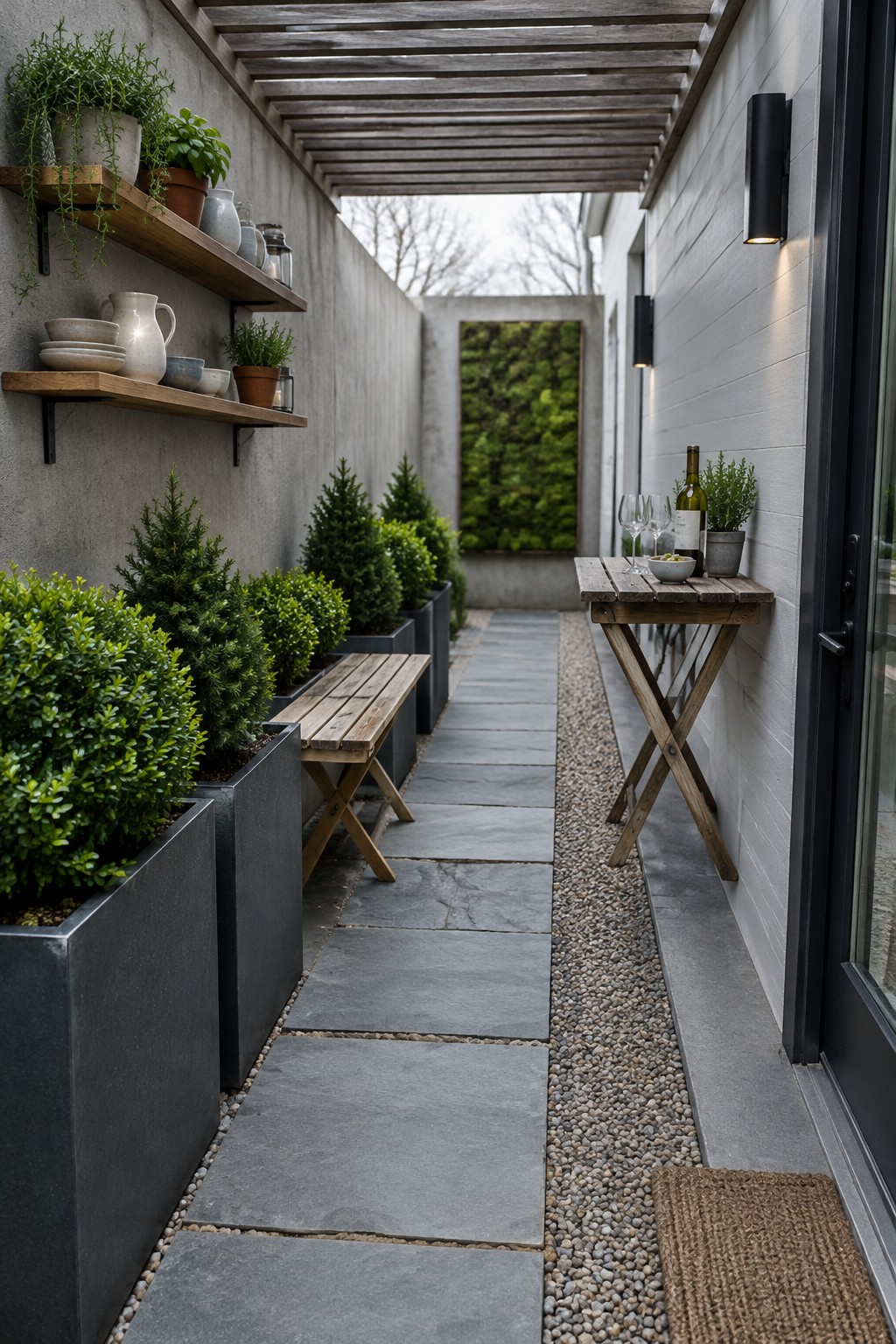
A simple path gives a narrow patio a clear route through the space without taking up room for a wide walkway. Large stepping stones set in gravel are a practical choice, and they help keep the layout open rather than crowded.
This approach suits side yards and slim spaces between the house and a boundary wall. Keep the stones easy to step between, and place planters along one edge so the path stays clear.
Use Built-In Seating to Save Patio Space
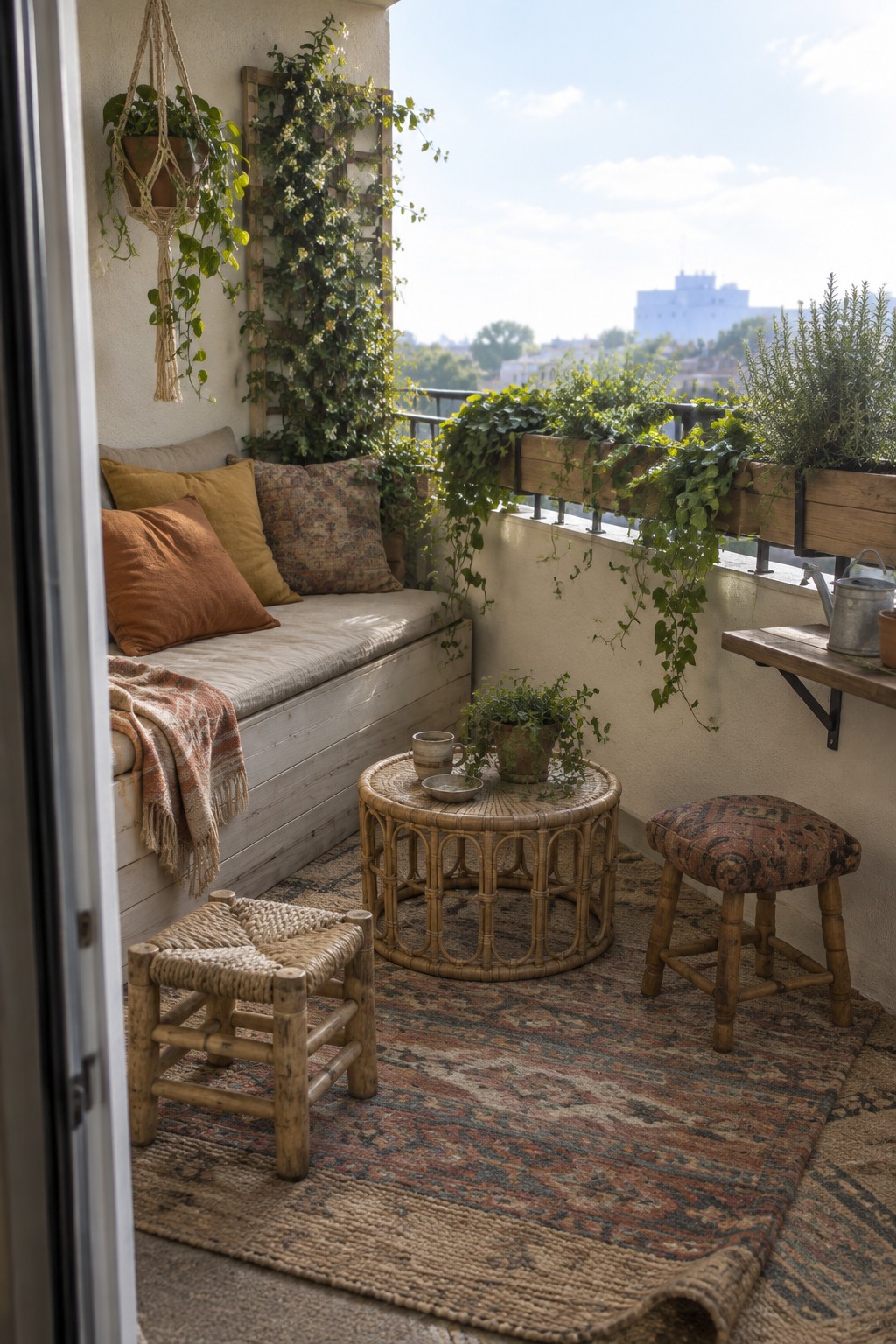
Built-in seating is a useful choice for a narrow balcony because it keeps the main walkway open. A bench along one wall can also give you a place to sit without crowding the center of the patio.
Add a slim cushion and a few pillows for comfort, then use a small movable table nearby. This layout suits balconies and awkward corners where full-size chairs would take up too much room.
Use a Winding Path to Make a Narrow Garden Feel Larger

A gently winding path gives a narrow garden a little more interest than a straight route from one end to the other. Here, irregular stone pavers lead past the seating area, making the space feel like it has distinct spots to enjoy.
For a similar layout, let the path curve or shift slightly as it moves through the garden, while keeping each step easy to follow. Leave enough room for plants along the edges, but avoid letting them crowd the walking surface.
Add a Pergola for Privacy and Shade

A pergola can make a narrow patio feel like a defined outdoor room without closing it off. Here, the overhead slats create a sheltered seating area, while the open sides let the space stay airy.
For a compact deck or side patio, choose a slim pergola that fits the footprint and leave a clear route past the seating. Climbing plants can add cover over time, but keep them trimmed so they do not crowd the walkway.
Add a Stepping-Stone Path to a Narrow Garden

A stepping-stone path is a practical way to guide movement through a narrow garden without paving the whole space. The stones leave room for gravel and planting, so the route feels lighter and the garden stays easy to maintain.
Set the stones far enough apart for a comfortable stride, and keep the path clear of furniture or bulky planters. This approach works well in slim side yards and small enclosed gardens, where a solid walkway can take up too much room.
Add a Built-In Bench Along One Side
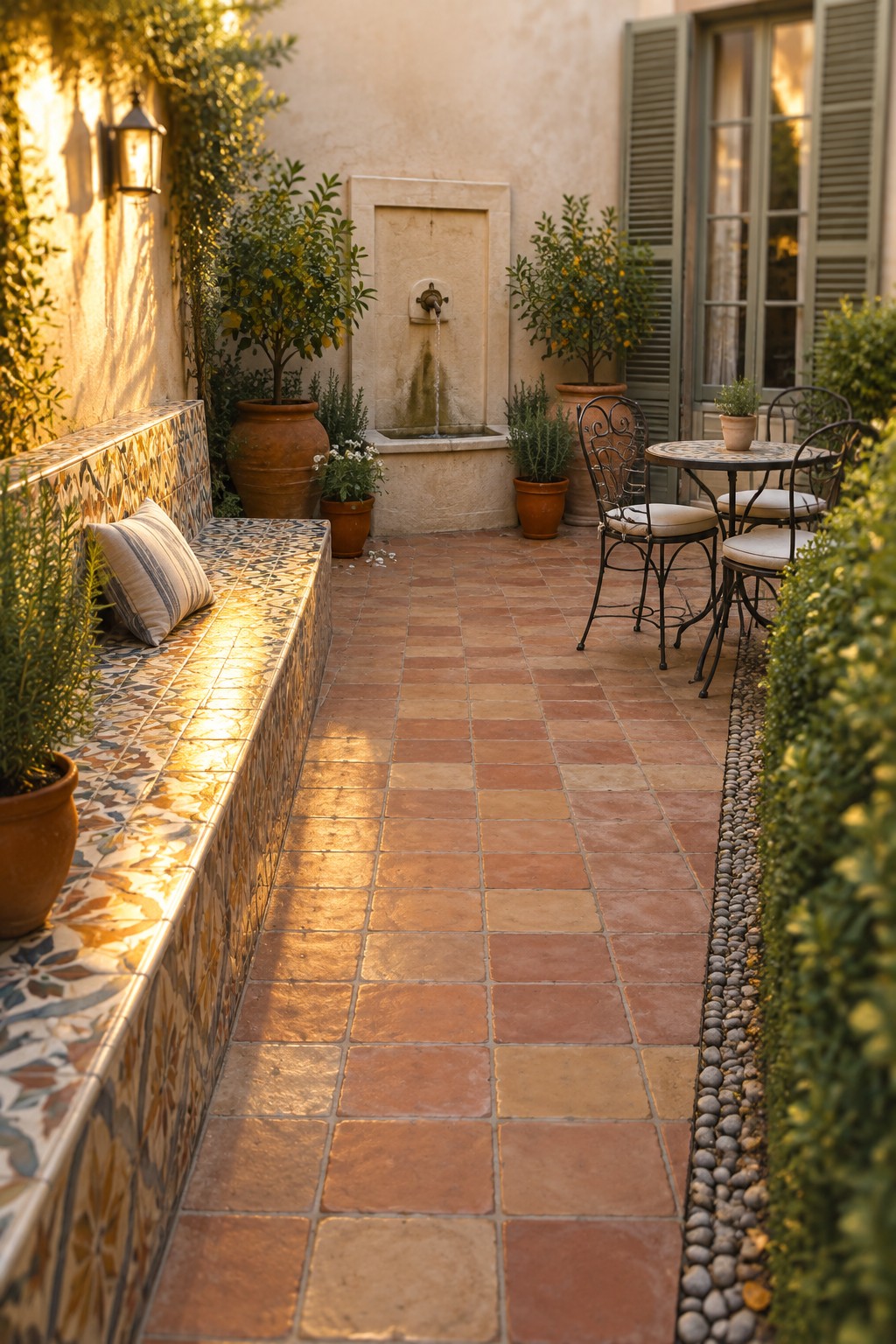
A long tiled bench can give a narrow patio useful seating without taking up the middle of the walkway. It also makes the edge of the space feel purposeful, rather than leaving a row of chairs to crowd the route through.
For a similar layout, place the bench along a wall and keep the walking space clear beside it. A patterned tile finish can make the seat a feature, but choose a surface that is comfortable enough for regular use.
Add a Bench Along the Patio Edge

A slim bench placed along one side of a narrow patio leaves the main path open for walking. It gives you a place to sit without needing chairs that stick out into the walkway.
This layout works well in a long, tight outdoor space. Keep the bench close to the edge and choose a simple, narrow design so there is still room to move comfortably.
Use A Narrow Patio for Cozy Seating

A narrow patio can still feel like a place to linger when seating runs along the sides and leaves a clear path through the middle. A low pallet sofa and small round table make the layout comfortable without blocking the walkway.
Keep the main furniture close to the walls, and choose pieces that are easy to move if you need more room. This approach works well in long side yards and compact courtyards where a wide furniture arrangement would feel cramped.
Use a Curved Stone Path Through a Narrow Garden
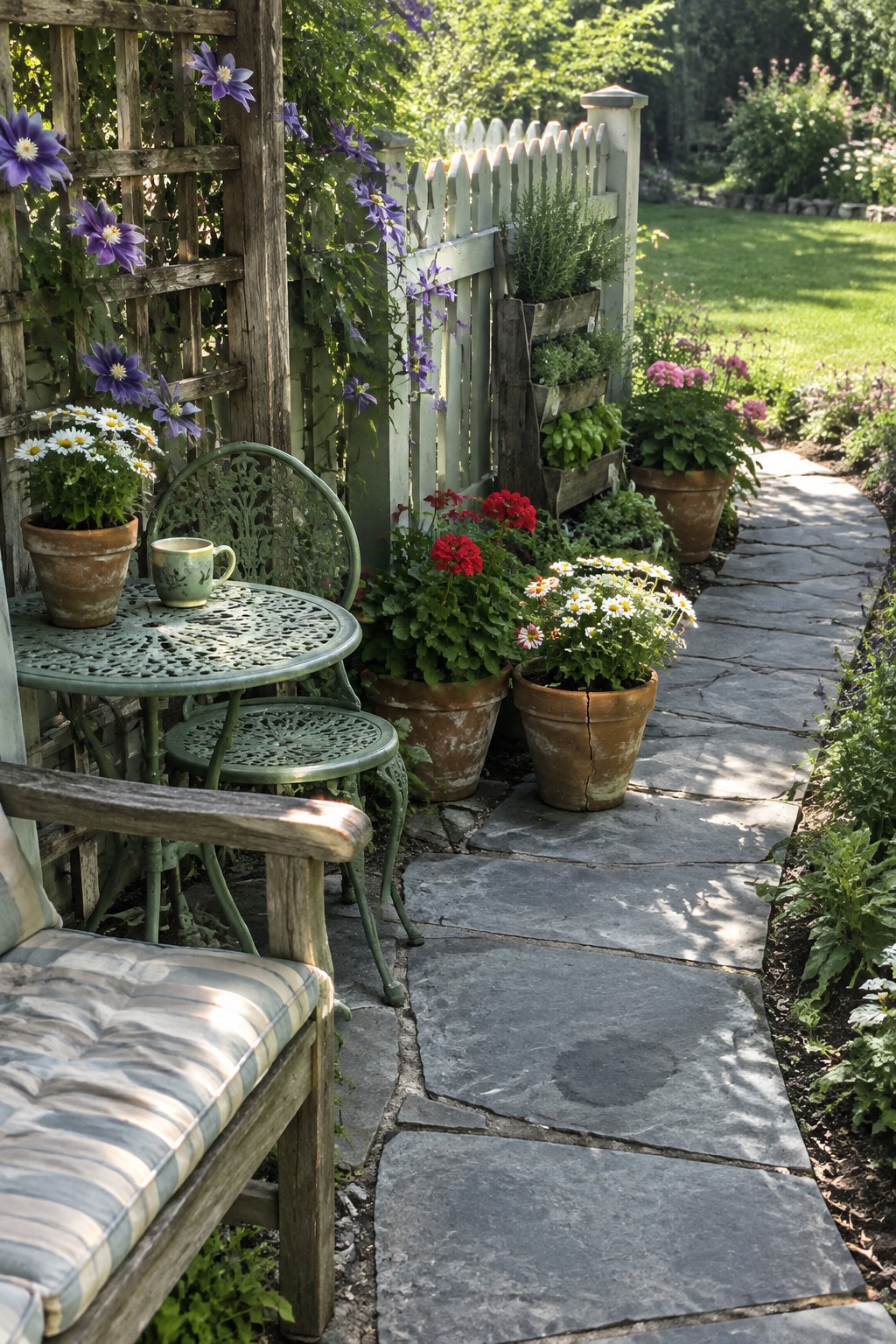
A gently curving path can make a long, narrow garden feel less like a passageway. The irregular stone edges also give the route a relaxed look without taking space away from the planting.
This layout suits a side garden or a tight space beside a fence. Keep the stones wide enough for comfortable walking, and let flowers or low plants edge the path without spilling over it.
Add a Long Water Feature to a Narrow Patio

A slim water channel can make a narrow patio feel purposeful without taking up much room. Its straight shape draws the eye through the space, while the water adds a quiet focal point.
Place it along the main walking route, leaving enough room on both sides to pass comfortably. A simple stone edge keeps the layout neat, and a small pump can help keep the water moving.
Grow a Kitchen Garden Along a Narrow Balcony

A narrow balcony can still be useful for both gardening and dining when the planters stay along one side. This leaves a clear strip for a small table, so the space works for everyday meals as well as growing herbs and greens.
Choose planters that fit the balcony’s width, and keep them secure so they do not crowd the walking route. A slim wall-mounted or fold-down table can be a good alternative if a freestanding table leaves too little room to pass.
Use a High Table for Narrow Patio Dining
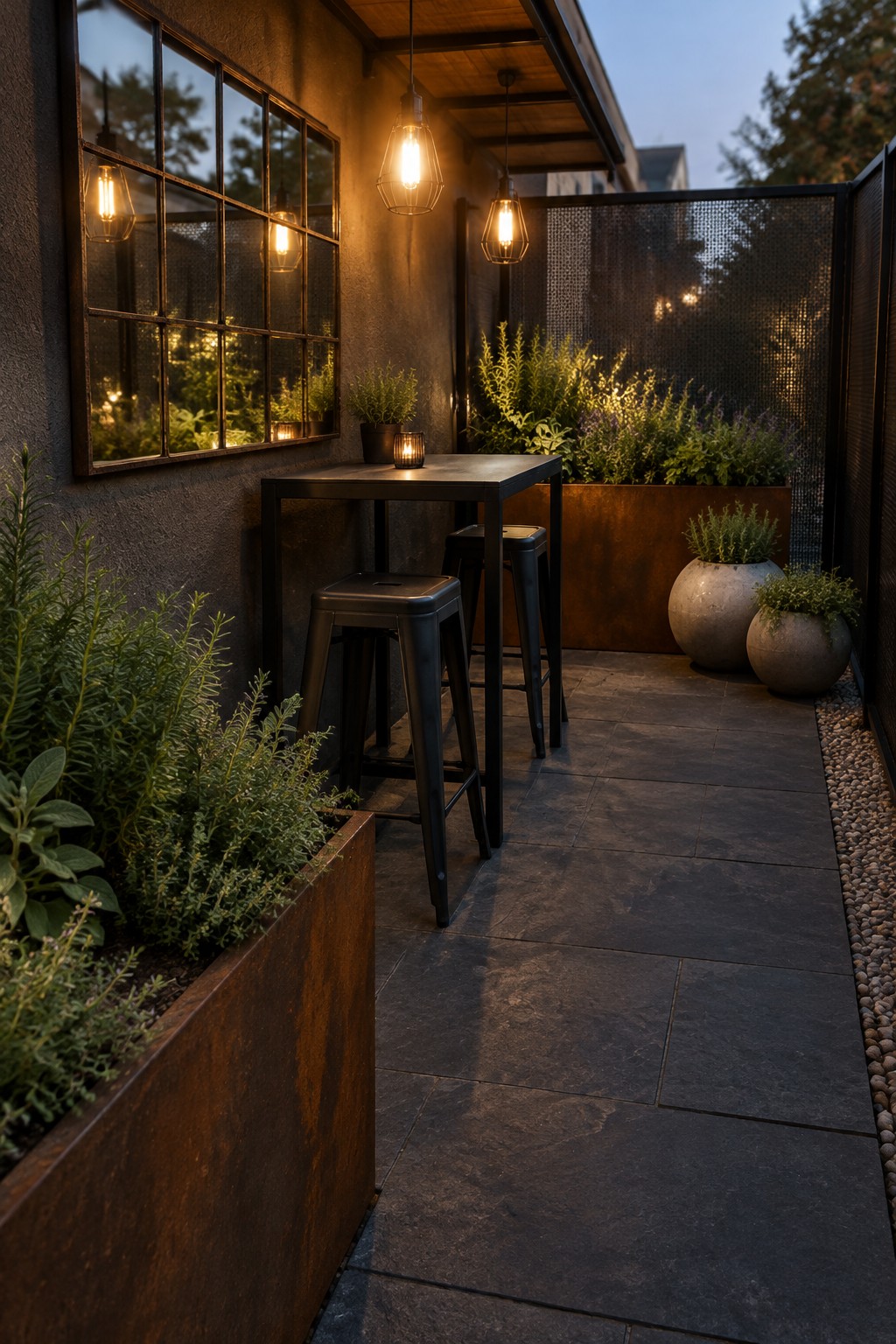
A slim high table can make a narrow patio useful for dining without taking up the room needed to walk through it. This setup keeps seating tucked close to the house, leaving a clear route along the patio.
Try a narrow table with stools that slide underneath when they are not in use. It works well in a side yard or other tight outdoor space, but leave enough clearance to pull out a stool without blocking the path.
Use a Narrow Poolside Patio for Relaxed Seating

A narrow patio can still feel comfortable when seating runs along one side of the pool instead of taking up the whole walkway. Here, striped loungers sit beside the water, leaving a clear path through the space.
This layout suits long, enclosed yards where room is limited. Keep furniture slim and place it close to one edge so people can move around without squeezing past it.
Use Large Planters to Add Structure to a Narrow Garden

Oversized planters can give a narrow garden a clear rhythm without taking up space with wide planting beds. Here, terracotta pots line one side of the path, adding greenery while leaving the walking route open.
Try this approach in a side yard or a slim patio where in-ground planting is limited. Keep the pots close to a wall or fence, and leave enough room between them for an easy walk.
Use Built-In Seating Along the Garden Edge

A narrow patio can make room for comfortable seating without giving up much floor space. A built-in bench along the edge uses space that might otherwise be taken up by separate chairs, while leaving a clear path through the middle.
This layout works especially well in a long, enclosed patio. A corner bench can turn the far end into a natural place to sit, and cushions make the wood seat more comfortable. Keep the walkway wide enough to move through easily.
Set Up a Narrow Patio for Outdoor Cooking

An outdoor kitchen can make a narrow patio more useful without taking up the whole space. Keeping the counter and grill along one wall leaves a clear route through the middle, which makes the layout easier to move around in.
A long counter can double as a serving spot, and a couple of stools are enough for casual seating. This setup suits a townhouse patio or balcony, but leave comfortable room to pass the grill and check local rules before installing one.
Arrange Seating Along One Side of a Narrow Balcony

A long bench set against one wall leaves a clear route through a narrow balcony. It gives you room to sit without placing chairs across the walkway, and the seating can feel comfortable with cushions made for outdoor use.
Keep the bench shallow enough for people to pass easily, then add a small folding table if you need a place for drinks or a meal. This layout suits a balcony or slim patio where every bit of floor space matters.
Use a Covered Patio for a Cozy Seating Nook

A covered patio can make a narrow outdoor space feel like a useful extra room. Here, a built-in bench keeps the seating compact, so there’s still floor space to move around.
For a similar setup, place the bench along the back or side wall and add a simple canopy or awning for shade. Keep cushions and throws to a few practical pieces so the nook stays comfortable without crowding the walkway.
Use Wall Planters to Make a Narrow Garden More Colorful

Wall-mounted planters let you grow flowers without taking up much of the ground space. Along a narrow garden path, they also bring planting closer to eye level, so the fence becomes part of the garden rather than just a boundary.
Attach sturdy boxes to a fence or wall, and leave enough room for plants to spill over without blocking the walkway. A mix of flower colors works well, but choose plants suited to the amount of sun the wall gets.
Use Garden Arches to Shape a Narrow Path

A row of garden arches gives a long, narrow path a clear rhythm and makes the route feel intentional. Climbing plants can fill in the structure over time, while the open path stays easy to walk.
This idea works well in a side garden or other slim space where planting beds run along the edges. Choose sturdy arches that leave enough headroom, and keep plants trimmed back so the walkway does not become crowded.
Use Shade to Make a Narrow Patio More Comfortable

A simple shade sail can make a slim patio easier to use during the day without taking up any floor space. It also helps define the seating area, which is useful when the patio has to serve as both a walkway and a place to sit.
Choose a sail that fits the shape of the space and attach it securely to the house or sturdy posts. Leave enough open area around the edges so the patio does not feel closed in, and check that the sail can be adjusted or removed when needed.
Build Seating Into The Patio Edge

Built-in seating makes a small patio easier to use without filling it with separate chairs. An L-shaped bench tucked along the wall leaves the center open for a coffee table and a clear way to move through the space.
This layout works well in a narrow corner or along one side of a patio. Add cushions for comfort, but keep them slim so the bench stays practical and doesn’t crowd the walkway.
Frequently Asked Questions
Q: How can I make a narrow patio feel less like a hallway?
A: Break up the long view with a small seating area, a change in paving, or a tall planter placed off to one side. Keep the main walking route clear so the space still feels easy to move through.
Q: What plants work well in an awkward corner?
A: Try a tall, narrow plant or a compact shrub in a pot that fits the corner without blocking the path. If the spot gets little sun, choose a shade-tolerant plant rather than squeezing in something that needs full light.
Q: Can I grow vegetables on a tiny patio?
A: Yes. Use a few deep pots or a slim raised planter for crops like herbs, lettuce, or cherry tomatoes. Put them where they’ll get enough sun, and keep the watering can close by.
Q: How do I add privacy without making a small patio feel cramped?
A: Use one or two trellises with climbing plants, or place a tall planter beside the area you want to screen. A full fence of bulky pots can eat up precious space, so keep the screen focused.
