

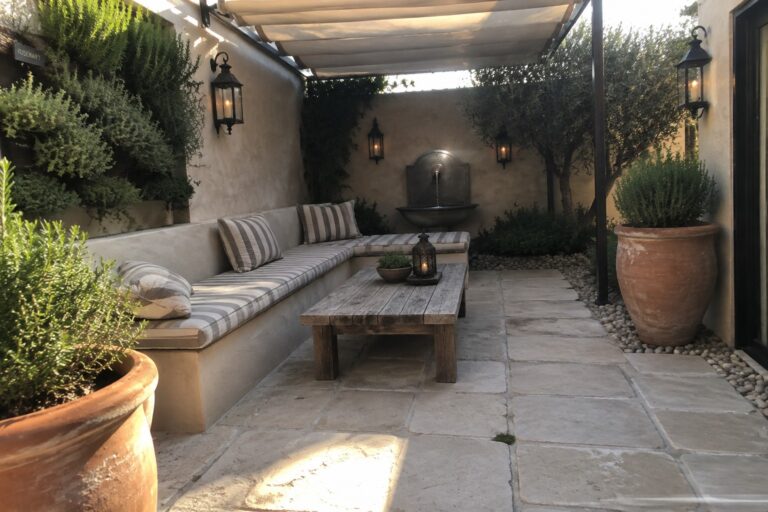
A patio garden works best when the planting and furniture leave enough room to move, sit, and use the space without awkward detours.
I’ve noticed that the first thing I register is often the route through a patio, especially when pots or chairs make the main path feel cramped.
A clear layout can make even a small outdoor area feel more useful, while thoughtful planting adds privacy and softens hard edges without taking over.
I’d start by looking at where people enter, where they naturally pause, and which corners could serve a purpose beyond holding spare pots.
The ideas ahead offer practical ways to shape a patio garden around everyday use, with details you can adapt to your own space.
Use Built-In Seating To Keep Patio Paths Clear
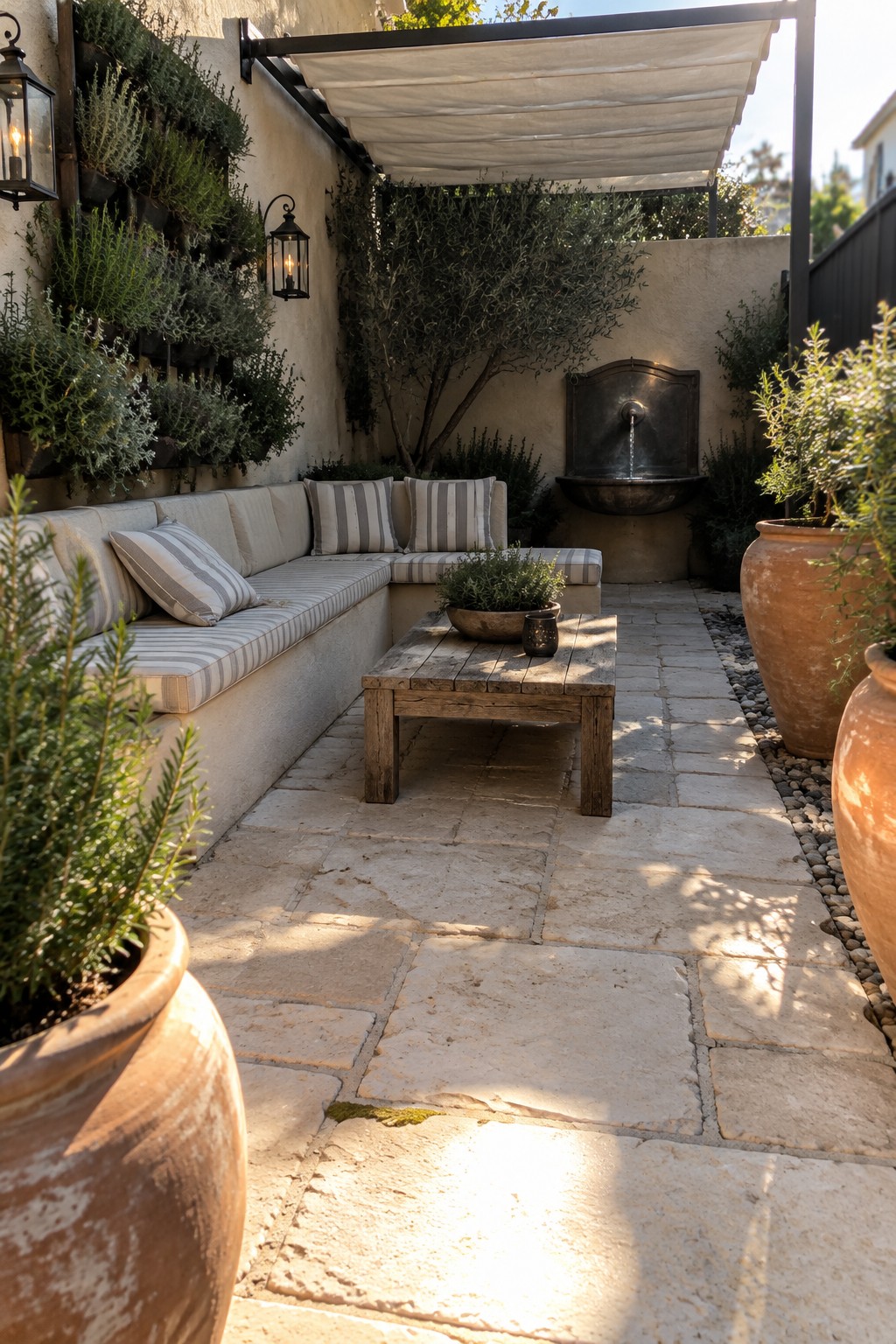
A built-in bench along one edge of a patio can make the seating area feel settled without crowding the route through it. Here, the L-shaped bench leaves a clear stone walkway beside the coffee table, so people can move through the space without stepping around extra chairs.
This layout suits a narrow courtyard or a small patio where every bit of floor space matters. Leave enough room between the bench and the path for comfortable walking, and use cushions that can be removed when the seating is not in use.
Make Patio Dining Easy to Reach
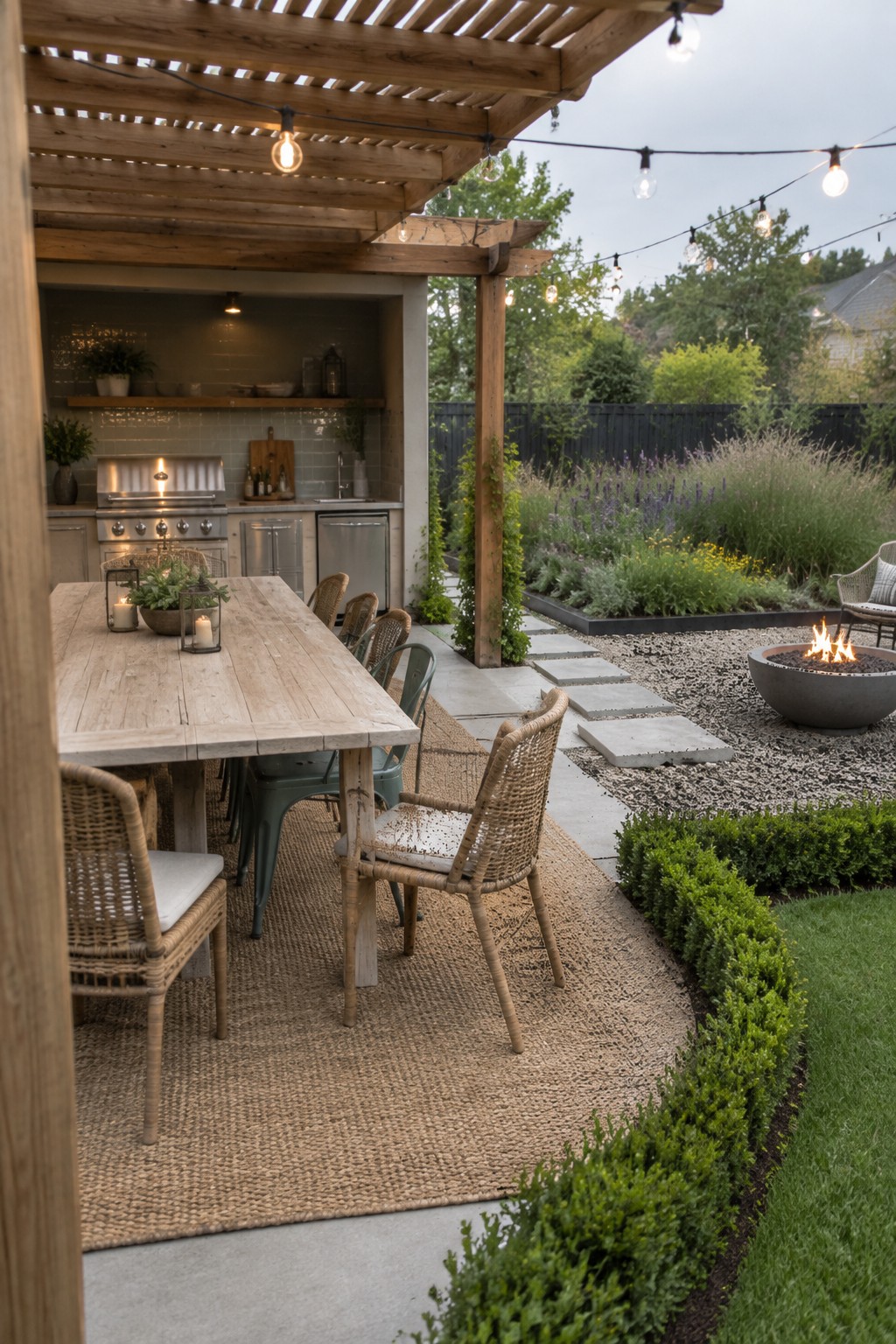
A dining table works best when it sits close to the outdoor kitchen, so serving a meal does not mean carrying everything across the yard. This setup also keeps cooking and dining connected while leaving room for other patio activities.
Place the table beside the kitchen or along its covered edge, and leave a clear route to the rest of the garden. A pergola can help define the dining area, but keep enough space around the chairs for people to move comfortably.
Use Curved Paths to Improve Patio Flow
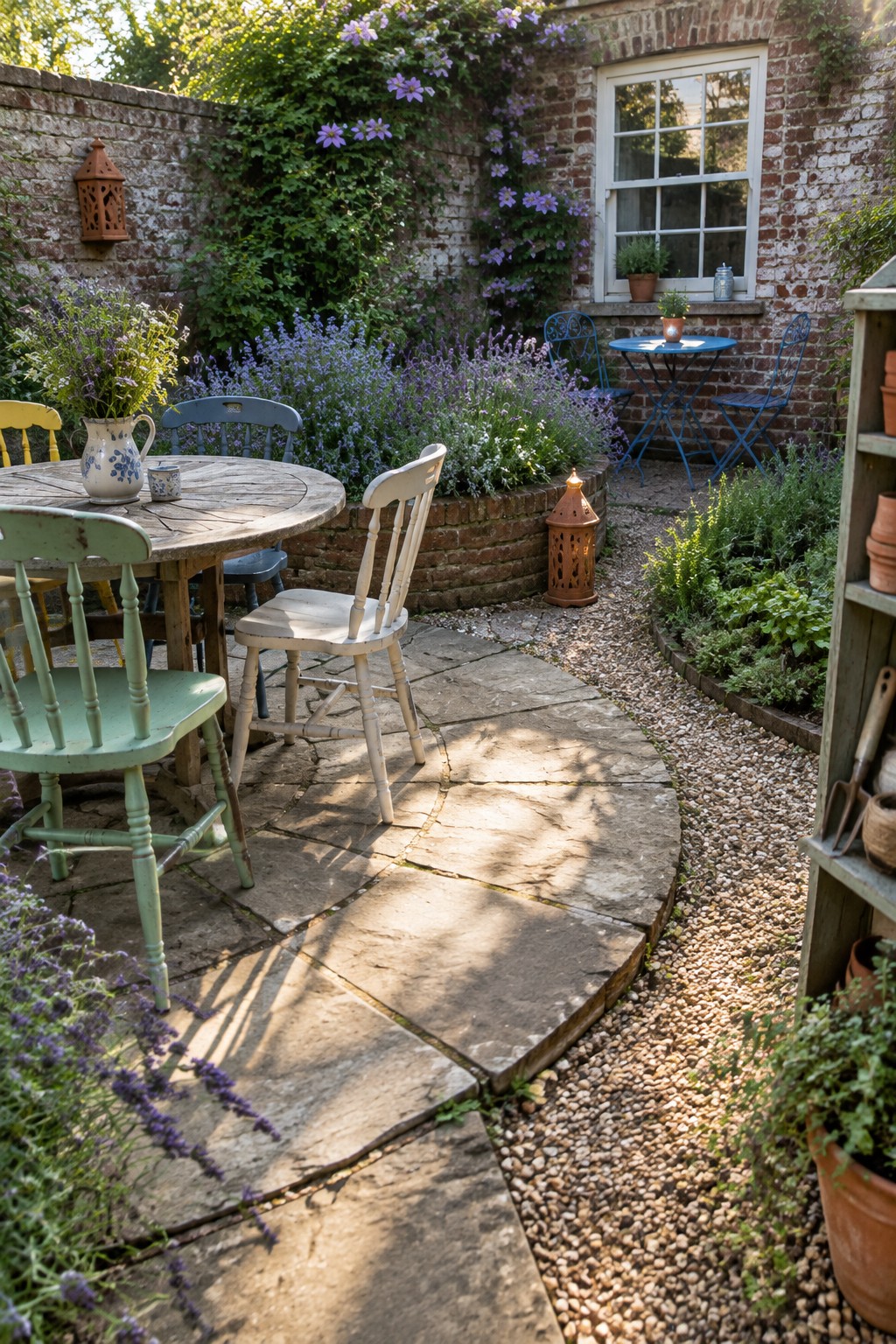
A gently curving path makes a small garden patio easier to move through and gives the seating areas a natural connection. Here, large stone slabs create a clear walking route without making the garden feel divided.
This layout works well in enclosed courtyards and compact yards. Leave enough room beside the path for chairs and garden beds, and choose slabs with steady, even footing.
Make Room for a Patio Fire Pit
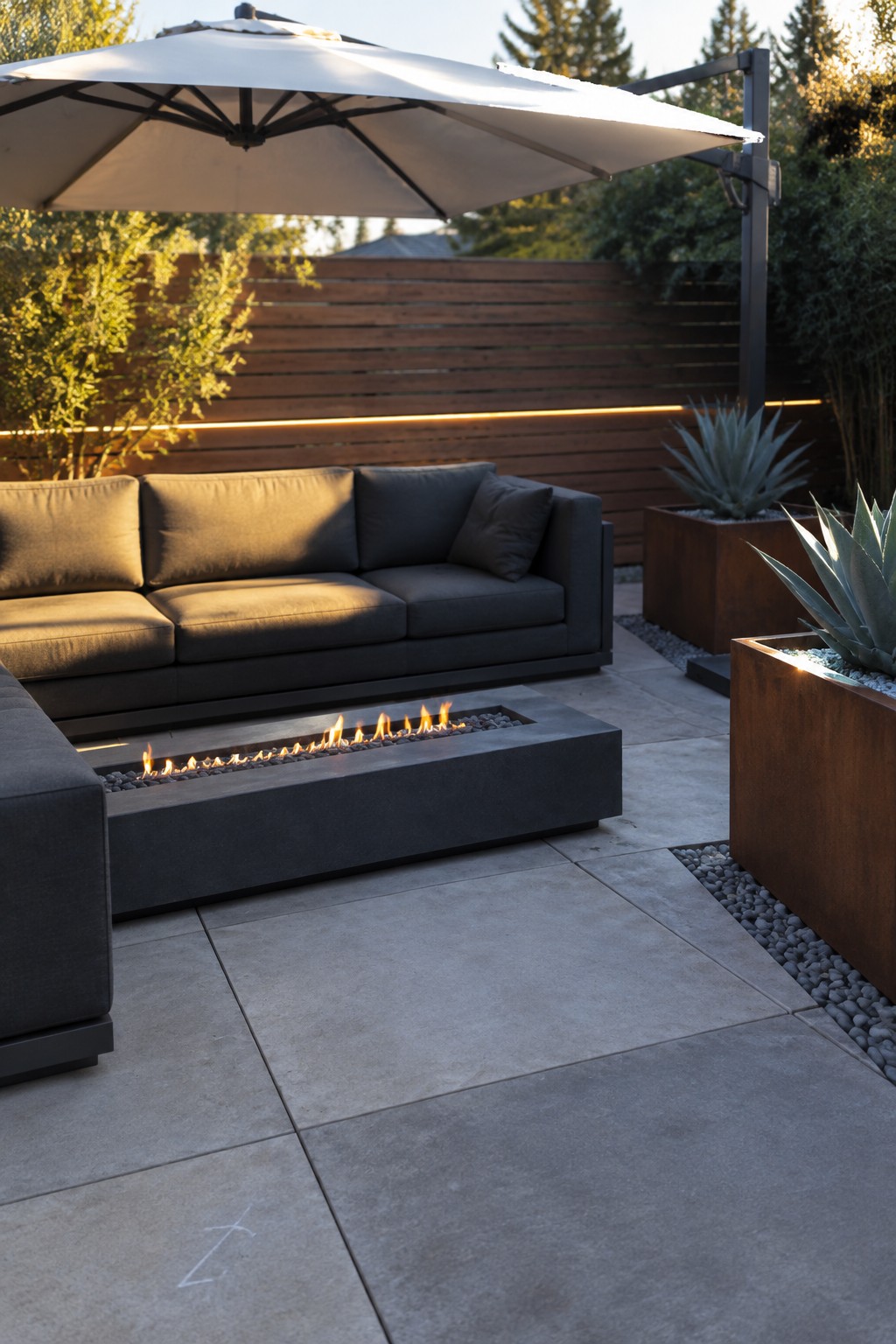
A low fire pit can give a patio a clear place to gather without taking up much vertical space. Here, the long rectangular shape sits in front of the sofa, so people can face one another and still move around the seating area.
For a similar setup, leave enough space between the fire pit and seats for people to pass comfortably. This layout works well on a larger patio, but a smaller one may suit a compact fire table better.
Use Raised Beds To Keep A Patio Garden Organized
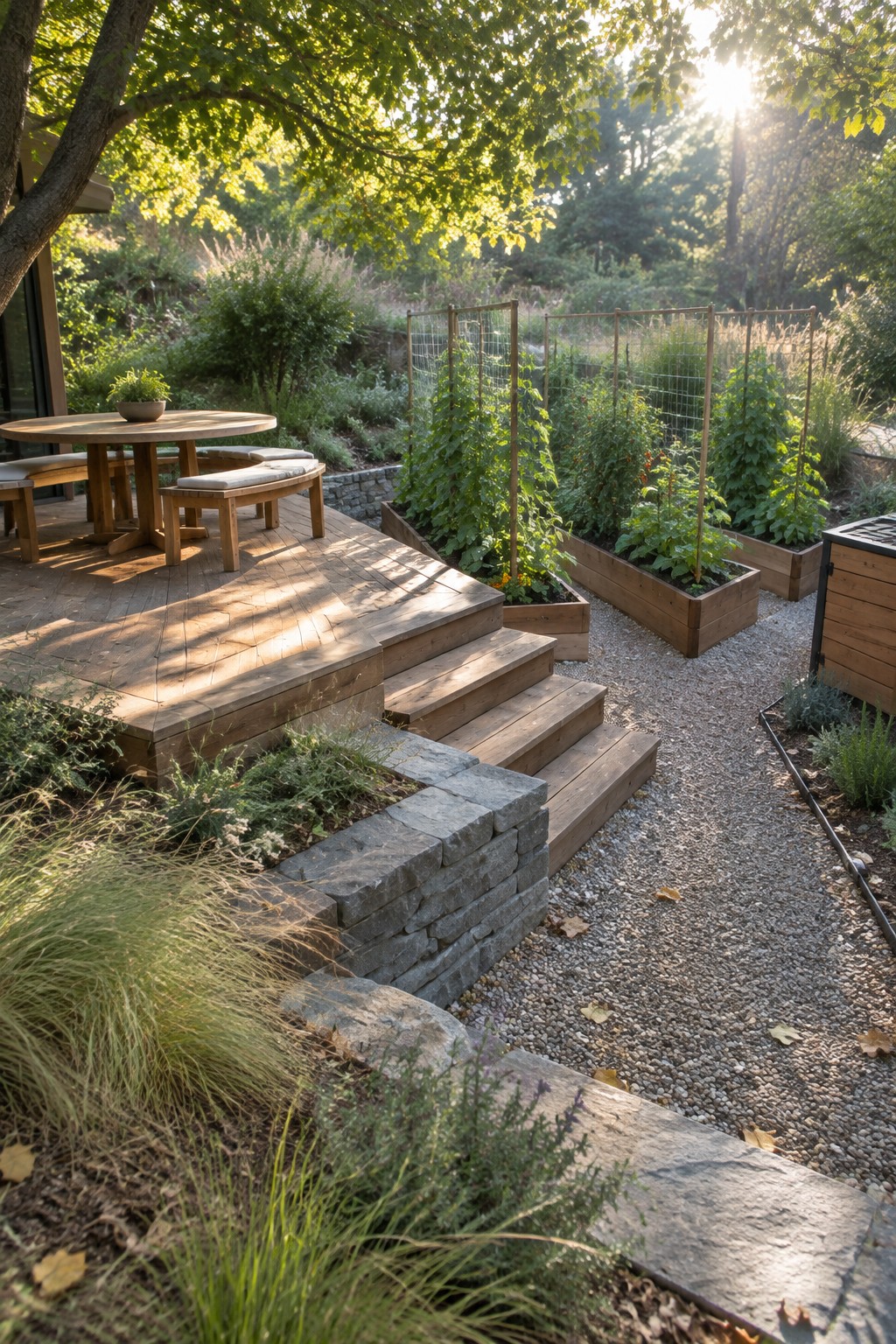
Raised beds give a productive garden a clear footprint, so plants can grow close to the patio without spilling into the walking route. Here, wooden beds hold climbing vegetables beside the deck, while a gravel path stays open for moving between the garden and seating area.
This setup works well in small yards where a patio and garden need to share space. Leave enough room between beds for easy access, and use sturdy trellises when plants need support.
Make a Narrow Balcony Work for Dining
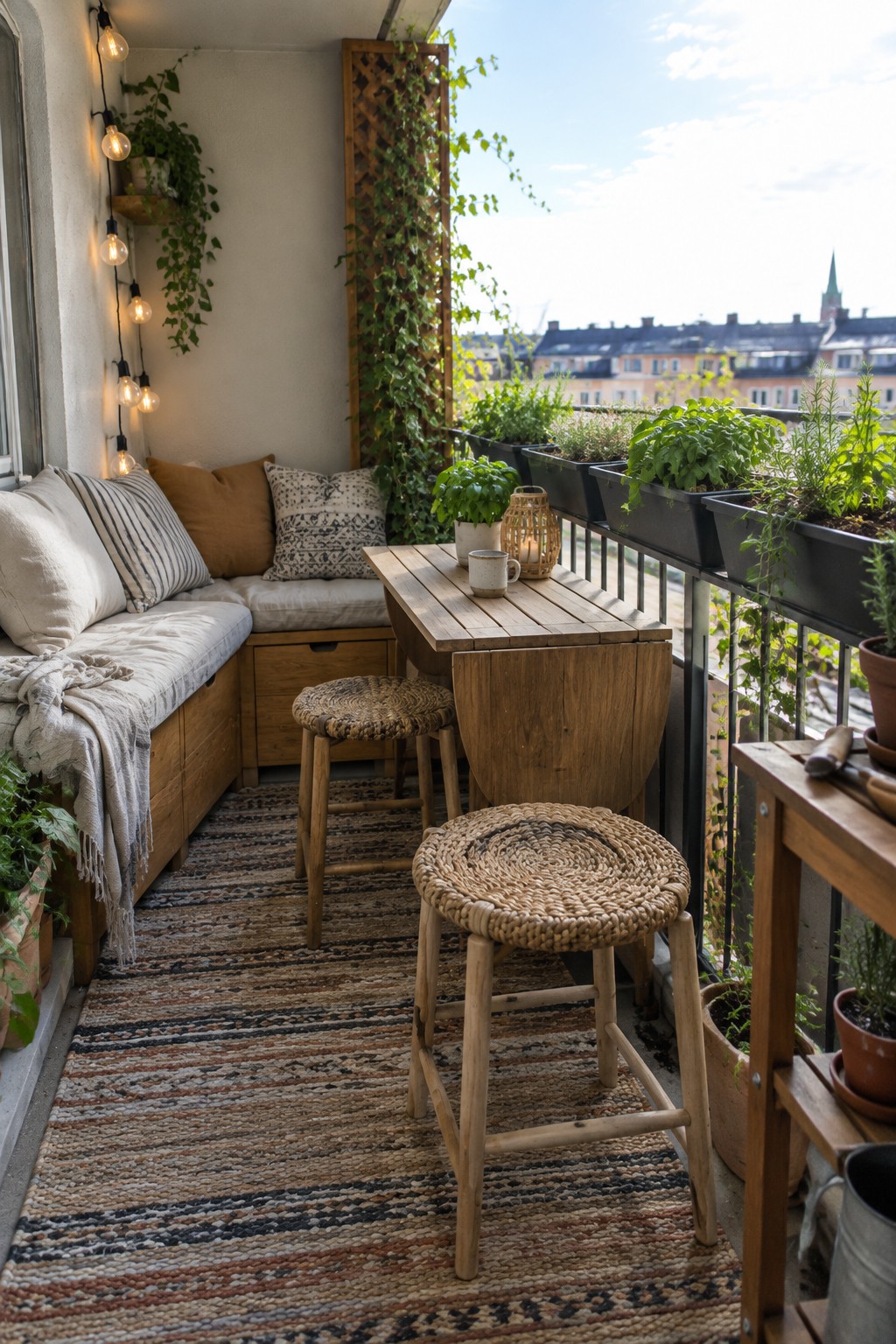
A slim balcony can still fit a useful dining spot if the table sits lengthwise and leaves a clear route past the seating. Here, a compact wooden table serves as the main gathering place without taking over the walkway.
This layout suits apartments where outdoor space is limited. Choose a narrow table and stools that tuck underneath, then keep larger planters along the railing to preserve room to move.
Use A Clear Patio Path To Connect Seating And Serving
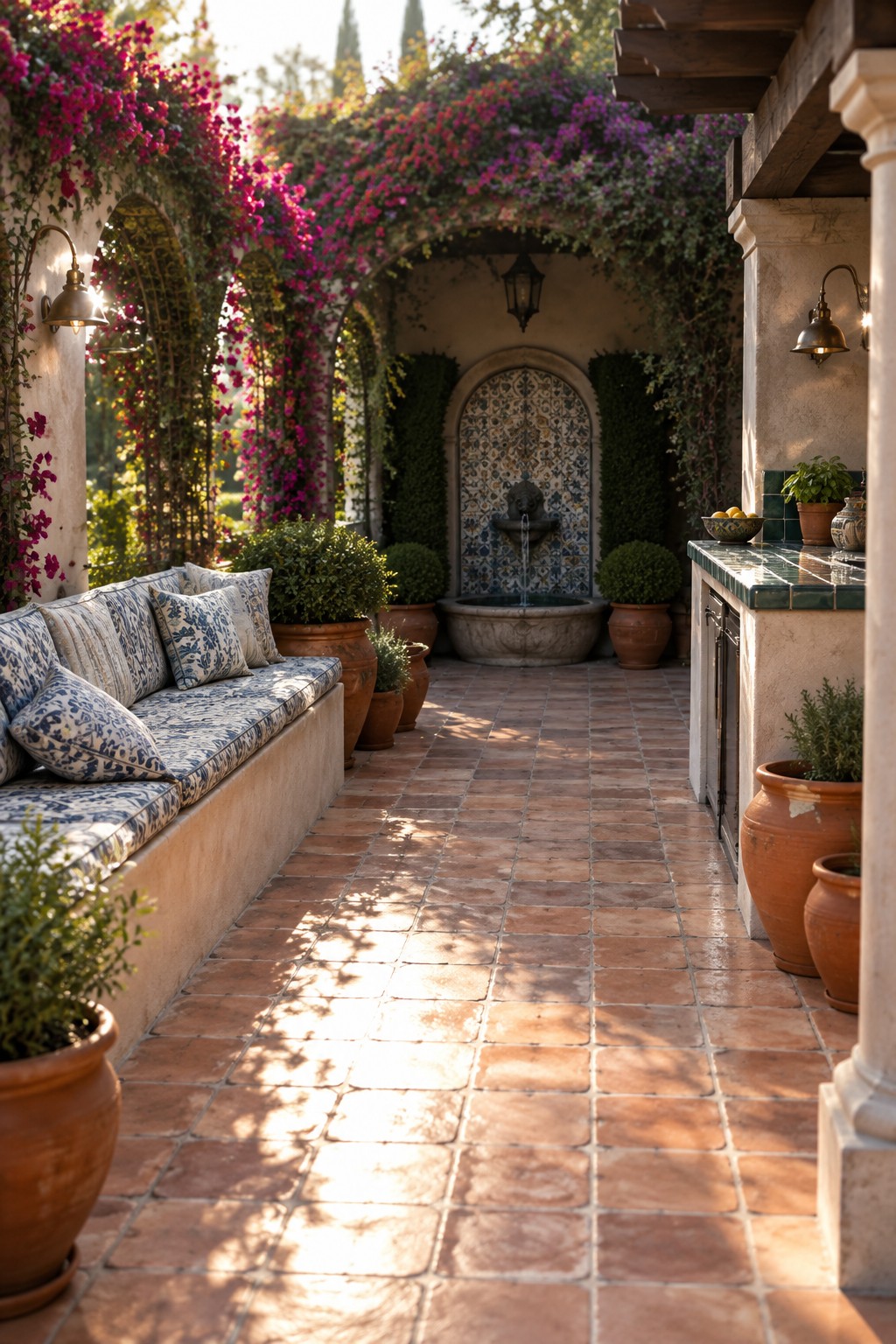
A clear route through a patio makes the space easier to use every day. Here, the open tiled walkway connects the built-in seating to the counter, so people can move between relaxing and serving food without squeezing past furniture.
Keep the main path wide and avoid placing pots or chairs in its way. This layout works especially well in a long, narrow courtyard where a clear route helps the space feel less cramped.
Use Poolside Loungers to Make the Patio More Usable

A pair of loungers beside the pool gives the patio a clear place to relax without blocking the way through. Keeping the chairs on the paved area also leaves the lawn open for other uses.
This arrangement works well when there’s enough room to walk around the loungers and reach the pool safely. Leave space between the chairs and the pool edge, and choose cushions made for outdoor use.
Use Stepping Stones to Make a Garden Path Easier to Follow
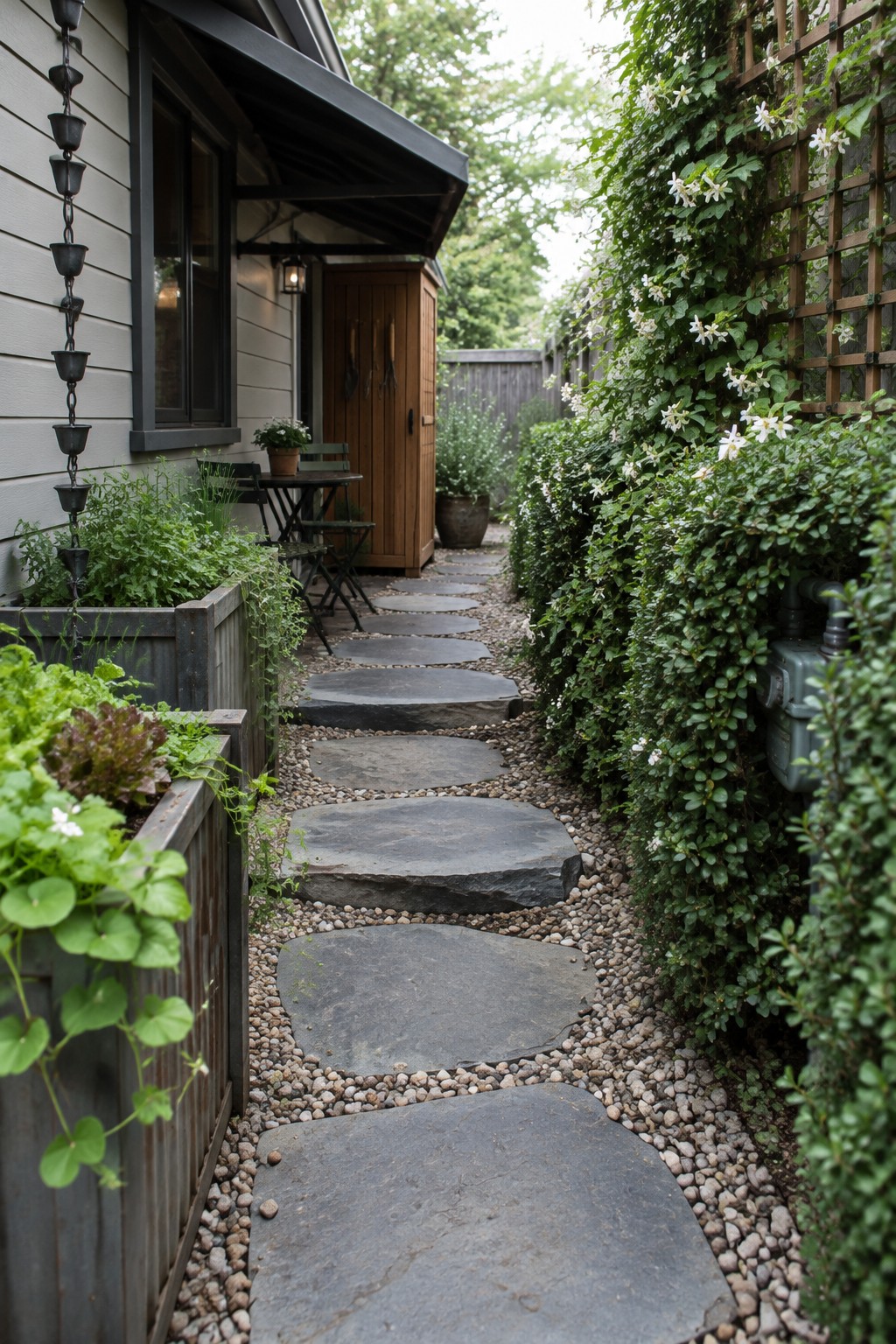
Large stepping stones create a clear route through a narrow garden without covering the whole area in hard paving. The gravel between them gives water room to drain and helps the path feel suited to a planted space.
Leave enough room between stones for a comfortable stride, and keep the route wide enough for everyday use. This approach works well beside a house or through a small garden, but choose stones that sit firmly and level so they are safe to walk on.
Set Up an Outdoor Kitchen Beside the Dining Area

An outdoor kitchen works best when it sits close to the table. You can bring food straight from the oven to dinner, and serving feels less like a trip back and forth indoors. Here, the built-in pizza oven is within easy reach of the dining space.
This setup suits a roomy patio where cooking and eating can share one area without blocking the way through. Keep a clear route around the table, and leave enough counter space for setting down dishes.
Arrange Patio Seating Around a Central Fire Pit
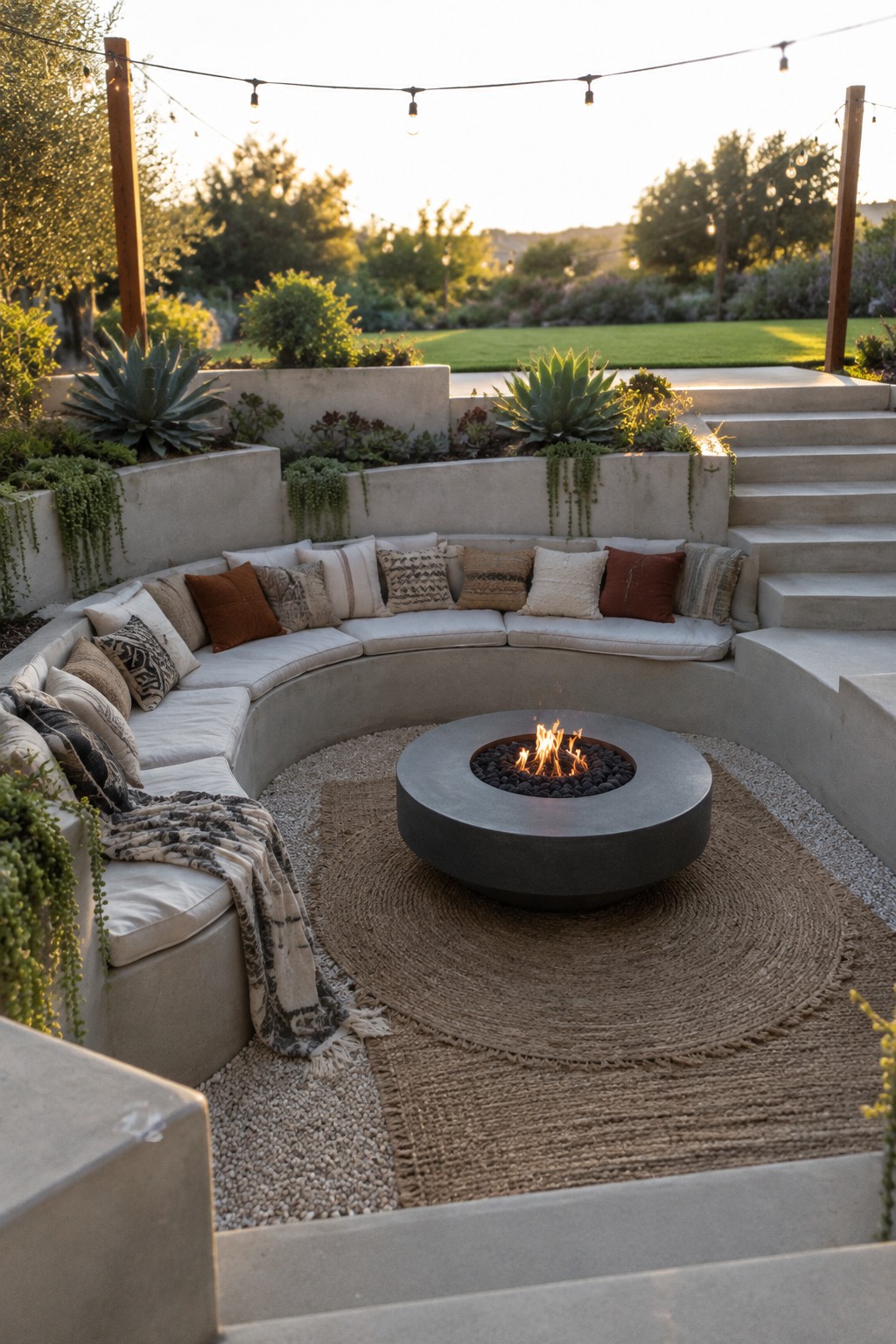
A sunken seating area with a fire pit in the middle gives people a natural place to gather, while keeping the patio’s main walking routes open. The curved built-in bench also makes good use of a defined space without filling it with separate chairs.
This layout works best on a roomy patio where there is enough space to move around the seating comfortably. Leave clear access to nearby steps, and choose weather-friendly cushions that are easy to store or clean.
Keep a Narrow Patio Easy to Move Through
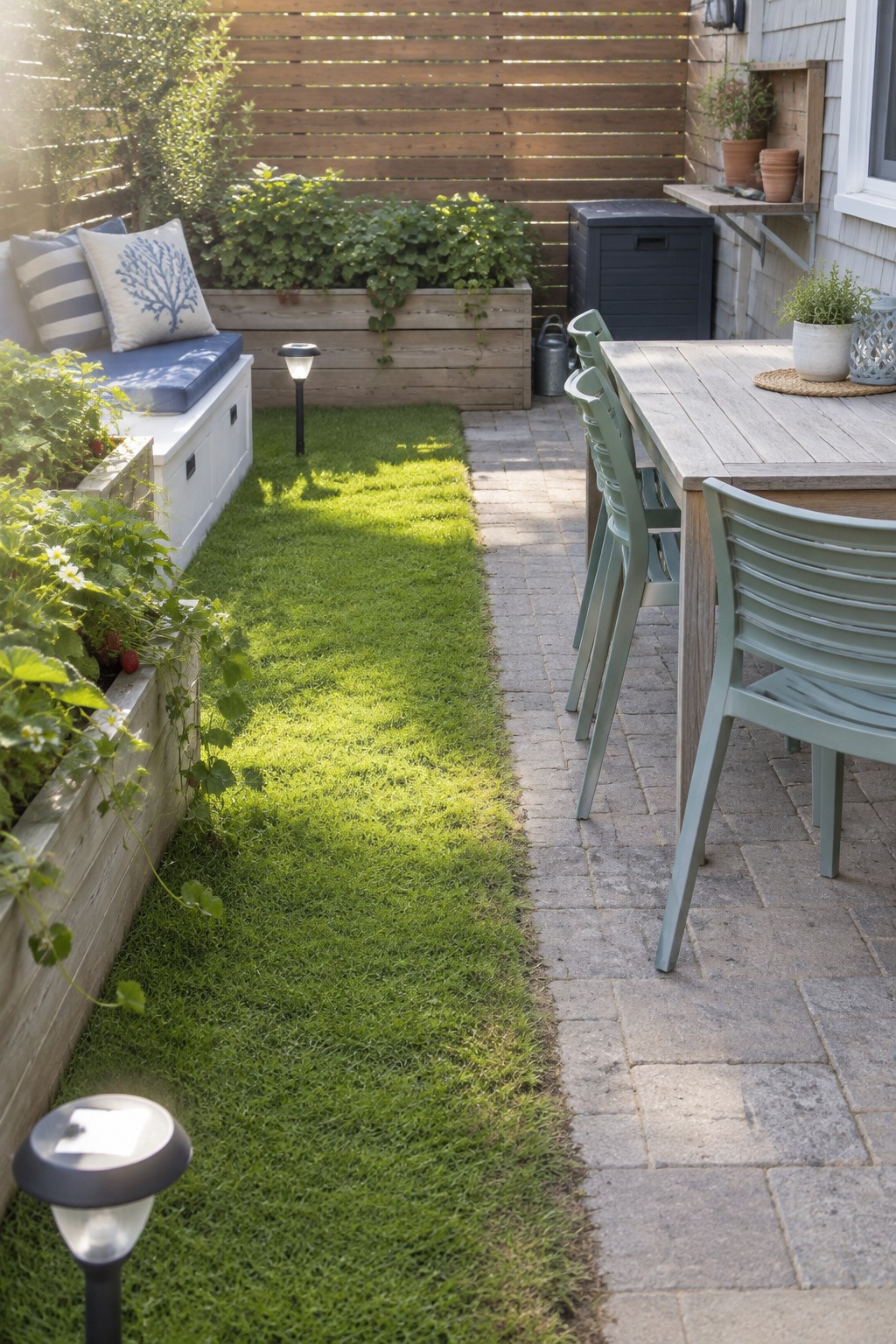
A narrow patio can fit both dining and a small seating area when the main path stays open. Here, the table sits along one side, leaving a straight route beside the lawn instead of making people weave between furniture.
This layout works well in compact backyards where space is limited. Keep chairs tucked in when they are not in use, and leave enough room to walk comfortably between the table and garden beds.
Use Patio Privacy Screens to Make Seating More Comfortable

Frosted panels can give a patio seating area a little separation from nearby buildings without making it feel closed in. That privacy makes the space more comfortable for everyday lounging, especially in a city or on a rooftop.
For a similar setup, use screening along the exposed edges and leave the main route across the deck open. A built-in planter can soften the screen and add greenery, but keep planting low enough that it does not crowd the seating.
Use Raised Beds to Organize a Narrow Garden

Raised beds can give a narrow garden a clear structure without making it harder to move through. Here, the beds sit beside a simple stepping-stone path, keeping the growing area tidy while leaving a direct route to the gate.
This layout works well in side yards or compact patios where space is limited. Keep beds fairly narrow and leave enough room along the path to walk comfortably and tend the plants.
Use a Pergola to Define an Outdoor Dining Area

A pergola can give a patio dining spot a clear place in the garden without closing it off. Here, the wooden structure overhead helps the table feel like its own zone, while the open sides keep the space easy to walk through.
This works well beside a house or near a garden path, especially when you want some shade over a table. Climbing plants can add cover over time, but leave enough room around the posts and furniture for people to move comfortably.
Use Patio Paving to Create a Clear Seating Area

Large stone pavers give this patio a defined place for a small table and chairs, while leaving room to walk around them. That clear layout makes the space easier to use for both sitting and passing through.
This approach works well in compact courtyards where furniture can quickly crowd the floor. Choose pavers with a steady, even surface, and leave enough space between the table and nearby edges for chairs to move comfortably.
Use Stepping Stones to Guide the Patio Path
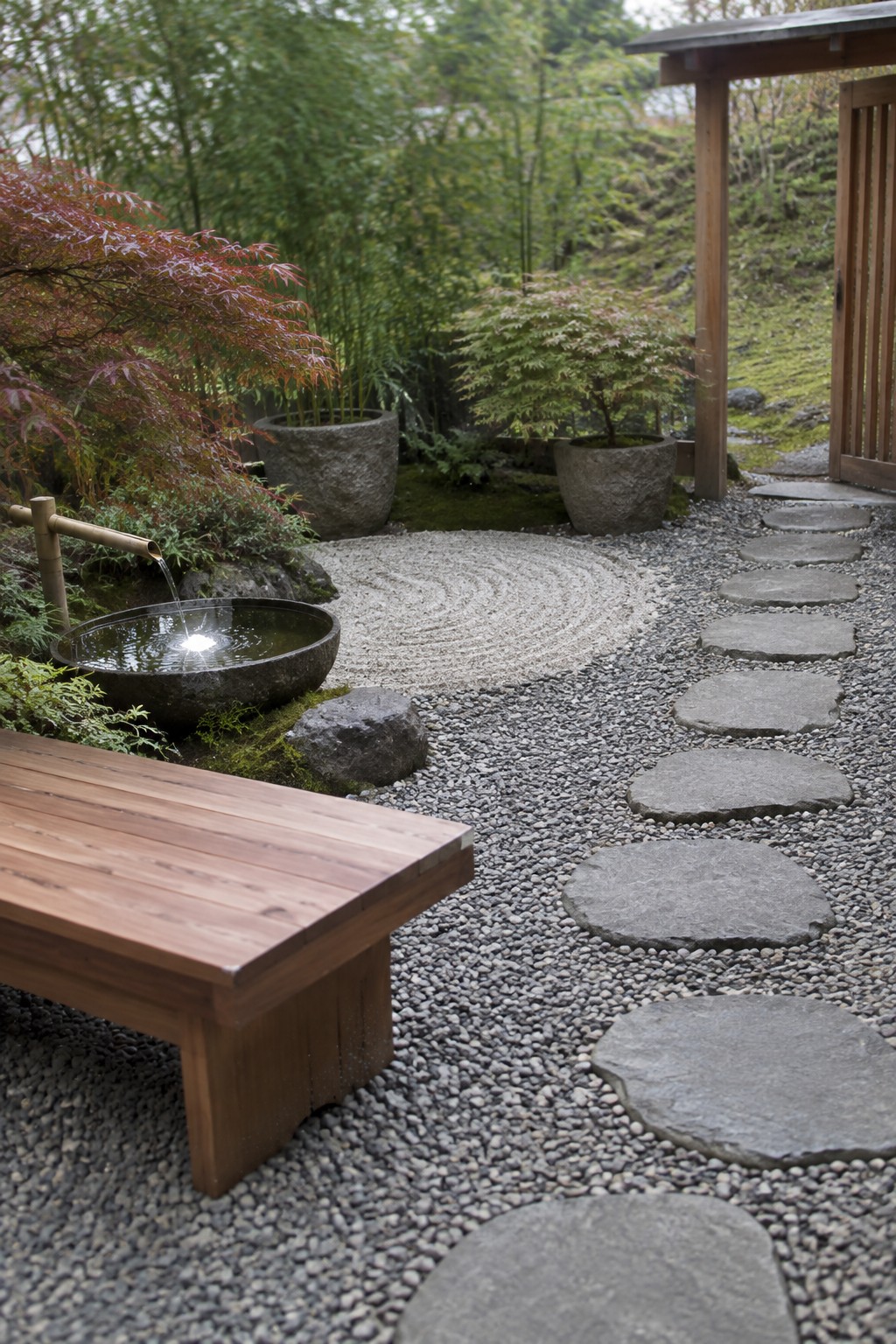
Large stepping stones set into gravel make it easier to move through a patio garden without disturbing the planting areas. The clear route also helps the different parts of the yard feel connected.
Leave enough space between stones for a comfortable stride, and keep the path wide enough for everyday use. This approach suits small gardens especially well, where a solid paved walkway might take up too much room.
Add Storage To Built-In Patio Seating

Built-in seating with storage underneath can make a patio easier to use every day. It gives you a place to sit and a spot to tuck away outdoor toys or cushions, so they do not take up the walking area.
This works especially well on a narrow deck where separate storage boxes would get in the way. A lift-up seat is handy, but leave enough room to open it without blocking the main path.
Use Separate Patio Zones to Improve Everyday Flow

A patio is easier to use when seating, cooking, and walking each have a clear place. Here, the seating area sits apart from the outdoor kitchen, so people can relax without blocking the route to food or drinks.
Try this layout on a larger patio where several activities happen at once. Keep a direct paved path between the main areas, and leave enough space around chairs for people to move through comfortably.
Frequently Asked Questions
Q: How much space should I leave for a walking path through a patio garden?
A: Aim for a clear path about 3 feet wide if you can, especially between the door and seating area. If space is tight, keep the route straight and move pots to the edges so people aren’t weaving around them.
Q: What’s a good way to add plants without making a small patio feel cramped?
A: Use the walls and corners for vertical planters, hanging baskets, or a narrow shelf. Keep the main floor area open, and group a few pots together rather than scattering them across the walking path.
Q: How can I make a patio garden easier to use every day?
A: Put the plants you water or pick most often within easy reach of the door or seating area. A small watering can nearby helps too, so tending the garden feels simple instead of like a separate chore.
Q: What should I do if my patio gets strong sun in the afternoon?
A: Place heat-tolerant plants in the sunniest spots and use an umbrella or a light shade panel over the seating area. Check the soil more often during hot spells, since patio containers can dry out quickly.
