

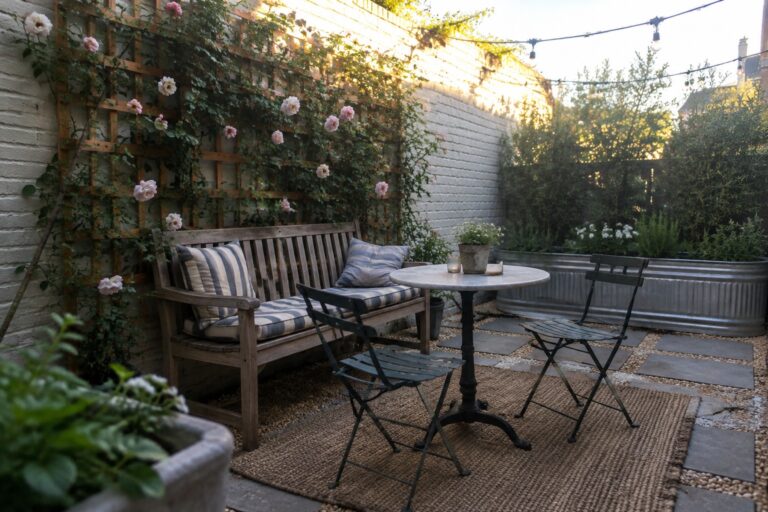
A patio can feel exposed even when the furniture and planting are just right, so I like to think about privacy as part of the layout rather than an afterthought.
Screens and trellises can soften a direct view, while plants bring texture and shade as they fill in over time.
The first thing I notice is whether a screen blocks the neighbors without making the patio feel boxed in.
That balance often comes down to height, spacing, and leaving clear paths between seating, planters, and doors.
Some of these ideas may be worth adapting to your own space, especially if you want a little more seclusion without giving up an open, usable patio.
Use A Trellis To Create Patio Privacy
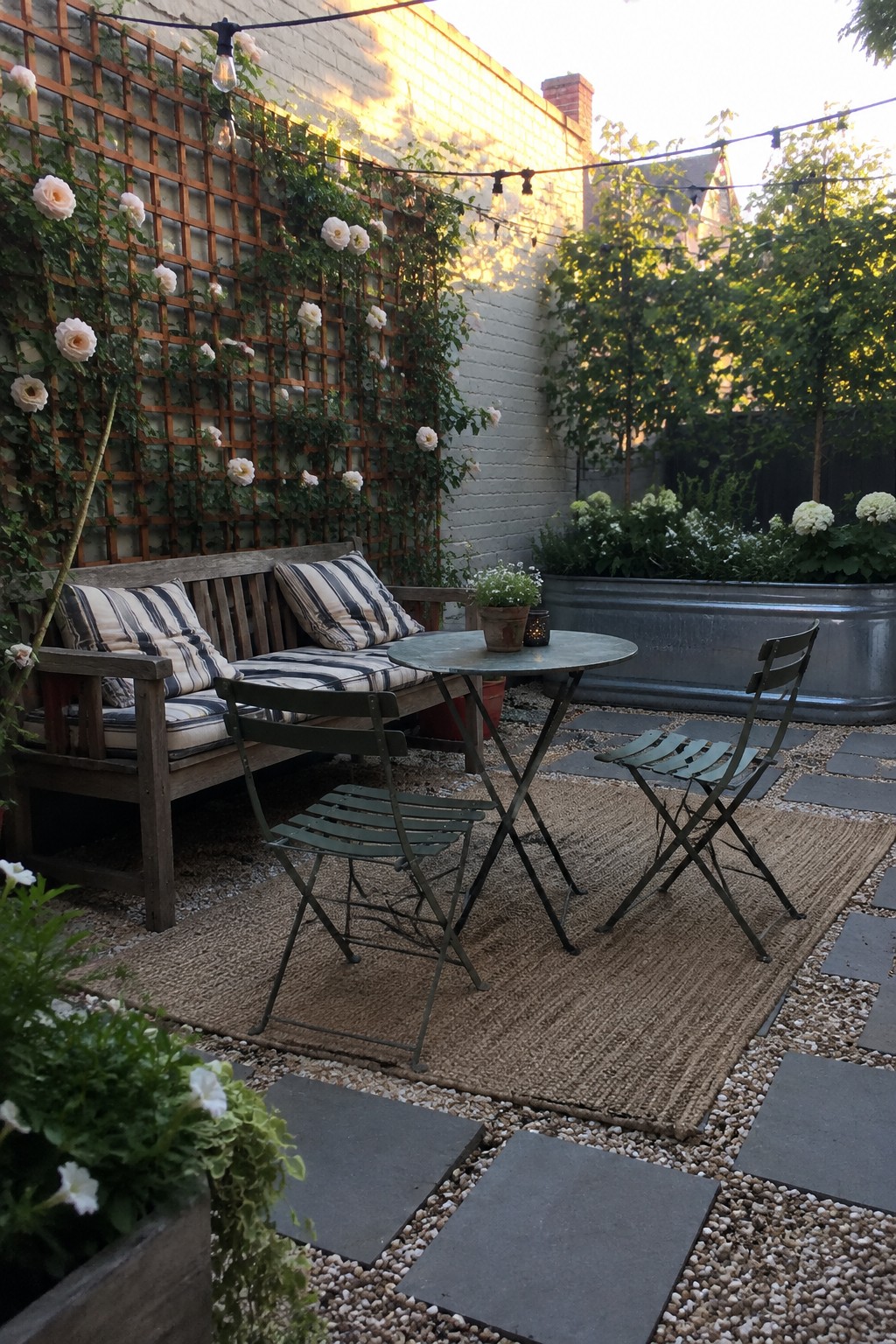
A trellis covered in climbing roses can make a patio feel more sheltered without closing it off completely. It gives the seating area a greener backdrop while still letting air and light through.
This idea works well along a close boundary or beside a small patio seating nook. Choose a sturdy trellis and climbing plants suited to your climate, and leave enough room to prune and care for them.
Use Screens to Make a Patio Feel More Private
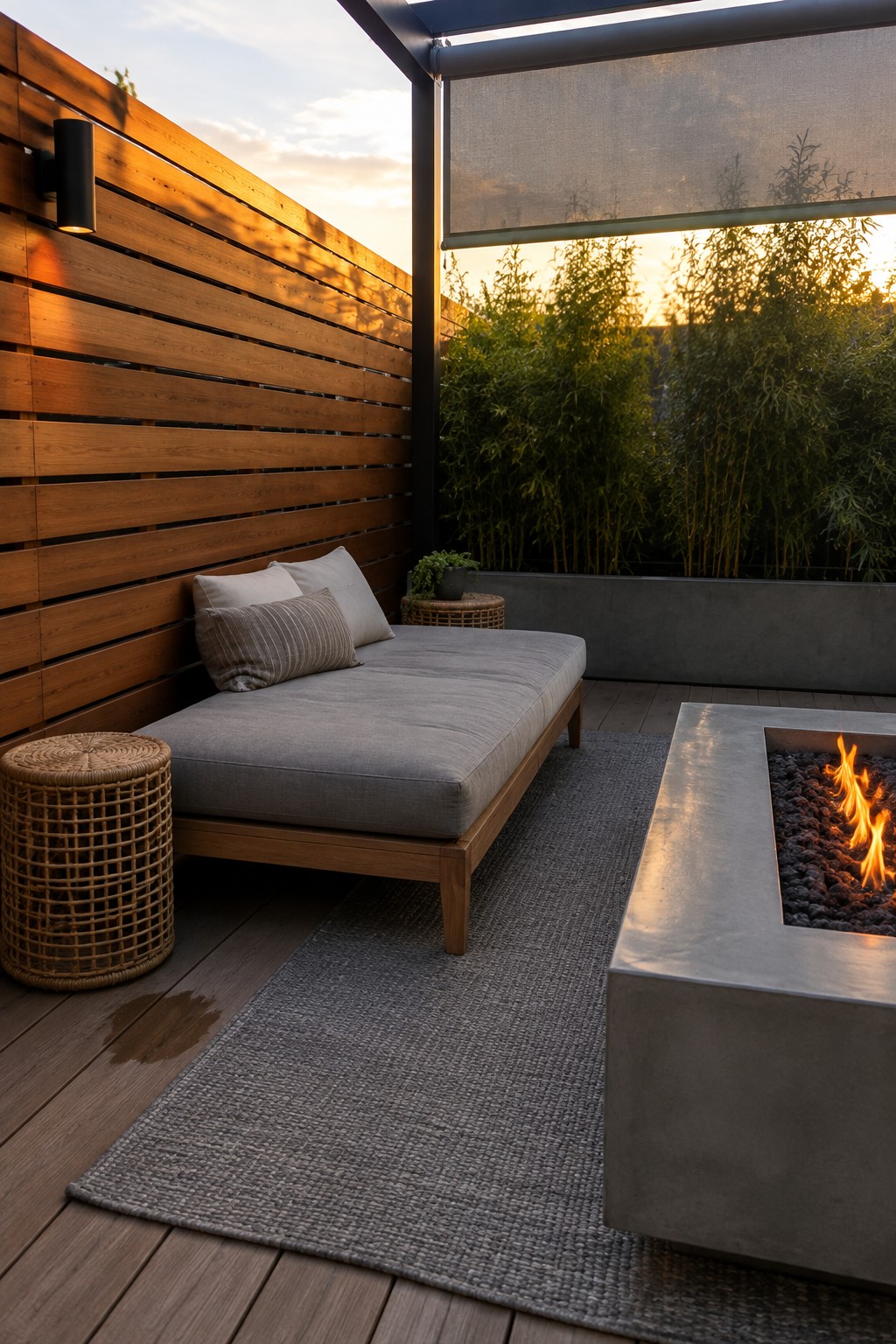
A screen can make an outdoor seating area feel tucked away without closing it off completely. Here, a lowered fabric shade and a row of tall plants block some views while still letting light and greenery into the patio.
For a similar setup, place the screen where neighbors can see directly into the seating area, rather than enclosing the whole space. A retractable shade is useful when you want privacy at certain times, while tall plants can provide a softer, more permanent screen.
Use A Pergola To Add Privacy To Patio Dining

A vine-covered pergola can make an open patio feel more sheltered without closing it off completely. Overhead beams support climbing plants, while curtains can be drawn along the sides when you want a little more privacy.
This works especially well over an outdoor dining area. Choose sturdy supports for the vines, and make sure the curtains can be tied back so they do not get in the way on breezy days.
Use A Screen To Make Patio Dining More Private
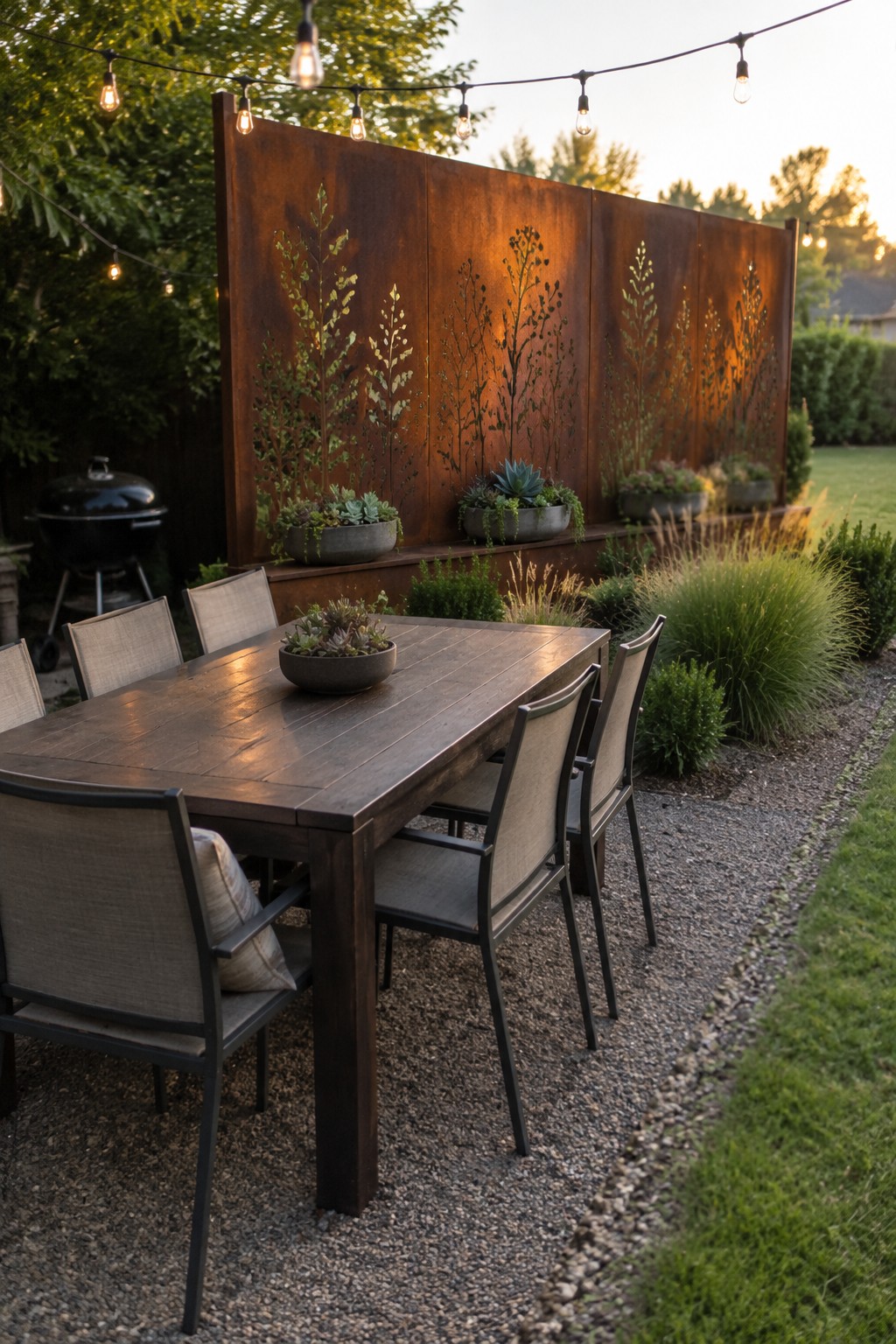
A solid screen can give an outdoor dining area a little more privacy without closing it off completely. A rusted metal panel with cutout plant shapes provides a clear boundary while still letting the space feel connected to the garden.
This idea works well along a fence line or beside a neighbor-facing patio. Choose a screen tall enough to block direct views, and leave room around it for airflow and planting.
Add Shade And Privacy With A Canopy
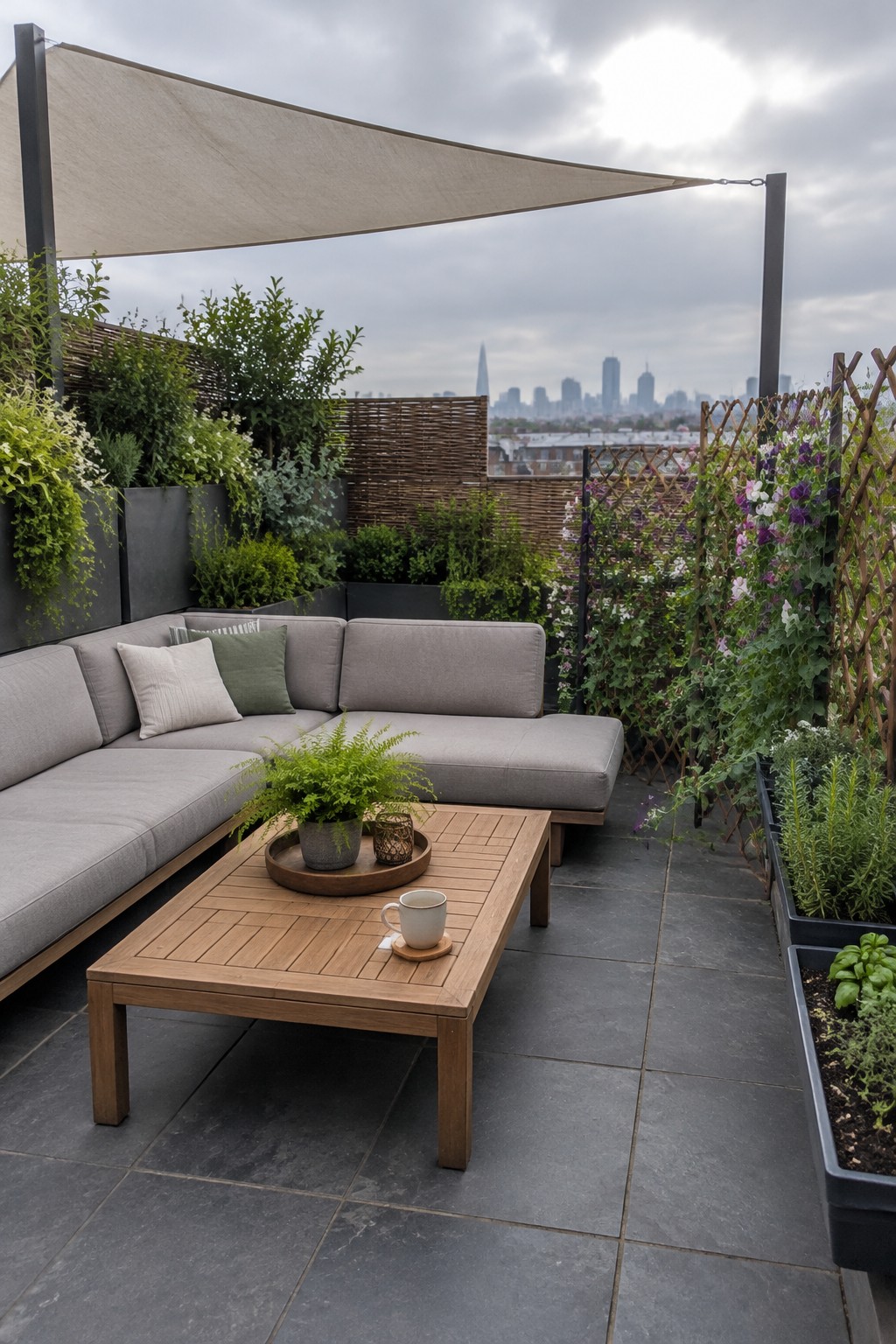
A simple shade sail can make an open patio feel more comfortable and a little more private. It covers the seating area from above without closing off the sides, so the space still feels open.
Use sturdy posts and secure fittings, and check that the fabric is suited to your local weather. This works well on a rooftop or exposed terrace where there is no overhead cover.
Use Climbing Roses To Add Patio Privacy
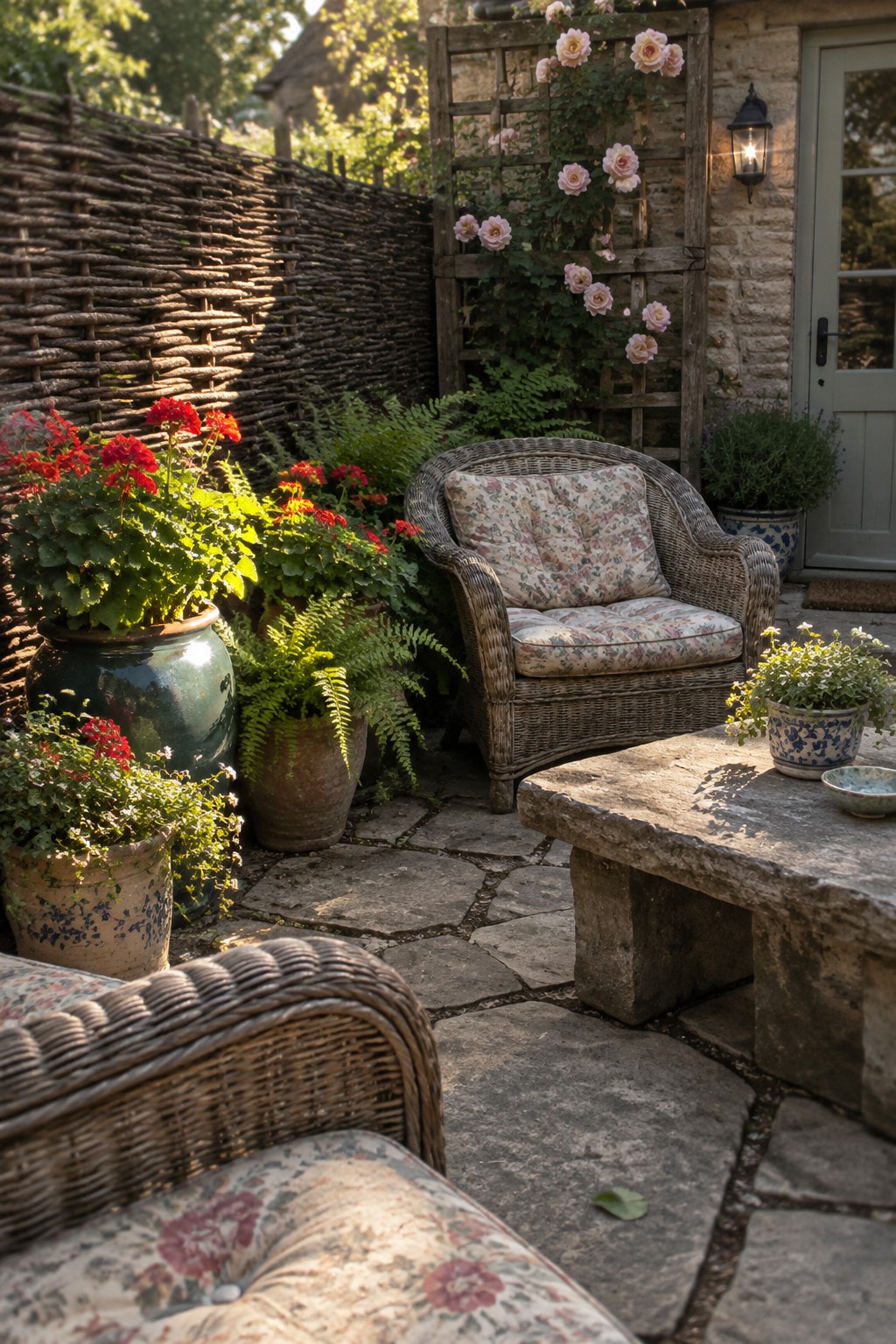
A trellis covered in climbing roses can make a patio seating area feel more sheltered without closing it off. It gives the space a leafy screen, while still letting light and air through.
This works well beside a house or along the edge of a small patio. Choose a sturdy trellis and train the roses as they grow, leaving enough room to reach the plants for pruning and care.
Use Tall Plants To Add Balcony Privacy
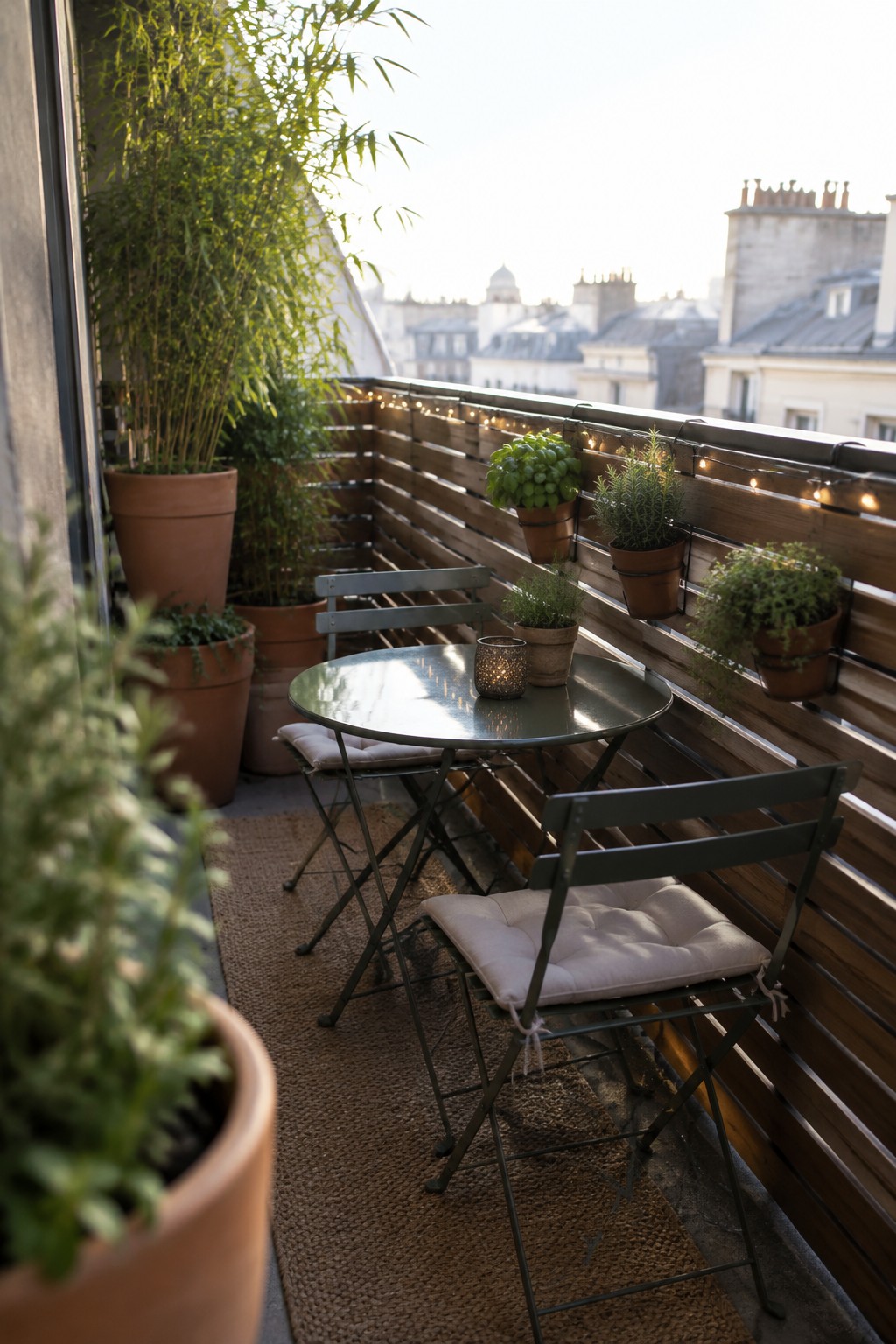
Tall, closely grouped plants can give a small balcony a little more privacy without closing it off. A row of bamboo along one side makes a natural screen and keeps the seating area feeling separate from nearby buildings.
Use sturdy pots that are heavy enough to stay put, and check how much sun the balcony gets before choosing plants. This approach works especially well in a narrow rental balcony where a fixed screen may not be practical.
Use A Living Wall For Poolside Privacy
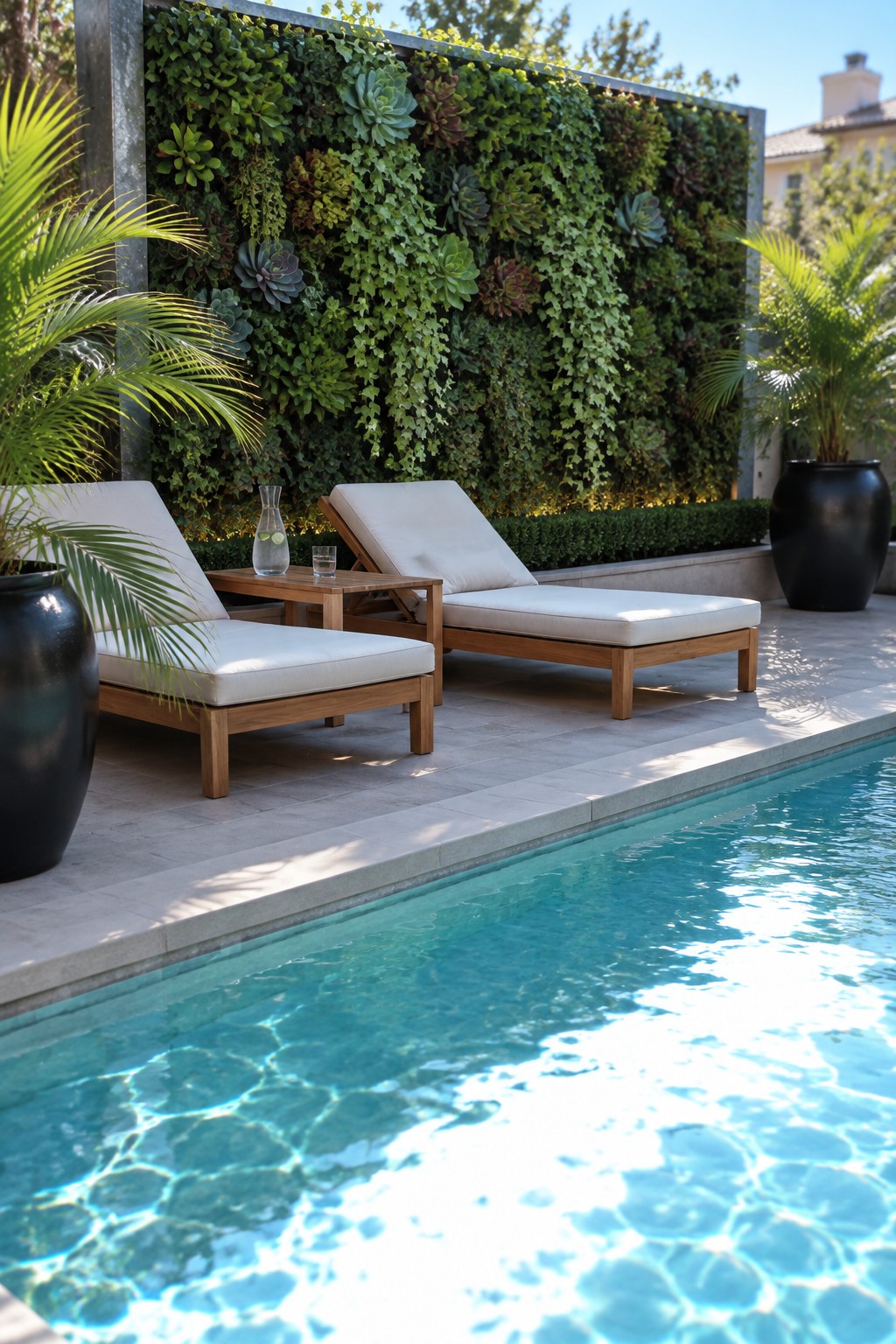
A planted wall can give a pool patio a more private feel without making it seem closed in. The dense greenery here forms a screen behind the lounge chairs, while still bringing plants into the seating area.
This works well along a property line or beside a neighboring view. Choose plants suited to the wall’s sun and watering conditions, and leave room to reach them for trimming and upkeep.
Use Raised Planters to Define a Patio
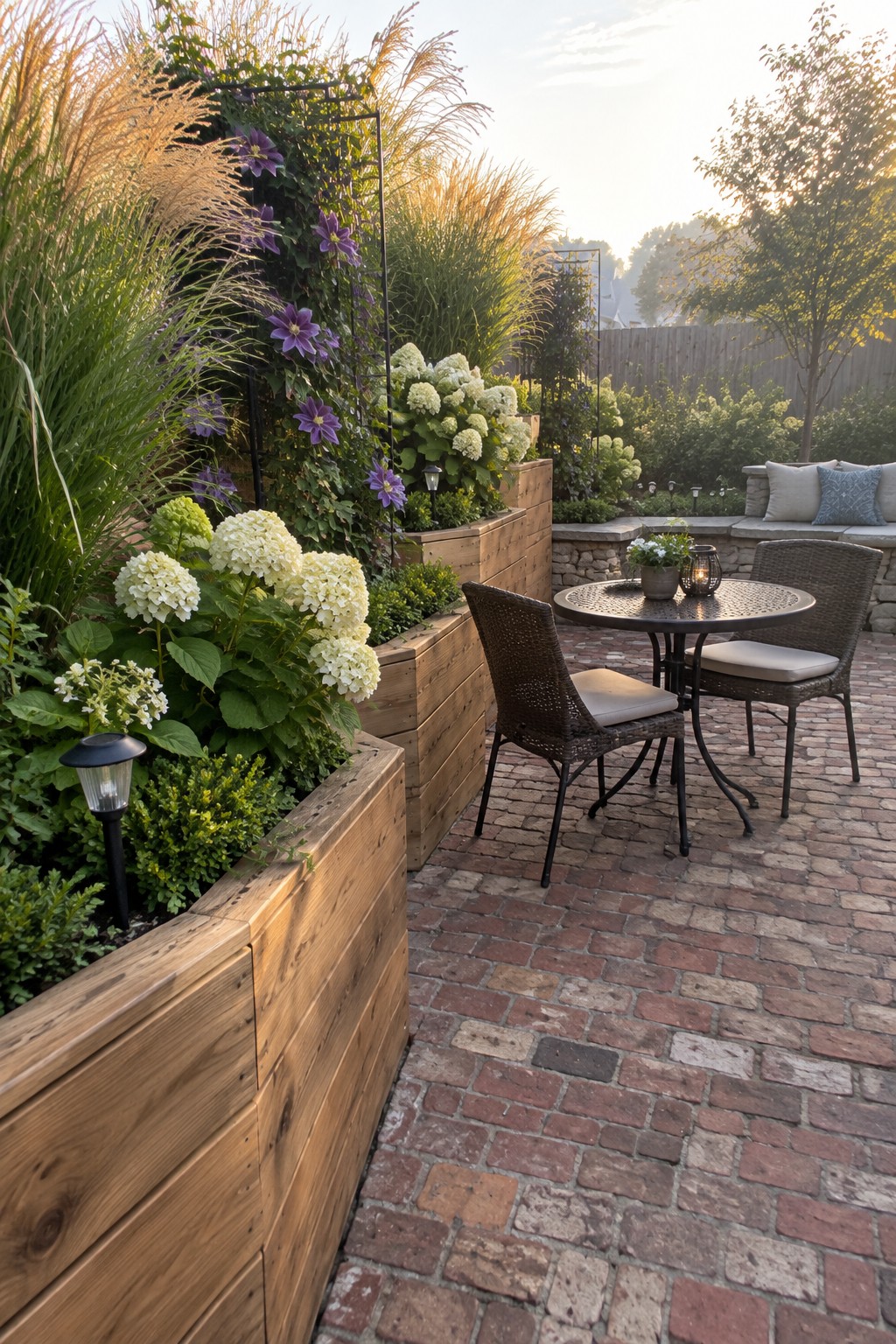
Raised planters can mark the edge of a patio and give nearby seating a little more privacy. Here, tall grasses and climbing clematis grow above the wooden planter boxes, making a leafy screen without closing off the space.
This approach suits patios where there isn’t room for a separate hedge or fence. Use sturdy, deep planters for larger plants, and leave enough space around the seating so the patio still feels easy to move through.
Use Fruit Trees To Screen A Garden Seating Area
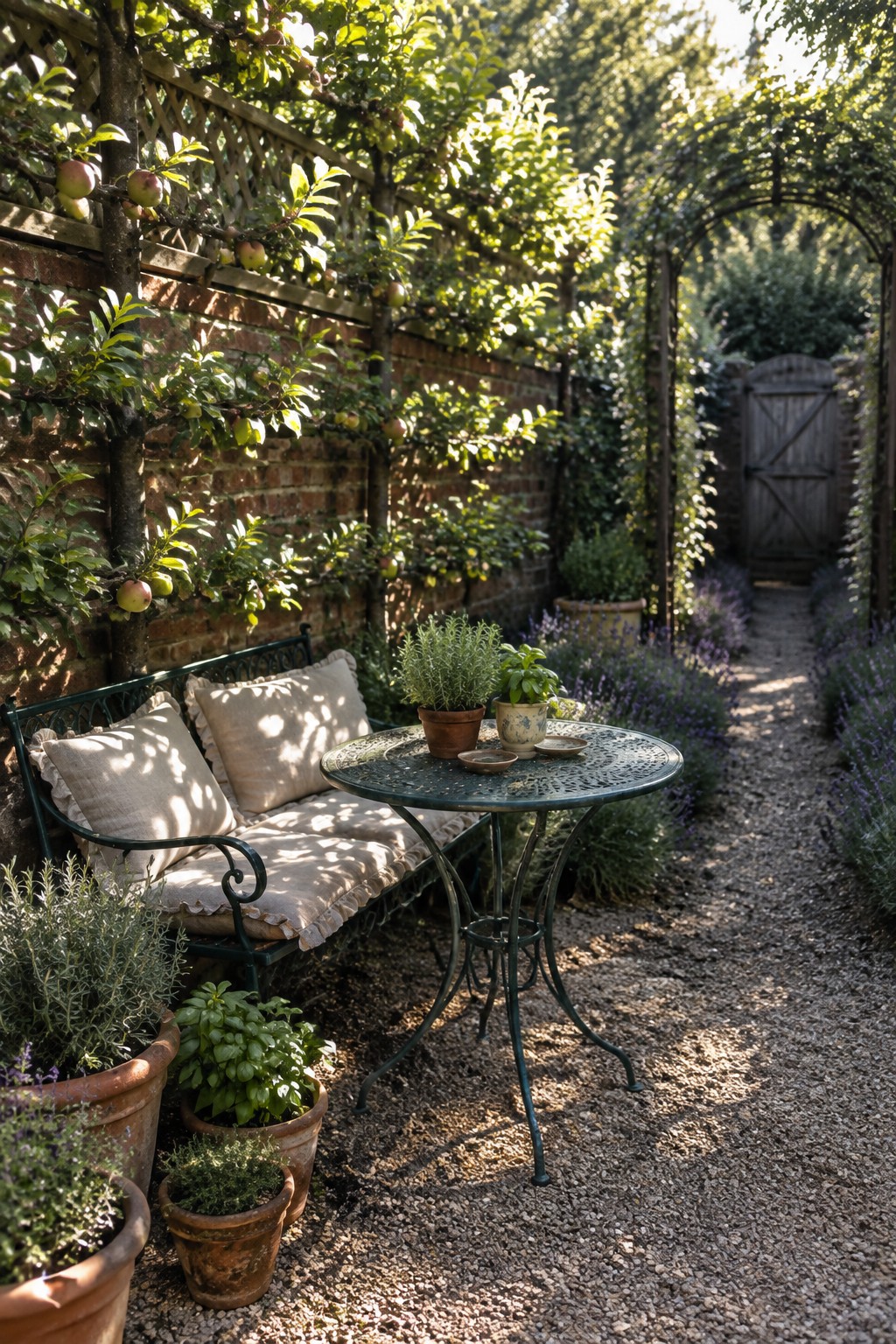
Fruit trees trained along a fence can give a patio some privacy without closing it off completely. Their leafy branches break up the view, while the fruit makes the planting useful as well as attractive.
This approach suits a narrow garden where a solid screen might feel too bulky. Train the trees along sturdy supports and keep them pruned so they don’t crowd the seating or path.
Use Rusted Metal Panels To Screen A Patio
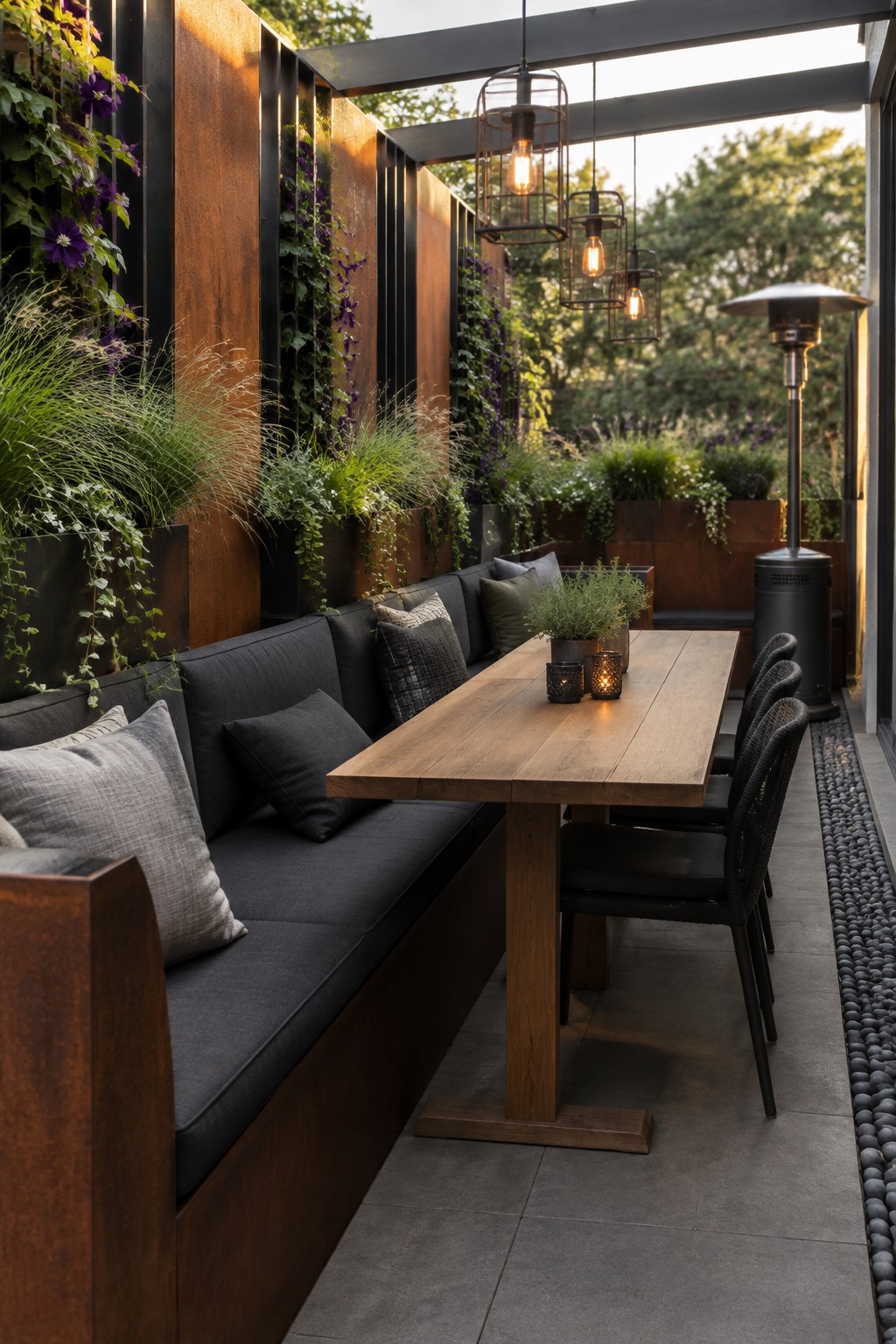
Rust-colored metal panels can give a patio privacy without making it feel closed in. Here, narrow planting gaps let climbing vines grow alongside the solid panels, breaking up the screen and adding greenery.
This approach works well along a boundary or behind a built-in bench. Leave enough room for plants to grow, and check that the panels are made for outdoor use so they hold up over time.
Use a Vine-Covered Patio Screen
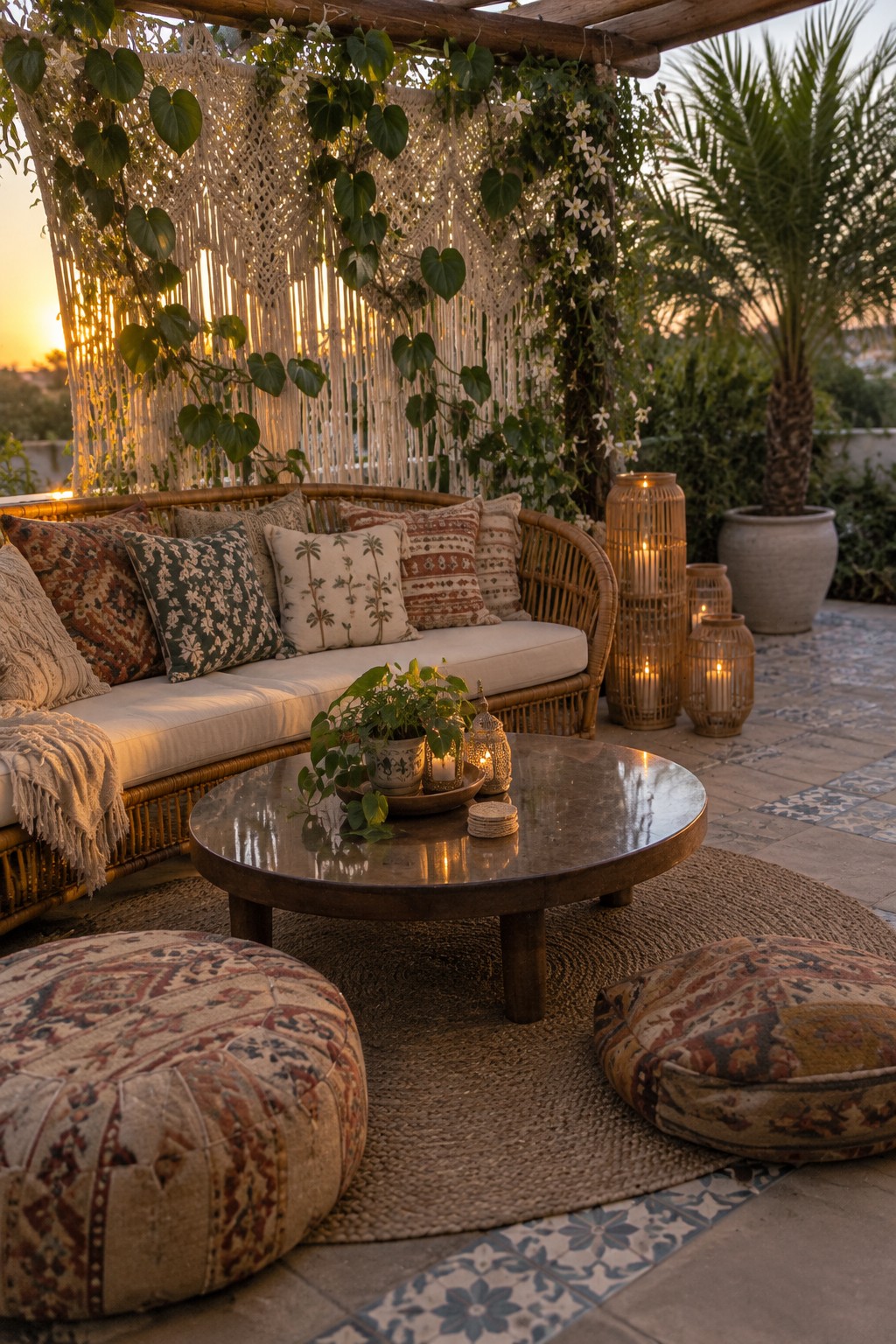
A planted screen can give a patio a little more privacy without making it feel closed in. Here, climbing greenery grows across a woven backdrop, so the seating area feels sheltered while still letting air and light through.
Try this idea beside a lounge area that faces a neighbor or an open yard. Choose a sturdy screen and a vine suited to your climate, and leave enough room to prune it so the plants do not take over.
Use Outdoor Roller Shades For Patio Privacy
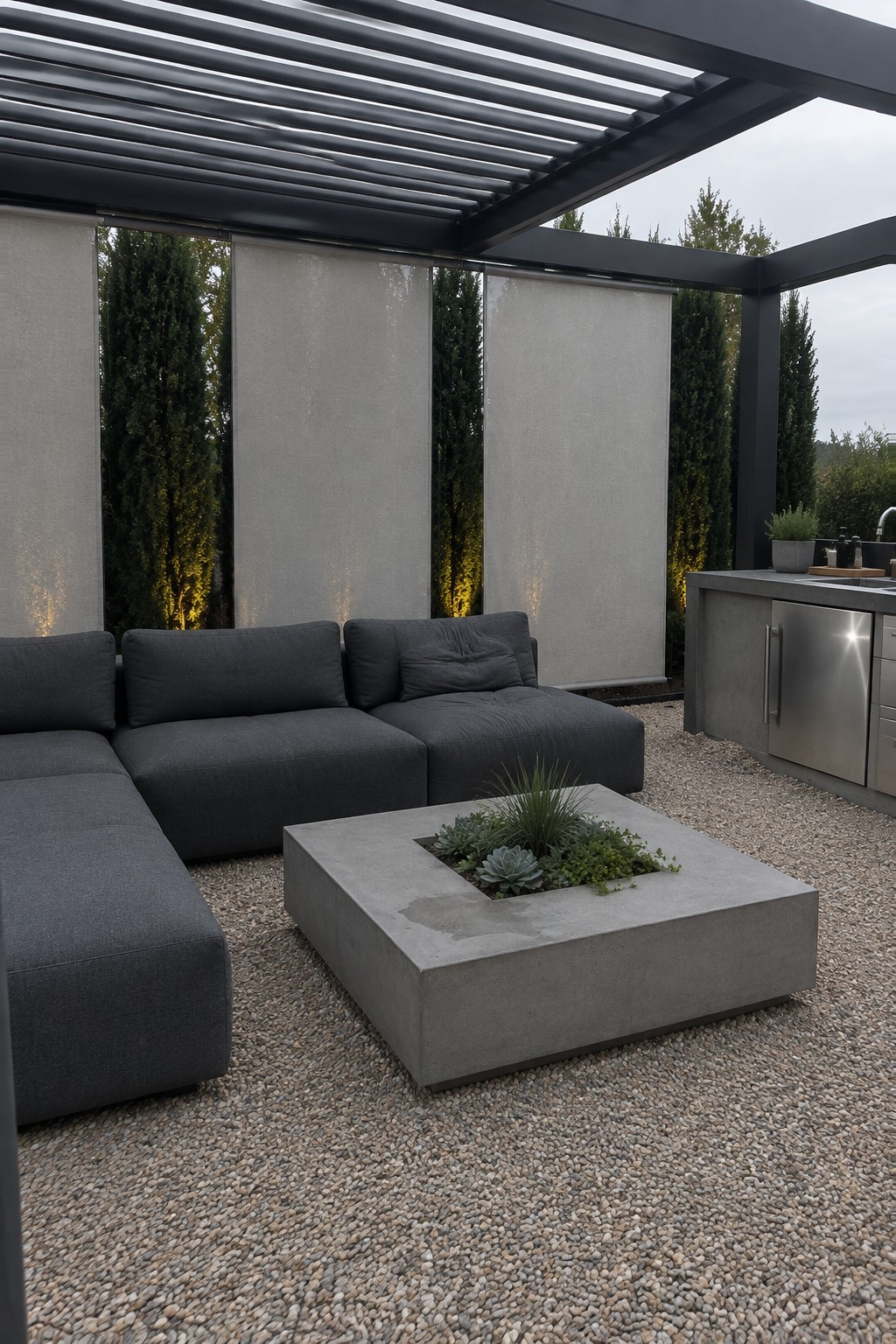
Outdoor roller shades make an open patio feel more sheltered without closing it off completely. Here, pale fabric panels hang between the garden and the seating area, screening nearby views while still letting in some light.
This approach works well beneath a pergola or along an exposed terrace. Choose weather-resistant fabric, and make sure the shades can be raised when you want an open view or better airflow.
Use A Reed Fence To Give Patio Seating More Privacy

A simple fence can make an open patio feel more sheltered without closing it off completely. Reed screening is a useful option when you want to block some views while keeping the space airy.
It works especially well behind a seating area or along a boundary facing neighbors. Secure the screen well, and leave enough room nearby for plants or pots so the fence does not have to carry the whole look.
Use Bamboo To Screen a Patio
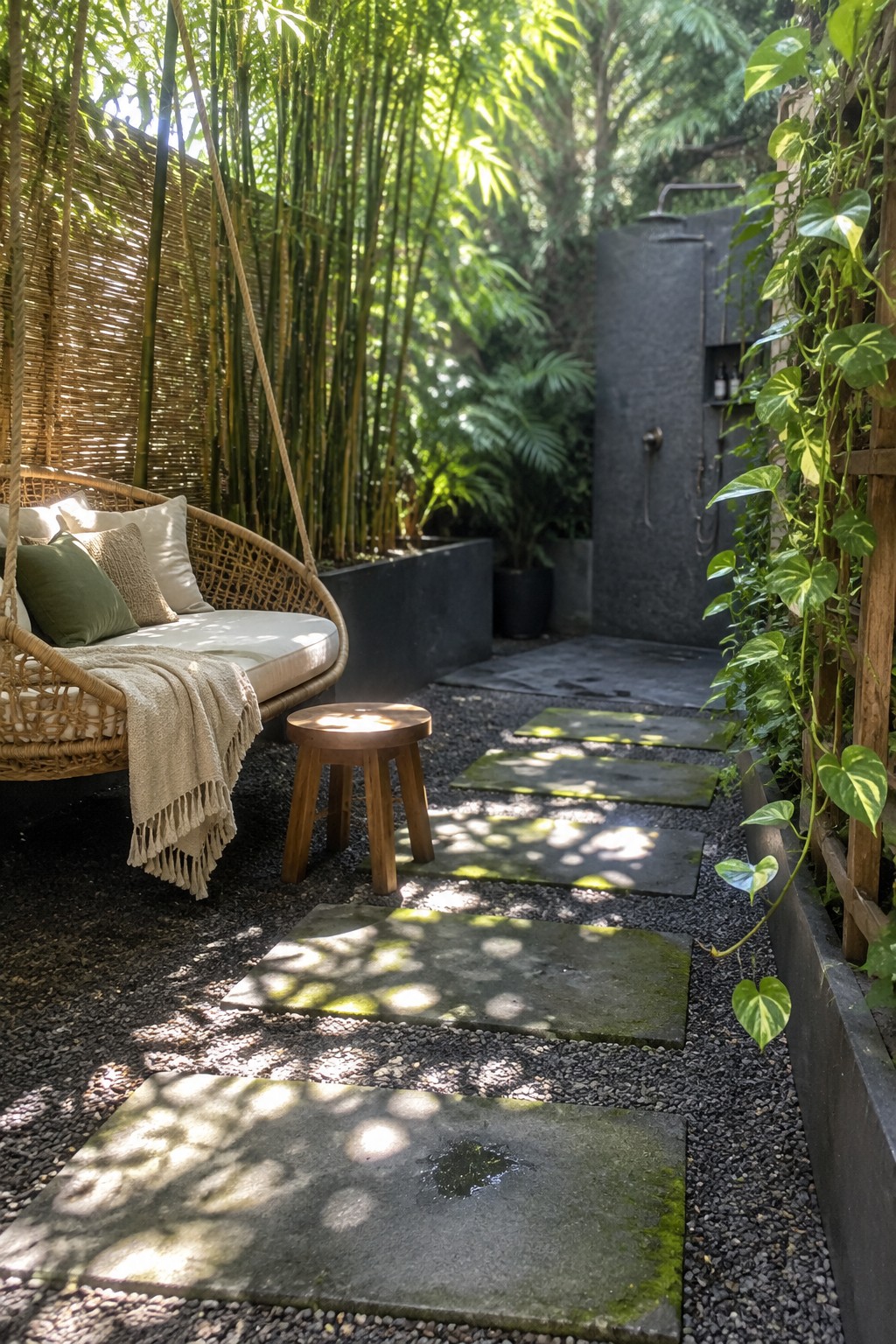
Bamboo makes a useful natural screen when you want a seating area to feel tucked away from nearby views. Its upright growth forms a dense green backdrop, while still giving a small patio a garden-like feel.
Plant bamboo in a contained bed or large planters along the edge of a seating area, and check the variety’s mature height and spread before planting. The clumping types are easier to manage than running bamboo, which can quickly spread beyond its space.
Use Flowering Trellises To Screen A Garden Patio

Trellises can make a patio feel more private without closing it off completely. When climbing roses grow across the supports, they give a leafy screen that still lets air and filtered light through.
This works well along the edge of a seating area, especially where a hedge alone does not provide enough height. Leave room to prune and train the vines, and choose a sturdy trellis that can handle their mature growth.
Let Climbing Vines Cover a Patio Wall
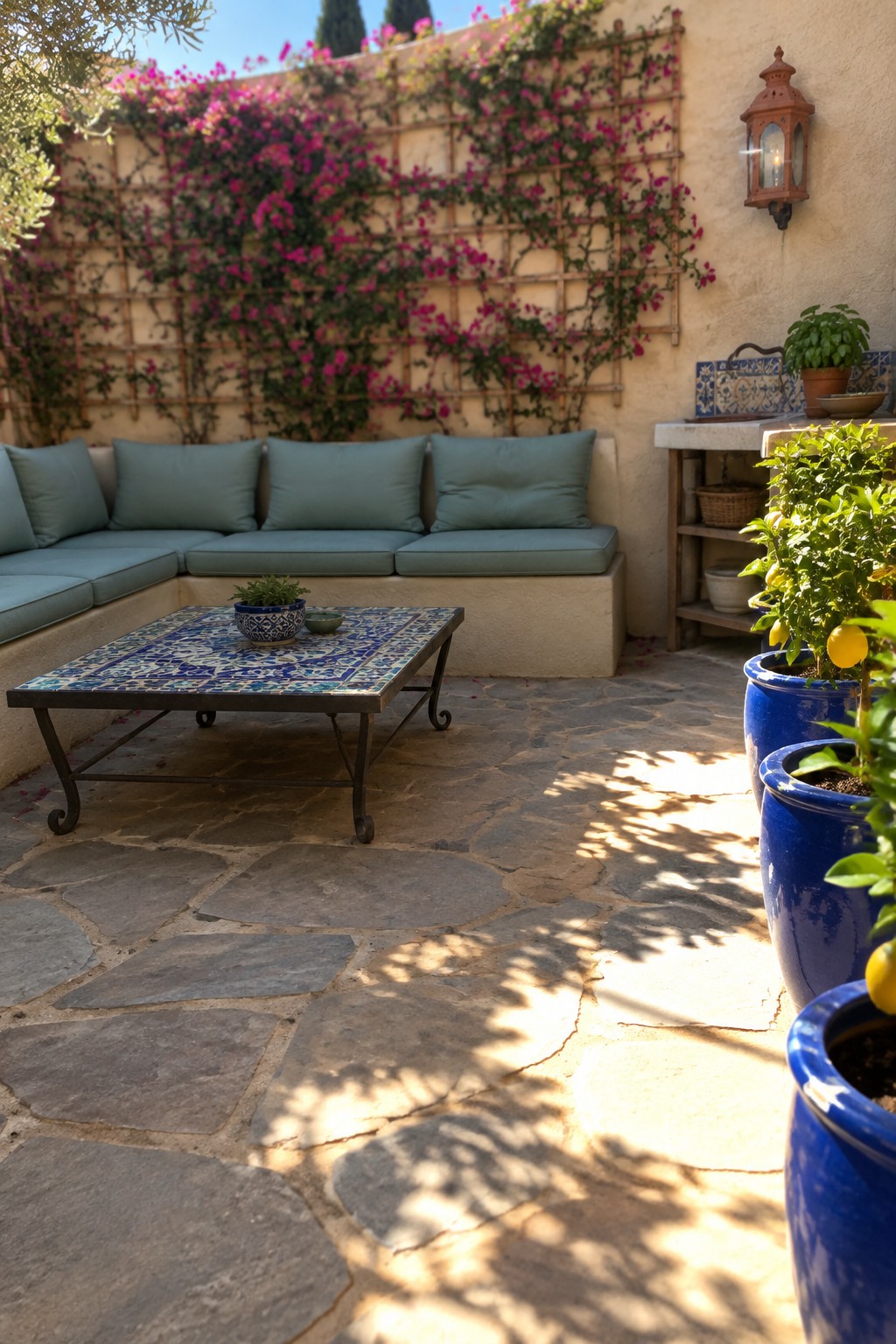
A trellis covered in flowering vines can make a patio feel more sheltered without closing it off. It gives the seating area a leafy backdrop and helps screen the wall behind it.
Use a wall-mounted trellis where you want a little more privacy but still want air and light to pass through. A built-in bench can sit below it, as shown here. Choose vines suited to your climate, and leave room to prune them so they do not crowd the seating.
Use Tall Patio Screens For A More Private Seating Area
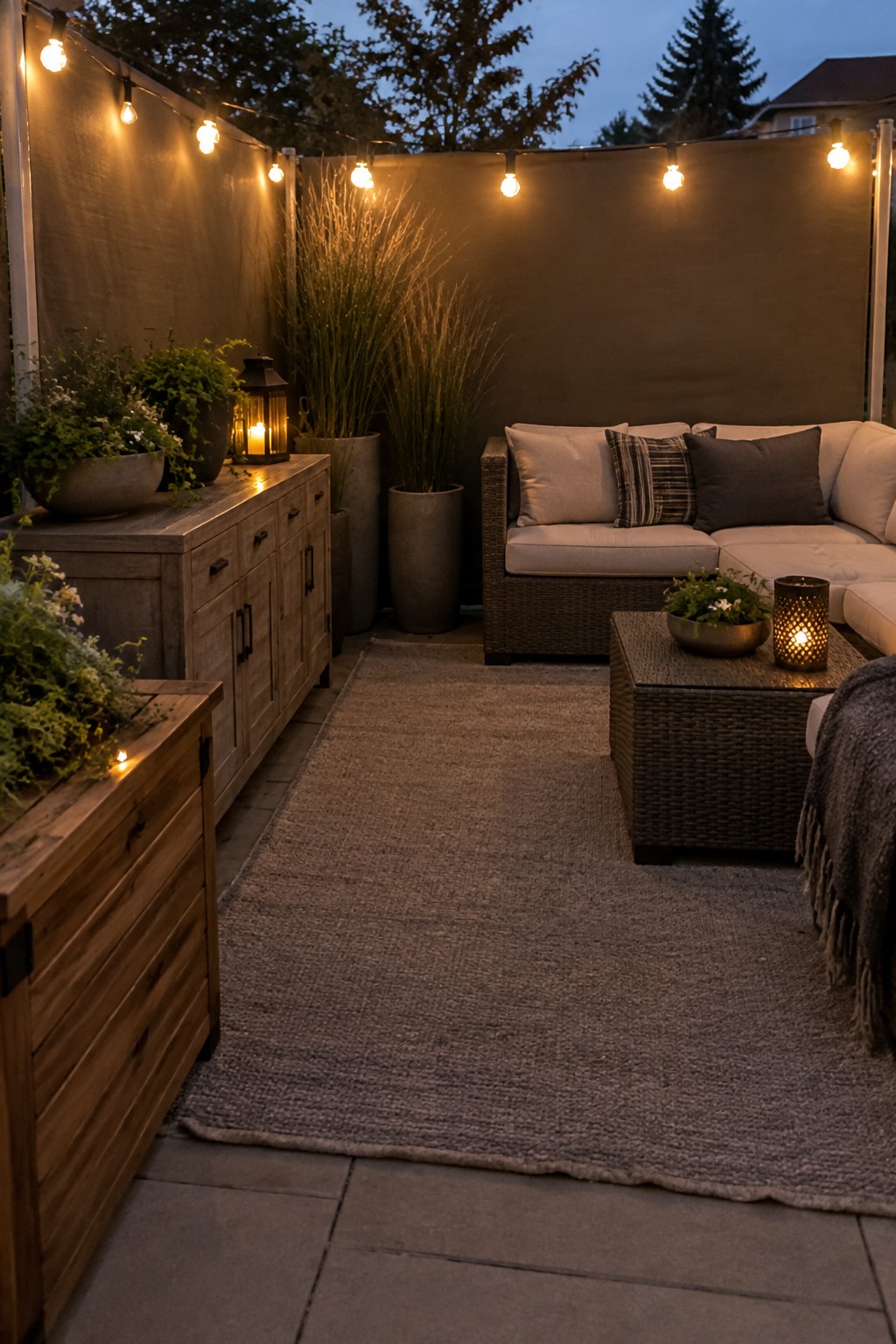
A solid screen can make a patio seating area feel more tucked away without taking up floor space. Here, the tall fence panels give the sofa a sheltered backdrop, while still leaving the space open above.
This approach works well on patios that face nearby homes or yards. Choose a screen height that blocks the views you want to avoid, and leave enough room for plants or furniture so the patio does not feel cramped.
Use a Fire Feature to Mark the Dining Area
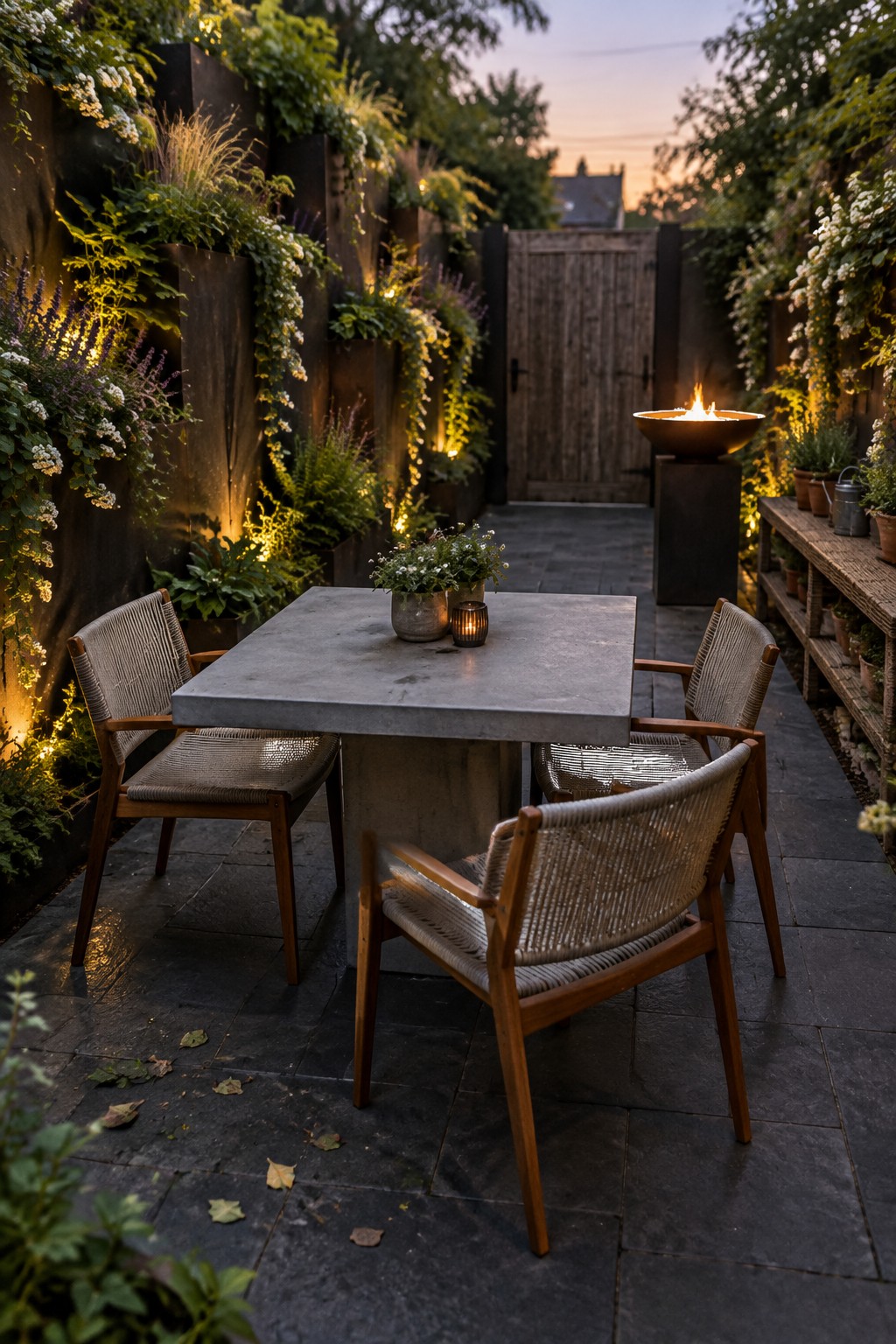
A fire bowl can help a patio dining area feel like its own spot, especially in a long, narrow garden. Here, it sits beyond the table, giving the space a clear endpoint without blocking the path.
Place the fire feature far enough from chairs, plants, and fences to leave a safe buffer, and check local rules before installing one. It works best where there is room to move around it without crowding the dining area.
Use a Lattice Screen To Enclose Patio Dining
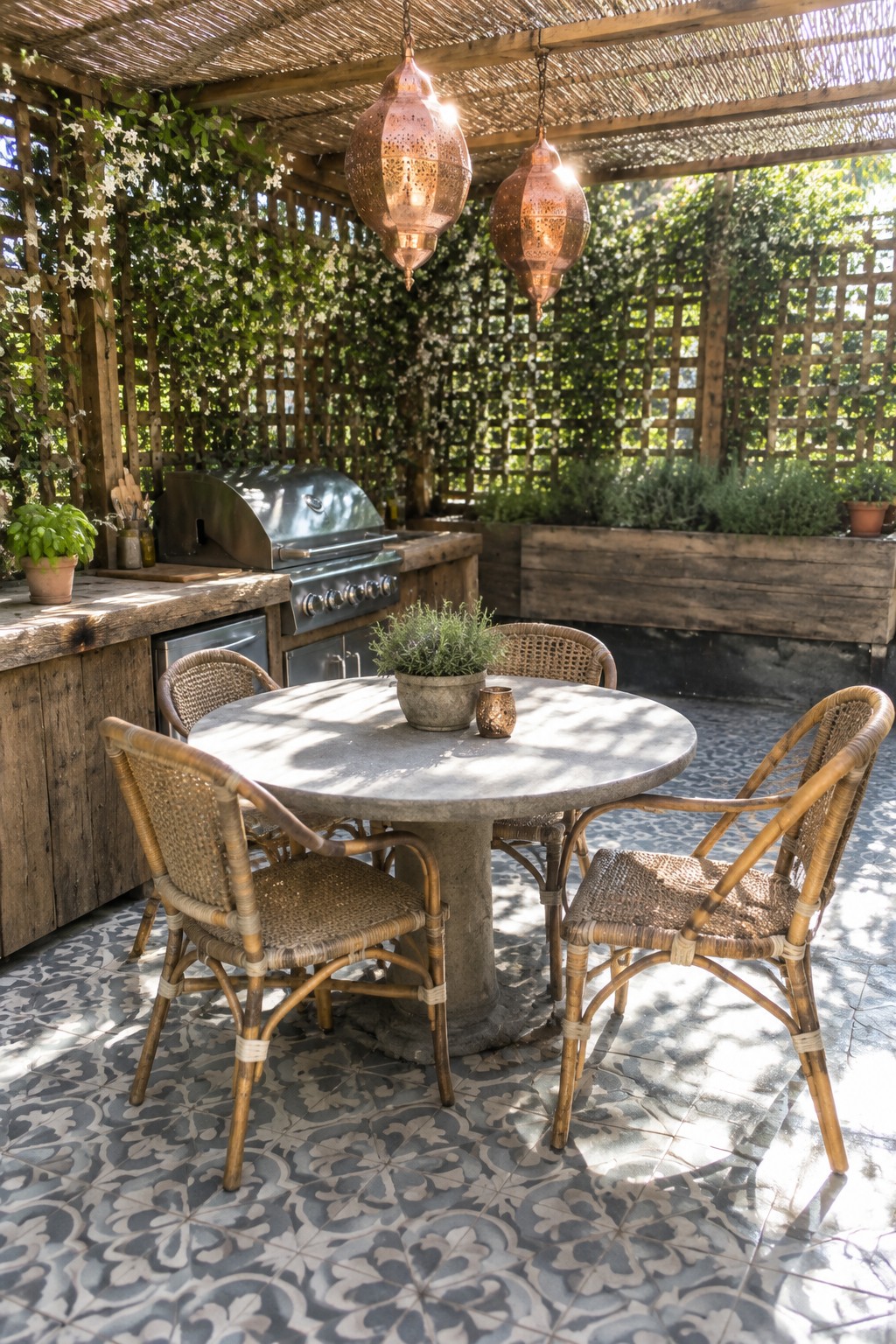
A lattice enclosure gives an outdoor dining area a little privacy without closing it off completely. The open grid lets light and air through, while climbing flowers can fill in gaps and make the seating area feel more sheltered.
This works well on a small patio or beside a neighboring yard. Add a trellis or lattice panels around the edges, and leave enough room for plants to grow without crowding the table.
Use a Stone Path To Shape a Garden
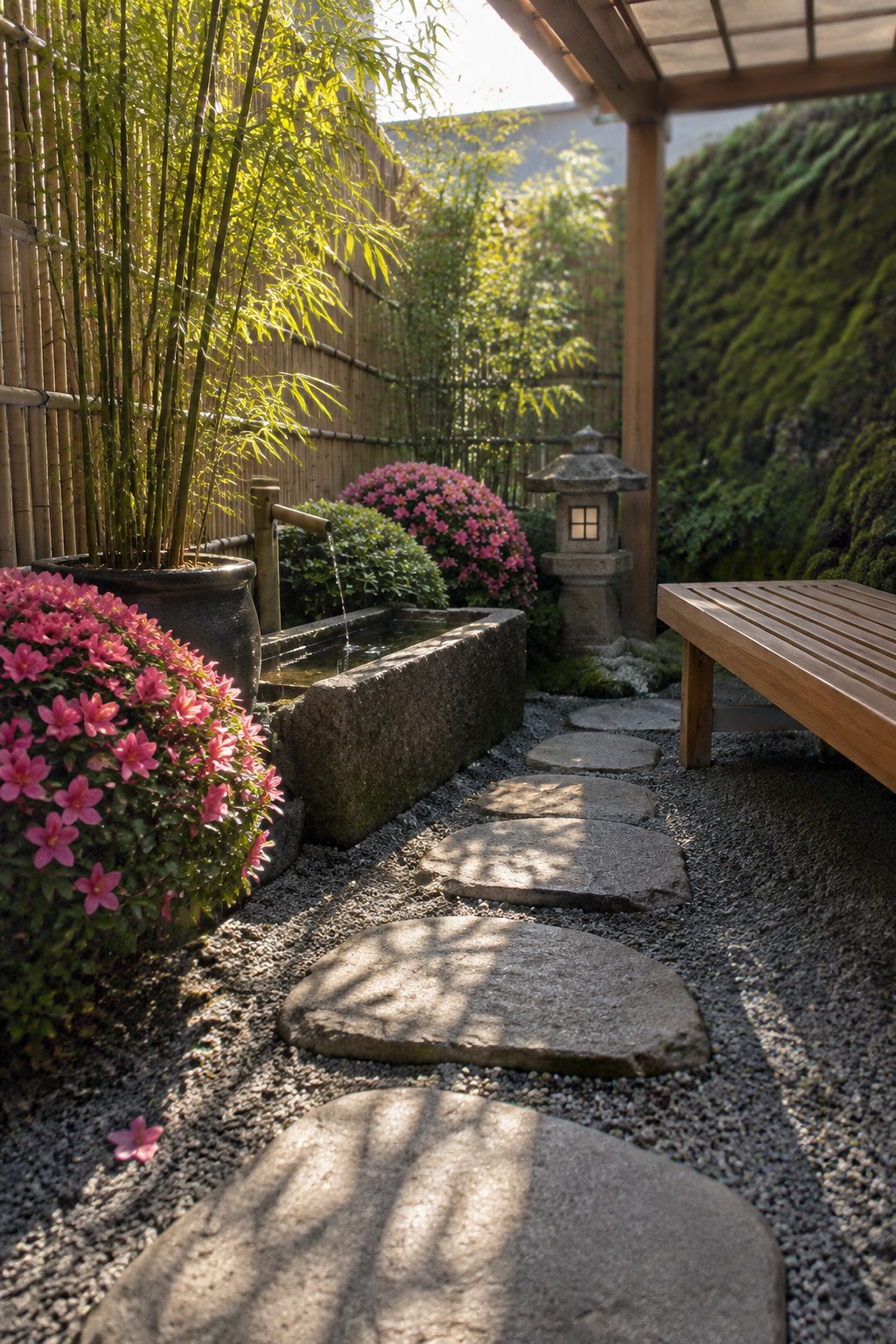
A stepping-stone path gives a small garden a clear route without covering the ground in paving. The broad stones set into gravel here make the walk feel defined while leaving room for planting beside it.
This approach suits a compact patio or side garden where a solid walkway might feel too heavy. Choose stones with enough space between them for easy steps, and keep the gravel level so the path stays comfortable to use.
Use Garden Trellises to Enclose Patio Dining

A woven garden screen can give a patio dining area a little separation without making it feel boxed in. Here, the fence and climbing roses provide a useful layer of privacy while still letting the seating area feel connected to the garden.
This approach suits a small patio or a dining spot near a neighbor’s view. Use a sturdy trellis or woven fence as the structure, then add climbing plants for a softer screen over time. Leave enough space around the table for chairs to move comfortably.
Frequently Asked Questions
Q: How do I add privacy without making a small patio feel boxed in?
A: Use an open trellis or a slatted screen instead of a solid wall. It blocks direct sightlines while still letting light and air through.
Q: Which plants work well for a leafy privacy screen in pots?
A: Choose upright plants that suit your patio’s sunlight and climate, such as bamboo varieties that grow in containers or tall ornamental grasses. Check the mature size before you buy, so the pots don’t outgrow the space.
Q: How can I make a screen or trellis feel more private quickly?
A: Train fast-growing climbing plants across it, and add a few tall potted plants where you need cover most. Keep the base clear enough to water and prune without a struggle.
Q: Can I attach a privacy screen to a rental patio?
A: Try a freestanding screen or a trellis secured to heavy planters, rather than drilling into walls or railings. It’s easier to move, and you can take it with you when you leave.
