

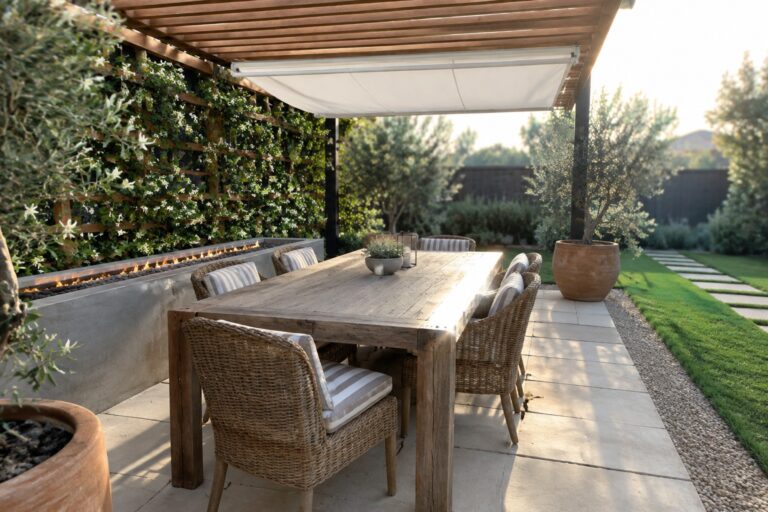
A pergola can make a patio feel more settled, but it works best when it offers shade without crowding the space or blocking the paths people use every day.
I tend to notice the balance first: how the structure frames the seating, where the sun falls, and whether there is room to move around once guests arrive.
Plants can soften the posts and beams, though their placement matters if they are to thrive without taking over the dining area or hiding the view.
The ideas ahead show different ways to combine greenery, practical shade, and space for gathering, with details you can adapt to the size and light of your own patio.
Some are worth saving for a future project; others may offer a small change you can try sooner.
Make Pergola Shade Work for Outdoor Dining

A pergola can make a patio dining area more comfortable without closing it off from the garden. A retractable canopy is especially useful, since you can extend it for midday shade and draw it back when you want more sun.
For a long table, plan the canopy to cover the seats as well as the tabletop. This setup suits patios used for regular meals or gatherings, but check that the canopy can retract easily and is made for outdoor conditions.
Make a Pergola Patio Feel Like an Outdoor Room
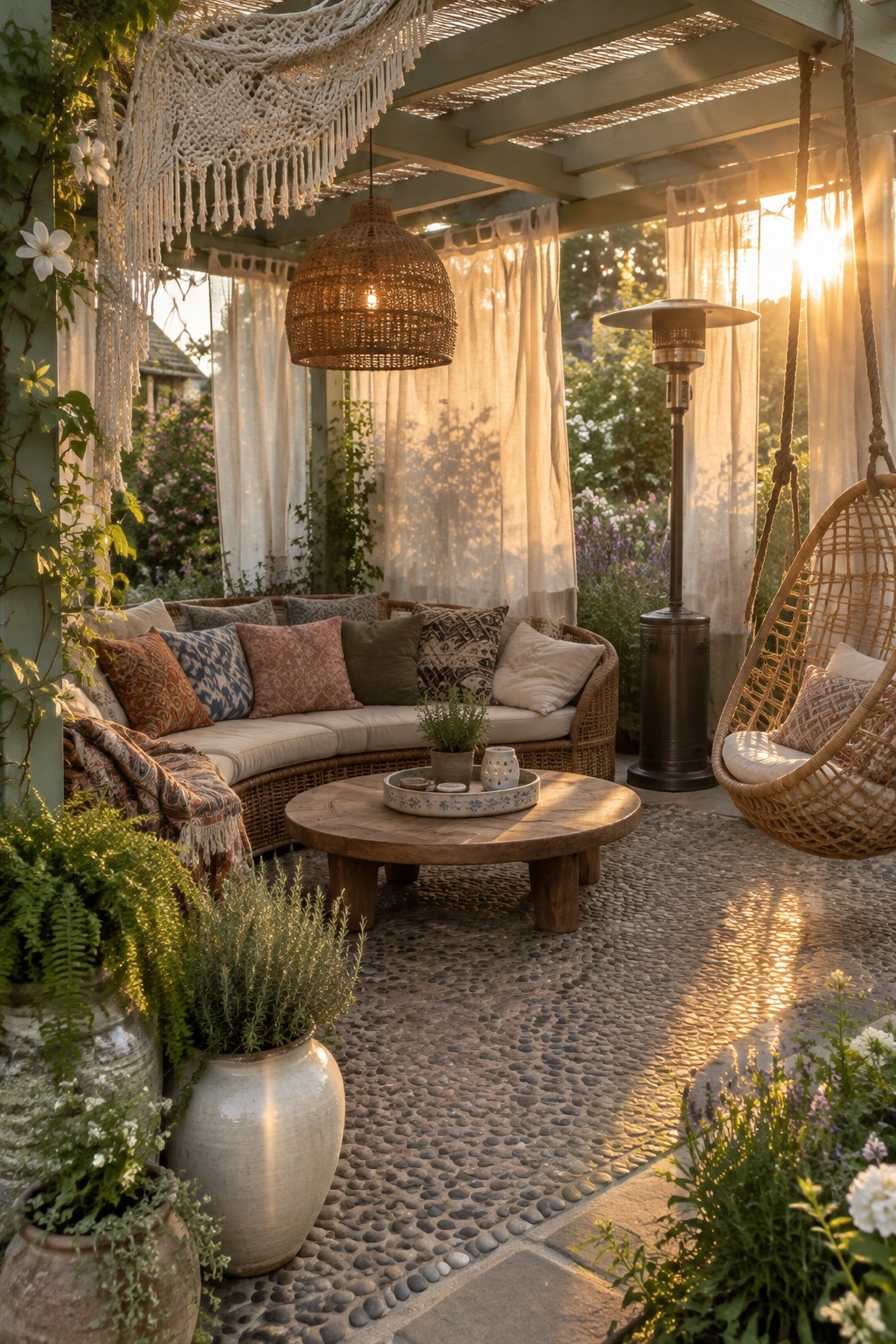
A pergola can make a patio feel more like a room without closing it off from the garden. Here, curtains add a little privacy, while the open roof still lets light filter through.
For a similar setup, arrange the main seating beneath the pergola and leave a clear path around it. Light curtains suit a sheltered patio, but secure them well and choose fabric that can handle outdoor use.
Make the Pergola Part of the Dining Area
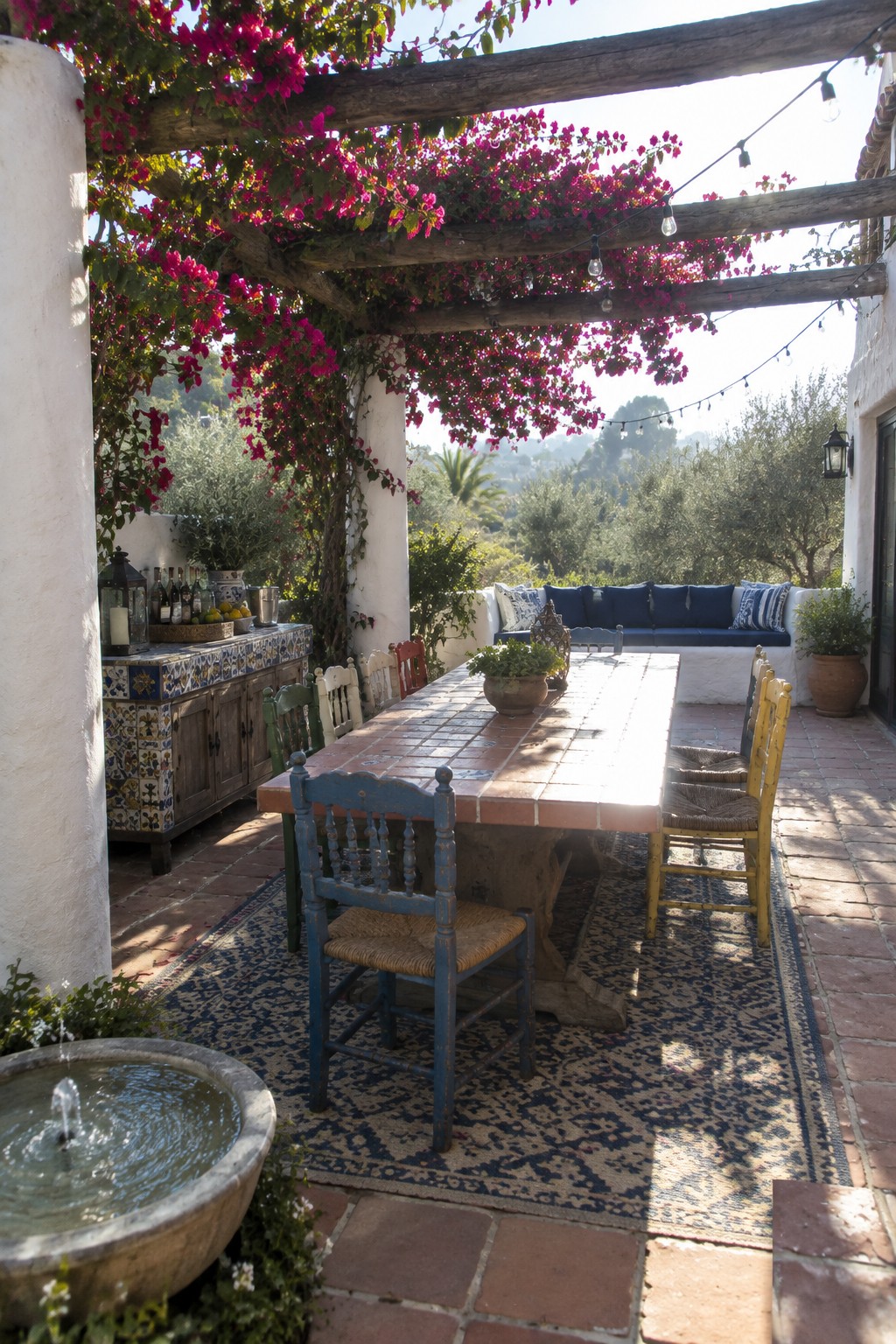
A pergola can make an outdoor dining spot feel like a natural extension of the home. Here, climbing bougainvillea covers the timber beams, giving the table some shade while keeping the space open to the garden.
For a similar setup, place the dining table where people can move around it easily, then train a climbing plant across a sturdy pergola. Choose a vine suited to your climate, and leave enough open space in the canopy so it does not become too dense.
Make a Pergola Work for Outdoor Cooking
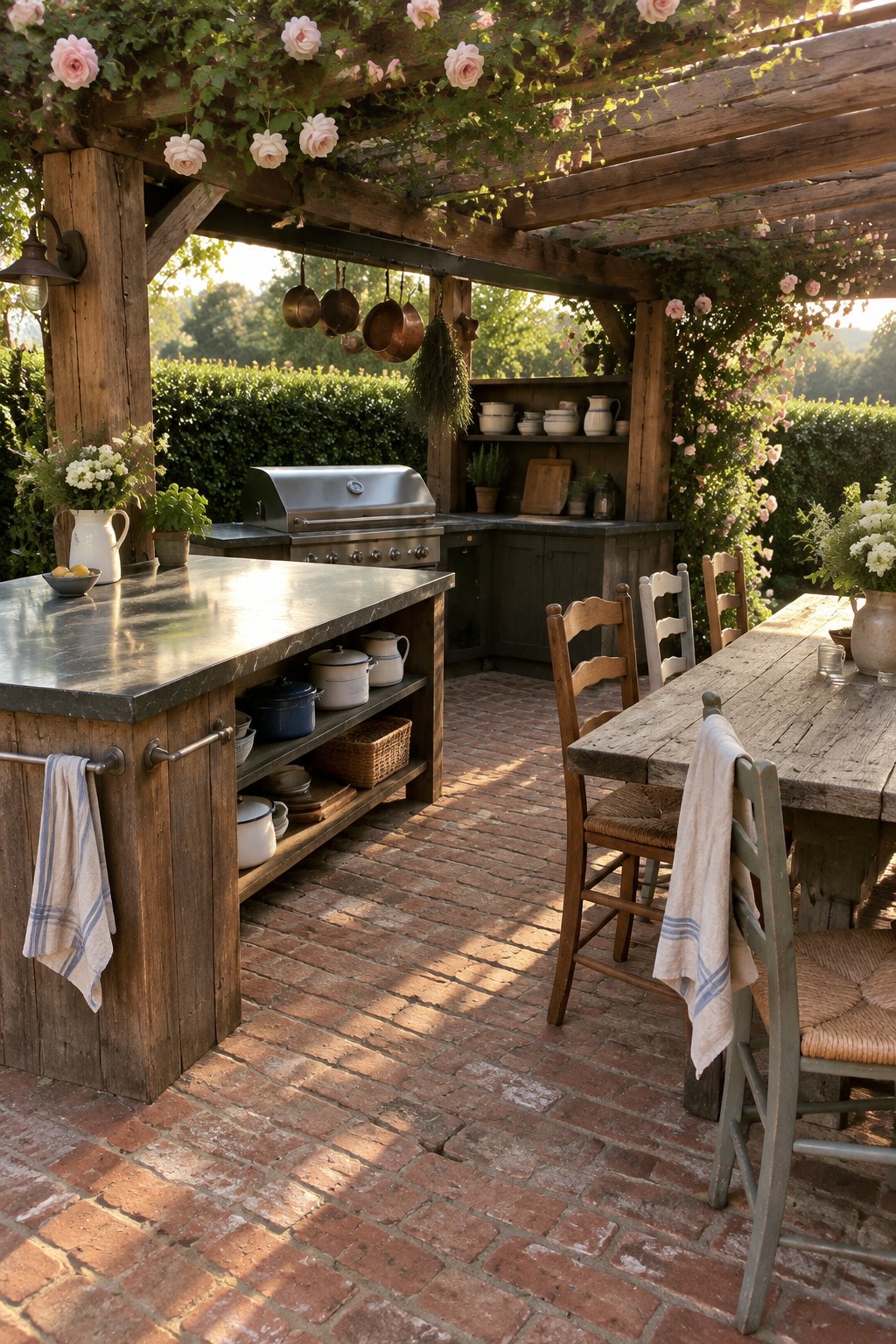
A pergola can turn a patio kitchen into a practical place to cook and eat, while its roof beams give climbing plants room to grow. Here, a built-in grill sits beside a dining table, so cooking and serving can happen in the same area.
This setup works well in a garden where there is room for both a prep counter and a table. Leave enough space to move between them, and choose a sturdy structure that can support mature vines without making the cooking area too enclosed.
Use a Pergola to Define an Outdoor Dining Area
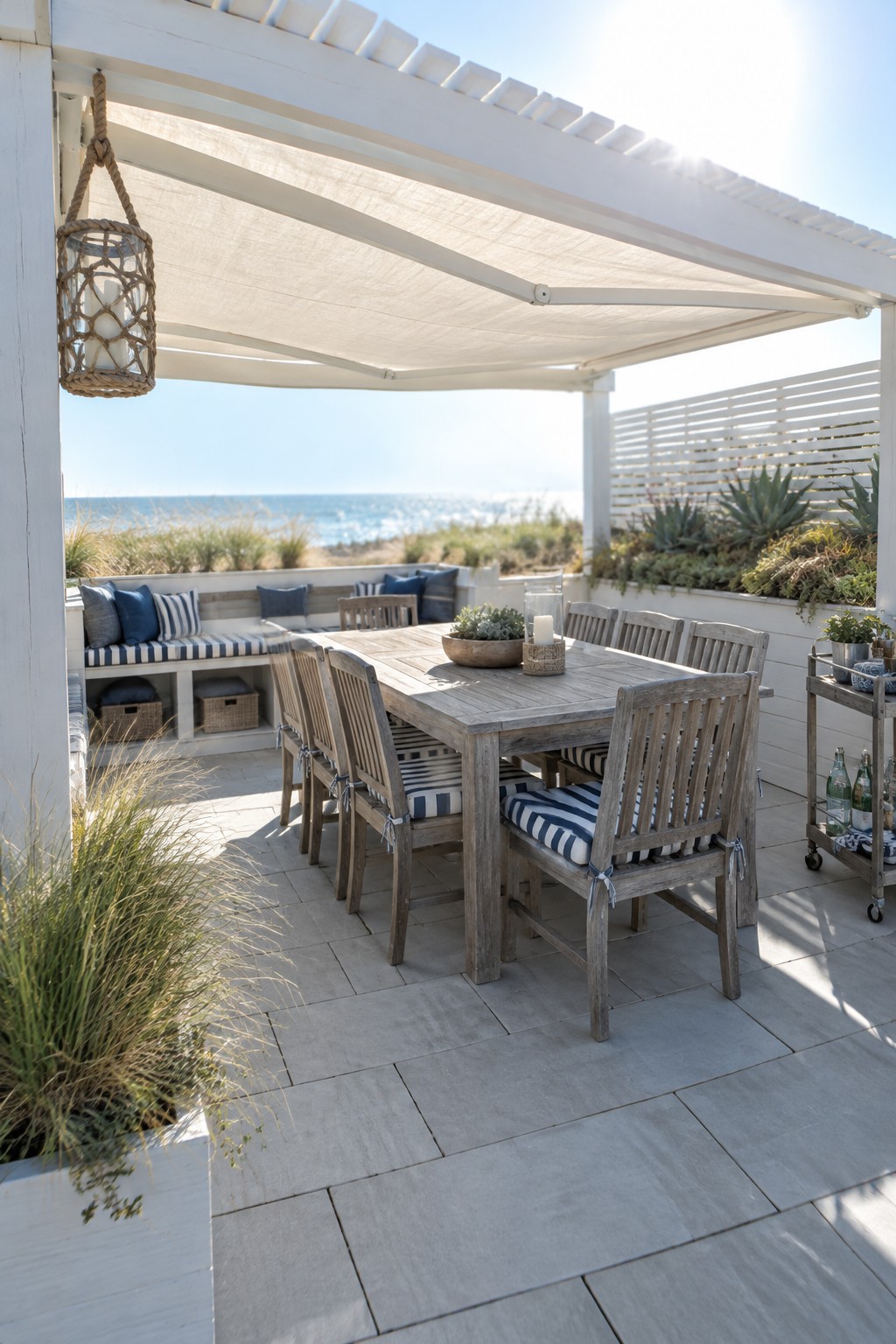
A pergola helps give a dining spot its own place on the patio, while a fabric canopy provides shade without making the area feel closed in. Here, the table sits beneath the covered section, close to a built-in bench.
This setup works well on a terrace where you want a comfortable place to eat and still keep the seating connected to the rest of the patio. Choose a canopy that suits your sun exposure, and leave enough room around the table to pull out chairs.
Grow Herbs Along a Pergola Patio

A vertical herb garden makes a narrow patio useful without taking up much floor space. Planting herbs along one wall keeps fresh leaves close to the table and gives the pergola area a clear purpose.
Use sturdy wall-mounted planters and choose herbs that suit the amount of sun the patio gets. This works especially well in a small courtyard, but leave enough room to reach the plants and move chairs comfortably.
Use a Pergola to Create a Shady Poolside Lounge
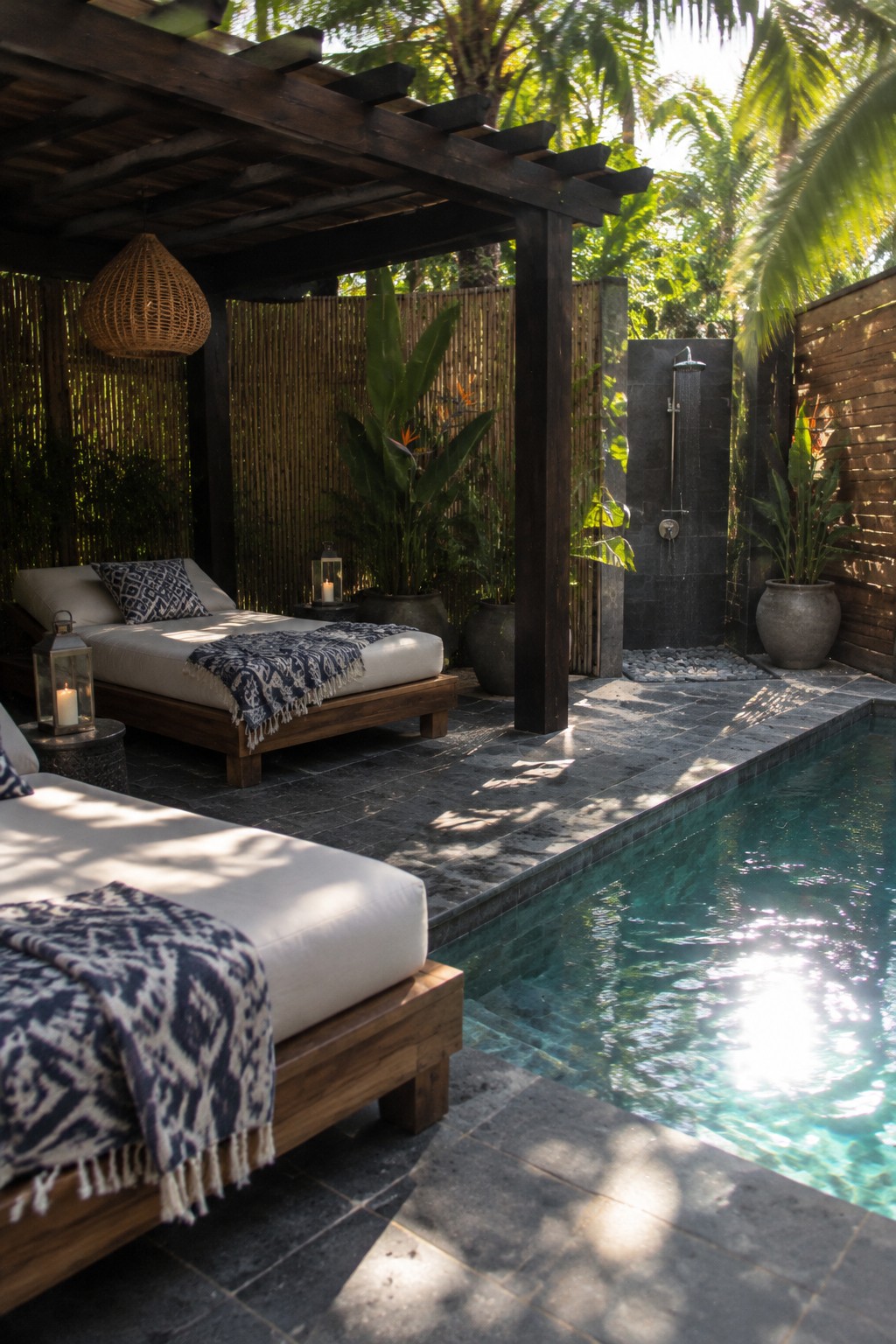
A pergola can make a poolside seating area more comfortable by giving it a patch of shade without closing it off from the garden. Here, the covered daybeds make the patio useful for resting between swims.
This layout works well beside a pool or in a compact courtyard. Leave a clear route to the water, and choose outdoor cushions and fabrics that can handle damp swimsuits.
Add Built-In Seating to a Pergola Patio
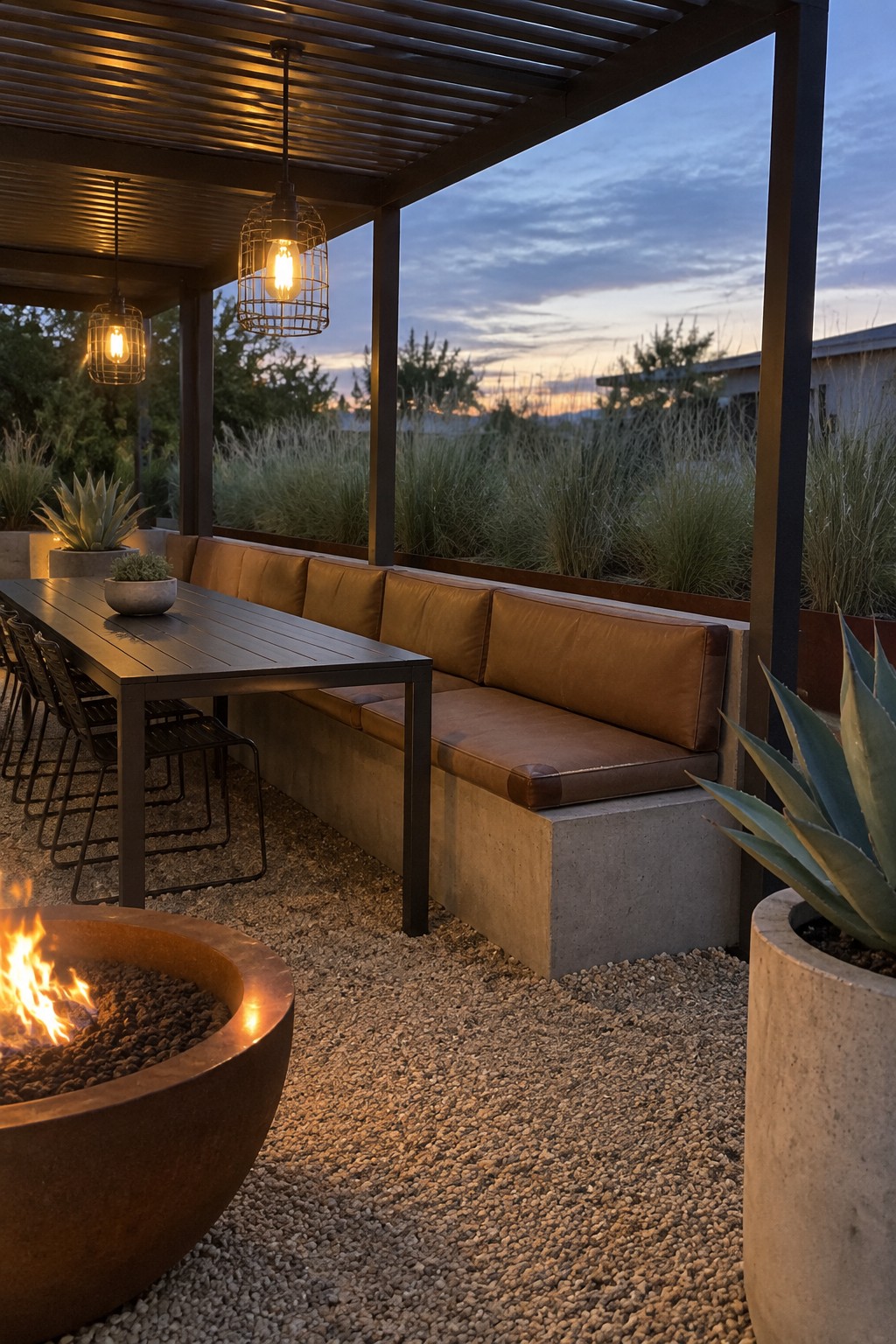
A built-in bench can make a pergola patio easier to use for both dining and relaxing. Here, the long bench runs along one side of the table, so guests have a comfortable place to sit without filling the patio with extra chairs.
This setup works well in a narrow or sheltered outdoor space where every bit of floor area matters. Add weather-resistant cushions, and leave enough room to pull chairs out on the other side of the table.
Build an Outdoor Kitchen Into the Pergola Patio
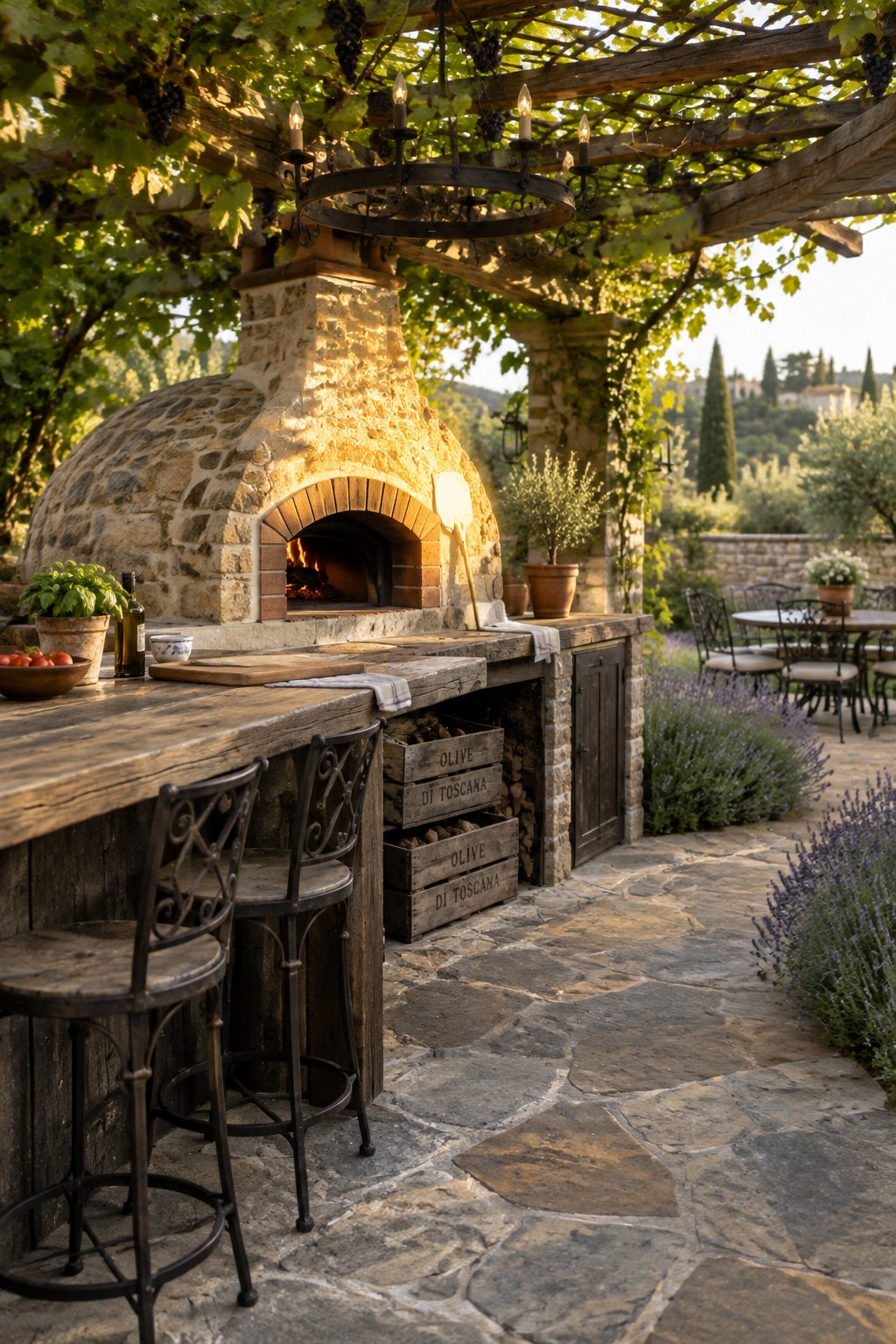
A pergola can cover more than a dining spot. Here, it shelters an outdoor kitchen, making cooking and serving part of the patio rather than a separate task indoors. The built-in stone oven gives the area a clear purpose.
This setup works well on a spacious patio where there is room for both a prep counter and nearby seating. Use sturdy, weather-ready materials, and leave enough open space around the oven for safe cooking and easy movement.
Create a Shady Pergola Seating Nook
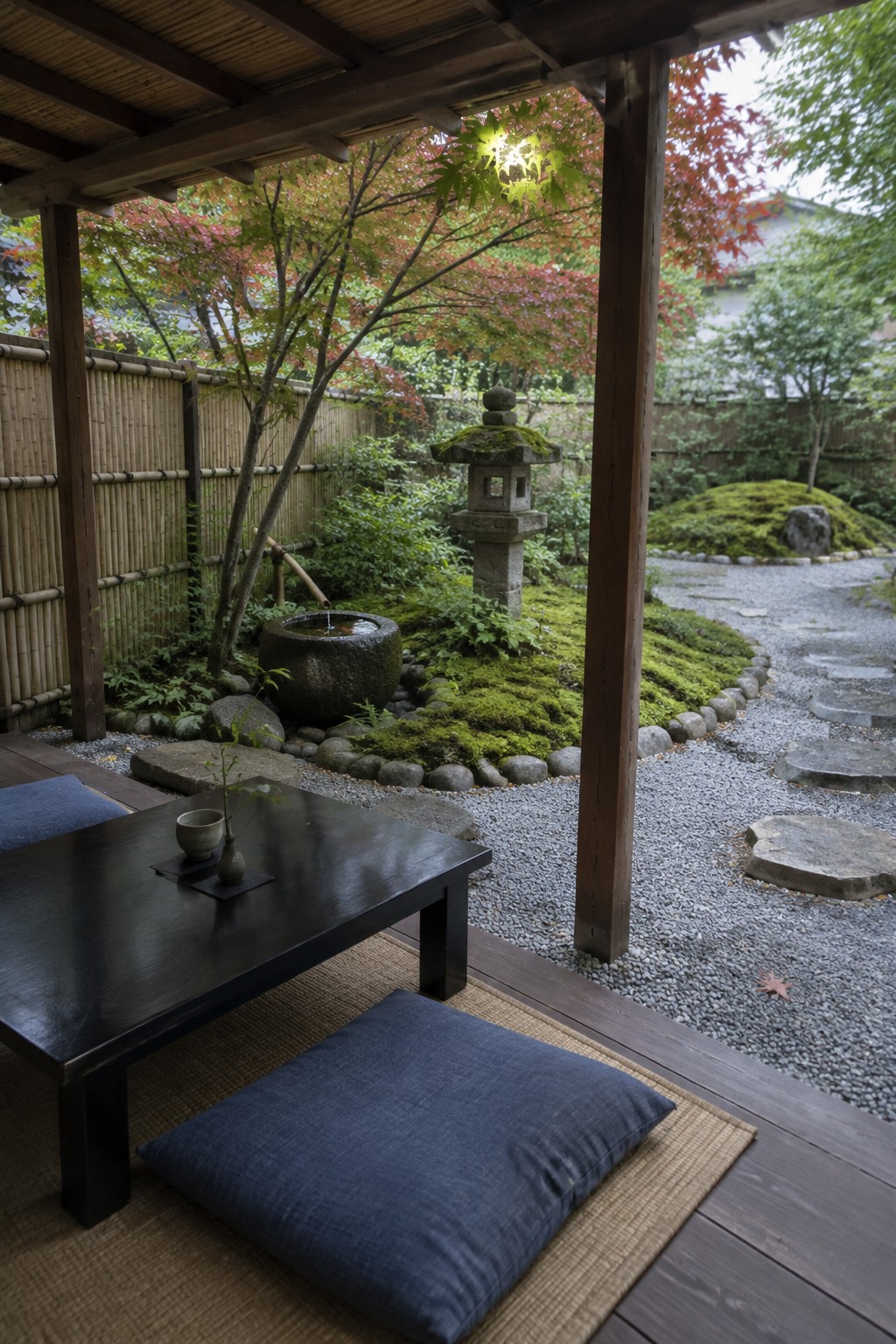
A pergola can make a small sitting area feel tucked away from the rest of the garden. Here, low floor seating beneath the wooden roof gives the space a simple place to pause while still keeping it open to the garden.
For a similar setup, use a low table and cushions on a covered patio or porch, and keep the furniture easy to move. This works especially well where you want a quiet spot for tea or reading without setting aside room for a full outdoor dining set.
Use a Pergola for a Garden Dining Spot
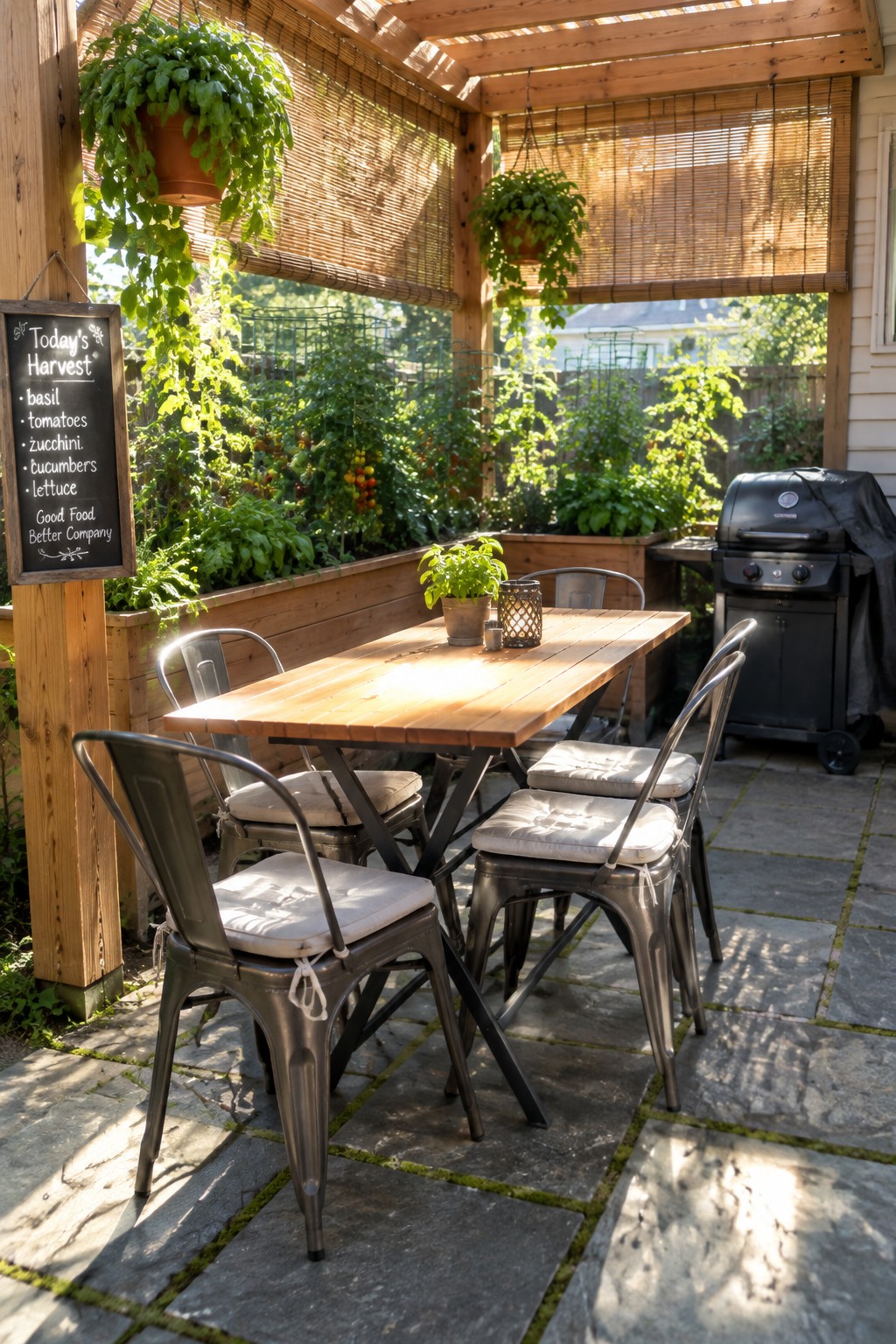
A pergola can make a patio dining area feel tucked into the garden without closing it off. Bamboo shades offer adjustable cover, while the open sides keep the space connected to nearby plants.
This setup works well where you want a table close to a kitchen garden or growing beds. Choose outdoor furniture that can handle damp conditions, and raise the shades when plants nearby need more sun.
Add a Round Table for Pergola Dining
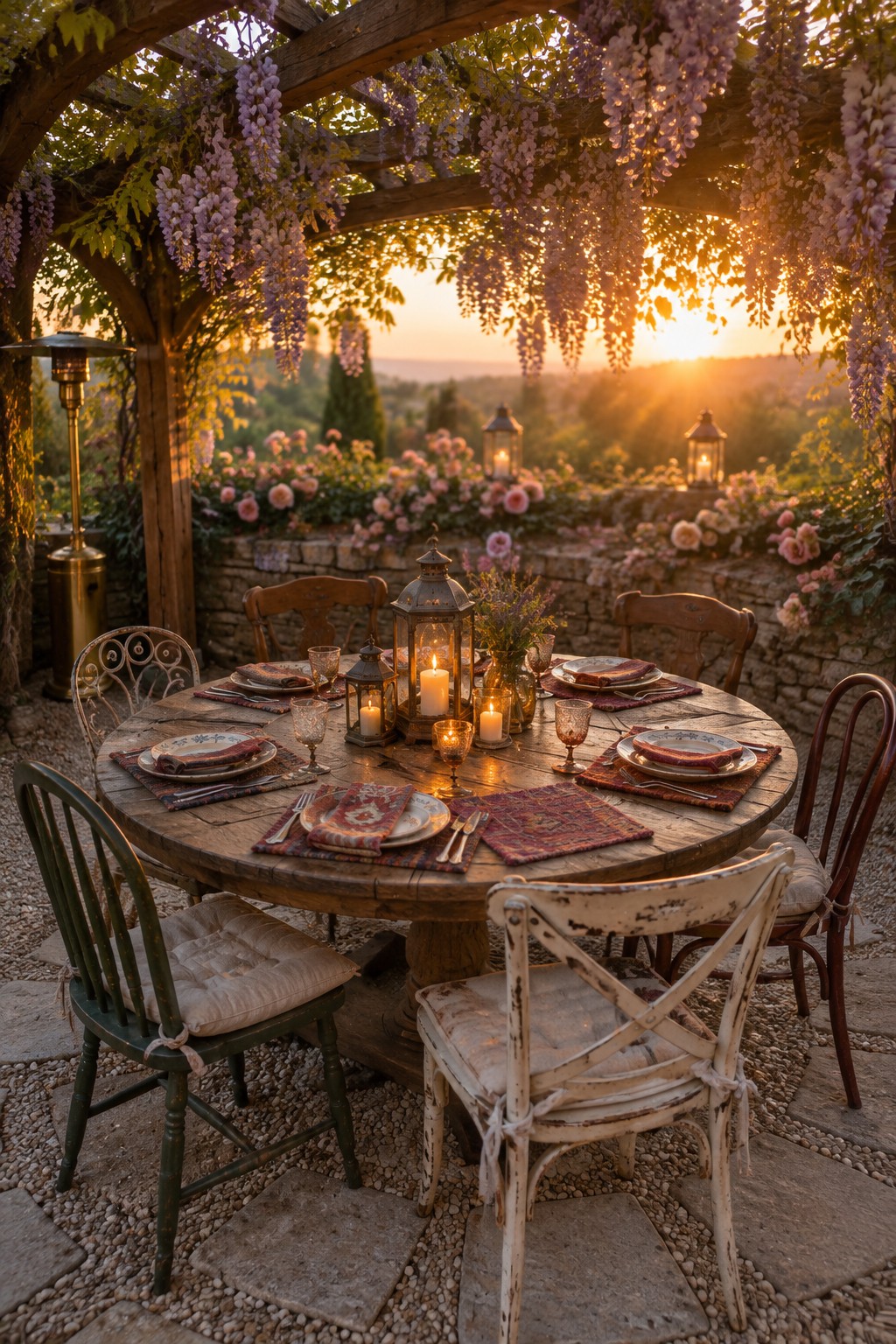
A round table makes a pergola patio feel easy to gather around. Everyone can reach the shared dishes, and the shape works well beneath a wooden pergola without needing a large, formal dining area.
Choose a table size that leaves enough room to pull chairs back and move around comfortably. This setup suits a garden patio used for relaxed meals; a few lanterns on the table can provide light after sunset.
Add Adjustable Shade to a Poolside Pergola
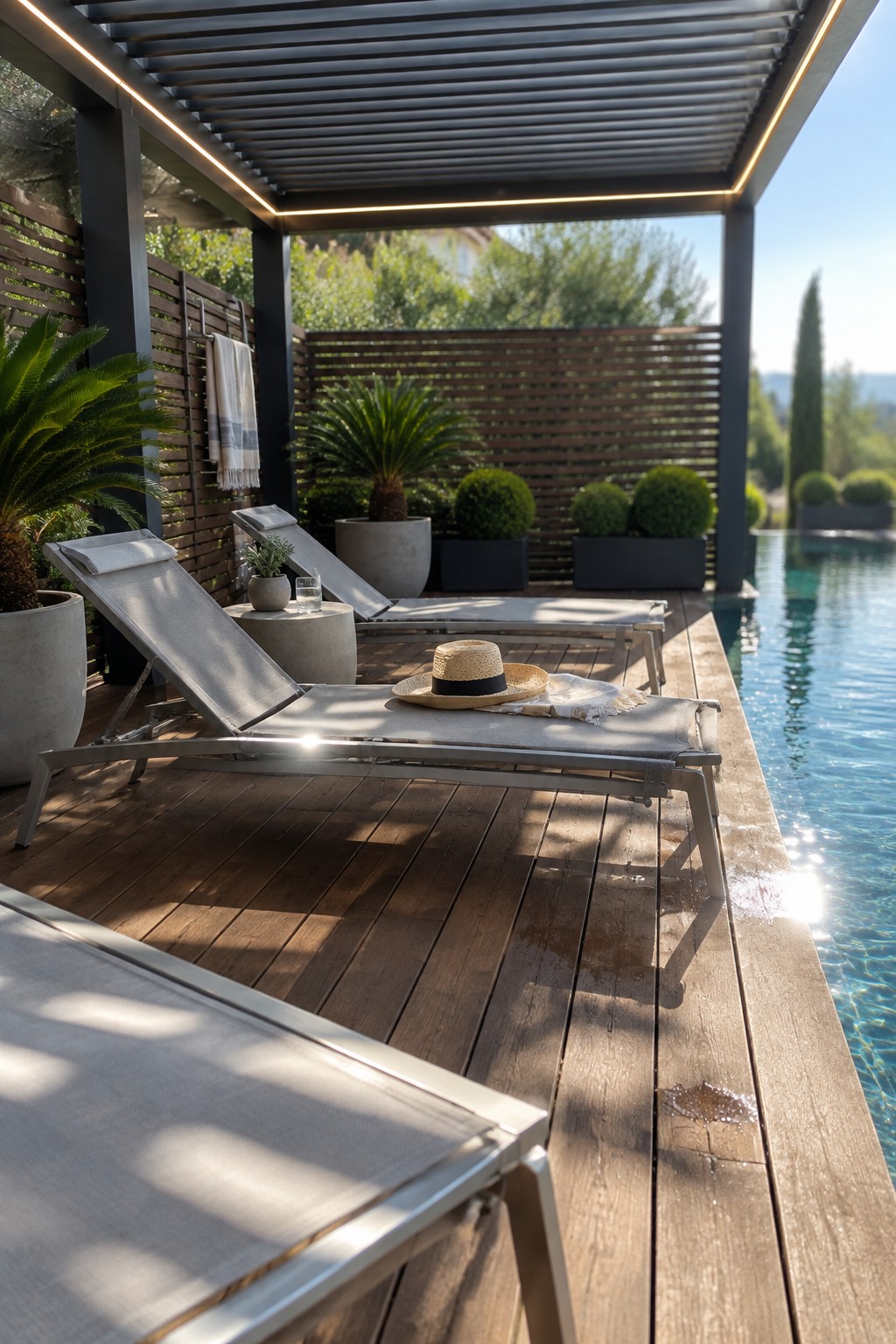
A pergola with adjustable overhead slats lets you control how much sun reaches a poolside seating area. It provides useful shade for lounging, while the open design still lets in light when you want it.
This setup works well beside a pool or on a sunny deck where people spend time resting between swims. Choose a sturdy, weather-resistant frame, and make sure the slats can be adjusted easily as the sun moves.
Let Climbing Plants Shade a Pergola Patio
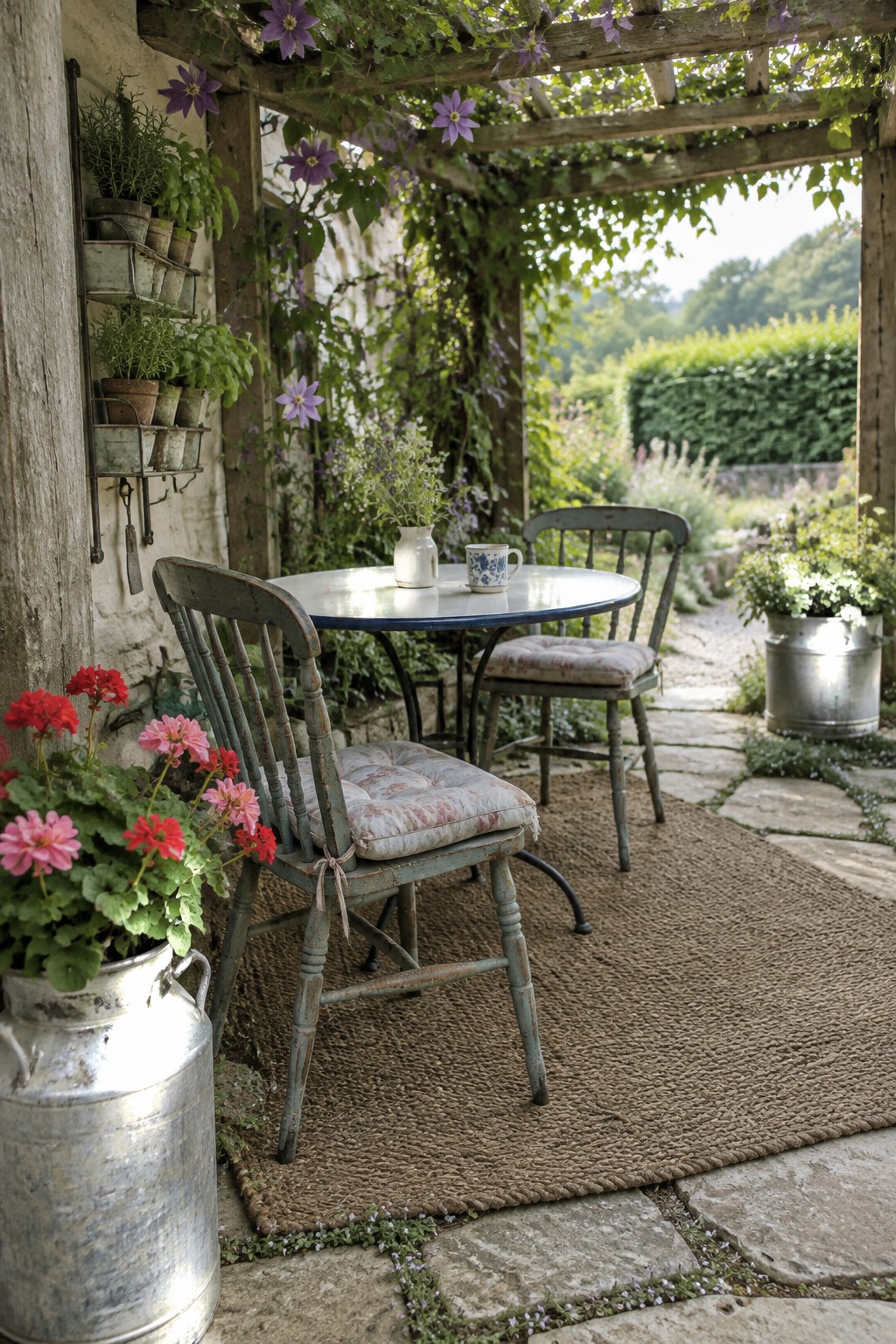
A pergola covered with climbing plants gives a patio natural shade while keeping it open to the garden. It can make a small dining spot feel tucked away without needing solid walls or a roof.
Choose a sturdy pergola and train vines along its beams, leaving enough gaps for air and filtered sunlight. This works well over a table or seating area, but keep the planting trimmed so it does not crowd the space.
Use a Pergola to Make a Patio Feel Private
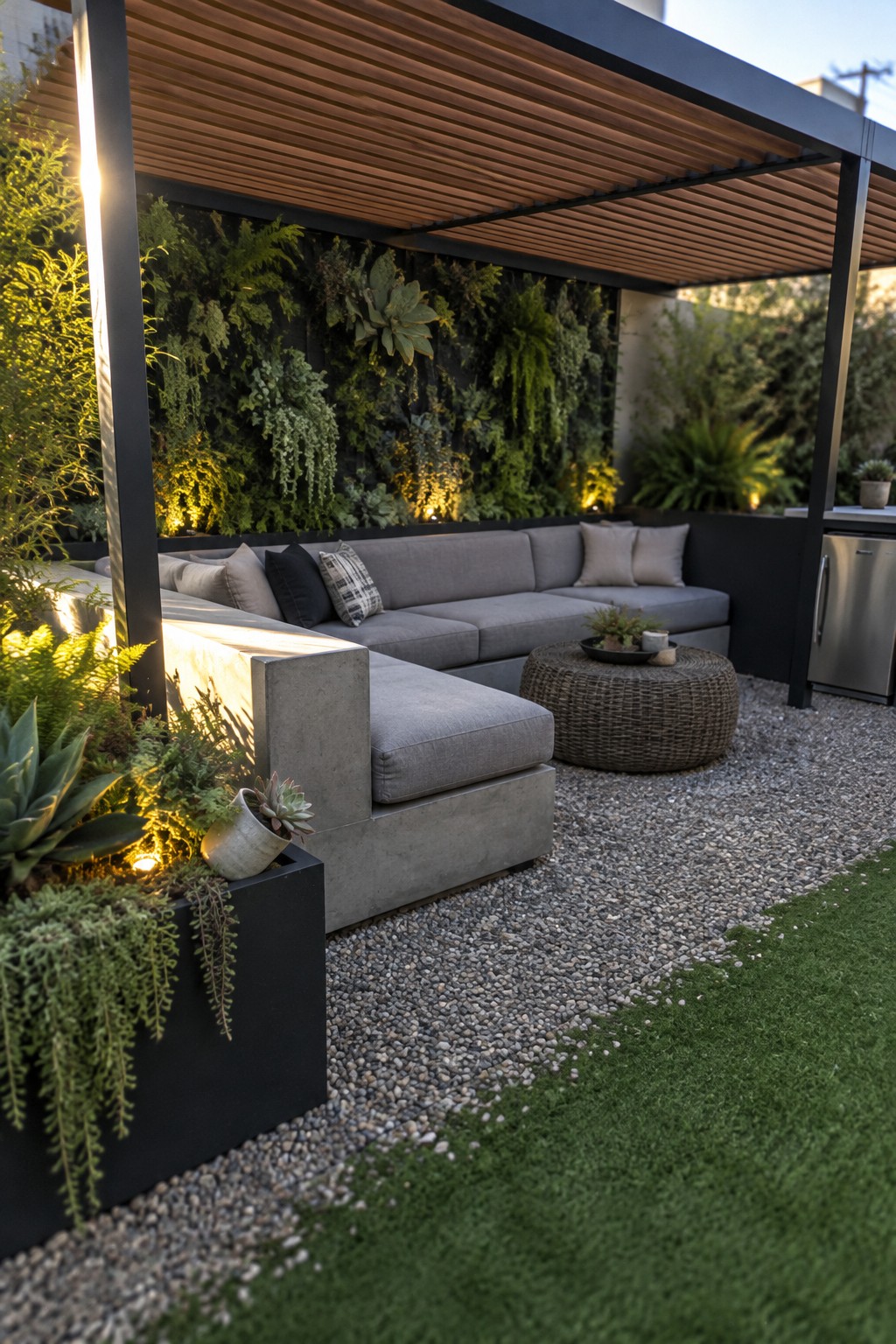
A pergola can help a patio feel like its own outdoor room, especially when it covers a seating area and screens the edges from nearby views. Here, the slatted roof gives the lounge a clear boundary, while a planted wall adds privacy without closing it off completely.
This setup suits a compact yard where you want a comfortable place to sit without building solid walls. Keep the planting easy to maintain, and leave enough open space around the seating so the patio still feels usable.
Use Pergola Lighting to Extend Patio Evenings
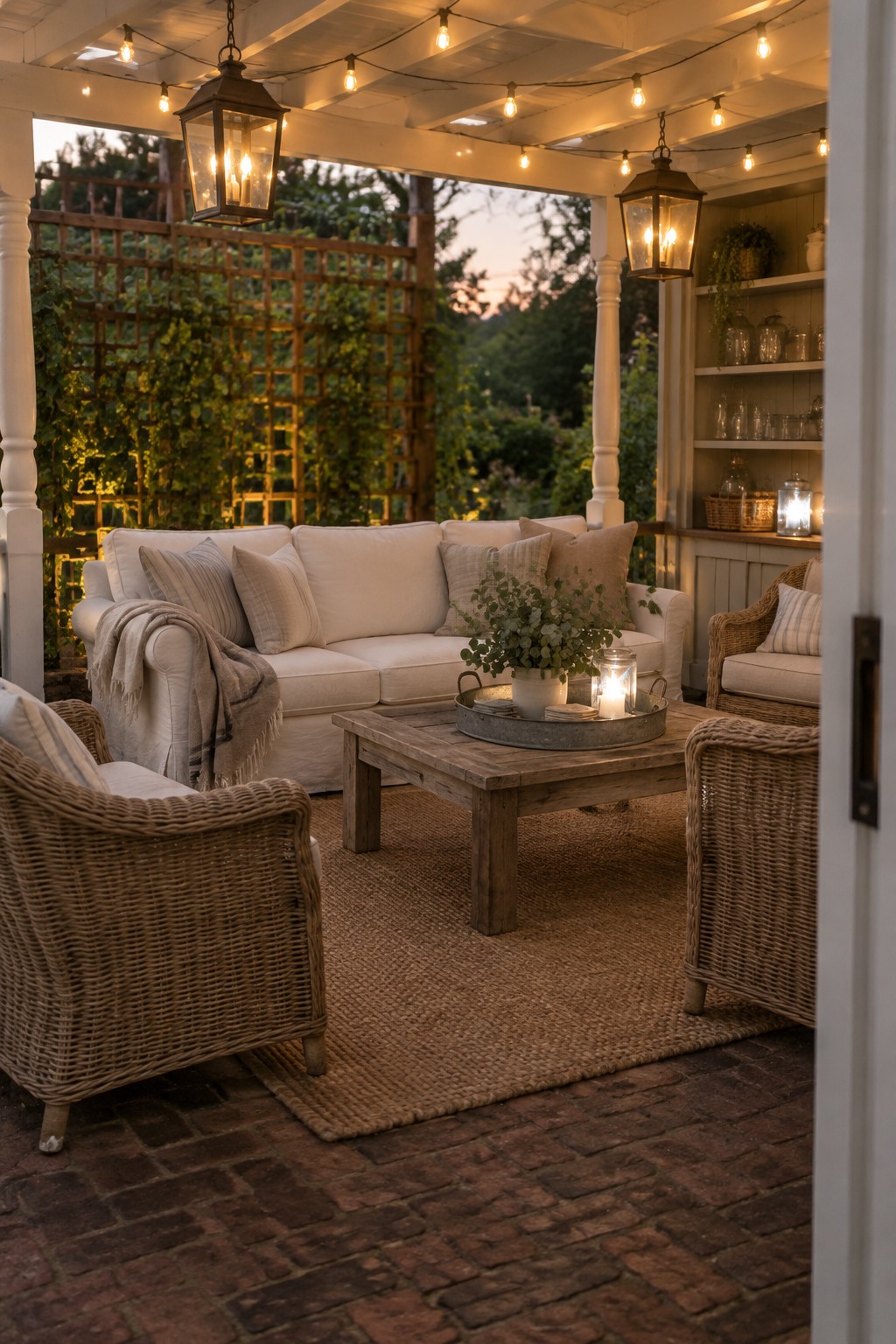
A pergola can make a patio useful after sunset when its lighting is planned as part of the space. String lights spread a gentle glow across the seating area, while hanging lanterns give the light a more focused feel.
For a similar setup, use outdoor-rated bulbs and keep them bright enough for conversation without making the patio feel harsh. This works especially well over a lounge area where people tend to linger.
Create a Shady Pergola Resting Spot
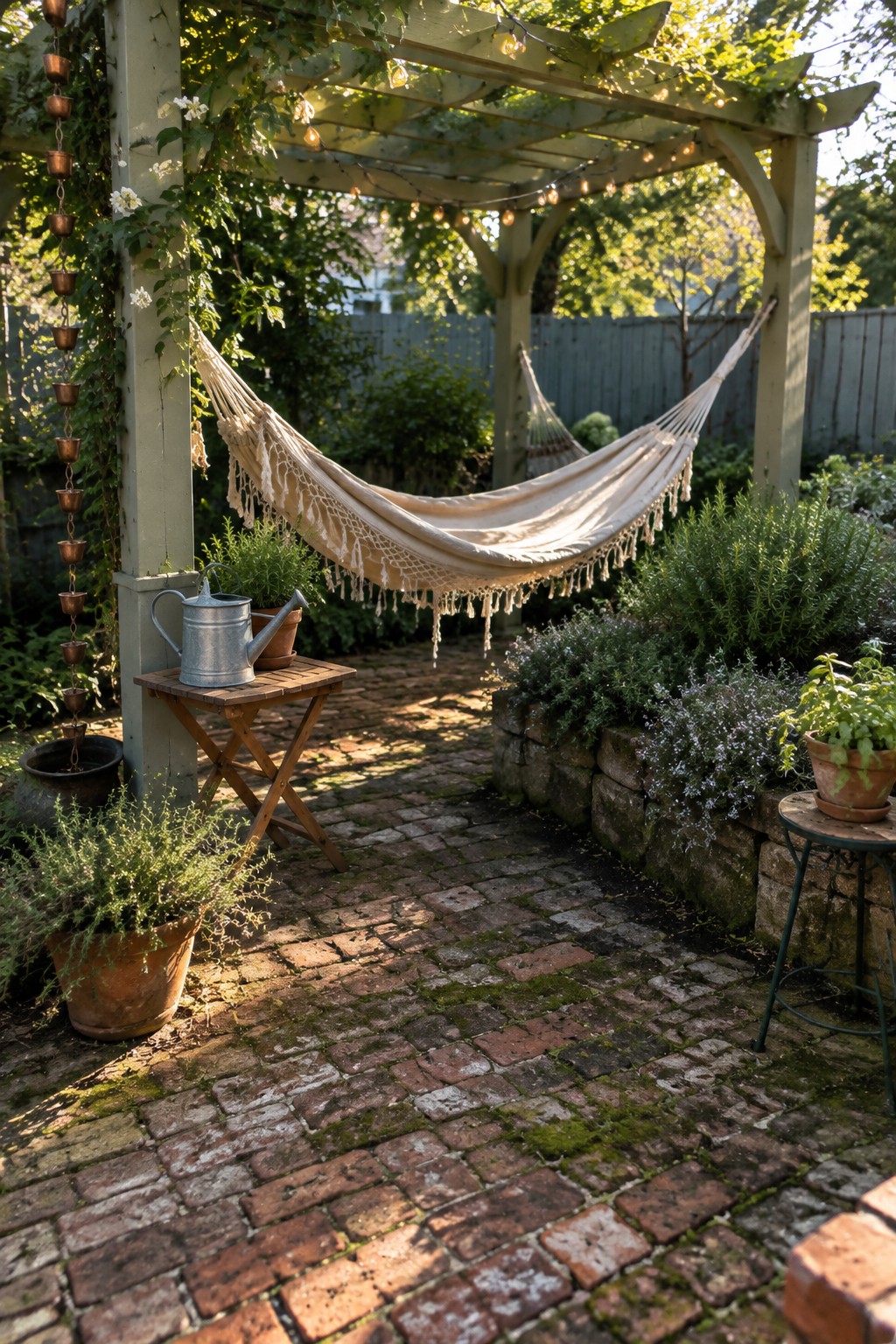
A pergola can turn a small garden patio into a comfortable place to pause, especially when it holds a hammock instead of a full seating set. The overhead beams provide a clear place to hang it, while the open sides keep the space connected to the garden.
Choose a hammock that fits the pergola without blocking the path below, and check that the support points are sturdy enough for its weight. A fabric style with fringe suits a relaxed garden, but a simpler hammock can work just as well.
Use a Pergola to Make a Narrow Balcony More Usable

A pergola can help a narrow balcony feel like a proper place to sit, rather than just a passage outside. Here, the overhead structure gives the seating area some definition, while climbing plants on a trellis bring greenery up without taking much floor space.
For a small balcony, keep the furniture compact and leave a clear path through the space. Choose plants that suit the amount of sun the balcony gets, and check that pots and planters are secure.
Frequently Asked Questions
Q: What climbing plants work well on a patio pergola?
A: Star jasmine, clematis, and climbing roses can all bring color and fragrance to a pergola. Choose plants that suit your climate and the amount of sun your patio gets, and leave room for them to spread.
Q: Will a pergola give me enough shade for outdoor dining?
A: The open beams offer some shade, but the sun will still come through. Add a retractable canopy, shade cloth, or leafy vines if you want more cover over the table.
Q: How do I keep a pergola from feeling crowded with plants?
A: Train vines along the beams instead of letting them spill over every side, and use pots around the edges for smaller plants. A little open space overhead makes the patio feel lighter and keeps the dining area comfortable.
Q: Can I add a pergola to a small patio?
A: Yes. A compact pergola can define a seating or dining spot without taking over the whole patio. Choose slim posts and keep the furniture simple so there’s still room to move around.
