

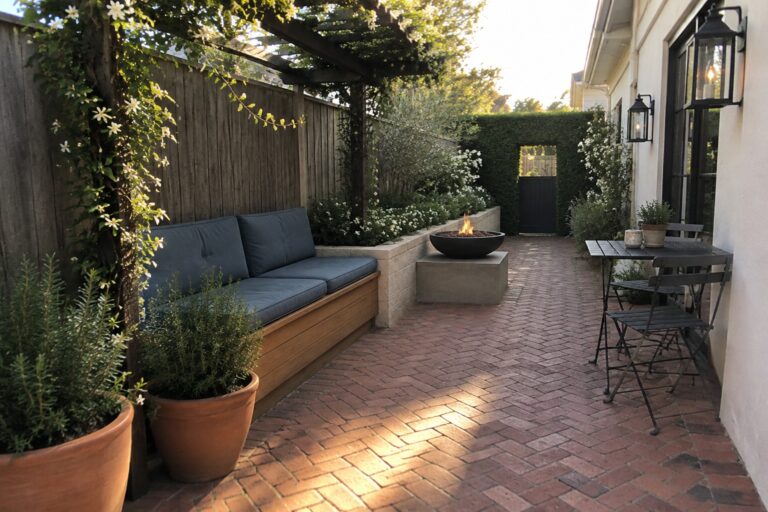
A narrow side yard can be easy to overlook, but a well-planned paver path or patio can turn it into a useful place to pause, sit, or move between the house and garden.
I find these spaces work best when the layout leaves a clear route through while still making room for a chair or a small planting bed.
The first thing I notice is often the balance between the pavers and the edges, since a simple border can make a tight walkway feel considered rather than cramped.
Some layouts use repeating patterns or varied paver sizes to add interest without crowding the space.
I’d save the ideas that suit your yard’s width and sunlight, then adapt the materials and proportions to what you’ll actually use.
Use a Straight Paver Path in a Narrow Patio
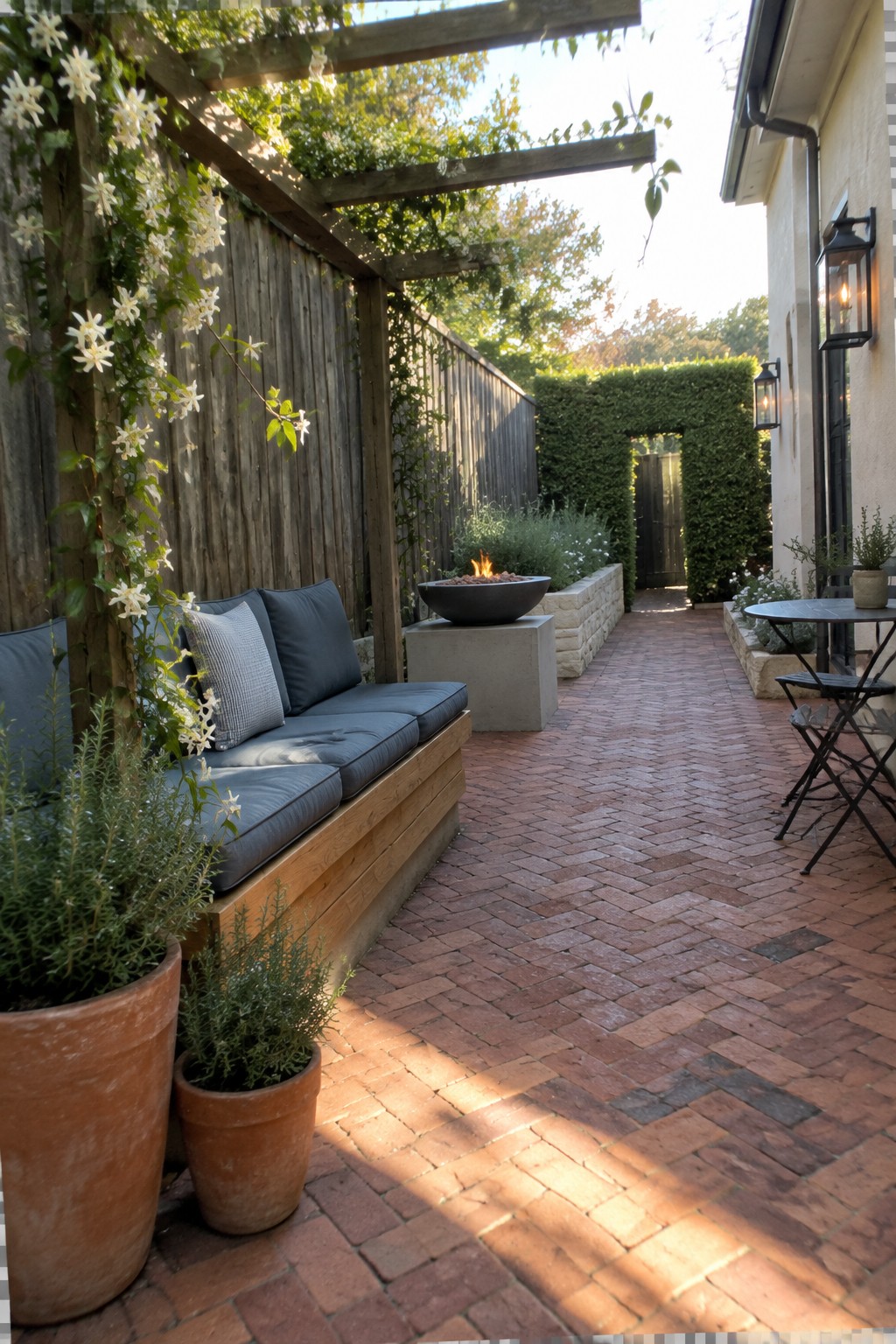
A straight path helps a narrow side yard feel easy to use without taking up space for extra curves or paving patterns. The small brick pavers give the walkway texture while keeping the route clear.
Use this layout to connect a side gate to a seating or dining spot, and keep furniture close to the edges. Choose pavers suited to outdoor use, and make sure the surface is even and well drained.
Use Large Pavers In A Narrow Patio
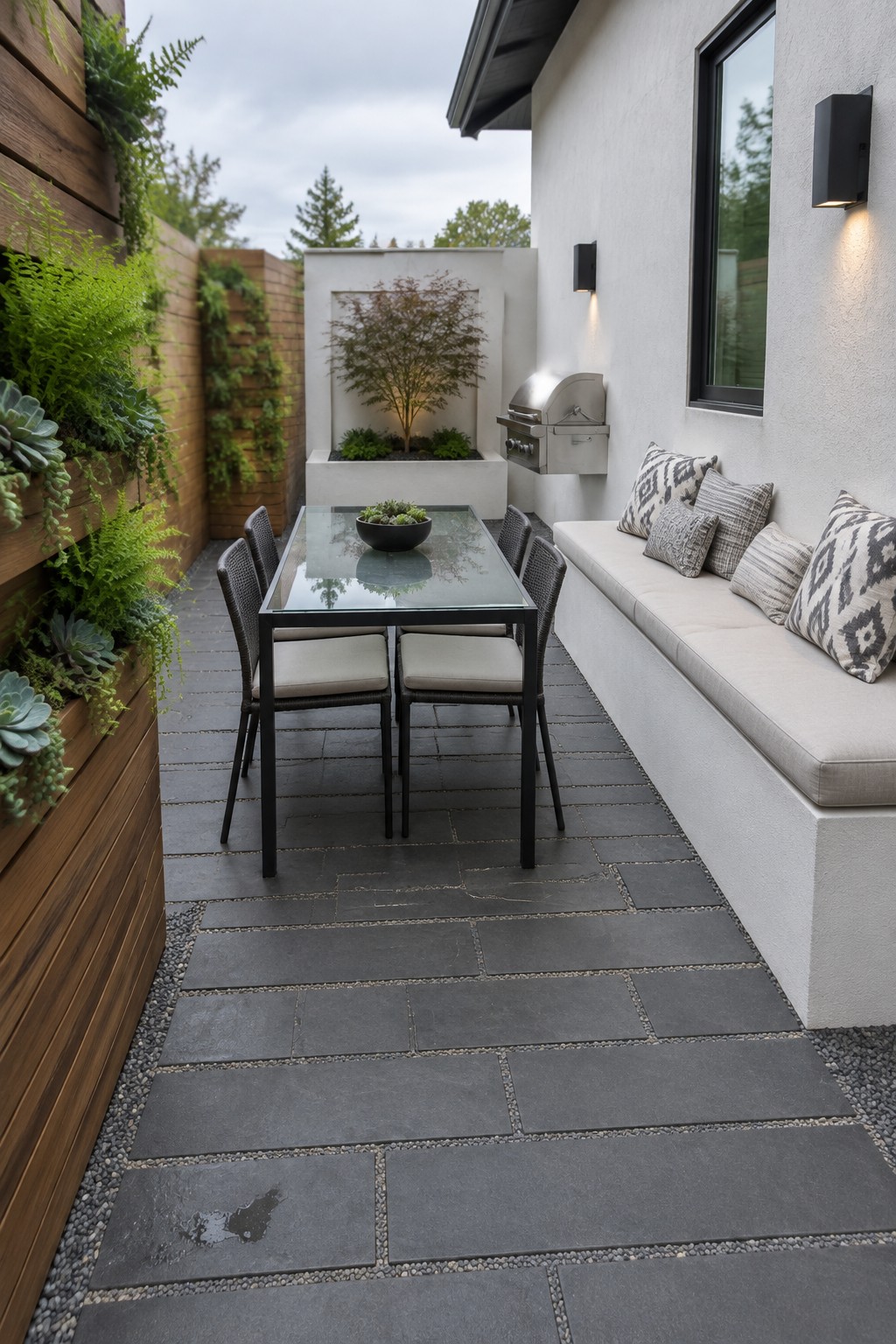
Large rectangular pavers can make a side-yard patio feel calmer and less busy. The broad stone surfaces keep the walking area practical, while narrow gravel joints give the layout a little texture.
For a space like this, stagger the pavers rather than lining up every joint, and keep the gravel gaps slim so the path stays easy to walk on. This approach suits long, narrow patios where smaller stones could make the floor feel crowded.
Use Large Pavers To Keep A Narrow Patio Open
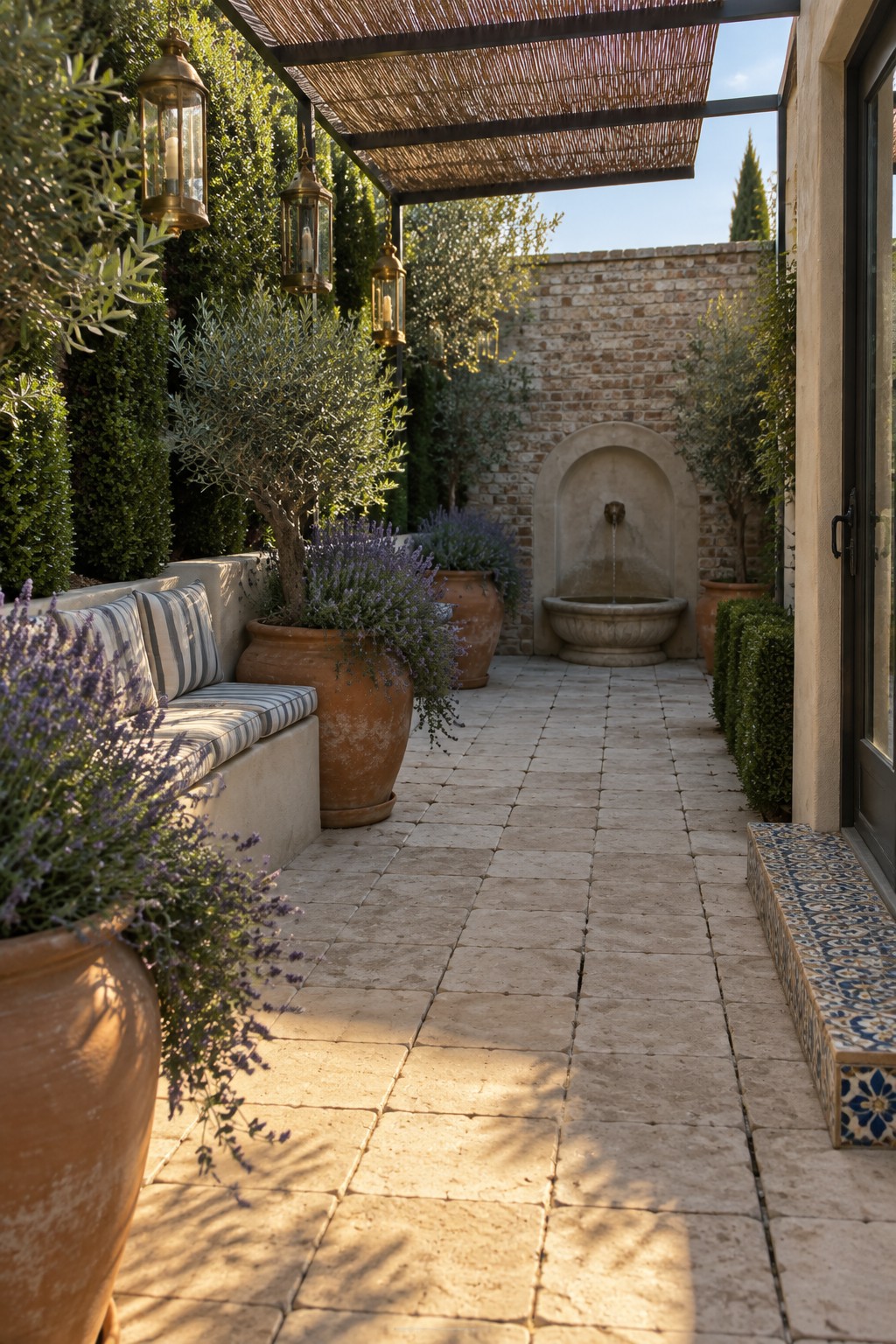
A simple paver layout can make a side-yard patio feel less cramped. Larger rectangular stones create fewer grout lines, so the path reads as one open surface rather than a patchwork of small pieces.
Choose pavers that leave a comfortable walking route between the house and planting. Pale stone suits a shaded side yard, but leave enough space for drainage and avoid making the joints so narrow that they are hard to maintain.
Use a Narrow Patio for Built-In Seating
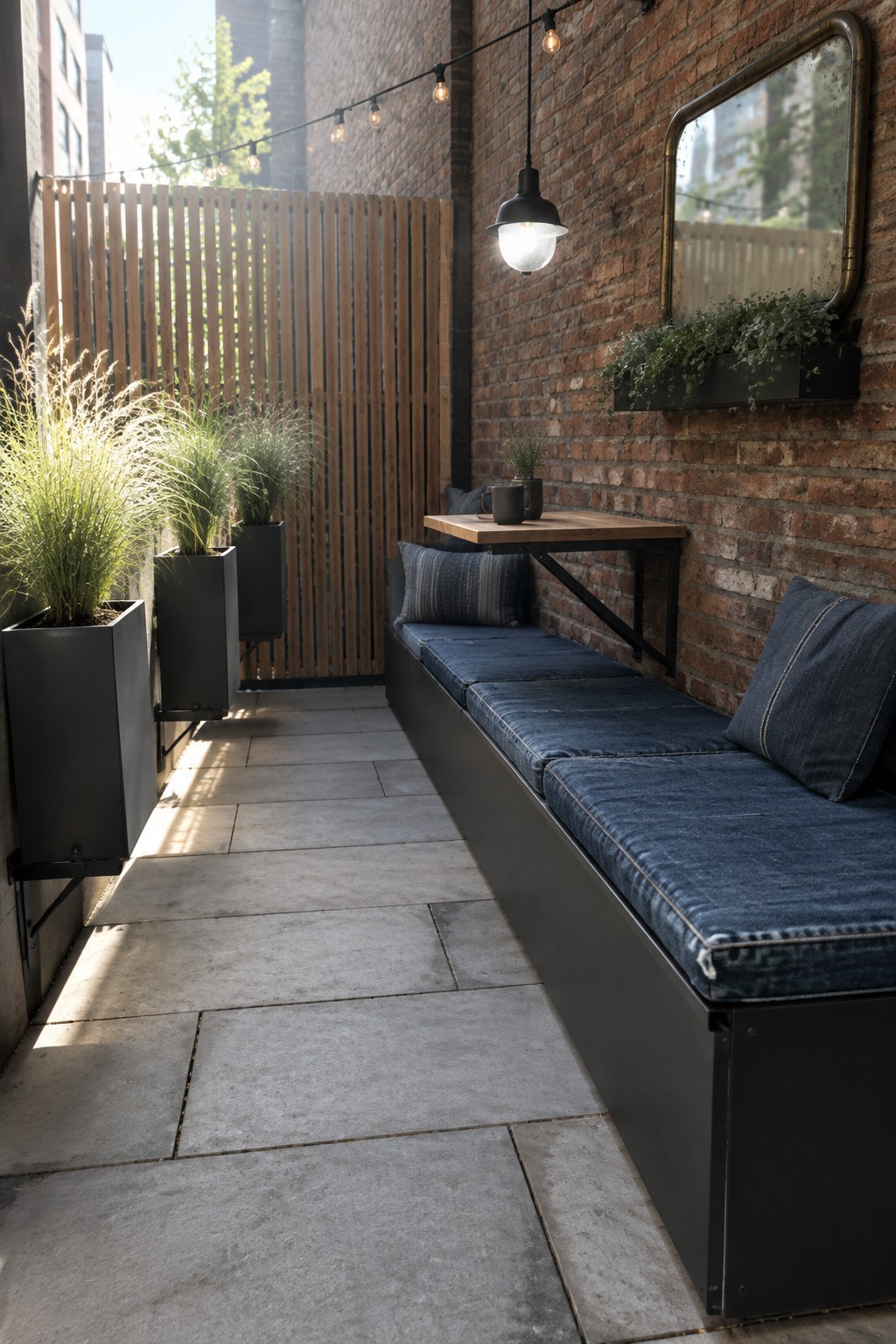
A long bench along one wall makes good use of a narrow side-yard patio, leaving the paver path open instead of filling it with separate chairs. It also gives the space a clear place to sit without interrupting the walkway.
For a similar setup, keep the bench slim and choose cushions that can be stored away when not in use. This works especially well in a side yard where every bit of walking space matters.
Add Slim Planting Strips Between Pavers
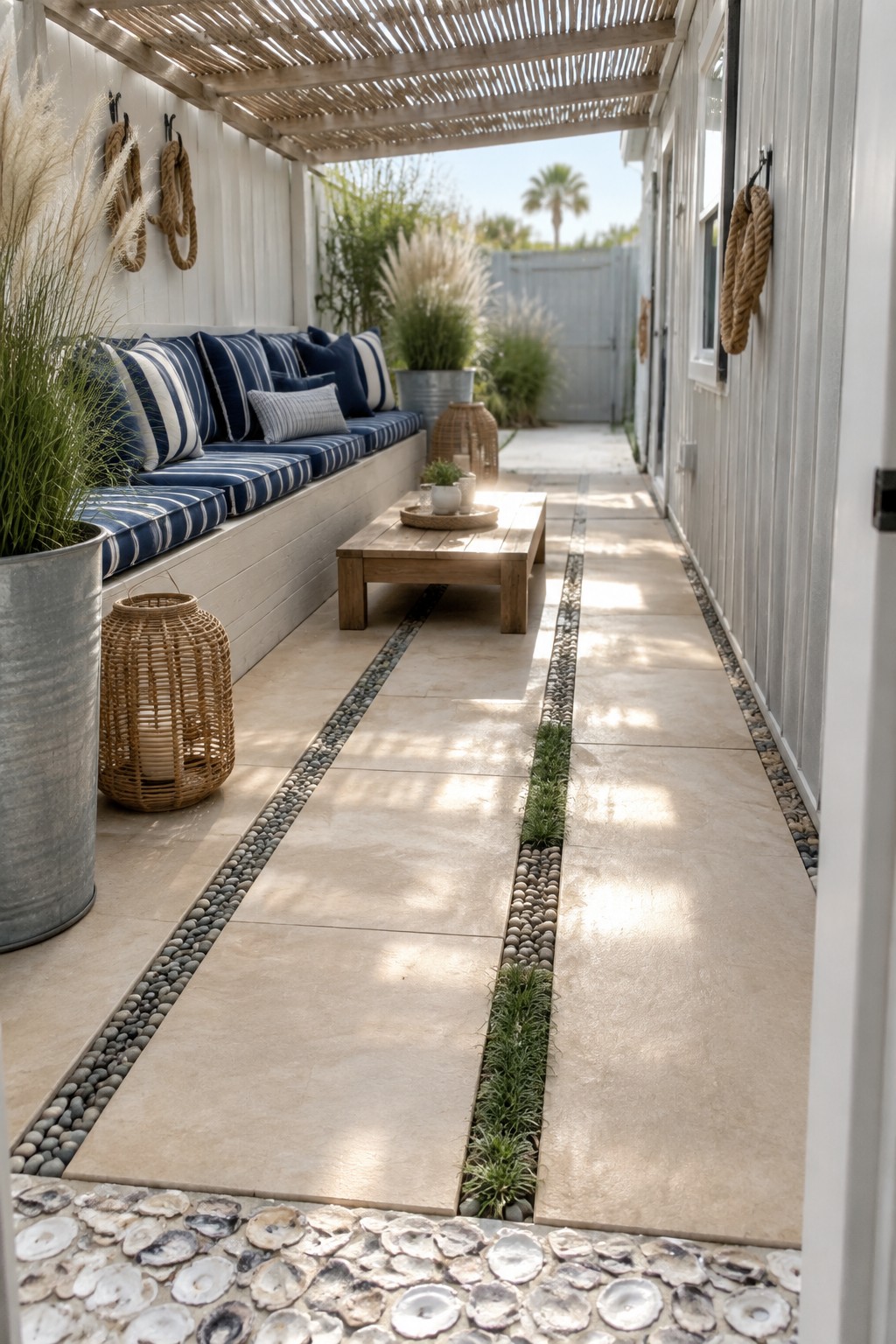
A narrow patio can feel less like a plain walkway when slim strips of planting break up the paving. Here, greenery runs between large rectangular pavers, adding a simple garden detail without taking up much walking space.
Use this layout in a side yard where a wide planting bed would make the path feel cramped. Choose low-growing plants that stay within the strips, and leave enough room between pavers for comfortable, steady footing.
Build a Narrow Patio Around a Straight Paver Walkway

A straight paver walkway makes a slim side yard easier to use without taking up space for extra turns or curves. Keeping the path clear also leaves room for a planting bed or a narrow built-in bench along one side.
Choose pavers that suit the width of the yard, and leave a small gravel border to help define the walkway. This layout works especially well between a house and fence, but avoid making the path so narrow that it feels awkward to walk through.
Use Stepping Stones to Make a Narrow Side Yard Easy to Walk

A stepping-stone path is a practical choice for a narrow side yard. The broad, separate pavers make a clear walking route without covering the whole ground in hardscape, and moss between the stones helps them sit naturally in the garden.
Leave enough room between the pavers for a comfortable stride, and keep the path wide enough to carry things through. This layout works well beside a fence or house, where a full-width patio may leave little space for planting or drainage.
Use Patterned Pavers in a Narrow Patio
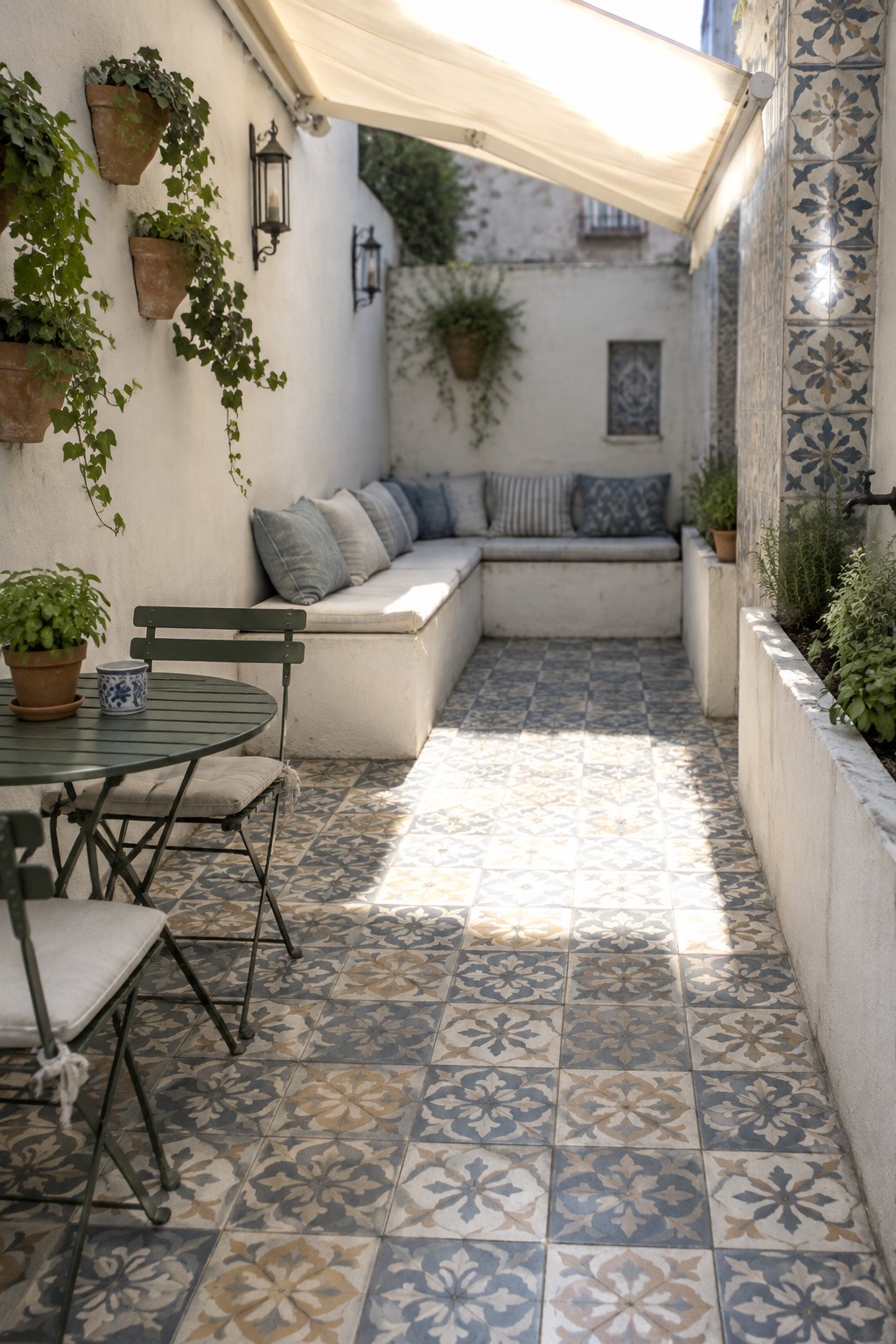
Patterned pavers give a narrow patio character without needing extra room for decor. Repeating tiles can make a long walkway feel considered, while built-in seating leaves more floor space open.
This works especially well in a courtyard or side yard where every inch counts. Choose a pattern that is easy to live with, and keep nearby furniture simple so the pavers do not make the space feel busy.
Use Long Pavers to Define a Narrow Side Yard
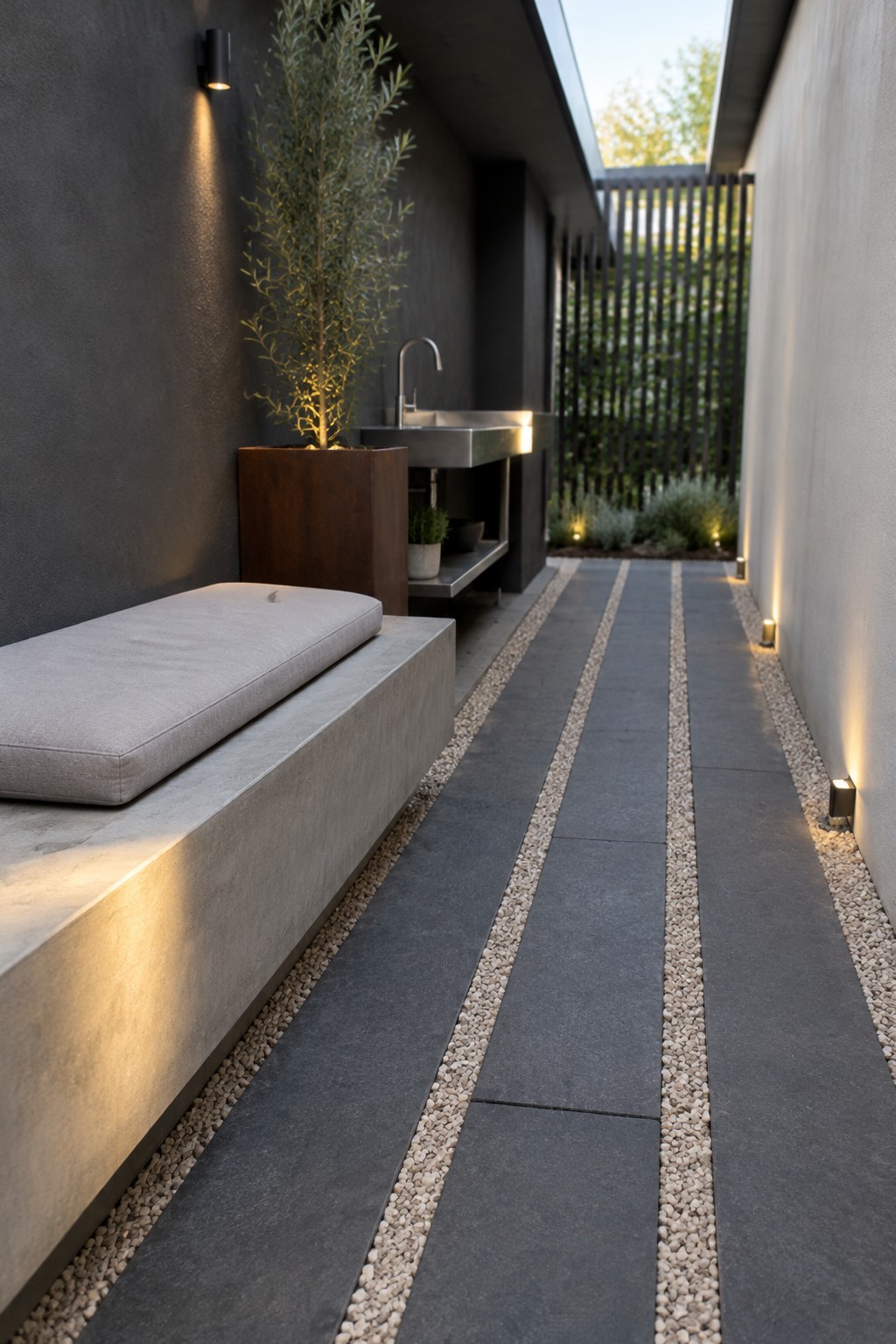
Long, straight pavers make a slim side yard feel orderly and easy to walk through. Narrow bands of pale gravel between the dark slabs add separation without taking up much room.
This layout works well when you want a clear path and a little space for seating. Keep the pavers aligned with the length of the yard, and choose a consistent width so the walkway stays comfortable rather than cramped.
Make Room for Seating Along a Narrow Patio
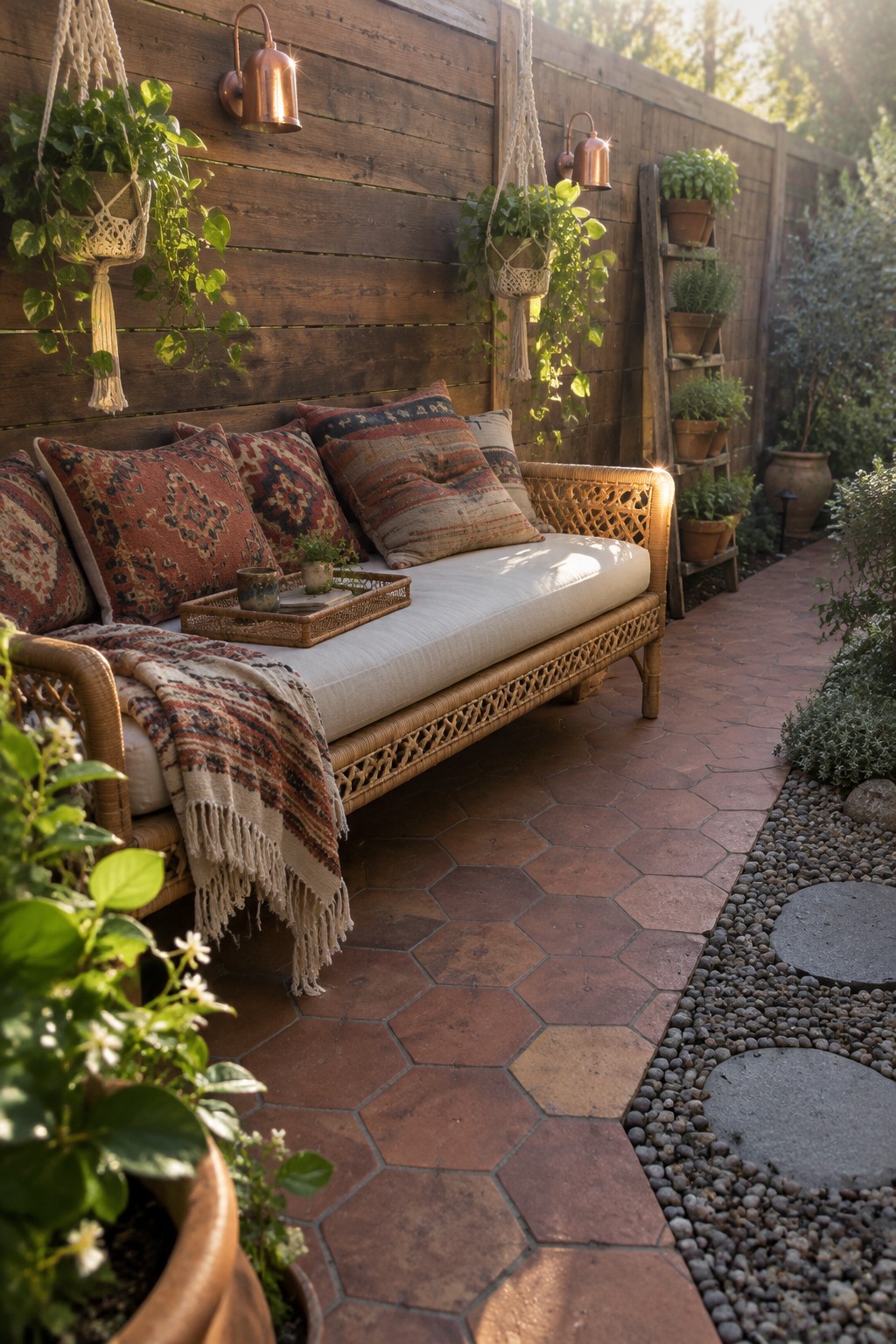
A narrow patio can still feel comfortable when the seating runs along one side instead of taking up the middle. A slim sofa against the fence leaves a clear route through the space, so the patio stays easy to use.
Choose furniture that fits the available width, and keep the walking lane open from end to end. Hexagonal pavers can define the seating area, but check that their layout leaves enough room to walk comfortably.
Make a Small Side Yard Work for Dining
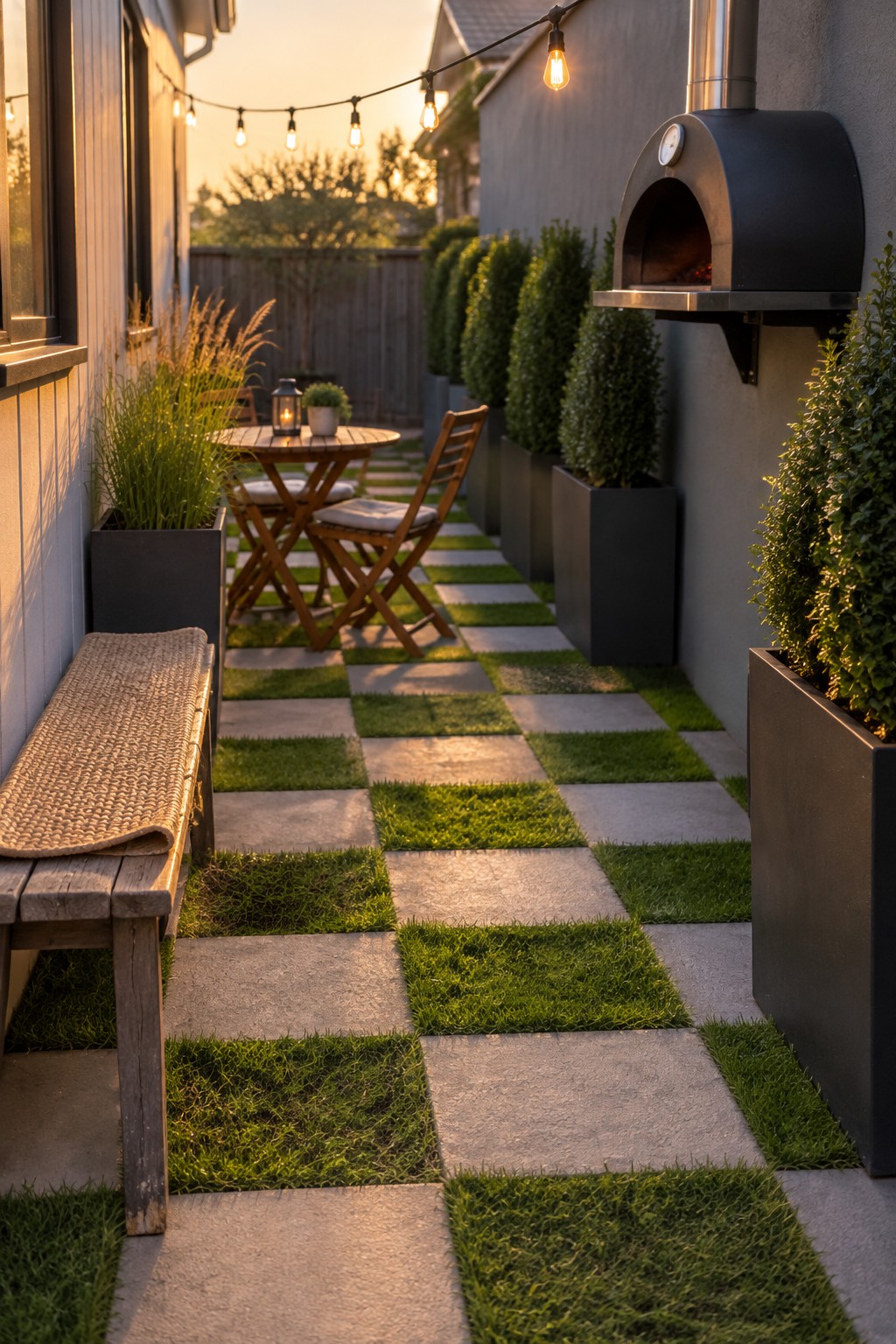
A compact dining spot can make a narrow side yard useful without taking up the whole walkway. A small folding table and chairs leave room to move through, while the square pavers set out a clear path beside the seating.
Keep the furniture close to one side and choose pieces that are easy to fold or shift when you need more walking space. This setup works well in a long, narrow yard, but leave enough clearance around the table so the route stays comfortable.
Add Shade to a Narrow Patio

A shade sail can make a narrow patio more comfortable without taking up space on the ground. It also lets the seating area stay open, which matters when a side yard has little room to spare.
Use sturdy wall and post attachments, and check that the sail is sized for the area you want to cover. A slim patio beside the house is a good fit, especially when you want shade over seating without adding a large pergola.
Use a Narrow Patio for a Compact Seating Spot
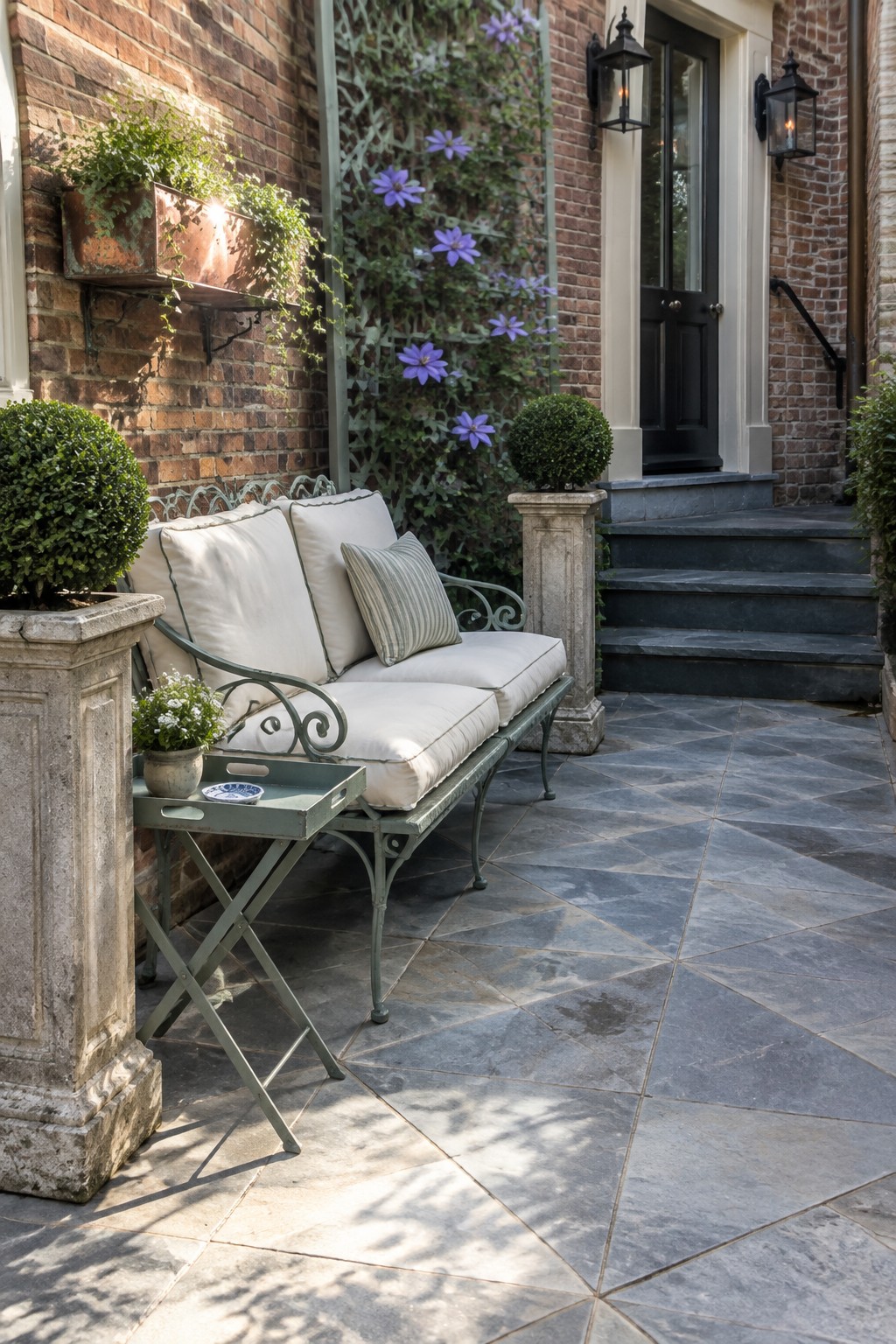
A narrow patio can still make room for a comfortable place to sit. A slim bench along the wall uses the edge of the space, leaving the middle open for walking.
Choose furniture that stays close to the wall, and keep the walkway clear from one end to the other. This setup works well in a side yard where you want a quiet seating area without blocking access to the house.
Use a Shade Sail to Make a Narrow Patio More Comfortable

A shade sail can make a slim side patio more pleasant to use without taking up floor space. Here, it covers the seating area while leaving the walkway clear, which is useful when there is little room to spare.
For a similar setup, anchor the sail high enough to avoid a cramped feeling and check that it won’t block doors or windows. It works well over a compact seating nook, especially when the patio gets strong sun.
Use a Narrow Side Yard as a Small Seating Patio
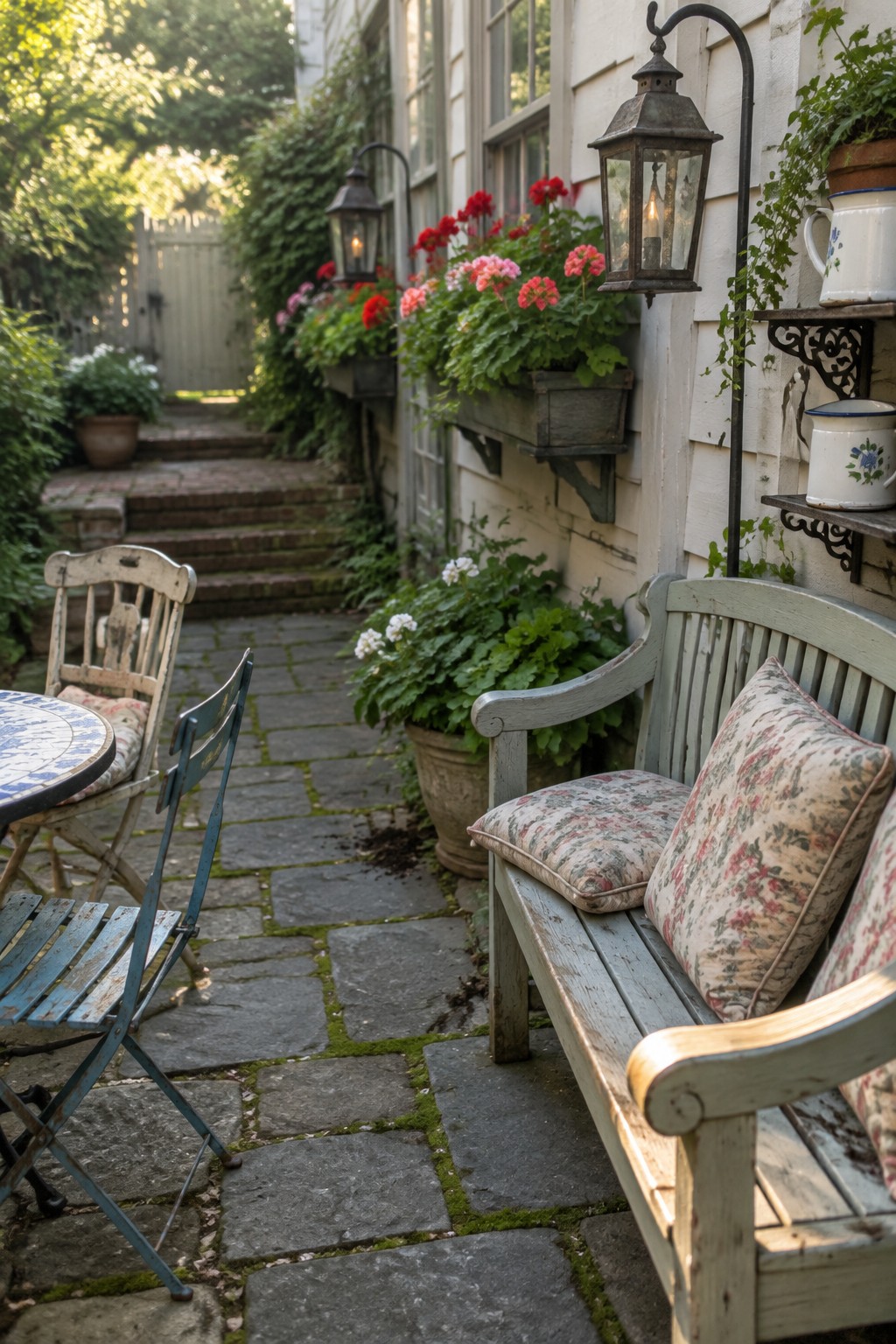
A narrow side yard can still work as a place to sit and relax. A stone path leaves a clear route through the space, while a bench tucked against the house makes use of the limited width.
Keep the seating close to the wall and leave enough room to walk past it comfortably. A few large pavers can help the path feel orderly without taking over the yard.
Add a Water Feature to a Narrow Patio
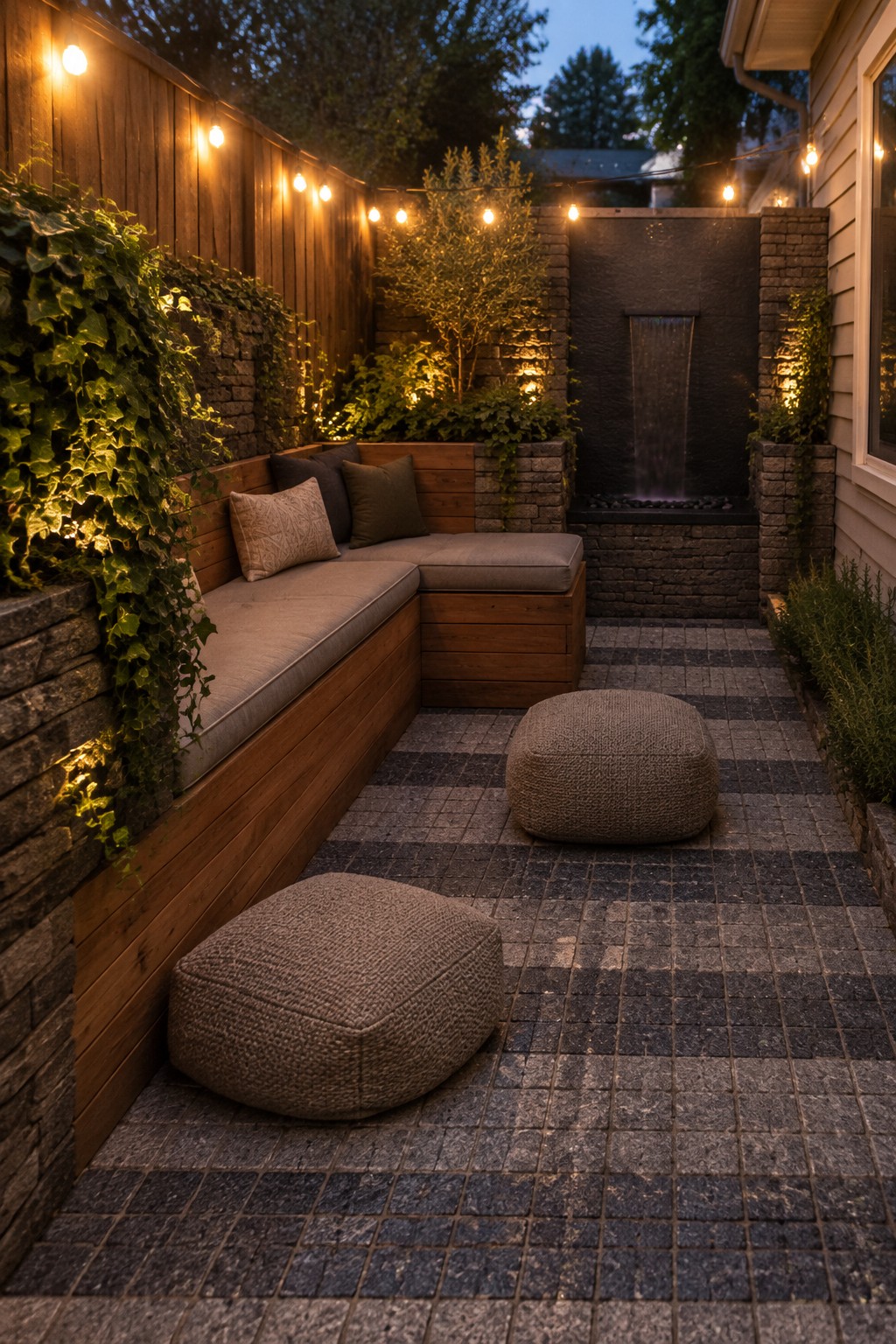
A wall-mounted waterfall can make a narrow patio feel like a place to linger, without taking up floor space. Here, the water feature sits at the far end of the paver walkway, giving the long, compact space a clear stopping point.
Keep the feature against a wall or fence so the walking route stays open. A small bench or built-in seat nearby makes it easy to enjoy, but check that the pump is easy to reach for cleaning and upkeep.
Lay Out a Narrow Yard Around a Paver Path
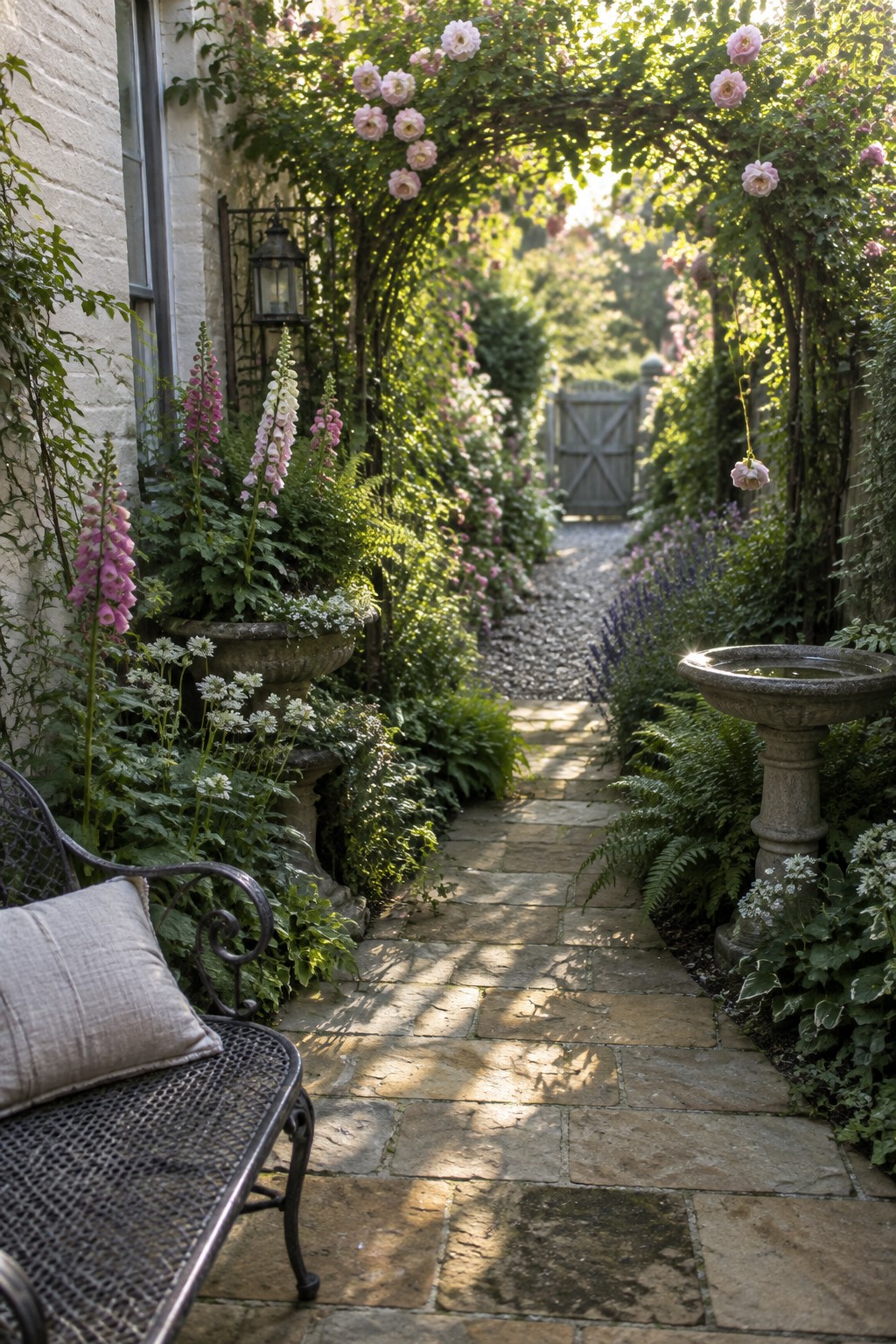
A straight paver path is a practical way to make a narrow side yard easy to use. It gives you a clear route through the space while leaving room for planting along the edges.
Choose pavers wide enough for comfortable walking, and keep the joints even so the path feels orderly. For a small seating spot nearby, leave a little extra width where the path meets the seating area.
Frequently Asked Questions
Q: How wide should a side-yard paver path be if I want to walk through comfortably?
A: Aim for about 3 feet of clear walking space if you can. If the yard is tighter, keep the pavers easy to step between and avoid letting plants or furniture pinch the path.
Q: Can I lay pavers over the grass without digging?
A: It’s tempting, but pavers can shift or sink when they sit directly on soil or turf. Dig out the area and add a compacted gravel base so the path stays level and drains well.
Q: What paver pattern works best in a narrow side yard?
A: A simple running-bond or straight grid pattern tends to look tidy without making the space feel busy. Lay the pavers lengthwise to draw the eye down the yard.
Q: How can I keep a small paver patio from feeling cramped?
A: Leave a clear route through the space and choose just one compact seating spot rather than filling every corner. A few pots along the edge add greenery without crowding the walking area.
