

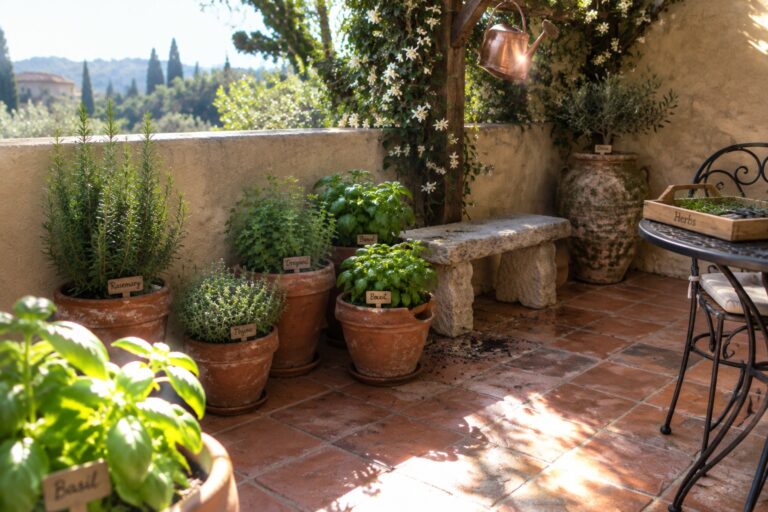
A patio herb garden works best when it fits the way I actually use the space, with pots close enough to reach while I cook and room to move around them.
I notice the layout first, since a crowded patio can make even healthy plants feel like clutter, while a few well-placed containers can add greenery without getting in the way.
Sunlight, drainage, and easy access to water matter just as much as the look of the pots, especially when herbs need regular trimming and care.
I’d start with a setup that suits the patio’s size and the herbs I use most, then adapt the containers or arrangement as the plants grow.
Some of these ideas are worth saving for a small corner, a sunny step, or a larger outdoor seating area.
Grow Herbs in Pots Near the Kitchen
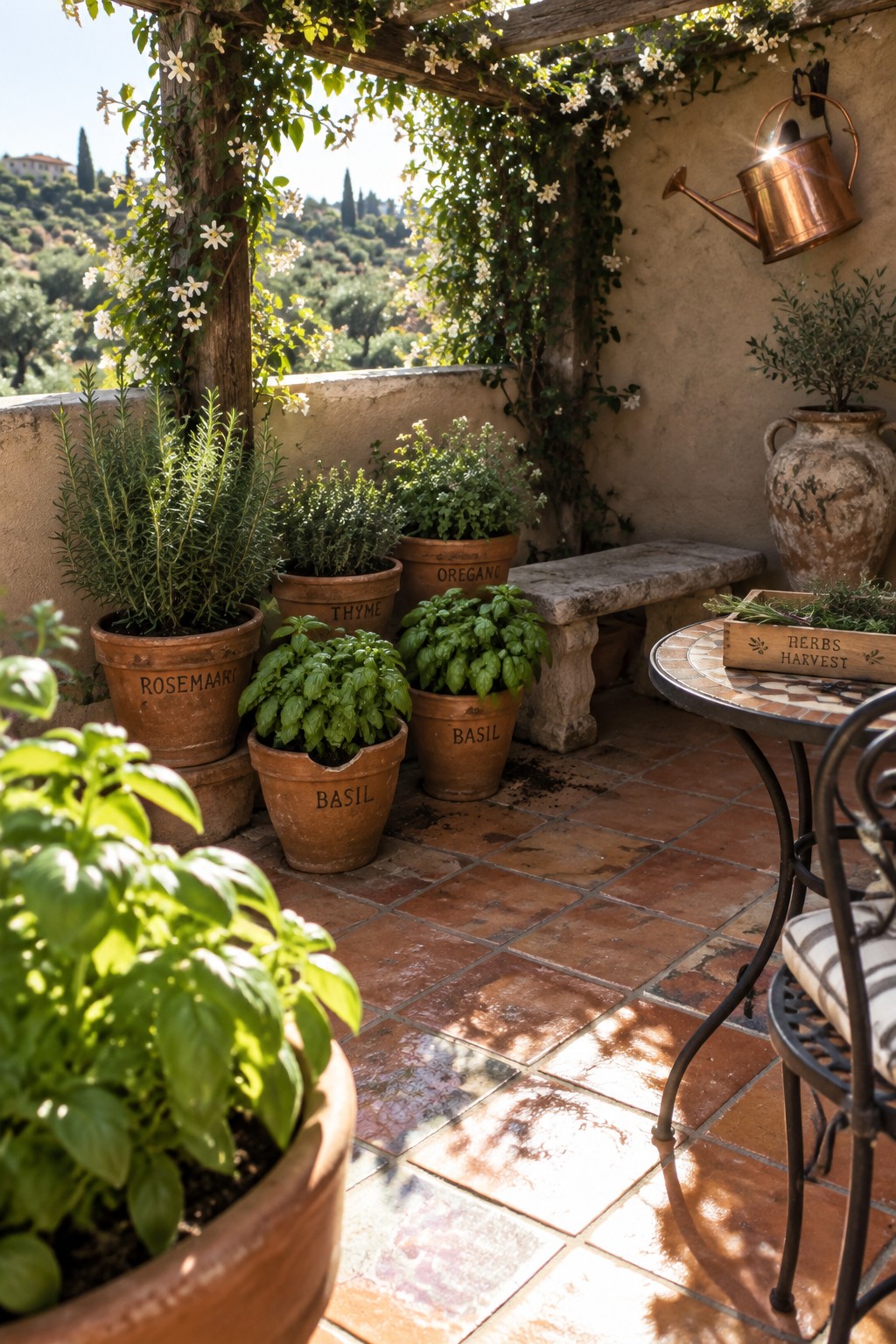
A few pots of herbs can make a patio more useful without taking much space. Keeping basil, rosemary, and thyme together in containers makes it easy to snip what you need while cooking, and you can move the pots to suit the sun.
Choose pots with drainage holes and group plants with similar watering needs. A sunny patio or terrace works well, but leave enough room to reach each pot and check the soil before watering.
Make Room For Herbs On A Small Balcony
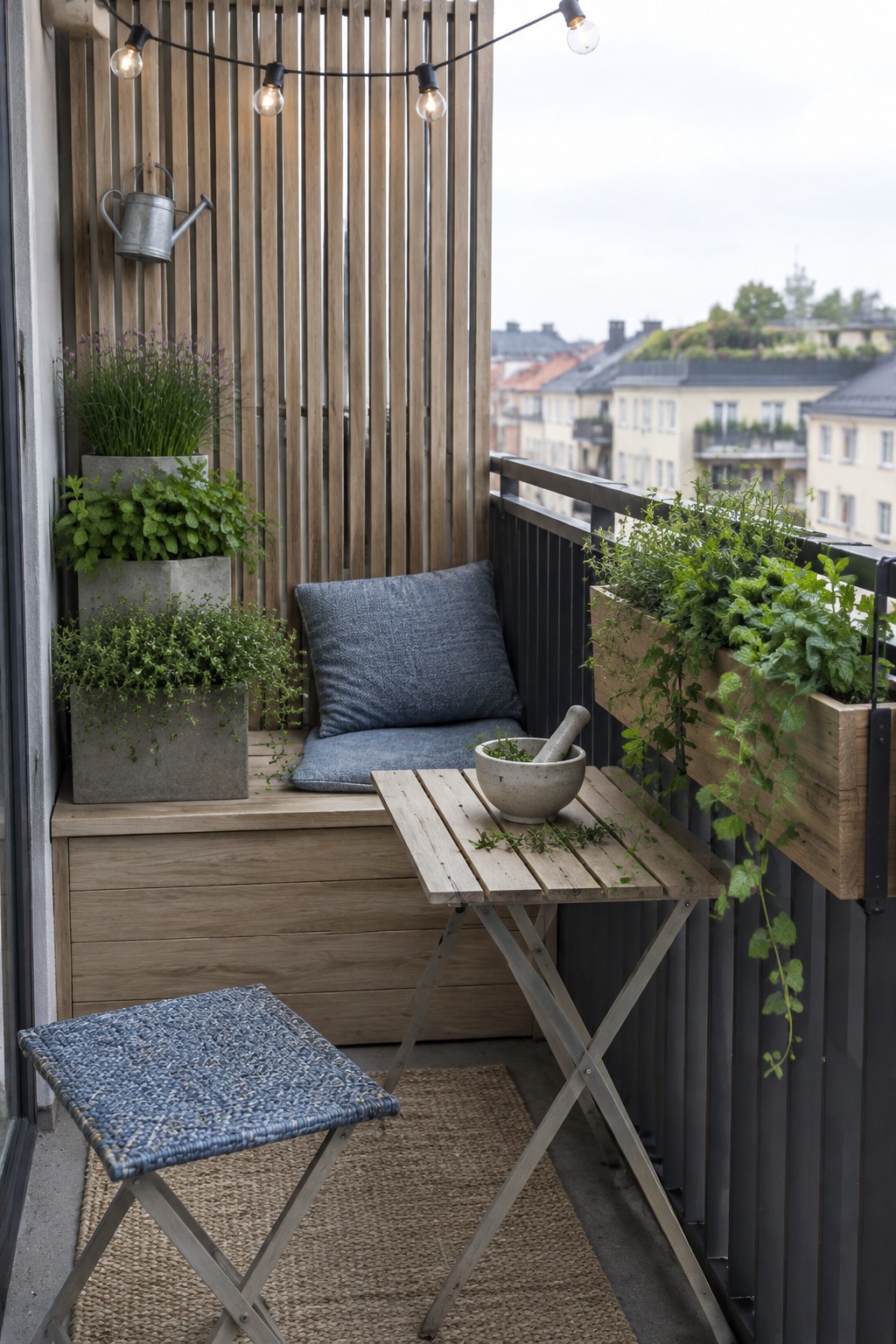
A narrow balcony can still hold a useful herb garden if you make the most of its edges. Planters along the railing keep herbs within easy reach and leave the center open for a small table or chair.
Choose compact boxes that attach securely to the railing, and check how much sun the herbs will get before planting. A few pots of basil, mint, or parsley can be enough for everyday cooking.
Make Room For A Small Herb Garden
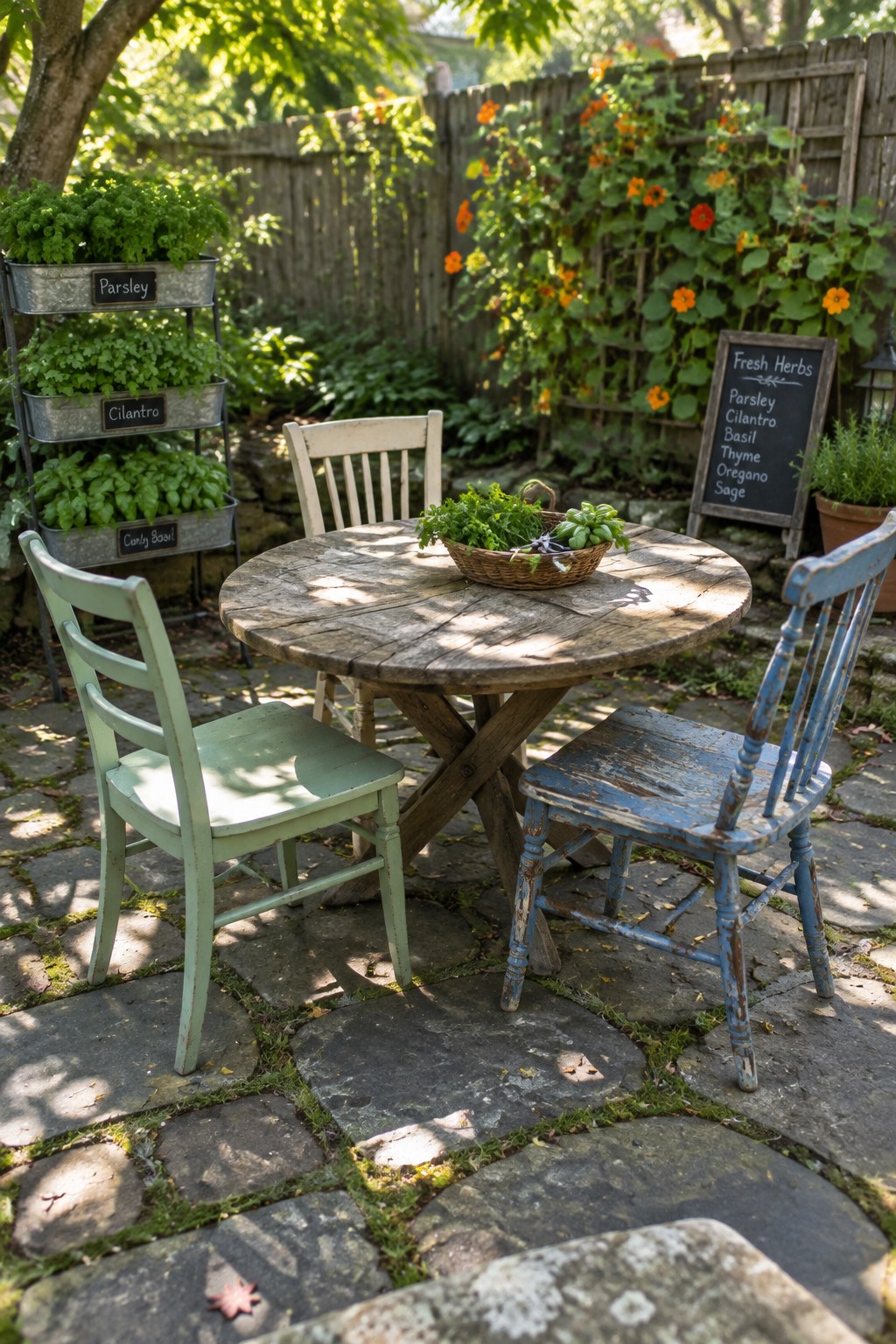
A patio dining area can do more than hold a table and chairs. Keeping fresh herbs close to where you eat makes them easy to snip for meals, and the plants can sit neatly along the edge of the seating area.
Use a tiered planter or a few labeled pots to grow the herbs you reach for most. This works well on a small patio, too, as long as the plants get enough sun and the walkway stays clear.
Build a Patio Herb Garden Along the Wall
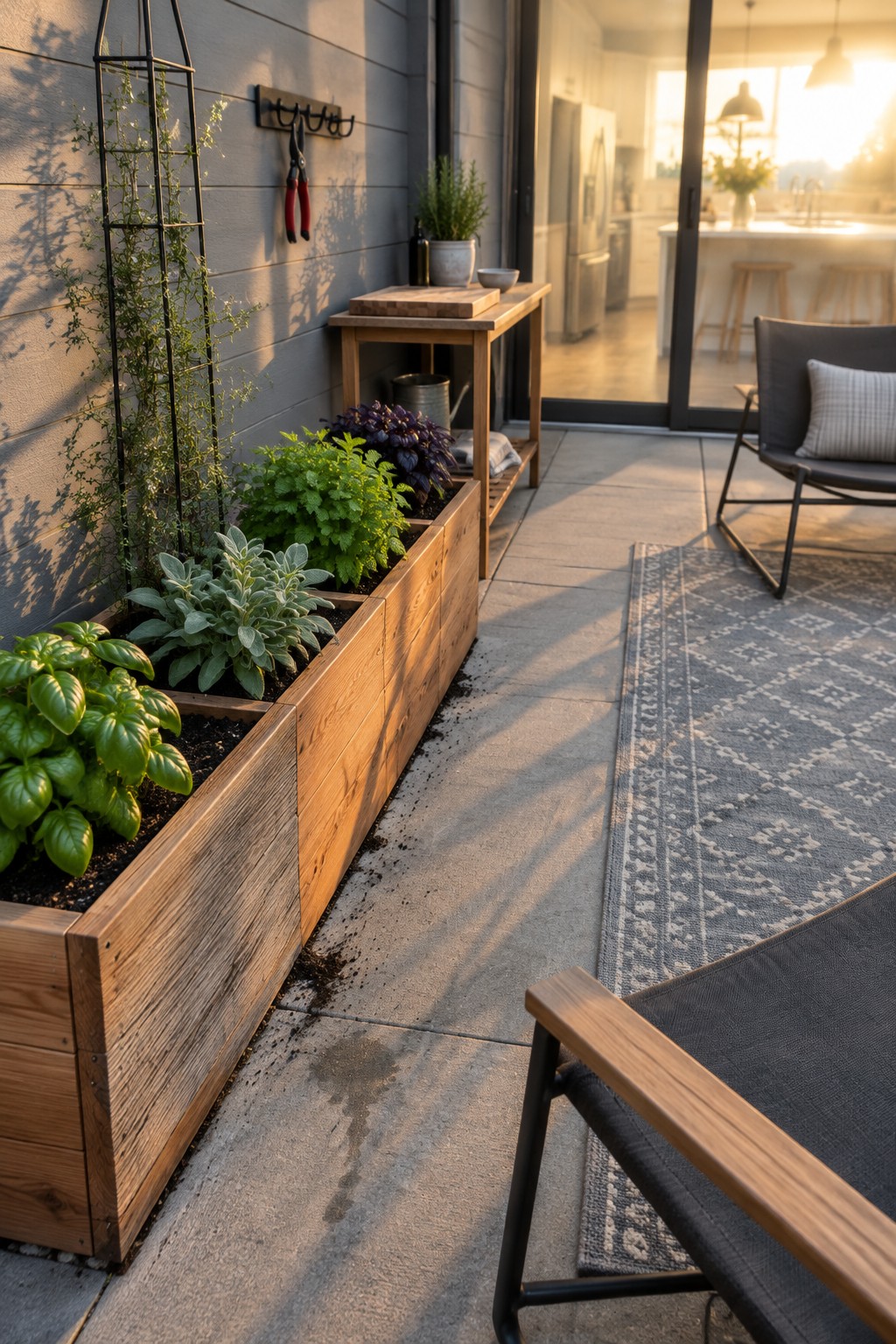
A long raised planter can make it easy to grow kitchen herbs without taking over the patio. Keeping the herbs together along a wall also leaves the main walking area open, which is useful in a narrow outdoor space.
Choose a planter deep enough for healthy roots, and group herbs with similar watering needs. Basil, sage, and leafy greens can fill the front, while a simple trellis gives climbing herbs a place to grow.
Use Raised Stone Beds For Patio Herbs
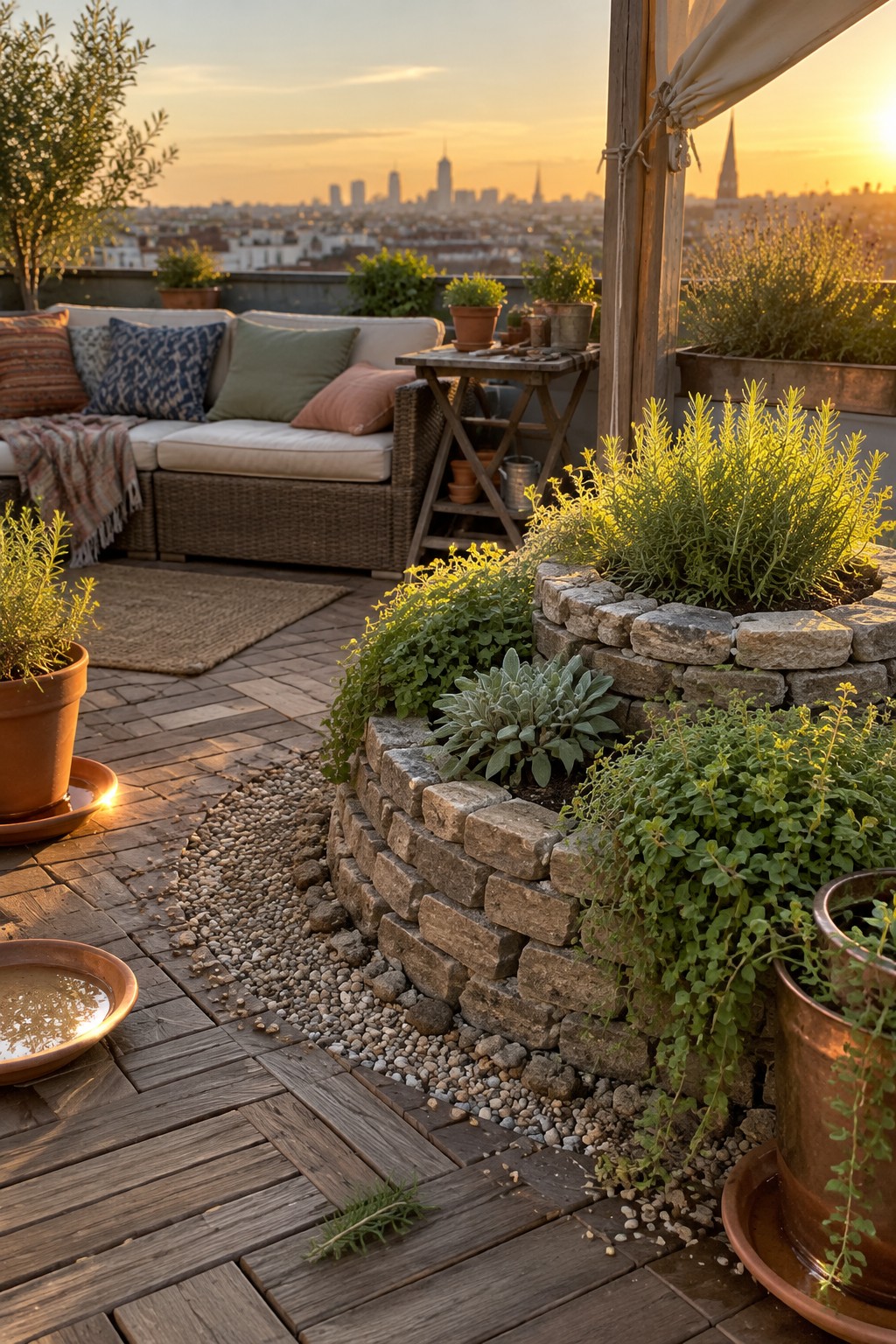
Low stone beds make it easy to grow herbs right beside a patio seating area. They give the plants a defined space, and the raised height makes it easier to reach leaves for cooking.
Use a sunny corner or the edge of a patio, and leave enough room to tend the plants without stepping into the bed. Choose herbs with similar watering needs, and keep taller varieties from shading smaller ones.
Add a Herb Planter to Patio Seating
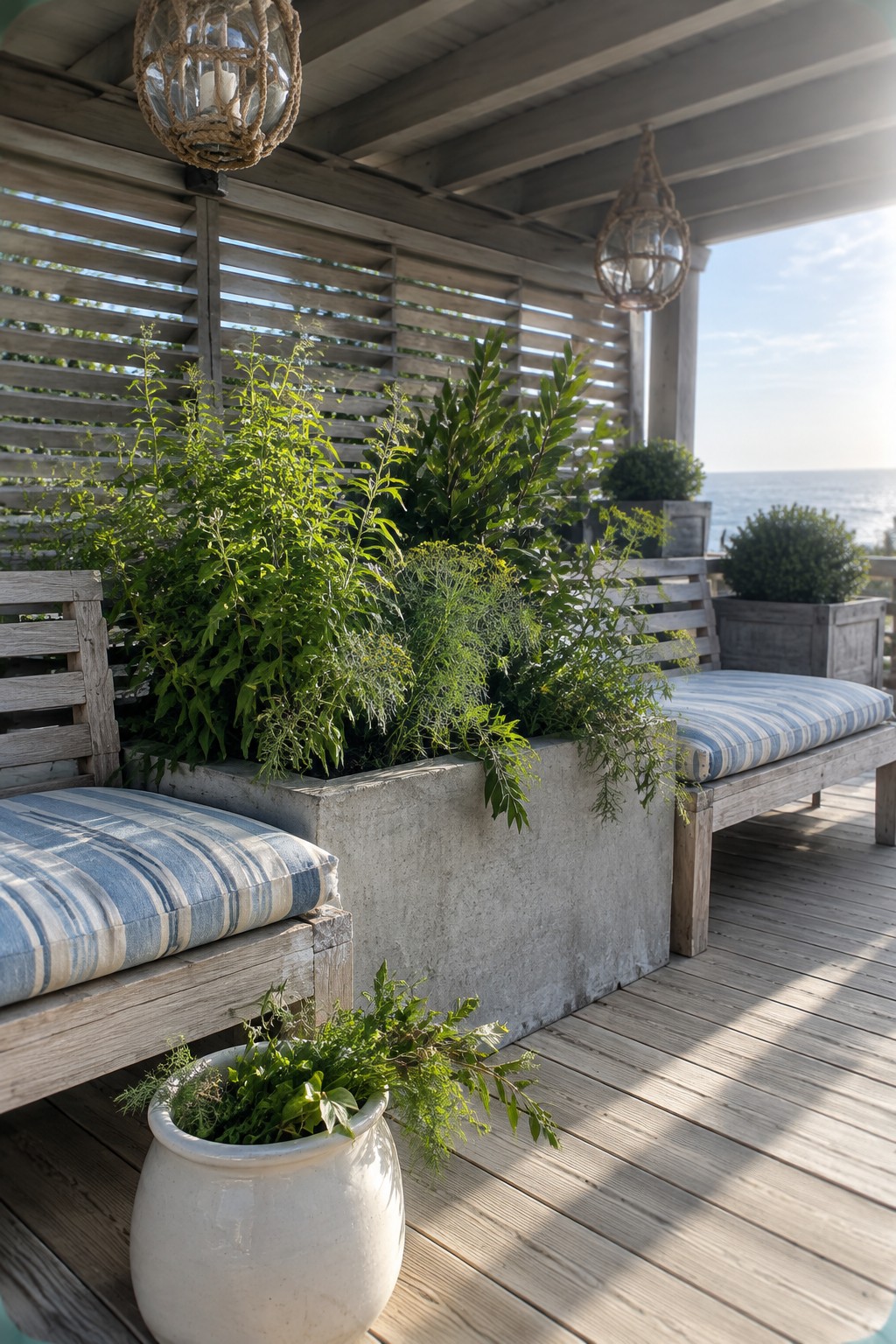
A long planter can do more than hold herbs. Set it beside patio seating, and fresh ingredients stay close at hand while the planting helps define the edge of the seating area. A raised concrete planter is a practical choice when you want a permanent garden spot.
Use one along a deck bench or against a patio wall, and plant herbs you reach for often near the front. Check that the planter drains well, and leave enough space to sit comfortably beside it.
Use Raised Beds to Organize Patio Herbs
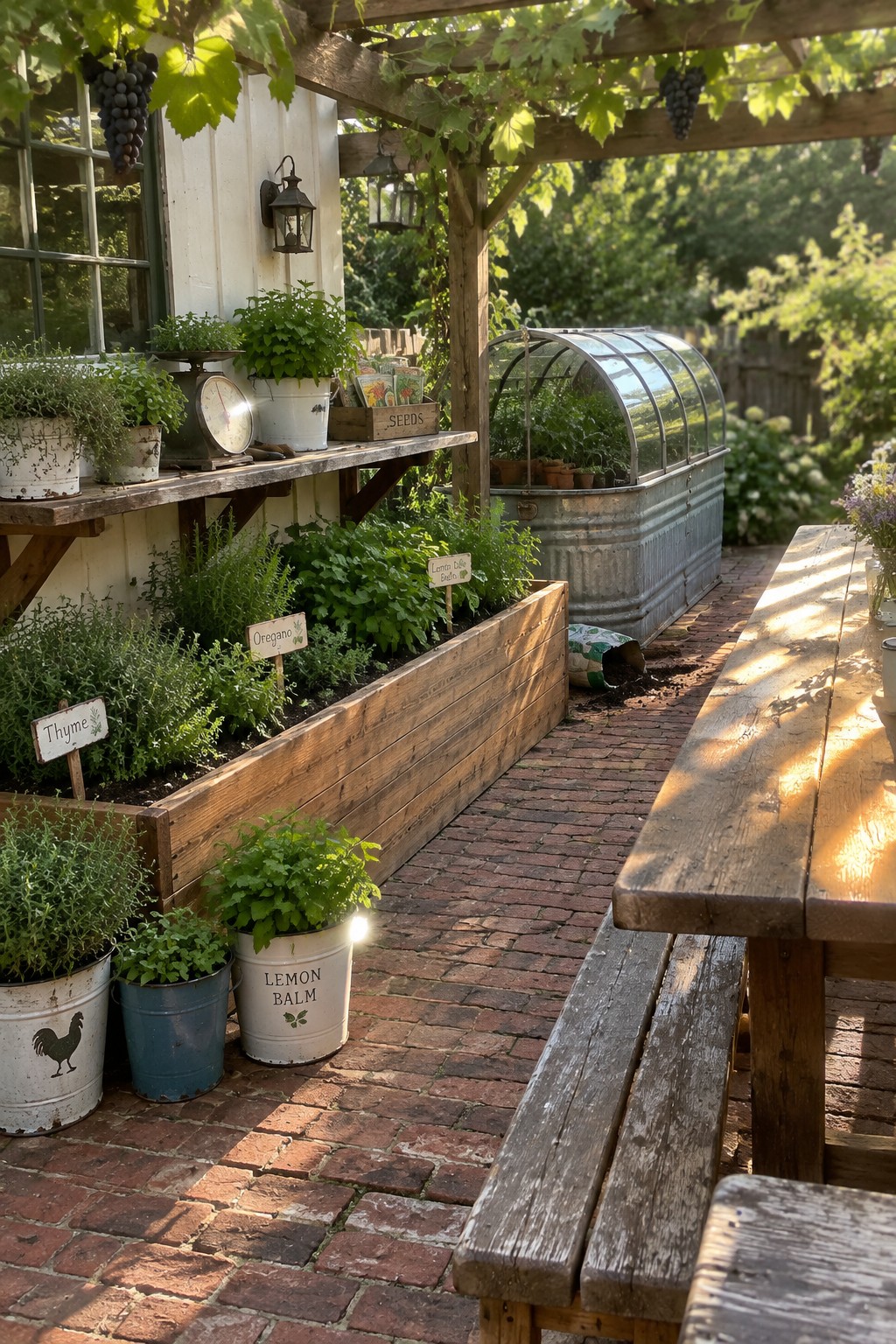
Raised beds keep herbs together in a clear, easy-to-reach planting area. The wooden bed here gives plants room to grow while keeping the patio path open, which is handy when you want to snip a few leaves for cooking.
Set a bed along a wall or the edge of a patio, where it is easy to tend and does not block seating or foot traffic. Leave enough space between plants for their mature size, and label them if you grow several kinds.
Add Herbs to a Patio Seating Area
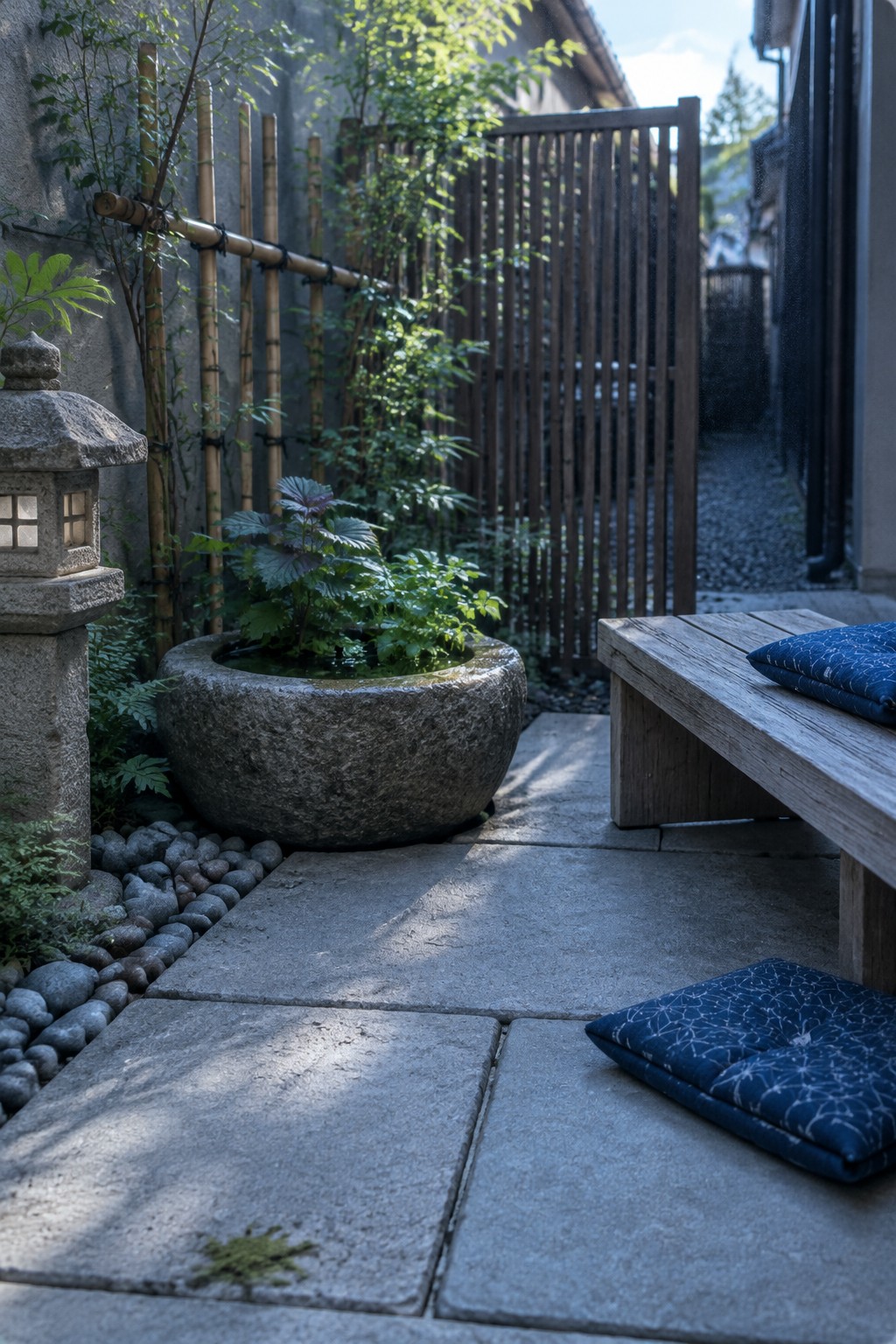
A small patio can do more than provide a place to sit. A large planter near the seating area gives you room to grow a few useful herbs while keeping them close at hand.
Choose a sturdy pot with drainage and place it where the herbs will get enough sun. A spot near the patio bench works well, but leave enough walking space around it.
Grow Herbs on a Vertical Patio Wall
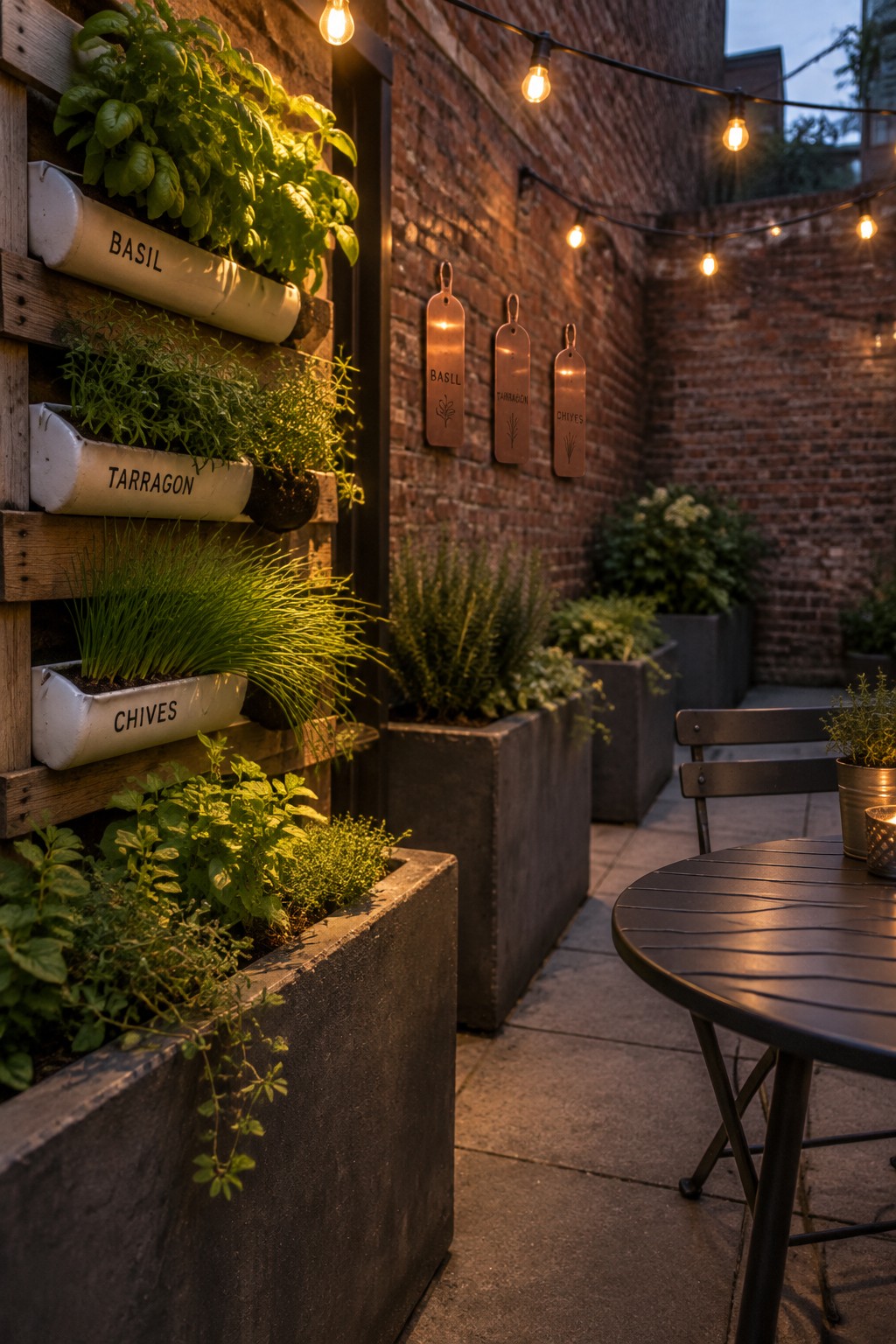
A wall-mounted herb garden makes good use of a narrow patio, leaving more floor space for seating. Long planters keep herbs close together and easy to reach when you need a few leaves for cooking.
Choose a sunny wall and secure the planters firmly, especially once they’re filled with damp soil. Basil, tarragon, and chives are shown here, but use herbs that suit your cooking and the light your patio gets.
Set Up a Potting Bench for Patio Herbs
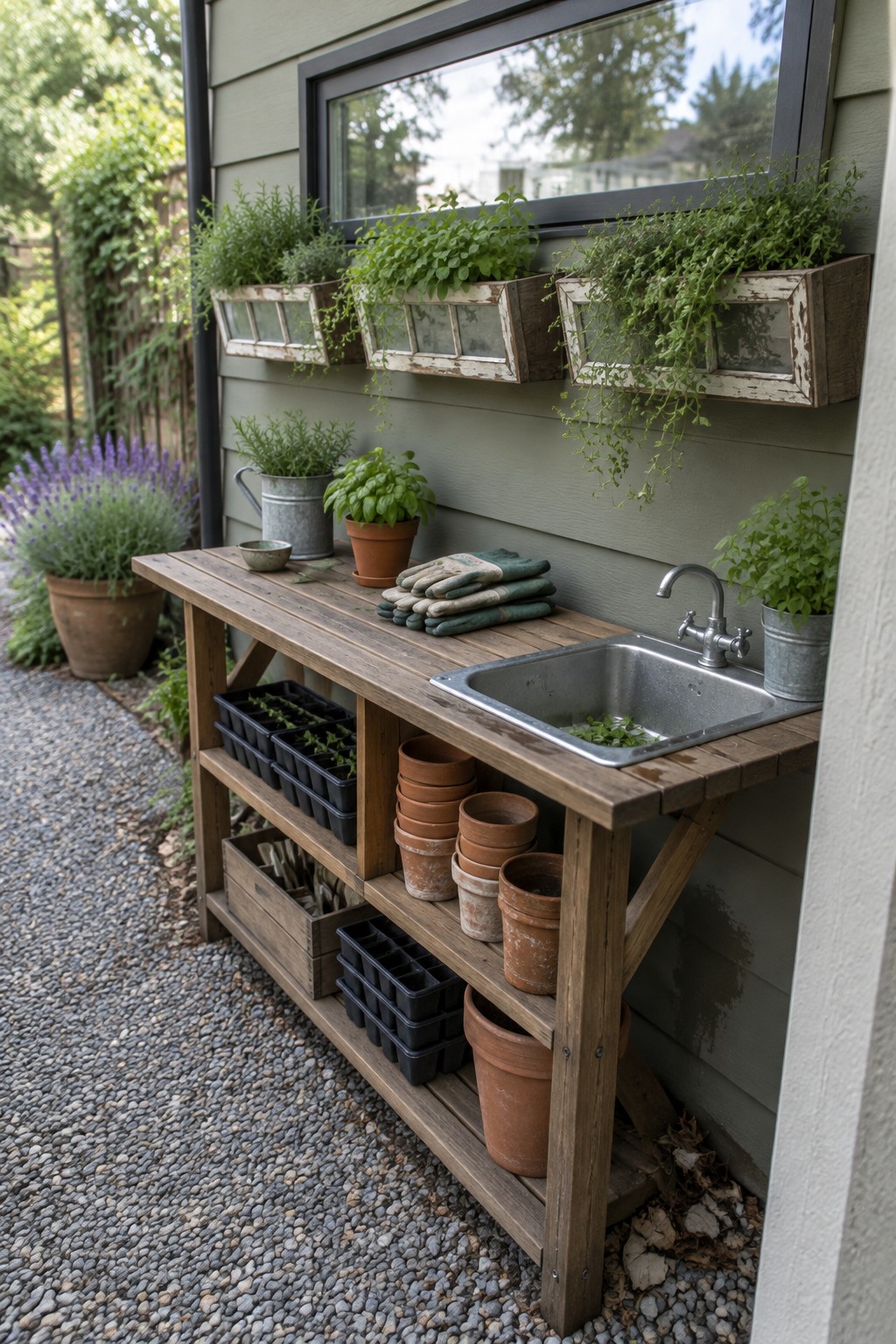
A potting bench with a built-in sink makes it easy to care for herbs right where they grow. There’s room to rinse fresh cuttings, fill pots, and keep everyday gardening supplies close at hand.
This setup works well along an exterior wall near a kitchen or patio door. Use a weather-resistant bench, and keep seed trays and pots on the lower shelves so the work surface stays clear.
Make a Tiered Herb Garden on the Patio
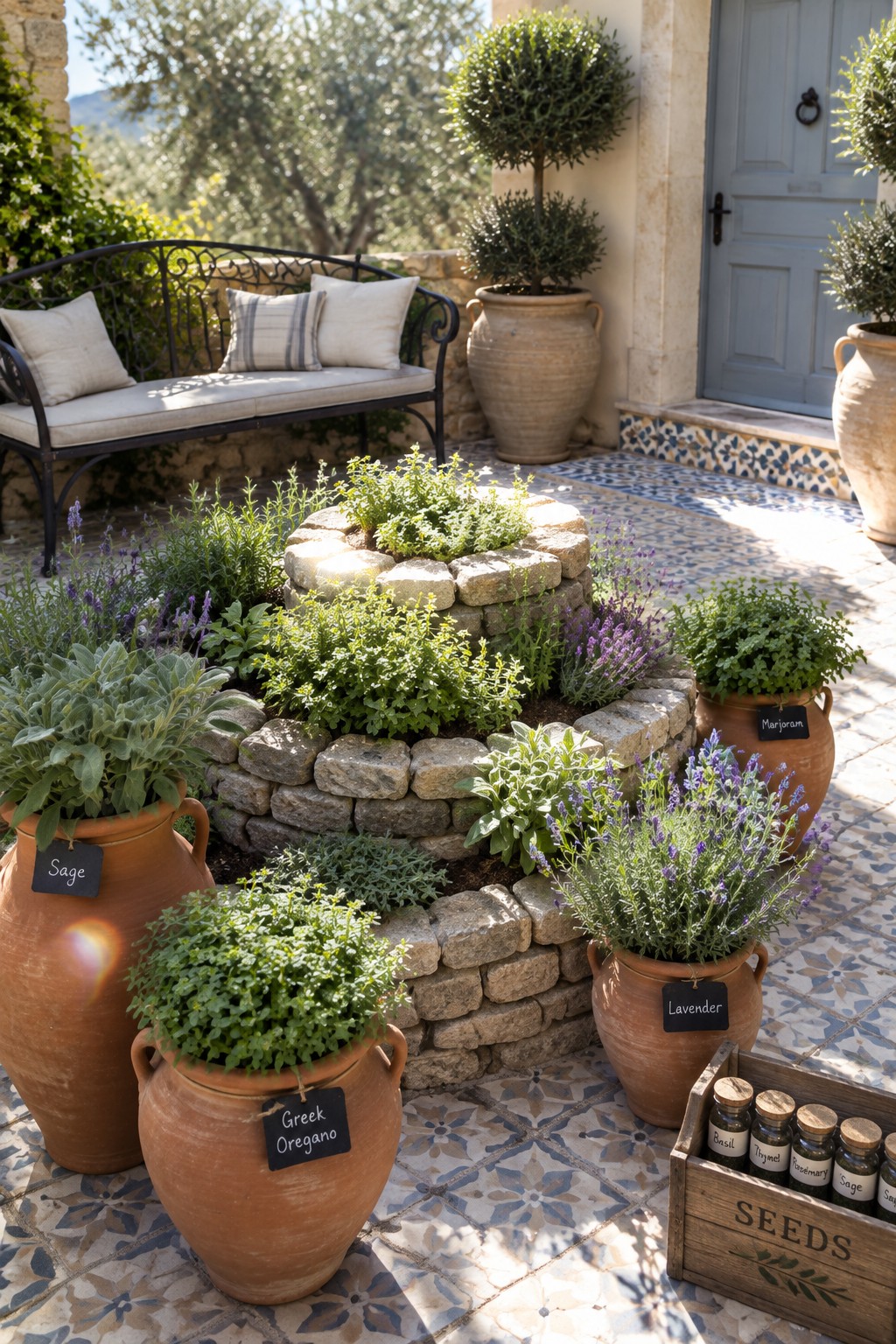
A low stone herb bed can turn an open patio corner into a useful growing spot. The raised levels give plants room to spread, and smaller herbs are easier to reach for cooking.
Use this setup where there’s enough floor space to walk around the bed. Plant taller herbs toward the center and keep frequently used ones near the edge; terracotta pots can hold herbs that need different watering or growing conditions.
Use a Pebble Path to Divide a Patio Herb Garden
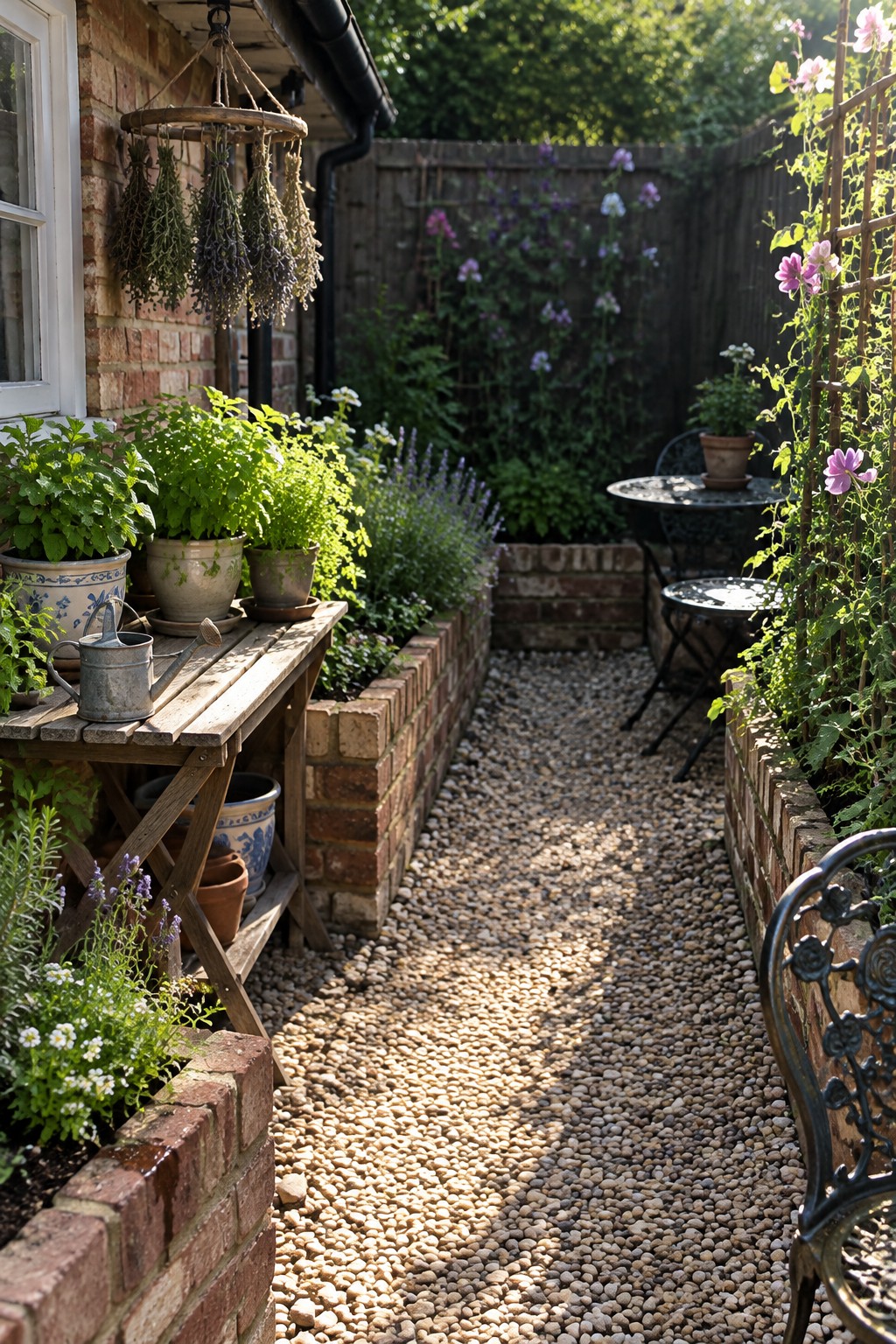
A narrow gravel path can make a small garden easier to move through while giving planting beds a clear edge. Here, the brick borders keep the beds tidy, and the open center leaves room to reach plants without stepping into the soil.
For a patio herb garden, use a compacted gravel base and choose small, rounded stones that are comfortable to walk on. Keep the path wide enough for a watering can or small basket, and leave herbs close to the route for easy picking.
Add a Covered Work Area to Your Herb Garden
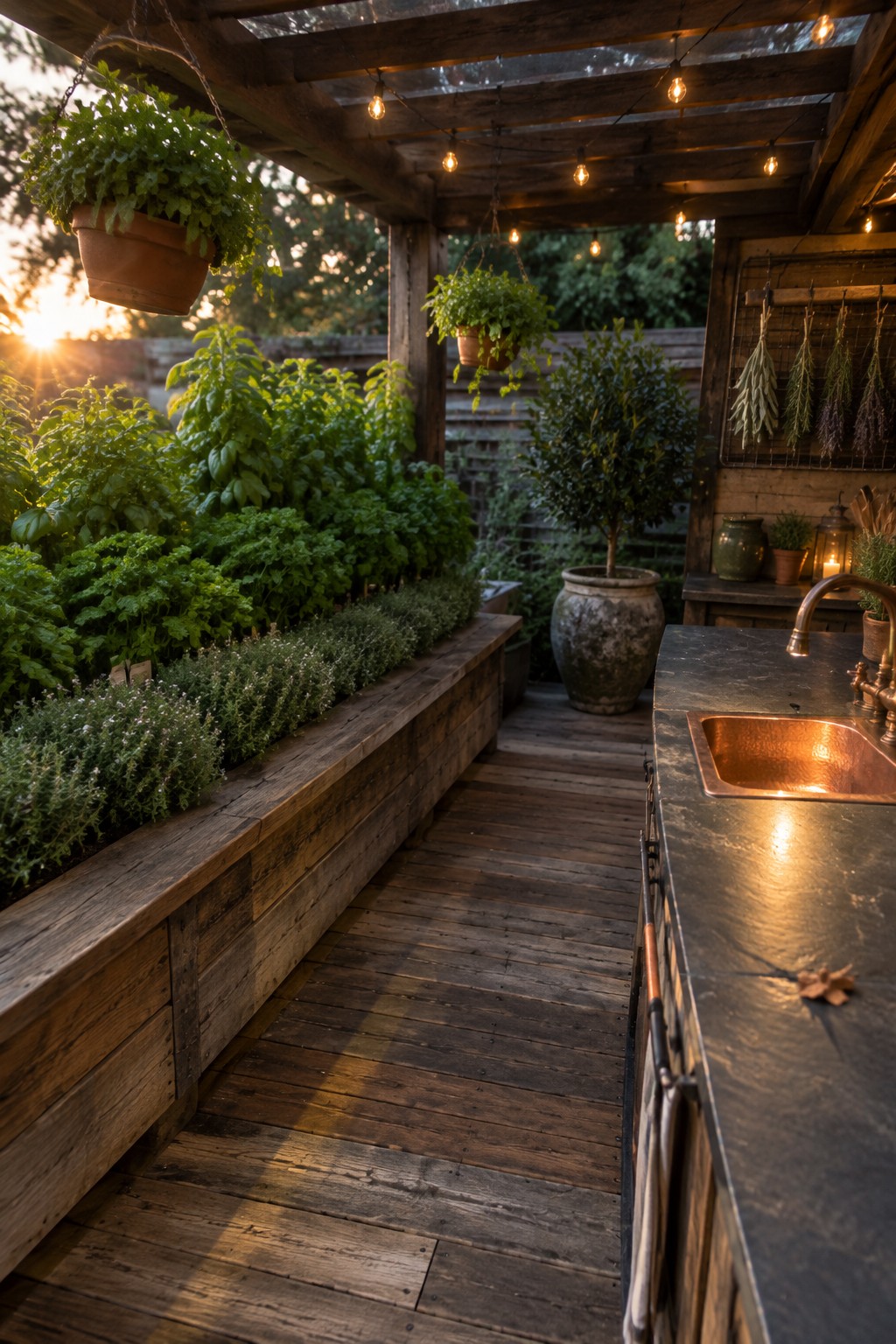
A covered patio work area makes it easier to tend herbs and use them right where you cook. A long raised planter keeps the plants within reach, while the counter gives you a handy spot to rinse or trim a few sprigs.
This setup works well on a compact patio where you want gardening and food prep close together. Choose a roof or pergola that still lets in enough daylight, and leave a clear walkway between the planter and counter.
Grow a Vertical Herb Garden on a Balcony
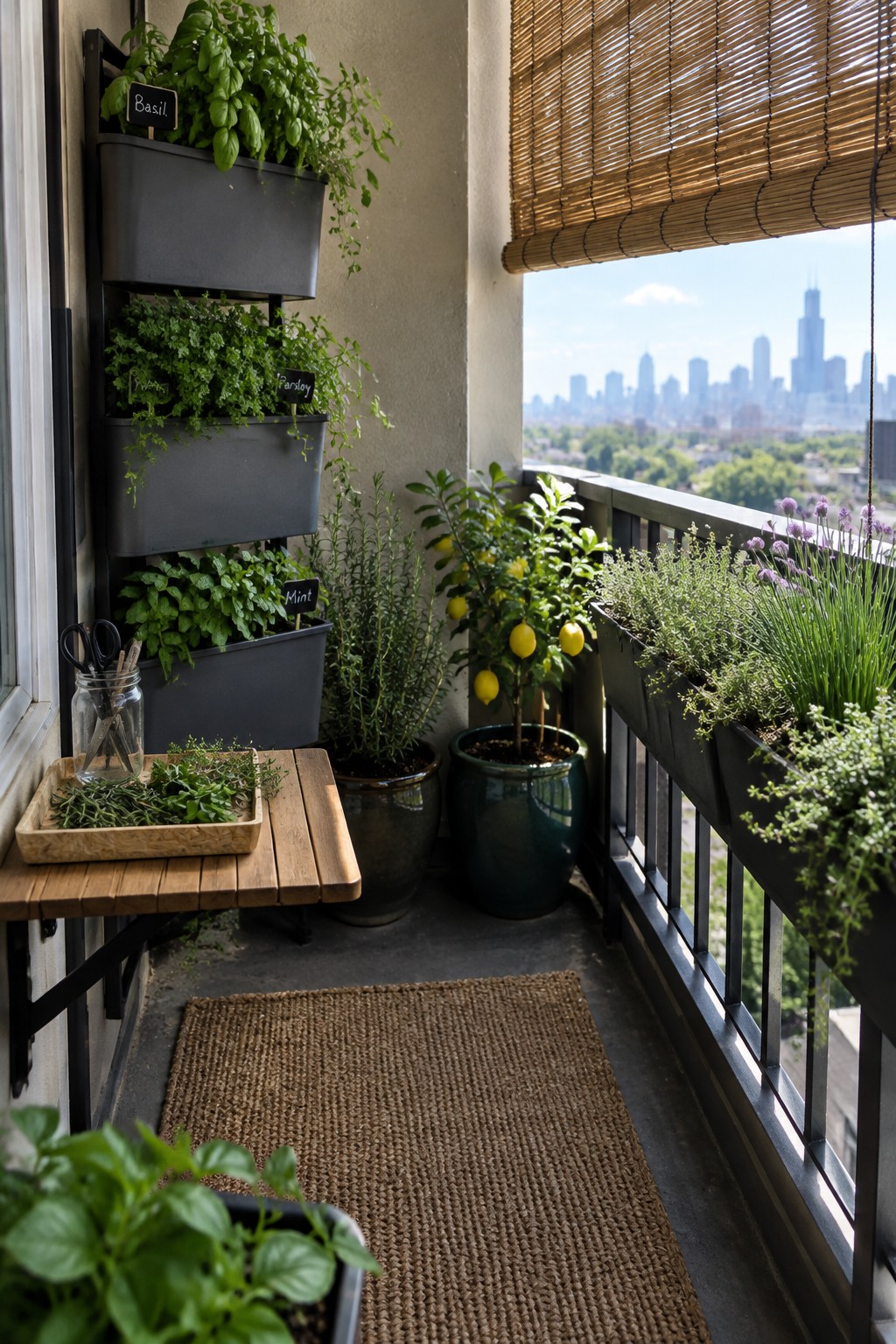
A vertical planter makes good use of a narrow balcony, leaving more floor space open while keeping herbs close at hand. It also makes a small collection easier to tend than pots scattered around the patio.
Use wall-mounted planters for herbs you reach for often, such as basil, parsley, and mint. Check that the wall can support the filled planters, and make sure each level gets enough light and water.
Keep Patio Herbs Close to a Work Surface
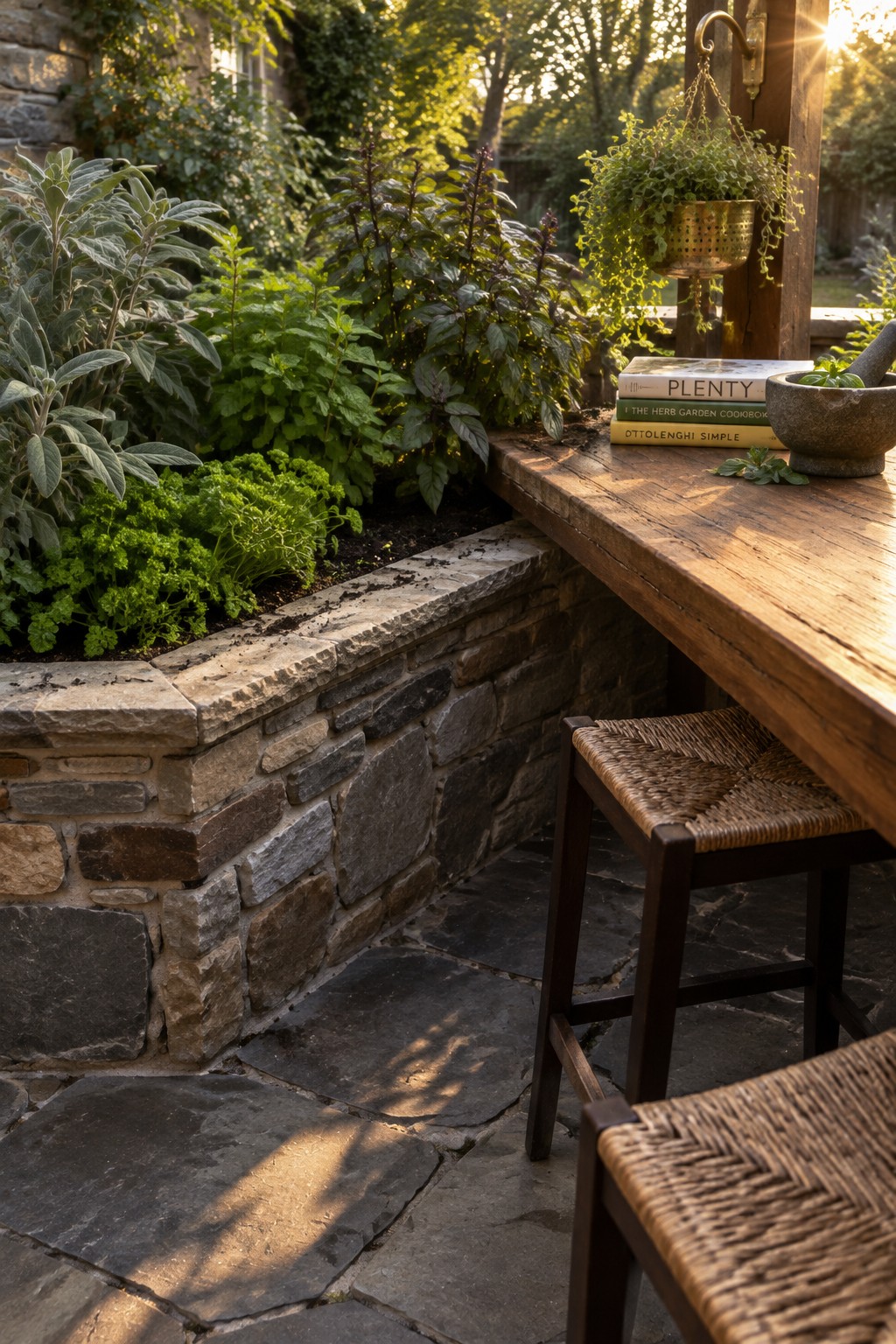
A small counter beside the herb bed makes it easier to snip fresh leaves and use them right away. A sturdy wooden surface gives you room for a mortar and pestle or a few gardening tools without taking up much patio space.
This setup works well beside a raised bed, especially near an outdoor dining area or kitchen door. Choose weather-resistant wood, and keep the surface wide enough to use comfortably without crowding the walkway.
Grow Patio Herbs Along the Seating Area
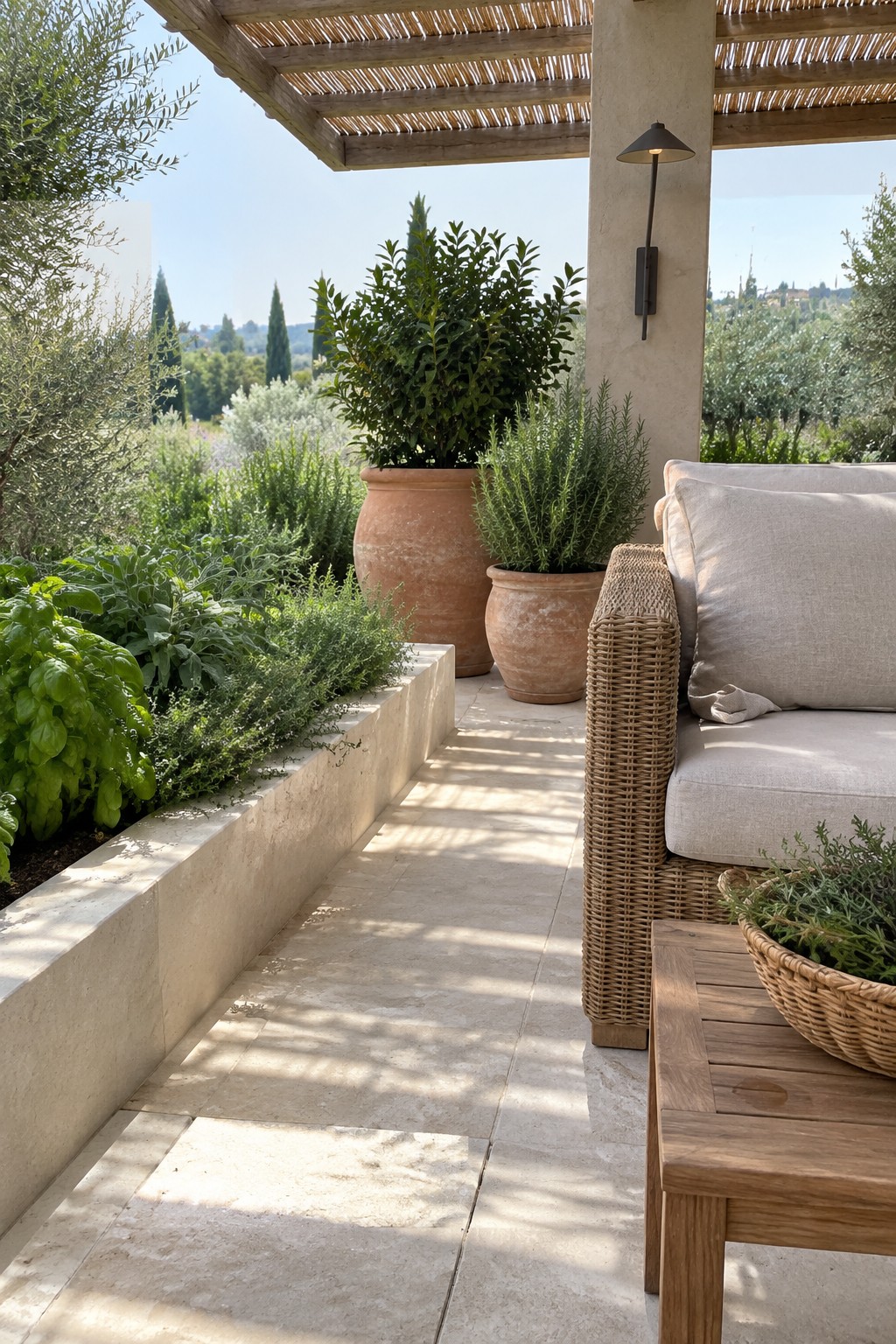
A patio herb garden can sit right beside the place you relax, so fresh leaves are easy to snip without making a separate garden zone. A raised stone bed is a practical way to keep herbs organized and within reach.
Use it along the edge of a terrace or beside outdoor seating, where it won’t block the walking path. Plant herbs you use often, such as basil or rosemary, and leave enough room between plants for them to grow.
Make a Patio Herb Garden Part of the Seating Area
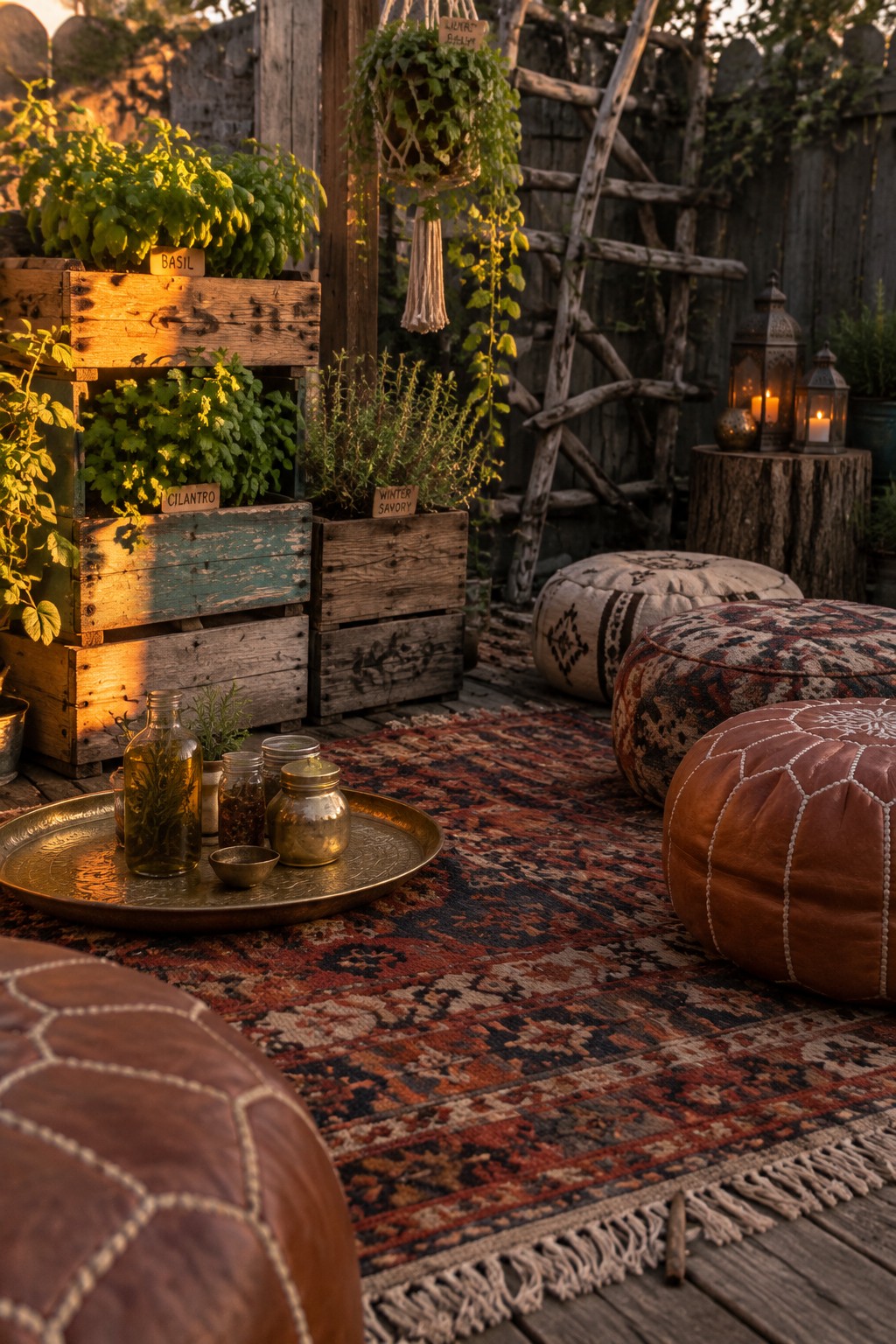
A small herb garden can sit right beside patio seating, so fresh leaves are easy to pick while you relax or prepare food. Wooden crate planters make good use of vertical space and keep several herbs together without taking up much floor area.
Place the planters where they get suitable sunlight, and leave enough room to reach the herbs for watering and trimming. This setup works well in a cozy patio nook, though the crates should drain properly to prevent water from collecting around the roots.
Grow Herbs in a Large Patio Planter
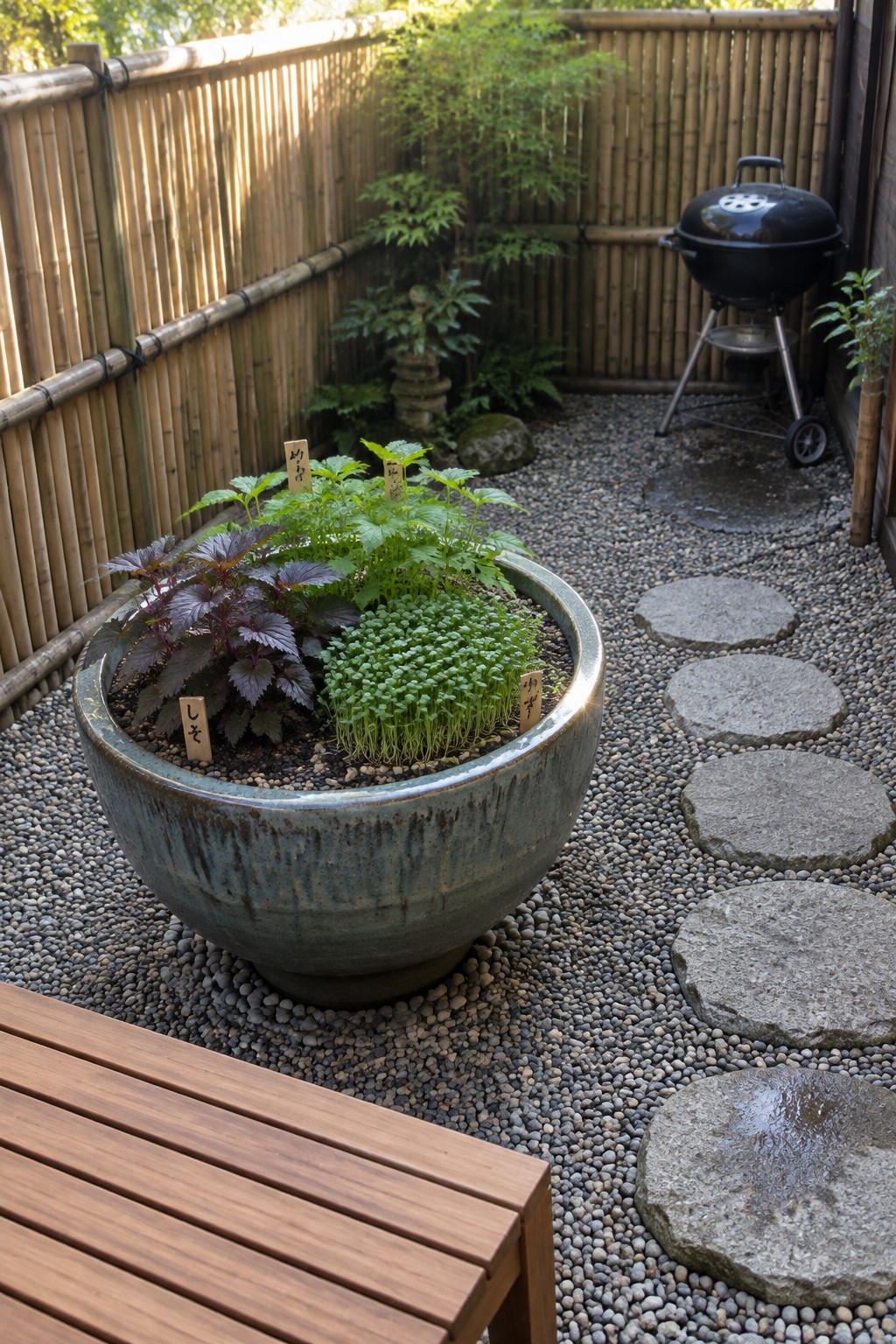
A wide planter can hold several herbs in one spot, making a patio garden easier to tend and harvest. Mixing upright plants with lower, compact herbs also helps use the space well.
Choose a pot with drainage holes and enough room for each herb to grow. Keep plants with similar watering needs together, and place the planter where you can reach it easily from the deck or patio.
Plant Herbs in a Built-In Patio Bed
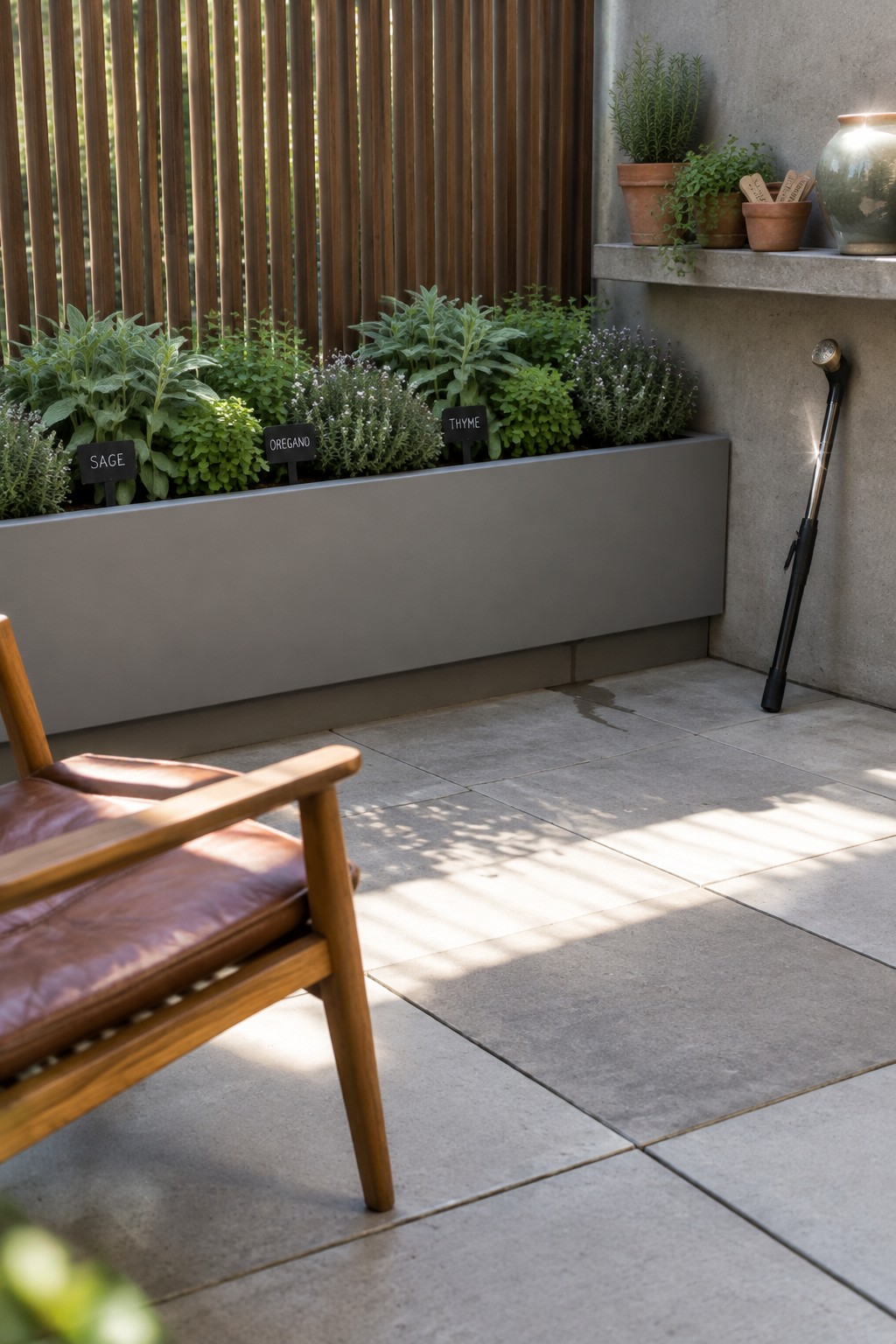
A long raised bed can keep kitchen herbs together and easy to reach, while making good use of the edge of a patio. It is a practical choice when you want more planting space than a few pots allow.
Place the bed along a wall or fence, and group herbs with similar water needs so they’re easier to care for. Sage, oregano, and thyme are shown here, but leave enough room between plants for them to spread.
Use Raised Beds to Keep Patio Herbs Organized
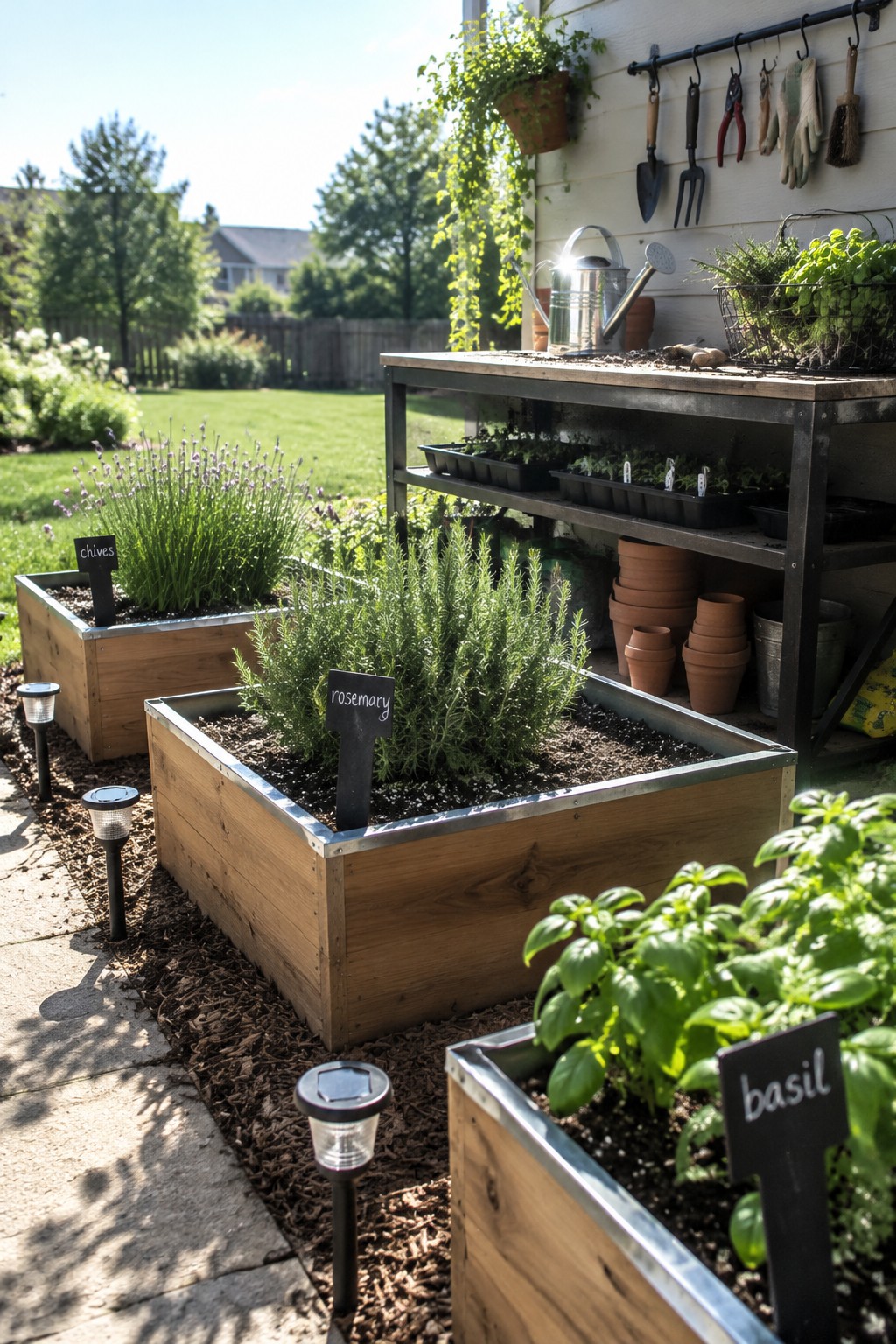
Raised beds give patio herbs a clear place to grow and make them easier to reach for picking. Separate beds can also keep spreading plants from crowding slower-growing herbs.
Choose a sunny spot near the kitchen or a garden work area, and make sure each bed has drainage. Wood beds with metal edging suit a casual patio garden, but leave enough room around them to move comfortably.
Set Up a Small Herb Garden Workstation
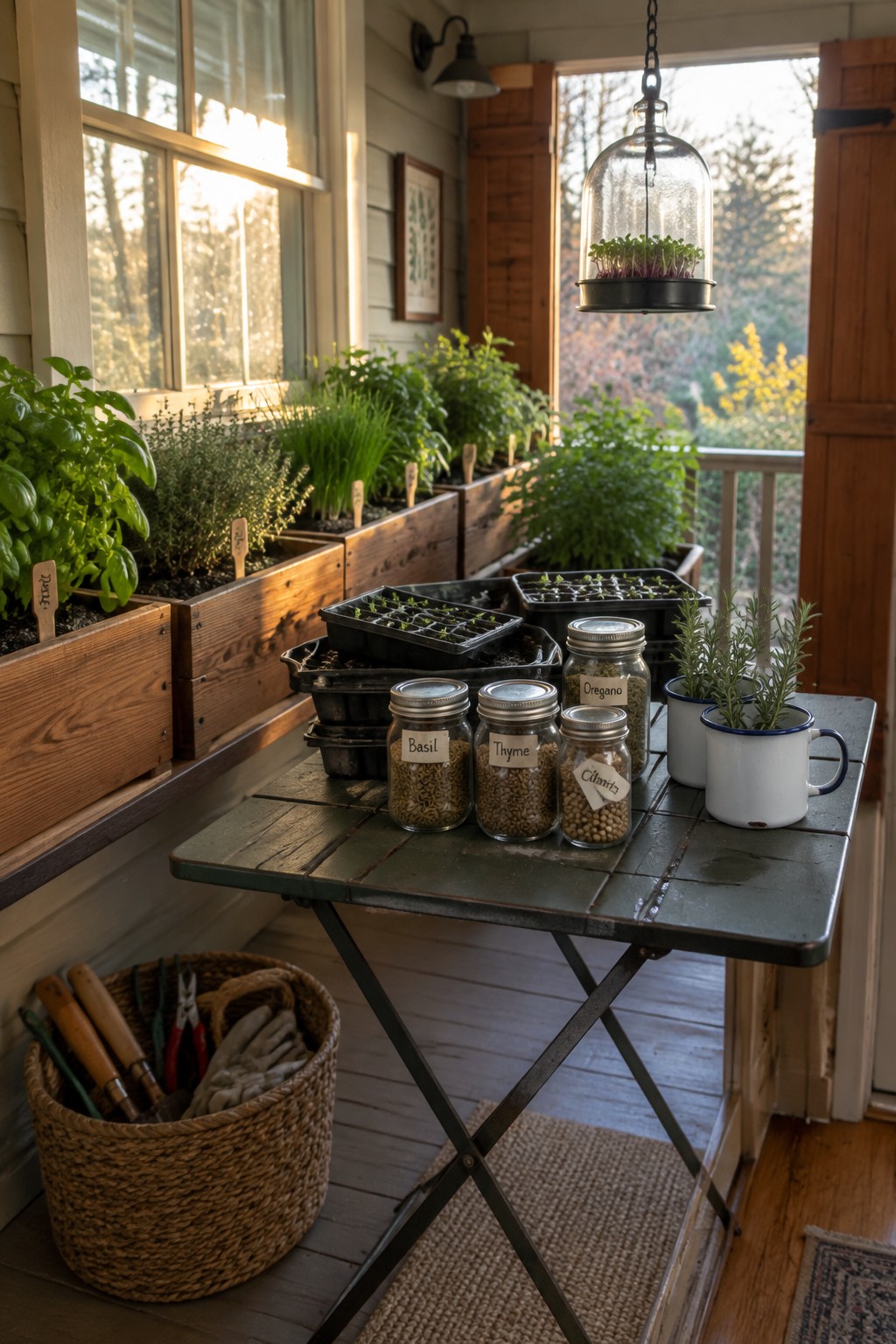
A small worktable makes tending patio herbs easier by giving you a place to sow seeds, pot seedlings, and keep supplies close at hand. It can turn a narrow porch or patio corner into a useful gardening spot without taking over the space.
Choose a weather-resistant table with enough room for a few seed trays and jars of dried herbs. Keep it near your planters for easy access, but leave a clear path so the work area does not get in the way.
Plant Herbs in a Patio Centerpiece

A long raised planter can make a patio herb garden part of the seating area instead of something tucked off to one side. It keeps fresh herbs within easy reach and gives the space a clear focal point.
Use a sturdy stone or masonry planter if you want a lasting feature, and leave enough room around it for chairs and foot traffic. Basil and smaller leafy herbs work well in a central bed, but avoid planting them so densely that harvesting becomes awkward.
Frequently Asked Questions
Q: How many hours of sun does a patio herb garden need?
A: Most herbs grow well with at least six hours of direct sun a day. If your patio gets less, try mint, parsley, or chives, which can handle a bit of shade.
Q: Can I grow several herbs together in one pot?
A: Yes, as long as they have similar needs. Rosemary, thyme, and oregano enjoy sunny conditions and soil that dries between waterings, while basil prefers more regular moisture.
Q: How often should I water herbs in patio containers?
A: Check the soil with your finger and water when the top inch feels dry. Pots can dry out quickly on warm, windy patios, so check them more often during hot weather.
Q: Which herbs are easiest to start with?
A: Basil, chives, mint, and parsley are forgiving choices for a first patio garden. Keep mint in its own pot, since it spreads quickly and can crowd its neighbors.
