

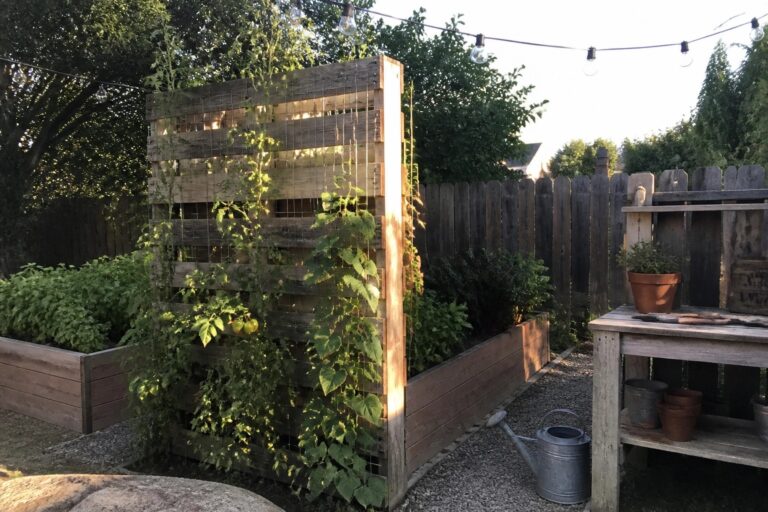
I often think about how garden layouts change once climbing plants start to take over if they lack proper support from the start.
Using old pallets as trellises gives me a way to reuse materials while giving vegetables the vertical space they need to stay healthy.
The difference shows up quickly in how the beds look and how easy it becomes to harvest without stepping on anything.
Some setups I have tried worked well in narrow spots while others needed wider bases to hold up heavy vines later in the season.
Testing a few of these in my own space helped me see which ones actually hold up once the plants fill in.
Using A Pallet As A Garden Trellis
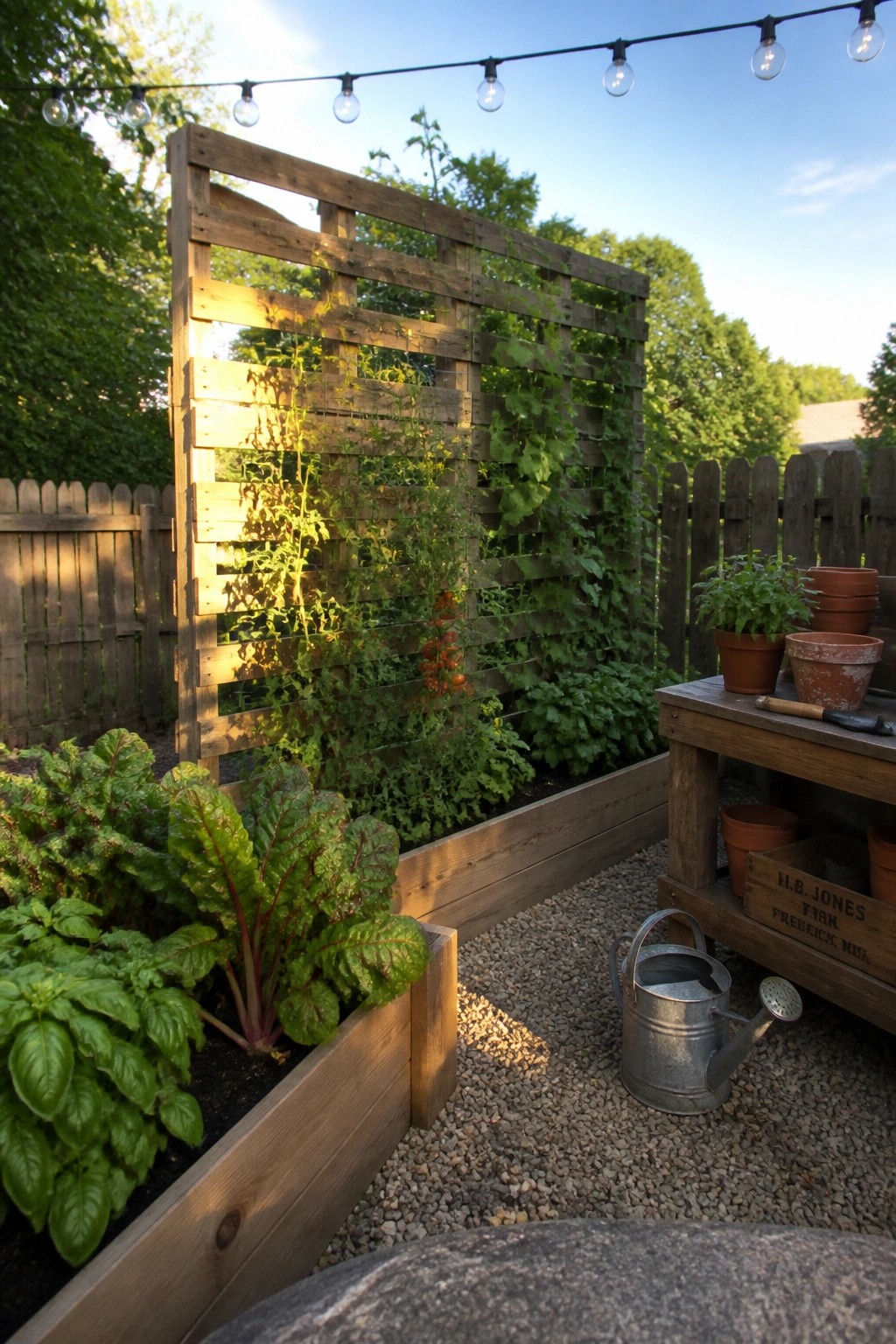
A simple pallet can make a strong trellis when placed right behind a raised bed. It gives tomatoes and other climbers a place to grow upward instead of spreading out across the soil. The open slats let air move through and make harvesting easier later in the season.
Set the pallet upright at the back of the bed and secure it well so it stays steady as the plants get heavy. This approach works best in small gardens or along a fence line where you need vertical space. Just check that the wood has not been treated with anything harmful before you use it near food crops.
Mount Pallets On Walls To Grow Vegetables Vertically
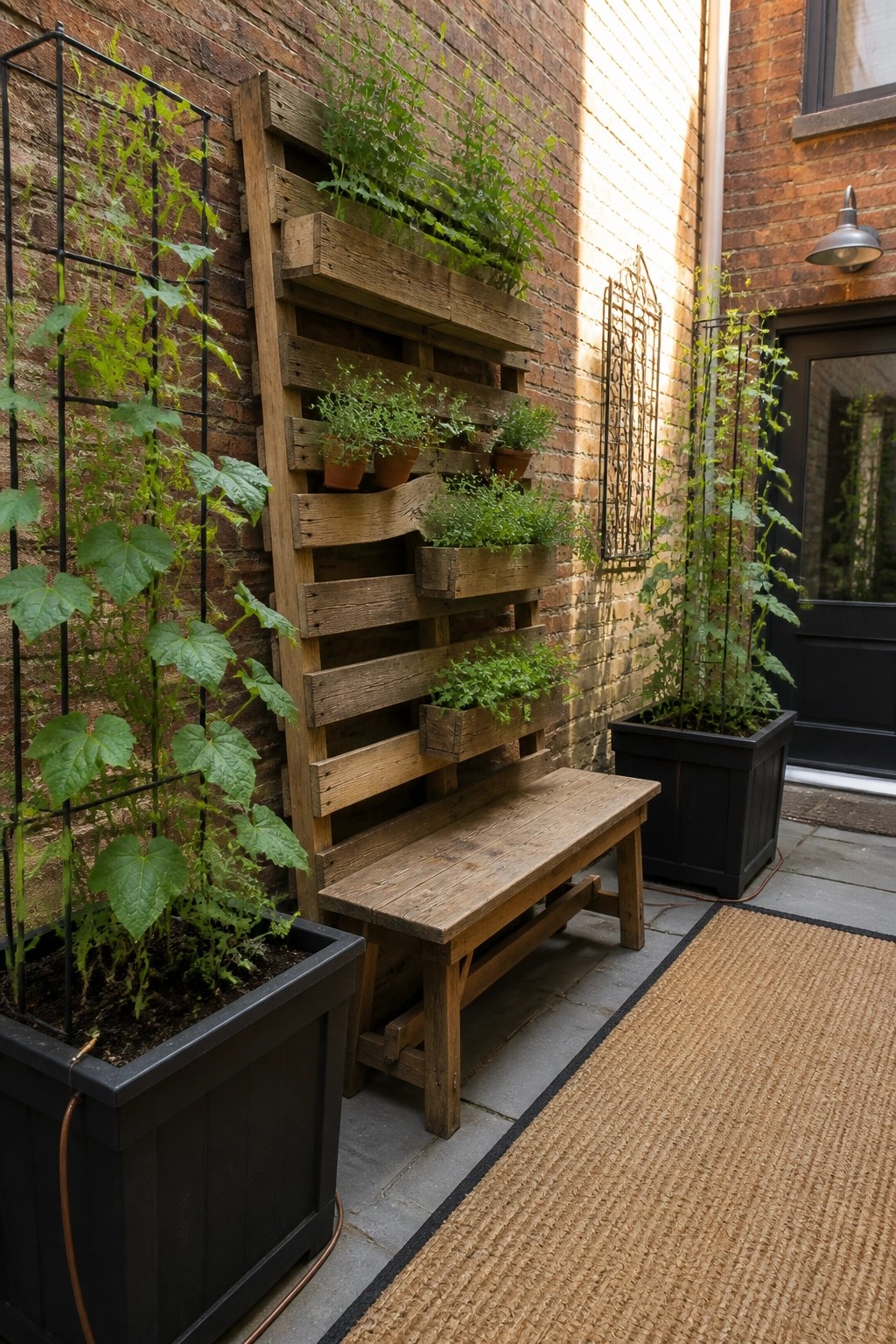
Many people like this setup because it turns an empty wall into usable growing space. The pallet slats hold pots at different heights while giving vines something to climb, and it keeps everything off the ground in a narrow area.
This works best against a sunny brick or fence wall in small yards or side passages. Secure the pallet well and pick vegetables or herbs that match the light conditions there.
Pallet Trellis Mounted Against The House
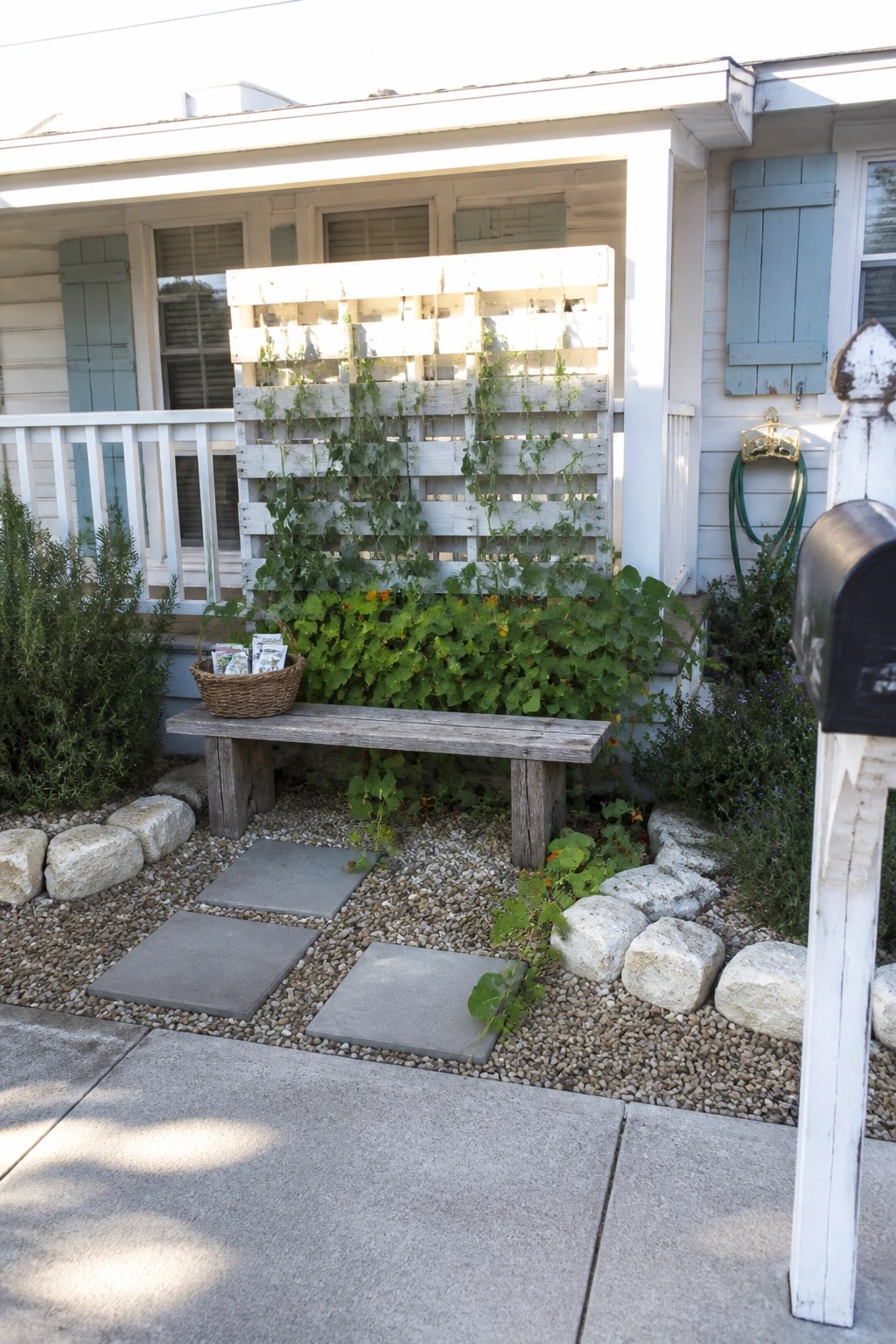
A pallet trellis flat against the siding gives climbing vegetables a sturdy place to grow without taking up much ground space. It turns an empty wall into a productive spot and keeps the vines off the soil where they might rot or get stepped on.
This setup works well on smaller lots or along the front of a house where you want some greenery near the entry. Just secure the pallet firmly, plant at the base, and let the vines find their way up through the slats. Watch that the wood stays dry enough behind the plants so it does not rot over time.
Pallet Trellis Walls for Climbing Vegetables
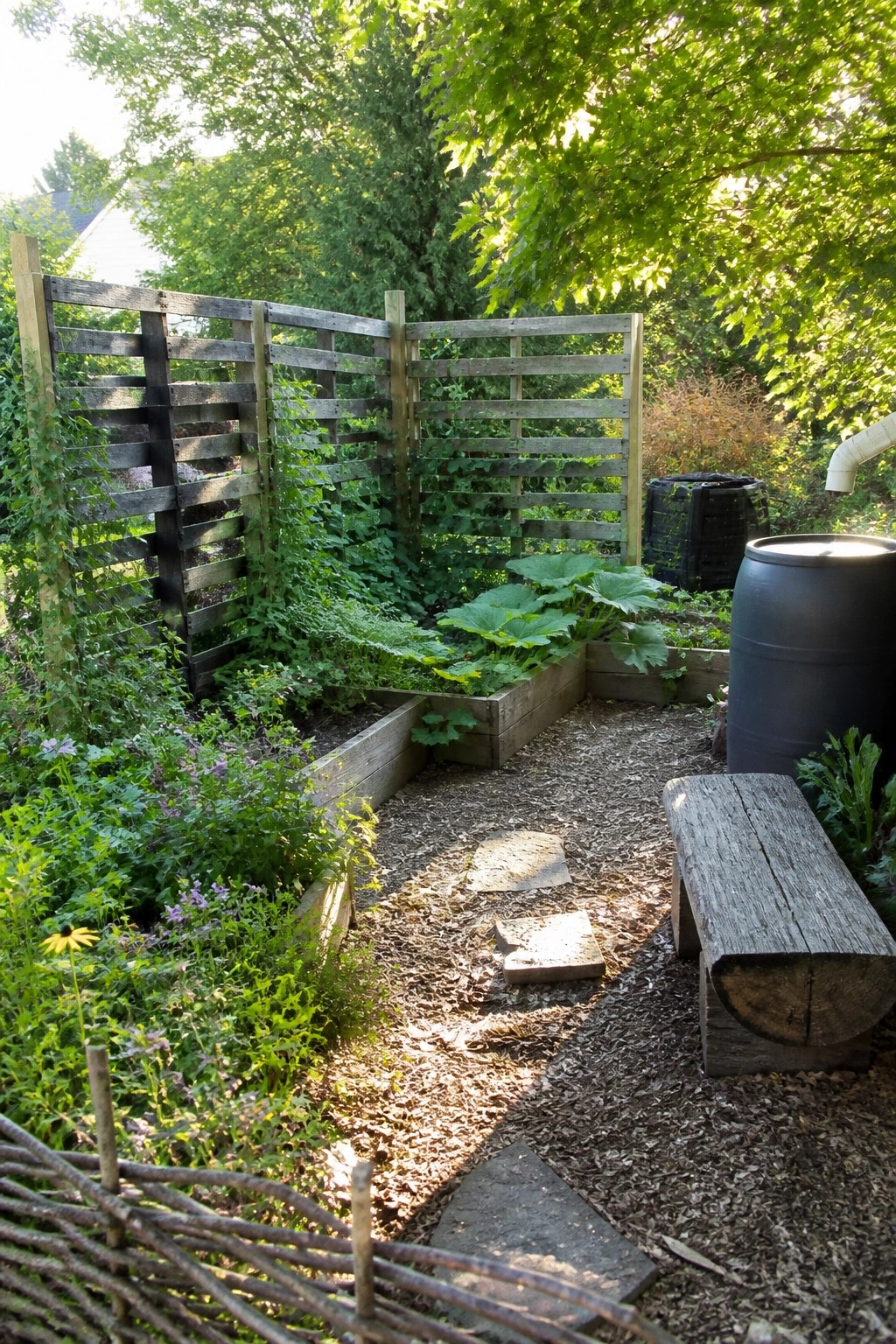
Pallet trellises work well behind raised beds because they give climbing vegetables a sturdy place to grow upward. The open slats let air move through while the vertical surface keeps vines off the ground and easier to reach. Many gardeners like this setup in smaller yards where space is tight and every inch counts.
Place the pallets at the back edge of the bed so the plants can reach the wood without crowding the path. Secure them firmly into the ground or attach them to posts if the wind tends to be strong in your area. This approach suits vegetable gardens that already use raised beds and need simple support that does not cost much.
Mount a Trellis Behind a Raised Bed
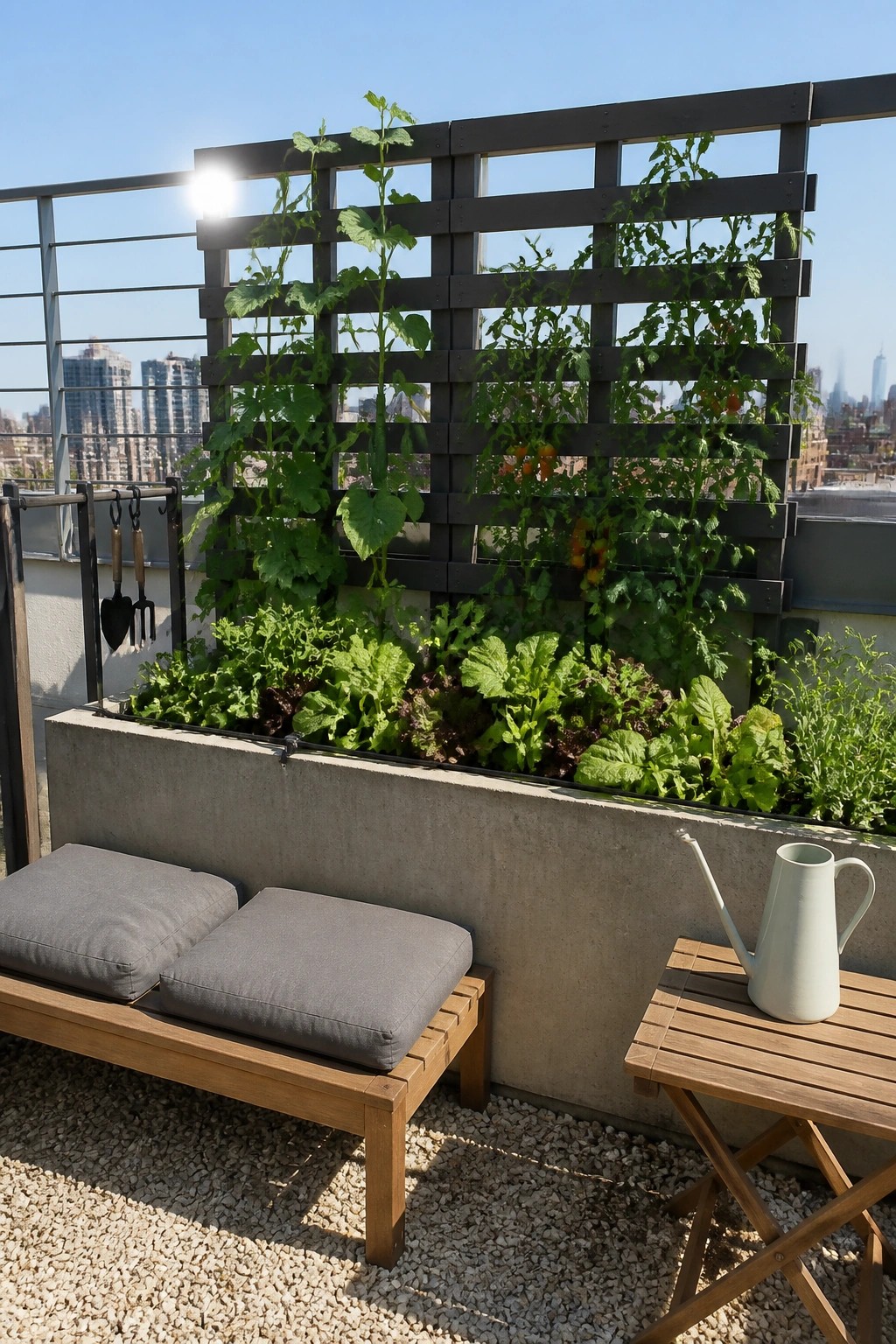
A trellis attached directly to the back of a raised bed gives climbing vegetables a place to grow straight up instead of sprawling across the ground. This keeps the plants healthier and makes the whole setup easier to manage in tight outdoor areas.
It works especially well on rooftops or patios where floor space is limited. Use a simple wood frame like the one shown here and make sure it is anchored firmly so it can support heavier vines later in the season.
Mount A Trellis On A Garden Fence
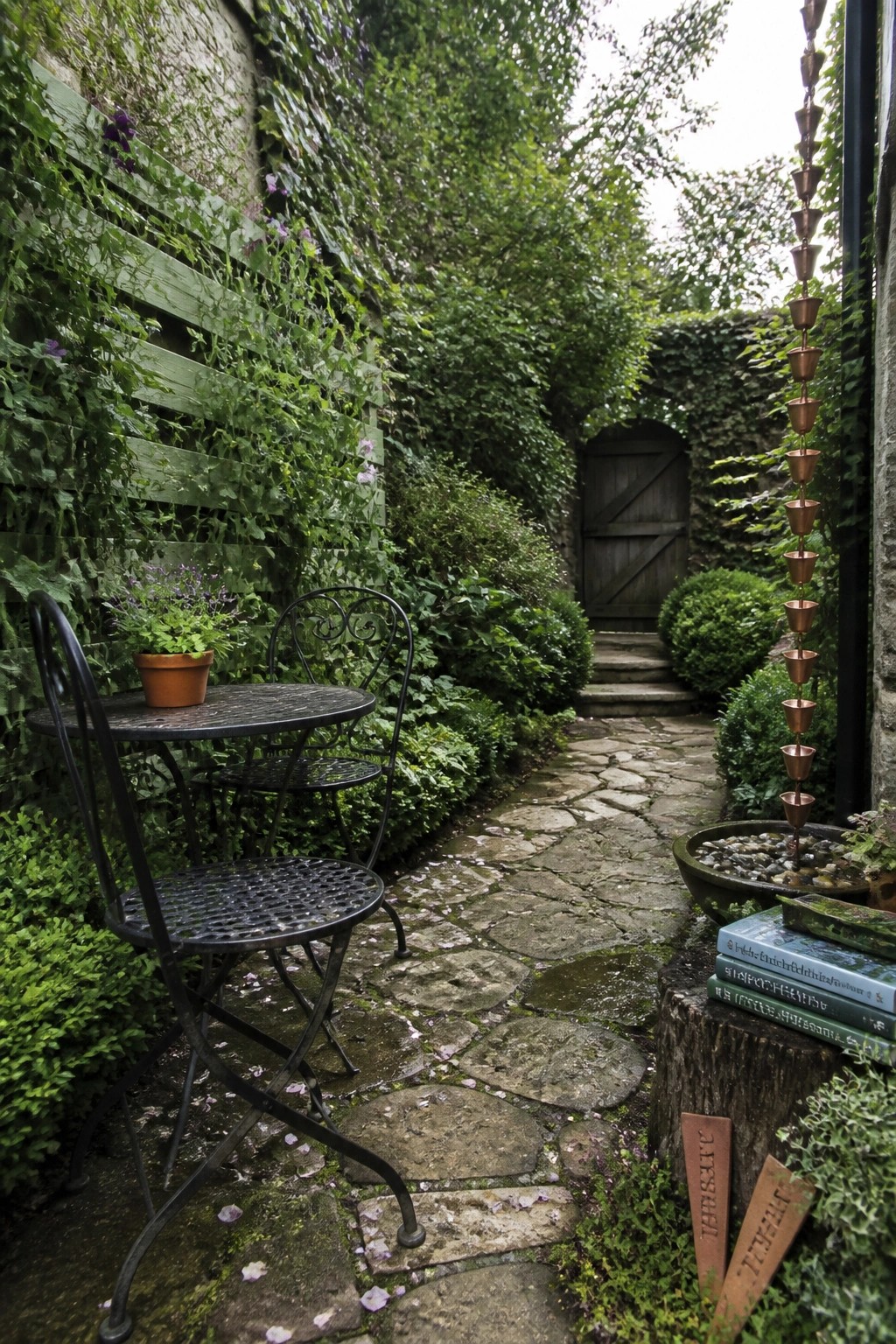
Mounting a trellis right onto an existing fence gives climbing vegetables a ready-made vertical surface. It keeps the plants off the ground and makes good use of narrow spaces that would otherwise go to waste.
This setup works best along side yards or tight garden paths where ground room is limited. Use sturdy pallet sections, fasten them securely at several points, and pick strong climbers like pole beans or cucumbers that will fill in the space without extra support.
Wall Trellis for Climbing Vegetables
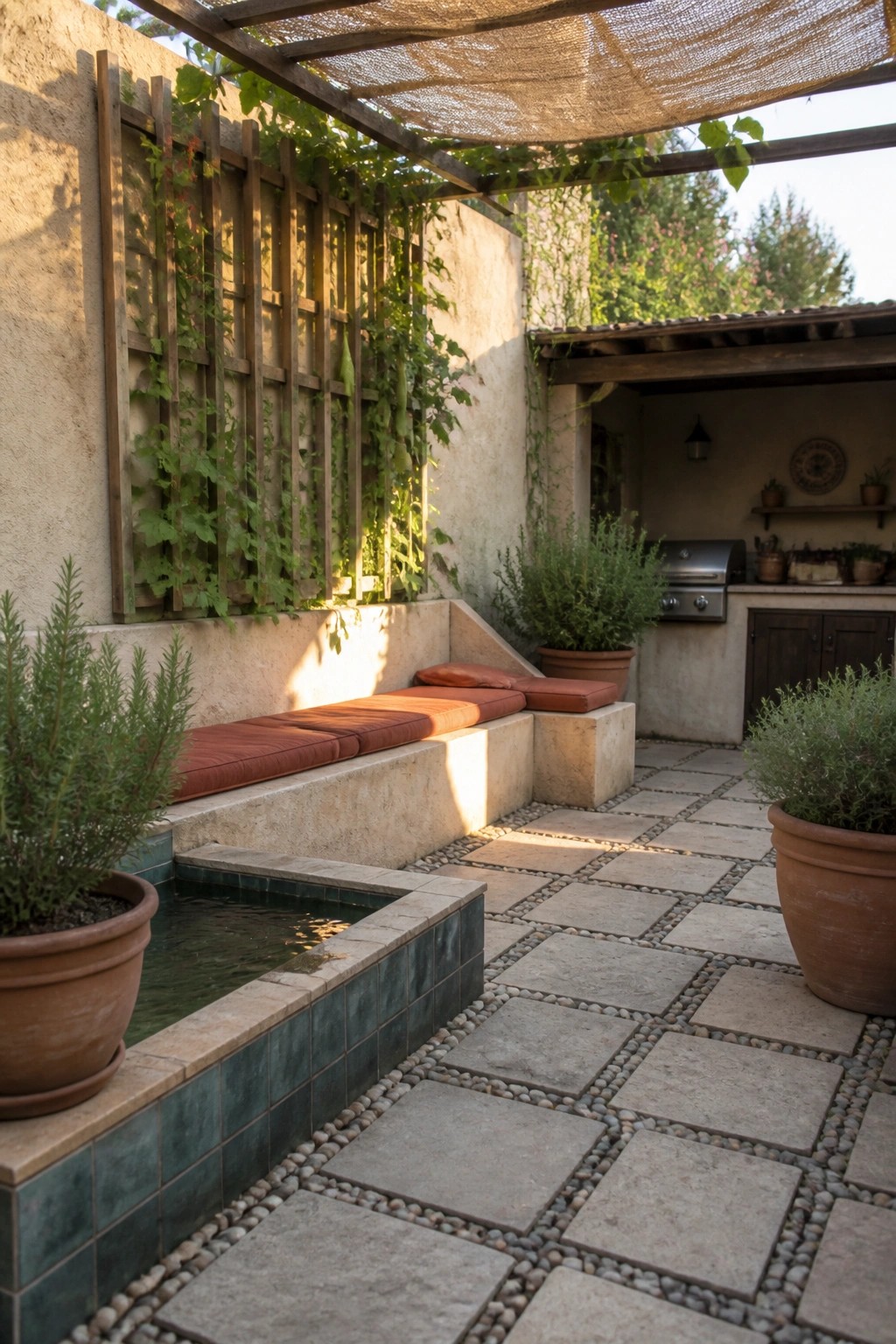
A wall mounted trellis gives climbing vegetables a place to grow upward instead of taking over ground space. This setup works especially well on a sunny patio wall where you already have seating or hardscape, since the plants stay contained and still get good light and air flow.
It suits homes with small yards or paved areas where in ground beds are limited. Use a simple wood grid like the one shown here, secure it firmly to the wall, and choose sturdy climbers such as beans or cucumbers that can handle the vertical training.
Build A Pallet Trellis For Climbing Vegetables
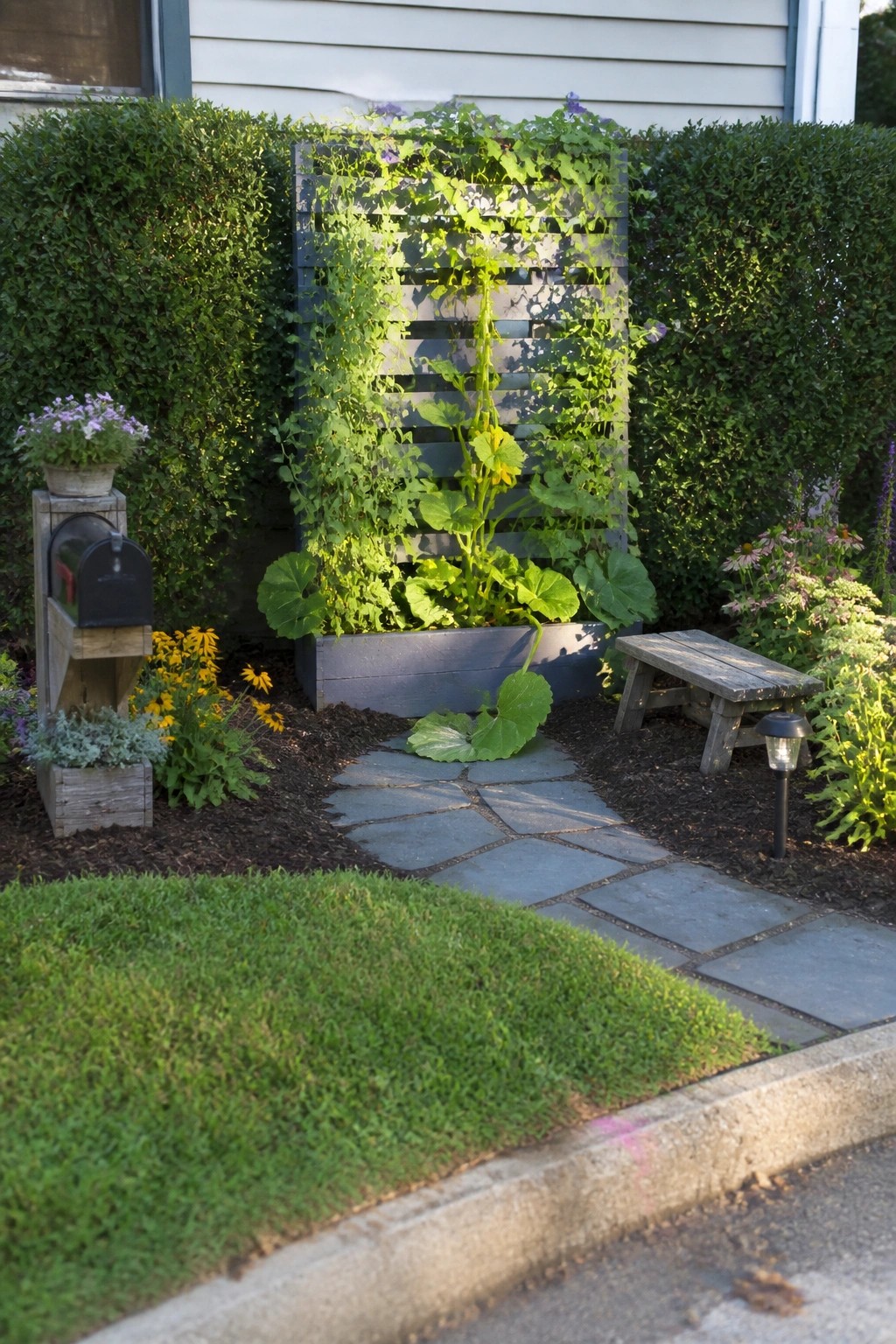
A pallet trellis gives climbing vegetables a simple vertical frame that keeps vines off the ground and makes harvesting easier. It works well because the open slats let air move through the plants while still giving them plenty of places to attach and climb.
Place the pallet upright in a raised bed or along the edge of a garden path, and choose spots that get good sun. Most backyards can fit one without crowding the rest of the planting area, though it helps to anchor the base firmly so it stays steady once the vines get heavy.
Pallet Trellis for Balcony Gardens
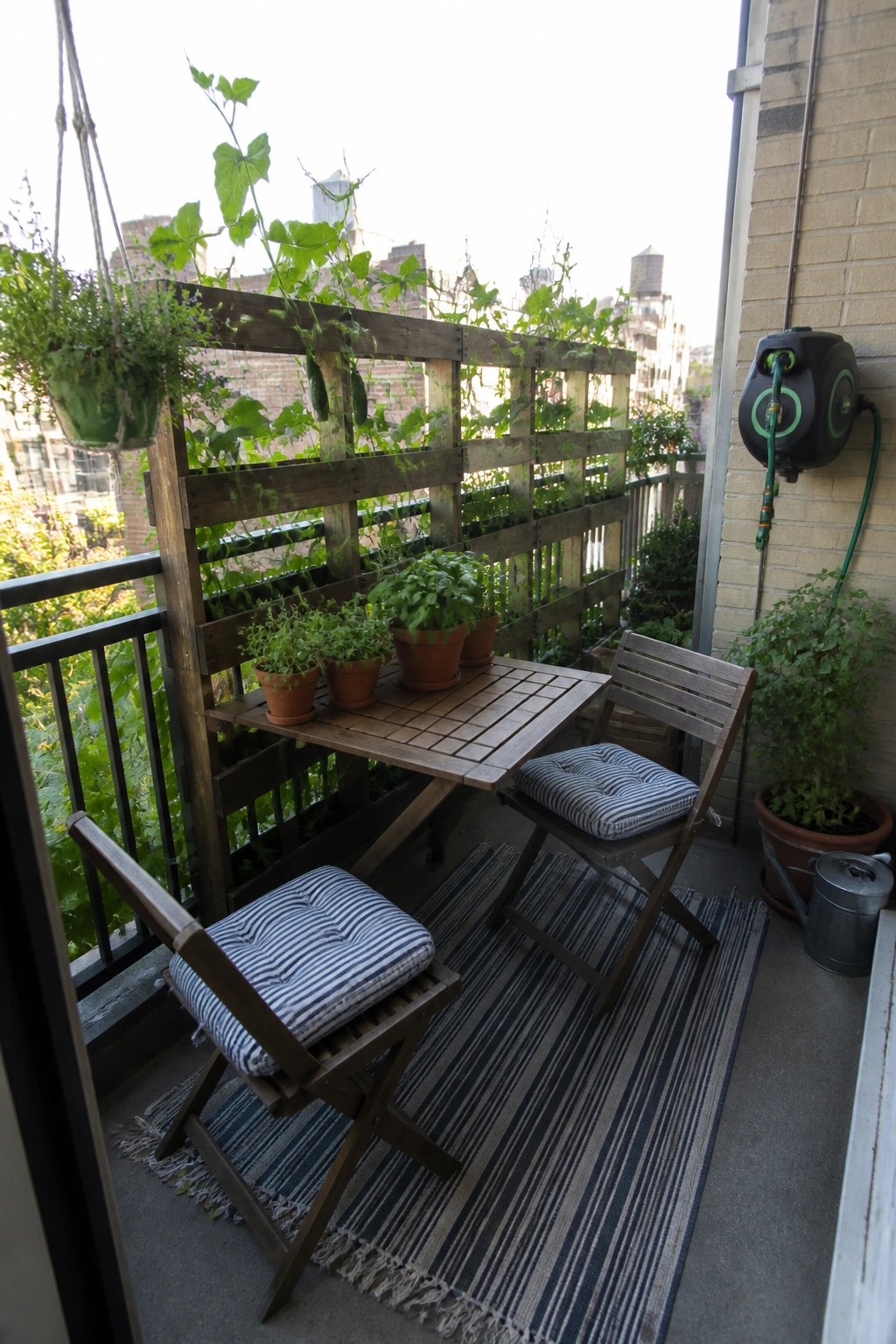
A pallet mounted upright gives climbing vegetables room to grow without taking over the floor. On a small balcony this keeps the space usable while still letting plants like cucumbers reach upward along the wood slats.
It suits apartments or homes with tight outdoor areas where ground beds are not an option. Secure the pallet firmly to a railing or wall, plant at the base, and check that it receives steady sun. Keep the structure stable as the vines fill in.
Pallet Trellises For Climbing Vegetables
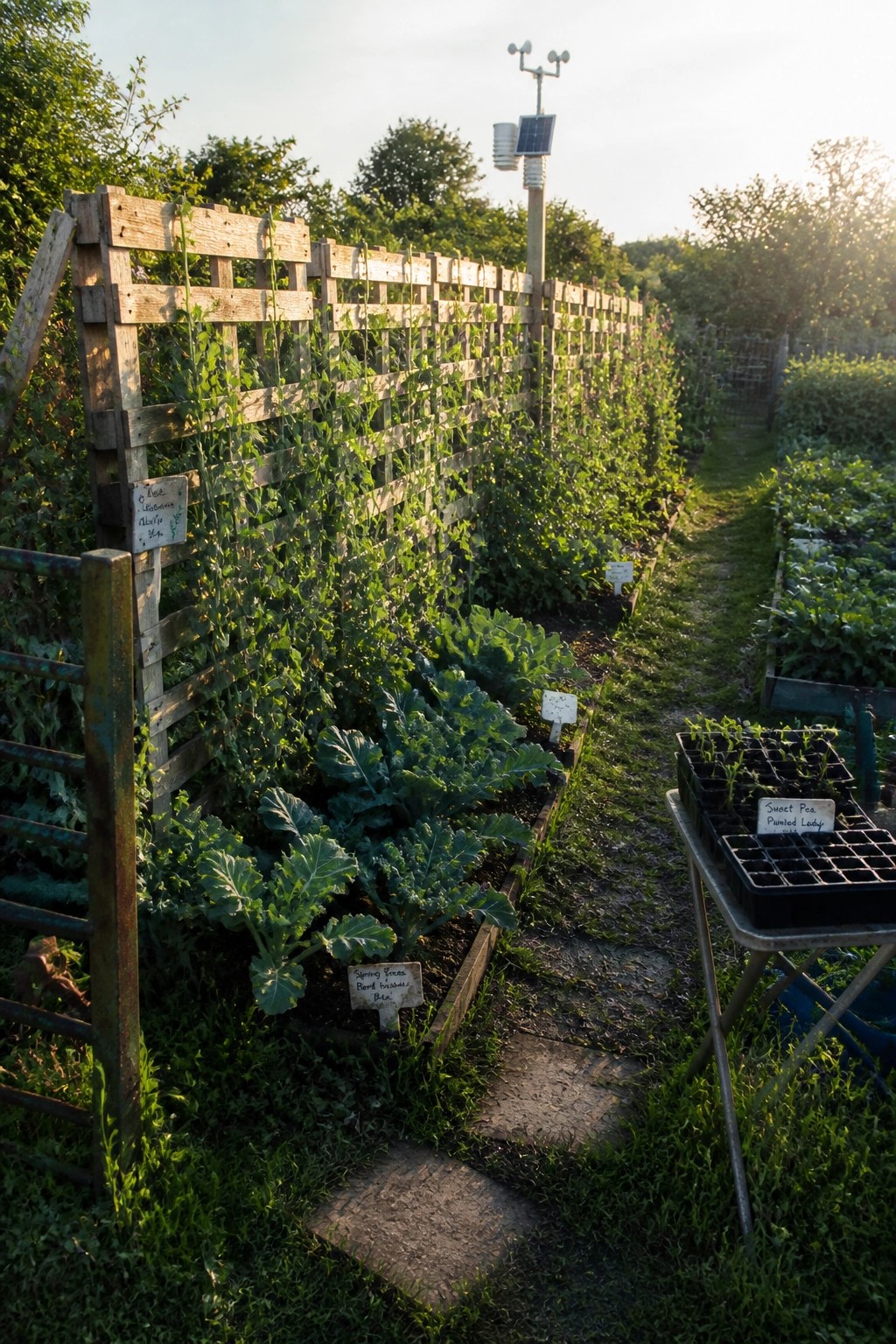
Many people turn to old pallets when they need a simple way to support climbing crops. The open slats give vines something to grab onto, and the whole structure stays upright without much extra work once it is set in place.
You can lean or fasten the pallets along the back of a raised bed or garden row. This approach works best in smaller spaces where you want to keep plants off the ground and make picking easier. Just check that the wood has not been treated with anything harmful before you grow food on it.
Vertical Pallet Trellises For Climbing Vegetables
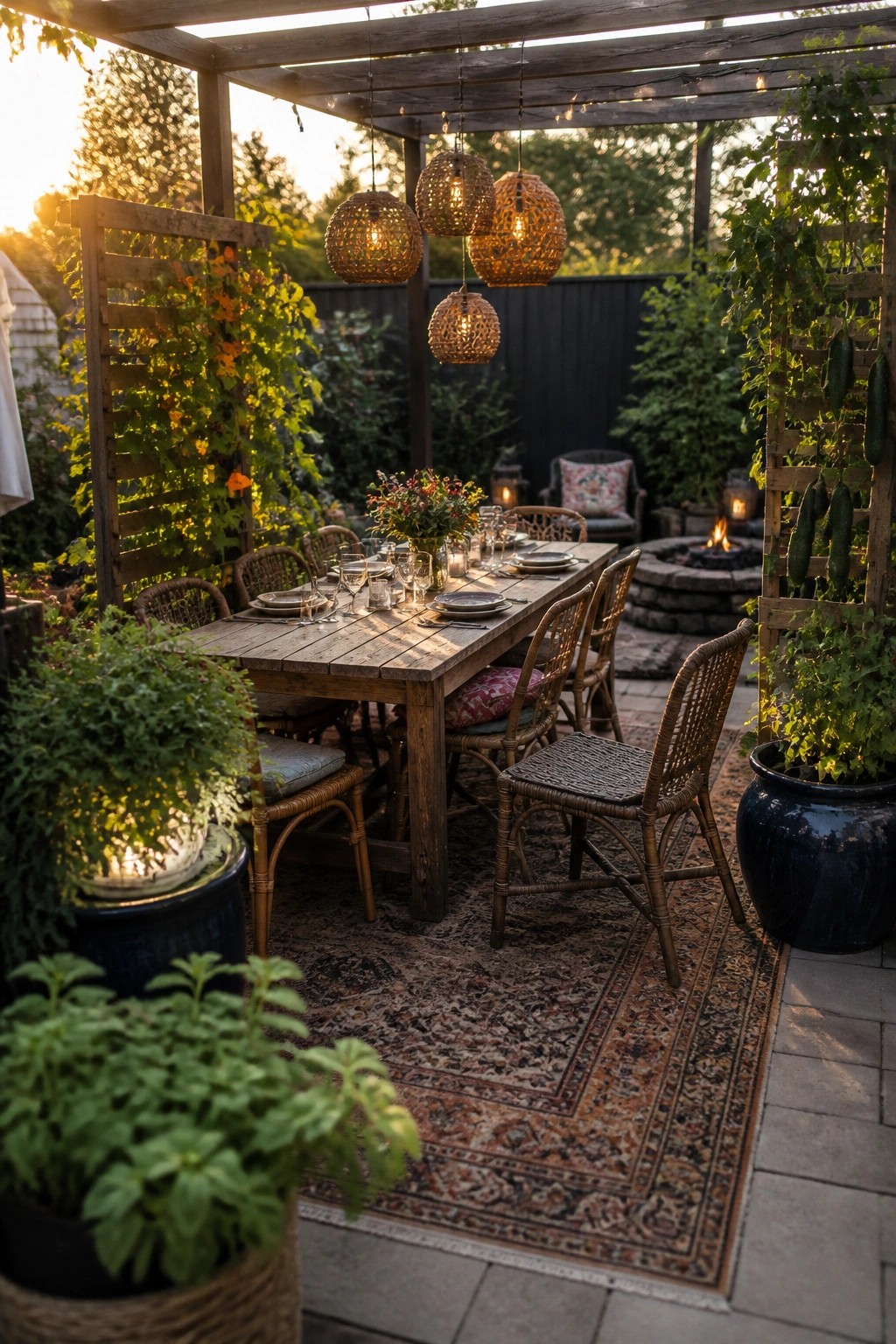
Wooden trellis panels work well when you want to grow climbing vegetables without using up ground space. They turn the sides of a patio into useful growing areas while adding a bit of privacy and greenery right where people sit.
Place the trellises in large pots or fix them along the edge of the seating area. Cucumbers, beans, and peas do fine on them, and the structure keeps vines tidy and easy to reach.
Attach Pallets to Fences for Climbing Vegetables
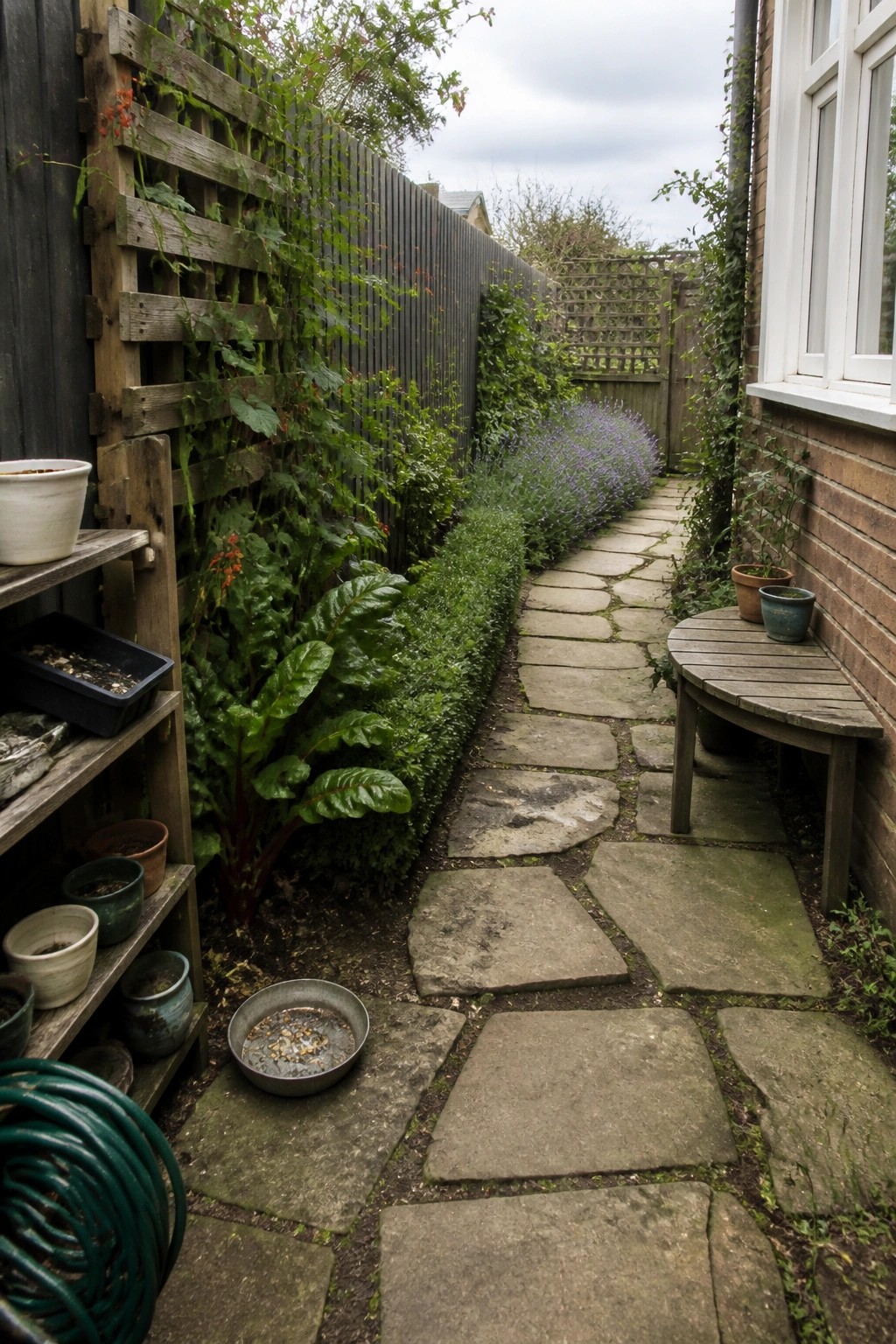
Fixing a pallet directly onto an existing fence turns a plain boundary into useful vertical growing space. The open slats give vines something to grab while keeping the ground clear for walking or other plants. It works especially well in narrow side gardens where floor space is limited.
This approach suits homes with long fence lines or tight paths between buildings. Secure the pallet firmly and choose one that has already been weather treated so it holds up over time.
Combine Raised Beds With Grid Trellises
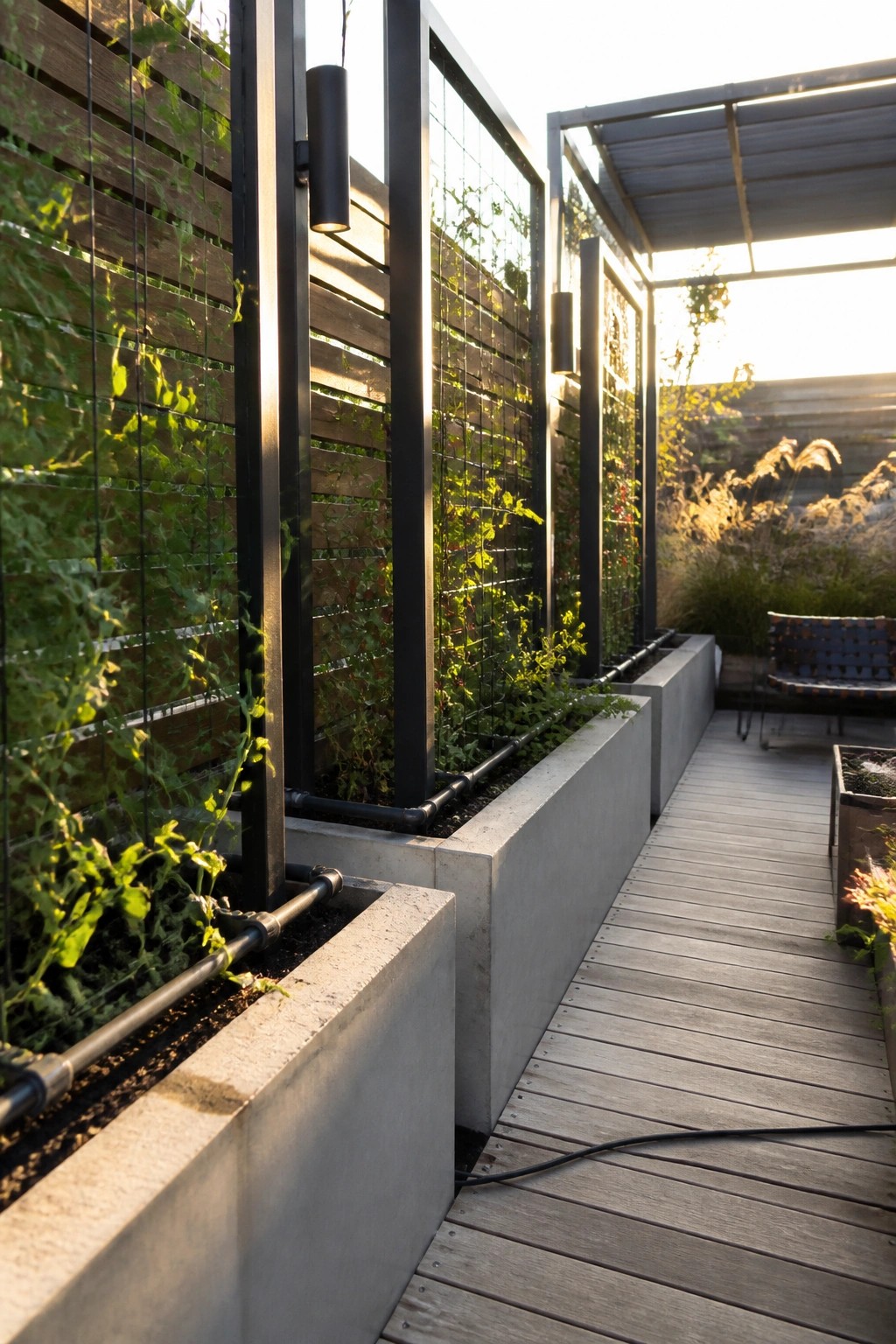
Attaching a grid panel straight to the side of a raised bed gives climbing vegetables a built-in place to grow without extra stakes or separate frames. The concrete base keeps the whole thing stable and lets you run simple irrigation lines along the bottom.
This approach works best in smaller yards or on decks where ground space is tight. Just make sure the grids sit at the right height for the plants you want to grow and leave enough room for walking and harvesting.
Grow Climbing Vegetables On An Arched Trellis
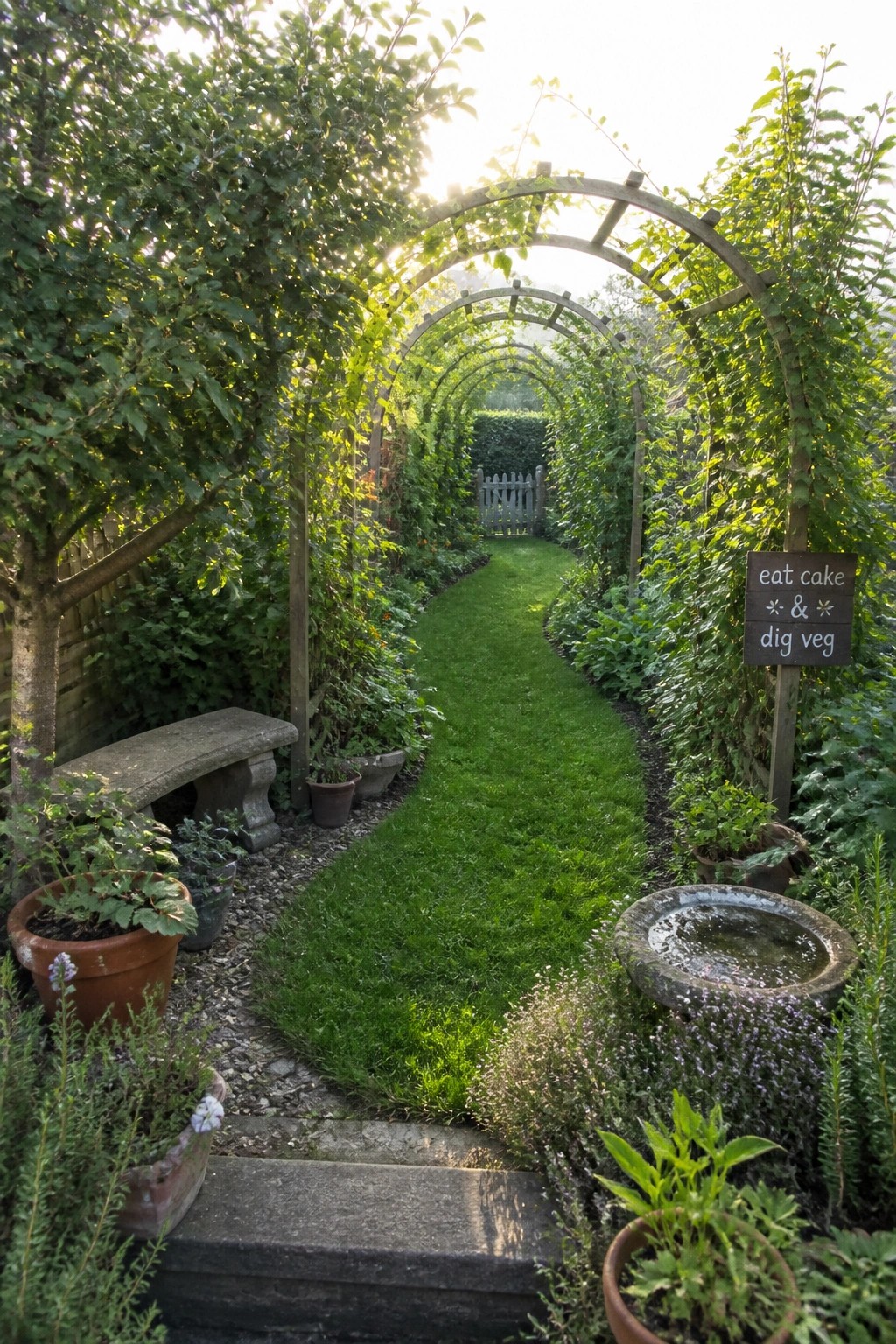
An arched trellis gives climbing vegetables plenty of room to grow upward instead of spreading across the ground. It keeps the plants organized and makes harvesting easier later in the season.
This kind of structure fits best in a long narrow garden or along a side path. Use sturdy wood and set the posts deep so the whole thing stays solid once the vines get heavy.
Pallet Trellis for Vertical Growing
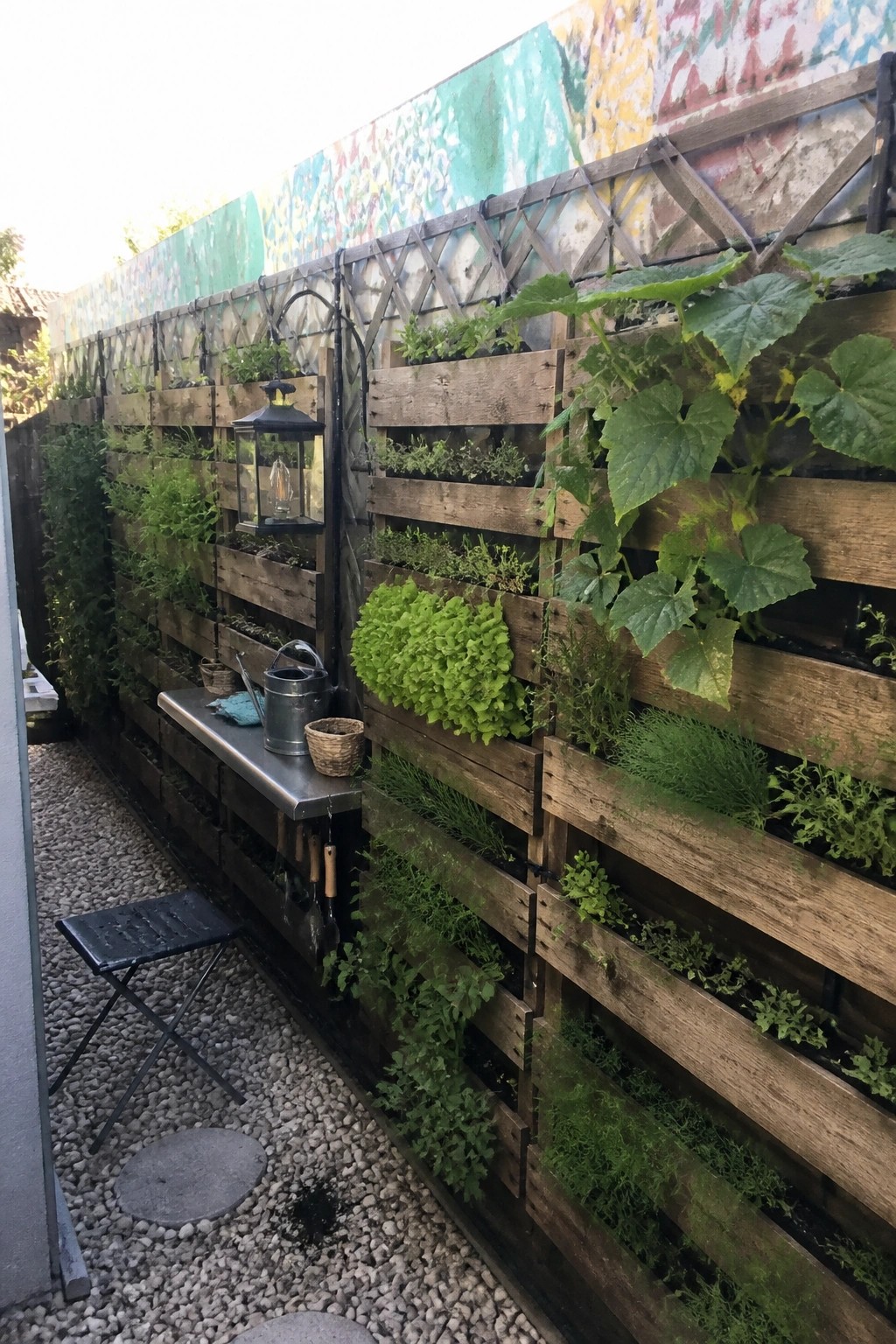
Mounting old pallets on a fence or wall gives you a simple way to grow vegetables upward instead of spreading them across the ground. This setup works well in small yards where space is tight, and it keeps plants off the soil so they stay cleaner and easier to reach. The open slats let you pack in soil and roots without much extra framing.
It fits best along a sunny fence or side wall where you can water from the top. Just secure the pallets firmly and line the backs if needed to hold the dirt in place. Many people start with herbs or leafy greens before moving on to climbing vegetables like cucumbers or beans.
Pallet Trellises For Climbing Vegetables
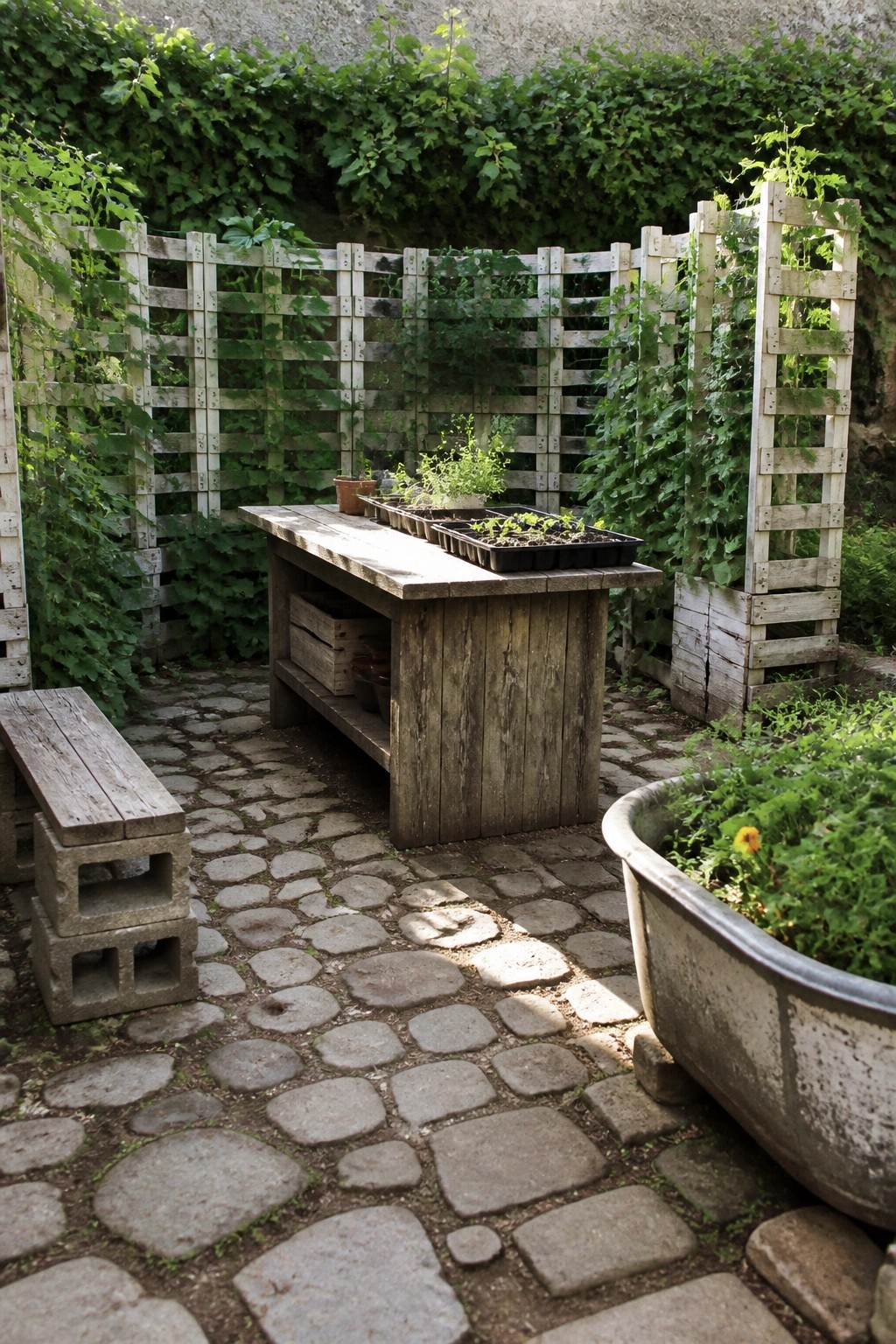
Many people turn old pallets into trellises because they already have the right shape and strength. The open slats let vines climb easily while keeping the plants off the ground and making harvest simpler later on.
This setup works well along the back of a raised bed or against a fence in a small vegetable garden. Secure the pallets upright, plant climbers like beans or cucumbers at the base, and check that the wood is safe for garden use before you start.
Mount Horizontal Slats For A Simple Trellis
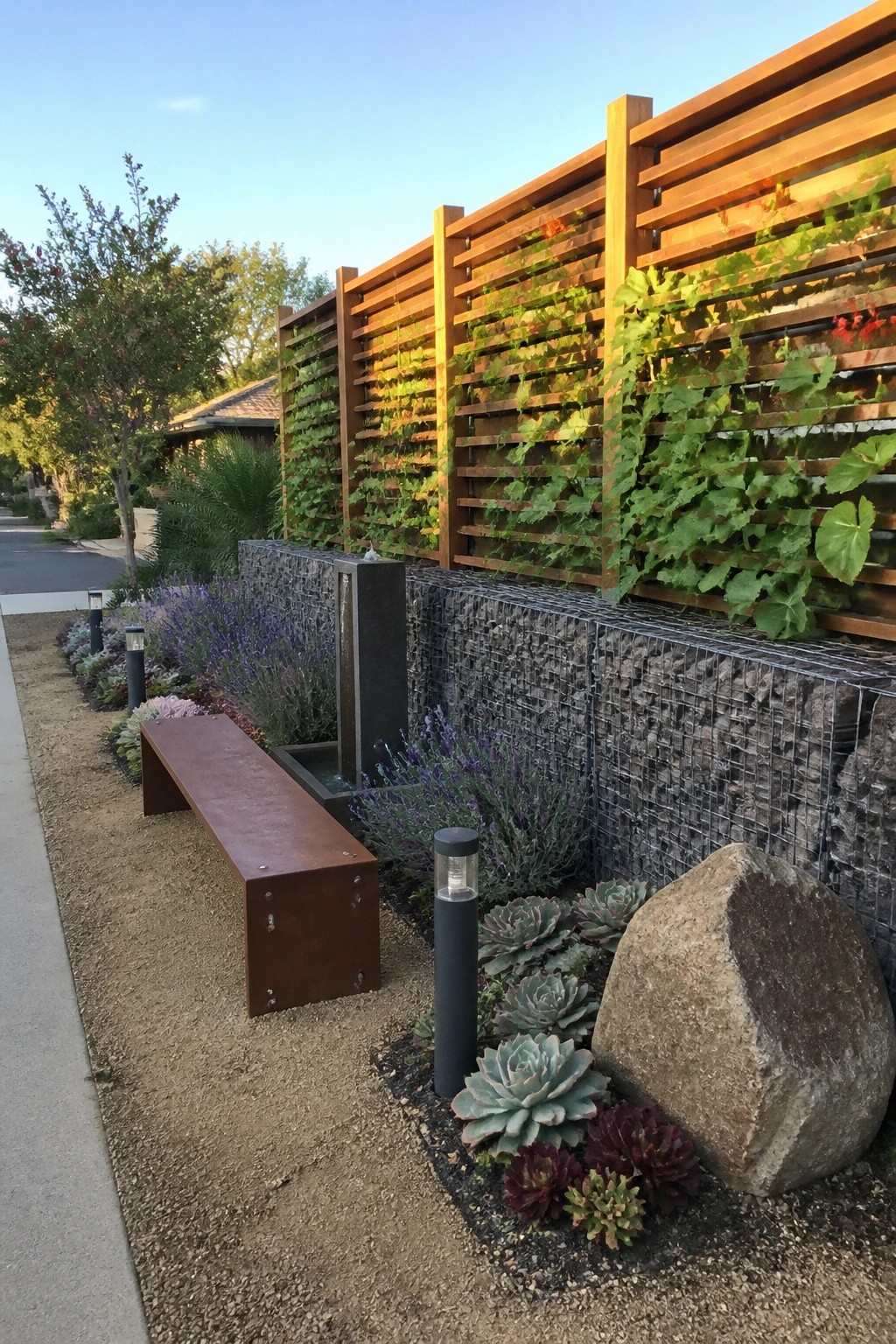
A row of horizontal wooden slats gives climbing vegetables steady support while keeping the plants lifted off the ground. This setup works especially well when you want to add height without a bulky structure, and it lets air move through the foliage so the plants stay healthier.
Place it along a garden edge or property line where you need both privacy and growing space. Use pressure-treated wood or pallet boards, space the slats about four to six inches apart, and anchor the frame firmly so it can handle the weight of mature vines.
Vertical Pallet Planters On A Fence
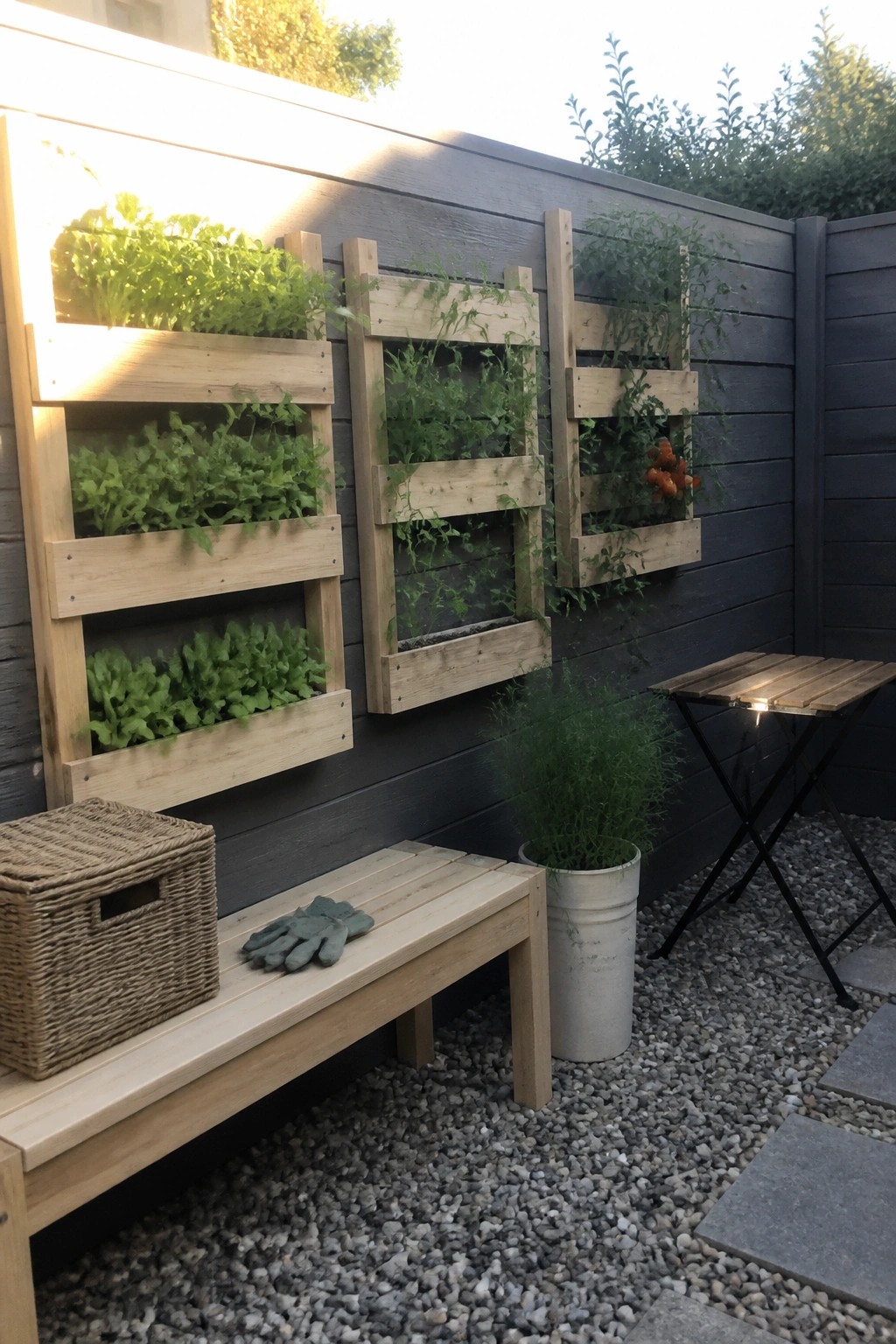
Attaching old pallets directly to a fence creates an easy vertical garden that keeps vegetables off the ground and makes good use of wall space. Many people like this setup because it turns an unused fence into productive growing area without needing extra beds or containers.
It works especially well in small yards or along side boundaries where ground space is tight. Just secure the pallets firmly, line the backs, and fill them with soil so plants like lettuce or tomatoes have room to grow.
Line a Garden Path With Pallet Trellises
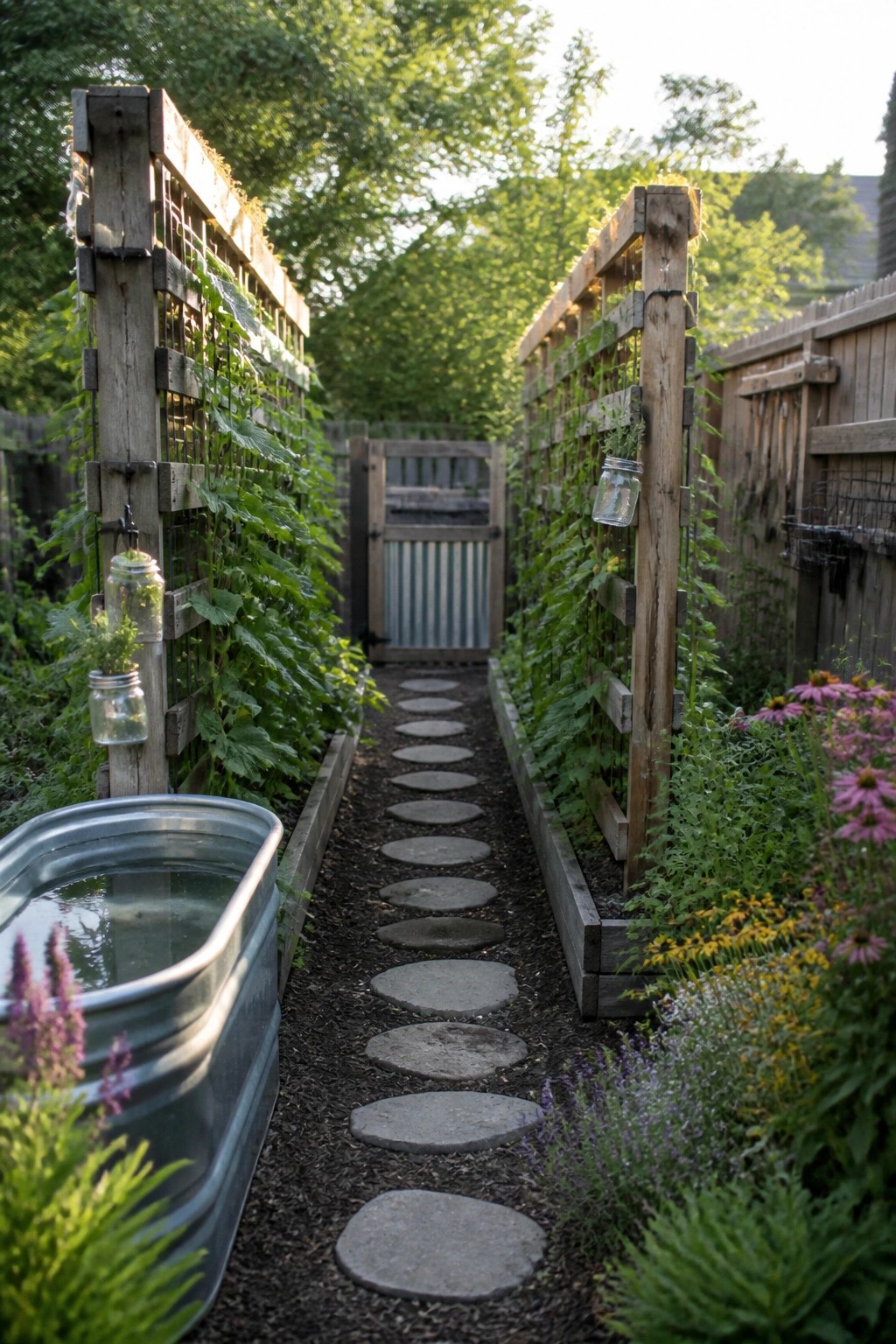
Pallet trellises placed along both sides of a narrow path turn wasted vertical space into room for climbing vegetables. The simple wood frames with wire grid give vines something sturdy to grab while keeping the plants off the ground and easy to reach.
This idea works best in a small yard or along a side garden where space is tight. Set the pallets upright, anchor them well, and let the vines fill in over the season. Keep the path clear so you can walk through without brushing against the plants.
Mount a Lattice Trellis on a Garden Wall
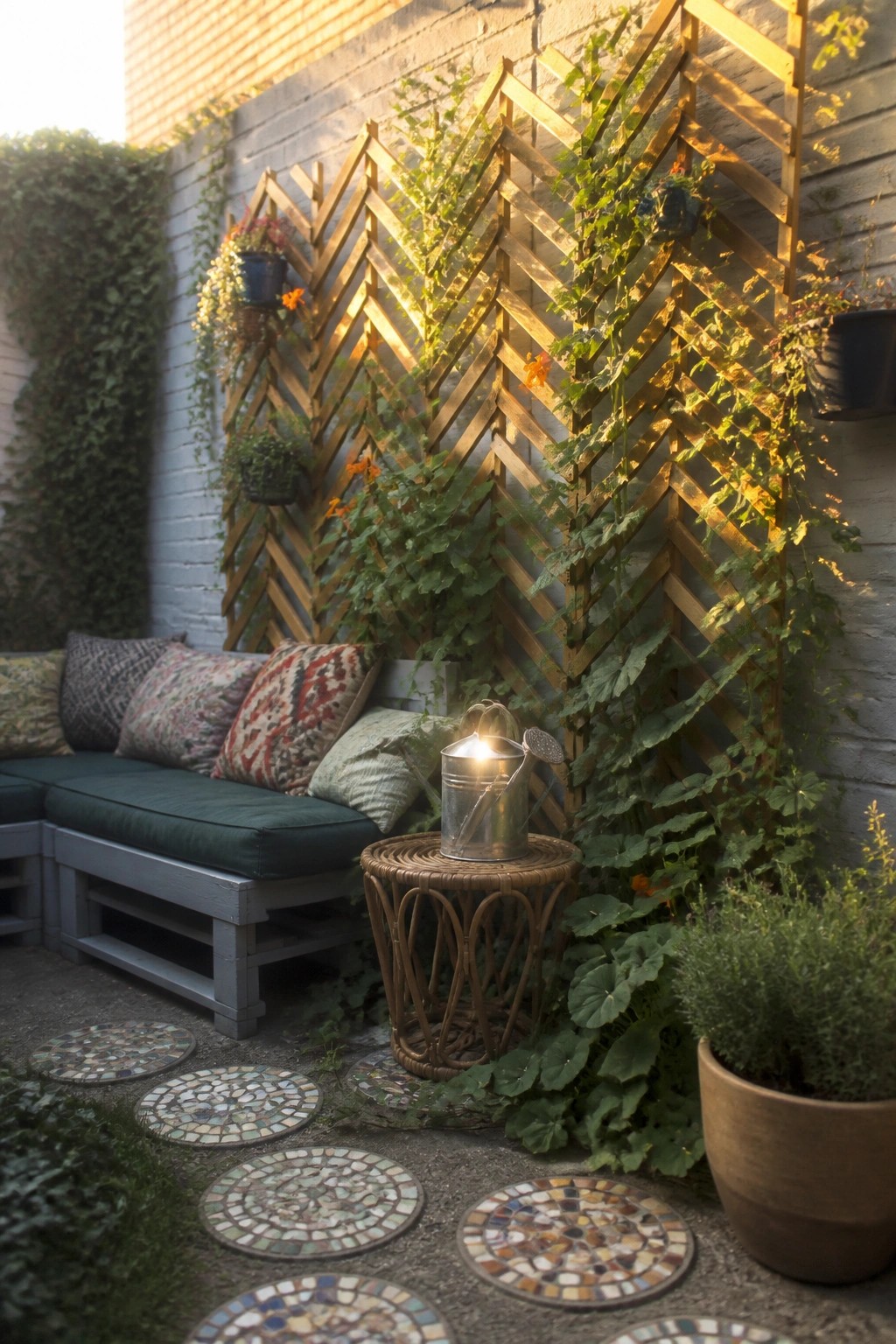
A wall-mounted lattice trellis gives climbing vegetables room to grow without taking up floor space. It works well in small yards or along the side of a house where you want to add growing area but still keep the ground clear for seating or paths. The open pattern lets light through and makes it easy to train vines as they reach upward.
This setup suits homes with a solid fence or wall that gets decent sun. Use sturdy wood like old pallets or fence boards, and check that the structure is fastened securely so it can handle the weight of mature plants. Keep the base clear so you can reach the lower growth for harvesting.
Repurpose A Pallet Into A Vegetable Trellis
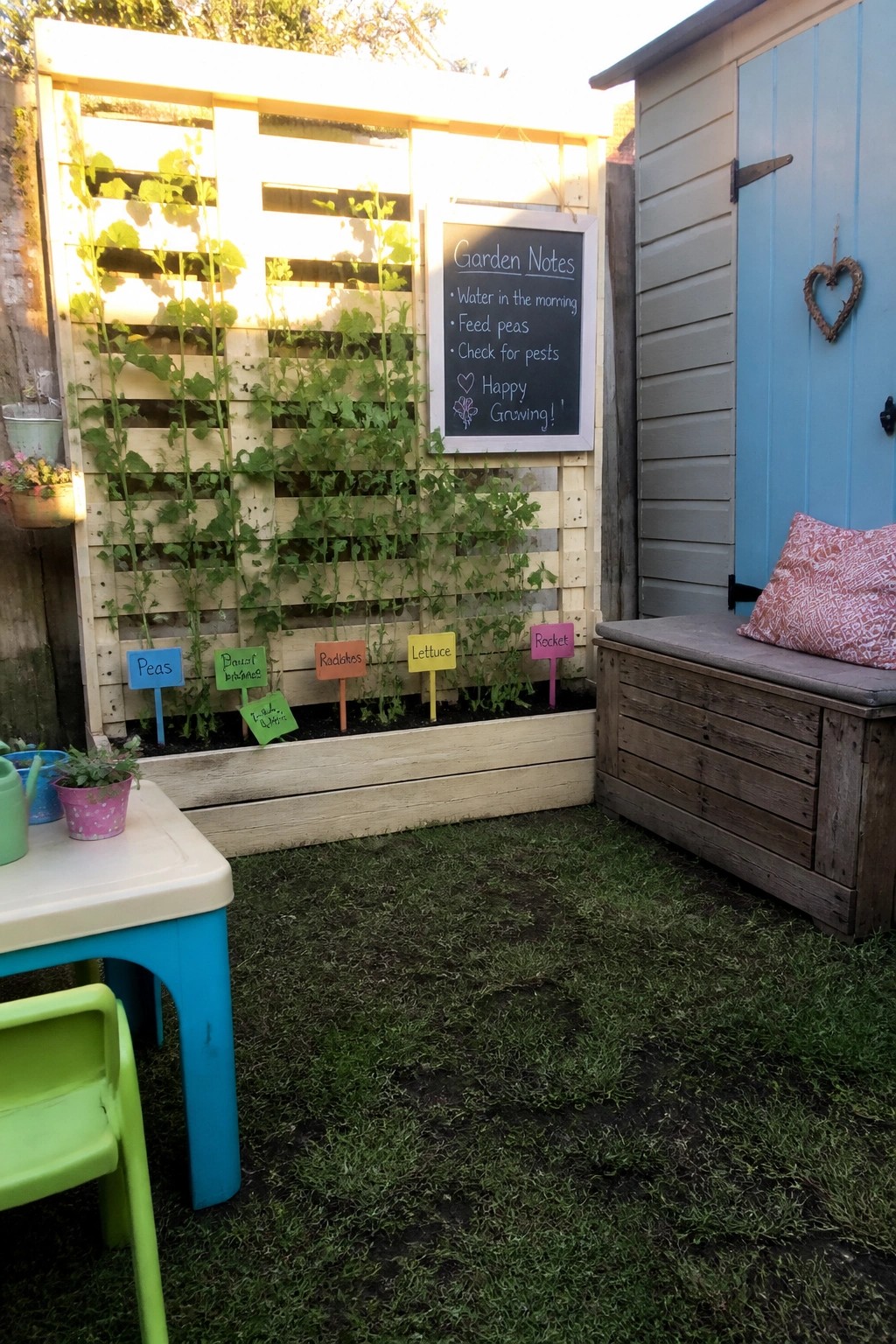
A simple pallet turned upright works well as a trellis for climbing vegetables. It gives peas and similar plants a sturdy frame to grow up while keeping the bed neat and using vertical space that would otherwise sit empty.
Set the pallet against a fence or wall and plant directly at the base. This setup suits small gardens or narrow side areas where ground space is limited.
Add Pallet Trellises Behind Your Beds
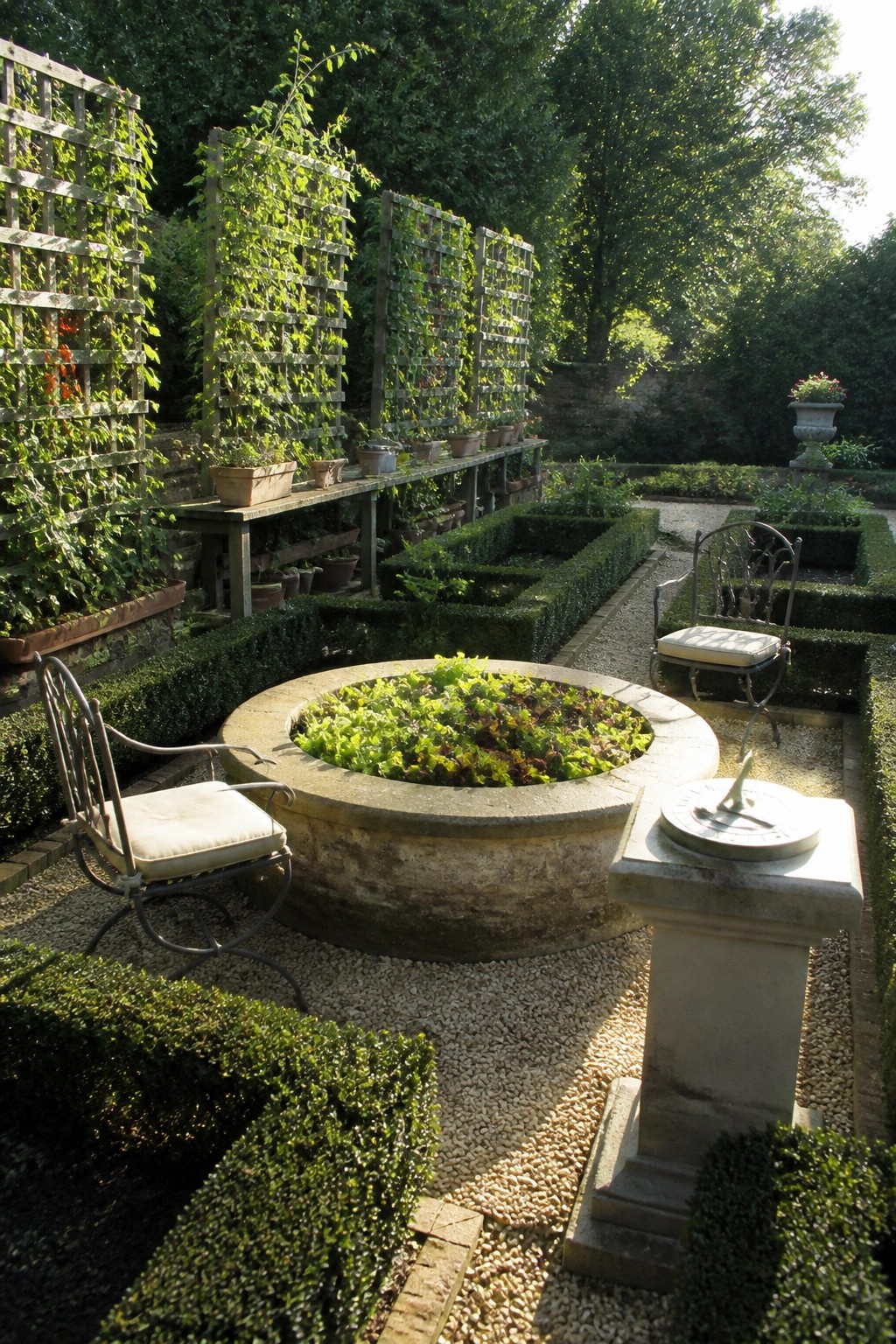
Many people turn old pallets into trellises because the slats already give vines plenty of places to grab and climb. This keeps vegetable plants upright, improves air flow, and makes the most of a small space without letting everything sprawl across the ground.
Set the trellises in a straight row at the back of a bed or along a wall, then plant beans, peas, or cucumbers at the base. Make sure they are anchored firmly so they stay steady once the plants get heavy.
Frequently Asked Questions
Q: How do I keep the pallet from tipping once the peas and beans get tall?
A: Push the bottom edge of the pallet six inches into the soil before planting. Then drive one sturdy stake on each side and lash the pallet to them with garden twine.
Q: What if the wood still has old paint or stamps on it?
A: Sand off any loose paint and check the stamps for HT marks only. If the pallet smells chemical or looks oily, set it aside and find another one.
Q: How do I get the cucumber vines to grab the slats without breaking them?
A: Tuck the young stems loosely through the gaps at the start. Check every few mornings and guide any loose shoots back onto the wood before they wander.
