

I have noticed that patios often look finished on paper but end up feeling loose once the furniture is in place and people start using them.
A rug placed under the main seating or dining spot can quietly mark the boundary and keep the layout from drifting apart over time.
It changes how the space actually works.
I tend to pick materials that handle sun and occasional spills without looking worn after one season because that is what determines whether we keep using the area.
Testing a rug in the actual light of the yard usually shows me whether the size and pattern will hold up once the chairs and table are arranged around it.
Use a Large Woven Rug to Define Outdoor Seating
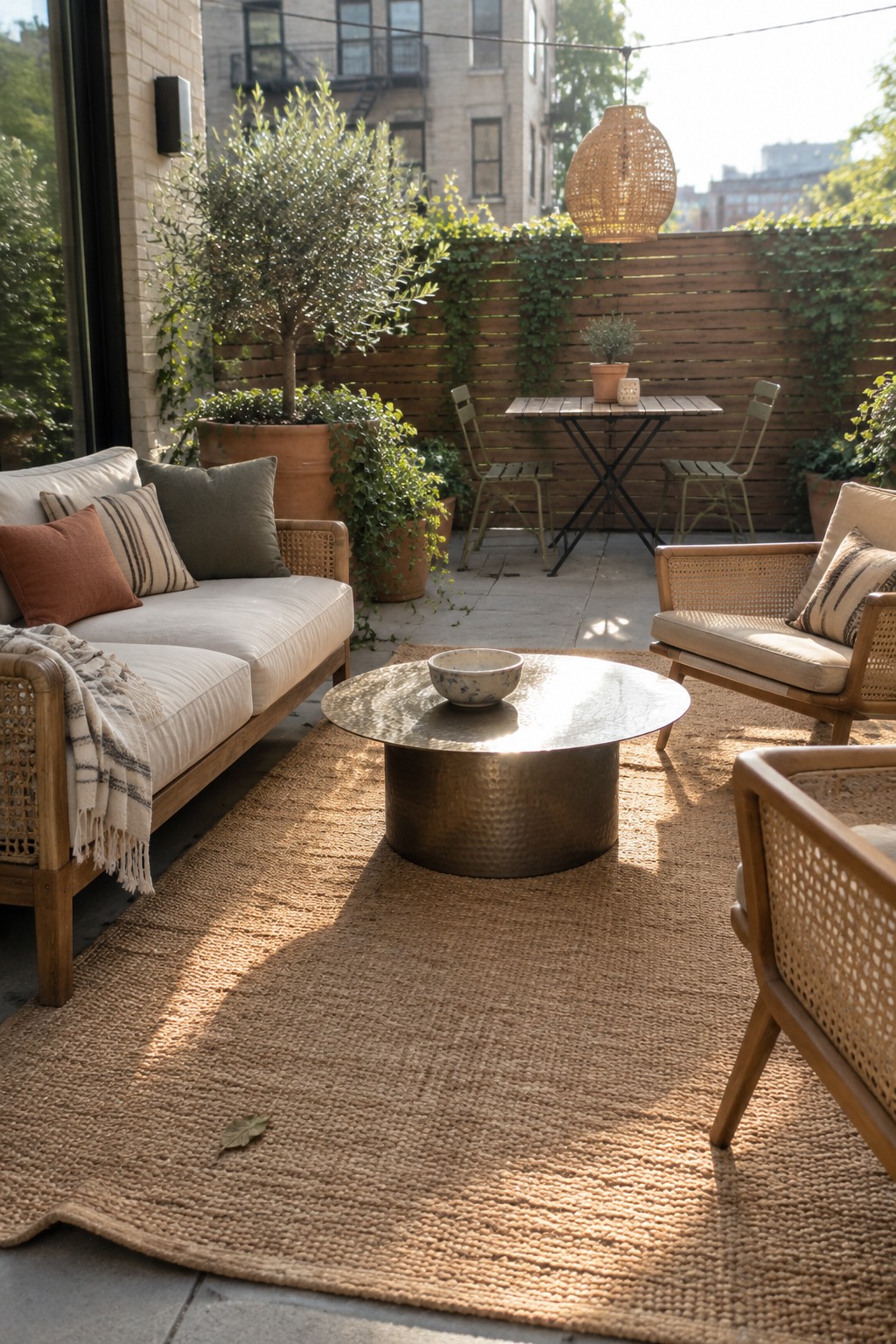
A big woven rug can turn an open patio into a clear seating zone. It pulls the sofa, chairs, and coffee table together so the area feels intentional instead of scattered across the stone.
This approach works best on patios that serve more than one purpose. Choose a rug large enough for every piece of furniture to rest on it, and make sure the material can handle sun and occasional rain.
Define Your Seating Area With a Large Striped Rug
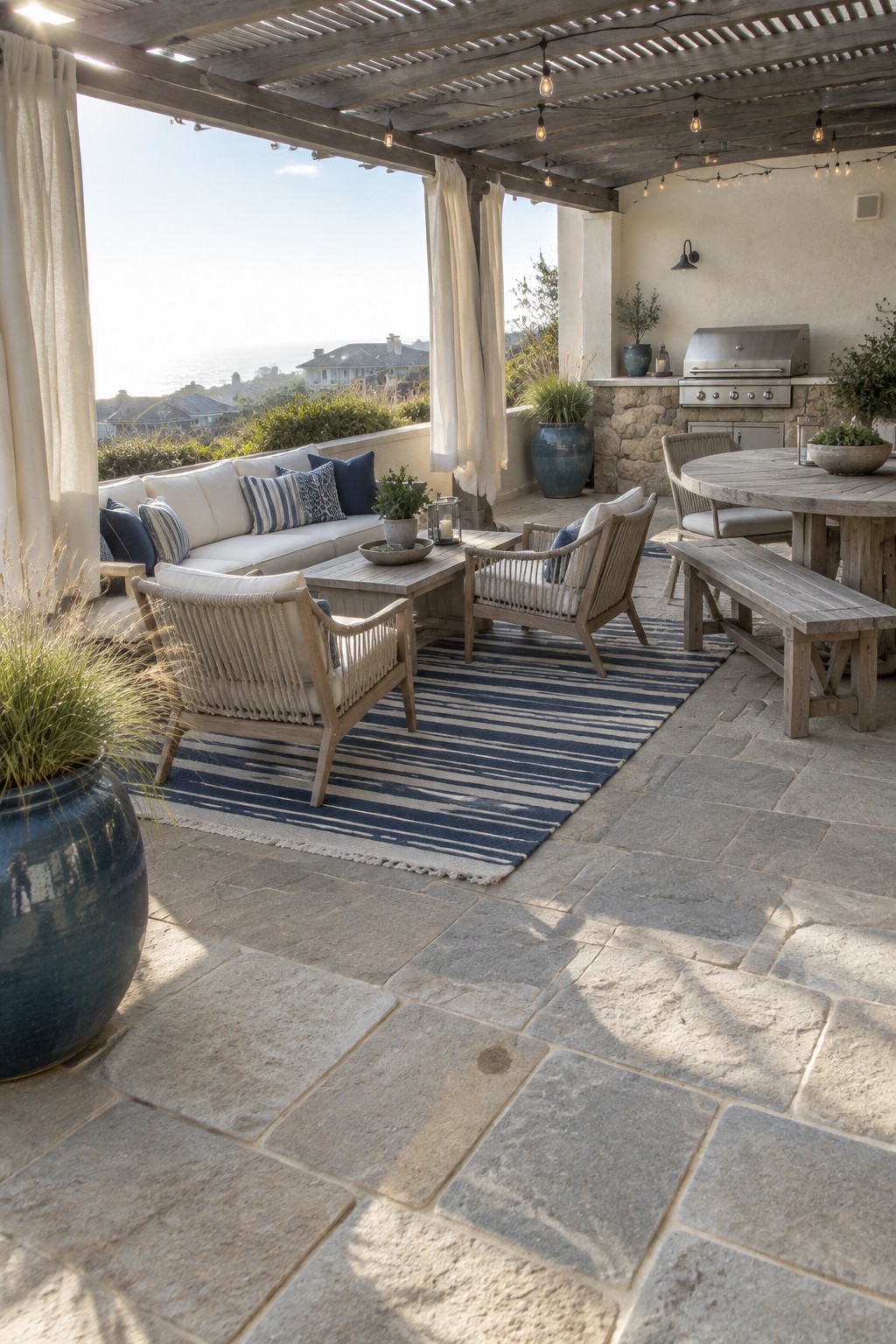
A large striped rug works well when you want to separate the lounging section from the rest of a patio without adding walls or extra furniture. On stone or concrete floors the pattern stands out enough to show where one zone ends and another begins, which keeps the space from feeling like one big open slab.
This approach suits homes with room for both seating and dining on the same surface. Keep the rug under the sofa and chairs only, and leave the dining table on the bare floor so each area reads as its own spot.
Let A Rug Define Your Outdoor Dining Area
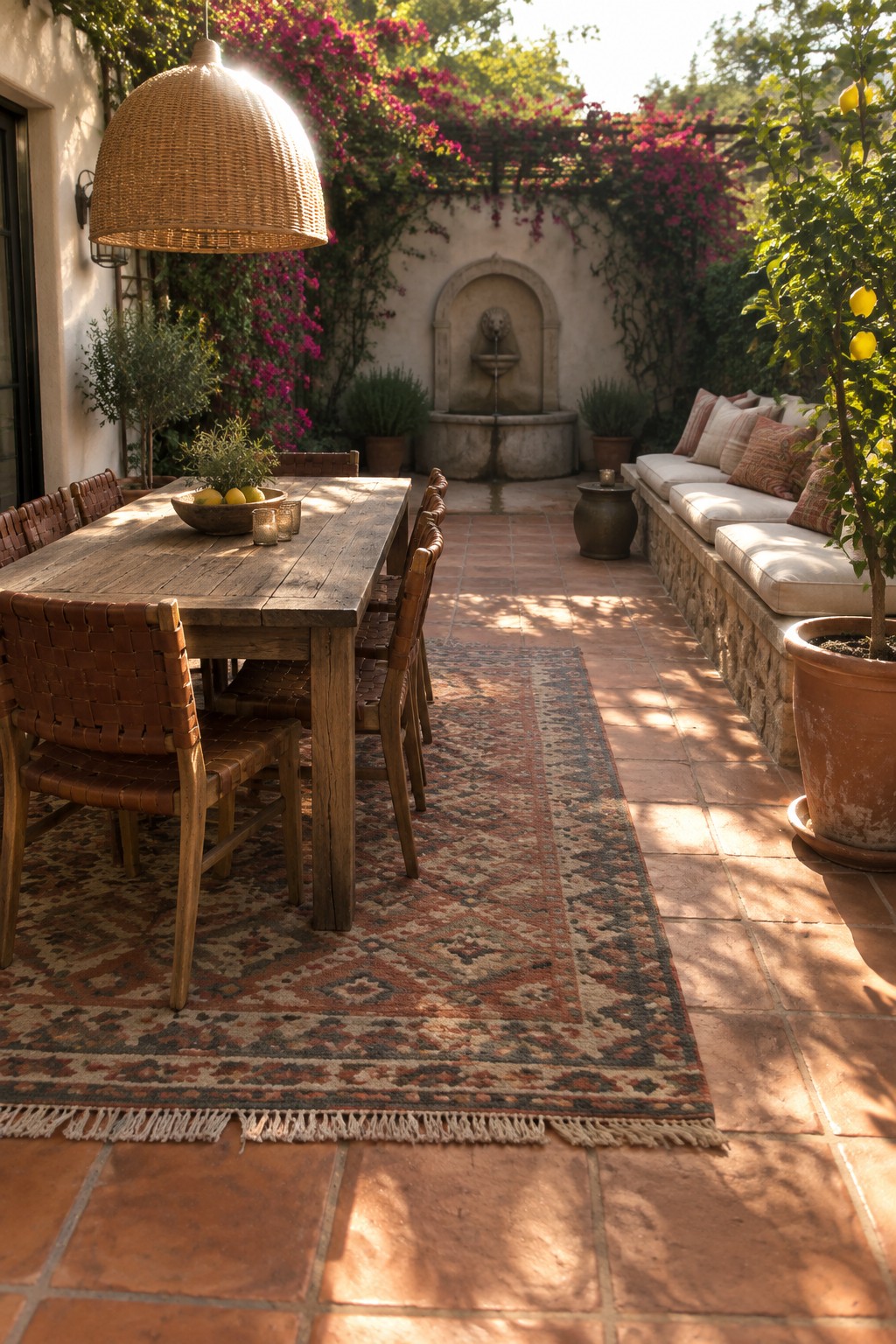
A rug helps mark where the dining table belongs on a patio, especially when the whole floor is the same material. It pulls the table and chairs into one clear spot instead of letting them float in the open space.
This approach works on patios that serve more than one purpose, like eating in one area and lounging in another. Choose a rug large enough that chairs stay on it even when pulled back, and go with a durable weave that can handle weather.
Define the Seating Area with a Large Rug
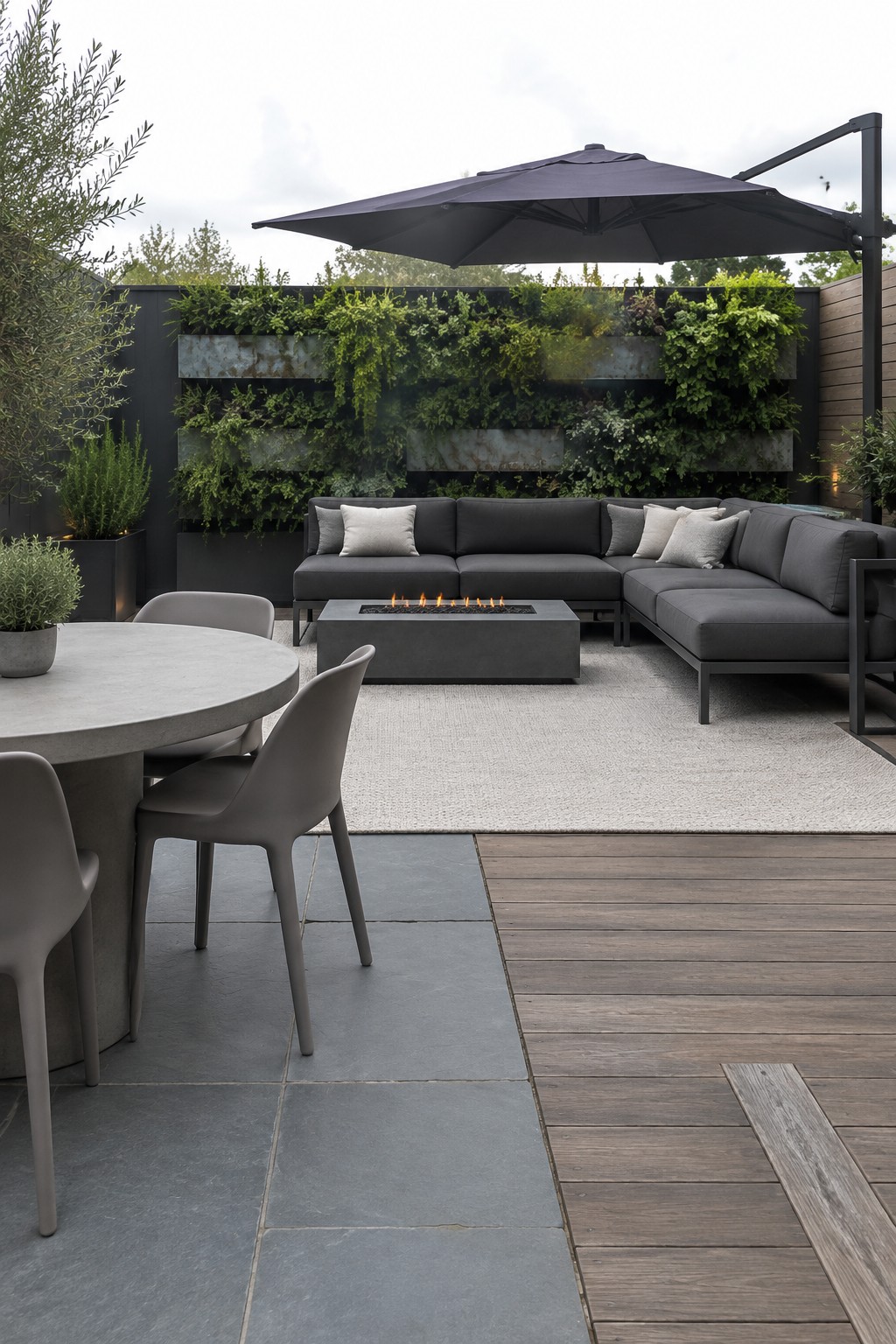
A large rug under the sofa and fire pit turns that part of the patio into its own clear zone. It stops the seating from bleeding into the dining space or the deck and gives the lounge area a more settled, finished feel.
This approach works best on patios with mixed flooring like stone and wood. Keep the rug sized to the sofa and fire pit only, and leave the dining table on the hard surface. It suits bigger outdoor spaces where you want separate areas without adding screens or planters.
Use a Large Rug to Mark Off the Seating Area
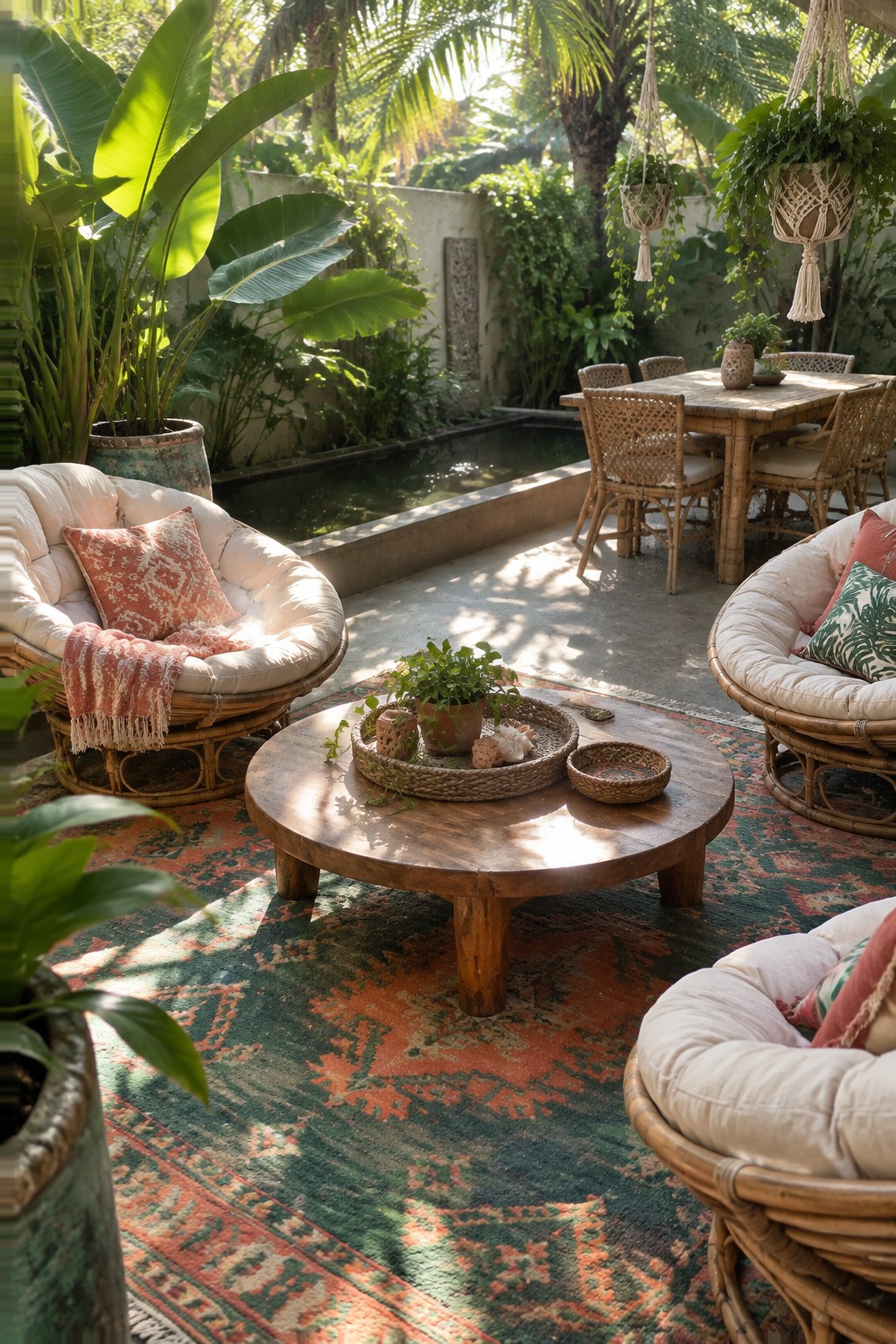
A large rug helps turn a few chairs and a table into a clear lounge zone, even when the space sits right next to a dining table. The rug under the low round seats and coffee table keeps that corner feeling settled and separate without any walls or screens.
Pick a rug big enough for every leg to land on it, and place it on hard surfaces like concrete or stone where the boundary would otherwise disappear. This works well on patios that need one soft, defined spot for relaxing while the rest of the area stays open for meals or walking through.
Define Seating Areas With a Large Patio Rug
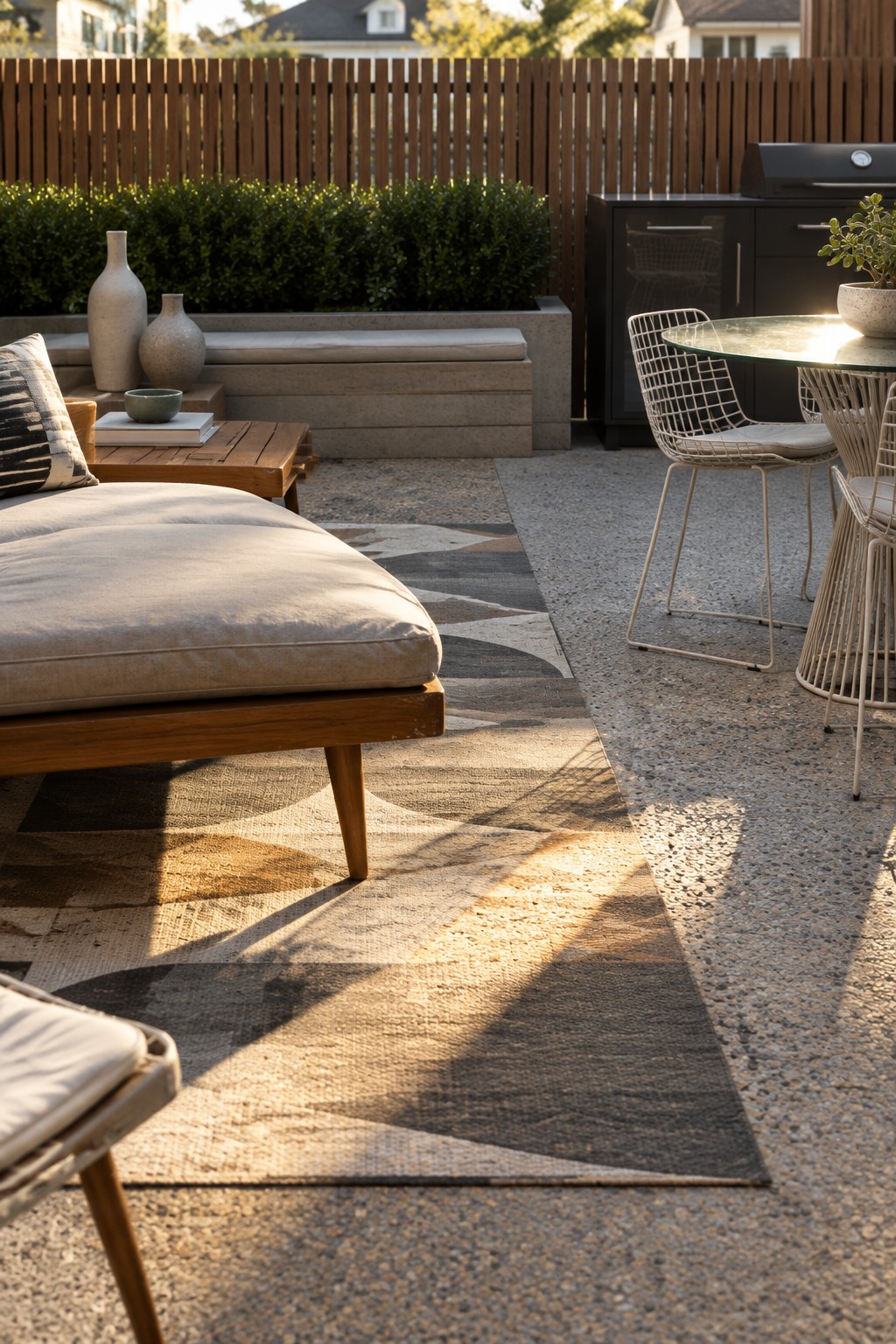
A large rug helps mark off a seating zone on a patio so it feels like its own spot instead of just extra floor space. The pattern and size keep the lounge furniture from looking scattered across plain concrete.
This approach works best on patios that hold both seating and dining. Choose a rug big enough to sit under the main chairs or chaise so the zone reads as one connected area rather than a loose collection of pieces.
Anchor Patio Dining With a Large Woven Rug
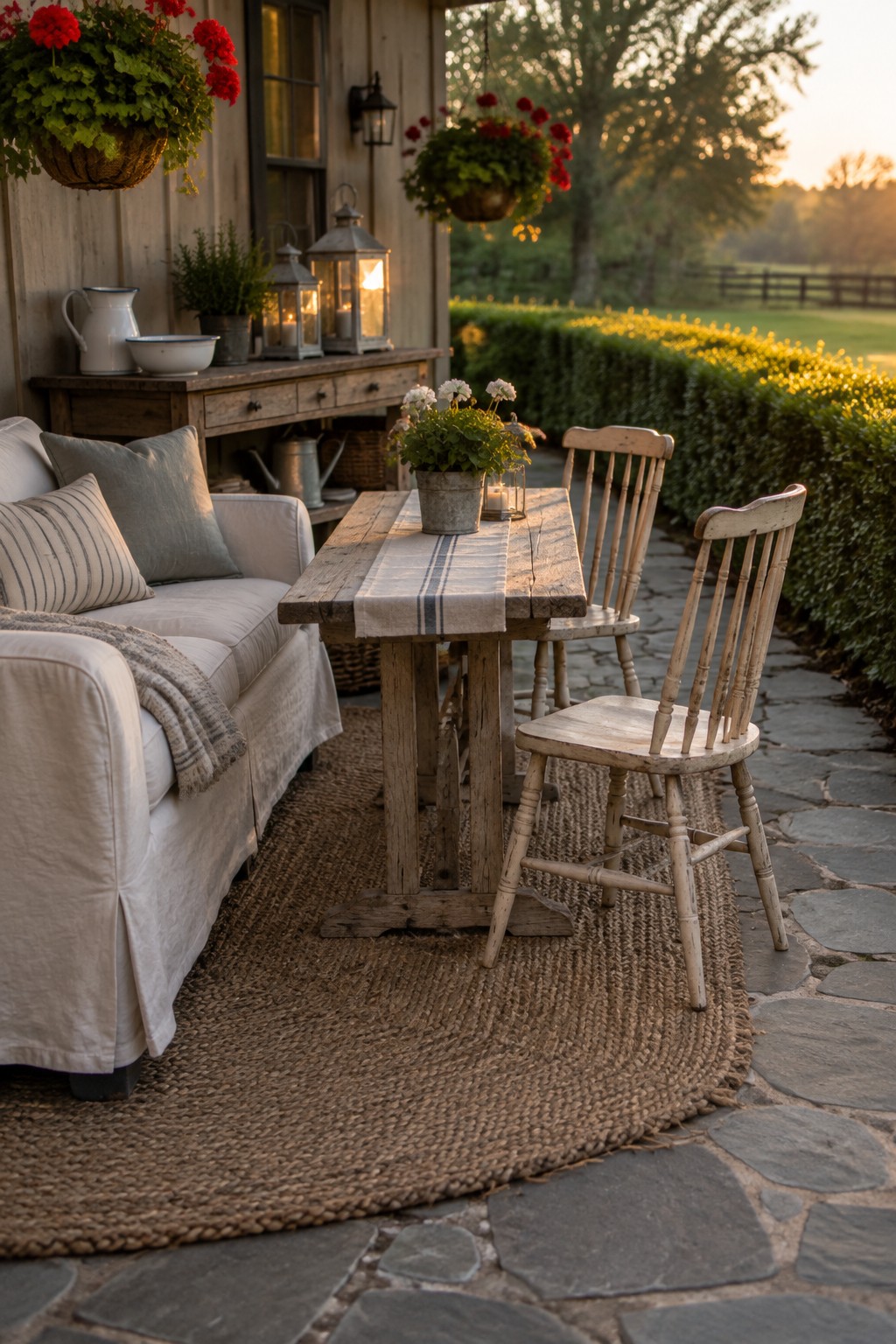
A large woven rug gives an outdoor dining setup a clear sense of place. It turns an open stretch of stone or pavers into a defined zone where the table and chairs feel settled rather than scattered.
This approach works best on patios that also include seating, since the same rug can stretch under both the dining area and a nearby sofa. Pick a durable natural fiber that handles weather and make sure it extends far enough for chairs to pull out without catching the edge.
Large Patterned Rugs Help Define Outdoor Seating Areas
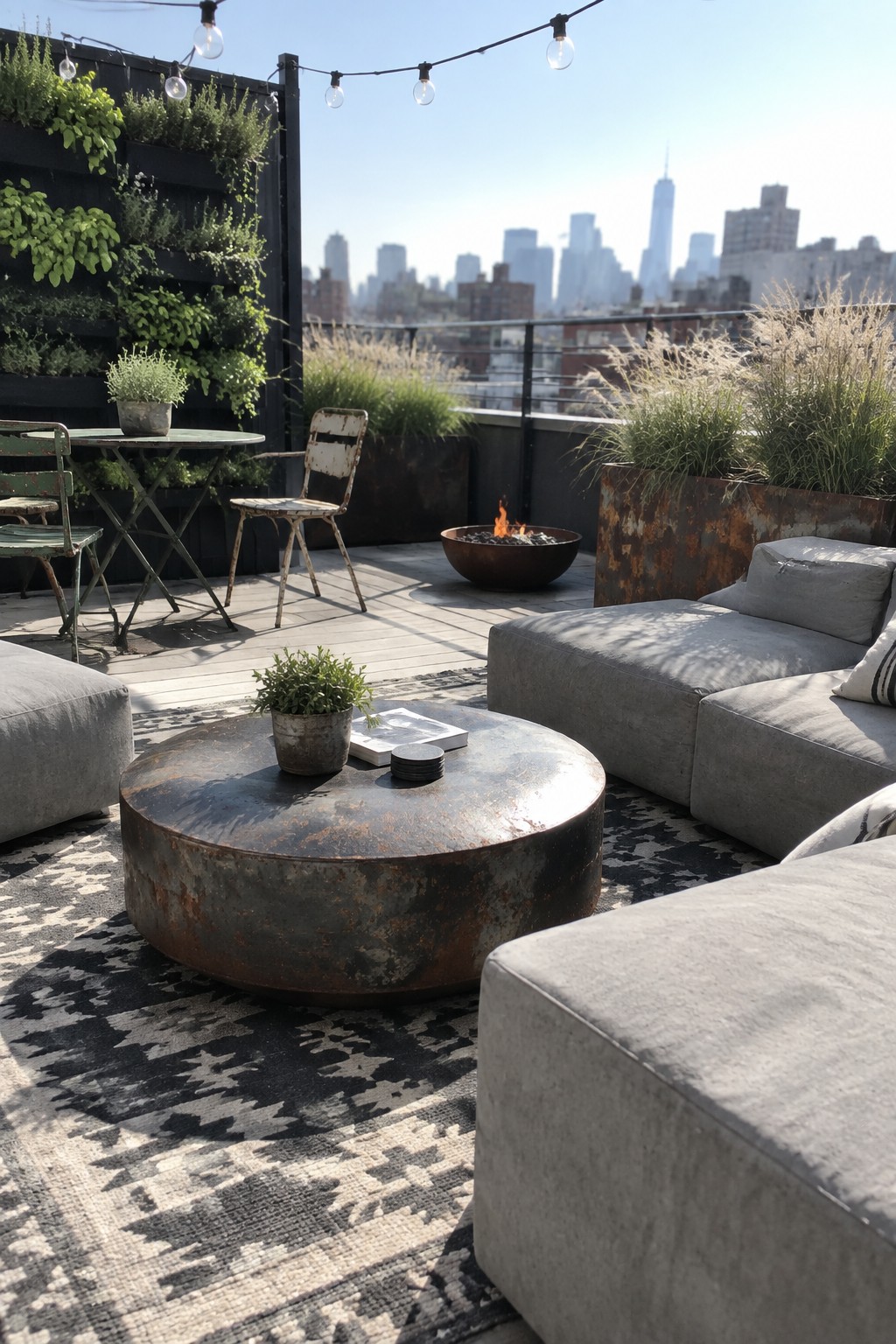
A big rug with a strong pattern can turn an open deck into a clear seating zone. It gives the furniture a place to sit and stops the whole area from feeling scattered, especially when the space is large or has multiple uses like lounging and dining.
This works best on wood decks or concrete patios where you want to separate the lounge area from the rest of the space. Pick a rug that is big enough for all the main furniture legs to rest on it, and go with a pattern that can handle some dirt and sun without showing wear too fast.
Define Outdoor Dining with a Large Striped Rug
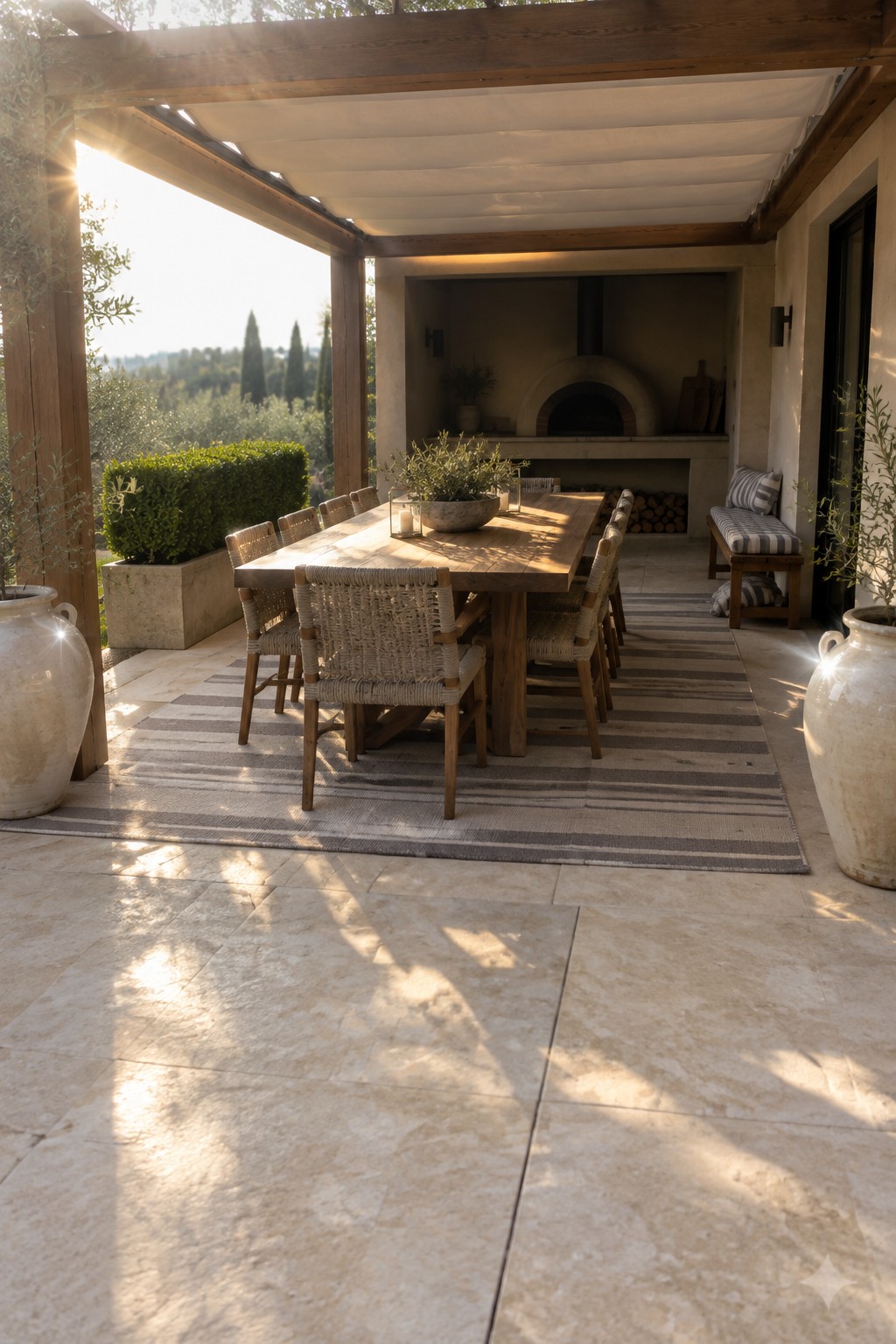
A striped rug works well under an outdoor dining table because it creates a clear boundary without needing walls or extra furniture. The pattern breaks up the stone floor and makes the whole setup feel more like a room than just a table sitting on a patio. It also protects the surface underneath from spills and daily wear.
This approach works best on covered patios where the rug stays dry and gets some shade. Pick a rug that is several feet wider than the table on all sides so chairs stay on it when pulled out. Avoid anything too delicate since outdoor rugs need to handle sun, dirt, and occasional rain.
Anchor Patio Dining Areas With A Large Rug
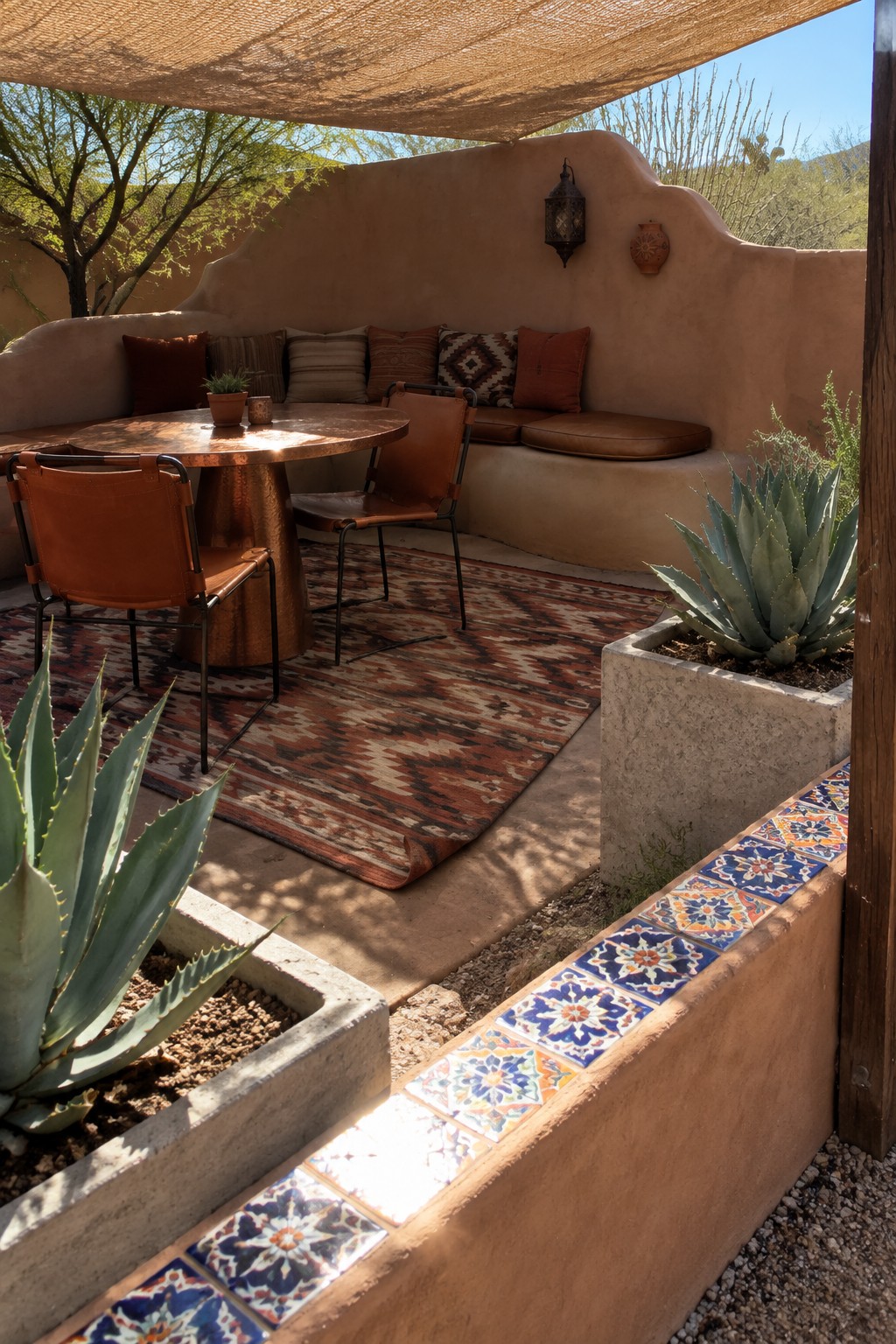
A large outdoor rug helps mark off the dining spot on an open patio so the table and chairs feel like their own area instead of just sitting on bare concrete. The pattern also adds some warmth underfoot and keeps the setup from looking scattered.
This approach works best on patios that get regular use for meals. Choose a rug sized to fit under the whole table and chairs with room to spare, and stick to materials made for sun and weather so it lasts more than one season.
Define Your Patio Seating with a Large Area Rug
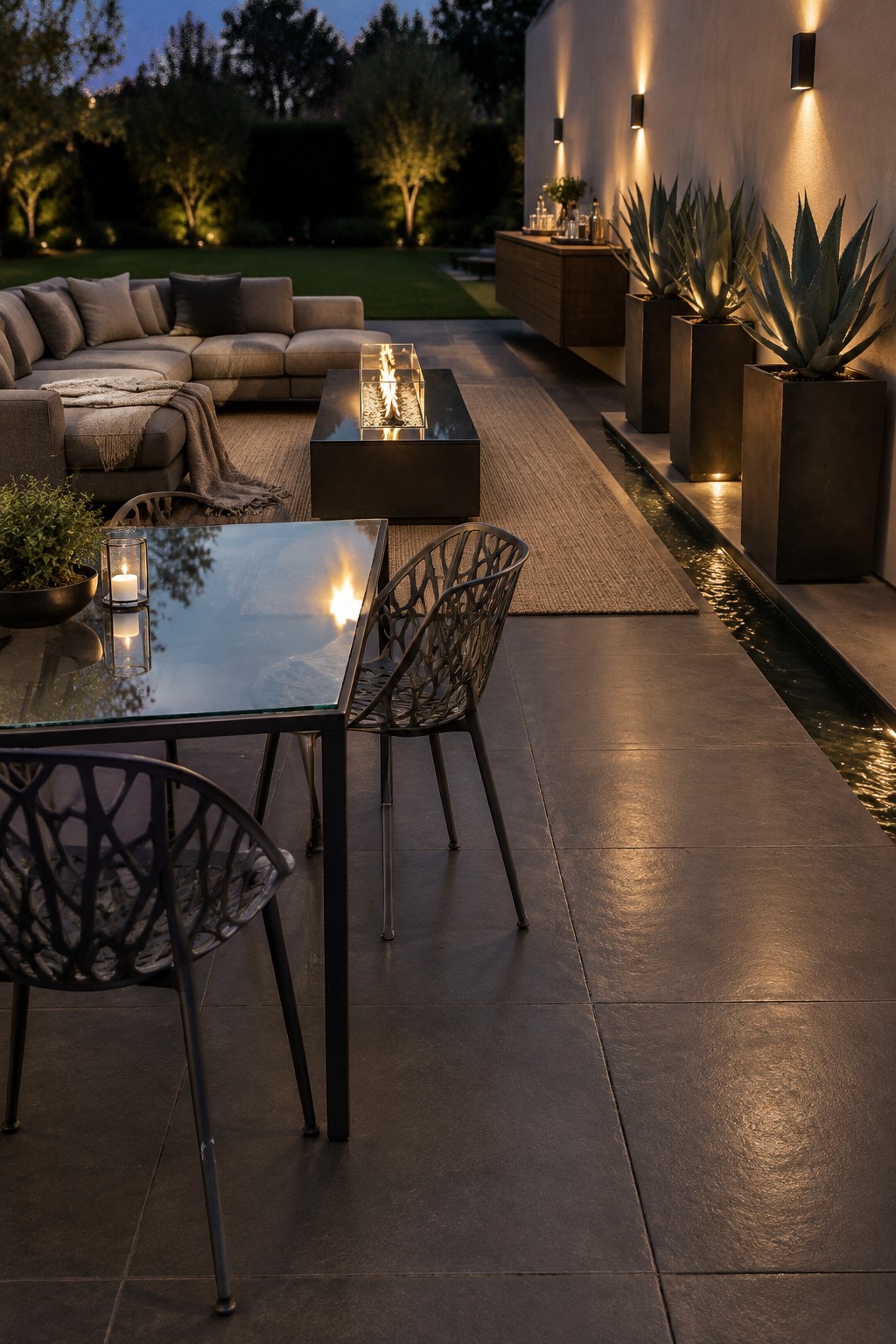
A big rug helps turn an open patio into separate usable zones without adding walls or screens. Here the long woven rug sits under the sofa and fire table, giving that part of the space its own clear boundary while the dining table stays on the bare stone.
This approach works best on larger patios that need to handle both lounging and meals. Pick a rug that is wide enough to fit under all the main seating pieces, and use a durable outdoor weave so it holds up to weather and foot traffic.
Anchor Patio Seating With One Large Rug
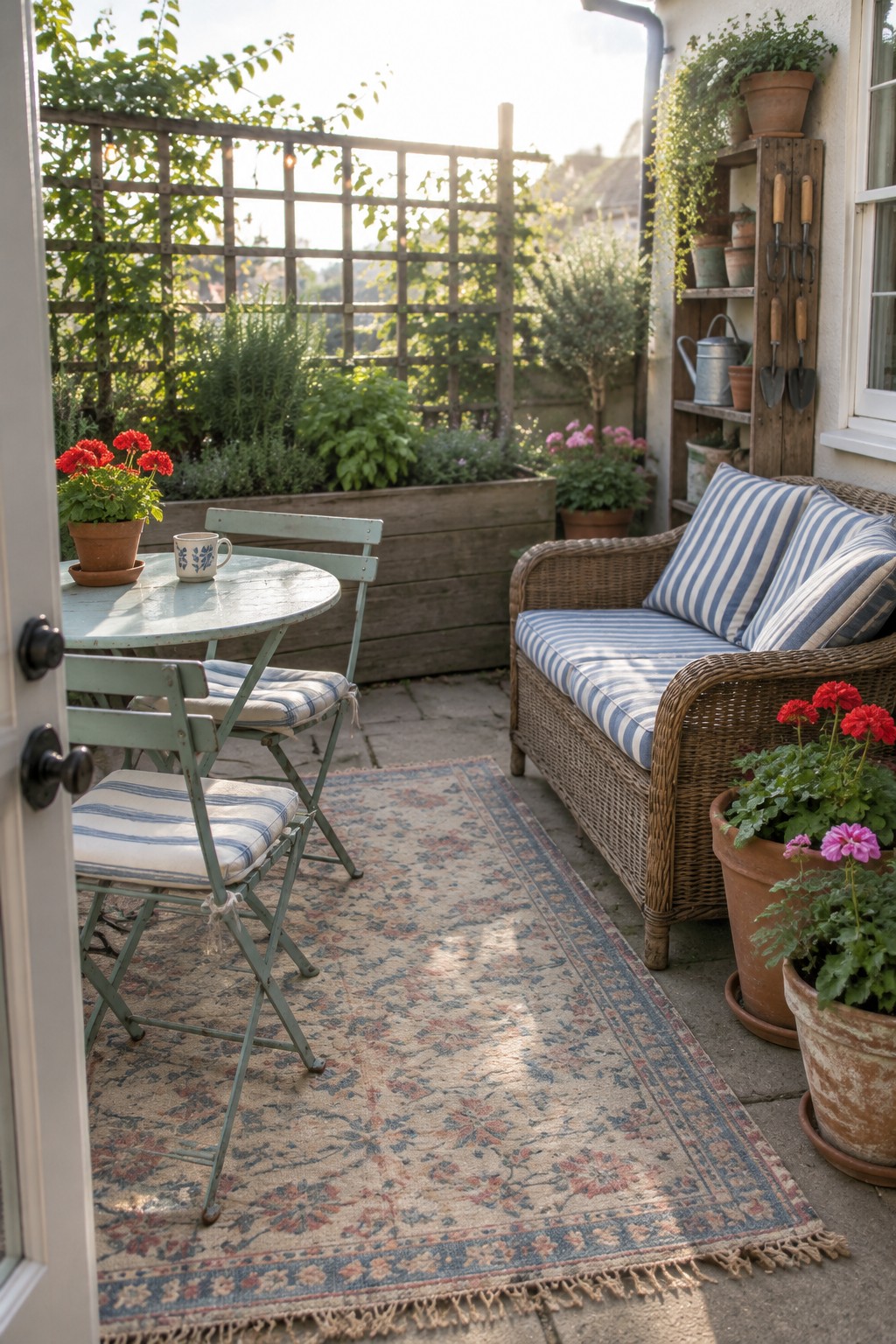
A large rug can turn a loose collection of patio furniture into a clear, comfortable zone. It gives the eye a place to rest and keeps the seating and dining pieces from feeling scattered across bare stone or decking.
Choose a rug big enough to sit under the main table and at least the front legs of nearby chairs or a sofa. This works best on small to medium patios where you want a simple way to mark the living area without adding walls or screens.
Striped Rugs for Clear Lounge Zones
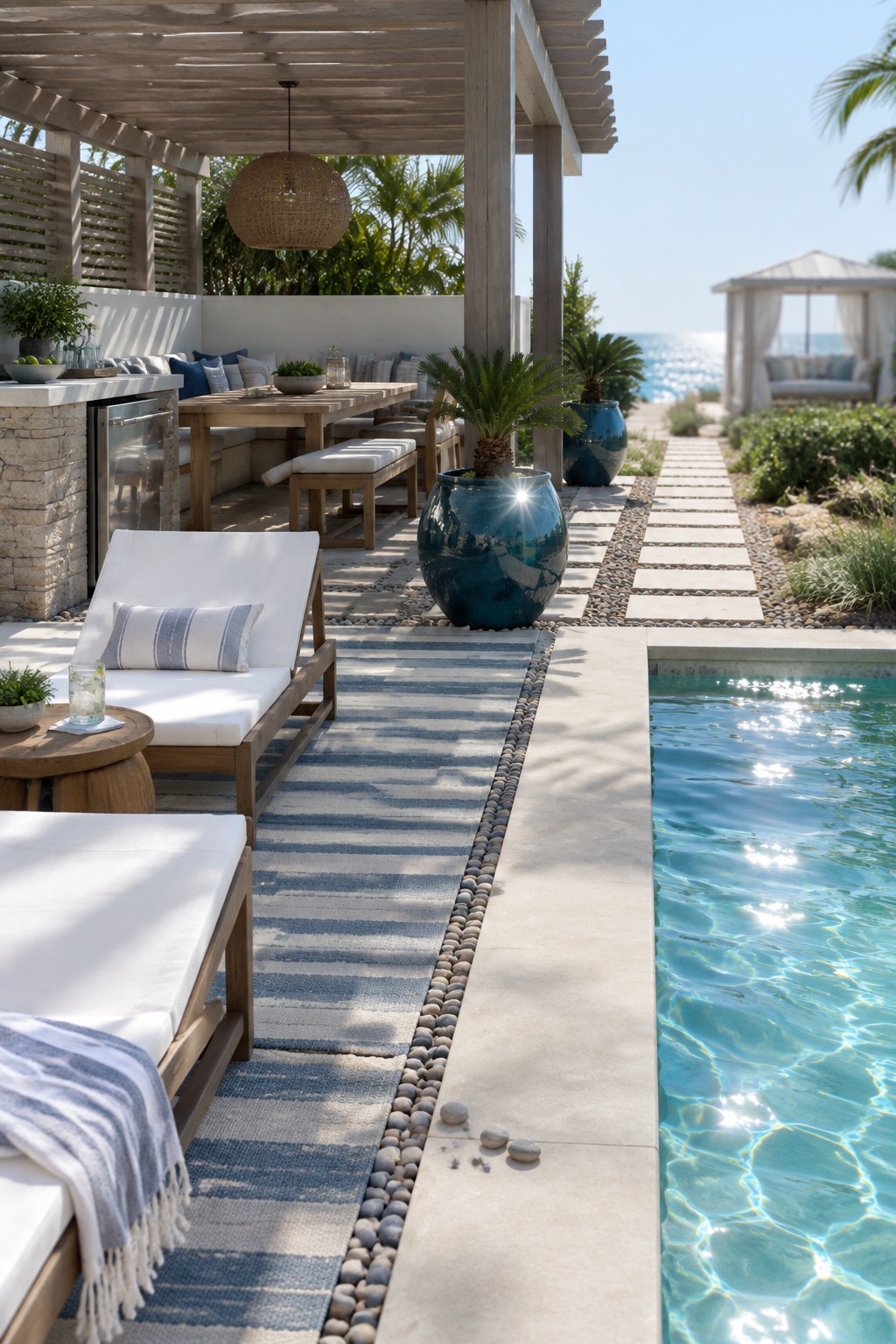
Striped rugs work well when you want to mark out a lounge area right next to a pool. They give the seating its own space and stop the zone from blending into the surrounding path or deck.
This setup suits homes with open patios where the pool takes up a lot of room. Keep the rugs in durable outdoor materials and align them with the edge of the water so the lounges feel settled without looking crowded.
Round Rugs For Defining Casual Seating Areas
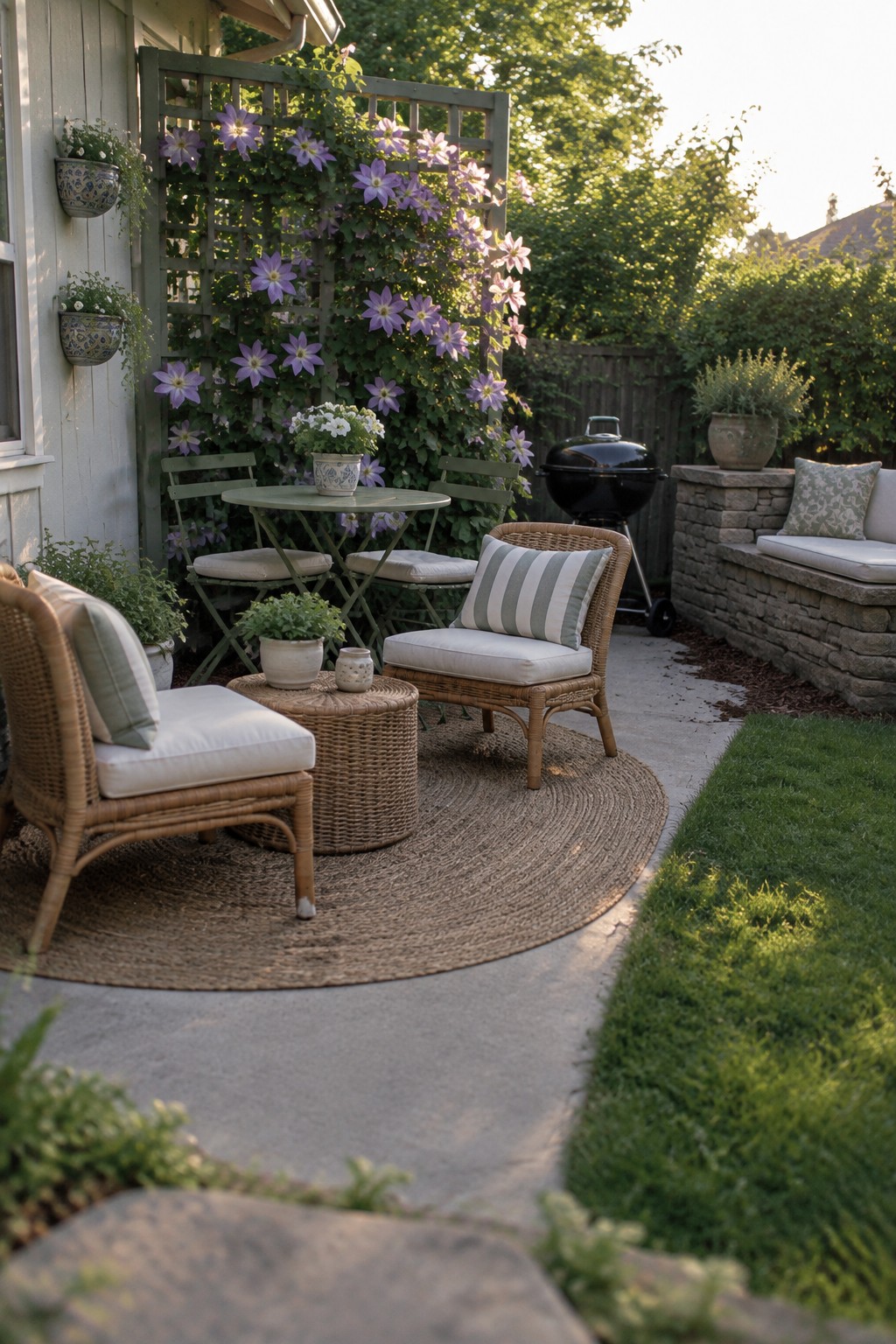
A round rug gives a patio seating spot its own clear boundary without any extra structures. The curved edge softens the straight lines of a concrete surface and helps the area feel set apart from the path and lawn right beside it.
Try this on a modest patio where you want one relaxed corner for a couple of chairs and a low table. A natural fiber style in a generous size works especially well with simple wicker pieces and holds up fine in outdoor conditions.
Rugs That Mark Off Separate Patio Zones
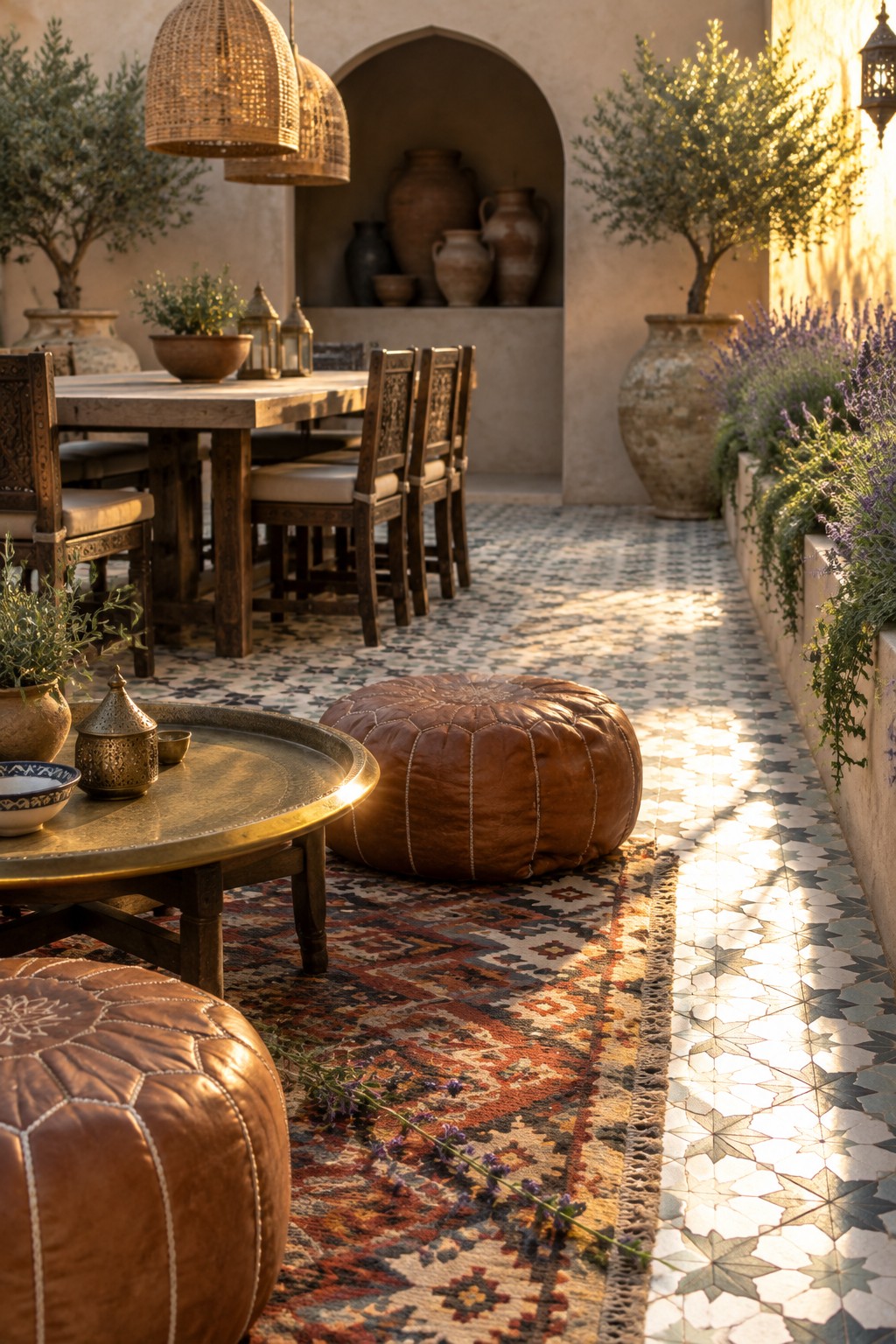
One simple way to keep an outdoor space from feeling scattered is to let rugs do the zoning work. A large patterned rug can pull a casual seating spot together while the surrounding tile or floor keeps the dining table area feeling separate but still connected.
This approach suits patios that serve more than one purpose, especially when you want a clear spot for meals and another for just sitting. Pick sturdy outdoor rugs that can take sun and foot traffic, and let the patterns overlap slightly so the zones still feel like one overall space.
Use a Woven Rug to Define an Outdoor Dining Area
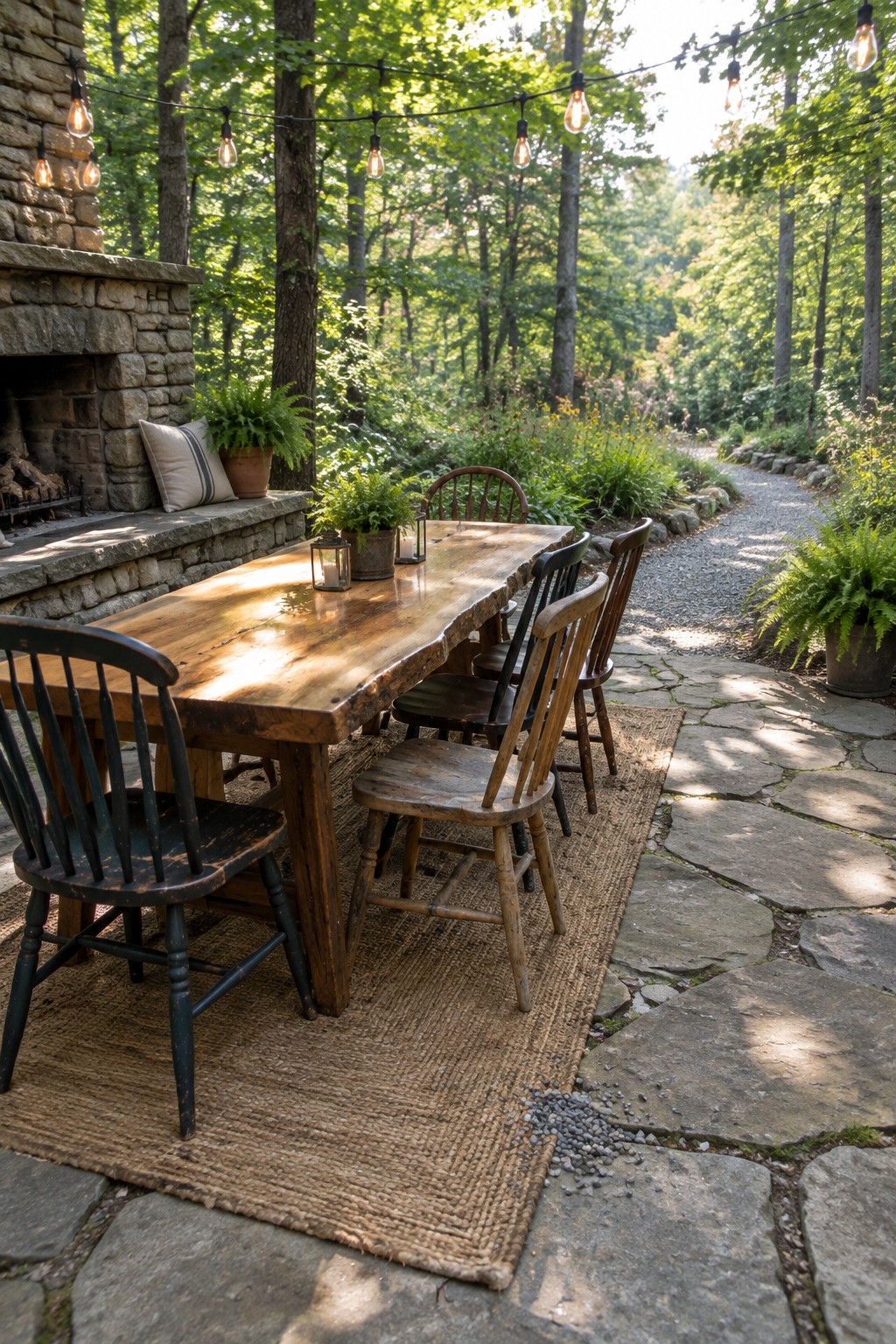
A woven rug under the table helps set the dining zone apart from the surrounding stone and gravel. It gives the space a clear boundary so the chairs and table feel like they belong together rather than floating on the hard surface.
This approach works best on patios or decks that open to a garden or woods. Choose a durable natural fiber that can handle weather and pair it with simple wood furniture so the rug becomes the main thing that marks the eating spot.
Large Rugs Help Define Patio Seating Zones
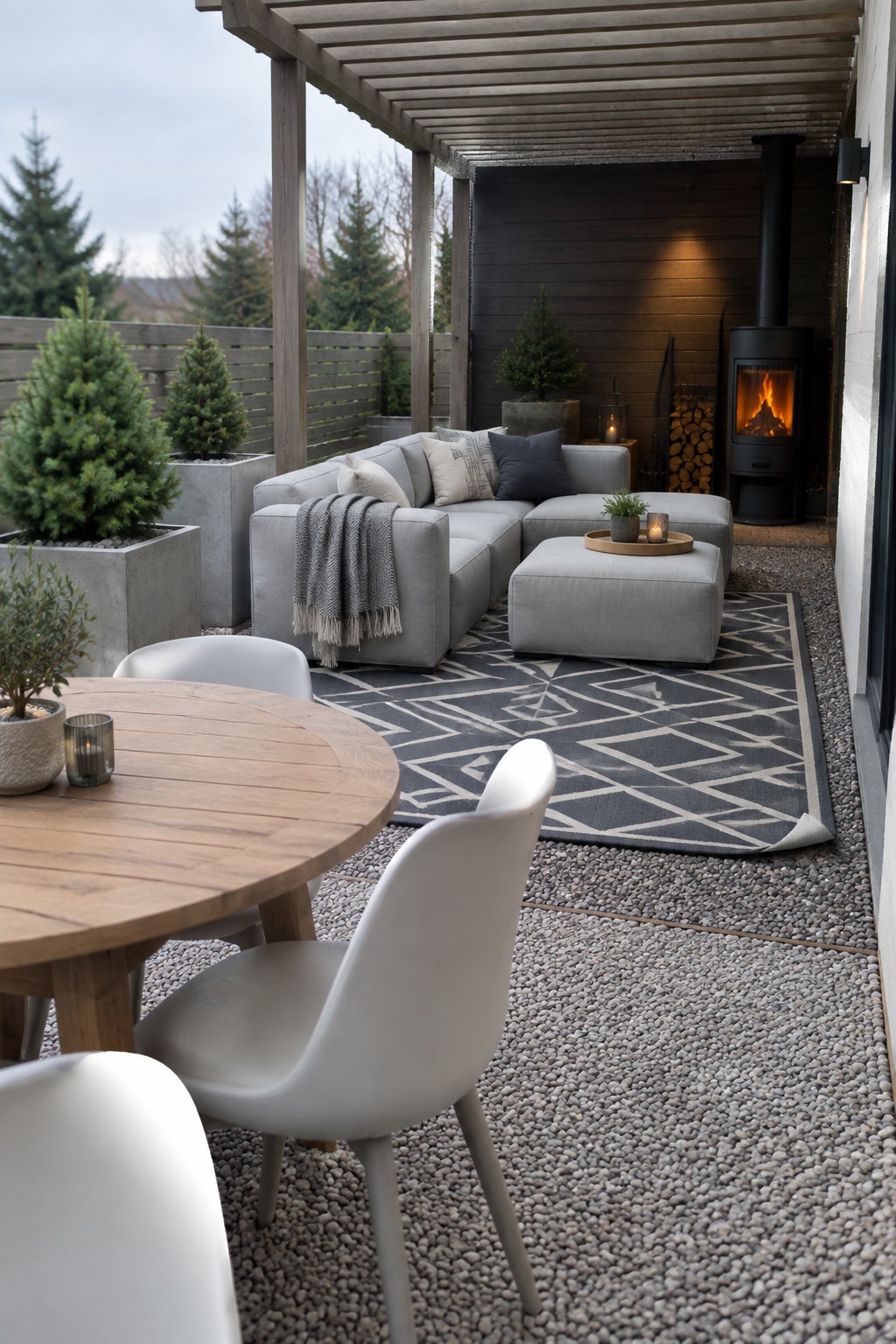
A big outdoor rug can turn an open patio into a clear living space, even when the ground is gravel or concrete. The rug under the sectional here shows how one large piece pulls the sofa, ottoman, and side tables together so the area feels intentional instead of scattered.
This works best on patios where you want to separate the lounge from the dining table or walkway. Pick a rug that fits all the furniture legs and leaves a little breathing room around the edges. It also protects the floor and makes the space feel more comfortable underfoot.
Anchor Outdoor Dining Areas with a Large Patterned Rug
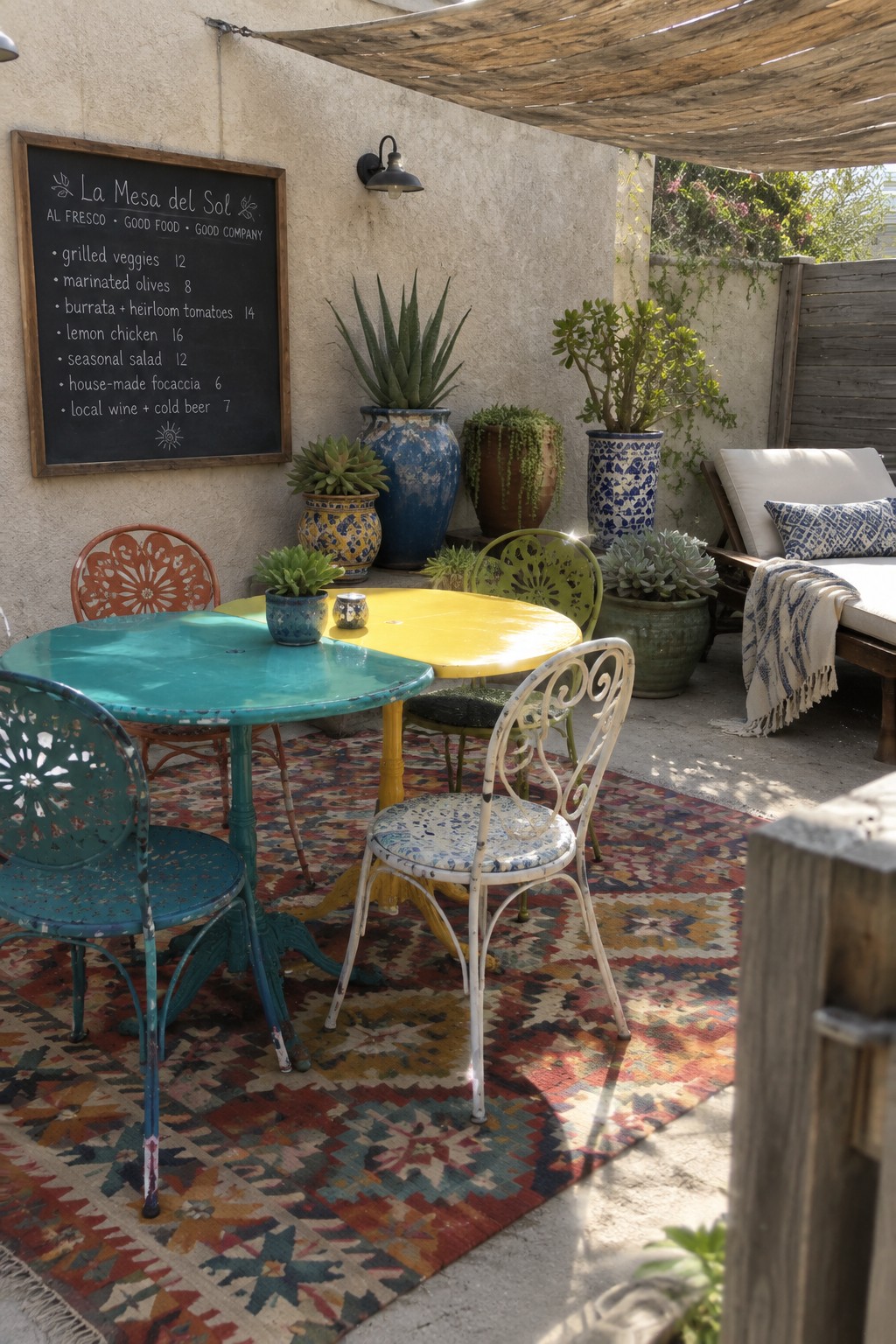
A big patterned rug under the tables pulls the seating and dining pieces into one clear zone. It keeps the furniture from floating on open pavement and gives the space a settled, intentional feel without any built walls.
This approach works well on concrete or stone patios where you want to mark one area for meals while leaving the rest open. Choose a durable outdoor rug that can take sun and foot traffic, and size it so all chair legs stay on the rug even when pulled out.
Large Rugs That Define Both Seating and Dining Zones
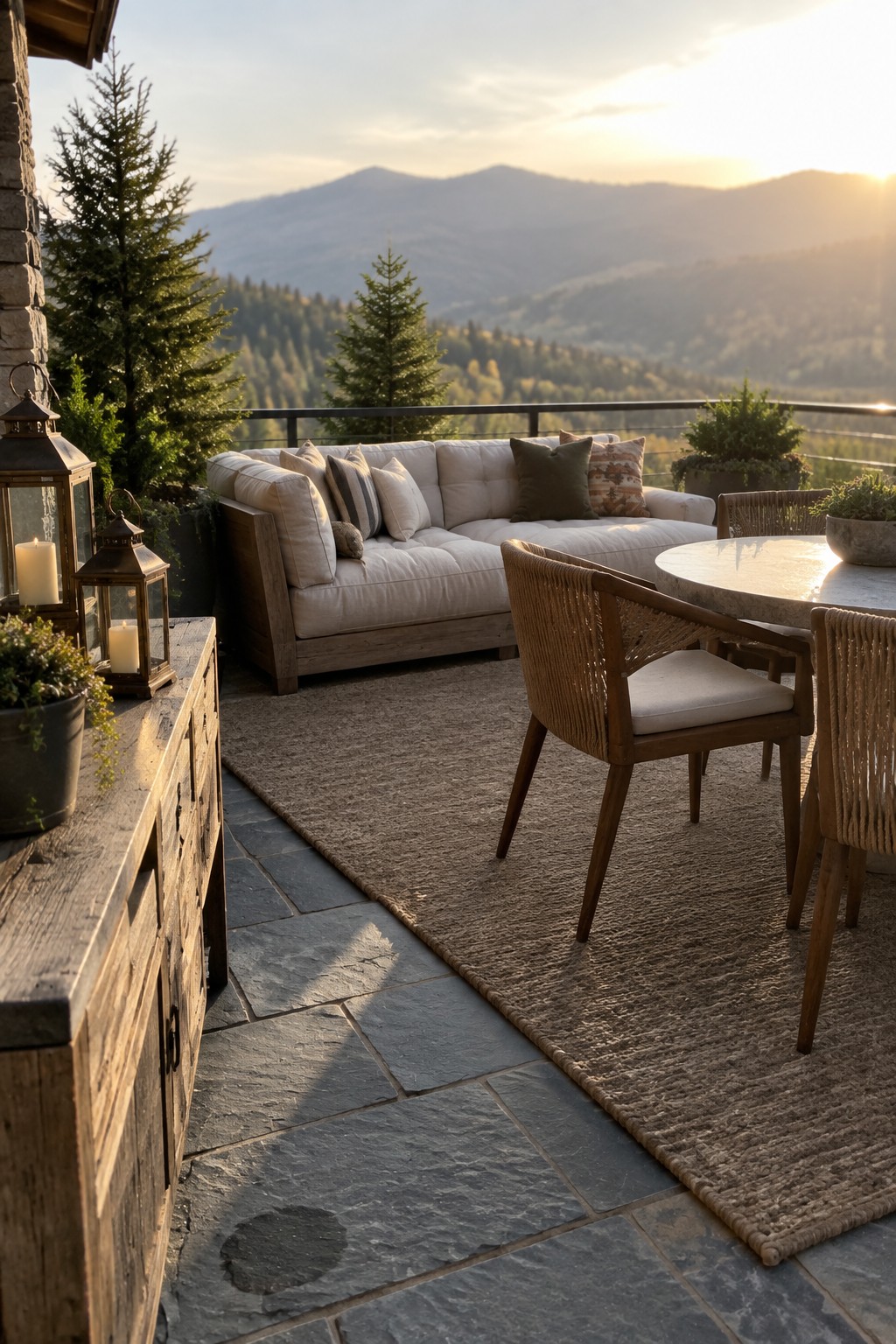
One large rug can pull an outdoor space together when seating and dining sit side by side. It marks a clear zone on the stone floor and keeps the sofa, chairs, and table feeling like one connected area instead of separate pieces scattered around.
This approach works best on bigger patios where you want the living space to feel intentional. Choose a rug that is wide enough for the front legs of every seat to rest on it, and keep the rest of the floor simple so the rug does the zoning work without extra effort.
Frequently Asked Questions
Q: How big should my rug be if the table seats six? A: Measure the full area where chairs will pull out. Add at least two feet beyond the table on every side. This way people can sit without the chair legs catching the edge.
Q: Will wind lift my new outdoor rug off the ground? A: Choose one with a sturdy backing that grips concrete or decking. Weigh down the corners with planters if gusts still catch it. Most patio rugs stay flat once you get the right material.
Q: How often do I need to clean a rug that stays outside all season? A: Shake it out weekly to clear loose dirt. Hose it down when needed and let it dry fully in the sun.
