

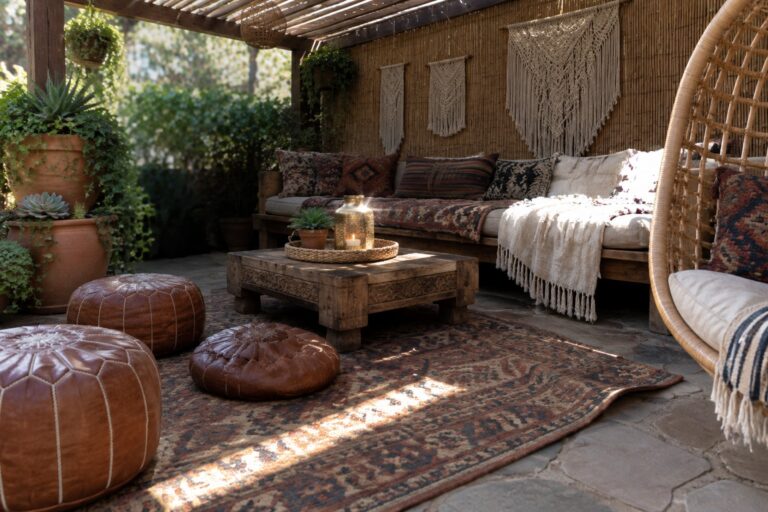
I have noticed that patios often go unused when the seating feels too rigid or exposed to the elements.
Layering textiles over chairs and benches can soften those surfaces and create spots that actually hold up through daily wear.
Relaxed arrangements tend to draw people outside more reliably than anything arranged for looks alone.
Testing one setup at a time shows what holds up in real weather.
I would start with a couple of washable throws and low cushions to see how the space feels after a full weekend of use.
Layer Textiles Over Outdoor Seating
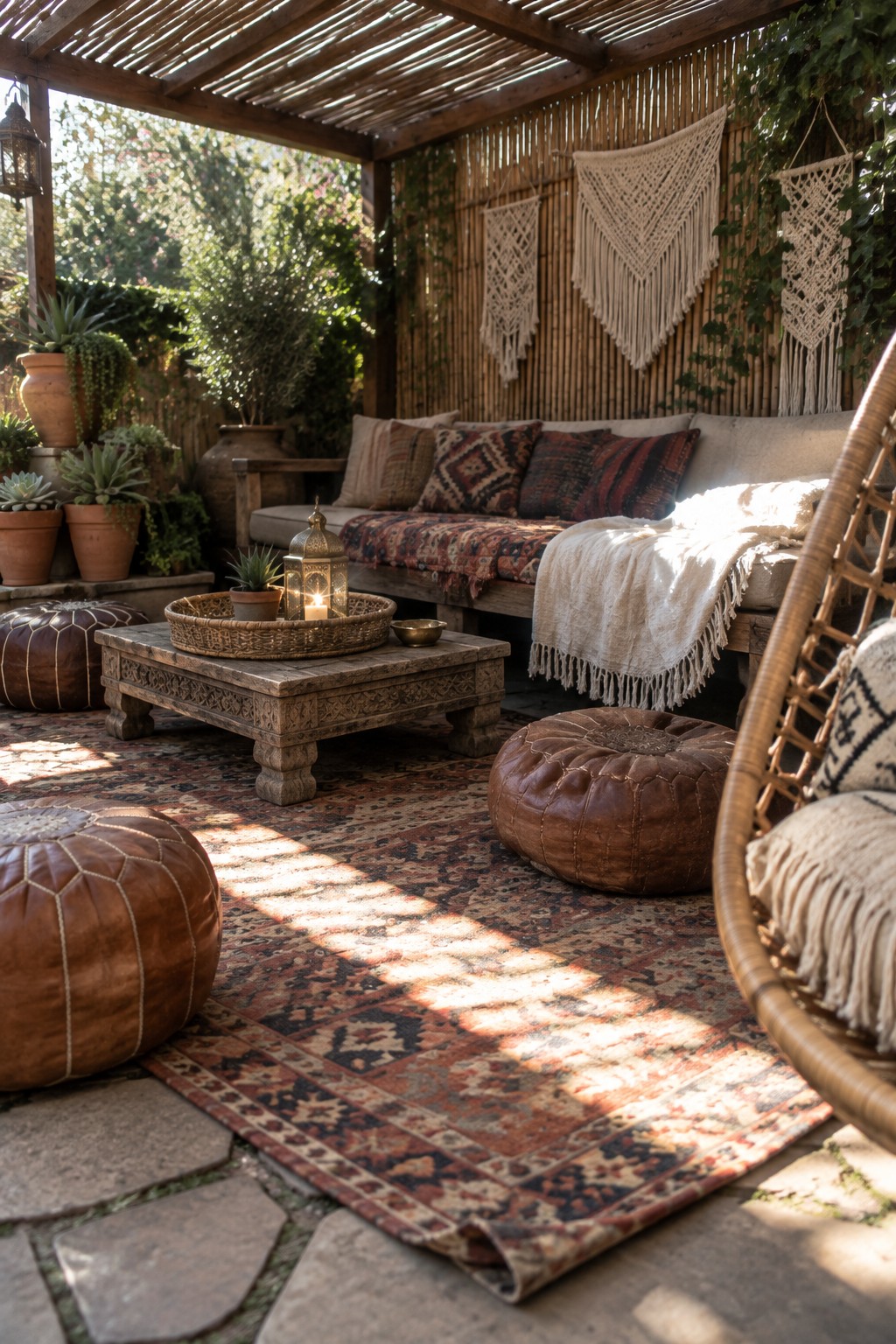
One simple way to make outdoor seating feel more comfortable is to layer textiles across the main pieces. A bench or daybed gets more inviting when you add several pillows in different patterns along with a loose throw that can be pulled over when the air cools.
This works best on a patio or covered deck where the structure is already solid. Start with a neutral base fabric on the main seat, then build up with cushions, a fringed blanket, and a large rug underneath. The leather poufs add extra seating that moves easily when needed.
Layer Rugs to Define a Relaxed Seating Area
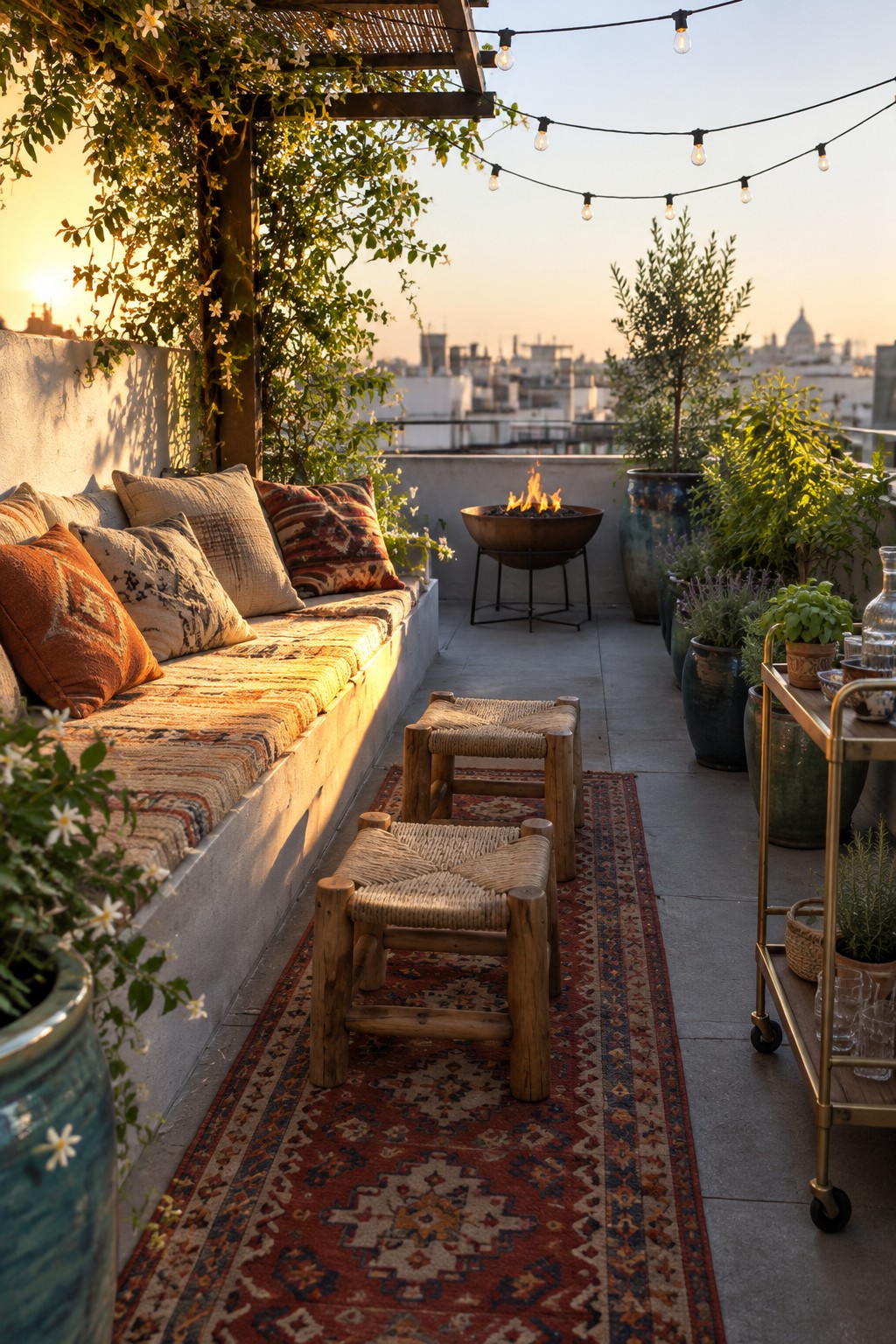
Many patios feel a bit stark because the surface is all hard and flat. Laying down one or two rugs helps mark out a seating zone and makes the space feel softer underfoot right away.
Keep the rugs simple and let them overlap a little if needed. Add a few low stools or a bench with loose pillows and the area starts to feel like a place you actually want to sit for a while. This works especially well on rooftops or balconies where furniture options are limited.
Layer Textiles Over Your Seating
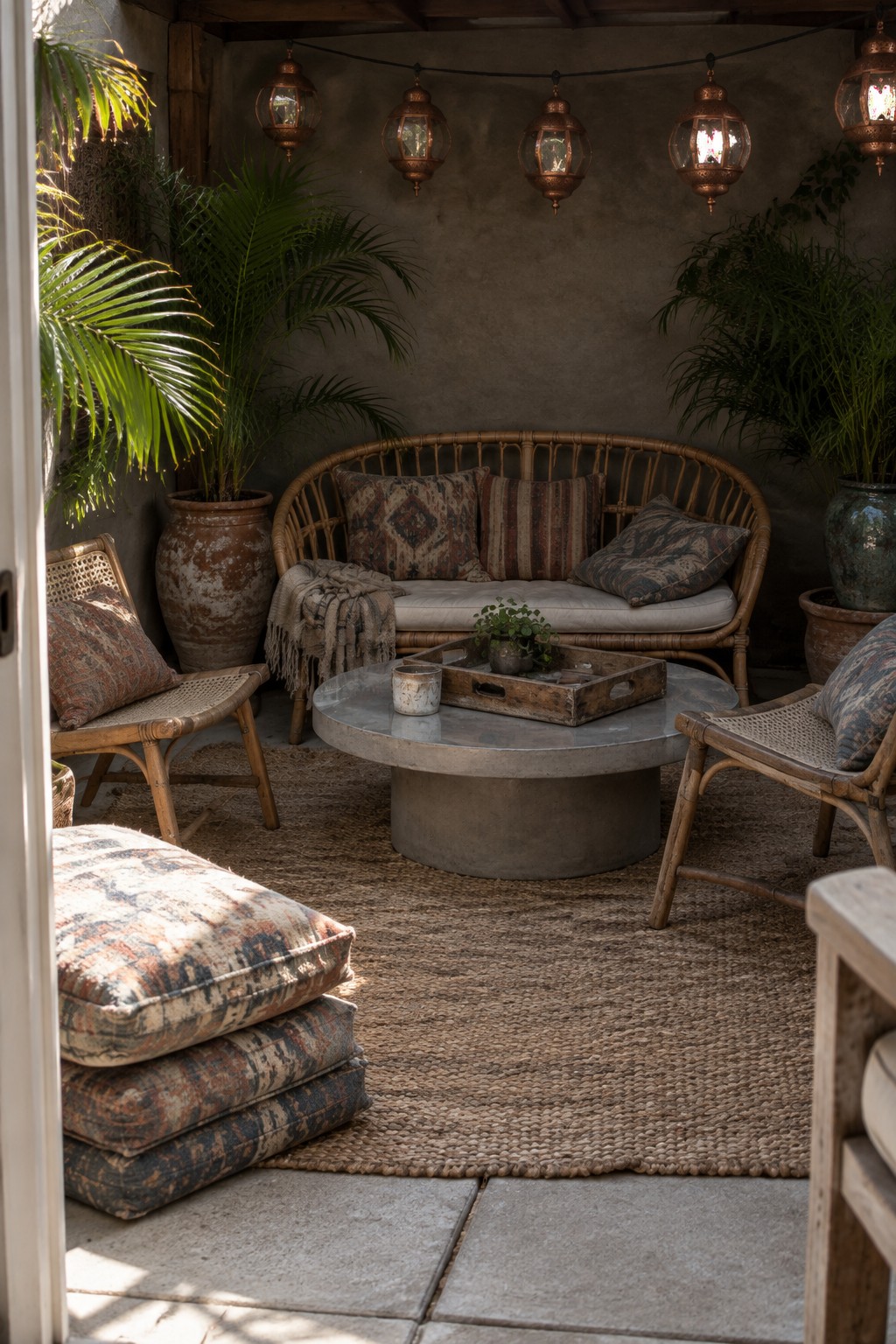
One of the easiest ways to make an outdoor seating area feel finished is to add plenty of textiles. Pillows, cushions, and a rug underfoot soften the hard lines of furniture and make the space feel more like an extension of the indoors. The mix of patterns and textures also helps tie different pieces together without needing everything to match.
This approach works especially well on patios that get regular use. Start with a simple base like a daybed or a few chairs, then add throws and cushions in varying sizes. Just watch that the fabrics can handle a little weather, or keep extras nearby to bring out when you want the full layered look.
Layer Textiles Over Simple Seating
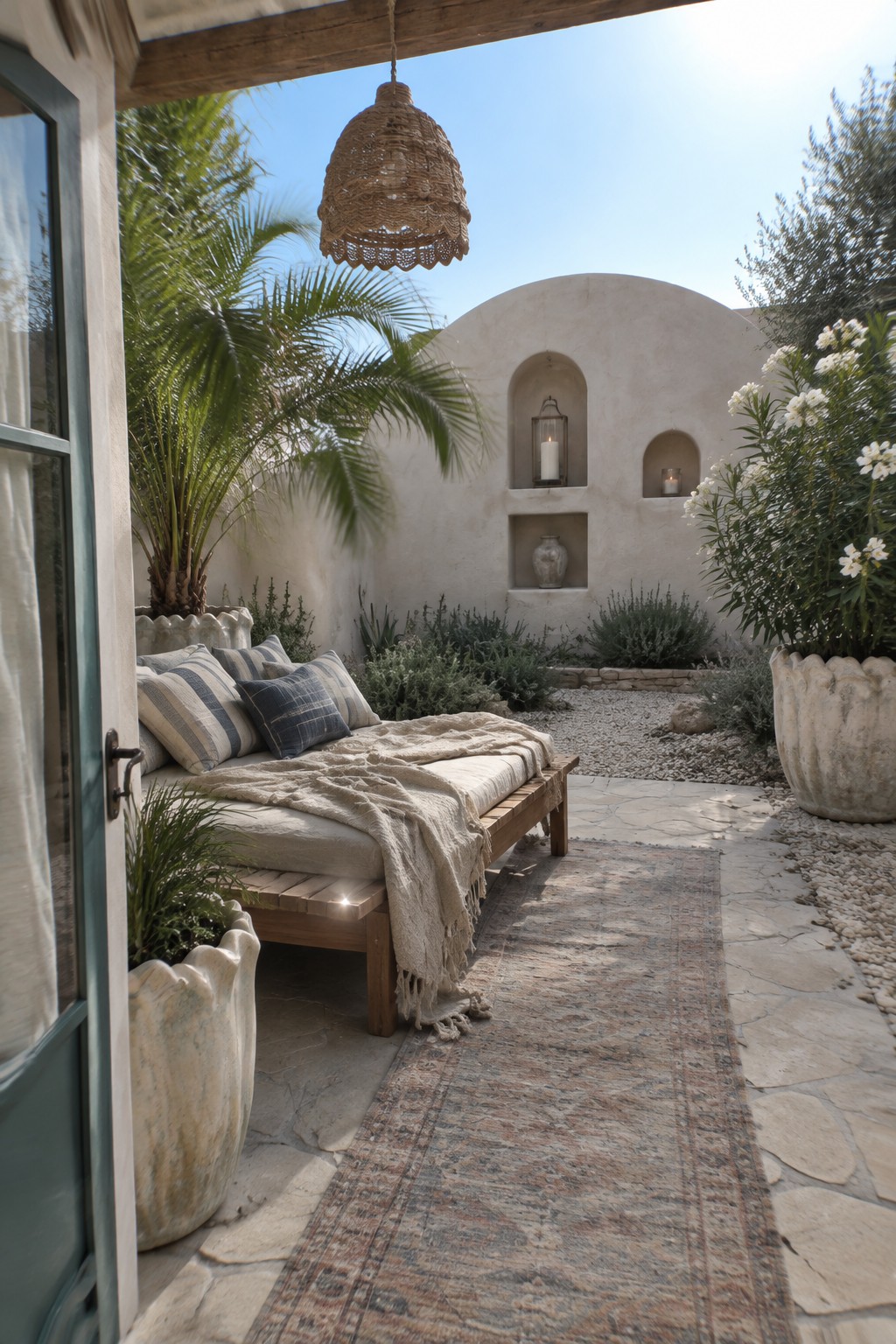
One easy way to make a patio feel finished is to add layers of fabric over the seating. A rug under the daybed, a light throw across the mattress, and a mix of pillows in different patterns turn a plain wooden frame into the spot people actually want to use.
This works best on patios that already have a simple bench or daybed. Choose fabrics that can handle some sun and the occasional wash, and keep the base furniture low and sturdy so the textiles stay the main focus.
Layer Textiles on Your Outdoor Seating
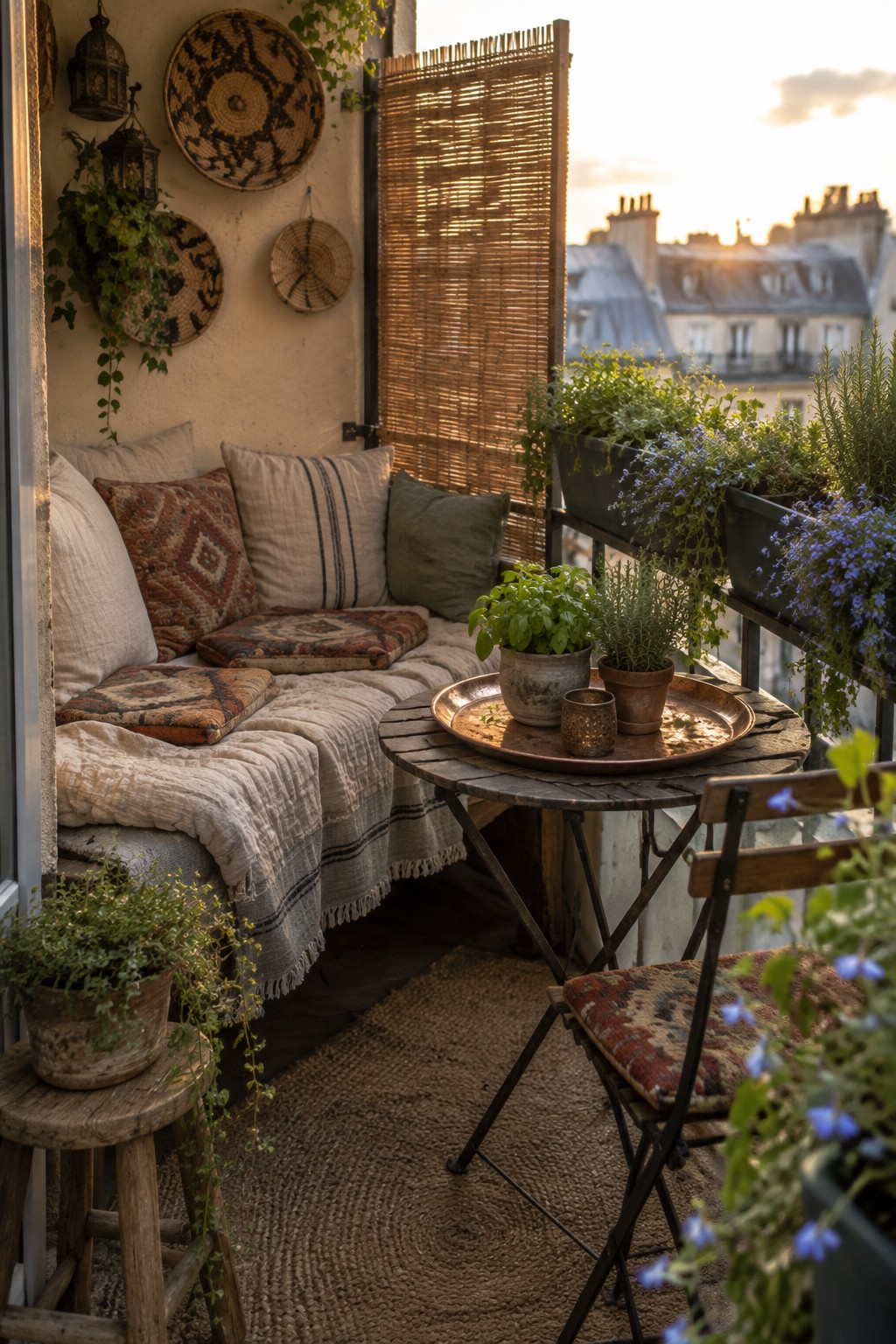
Layering textiles on a bench or built-in seat turns a basic outdoor spot into something you actually want to sit in for a while. The mix of pillows, a light throw, and a few patterned cushions creates softness and lets you bring in color and pattern without buying new furniture.
This works especially well on small balconies or patios where space is tight. Start with a few neutral pieces as a base, then add one or two bolder patterns on top. Just check that the fabrics can handle a bit of sun and moisture so they last.
Layer Textiles for Relaxed Outdoor Seating
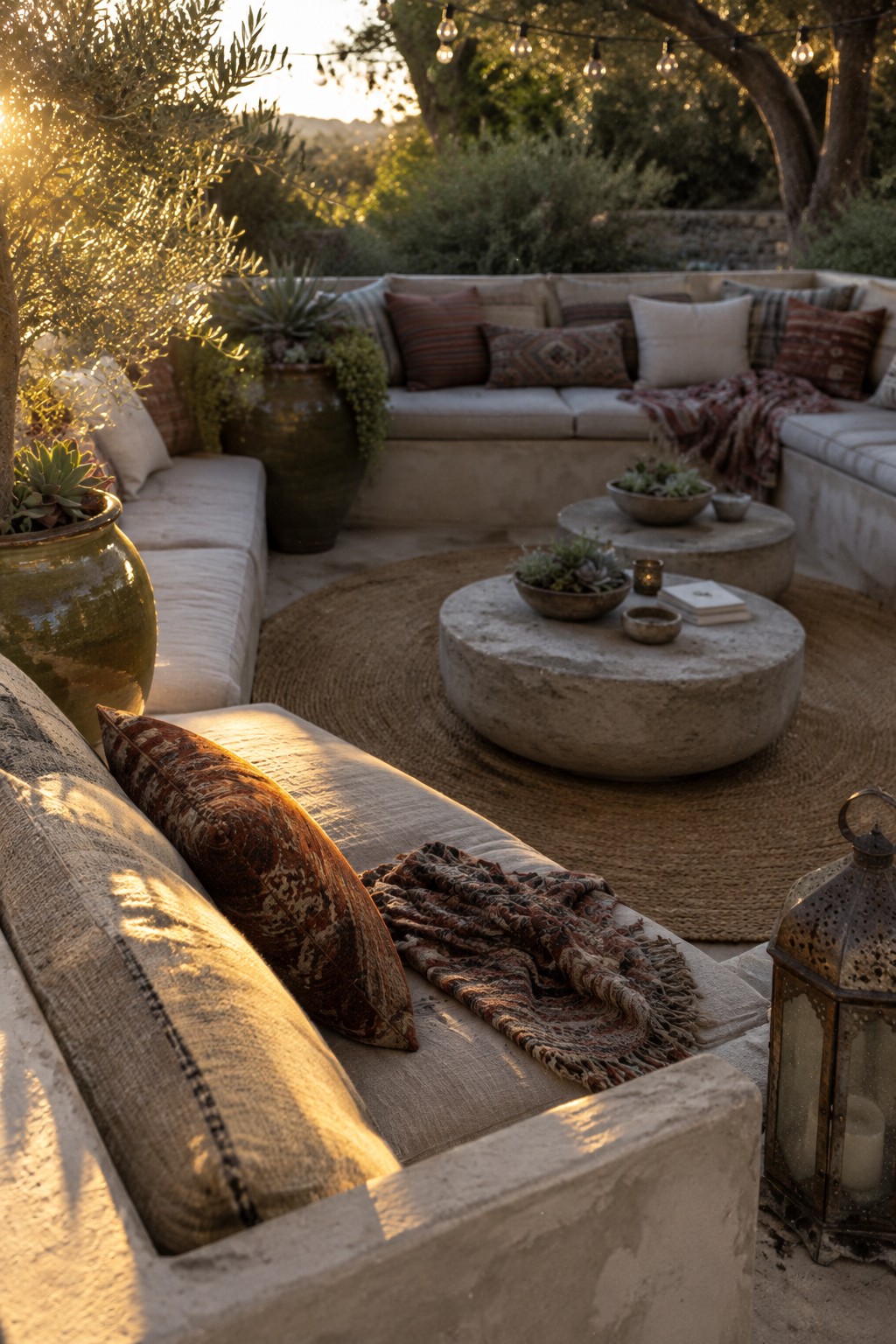
Layering textiles turns basic outdoor seating into something you actually want to spend time on. The mix of woven rugs underfoot, draped throws, and plenty of pillows adds softness and depth without much effort. It works especially well on built-in concrete benches or simple sofas that can feel a bit stark on their own.
Start with a large rug to define the area, then add throws in different textures so they look casually tossed rather than styled. Mix in pillows of varying sizes and patterns. This approach suits most patios and works on a range of budgets since you can build it gradually with pieces you already have or find secondhand.
Layer Rugs to Define an Outdoor Table Area
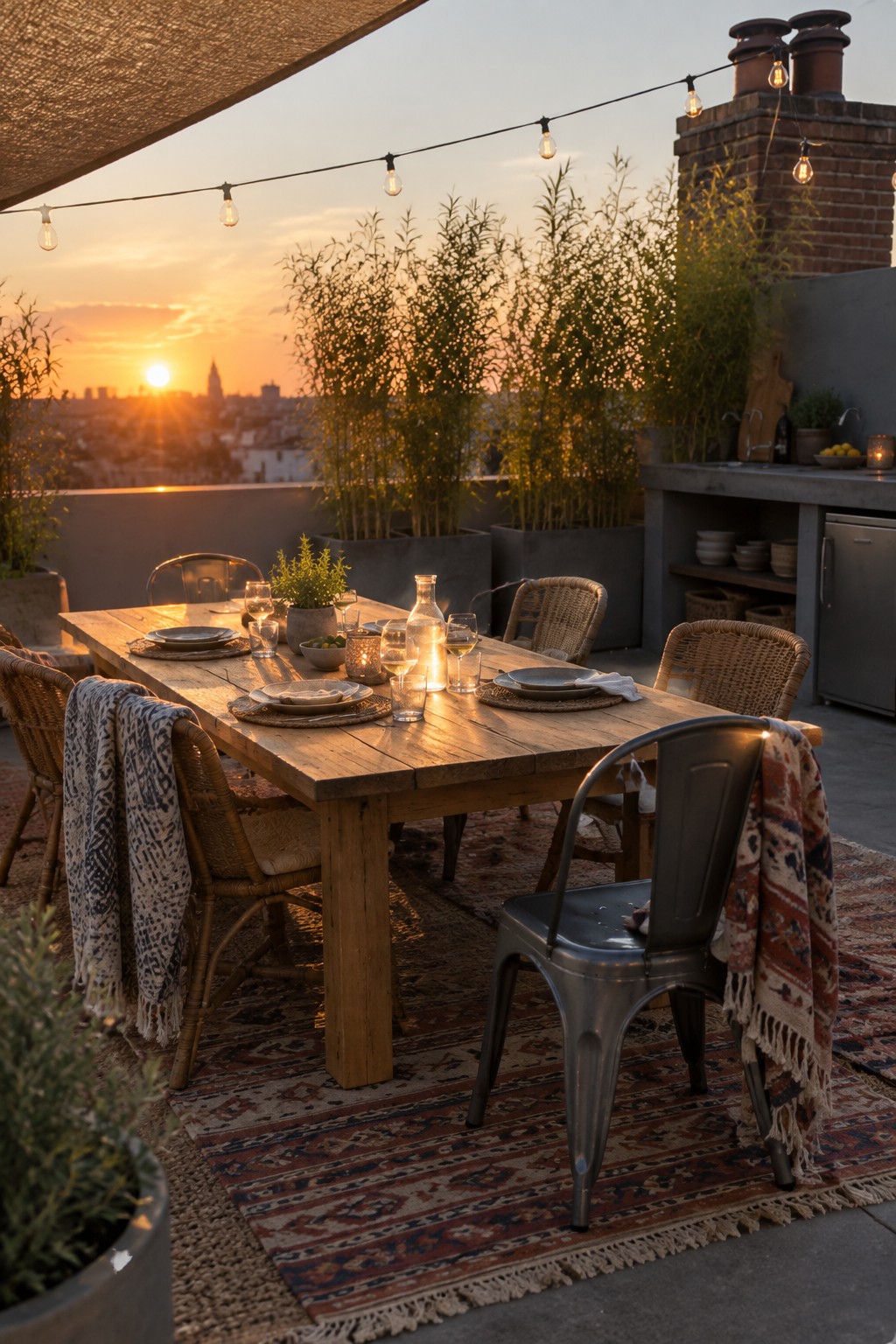
Layering rugs under a patio dining table gives the space a clear center without adding walls or dividers. The overlapping patterns create a soft base that makes the whole setup feel more like an actual room than a few pieces of furniture set on hard ground.
This approach suits larger terraces or rooftops where the dining zone needs to stand out from the surrounding deck or concrete. Choose flatweave outdoor rugs in similar colors so the layers blend instead of compete, and let them extend just past the chairs so the grouping reads as one zone.
Layer Textiles Over Wicker Seating
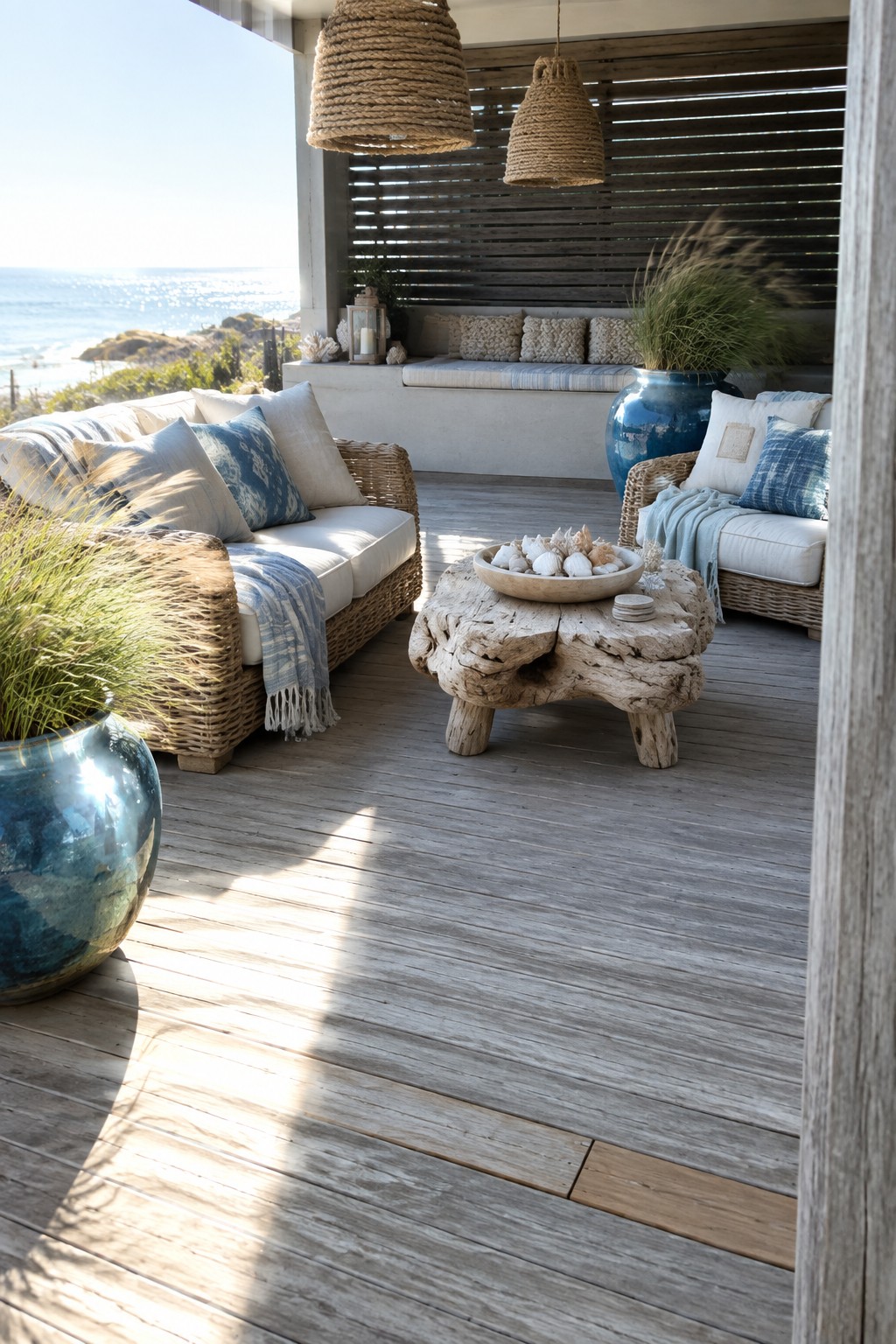
Wicker furniture holds up well outside and gives a patio that natural texture people like. Adding layers of pillows and throws in a few soft colors turns the same chairs into something you actually want to sit on for hours.
This approach works best on decks or patios where the seating stays in one spot year round. Keep the base cushions neutral and change the top layers with the seasons so the space feels fresh without buying new furniture.
Layer Textiles for Relaxed Outdoor Seating
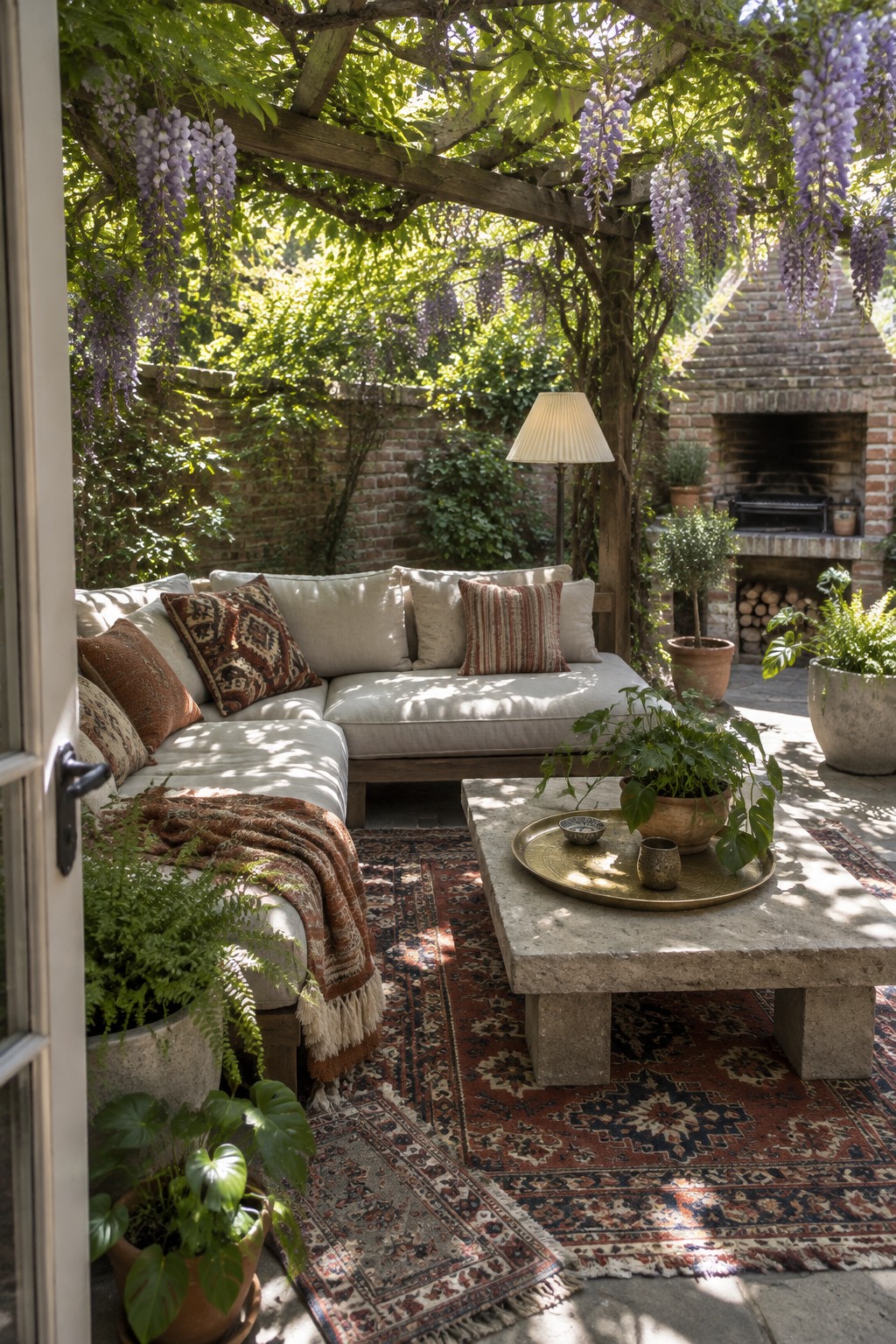
Layering rugs and textiles turns a basic patio into a spot that feels lived in. A few overlapping rugs under the seating area help define the space while adding pattern and softness underfoot. Mixing pillows and a throw blanket in different textures keeps things casual without much effort.
This approach works well on patios that already have solid seating like a sectional. It suits homes where people want to spend time outside without it feeling too formal. Just keep the layers in similar tones so the look stays relaxed instead of busy.
Layer Rugs to Define Outdoor Seating Zones

Layering rugs outdoors helps turn a hard patio surface into something that feels more like a real room. The pattern underfoot breaks up the stone or tile and gives the whole setup a grounded, finished look that works especially well next to water.
This approach suits warm climates and homes where people spend a lot of time outside. Start with one large rug as the base, then add low seating like leather poufs and a simple table so the area feels relaxed rather than formal.
Multiple Daybeds for a Relaxed Patio Setup
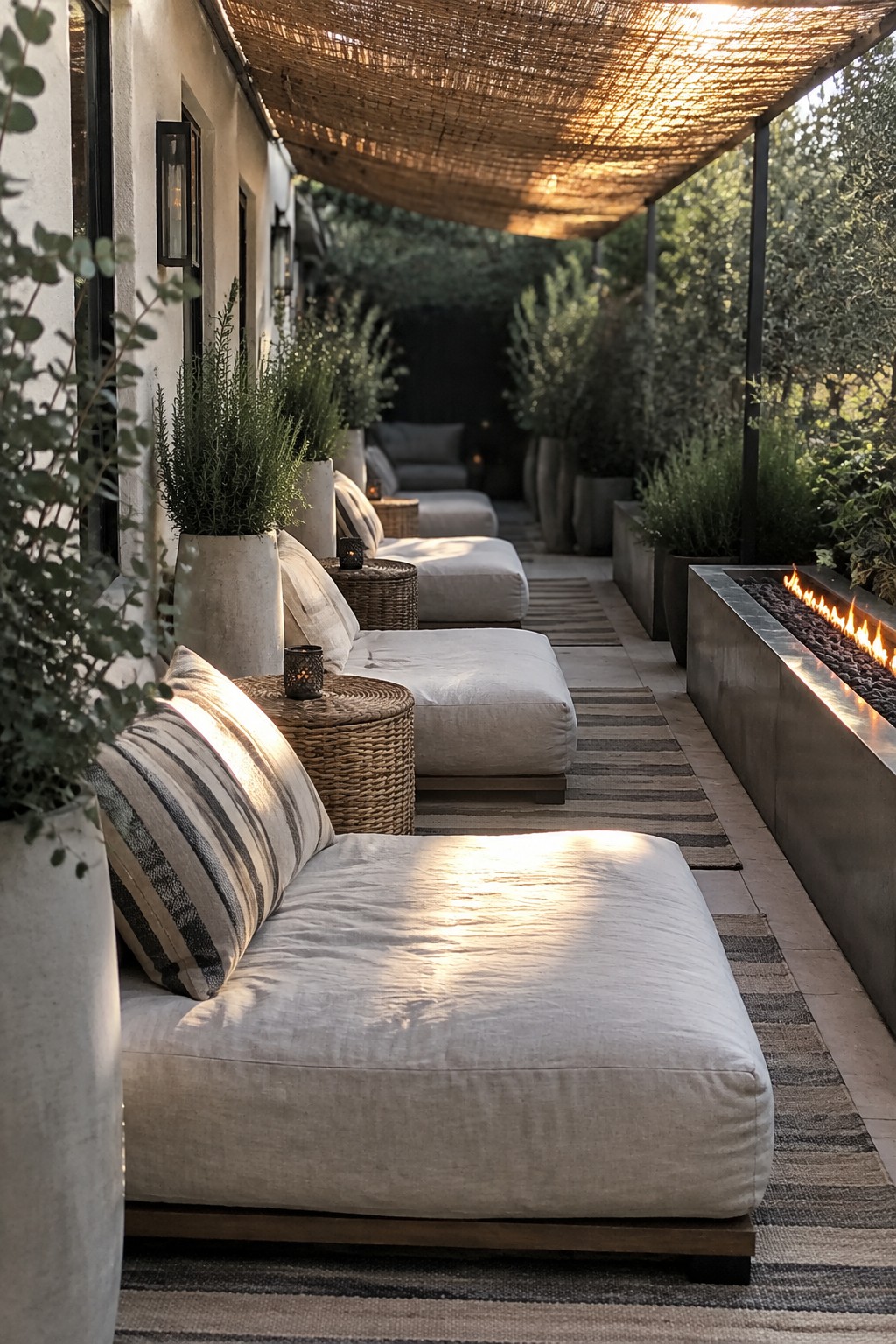
One simple way to make an outdoor space feel easy and welcoming is to place several low daybeds or chaises in a row. This layout gives people plenty of room to stretch out, whether they are reading, napping, or just sitting together without needing to crowd around one central piece.
It suits long, narrow patios or covered walkways where you want the seating to feel generous but not fussy. Stick with neutral fabrics, add a few pillows in simple patterns, and keep side tables low and natural so the whole area stays comfortable and low maintenance.
Layering Textiles Over Casual Outdoor Seating
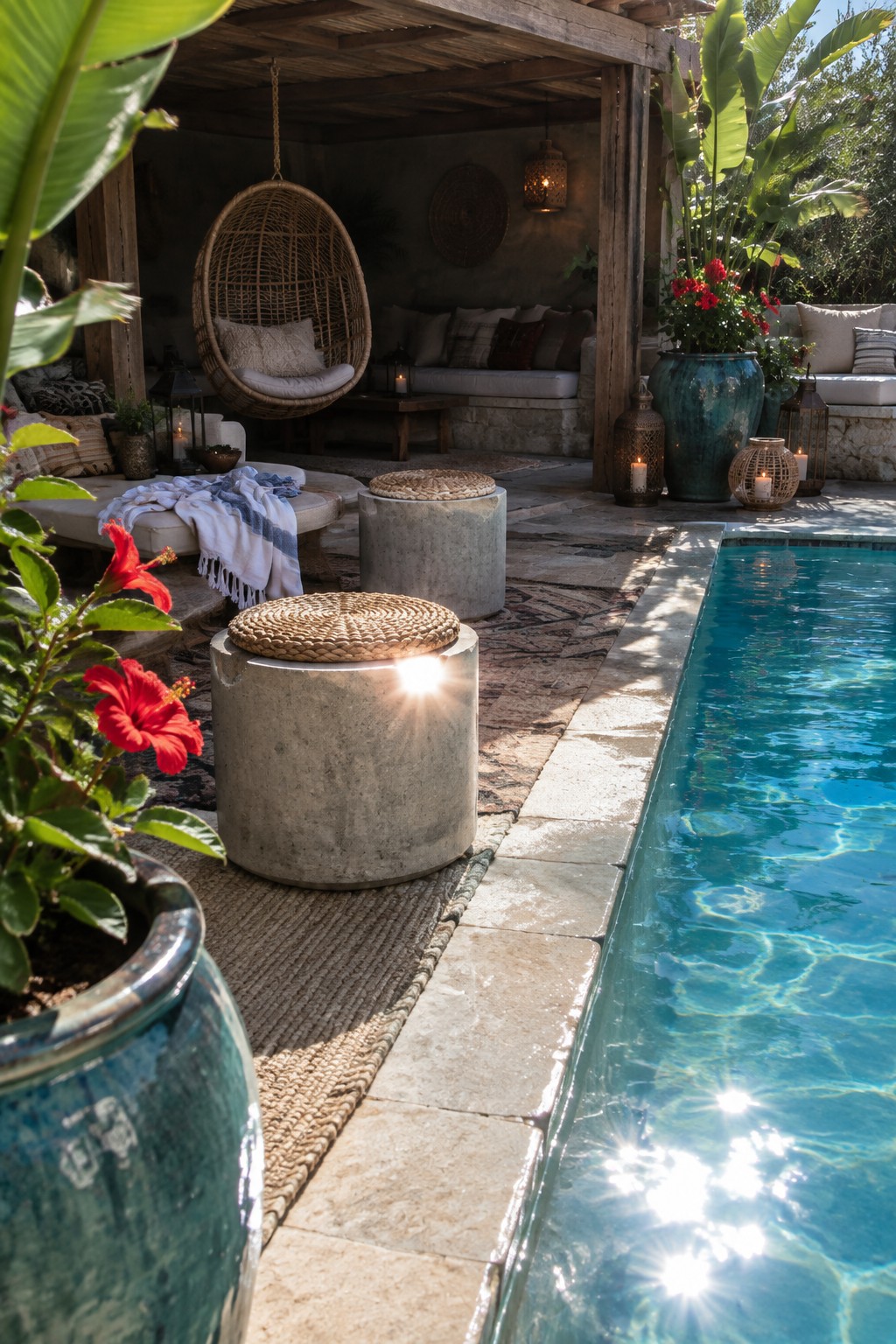
One approach that gives a patio that easy, lived-in feel is to start with relaxed seating and then add textiles in different weights and textures. The mix of a hanging chair and low stools already keeps things casual, and the throw blanket plus woven cushions make the whole area feel ready to sit in for hours.
This works best on patios that get daily use rather than formal entertaining spaces. Choose durable outdoor fabrics for the main cushions and save softer throws or lighter textiles for the pieces you can move or store when the weather turns.
Layering Textiles on Outdoor Seating
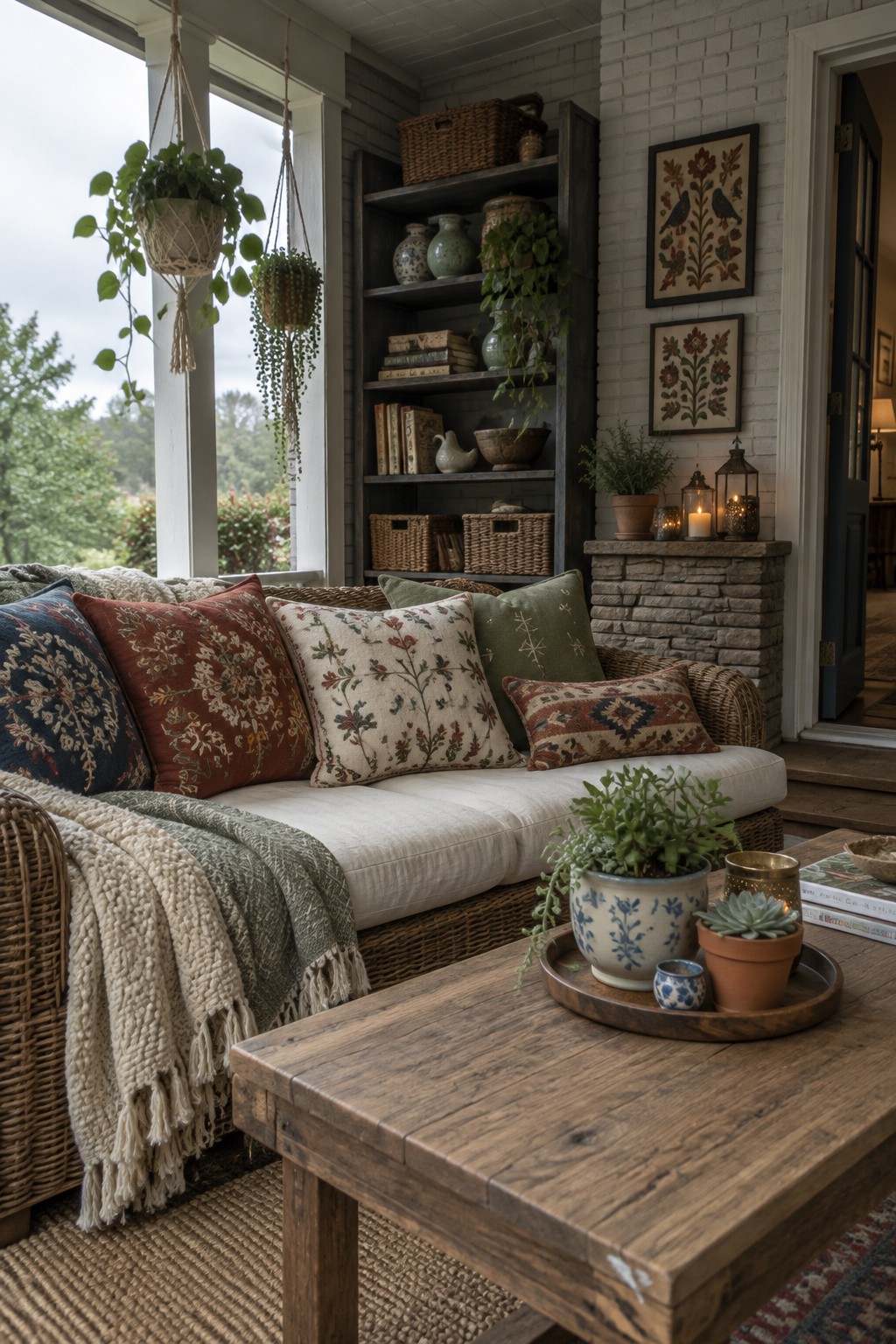
One simple way to make a porch or patio feel more comfortable is to add plenty of pillows and a throw or two. Different patterns and fabrics give the seating a relaxed look that invites people to stay awhile instead of just passing through.
This approach works best on covered seating where the textiles stay dry. Start with a solid cushion base and mix in three or four pillows in varying sizes and prints. A woven blanket draped over one end keeps things casual and easy to adjust as the seasons change.
Layer Rugs to Define Outdoor Seating
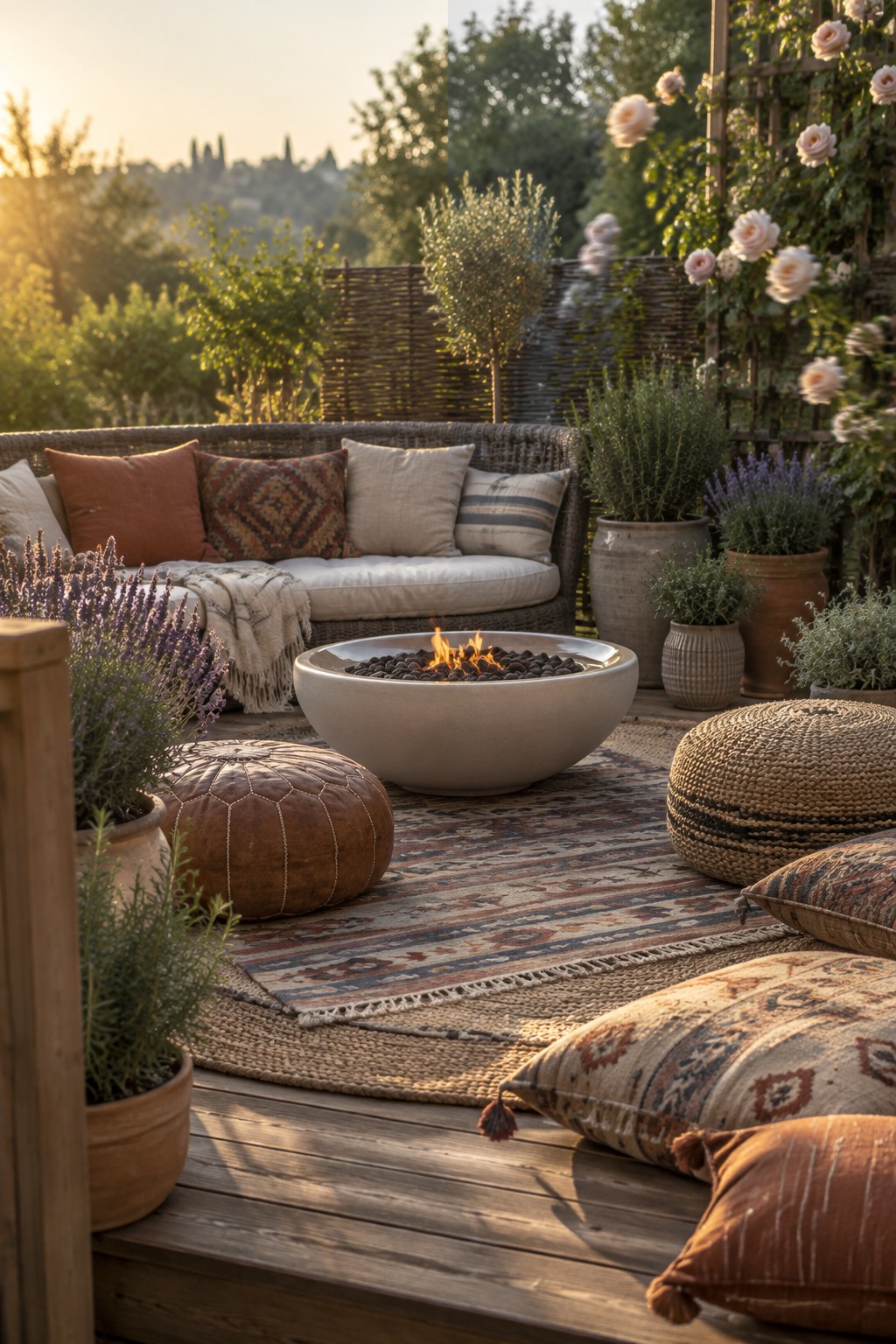
Layering rugs on a patio or deck is a simple way to mark off a seating zone without building anything permanent. It pulls the furniture together, adds some cushion underfoot, and makes the whole area feel more like an actual room instead of just furniture set on wood or stone. Around a fire pit this works especially well because the rugs keep the space from feeling too open or scattered.
Start with one larger natural fiber rug as the base, then add a smaller patterned one on top so the layers show. Keep the colors in the same range so they do not fight each other, and bring in floor cushions or low poufs for extra seating that can be moved around as needed. This approach suits most decks and patios, especially smaller ones where you want the space to feel full without crowding it with heavy furniture.
Layer Textiles Over Wicker Seating

Layering textiles on outdoor seating softens the look of wicker and wood without much effort. A few throws and pillows turn a basic set of chairs into something that feels comfortable right away, especially on a patio that gets regular use.
This approach works best with natural furniture and a simple color palette. Keep the base pieces plain and let the fabrics carry the texture. It suits homes that want a relaxed outdoor space rather than anything too structured, though too many competing patterns can start to feel cluttered.
Layer Textiles On Patio Seating
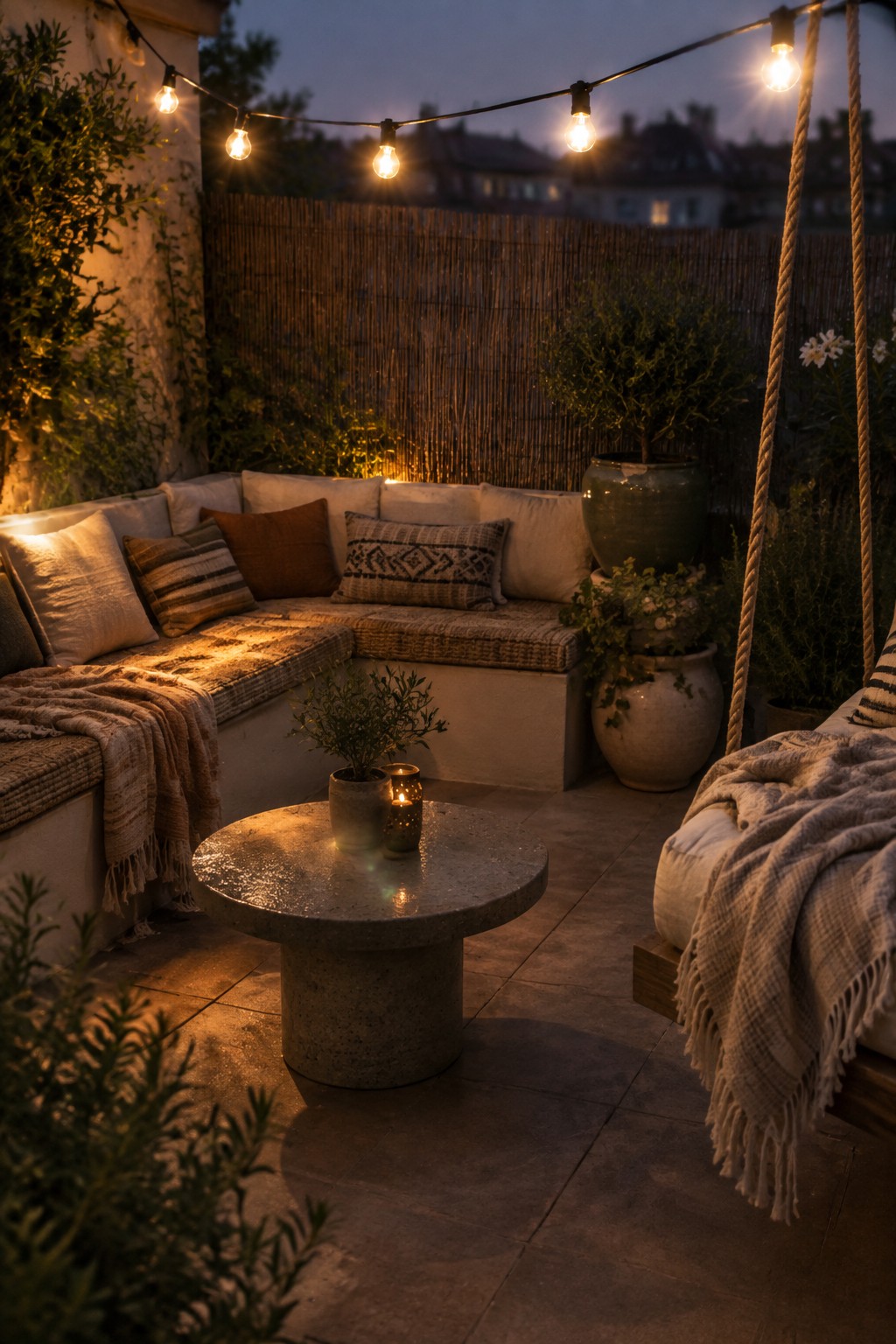
One simple way to make outdoor seating feel more comfortable is by layering textiles across the benches and daybeds. A few pillows in different patterns and textures, plus a throw or two, turn a plain bench into a spot where people actually want to settle in for a while.
This approach works best on built-in seating or low platforms where you have room to stack without crowding the space. Start with a base layer of neutral cushions, then add patterned pillows and drape a woven throw over one end. It suits most patio styles and lets you change the look easily with the seasons.
Layer Textiles on a Curved Outdoor Sofa
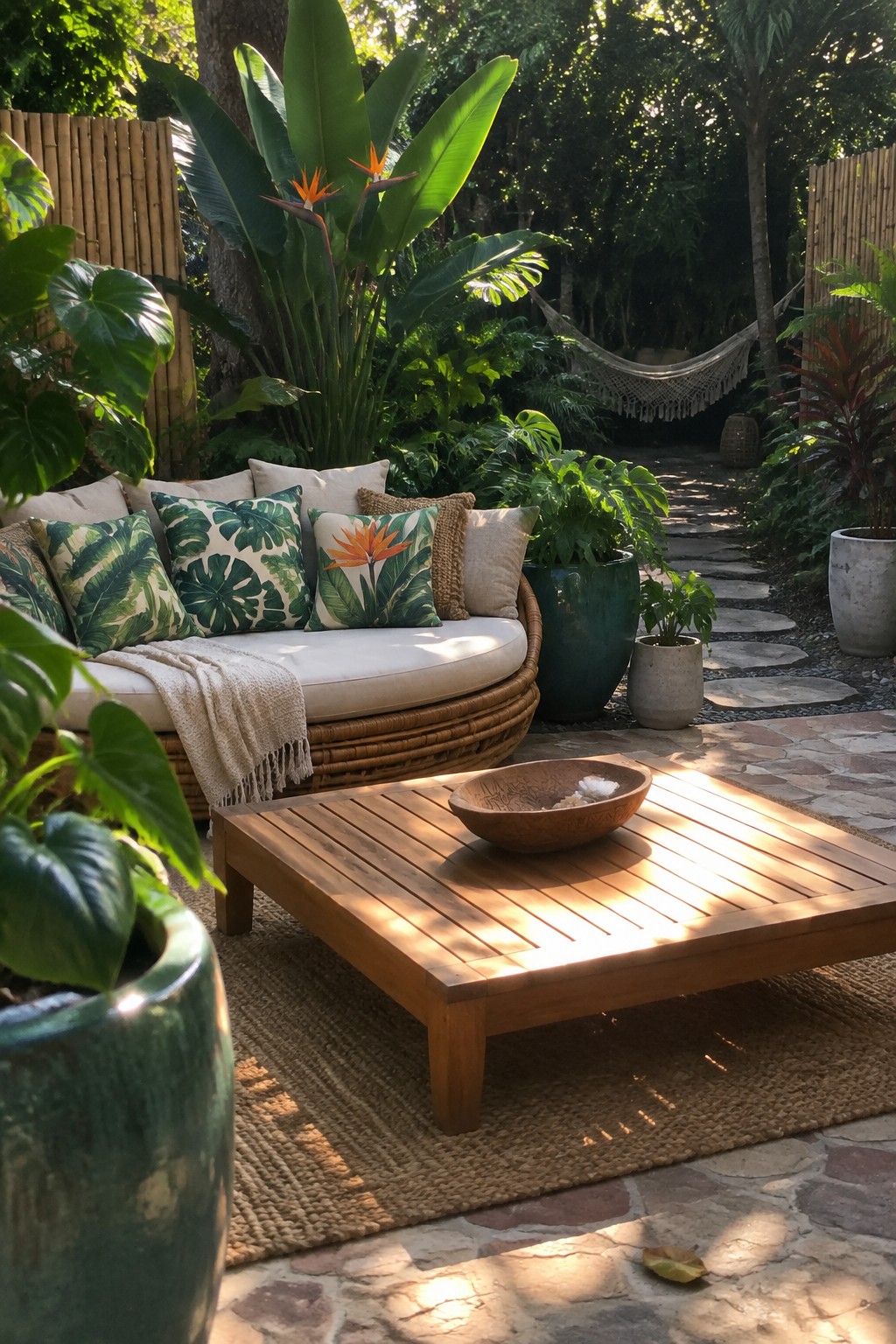
One simple way to make outdoor seating feel more inviting is to add plenty of pillows and a throw across a curved sofa. The mix of patterns and textures turns a basic seat into something you actually want to sink into for a while.
This works best on patios that already have some shade and a solid floor surface. Keep the table low and the rug underneath natural so the textiles stay the main focus without crowding the space.
Frequently Asked Questions
Q: How do I layer textiles without the patio looking messy? A: Start with one big rug as your base and add just two or three pillows or throws in similar tones. Mix in different textures like linen and fringe but keep the colors close so nothing fights for attention. Move pieces around until the setup feels inviting instead of busy.
Q: What seating actually feels relaxed for everyday use? A: Low cushions on the floor or a wide bench with soft padding work better than stiff chairs. Add a couple of floor pouches nearby so people can shift around easily. This setup invites lounging without needing perfect posture.
Q: How do I protect the fabrics from sun and rain? A: Pick outdoor-rated textiles that resist fading and moisture. Bring cushions inside or cover them during storms and let them air out on dry days. A quick shake every week keeps dust from settling in.
