


A gravel patio can make a garden feel tidy and intentional, but the layout matters just as much as the material underfoot.
I find that clear edges, a sensible path, and planting with enough contrast help gravel look considered rather than unfinished.
The first thing I notice in a well-planned space is how easily it connects the house to the rest of the yard.
Some designs also make room for practical details, like a spot to sit, drainage that works, and plants that can handle the conditions.
I’d save a few ideas to adapt to your own garden, especially if you want a cleaner look without losing the softness of greenery.
Use Stepping Stones to Organize a Gravel Patio

Stepping stones give a gravel patio a clear route through the space and make it easier to walk across. They also help define a seating area without covering the whole patio in solid paving.
Set the stones in a simple line where people naturally walk, leaving enough gravel around them for a tidy edge. Larger slabs can work well near a fire pit, but keep them level and firmly set so they do not shift underfoot.
Use Gravel To Define an Outdoor Dining Area

A gravel patio is a practical way to make an outdoor dining spot feel like its own part of the garden. It lets rain drain through, and the pale surface gives the table and chairs a clear place without needing a large paved area.
Use compacted gravel and set stepping stones into it for an easy route across the patio. A dining area like this suits a small courtyard, but keep the gravel contained with edging so it stays out of nearby beds and paths.
Use Gravel To Define An Outdoor Dining Area

A gravel patio can give an outdoor dining spot a clear place of its own without needing a solid paved surface. It works especially well with a simple, sturdy table, where the loose stone keeps the setting practical and informal.
For a similar layout, spread compacted gravel beneath the dining area and leave enough room to pull out chairs comfortably. A concrete table and built-in bench suit a modern rooftop or small courtyard, but use edging to keep the gravel from creeping into nearby planting beds.
Use Gravel To Define A Garden Path
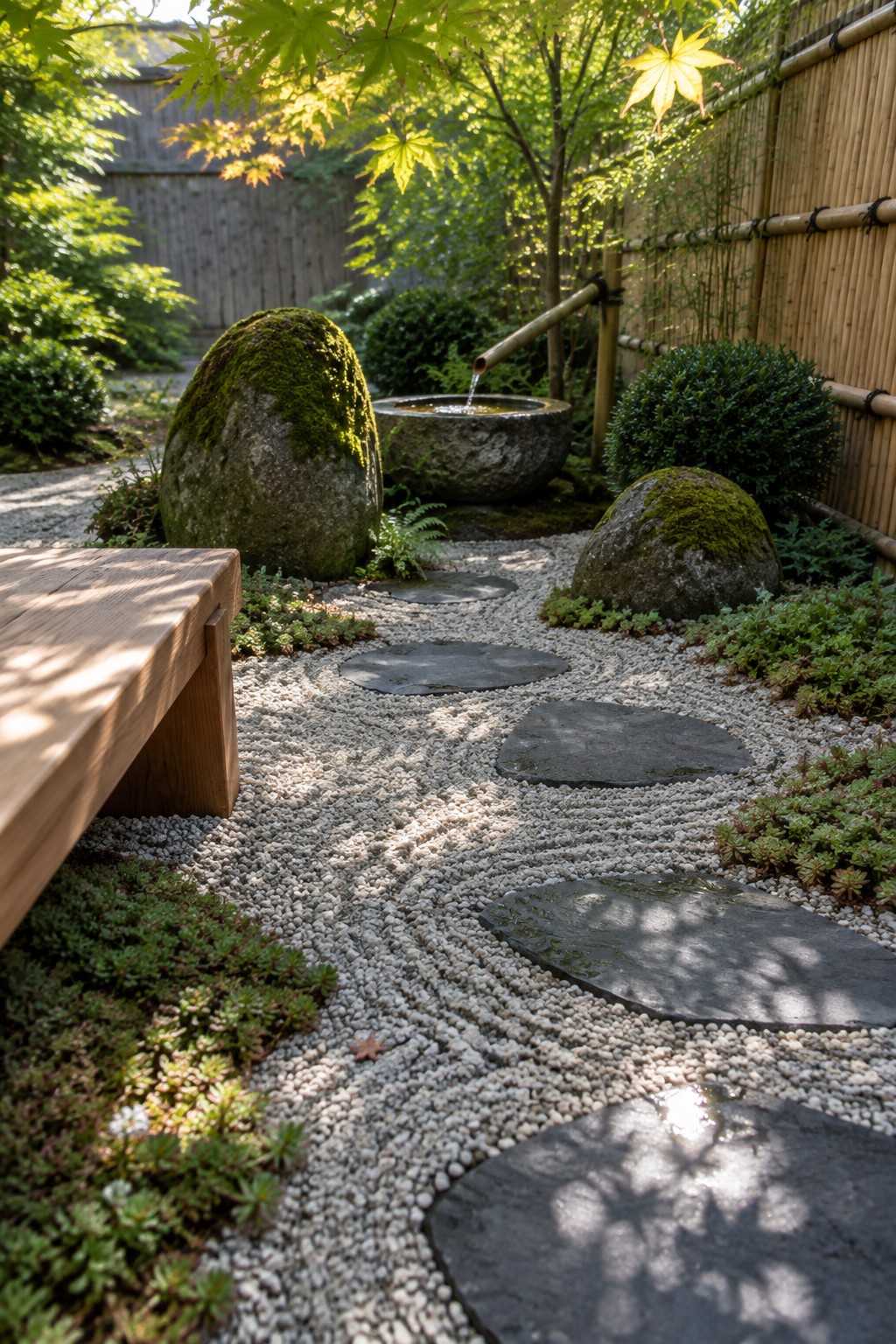
A gravel path can make a small garden feel orderly without looking too formal. Here, large stepping stones set a clear route through the pale gravel, while the loose surface keeps the layout relaxed.
This approach works well in narrow side yards or compact gardens where a solid paved walkway might feel bulky. Choose stones with a comfortable stride between them, and use edging or a firm base to keep the gravel from spreading into nearby planting beds.
Create a Gravel Patio With Built-In Seating
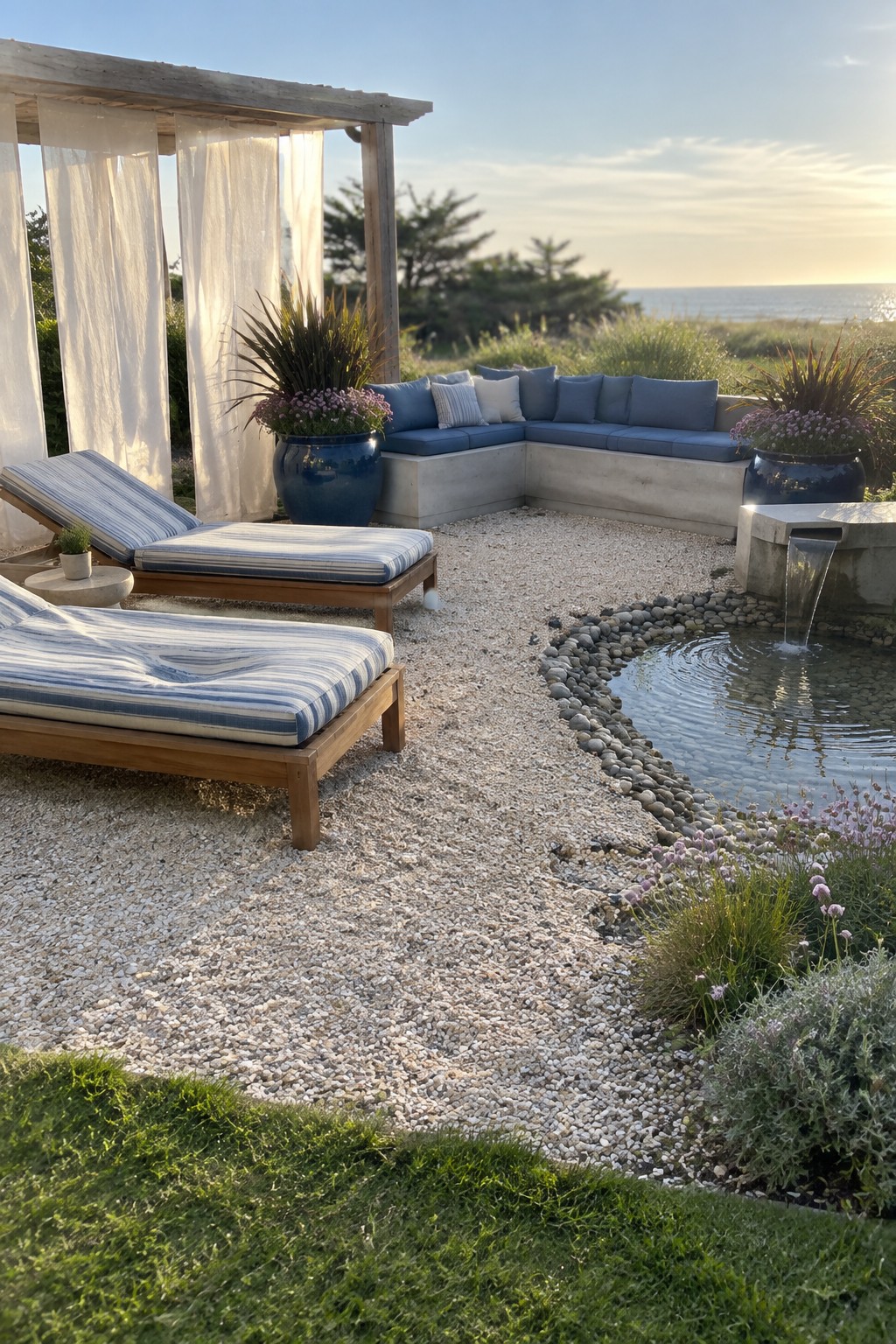
A built-in bench can make a gravel patio feel like a proper place to sit, without filling it with lots of separate furniture. Here, the L-shaped concrete seat follows the edge of the patio and leaves the center open.
This works well in a compact outdoor living area where you want seating for several people and a simple layout. Add outdoor cushions for comfort, and keep the gravel firm and level around the bench so chairs and feet stay steady.
Build a Gravel Patio Around a Fire Pit
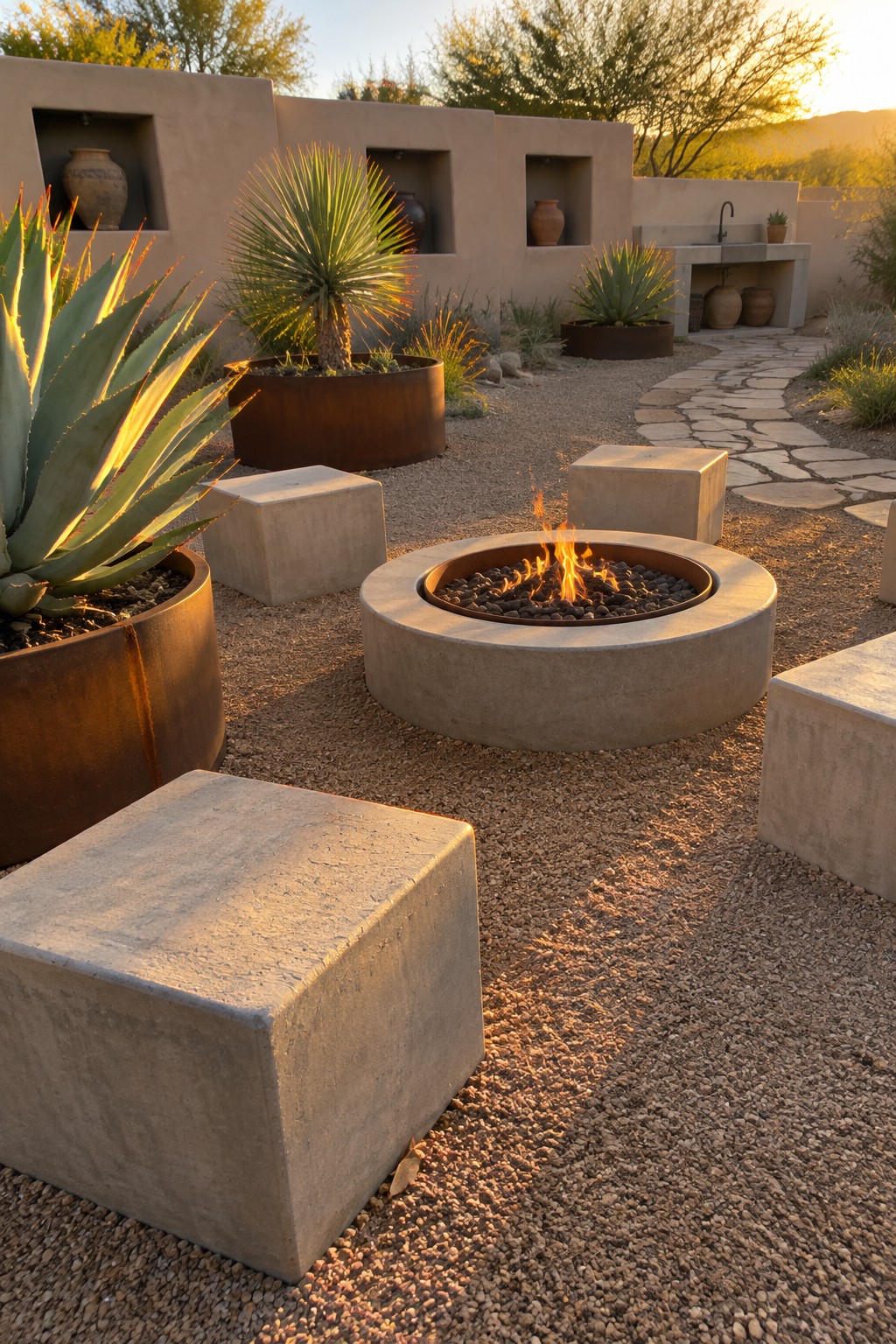
A fire pit can give a gravel patio a clear place to gather. A round pit with seats set around it makes the layout easy to understand and leaves room to move through the rest of the yard.
Choose a level spot with enough space between the fire pit and nearby seating or plants. Gravel suits this kind of casual setup, but check local fire rules and use a pit designed for the fuel you plan to burn.
Use Gravel Around a Pool Seating Area
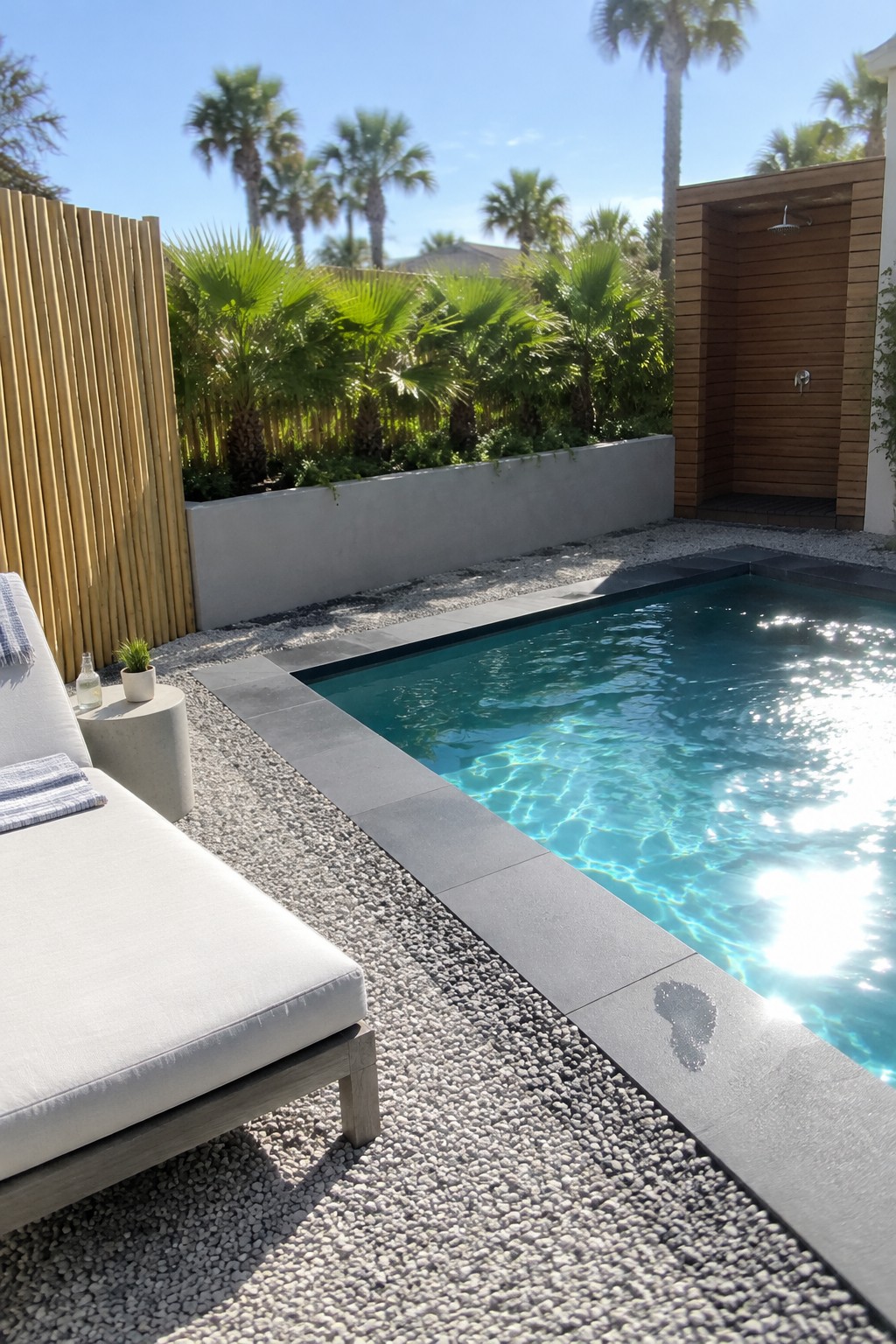
Gravel makes a practical surface around a pool when you want a tidy patio without paving every inch. It gives the seating area a clear edge while letting the pool coping stand out.
Use compacted gravel in the walking and lounging zones, and choose pieces that are comfortable underfoot and easy to keep out of the water. A simple lounge chair beside the pool is enough to make the space useful without crowding it.
Add a Small Dining Spot to a Gravel Garden

A compact table and chairs can turn a gravel area into a useful place for meals without taking over the garden. The gravel lets the seating fit into an irregular space, while a few stepping stones make it easier to walk between the table and the house.
This setup works well in a small courtyard or side garden where a full patio would feel too large. Choose stable, level furniture, and keep the stones wide enough for comfortable steps.
Set Up an Outdoor Kitchen Beside the Dining Area
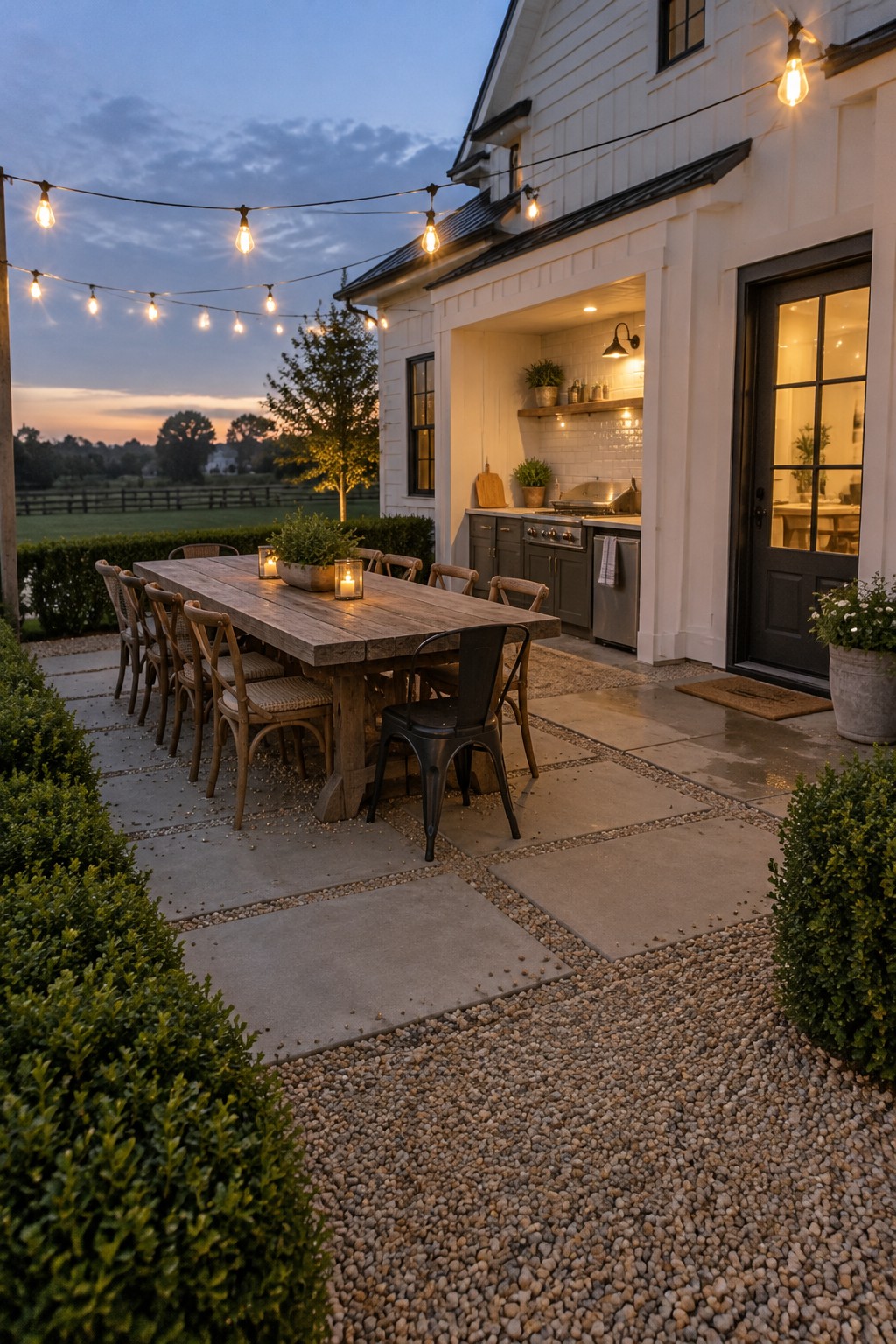
A small outdoor kitchen beside the dining table makes meals easier to serve and gives the patio a clear purpose. Here, the counter sits close to the table, so food can move between cooking and dining without a long trip indoors.
This setup works well on patios that get regular use, especially near a back door. Keep enough room to pull out chairs and move around the counter, and choose weather-ready cabinets and appliances.
Use Gravel to Set Up a Formal Garden Courtyard

A gravel courtyard can feel tidy and intentional when its walking areas are laid out in a clear pattern. Here, large square pavers break up the pale gravel, while a narrow water basin gives the space a strong center.
This approach suits enclosed patios where you want a calm, organized feel without paving the whole area. Keep the pavers spaced evenly, and use gravel that stays in place underfoot so the paths remain easy to walk on.
Make a Gravel Patio Feel Like a Garden Room

A gravel patio can feel like a proper outdoor room when the seating has a clear place to gather. A round table set in the gravel gives the area a simple focal point without needing a paved floor.
This approach works well in a small garden where you want space for tea or a quiet meal. Keep the gravel neatly edged, and choose chairs that are easy to move so the layout can change when needed.
Add a Pergola for Shade Over a Gravel Patio

A pergola can make a gravel patio feel like a defined place to sit, rather than just an open patch of hardscape. Here, the overhead structure also supports climbing wisteria, giving the seating area some shade and a leafy ceiling.
This works well over a lounge area in a garden where you want a little cover without building a solid roof. Choose sturdy posts and train vines along the beams, but leave enough open space for air and light to pass through.
Use a Curved Bench to Shape a Gravel Dining Patio
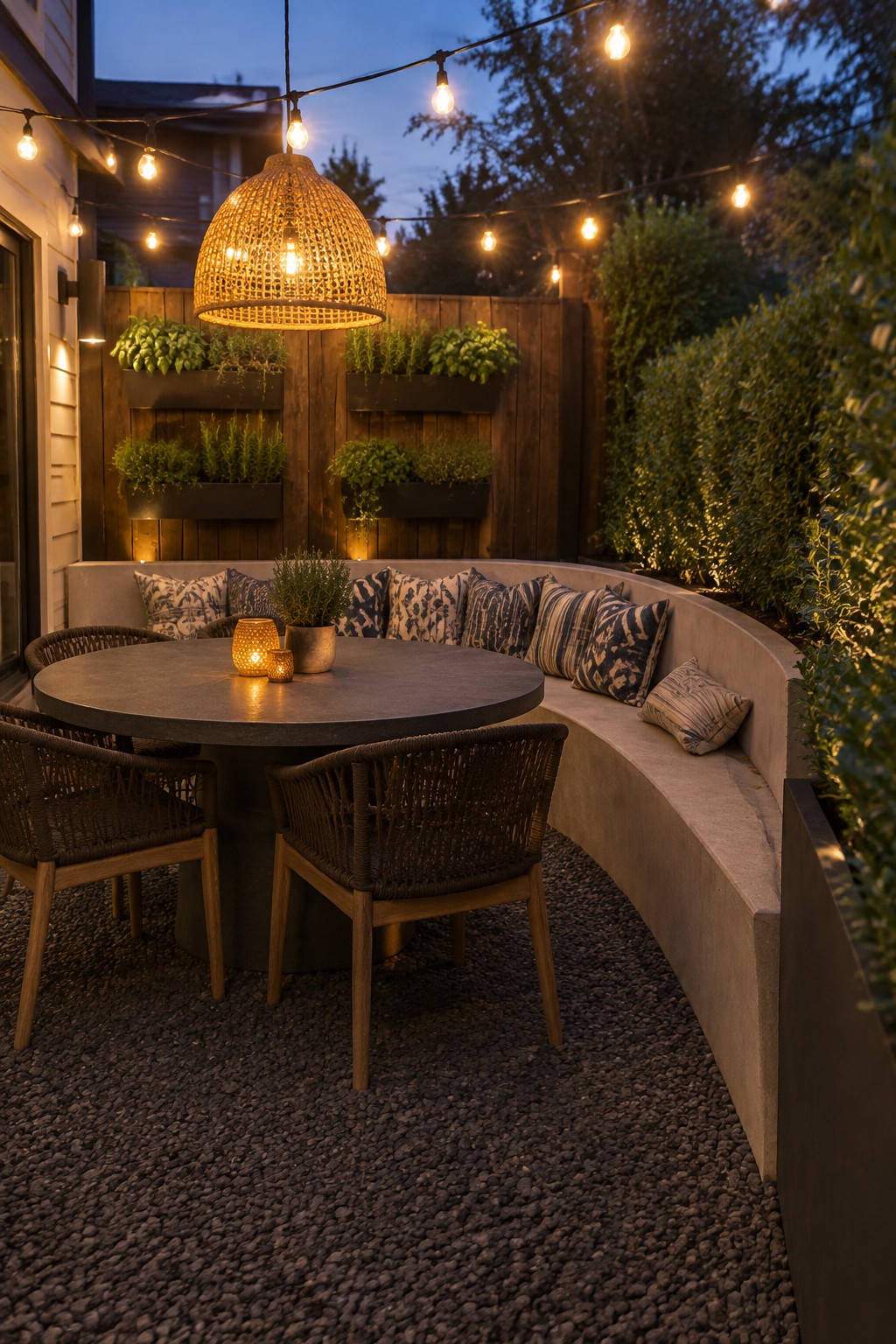
A curved built-in bench makes a gravel dining area feel settled and gives it a clear edge without closing it off. It also offers more seating around a table than a row of separate chairs, which can be handy in a compact patio.
This layout works well in a small, enclosed garden where every bit of space needs a purpose. Keep the bench deep enough for comfortable sitting, and choose cushions that can be stored away when the weather turns.
Add a Canopy Over an Outdoor Dining Area
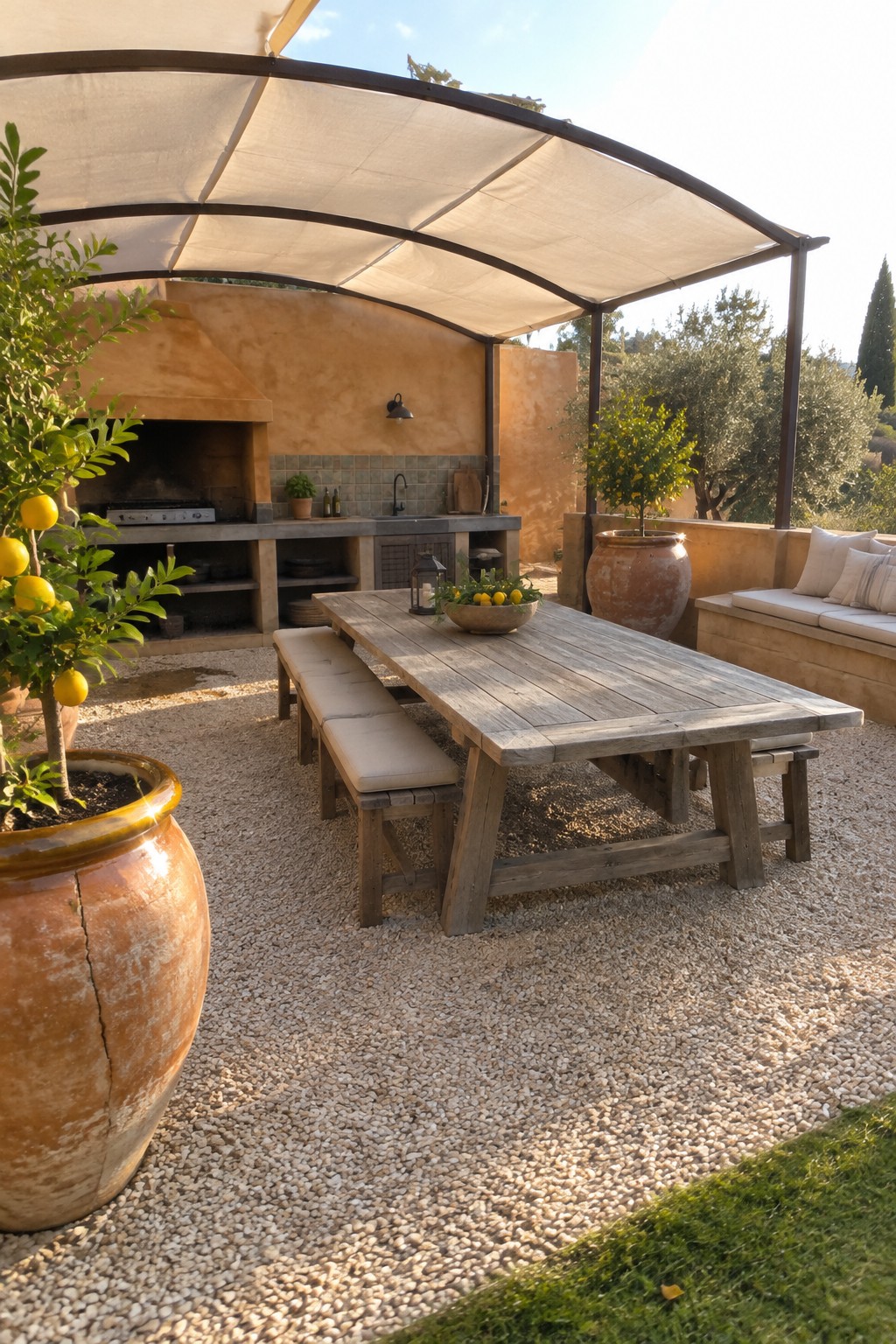
A fixed canopy can make a gravel patio more comfortable for meals by giving the table a patch of shade. Here, the light fabric roof covers the dining area without enclosing it, so the patio still feels open.
This approach works well when you use the table often and want dependable shade without moving an umbrella around. Make sure the frame is sized for the table and leaves enough room to walk around it.
Build a Sunken Gravel Seating Area
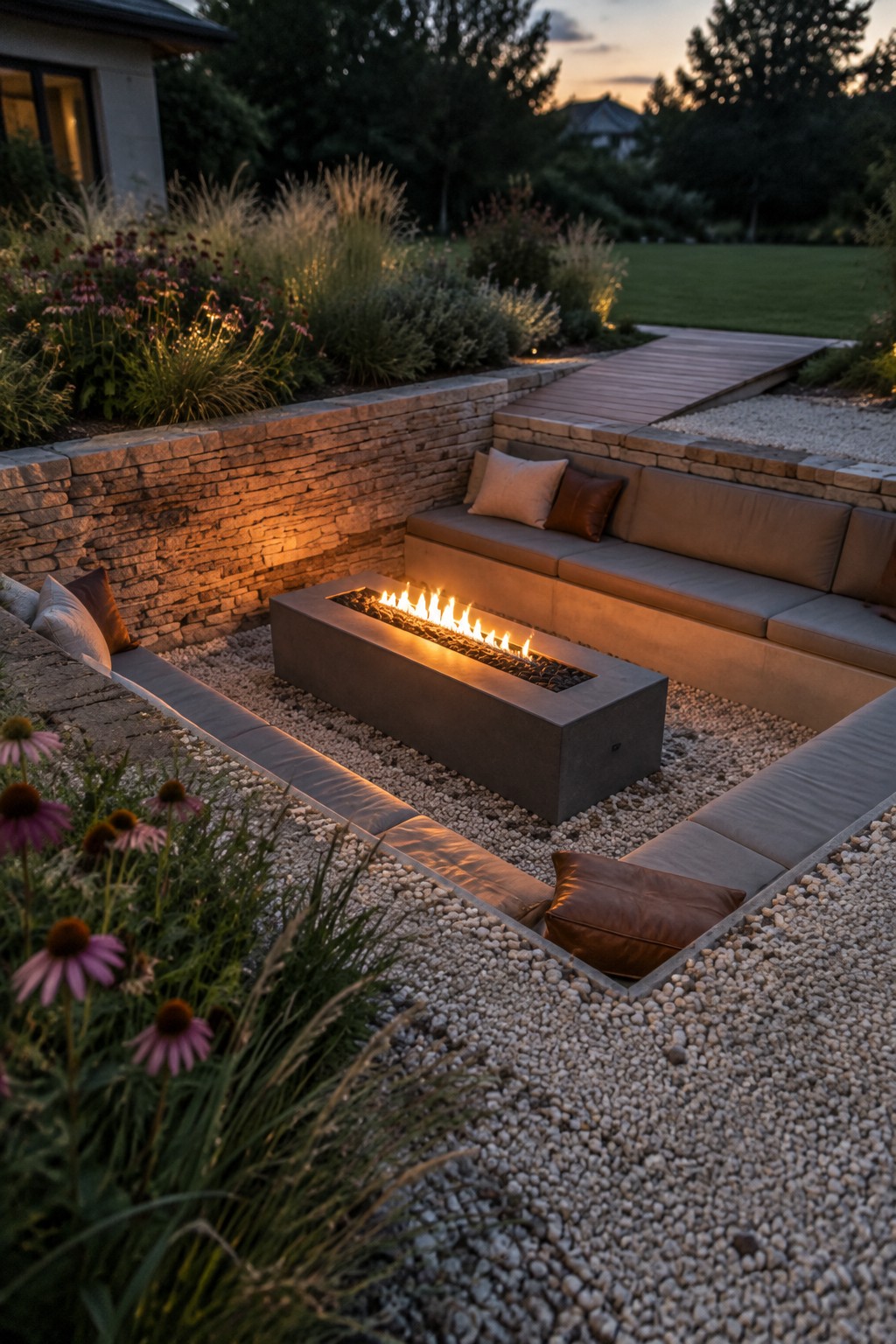
A lowered seating area gives a gravel patio a clear place to gather. The built-in bench seating keeps the layout neat, while a long fire pit gives people a natural spot to face.
This idea works well in a level yard where you can build a low retaining wall around the seating zone. Leave enough room to move around the benches, and choose gravel that drains well and feels comfortable underfoot.
Create a Relaxed Gravel Lounge Area
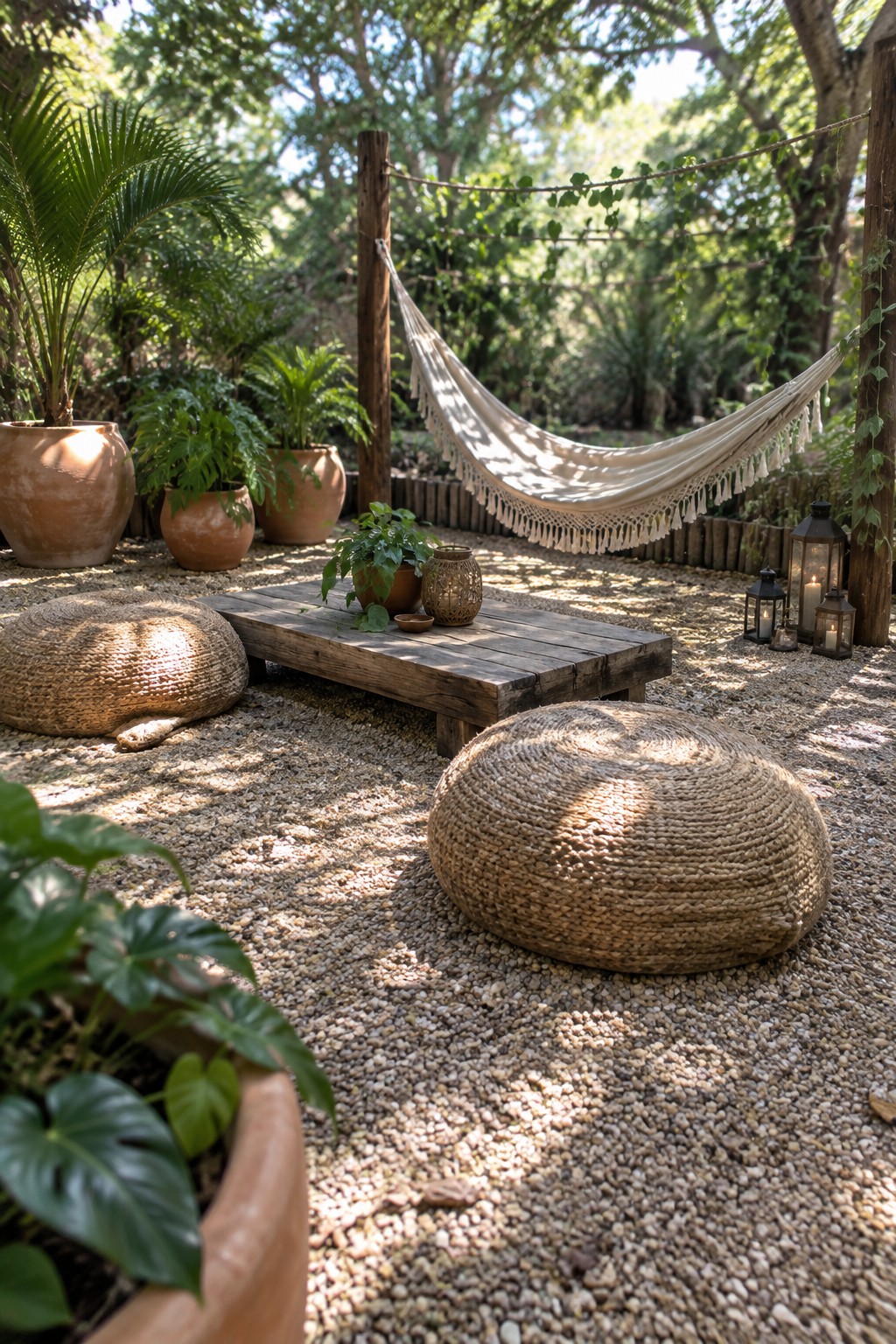
A gravel patio can work well as a quiet place to sit, especially when the seating is kept low and simple. Here, a wooden table and woven floor cushions make the space feel casual without needing much furniture.
This setup suits a garden corner where you want room to stretch out or read. Use a compact table and a few sturdy cushions, and choose gravel that drains well and is comfortable to walk on.
Add Terraced Levels to a Gravel Patio

Terraced levels are a useful way to make a sloped yard feel organized and give a gravel patio a clear place to sit. Low retaining walls separate each section without making the layout feel too formal.
Use the widest, most level area for seating, and keep the gravel contained behind sturdy edging or retaining walls. This approach works especially well on a hillside, though the steps and walls should be planned for safe, easy access.
Add a Poolside Lounge Beside the Gravel Patio

A gravel patio can make a pool area feel more relaxed while keeping the main lounging spot easy to reach. Here, a covered sectional sits just beyond the pool, giving people a place to rest without taking up the paving around the water.
Use a compact gravel zone for seating, then leave a clear route between it and the pool. Large, stable stepping stones can help with the transition, but keep furniture on a firm, level surface so it does not wobble.
Frequently Asked Questions
Q: What kind of gravel works best for a patio?
A: Pea gravel feels comfortable underfoot, while crushed gravel tends to stay more firmly in place. Choose a color and texture that suit your patio furniture and the rest of the garden.
Q: How do I stop gravel from spreading onto the lawn?
A: Add a solid edging strip around the patio to keep stones contained. A compacted base and a layer of landscape fabric underneath also help the surface stay tidy.
Q: Can I put patio furniture directly on gravel?
A: Yes, but chairs with narrow legs may wobble or sink. Set furniture on paving stones or a small, level patio pad for a steadier spot.
Q: Will weeds grow through a gravel patio?
A: Some may appear if windblown seeds settle in the stones. Pull small weeds early, and keep the gravel clear of fallen leaves and other debris.
