

Long narrow patios tend to feel like walkways instead of places to linger unless the layout breaks up that straight line.
I have watched friends end up with setups that looked balanced from above but left no real room to pull up a chair without blocking the path.
A few layout tweaks made mine feel twice as wide without adding anything new.
Placing seating clusters at angles rather than straight rows helps turn the length into separate spots for different times of day.
Planting taller elements toward the back and keeping lower pieces in front guides movement while keeping the space open enough to use.
Use a Long Table to Fit a Narrow Patio
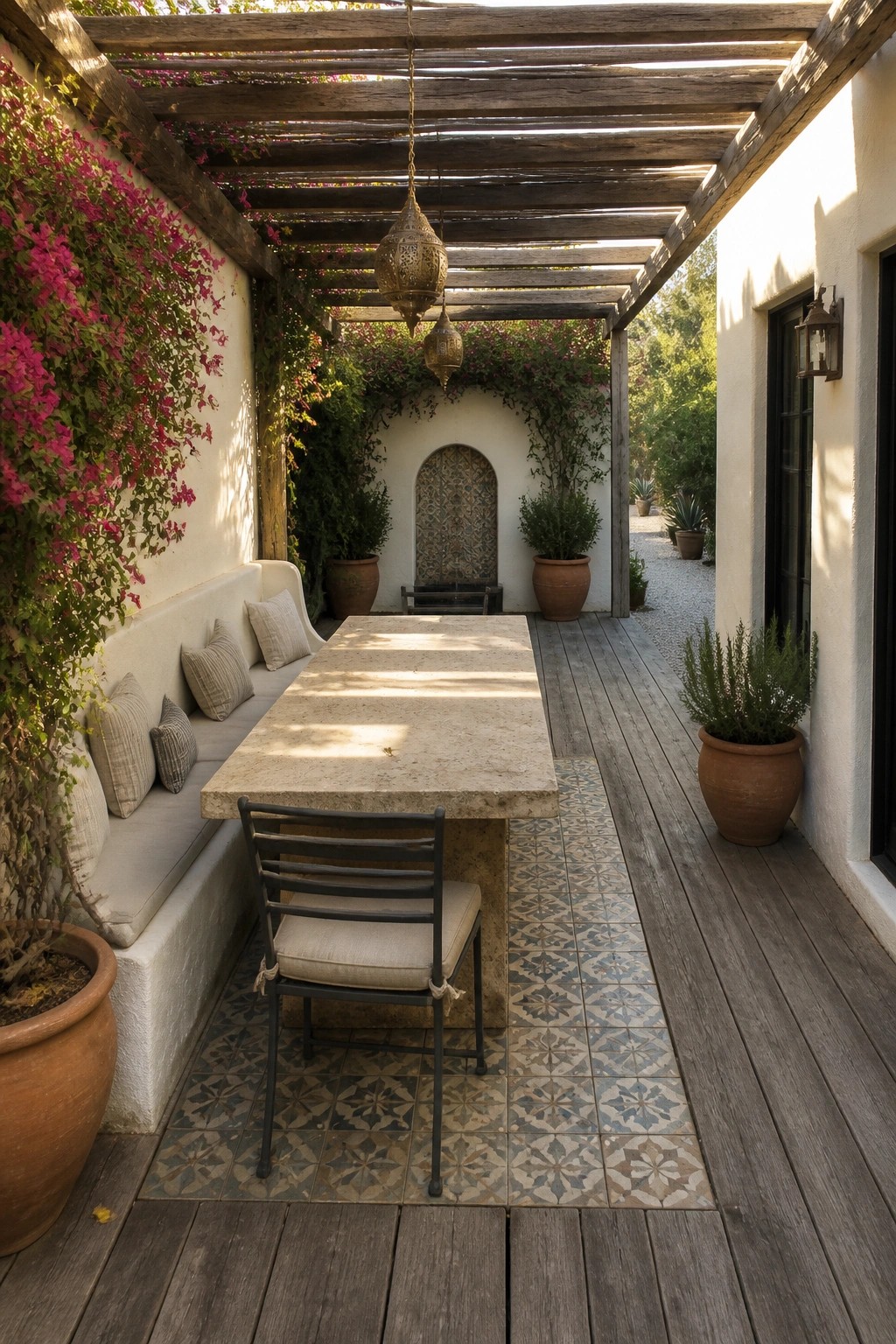
A long table running the length of the space makes the most of a narrow patio. It follows the shape instead of fighting it, and leaves room to walk along one side without crowding the seating.
Built-in bench seating along one wall helps even more because it removes the need for chairs on both sides. This setup works best on patios that are at least eight or ten feet wide, and it keeps the whole area feeling open rather than cramped.
Run a Linear Fire Pit Along the Length
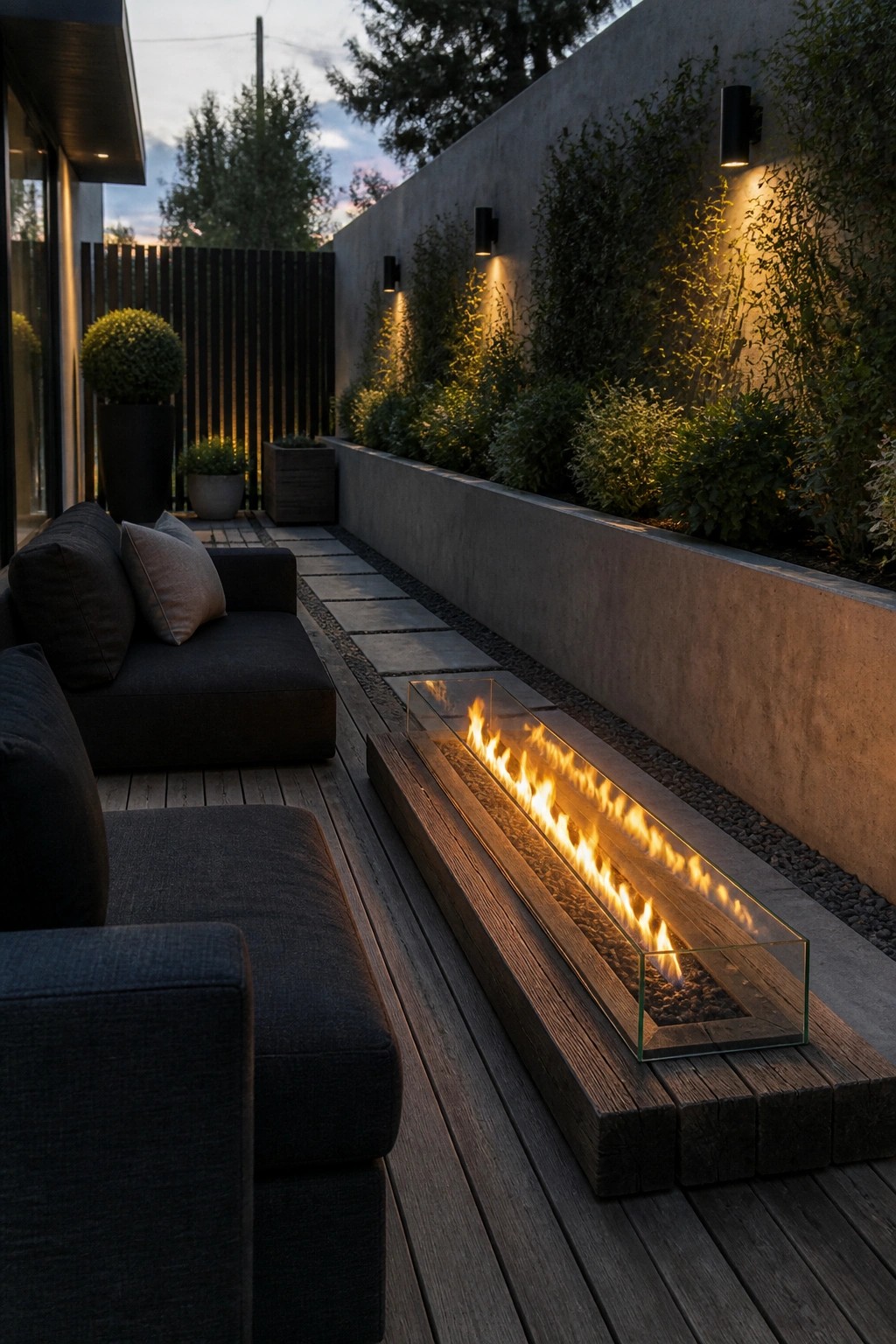
A long narrow patio often ends up with seating pushed to one side and little else in between. A linear fire pit placed lengthwise gives the space a clear center without eating up width, so people can sit on both sides and still feel connected.
This setup works best on decks or paved strips that already run parallel to a wall or fence. Keep the fire feature low and simple so it does not crowd the walkway, and pair it with low planting on the far side to soften the edges.
Built In Bench Seating Along One Wall
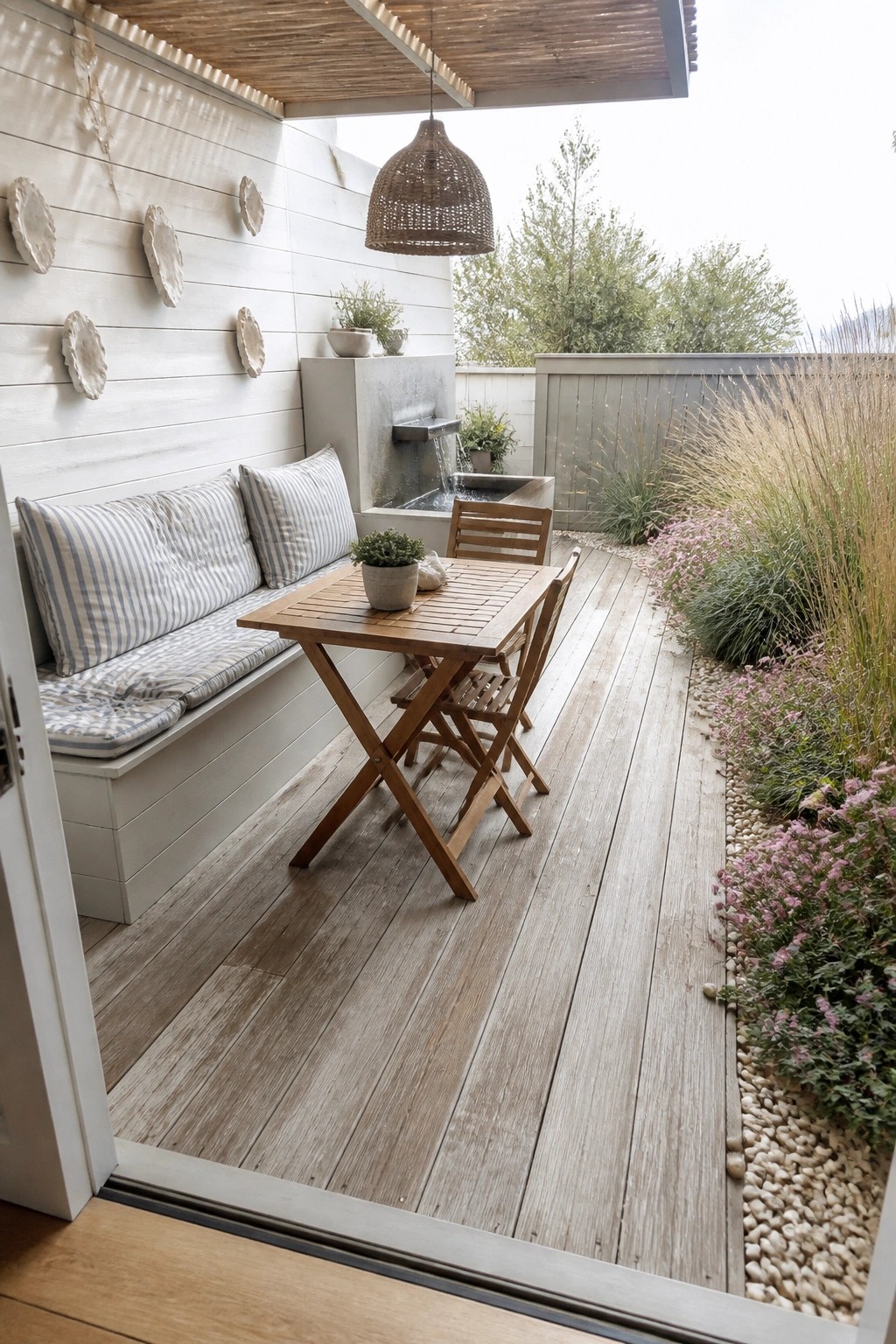
A built in bench is one of the simplest ways to handle a long narrow patio. It gives you plenty of seating without taking up floor space the way extra chairs would.
Run the bench along the full length of one side and keep the middle open for a table and easy movement. This setup works best on tight decks or side yards where you still want room to walk through and use the space for meals or relaxing.
Run Rugs Lengthwise in Narrow Spaces
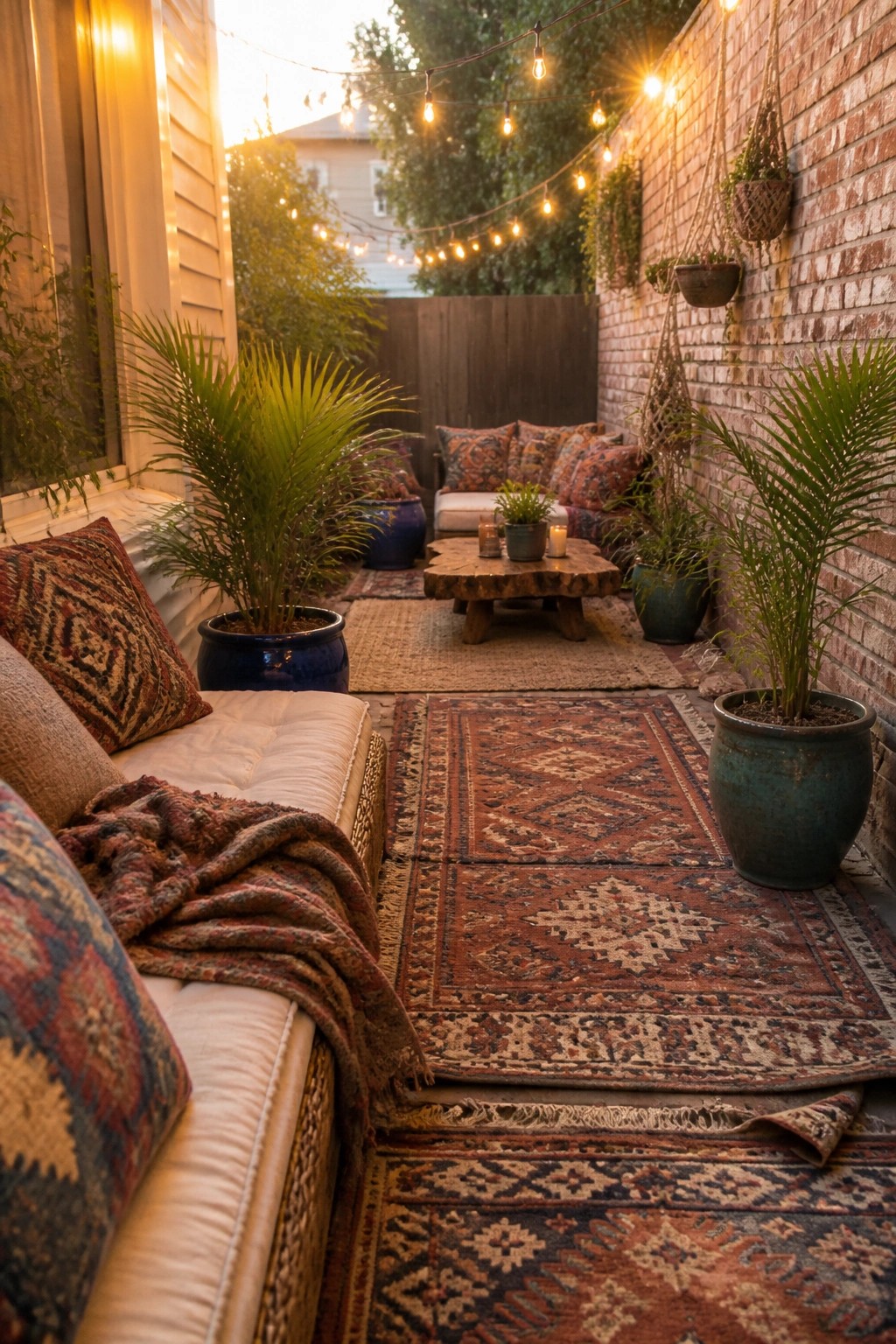
Rugs laid end to end can turn a long skinny patio into something that feels more settled and easy to walk through. They create a steady path that leads the eye forward and keep the space from looking like a leftover strip of concrete.
This approach works best on side yards or narrow decks where you need to connect a seating spot at one end with the house entrance at the other. Keep the rugs in similar tones so the whole run feels connected, and leave room along the edges for a few pots so the plants do not crowd the walking area.
Use a Linear Fire Pit to Fill a Narrow Patio
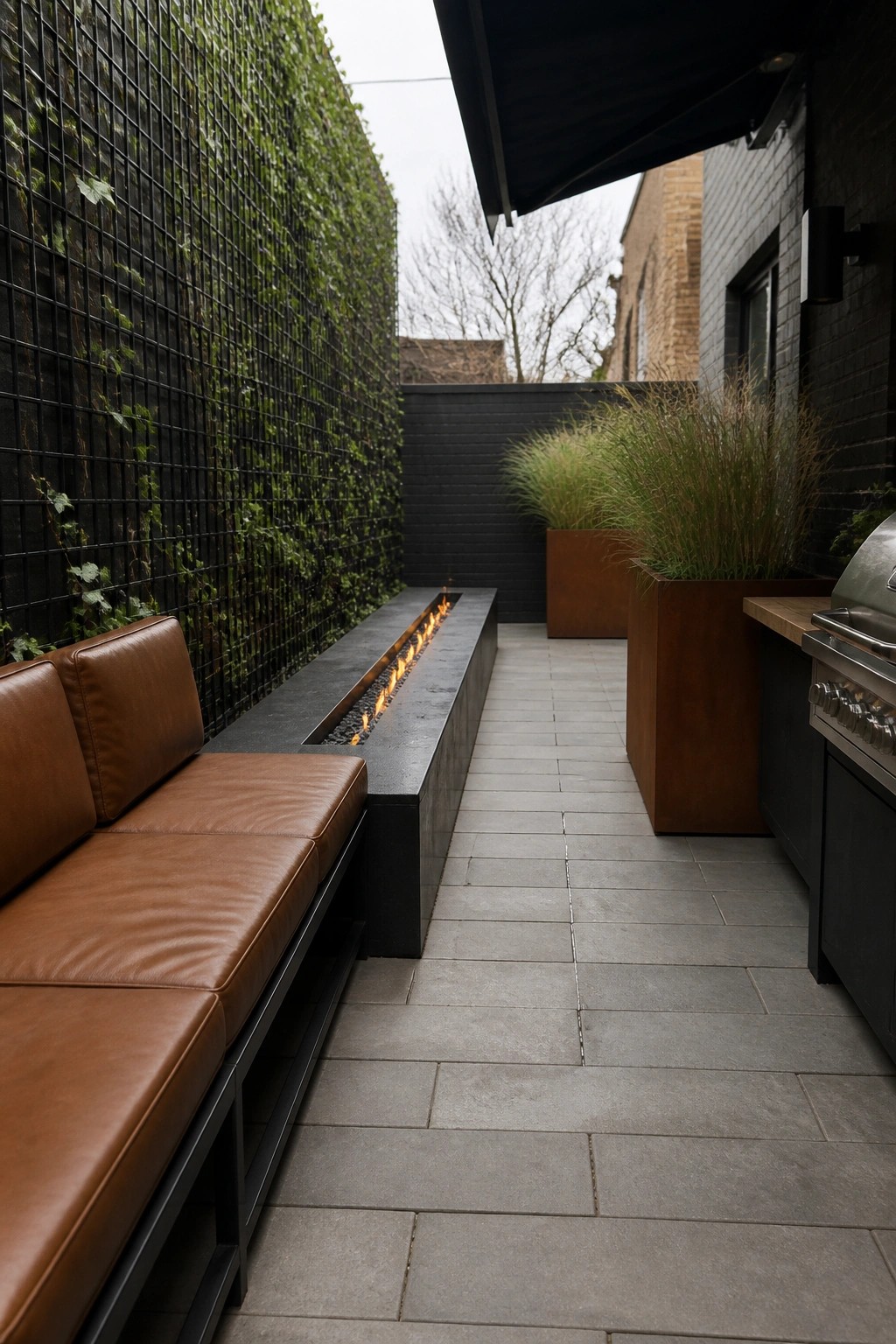
A long narrow fire pit works well when you need to make the most of a tight space. It stretches along the patio without eating into the walking area and gives everyone a spot near the warmth.
This layout suits side yards or slim back patios on modern homes. Keep the seating simple and low along one wall so the fire feature becomes the main draw.
Stepping Stones Keep Narrow Paths Simple
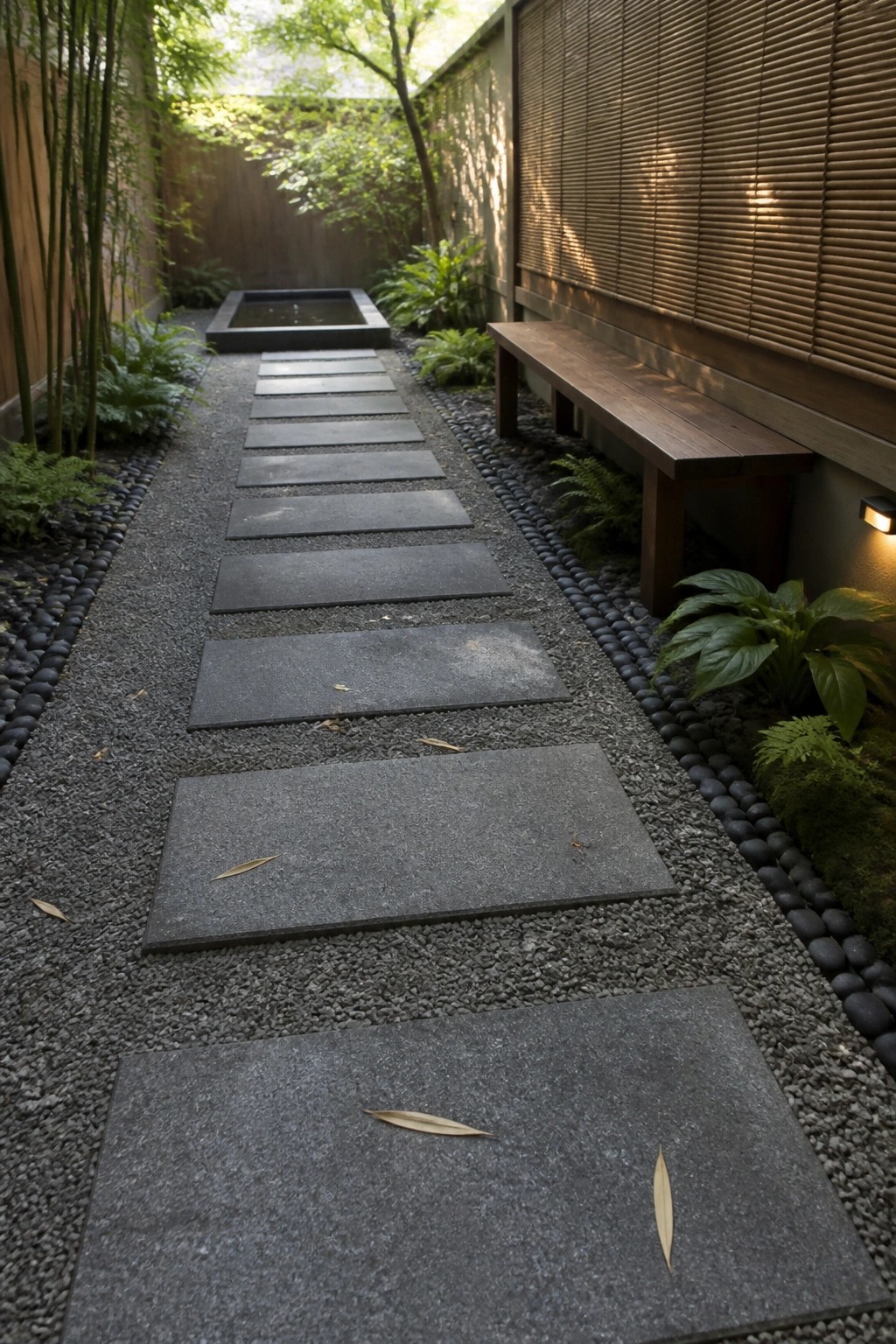
Stepping stones set into gravel give you a clear walking route through a long narrow garden without crowding the space. The large flat stones handle foot traffic while the gravel keeps the surface level and low maintenance.
This works best in side yards or townhouse gardens where you need access to the back but still want planting beds along the edges. Space the stones at a natural walking distance and keep the gravel layer thin so it stays tidy over time.
Bench Along One Long Wall
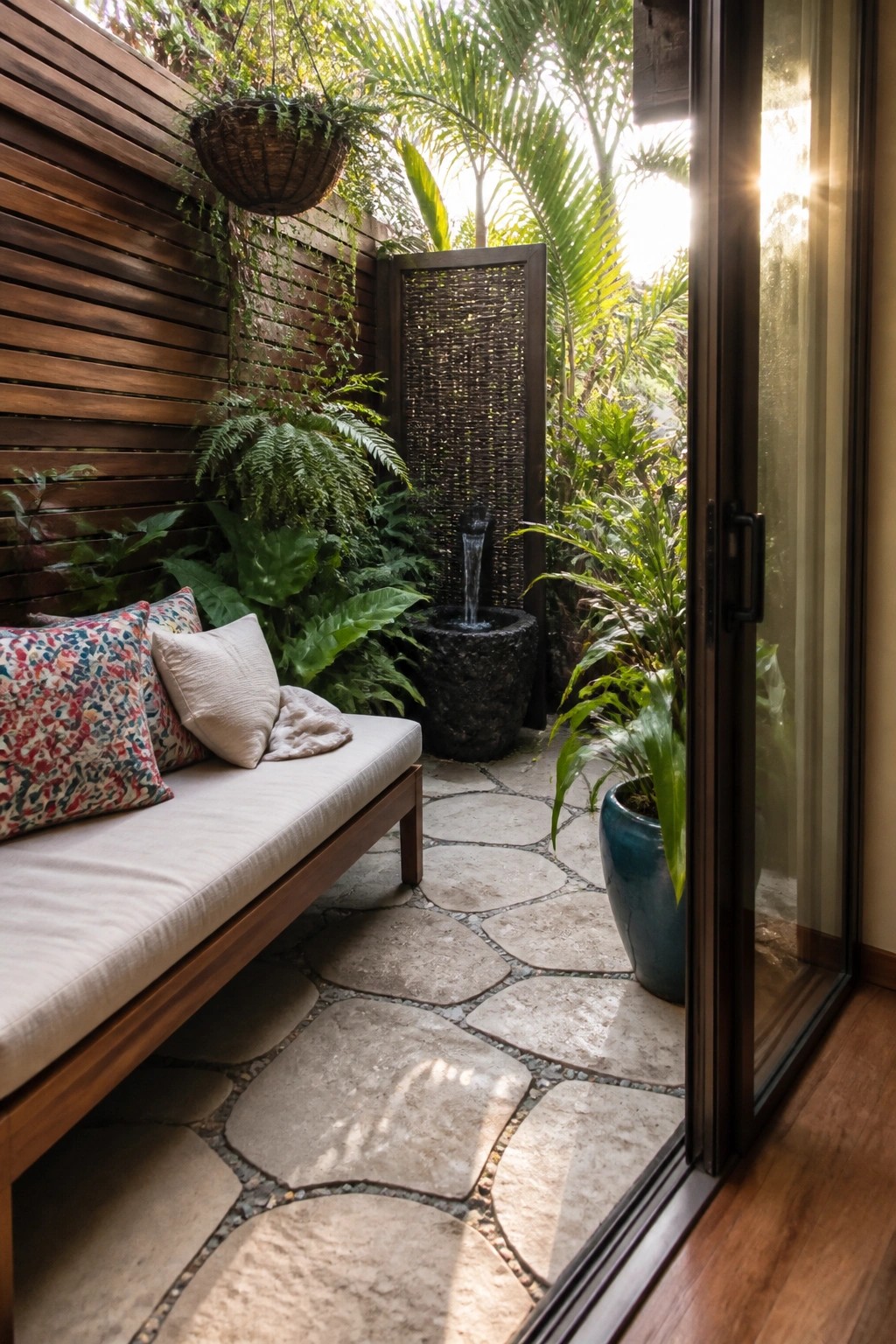
In a long narrow patio, running a bench along one wall keeps the center open for walking. This layout gives you a place to sit without blocking the flow or making the space feel tighter than it already is.
It suits side yards, townhouse patios, or any spot where width is limited. Keep the bench shallow and pair it with a simple path so the area stays practical for daily use.
Line One Side With Built-In Seating
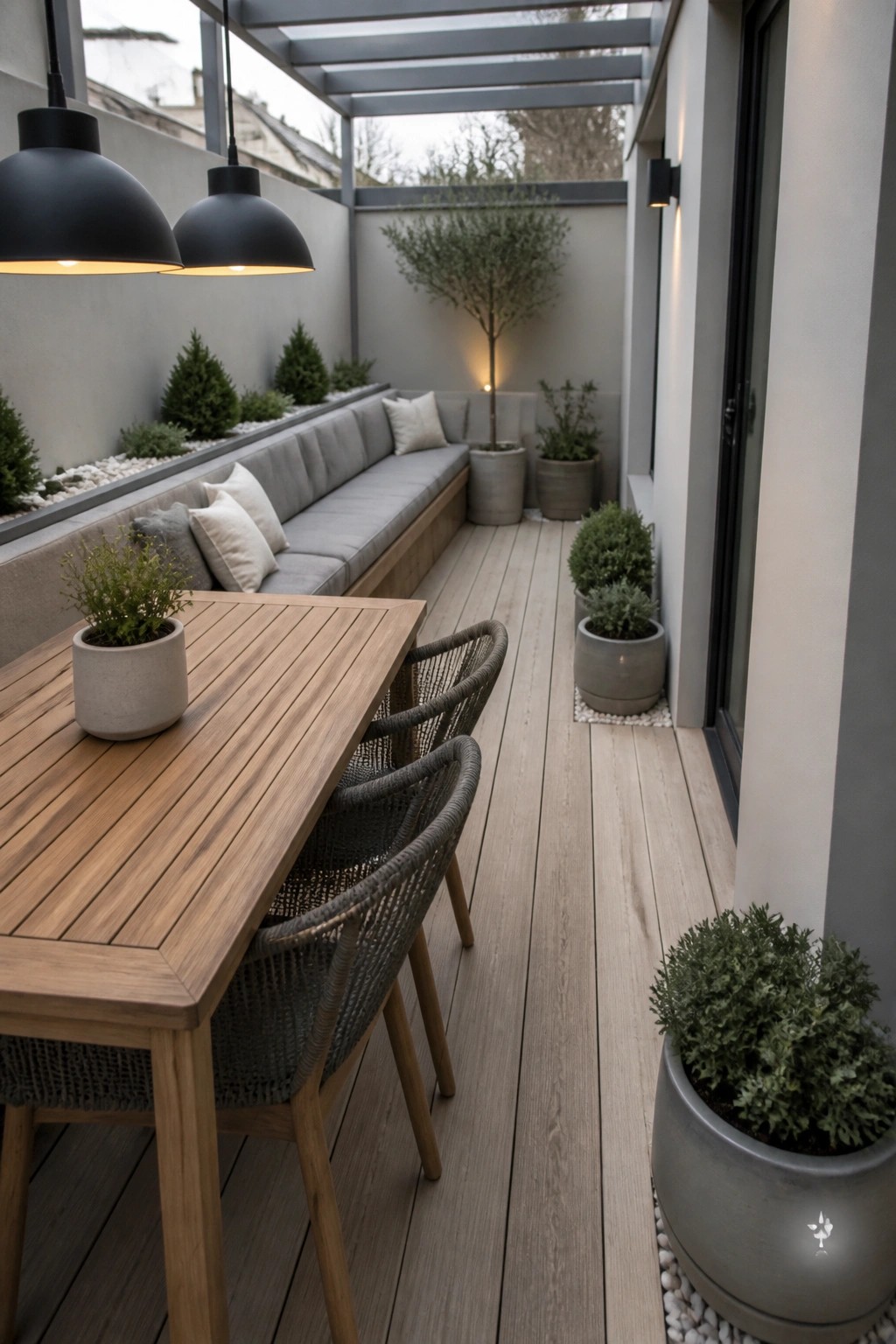
Built-in seating works well in long narrow patios because it keeps the floor clear and avoids the clutter of extra chairs. The bench runs the full length of the space, so you still get plenty of places to sit without eating into the walkway.
This setup fits best in side yards or townhouse patios where width is tight. Put a dining table on the open side and leave enough room for people to pass behind the chairs. A few large pots at the ends help mark the edges without narrowing the path further.
Run the Outdoor Kitchen Along One Wall
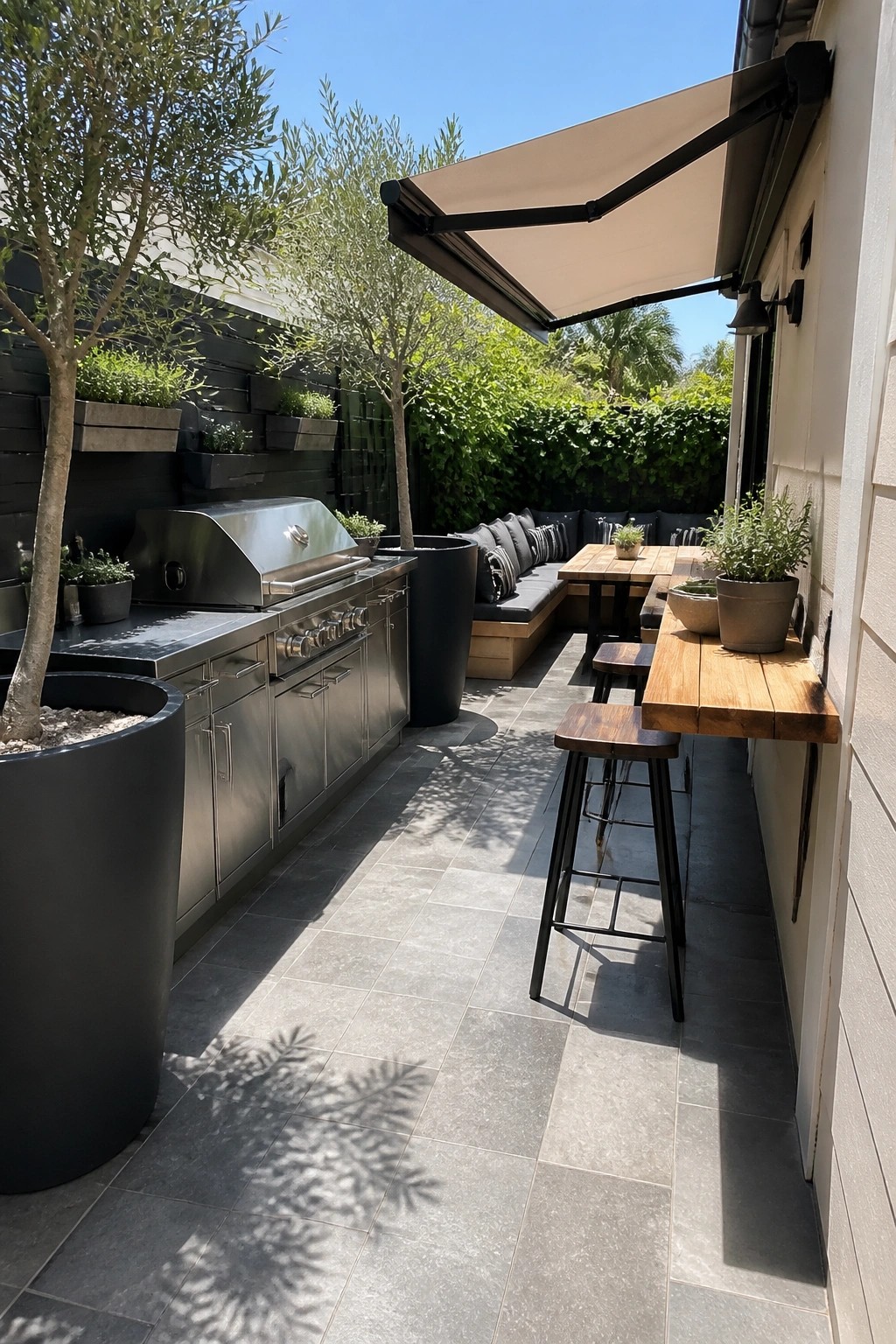
Placing the main cooking area down the full length of one side works well in a narrow patio. It keeps the center open for movement and gives you room for counters, storage, and appliances without crowding the space.
A narrow wall-mounted table on the opposite side can add casual seating while built-in benches at the far end handle lounging. This setup suits townhomes or side yards where width is tight and you still want separate zones for cooking and sitting.
Add a Linear Water Feature Down the Middle
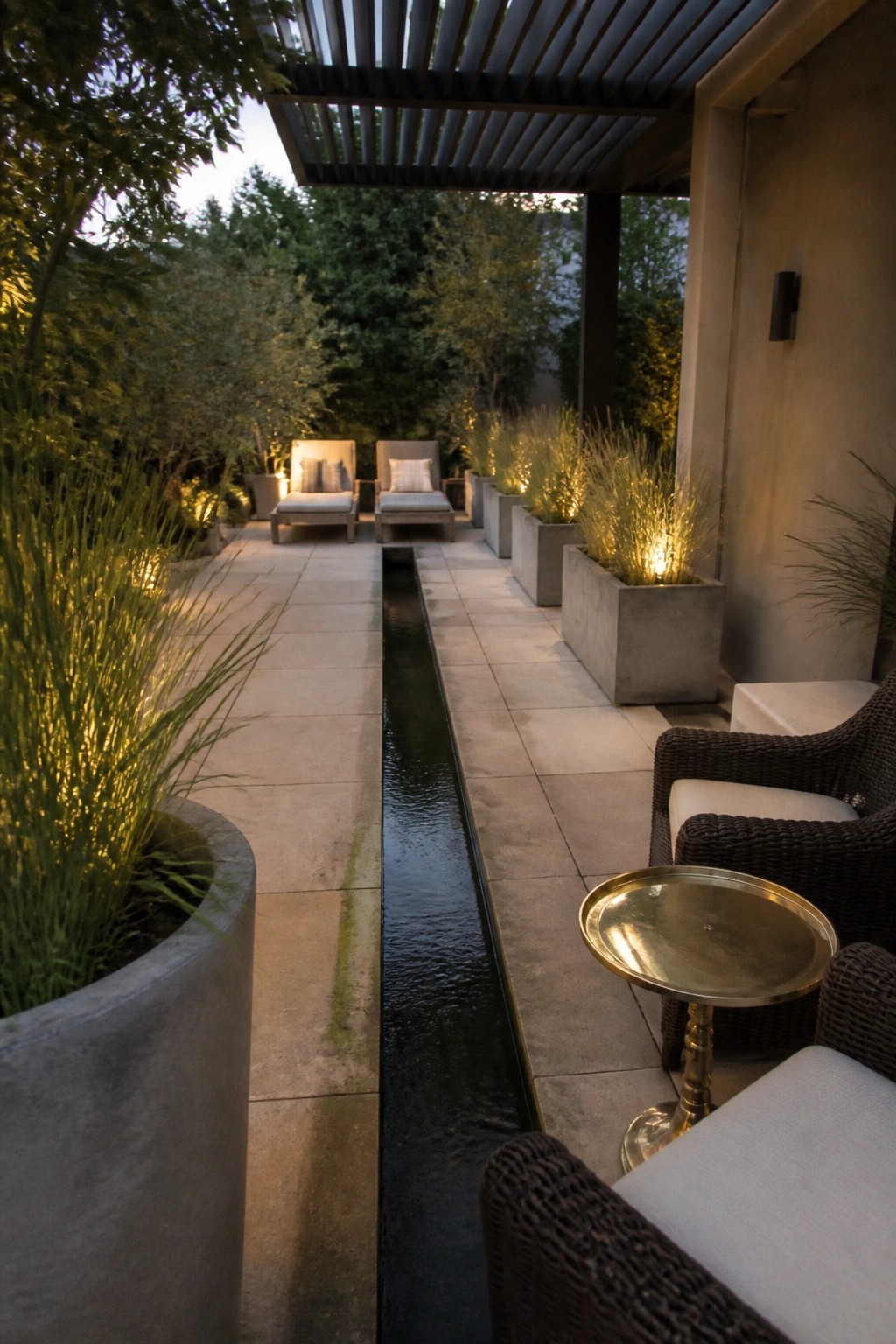
A slim water channel works well in long narrow patios because it gives the space a clear line without eating into the width. The water adds movement and sound that keeps the area from feeling like a plain walkway.
This layout suits homes where the patio sits between walls or fences and needs something to break up the length. Keep the channel narrow and straight, then place seating and plants on both sides so the space feels balanced rather than cramped.
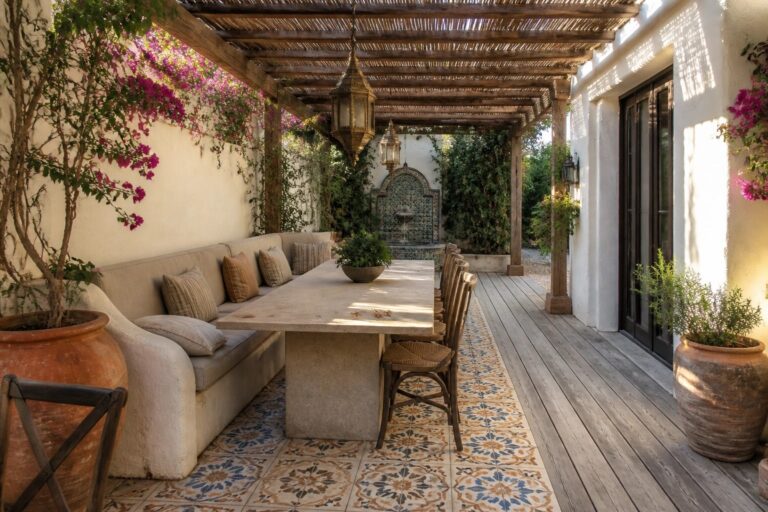
Run a Long Table Down the Patio
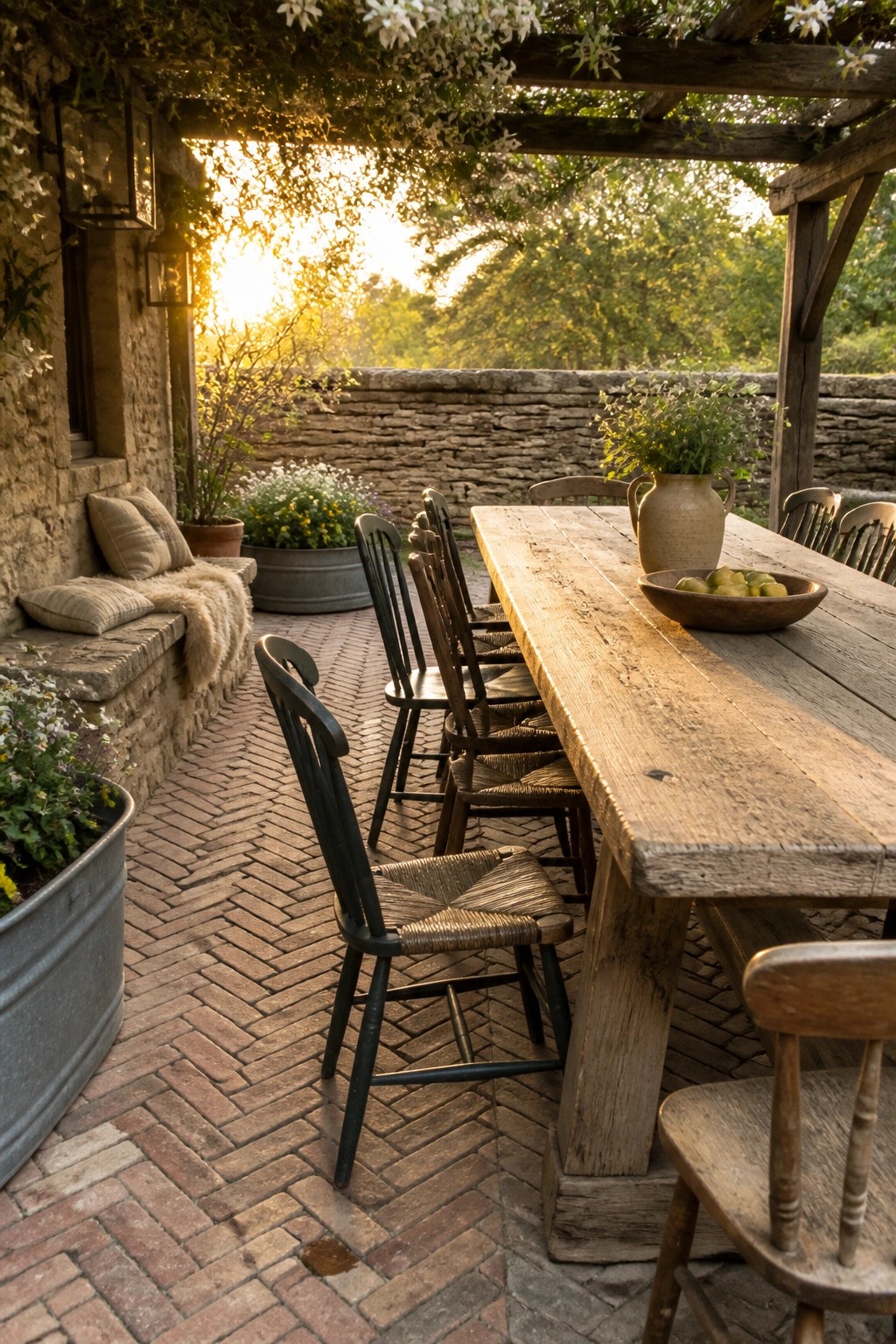
A long table works well in narrow patios because it uses the full length without eating up width. Chairs can line up on one or both sides, and the setup still leaves room to walk around the ends. This keeps the space from feeling chopped up into smaller zones.
It suits older homes or cottages with stone walls and brick floors, where the goal is simple outdoor dining rather than multiple separate areas. Just make sure the table is narrow enough for chairs to pull out comfortably on each side.
Add a Built-In Bench Along One Wall
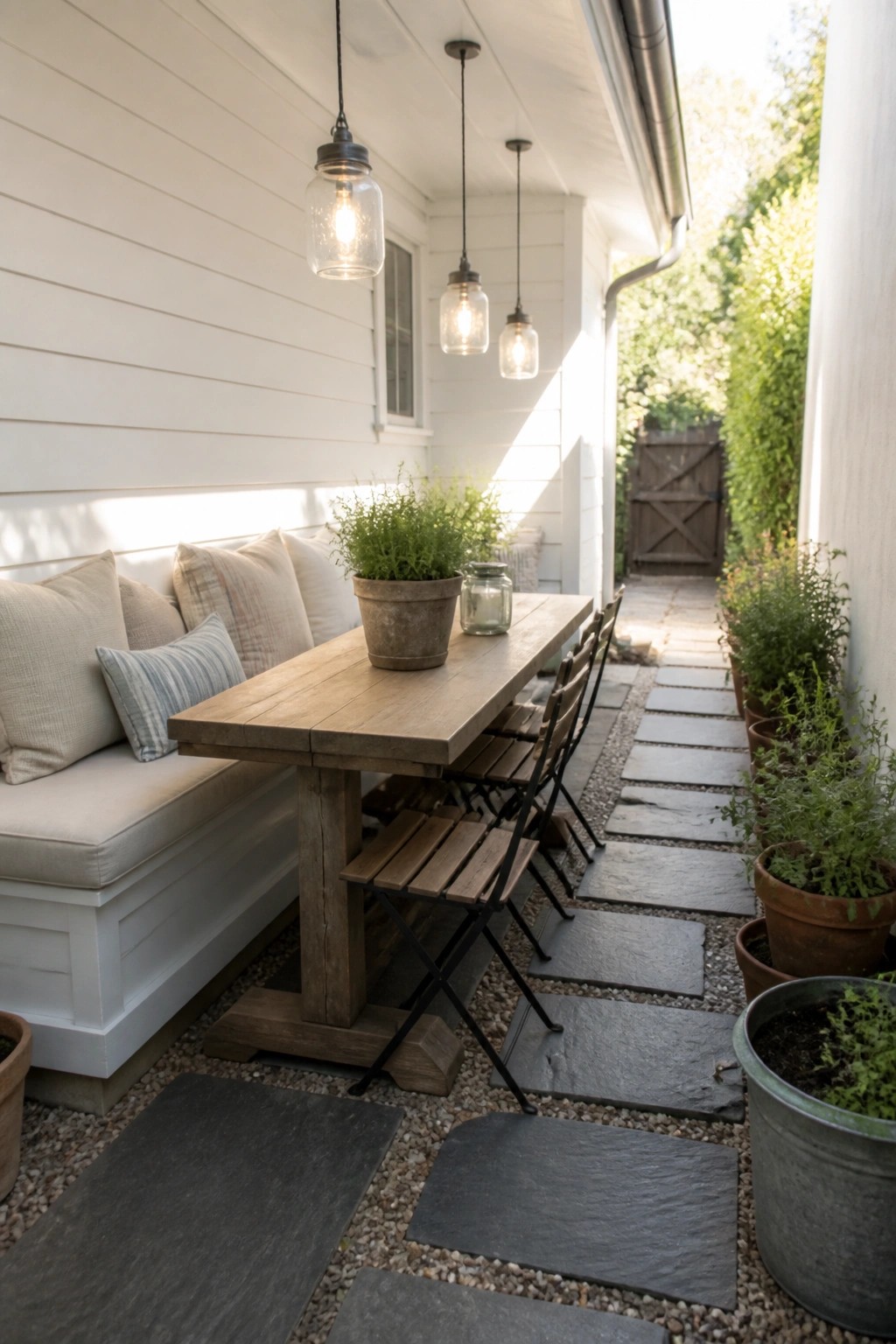
A built-in bench makes good sense in a long narrow patio because it uses the wall space that would otherwise go to waste. It creates steady seating without pushing chairs or stools into the middle of the path.
This layout works well on side yards or covered porches where width is tight. Keep the table slim and choose folding chairs so the bench can handle most of the seating while still leaving room to walk through.
Add Vertical Gardens Along the Walls
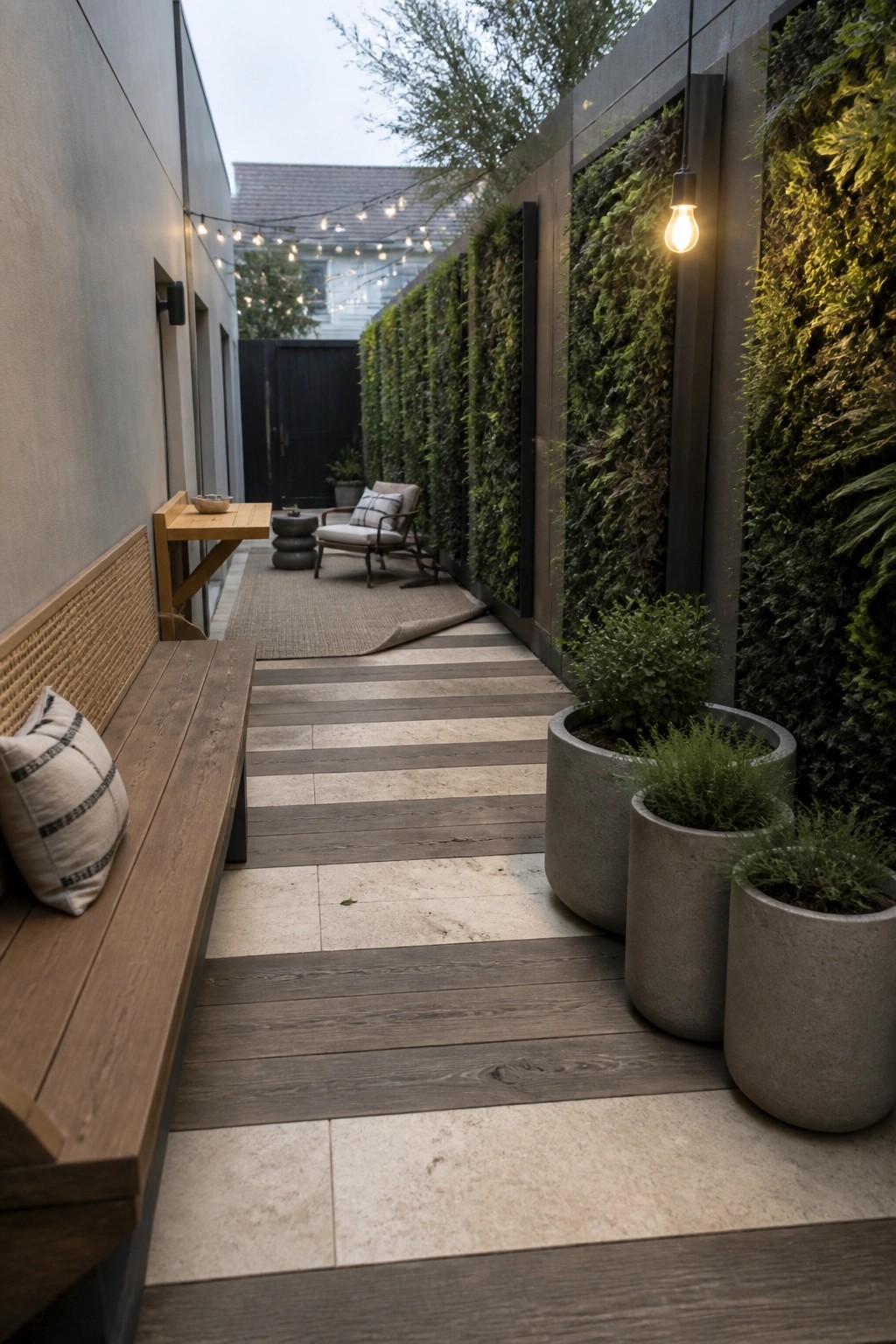
Vertical gardens help narrow patios feel less cramped by moving most of the greenery up and off the floor. In a tight space, this keeps the walkway clear while still giving the area plenty of life and color.
This works best in side yards or townhouse courtyards where you need to fit both plants and seating. Mount panels on one or both long walls and add a few large pots at the base for extra depth without blocking the path.
Run the Kitchen Along One Long Side
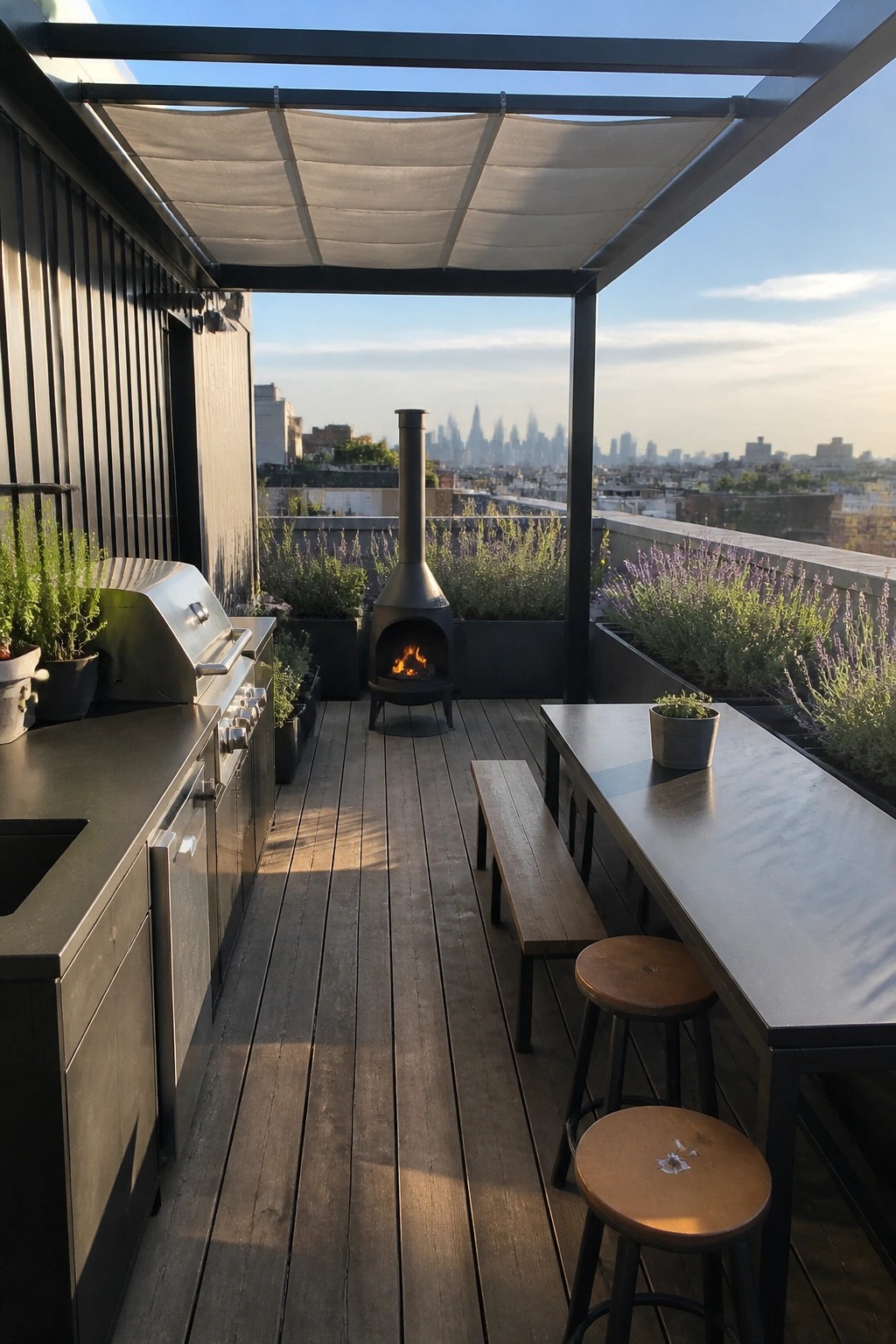
This setup works well in a long narrow patio because it keeps the main work area tucked against one edge. That leaves the middle open for walking through and lets the other side hold seating without everything crowding together.
It suits rooftops or side yards where width is limited. Keep the dining table and stools on the opposite side so people can sit without blocking the path, and use the far end for a small fire feature if the space allows.
Tiered Planters Along One Side
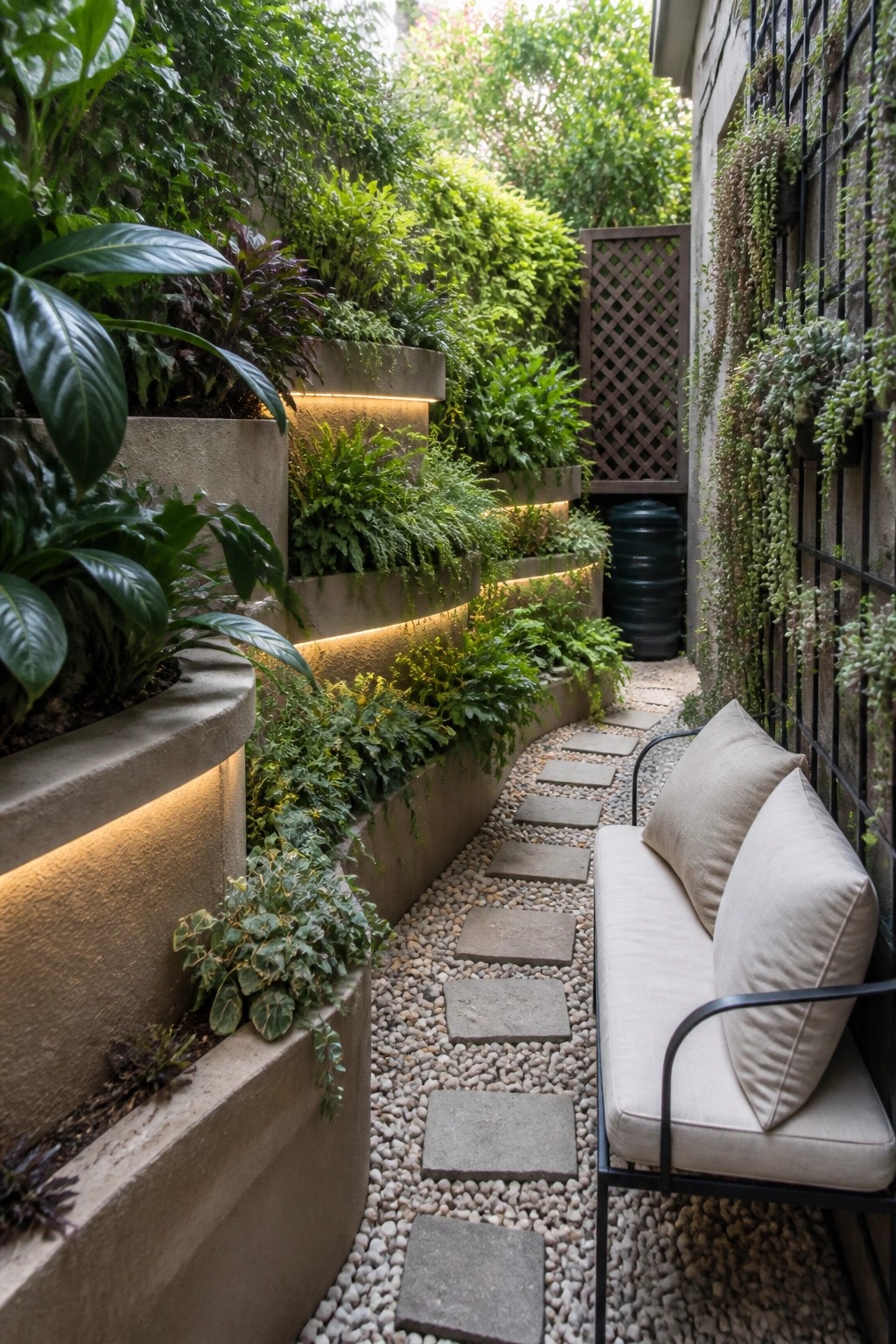
Running tiered planters down one wall is a simple way to pack in plants when the space is tight and long. The levels give you more growing room without spreading out across the path, and the built-in lights help at night.
This works best in side yards or narrow passages between buildings. Keep the opposite side open for a bench or a couple of chairs so the area stays usable instead of just becoming a walkway.
Built-In Bench Seating Along One Wall
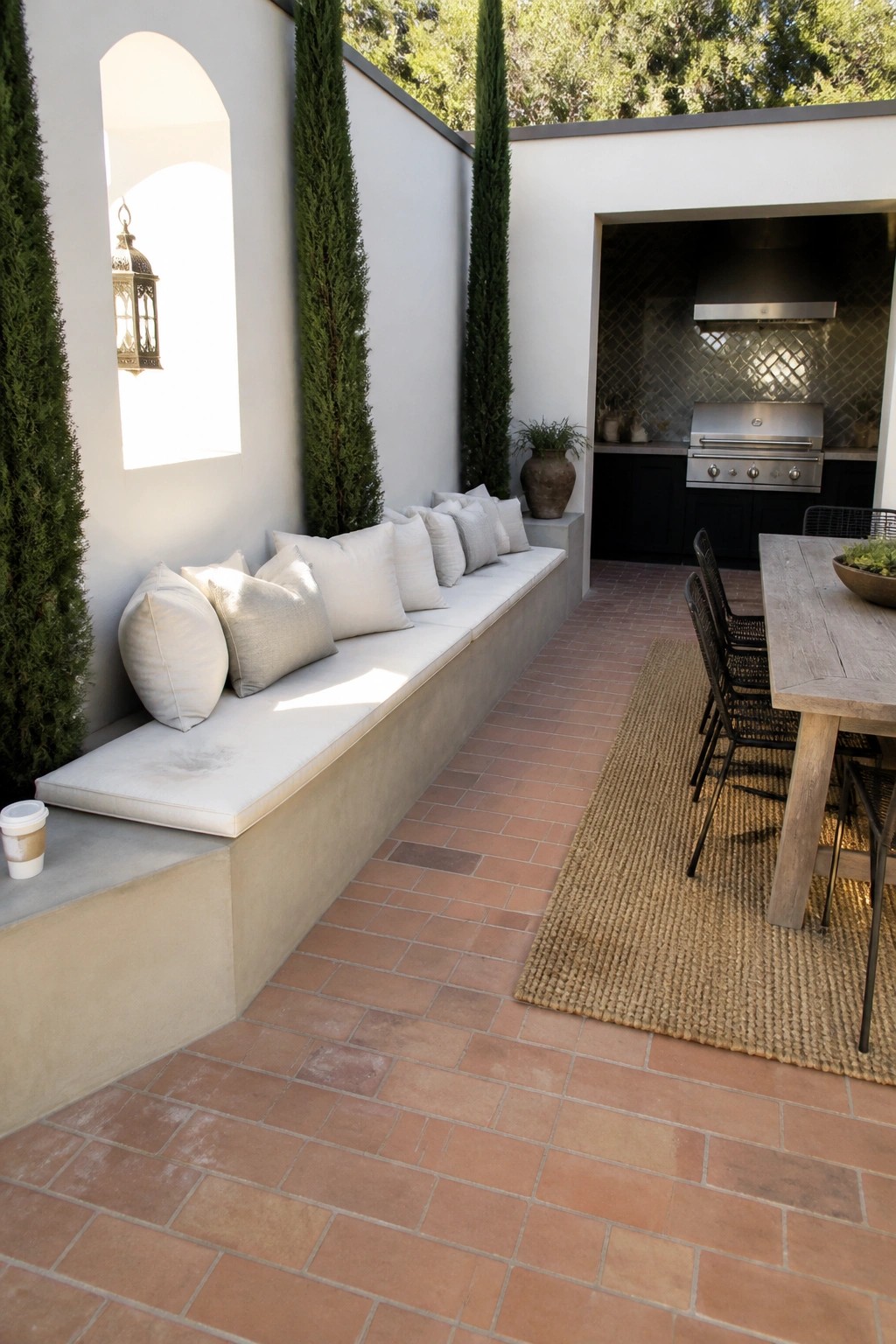
A built-in bench works well in long narrow patios because it adds seating without eating into the width of the space. It sits flush against the wall and turns what would otherwise be dead space into something useful.
This approach leaves room for a table and chairs on the other side while still keeping a clear path through the middle. It suits homes where the patio runs along the back or side of the house and needs to handle both lounging and meals without feeling cramped.
Run a Deck Parallel to a Narrow Pool
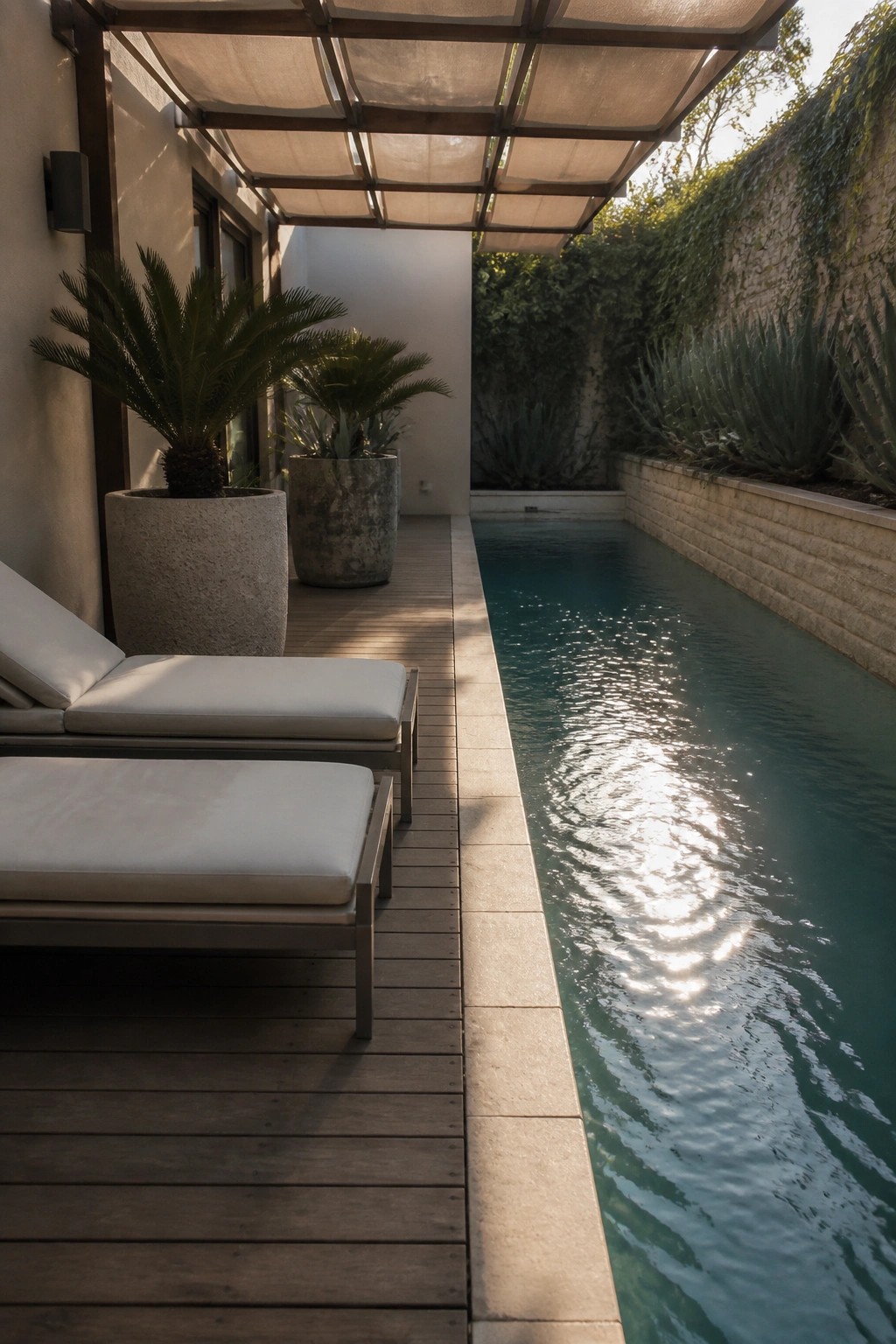
A long narrow space works better when you stop trying to widen it and instead lean into the length. Putting the pool along one side leaves a clean strip of deck on the other for seating. The result feels open rather than cramped because nothing blocks the view down the length of the water.
This setup suits townhomes or side yards where width is limited. Two simple loungers and a few large pots keep the deck usable without adding clutter. Just make sure the deck surface is wide enough for chairs to sit flat and for people to walk past them.
Run the Table Lengthwise
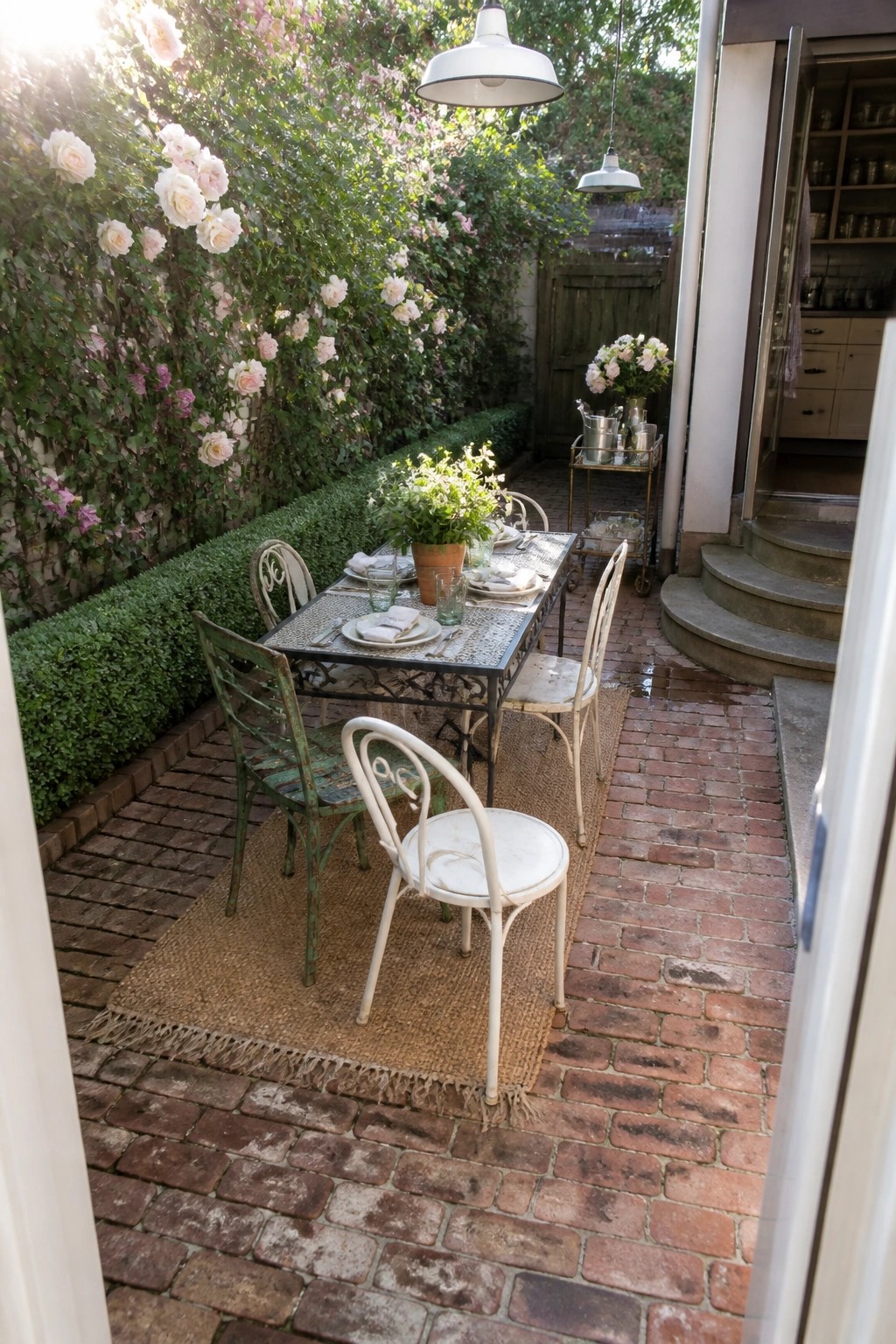
A long narrow patio often feels cramped when you try to place a table across it. Running the table down the length instead opens up more walking room and lets you fit a full set of chairs without blocking the path.
This layout suits side yards or townhouse patios where space is tight on one side. Keep the table narrow, add a simple rug to mark the dining spot, and leave one side open so people can move through easily.
Line One Side With Tall Planters
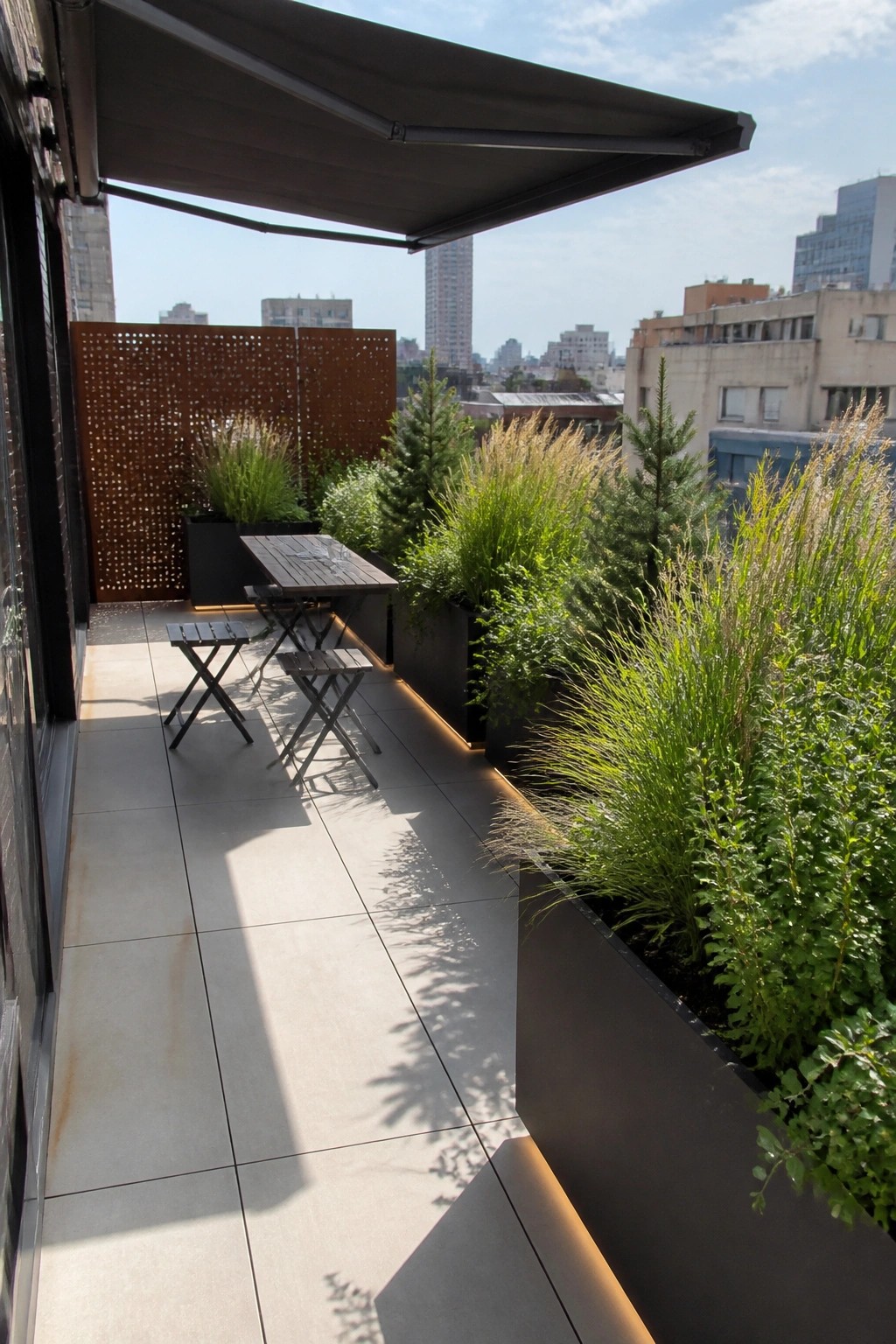
One simple way to make a long narrow patio feel more usable is to run a row of tall planters down one edge. This adds greenery and softens the hard surfaces while keeping the main walking area open and clear.
It suits urban balconies or slim decks where floor space matters. Stick with matching planter styles and vary the plant heights a bit so the line feels natural rather than stiff.
Frequently Asked Questions
Q: How do I fit a dining spot into a long narrow patio without blocking the path? A: Place a slim bench against the longest wall and add two lightweight chairs that tuck under a narrow table. This setup leaves a clear walkway on the other side so people can move through without stepping around furniture.
Q: What if the space feels like a tunnel with walls on both sides? A: Paint one wall a lighter color and add a mirror or two to bounce light around. Then run a simple path of stepping stones down the middle to pull the eye forward and break up the straight lines.
Q: Can I really grow anything useful here without losing walking room? A: Mount a vertical herb rack on the fence and keep the floor clear except for one or two tall pots at the far end. You get fresh herbs within reach and the space still feels open enough to stroll through.
