


When I think about small patios the real test comes down to whether the space can handle everyday meals without feeling cramped or blocked.
Compact dining sets can anchor the area nicely but only if the layout leaves enough room to pull out chairs and move around freely.
I have noticed that some arrangements look fine in photos yet end up unused because there is no clear path or spot left for anything else.
That mismatch shows up fast once you try living with it.
A few thoughtful tweaks in scale or placement often make the difference between a patio that sits empty and one that gets regular use.
Use a Pergola Over a Narrow Patio Table
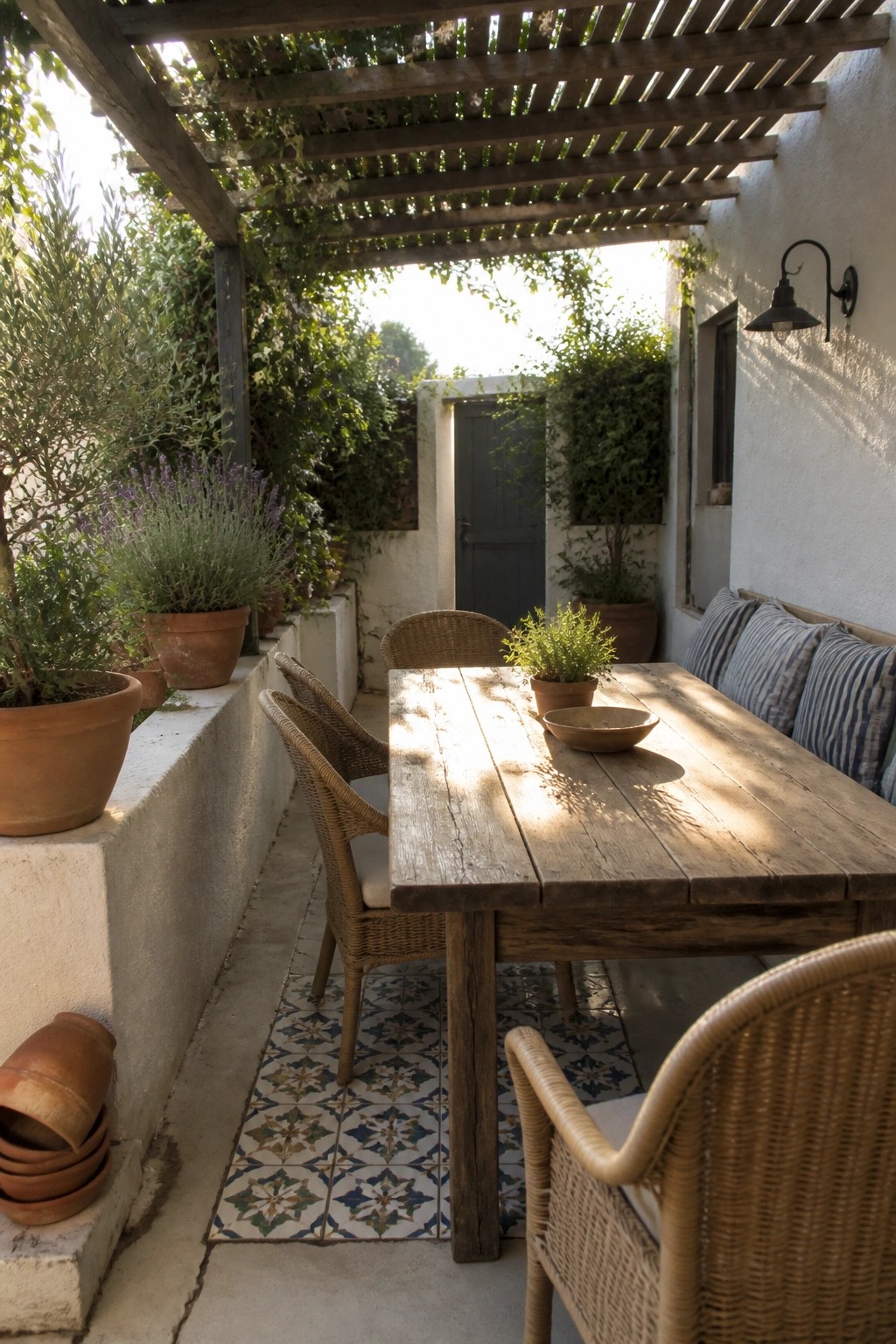
A pergola adds useful shade and a bit of structure without making a small patio feel boxed in. It works especially well when the space is long and tight, letting light filter through while still marking the dining area as its own zone.
This approach suits older homes or townhouses where the patio runs along a wall. Keep the table centered under the beams and use potted plants along the sides to soften the edges and make the space feel more inviting.
Round Pedestal Tables Fit Tight Patios
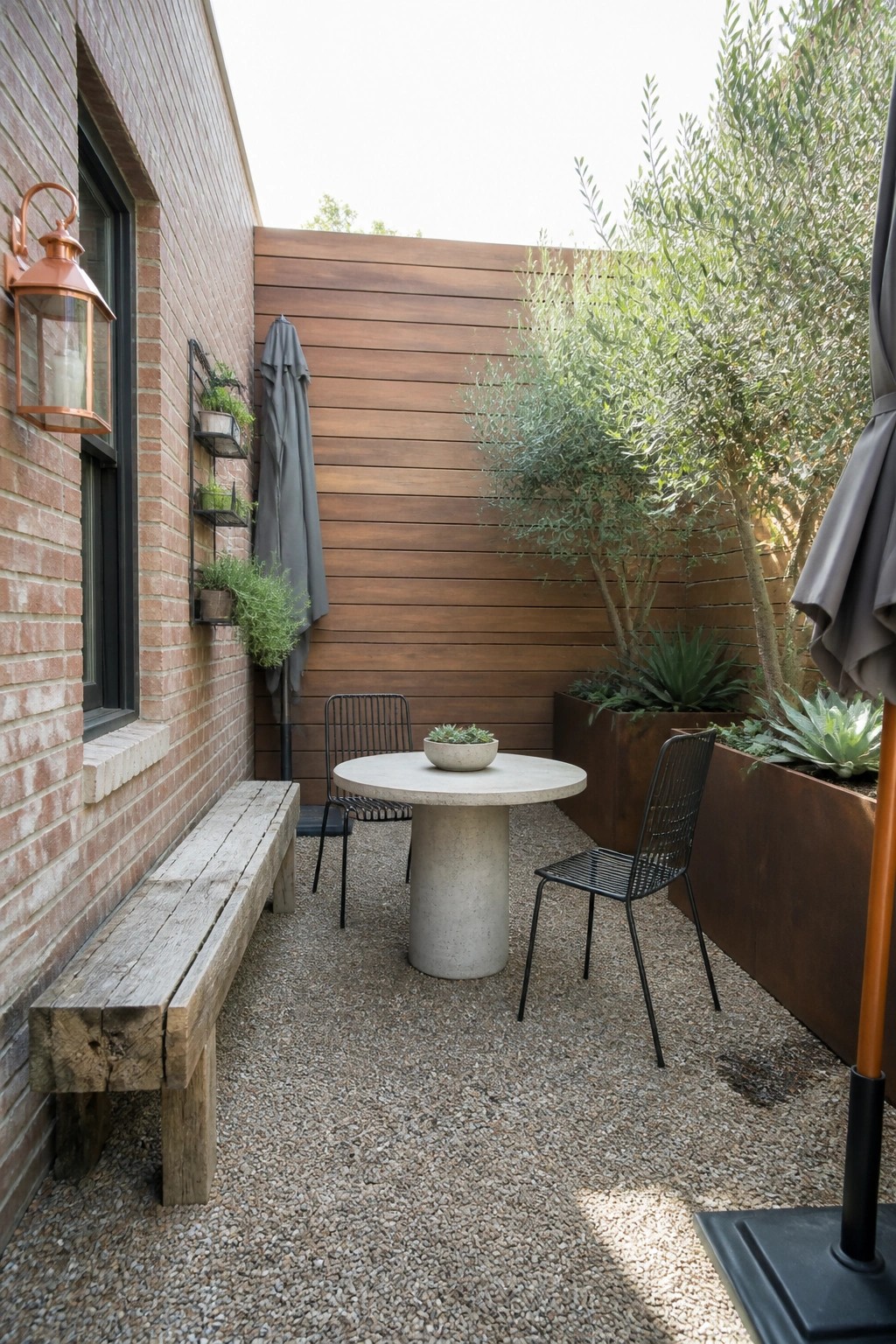
A round table with a single pedestal base leaves more room to walk around in a narrow patio. The shape avoids sharp corners that can crowd the space, and it lets you tuck chairs in close when they are not in use. This setup works especially well when the patio sits between a house wall and a row of planters.
It suits townhomes or side yards where every foot counts. Pair the table with slim metal chairs so nothing feels bulky. Keep the ground simple with gravel or pavers to avoid adding visual weight.
Define A Small Patio Dining Area With A Rug
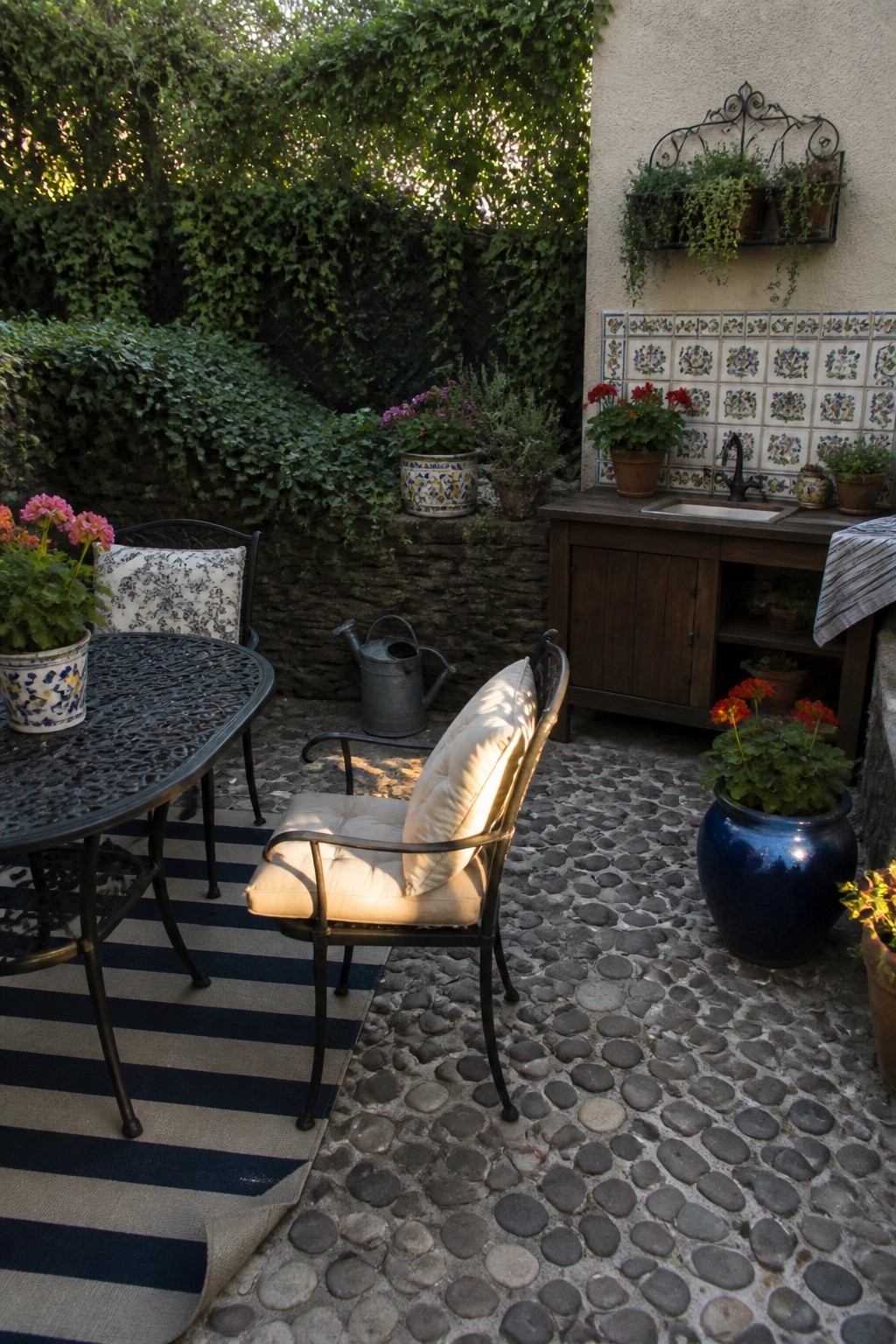
A rug under a compact dining set gives the space a clear boundary. On a stone or gravel patio it keeps the table and chairs from feeling like they are just sitting out in the open.
This works best when the rug is a little larger than the furniture so all the legs rest on it. It also adds a softer surface underfoot and makes the whole setup feel more like a real dining spot rather than temporary furniture.
Drop-Leaf Tables Keep Narrow Patios Usable

A drop-leaf table gives you room to eat outside without blocking the whole patio. It folds down flat against the wall or rail when you need the space for other things.
This works especially well on balconies or decks where every square foot counts. Pair it with a bench along one side and a couple of stackable chairs so the area stays open and easy to move through.
Round Tables Keep Small Patios Open

A round table takes up less visual room than a square one and lets people move around it more easily on a tight patio. The shape also softens the layout so the space does not feel crowded even when you add a few chairs and some plants.
This idea works well on small urban patios or side yards where every foot counts. Keep the chairs simple and mismatched so the area stays casual, and place the table near a wall or corner to leave the rest of the patio free for walking or extra seating.
Pair a Compact Dining Set With a Fire Pit

A small patio often feels more useful when the dining set stays simple. Two chairs and a modest table take up little space and leave room right beside them for a fire pit that extends the hours you can spend outside.
This works best on narrow decks or side patios where every foot counts. Keep the table size modest so the fire bowl can sit close without crowding the walkway or blocking the door.
Round Tables Open Up Small Patio Spaces

A round table is one of the easiest ways to keep a small patio from feeling cramped. It removes sharp corners that can block movement, so people can walk around the chairs without bumping into anything. The curved shape also lets you fit more seating in a tight area without crowding the space.
This setup works especially well on apartment patios or narrow side yards where every inch counts. Place the table near a wall or planter to leave walking room on the other sides. Stick with lightweight chairs like wicker so you can shift them easily when needed.
Square Metal Tables Save Space on Small Patios
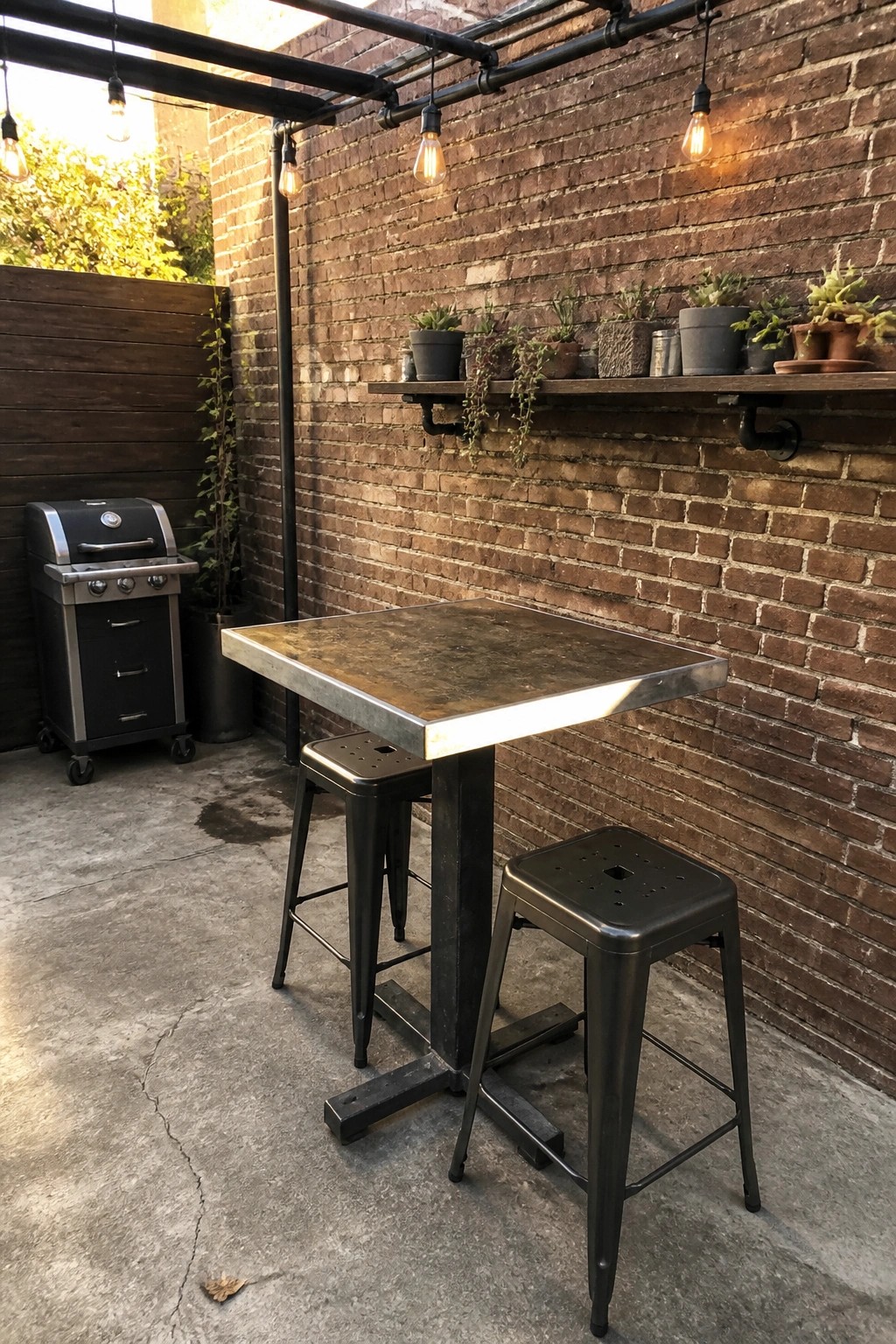
A square metal table with a couple of stools works well when space is tight. It gives you a real place to eat or sit without spreading out too far or blocking the rest of the patio.
This kind of set fits best on concrete or similar hard surfaces where you want something sturdy that can stay outside. It suits homes with narrow outdoor areas and leaves room for a grill or a few plants nearby.
Tuck a Compact Table Into a Plant-Filled Corner

A small patio often feels more usable when the dining set stays modest and the surrounding plants take over. A simple round table with two chairs slips easily into a corner where large pots and climbing vines already create enclosure.
This works best on patios that get steady sun, since the pots and vines can thrive without competing for floor space. Keep the table size in check so the greenery stays the main feature rather than an afterthought.
Drop-Leaf Tables Fit Small Patios Well

A drop-leaf table gives you a real dining spot without eating up too much floor space. The leaves fold down when the table is not in use, so the patio stays open for walking or other seating.
This works best on patios that sit right against the house or a fence. Tuck the folded side close to the wall and add a bench on the other side for extra seating without needing a full set of chairs.
Set a Compact Table Right Beside the Garden

A small patio gains a lot when the dining table sits close to the garden edge. This setup turns a limited space into a quiet spot for meals without crowding the area or blocking the view of the plants and paths.
It works best on patios that open directly to gravel or planting beds. Keep the table low and simple, use just enough seating for two or four, and let the surrounding stones and trees provide the main interest. Avoid adding extra furniture that would shrink the open feel.
Mix Chairs Around A Compact Patio Table

A small round table with a few mismatched chairs can turn a narrow porch or deck into a usable dining spot without crowding the space. The mix of seating keeps things from feeling too formal and lets you work with whatever chairs you already have on hand.
This setup works best on small patios where a full matching set would feel too big. Add a simple rug underneath to mark the area and keep the table from sitting directly on the deck boards. String lights overhead help the space feel finished once the sun goes down.
Add A Heater To Extend Patio Season
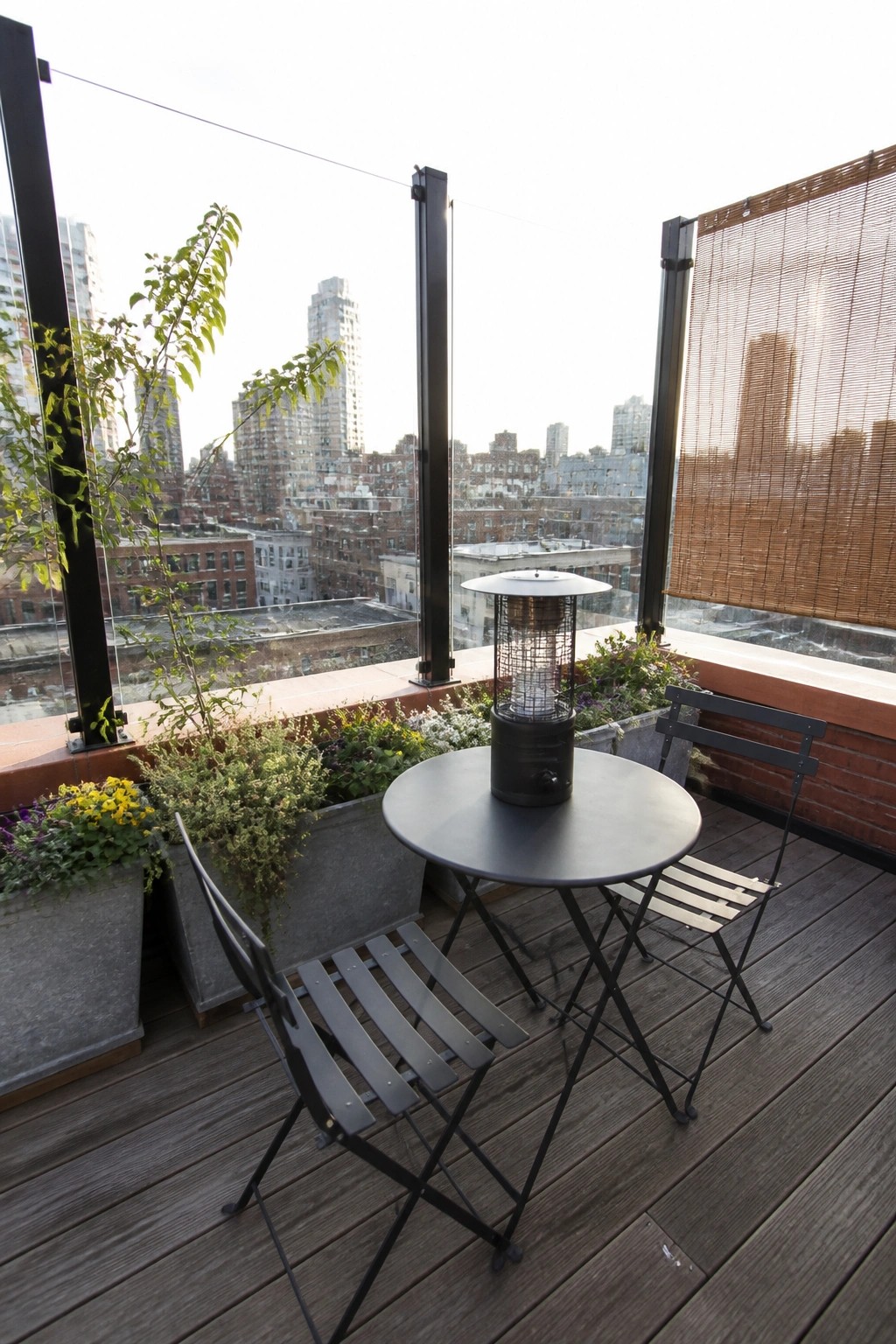
A small patio stays more useful when you can keep the dining table in play even after the weather cools. Placing a heater right beside the table turns the space into something you can use on more evenings without needing extra layers or moving indoors.
This setup works best on balconies or tight decks where the table is already the main feature. Choose a slim heater model that slides in next to the chairs without blocking the walkway, and make sure it matches the scale of a compact round table so the whole area still feels open.
Choose A Compact Metal Dining Set

A small metal dining set works well when space is tight because it gives you a real place to sit without taking over the whole patio. The simple frame and open design keep things from feeling crowded even when plants and other garden pieces sit close by.
This approach suits older homes or cottage style yards where the patio connects right to the garden. Place the set on brick or stone so it feels grounded, and leave enough room around the chairs for easy movement.
Living Walls Bring Greenery To Tight Outdoor Spaces
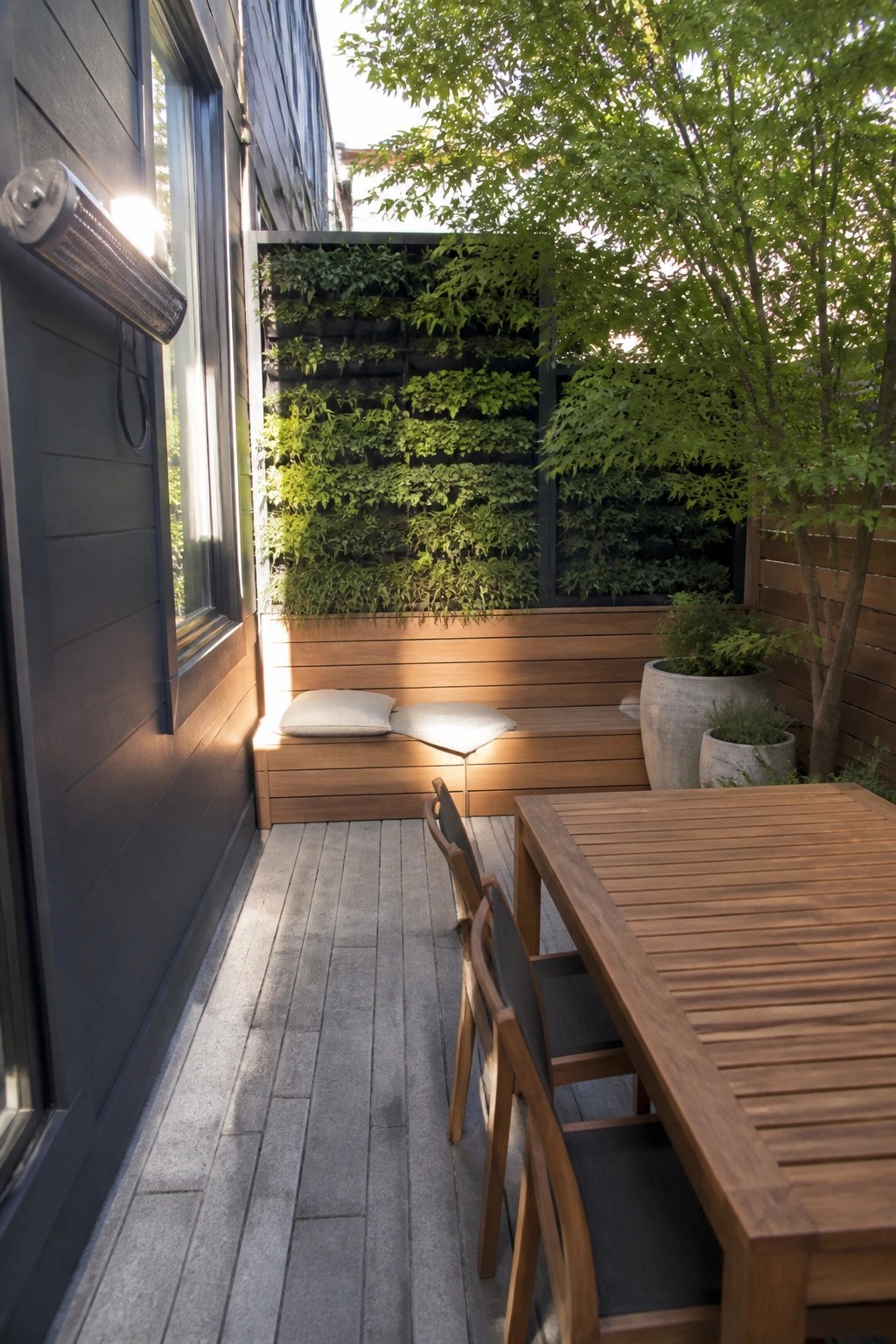
A living wall works well in a narrow patio because it adds plenty of plants without using up floor space. The rows of greenery create a soft backdrop that makes the whole area feel more inviting while still leaving room for a table and chairs.
This setup suits homes with limited side yards or small decks where you want some privacy. Keep the plants in a spot that gets decent light and plan for easy watering so the wall stays healthy over time.
Mount a Table to the Wall

Mounting a table straight to the wall works well when floor space is tight. It keeps the dining area from taking over the whole patio and leaves room to move around the stools.
This approach suits narrow side yards or small urban patios where a regular table would block the path. Use sturdy brackets, keep the surface narrow, and choose stools that slide underneath when not needed.
Add A Built-In Bench To Your Small Patio Dining Area
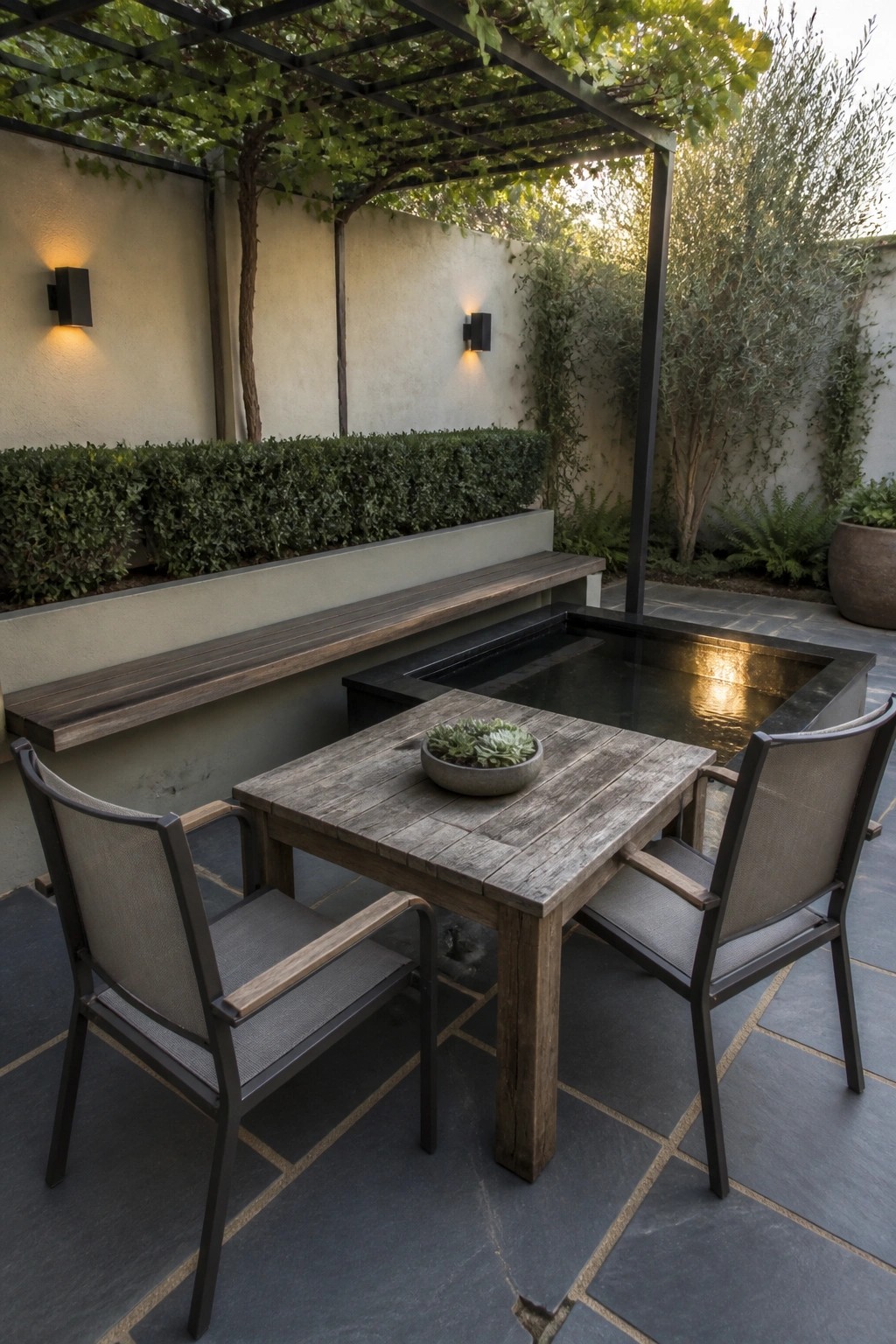
A built-in bench gives you extra seating without crowding the floor space around a compact table. In a tight patio, it turns one side of the dining area into permanent seating so you only need to add a couple of chairs on the other sides. This setup keeps the whole area feeling open while still letting four or five people eat comfortably.
The bench works best when it runs along a wall or planter edge and matches the table material. It suits small city patios or side yards where every square foot counts. Just make sure the bench height lines up with your dining chairs so everyone sits at the same level.
Tuck a Compact Bistro Set by the Outdoor Kitchen
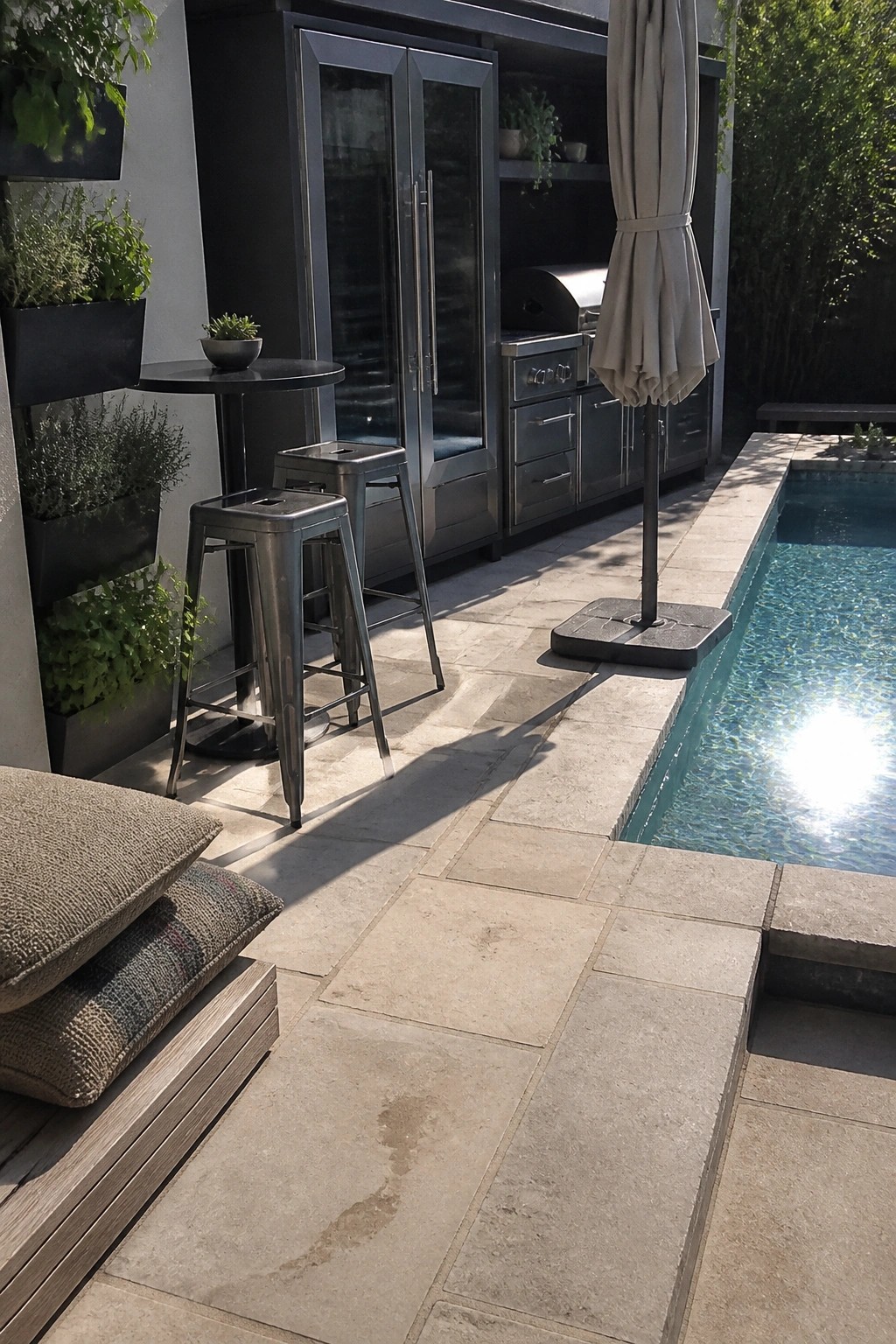
A small round table with two metal stools takes almost no space yet gives you a place to sit with a drink or a quick bite right next to the grill. This setup keeps the rest of the patio open and works especially well when the kitchen and pool are close together.
It suits smaller yards or pool decks where a full dining table would feel too big. Stick with weatherproof stools that can stay out year round and place them where they do not block the main walkway.
Low Poufs Around A Compact Table Free Up Patio Space
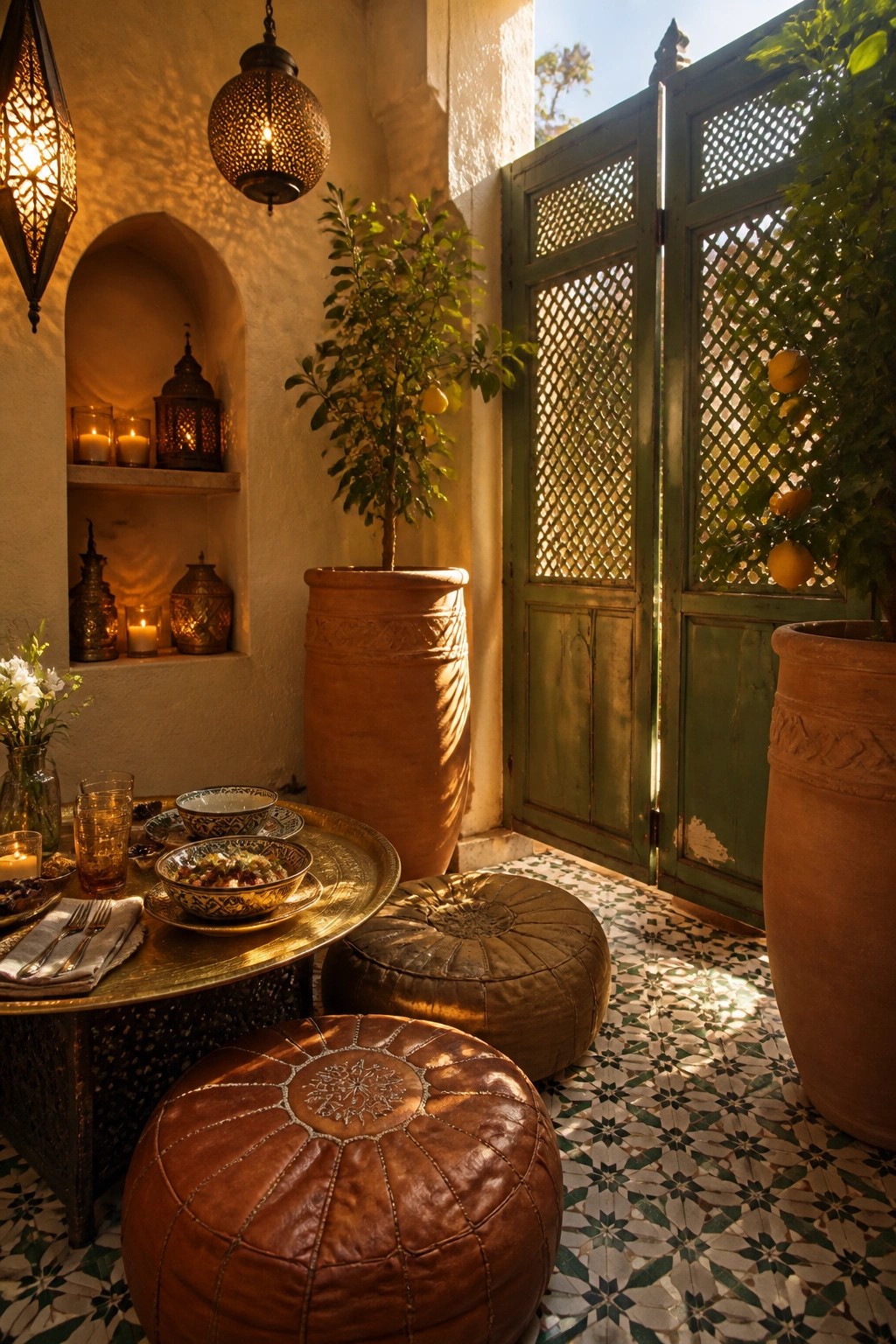
Many small patios get tight once you add a regular table and chairs. A low table with floor poufs solves that by keeping the seating low and movable so the space still feels open.
This approach works best in enclosed courtyards or small terraces where every foot of floor matters. It suits homes that want outdoor dining without blocking movement or adding bulk.
Compact Folding Tables Work Well On Small Patios

A small folding table with a couple of matching chairs can turn a narrow deck into a usable dining spot without taking over the whole area. The setup stays simple and leaves room to walk around or add a fire feature nearby when needed.
This approach works best on decks or patios that are short on floor space but still get regular use. Keep the pieces lightweight so they can be shifted or stored during bigger gatherings or bad weather.
Add a Bench for Extra Seating on a Small Patio

A storage bench next to a compact dining set gives you more places to sit without crowding a narrow patio. The bench also hides cushions or small tools, which keeps the space tidy when the table is not in use.
This idea works best on townhome patios or side yards where every inch counts. Match the bench height to your table and keep the path clear so people can still walk through.
Set a Compact Table Right on Gravel

A small dining set placed directly on gravel turns a narrow side passage into a workable outdoor spot. The loose surface keeps the area casual and helps it blend with the surrounding garden instead of creating a hard edge.
This setup suits homes with limited patio space or existing gravel paths along the house. Level the chairs carefully and add a thin outdoor rug if you want more stability underfoot.
Round Tables Fit Small Patios Better
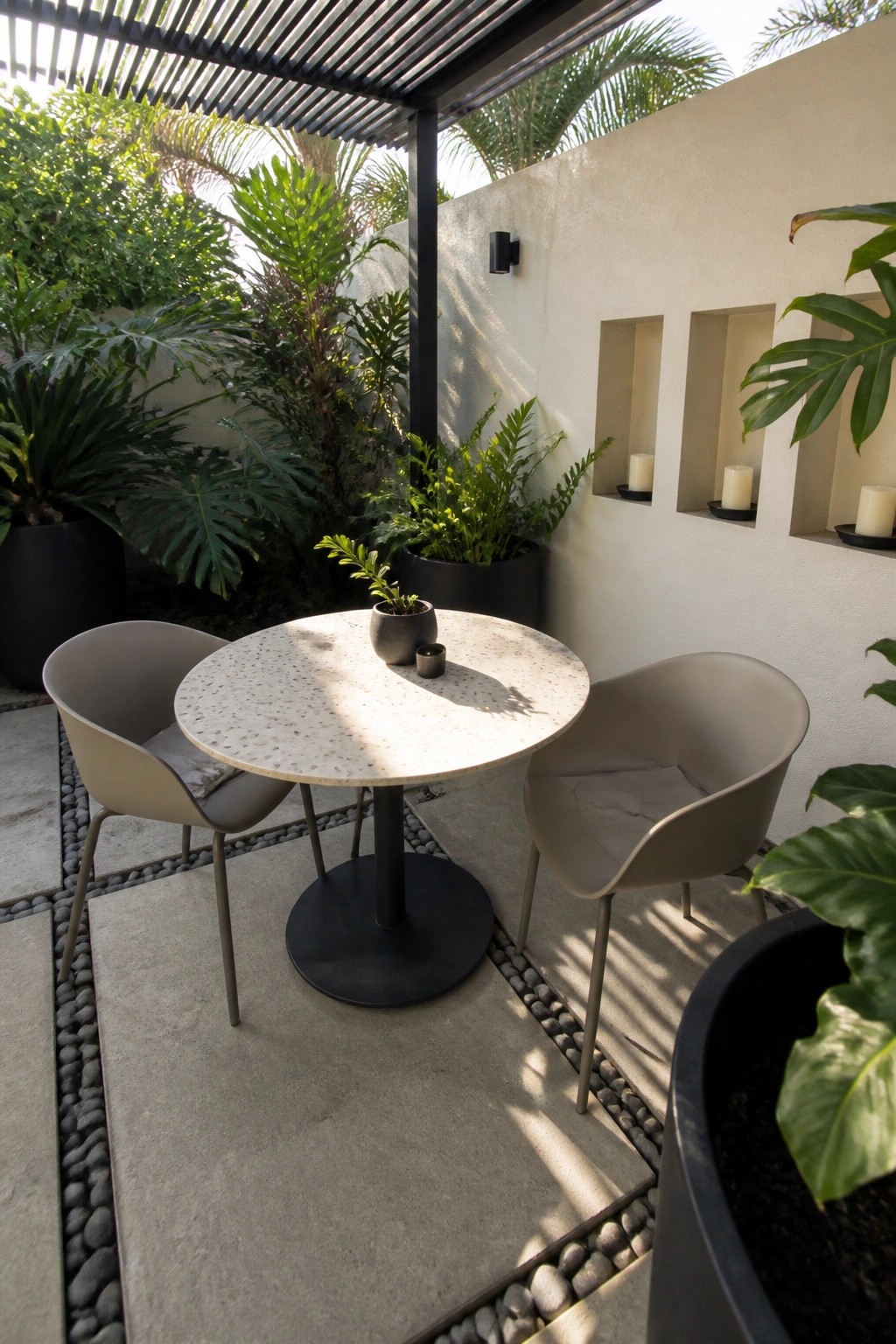
A round table takes up less visual space than a square one and leaves more room to move around it. In a tight patio, that shape helps the area feel open instead of crowded, especially when you only need seating for two or three people.
Place the table near a wall or corner and keep the rest of the floor clear. This setup works best on concrete or paver patios where you can add a simple pebble border to define the dining spot without taking up extra room.
Frequently Asked Questions
Q: How do I pick a dining set that won’t overwhelm my small patio?
A: Measure your space first and leave at least three feet around the edges for walking. A compact bistro table with two chairs often works better than a full four seater.
Q: My patio gets wet a lot. What material should the set be?
A: Go with powder coated metal or all weather wicker. Both dry fast and resist rust without much fuss.
Q: Can I add some plants without losing dining room?
A: Hang a couple of vertical planters on the wall. They bring life to the space while keeping the floor clear for chairs.
Q: Should the chairs match the table exactly?
A: Not always. Mix in a bench on one side for extra seating when guests drop by.
