

I have found that small patios often look fine on their own but quickly feel tight once more than a few people gather and start moving around.
When I think about entertaining outside I focus first on clear paths and places to set down drinks rather than trying to fit every possible seat.
Some layouts hold up better once real use begins.
The better ideas tend to use fewer pieces that can shift easily and leave open floor space in the middle.
I would test one or two of those changes on my own patio before inviting anyone over this season.
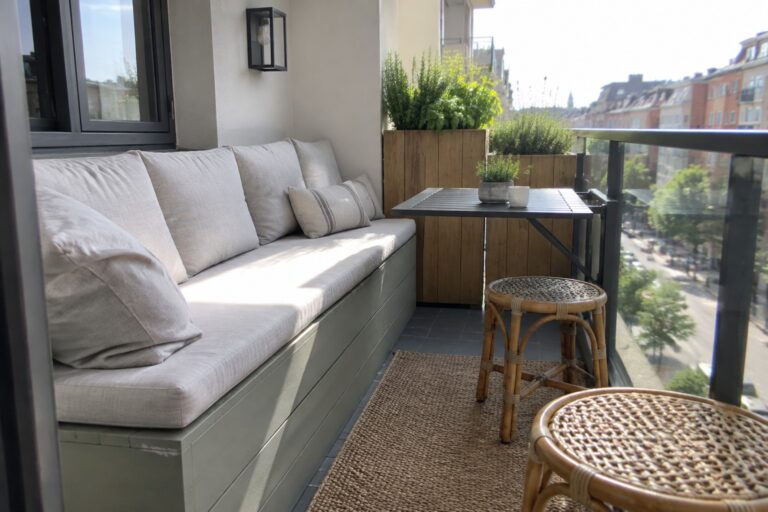
Add A Bench Along The Wall

A bench built along one side of the patio makes room for more people without adding extra furniture that takes up floor space. It keeps the area open and easy to move around, which matters when the patio is small and you want to entertain a few guests at once.
This works best on narrow patios or against a house wall where you can run the bench the full length. Pair it with a long table and a few chairs on the opposite side so you can adjust seating as needed. Stick to a slim cushion so it stays comfortable but does not feel bulky.
Keep Seating Close Around a Central Fire Pit
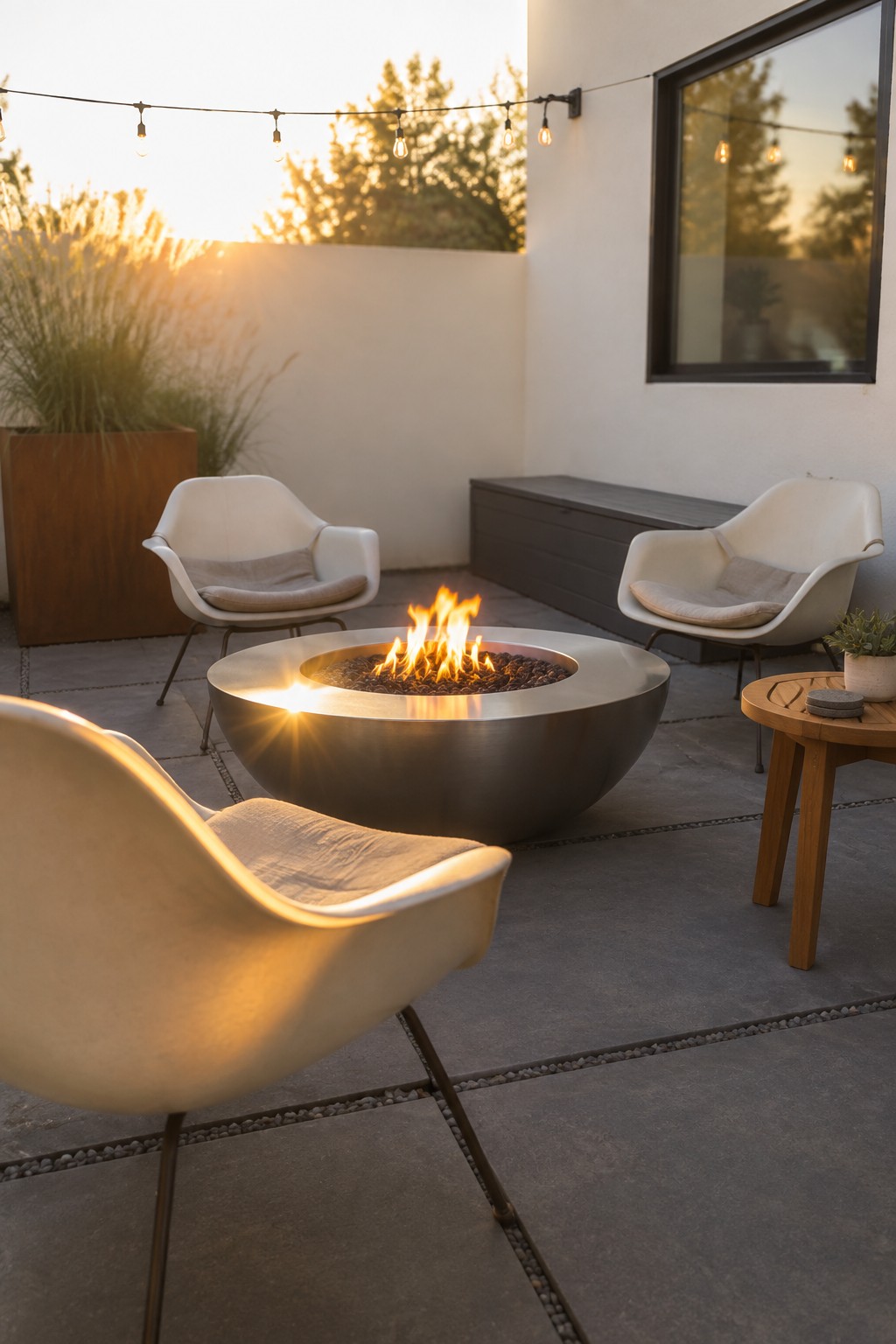
A round fire pit in the middle of a small patio gives everyone a reason to sit close without needing a big table or extra furniture. The layout keeps the space open while still feeling like a place meant for talking and staying awhile.
This works best on patios that are mostly paved or tight on square footage. Use low chairs that do not block the view across the pit, and leave enough room to walk around the edge so the area does not feel cramped when two or three people are there.
Create Zones With Tall Planters
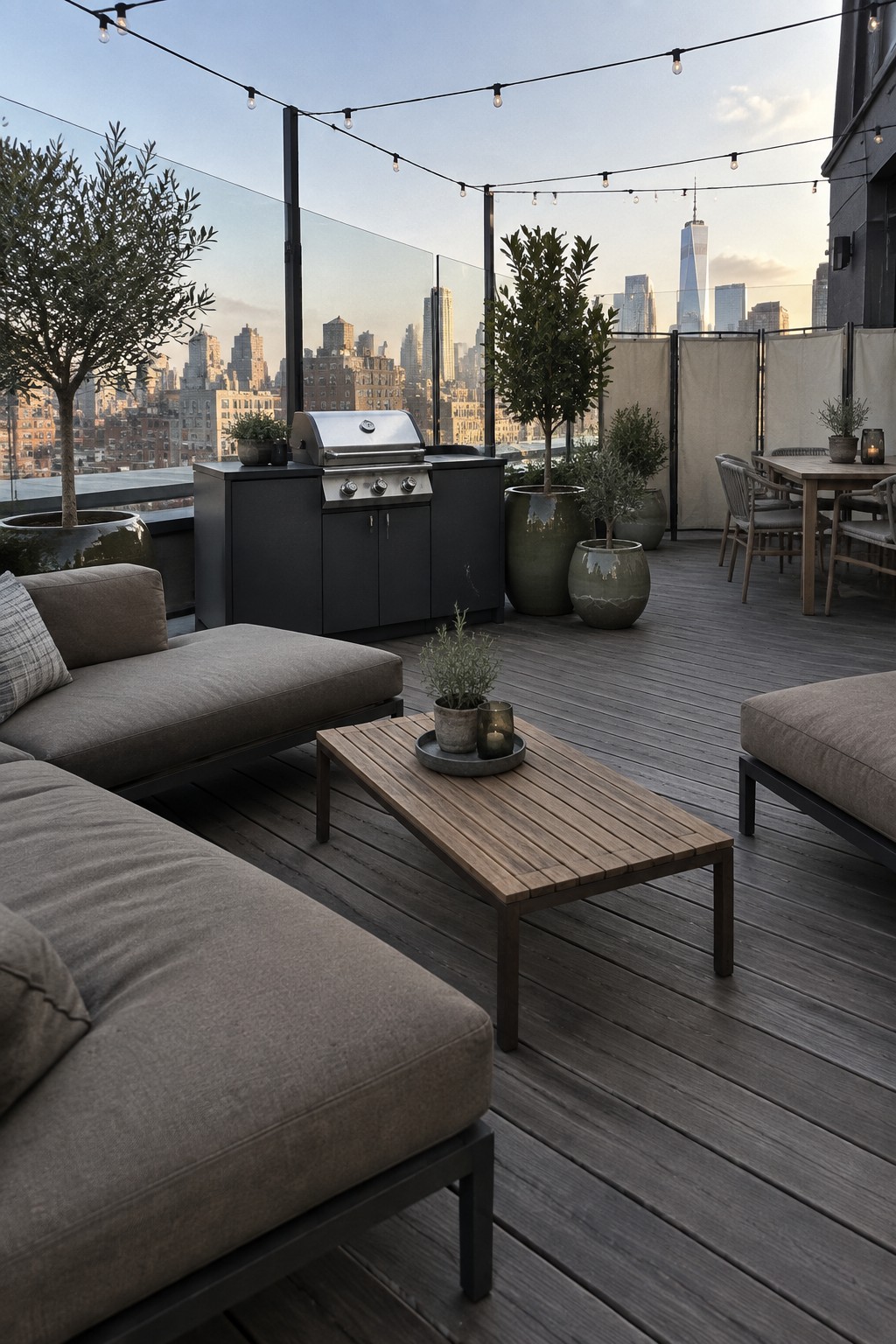
Tall planters work well on small patios because they give you soft boundaries without building walls or railings. In this setup the large pots with trees sit between the lounge area and the grill station, so each part of the deck feels like its own spot while the whole space still reads as one open area. The plants also add height that makes the seating feel more enclosed and comfortable.
Place the planters where you want to steer foot traffic or hide the cooking zone from the main seating. Choose pots that are wide enough at the base to stay steady on a deck and pick trees or tall shrubs that will not outgrow the space too fast. This approach suits rooftops and balconies where you cannot add permanent dividers but still want a few distinct places for guests to gather.
Mix a Built-In Bench With Chairs

A built-in bench uses the wall to add seating without crowding the floor. It pairs well with just two or three lightweight chairs around a small table, so the whole setup stays open enough for easy conversation and movement.
This works best in tight courtyards or narrow side patios where you need room to entertain a few people at once. Keep the table modest in size and choose chairs that can be shifted around as needed.
Built In Benches Keep A Small Patio From Feeling Crowded
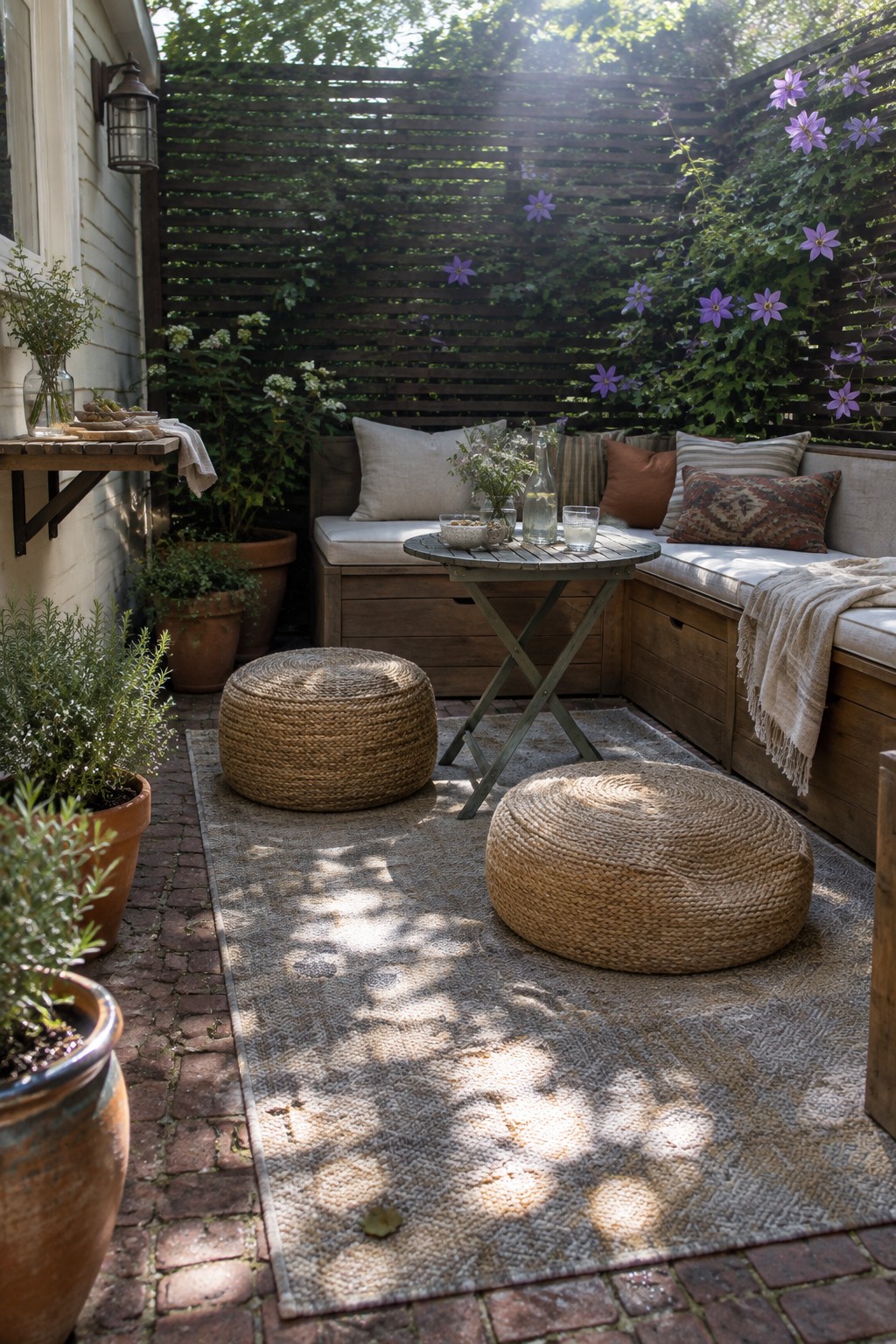
Built in seating along the perimeter makes a small patio work better for entertaining because it puts the sitting space against the walls instead of eating into the middle of the floor. This leaves more open room for a table and for people to move around without everything feeling packed in.
It works especially well on patios that already have some kind of fencing or wall structure. The benches can include hidden storage for cushions and throws, and adding a couple of floor poufs on a rug gives you flexible extra seats without committing to more fixed furniture.
Go With a Rectangular Outdoor Dining Table
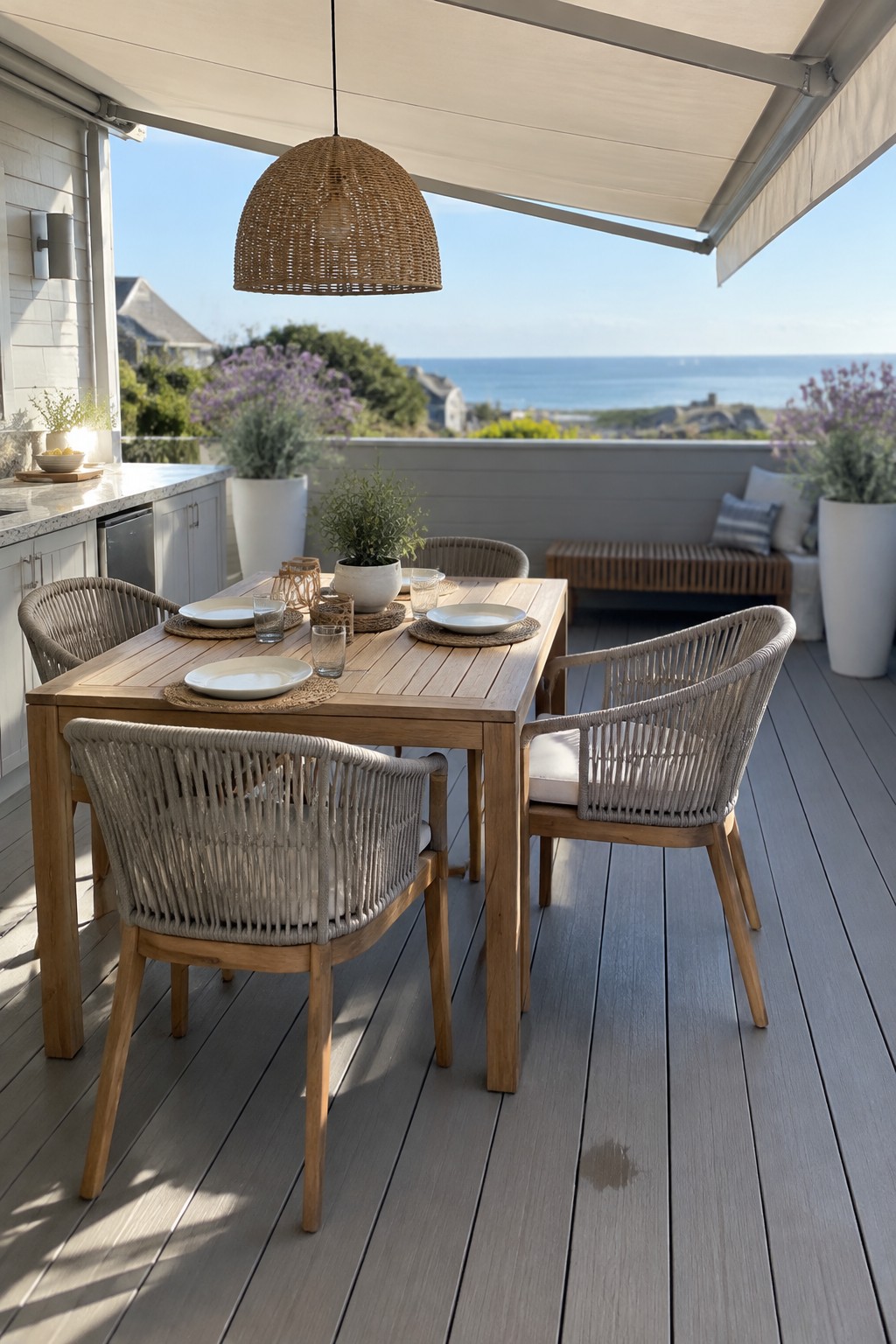
A rectangular table fits a small patio better than round or oversized shapes because it lines up neatly along the deck boards and leaves clear paths on either side. The open woven chairs add seating without blocking views or making the space feel packed, and the simple wood top keeps the whole setup feeling light.
This layout works best on decks or patios that run along the back of the house where you need room to walk around the table. Keep the table at least three feet from the railing or any built-in bench so guests can pull out chairs easily. Skip extra side pieces if the area is tight.
Center a Small Patio Around a Fire Pit

A fire pit gives a small patio a natural spot for people to gather without filling the space with bulky furniture. A few low wooden stools around the edge leave room for standing or extra chairs when more guests show up.
This works best on gravel or simple stone patios where you want flexibility. Keep the stools light so you can shift them around easily and avoid crowding the walking paths.
Use Gravel to Keep a Small Patio Feeling Open
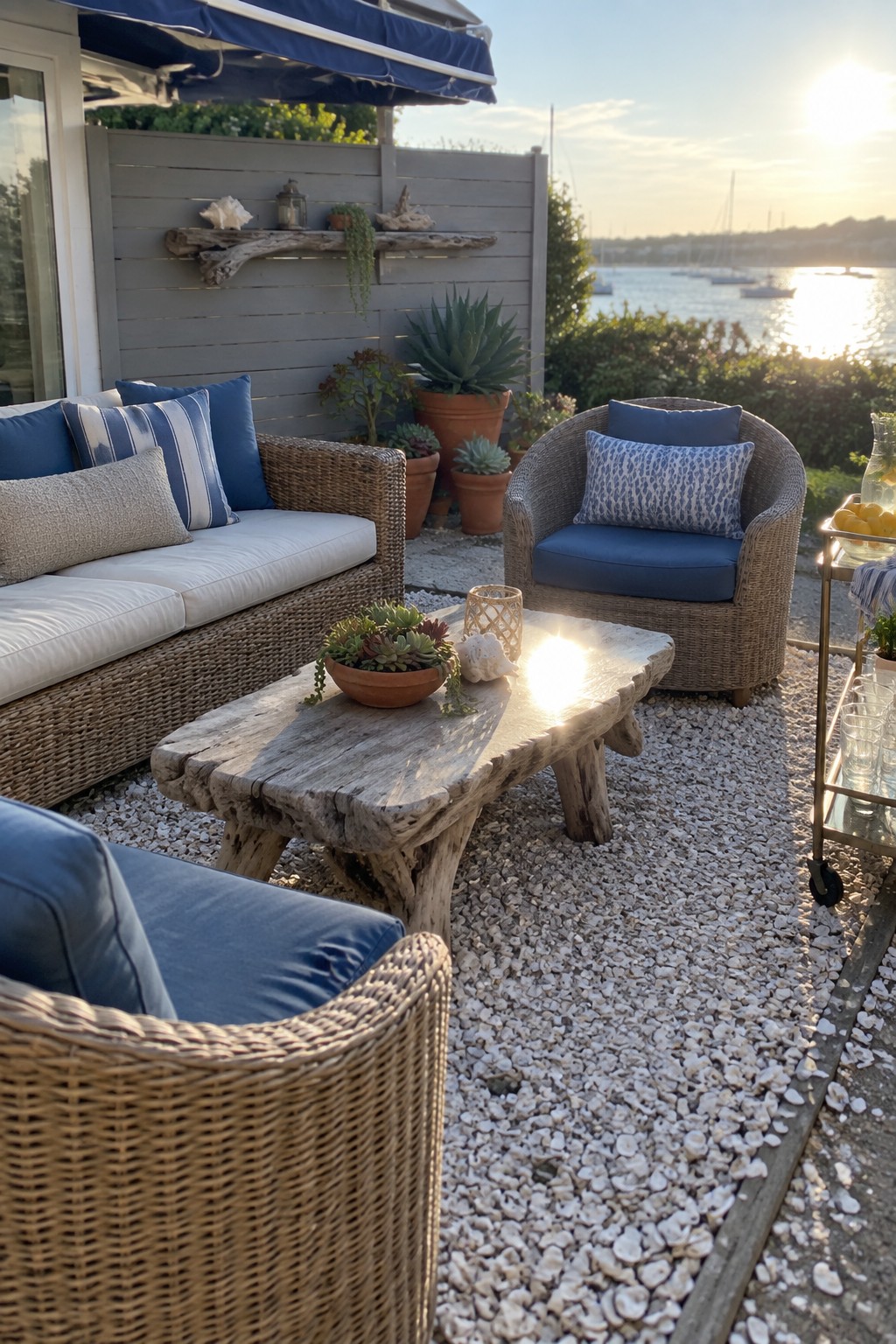
Gravel works well on small patios because it does not create hard edges or force furniture into fixed spots. You can place chairs and tables wherever they fit best for the day, and the surface stays simple instead of competing with the seating.
This approach suits patios that get regular use for drinks or casual meals. It works best with lightweight pieces like wicker chairs and a rolling cart, since those move easily when you need more room for guests. Just keep the gravel layer even so nothing wobbles.
Built-In Seating That Keeps A Small Patio Open

Built-in concrete seating works well when you need to fit a lot of people into a compact patio without filling it with extra chairs. The bench follows the edge of the space and stays fixed, so the center stays clear for walking around or pulling up a small table when needed.
This layout suits homes with a wall or planting bed along one side, since the bench can tuck right against it. It keeps the area feeling practical rather than crowded and works best in modern or simple outdoor spaces where you want low maintenance and clean lines.
Round Table With Built-In Bench Seating
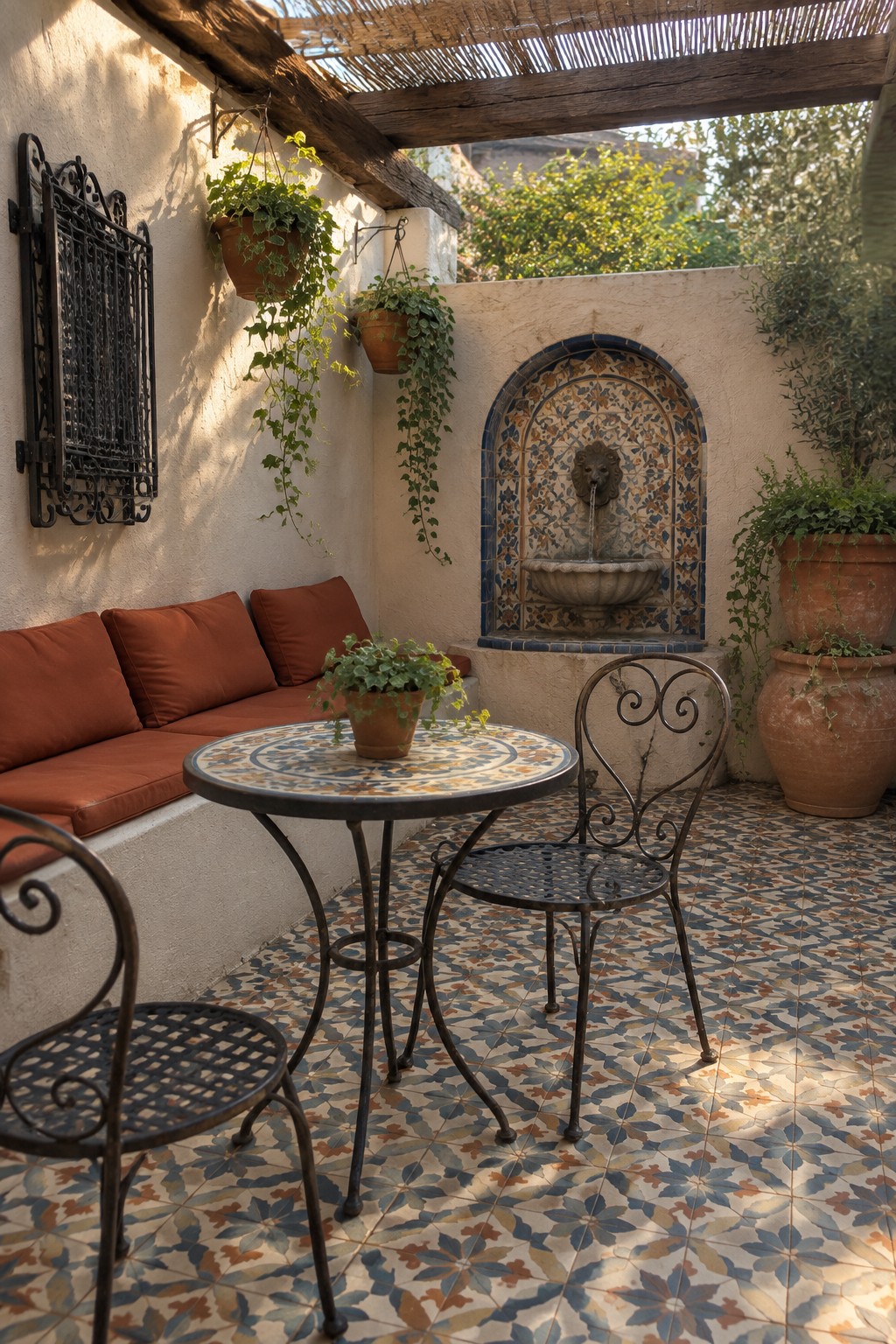
A round table paired with a built-in bench makes good use of a small patio because it tucks into a corner without blocking the center of the space. The curved shape leaves room to walk around, and the bench takes up less visual space than extra chairs would.
This works best on patios that sit right against the house or a garden wall. Keep the table modest in size, add a cushion or two on the bench, and leave the other sides open for one or two chairs. It suits homes where you want room to entertain a few people without the whole area feeling crowded.
Foldable Furniture Keeps Small Patios Open

Small patios often feel tight once seating gets added. Foldable chairs solve this by letting you set up only what you need and tuck everything away when the gathering ends.
This approach works especially well on balconies or narrow outdoor spots where permanent furniture would crowd the floor. Pair the chairs with a simple rug to define the area without adding bulk, and keep the rest of the space clear for people to move around.
Add a Bar Counter with Tuck-Under Stools
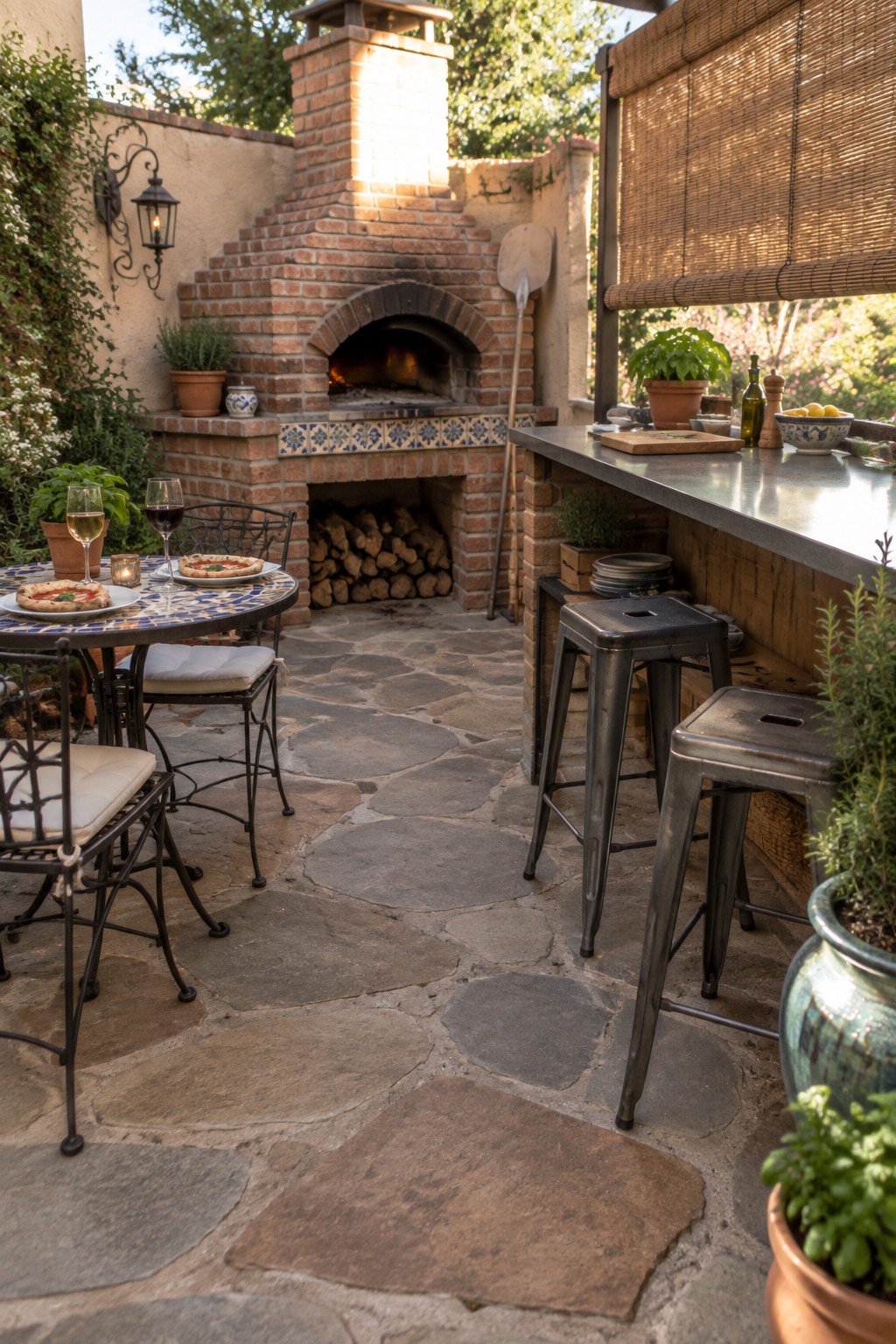
A bar counter along the edge of a small patio gives you a spot to set out drinks and snacks without needing a large table in the middle. The stools slide underneath when not in use, so the main walking area stays clear and the space feels bigger than it actually is.
This works best on patios that already have a wall or solid structure to build against. It suits homes with limited square footage because it adds seating and serving space while keeping the center open for people to move around.
Line Lounge Chairs Along the Pool Edge
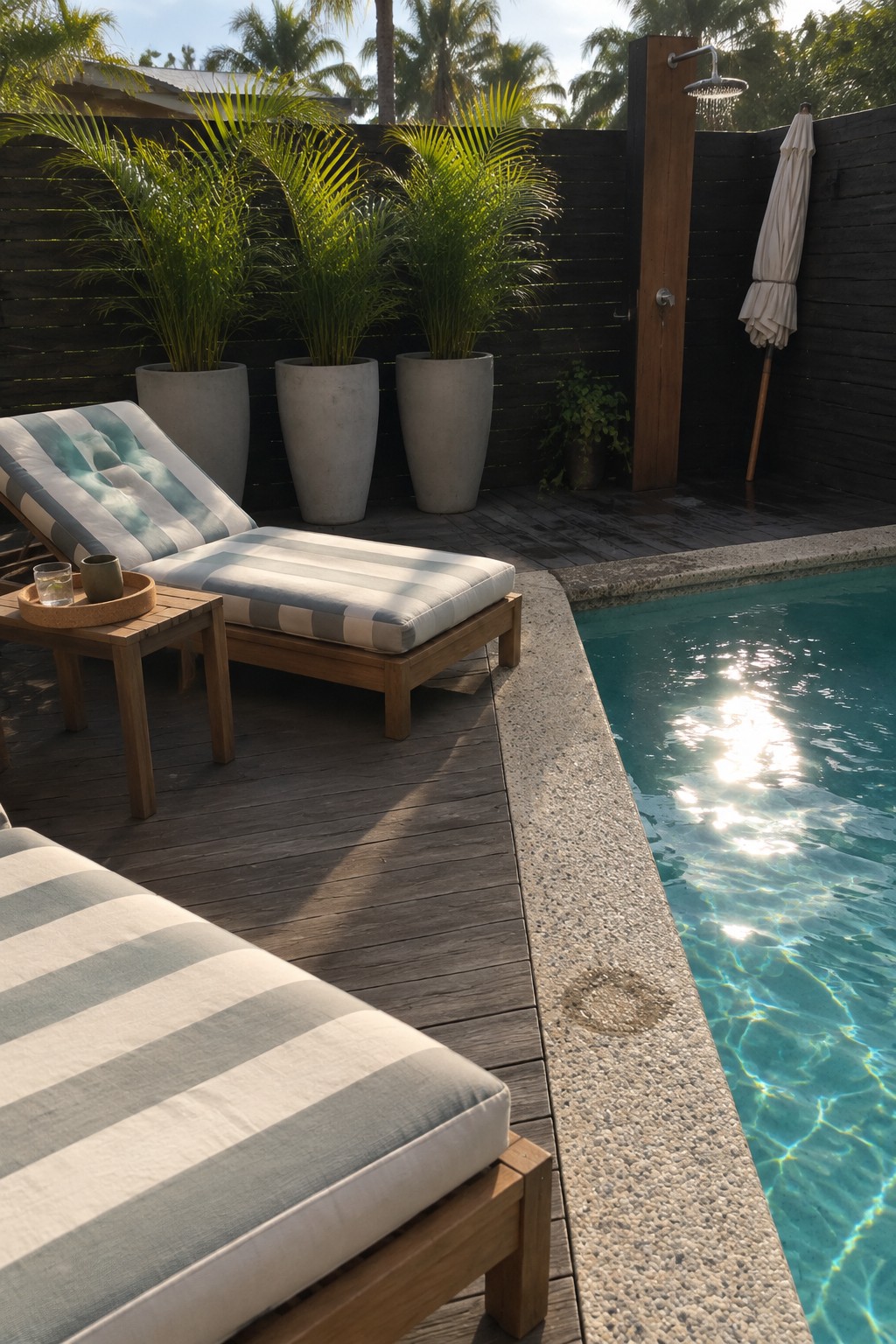
One simple way to add seating to a small patio is to place a pair of lounge chairs right along the pool. This keeps the furniture low and out of the way so the deck stays open for walking, standing, or pulling up extra chairs when guests come over.
The setup works best on narrow decks or small yards where the pool already takes up most of the space. Use plain wooden frames and simple cushions so the area feels relaxed rather than packed, and leave enough room behind the chairs for people to move around freely.
Hang a Hammock to Keep Seating Flexible
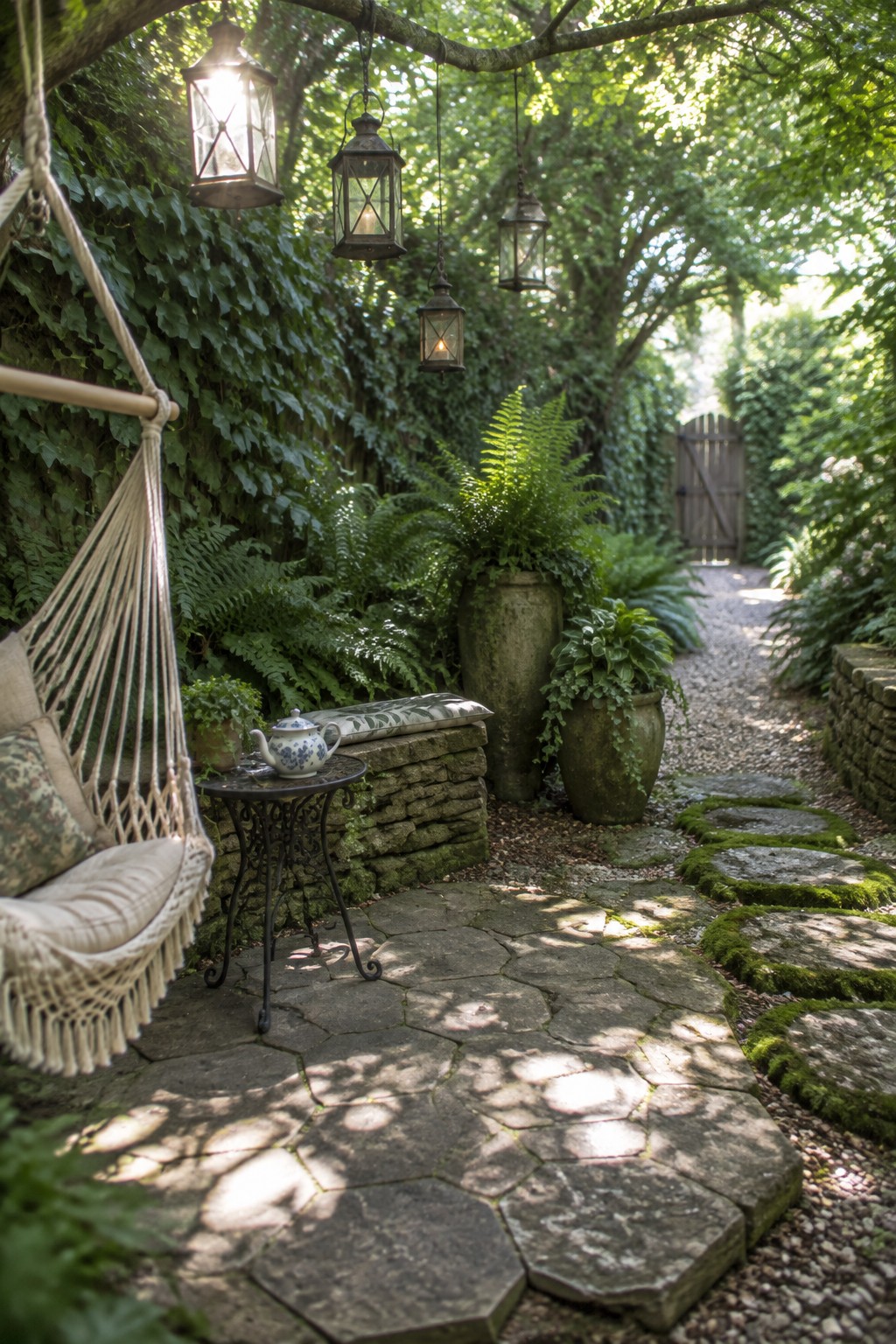
A hammock takes up almost no floor space when not in use, which makes it useful in a small patio where you want room to move around. It gives guests a comfortable spot to sit or lounge without adding another bulky chair or bench that would crowd the area.
This works best in a corner or along one side of the patio, where you can hang it from a sturdy branch or beam. Just make sure the anchors are solid and leave enough clearance so people can walk underneath without bumping into it.
Add a Bar Counter Along the Edge
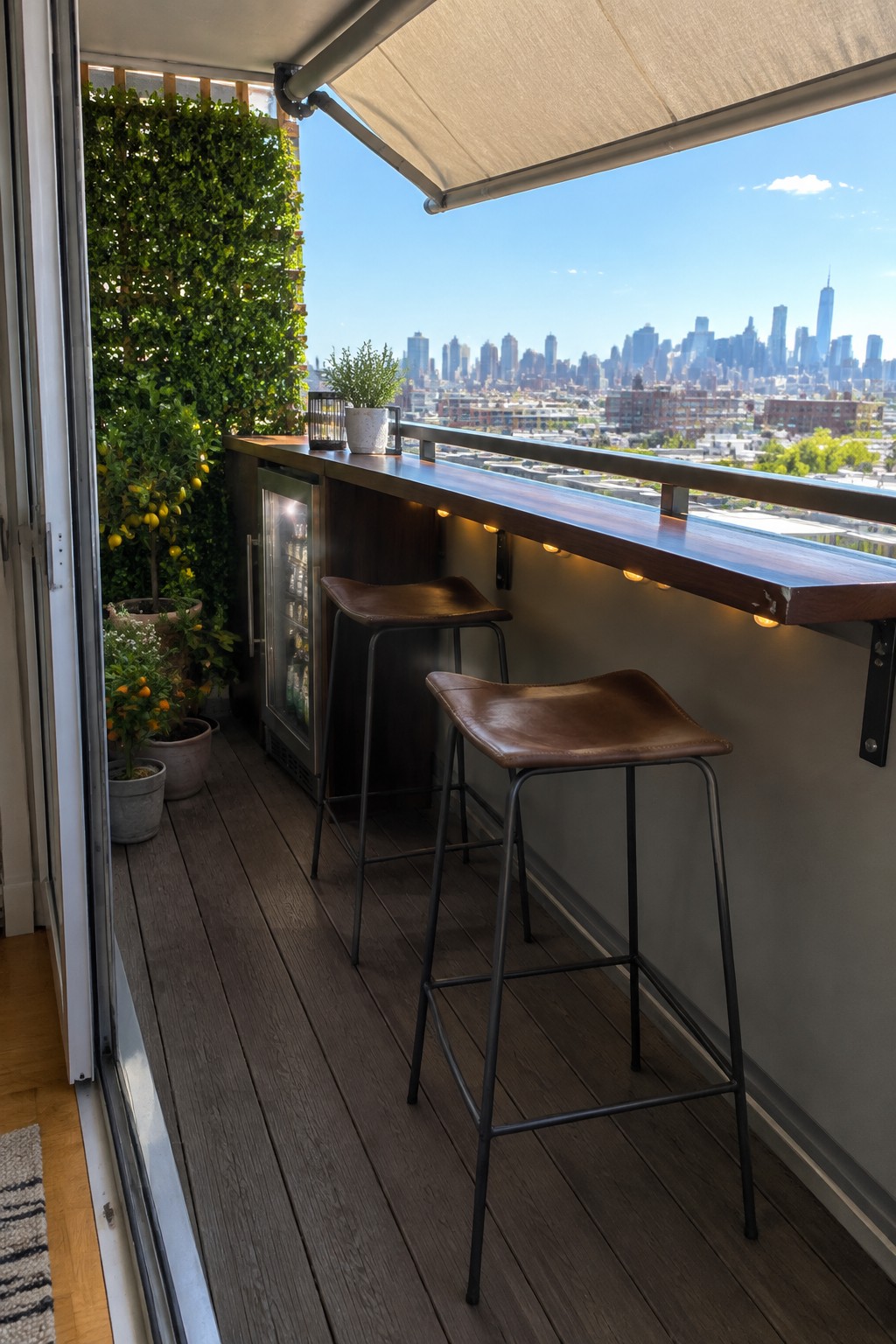
A bar counter mounted along the railing turns a narrow balcony into a workable spot for drinks and conversation. It gives people a place to gather without needing a full table or extra chairs taking up the floor.
This works best on small urban balconies where every inch counts. Tuck the stools in when not in use and you still have room to walk through. Just make sure the counter height feels comfortable for standing or perching.
Separate Lounge and Dining with a Small Level Change
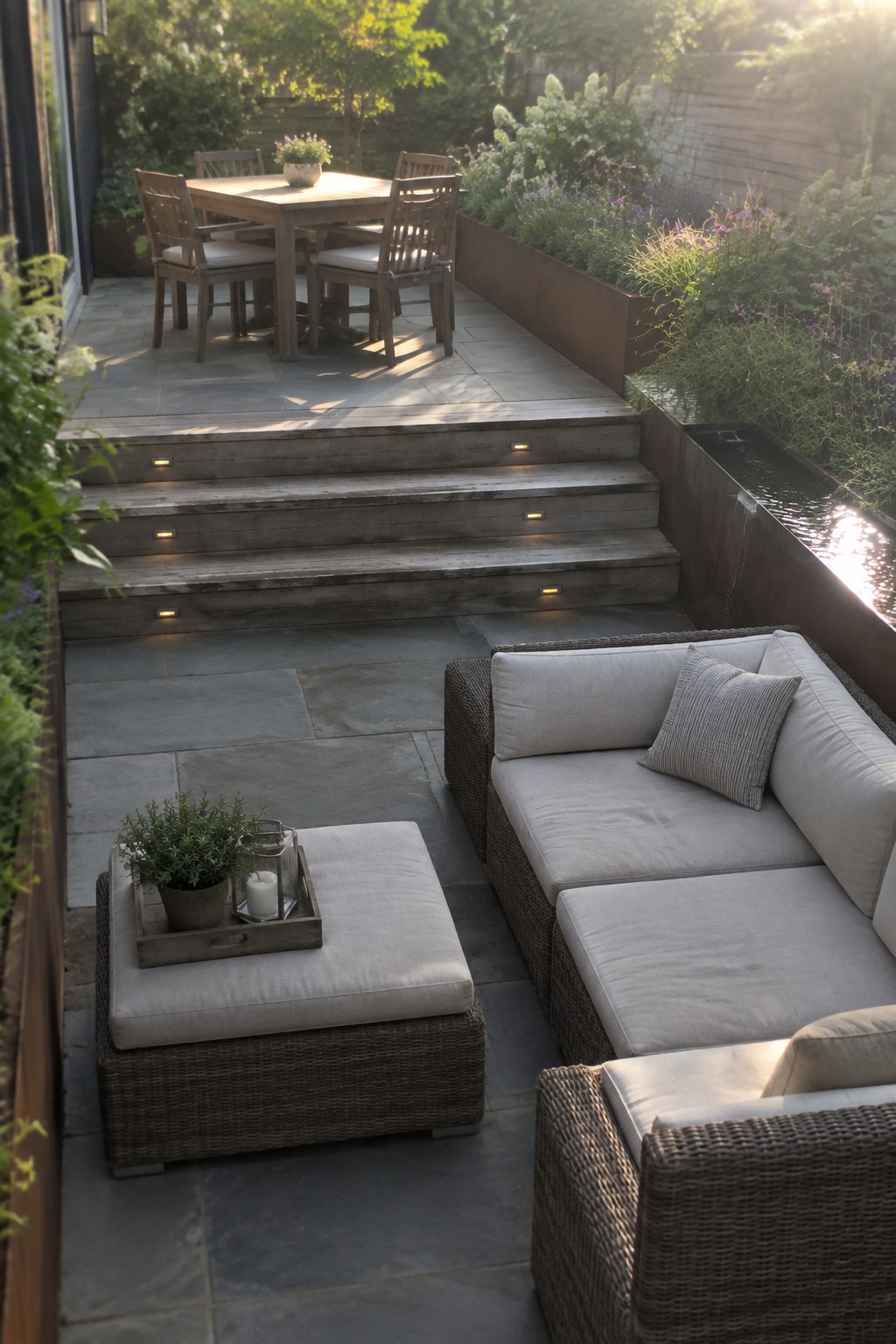
A slight change in level can do a lot to keep different activities from bumping into each other on a small patio. Here the steps create a clear break between the lower seating area and the raised dining space, so guests can move between the two without everything feeling crammed together.
This approach works best on patios that already have some slope or room for a low platform. The steps themselves add interest and can even serve as extra seating when needed, and the lighting built into them keeps the division useful after dark.
Define a Small Patio Spot with a Rug

A rug under a small table and chairs gives the space a clear purpose without filling it up. It turns a patch of brick or stone into a place where two people can sit and talk, and it keeps the rest of the patio open.
This setup suits narrow side yards or garden corners where you want room to walk around. Choose a round table so it does not crowd the edges, and let the rug size match the seating so nothing feels squeezed.
Bench Seating Along The Wall

One easy way to keep a small patio from feeling tight is to run a bench along one wall. This gives you seating without eating into the middle of the deck, so the space stays open for people to stand or move around.
It works best on decks that sit right off the house or against a fence. Add a low table in front for drinks, and leave the rest of the area clear. This setup suits narrow patios where you want room for a few guests without crowding everything together.
Tuck a Bar Counter Along the Wall

A bar counter that runs along one wall gives you seating without eating up the middle of the patio. Guests can lean or sit while the open space stays clear for moving around or setting up a few extra chairs when needed. It works especially well in narrow outdoor areas where a full table would feel tight.
This layout suits small patios or side yards that still need to handle a few people at once. Keep the counter narrow, add a couple of stools that tuck in close, and leave the rest of the surface for drinks and serving. It keeps things simple and leaves room to walk through even when people are gathered.
Frequently Asked Questions
Q: How do I pick seating that fits a few friends without crowding the patio? A: Stick with two or three lightweight chairs you can shift around as needed. Add a narrow bench against one wall if you want room for extra people to perch. That keeps the middle open for walking through.
Q: What works for setting out snacks and drinks on a tiny space? A: Set a small tray on a stool or use a narrow ledge along the edge. Guests can serve themselves without a full table blocking the flow. Clear it off once everyone has what they need.
Q: How do I add lights for night entertaining without making things feel cluttered? A: Clip a few solar string lights along the railing or a nearby tree branch. They give off just enough glow to see each other and keep the mood relaxed. Turn them off when the gathering wraps up.
