

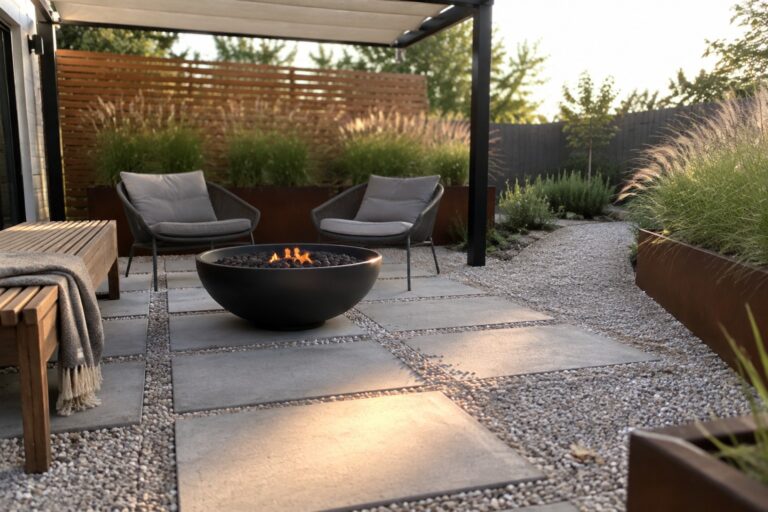
When I started looking at ways to update my backyard without spending much, gravel kept coming up as a material that handles both foot traffic and water runoff better than I expected.
The key seems to be choosing the right size and color so it blends with the surrounding plants rather than standing out too sharply.
Layout matters more than most people think.
I have seen patios where the gravel shifted over time because there was no solid border to contain it, and that small detail made daily use less pleasant.
Testing a few different patterns in a corner of the yard first helped me decide what would actually work for the way we use the space.
Gravel Between Pavers Keeps Patio Costs Low
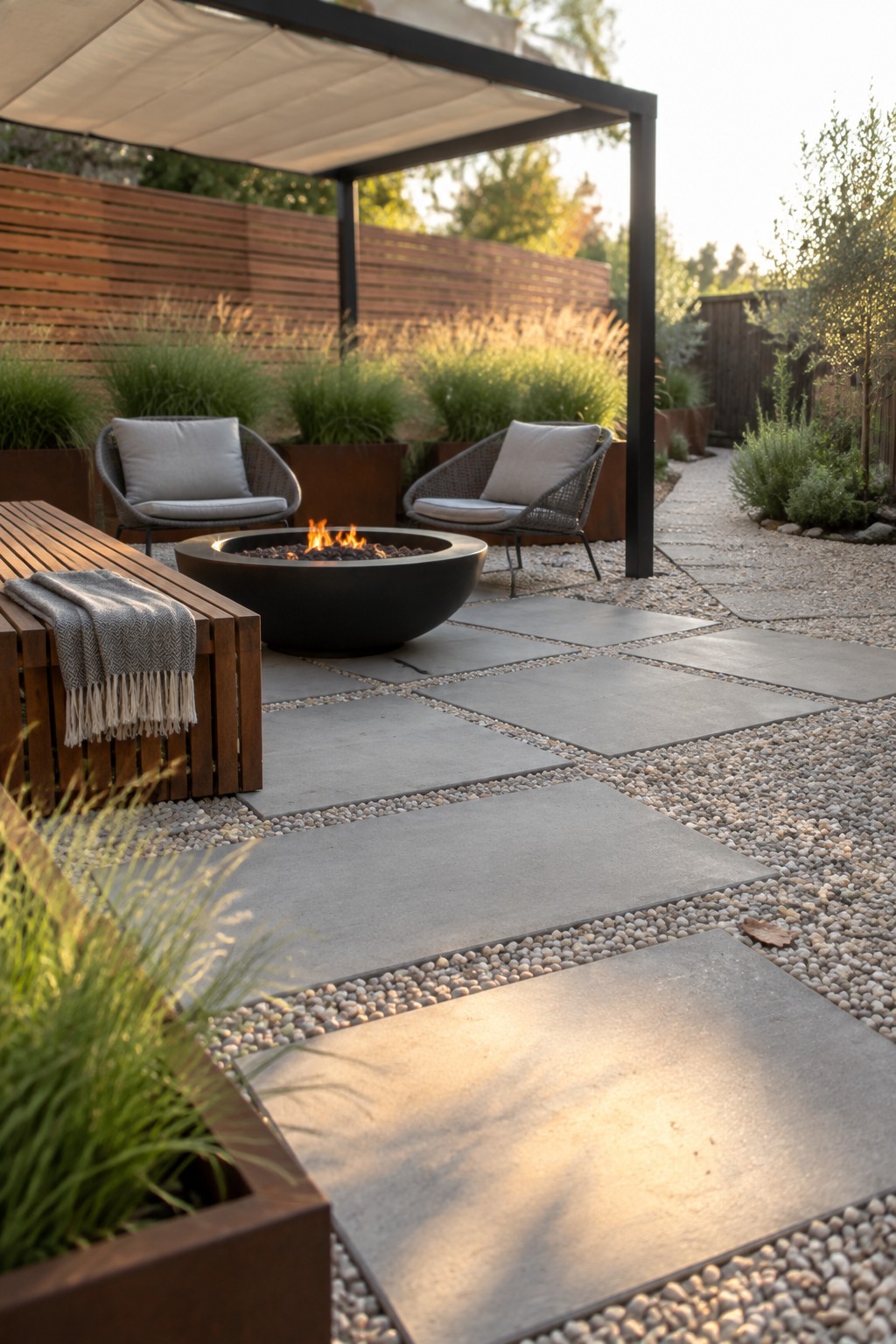
Many people like this setup because the gravel fills the spaces between big concrete pavers without needing a full concrete pour or fancy stonework. It gives the area a clean path while still letting water drain through, which works well around a fire pit zone where you want something simple and practical.
This approach suits smaller backyards or side yards that need a defined seating spot without a big budget. Just lay the pavers first on a level base, then spread gravel in the gaps and along the edges. It stays looking neat as long as you keep the gravel topped up every couple of years.
Gravel Makes a Simple Patio Surface
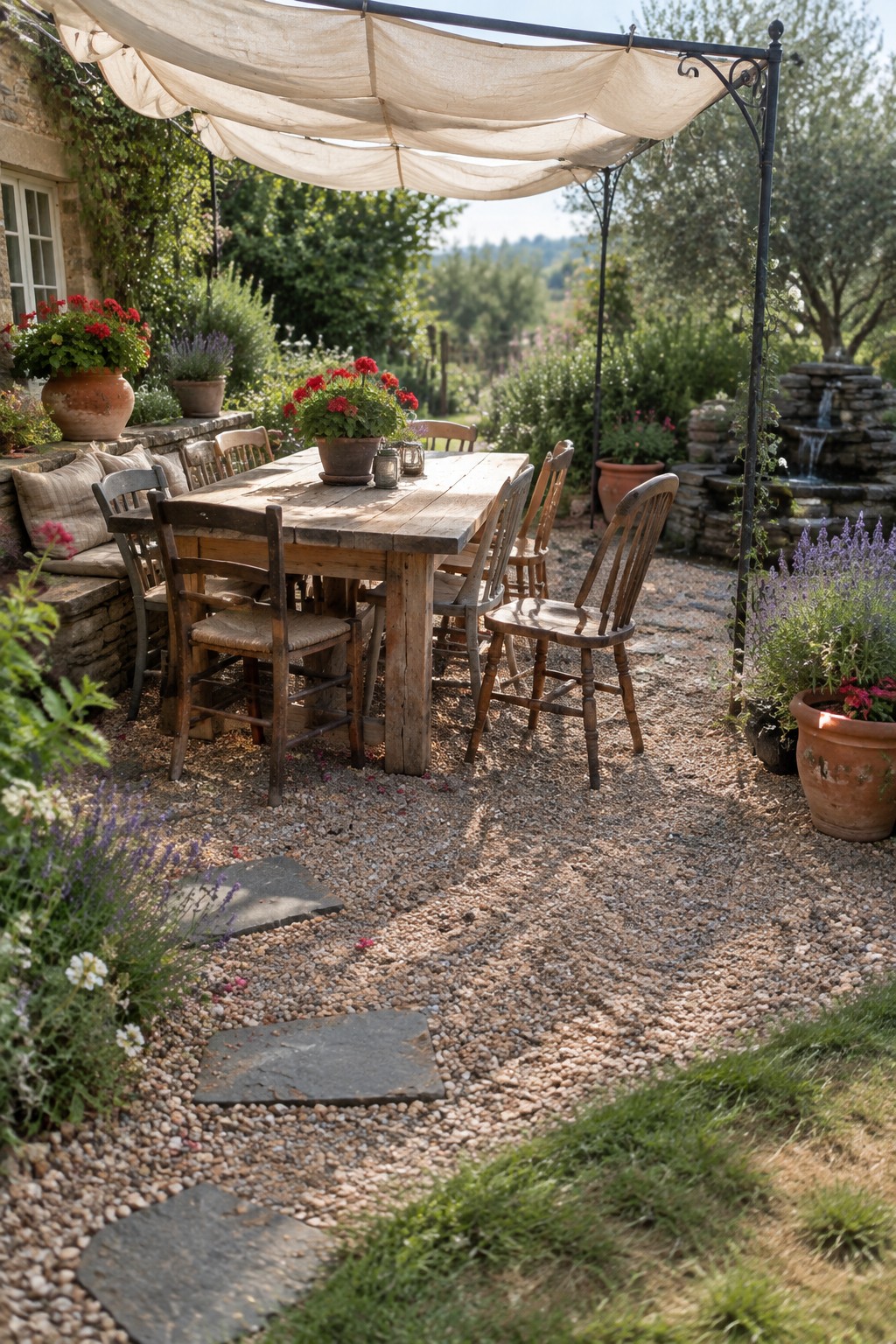
Gravel gives you a quick way to cover ground for an outdoor table and chairs without pouring concrete or laying pavers everywhere. It drains well, costs less than most hard surfaces, and still feels finished enough for meals outside.
This works best in spaces where you want a relaxed look and do not mind a bit of shifting underfoot. Lay landscape fabric first, then add a solid base layer before spreading the gravel so the surface stays even over time.
Gravel Patio Flooring For Casual Outdoor Dining
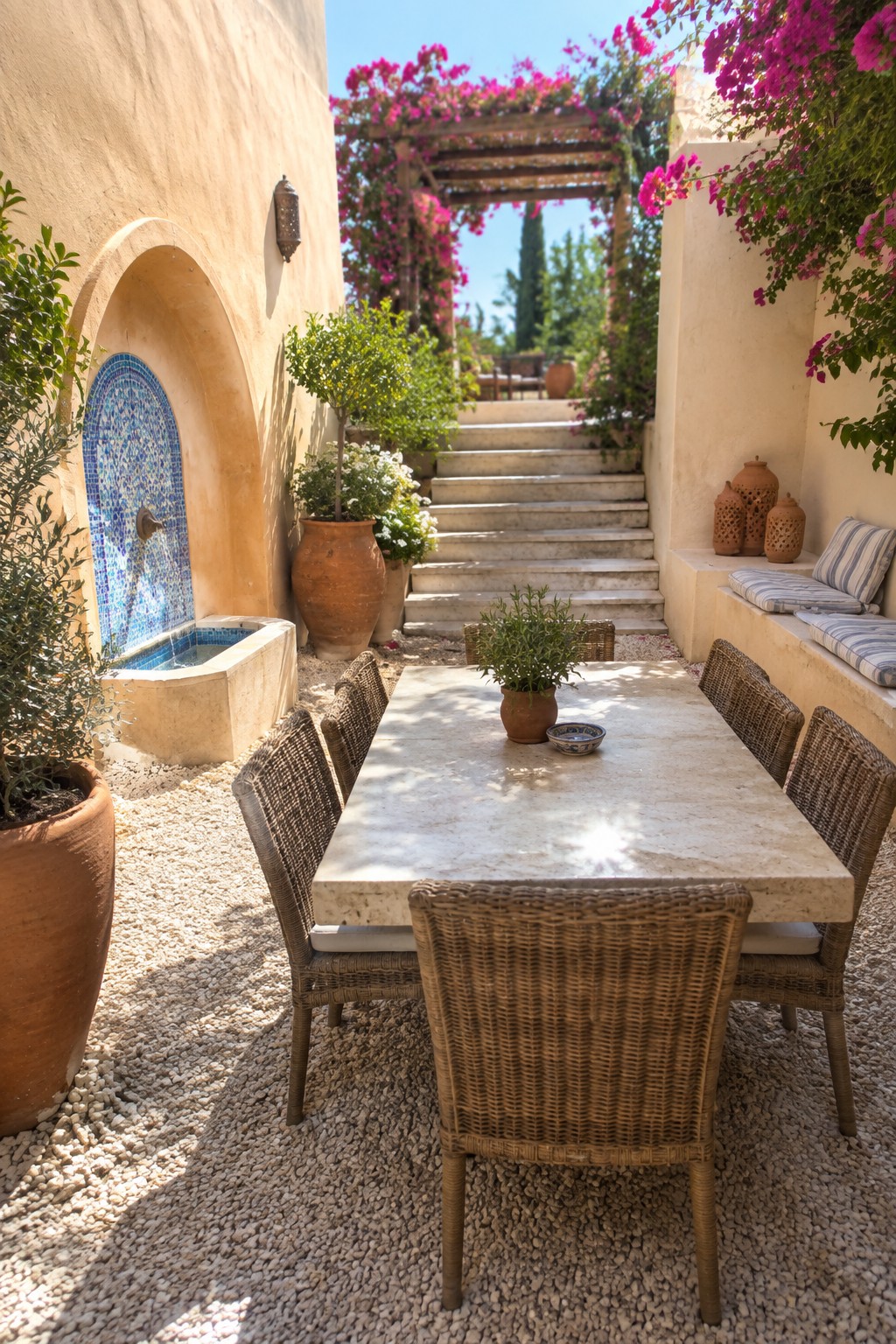
Gravel makes a practical base for an outdoor dining area because it drains well and needs very little upkeep. It creates a relaxed surface that feels right at home with a simple table and chairs, especially in smaller side yards or courtyards where you want seating without pouring concrete.
This setup works best on fairly flat ground where you can spread a few inches of gravel over landscape fabric. Add a low border to keep the stones in place, and the whole thing stays affordable and easy to refresh later if needed.
Gravel Paths With Stepping Stones
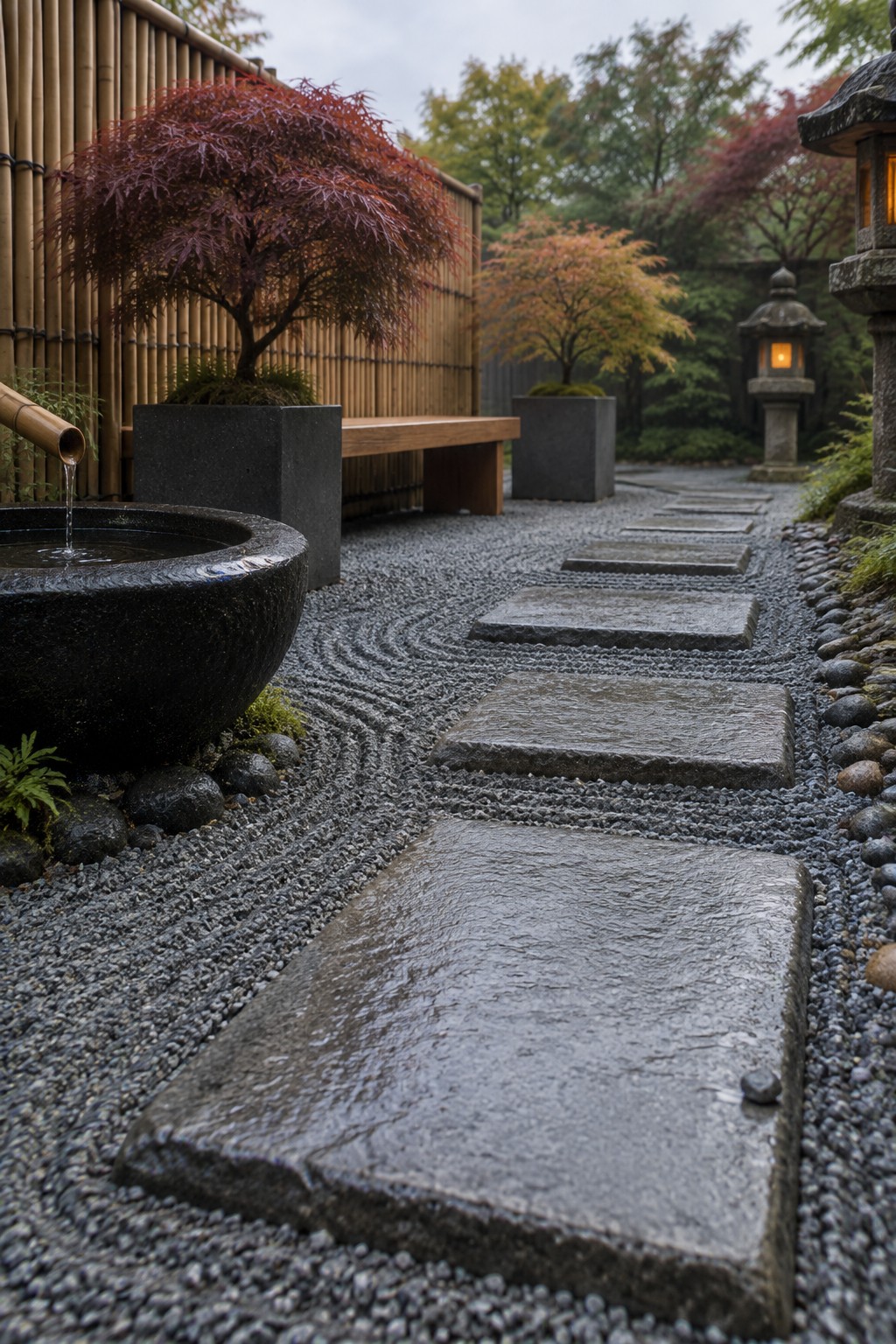
Gravel paths with stepping stones offer a simple way to create walkways without the cost of full paving. The gravel handles drainage well and lets you shape the route around trees or plantings without much trouble.
This setup suits side gardens or backyard routes where you want something low maintenance. Use edging to keep the gravel in place, and choose stones that sit level so the path stays easy to walk on year after year.
Gravel Fire Pit Seating Zones
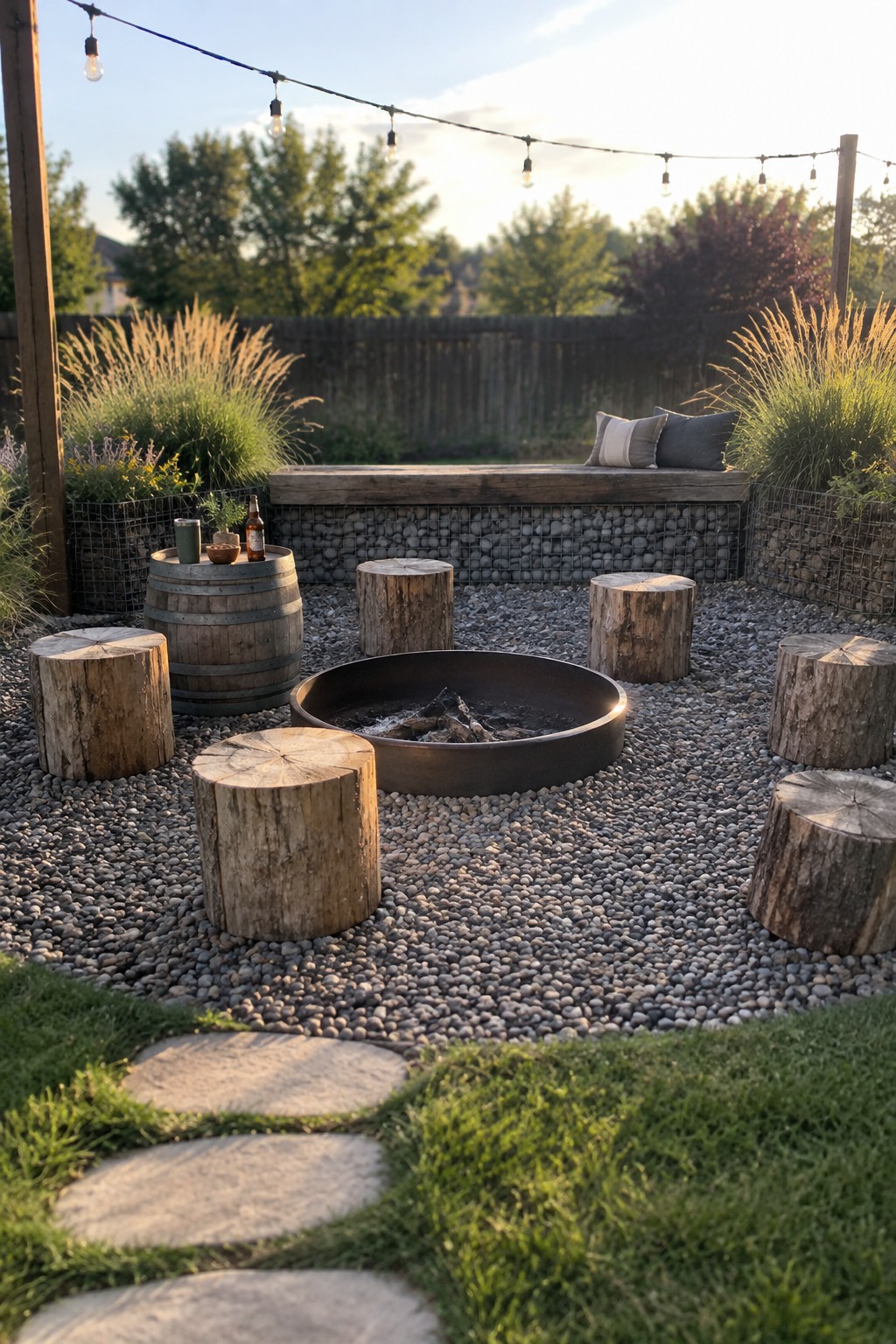
Gravel makes a strong choice for fire pit areas because it stays affordable and handles foot traffic without much upkeep. It also drains well after rain, which keeps the space usable most of the year.
Lay a thick bed of gravel to mark off the seating zone, then add simple wood stumps or logs around the fire ring. This works best in backyards that need a casual spot for small gatherings without pouring concrete or buying pavers.
Gravel Between Pavers

One simple way to keep patio costs down is to use large pavers with gravel filling the spaces between them. This approach gives you a solid walking surface without needing to cover the entire area in stone or concrete. It also helps with drainage so water does not pool after rain.
The layout works well on flat yards or rooftops where you want something low maintenance. Just set the pavers on a compacted base and pour gravel in the gaps. It suits most homes that already have some gravel elsewhere in the yard since the materials match easily.
Gravel Paths With Stepping Stones
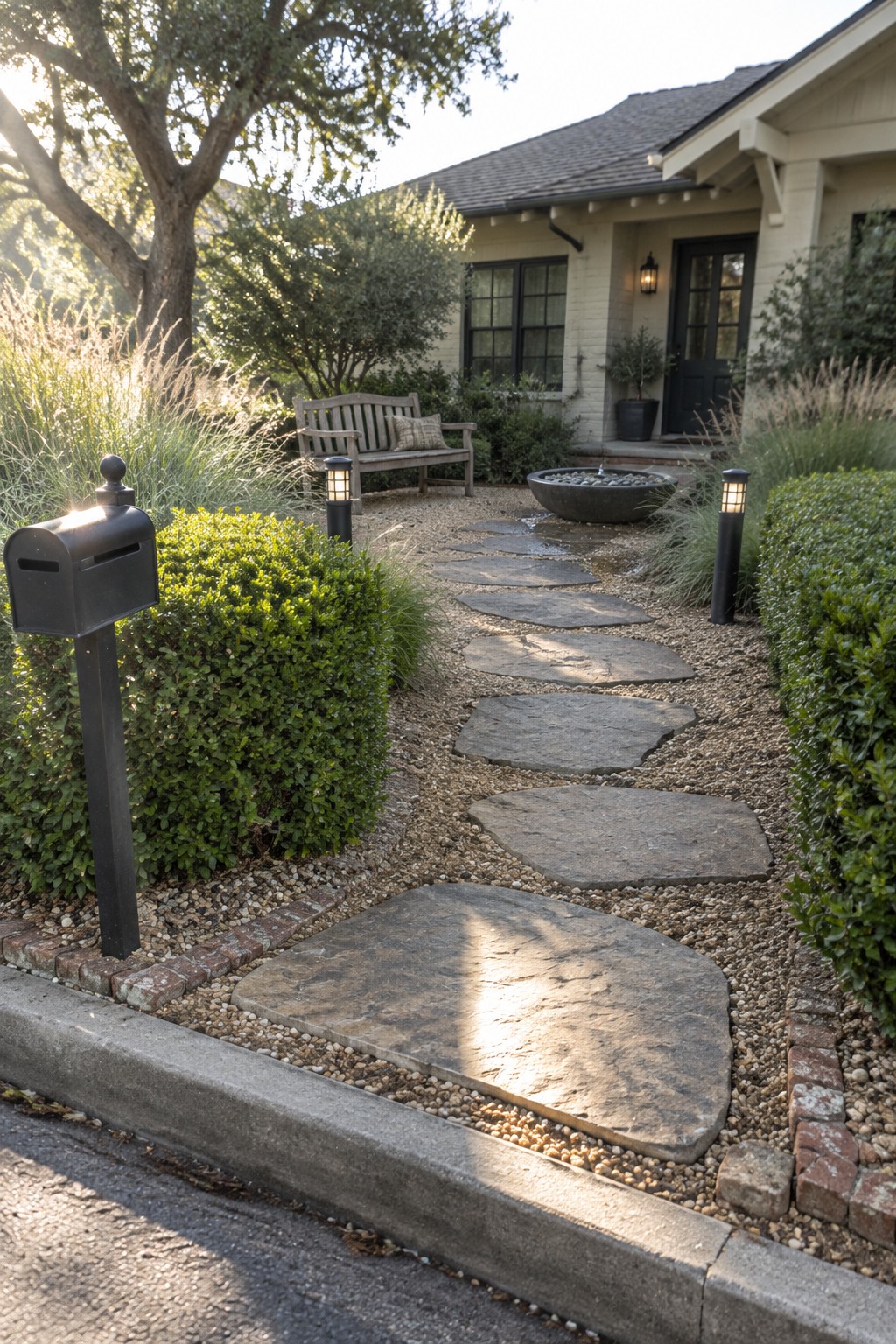
Gravel paths with stepping stones offer a simple way to create a clear walking route without pouring concrete or laying full pavers. The gravel handles drainage and keeps costs down, while the stones give you solid footing and break up the surface so it does not feel too loose underfoot.
This approach works best in front yards or along the side of a house where you need a path but want something low maintenance. Lay fabric first, spread the gravel evenly, and set the stones at a comfortable spacing. It suits most homes with a casual garden style and holds up well even in areas that get regular rain.
Gravel Makes a Simple Patio Base
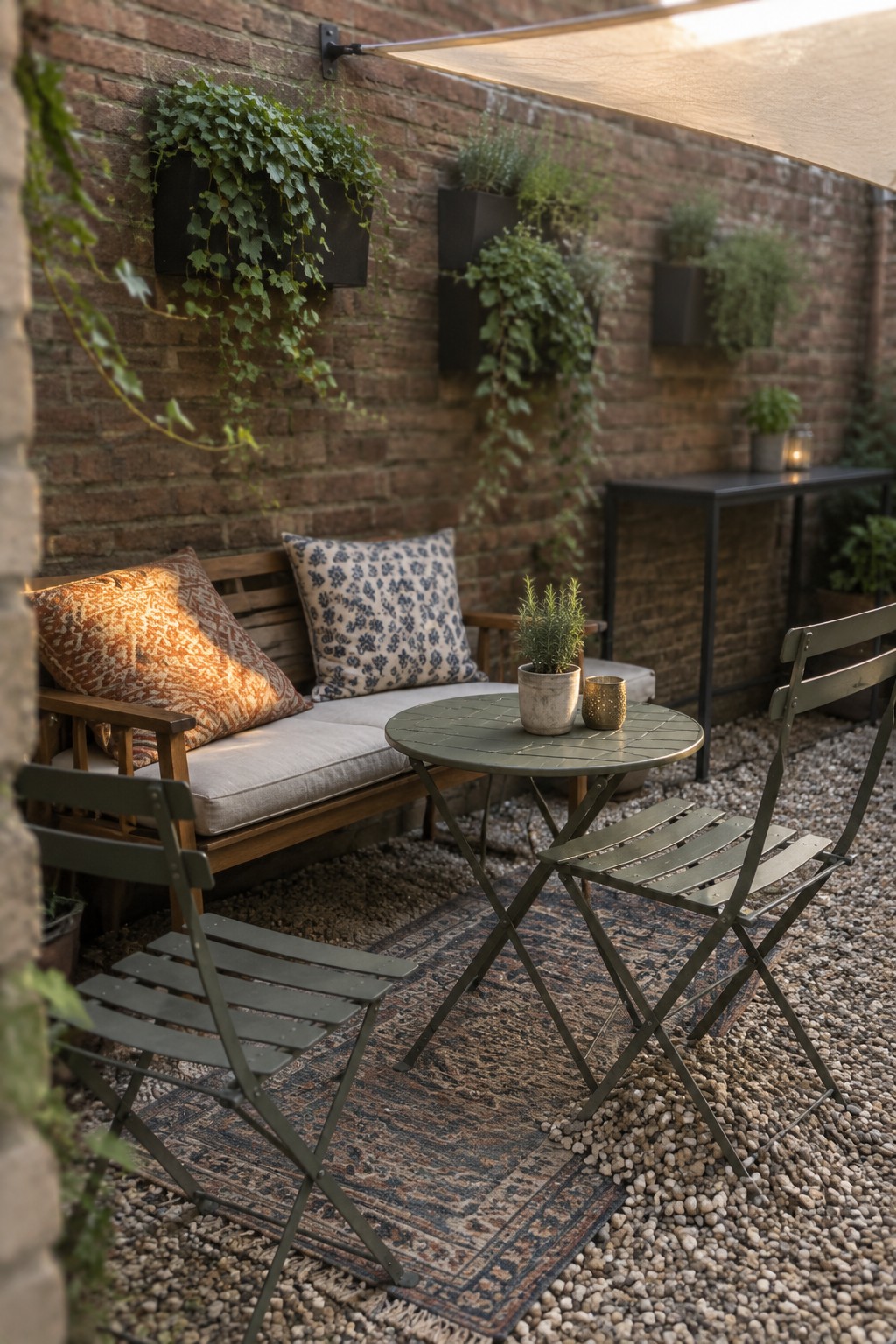
Gravel gives you an easy and low cost way to cover the ground on a patio. It drains well, stays fairly level, and works with almost any style of seating or wall.
Lay the gravel first, then add a rug under the table and chairs to mark the main sitting area and soften the feel underfoot. This approach suits small yards, side returns, or any spot where you want something practical without spending much.
Gravel As A Simple Patio Base
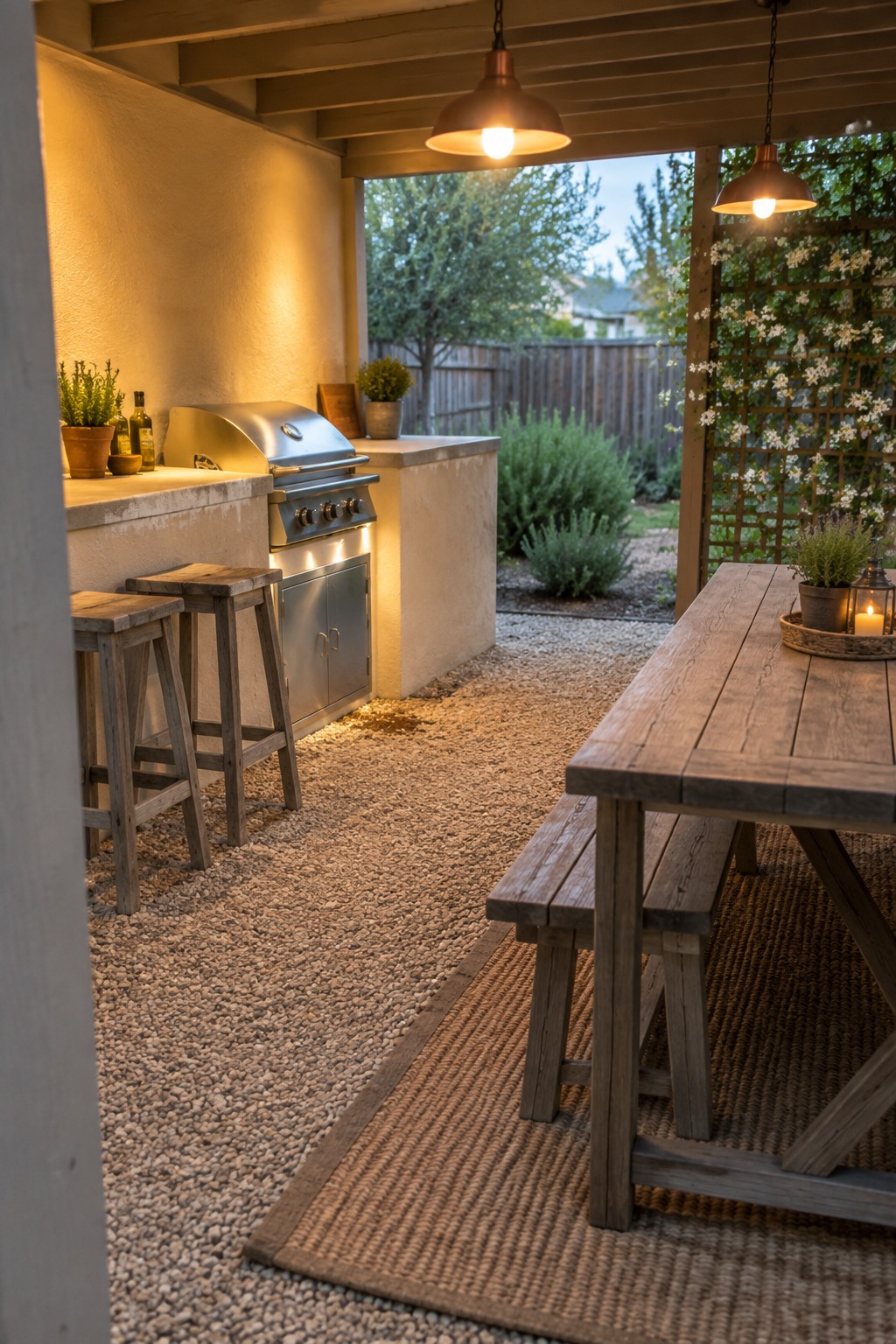
Gravel works well when you want an outdoor space that feels relaxed and does not cost much to install. It covers the ground evenly, drains well after rain, and gives the whole area a casual look that fits right in with wooden furniture and a built-in grill counter.
This approach suits homes that already have a flat backyard or side yard and need a quick way to mark off a dining and cooking zone. Just add a rug under the table so chairs sit steady, and keep the gravel raked level every so often so it stays comfortable underfoot.
Gravel Makes a Simple Patio Surface
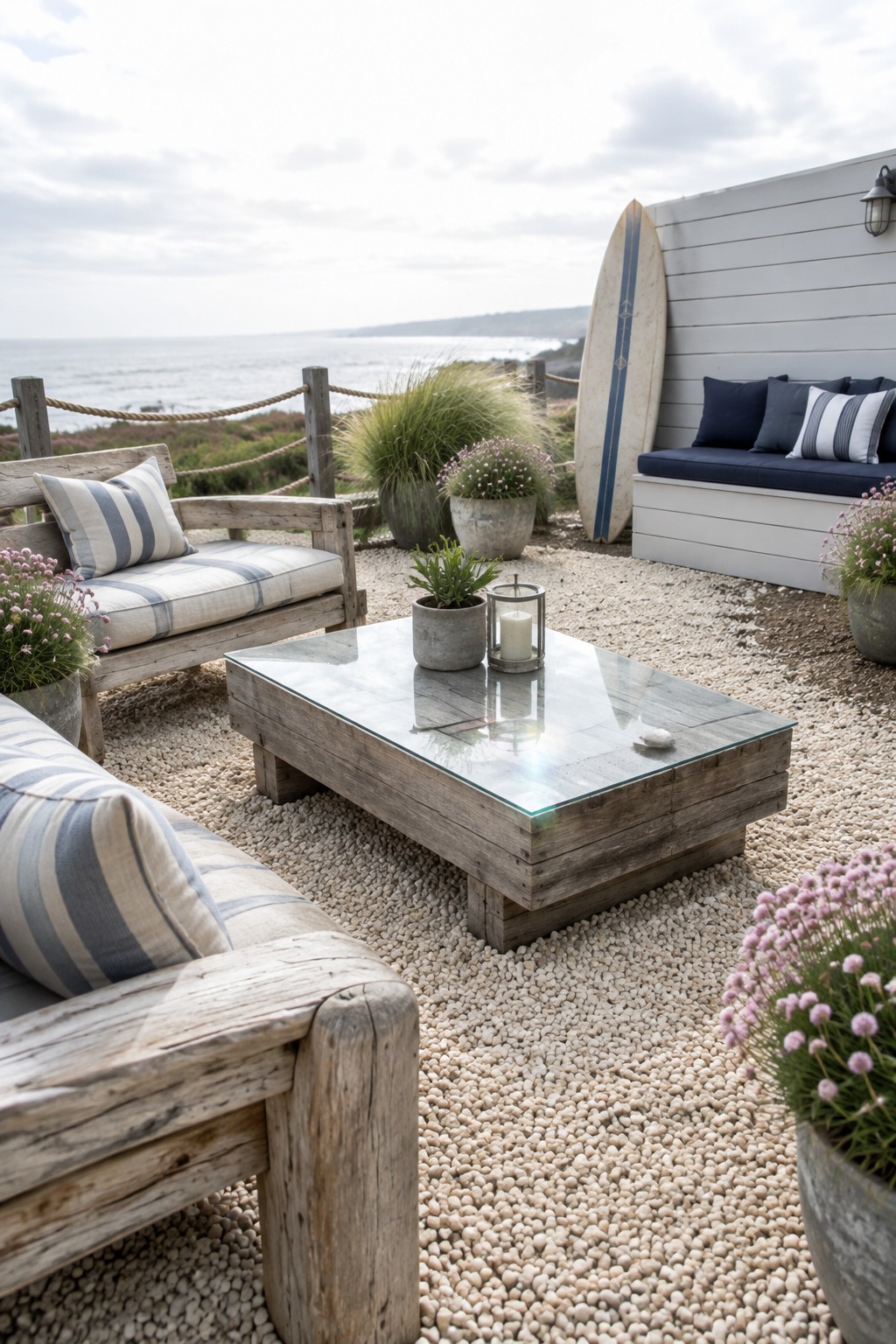
Gravel works well when you want an affordable patio that still feels finished. It drains easily, stays cooler than concrete in warm weather, and lets you cover a larger area without spending much. The look stays casual, which suits homes near the coast or any spot where you want low upkeep.
You can lay it over landscape fabric on a leveled base, then add seating and a few large pots to keep the space usable. It pairs best with simple wood furniture and works on both small and medium yards. Just make sure the gravel stays contained at the edges so it does not scatter into nearby planting beds.
Gravel Fire Pit Areas

Gravel works well as a base for a fire pit because it drains fast and stays cooler than concrete or pavers under the sun. It also costs less than most hardscape options and needs almost no upkeep beyond raking now and then. The look stays simple and open, which suits dry climates and smaller yards that do not want a big poured slab.
Set the fire bowl right on the gravel and add a few larger rocks or pots to mark the edge. This setup works best in backyards that already lean toward low-water planting and casual seating. Just keep the gravel layer thick enough so it does not shift much when people walk around the fire.
Gravel Poolside Patios

Gravel works well right next to a pool because it handles water runoff easily and feels more relaxed than solid paving. It also costs less than most hardscape options while still giving the space a finished look.
This approach suits homes with existing pools or smaller backyards where you want seating close to the water without a big construction job. Keep the gravel layer thick enough to stay put and add edging if it borders a lawn or deck so it does not spread over time.
Gravel Paths With Pavers

Gravel paths paired with concrete pavers give you a simple way to cover ground without a big budget. The gravel fills the spaces between the pavers so you get a solid walking surface that still drains well and feels casual.
This setup works best in side yards or back patio areas where you want something low cost that can be tweaked later. Put down landscape fabric first, spread the gravel, and set the pavers at even intervals for steady footing. It stays practical in most climates and keeps the overall cost down.
Gravel Paths Between Raised Beds
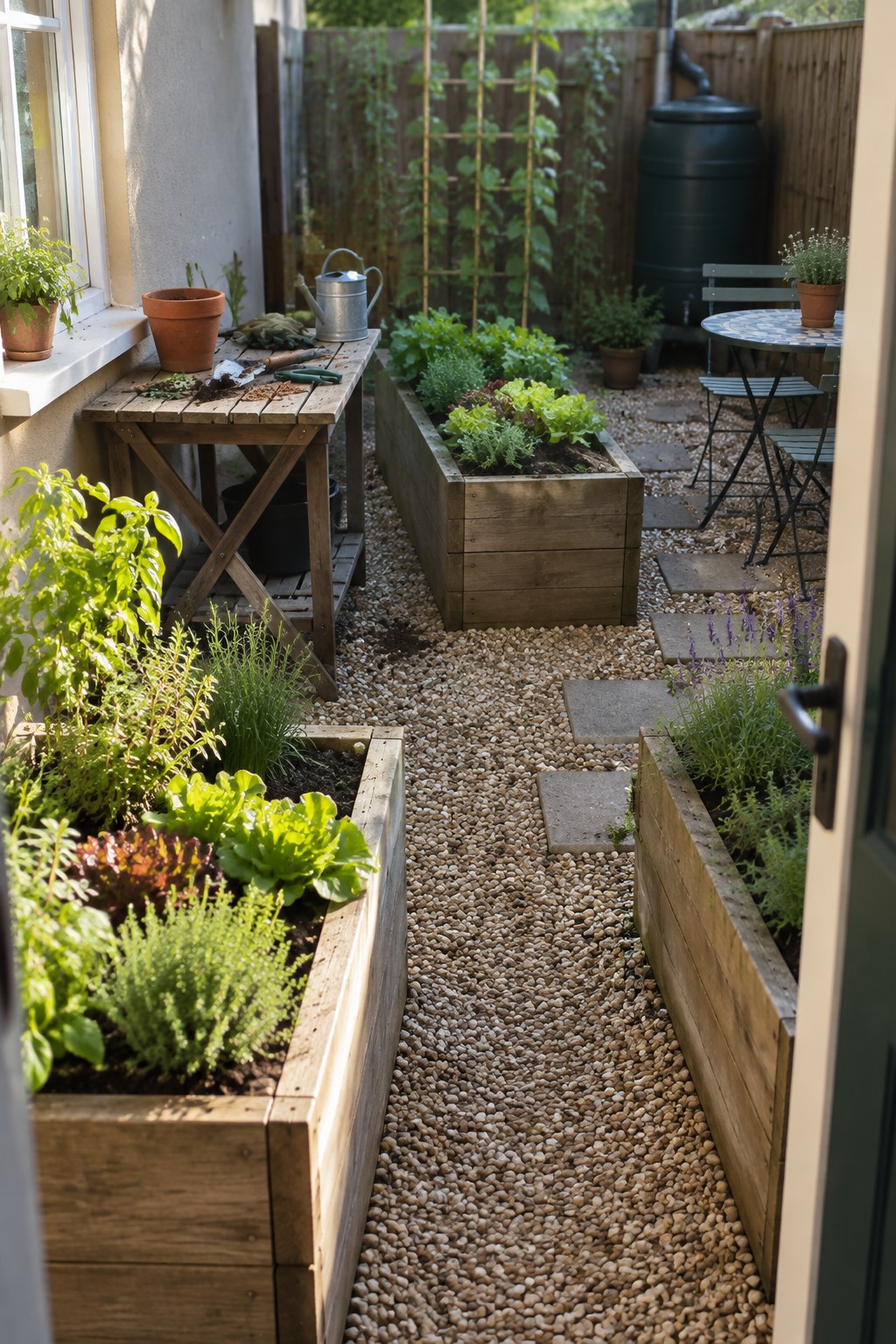
Gravel paths make a lot of sense when you have raised beds in a small yard. They cost less than pavers or concrete, drain well after rain, and give you a clear way to walk between the beds without compacting the soil.
This works best in narrow side gardens or backyard strips where you need access but do not want to spend much. Put down landscape fabric first, then add a few inches of gravel between the beds. The wood edges of the beds help keep everything tidy and stop the gravel from spreading.
Layer Rugs on Gravel for a Budget Patio
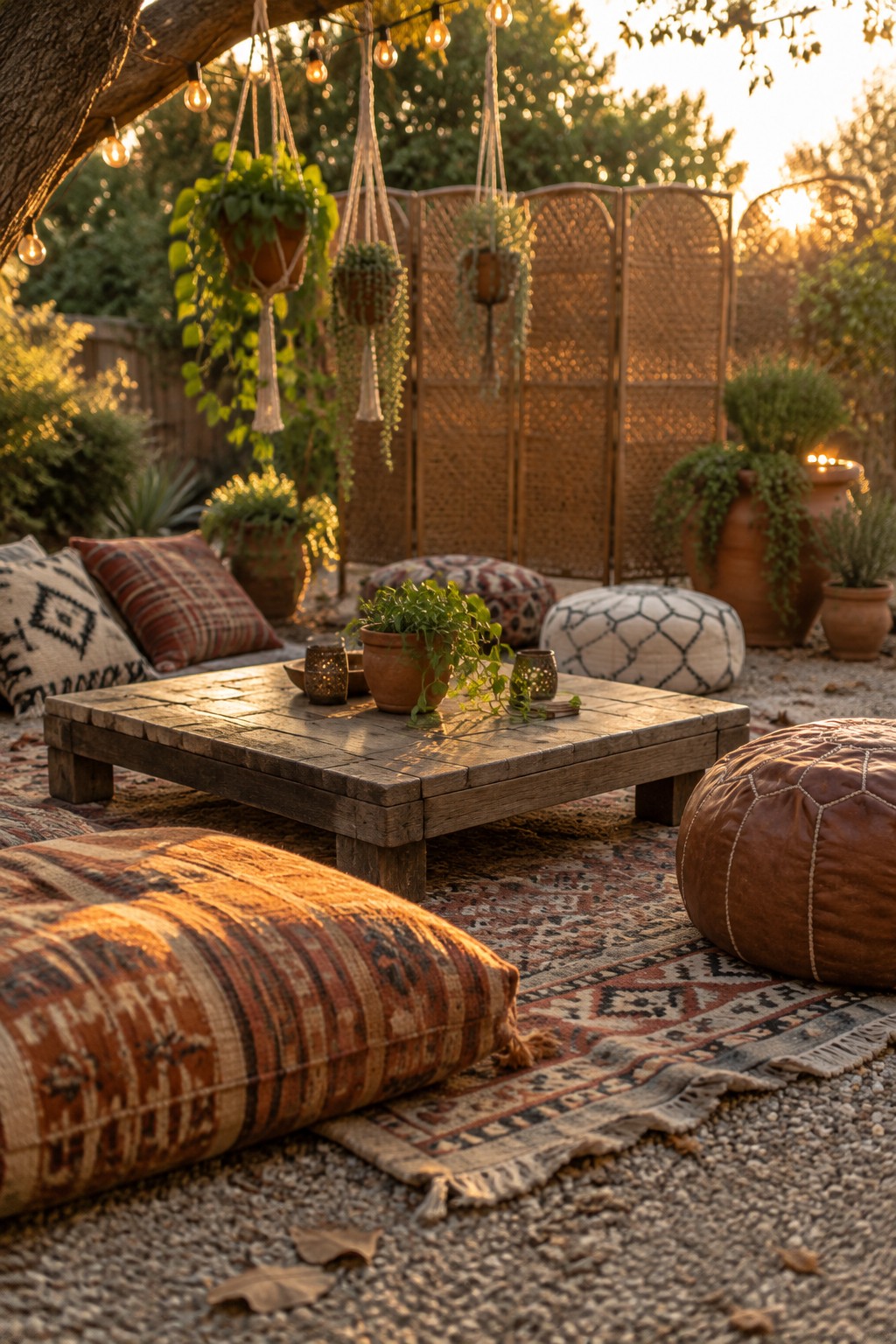
Gravel makes a good base for a patio because it costs less than pavers or concrete and drains well after rain. Many people spread it first, then add rugs on top to mark out a clear seating spot without building anything permanent.
This approach works best in small yards or rental homes where you want something you can change later. The rugs keep the space feeling finished while the gravel handles the heavy use underneath.
Gravel Patios For Casual Outdoor Seating
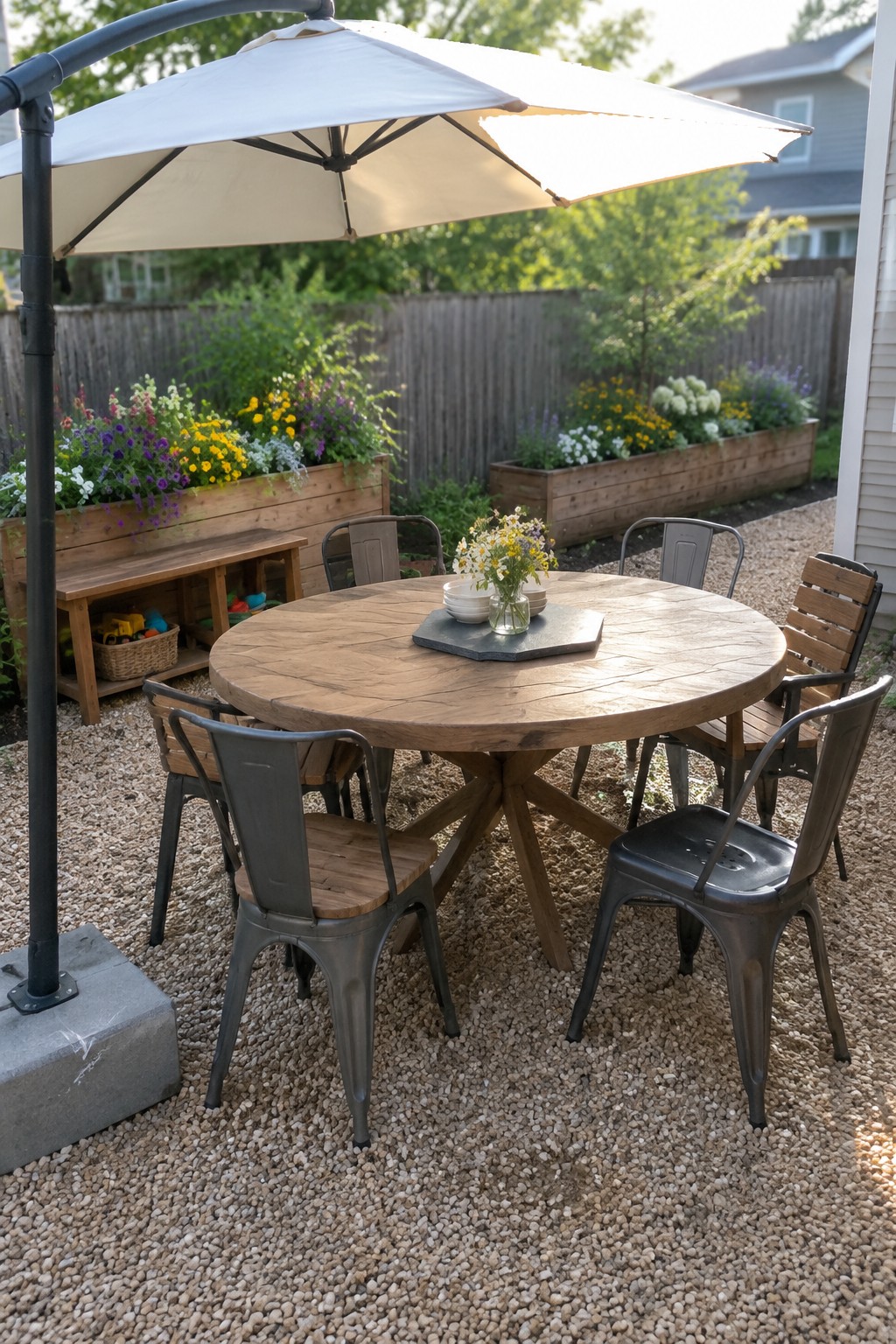
Gravel works well under a patio table because it drains quickly and stays level enough for chairs to sit steady. Many people like it since it costs less than pavers or concrete and still gives a finished look to an outdoor dining spot. The setup in the photo shows how a round table and metal chairs sit comfortably on the loose stone without needing extra edging right at the seating area.
This approach suits homes that want a simple, low-cost yard update rather than a full remodel. It works best in sunny spots where drainage matters and pairs easily with raised garden beds nearby. Just make sure the gravel layer is thick enough to keep weeds down and that you level the ground first so the table does not wobble.
Gravel With A Rug For Simple Patio Flooring
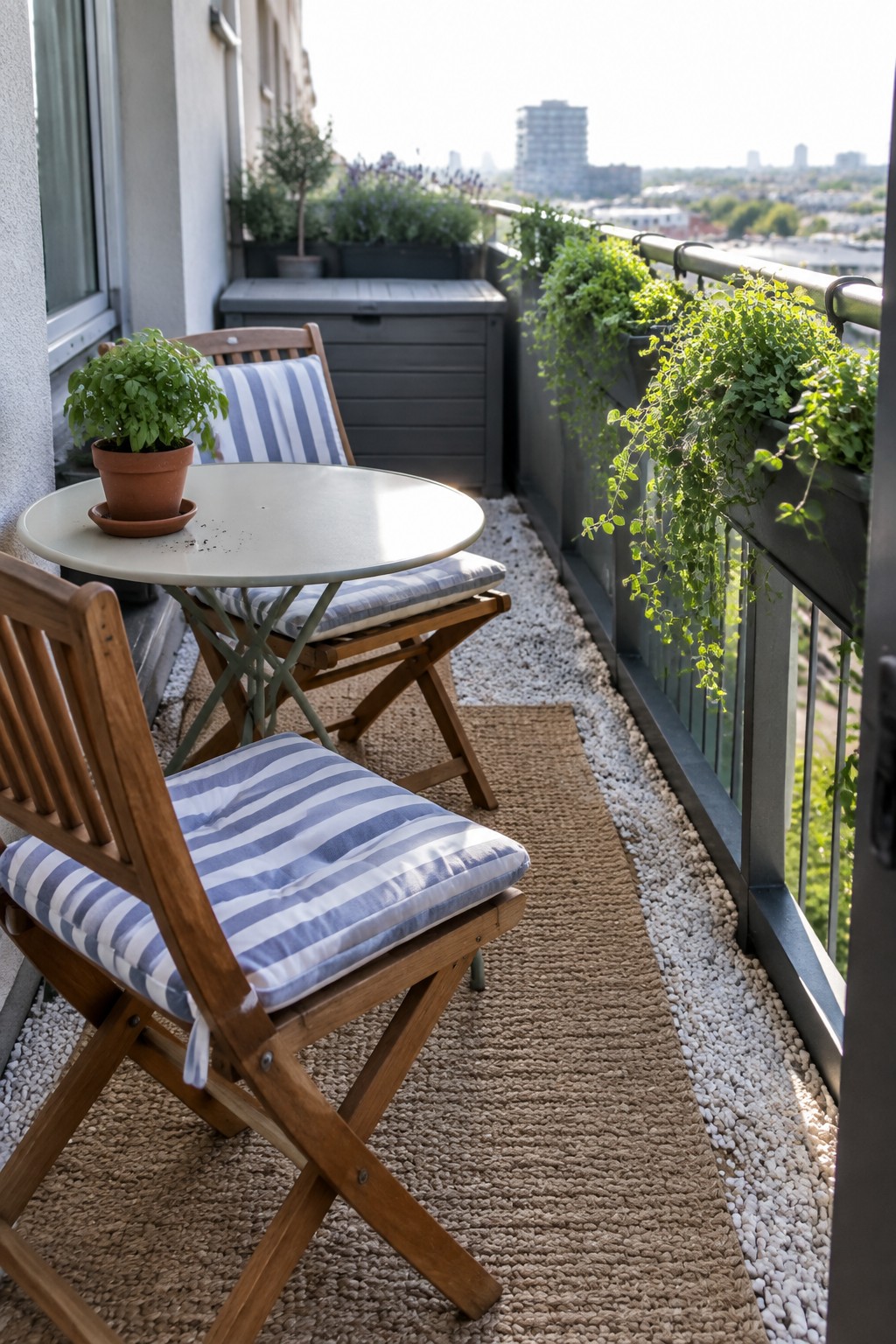
Gravel works well as a patio base because it drains easily and stays affordable even on a small balcony. Laying it across the whole surface gives you a clean, low-cost floor that handles weather without much upkeep.
A woven rug on top helps define the seating area and adds a bit of comfort underfoot. This combination suits compact outdoor spots where you want something practical but not too bare. Just keep the gravel layer level and choose a rug with a sturdy backing so it does not shift.
Gravel as a Simple Patio Base
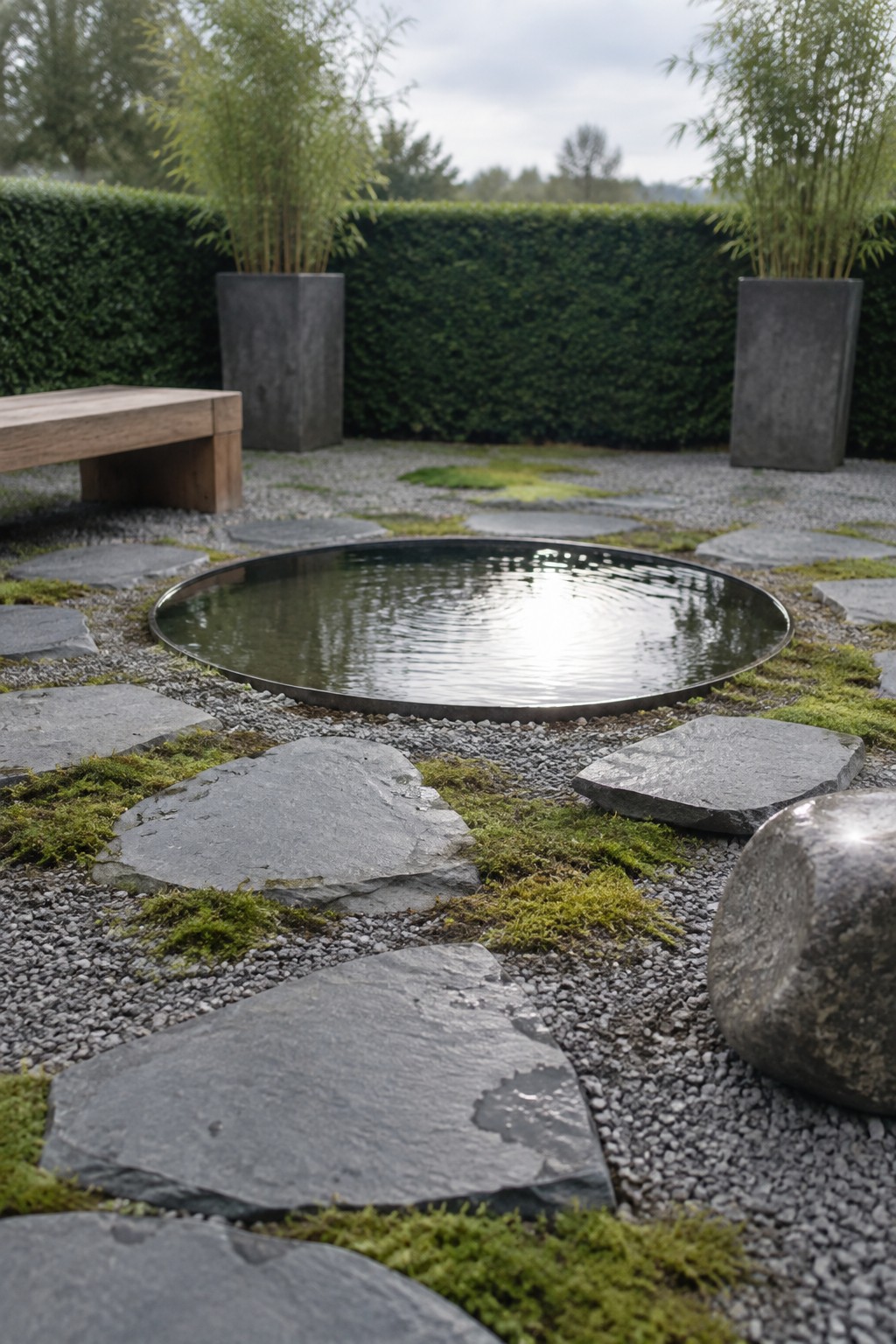
Gravel works well as the main surface in a patio because it costs less than solid paving and lets water drain through instead of pooling. You can spread it over a basic fabric layer, then add larger flat stones where you want firmer footing. This approach keeps the whole space looking natural while staying easy to adjust later if needed.
The method suits small backyards or side gardens where you want something practical without a big budget. Just keep the gravel layer thick enough to stay level underfoot and choose stones that match the gravel tone so the path feels connected rather than scattered.
Gravel With Pavers For A Simple Patio Path
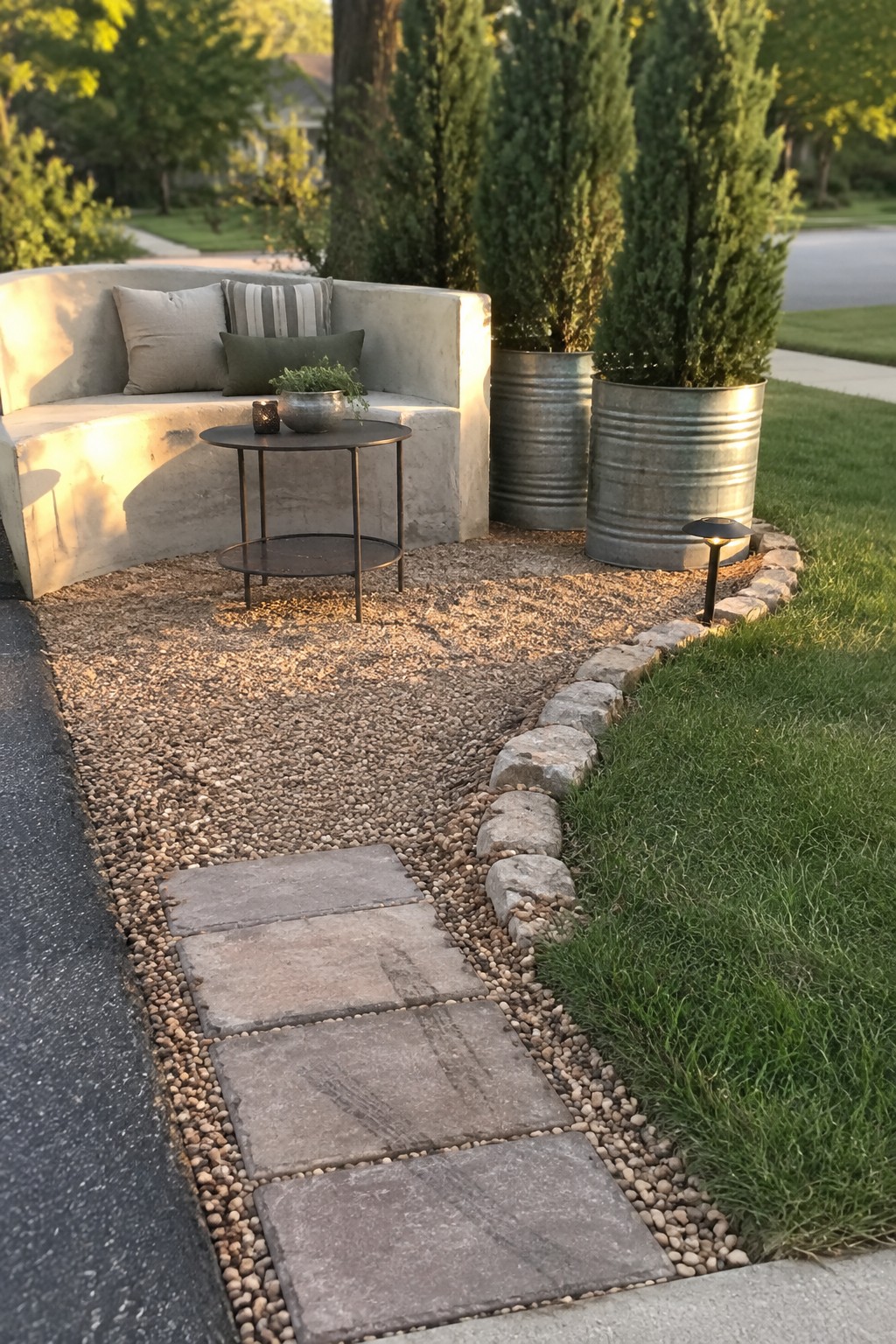
Gravel works well for patios because it costs less than solid paving and handles rain without pooling. Adding a few large pavers through the gravel gives you a firm place to walk and keeps the surface from feeling too loose underfoot.
This approach suits small yards or side areas where you want seating without a big construction job. Use a simple stone border to hold the gravel in place and stop it from spreading onto the lawn.
Gravel And Paver Paths For Simple Patios
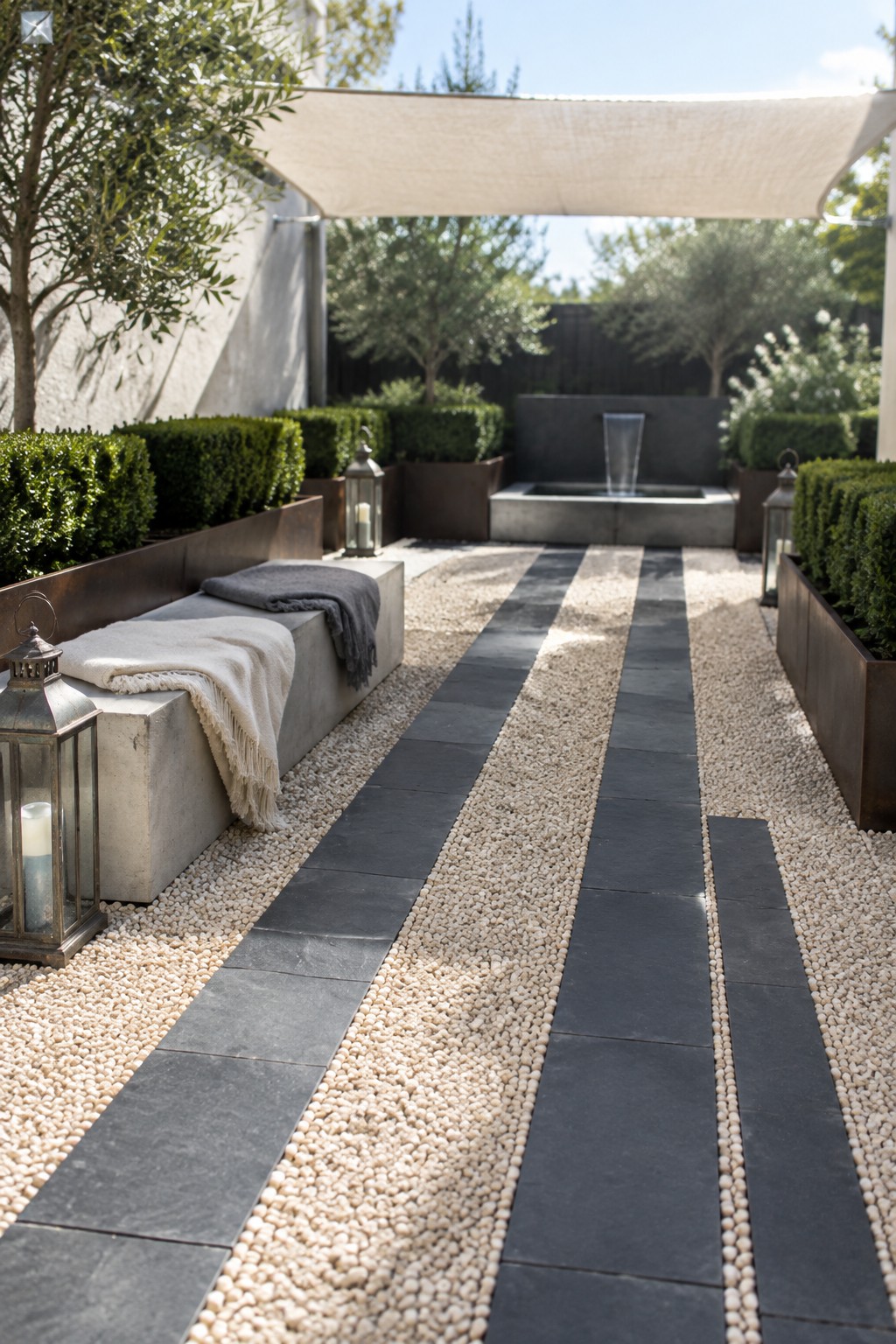
Many homeowners like the look of a clean path without the cost of full paving. Running dark stone strips through light gravel gives clear direction while letting water drain naturally and keeping the surface easy to maintain.
This setup works best in smaller courtyards or along the side of a house where you want structure but do not need a solid floor. Keep the gravel layer thick and use edging to hold it in place so it does not scatter over time.
Frequently Asked Questions
Q: How do I keep weeds from taking over the gravel after a season or two?
A: Put down a thick layer of landscape fabric first and overlap the seams by a foot. Add at least three inches of gravel on top so sunlight never reaches the soil. Pull any stragglers by hand before they set seed.
Q: Will rain turn my new gravel patio into a muddy mess?
A: Slope the ground slightly away from the house before you spread the rock. Gravel lets water pass through fast so puddles rarely form if the base drains. Rake it once a year to refill any low spots that form.
Q: Can I just dump gravel over my old cracked patio?
A: Clean the surface and add low edging boards or bricks to keep the rock from sliding off. A two-inch layer stays put for walking if the old slab already slopes right. Skip this if the concrete sits flat and holds water.
