

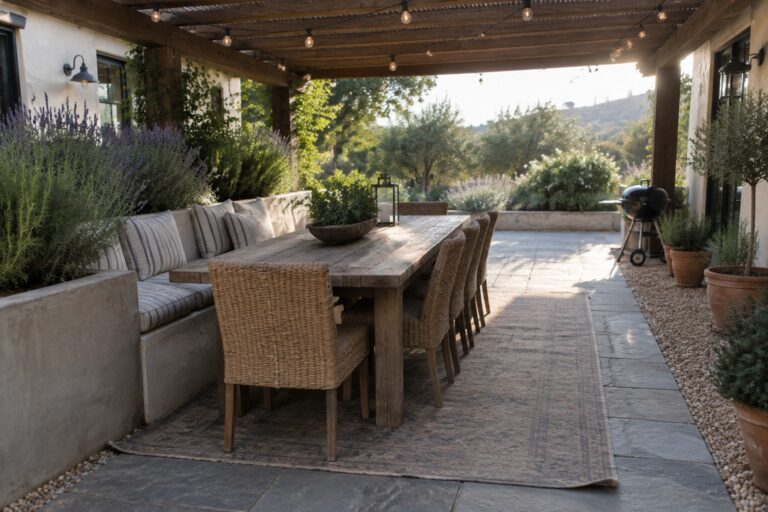
I have noticed that patios often sit empty even when the view looks right because the seating never quite fits how people actually move through the space.
When the layout leaves room to pull up an extra chair or stretch out without bumping a table the whole area starts to feel like part of the house instead of an afterthought.
Some setups look polished on paper but fall flat once daily life takes over.
I keep coming back to small choices like the height of a side table or the way a rug anchors the chairs because those details decide whether anyone stays outside past sunset.
Over time I have learned to test one change at a time rather than overhaul the whole patio at once so I can tell what really makes the space usable.
Define an Outdoor Dining Area With a Large Rug
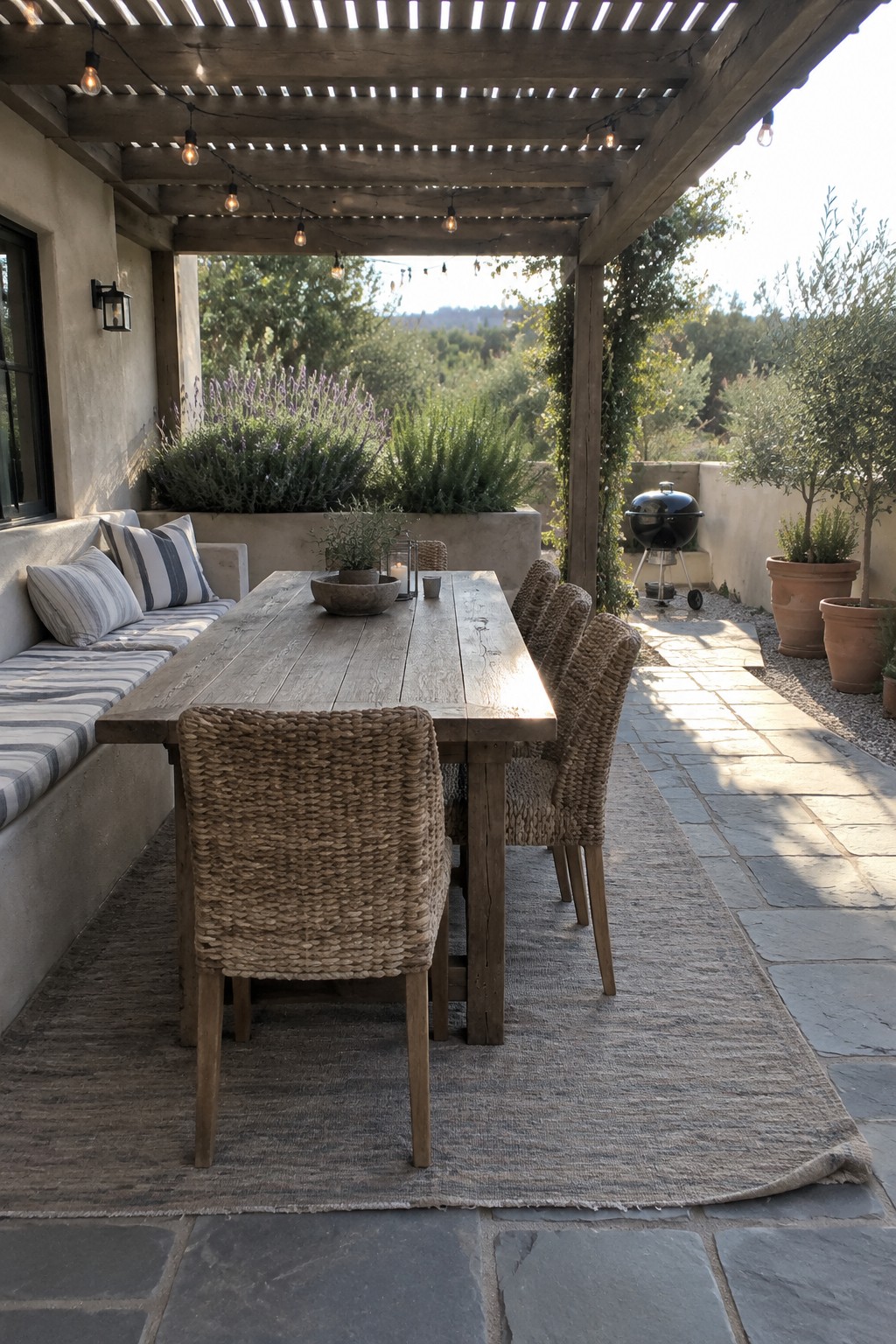
Placing a big area rug under a patio dining table helps the setup feel more grounded and separate from the rest of the yard. It turns an open stretch of stone into something that reads as a distinct room, even without walls.
This approach works best on patios that get steady use for meals. Pick a rug made for outdoors so it can handle sun and rain, and keep the size generous enough that all the chairs stay on it when pulled out.
Center Your Patio Around a Fire Pit
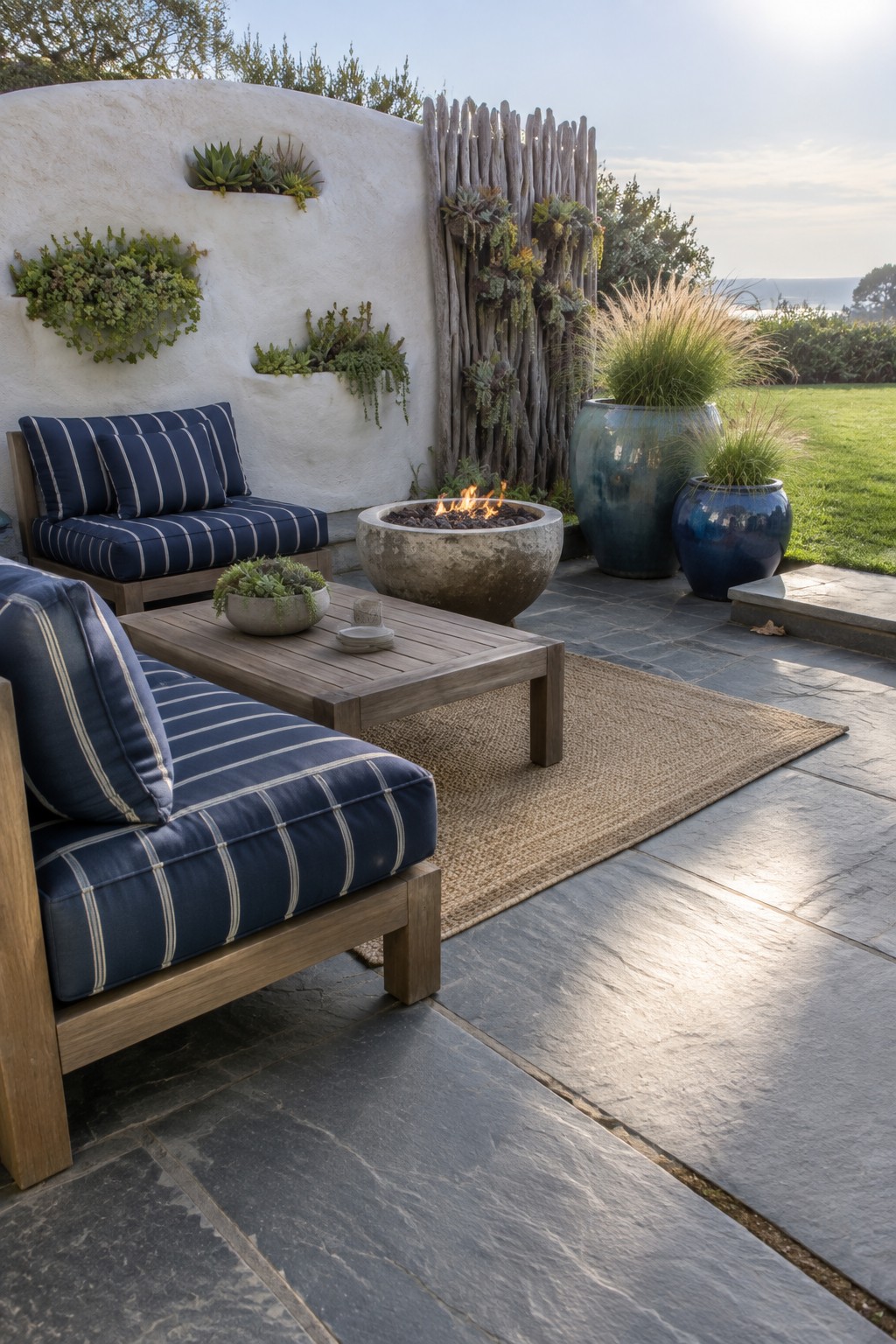
A fire pit gives an outdoor seating area a clear reason to exist. It pulls chairs and tables into place and makes the space feel finished even when the rest of the yard is still simple. People end up staying outside longer because the fire adds warmth and a spot to focus on.
This setup works best on patios that have enough room for a small circle of seating. Keep the chairs a comfortable distance from the flames and use a rug underneath to mark the zone. It suits homes where evenings are cool but you still want to use the space every day.
Patterned Tile for Outdoor Patios
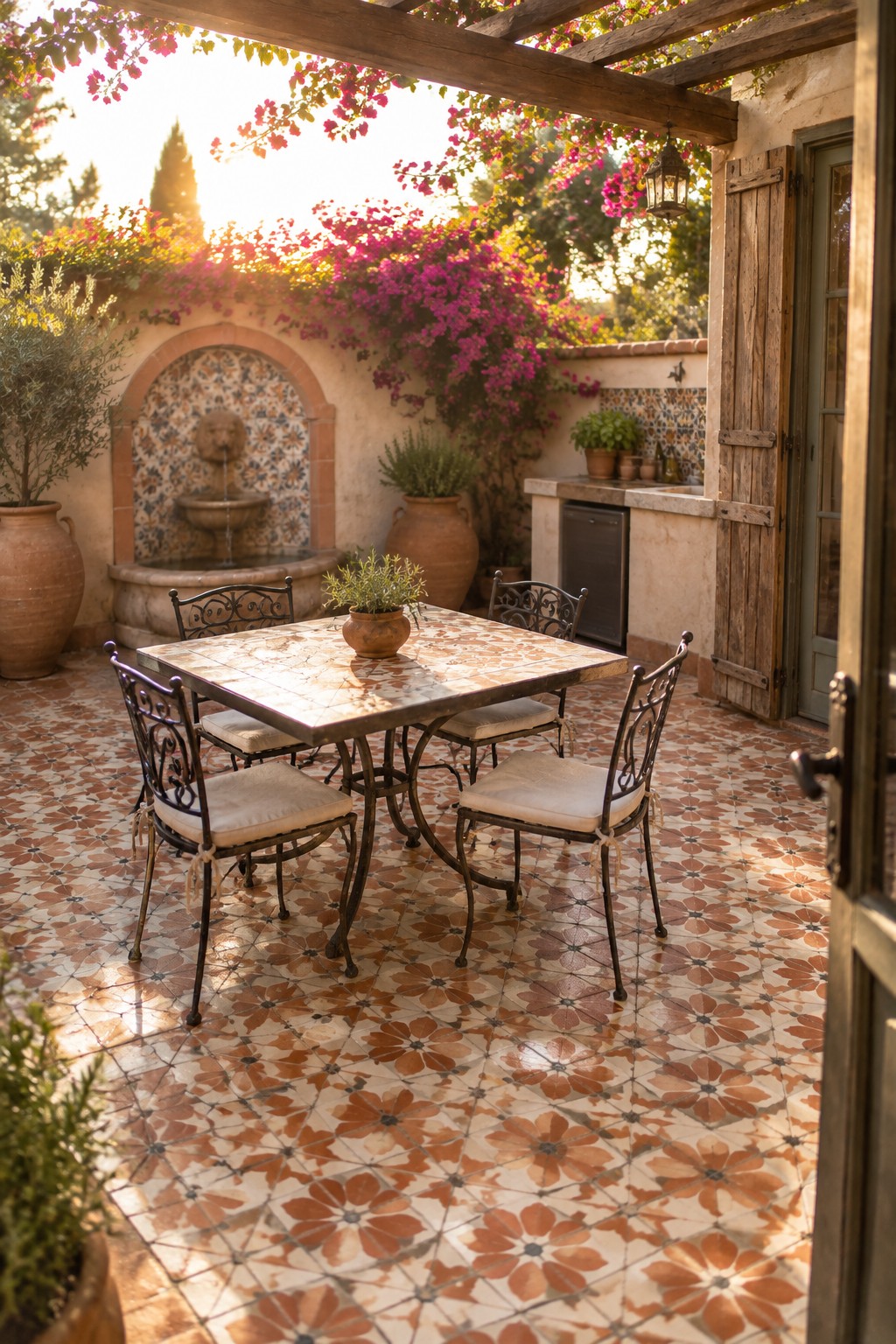
A patterned tile floor can turn a basic patio into a space that feels ready for daily use. The tile holds up to weather and foot traffic while giving the area a finished look that works well with simple furniture and potted plants.
This approach suits homes with warm climates and outdoor spaces that get regular use. Stick with durable materials that won’t fade or crack, and keep the pattern simple enough that it does not compete with the table and chairs.
Adding Built-In Bench Seating to Small Balconies
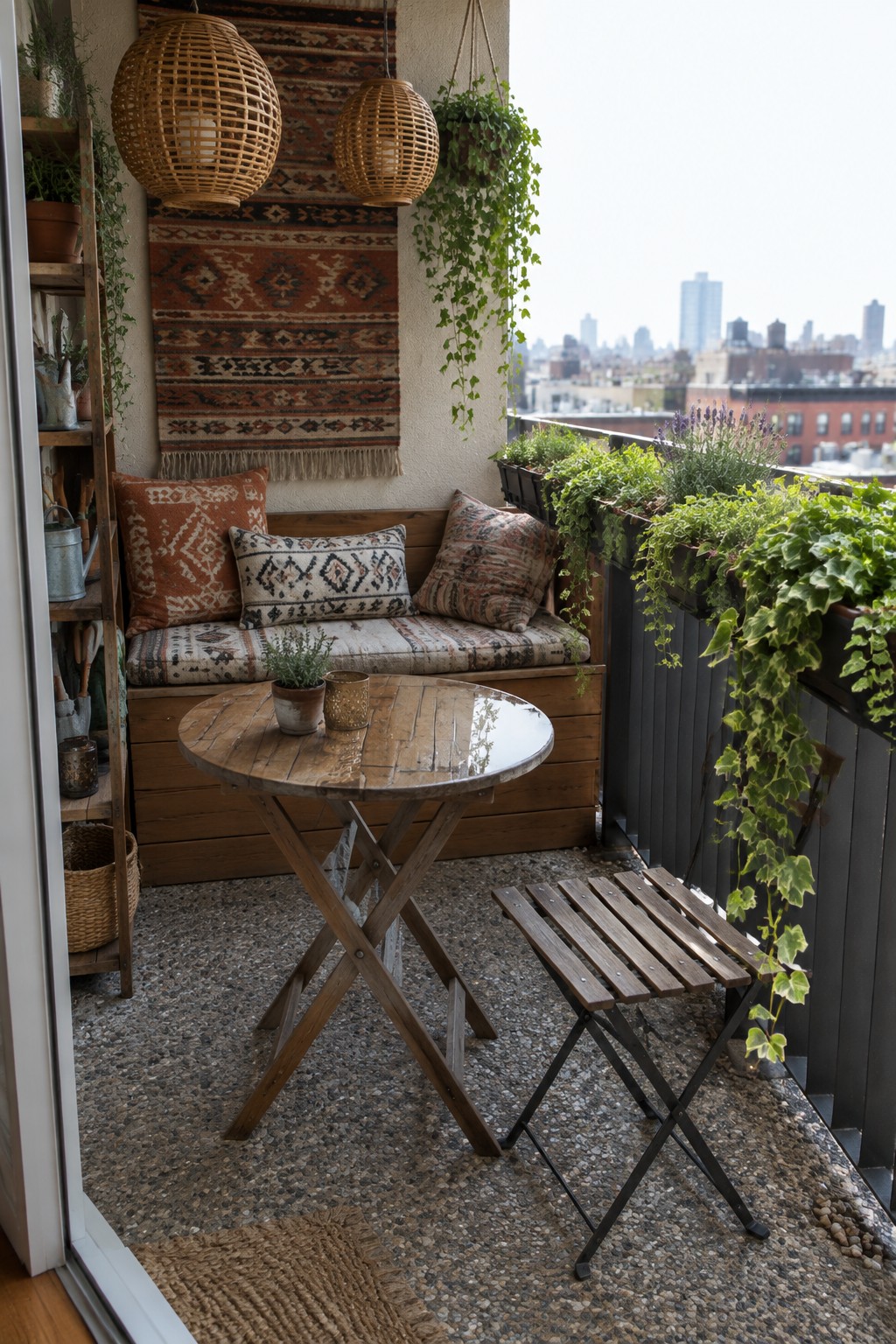
A built-in bench along the back wall turns a narrow balcony into a real seating spot without eating up floor space. It gives you a steady base that feels more permanent than loose chairs, and the cushions make it comfortable enough to sit for a while.
This works best on apartment balconies or small patios where you need to keep things simple. Pair it with a small round table and one folding stool so you can open up the floor when you want more room to move.
Choose Seating That Feels Like Indoor Furniture
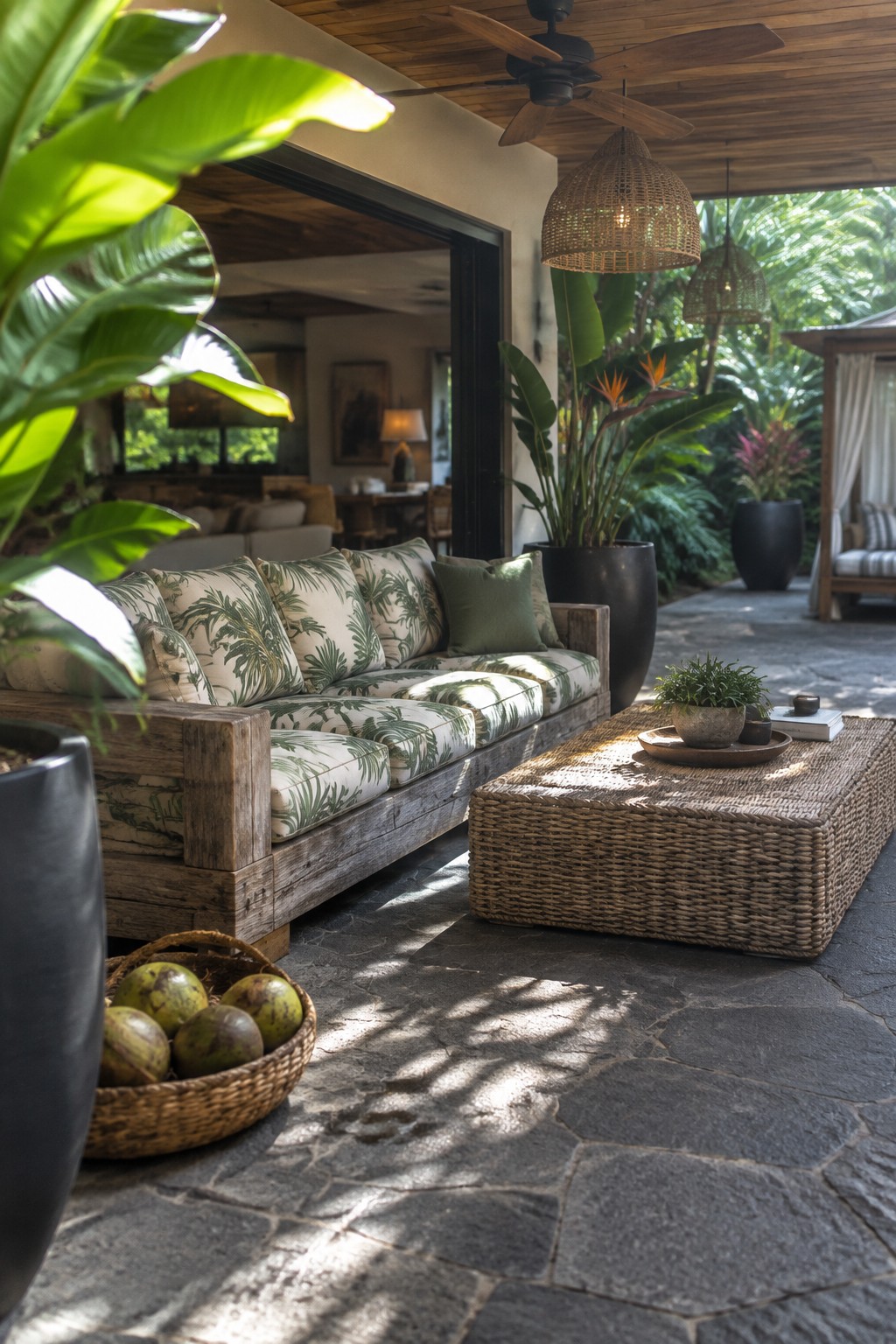
A big reason this patio works for daily use is the choice of a substantial wood sofa with thick cushions. It gives the same comfort level people expect inside, so the space gets used instead of sitting empty most of the time.
This setup suits homes with covered outdoor areas in warm climates. The sturdy frame and simple woven table hold up well without much fuss, and the natural textures keep everything feeling relaxed rather than overly styled. Just make sure the pieces are scaled to fit the space so it does not feel crowded.
Concrete Bench Seating With A Large Umbrella
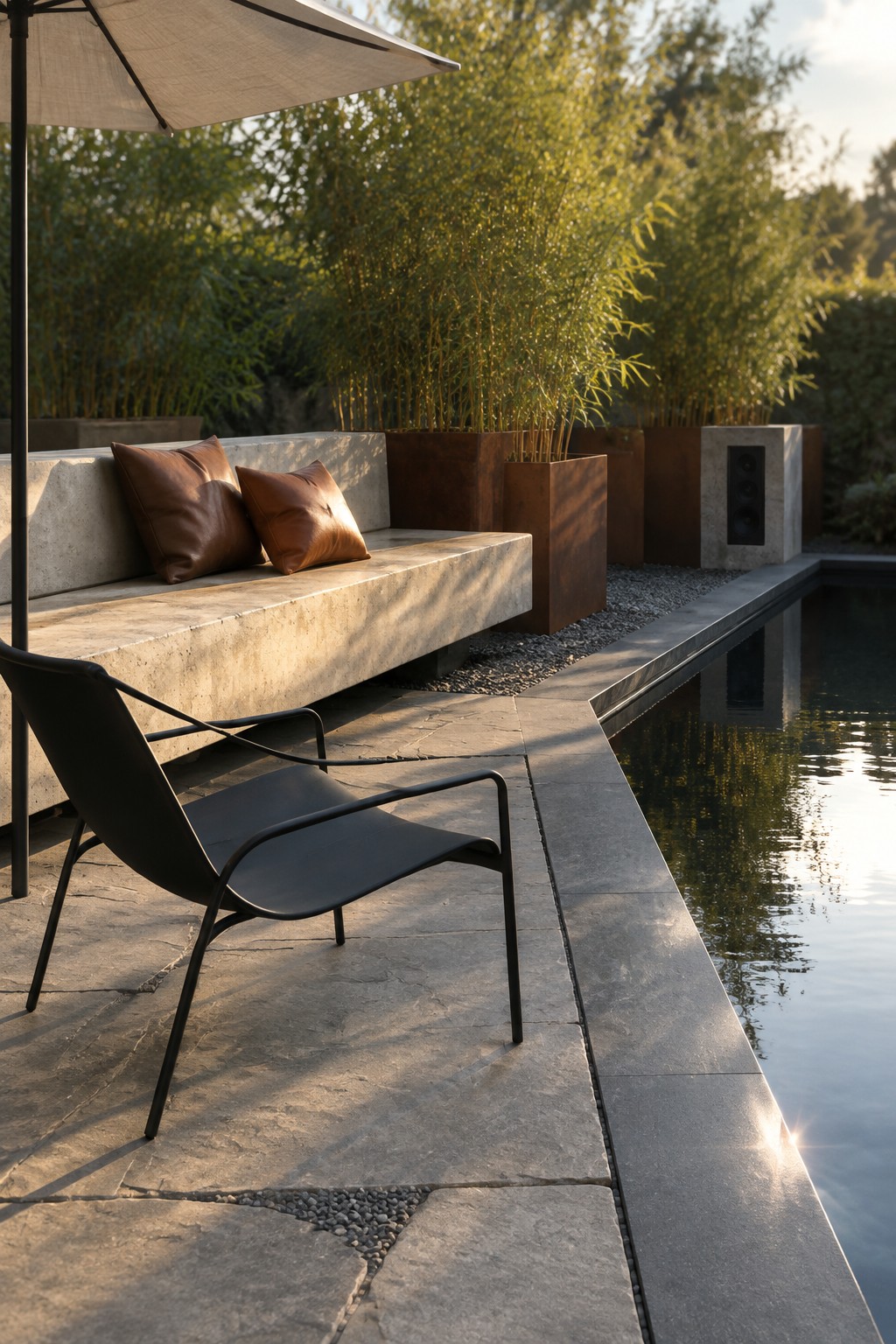
Placing a long concrete bench right at the pool edge and covering part of it with a big umbrella creates a simple shaded spot that stays usable through the day. The solid bench gives you a place to sit or stretch out without needing lots of separate furniture, while the umbrella handles the sun when it gets too strong.
This setup suits homes with clean modern outdoor areas where you want something that feels permanent but still flexible. The bench stays in place through the seasons and the umbrella can be adjusted or removed. Just keep the base weighted well since wind can pick up near water.
Mixing Painted Chairs Around a Wooden Table
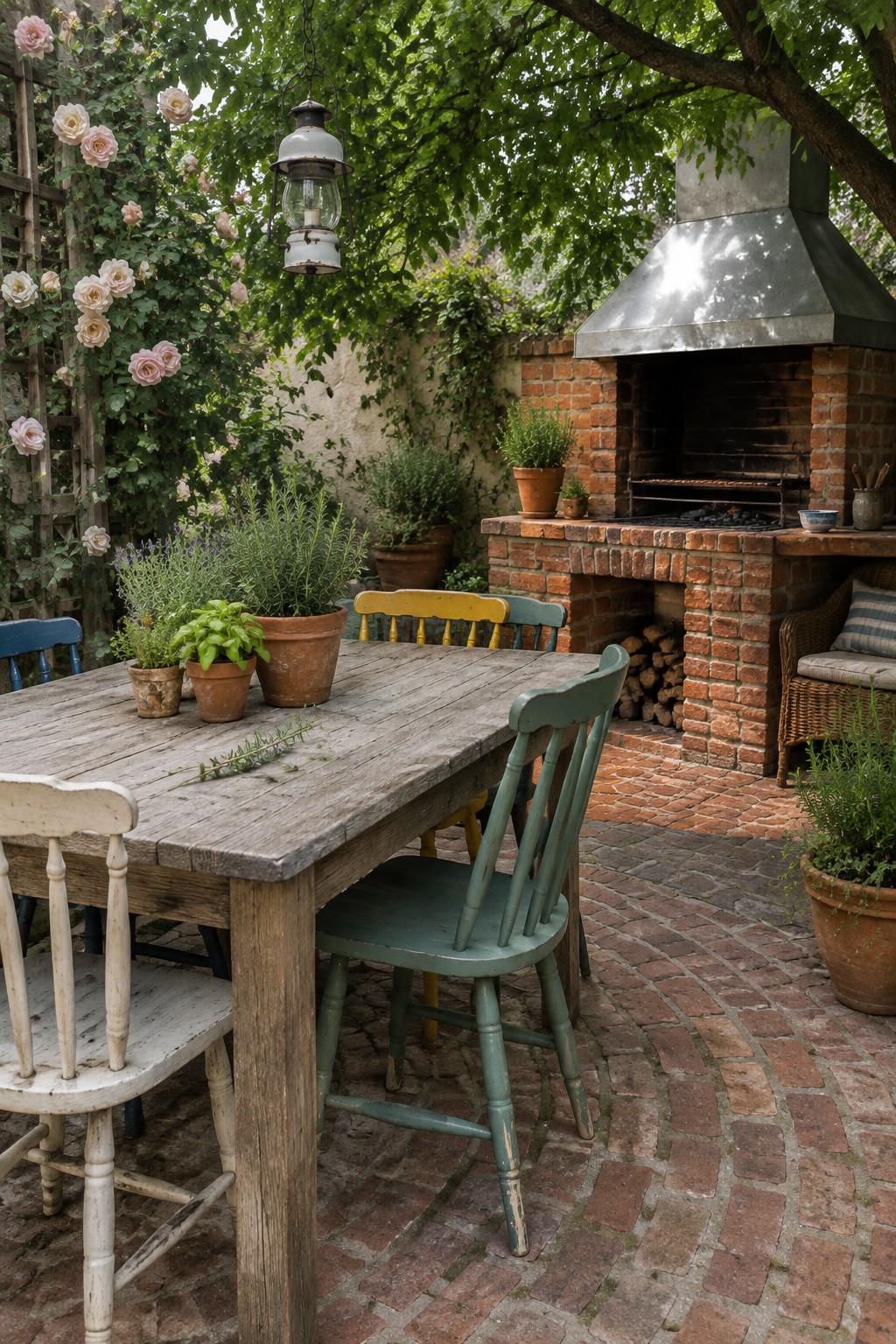
One simple way to make an outdoor dining area feel comfortable is to use a mix of painted wooden chairs around a sturdy table. The different colors keep things casual and personal instead of looking like a set that was bought all at once.
This works best on patios where you want everyday meals to feel easy rather than formal. Pick chairs that are solid enough for outdoor use and add a cushion or two if you plan to linger after dinner.
Anchor Patio Seating With a Central Fire Pit
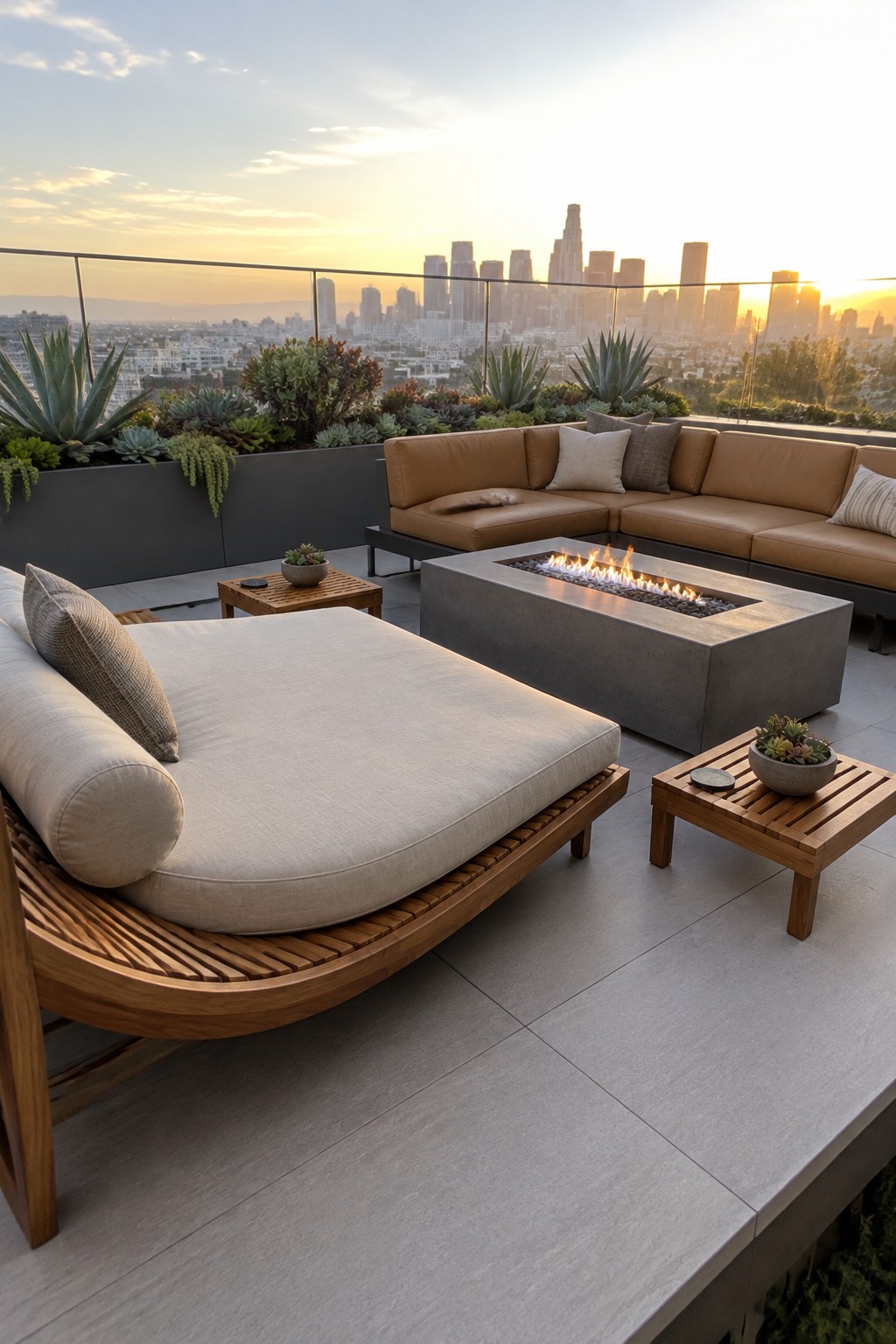
A fire pit works best when it sits right in the middle of the seating instead of off to one side. This layout pulls people together naturally and gives the whole patio a clear purpose without needing extra decoration.
It suits rooftops and larger decks where you can fit a full circle of chairs or a sectional around the pit. Leave enough walking space behind the seats so the area stays comfortable rather than cramped.
Wrap Seating Around a Central Fire Pit
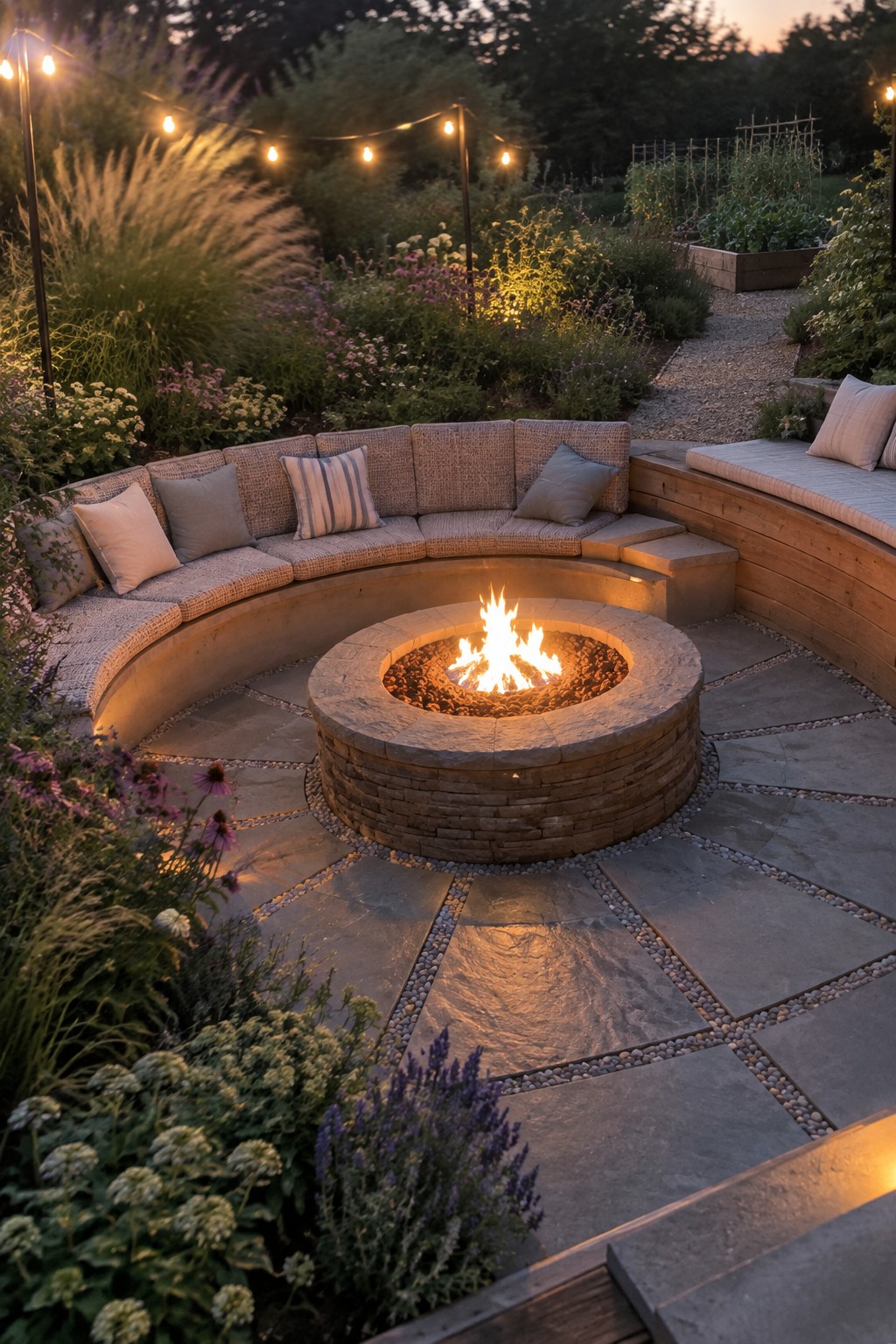
A fire pit works best when the seating actually faces it instead of sitting off to the side. Curved benches or a rounded sectional keep everyone close to the flames and to each other, which makes conversation easier and the whole area feel more finished. The layout also helps the patio feel like one clear room rather than scattered furniture on a slab.
This setup suits smaller or medium backyards where you want a single gathering spot instead of multiple zones. Match the bench height and material to your patio surface so the curve looks built in rather than added later. Keep the surrounding planting low so the fire stays the main focus at night.
Keep a Small Table by the Door
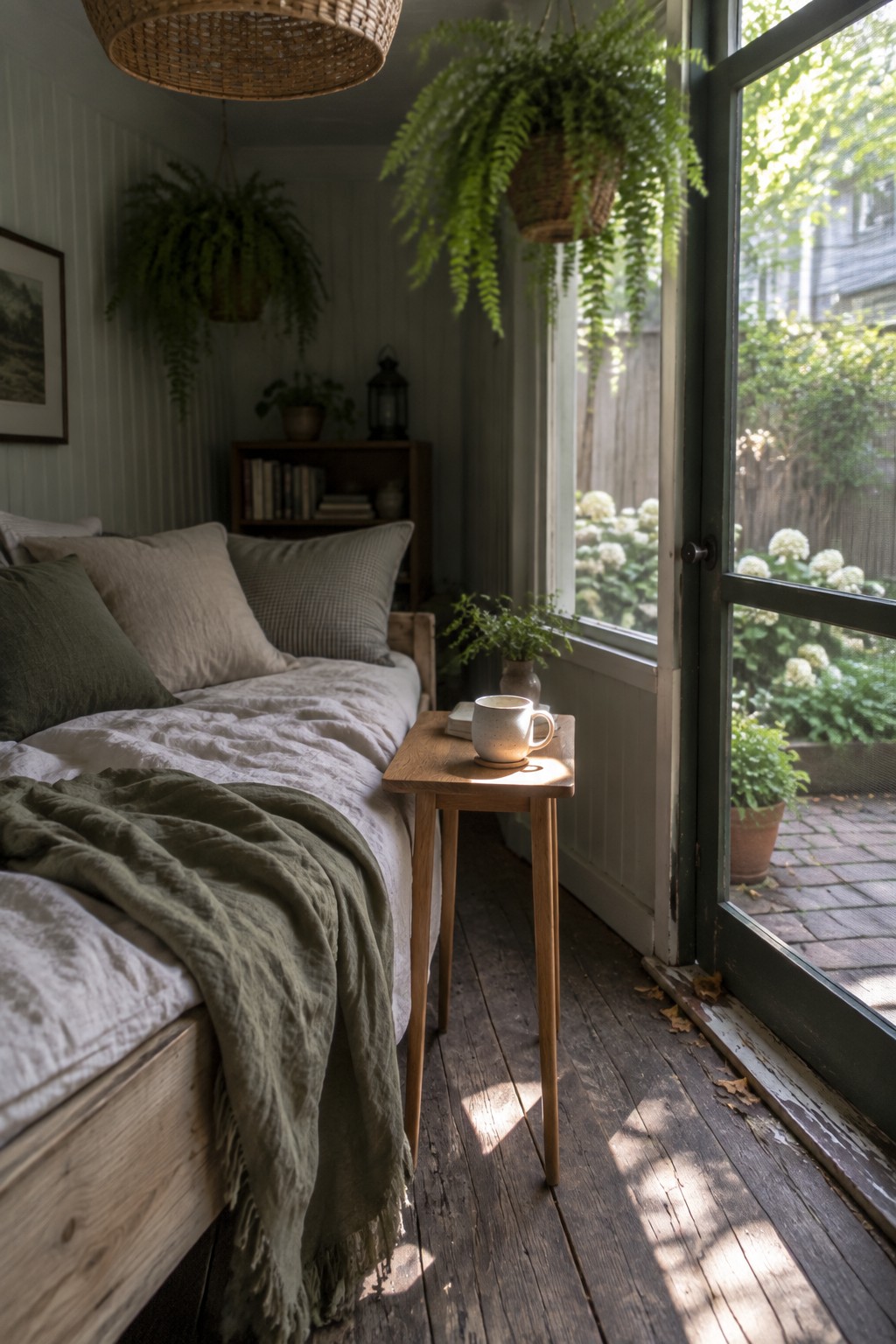
A small table placed right by an open door makes it easy to enjoy the patio without extra steps. You can set down a mug or a book and still feel connected to the space outside, which turns the doorway into a useful spot rather than just a passage.
This works best in rooms that open straight onto a patio or deck. It suits homes where daily living moves between inside and out, and it keeps things practical without needing much floor space. Just choose a table that can handle a bit of weather if the door stays open often.
Poolside Lounges Under a Pergola
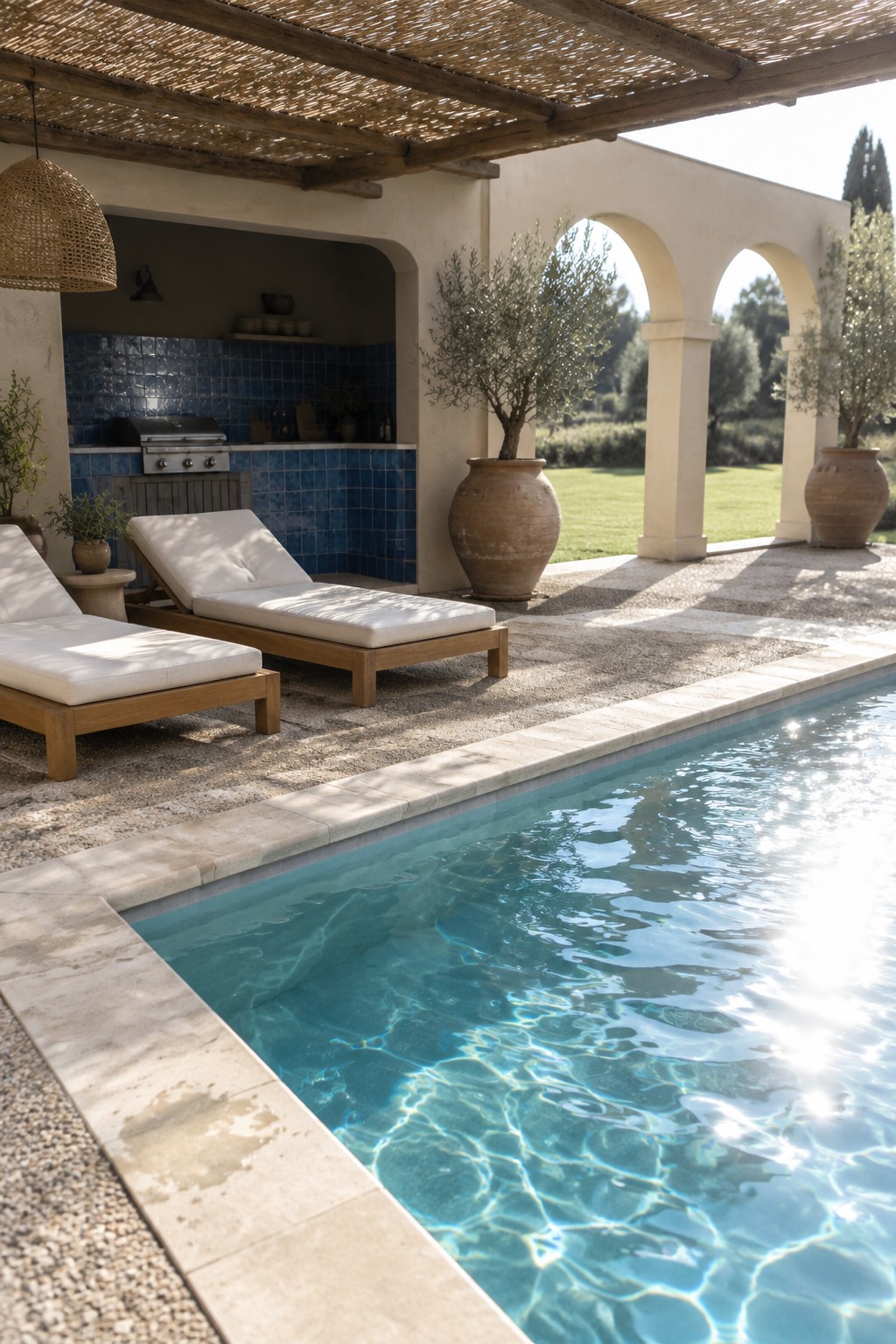
One practical way to make a pool area feel more like an everyday living space is to place lounge seating and a small kitchen right beside the water under a covered structure. The shade keeps the area comfortable during the day, and having the kitchen close by means you do not need to carry things back and forth from the house.
This setup works best in homes where the pool gets regular use and the climate allows for outdoor time most of the year. Keep the materials simple, like wood frames for the chairs and durable tile for the cooking area, so the whole zone stays easy to maintain without looking too formal.
Anchor Your Patio Seating With a Woven Rug
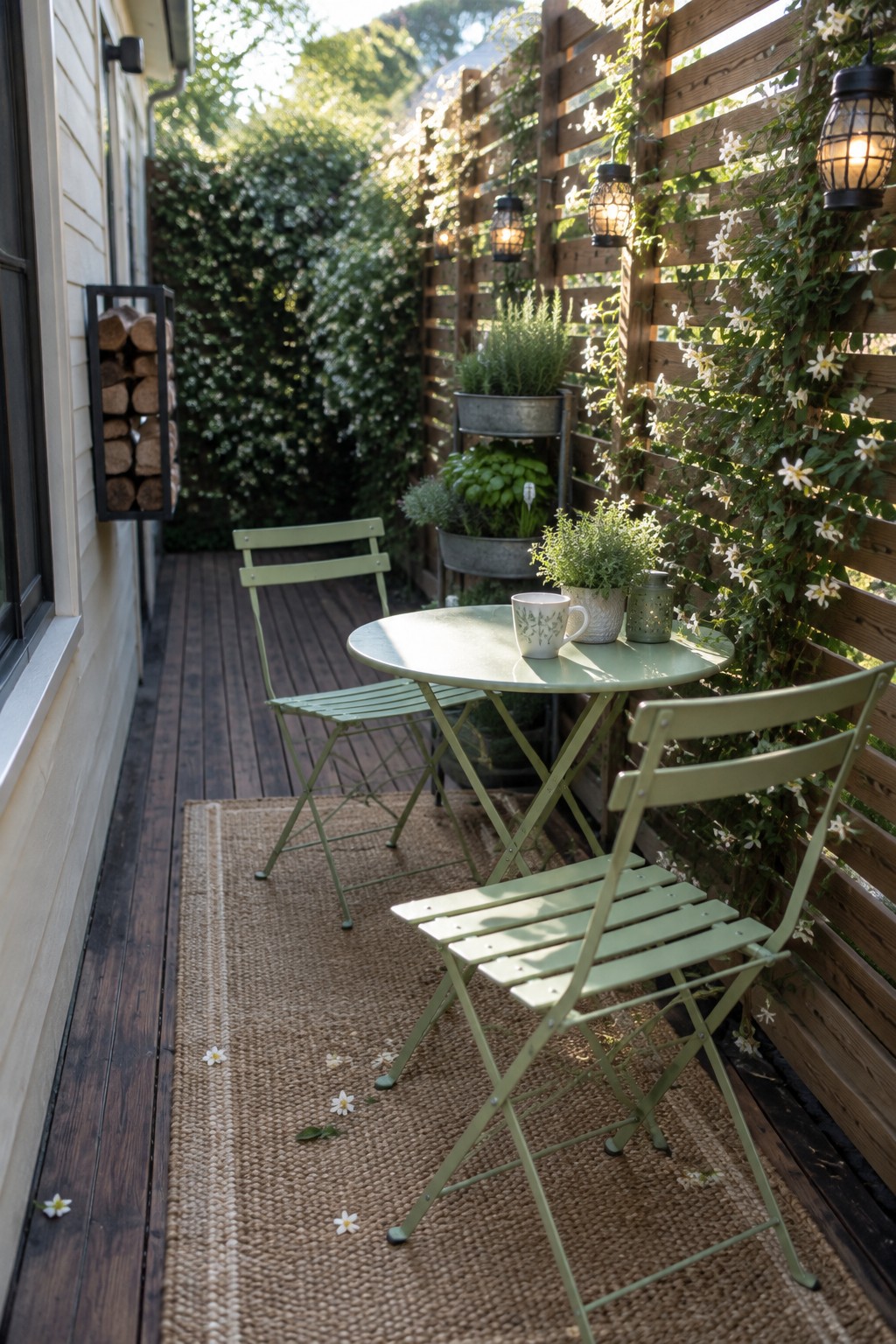
A simple woven rug can make a deck or patio feel more like a real room instead of just an open surface. It pulls the table and chairs together, softens the wood underfoot, and creates a clear spot for sitting without any construction.
This idea works best on smaller decks or balconies where you want a defined area that still feels casual. Pick a sturdy natural fiber rug that can handle weather, and keep the furniture light enough to shift when you need the space for something else.
An Outdoor Kitchen Island With Bar Seating
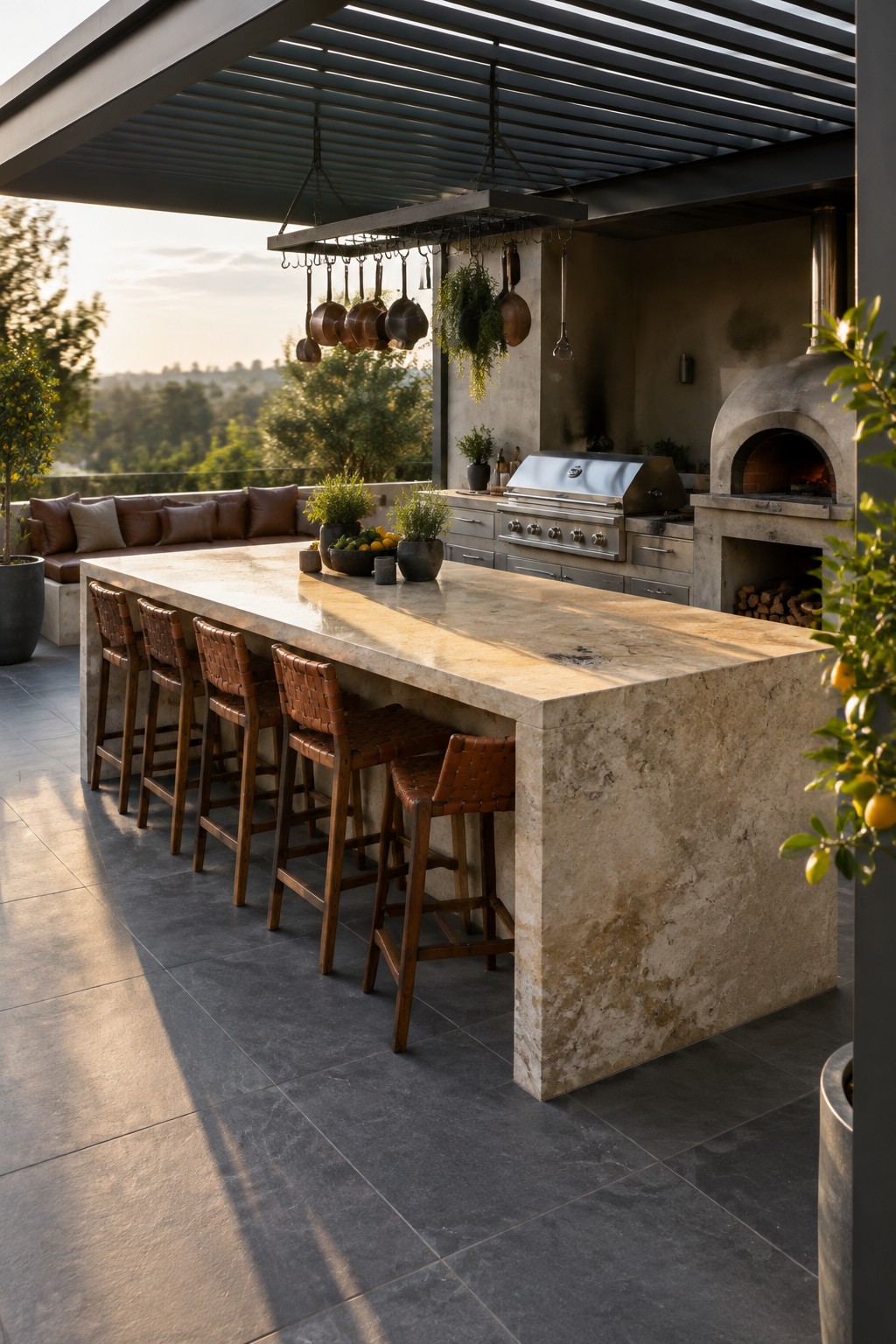
A big island with bar stools changes how an outdoor patio gets used. It gives people a place to sit right where the cooking happens, so meals feel more casual and the space works for both quick breakfasts and longer evenings with friends. The solid stone top holds up well outside and the height lines up nicely with standard bar stools.
This setup works best on patios that already have a grill or other cooking area close by. Make sure the island is wide enough for plates and drinks without feeling cramped, and choose stools that can stay outside year round. It suits homes with a decent amount of patio space and people who like to cook outdoors on a regular basis.
Stepping Stone Paths Set In Moss
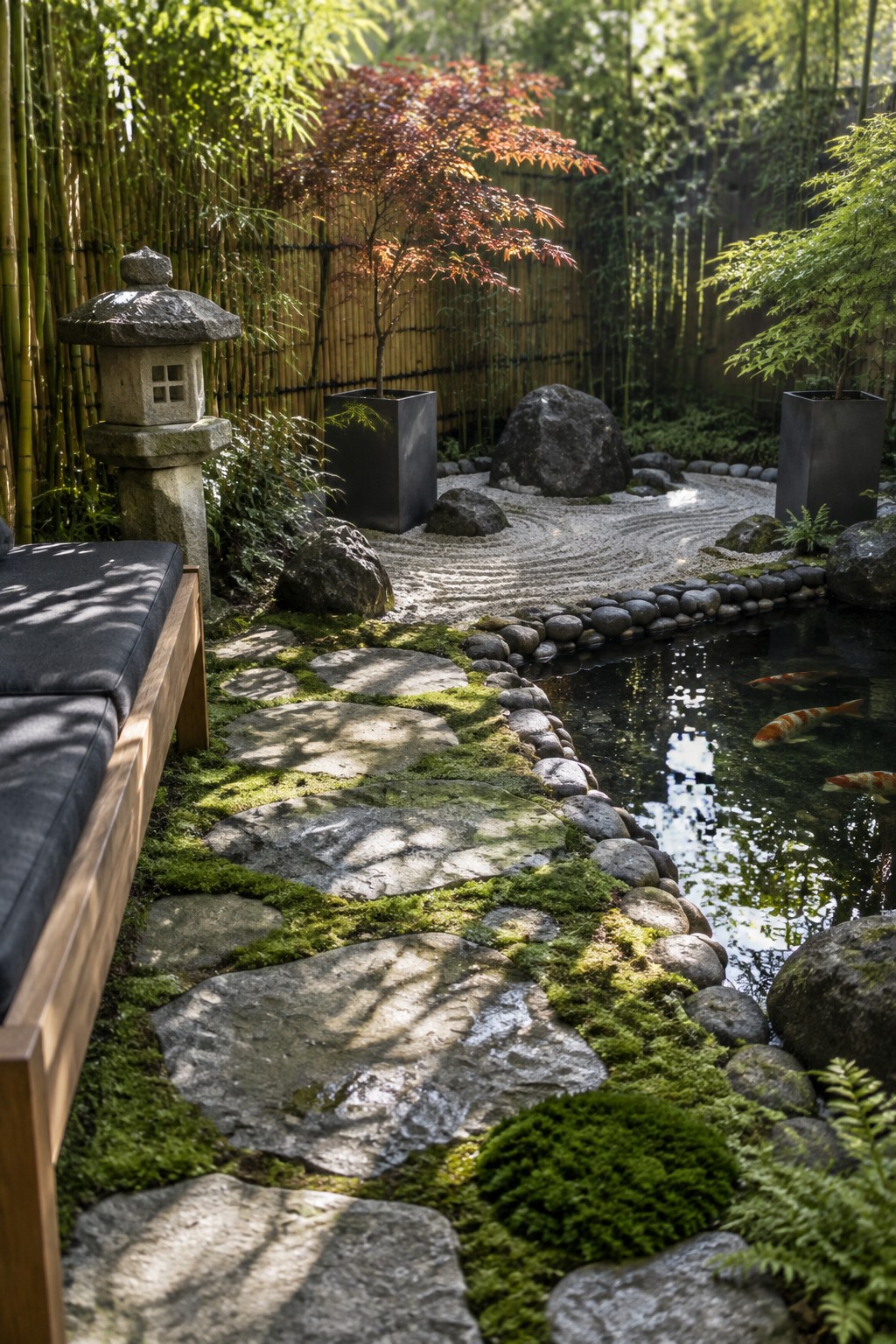
A path made of large flat stones set into moss gives a garden a settled, natural feel without needing a full paved surface. The stones sit low so the green comes right up around them, and the whole thing stays soft and quiet underfoot. It works especially well in smaller yards or side gardens where you want a clear route but do not want the look of a hard walkway cutting through everything.
This kind of path suits homes with shade or steady moisture, since moss needs those conditions to stay full. Keep the stones big enough to step on comfortably and space them so the moss can fill in between. Avoid placing them in full sun or high-traffic spots where the moss will struggle.
Fabric Canopy With String Lights Overhead
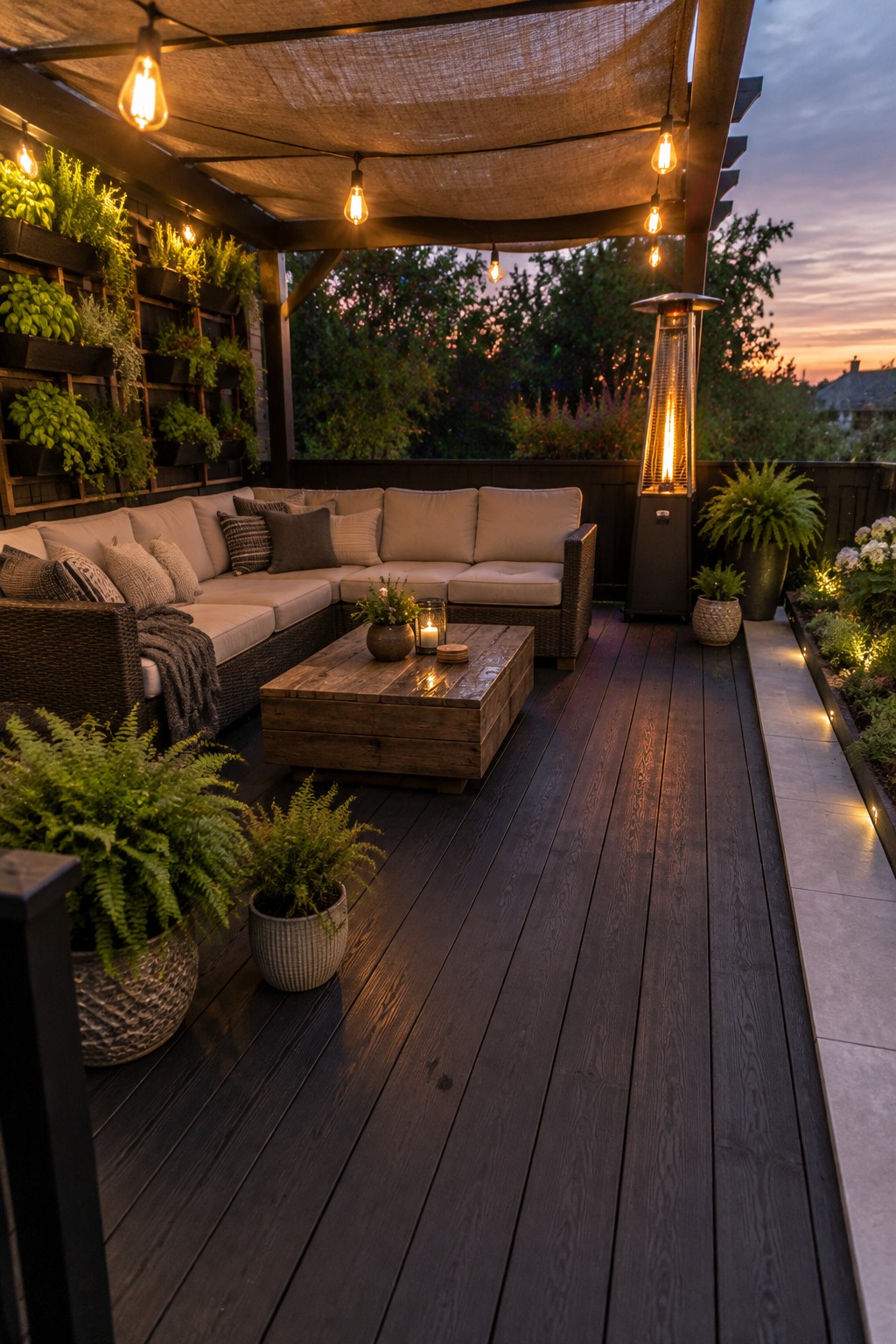
A fabric canopy overhead turns an open deck into a space that feels protected and usable for more hours of the day. The soft cover blocks harsh sun while still letting some light through, and the string lights add a gentle glow once the sun goes down. This setup works especially well on decks that get full afternoon exposure or where people want to sit outside without worrying about glare or sudden weather shifts.
It suits homes with existing decking or patios that need a bit more definition without building a full roof. Keep the fabric simple and neutral so it blends with the house, and run the lights along the main support lines rather than scattering them everywhere. Just watch that the structure can handle wind and that you have a way to take the fabric down if storms are common in your area.
Fire Pit Placement on Brick Patios
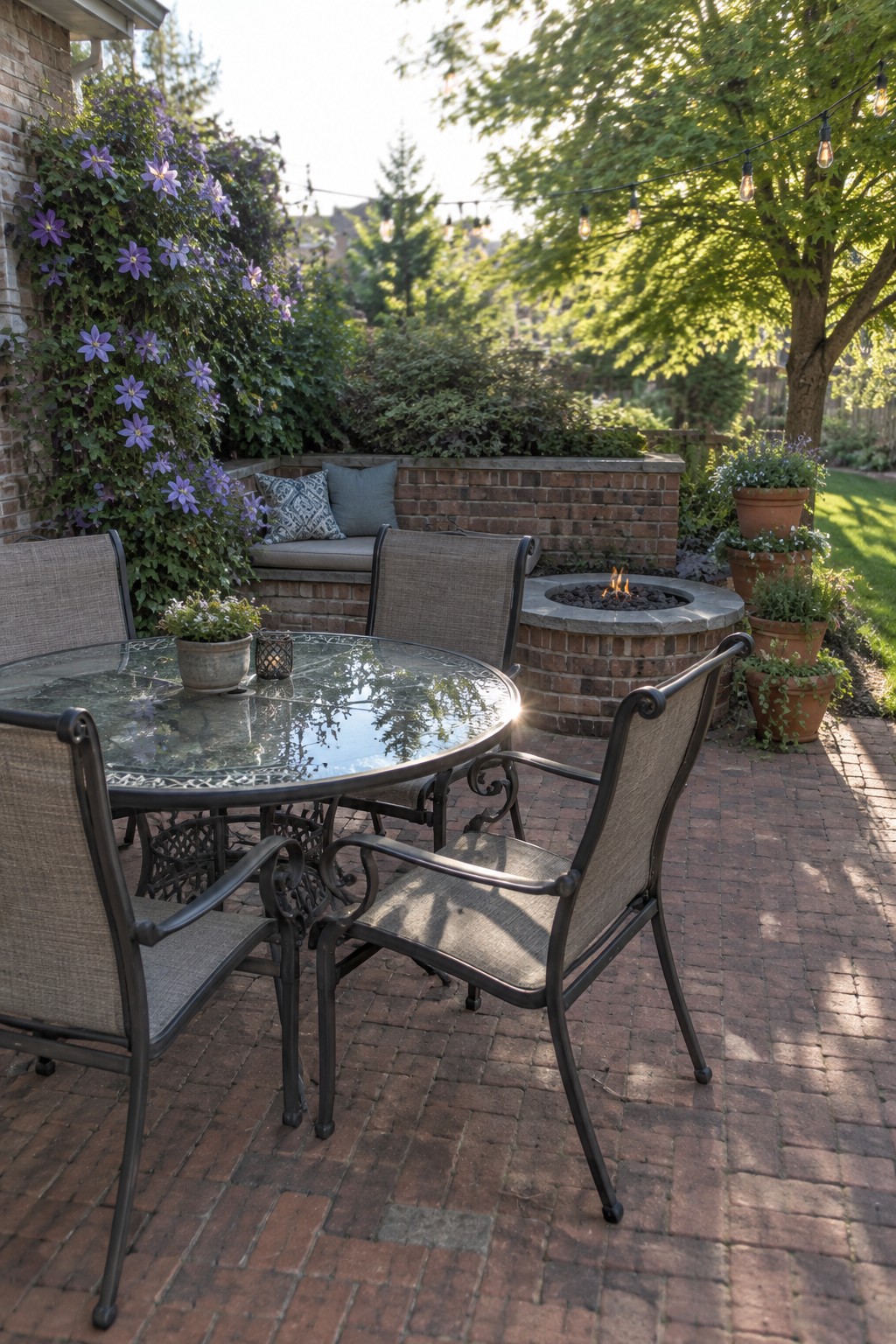
A fire pit works best when it sits close to the main seating rather than off to the side. In this setup the circular brick pit sits right next to the built-in bench, so people can stay warm without leaving the main conversation area. The matching brick ties the whole zone together and keeps the patio from feeling like separate pieces.
This layout suits homes that use their patio from spring through fall. Keep the pit at a comfortable distance from dining chairs so the heat does not interfere with meals. Make sure the surrounding paving can handle sparks and that you have a clear path around the seating for easy movement.
Built-In Fireplaces For Outdoor Patios
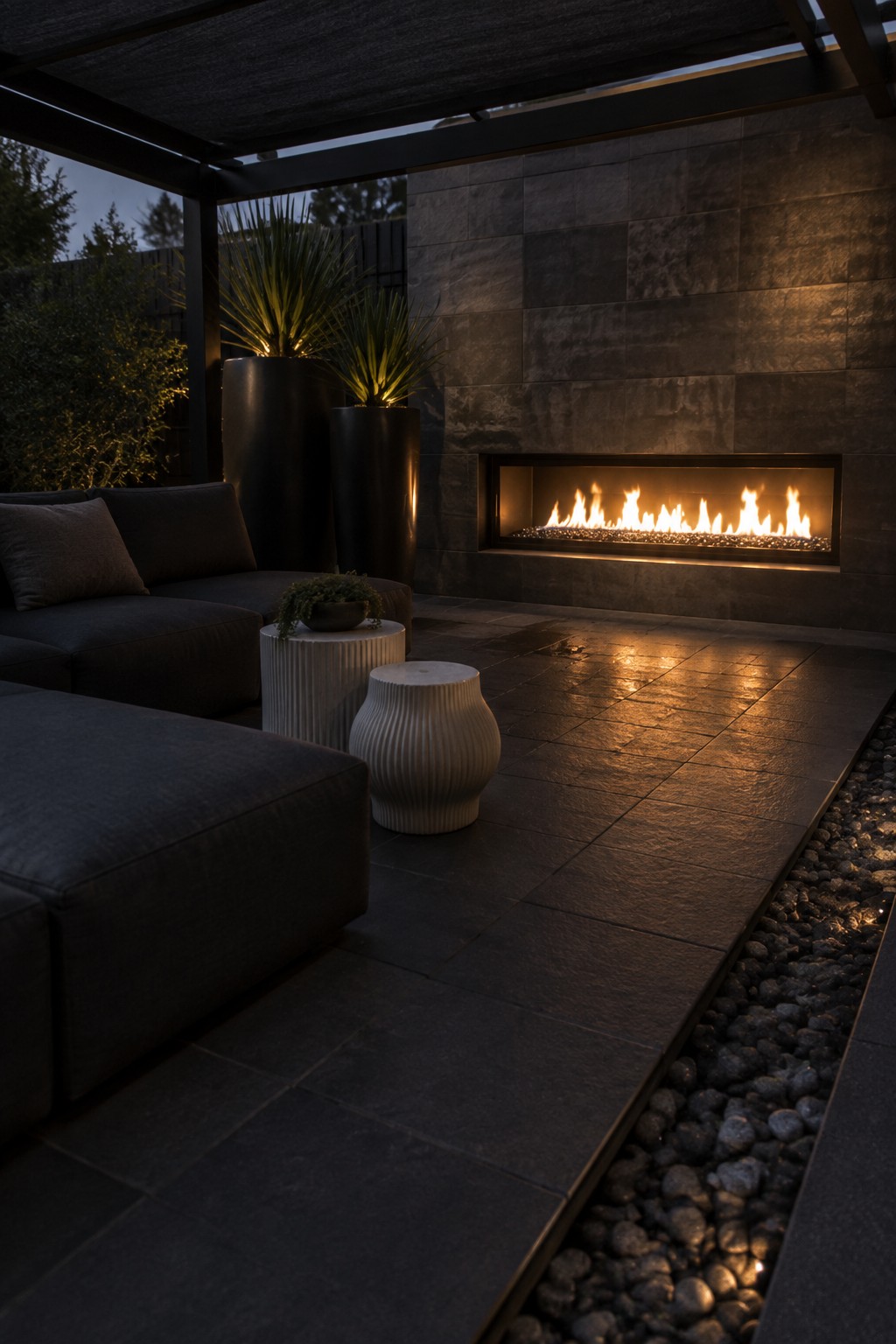
A built-in fireplace gives an outdoor patio a real reason to be used after the sun goes down. It throws off steady heat and a soft glow that makes the whole area feel more like an extra room than a place you only sit in during the day.
This setup works best when the fireplace sits low and wide along a solid wall so seating can wrap around it without blocking the view of the flames. Keep the surrounding materials simple and dark so the fire stays the main point of interest instead of competing with too many other details.
Mix Vintage Chairs for Casual Outdoor Dining

Many people like the relaxed look of different painted chairs around an outdoor table. It feels gathered over time rather than bought as a set, and the mix keeps the space from looking too planned. A round table helps the arrangement stay flexible no matter how many chairs you add.
This works well on gravel or stone patios where a full matching set can feel stiff. Start with one solid table and add chairs you already own or find secondhand, checking that the seats sit at a comfortable height for meals.
Use a Mirror to Make a Small Patio Feel Larger
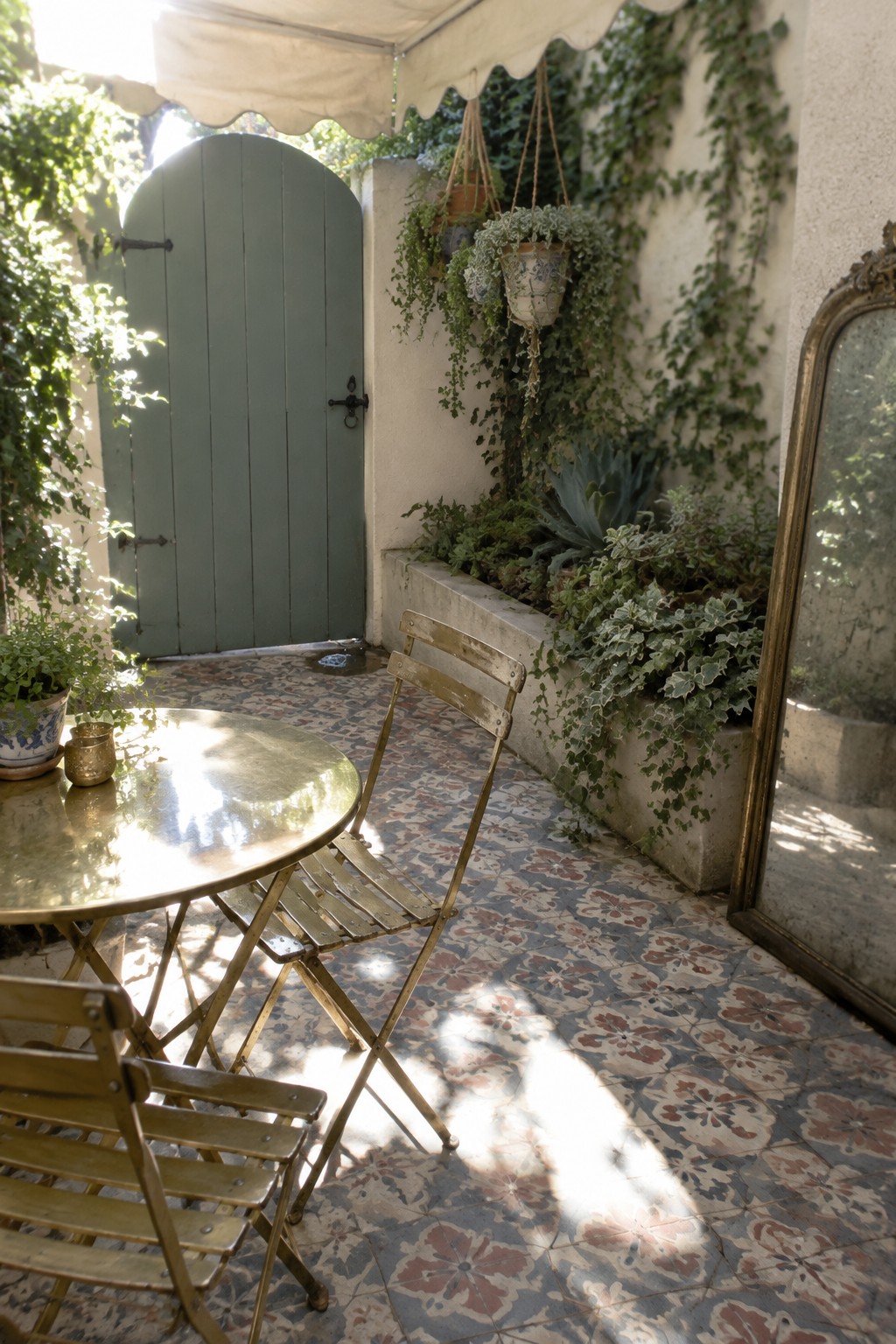
A mirror can open up a tight outdoor spot in a way that feels almost like adding extra room. It catches sunlight and reflects the surrounding greenery, so the whole area seems brighter and more open even when the actual square footage stays the same. The one in this patio sits right against the wall and doubles the sense of space without any construction.
This trick works best on patios that get decent sun but feel boxed in by walls or fences. Lean a sturdy, weather-safe mirror where it can pick up plants or sky, and check that it is firmly anchored so wind does not move it. It suits older homes or simple urban yards where you want more light without changing the structure.
Zone Your Patio for Both Dining and Lounging
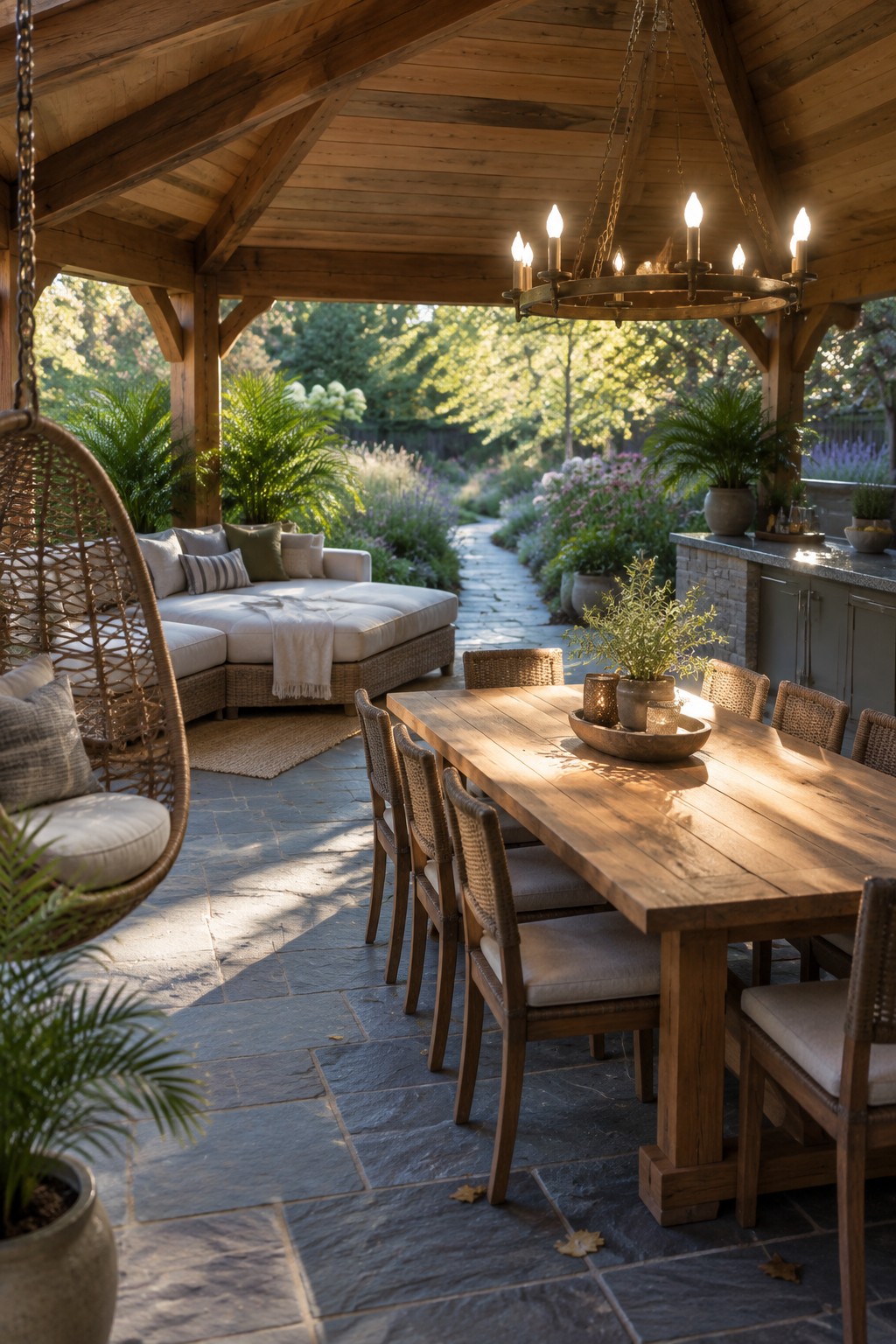
A large table gives the space a clear purpose for meals, while a separate lounge area with a sectional and hanging chair makes it easy to linger afterward. This split keeps the patio from feeling like just one big empty floor or a single-use spot.
It works well on covered patios that get regular use, especially when both zones sit under the same roof and share the same stone floor. Leave a clear path between the table and the seating so people can move around without squeezing past each other.
Built-In Bench Seating Next To Outdoor Cooking
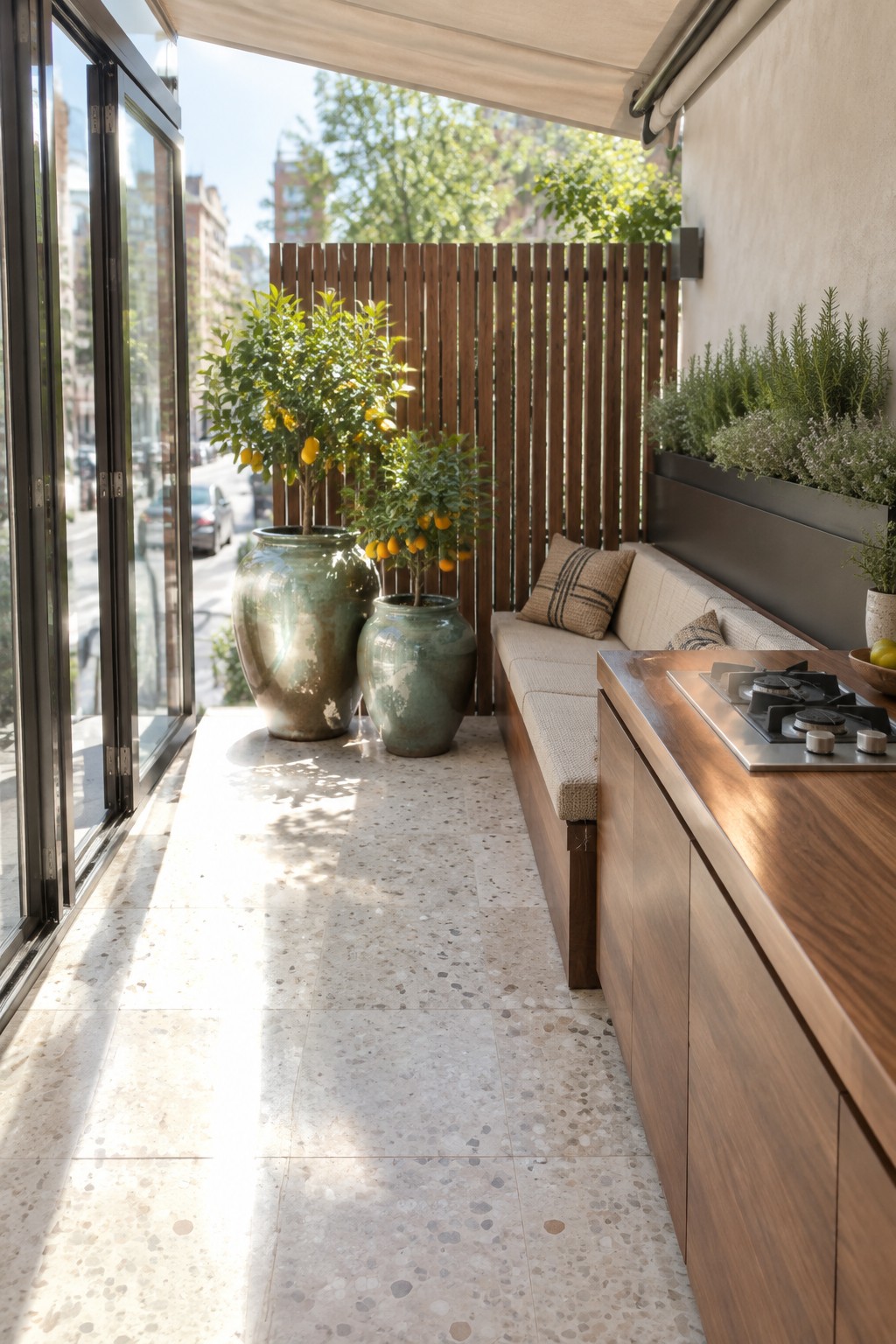
Many people want an outdoor space that feels ready for daily use instead of just weekends. A long built-in bench paired with a matching wood counter that holds a cooktop turns even a narrow balcony into a place where you can sit and cook without adding much furniture.
This setup works best on urban balconies or small patios where floor space is limited. Keep the wood tones consistent between the bench and the cabinetry so the area feels like one piece rather than separate zones. Watch the depth of the bench so it does not block walking paths when people are seated.
Add a Stone Oven for Outdoor Cooking
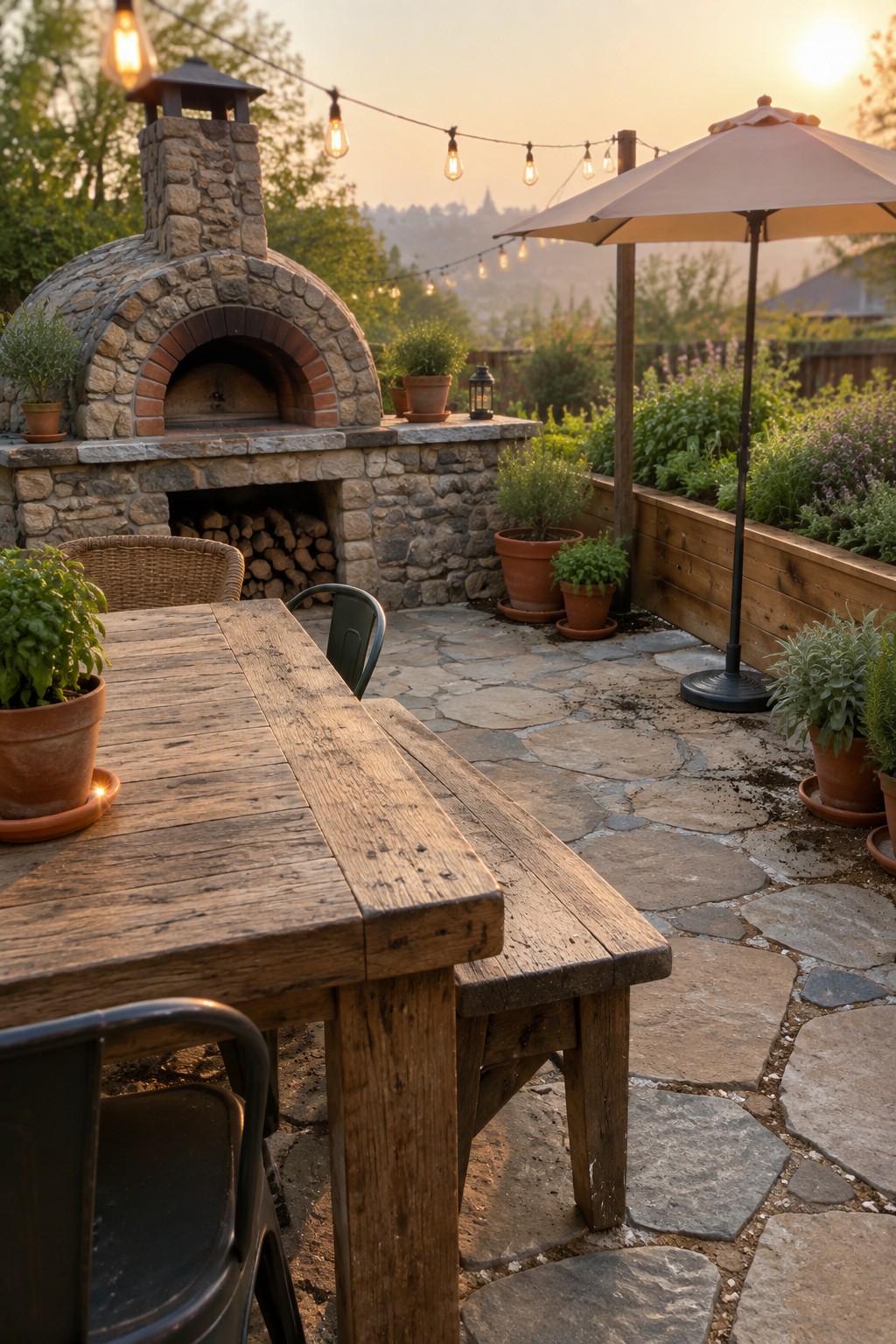
A stone oven gives the patio a real reason to be used for meals instead of just sitting empty. It turns the space into something closer to an outdoor kitchen, where cooking happens without much extra effort once the fire is going. People tend to linger around it because the warmth and the process of baking pizzas or roasting things feel more involved than a standard grill.
This setup works best on a patio with enough flat space to keep the oven near a dining table and some shade nearby. It suits homes that already spend time outside in the evenings or on weekends, especially if the oven is positioned so smoke does not blow straight into seating areas. Keep the surrounding surfaces simple so the oven stays the main feature rather than competing with too many other elements.
Set Up a Projector Screen for Outdoor Movies
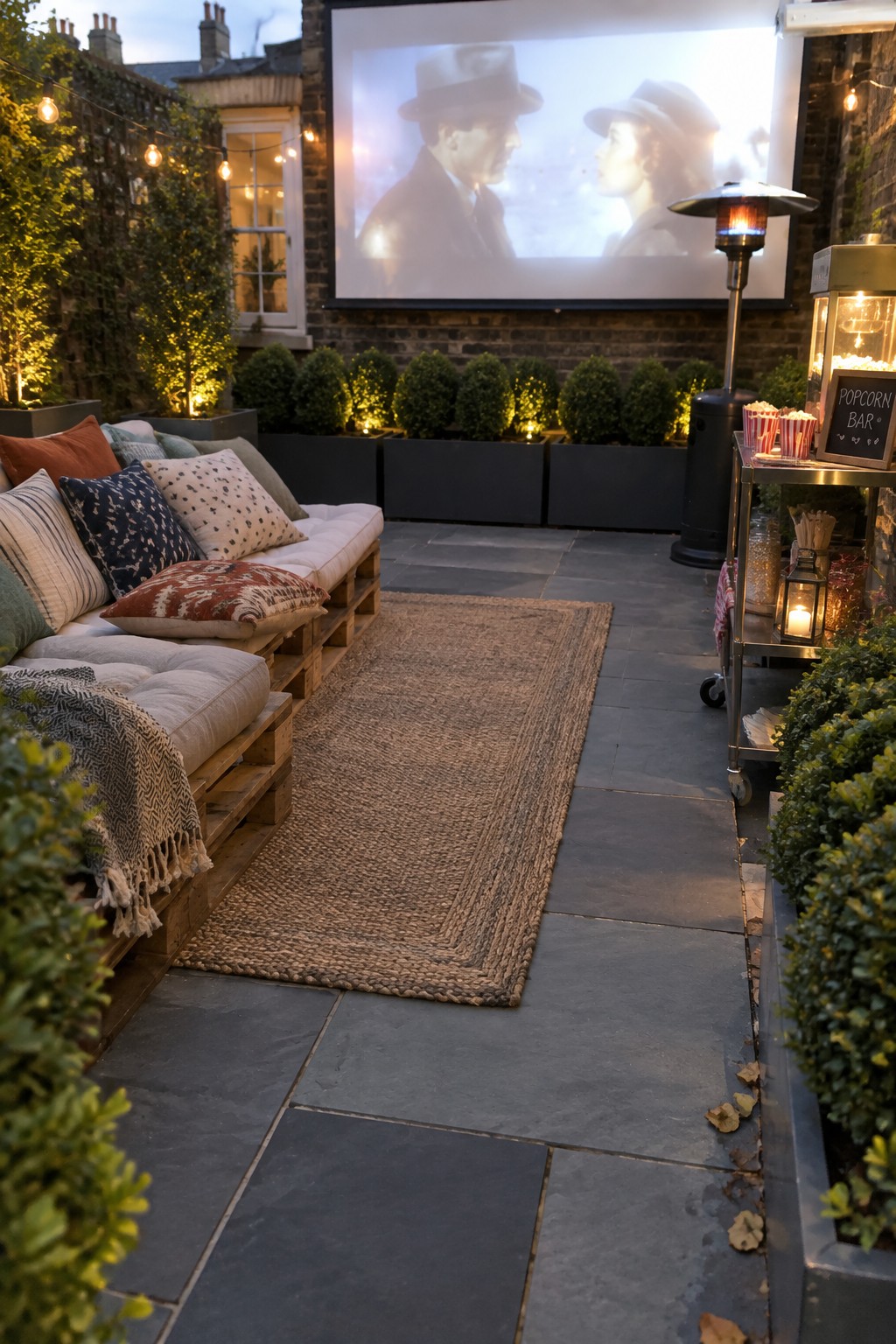
Adding a projector screen gives a patio a clear purpose after dark. It turns the space into a place where people can sit and watch something together without needing a lot of extra gear or furniture.
This works best on patios that already have a flat wall or fence behind the seating area. Keep the seating low and add a simple rug to mark the spot, and it suits homes where evenings are mild enough to stay outside for a couple of hours.
Frequently Asked Questions
Q: What if my patio gets too much direct sun during the day? A: Pick a large umbrella or a pergola with climbing vines. These options block the heat while still letting some light through. You can move the umbrella around as the sun shifts.
Q: How can I stop the cushions from getting soaked every time it rains? A: Store them in a waterproof bin when you are not using the patio. Or choose quick-dry foam that sheds water fast. Either way you stay comfortable without waiting for things to dry.
Q: Is there a simple way to add lighting for nights outside? A: String some solar lights along the railing or in nearby trees. They charge during the day and turn on automatically at dusk. No wiring needed so you can test what feels right first.
Q: My patio is tiny. Can I still make it feel inviting? A: Focus on one comfortable chair and a small side table. Add a plant or two to soften the edges. Keep the floor clear so it does not feel cramped.
