

A patio garden works best when the plants add life without getting in the way of chairs, pathways, or the door.
I’ve found that a mix of pots, boxes, and raised beds can make even a small patio feel layered, as long as each container has a clear place.
The first thing I notice is often how the greenery frames the seating area and softens hard paving.
Some arrangements keep herbs close to the kitchen, while others use height and repeated colors to give the space a more settled feel.
I’d save the ideas that suit your patio’s light and daily use, then adapt the containers to fit the space you actually have.
Use Pots to Add Layers to a Patio Garden

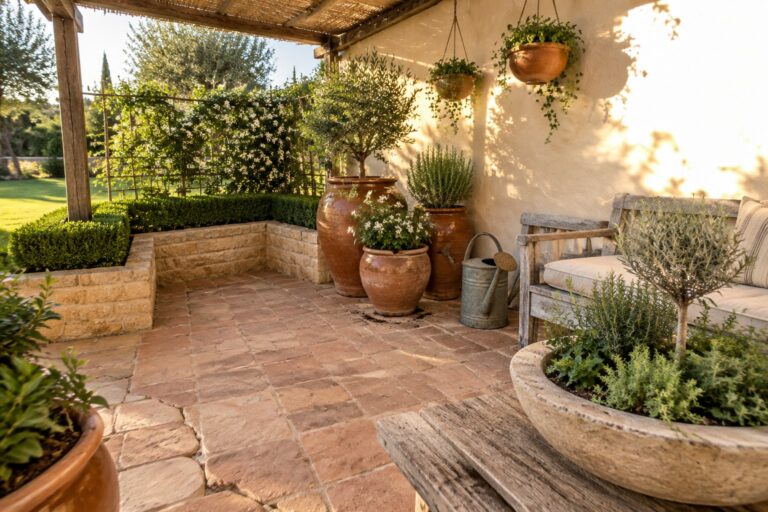
Large pots can bring planting closer to patio seating, making the space feel like part of the garden without taking up the whole area. Grouping pots at different heights, as with the terracotta planters here, gives the plants room to stand out against a simple paved surface.
This approach works well on small patios where there isn’t much space for planting beds. Leave a clear path between pots, and choose containers that are heavy enough to stay put in wind. Mixing a few pot sizes can keep the arrangement relaxed rather than overly uniform.
Use Planters To Add Greenery Along A Narrow Patio

Raised planters can make a narrow patio feel more like a garden without taking up much walking space. Setting them along one side keeps the planting in a clear band, while a simple bench nearby gives the area a place to pause.
This layout works well in small courtyards and side patios. Choose planters that fit the available width, and leave enough room to walk comfortably. A mix of grasses and compact succulents adds variety without needing a large bed.
Use Pots To Define Patio Edges
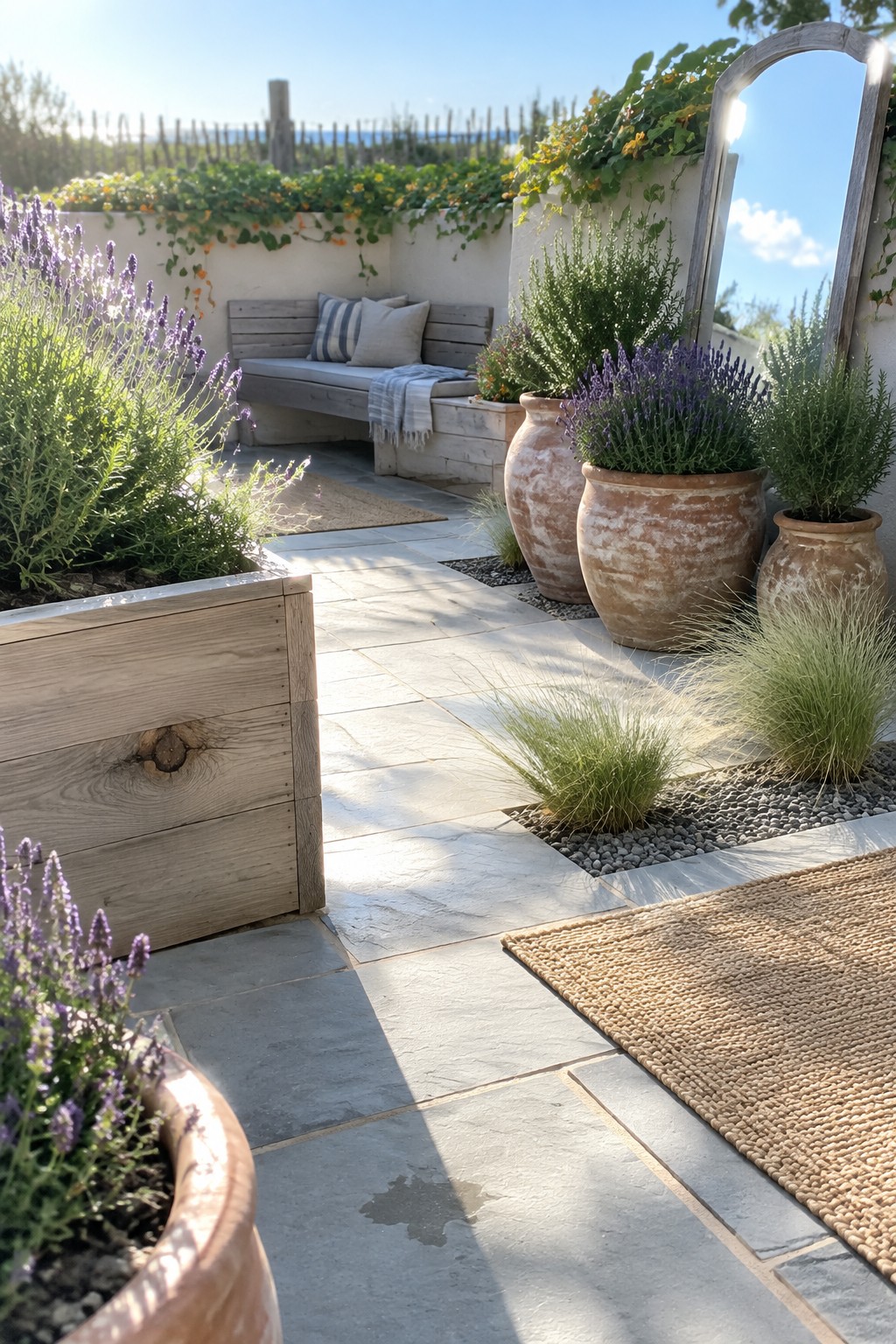
Grouping pots along the edge of a patio is an easy way to give the seating area a garden feel without planting directly in the ground. A few large containers make a stronger border than lots of small ones, and lavender adds color while keeping the arrangement relaxed.
Try this on a paved terrace where you want to mark a path or separate seating from planting beds. Leave enough room to walk comfortably, and vary the pot sizes so the display feels natural rather than lined up.
Use a Raised Bed As a Patio Garden
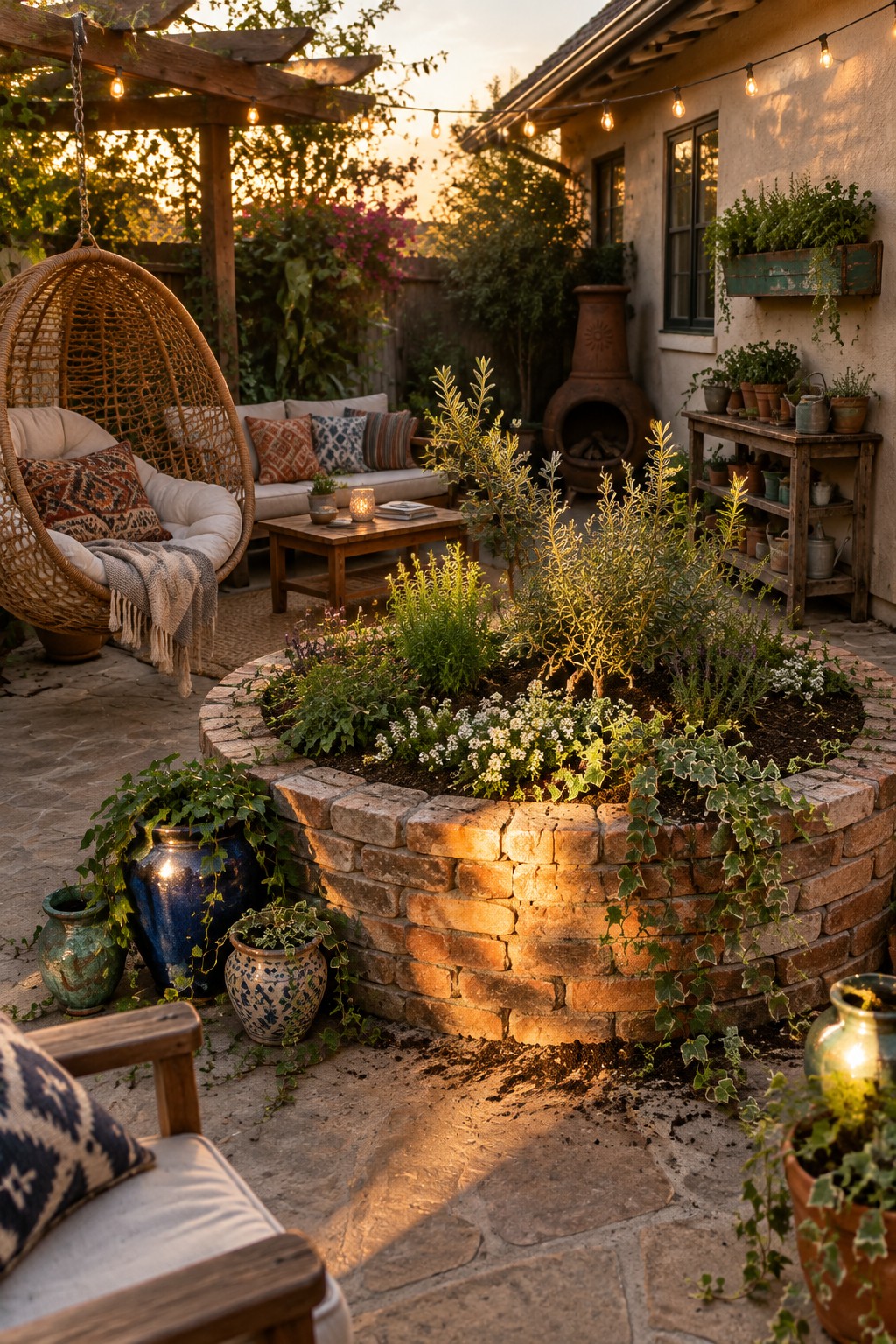
A raised bed can give a patio garden a clear planting area without taking up the whole space. A brick bed like this also makes it easy to grow a mix of small shrubs and flowers close to the seating area.
This idea works well on a larger paved patio where there’s room to walk around the bed. Keep the planting suited to the bed’s depth and sunlight, and leave enough space to reach in for watering and trimming.
Use Raised Beds To Build A Patio Garden

Raised beds can give a patio garden a clear edge while making room for larger plants. A long concrete planter suits this kind of setup, especially when you want greenery to sit beside the seating area without taking up the walking space.
Use a raised bed along the patio perimeter or to separate a seating zone from the rest of the yard. Keep its height comfortable for tending plants, and leave enough room around furniture for people to move easily.
Grow Climbing Plants on a Patio Trellis

A trellis lets you add vertical greenery when a patio has little room for another planter. It also gives climbing plants a defined place to grow, so they can bring a bit of privacy to a balcony or narrow outdoor space.
Set a trellis against a wall and use a planter at its base for the vines. A wall-mounted wooden trellis like this works well, but make sure it is secure and choose plants suited to the amount of sun your patio gets.
Use Raised Beds to Shape a Patio Garden
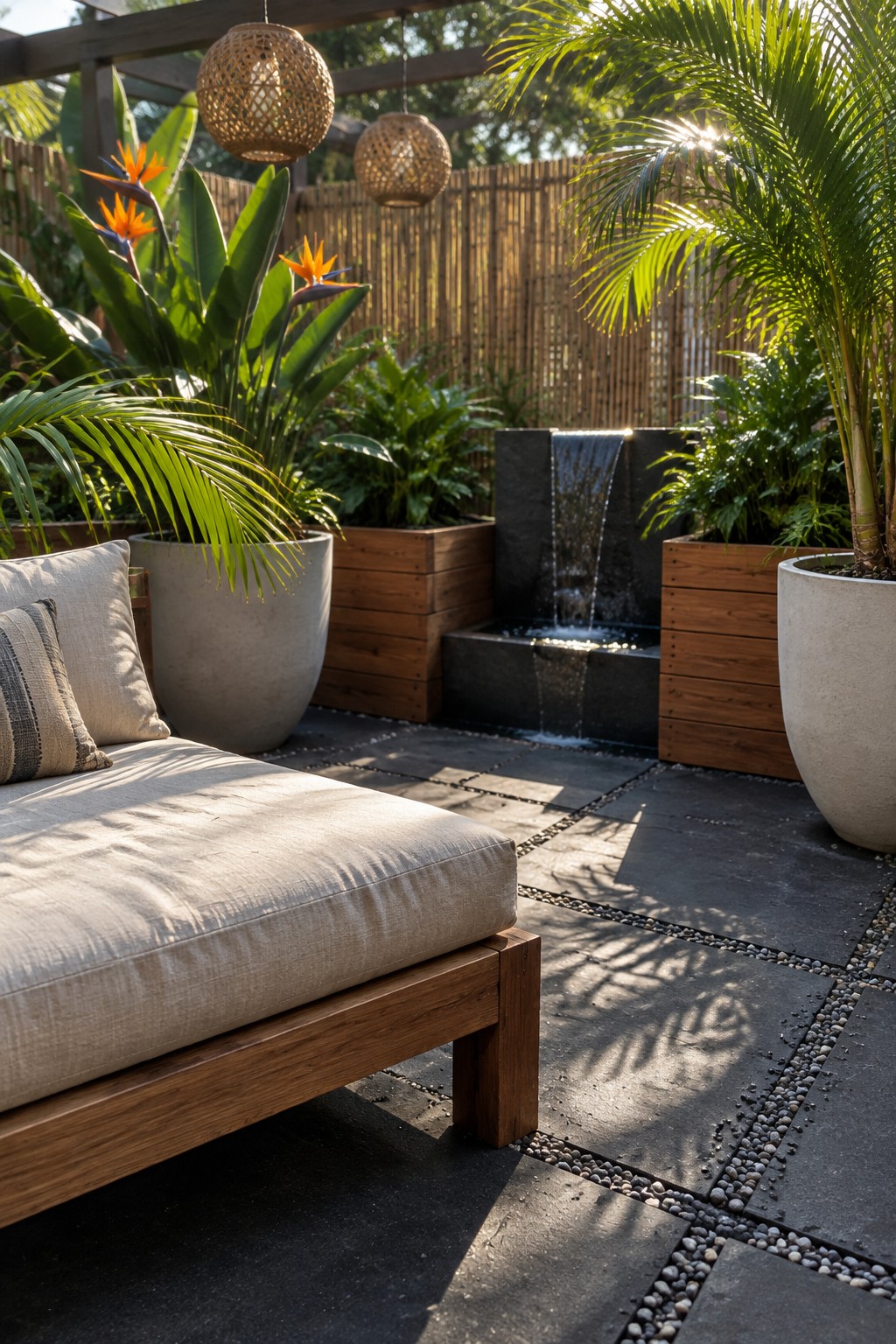
Raised beds can make a patio garden feel organized without separating it from the seating area. Wooden boxes give plants a clear place to grow and help define the edge of a small outdoor space.
Use them along a fence or beside a water feature, leaving enough room to walk around them and reach the plants. If you’re working with a compact patio, keep the beds narrow so they add greenery without crowding the seating.
Use a Raised Bed As a Patio Centerpiece
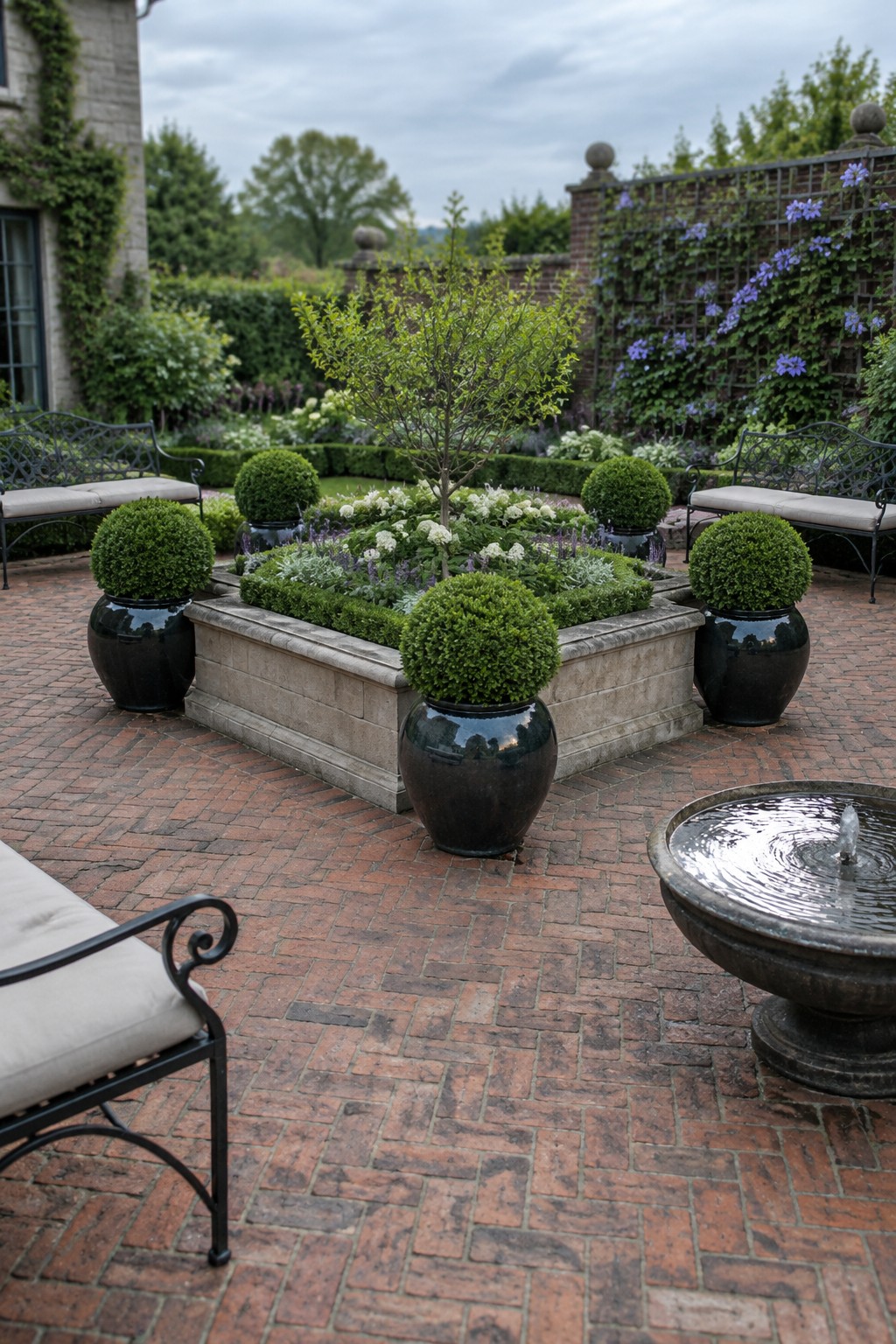
A raised bed can give a patio garden a clear center without taking up the whole seating area. A square stone bed planted with a small tree and low flowers brings greenery right into the hardscape.
This works best on a roomy patio where people can walk around the bed easily. Keep the planting low near the edges so the garden stays tidy and seats remain easy to reach.
Use Raised Beds to Create a Small Patio Garden
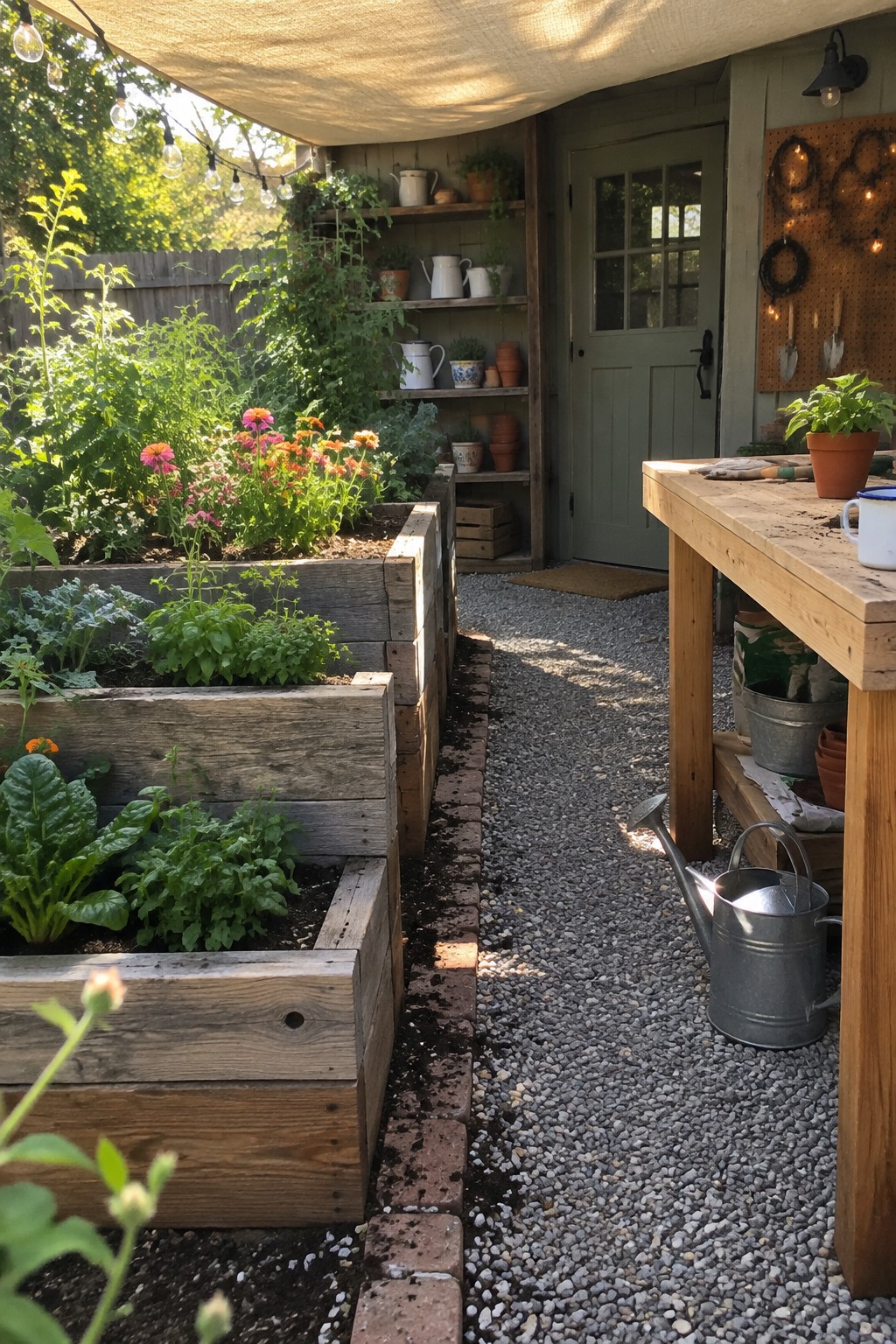
Raised beds make it possible to grow flowers and vegetables even when a patio has little room for in-ground planting. Here, wooden boxes line the path, keeping the garden organized while leaving a clear route through the space.
This setup works well in a narrow side yard or beside a shed. Keep the beds low enough to reach comfortably, and leave enough path width to carry tools or a watering can without squeezing past.
Use Raised Beds to Create Planting Levels
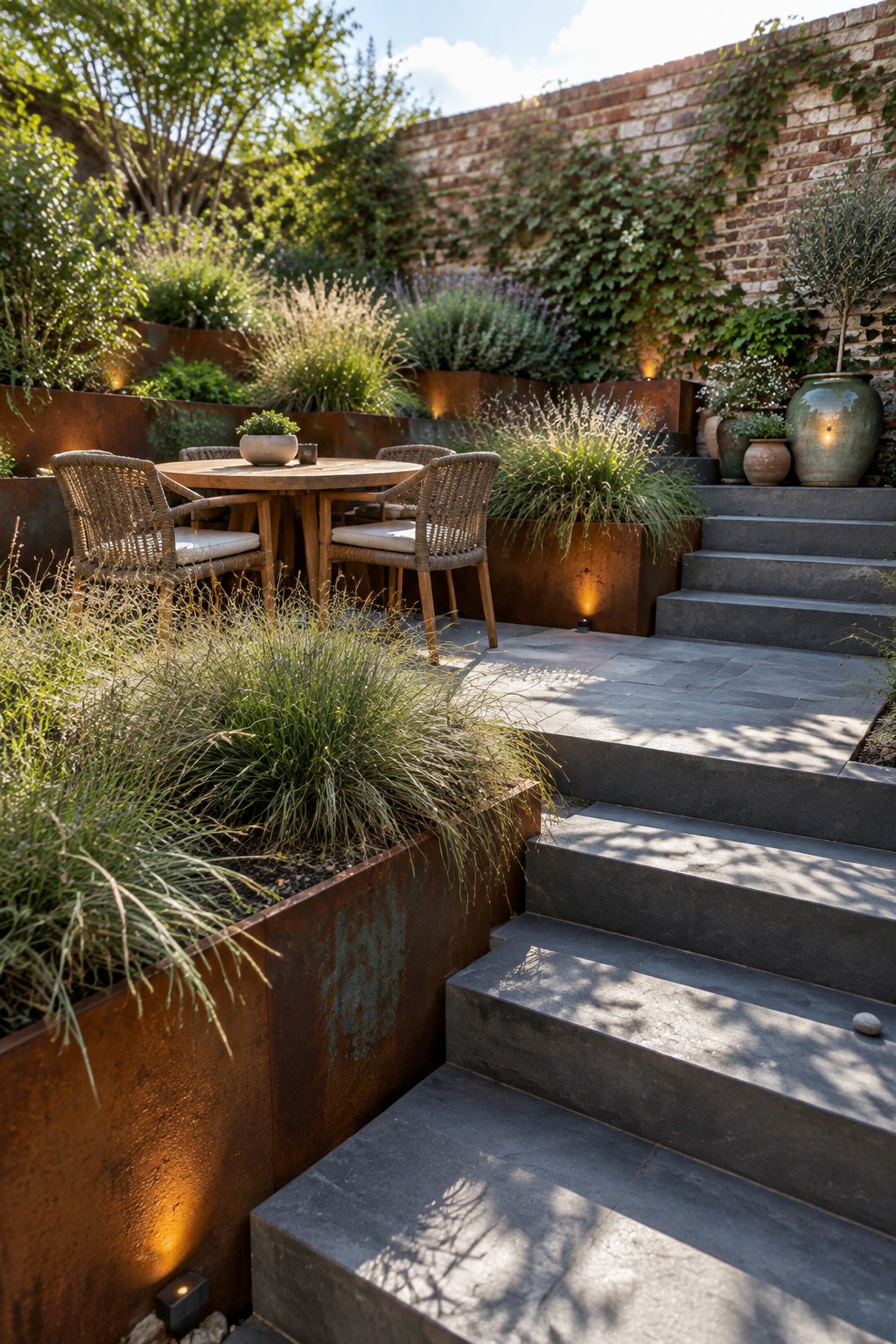
Raised beds at different heights can make a sloped patio feel more organized and give plants a clear place to grow. Here, rust-colored steel planters hold ornamental grasses beside broad stone steps, so the planting becomes part of the garden’s structure.
This approach works well in compact or uneven yards where a flat bed would be awkward. Use sturdy materials that suit the paving, and leave enough room for comfortable steps and access to the plants.
Use Raised Beds to Organize a Garden Path
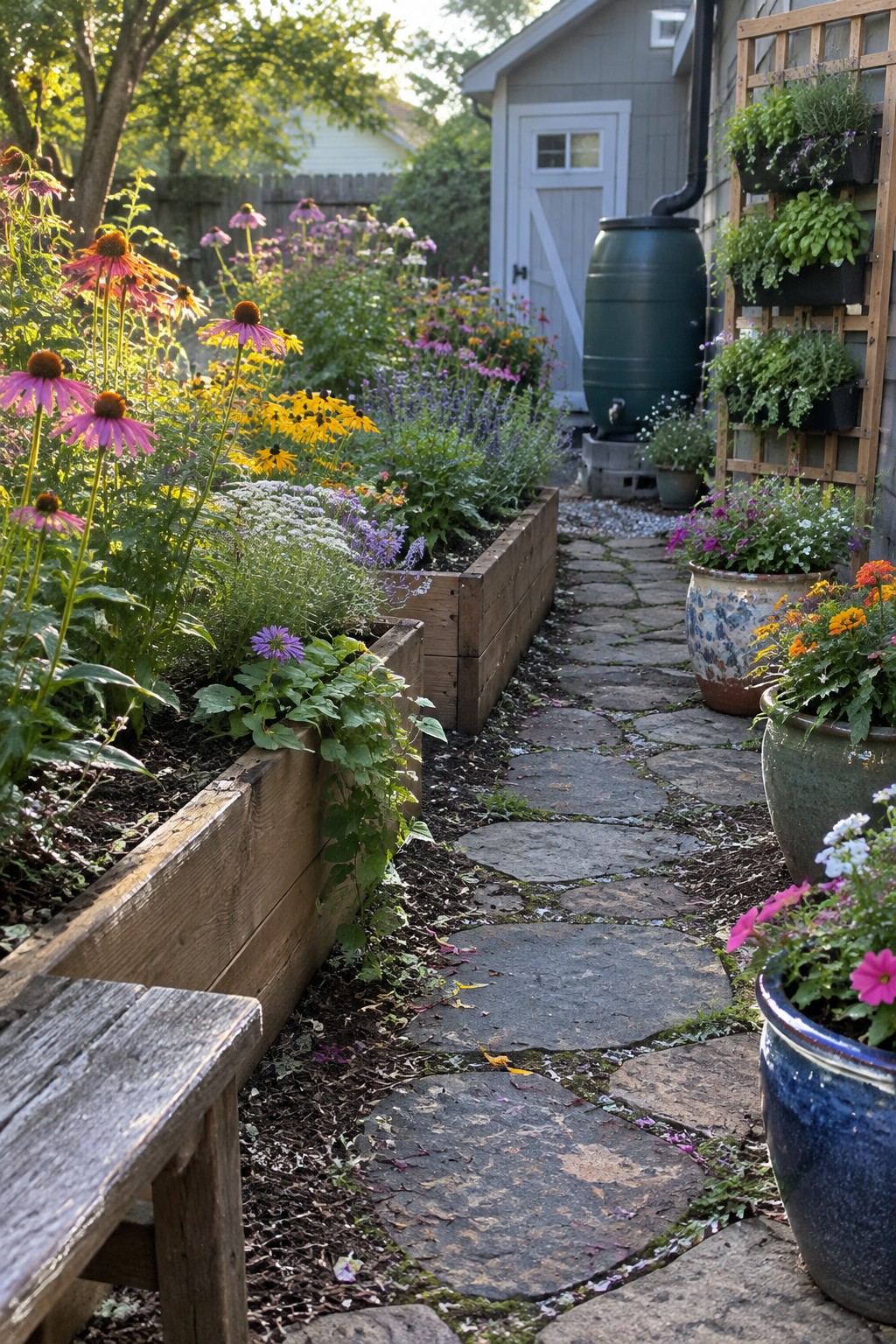
Raised beds give a flower garden a clear structure while keeping the planting close to a narrow path. The wooden edges define the route, and the flowers can grow densely without spilling across the walkway.
This approach works well in small side yards or other long, narrow spaces. Leave enough room to walk comfortably, and keep taller plants toward the back of the beds so they do not crowd the path.
Use Large Pots to Add Structure to a Patio
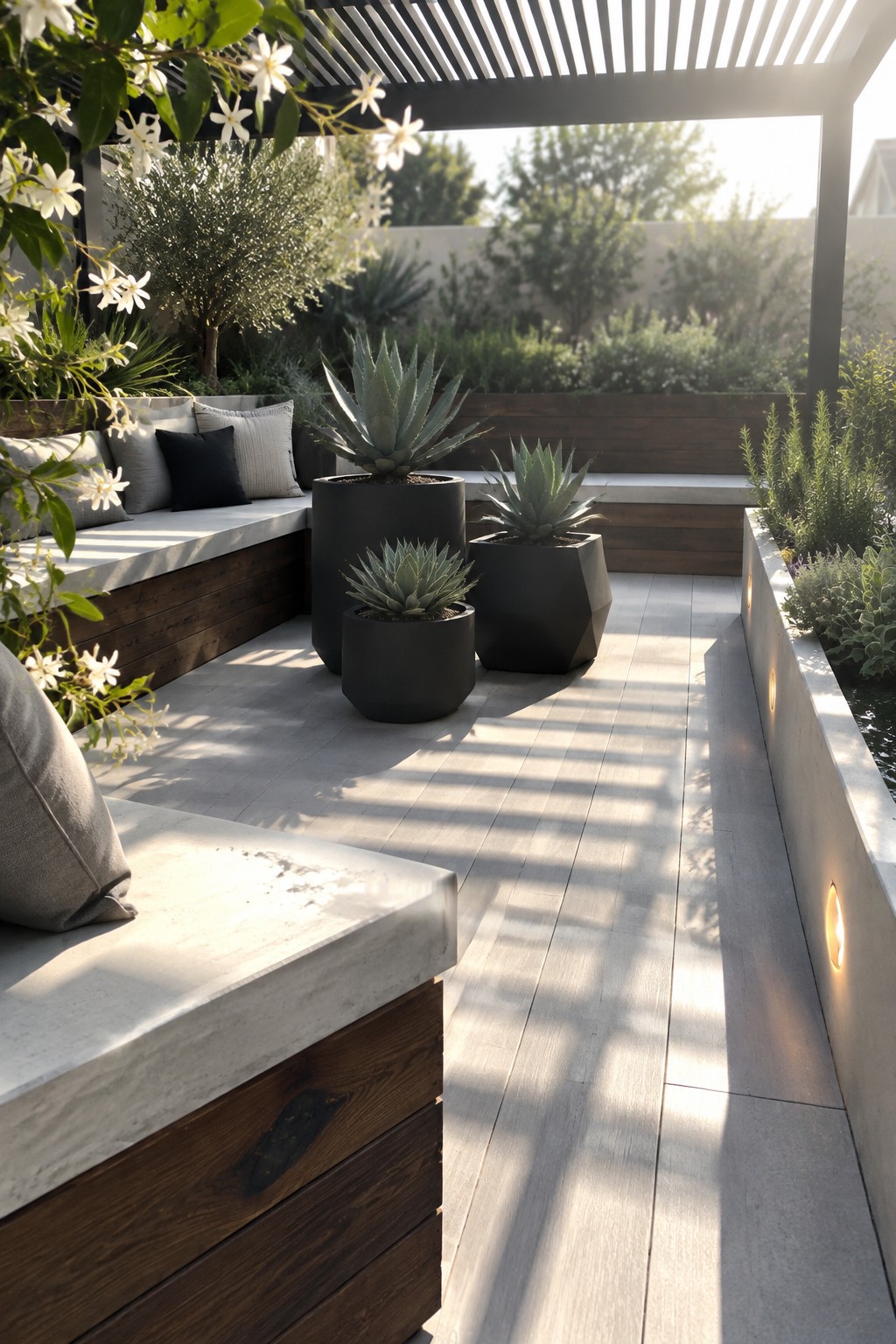
A few large pots can give a patio garden a clear shape without taking up space for built-in beds. Their height and size help define the seating area, while leaving the layout easy to change.
Use pots at the edge of a bench or along an open walkway, keeping enough room to pass comfortably. For a simple look, repeat the same pot color and choose plants suited to the sun and wind your patio gets.
Use a Narrow Side Yard for a Container Garden
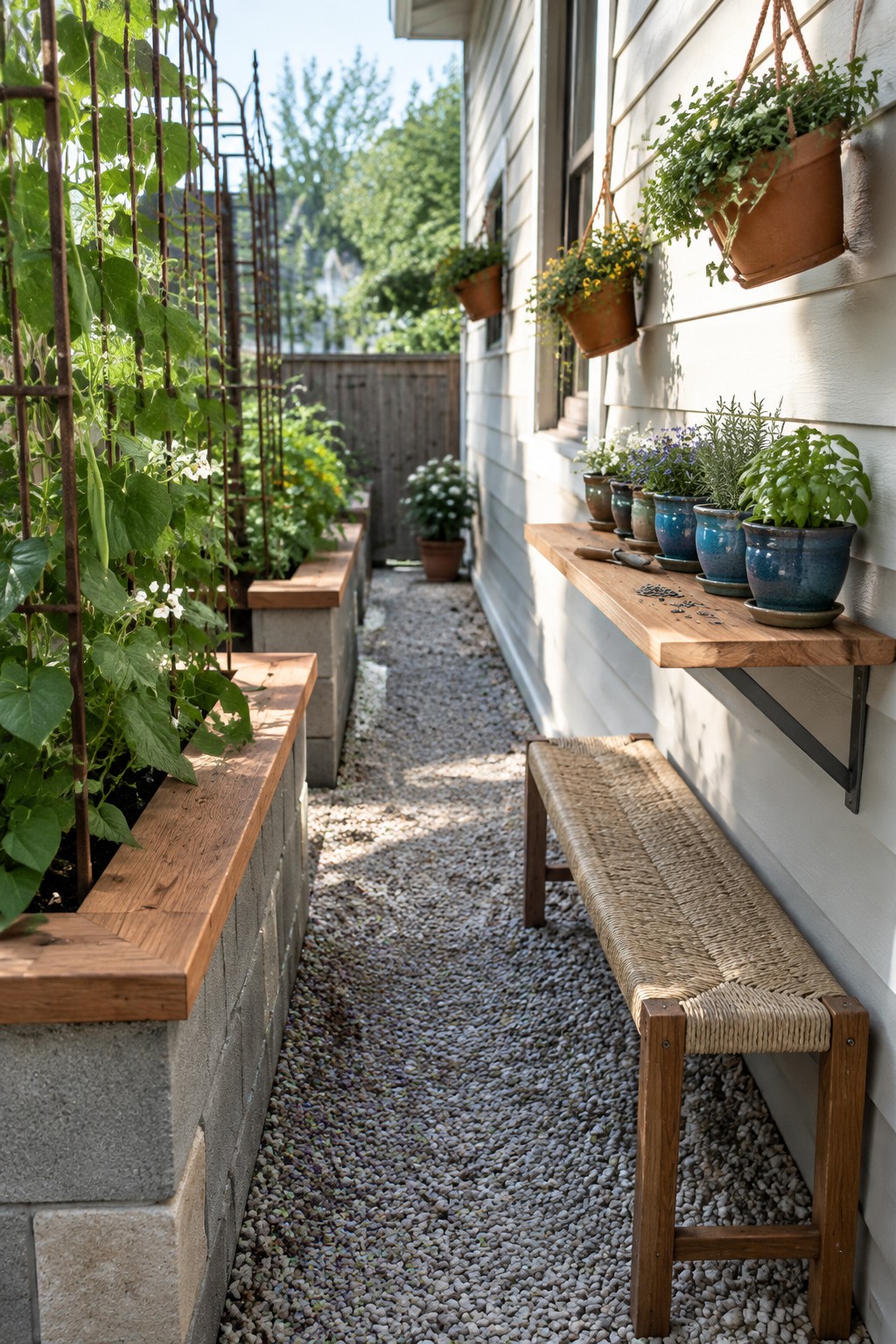
A narrow side yard can still make room for plenty of plants when you use the edges. A slim shelf for pots keeps herbs and flowers close to the house, while leaving the path open.
This setup works well beside a home where space is tight. Choose pots that fit the shelf securely, and keep the walkway clear enough to pass through comfortably.
Make Room for Pots Along a Patio Path
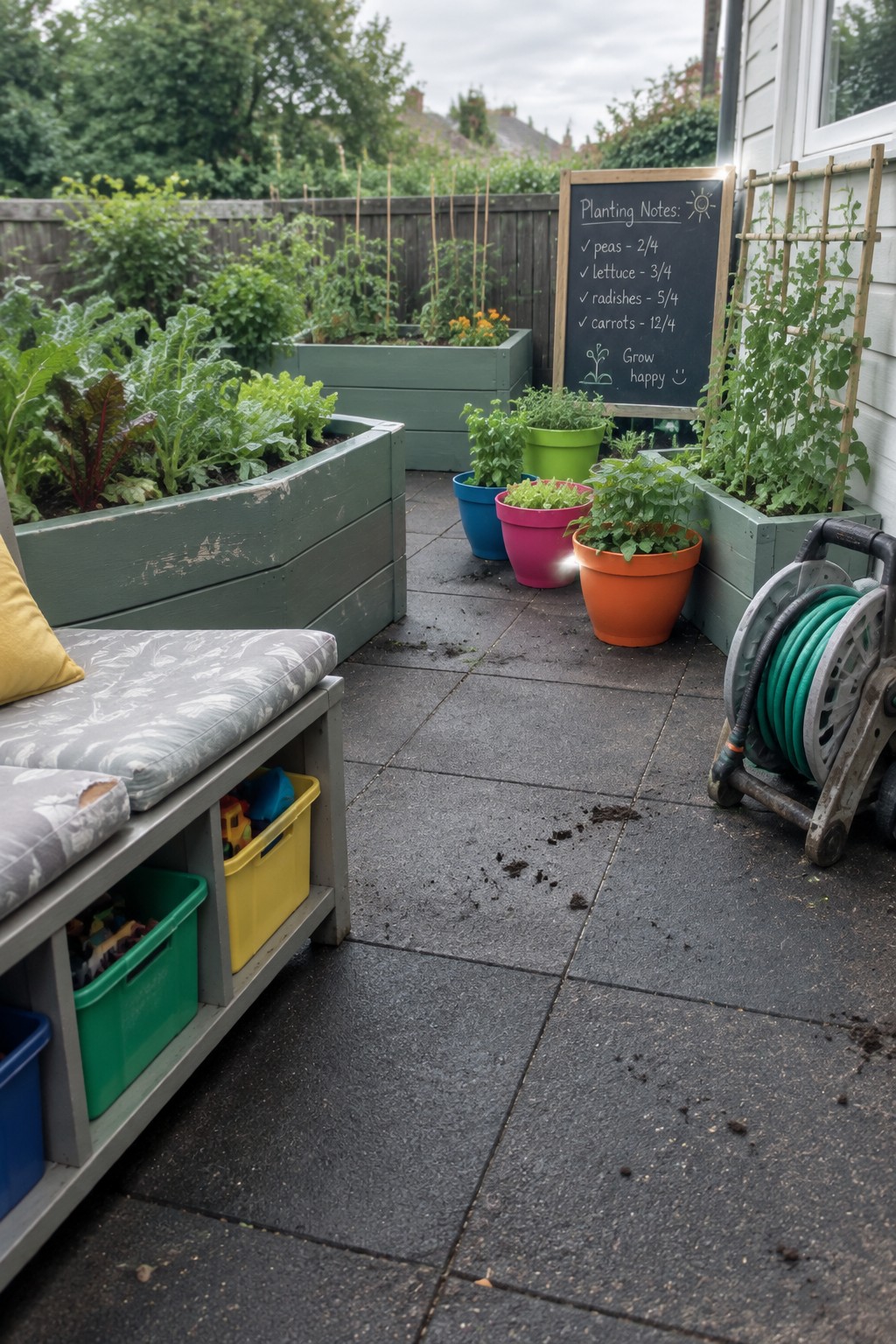
Using pots alongside raised beds is an easy way to fit more planting into a patio without building another bed. The containers add smaller pockets of greenery and make use of the open space between the beds.
Choose pots in a few sizes, and leave enough clear paving to walk through comfortably. This works well on a compact patio, where movable containers can be shifted as plants grow or the layout changes.
Add a Built-In Kitchen to a Patio Dining Area
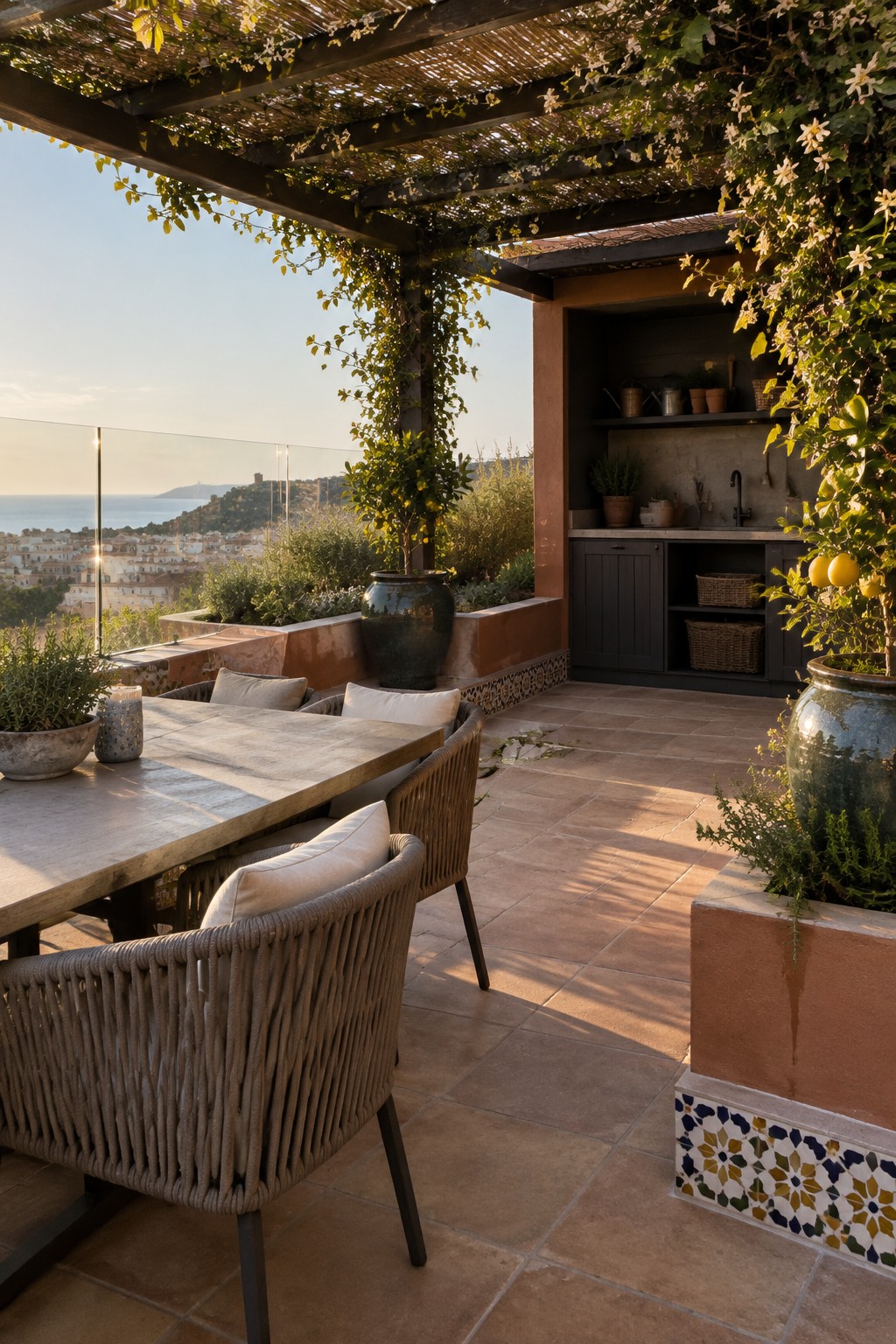
A small outdoor kitchen can make a patio dining area easier to use, since drinks and meal prep stay close to the table. A simple counter and sink are often enough for everyday gatherings.
This setup works best where there’s room to move between the cooking area and seating. Keep the kitchen compact, and use pots nearby for herbs you like to reach while cooking.
Use a Raised Bed to Separate Patio Planting
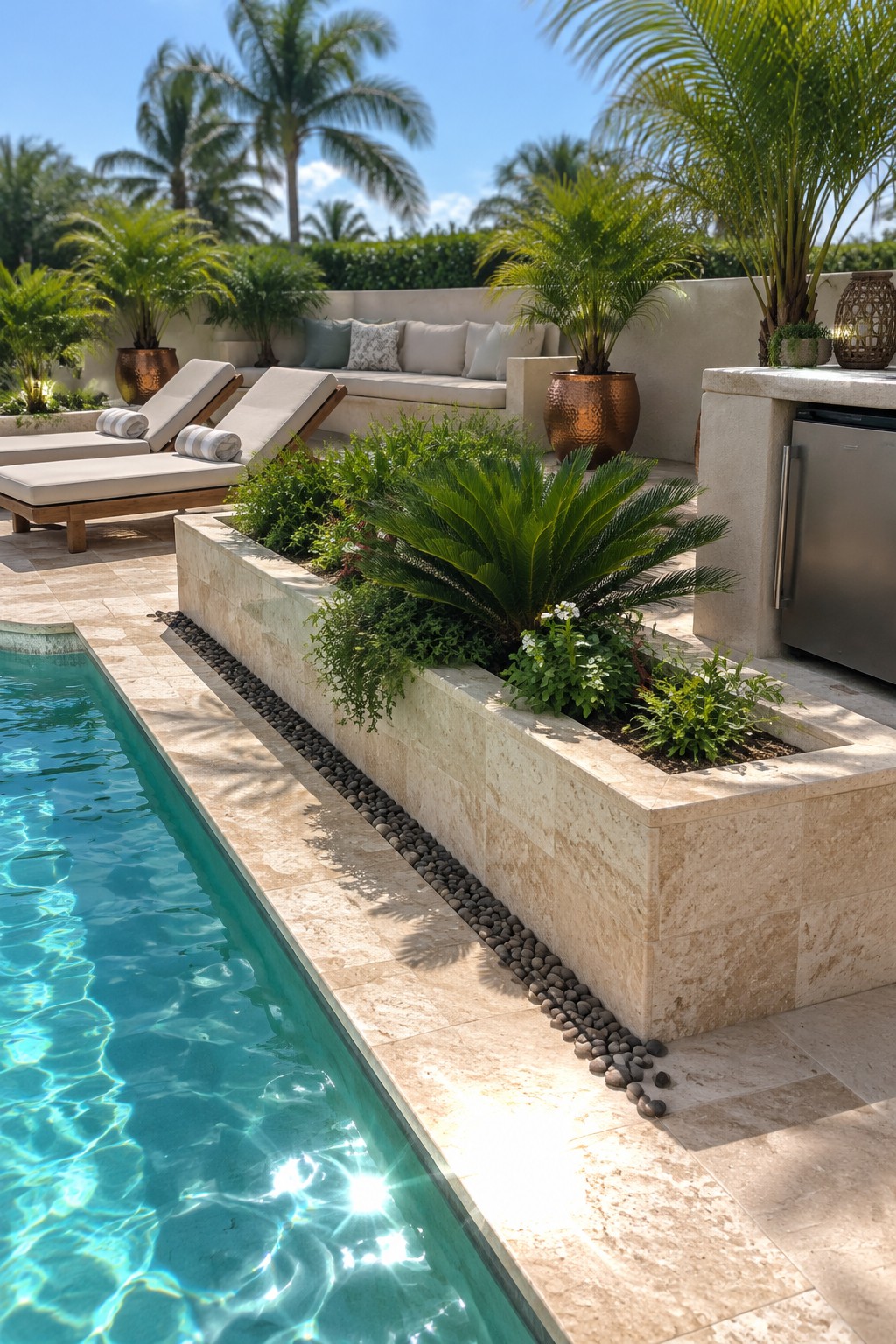
A raised bed can bring greenery into a patio without spreading pots across the walking area. Here, a long stone planter runs beside the pool, giving the plants a clear boundary and keeping the space organized.
This approach works well on patios with room for a built-in bed along an edge or beside a seating area. Choose a depth that suits the plants, and leave enough space around it for people to move comfortably.
Use Window Boxes to Bring Flowers to a Patio Garden
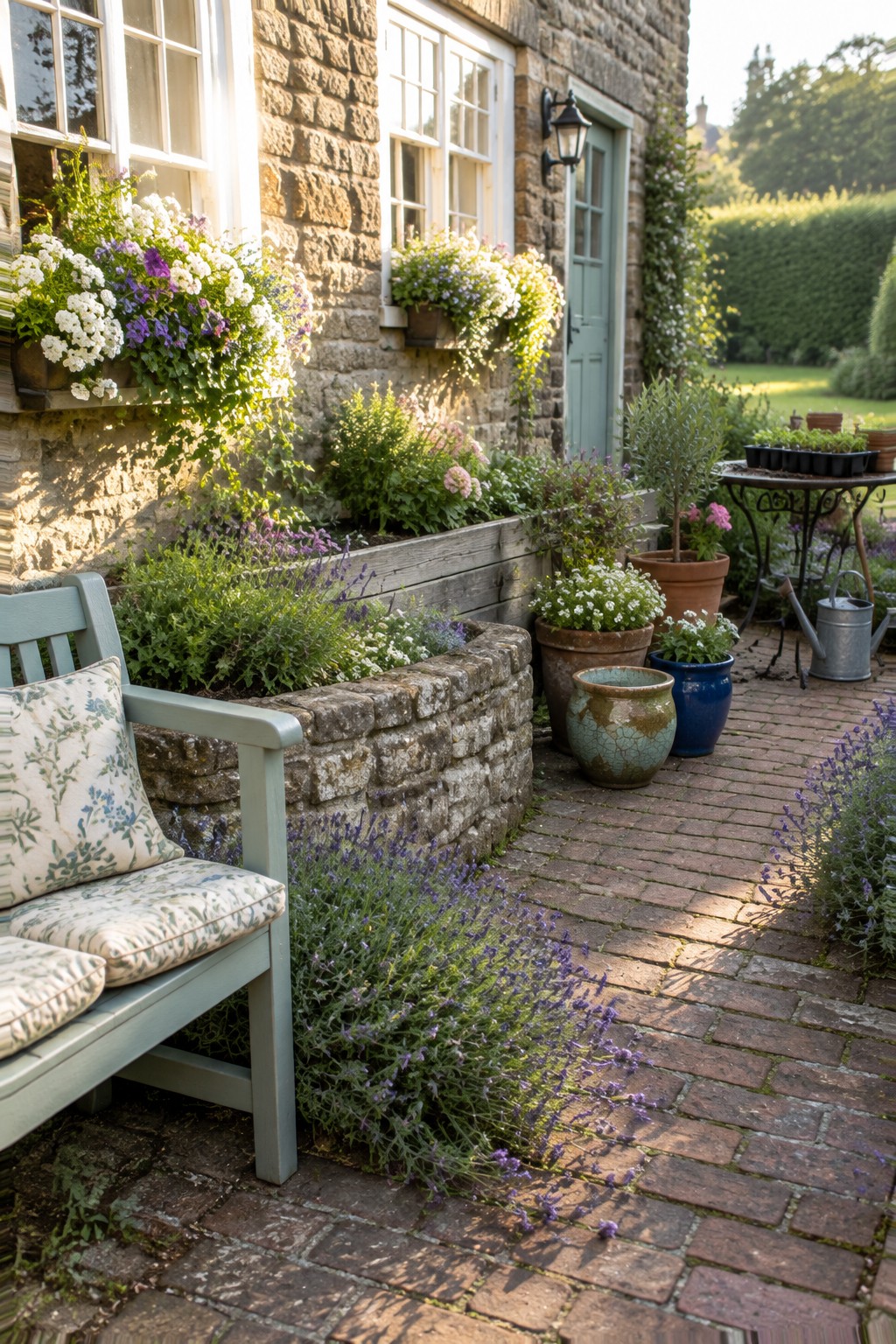
Window boxes make good use of vertical space, leaving the patio free for seating and pots. Here, flowers spill from boxes mounted along the stone wall, tying the house closely to the garden.
This approach suits a small patio or a narrow space beside the house. Choose boxes that fit securely beneath the windows, and mix trailing plants with compact flowers for a full look without blocking the light.
Use Raised Beds to Keep a Patio Garden Organized
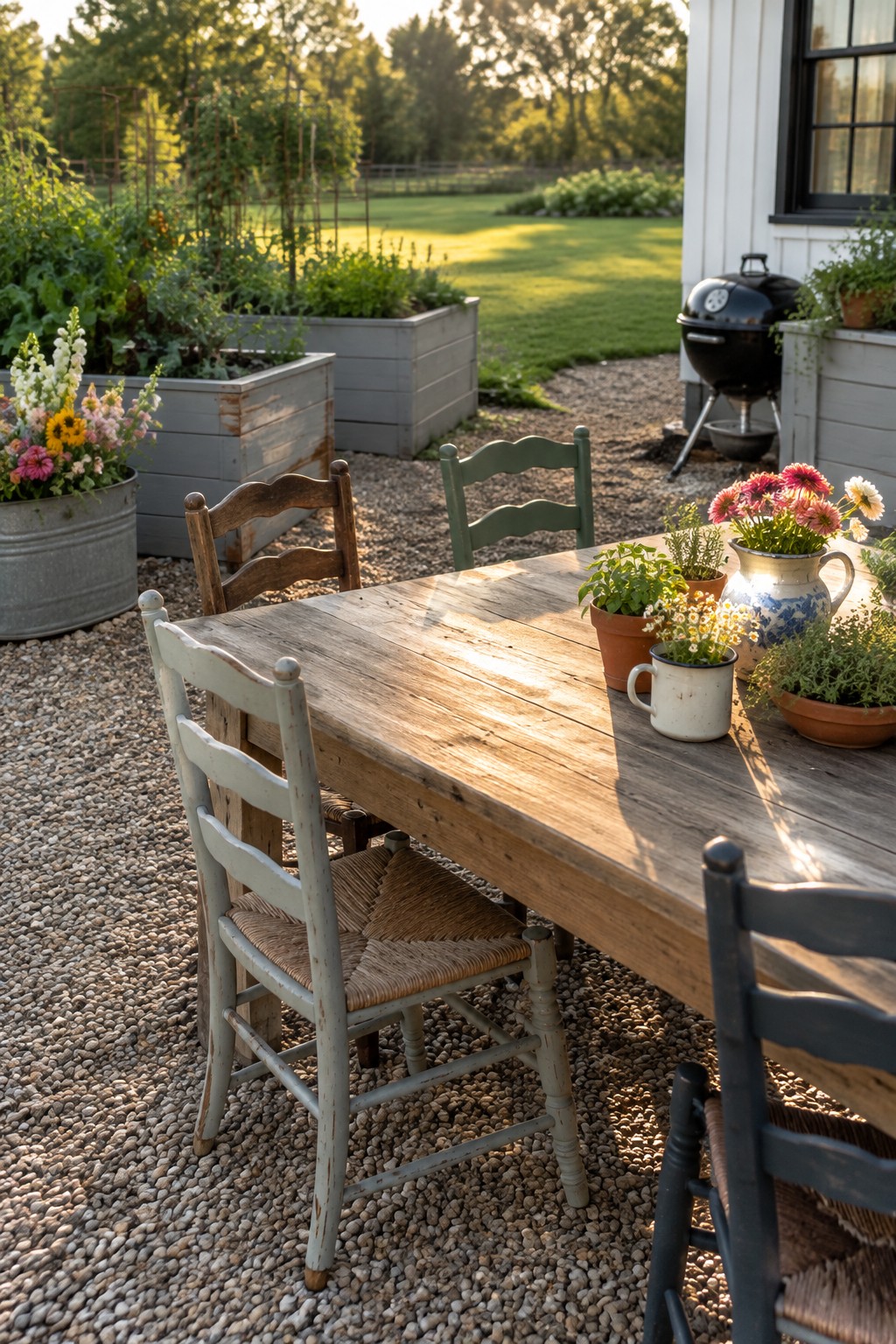
Raised beds make it easier to group vegetables and flowers without letting the garden spread across the patio. Their clear edges also give planting a tidy structure, while still leaving room for a table and chairs nearby.
For a similar setup, place the beds along the edge of a gravel patio or another open area, and leave enough space to walk around them and tend the plants. Wooden boxes suit a relaxed garden, but make sure they are sturdy and deep enough for what you plan to grow.
Use Gabion Beds for Patio Planting
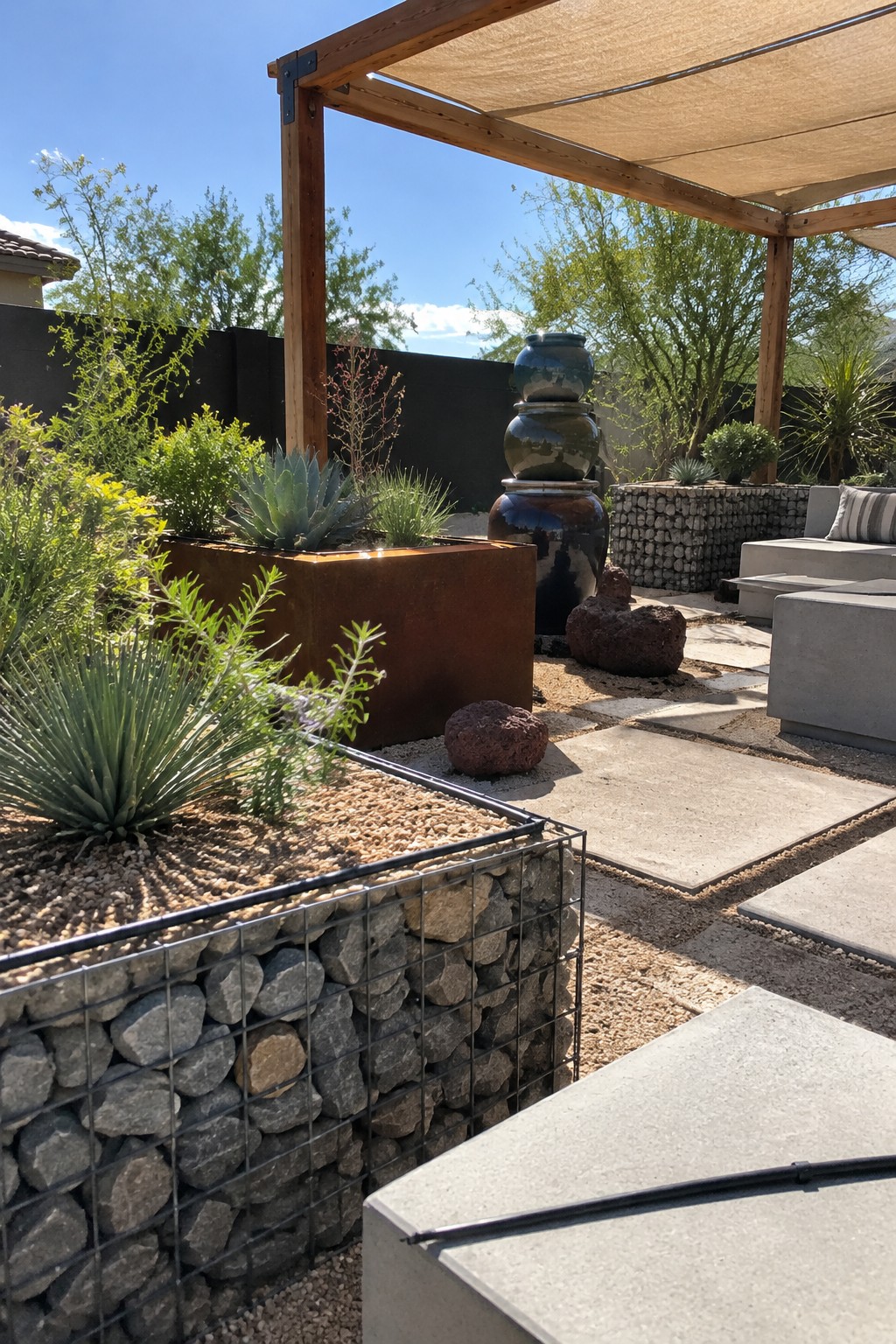
Stone-filled gabion beds make sturdy raised planters that also help organize a patio. Here, the wire-sided bed holds gravel and a spiky succulent, giving the planting a clear edge beside the paving.
This style works well in dry-climate gardens and suits a modern patio with gravel or concrete surfaces. Choose a wire basket rated for outdoor use, and make sure the base is level before filling it with stone and soil.
Use Stone Walls to Add Planting Levels

A low stone wall can do more than hold back soil. Its broad top gives patio pots a place to sit, lifting plants closer to eye level and making a small garden feel more layered.
Use this idea along the edge of a patio or where a slight change in height already exists. Set heavier pots on a sturdy, level wall, and leave enough room for people to pass comfortably.
Frequently Asked Questions
Q: What size pots work best for a small patio garden?
A: Choose pots based on what you want to grow. Herbs and compact flowers can do well in smaller containers, while tomatoes and other larger plants need deeper pots with room for their roots.
Q: Can I grow vegetables in patio planters?
A: Absolutely. Lettuce, peppers, and herbs are good choices for containers, and a raised bed can give larger vegetables more growing space. Check the seed packet or plant label for spacing so your plants don’t end up crowded.
Q: How do I stop my patio planters from drying out so quickly?
A: Use containers with drainage holes and water when the top layer of soil feels dry. Grouping pots together can also help them hold moisture, especially on a hot, breezy patio.
Q: Do patio planters need to be moved into the sun?
A: Many vegetables and flowering plants need several hours of direct sunlight, while some leafy greens and shade-loving flowers prefer less. Watch how sunlight moves across your patio before deciding where to place each planter.
