

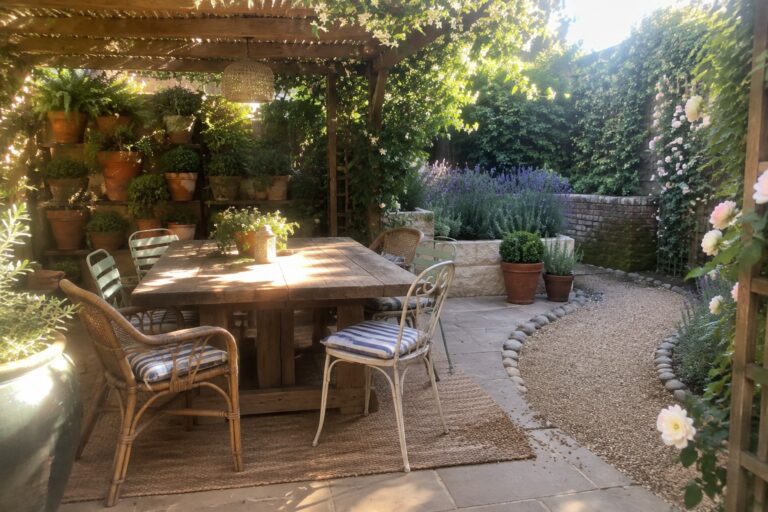
A patio can look lush in a photo but still feel exposed or awkward to use once you sit down.
I find that layered planting works best when taller shrubs screen neighboring views without blocking light, while lower pots and leafy ground cover soften the edges.
The layout matters just as much as the plants, since clear paths and a comfortable place to sit help the greenery feel like part of a usable outdoor room.
These patio gardens offer practical ways to build privacy, add depth, and make the space feel settled over time.
I would save the ideas that suit your light and available room, then adapt the planting choices to your climate and how much upkeep you can manage.
Use a Pergola to Create a Private Dining Patio
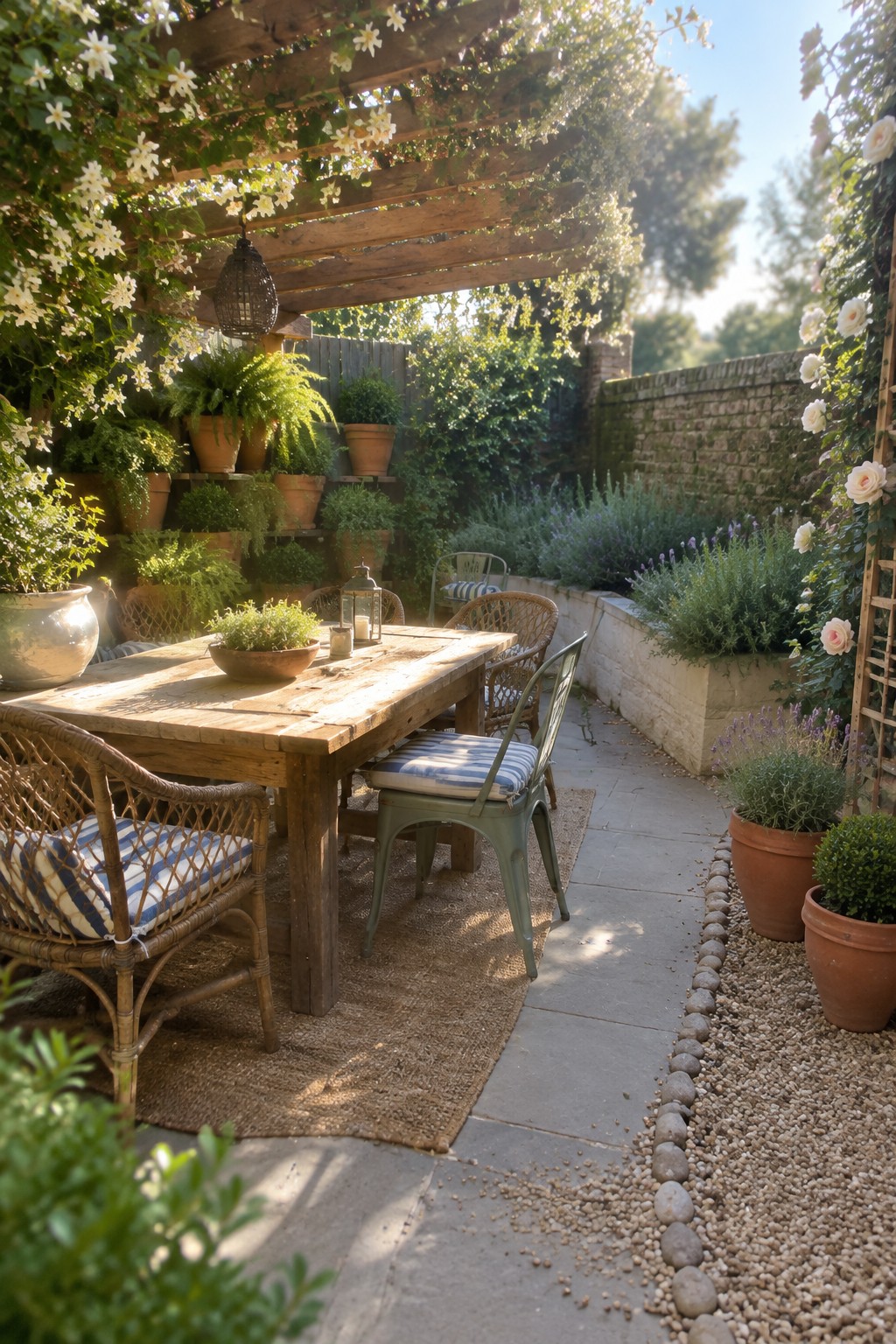
A pergola can make an outdoor dining spot feel tucked away without closing it off completely. When vines grow across the beams, they provide a leafy canopy and help the seating area feel separate from the rest of the garden.
This setup works well in a narrow yard, where a defined dining area can make the space easier to use. Train climbing plants along the structure for privacy, but leave enough open space for airflow and sunlight.
Use A Pergola To Define Patio Dining
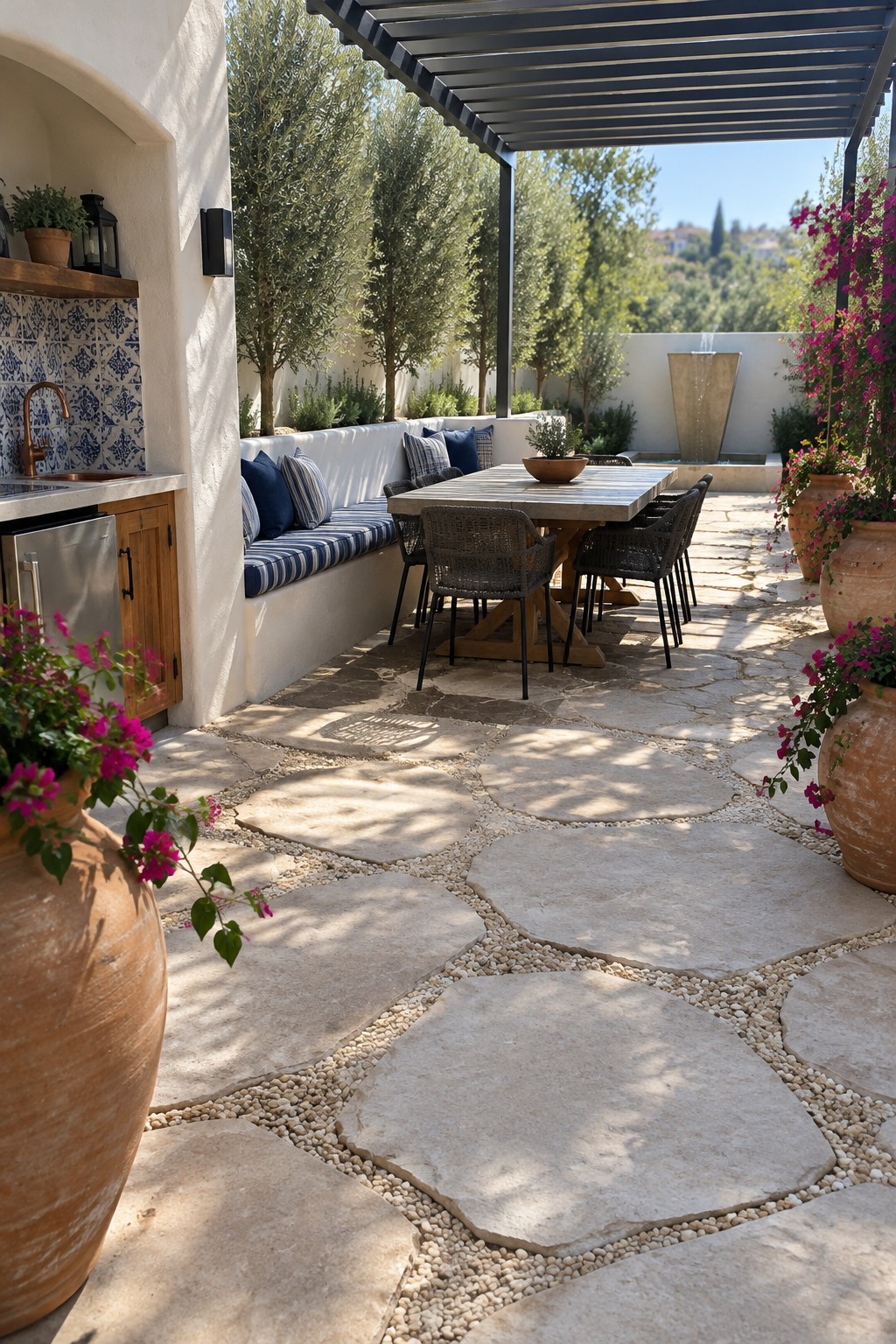
A pergola can give an outdoor dining area a clear place of its own without closing it off from the garden. Here, the dark overhead slats shade a long table and make the patio feel organized while leaving the sides open.
This setup works well on a terrace beside the house, especially when you want a dining spot that still feels connected to the yard. Choose a pergola size that covers the table and chairs, and leave enough open paving for people to move around comfortably.
Use Layered Planting To Add Patio Privacy

A leafy border can make a patio feel more private without closing it off. Taller tropical plants screen the seating area, while lower greenery fills the gaps and keeps the edge from feeling like a solid wall.
Use this approach beside a pool or along a property line where you want a little separation. Choose plants suited to your climate, and leave enough room between them for healthy growth and easy care.
Use Raised Planters to Create Garden Privacy
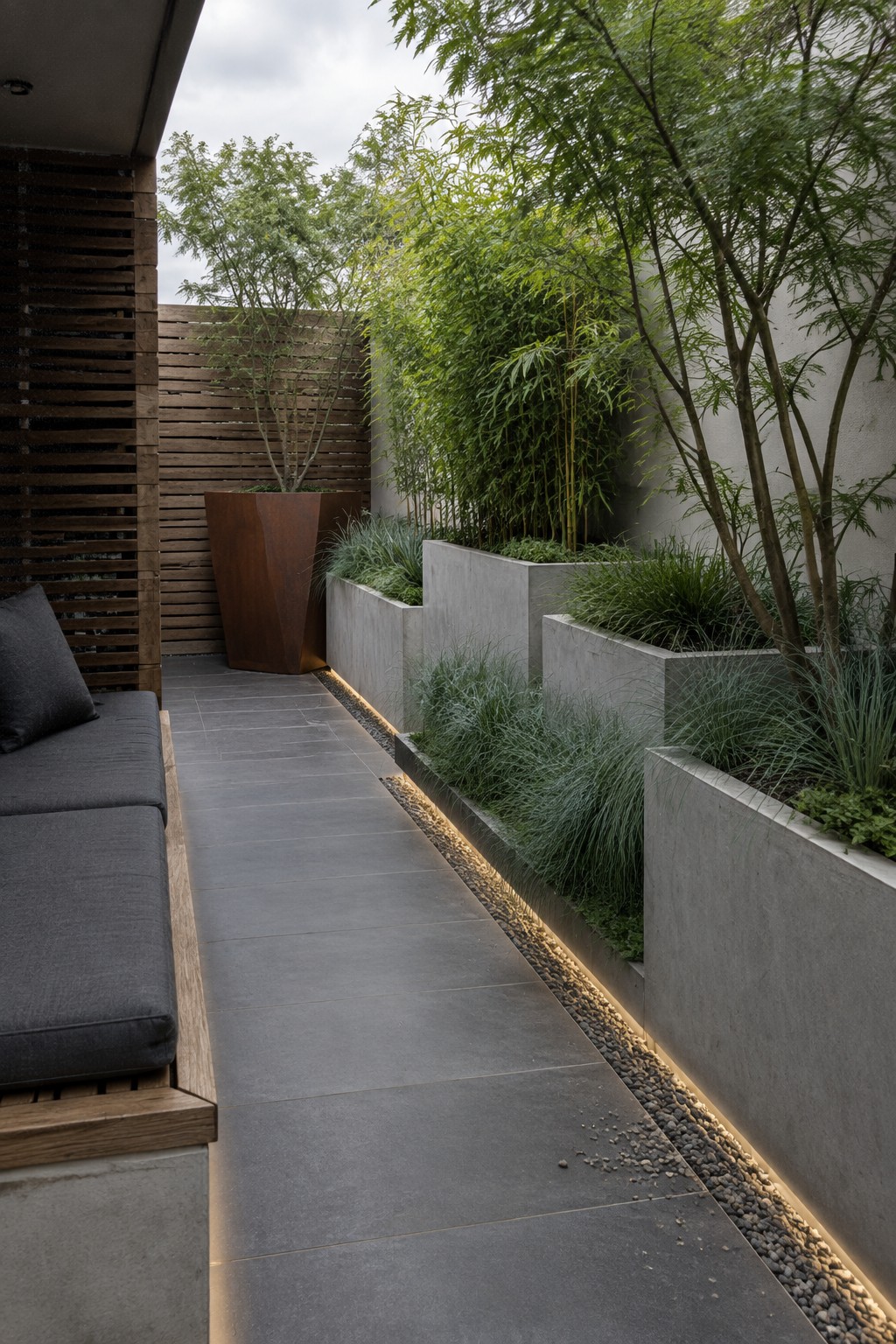
Raised planters can divide a narrow patio into a leafy border without taking away much walking space. Taller plants at the back and grasses near the edge make the garden feel more enclosed while keeping the planting neat.
This approach works well in small courtyards where a fence alone feels stark. Choose planters sized to leave a comfortable path, and use plants suited to the available light so the screen stays full.
Use a Fire Pit to Center Patio Seating
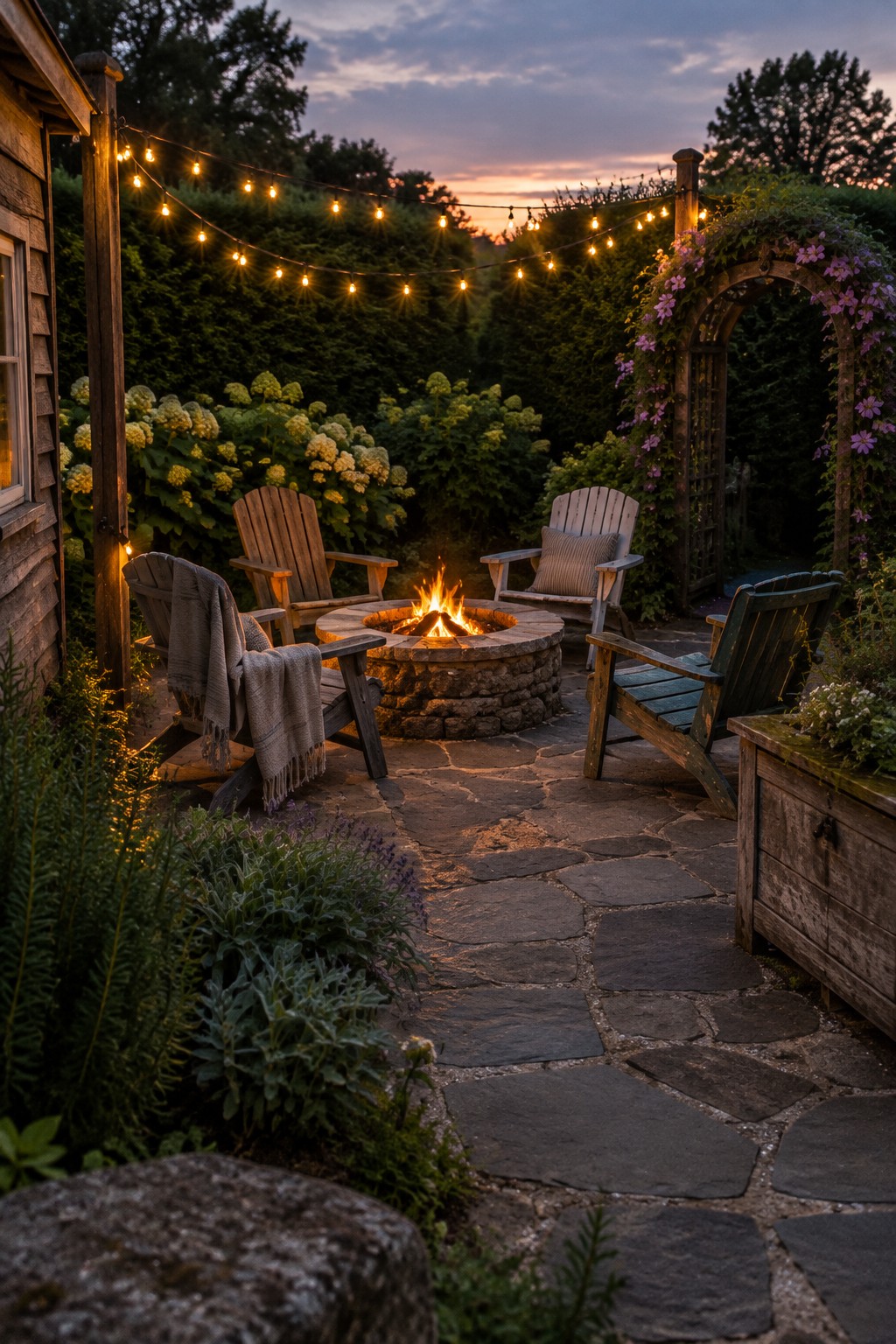
A fire pit gives a small patio a clear gathering spot and makes the seating feel purposeful. Here, the chairs face inward around a low stone fire pit, so people can talk without needing a large outdoor space.
Leave enough room to pull chairs back and walk around the pit safely. This arrangement works well on a stone patio, especially where garden planting already provides privacy.
Use a Built-In Bench to Shape a Patio Seating Area
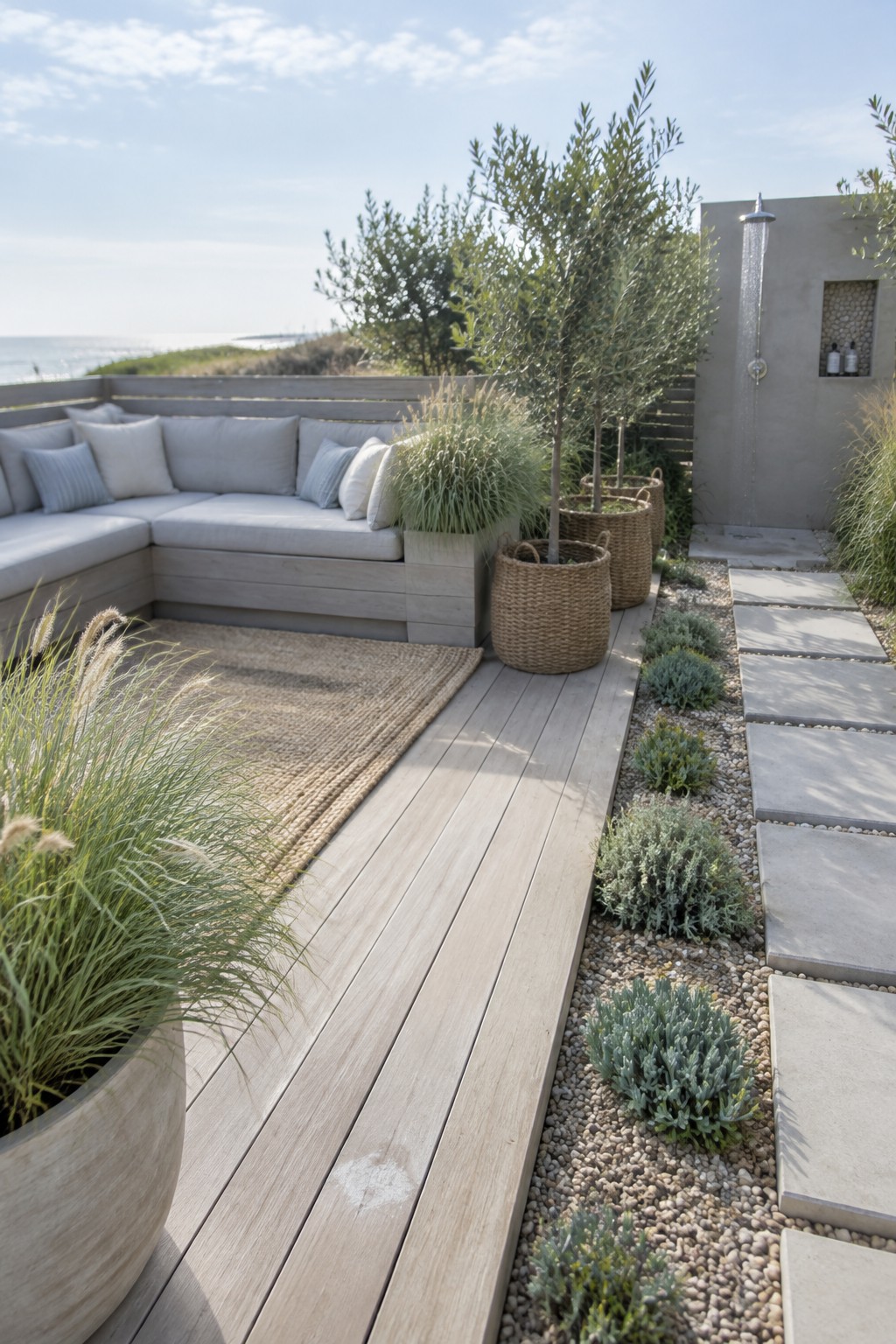
A built-in bench makes a patio seating area feel settled without taking up space for separate chairs. Here, the L-shaped bench leaves room for a clear walkway alongside it, which is useful when the patio also needs to work as a path through the garden.
This layout suits a narrow terrace or a small outdoor space where every bit of floor area matters. Add cushions for comfort, and keep the bench deep enough for sitting without making the route past it feel cramped.
Use a Long Pool to Organize a Garden Patio
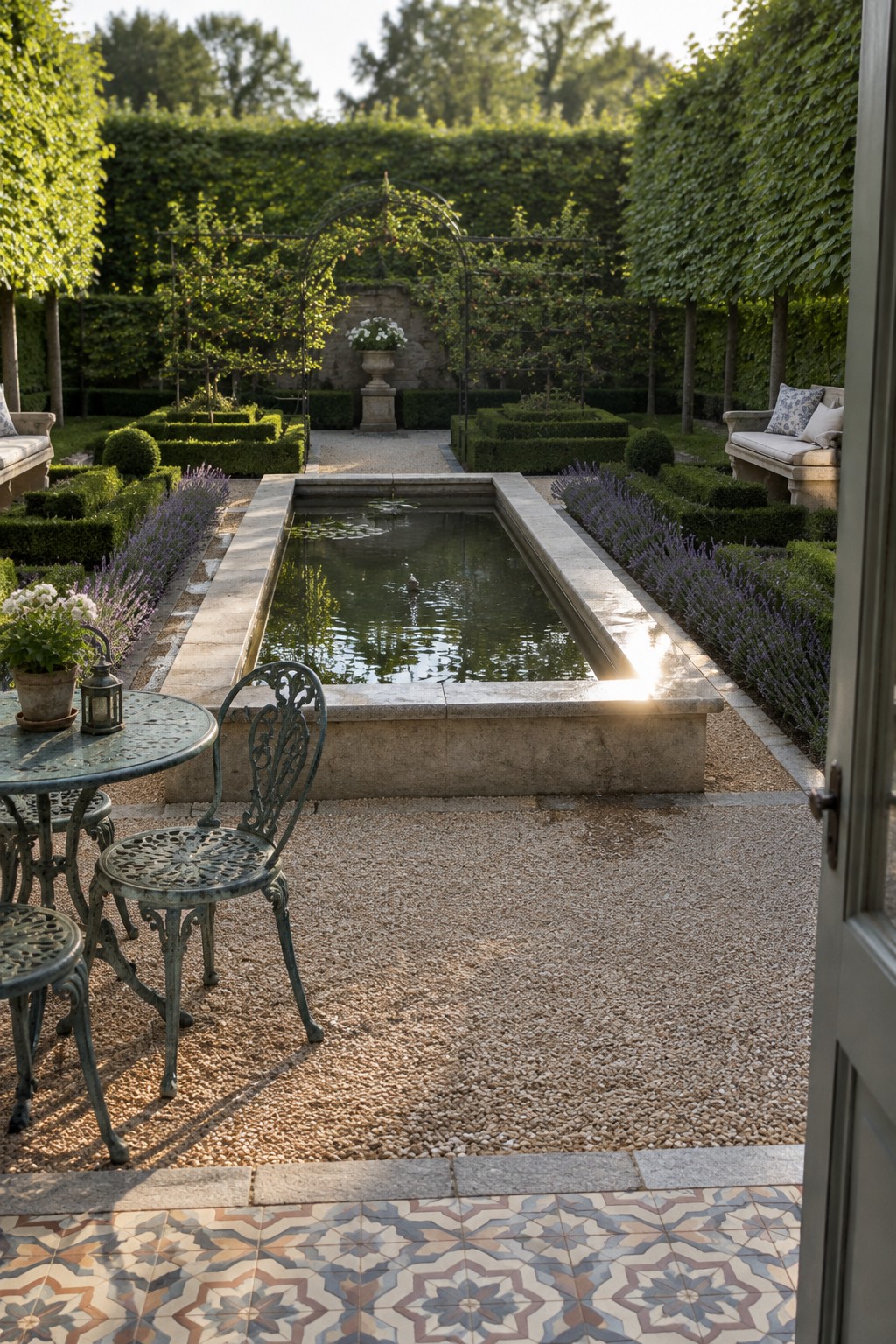
A narrow reflecting pool can give a garden patio a clear center and make the space feel planned without adding much furniture. Here, the straight edges of the pool lead the eye toward the far end of the garden, while low hedges and lavender keep the planting orderly.
This layout works well in a formal courtyard or a long, narrow yard. Leave enough room along the pool for a comfortable walking path, and choose a shallow basin if you want the look and sound of water without a large swimming pool.
Use Planters to Divide a Rooftop Patio

Large raised planters can separate the seating and dining areas without closing off a rooftop patio. A mix of shrubs and flowering plants gives the space a greener, more private feel while still leaving room to move around.
Use planters to mark the edge of a dining area or screen a nearby view, especially where a fence is not practical. Choose containers that suit the deck’s size, and leave a clear path between them so the patio stays easy to use.
Make Outdoor Dining Work in a Sheltered Patio
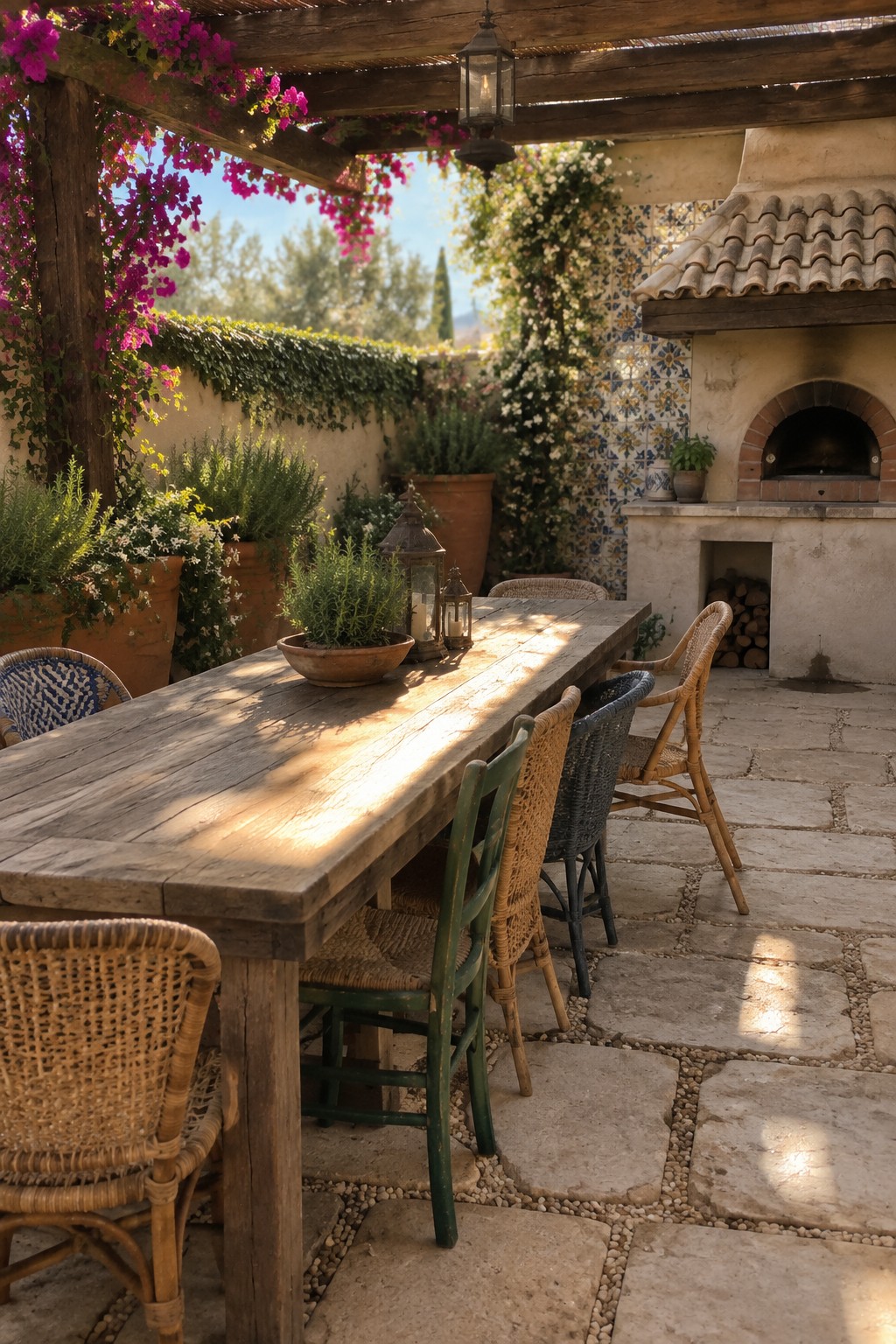
A long dining table makes good use of a narrow patio and gives everyone a place to gather. A pergola overhead helps define the dining area, while climbing greenery can offer a bit more privacy without closing the space in.
This setup suits a courtyard or compact garden where you want a proper spot for meals. Leave enough room to pull chairs out comfortably, and train plants along the edges rather than letting them crowd the table.
Use a Stone Path to Lead Through Patio Greenery

A stone path can make a leafy patio feel connected without taking away its natural look. Irregular stepping stones set into moss give the route a relaxed feel and let greenery grow close to the walking surface.
This works well in a shaded garden where a straight paved walkway might feel too formal. Leave enough room between stones for comfortable steps, and keep the surface level so it stays easy to use.
Use a Green Wall to Add Patio Privacy
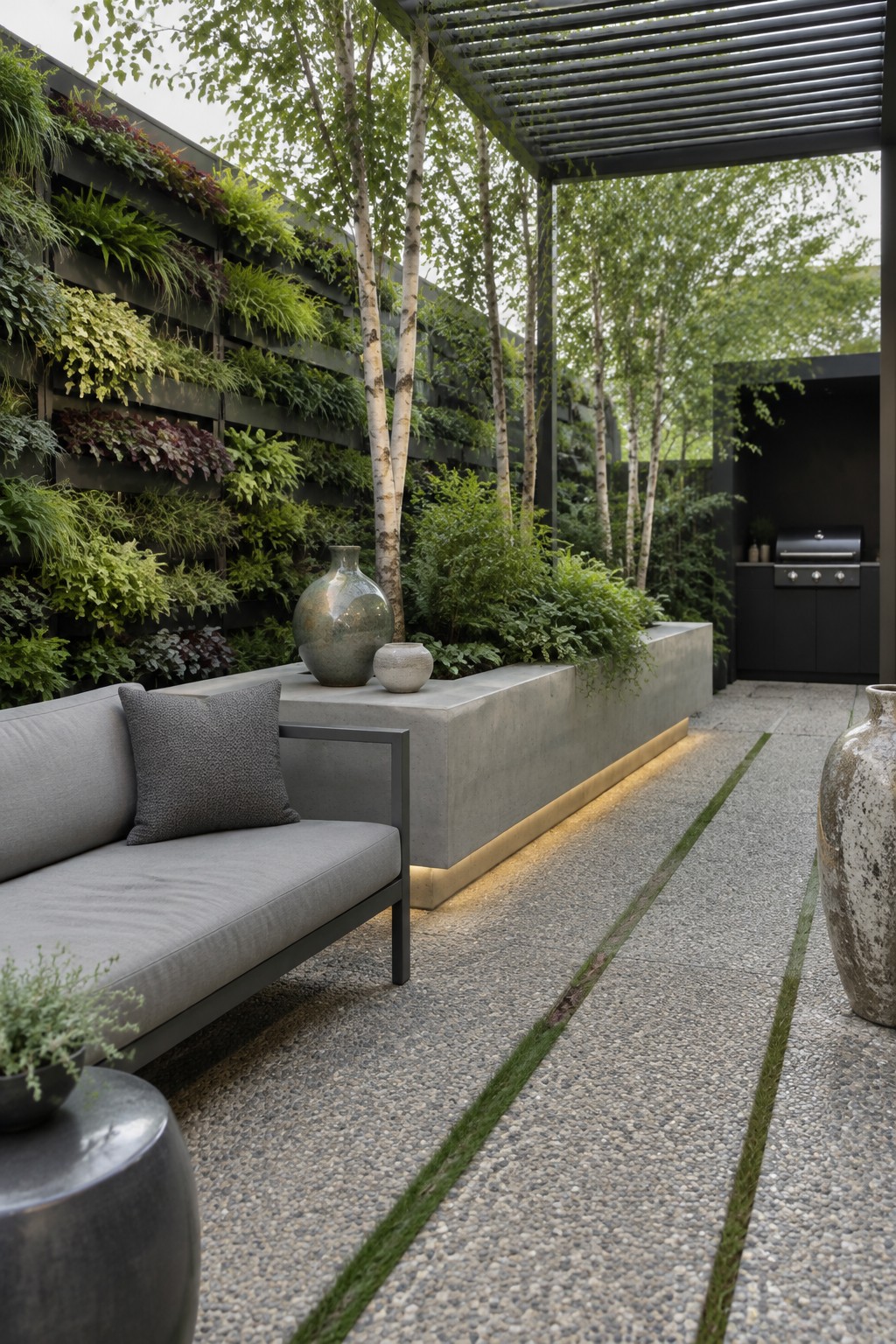
A planted wall can give a patio privacy without closing it off completely. The mix of foliage also makes a narrow outdoor seating area feel more like a garden than a corridor.
Use wall-mounted planters where ground space is limited, and vary the plants’ leaf shapes and heights for a fuller effect. Leave room to tend and water them, especially if the wall sits behind built-in planters.
Use a Garden Patio for Outdoor Dining
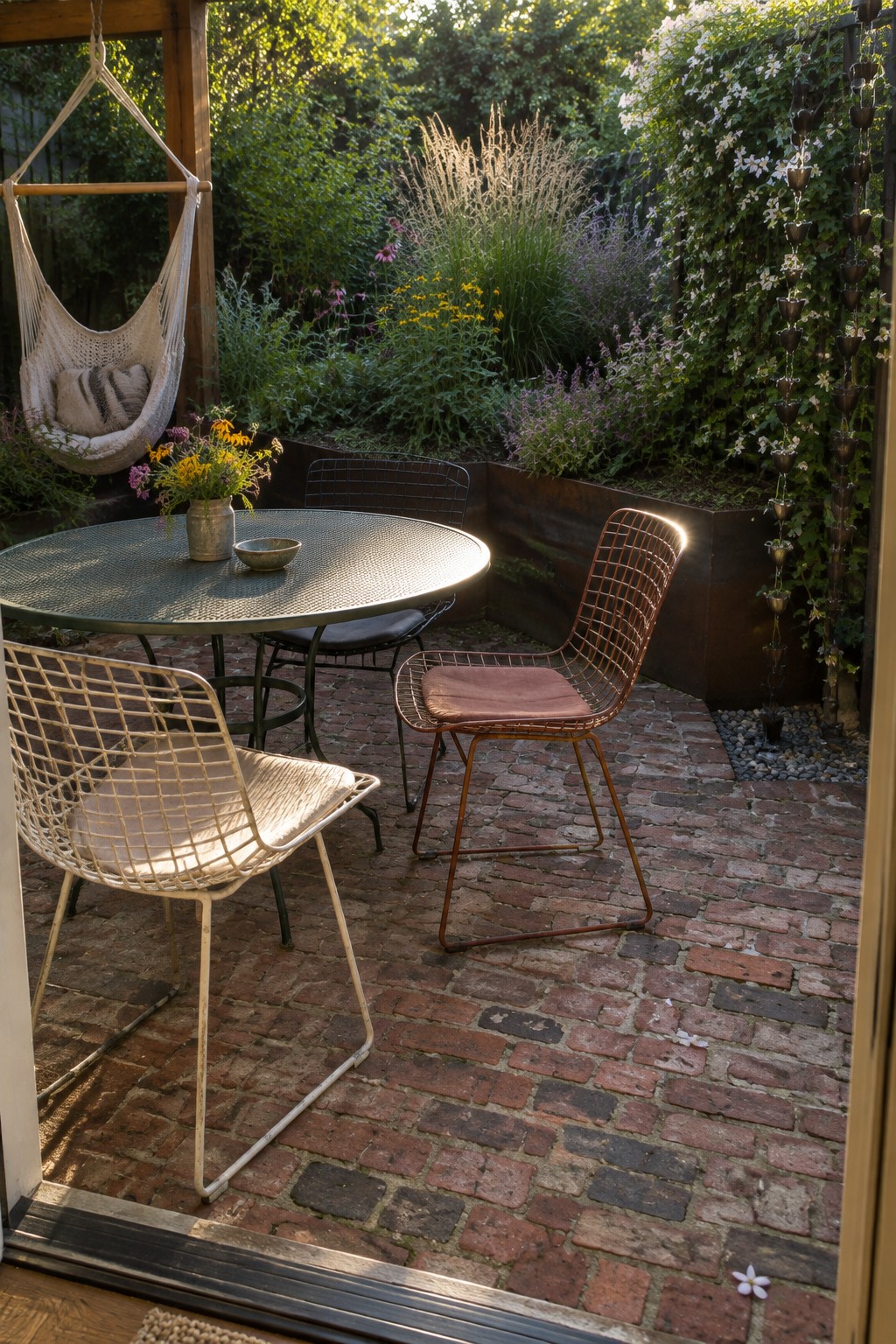
A small patio can work well as an outdoor dining spot when the table sits close to the garden. The planting around it gives the seating area privacy without needing a solid fence.
Keep the table and chairs in proportion to the space, and leave a clear route from the house. This setup suits a compact courtyard especially well, where raised beds can bring greenery up to seating height.
Use a Water Feature to Give a Garden Patio a Focal Point

A small pond can give a garden patio a clear place to pause. Here, the water sits beside a raked gravel area, so the patio feels connected to the garden without needing much furniture or decoration.
This idea suits a quiet corner where you want a reason to linger. Keep the pond easy to reach for cleaning, and leave enough room around the edge to move safely. A simple bamboo spout can keep the water circulating.
Use a Porch Daybed for Relaxed Patio Seating
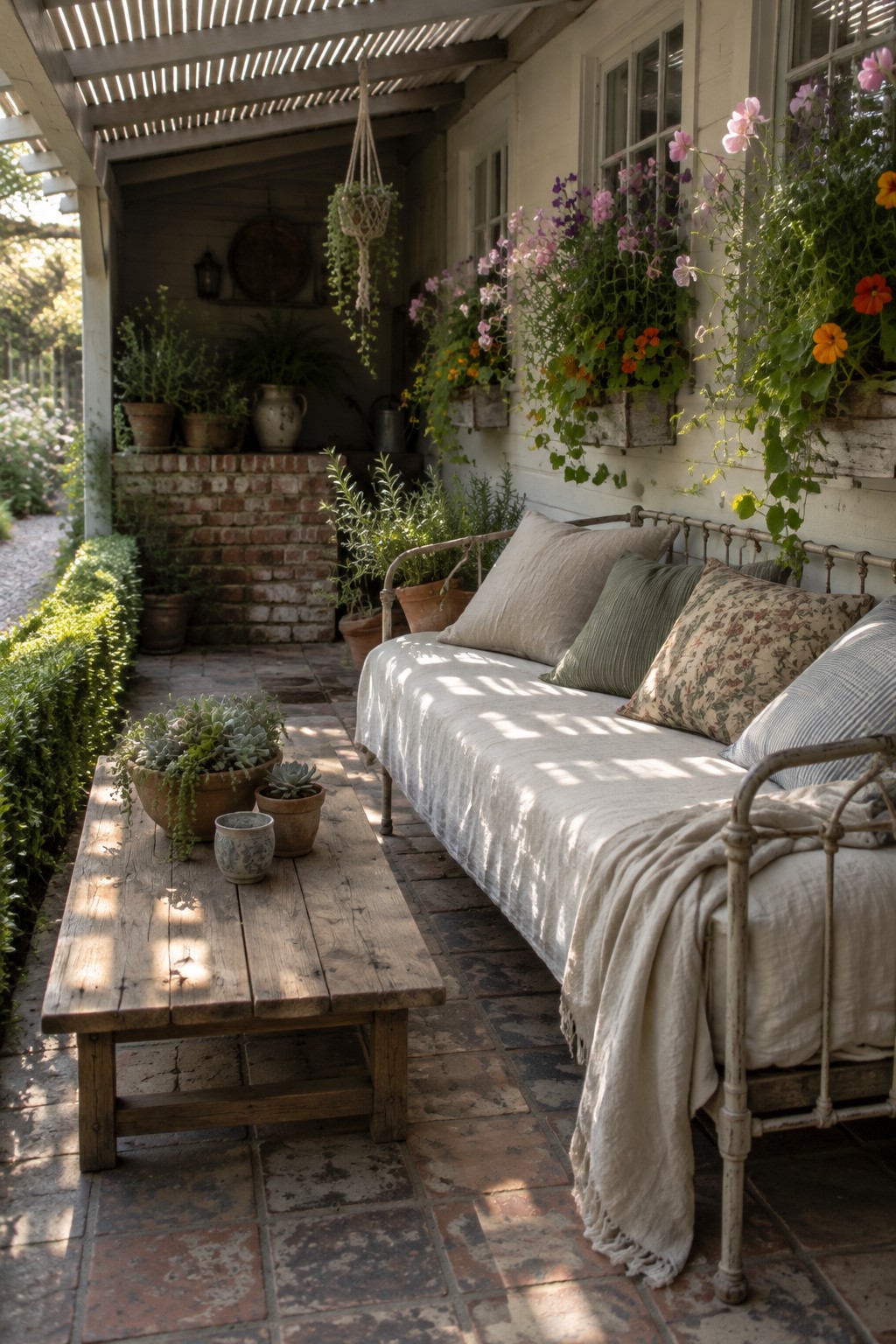
A daybed gives a covered patio the comfort of an indoor sitting room while keeping the space open to the garden. Here, simple bedding and a few cushions make the iron frame feel easy to use for reading or resting.
This setup works especially well on a long, sheltered porch where a sofa can sit along one side without blocking the walkway. Choose washable outdoor fabric, and leave enough room beside the bed to move through comfortably.
Use Raised Planters to Layer Patio Greenery
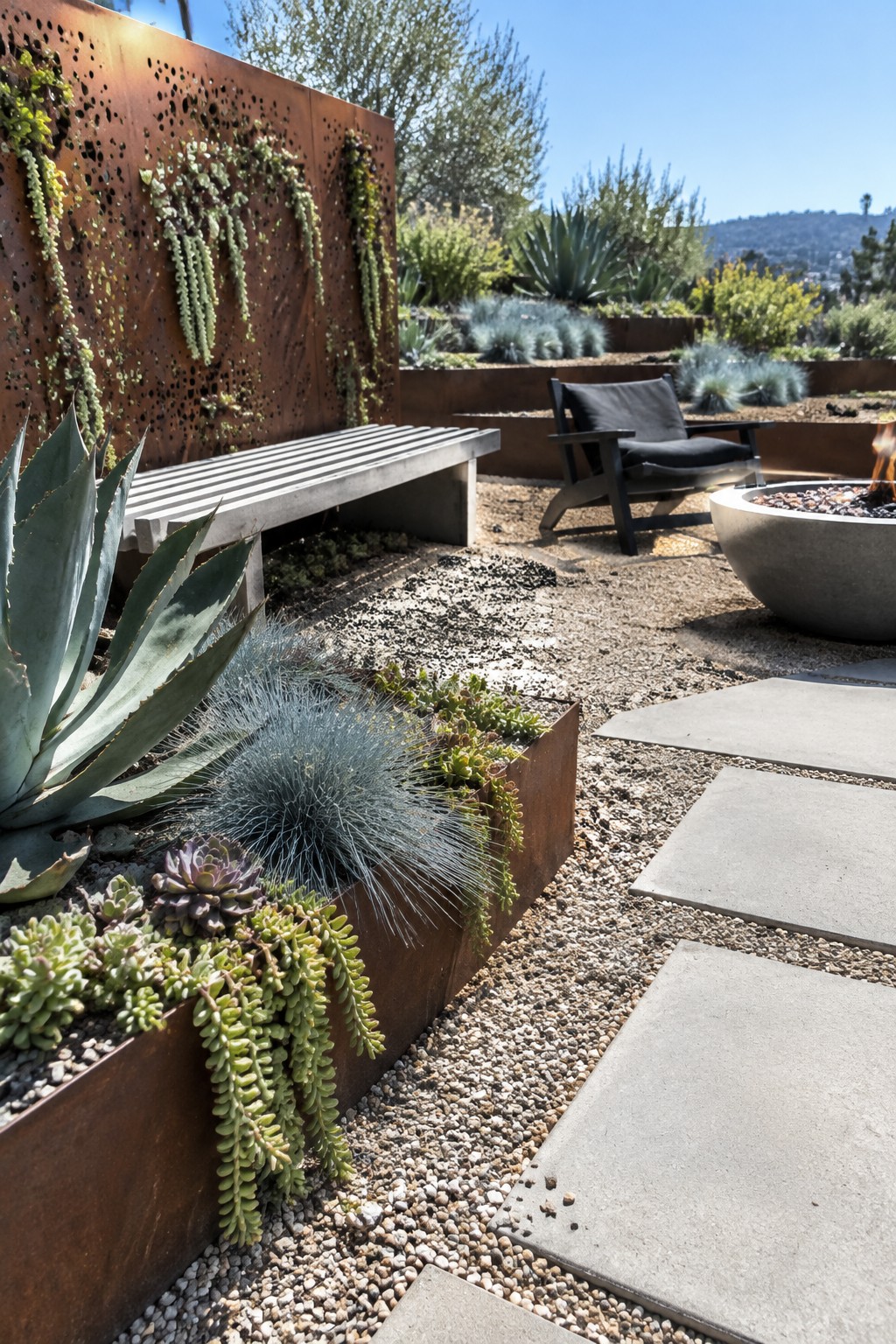
Raised planters make it easier to build a garden in levels, even on a gravel patio. Here, a rusted metal planter holds a mix of low succulents and trailing plants, giving the seating area a greener edge without taking up much walking space.
Use planters of different heights to add privacy gradually rather than blocking the whole patio. Choose drought-tolerant plants for sunny, dry spots, and leave enough room around the seating and path for easy movement.
Use a Curving Path to Move Through Garden Planting
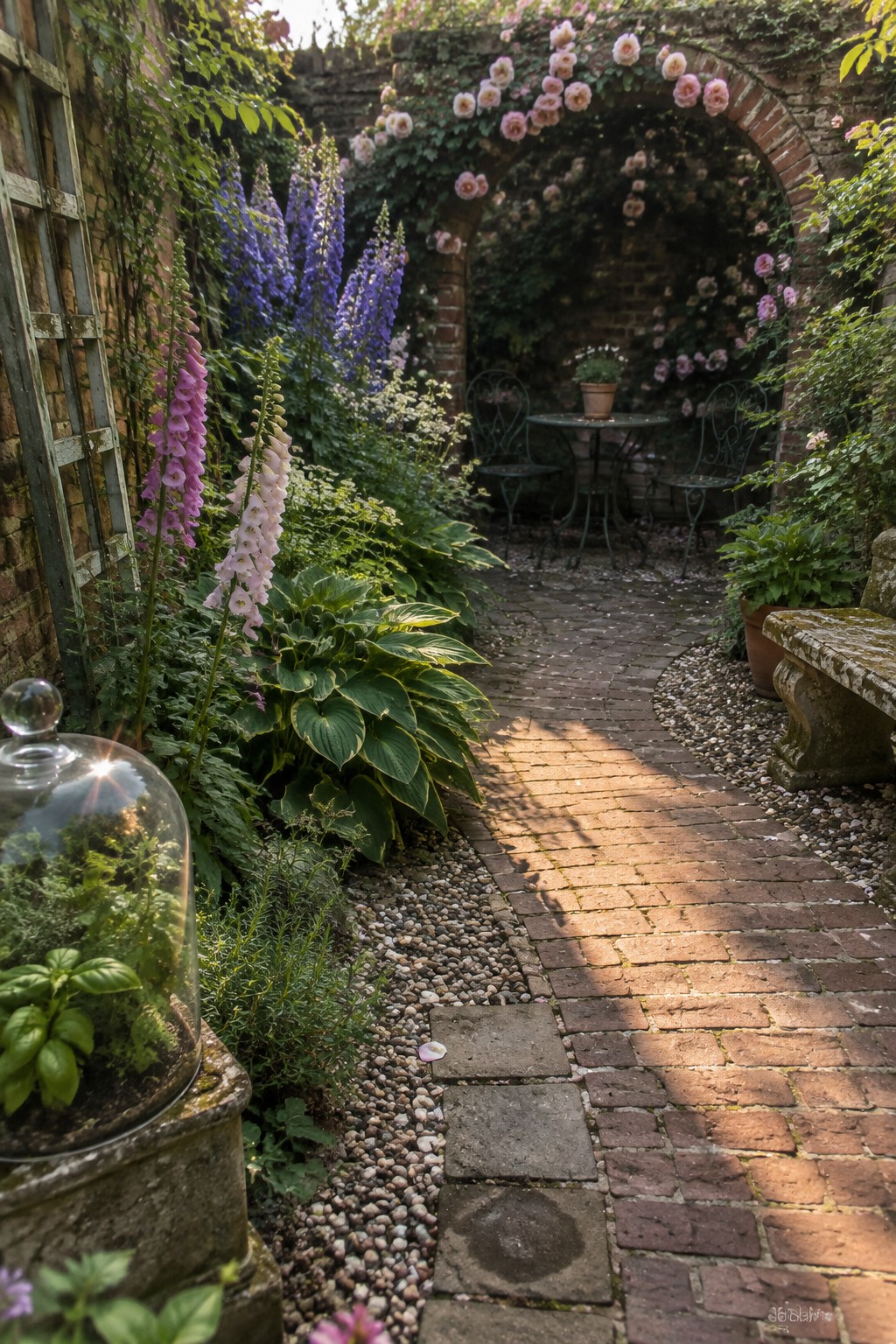
A gently curving path makes a small garden feel like a place to wander, rather than a straight route from one end to the other. Brick pavers set among dense planting give the walkway a clear edge while keeping it connected to the garden.
This approach works well in narrow side yards or tucked-away patio gardens. Keep the route wide enough to walk comfortably, and leave space around the paving so plants do not crowd it as they grow.
Use Climbing Plants to Create a Private Patio
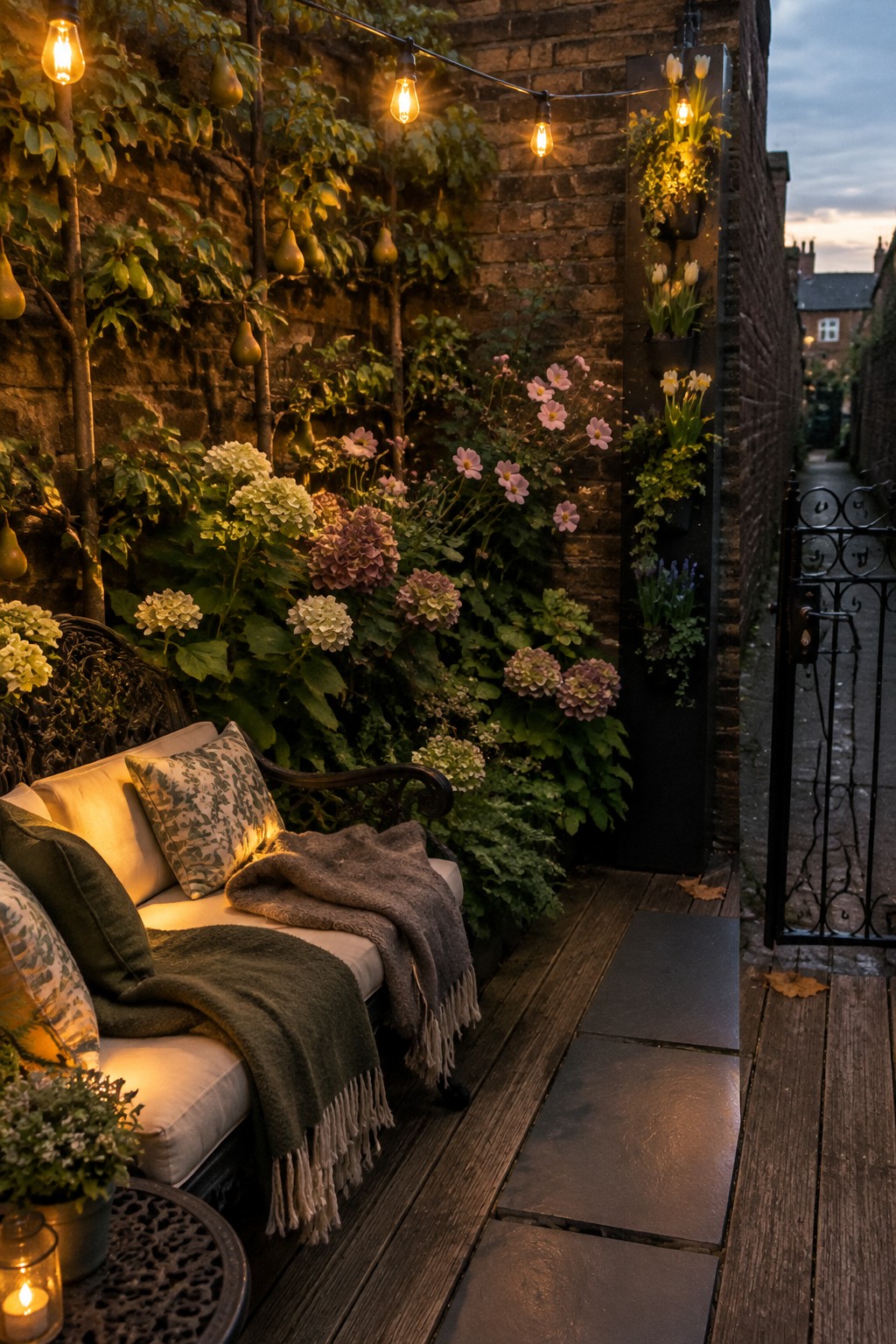
Climbing plants can turn a narrow patio wall into a leafy screen, making the seating area feel tucked away without taking up much floor space. Growing greenery vertically also leaves room for chairs and a clear walkway.
Train a climber along a trellis or wires fixed securely to the wall, and keep it trimmed around doors and paths. This works especially well in a small courtyard, where a planted wall can offer privacy while leaving the patio open.
Use a Sunken Patio to Make Seating Feel Sheltered
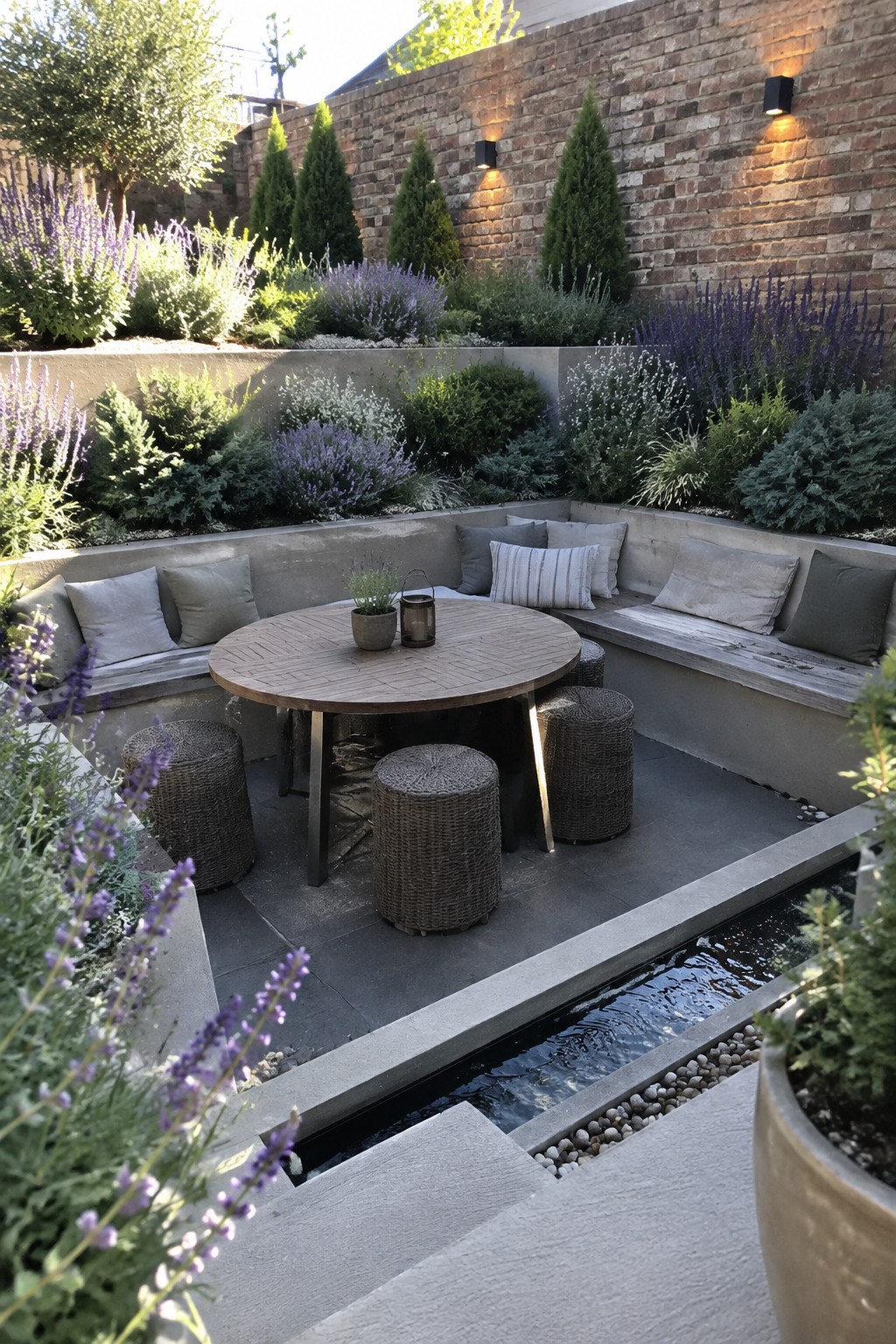
A sunken seating area can make a small patio feel like its own room without adding a roof or walls. Here, the built-in bench follows the edge of the lower level, giving people a clear place to sit while leaving the center open for a table.
This layout works well in compact gardens where you want a defined gathering spot. A shallow step down is often enough, but plan for drainage and a comfortable route in and out, especially if the patio sits beside a water feature.
Use Layered Planting to Give a Patio More Privacy

Layered planting can make a patio feel tucked away without closing it off. Taller grasses and shrubs help screen the edges, while lower plants soften the transition between the garden and the seating area.
This approach works well in a small backyard where a solid fence might feel too stark. Place the tallest plants along the boundary, then keep the planting lower near paths and seating so the space stays easy to move through.
Frequently Asked Questions
Q: How can I make a small patio feel private without blocking all the light?
A: Use a few tall, airy plants rather than a solid wall of greenery. Place them along the most exposed edge, then add lower pots nearby to soften the view without making the patio feel closed in.
Q: What plants work well for a lush patio if I don’t get much sun?
A: Look for shade-tolerant choices such as ferns, hostas, and heucheras, and check the light needs before you buy. A bright spot with indirect light can still support plenty of layered foliage.
Q: How do I keep a layered patio garden from looking messy?
A: Repeat a few plant types or pot colors so the arrangement feels connected. Leave a little breathing room between containers, and trim leaves that spill into walkways.
Q: Can I get a lush look with only a few pots?
A: Yes. Choose containers at different heights and use plants with contrasting leaf sizes, so a small group feels full without crowding the space.
