

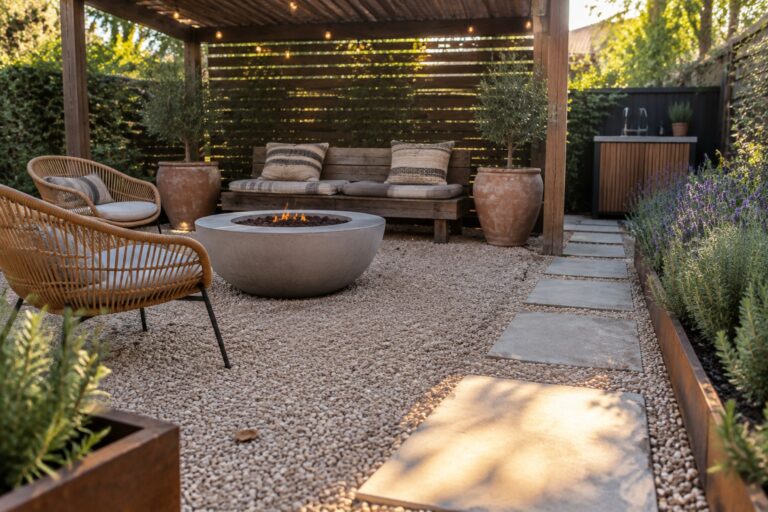
A gravel patio can be inexpensive and easy to lay, but the edges often decide whether it looks thoughtfully finished or starts spreading into the garden.
I find that a clear border also makes the space easier to maintain, especially where gravel meets lawn, planting beds, or a path.
The right edging can keep the layout neat without making a simple patio feel overbuilt.
Some options suit a relaxed, natural yard, while others give the seating area a cleaner outline.
I’d save the ideas that match your garden’s shape and try a small section first to see how the materials look in place.
Use Gravel to Define a Fire Pit Patio
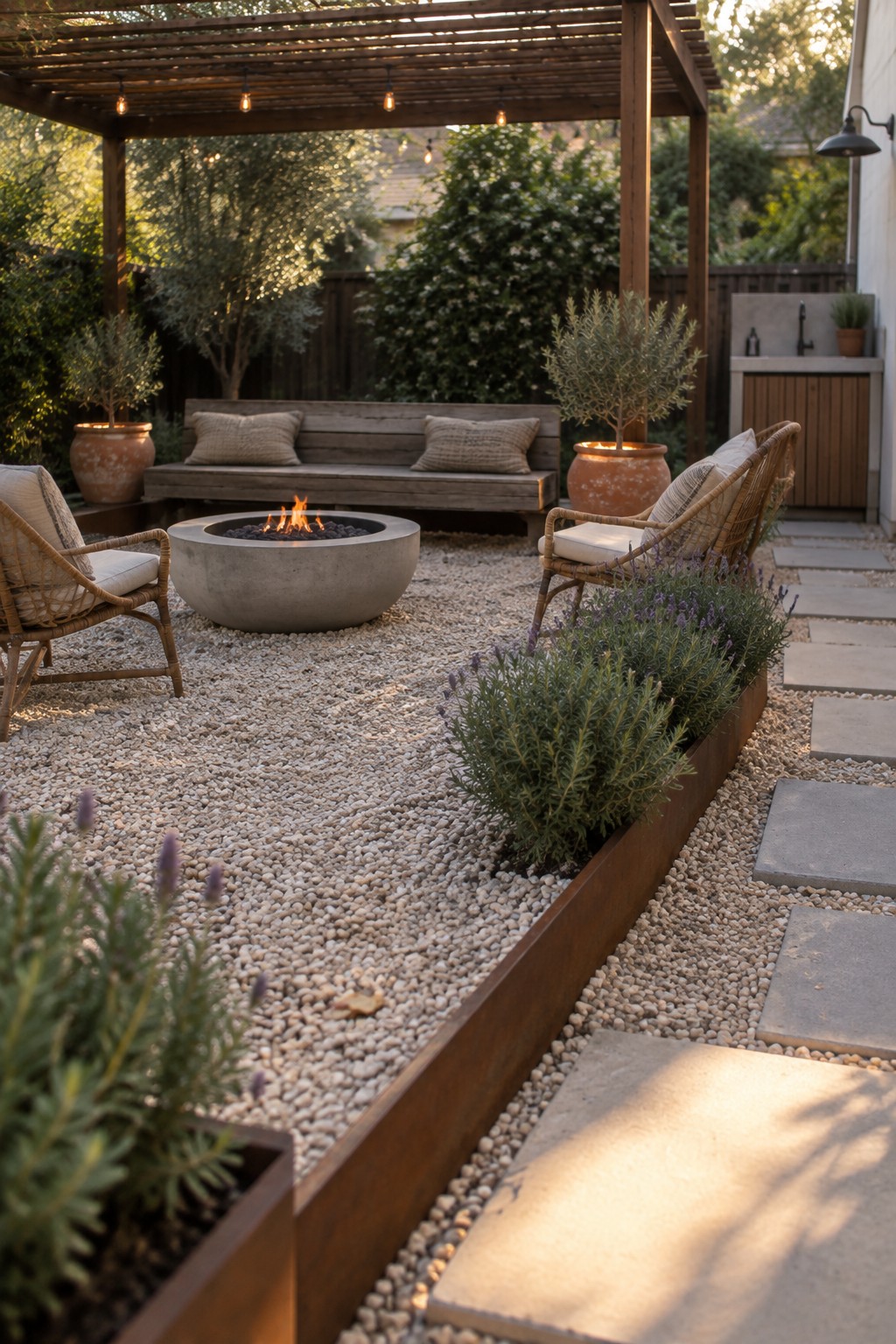
A gravel surface is a practical way to make a fire pit area feel like its own part of the yard. Here, a rusted metal border holds the gravel in place and gives the seating area a clear edge.
Use sturdy edging to keep stones from spreading onto nearby paths or planting beds. Gravel works especially well for a relaxed patio with movable chairs, but choose a comfortable stone size and keep the surface level around the fire pit.
Use Gravel To Define an Outdoor Dining Area

A gravel patio can give an outdoor dining spot its own clear place without the cost of a full paved surface. A simple stone border keeps the loose gravel contained and makes the edge look tidy.
For a practical layout, set the dining table on a level, compacted gravel base and use larger pavers along the edge to keep stones from spreading. This works well beside a garden or seating area, but choose chairs with feet that sit steadily on the gravel.
Use Gravel to Make a Small Patio
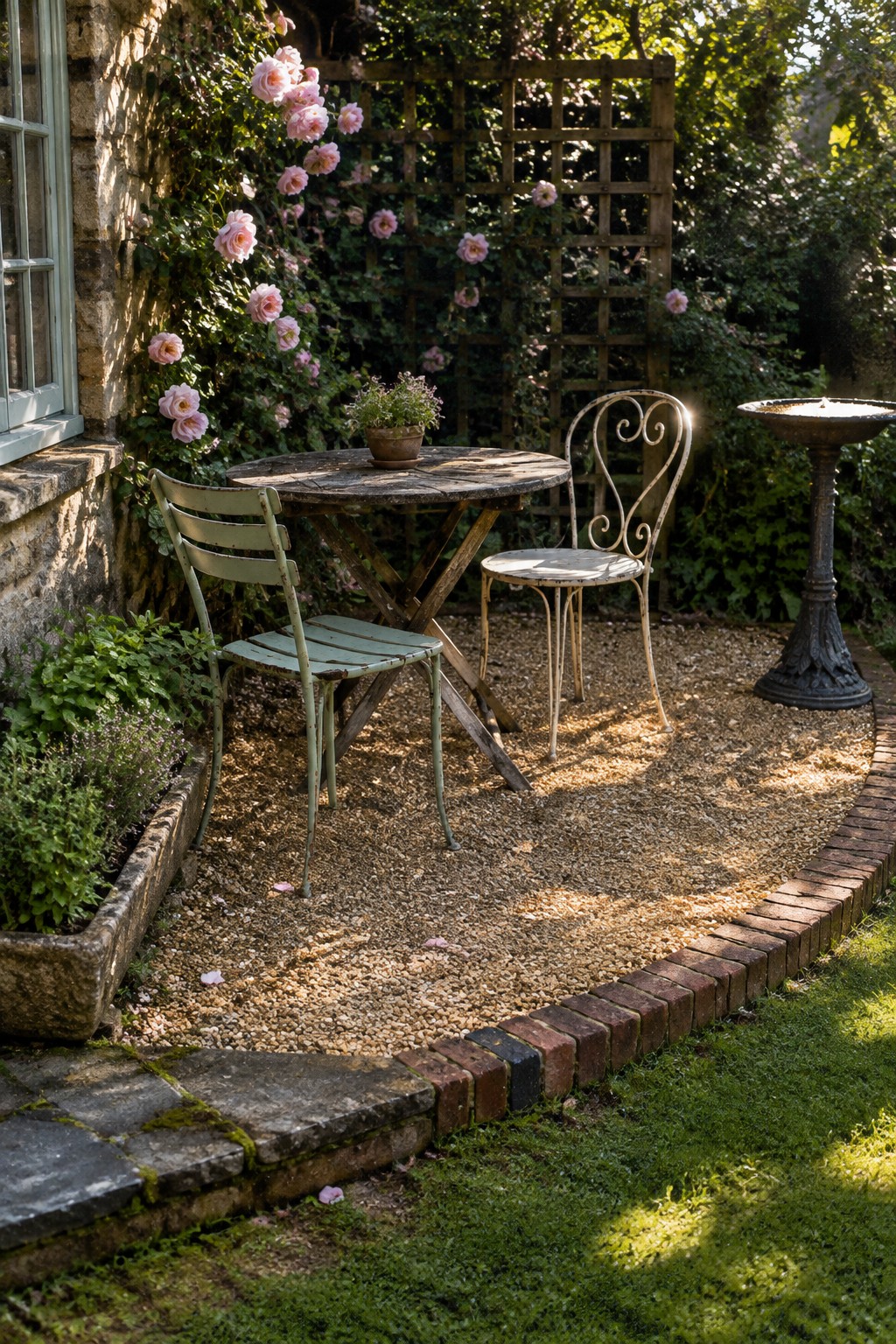
Gravel is an easy way to make a small seating area feel like its own part of the garden. It drains well and is often less costly to install than a solid paved surface. A simple brick border, like the one around this patio, helps keep the stones in place and gives the edge a clear shape.
For a tidy result, prepare a firm, level base and use landscape fabric beneath the gravel to limit weeds. Choose a compacted gravel or small stone that feels comfortable underfoot, and keep the edging low enough to step over easily.
Use Gravel To Define A Fire Pit Area
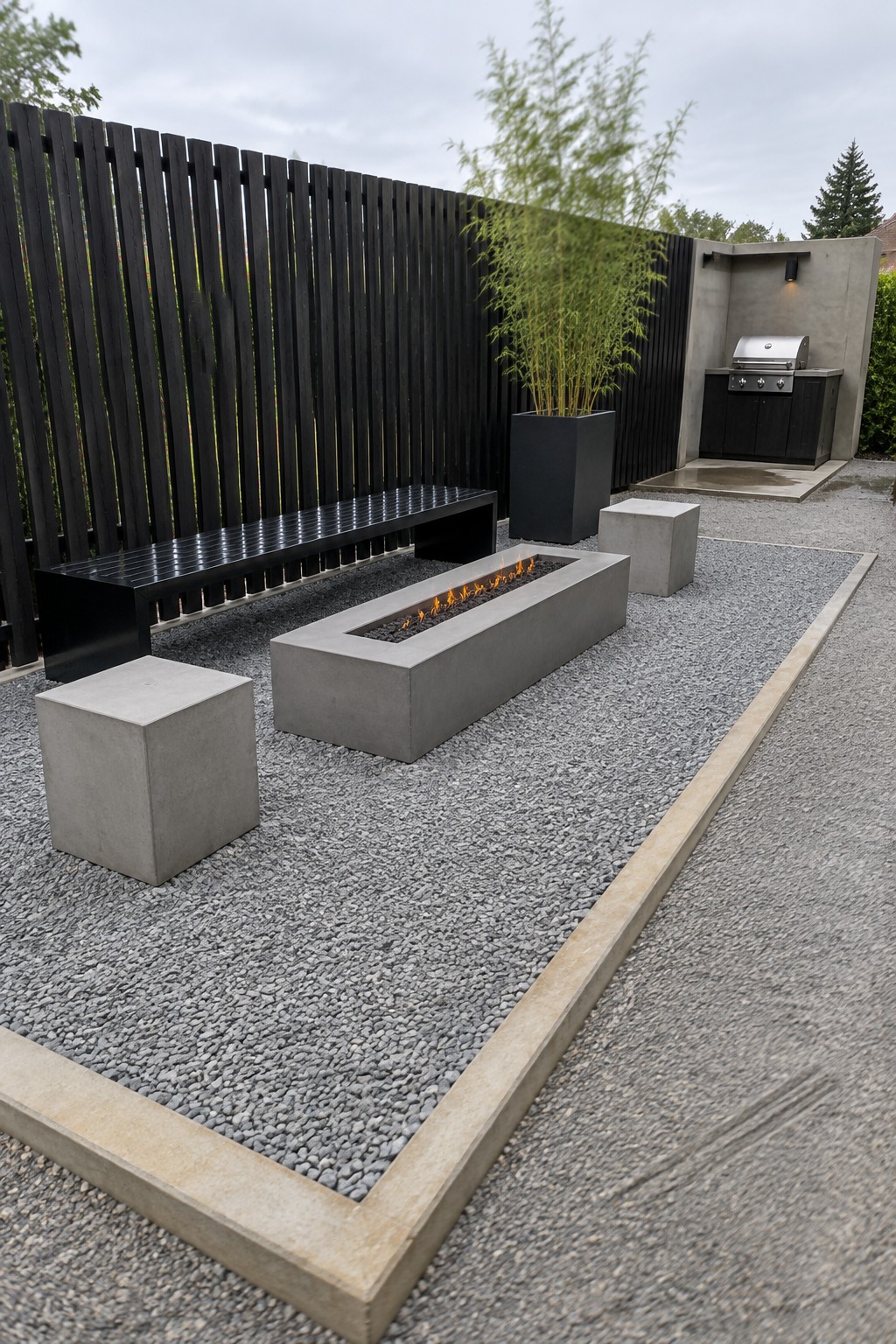
A gravel patio gives a fire pit its own clear spot without the cost of a full paved surface. A simple stone border keeps the loose gravel contained and makes the seating area feel planned.
Use a firm, level base beneath the gravel, then choose edging that can handle foot traffic and hold its shape. This layout works well in a narrow yard, but leave enough room around the fire feature for chairs and safe movement.
Use Gravel for a Courtyard Dining Area
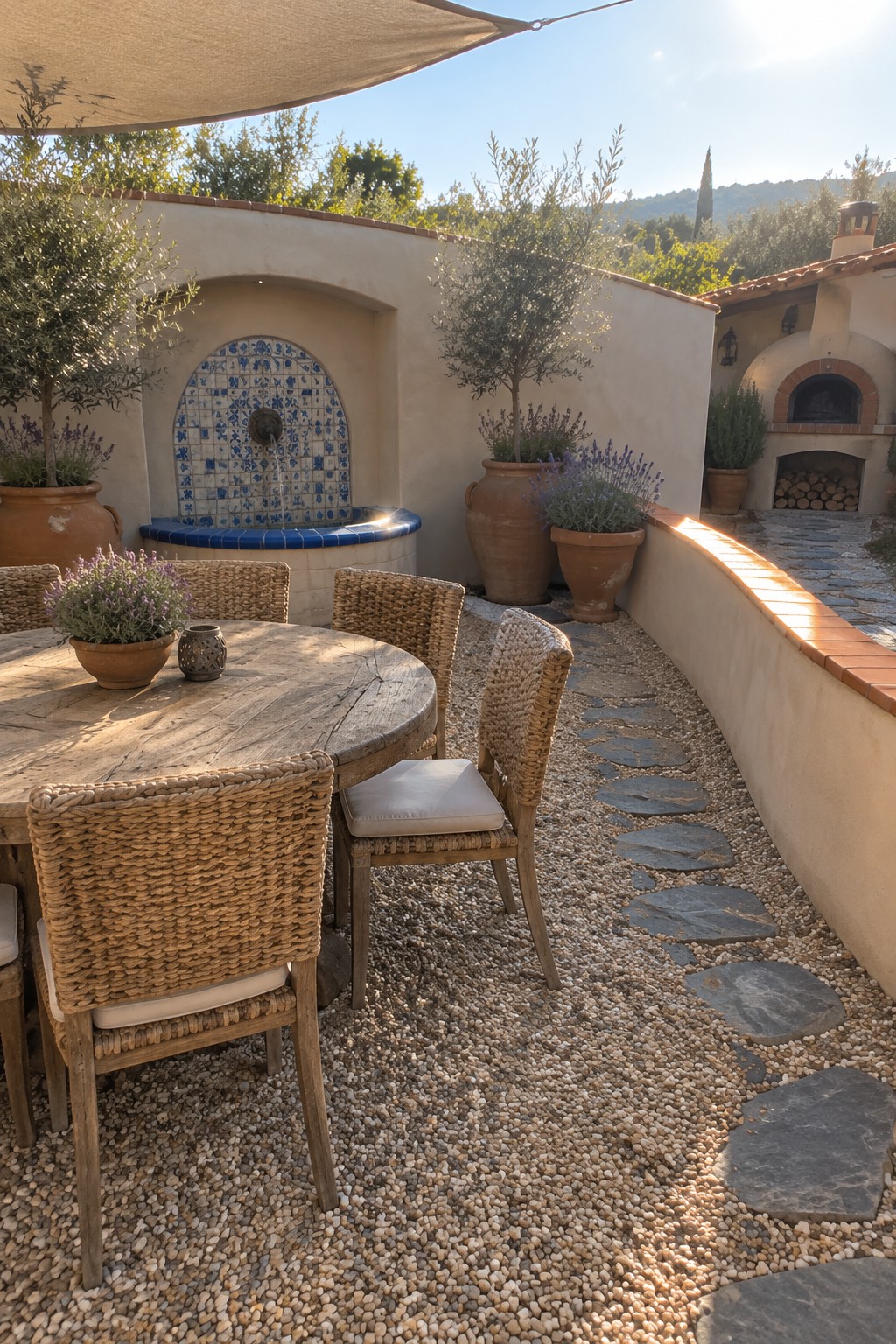
Gravel is a practical surface for an outdoor dining spot, especially when a stone path gives people a clear route through the seating area. It drains well and can be easier to install than a solid patio.
For a similar courtyard, set the table on a level, compacted base so chairs stay steady, and use larger stepping stones along the main walking route. A low wall or edging can help keep the gravel from spreading into nearby areas.
Use Gravel for a Casual Seating Area
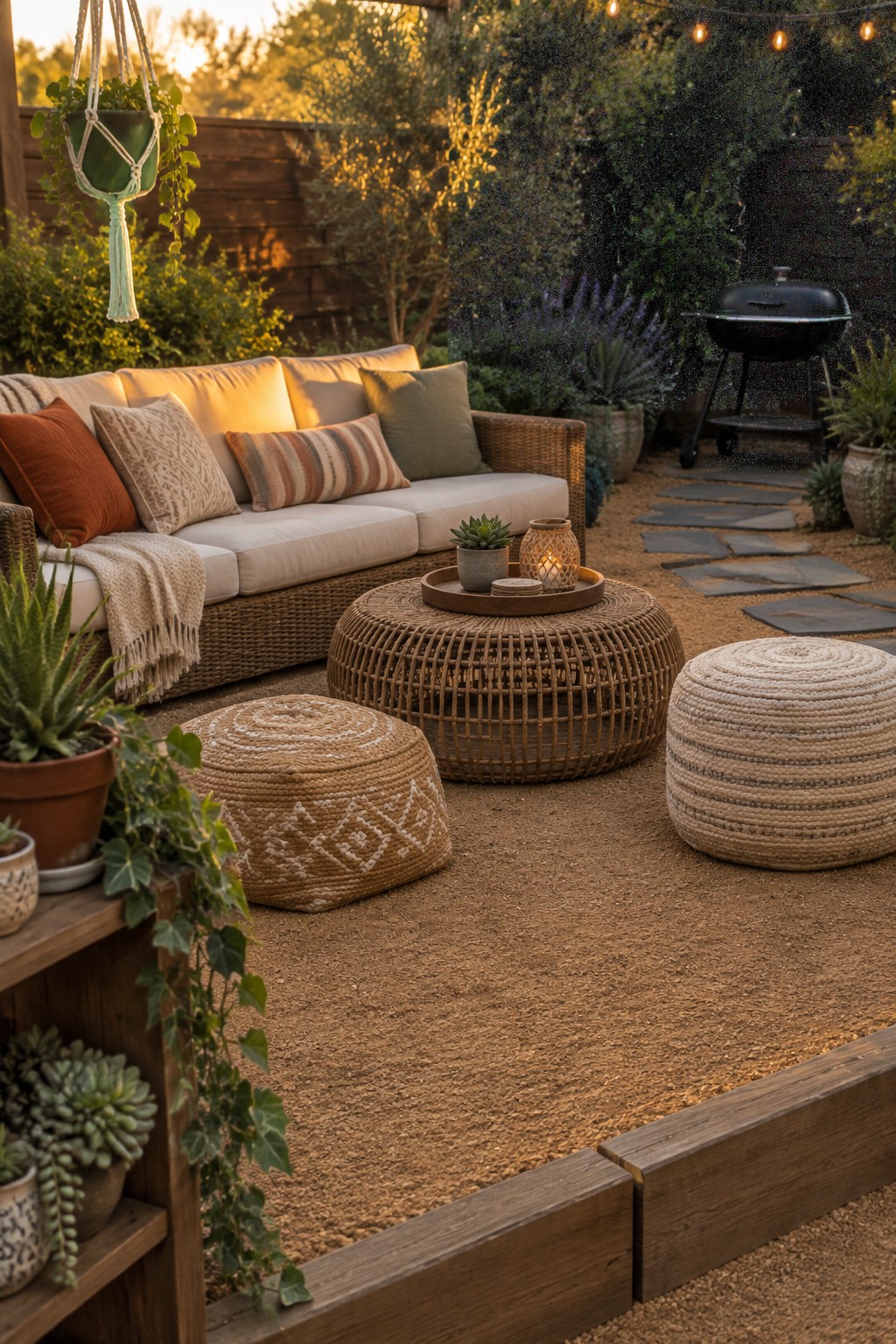
A gravel patio can make a relaxed seating area feel like its own part of the yard. Here, the low wooden edging holds the gravel in place, while the sofa and woven stools give people a few ways to sit without needing a large paved surface.
This approach works well in a small or informal garden where a full stone patio would feel too stiff or costly. Use sturdy edging to keep gravel out of nearby planting beds, and choose outdoor furniture that can sit securely on the surface.
Use Gravel for a Simple Fire Pit Seating Area
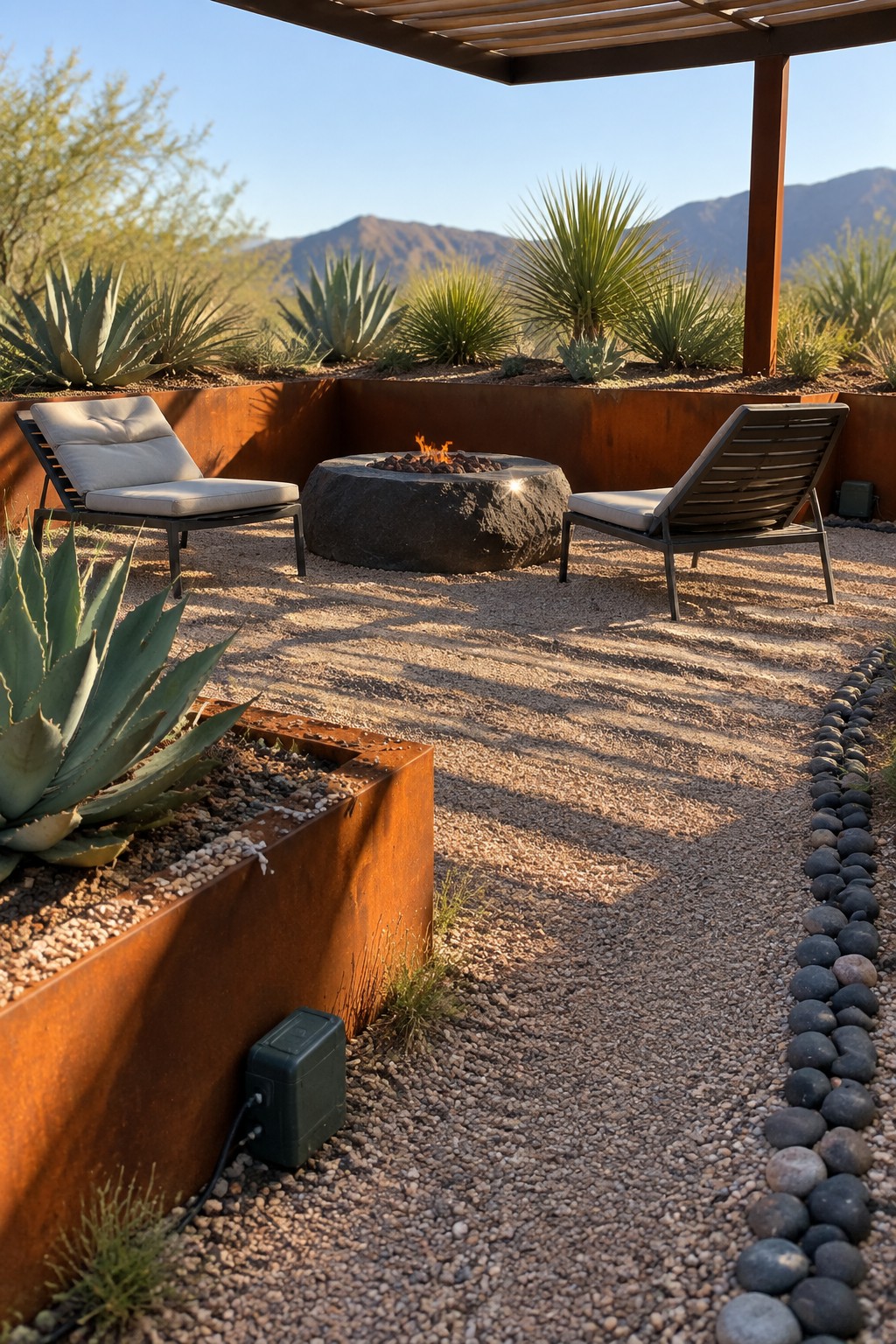
A gravel surface is an affordable way to give a fire pit its own spot in the yard. It drains well and makes it easy to arrange chairs around the fire without building a large paved patio.
For a practical edge, keep the gravel contained with a low border or a line of larger stones. This setup suits a compact desert garden, but use a noncombustible surface around the fire and leave enough room for chairs to sit securely.
Use Timber Edging to Shape a Gravel Dining Patio
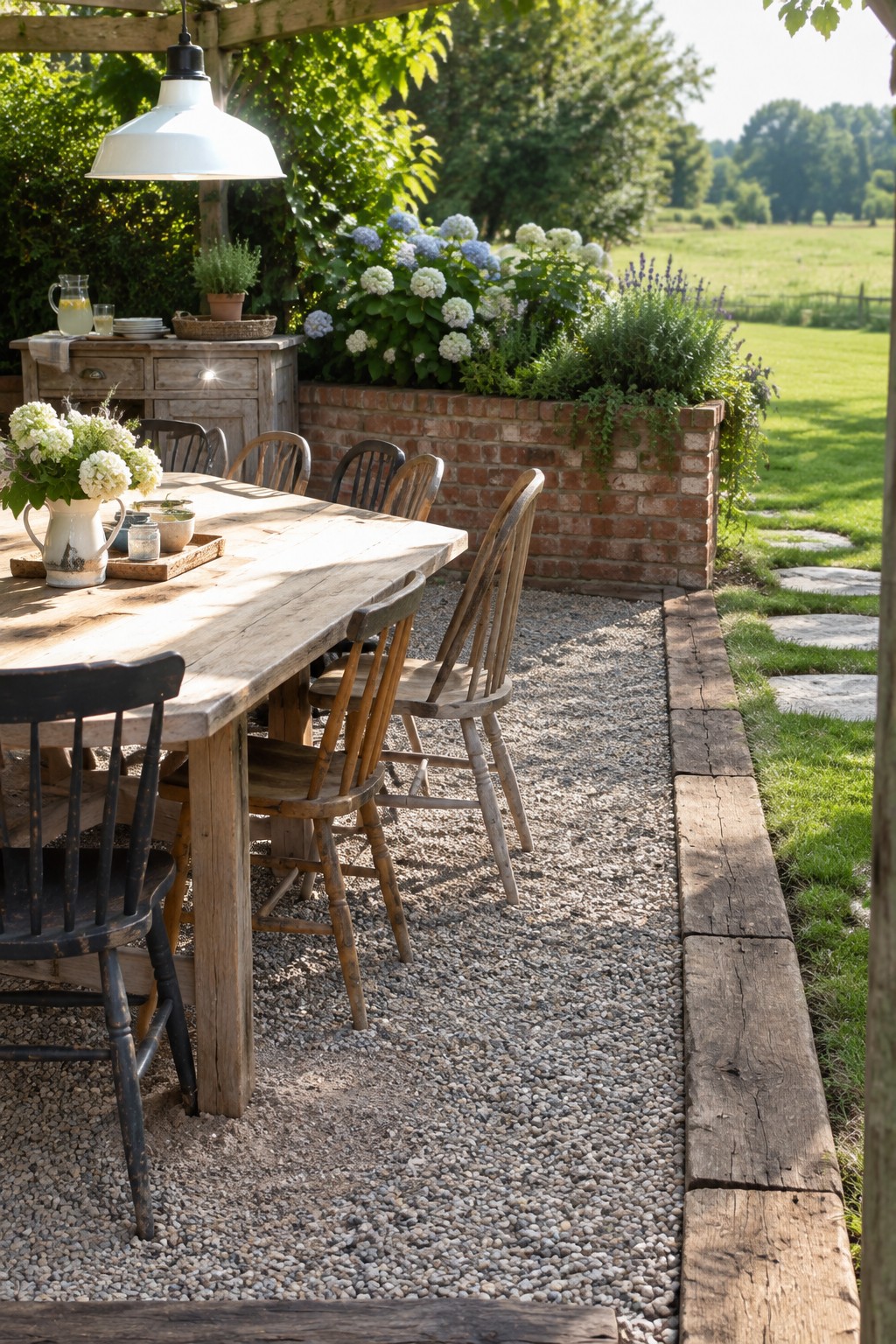
A simple timber border gives a gravel dining area a clear edge and keeps the loose stone from spreading into the lawn. It also makes the patio feel like a defined place for meals, rather than just a patch of gravel beside the garden.
Use sturdy, weather-resistant boards along the patio edge and set them securely so they stay level. This approach works well around a dining table, especially where the patio meets grass or planting beds.
Use a Gravel Patio for a Small Fire Pit Area
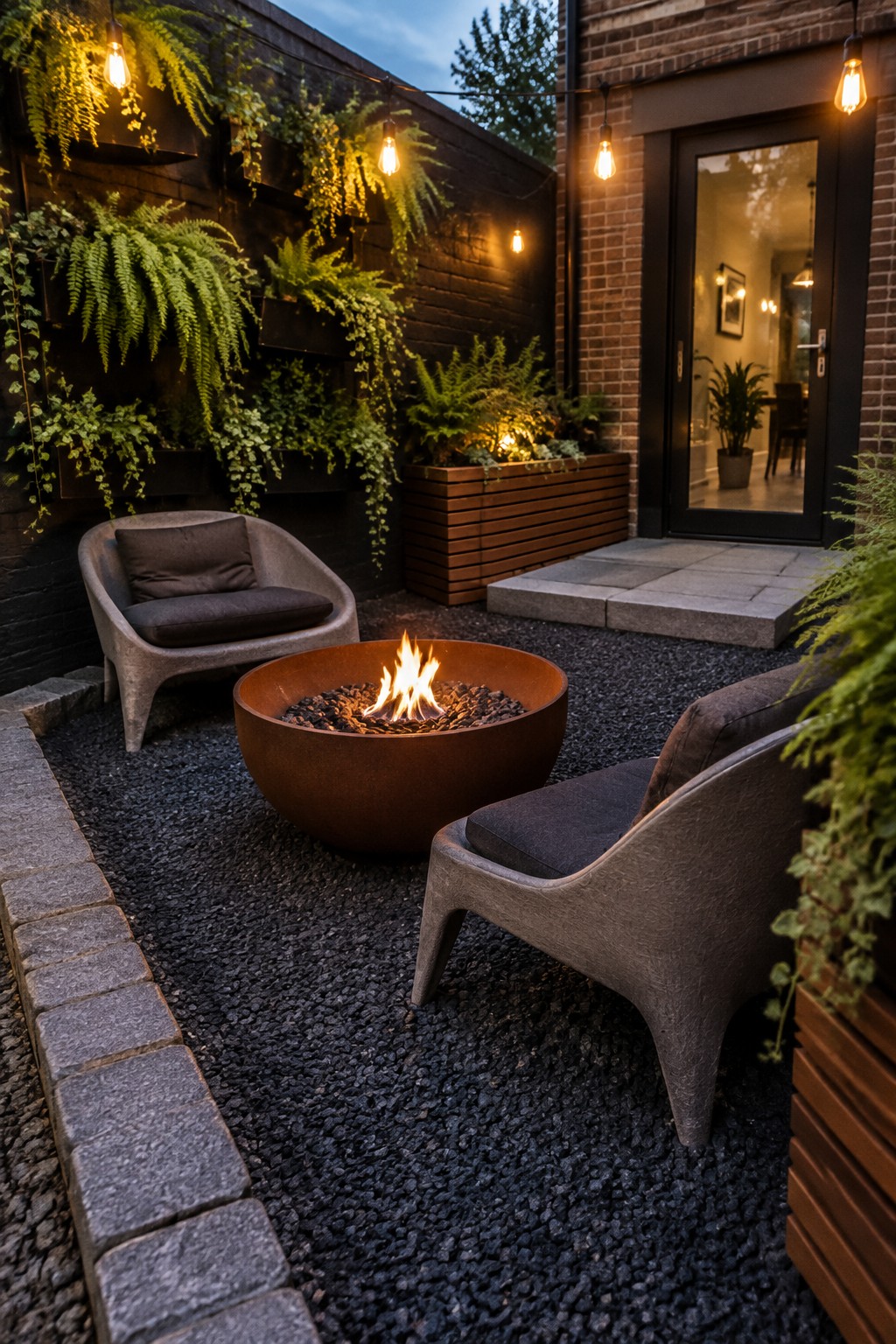
A gravel surface is an easy way to set apart a fire pit seating area without installing a large paved patio. Here, the round fire bowl sits between two chairs, leaving enough room to gather while keeping the layout simple.
For a similar setup, use a sturdy edge to keep the gravel in place and choose chairs that leave a clear path around the fire pit. This works well in a compact courtyard or side yard where a full-size patio might take up too much space.
Use Gravel to Create a Garden Path
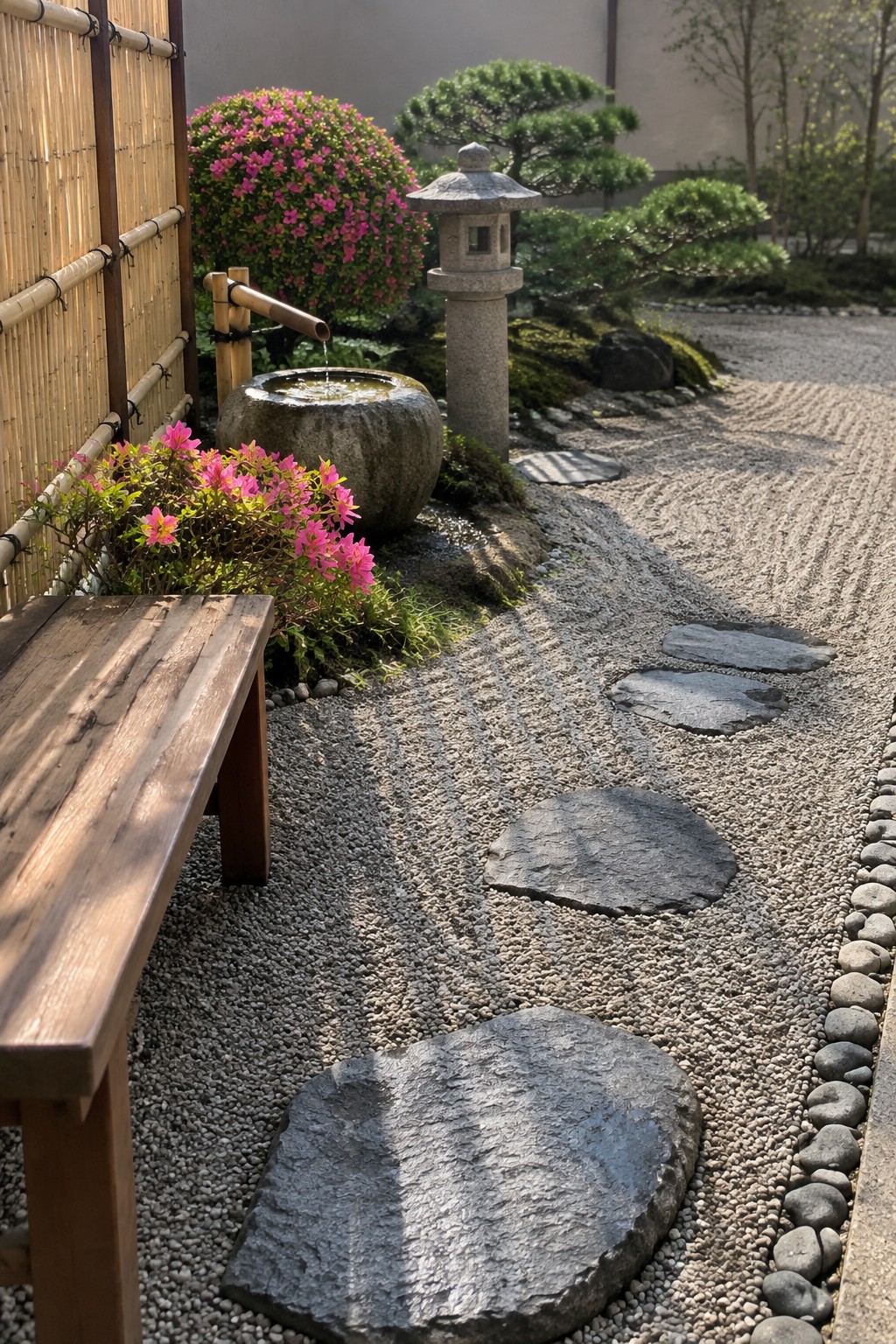
A gravel path feels more settled when stepping stones give it a clear route. The stones make the walk easier to follow, while the gravel fills the space between them without needing a solid paved surface.
For a similar look, set the stones firmly into compacted gravel and keep them level for safe footing. A line of larger river rocks can help hold the edges in place, especially where the path meets a planting bed.
Use Curved Edging to Shape a Gravel Patio
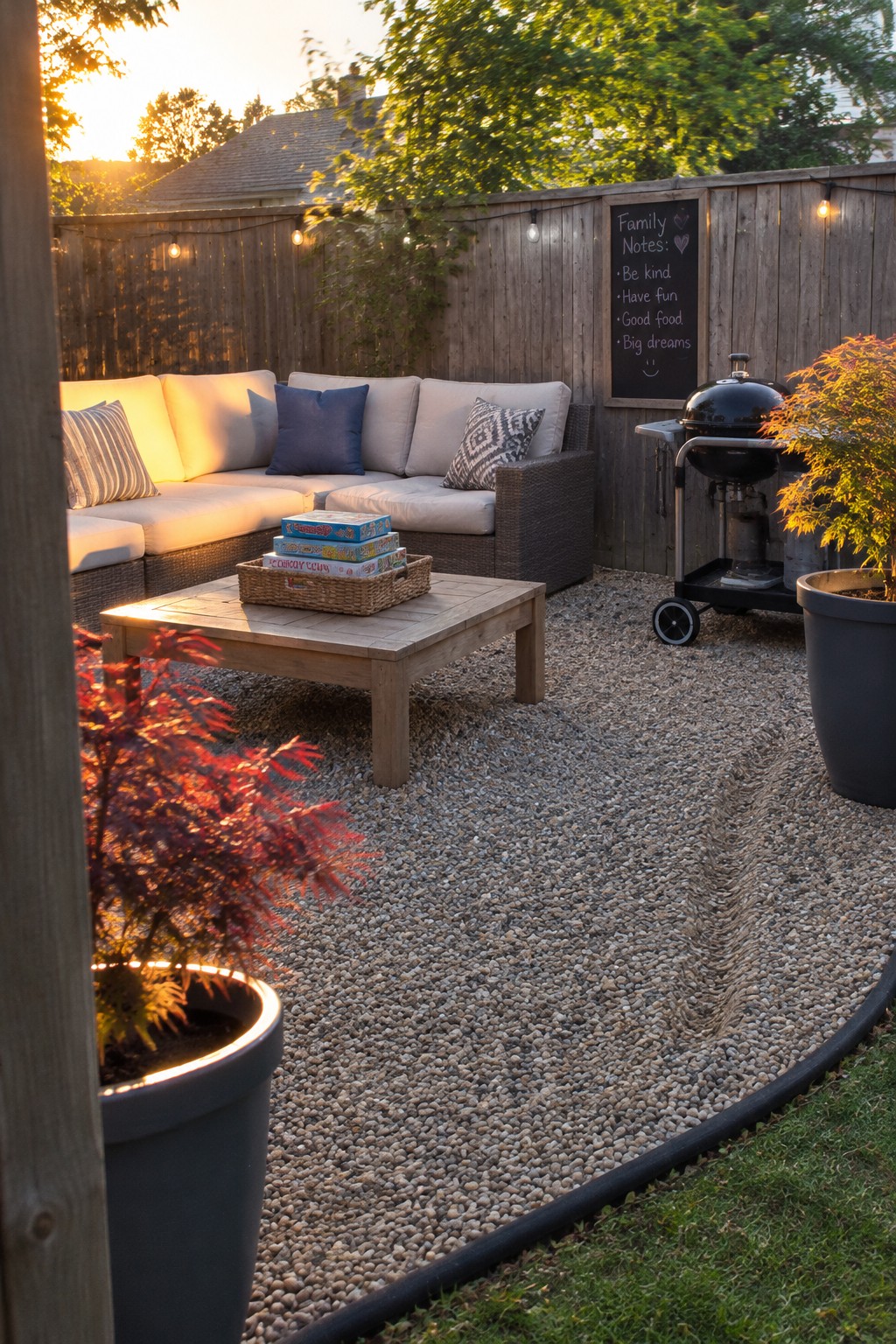
A curved edge gives a gravel patio a clear shape without making it feel formal. Here, dark edging follows the rounded seating area and keeps the stones in place, while leaving an open section of lawn beside it.
This approach works well in small yards where a simple curve can make a patio feel like its own outdoor room. Use flexible edging to form the shape, and set it securely so gravel stays contained over time.
Use a Low Brick Border to Shape a Gravel Patio
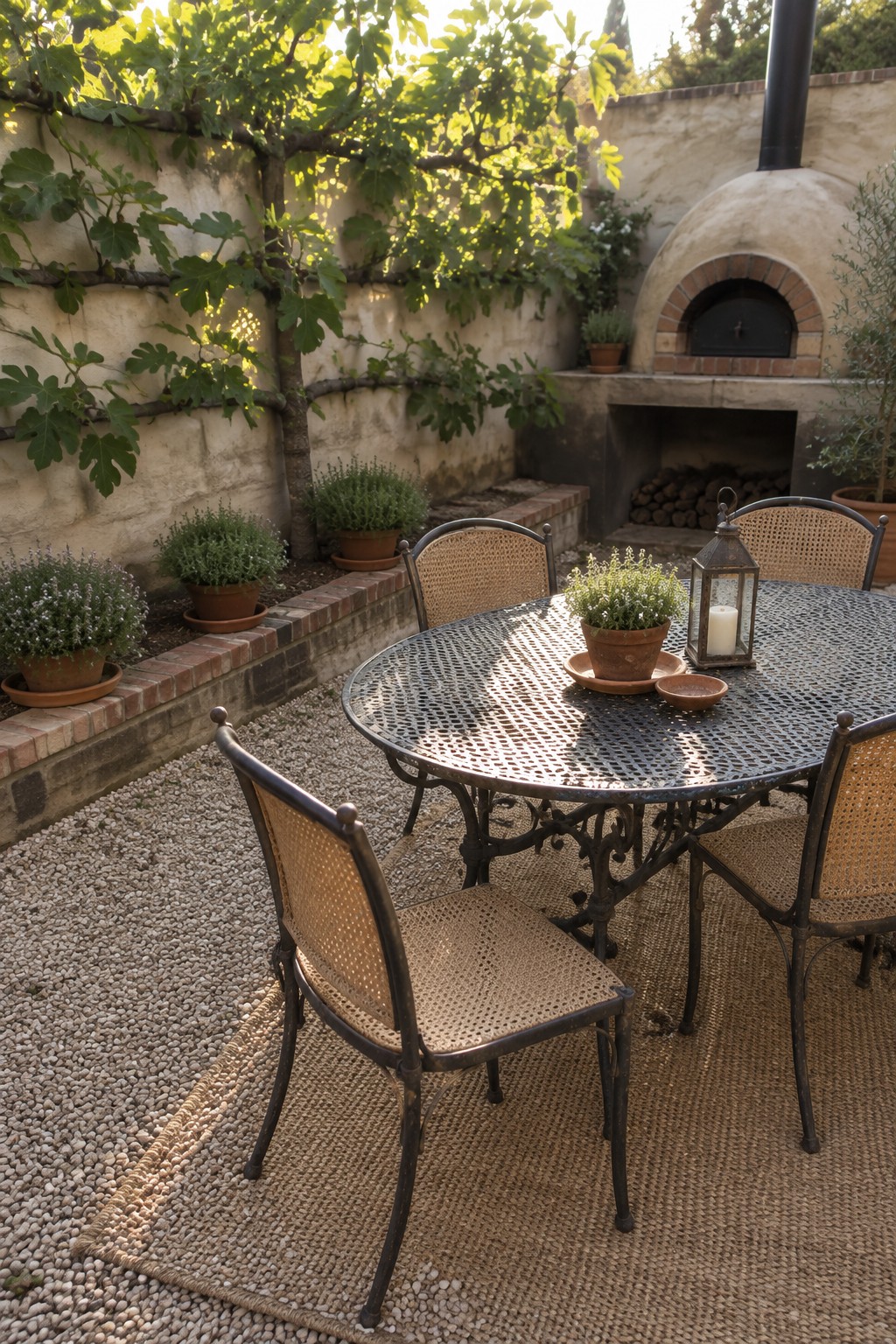
A low brick edge gives a gravel patio a clear boundary without making it feel formal. It also keeps gravel from spilling into nearby planting beds, which is helpful around an outdoor dining space.
Use reclaimed or leftover bricks to outline the patio or separate it from a raised garden bed. Keep the border low and make sure it sits securely, so chairs can still move easily across the gravel.
Use Metal Edging to Keep a Gravel Patio Neat
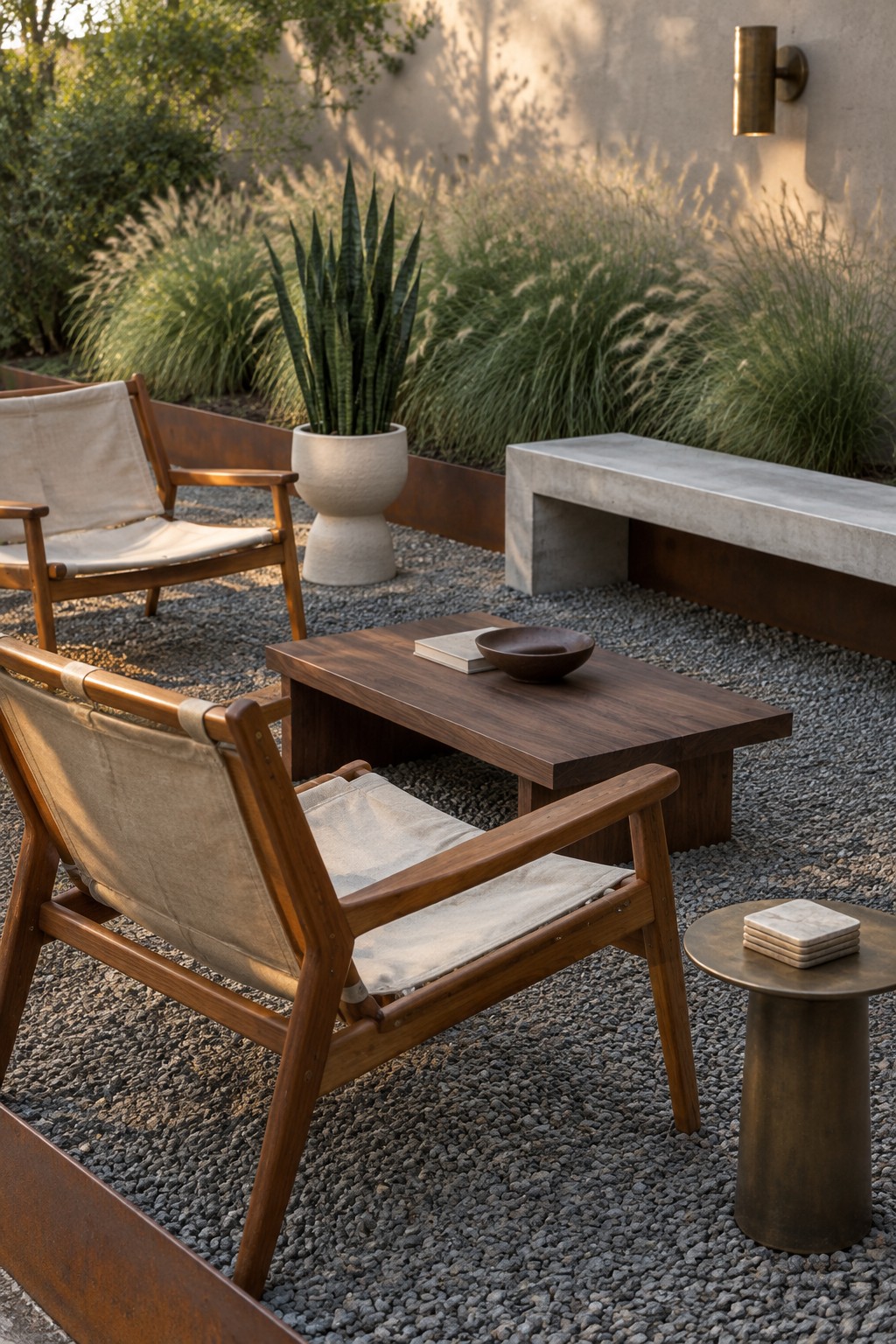
A simple metal border can keep gravel in its place and give a patio a clear edge. Here, the rust-colored edging separates the seating area from the planting bed, while also making the gravel feel like a deliberate surface rather than loose fill.
This approach works well for a small patio where gravel meets a garden bed or lawn. Choose sturdy edging and set it firmly into the ground so it stays straight and contains the stones over time.
Use Gabion Edging Around a Gravel Patio
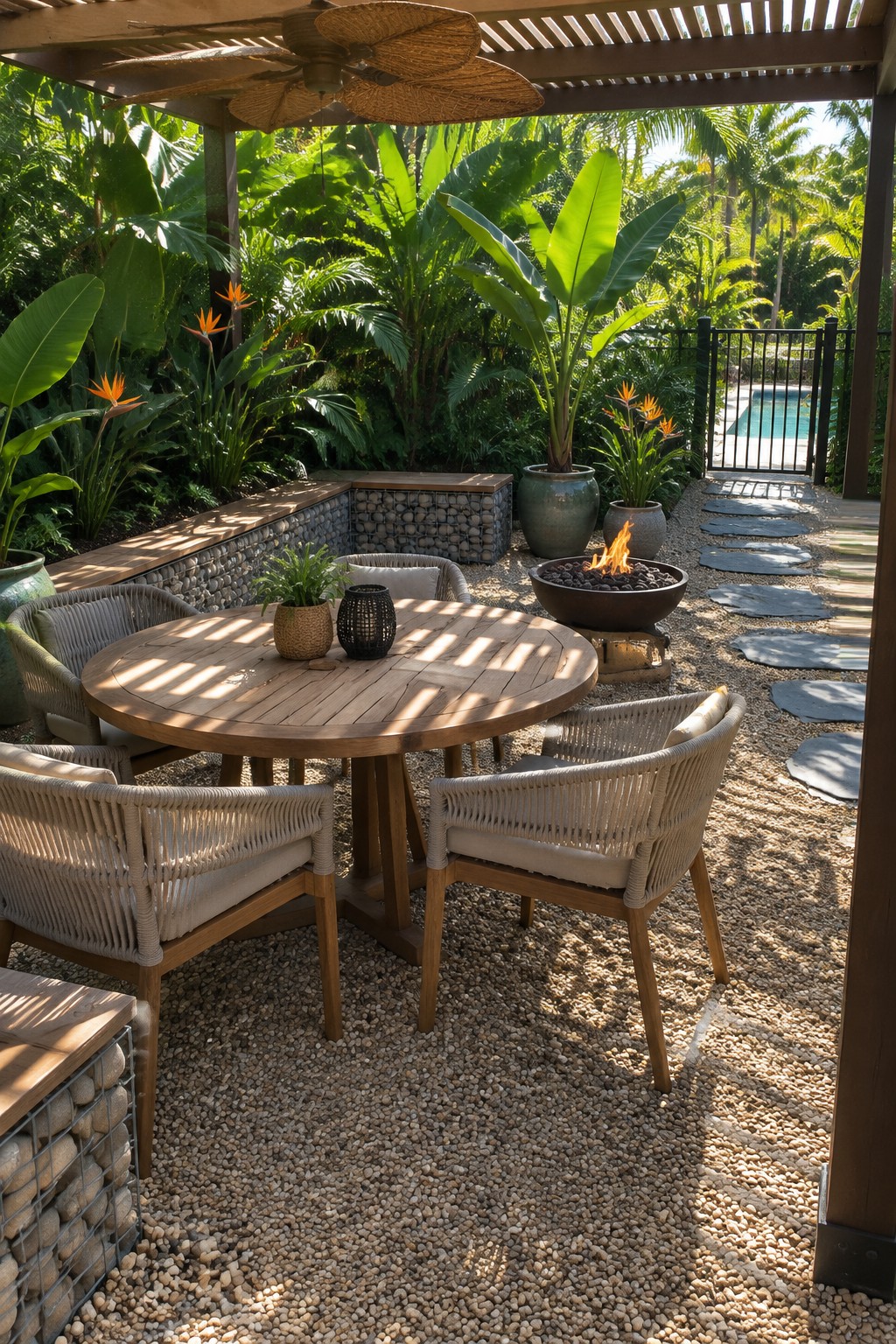
Stone-filled gabion edging gives a gravel patio a sturdy, defined border without needing a solid retaining wall. The low stone bench edges in this space show how the approach can also provide a place to sit or set things down.
Use gabions to mark the edge of a dining area or to separate gravel from garden beds. Choose a mesh size that holds the stones securely, and make sure the base is firm so the edging stays level.
Use Gravel for a Narrow Balcony Dining Spot
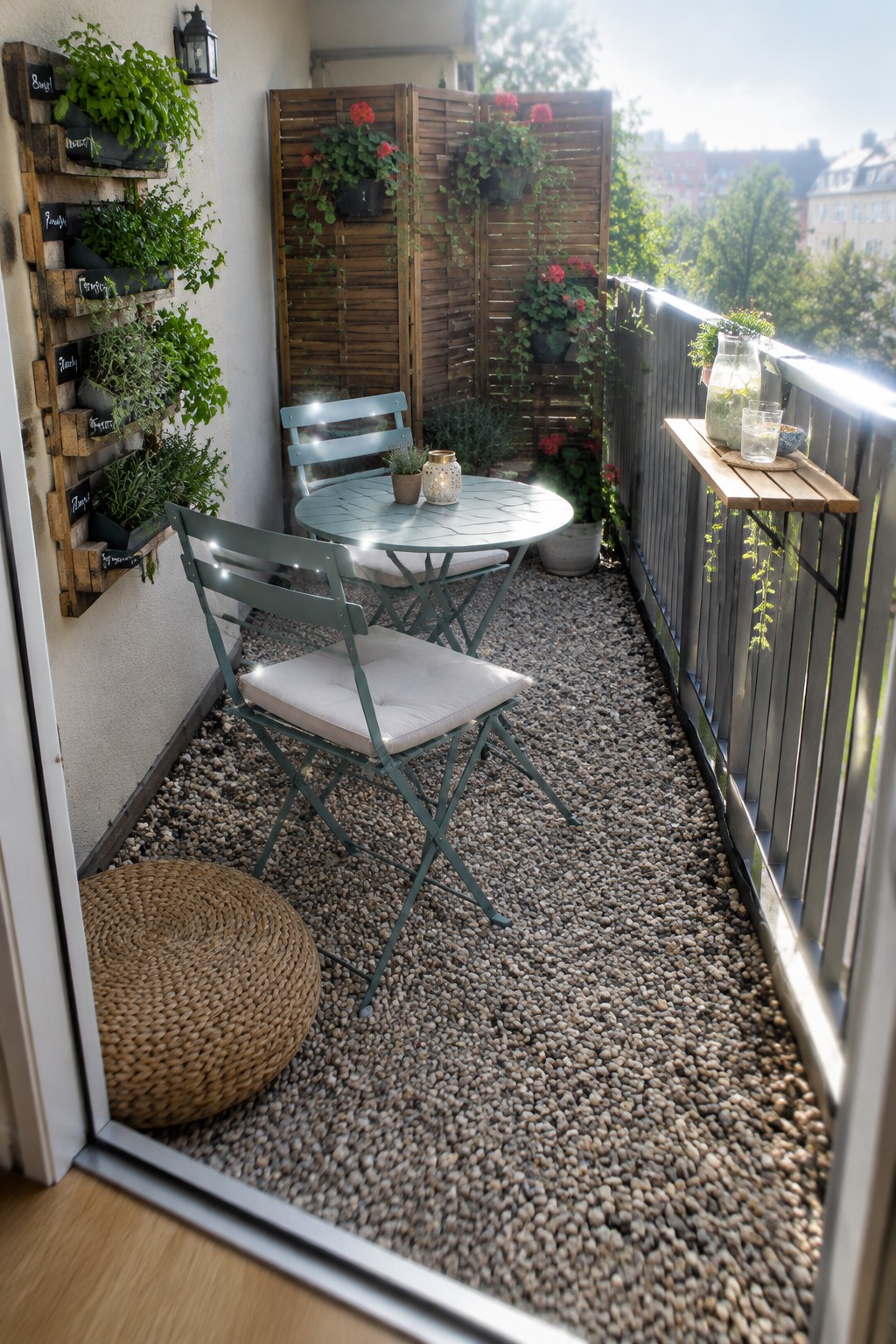
A gravel floor can make a narrow balcony feel like a proper place to sit and eat. It gives the space a clear surface without taking up room with bulky paving, while a small round table leaves room to move around.
This setup suits a balcony or compact terrace where a full dining set would feel cramped. Use a secure edging strip along the sides to keep the gravel in place, and check that the balcony can support the added weight before filling it.
Use Raised Planters to Edge a Gravel Patio
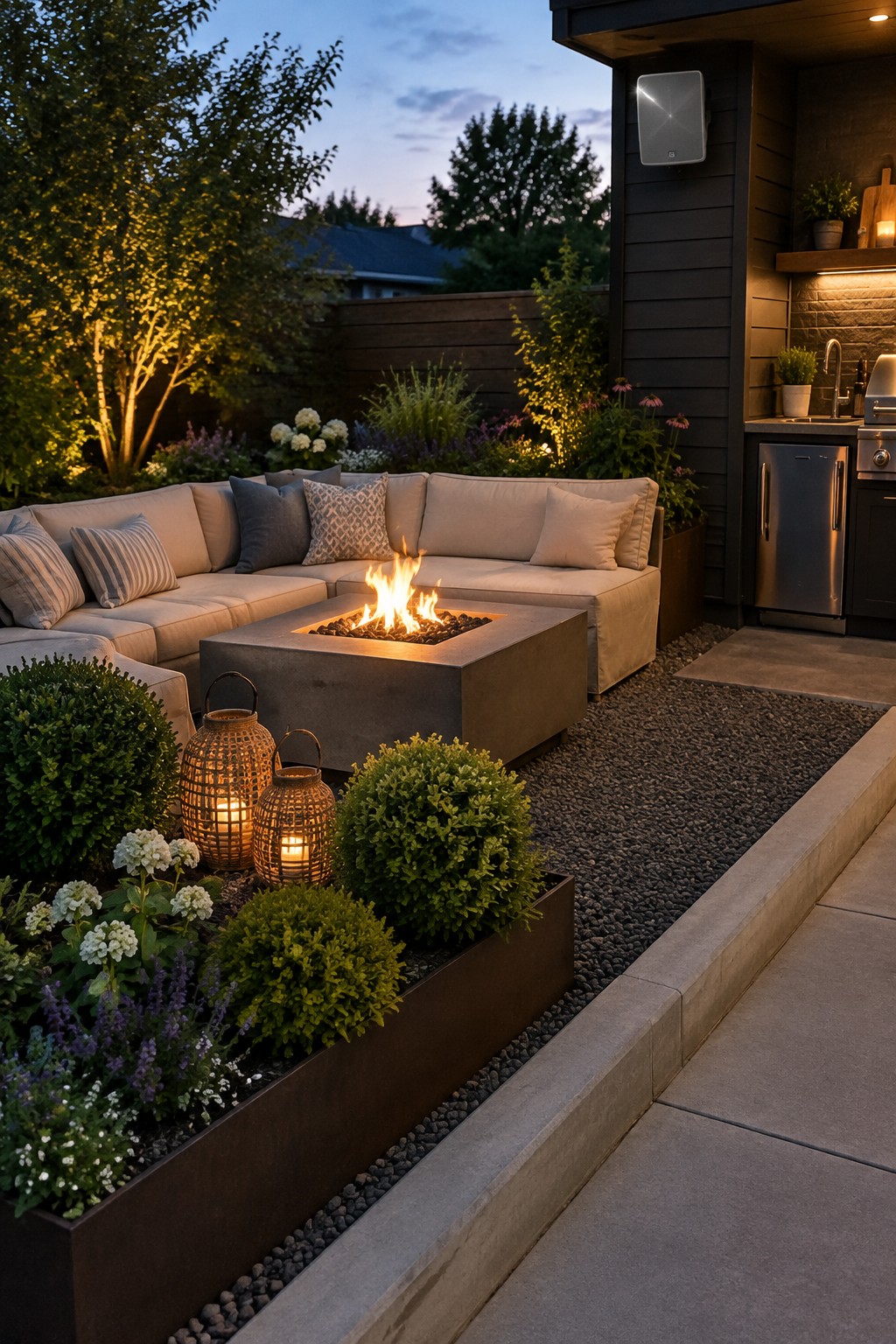
A gravel patio can feel more like a room when a raised planter marks its edge. The border gives the seating area a clear shape, while leaving a simple gravel surface that is practical to install and easy to maintain.
Use a long planter to separate the patio from a path or garden bed, and keep the edging low enough that it does not crowd the seating. Here, a dark metal planter runs beside the gravel and holds compact shrubs and flowers.
Use Brick Edging to Keep a Gravel Patio in Shape
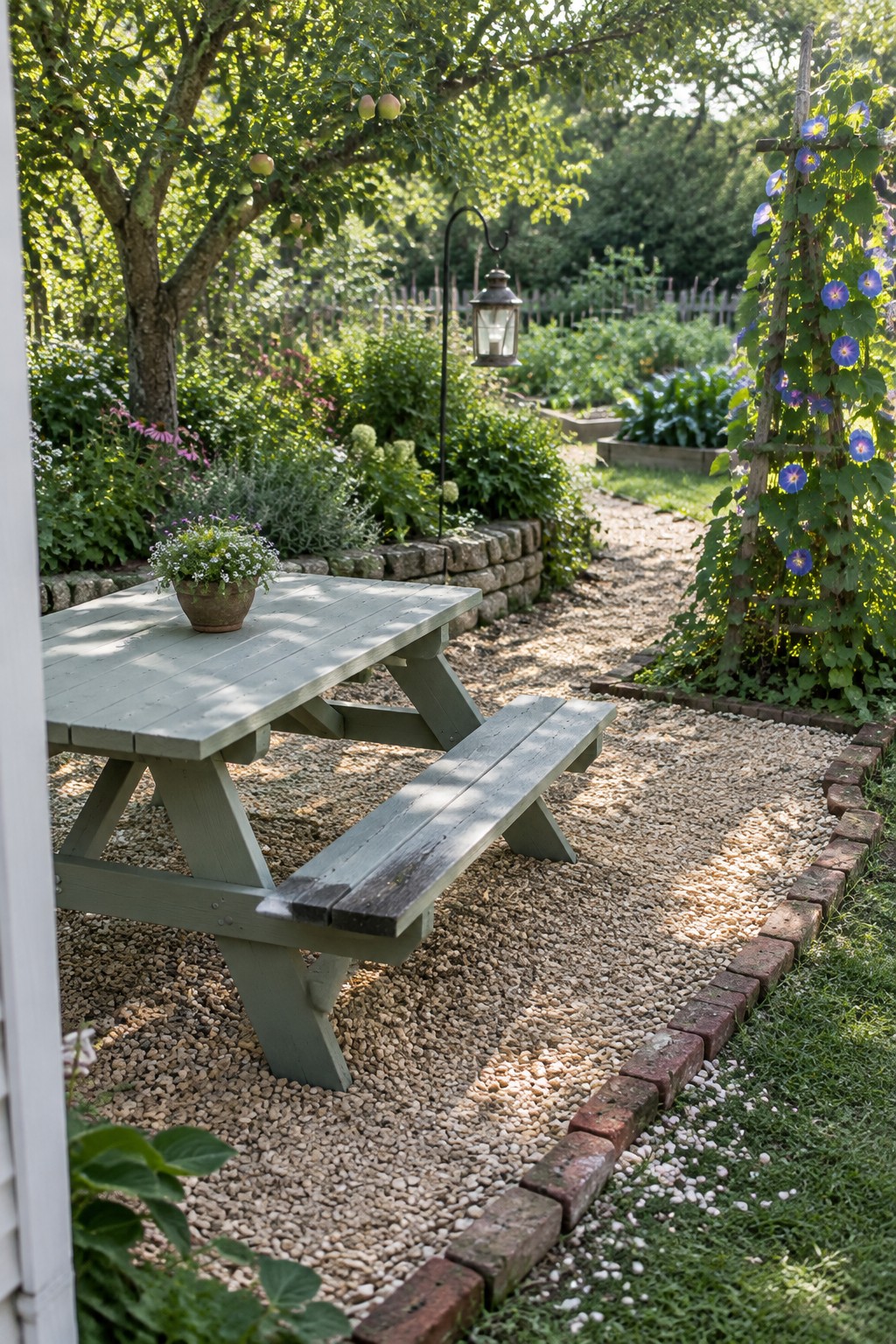
A low brick border gives a gravel patio a clear edge and helps keep stones from spreading into nearby planting beds. It’s a practical choice that also suits an informal garden.
Set the bricks along the patio’s outline, keeping the top level and the edge easy to step over. This works especially well where a gravel seating area meets grass or flower beds. A compacted base helps the bricks stay in place over time.
Frequently Asked Questions
Q: What should I put under gravel so weeds don’t take over?
A: Clear the area, remove existing weeds, and lay permeable landscape fabric before adding gravel. It helps limit weeds while letting water drain, though a few may still sprout in the gravel over time.
Q: How deep should the gravel be for a patio?
A: Aim for about 2 to 3 inches of gravel over a firm, level base. Too little can leave the fabric exposed, while a very deep layer can feel loose underfoot.
Q: What edging keeps gravel from spilling onto the lawn?
A: Metal, stone, brick, or pressure-treated timber can all hold gravel in place. Set the edging slightly above the gravel surface so it contains the stones without becoming a trip hazard.
Q: Can I put patio furniture on gravel?
A: Yes, but chairs and table legs can sink or wobble on loose stones. Choose compacted, smaller gravel, or place pavers under the furniture feet for a steadier spot.
