


A patio floor has to do more than look tidy; it needs to feel comfortable underfoot and suit the way you actually use the space.
I’ve found that the surface is often the first thing people notice, especially when it sets the tone for the furniture, plants, and paths around it.
Gravel, pavers, and other lower-cost materials can all work well, but each brings different upkeep and drainage needs to consider.
I’d start by thinking about how much time you want to spend maintaining the patio and whether the ground beneath it is level and well drained.
Some of these approaches are easy to adapt to a small seating area, while others make more sense across a larger yard.
Use Gravel As A Simple Patio Floor

A gravel patio is an easy way to make an outdoor seating area without pouring concrete. It drains well, costs less than many hard surfaces, and suits a relaxed spot for sitting around a fire pit.
Lay landscape fabric beneath the gravel to help keep weeds down, and use edging to hold the stones in place. A few stepping stones make the route across the area more comfortable, especially near the seating.
Use Gravel for a Simple Patio Floor

Gravel is an inexpensive way to make a small patio feel like a defined place to sit and eat. It drains well, is easy to work with, and suits a casual setup like this one, where the table stands on a compact gravel surface.
For a neat result, edge the area so the stones stay in place, and spread them over a firm, level base. Gravel can shift under chair legs, so choose chairs with wider feet or add small pavers where the legs sit.
Use Gravel Between Large Patio Pavers
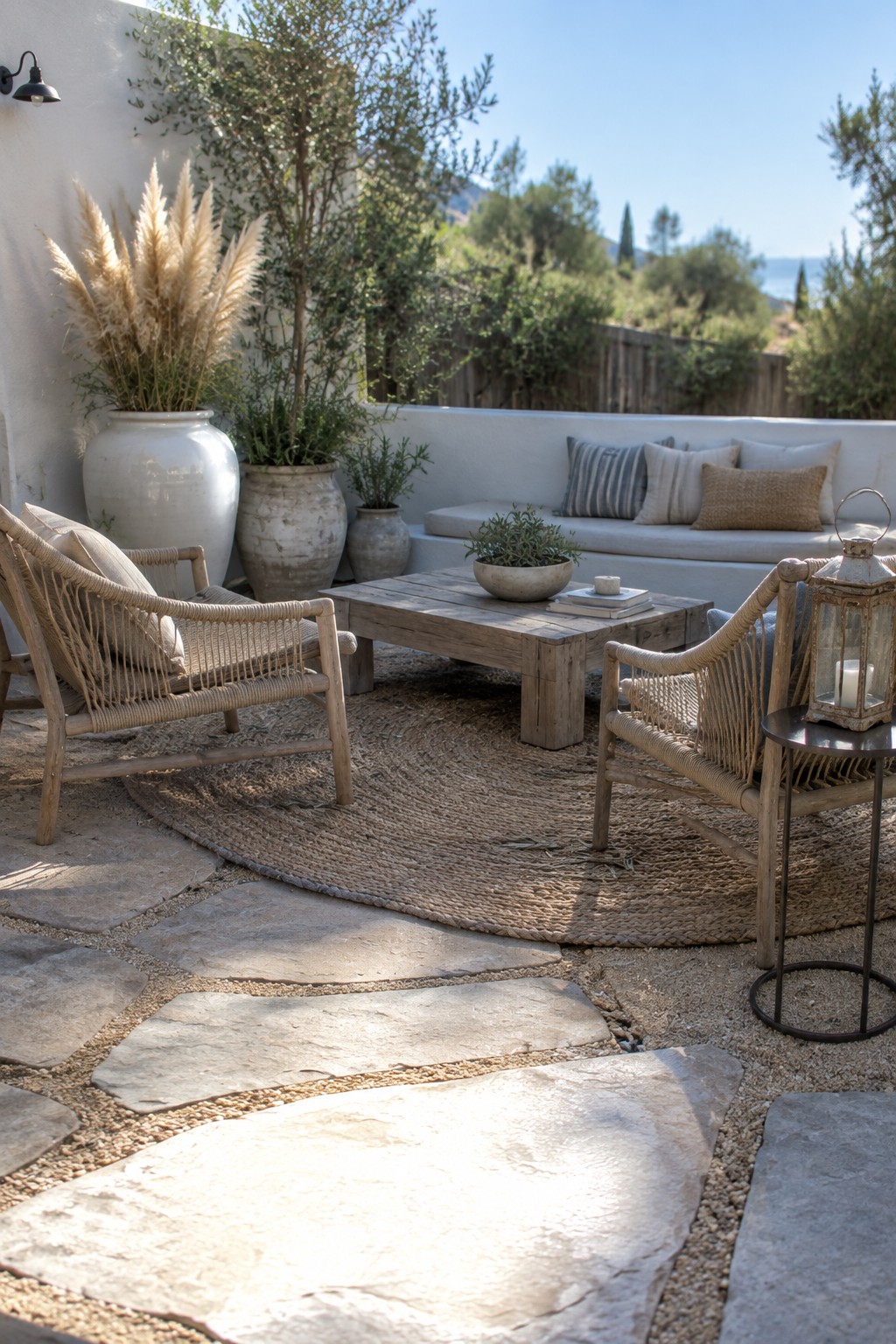
Large stone pavers set into gravel make a practical patio floor with a relaxed, natural look. The gravel fills the spaces between stones, so the surface feels less formal than a solid slab while still giving chairs and a coffee table a defined place to sit.
This approach works well for a small seating area or a path leading to one. Choose pavers with fairly even tops, and keep the gaps narrow enough that chairs remain steady. A firm, well-prepared base helps prevent the stones from shifting over time.
Use Brick Pavers to Make a Gravel Patio Path

A simple path of brick pavers can make a gravel patio easier to walk across without covering the whole area in costly paving. The bricks give the route a clear shape, while gravel can fill the spaces around them.
Set the pavers on a firm, level base so they stay steady underfoot. This works well for a garden patio or outdoor dining area, but leave enough room between stones for comfortable steps.
Use Large Pavers With Grass Between Them
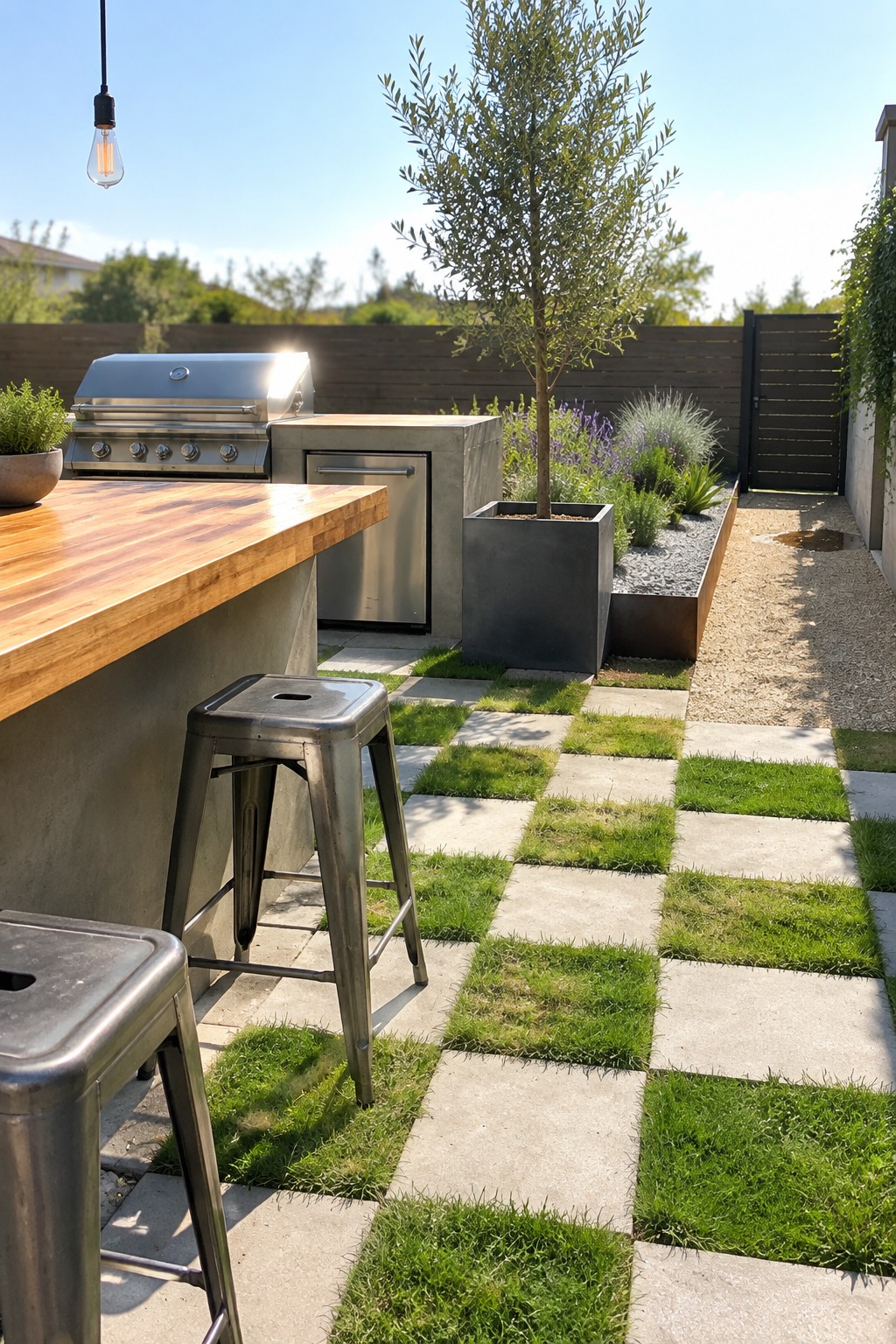
A simple patio path can be made with large concrete pavers spaced apart, letting grass fill the gaps. It uses less paving than a fully covered path and gives a small yard a relaxed, informal feel.
Set the stones on a firm, level base so they stay steady underfoot. This works well beside a gravel path or through a narrow garden, but leave enough room between pavers for comfortable steps and easy mowing.
Use Brick Pavers for a Garden Patio
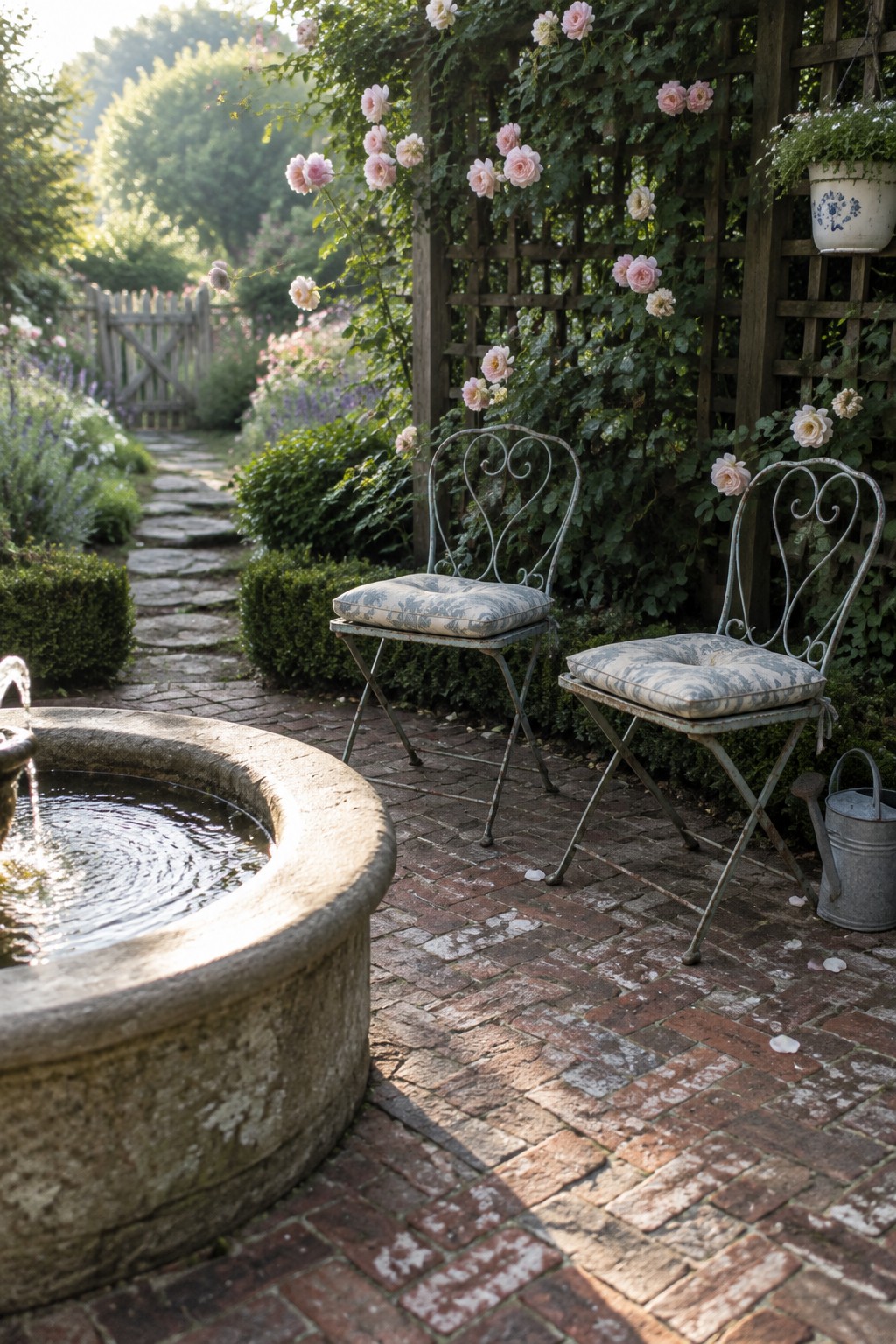
A brick patio floor is a simple way to make a small seating area feel settled without pouring concrete. The varied color of the bricks also suits a garden setting, where a perfectly uniform surface might look out of place.
For a similar patio, reclaimed bricks can help keep material costs down. Lay them in a straightforward pattern, and check that the base is firm and level so the surface stays comfortable under chairs. This works especially well in a tucked-away spot for a pair of seats.
Make a Gravel Patio Feel Like an Outdoor Room

A gravel patio can feel more settled when the seating has a clear center. Here, a round fire pit gives the chairs a natural place to gather, while the gravel keeps the floor simple and practical.
Use a metal fire bowl or a permanent fire pit, and leave enough room around it for people to sit comfortably. A defined border can help keep the gravel in place, especially in a seating area that gets regular use.
Make a Gravel Patio Work for Outdoor Dining

A gravel floor is a practical choice for an outdoor dining area because it is usually less costly than a solid patio surface and lets rain drain through. It also suits a relaxed layout with a long table and chairs.
Use compacted gravel so chairs sit more steadily, and choose pieces that are comfortable underfoot. A gravel patio works well in a courtyard or beside a house, though it may need occasional raking to stay level.
Use Pebble Concrete for a Patio Floor
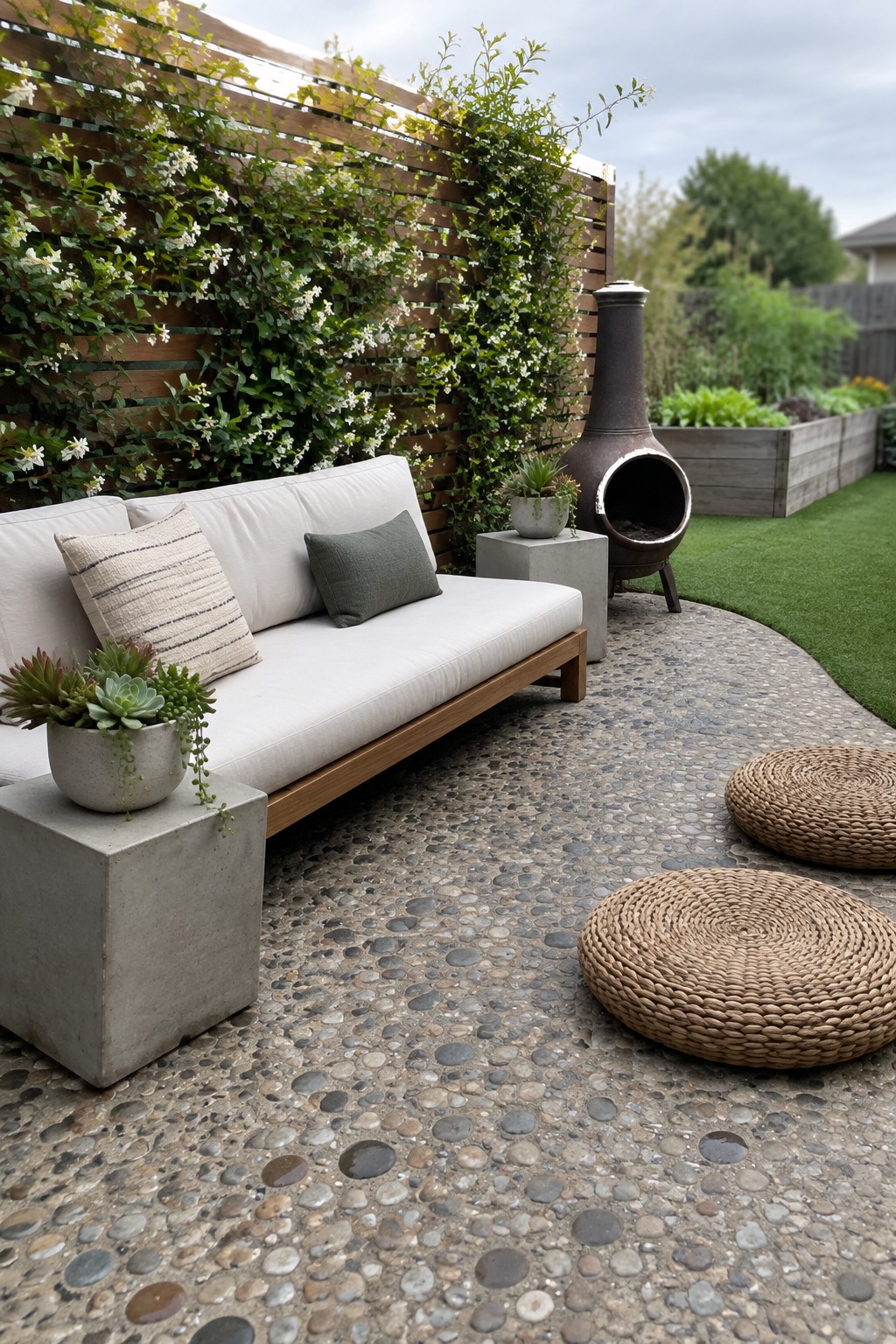
A pebble-aggregate concrete floor is a practical alternative to loose gravel when you want a firm, easy-to-use patio surface. The embedded stones give it a more natural look than plain concrete, while the solid finish keeps chairs and planters steady.
This surface works well in a small seating area or along a garden path. Choose a texture that feels comfortable underfoot, and make sure the finish has enough grip when wet.
Create a Gravel Patio for Outdoor Dining

A gravel floor is a practical choice for an outdoor dining area. It is often less expensive than a solid patio, and it lets rain drain through instead of pooling around the table.
Use compacted gravel beneath a sturdy table and chairs, as shown here with a simple metal dining set. A defined edge can help keep the stones in place, and a firm, level base makes chairs easier to move.
Use Large Pavers With Gravel Between Them
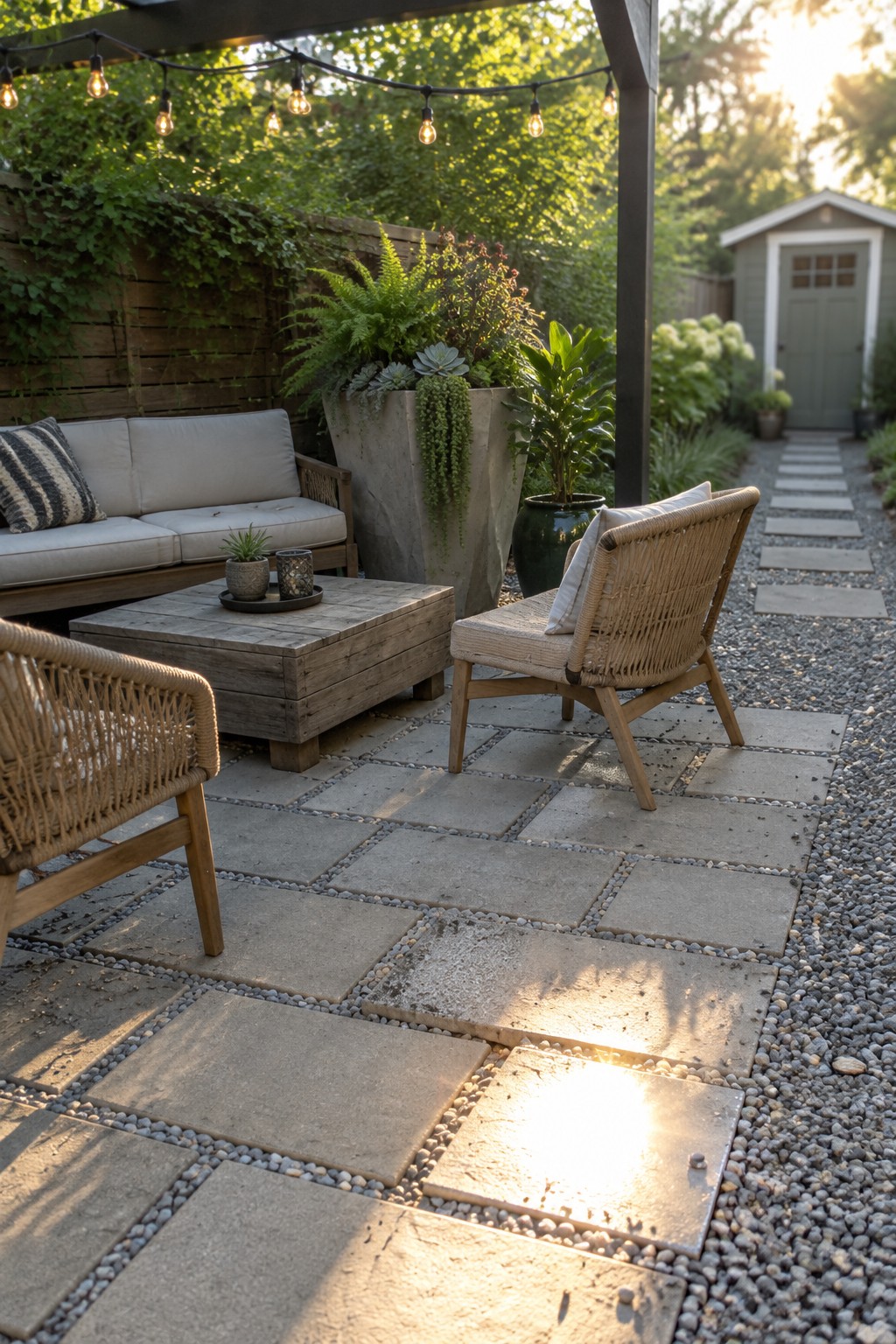
Large concrete pavers make a gravel patio easier to walk across and give the seating area a clear layout. Leaving gravel between the slabs is a practical way to cover more ground without paying for a fully paved surface.
Use this approach for a small patio or a path leading to a seating spot. Set the pavers on a level, well-prepared base, and keep the gaps narrow enough that chairs sit steadily.
Use Stepping Stones Through a Gravel Patio

Large, widely spaced stepping stones make a gravel patio easier to walk across without covering the whole area in paving. They also give the path a clear shape while keeping gravel as the main floor material.
Set the stones firmly and leave comfortable gaps between them so each step feels natural. This approach works well in small gardens and narrow side yards, where a full paved path can take up too much space.
Use Concrete Pavers Around a Pool Patio
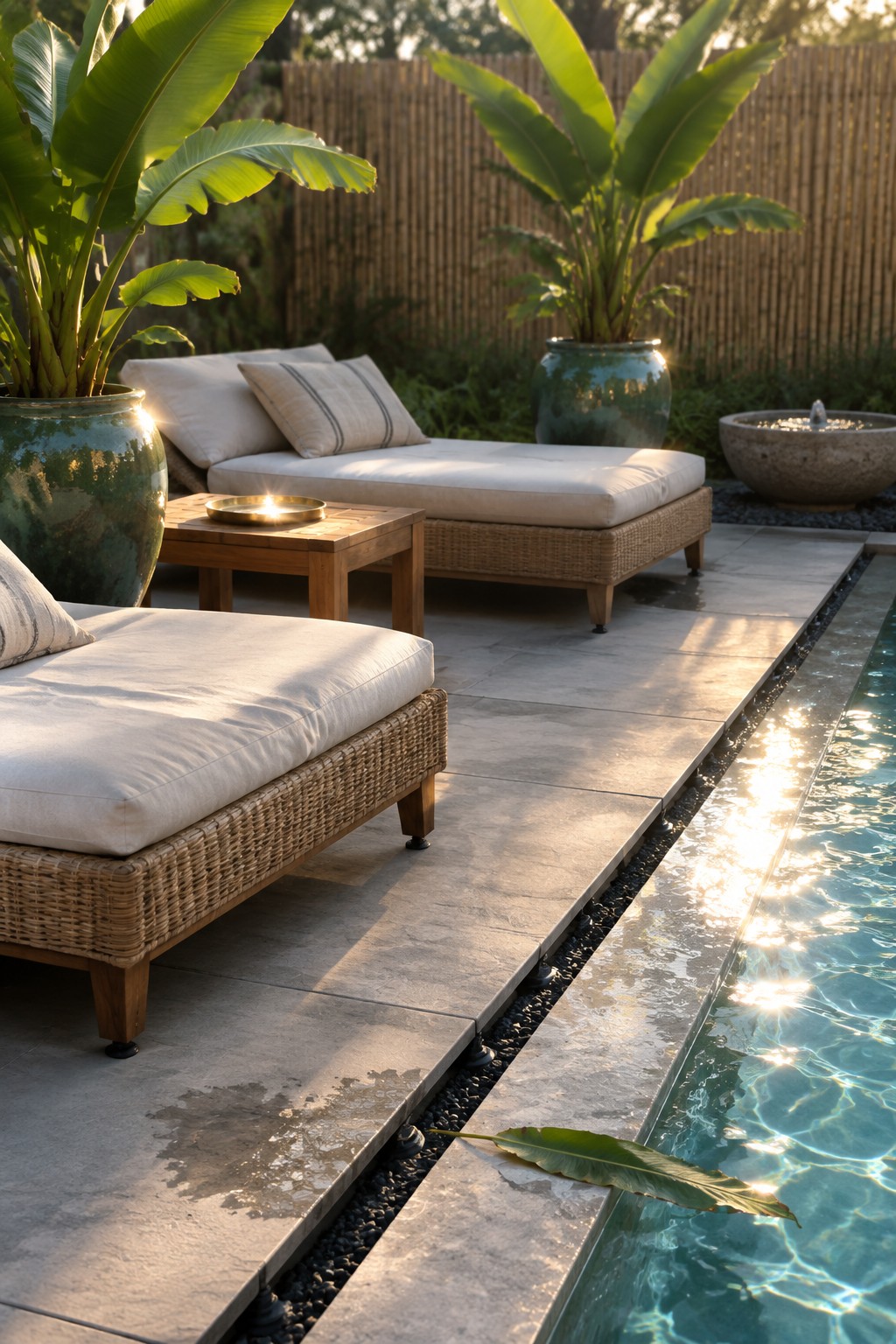
Large concrete slabs make a practical patio floor beside a pool. They create a firm surface for loungers, while their broad shape gives the space a clean, simple layout.
For a similar look, set pavers on a stable, well-drained base and leave narrow joints between them. Choose a textured, slip-resistant finish, since smooth concrete can be slick when wet.
Use Gravel for a Casual Outdoor Dining Area

A gravel floor is an affordable way to give an outdoor dining spot its own place in the yard. It drains well and has a relaxed feel, so it suits a beach cottage or any patio that does not need a formal finish.
Use compacted gravel to help keep chairs steady, and choose pieces that are comfortable to walk on barefoot. A simple table and chairs are enough to define the area, especially when the gravel meets a clear garden path.
Use Irregular Stone Slabs for a Patio Floor
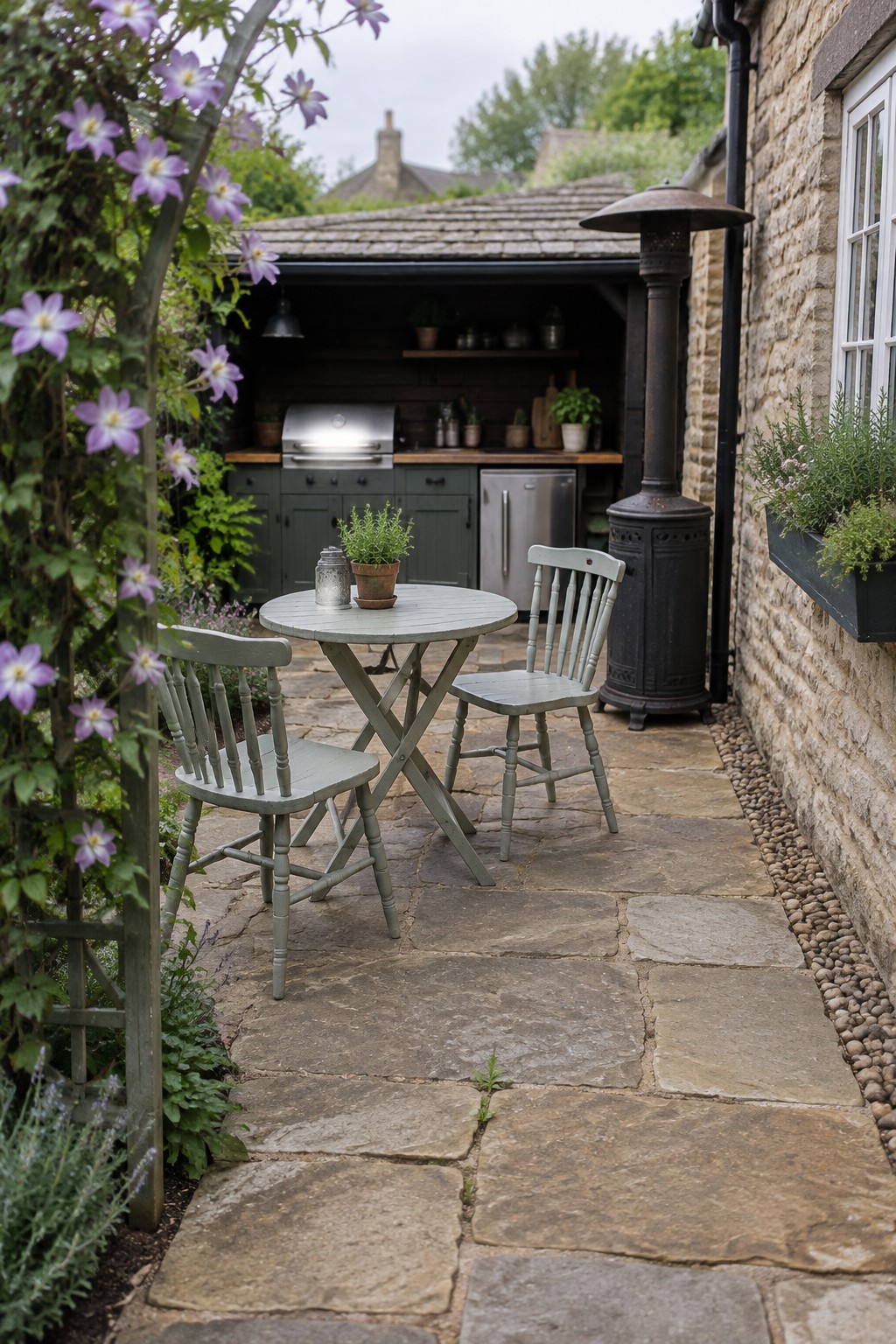
Large, irregular stone slabs make a practical patio floor that feels less formal than a grid of matching pavers. Their uneven shapes give the surface character, while the broad stones make a comfortable place for a small dining set.
This approach works well in a narrow courtyard or beside a stone house. Set the slabs on a stable, well-prepared base and keep the gaps manageable so chairs sit evenly and the path stays easy to walk.
Use Large Concrete Slabs for a Patio Floor
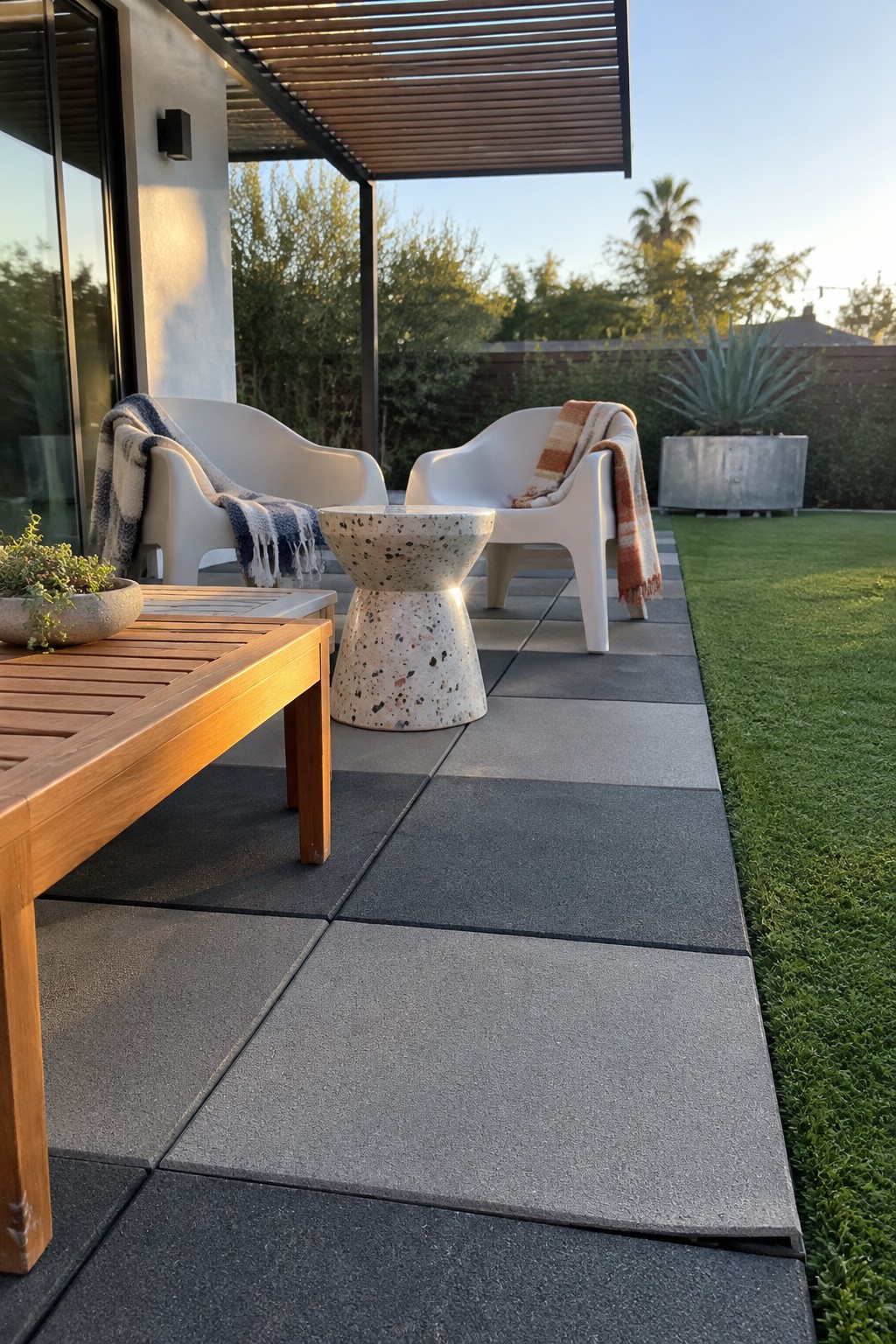
Large concrete slabs make a patio feel neat and usable without the cost or upkeep of a poured concrete surface. Their broad, simple layout works especially well beside an outdoor seating area.
Lay the slabs on a well-prepared, level base, and keep the joints even so the surface stays stable. This approach suits modern homes and can be more affordable if you use standard-size pavers rather than custom pieces.
Make a Brick Line Through a Gravel Patio
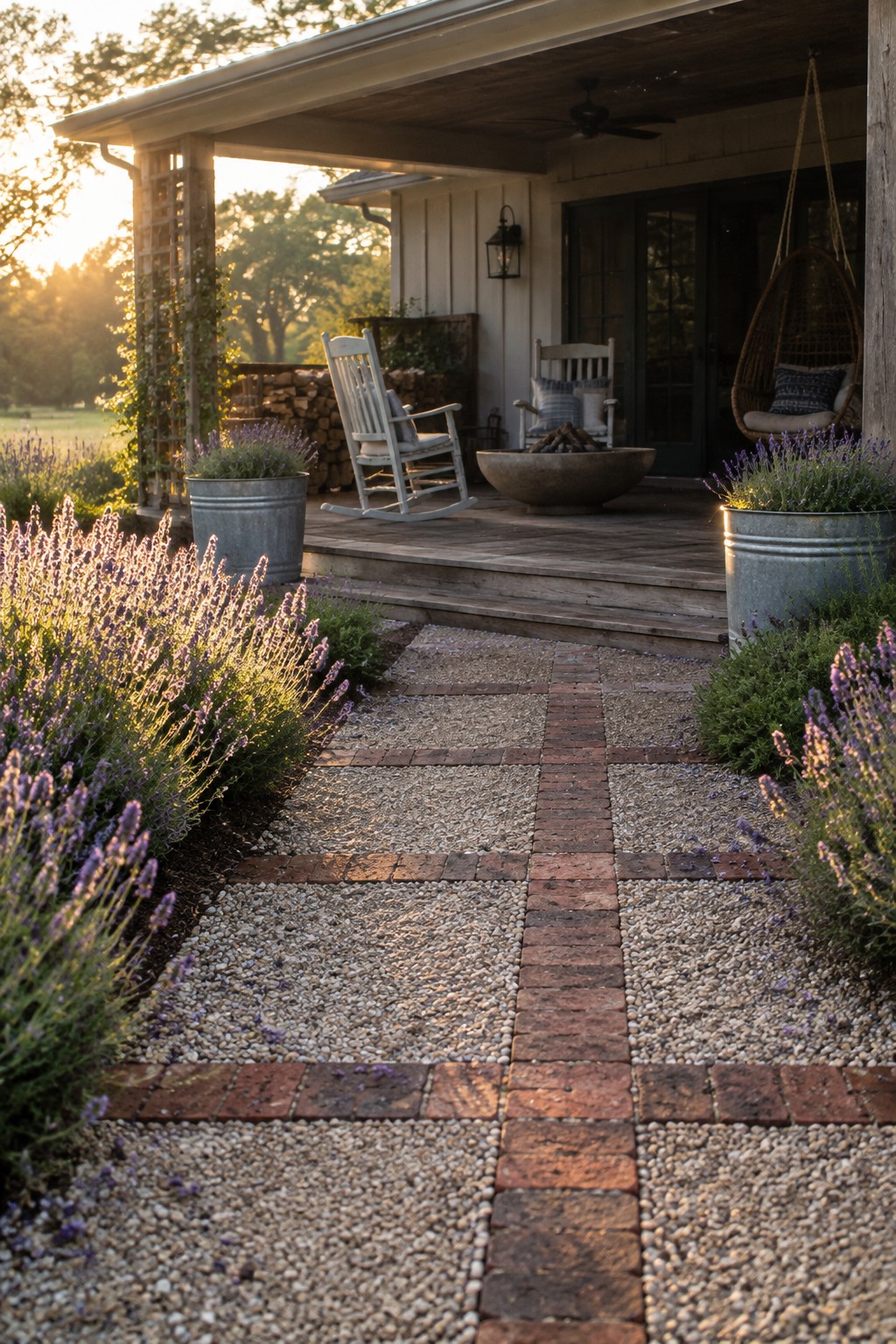
A narrow line of brick can give a gravel patio a clearer layout without covering the whole area in expensive paving. Here, the bricks mark a direct route toward the porch, while the surrounding gravel keeps the surface simple.
Use reclaimed bricks or affordable pavers to create a straight path through a gravel seating area. Set them level with the gravel so they’re easy to walk on, and secure the edges to help keep the stones from spreading.
Use Wood Deck Tiles for a Balcony Patio
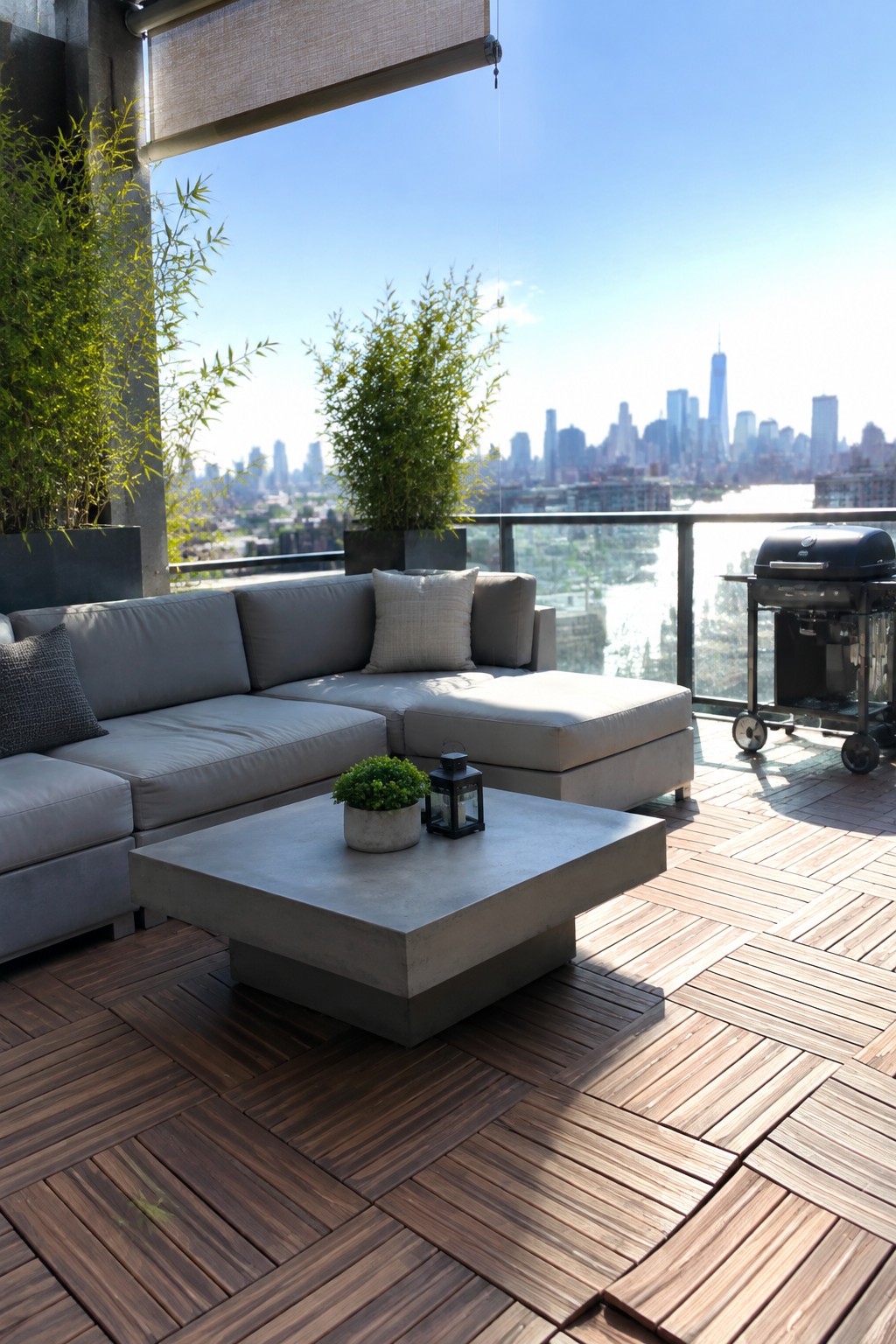
Wood deck tiles create a finished patio floor without the cost or commitment of a built-in deck. Their interlocking layout gives a balcony or terrace a more comfortable surface for seating, while still being practical to replace or rearrange.
Choose tiles rated for outdoor use, and check that water can drain beneath them. They work especially well over a flat concrete balcony; leave enough room around edges and drains so the floor does not trap moisture.
Use Gravel For A Cozy Outdoor Dining Area

A gravel patio is an easy way to make room for outdoor dining without pouring a concrete slab. It suits a relaxed, slightly informal setup, and the small stones give the table area a clear place in the yard.
For a steadier surface, spread and compact the gravel before setting out the furniture. This kind of patio works especially well in a smaller garden, though chairs may shift on loose stones, so choose sturdy legs or place flat pavers beneath them.
Frequently Asked Questions
Q: What’s the cheapest patio floor option if my yard is already covered in gravel?
A: Keep the gravel and tidy it up instead of starting over. Rake it level, add more where it’s thin, and use sturdy edging to keep it in place. A few pavers under chairs can make the seating area more comfortable without covering the whole yard.
Q: Can I put pavers or concrete alternatives straight on dirt?
A: It’s better to prepare the ground first. Remove soft soil, level the area, and add a compacted gravel base so the surface is less likely to sink or shift. Skipping that step often means redoing the work later.
Q: Which low-cost patio floor is easiest to maintain?
A: Gravel is simple to repair since you can rake it smooth or top it up as needed. It can scatter, though, so edging helps keep it out of garden beds and walkways.
Q: How do I make a cheap patio floor feel comfortable underfoot?
A: Choose a surface that feels steady where you walk and sit, then add an outdoor rug or a few flat stepping stones for bare feet. Check for loose gravel, sharp edges, and wobbly pavers before using the space.
