

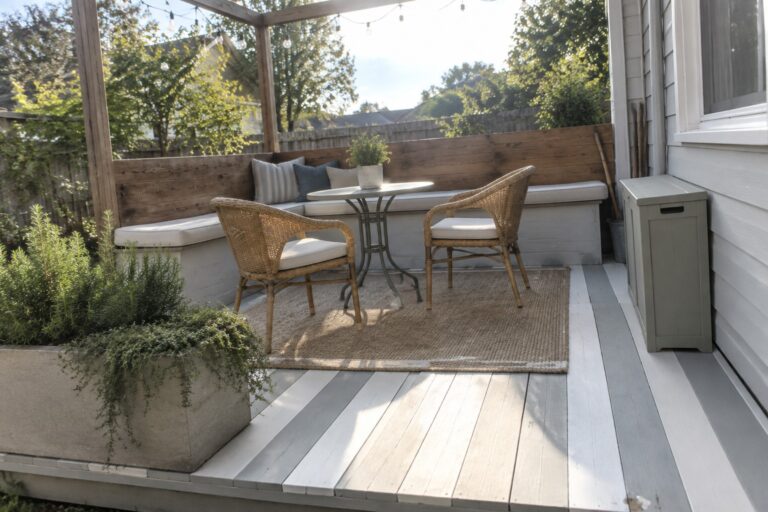
A back patio gets used more when the surface feels comfortable underfoot and leaves enough room for chairs, planters, and a clear path through the space.
I find that simple deck patterns often work best in real yards because they add shape without making a small patio feel busy.
Even on a tight budget, choosing the right boards, spacing, and layout can give an old concrete pad or bare patch of ground a more finished look.
Some designs are easy to adapt around an awkward edge or existing steps, which can make a bigger difference than adding more decor.
I’d save a few options and compare them with the size and upkeep needs of my own patio before choosing a surface.
Use Simple Painted Deck Boards
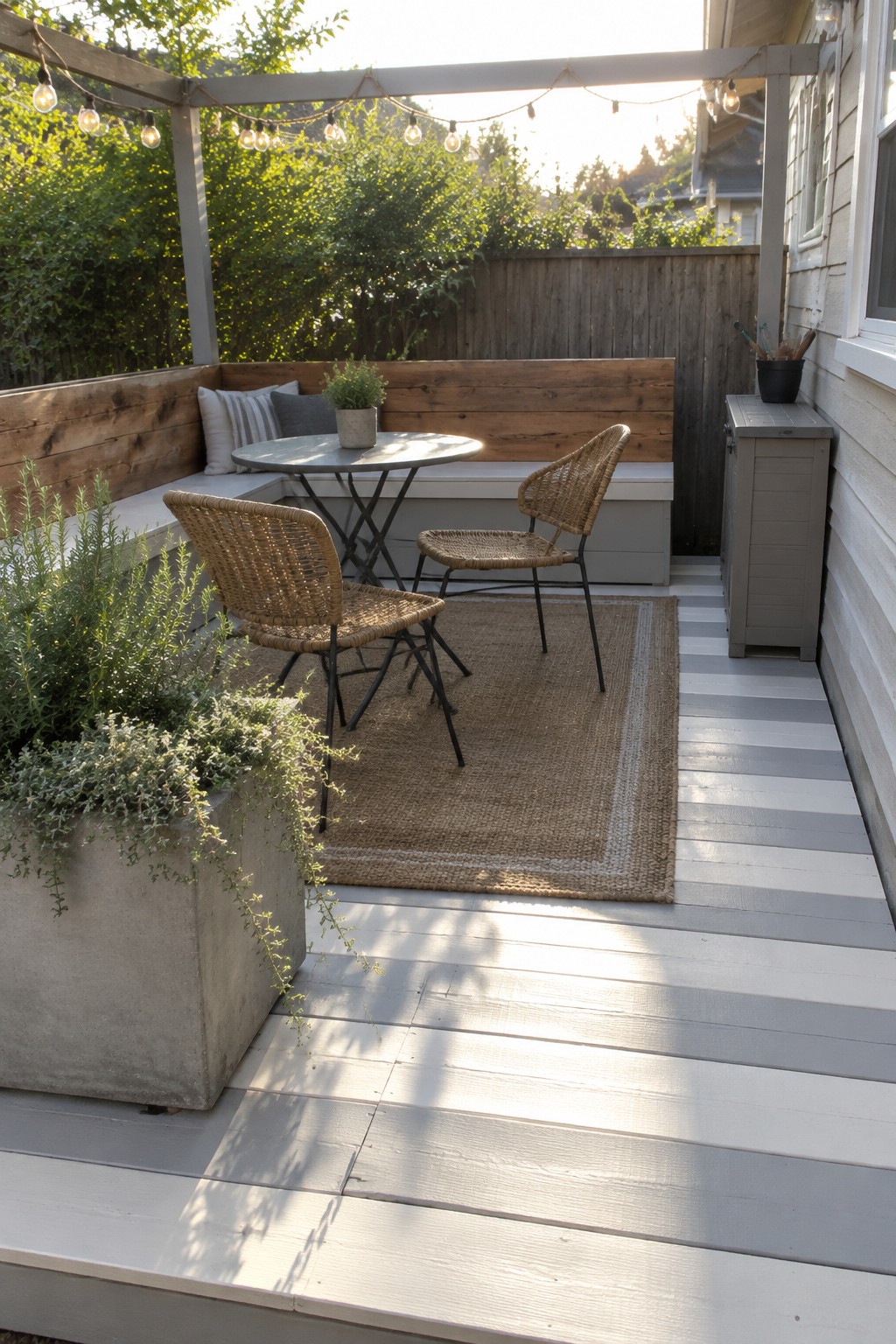
A light, solid deck color is an easy way to give a small back patio a cleaner look without paying for new decking. Pale boards also help a tucked-away seating area feel more open, especially when the furniture and other finishes stay simple.
Use exterior deck paint made for foot traffic, and prep the boards well so it holds up. This works on older wood that is still sound, but test a small patch first since the final shade can look different outdoors.
Use Interlocking Deck Tiles for an Easy Patio Update
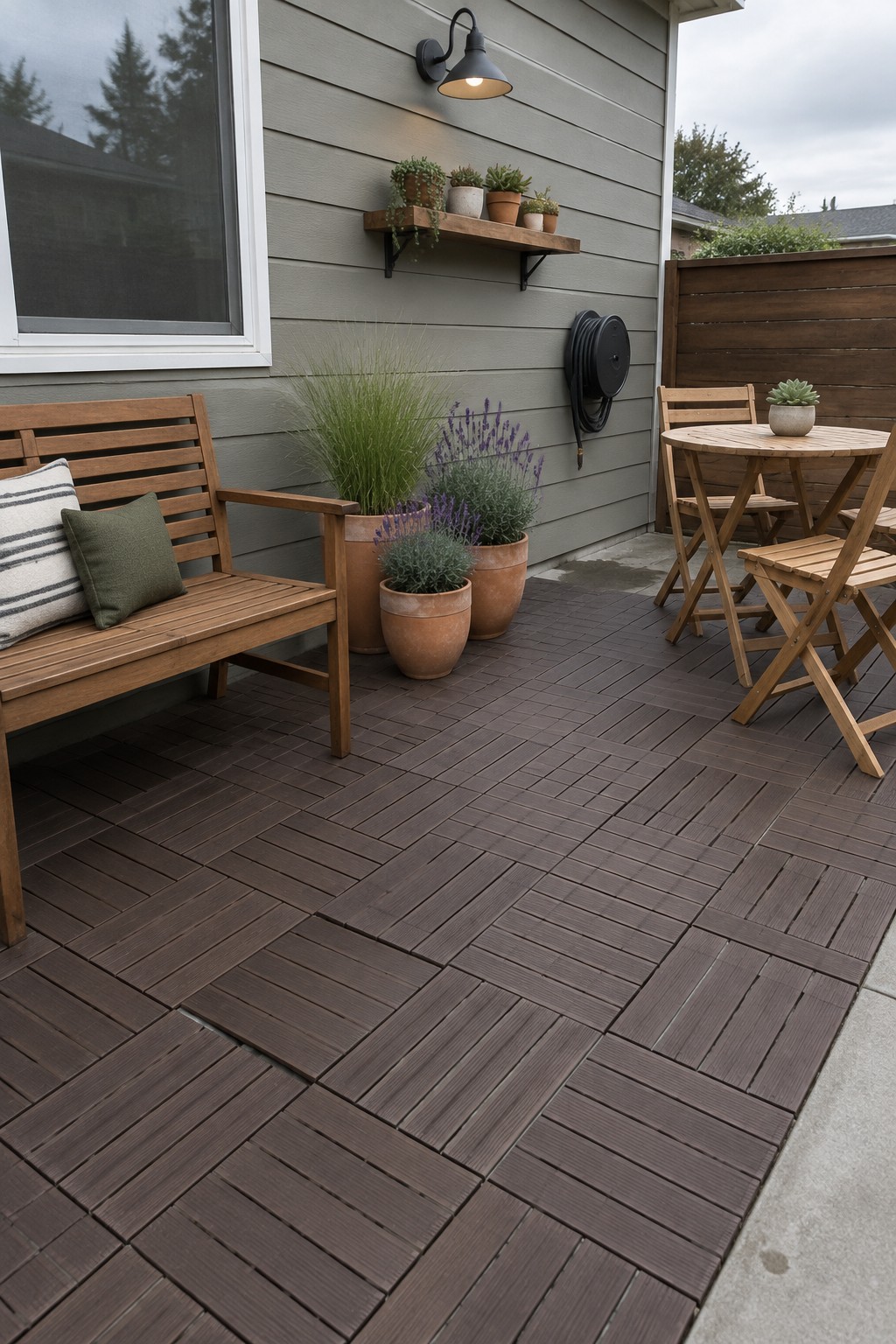
Interlocking deck tiles can refresh a back patio without the cost and work of replacing a full deck. Their repeating pattern gives the surface a finished look, and individual tiles are easy to remove if one gets damaged.
They work well on a firm, level base such as an existing concrete patio. Check that water can drain beneath the tiles, and measure carefully before buying so you have enough to cover the area without awkward gaps.
Build a Simple Pallet Deck for Patio Seating
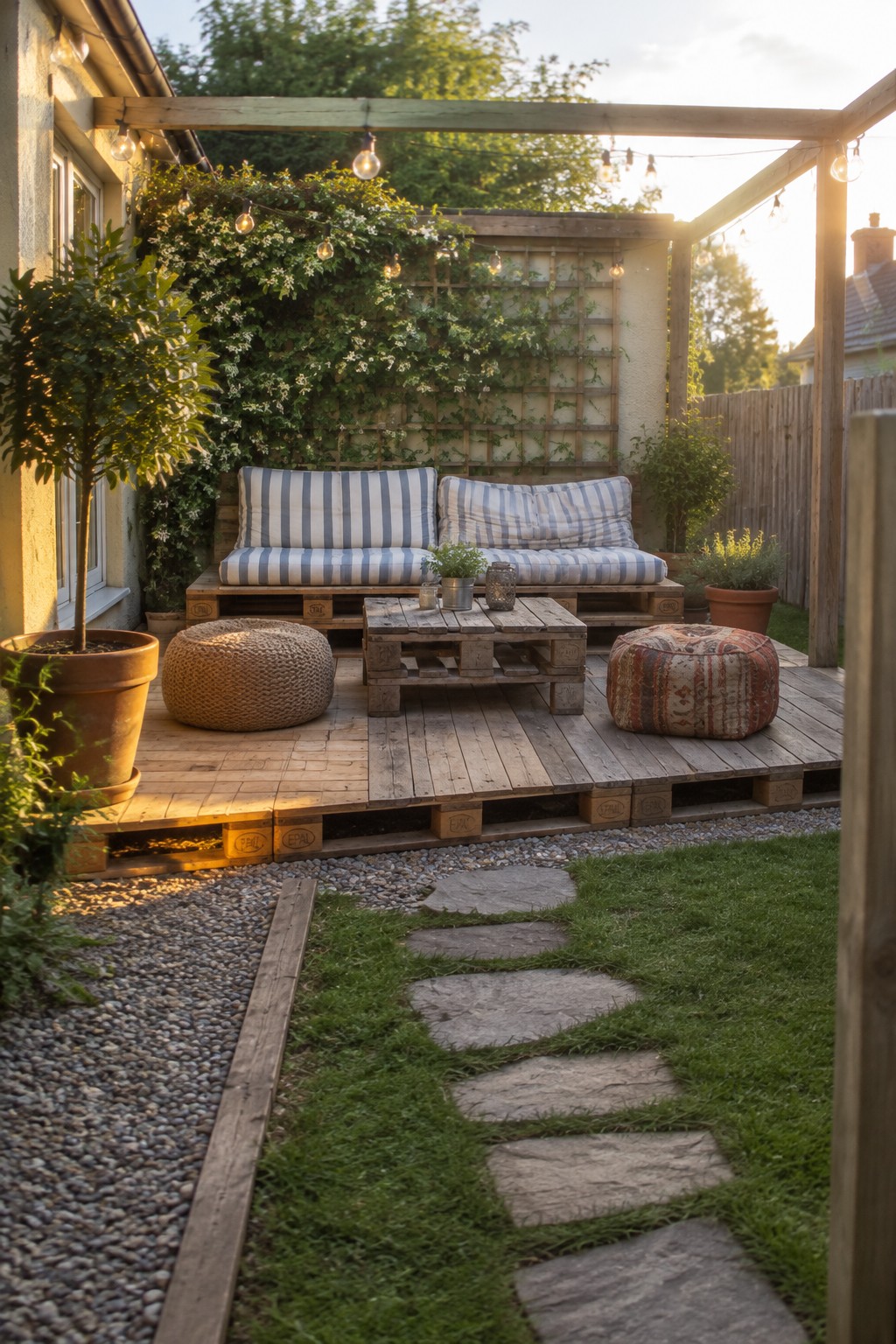
A low pallet deck is an inexpensive way to give a back patio a clear spot for sitting. The simple wood surface can make a small seating area feel more settled without the cost or work of a full built deck.
Use sturdy, weather-treated pallets and check that they sit level before adding outdoor cushions or a table. This approach works well in a compact yard, but leave room around the edges for drainage and make sure the deck stays stable.
Use a Simple Wood Deck for Outdoor Dining
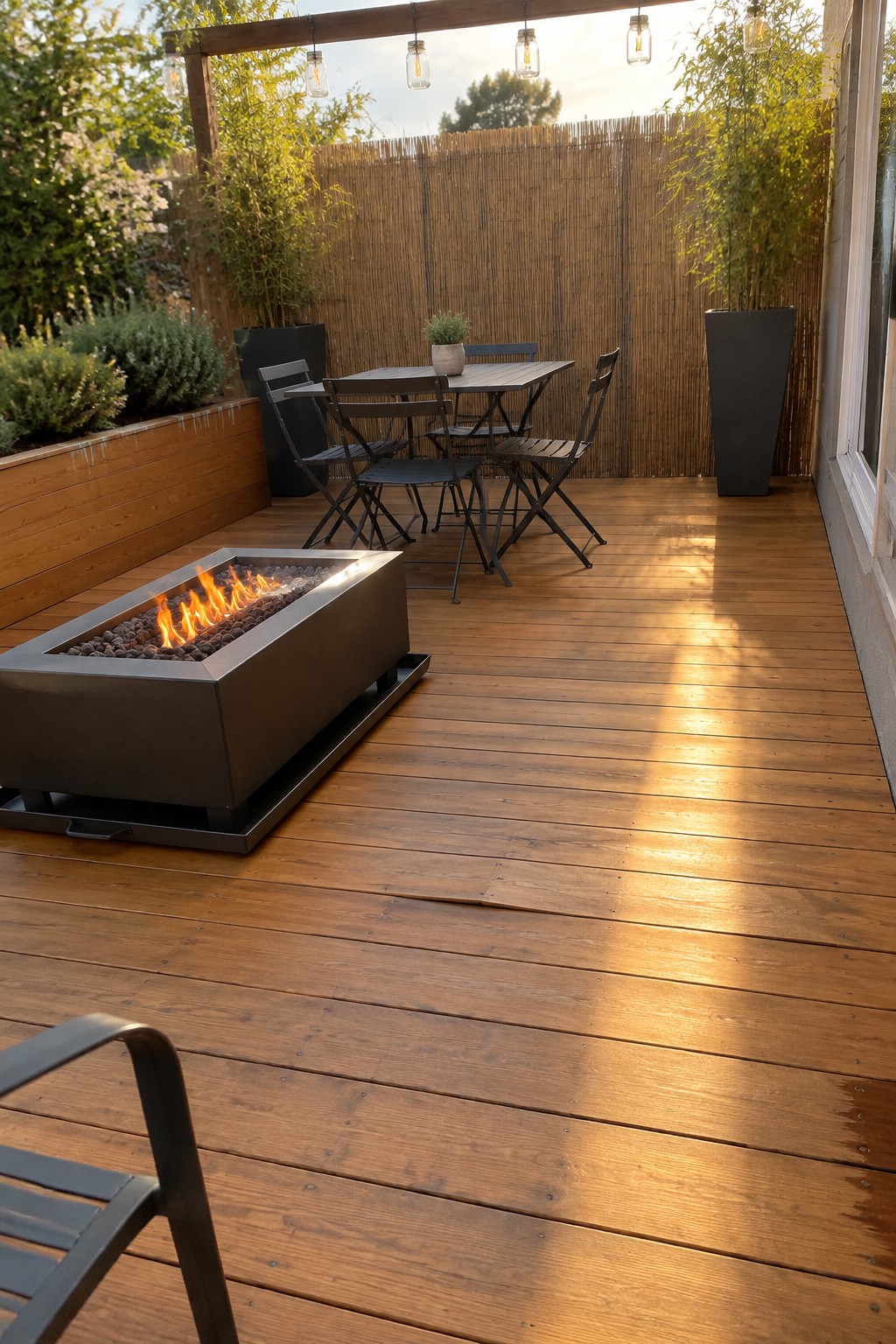
A plain wood deck gives a back patio a practical surface for both dining and relaxing. The boards keep the area feeling connected, while a table and chairs can make even a narrow space useful.
If you’re keeping costs down, use standard deck boards and a straightforward layout rather than adding patterns or multiple materials. A small dining set fits well near a privacy screen, but leave enough open deck around it for comfortable movement.
Try Wood-Look Tiles for a Patio Dining Area
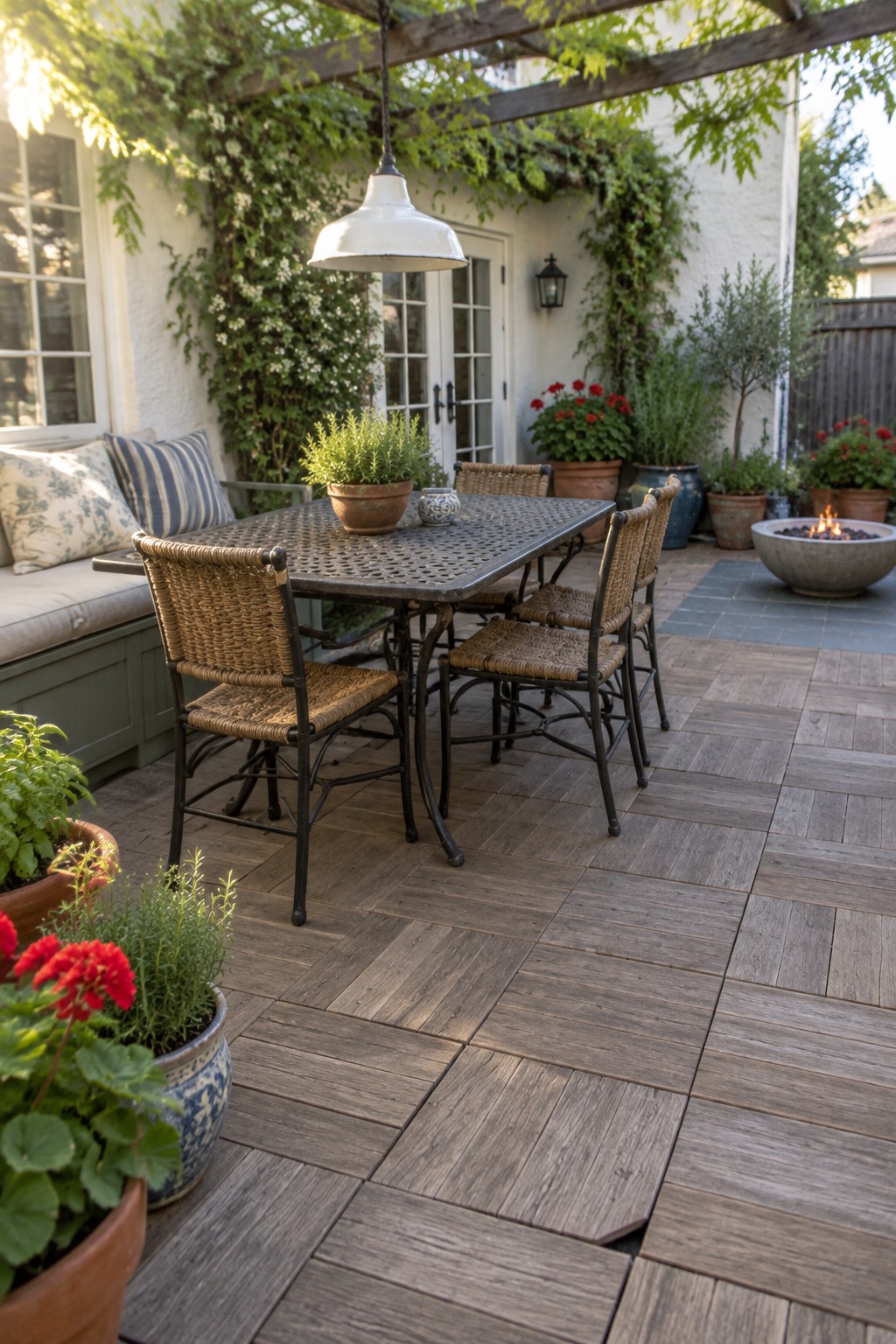
Wood-look patio tiles can give an outdoor dining spot a neat, finished surface without the cost or upkeep of a full wood deck. The square tiles here form a simple grid, and their varied grain keeps the surface from looking too uniform.
This approach works well on a compact patio where you want a defined place for a table and chairs. Choose outdoor-rated tiles and make sure the base is level and drains properly, so the surface stays stable after rain.
Use Chevron Deck Boards to Add Pattern
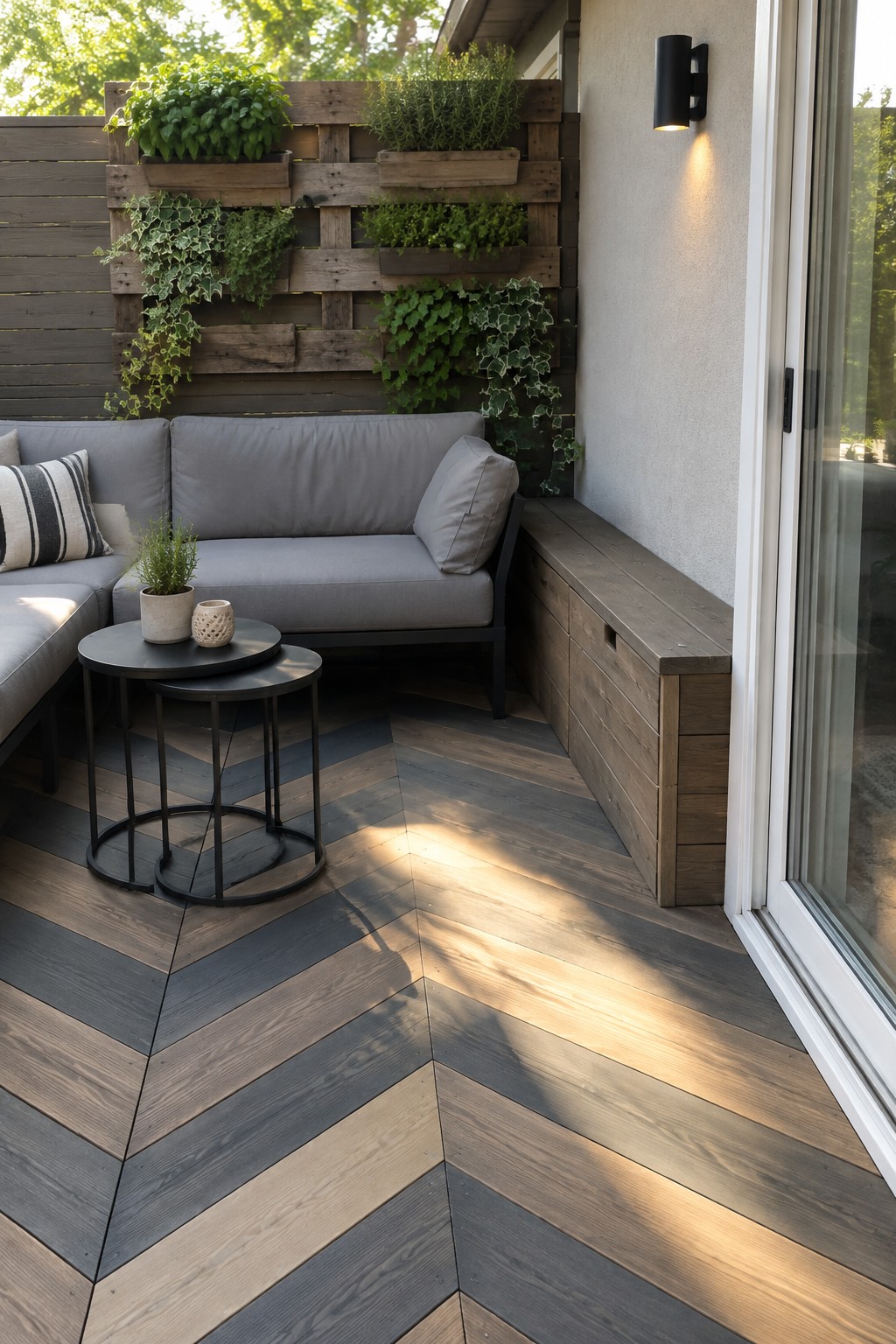
A chevron layout gives a small patio some interest without needing a fancy finish. Alternating light and dark boards make the pattern easy to see, while keeping the rest of the space simple.
This approach works best on a compact patio where the deck can be a feature on its own. Use outdoor-rated boards, and plan the cuts carefully so the pattern meets cleanly; a straight border around the edges can make installation easier.
Use Wide Stripes to Define a Deck Seating Area

A striped outdoor rug can mark out a seating area on a plain wood deck without changing the deck surface. It gives the chairs a clear place to sit and adds pattern without a complicated project.
Choose a rug made for outdoor use, and check that it can drain and dry easily. This idea works especially well on a larger deck where seating might otherwise feel spread out.
Use Large Pavers for a Checkerboard Patio

A simple checkerboard layout makes a patio feel planned without requiring a complicated pattern. Large square pavers in two finishes create clear sections for seating and leave plenty of room to move around.
For a budget-friendly version, combine concrete pavers with basic wood-look patio tiles, and keep the layout straight to limit cutting. This works well in a small backyard seating area, though the surface should be level and the materials suitable for outdoor use.
Create a Shaded Dining Spot on the Deck
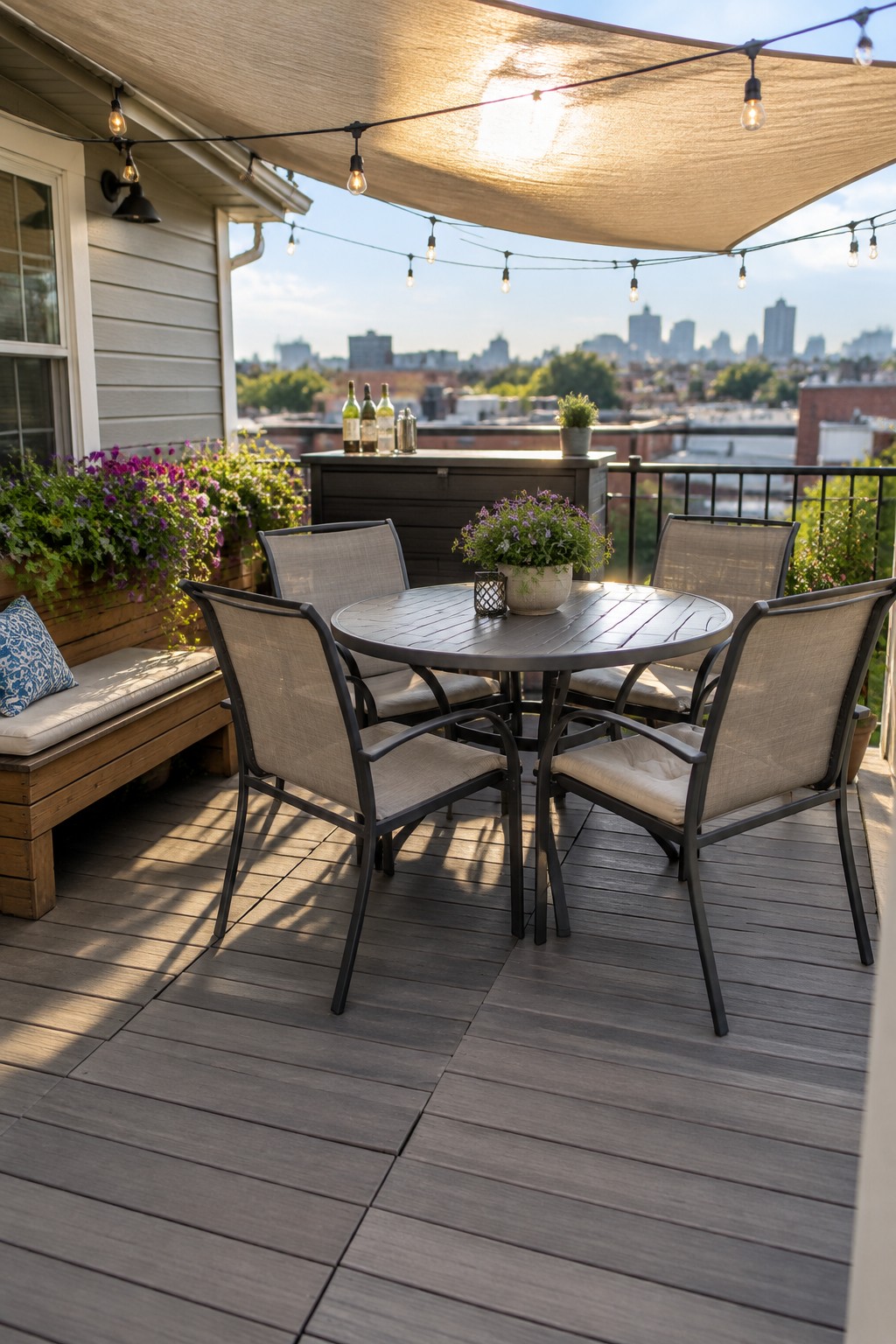
A simple dining area can make a back deck more useful without changing the surface or adding much furniture. A round table keeps the setup compact, while a fabric shade sail makes the spot more comfortable during sunny hours.
This layout works well on a small deck where seating and dining need to share space. Leave enough room to pull chairs out, and secure the shade sail properly so it stays taut in wind.
Use a Small Deck to Separate Dining From the Patio
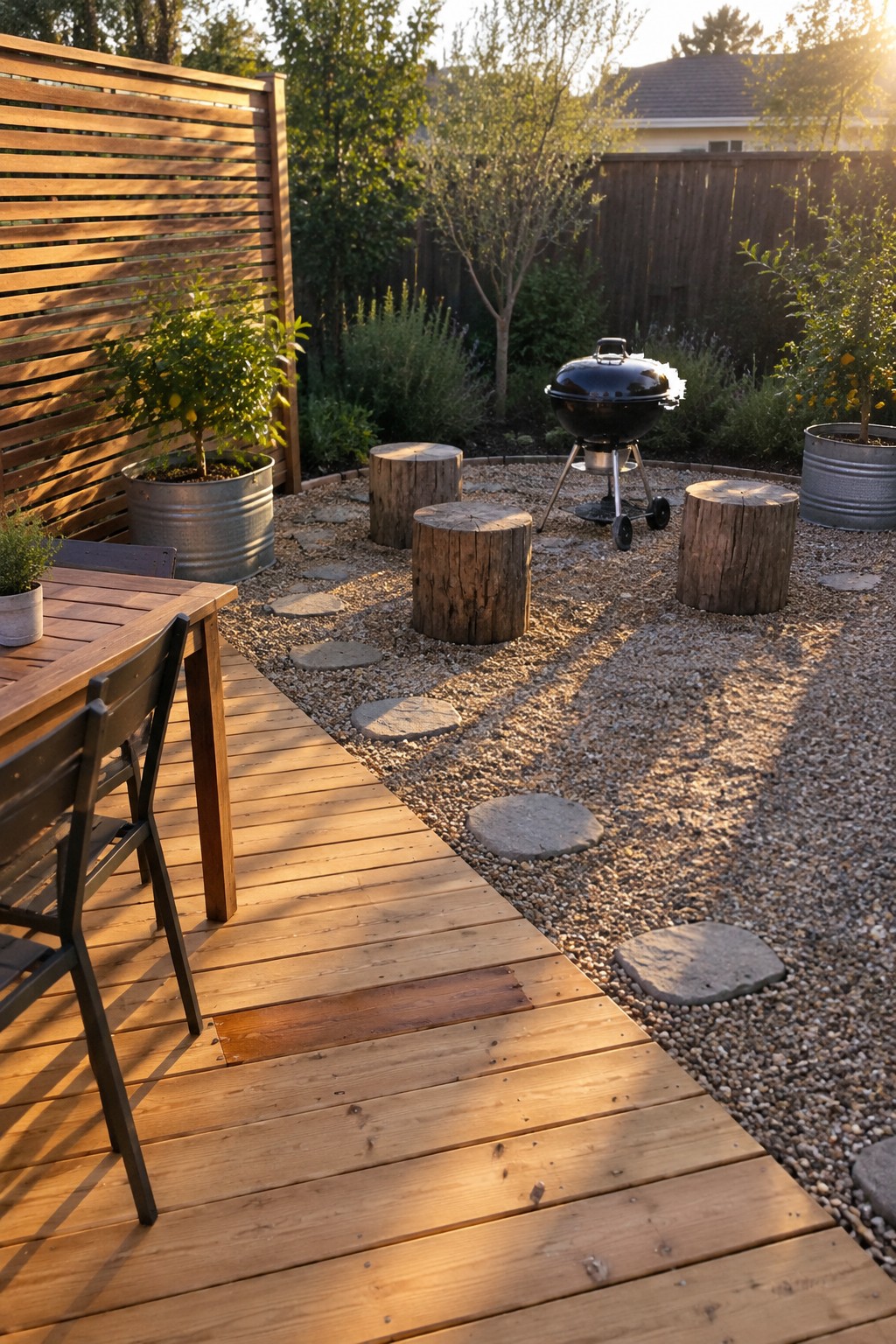
A compact wood deck can give an outdoor dining spot its own clear place, even when the rest of the patio is gravel. The change in surface makes the seating area feel intentional without needing a large or costly build.
This setup works well in a small back patio where a full deck would take up too much room. Keep the boards simple and sturdy, and leave enough space around the table for chairs to move comfortably.
Use Wide Wood Planks for a Simple Patio Surface
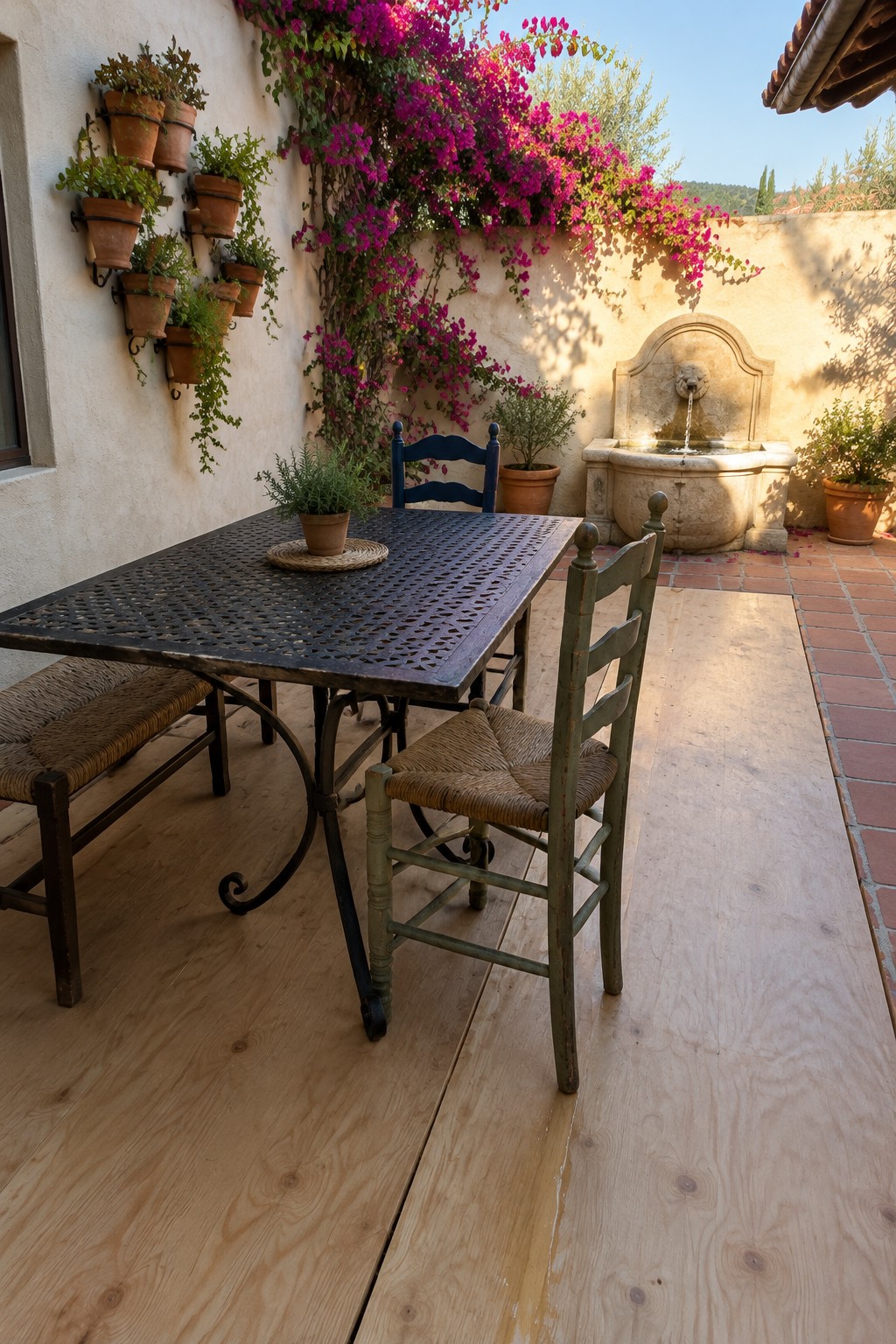
A plain plank surface is an easy way to give a back patio a cleaner, more finished feel. Here, wide boards keep the area usable for dining without competing with the dark metal table and chairs.
This approach works well on a small patio where you want a practical spot for meals or coffee. Choose exterior-rated boards and leave room for drainage, especially if the surface sits over an existing paved area.
Use a Pergola to Define a Deck Seating Area
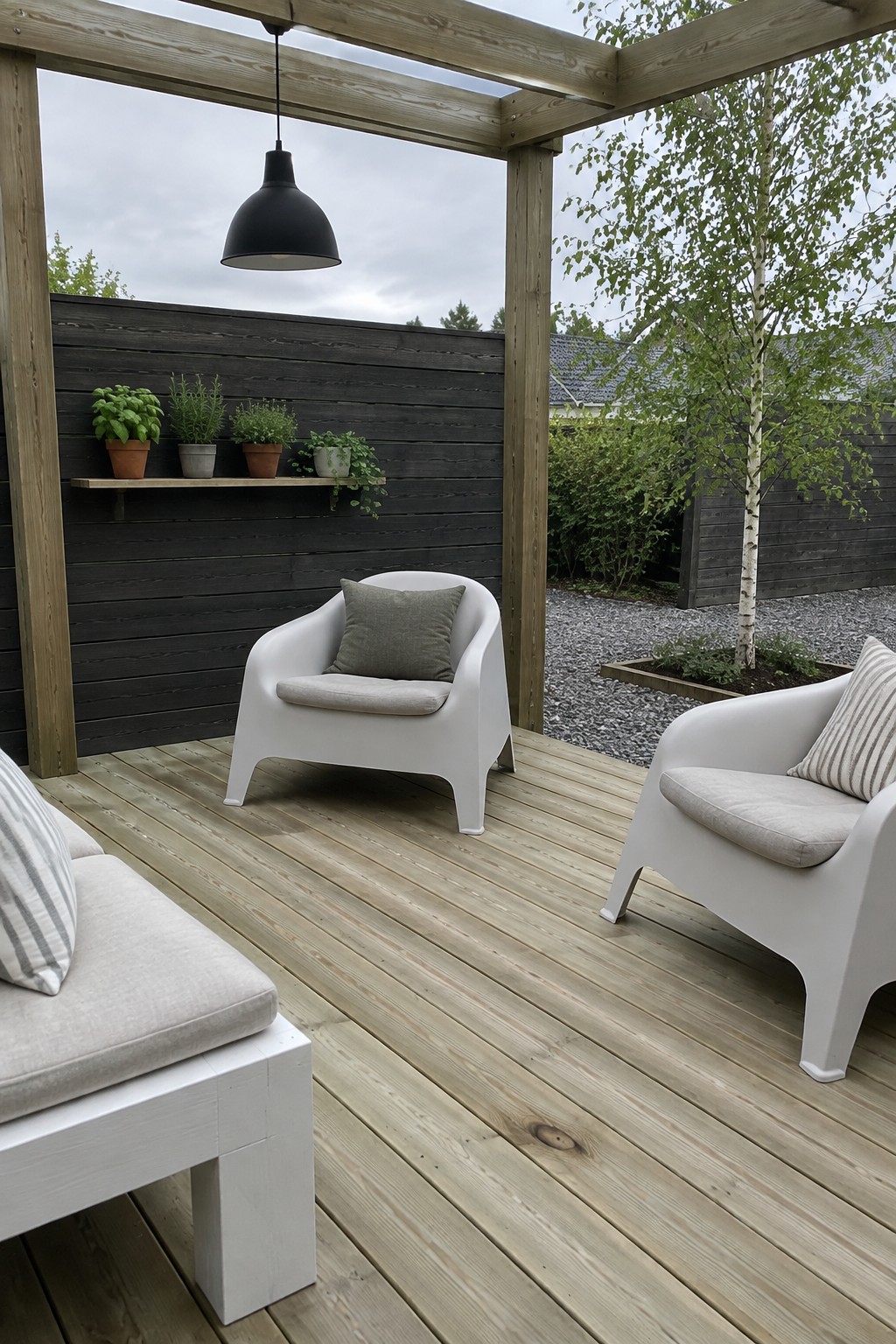
A simple pergola can make an open deck feel like a separate place to sit without adding walls or a complicated layout. Its wood beams give the seating area a clear outline, while the deck boards can stay plain and affordable.
This works well on back patios where you want a little structure but still want to keep the space open. Use straightforward lumber and leave the boards in a natural finish, then check that the pergola is securely anchored and suited to your local weather.
Use Weathered Wood for a Simple Deck Surface
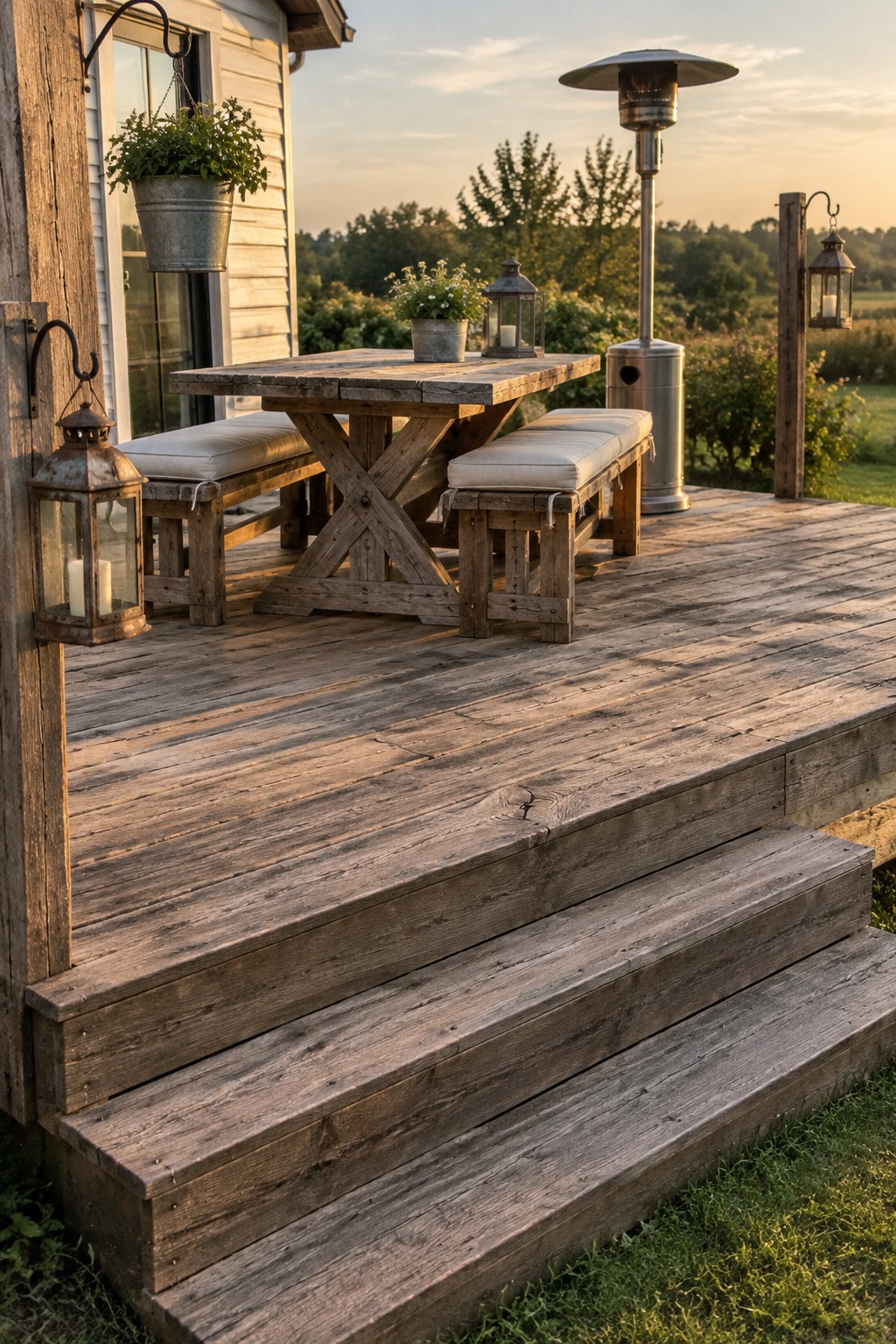
A plain wood deck can make a back patio feel like a natural extension of the house without adding a fussy pattern or costly finish. Weathered boards suit an outdoor dining area especially well, and their varied grain hides everyday scuffs better than a very uniform surface.
For a similar look, use reclaimed lumber or an affordable pressure-treated deck and let it age naturally. Check that boards are sound and evenly spaced, and seal them when needed to help prevent splinters and rot.
Use Color Blocks to Break Up a Small Patio
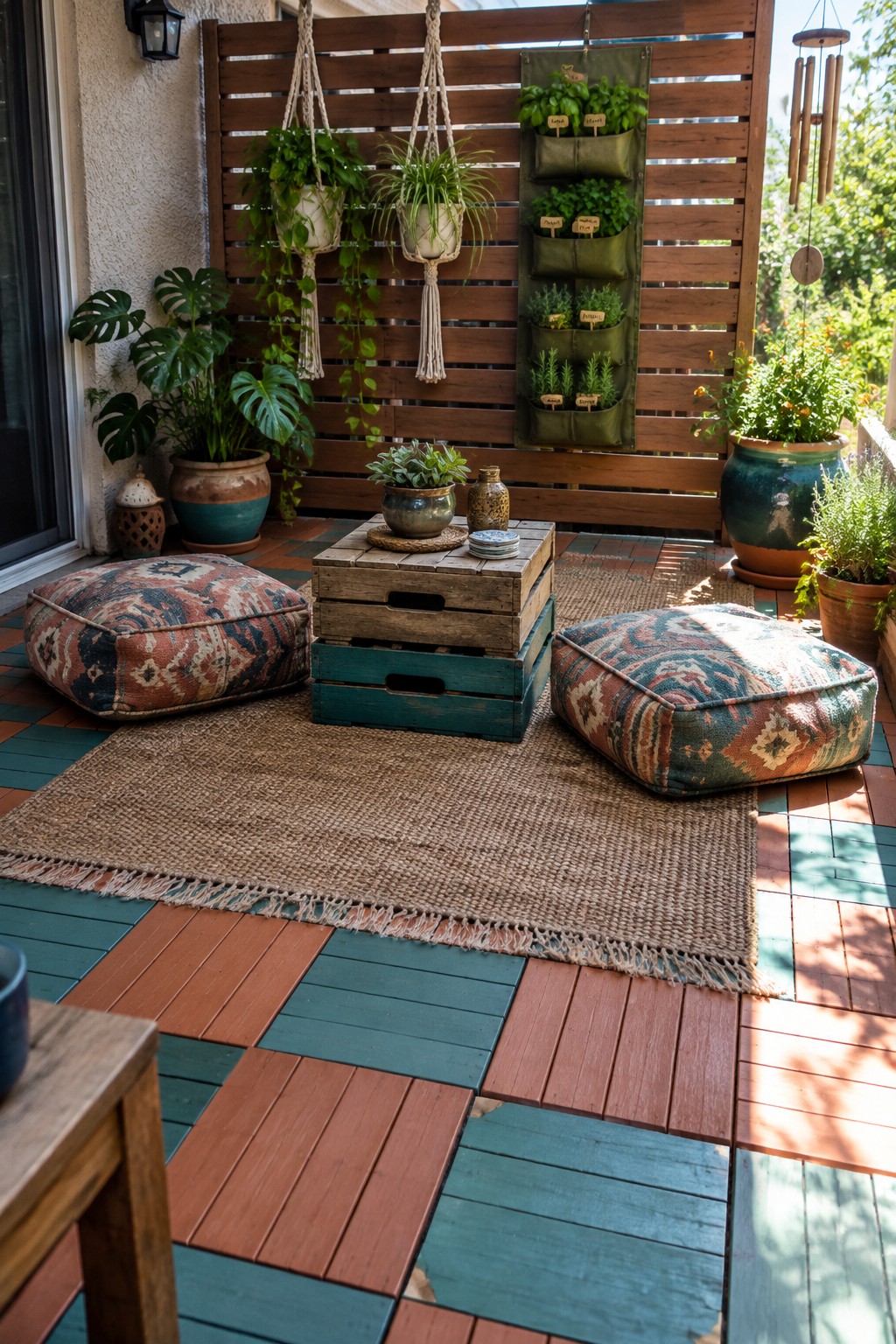
Painting deck boards in alternating colors gives a small patio a simple pattern without adding another surface material. The teal and terracotta sections make the floor feel more considered, while keeping the design straightforward.
Use two exterior-grade deck paints and repeat the blocks in a regular layout. This works well on a modest patio where a little color can define the seating area, but check that the finish is made for foot traffic and outdoor conditions.
Use Large Gray Tiles for a Simple Patio Surface
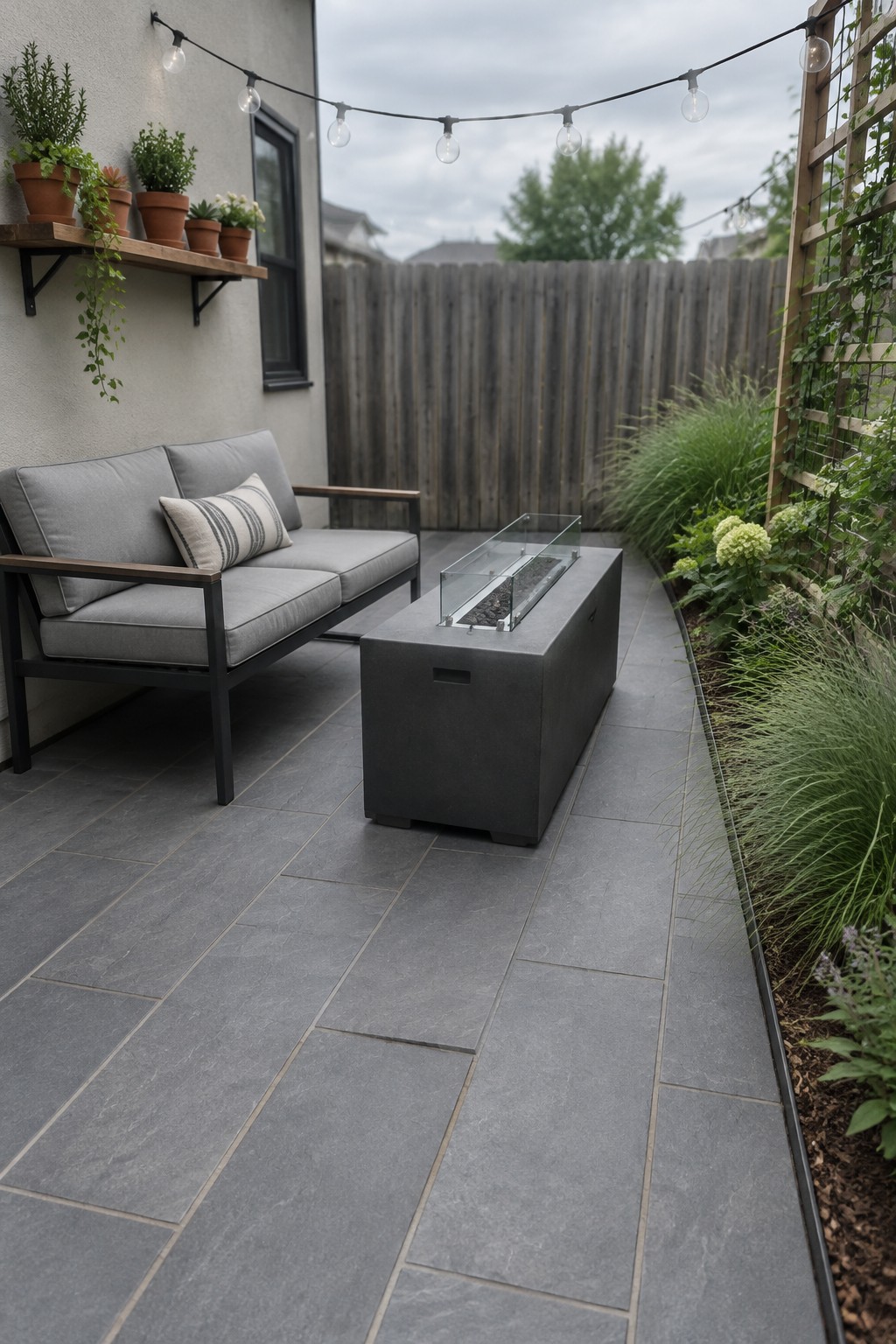
Large gray tiles give a small patio a clean, practical surface without the expense of a full deck. Their simple shape suits a narrow space, and the muted color works well beside both modern furniture and green planting.
Lay the tiles in a staggered pattern to make the patio feel less rigid, and keep the grout lines even for a tidy finish. This is a useful option for a compact seating area, but check that the tiles are rated for outdoor use and have a slip-resistant surface.
Use a Small Deck to Separate Seating From the Garden Path
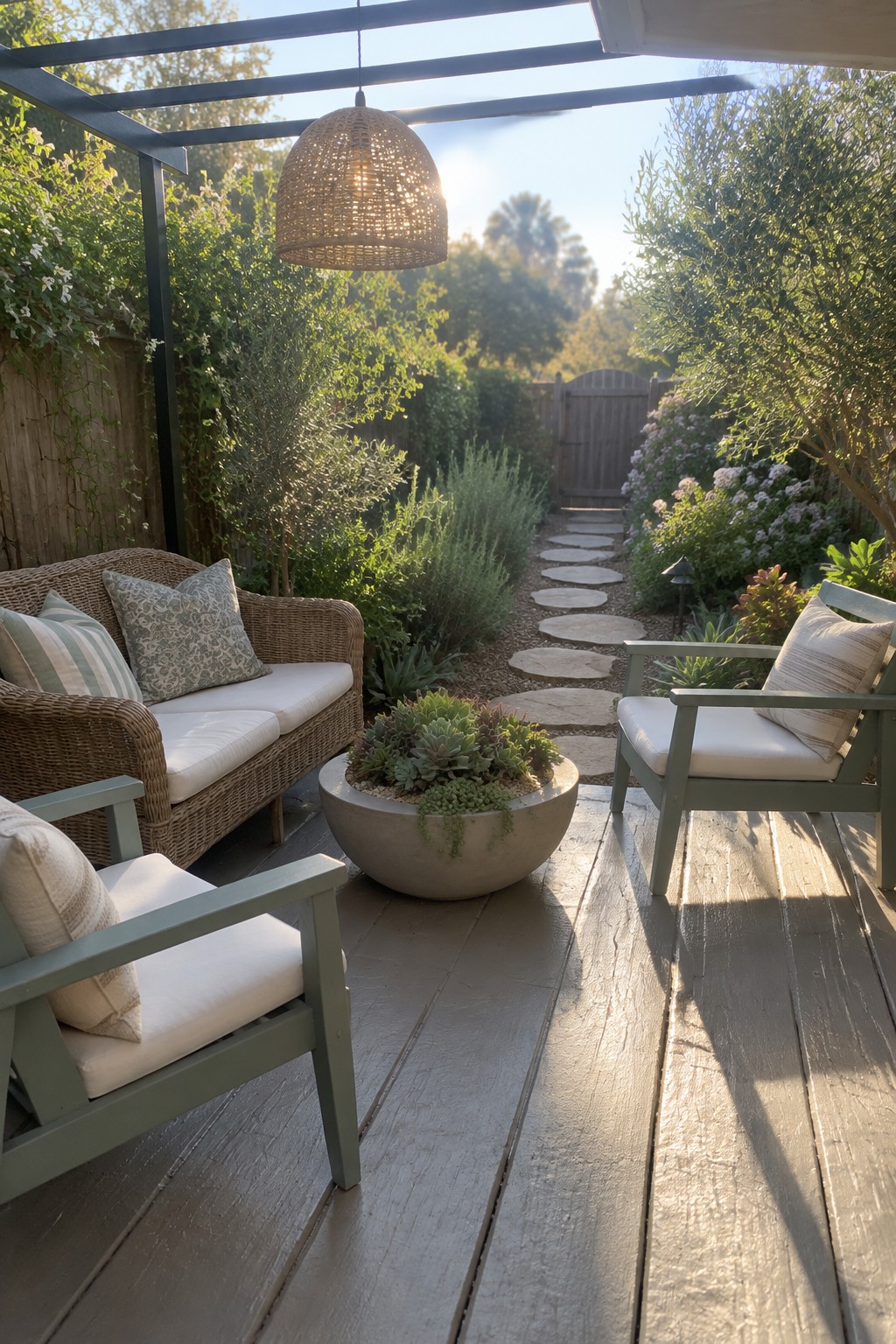
A small deck can make a back patio feel like a proper place to sit without covering the whole yard in boards. Here, the seating area stays distinct from the stepping-stone path, so each part has a clear purpose.
This layout works well in a narrow garden or beside a small house. Keep the deck just large enough for the chairs you use, and leave a direct route through the planting so the space remains easy to move around.
Use Deck Boards to Make a Simple Seating Area
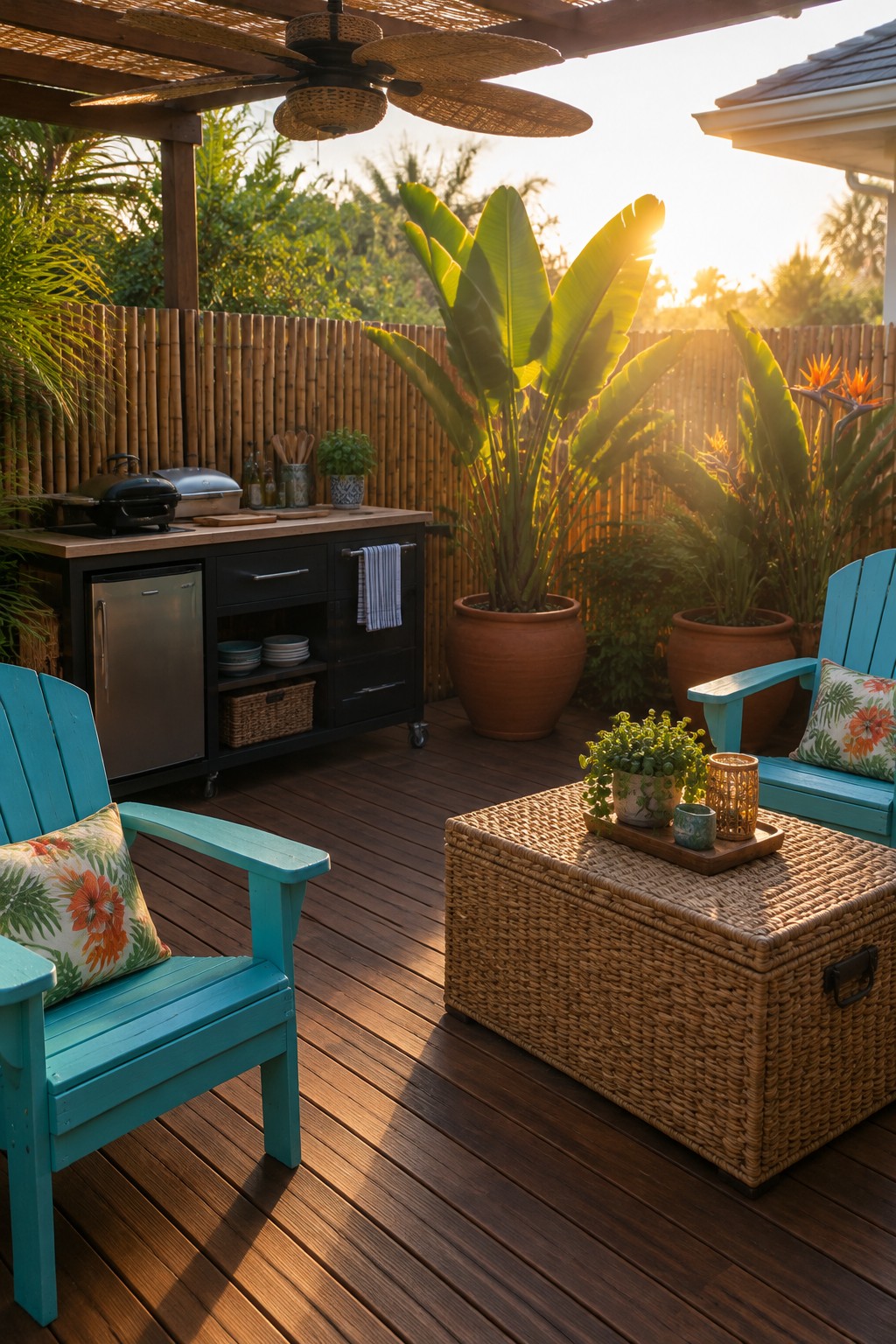
A straightforward wood deck surface gives a back patio a comfortable place for chairs and a small table. The long boards keep the look simple, while their warm color suits a relaxed outdoor seating area.
This approach works well on a modest patio where you want a clear spot to sit without adding a complicated pattern. Choose boards rated for outdoor use, and leave room for drainage and regular cleaning.
Use Gray Deck Boards for a Small Dining Patio
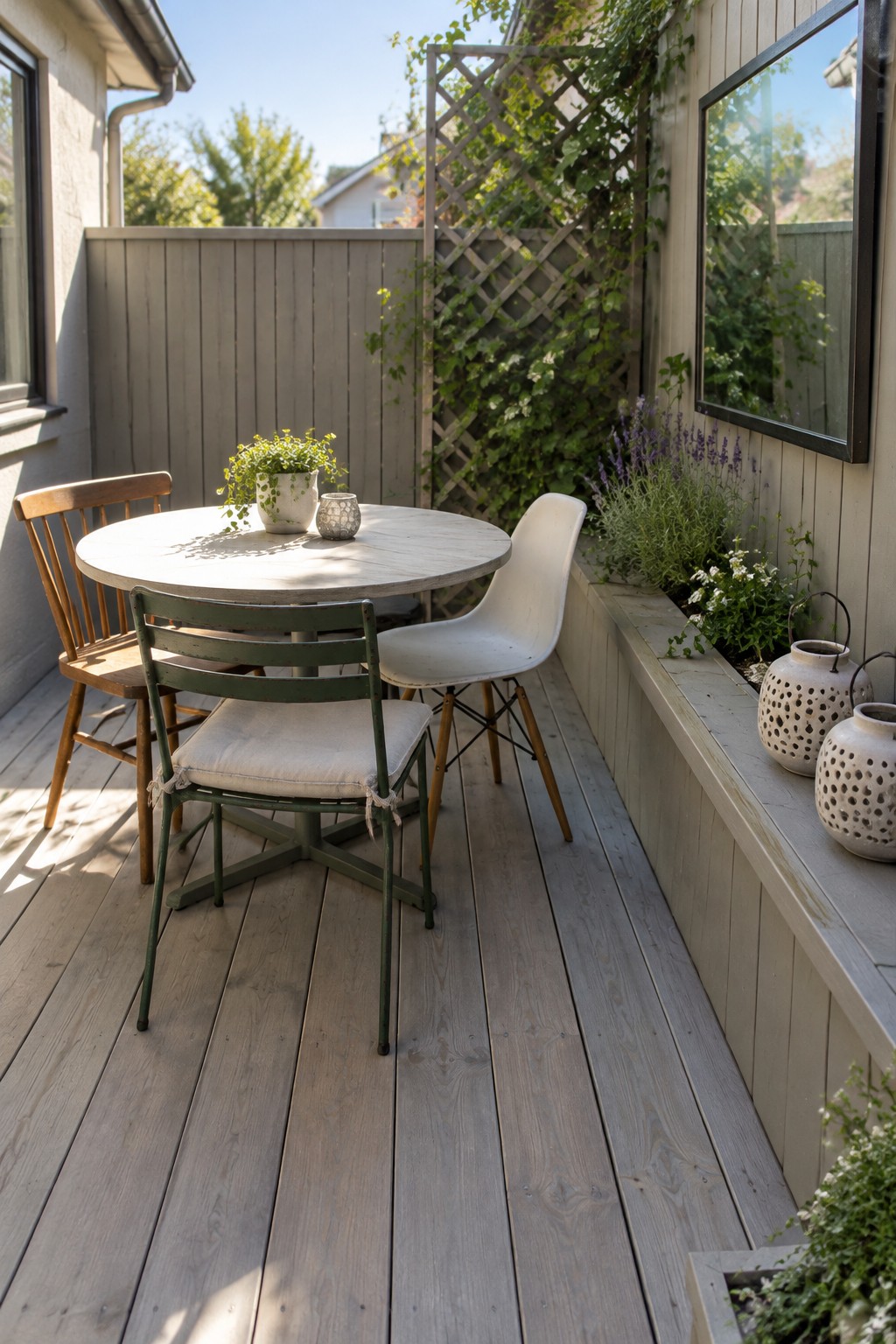
A simple gray deck surface gives a small outdoor dining area a clean, practical base. The long boards help the narrow space feel orderly without needing a pattern or extra materials.
For a similar setup, use outdoor-rated boards in a muted gray finish and keep the furniture compact so there is room to move around the table. This works well on a side patio or slim back deck, though a textured finish is worth choosing to help with traction when the boards are wet.
Use Sunlight to Show Off Natural Deck Boards
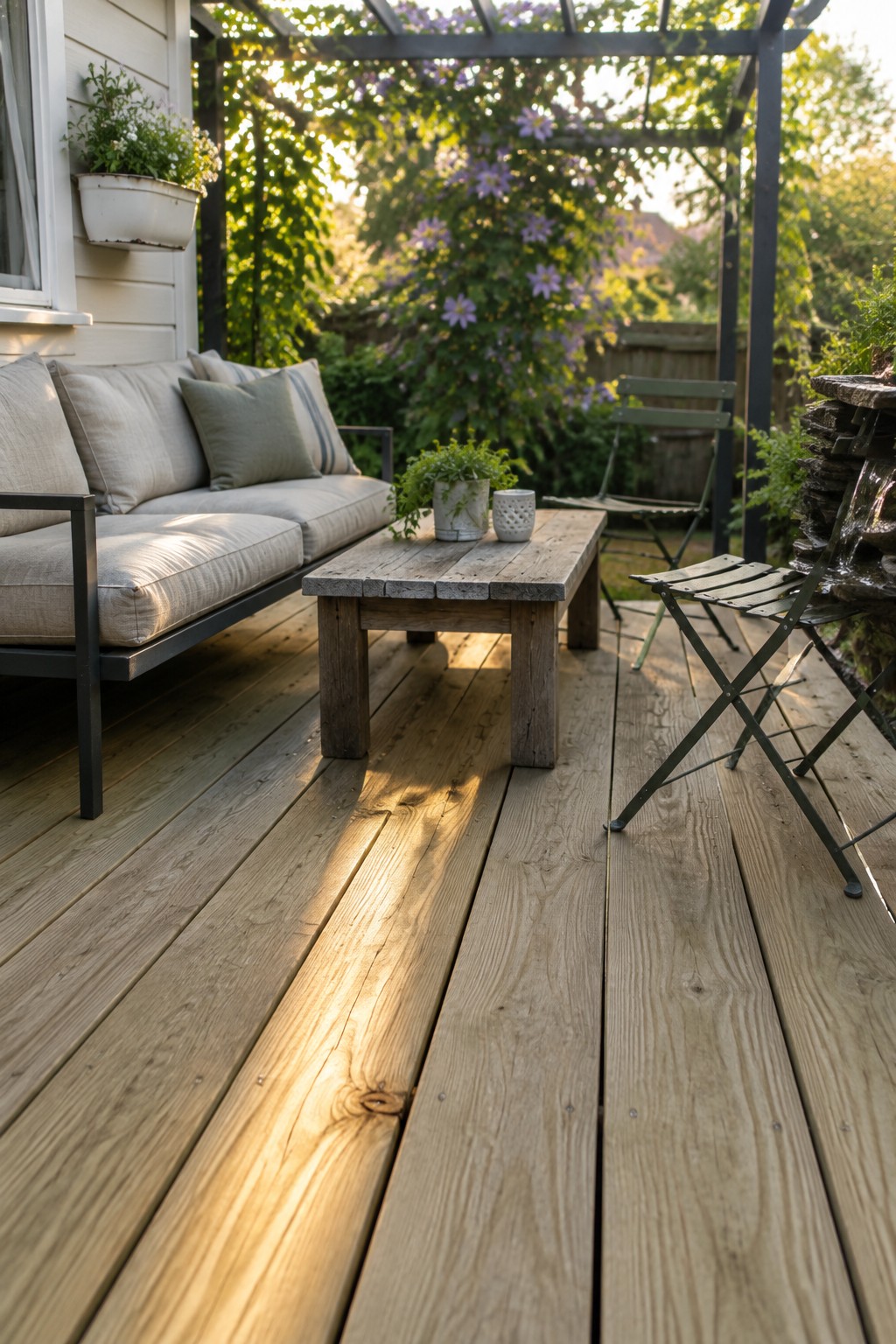
A simple wood deck can be a good choice when you want the patio surface to feel natural and uncomplicated. The wide boards here keep the floor pattern quiet, so the seating area feels easy to use rather than overly designed.
This approach suits a small back patio or a larger deck where furniture is the main feature. Choose weather-resistant boards and leave enough space between them for drainage, then keep the finish simple so the wood grain can show.
Use Dark Deck Boards for a Cozy Seating Area

Dark deck boards give a patio a simple, unified surface that suits an evening seating area. Here, the deep color lets the fire pit and light cushions stand out without adding a busy pattern.
This look works well on a small deck where you want the seating to feel settled in one place. Choose a durable finish made for outdoor use, and check that the boards have enough texture to stay safe when damp.
Frequently Asked Questions
Q: Can I put new decking over an old concrete patio?
A: Often, yes, if the concrete is sound and drains well. Use sleepers to lift the boards and leave enough space for air and water to move underneath.
Q: What’s the cheapest way to make a small patio feel more finished?
A: Try simple deck tiles or a basic grid of pressure-treated boards. Keeping the layout straight and skipping borders or fancy patterns helps keep costs down.
Q: Will deck tiles stay in place in rain?
A: Interlocking tiles usually stay put on a flat surface, but they can shift if the base is uneven. Check the tiles after the first heavy rain and clear leaves from the gaps so water can drain.
