

A patio can look polished in a photo but feel awkward to use if the walking path, seating, and ground cover do not work together.
I find that pairing pavers with gravel can add texture while keeping a project manageable, especially when the layout stays simple and leaves room for chairs and planters.
The key is choosing where each material belongs, since pavers can define a route or seating area while gravel softens the edges and fills open spaces.
Cost-conscious choices still need to hold up to foot traffic and weather, so it helps to think about drainage and upkeep before settling on a pattern.
Some combinations are worth adapting to the shape and needs of your own yard.
Use Large Pavers With Gravel Joints

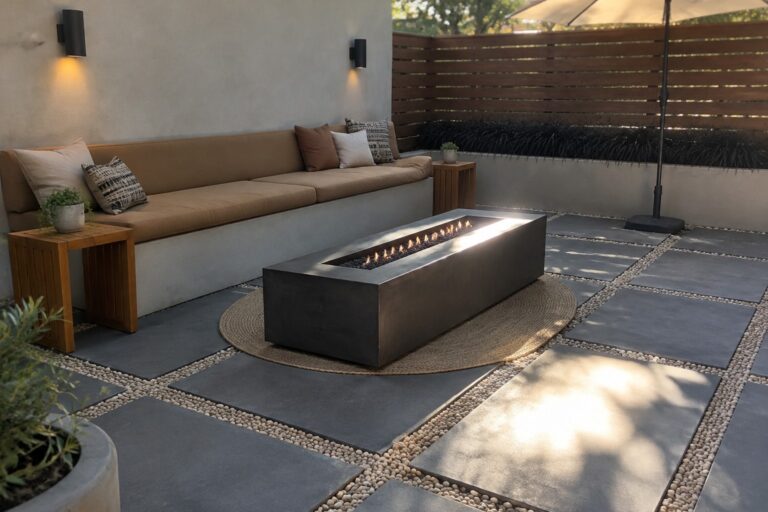
Large square pavers set in gravel make a patio feel orderly without covering the whole area in stone. The narrow pebble joints add texture and can be more forgiving than tightly fitted paving.
For a similar look, keep the pavers evenly spaced and choose gravel that stays put underfoot. This approach works well around a seating area, though the base needs to be level so the slabs do not shift.
Use Gravel Between Large Patio Stones

Large stone pavers set in gravel make a sturdy patio surface without requiring a solid paved slab. The small gaps give the stones room to stand out and can be more forgiving to install on a gently uneven garden site.
For a similar look, choose pavers with comfortable, fairly consistent spacing and fill between them with compactable gravel. It works well for a path leading to an outdoor dining area, but keep the stones level and stable where chairs will sit.
Make a Patio Path With Pavers and Gravel

A paved path through gravel gives a patio a clear route without covering the whole area in costly stone. The mix also breaks up a large expanse of paving and leaves room for a simple dining area.
Use larger pavers where people walk most, then fill the gaps and edges with compacted gravel or small rounded stones. Keep the path wide enough for chairs to move easily, and choose pavers with a slip-resistant surface.
Use Mixed Pavers and Gravel for a Cozy Patio
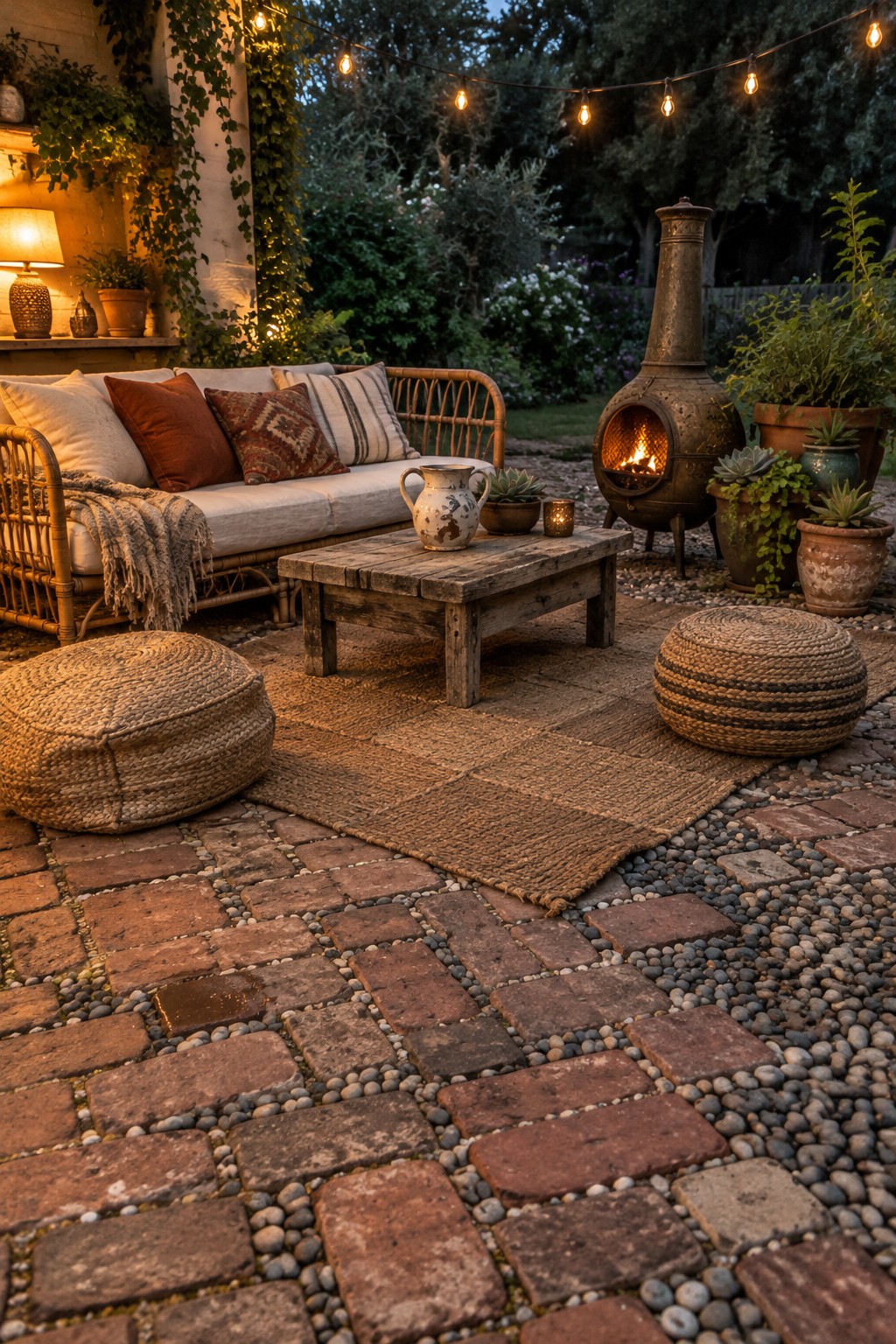
A patio can feel more relaxed when its surface combines brick pavers with small gravel. The pavers give you a firm place for the seating area, while gravel fills the gaps and helps the layout feel less formal.
For a budget-friendly version, use reclaimed or mismatched pavers and reserve them for the main walking and seating zones. Gravel works well between them, but keep the pavers level and stable so chairs and tables do not wobble.
Build a Fire Pit Area Into the Patio

A round fire pit gives a patio a natural place for seating to gather around. Large stone pavers set in gravel make a practical surface for this kind of layout, and the open joints help avoid the look of one unbroken slab.
Leave enough room to pull chairs back without blocking the route across the patio. This setup works especially well in a compact yard, where one central seating area can serve as the main spot for relaxing outdoors.
Set Up a Patio for Outdoor Dining

A roomy dining table can make a patio feel useful for everyday meals and relaxed get-togethers. Large stone slabs set into gravel give the table area a firm surface while leaving gravel joints between the pavers.
Use this layout where there is enough room to pull chairs back without stepping off the paved area. Keep the stones level and stable, especially around chair legs, so the gravel stays in the joints rather than shifting underfoot.
Make a Gravel Patio Feel Like an Outdoor Room

A gravel patio can feel like a proper place to gather when broad stone pavers define the route through it. The mix is practical, too: gravel fills the gaps, while the stones give chairs and foot traffic a steadier surface.
Use larger pavers where people walk most, such as between a dining table and a fire pit. Keep the gravel layer even and choose stones that sit level so the path is comfortable to use.
Create a Japanese-Style Gravel Garden Path

Large stone slabs set into dark gravel make a simple path feel calm and intentional. The gravel fills the space between stones, so you can get a finished look without paving the whole area.
Use broad, flat pavers for comfortable footing, with enough gravel showing to keep the surface from feeling crowded. This approach suits a small side yard or enclosed garden, though the stones should sit level and firm to avoid wobbling.
Make Room for a Gravel Patio Kitchen

A small outdoor kitchen can work well on a patio that mixes brick pavers and gravel. The pavers give you a steady surface for walking and standing, while gravel can fill the less-used edges without the cost of paving every inch.
For a similar setup, place the main work island on a solid, level section and use compacted gravel around it. A metal-topped island is practical for food prep, but make sure there’s enough clear space to move stools and open doors safely.
Use Stepping Pavers to Lead to a Fire Pit

A short path of large pavers can make a gravel-and-stone patio easier to cross and give the fire pit a clear place in the yard. The change in surface also helps mark the seating area without needing a fence or raised border.
Use evenly spaced stones for a simple route from the lawn or house to the chairs. Keep the gaps comfortable to step across, and set the pavers level so the path stays practical in everyday use.
Use Gravel Joints to Break Up a Stone Patio

Large stone pavers can feel more relaxed when slim gravel joints separate them. The contrast adds texture and gives a patio a clear pattern without requiring many different materials.
For a similar look, use gravel in the seams between larger pavers, and keep the joints even so the surface feels tidy. This approach suits a small poolside patio or seating area, but choose stable stones and compacted gravel to help keep the walking surface level.
Add a Small Seating Spot Along a Gravel Path

A narrow side yard can do more than connect the front and back of a house. A simple bar-height table against the wall makes room for a quick coffee or a quiet break without taking up much of the walkway.
This setup works well where a full patio would feel cramped. Keep the stepping stones clear and use gravel around them for drainage; a compact wall-mounted table can leave more floor space open than a freestanding one.
Make Room for Outdoor Dining

A round dining table makes a mixed-material patio easy to use for everyday meals and casual gatherings. Large stone pavers provide a steady surface for the chairs, while gravel joints help define the dining area without requiring a solid paved floor.
For a similar setup, leave enough space around the table to pull chairs out comfortably. This arrangement works well in a small courtyard, especially when you want a clear place to eat without paving the entire space.
Make a Gravel Patio a Natural Gathering Spot

A fire pit gives a gravel patio a clear place to gather, while broad stepping stones make the seating area easier to cross. It’s a practical way to make a simple surface feel planned without paving the whole space.
Set the pit where chairs can sit comfortably around it, with enough room to walk between seats. Gravel drains well, but keep the stones level and stable near the fire pit, and follow local guidance for fire safety.
Add a Bench for Flexible Patio Seating

A long bench makes an outdoor dining area more useful without taking up much extra room. Here, cushions make the dark built-in bench comfortable, while the gravel joints between the large pavers keep the paving pattern simple.
This setup works well on a narrow patio or beside an outdoor dining table. Choose weather-resistant cushions, and leave enough space around the bench for people to sit and move through comfortably.
Use Large Pavers to Define a Rooftop Patio

Large square pavers separated by narrow gravel joints make a rooftop patio feel orderly without covering the whole surface in stone. The open joints break up the hardscape and give the walking area a clear shape.
Use this approach on a terrace where you want a simple path between seating and a small outdoor kitchen. Keep the pavers level and choose a gravel size that stays put in the joints.
Set Up a Small Patio for Garden Dining
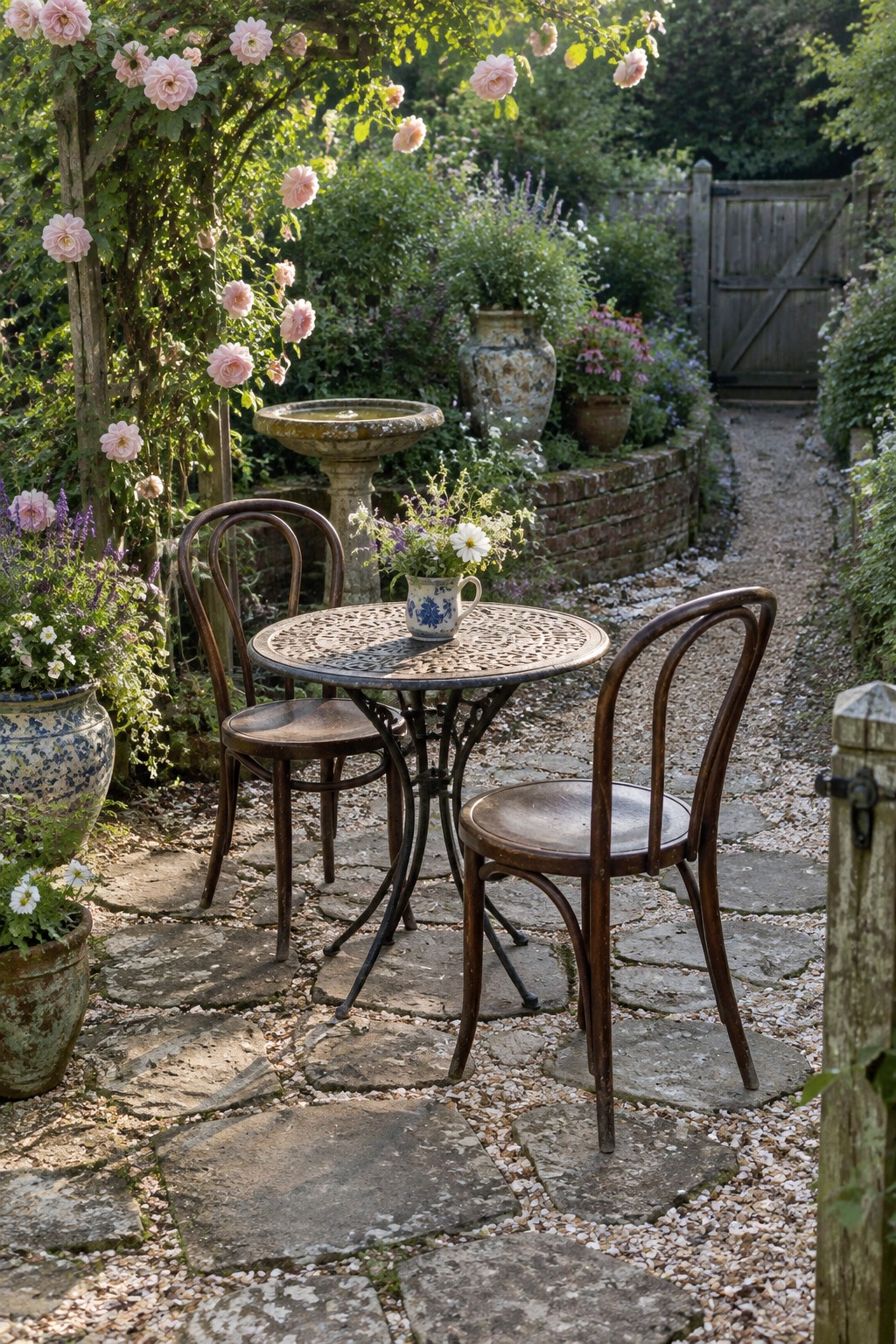
A small dining spot can make a garden path feel useful, not just pretty. Here, a round table and two chairs sit on stone pavers, with gravel filling the spaces between them. That mix gives the seating area its own place without needing a large paved surface.
Use a compact round table where a path widens or beside a garden bed. Keep the chairs easy to move, and choose pavers that sit level so the table stays steady. Gravel joints can help the patio blend into an older, informal garden.
Use Gravel Strips to Break Up Large Patio Pavers

Gravel strips between large pavers give a patio a clear pattern without needing a complicated installation. The open joints add visual interest and can help separate the seating area from the walking space.
For a similar look, choose pavers with a fairly even shape and keep the gravel gaps consistent. This works well on a spacious patio, but make sure the base is level so the stones stay steady and the gravel does not spill onto the pavers.
Frequently Asked Questions
Q: Do I need to dig out the whole patio before adding pavers and gravel?
A: Usually, yes. Remove grass and loose soil across the full area so the surface has a solid, even base. If you only prep under the pavers, the gravel sections may settle differently and leave the patio bumpy.
Q: How do I stop gravel from spilling onto the pavers?
A: Add a firm edge where the two materials meet, such as metal edging or a row of larger pavers. Keep the gravel slightly below the paver surface so it stays put when you walk or sweep.
Q: What kind of gravel works well between patio pavers?
A: Small, angular gravel tends to stay in place better than smooth, rounded stones. Choose a color that complements your pavers, and test a small patch first since gravel can look different in full sun.
Q: Can I put patio furniture on the gravel sections?
A: Yes, but chairs with narrow legs may wobble or sink. Set them on the pavers, or use wider feet under the legs where they sit on gravel.
