


The edges of a patio or gravel path can make a yard feel thoughtfully shaped, or leave it looking a little unfinished.
I find ground cover works best when it softens hard surfaces without spilling into the areas people need to walk through.
Some plants stay low and tidy, while others spread enough to fill gaps and reduce bare soil over time.
Their texture and color also matter, especially where a path meets a border or lawn.
I’d start with the plants that suit your light, soil, and foot traffic, then adapt the look to your yard.
Use Ground Cover Along Gravel Paths
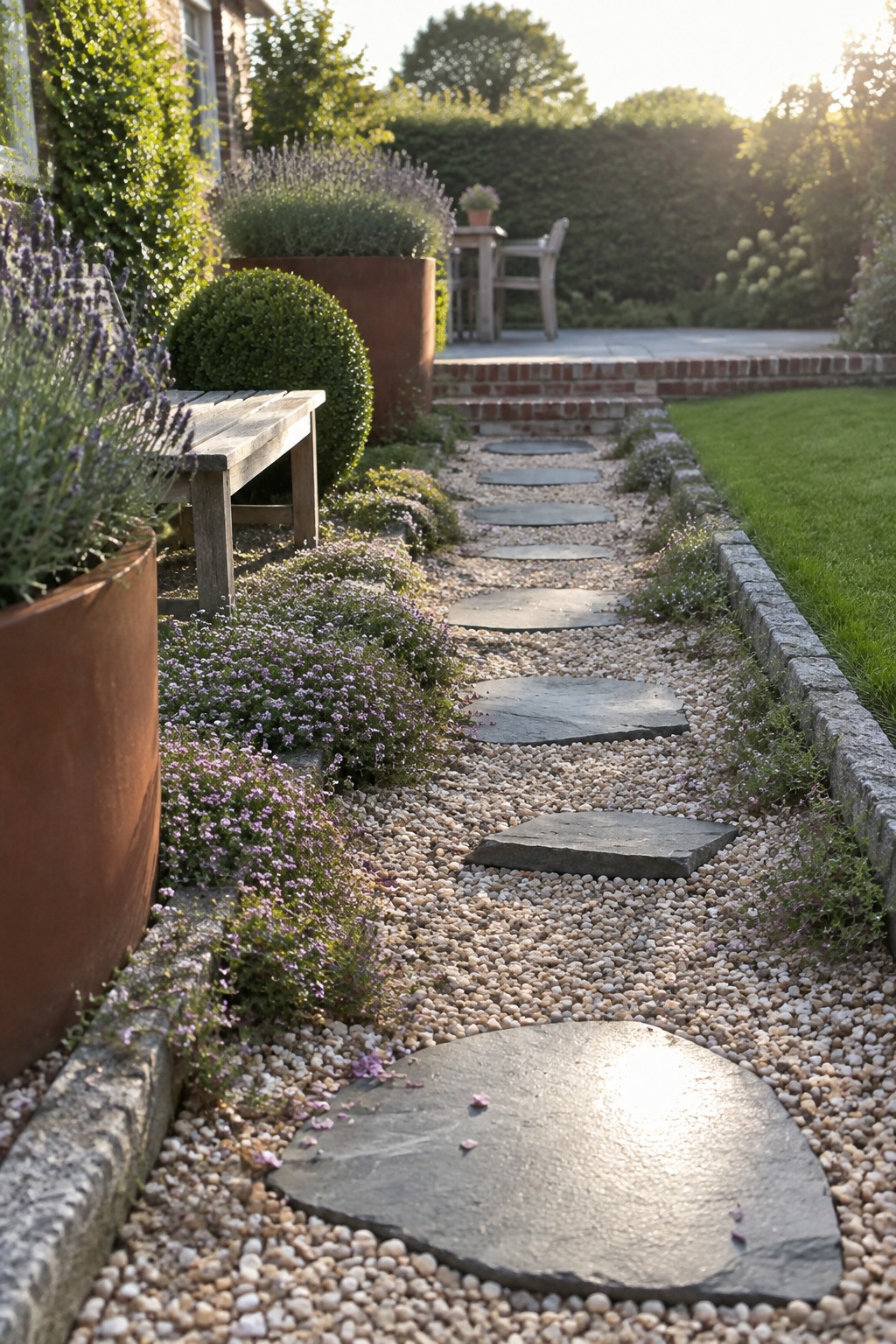
A gravel path feels more finished when low-growing plants soften its edges. Here, small flowers spread beside the stepping stones, adding color while keeping the route easy to follow.
Choose plants that stay low and can handle occasional foot traffic near the border. Leave enough space around the stones so the path remains clear, and check that the plants suit the amount of sun and water your garden gets.
Use Gravel Beds Along Patio Paths
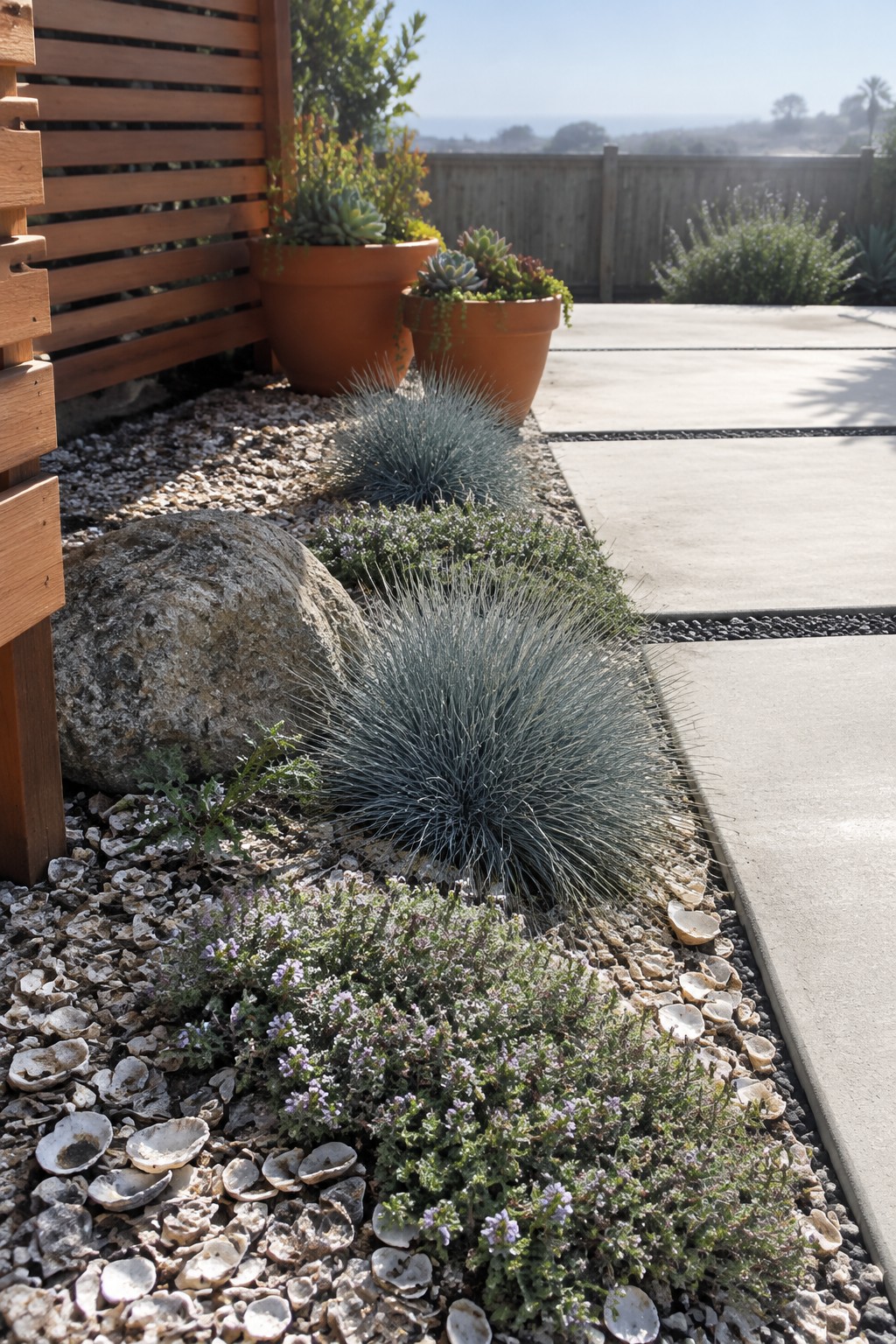
A gravel bed is a practical way to fill the narrow space beside a patio path. Low, spreading plants break up the stone and give the border a softer edge without taking over the walking area.
Choose ground covers that suit your climate and can handle dry conditions, then leave enough room for them to spread. This approach works especially well beside large patio pavers, where a low planting keeps the path open and easy to maintain.
Use Ground Cover Between Patio Slabs

Leaving narrow gaps between large patio slabs is a simple way to make a hard surface feel more like part of the garden. Low ground cover can fill those spaces, while gravel keeps the path tidy and helps water drain through.
This approach works well in a small patio or along a gravel path where a solid paved area would feel too heavy. Choose plants that stay low and can handle foot traffic, and keep them out of the main walking line if they are delicate.
Use Ground Cover To Define a Gravel Path
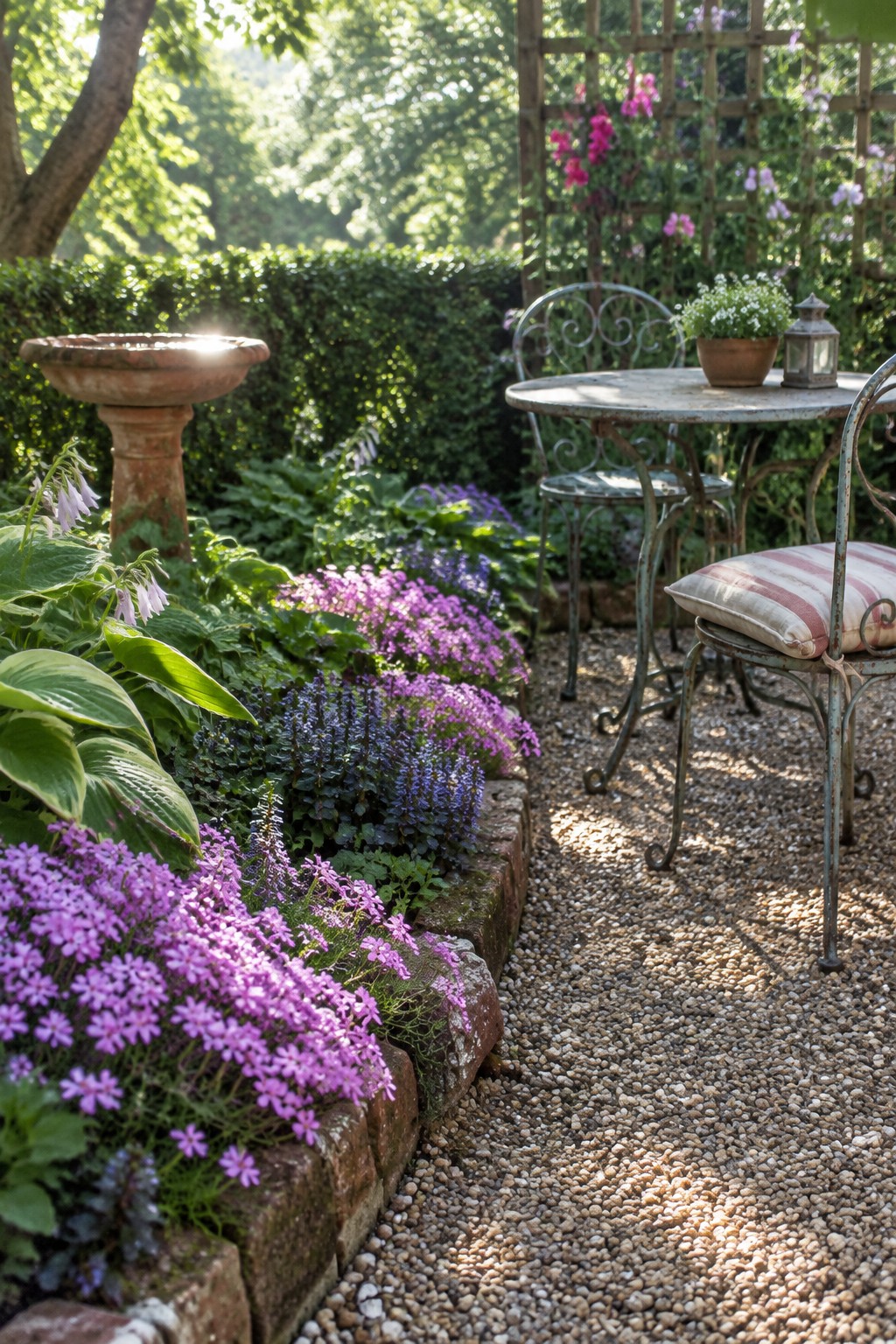
Low-growing plants along a gravel path give the edge a softer, more settled look while keeping the walking area clear. Here, flowering ground cover spills over a low stone border, making a clear transition between the garden bed and the path.
This approach works well in cottage gardens and small yards where a straight, bare path might feel too stark. Use plants suited to the light and soil, and leave enough room for them to spread without creeping too far into the walking space.
Add Low Ground Cover Along a Gravel Path

Low, spreading plants can keep a gravel path from looking too bare, while still leaving the walking surface clear. Here, the plants form a soft edge beside the gravel and terracotta steps.
This approach suits a garden path beside a house, especially where a narrow planting bed can follow the route. Choose ground cover that stays low and tolerates the site’s sun and soil, then leave enough room for it to grow without spilling across the path.
Try a Gravel Path Through Ground Cover

Ground cover planted along a gravel path helps the route feel settled into the garden rather than cut through it. Low, spreading plants make a useful border, while gravel keeps the walking surface simple and easy to maintain.
This approach suits informal paths and dry-climate gardens. Choose plants that can handle footpath edges and stay low enough to avoid spilling into the walking space; blue-gray succulents work well beside the path shown here.
Add Stepping Stones to a Gravel Garden Path

A gravel path can be easier to walk on when broad stepping stones are set into the surface. They give you a firm place to land without covering the whole path in paving, and the repeated shapes make a long walkway feel orderly.
Set the stones level with the gravel so they are comfortable underfoot and easy to maintain. This approach suits garden paths that get regular use, especially where gravel needs a little help staying put.
Let Ground Cover Spill Along a Gravel Path

Ground cover can make a gravel path feel less bare by letting greenery grow right up to its edge. Here, low plants spill over a brick border, giving the path a softer outline without hiding the route.
This works well in informal garden paths beside raised beds. Choose plants that stay low and can handle occasional foot traffic near the edge, and leave enough clear gravel for comfortable walking.
Use Stone Steppers to Shape a Gravel Path
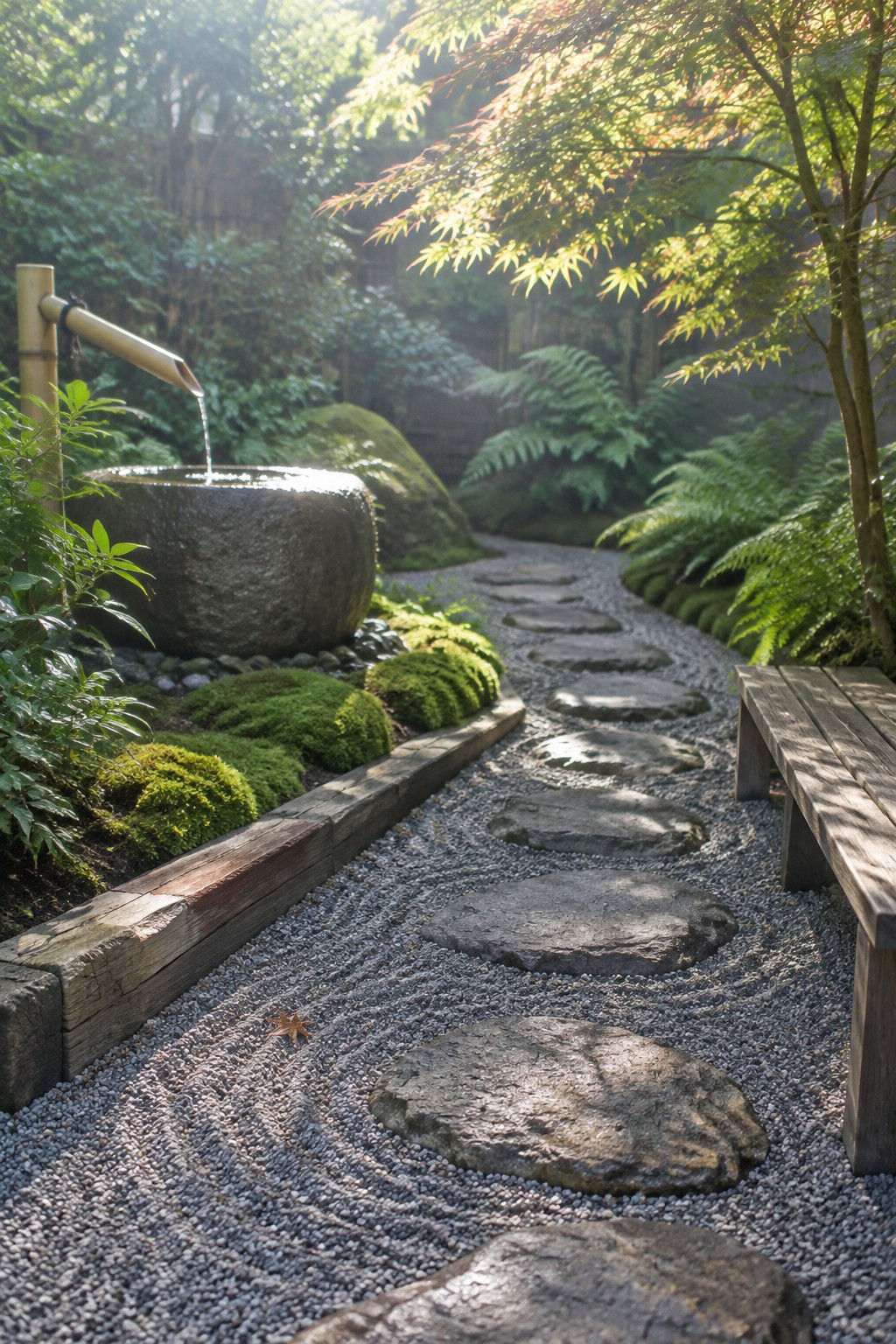
Large stepping stones give a gravel path a clear route through the garden while leaving gravel visible around them. The stones are practical to walk on and give a loose gravel surface a more settled feel.
Space the stones at a comfortable stride, and keep them level so they do not wobble. This approach suits a narrow garden path, especially where gravel can drain well and needs only occasional raking.
Create a Gravel Path Beside a Planting Bed
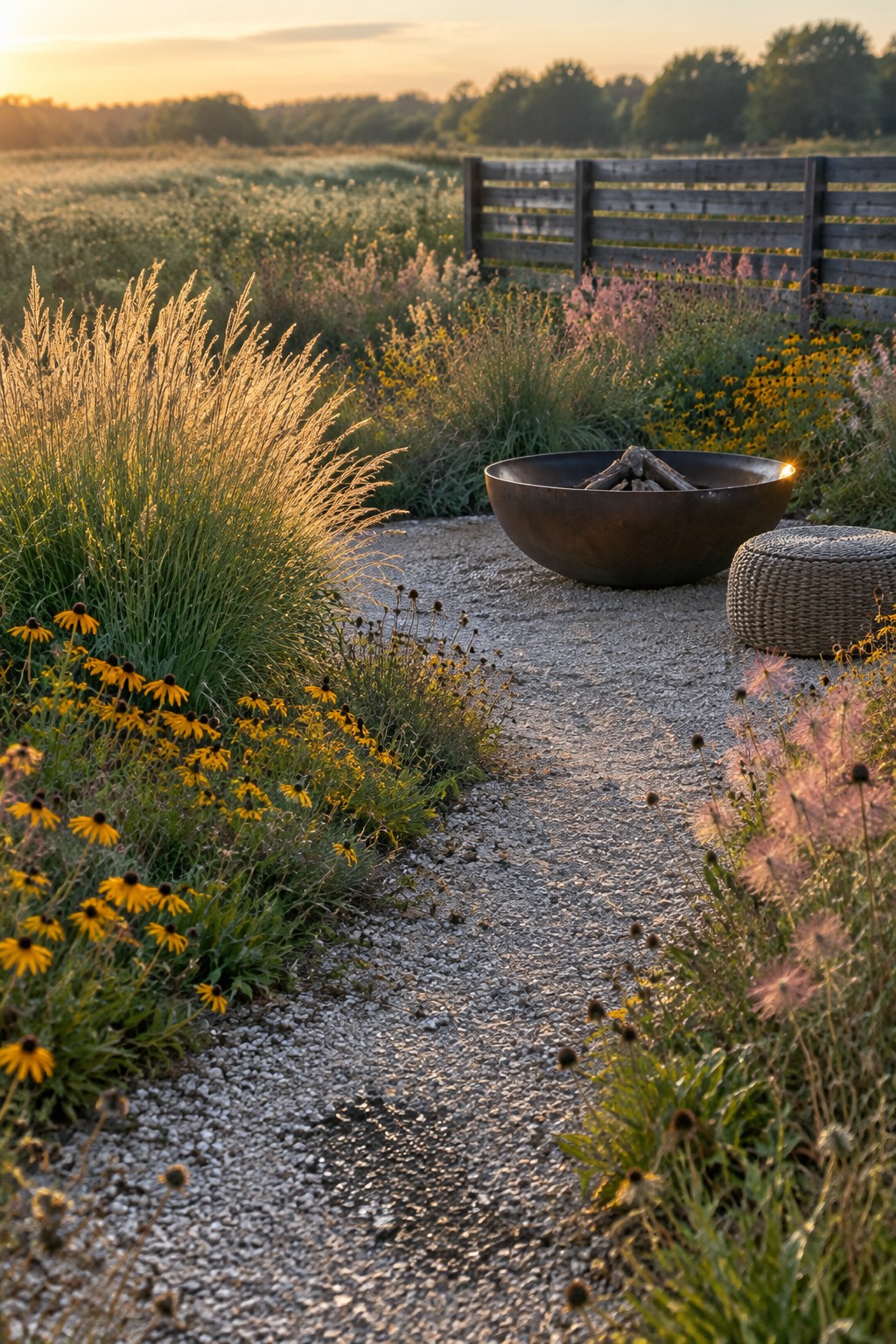
A gravel path can feel like a natural part of the garden when it runs alongside a generous planting bed. The contrast between loose stone and tall grasses gives the path a clear edge without making the border feel too formal.
This approach works well in informal gardens where you want a simple route through the planting. Keep the gravel contained with a firm edge, and choose ground cover or low plants near the path so they do not spread across the walking surface.
Use Narrow Ground Cover Strips Beside Pavers

Narrow planted strips can give a paved garden path a softer edge without taking up much room. Low ground cover growing among pale gravel brings a bit of greenery between the large paving stones, while keeping the route clear and easy to walk.
This approach suits a courtyard or side yard where a wide garden bed would be impractical. Choose plants that stay low and tolerate the amount of sun the path gets, and keep them trimmed so they do not spread across the paving.
Use Stepping Stones Through Low Planting

Stepping stones make a gravel path easier to walk while keeping the route relaxed and garden-like. Low, spreading plants along the edges help the stones feel like part of the landscape rather than a separate strip of hardscape.
This approach works well in a cottage garden or along a route through a larger yard. Leave enough space between plants to keep them from covering the walking surface, and choose ground cover that can handle foot traffic near the edges.
Edge a Pebble Path With Low Planting

A gravel path feels more settled when its edges are clearly defined. Low, spreading plants beside the pale stones keep the route neat while making the hard surface feel like part of the garden.
Use this approach on a winding path through a sunny border, choosing plants that stay low and can handle the site’s conditions. A simple edging material can help keep gravel from spilling into the bed.
Use Bark Mulch to Define a Garden Path

A path edged with larger stones can stay clear and easy to follow, while bark mulch gives the walking surface a softer, more natural feel. This is a practical choice for a garden where gravel might feel too loose or pale beside the planting.
Use it for a winding path through drought-tolerant beds, and keep the stone edging low enough to step over easily. Top up the mulch as it breaks down, and choose coarse bark so it is less likely to scatter.
Plant Ground Cover Along a Gravel Path

Low ground cover tucked beside a gravel path helps connect the stepping stones to the garden beds. It also gives the path a softer edge without taking away the simple, practical surface of the gravel.
Use compact plants that can handle a little spreading, and leave enough room so they do not cover the stones or narrow the route. This approach works well in a slim side yard, where planting along one wall can make a gravel walkway feel more settled.
Use Low Planting to Edge a Gravel Path

Low-growing plants can give a gravel path a softer edge without taking over the walkway. Here, rounded clumps of flowering ground cover sit close to the path, making the route easy to see while keeping the garden feeling relaxed.
This approach works well in a small courtyard or along an informal garden path. Leave enough clear width for comfortable walking, and choose plants that stay low and can handle the amount of sun the area gets.
Use Gravel to Separate Large Stepping Stones

Wide concrete steppers set in gravel make a path feel open and easy to follow. The gravel fills the gaps without making the route look like one solid paved strip.
This works well for a patio approach where you want a clear walking line but still want room for ground cover along the edges. Choose stones large enough for comfortable steps, and keep the gravel level so it does not spill onto the paving.
Use Ground Cover Between Stepping Stones

A few broad stepping stones set into low ground cover make a garden path feel less formal than a solid paved walk. The plants fill the gaps and help the stones sit naturally within the garden.
This approach works well beside a gravel path or through a small planting area. Choose ground cover that stays low and can handle occasional foot traffic, and leave enough space around each stone for easy footing.
Use Moss to Cover the Ground Beneath a Seating Area
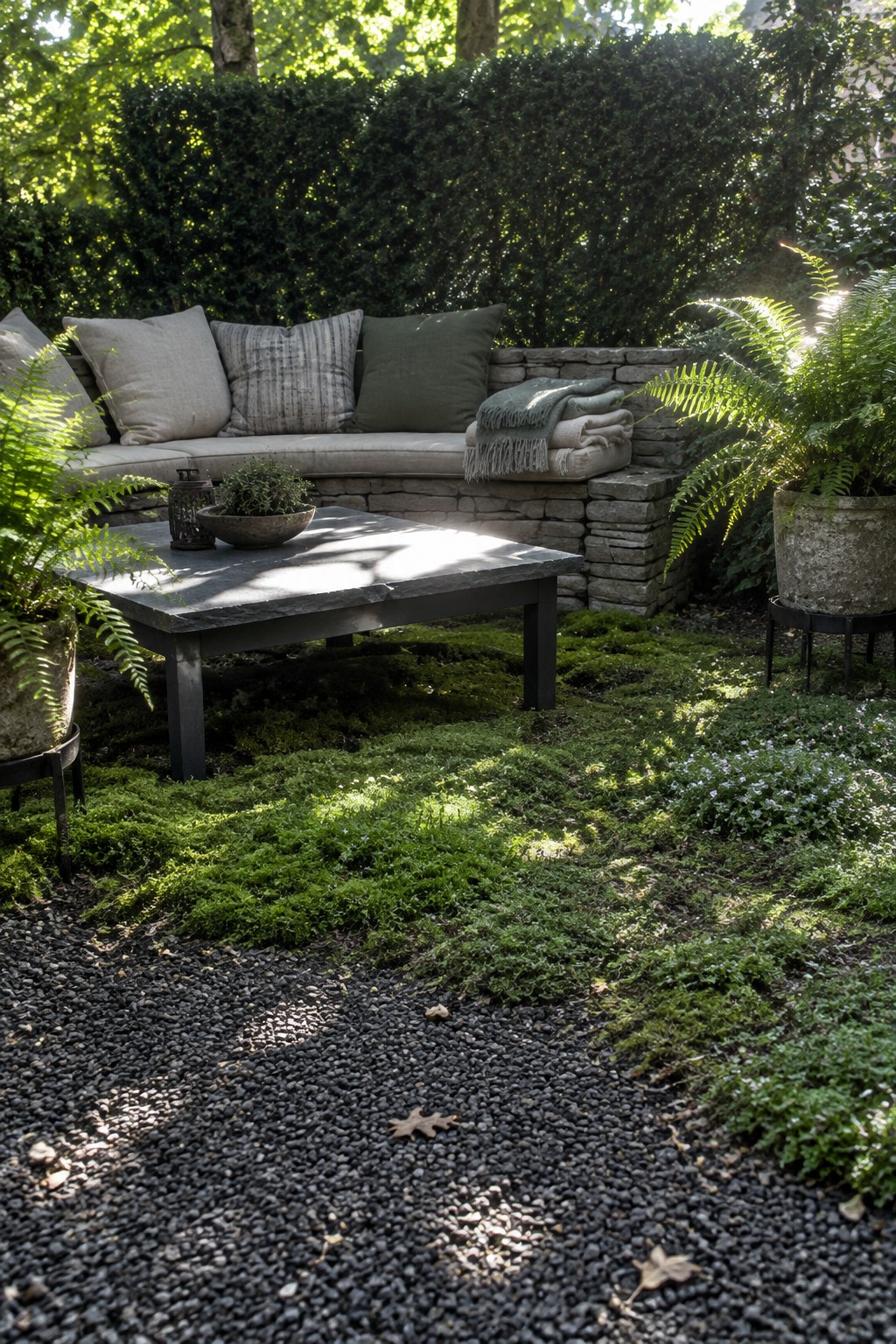
Moss makes a useful ground cover for a shaded seating area, especially where grass would be hard to keep healthy. It fills the space around a gravel edge and gives the patio a softer surface without needing a large planted bed.
It works best in cool, damp spots with limited foot traffic. Let moss spread between the seating area and the path, and keep gravel where people need a firm, easy-to-walk surface.
Use Ground Cover Along a Pebble Path

A narrow pebble path can bring color and texture to a small garden without taking up much room. Low ground cover along the edges helps define the route and keeps the stones from looking like a loose strip through the yard.
Choose a compact plant that stays low and can handle occasional foot traffic near the edges. In a narrow side yard, leave enough clear space for walking, and use a firm stone border to keep the pebbles in place.
Frequently Asked Questions
Q: What ground cover works best between patio pavers?
A: Choose a low-growing plant that can handle some foot traffic, such as creeping thyme. Leave enough space for it to spread, and keep in mind that it still needs occasional trimming around the pavers.
Q: Can ground cover grow beside a gravel path?
A: Yes, but use edging to keep runners from creeping into the gravel. A narrow planting strip also makes it easier to water plants without washing soil onto the path.
Q: How do I stop ground cover from taking over the border?
A: Start with just a few plants and prune their edges when they reach beyond the space. Check spreading varieties every few weeks during the growing season.
Q: Should I plant ground cover before or after laying gravel?
A: Plant first, then add gravel around the planting area. This gives roots room to settle and helps keep loose gravel from burying young plants.
