


I have noticed that concrete patios with bigger slabs tend to feel more solid underfoot, which changes how comfortable it is to spend time outside.
That stability also helps when arranging tables and chairs without worrying about uneven spots.
Large slabs work better in practice.
I keep thinking about how these layouts would hold up in my own yard during different seasons before committing to any changes.
The ones that include subtle drainage details or softer borders around the edges seem worth trying first because they avoid the common pitfalls of looking flat and hard.
Large Concrete Slabs For A Simple Patio Floor

Large concrete slabs give a patio a clean base without a lot of extra lines or patterns. Fewer joints mean the space feels more open, which works especially well when you add a fire pit and seating right on the same surface.
This layout suits modern homes that already use concrete or stone elsewhere in the yard. Keep the slabs level and the seams tight so water moves off easily and the whole area stays low maintenance over time.
Large Concrete Slabs With Grass Joints

Large concrete slabs set in a grid with narrow strips of grass between them give a patio a clean modern look without feeling too hard. The big pieces stay mostly solid underfoot while the green lines soften the surface and keep it from reading as one solid block.
This approach works best in sunny backyards where you want low maintenance but still some connection to the lawn. It suits contemporary homes and holds up well next to built-in kitchens or dining spots since the slabs handle heavy use without shifting.
Large Concrete Slabs For Built-In Patio Seating

Large concrete slabs give a patio a steady base that holds up well over time. They create a flat surface that supports built-in seating without needing extra framing or edging, which keeps the whole area simple and low maintenance.
This layout works best in backyards where you want a central spot for a fire pit and casual seating. The slabs pair easily with wood tops on the benches and a few plants around the edges, but watch the scale so the space does not feel too heavy for a smaller yard.
Large Concrete Slabs For A Simple Patio Base

Large concrete slabs give a patio a clean, open feel because they cover more ground with fewer seams. The result is a surface that looks calm and modern rather than busy or chopped up.
This layout works best on flat yards next to contemporary homes where you want the outdoor space to feel like an extension of the interior floor. Keep the joints tight and level so water drains well and the slabs stay stable over time.
Large Concrete Slabs Create A Simple Patio Base
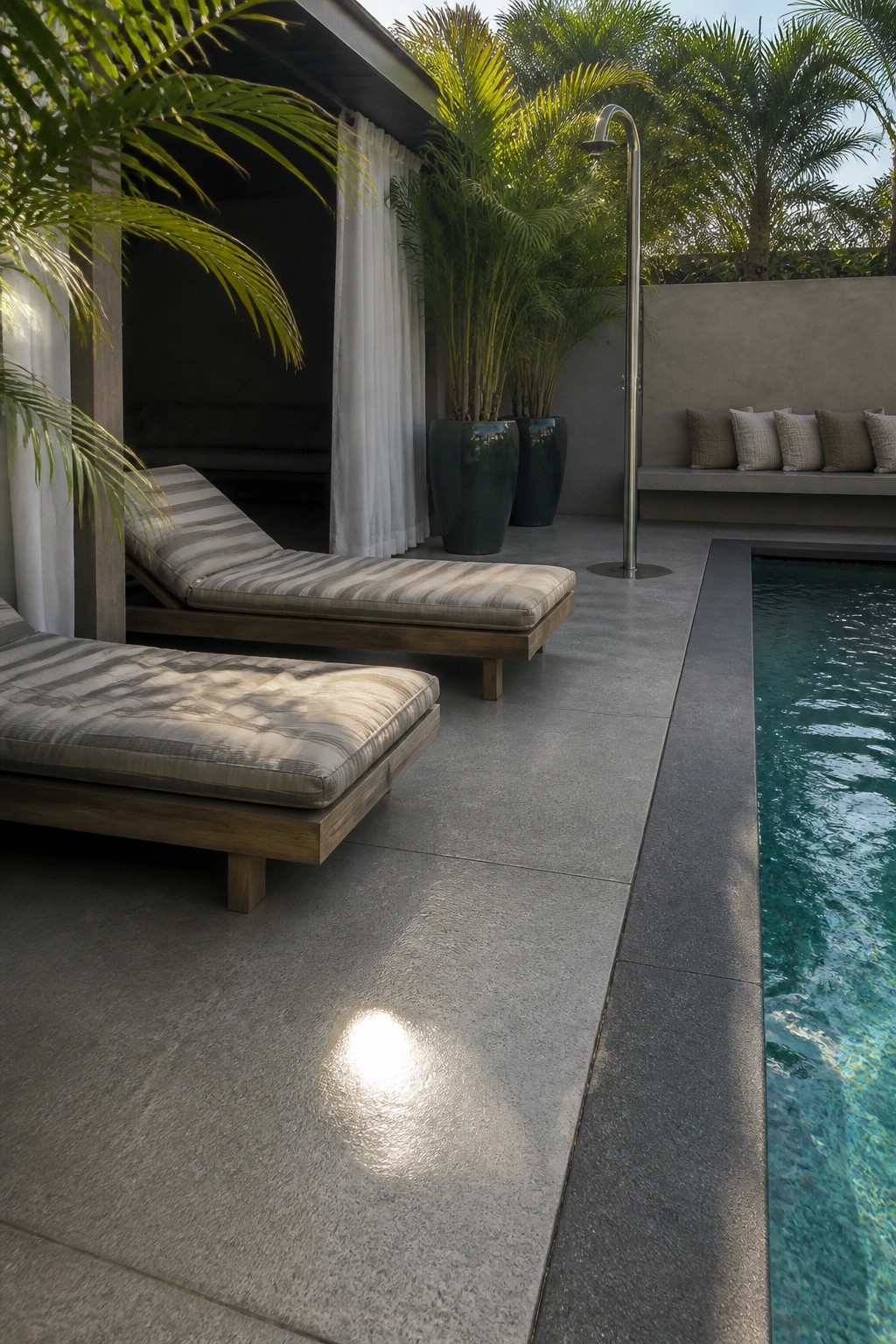
Large concrete slabs give a patio a clean, solid surface that handles heavy use and weather without much upkeep. The fewer seams mean the space feels more open and the material stays cooler underfoot compared to smaller pavers.
This works especially well next to pools or on flat terraces where drainage and durability matter most. Keep the slabs level and add a slight slope so water runs off properly instead of pooling.
Large Slab Patios With Gravel Joints

Large concrete slabs give a patio a clean, grounded look that still feels open. The gaps filled with gravel add just enough texture to break up the surface without making the whole thing feel busy or fussy.
This approach works especially well in backyards that need to handle heavy foot traffic and outdoor furniture. It suits homes that want a simple, low-maintenance hardscape that still leaves room for plants and seating around the edges.
Concrete Built-Ins On Large Slab Patios

Large concrete slabs give a patio a solid base that holds up well over time and needs little upkeep. When you add matching built-in seating along one edge, the whole space feels tied together without extra furniture cluttering the floor.
This works best on rooftops or compact yards where you want durable seating that stays in place. Keep the layout simple so the fire pit stays the main focal point and the slabs stay easy to clean.
Large Slab Patios for Outdoor Dining

Large stone slabs work well under an outdoor table because they create a solid base without covering the whole area in one flat surface. The gaps between them let a bit of grass or moss grow through, which softens the look and helps the patio feel like part of the garden rather than something added on top.
This approach suits homes where the dining space sits between the house and the landscape. Keep the slabs irregular in size and leave natural spacing so the area stays casual. Avoid tight grout lines if you want the same relaxed effect.
Large Concrete Slabs With A Linear Fire Pit
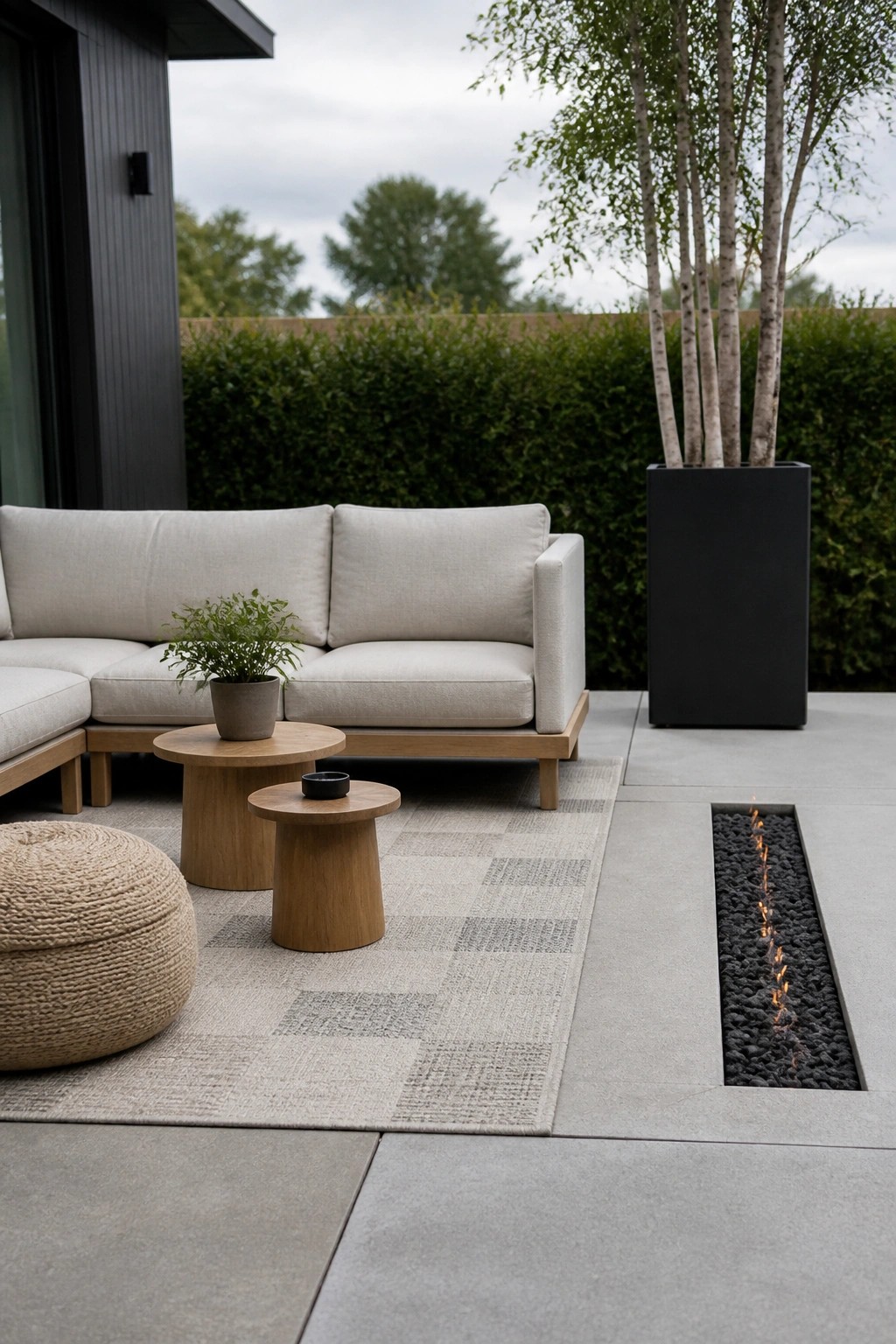
Large concrete slabs keep a patio feeling open and simple. With fewer seams showing, the surface stays calm and the whole area reads as one connected space rather than a collection of smaller pieces.
This works well when you run a long fire feature straight into the slabs. The result stays low and tidy, which suits modern homes that want the outdoor floor to feel like an extension of the indoor space.
Large Concrete Slabs With Gravel Joints

Large concrete slabs give a patio a clean, open feel without making it look too heavy. The gravel lines between them break up the surface just enough and help with drainage so water does not pool.
This layout works best on flat yards next to gardens where you want the seating area to feel connected to the planting. It suits modern homes that need simple outdoor space that stays low maintenance over time.
Large Slab Patios With Gravel Joints

Large slabs give a patio real presence without making it feel too rigid. The narrow gravel lines between them keep the surface from looking like one solid block and let a bit of the garden show through.
This layout works best on homes where the patio sits close to planting or a water feature. Stick with big, irregular pieces and keep the gravel gaps tight so the floor stays practical underfoot while the edges stay soft.
Large Concrete Slabs With Grass Between Them
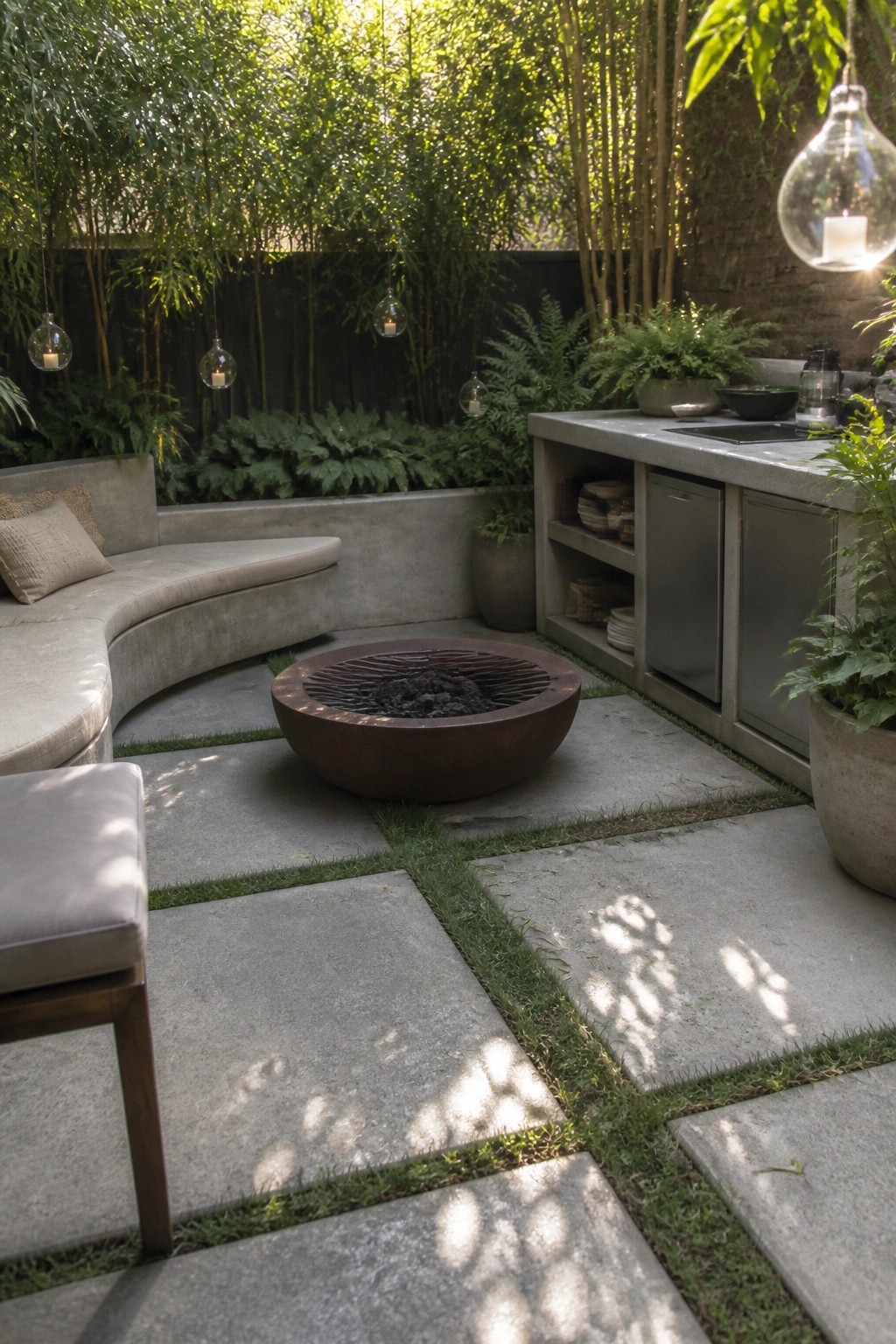
Large concrete slabs make a patio feel grounded and easy to maintain while still leaving room for a bit of greenery to show through. Spacing them with narrow strips of grass breaks up the hard surface and keeps the whole area from looking too flat or heavy.
This layout works best in backyards where you want space for seating and a fire pit without covering everything in solid paving. Use bigger slabs so the pattern stays simple, and make sure the grass joints are wide enough to mow but narrow enough to keep the surface comfortable underfoot.
Large Concrete Slabs For A Clean Patio Base

Large concrete slabs give an outdoor space a solid, open feel without a lot of extra pattern or fuss. They handle heavy use from seating areas and foot traffic while keeping the overall look simple and modern.
This works best on patios that need to stay practical yet tie in with nearby structures like an outdoor bar or fire pit zone. Leave small gravel joints between the slabs for drainage and a bit of contrast, and make sure the slab size matches the scale of the space so it does not feel chopped up.
Large Concrete Slabs For Multi Use Patios

Large concrete slabs create a simple base that lets you combine seating and cooking areas without extra steps or transitions. The flat layout keeps everything open so furniture and built-ins sit together naturally and the space feels bigger than it is.
This works well on homes where the patio gets daily use and needs to stay low maintenance. Place the slabs first, then add a built-in bench or oven base so the whole area reads as one zone rather than separate pieces.
Large Slab Patios With Built-In Seating

Large concrete slabs give a patio a steady, open feel that holds up well over time. They create a simple surface that connects different parts of the yard without breaking up the space too much.
A long bench built right into the edge works nicely with this kind of flooring. It suits homes that already lean modern and gives you extra seating without adding more furniture to move around.
Large Slabs Keep A Patio Layout Simple

Large concrete slabs work well when you want an outdoor space that feels open and easy to move around in. The big pieces reduce the number of seams so the floor reads as one surface rather than a busy grid of small pavers.
This approach suits homes where you need to fit both seating and a water feature without the ground looking chopped up. Leave narrow strips between some slabs for a few low plants and the whole area stays low maintenance while still feeling connected.
Large Concrete Slabs For A Simple Patio Base

Large concrete slabs give an outdoor dining area a solid, low-maintenance surface that stays level and drains well. They create a clear zone for seating without needing extra edging or borders, which keeps the whole setup practical for everyday use.
This works best in yards that already have gravel paths or open planting nearby. It suits homes that want a modern floor paired with rustic wood tables and benches, though it helps to leave enough space around the slabs so the area does not feel boxed in.
Large Concrete Slabs For A Simple Patio Surface

Large concrete slabs give a patio a solid, modern base that feels straightforward and easy to keep up. They stand out because they create wide, open walking areas without breaking the space into too many small sections. The slabs also handle foot traffic well while still letting you add gravel edges for a softer look.
This works best in smaller yards or side gardens where you want low maintenance and good drainage. Place the slabs in a loose grid with gravel between them so water can move through, and keep surrounding plantings simple so the concrete stays the main feature.
Frequently Asked Questions
Q: Will weeds push up between the slabs over time? A: Fill the joints with polymeric sand right after the pour. It hardens enough to block most seeds while still letting water drain. Spot treat any early growth with a quick vinegar spray.
Q: How thick should the slabs be if I want to park a grill cart on them? A: Go with at least four inches and reinforce with rebar or fiber mesh. That thickness handles rolling loads without flexing or cracking.
Q: Can I clean up grease spills without leaving marks? A: Sweep off loose dirt first then scrub with a mild dish soap and stiff brush. Rinse well and let it dry in the sun. Avoid harsh chemicals that can etch the surface.
