

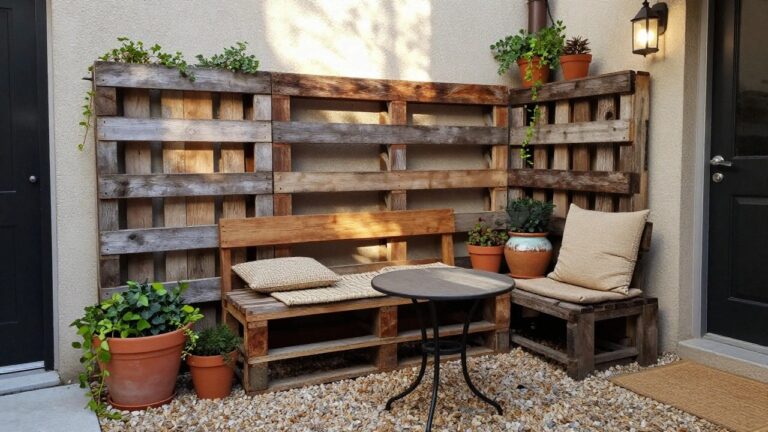
I have noticed that many patios end up sitting empty because they feel too exposed to the houses next door.
Building simple screens from pallets and adding planters can create that needed separation while still letting some air and light move through.
I tried a basic version on my own side patio last year and it changed how often we used the space.
The setups that hold up best seem to balance height with a few open sections so the area does not feel closed in.
A couple of these approaches could be worth adapting if your patio has the same open feel.
Pallet Screens Add Quick Privacy to Small Patios
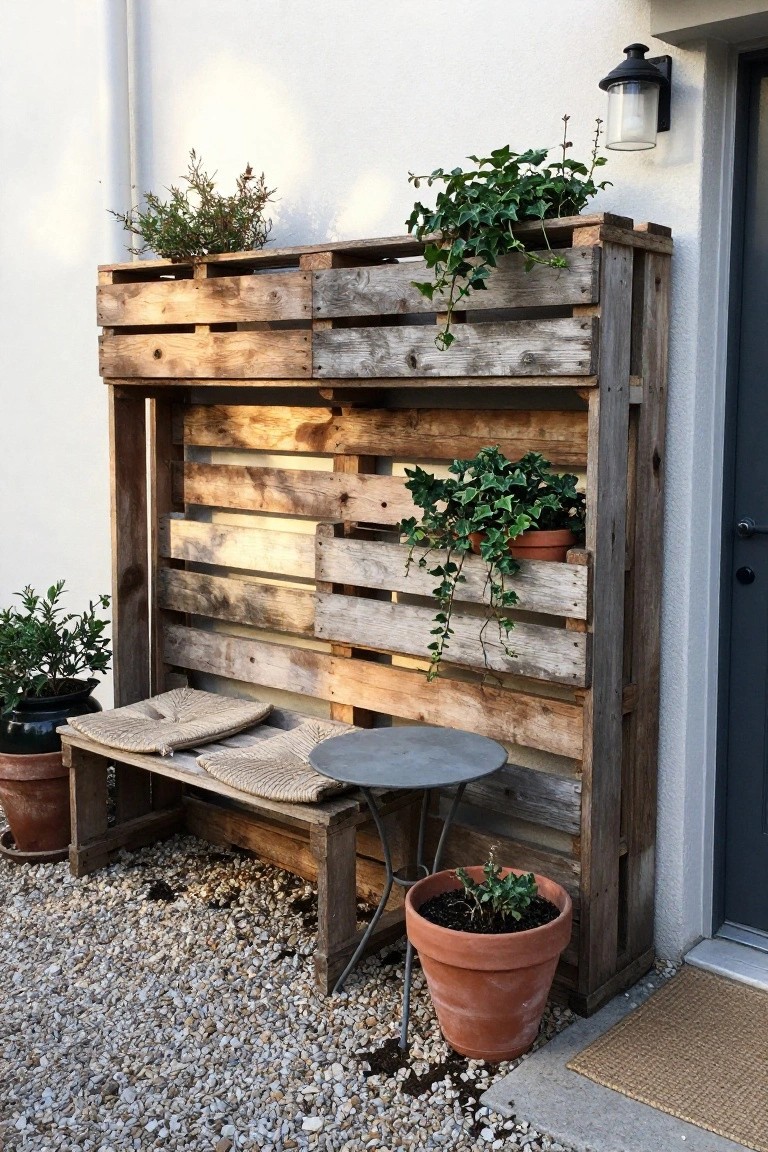
Old pallets stacked into a tall frame can turn an open patio spot into a more private area without much work. The open slats let some light through while the added planters bring in enough greenery to soften the view from outside.
This setup works best along a fence line or next to a house wall where you need a bit of separation. Place it where seating fits behind it, and use trailing plants in the openings so the screen fills in over a season or two.
Paint a Simple Wood Screen for Patio Privacy
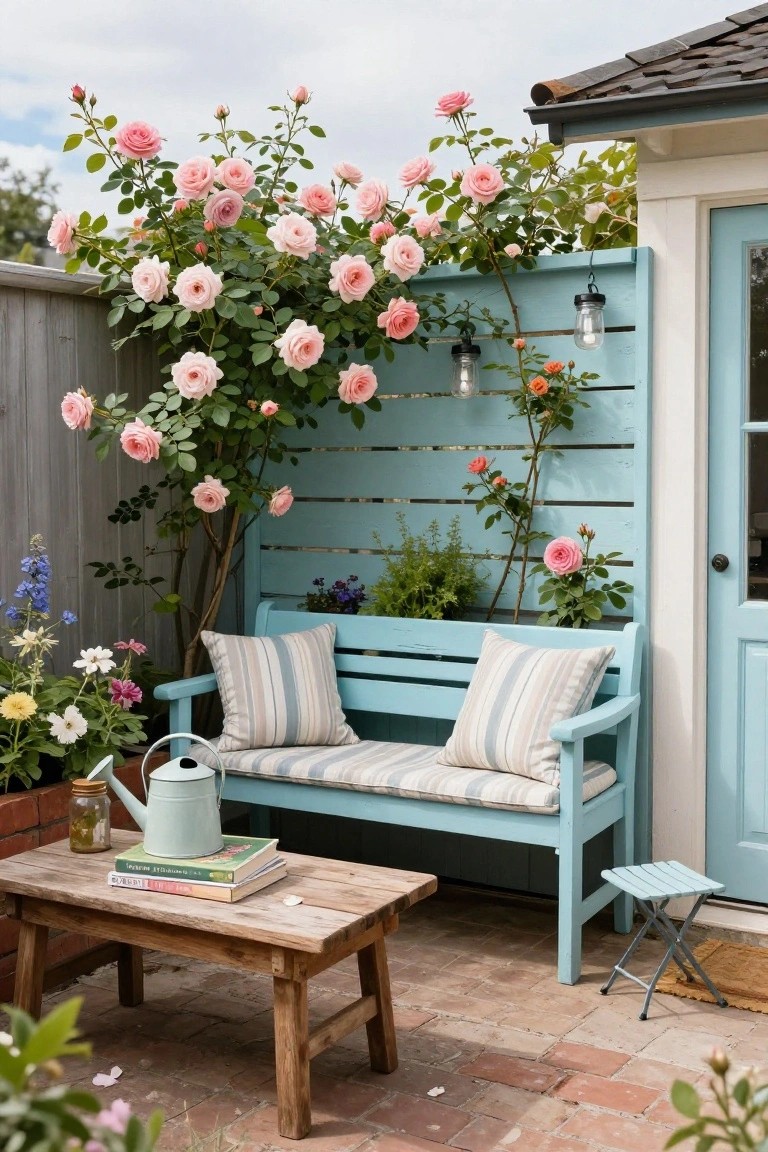
A painted wood screen gives a small patio seating area a feeling of enclosure without making it feel boxed in. The horizontal slats let some light through while the climbing roses add softness and seasonal color right where you need it most.
This setup works well on narrow patios or side yards where you want privacy from a neighboring fence or window. Use basic lumber or pallet wood, pick a color that blends with your house, and let the vines fill in over a season or two.
Use A Long Planter To Screen A Patio Edge
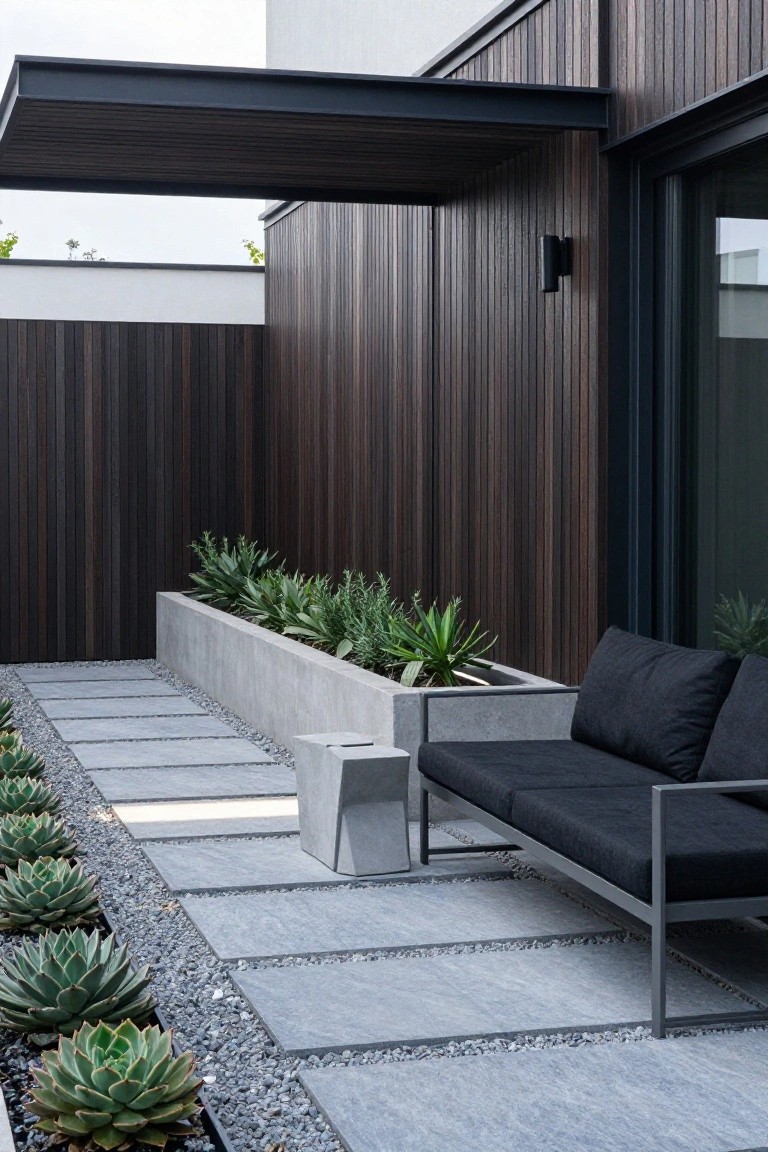
A long planter makes a simple screen when a patio sits too close to a fence or neighboring wall. It adds height and some greenery without needing a full fence addition or heavy structure.
This works best on narrow side patios or back corners where you want a bit of separation. Keep the planter width narrow so it does not eat into walking space, and choose plants that stay fairly compact.
Pallet Screens with Planters for Patio Privacy
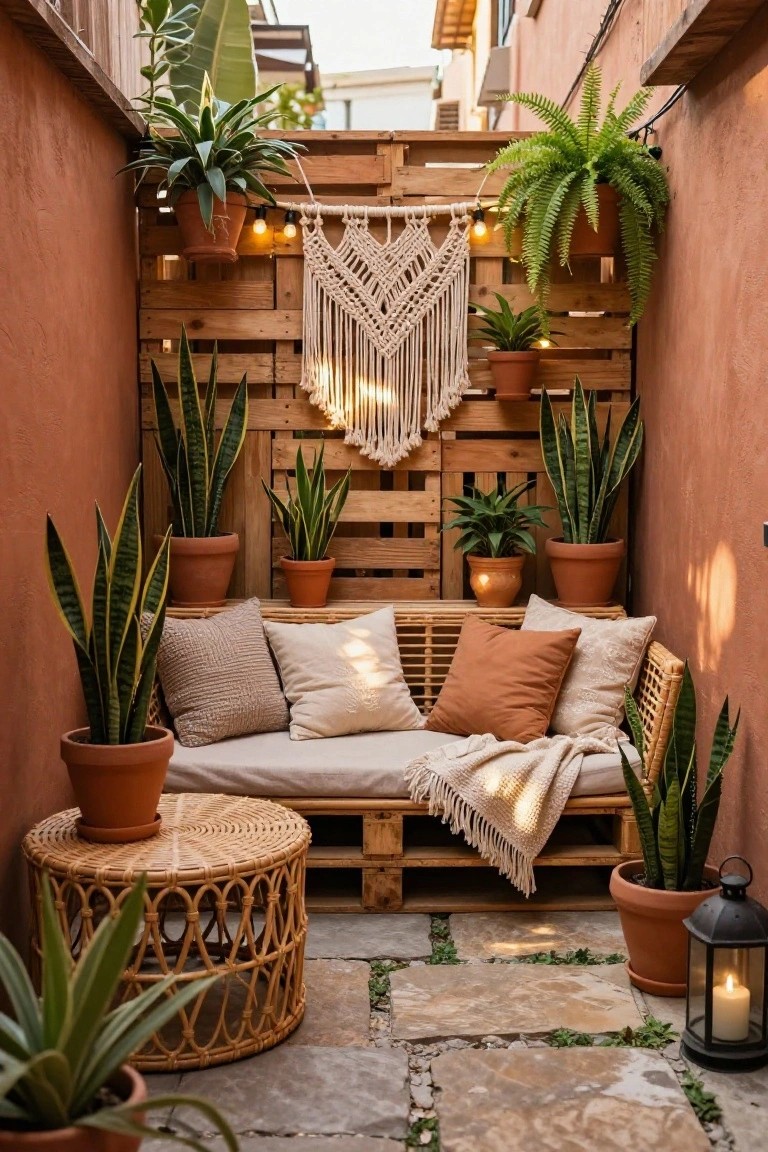
A simple pallet wall can turn an exposed patio into a more private spot without much cost or effort. People like this approach because the open slats let in some light and air while still blocking views from neighbors or nearby windows. Adding a few potted plants along the top and base softens the look and makes the screen feel more like part of the garden.
This works best in narrow side yards or small back patios where a full fence would feel too heavy. Use it on homes with limited outdoor space, and make sure the pallets are secured well if the area gets wind. Keep the planting light so the structure does not tip or rot over time.
Frame Reed Panels For Easy Patio Privacy
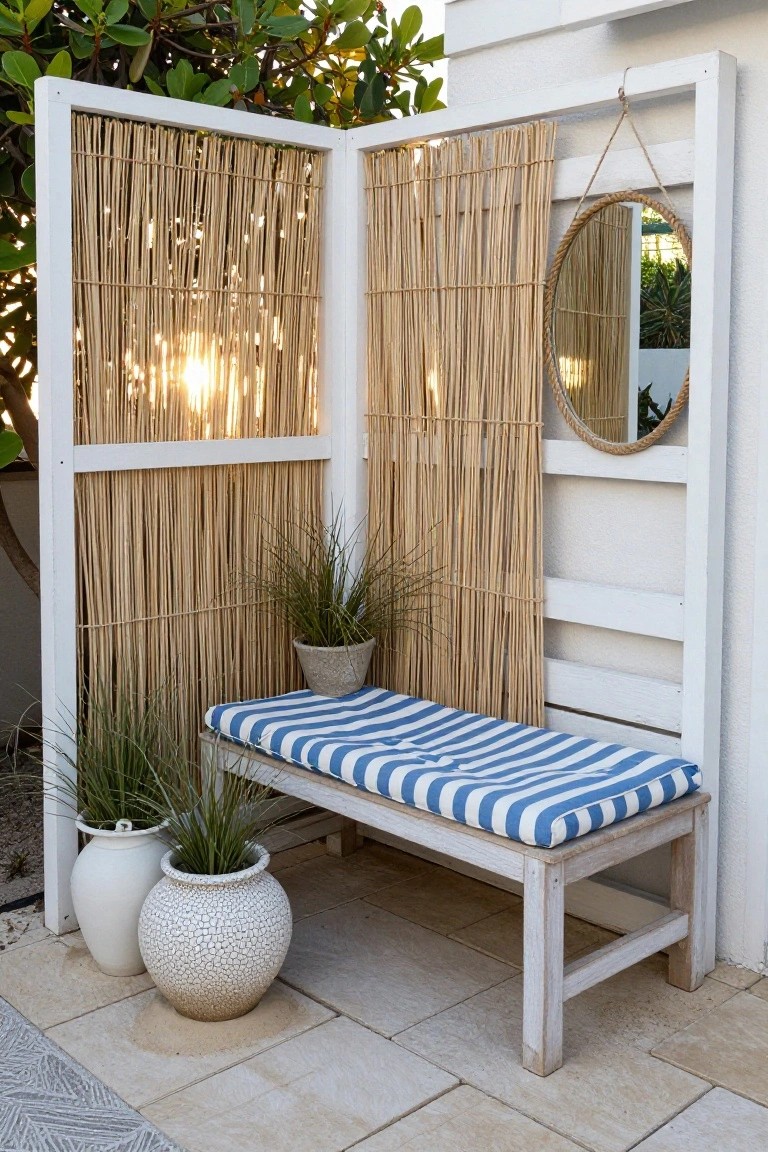
A framed reed screen gives a patio quick privacy without blocking all the light. It creates a simple boundary that feels natural and keeps the space from feeling too exposed to neighbors.
This works best on smaller or overlooked patios where you need a visual barrier along one side. Set the screen behind a bench and add a couple of pots at the base to help it blend in with the rest of the seating area.
Let Vines Cover a Trellis for Privacy
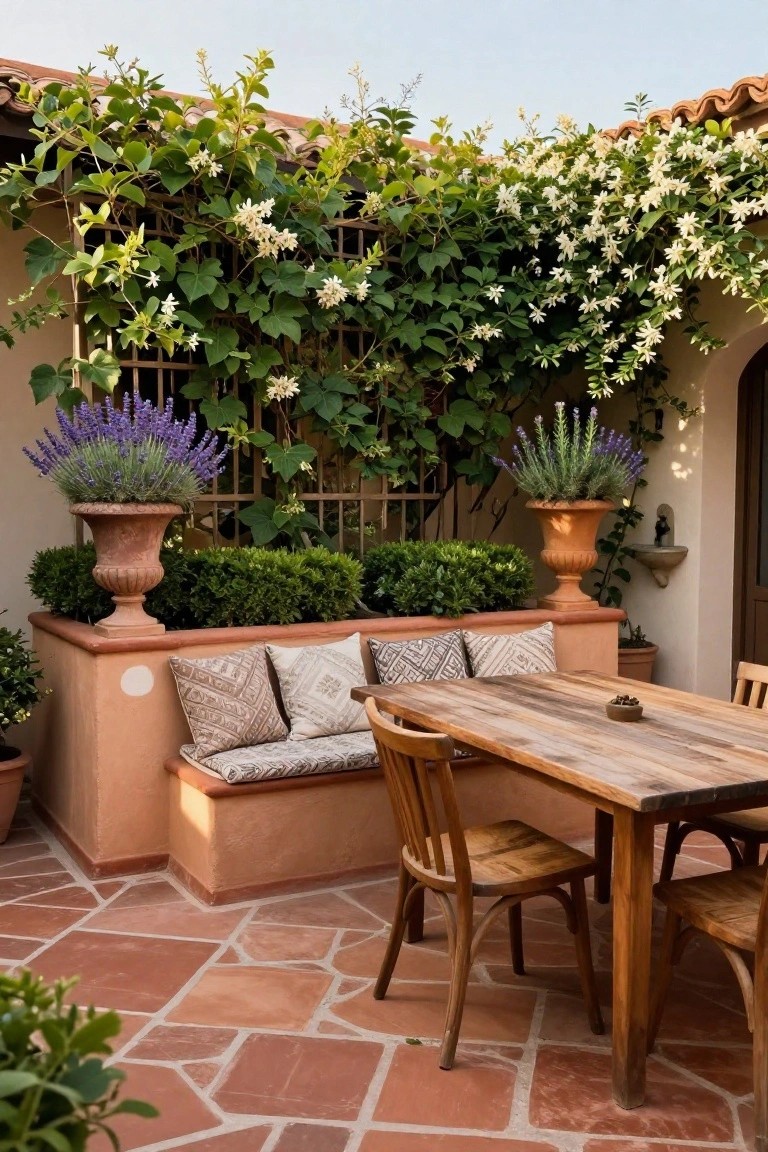
A simple trellis with climbing vines gives a patio wall real privacy without adding bulk or shade that feels heavy. The plants grow fast, soften the edges, and keep the space feeling open while blocking the view from outside.
This idea works best on small or overlooked patios where you want screening but still need light and air flow. Place the trellis against the main open side and use a couple of large pots at the base so the vines have room to spread without taking over the floor.
Pallet Planter Screens Add Privacy On Small Patios
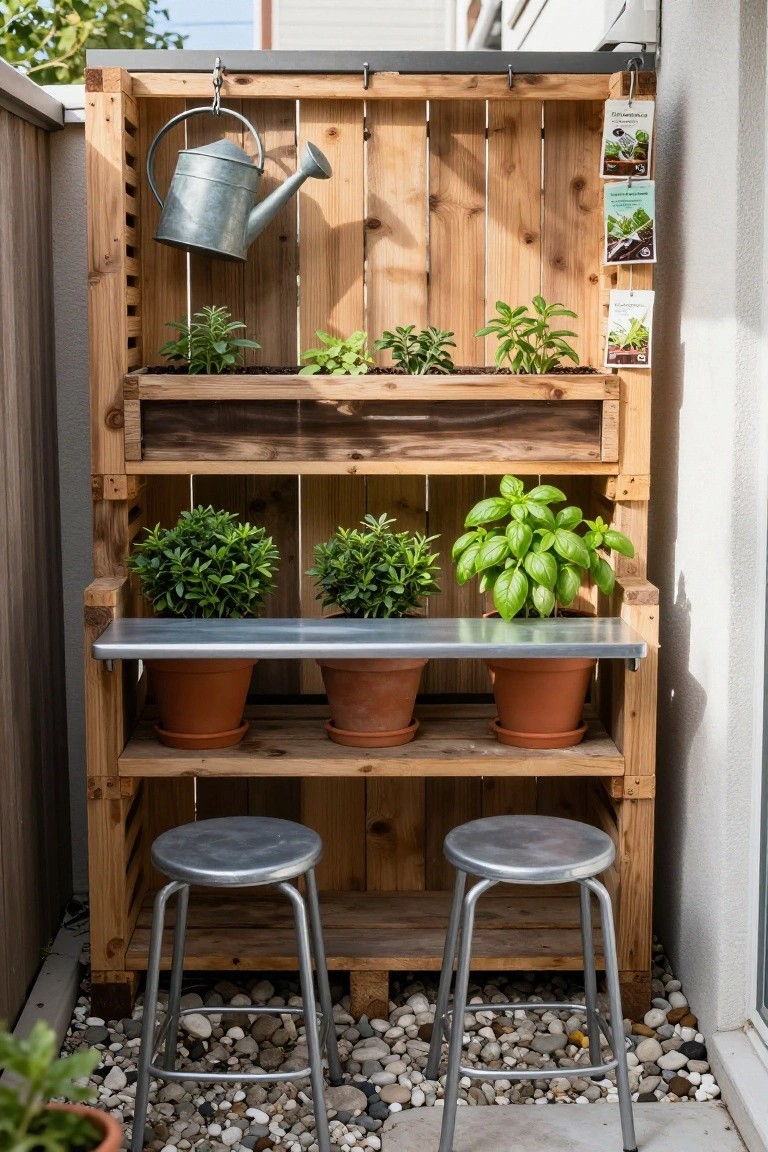
Many people use old pallets when they want a privacy screen that also holds plants. The vertical frame keeps the planters off the ground and creates a simple wall of greenery without needing much floor space.
This kind of screen works best on narrow patios or side areas where a full fence would feel too heavy. You can adjust the number of pots as plants grow and move the whole thing later if your layout changes.
Add A Wood Screen With Built In Planters
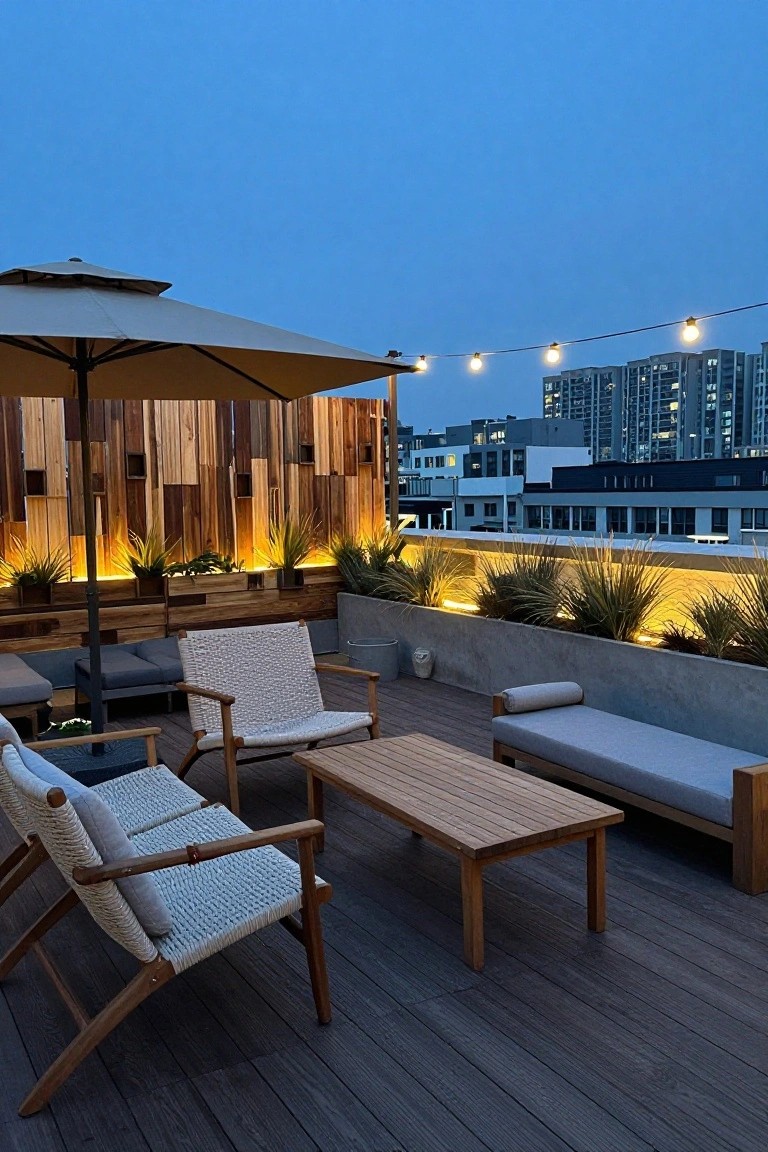
A wood screen that holds planters gives a patio solid privacy while still letting in some air and light. The plants add height and texture without needing a full fence or wall.
This setup works best on rooftops or narrow patios where you need to block views from nearby buildings. Keep the screen tall enough to sit above seated eye level and choose simple grasses that do not need much care.
Use A Tall Wood Screen For Patio Privacy
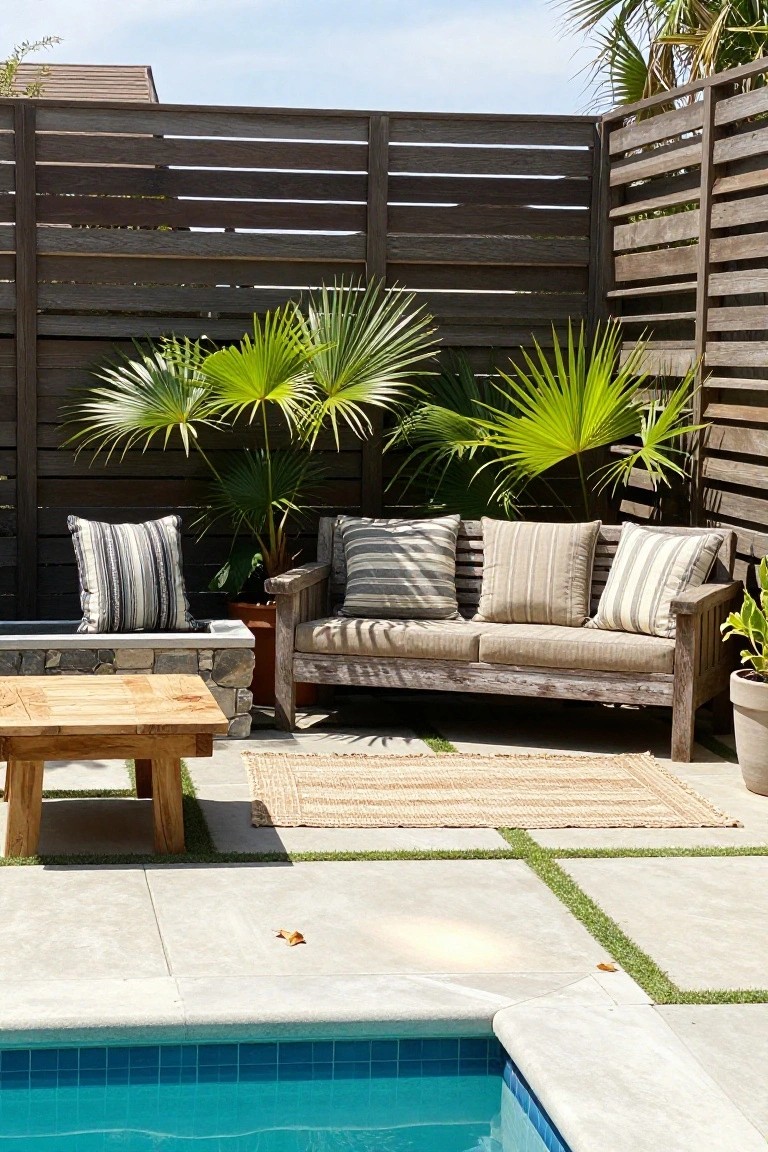
A tall wood screen with horizontal slats gives a patio real privacy without making the space feel boxed in. The gaps let air and some light pass through, so the area still feels open while blocking the view from neighbors or the street.
Set one up along the back or side of an overlooked patio and place a few tall plants in front. This works especially well on smaller lots or poolside spots where you want separation without a full solid fence.
Pallet Planters That Work As Screens
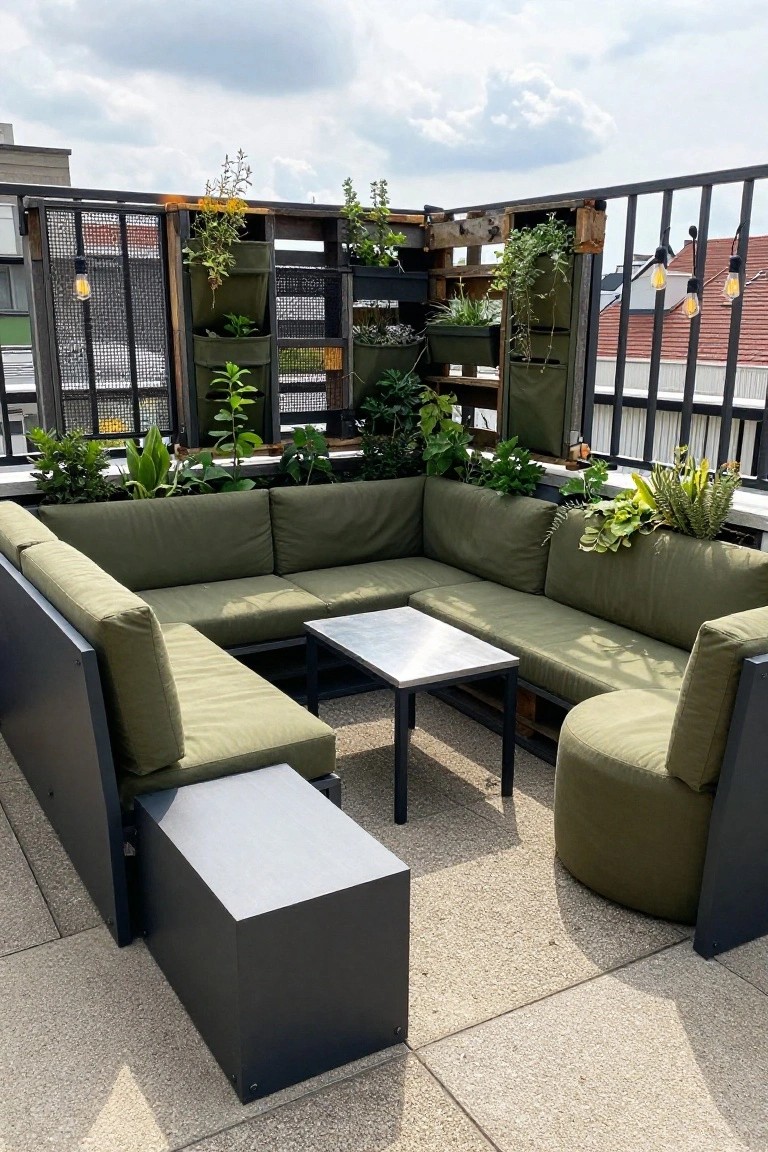
Pallet planters stacked upright give you a fast way to add privacy on a patio that feels too open. The wood frames hold soil and plants at different heights, so the screen fills in without looking solid or heavy. It blocks the view from nearby buildings while still letting some light through.
This works best on rooftops, side yards, or small terraces where you need height but do not want a full fence. Line the pallets with fabric, set them in a row, and plant trailing or upright greens to soften the look over time. Keep the structure simple so it stays easy to move or adjust later.
Bamboo Screens For Small Patio Privacy
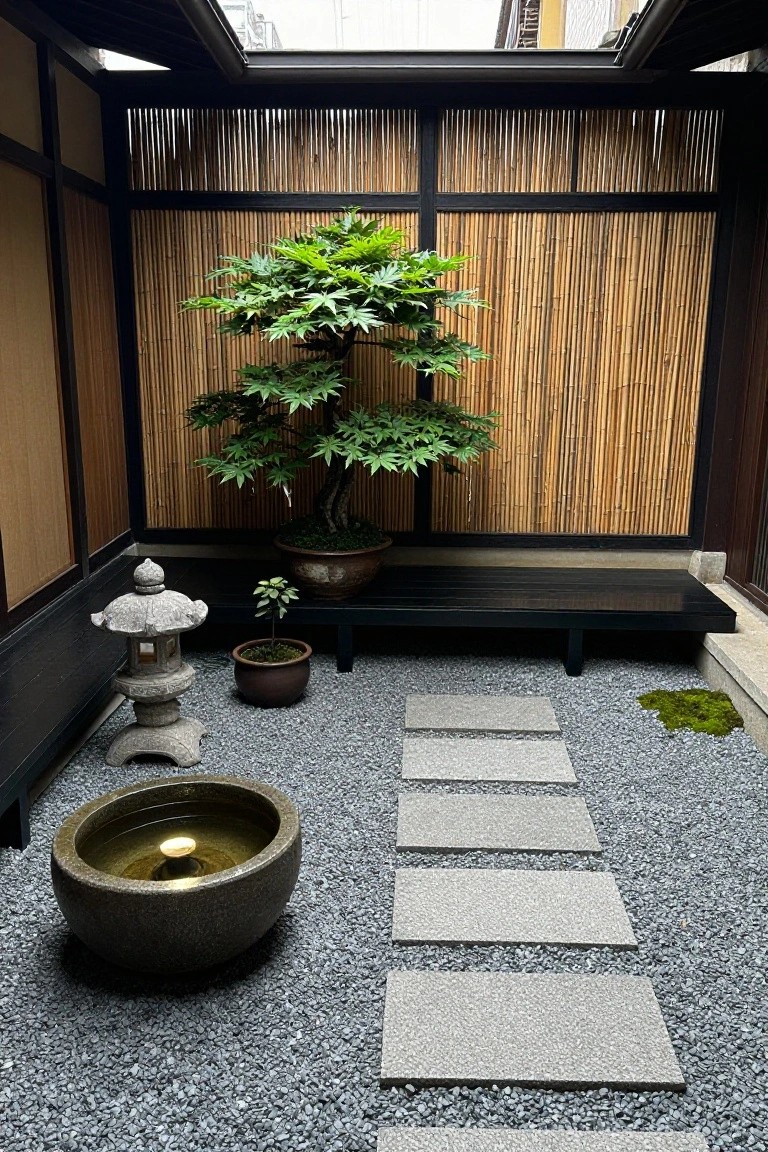
A bamboo screen gives quick privacy on a tight patio without needing a full fence. It blocks the view while still letting in light and air, and it pairs easily with one large potted tree placed in front.
This works best on overlooked side yards or small back patios where you want to feel enclosed but not boxed in. Keep the screen simple and let the planter do the softening. It needs little maintenance beyond an occasional rinse.
Pallet Planters Form a Living Privacy Screen
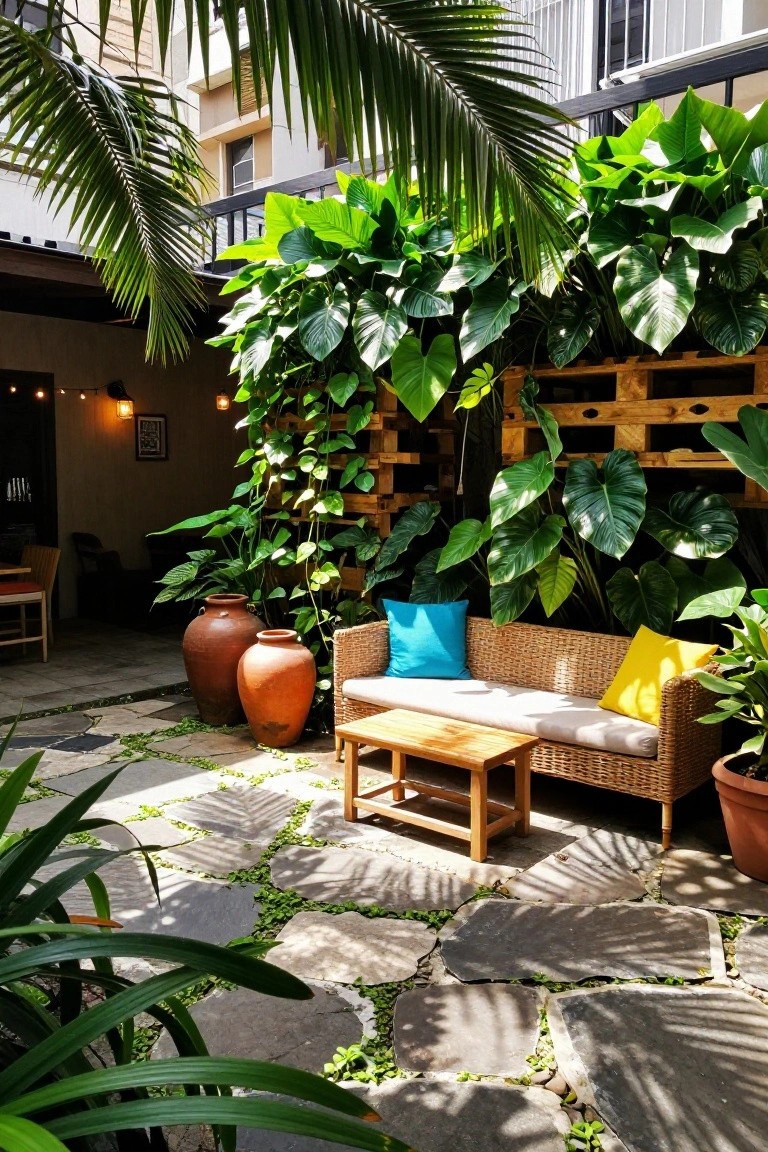
Many people use old pallets to build a simple vertical screen and then turn the openings into planters. The result blocks the view from outside while adding a wall of greenery that feels much softer than a solid fence.
This approach suits small patios or side yards where floor space is tight. Secure the pallets to an existing wall or posts, line the pockets, add soil, and choose fast-growing plants that will fill the gaps. Check the structure once a year to make sure it stays stable as the plants get heavier.
Pallet Bases Lift Planters for Quick Privacy
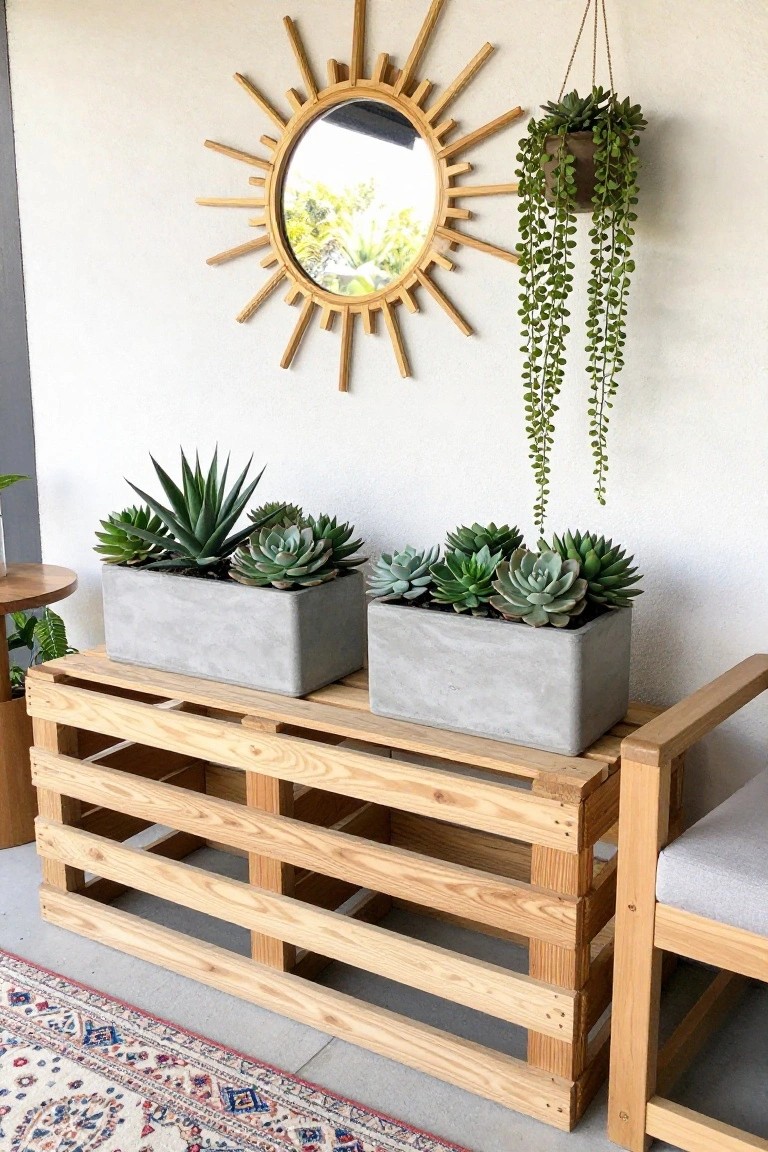
A pallet base gives planters enough height to screen a patio without adding a full fence or tall wall. The wood keeps things low and open while the plants do the real work of blocking sight lines from neighbors.
This setup suits small concrete patios or side yards where you want something movable. Check that the pallet is dry and stable before setting heavy pots on it, and keep the back side clear so air can still move through.
Pallet Screens For Quick Patio Privacy
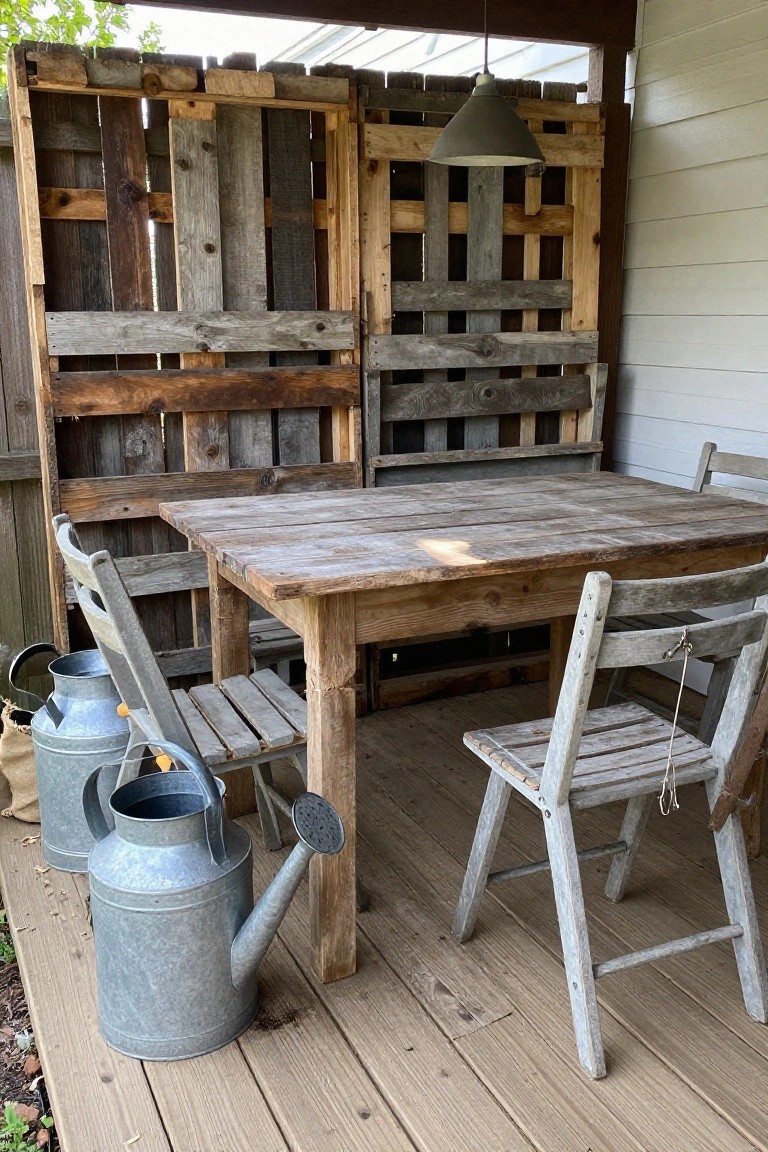
Many people use old pallets to add privacy around a patio table without building anything permanent. The vertical slats block the view from outside while still letting air move through the space.
They suit small decks or patios that sit near a fence or another house. Stand a few pallets upright behind the seating area and secure them so they stay steady, then add plants in front if you want extra coverage later on.
Add a Tall Screen for Patio Privacy
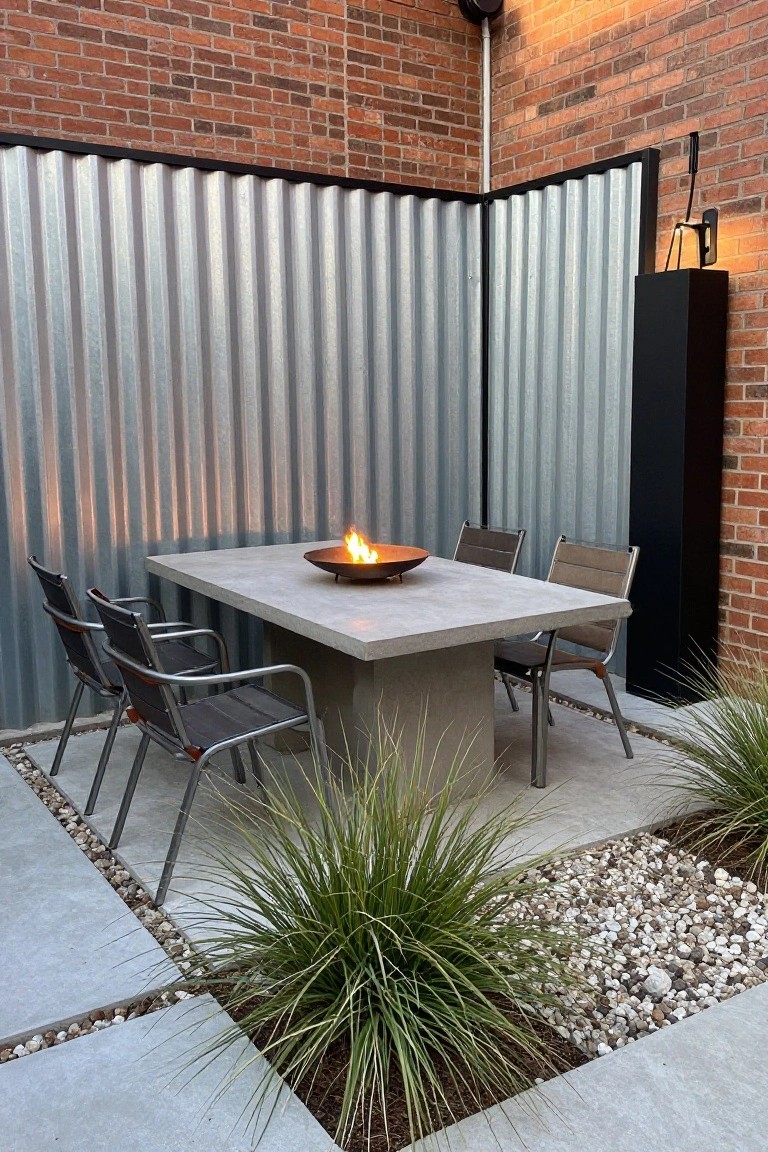
A tall screen wall turns an exposed patio into a space that actually feels private. The vertical panels block sight lines from the sides while keeping the area open overhead, so it still gets light and air without feeling boxed in.
This approach works best on narrow side yards or patios that sit close to neighbors. Pair the screen with a narrow strip of planting at the base to soften the edge and help it blend with the rest of the yard. It suits homes where you want a quick, low-maintenance way to create a defined outdoor room.
Using Pallets To Hold Tall Planters For Screening
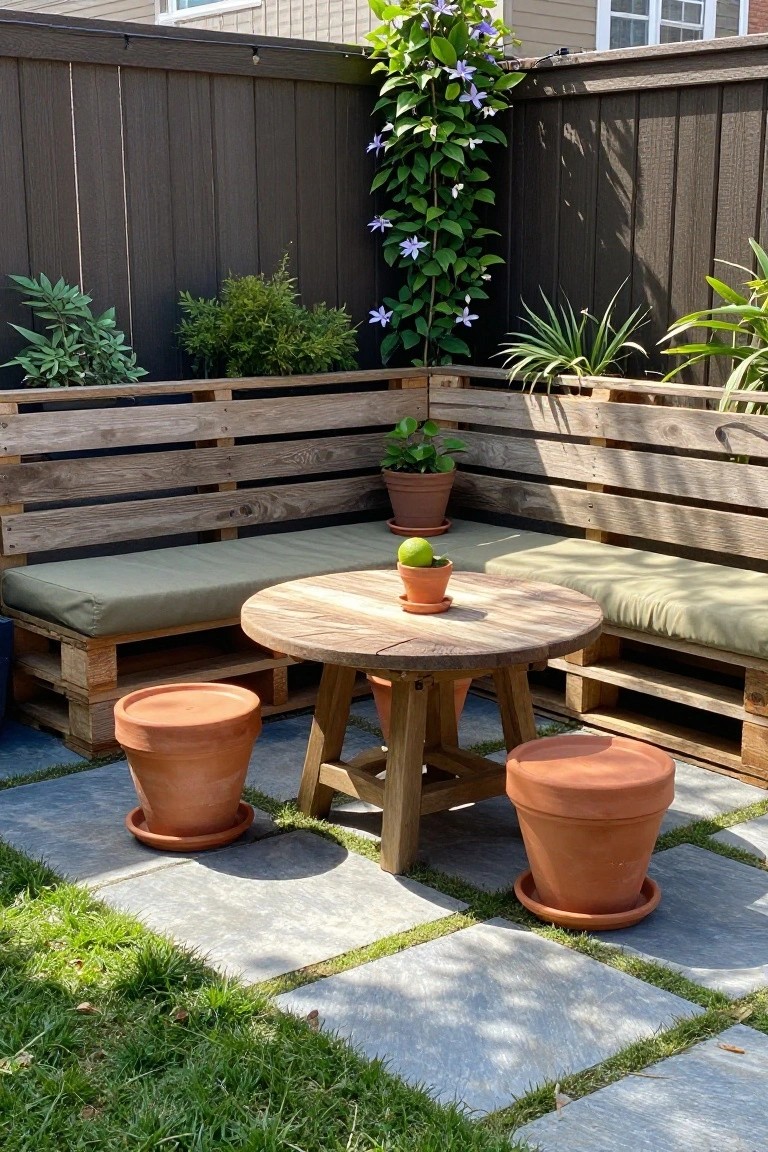
One simple way to add privacy on a small patio is to build benches or screens from pallets and then set tall planters on top or tuck them into the slats. The wood gives structure, and the plants add height and coverage without needing a solid wall.
This approach works best in corner areas or along a shared fence where you want to block sightlines but still keep the space feeling open. It suits renters or anyone who wants something easy to move or change later.
Pallet Planter Screens For Quick Privacy
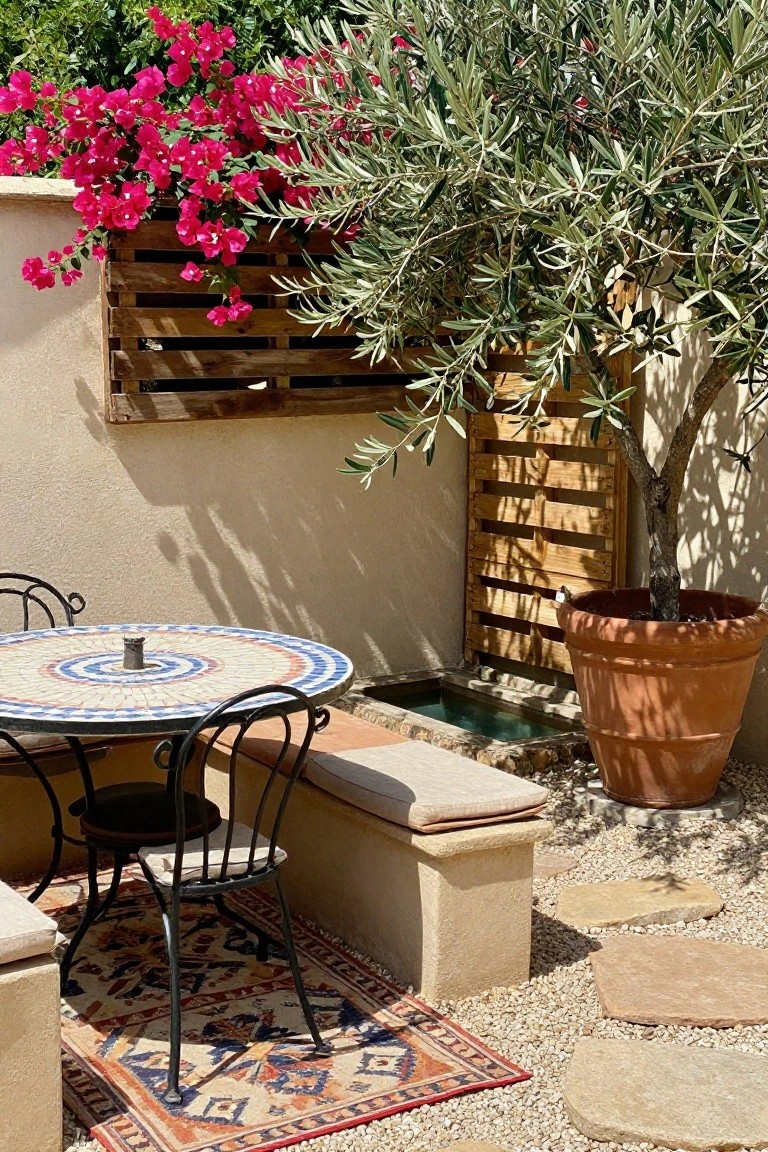
Many people reach for old pallets when a patio feels too exposed. Mount them flat against the wall, add soil in the slats, and let plants fill in the gaps to form a living screen.
This setup works best on small patios with solid walls where you need shade and privacy without a full fence. Water the plants often and choose vines or trailing types so the screen fills out faster.
Pallet Planters Form a Natural Privacy Screen
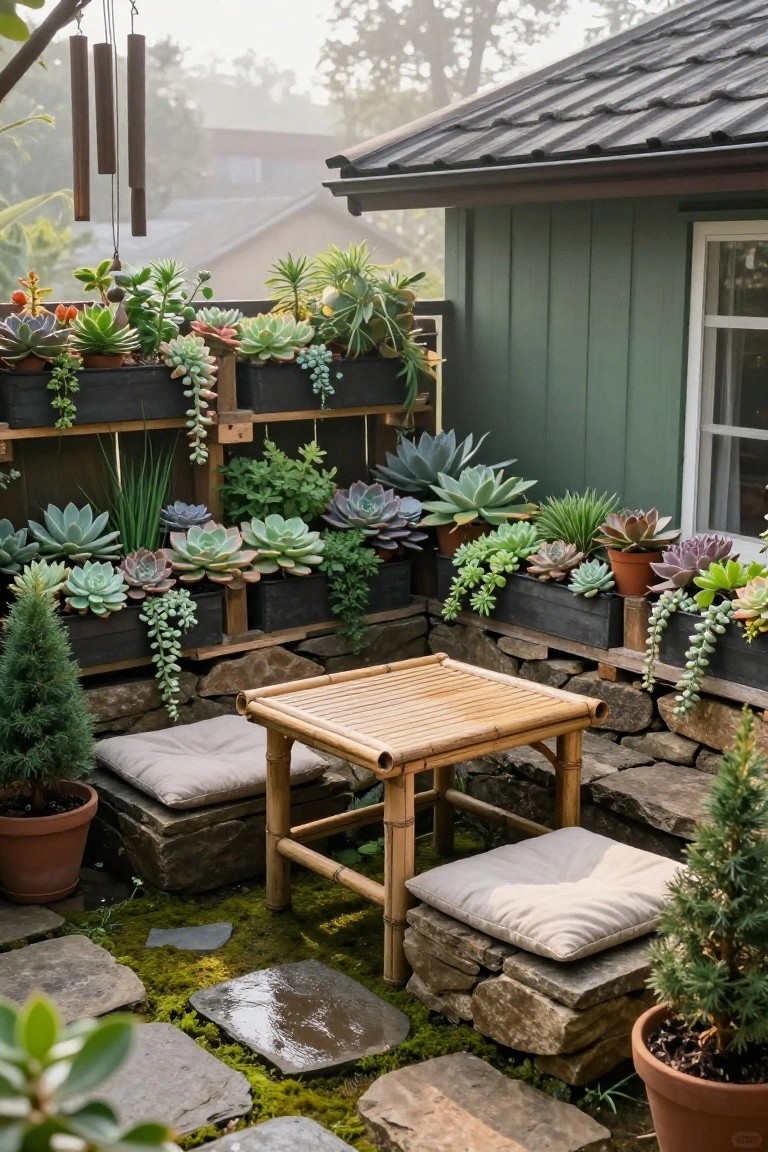
Mounting pallet planters along a patio edge gives you privacy without building a solid fence. The boxes stack or hang at different heights so plants fill in the gaps and soften the look over time. This keeps the space open while blocking views from neighboring yards.
It works best on homes that already have a low wall or railing to attach to. Use lightweight soil mixes and choose hardy plants like succulents that do not need constant watering. Check the wall strength first since wet soil adds real weight.
Add A Tall Screen For Instant Patio Privacy
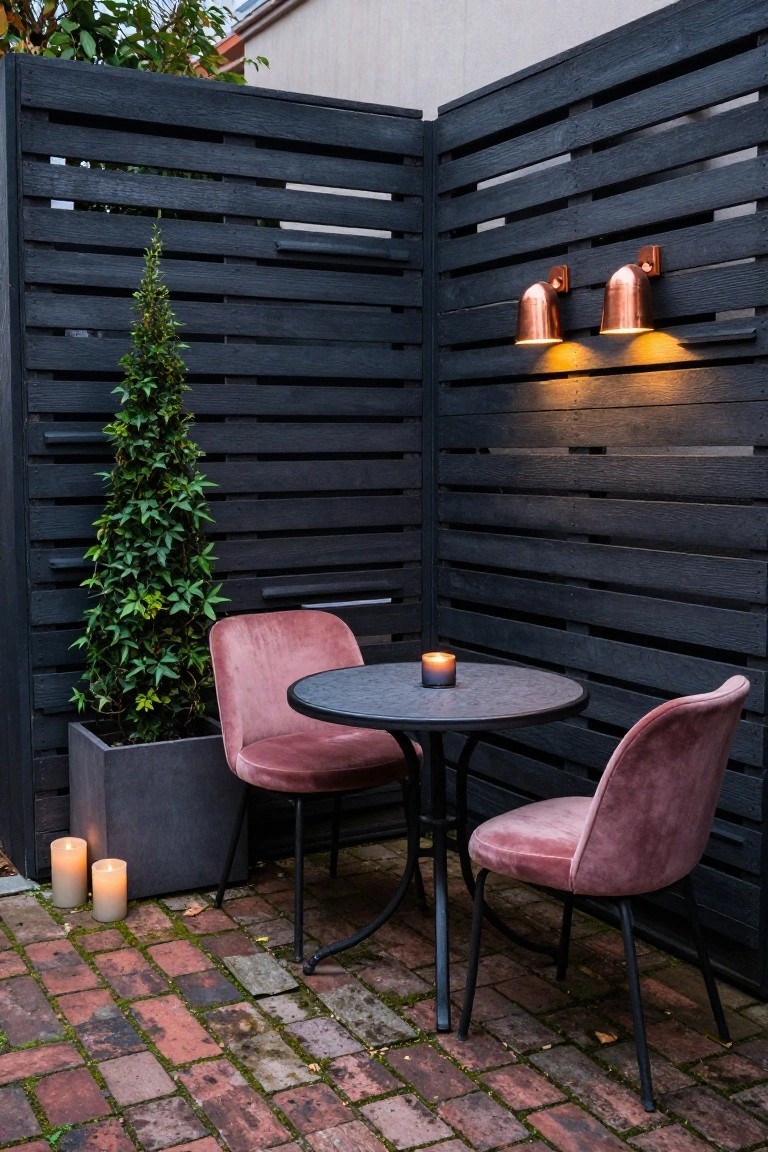
A tall wooden screen can quickly turn an open corner into a private spot without needing a full fence or hedge. The dark slats give solid coverage while the attached planter adds height and a bit of green that softens the whole setup.
This works best on small side patios or overlooked back areas where you want to block the view from neighbors. Keep the screen simple, match the planter color to the wood, and add one tall plant so the screen feels like part of the garden instead of just a wall.
Run a Trough Planter Along the Front
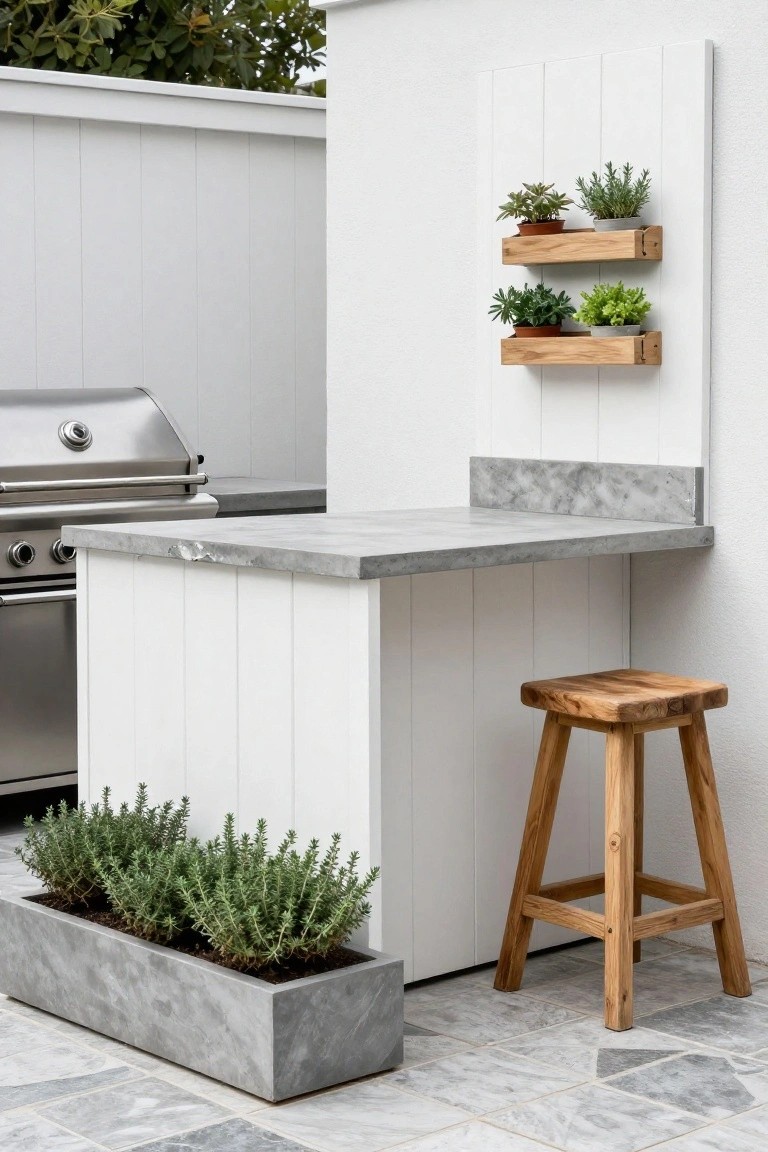
A long planter box set right at the base of an outdoor counter gives the space a natural edge without adding a full wall. It softens the hard lines of the island and brings in herbs or low plants that make the area feel more tucked away.
This setup suits patios that sit close to a neighbor or a walkway. Match the planter material to the counter so it looks built in, keep the plants low and useful, and make sure there is still room to walk around the stool or seating on the other side.
Pallet Planters Form Natural Screens on Patios
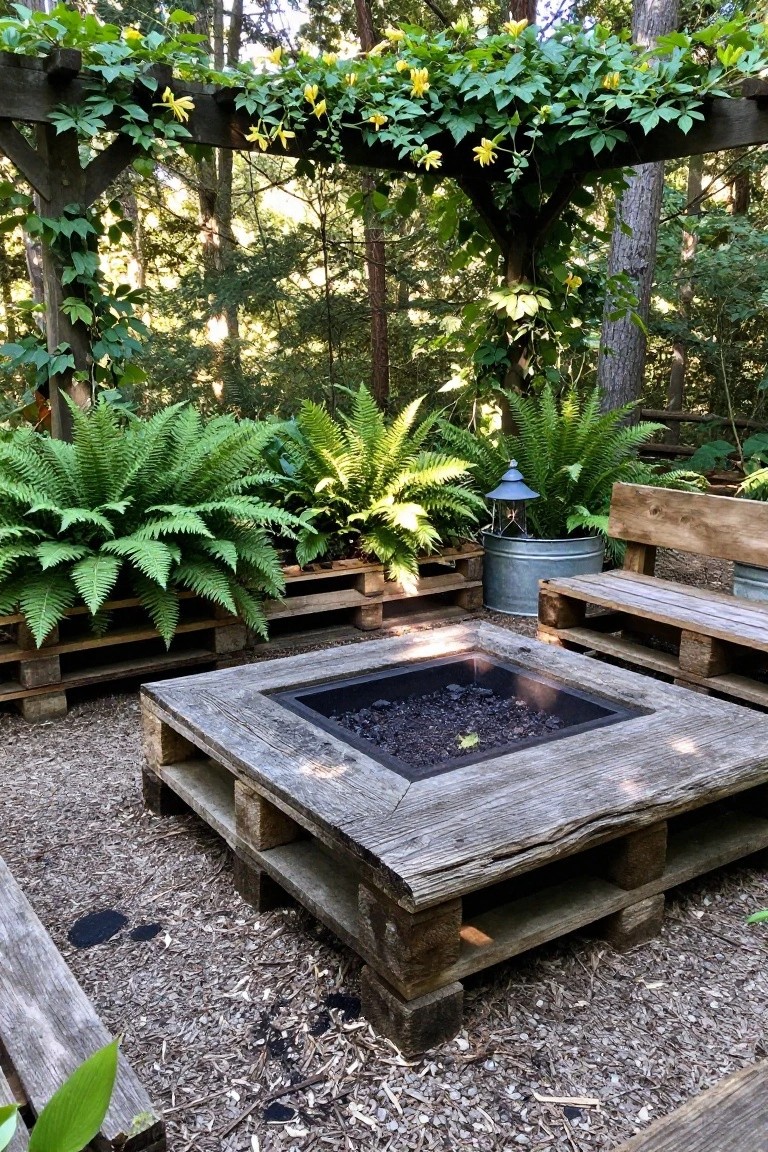
Pallet planters give you a quick way to add height and privacy around a small outdoor space. They work especially well when you need to separate a fire pit area from the rest of the yard without putting up a solid fence.
This approach suits homes with limited patio space or those set near trees and open garden beds. Stack the pallets low, fill them with dense plants like ferns, and keep the layout loose so the screen feels natural rather than built.
Pallet Seating Against Dark Walls for Easy Privacy
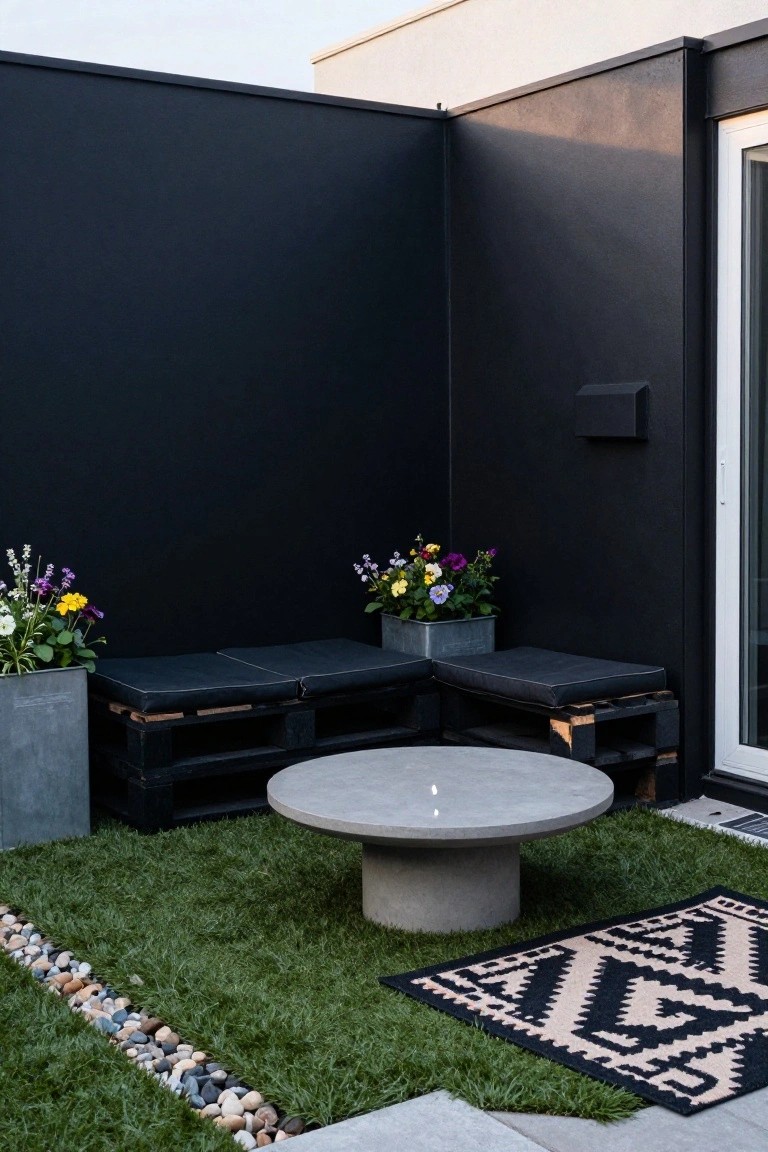
Many people find that pushing pallet benches right against a solid wall turns an open corner into a much more private spot. The dark background helps the space feel enclosed, and the low planters sitting on the pallets add just enough height and greenery to soften the edges without any extra building.
This works well on small patios or side yards where you need quick screening from neighbors. It suits homes with painted fences or modern walls, and you can stack more planters if the space still feels too open.
Frequently Asked Questions
Q: How do I stop the pallets from rotting once I add soil and plants? A: Seal every part of the wood first with outdoor stain. Reapply it once a year to keep rot away.
Q: What plants hold up best in pallet planters on a patio? A: Choose tough plants like lavender or boxwood. They handle dry spells well. Fill the planters without needing much soil.
Q: How can I make sure the screen stays upright in windy weather? A: Bolt the base to the ground or weigh it down with large stones. This stops the whole thing from blowing over during storms.
