

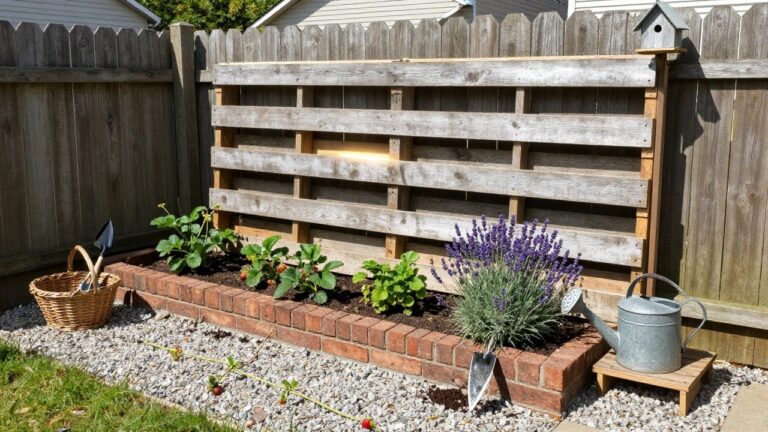
I keep coming back to the same problem in my yard where the flat beds take up too much ground and leave little room for walking between rows.
Vertical options built from pallets let the plants stack upward while keeping the overall layout open and easy to tend.
The wood itself ages to a soft gray that fits right in with other garden structures over a season or two.
Some versions drain better than others.
Before building more than one I plan to set up a single pallet unit and watch how the plants settle through the first summer.
Pallet Bases For Strawberry Planters
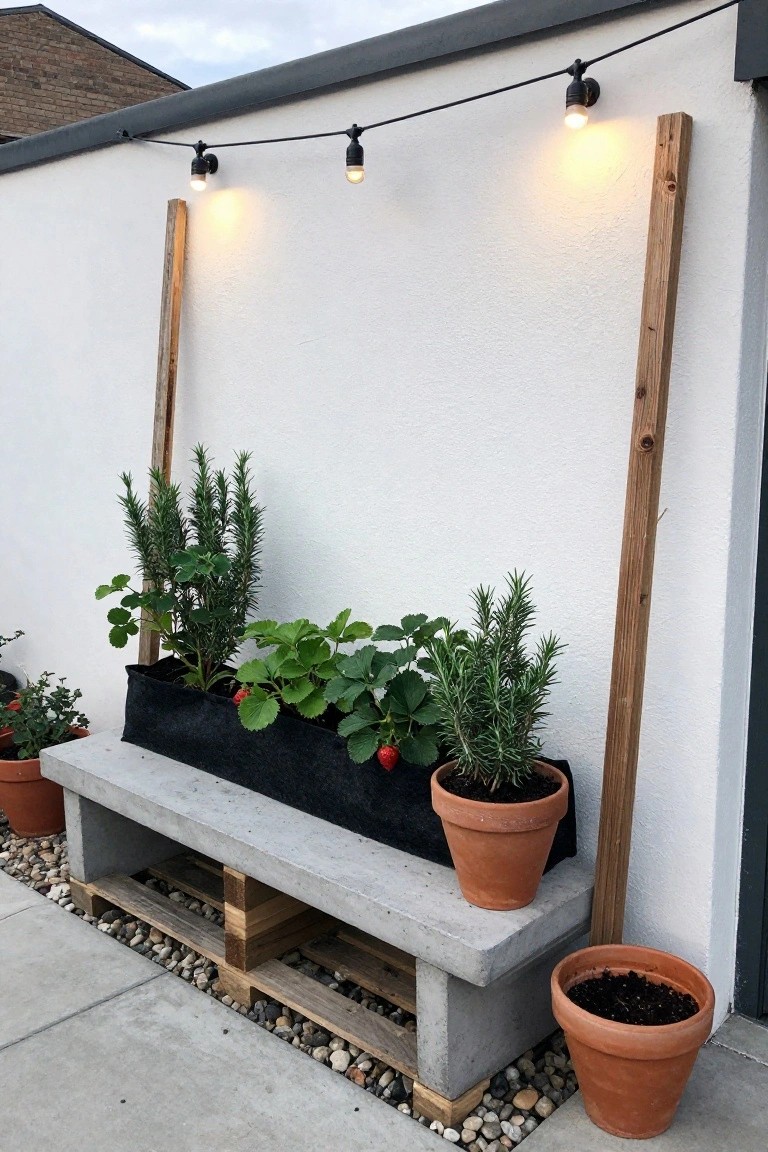
Many gardeners turn to pallets when they want a simple way to raise strawberry plants off the ground. The wood gives the planter a solid base, helps with drainage, and keeps the fruit cleaner during the growing season.
This works best on patios or small side yards where a full garden bed would take up too much room. Line the pallet with landscape fabric, set a grow bag or soil-filled trough on top, and place it where it gets good sun. Just check that the wood is dry and stable before loading it with wet soil.
Use a Wire Grid for Vertical Strawberry Support
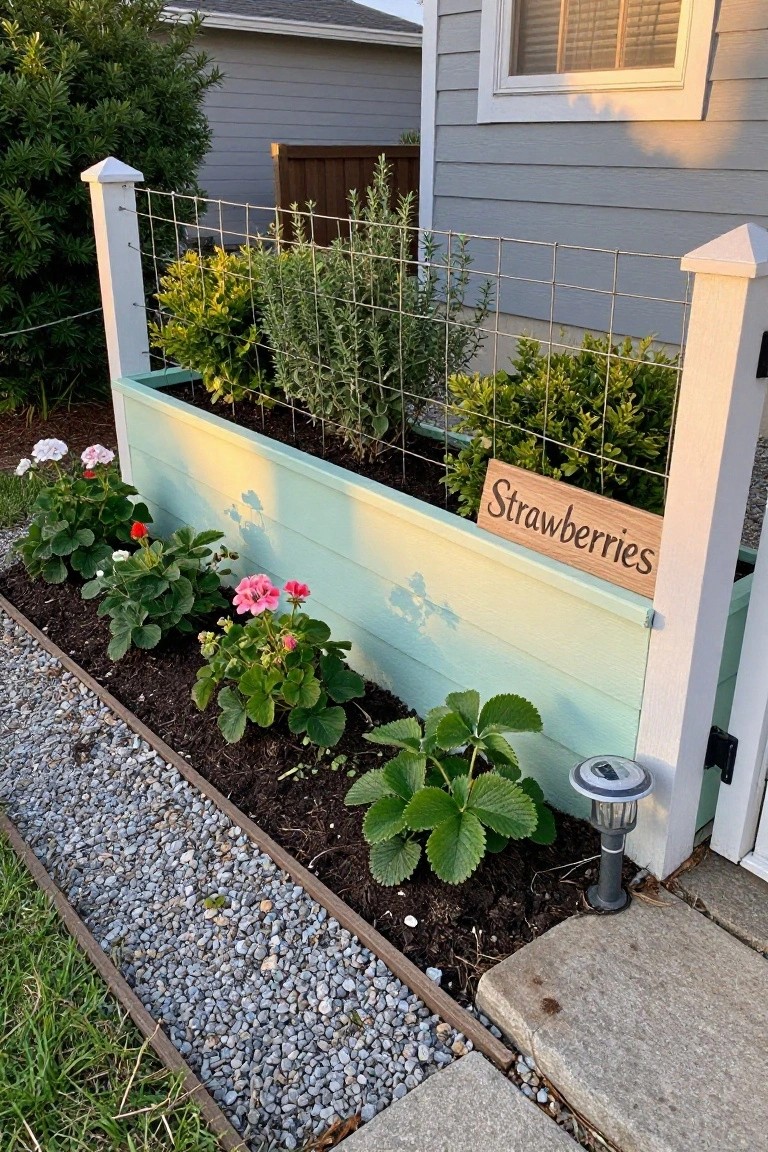
A wire grid mounted above a raised bed gives strawberry plants a place to climb and keeps the fruit cleaner. It turns a basic planter into a vertical setup without needing a full pallet wall or extra frames.
This works best along a path or fence line where you can reach both sides. Keep the grid low enough for picking and use sturdy posts so it holds up once the plants fill in.
Vertical Wooden Planters On A Wall
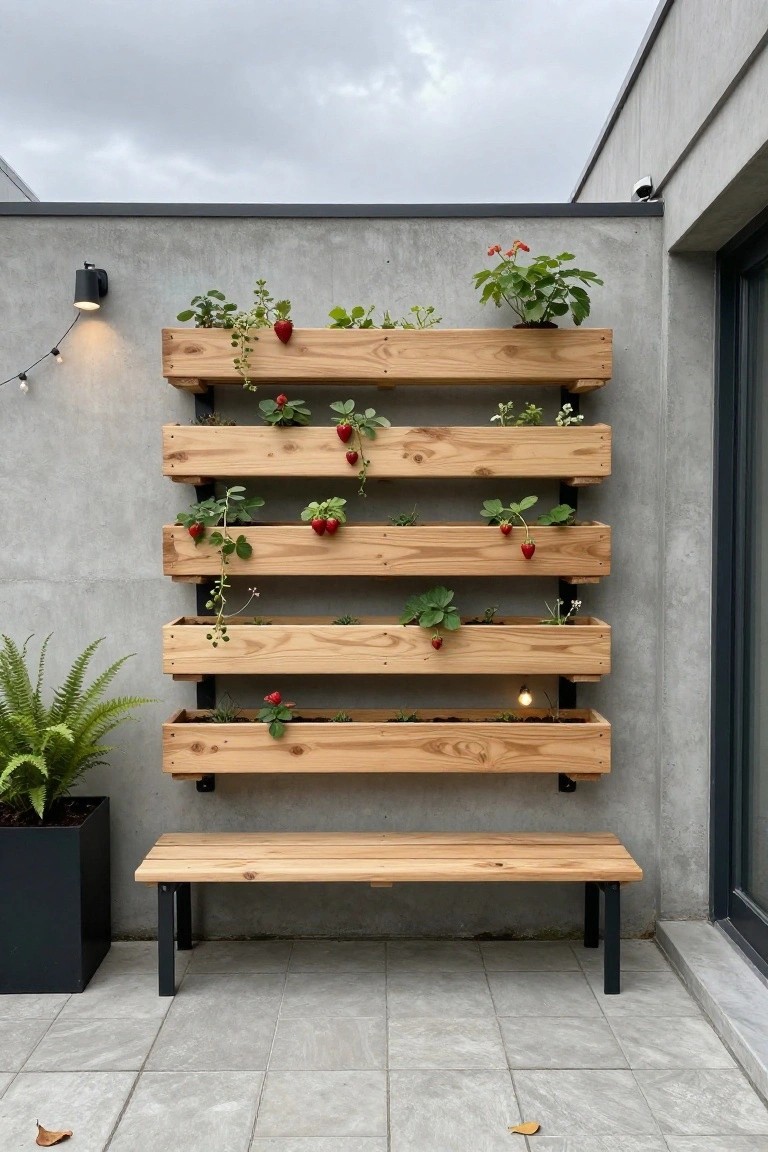
Mounting rows of wooden boxes on a wall gives strawberries a place to grow without taking up floor space. The plants stay at a convenient height for picking, and the setup fits against any solid surface that gets decent sun.
This works best on patios or small yards where ground beds are not an option. Secure the boxes firmly, leave room for drainage, and check that the wall can handle the weight once the soil is added.
Sink Station Makes Strawberry Care Simpler
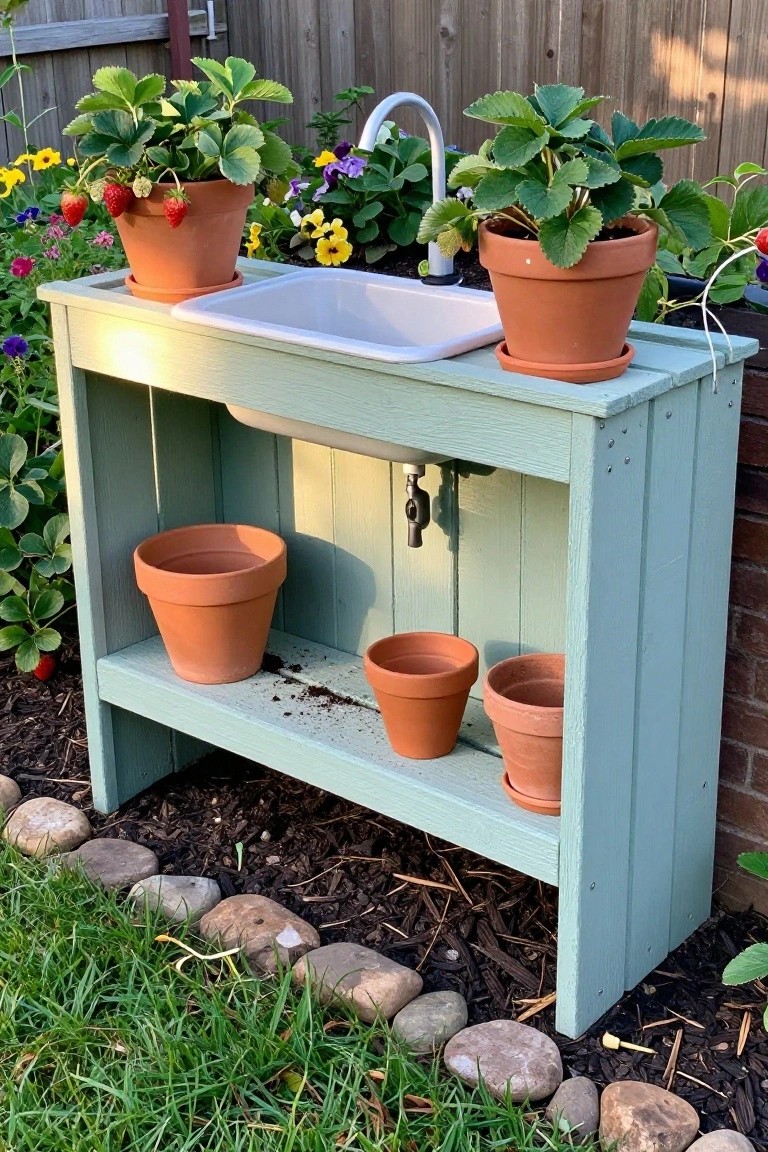
A sink right next to your strawberry pots saves a lot of back and forth with the hose. It gives you a spot to water, rinse leaves, or clean up soil without hauling buckets across the yard. Many people find this setup keeps the plants healthier because they tend to them more often when everything is close at hand.
Place the sink on a low platform or sturdy base and add a couple of open shelves underneath for extra pots. This works well in a sunny corner of a small garden or along a fence where you already grow berries in containers. Just make sure the drain leads to a bed or a bucket so you are not wasting water.
Lean a Pallet Planter for Vertical Strawberries
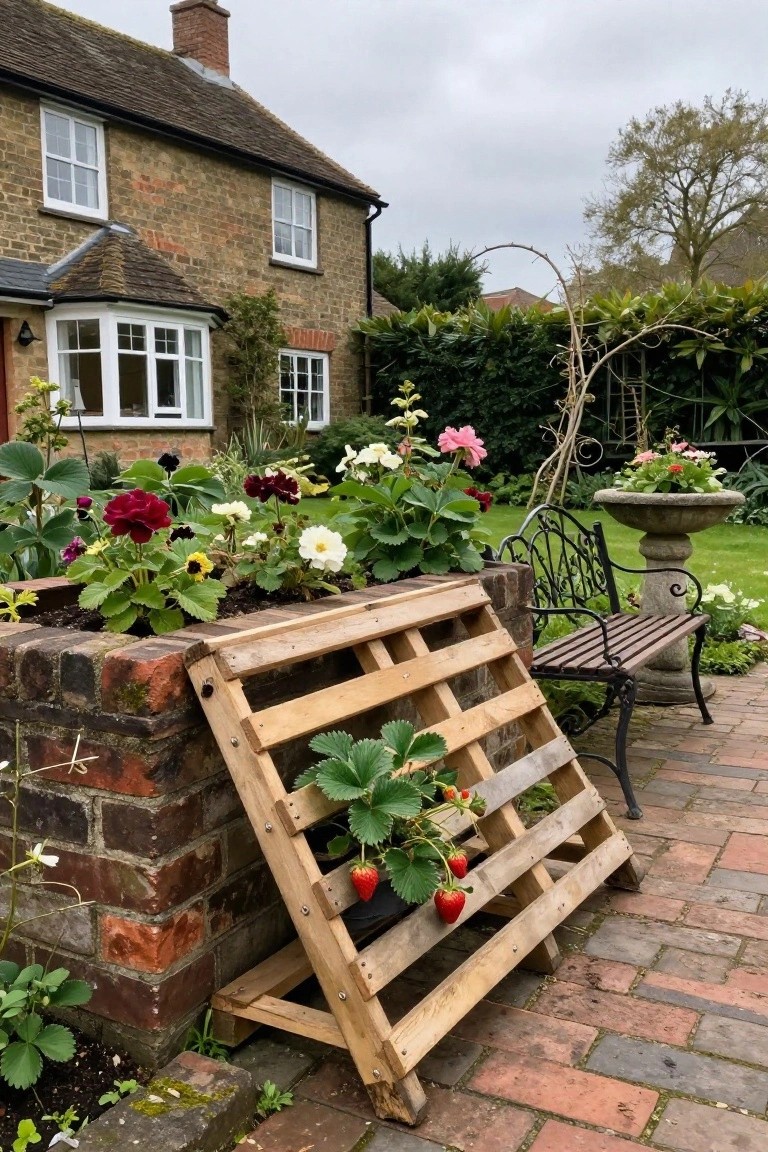
Many gardeners turn to pallets when they want more growing space without taking up extra ground. The angled setup lets strawberry plants trail forward while the slats hold the soil in place, which keeps the fruit off the ground and easier to pick.
This idea fits well against a low wall or the edge of a raised bed in a small yard. Secure the pallet so it stays put, and use a liner if the wood has wide gaps.
Pallet Borders Along Slopes For Strawberries
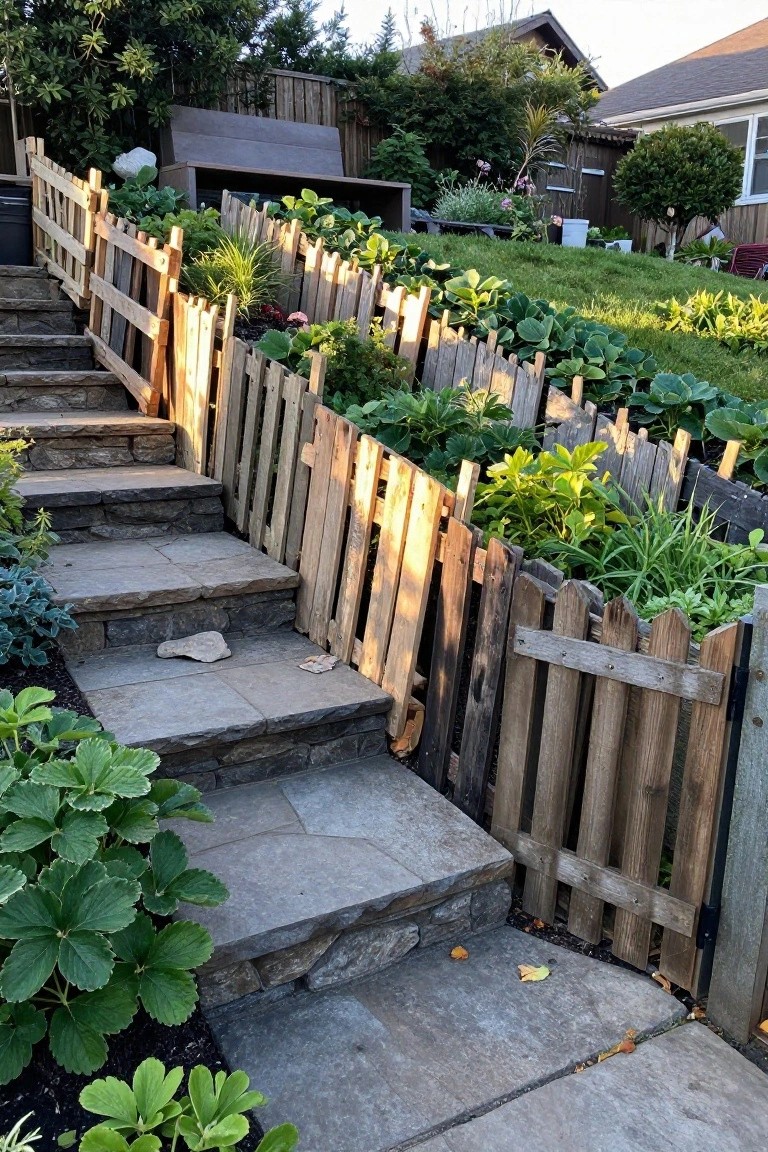
One simple way to grow strawberries on a slope is to set up pallet fencing as a border along garden steps. The wood holds the soil while the open slats let plants grow outward and upward instead of spreading flat across the ground.
This works best on hillsides or smaller lots where flat space is tight. Use pressure-treated pallets or seal the wood first, and make sure the fence is anchored well so it stays steady over time.
Integrate a Bench With Your Strawberry Planters
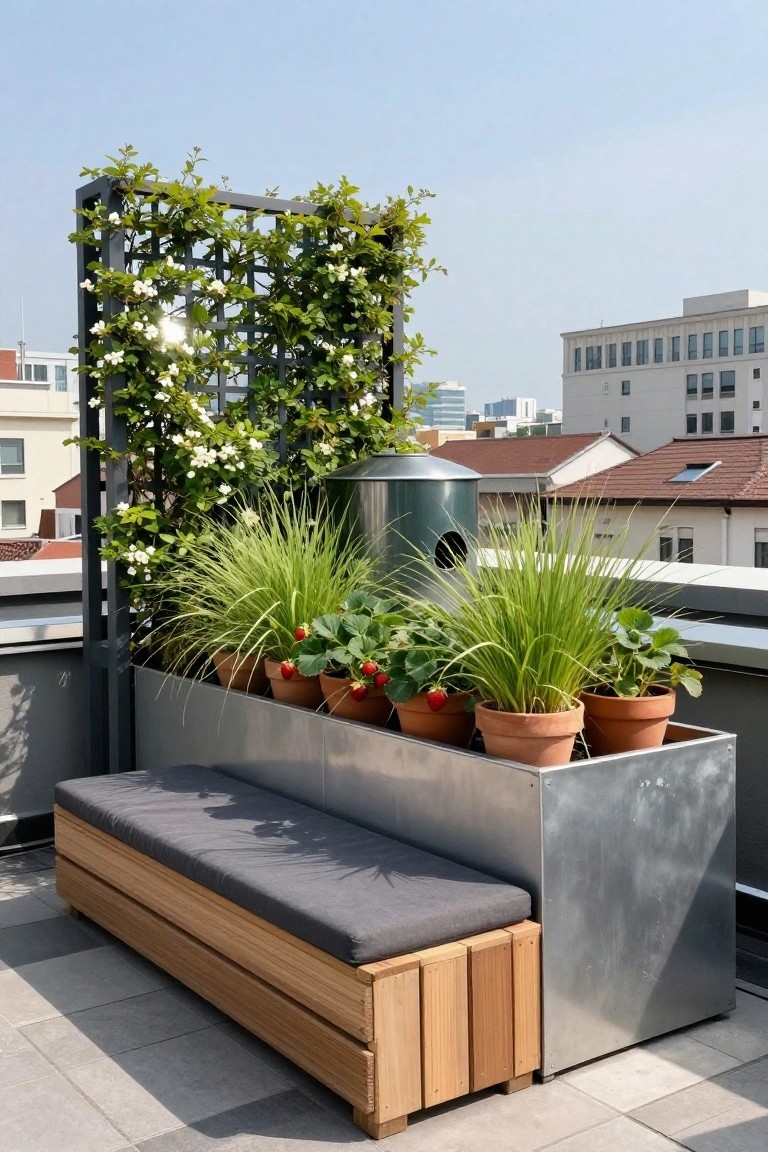
Many people like having strawberry plants right next to where they sit. It keeps the fruit easy to reach and turns the planter into part of the seating area instead of something separate.
This setup works best on rooftops or small terraces. The long metal box holds multiple pots while the attached bench saves floor space, and a simple trellis behind it lets the plants climb without extra structures.
Mount a Pallet on the Wall for Vertical Strawberries
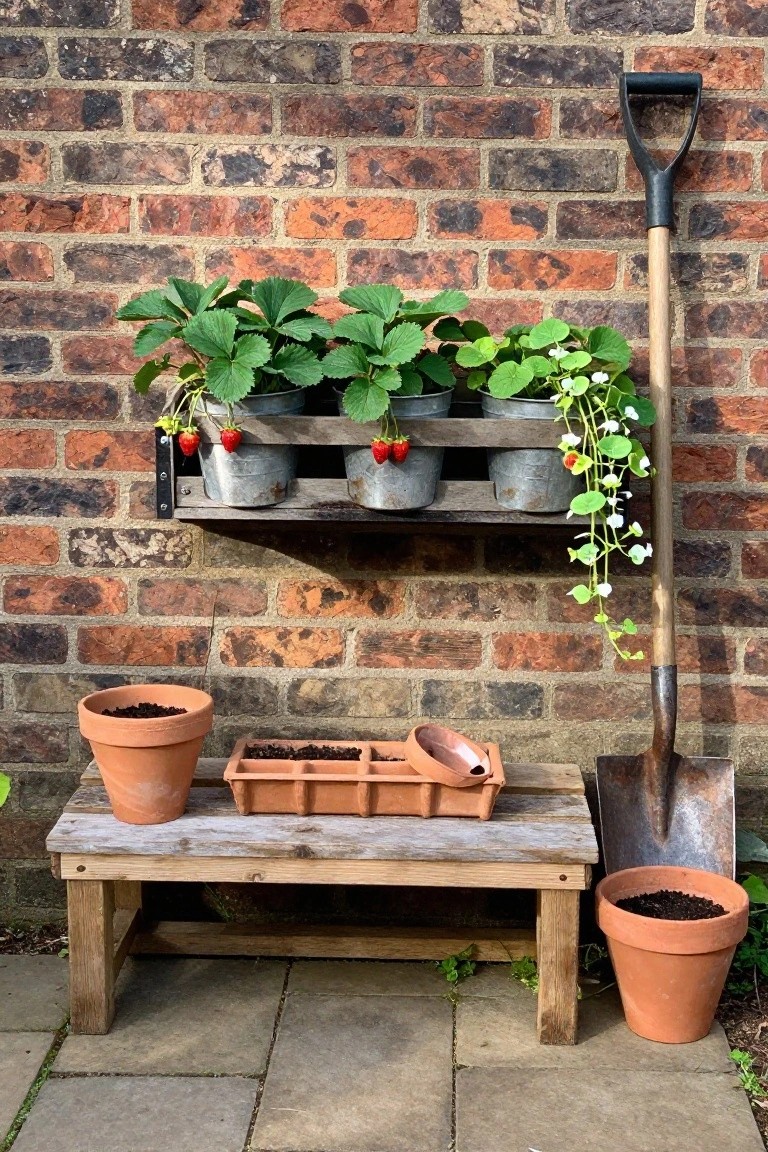
Mounting a pallet flat against an exterior wall turns it into a simple shelf for potted strawberries. The setup keeps plants off the ground, improves airflow, and makes picking easier without needing much floor space.
This works best on a sunny brick or wood wall where the pallet can be screwed in securely. Use sturdy pots that fit the openings and check that the wood is rated for outdoor use so it holds up over time.
Mount Pallet Planters Along An Exterior Wall
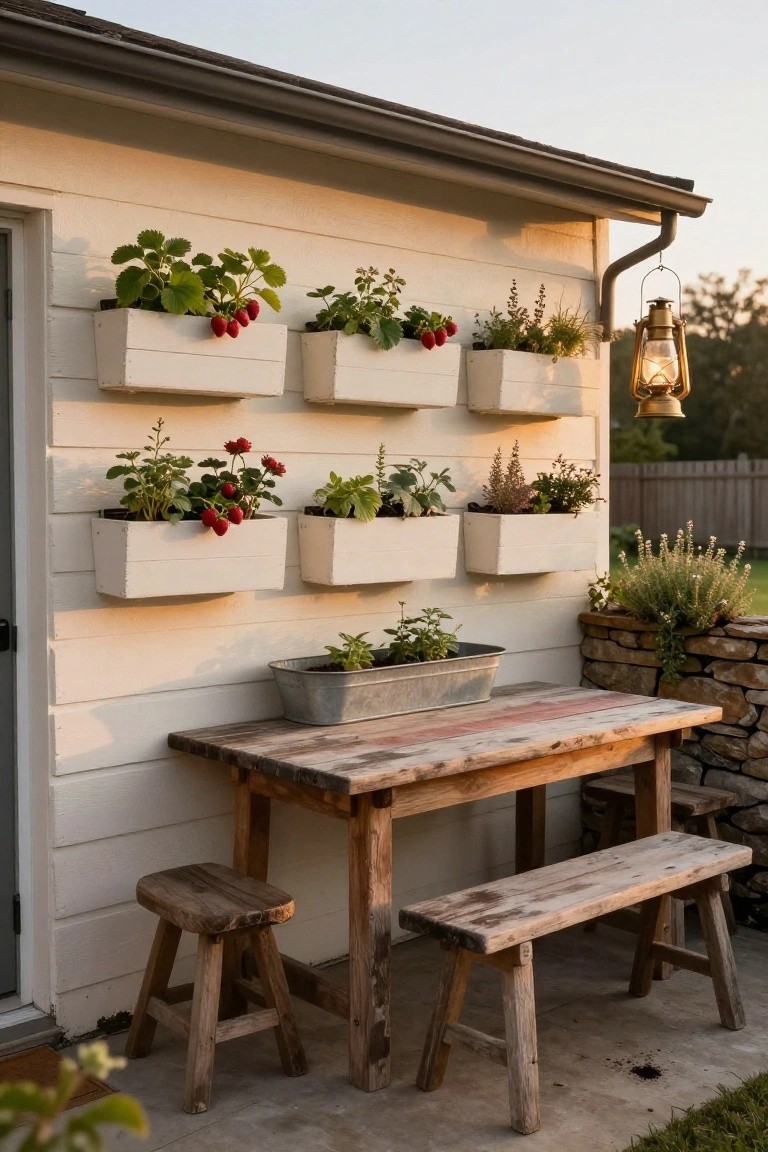
Pallet planters mounted straight onto house siding give you a simple way to grow strawberries without taking up ground space. The boxes sit at different heights so you can reach the plants easily, and the wall itself helps keep everything stable. This setup works especially well on a sunny side of the house where the plants get plenty of light.
It suits homes with a blank exterior wall or a narrow side yard. Keep the boxes lined up in rows, use a light paint color if you want them to blend with the siding, and make sure they are secured firmly so they stay level over time.
Raised Beds From Pallet Wood
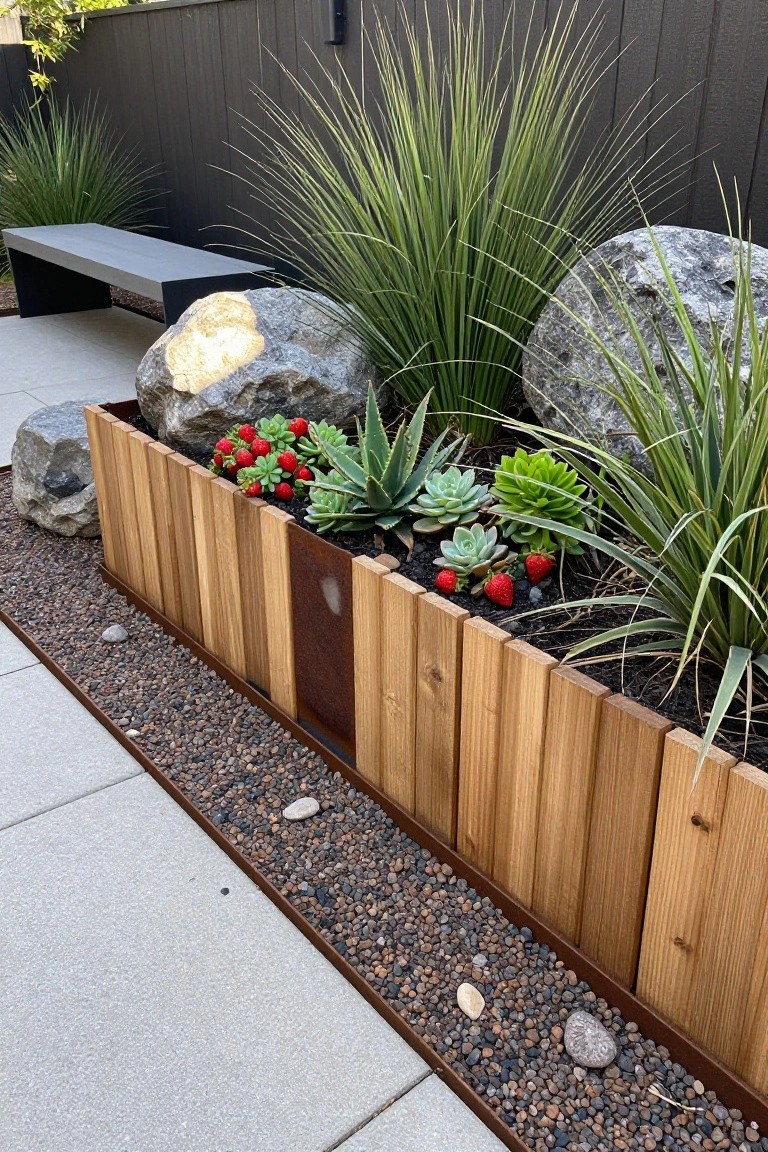
Many gardeners turn to pallet wood when they want a simple raised bed for strawberries. The vertical boards create a sturdy frame that holds the soil in place while letting the plants spill over the edge a bit.
This style fits well along a gravel path or fence line where you need something low and contained. Make sure the wood is untreated and line the inside so the soil stays moist without rotting the boards too fast.
Vertical Stacking For Strawberry Plants
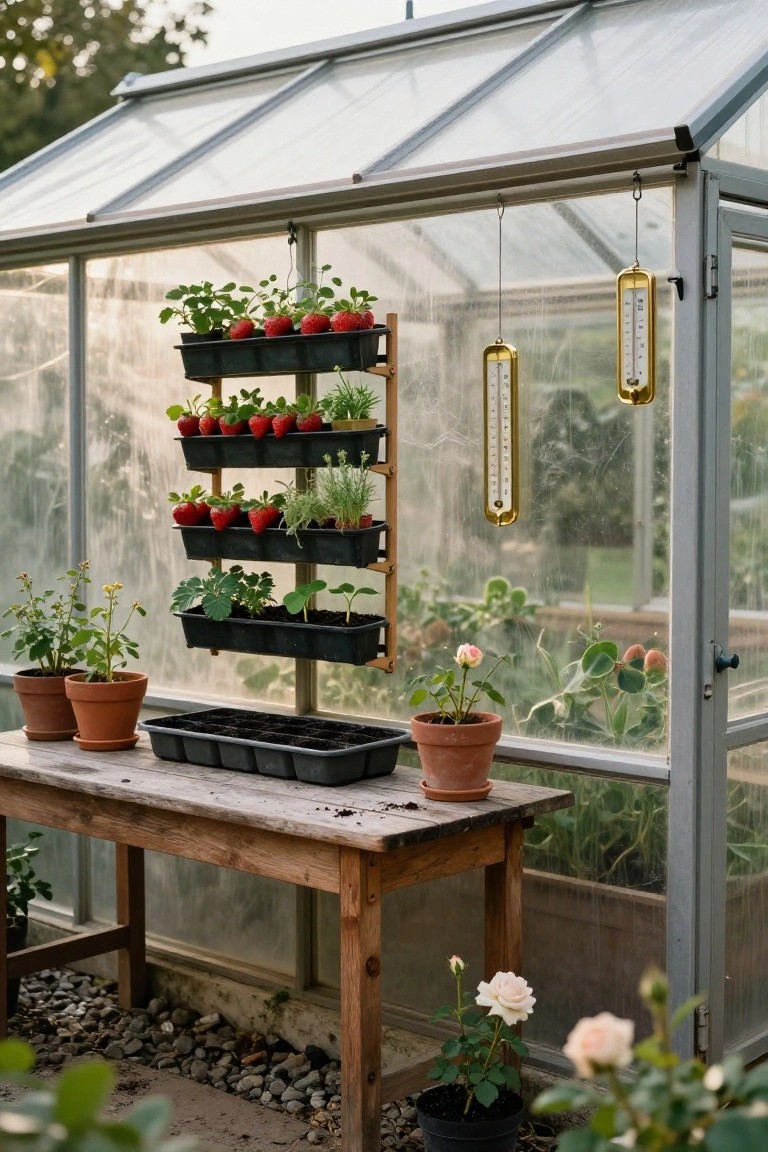
One simple way to grow more strawberries in a small space is to hang tiered trays one above the other. The stacked levels keep the plants off the ground and let you fit several rows of berries without spreading out across the floor.
This setup works best in a greenhouse or bright sheltered spot where you can reach each level for watering and harvesting. Make sure the frame is solid and the trays drain well so the plants stay healthy through the season.
Vertical Pallet Planters on a Fence
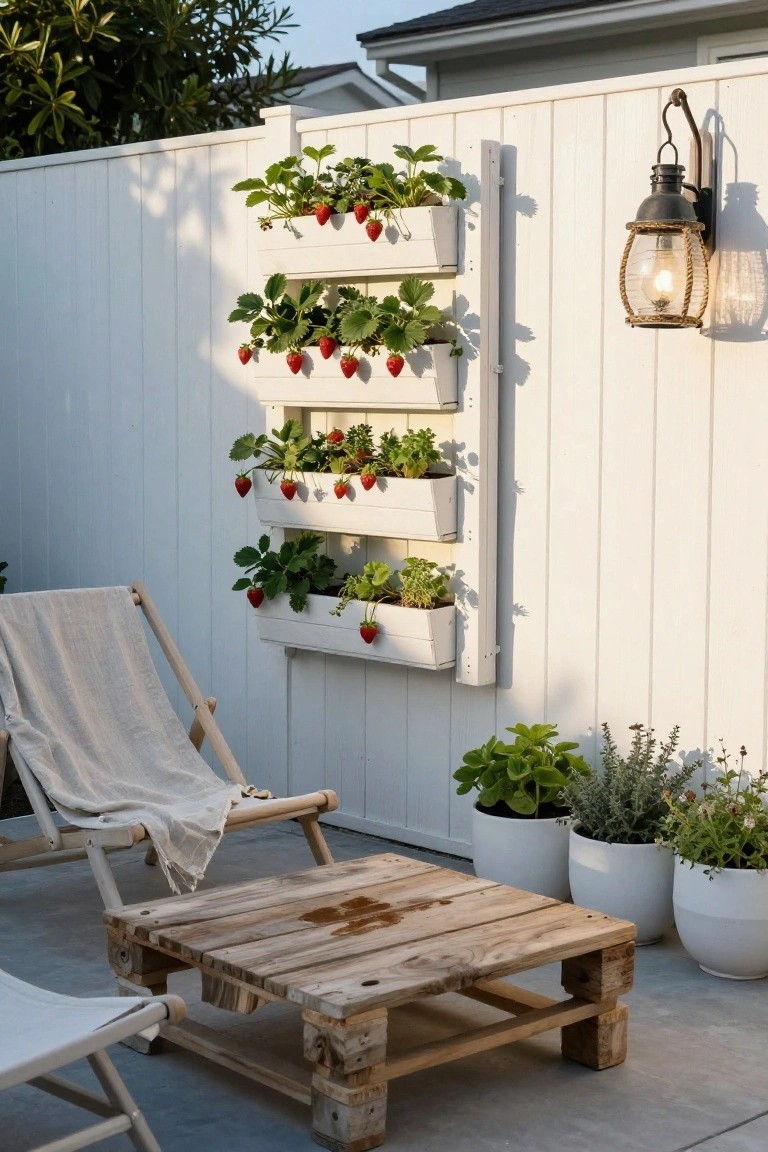
Mounting pallets upright on a fence turns a blank wall into a productive spot for strawberries. The vertical layout keeps the plants off the ground, makes picking easier, and leaves the patio floor open for seating.
This approach suits small yards or patios where space is tight. Secure the pallets well, add lining, and water regularly since the soil dries out faster in this setup.
Raised Beds Built From Pallets
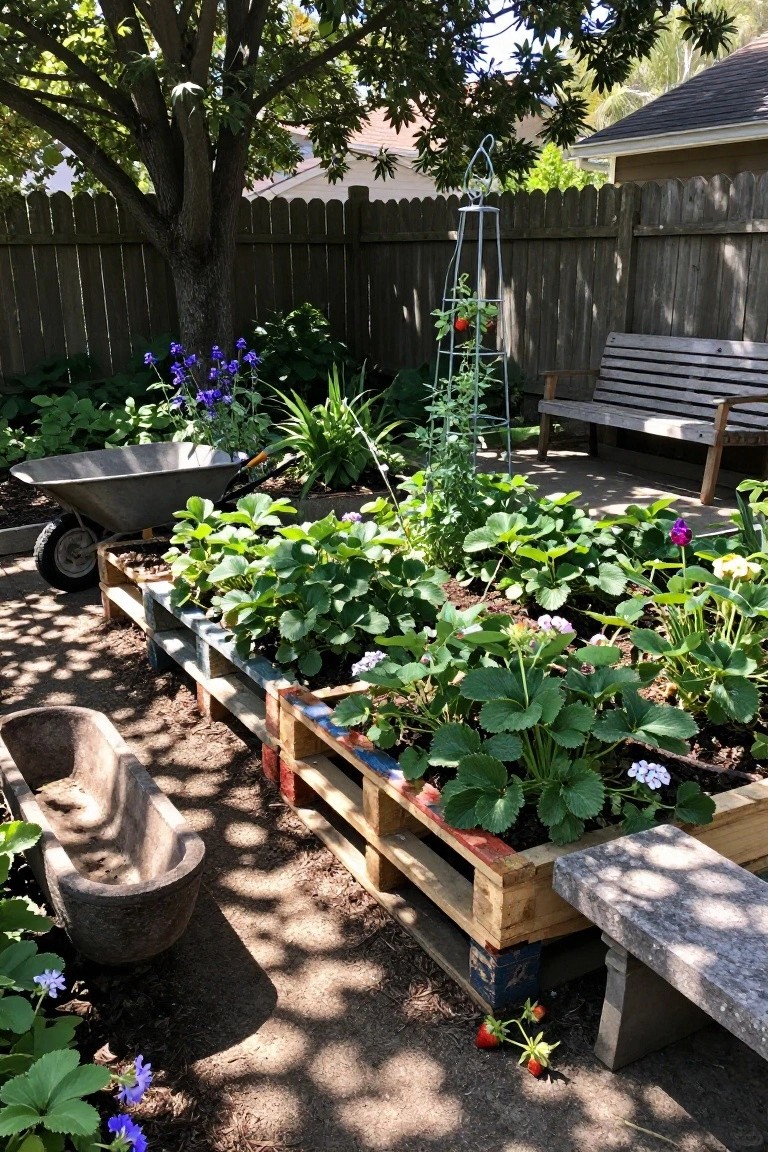
Old pallets work well for strawberry beds because they already come in sections that stack into a simple frame. The gaps between the boards let water drain and keep the soil from staying too wet, which strawberries prefer.
This setup fits best along a fence or in a narrow side yard where space is tight. Just check that the wood has not been treated with anything harmful before planting.
Raised Beds With Lattice Sides
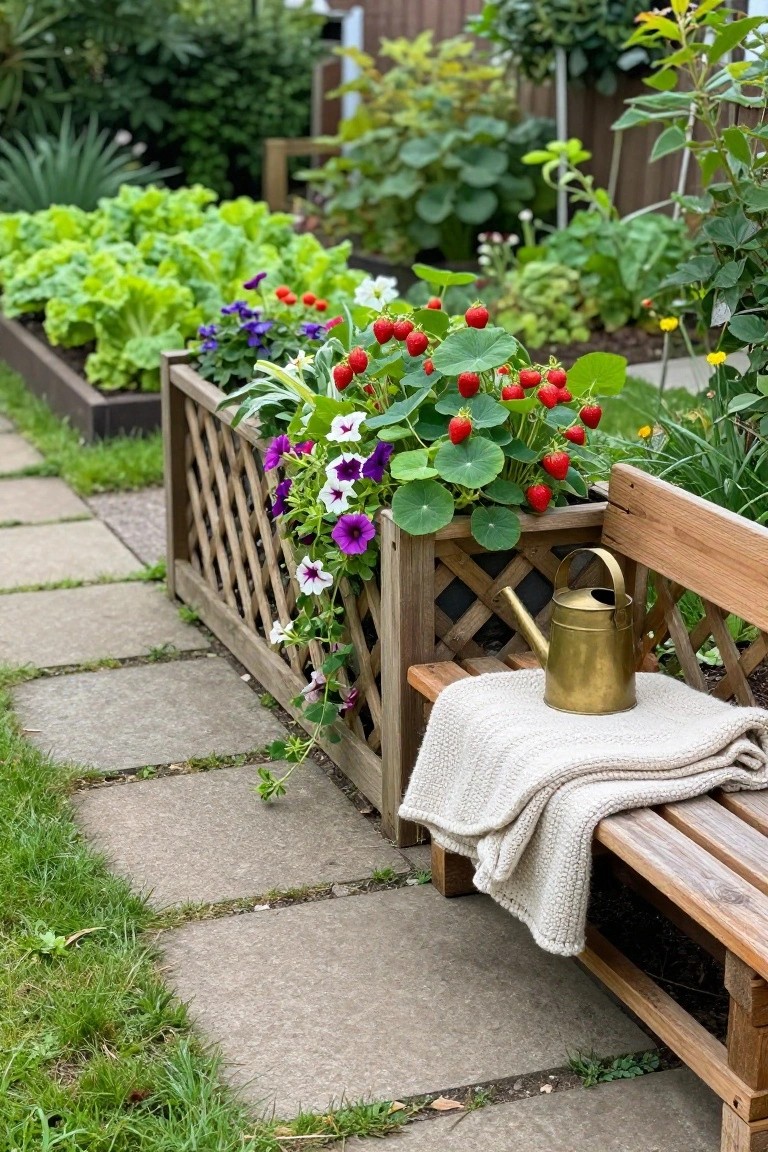
Lattice sides on a raised bed make it simple to grow strawberries without them sprawling across the ground. The open panels let the plants trail naturally while keeping the fruit off the soil and easier to reach at picking time. This setup works especially well in narrower garden spaces where you want more plants without widening the beds.
You can build something similar with reclaimed wood or pallet slats, then line the inside to hold soil. It suits small backyards or side gardens where paths run close to the planting areas. Just make sure the lattice is sturdy enough to handle the weight once the plants fill in.
Mount Planters On A Wall For Vertical Growing
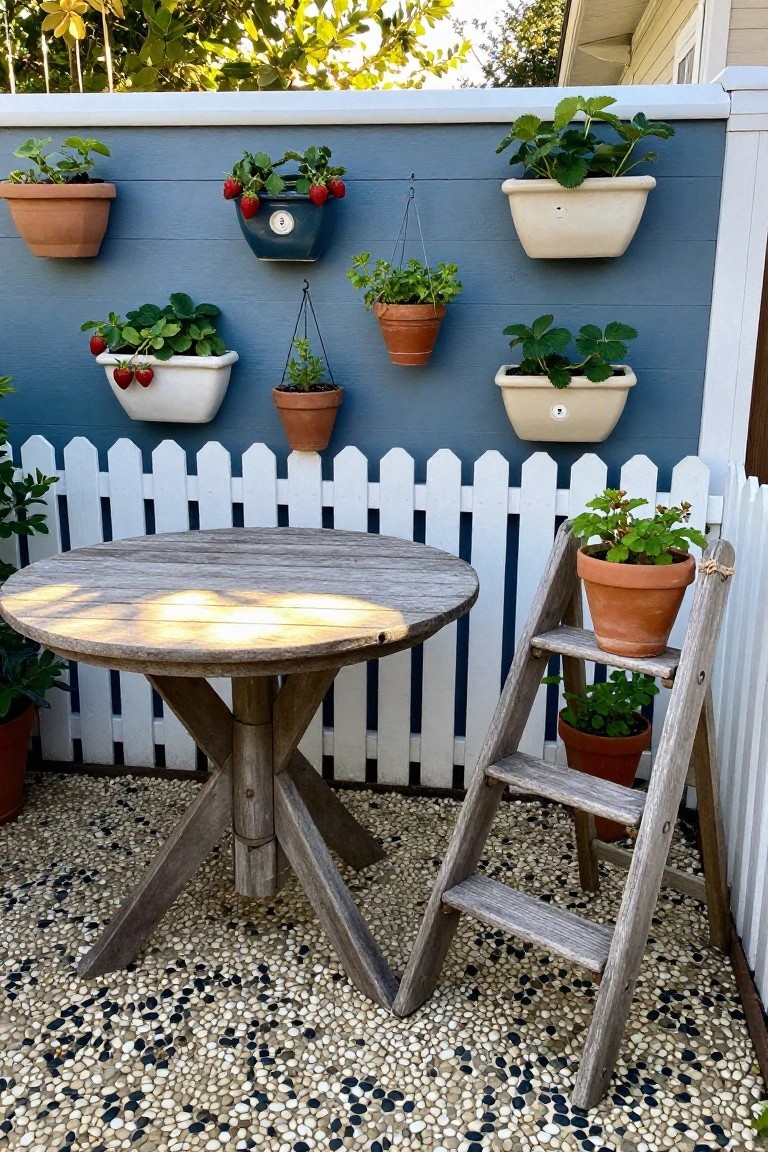
Mounting planters directly on a wall gives strawberries plenty of room without taking up ground space. The plants stay at a good height for picking and the setup can work on almost any sunny outdoor surface.
This idea fits small yards or patios where floor room is limited. Choose sturdy brackets, make sure each pot drains well, and group a few different sizes so the plants get the light they need.
Frequently Asked Questions
Q: How do I stop the pallet from falling apart after a season or two?
A: Choose pallets marked HT for heat treated and add a layer of linseed oil to the wood. This helps it handle rain without soaking up too much moisture right away. Replace any boards that start to crack after the first winter.
Q: Do I need to add extra drainage when the planter sits vertical?
A: Drill a few small holes in the bottom slats before filling with soil. Water tends to pool at the base otherwise and can drown the lower roots. Check the flow after the first heavy rain.
Q: How often should I water these vertical setups?
A: Check the top layer daily in hot weather. The soil dries faster when it’s stacked high like this.
Q: What if squirrels dig up the plants?
A: Cover the soil with a light layer of mulch or netting until the plants root in well. That usually stops them from messing around.
