

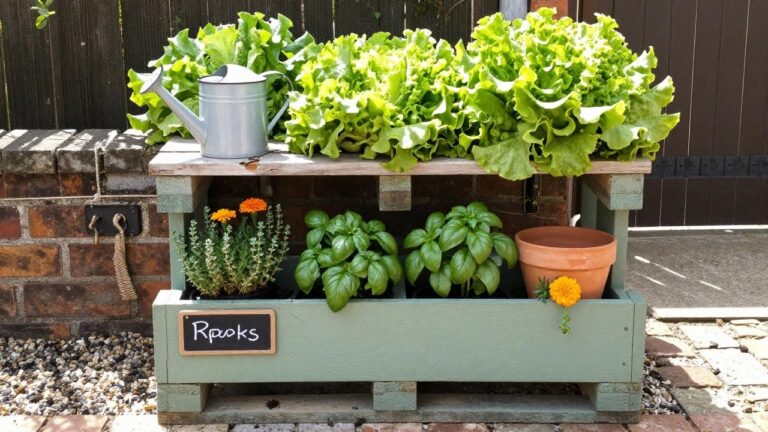
I have found that pallet frames give a garden a clear structure right away, especially when the available space is small and every inch needs to count for actual growing.
The wood creates natural divisions that keep soil contained and paths open, which matters more than it seems at first when you are walking through the area daily.
Some setups stack the pallets to add height without spreading out, and that often leads to better sun exposure for the plants.
I would test the simplest versions first.
What usually stands out after a season is how the basic edging and support choices affect both yield and how tidy the whole garden stays.
Tiered Pallet Beds For Small Gardens
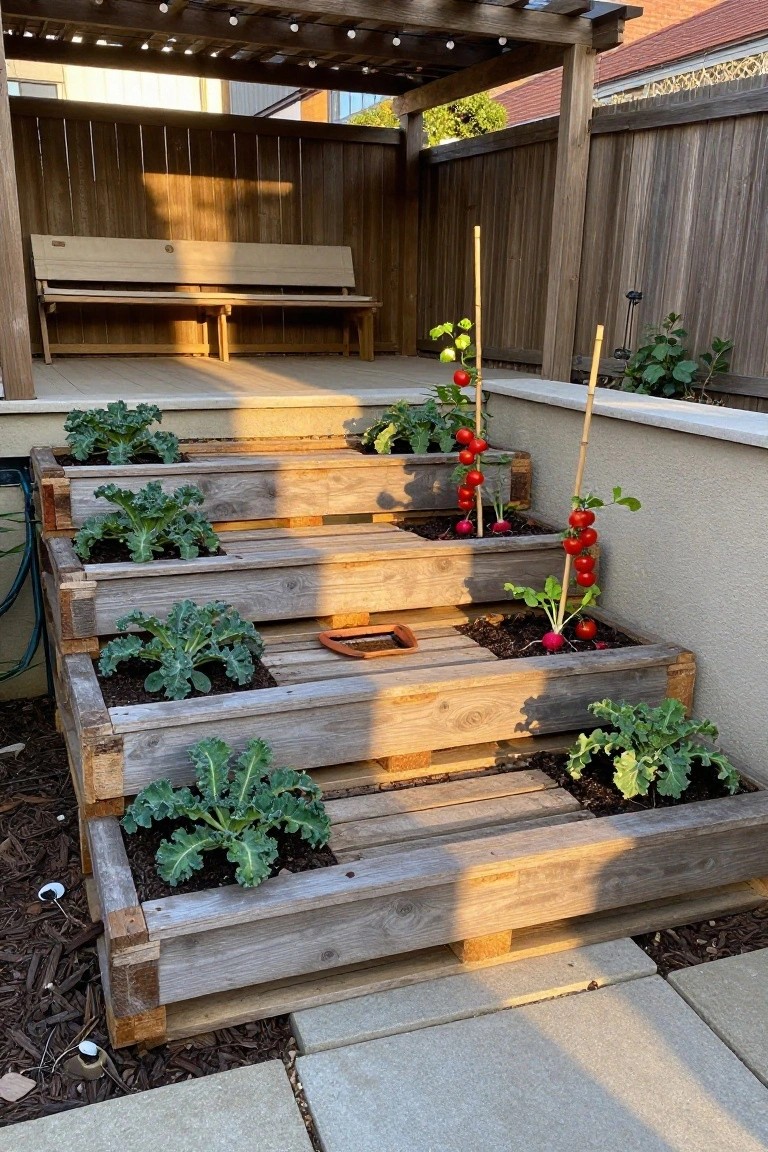
Many gardeners stack pallets to make stepped beds when space is tight. The different heights keep plants from crowding each other and make harvesting easier without bending too far.
This works well along a fence or in a corner where a flat bed would not fit. Use pallets that have not been treated with chemicals, line them if needed, and fill with good soil before planting.
Fabric Planters Along the Fence for Quick Crops
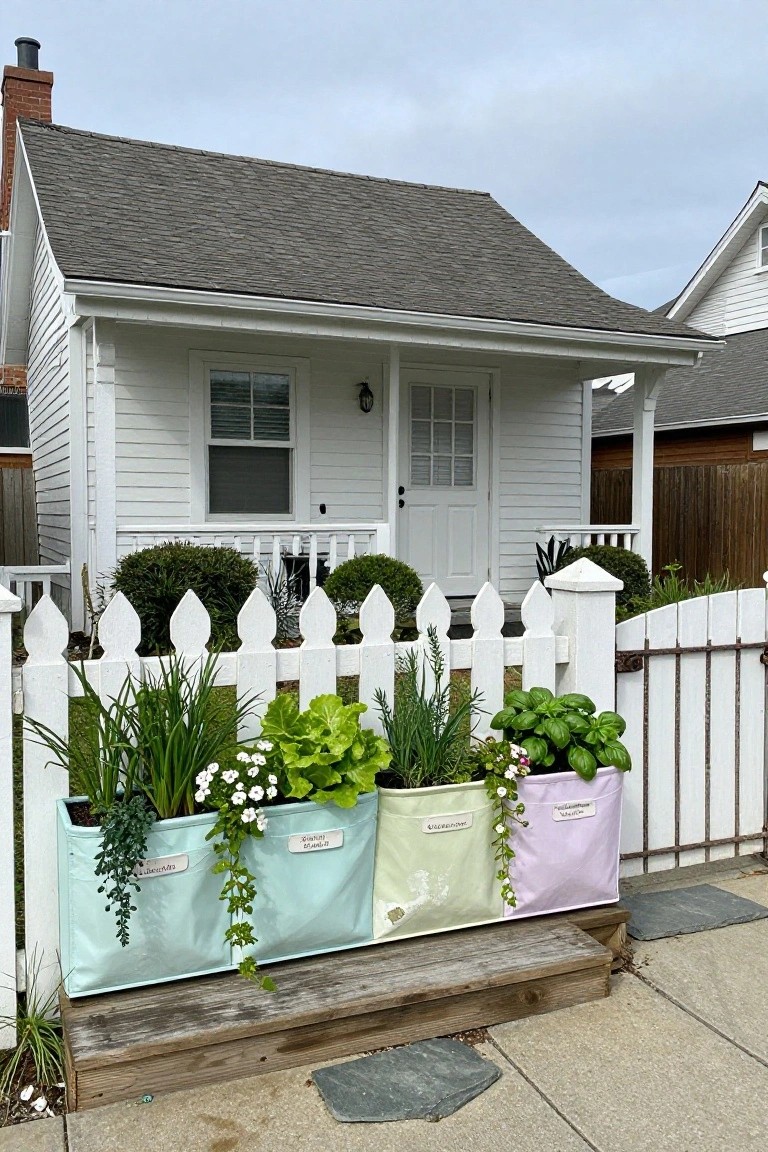
Fabric planters give you a simple way to grow vegetables without building permanent beds or taking up much ground space. They sit right against the fence line and let you keep things productive even in a narrow strip of yard.
These work well for smaller homes or front areas where you want easy access to herbs and greens. Set them on a low wooden base to keep them level and off the ground, then rotate crops through the seasons as needed.
Pallet Raised Beds for Balcony Crops
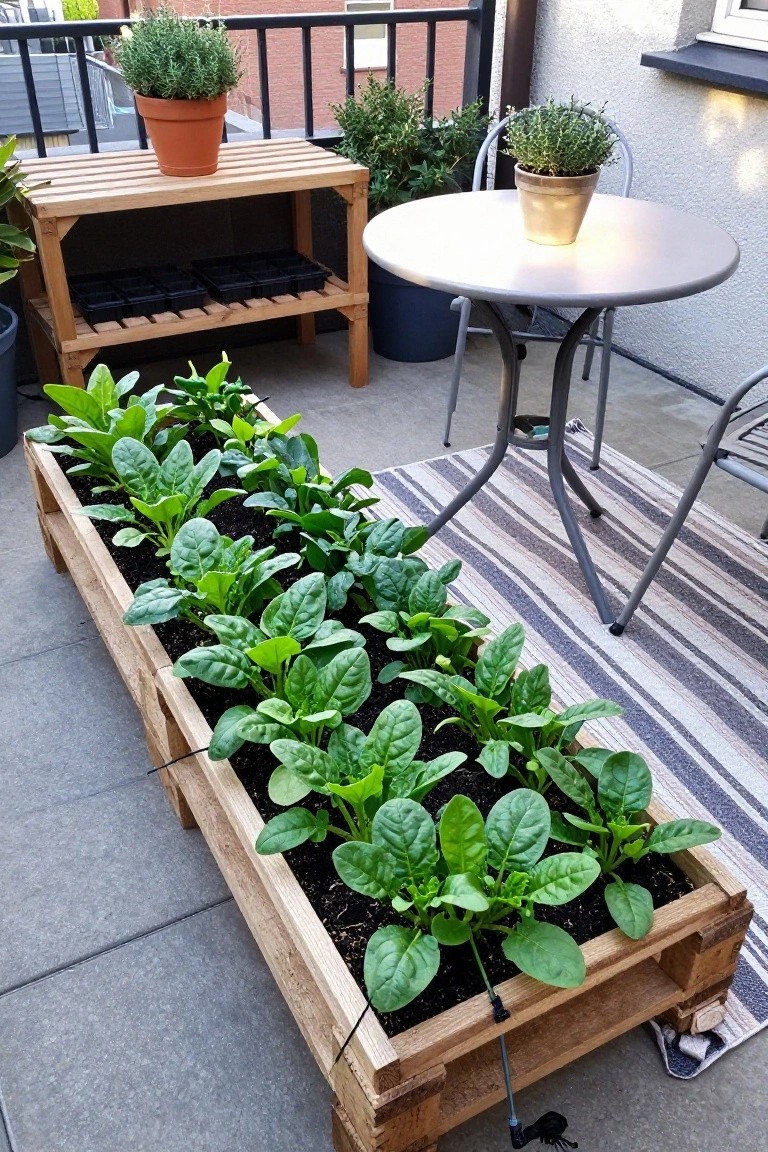
Many people use old pallets to build long, low planters when they want fresh vegetables but only have a balcony or small patio. The wood keeps the soil contained, makes watering simple with a hose or drip line, and turns an empty corner into a productive spot without needing much floor space.
This works best on concrete or deck surfaces where you can place the pallet directly on the ground and still reach the plants easily. Stick to shallow-root crops like spinach or lettuce, and line the inside so the wood lasts longer through the season.
Hang Wall Planters for a Compact Herb Garden
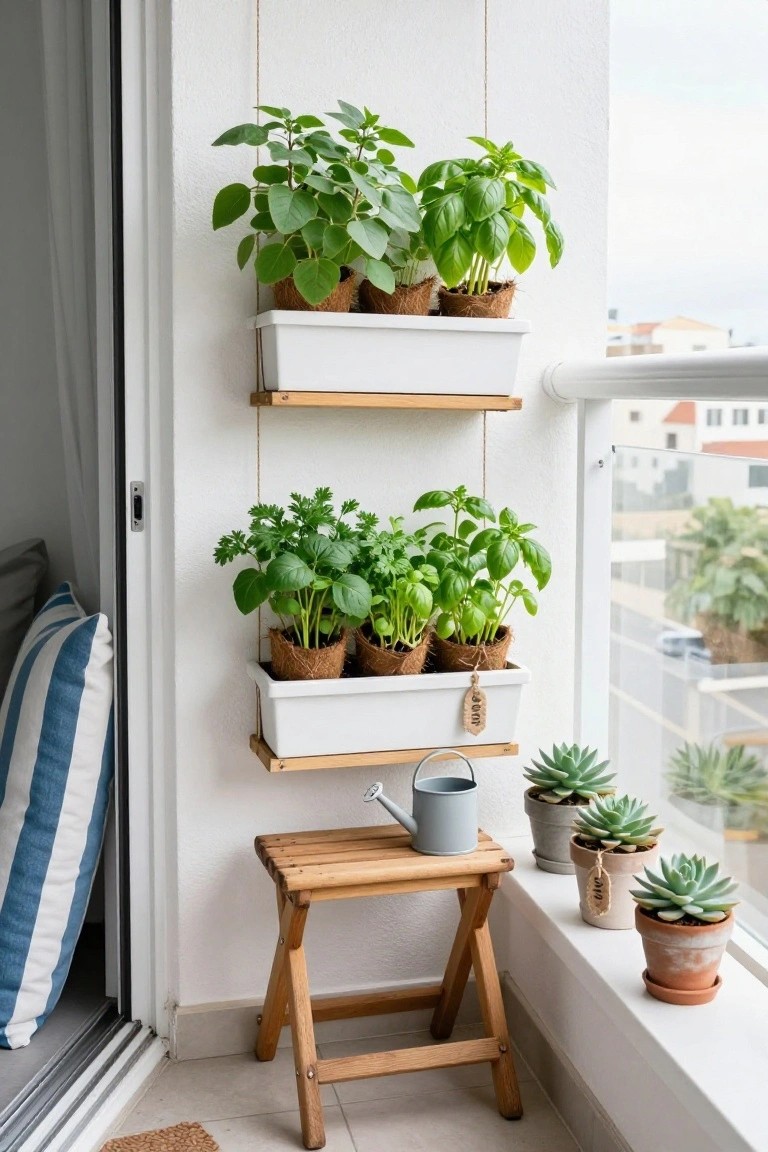
Many balcony gardeners use hanging planters to grow fresh herbs without losing floor space. The setup keeps basil and parsley at a comfortable height for watering and picking, while the rest of the area stays open for a stool or small table.
This idea works best on narrow balconies or apartment railings where ground room is tight. Secure the planters with strong rope or chain, and pick lightweight troughs so the wall or railing can support the weight.
Raised Beds Made From Pallets
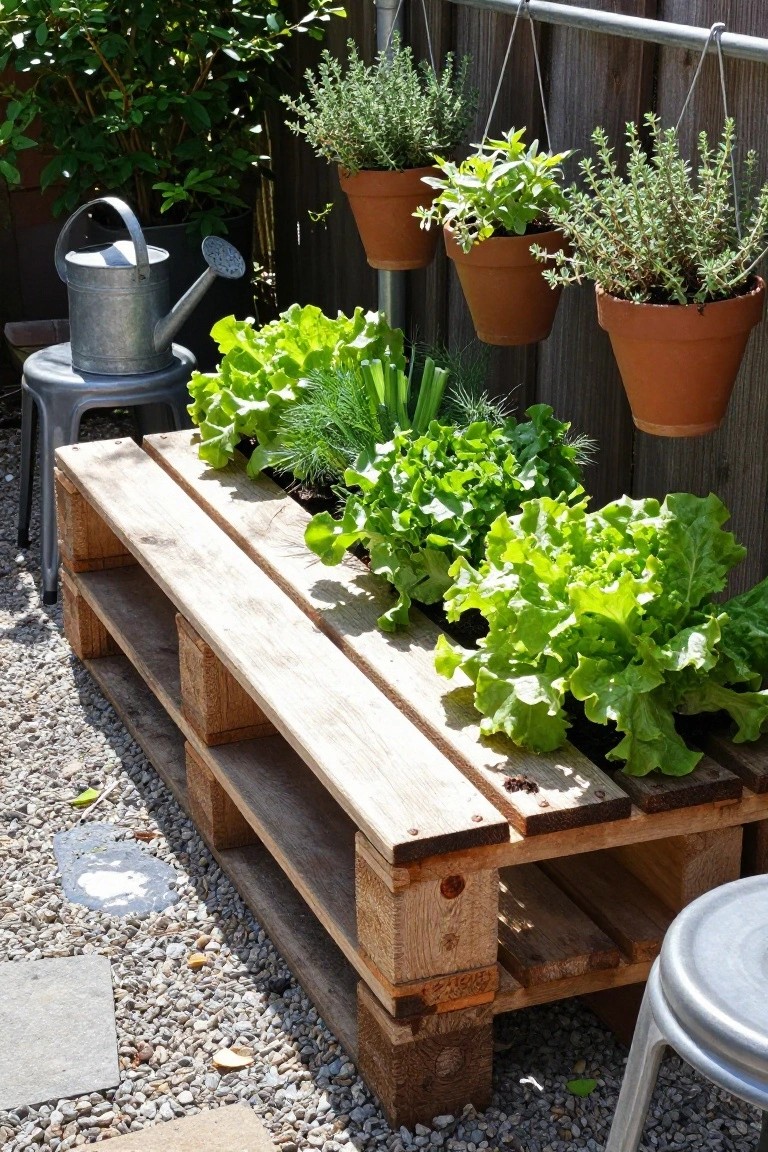
Old pallets make a quick raised bed that keeps soil contained and plants off the ground. The wood frames the rows nicely and gives you a simple way to grow food even when space is tight.
This setup works well in small yards or gravel areas where a full garden bed would take too much room. Line the inside before you fill it so the wood lasts longer, and stick to shallow-root crops like lettuce if the depth is limited.
Pallet Shelves For Compact Vegetable Gardens
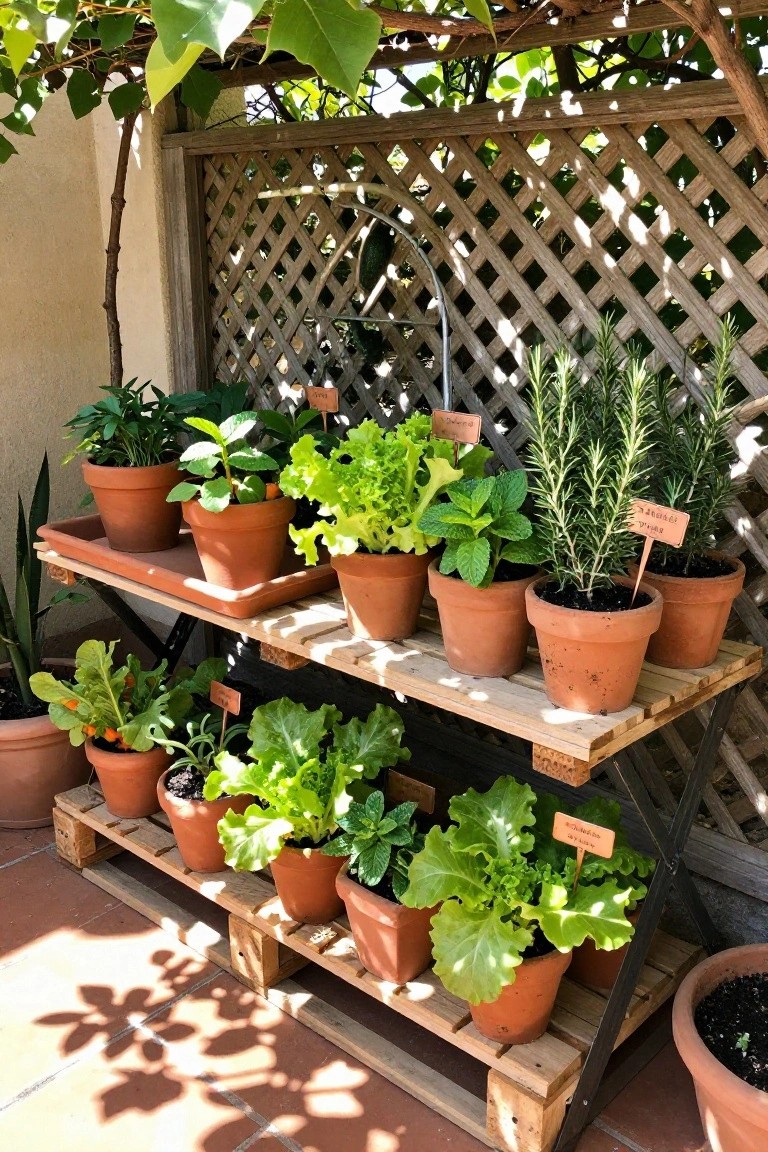
Pallets make a simple base for tiered shelving that holds pots at different heights. This setup keeps plants organized, improves air flow, and makes daily care like watering or picking leaves much easier without constant bending.
It works best on small patios or narrow side yards where floor space is tight. Stack two or three pallets, add a flat board on top if needed, and place your containers so shorter greens sit lower and taller herbs stay within reach.
Mobile Pallet Carts for Small Gardens
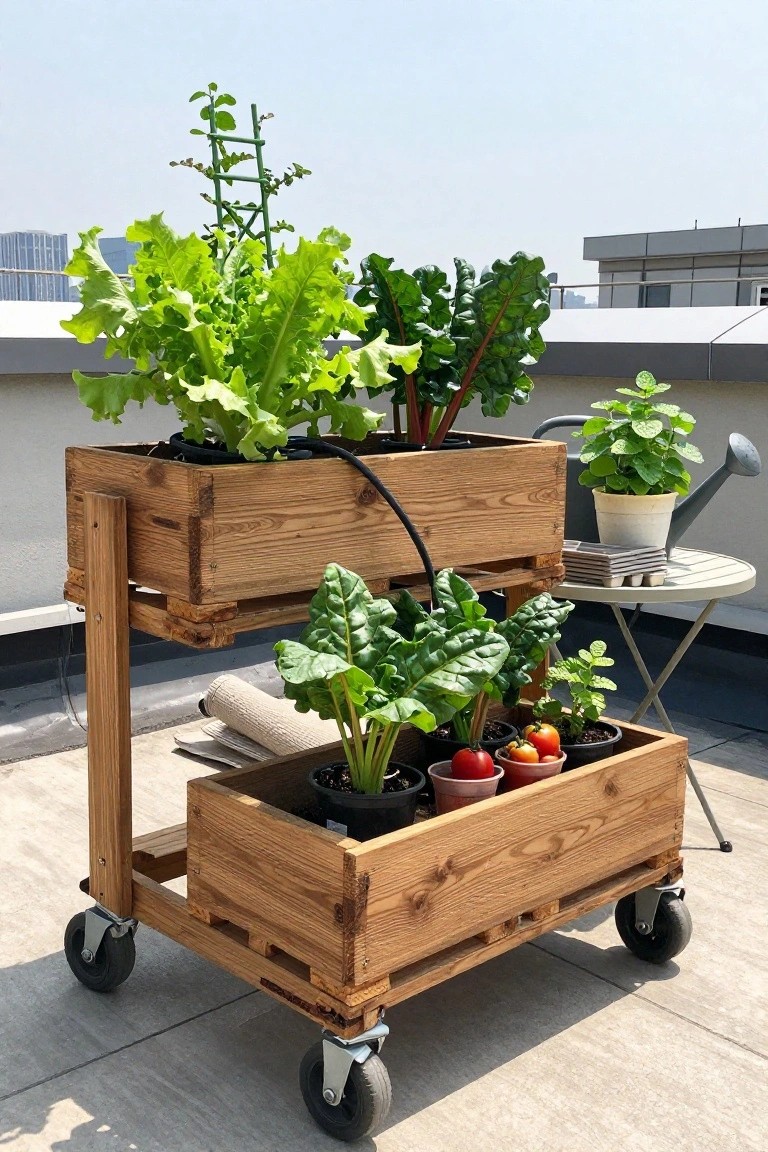
A simple pallet cart on wheels lets you grow vegetables without needing a fixed garden bed. You can roll it into the sun when needed and pull it back under cover during bad weather. The stacked boxes give room for different crops while keeping everything in one compact spot.
This setup works well on rooftops, balconies, or small patios where space is tight. Just make sure the wheels can handle the weight once the soil and plants are added.
Turn Pallets Into Vertical Shelves For Vegetables
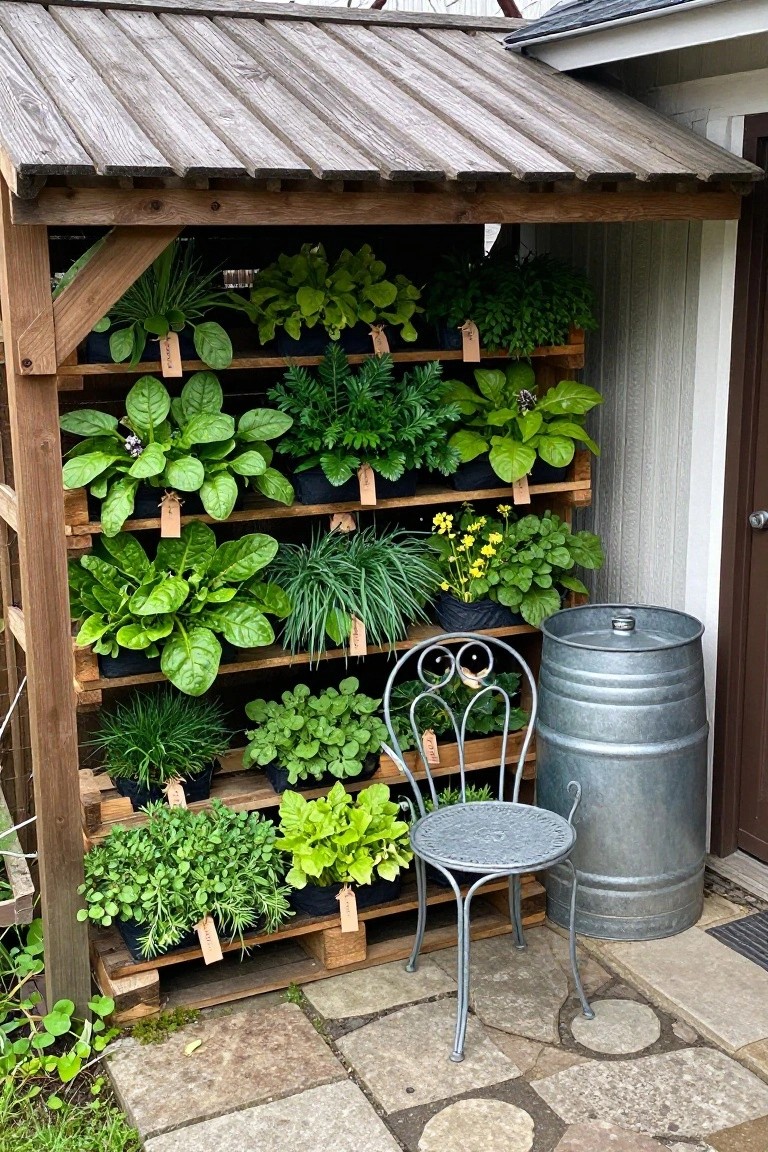
Many gardeners run out of ground space but still want a decent harvest. Stacking pallets into open shelves solves that by letting plants sit on several levels at once instead of spreading across the whole yard.
This setup works best against a fence or the side of a shed where the structure can lean for support. Secure the pallets well and check that any wood treatment is safe for edible plants before loading the shelves with pots.
Pallet Platforms for Compact Vegetable Gardens
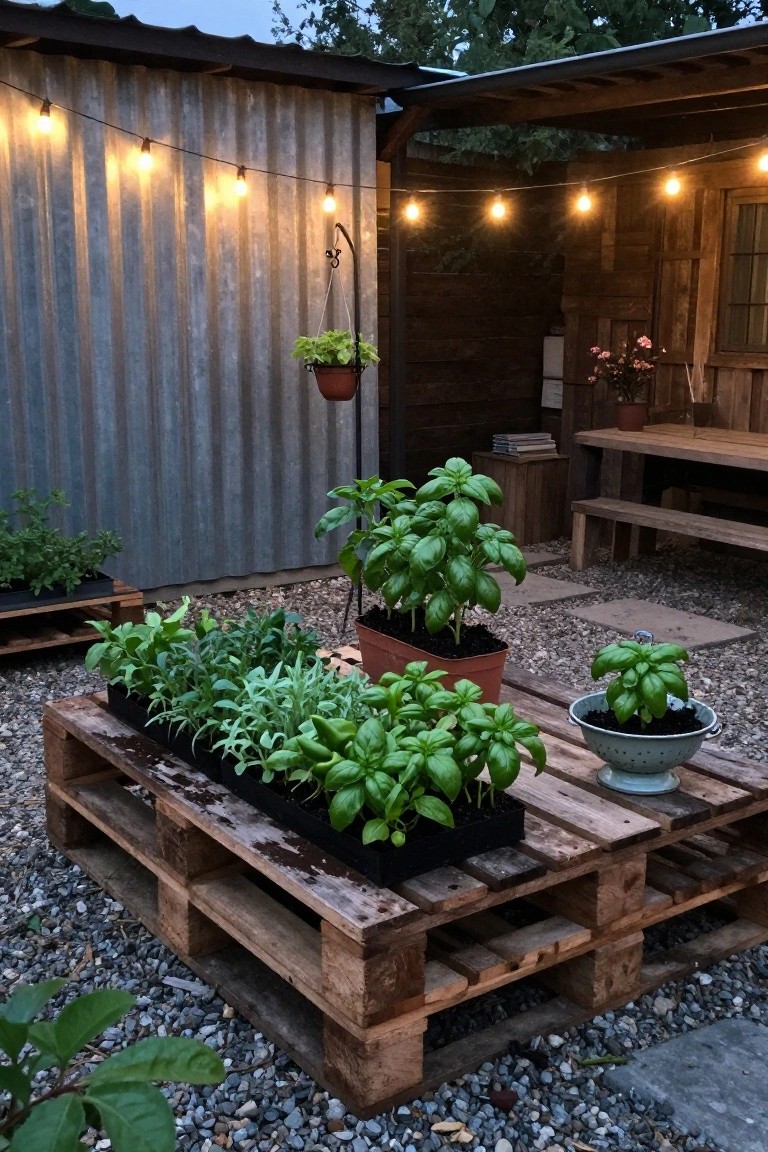
Many gardeners turn to wooden pallets when they want a quick way to lift containers off the ground. The raised surface keeps plants cleaner, improves drainage, and makes it easier to reach everything without bending too far.
This approach suits small yards, gravel areas, or patios where permanent beds are not an option. Place trays or pots directly on the pallet and rearrange them as crops change through the season.
Pallet Planters for Indoor Crops
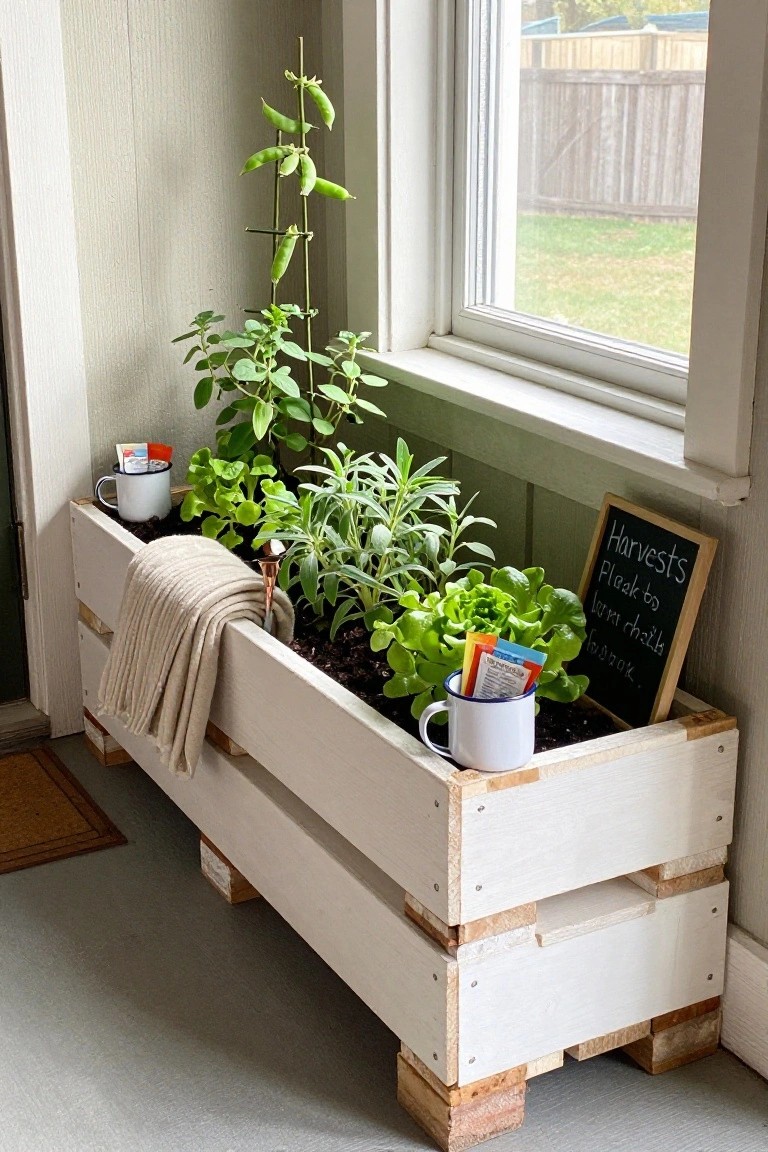
A pallet planter set up indoors gives you a raised bed that stays neat and contained. It turns leftover wood into a simple growing space that fits where a regular garden bed would not.
This works best in homes with small yards or cold winters since the plants stay protected yet still get light from a nearby window. Keep an eye on watering because indoor air tends to dry the soil quicker than outside.
Mount Pallets On Walls For Extra Growing Space
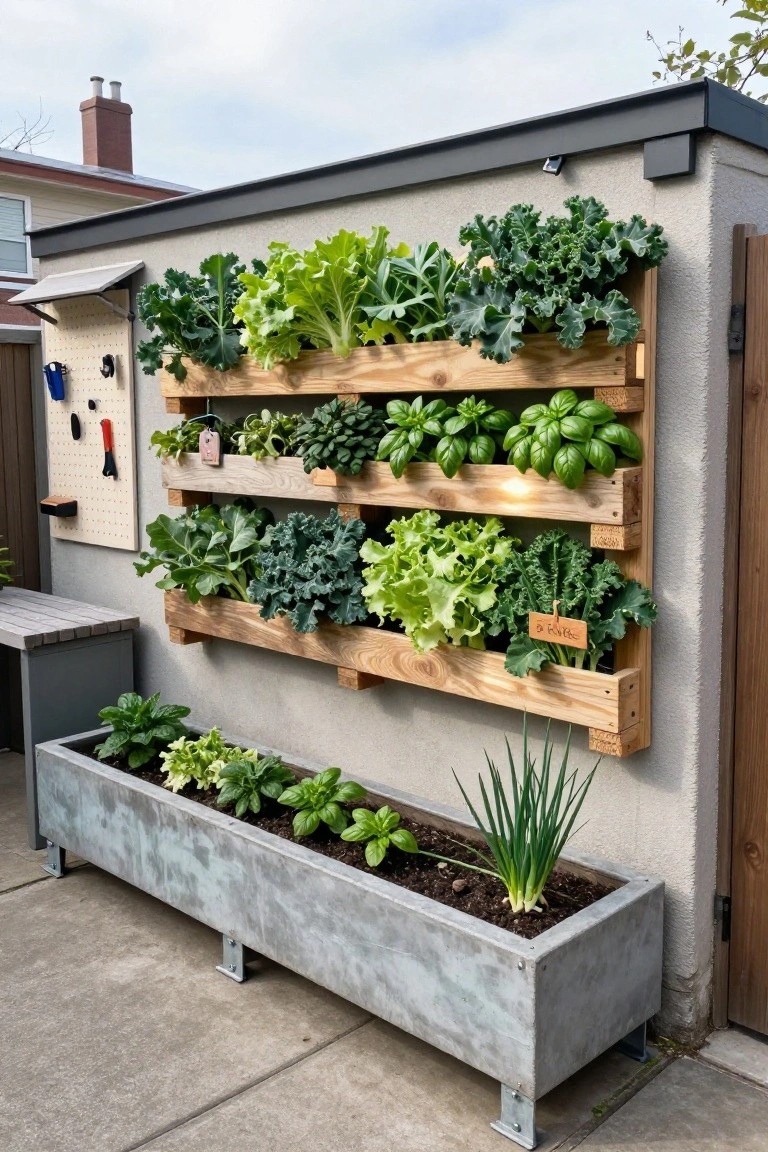
Mounting pallets directly on an exterior wall gives you several rows of planting space without using up ground area. It turns an otherwise blank surface into a productive spot for leafy greens and herbs while keeping everything easy to reach.
This setup works best along a side yard, garage wall, or narrow patio edge where a regular bed would feel too wide. Make sure the pallets are secured well and lined so soil does not spill, then fill each level with plants that do not need deep roots.
Building Raised Beds With Pallets
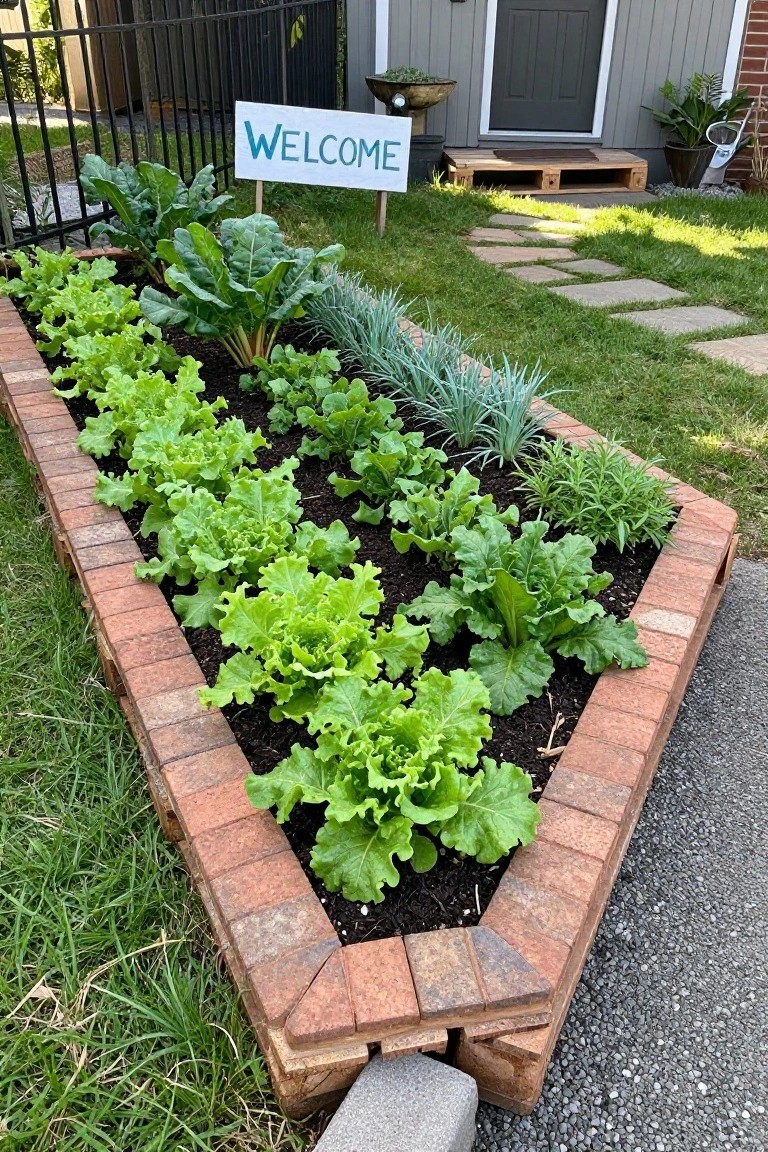
Many gardeners use old pallets to frame raised beds because the wood holds the soil in place and creates a clear growing area without needing much room. The structure also makes it easier to reach the plants and keeps the bed from spreading into the surrounding grass.
This works best in compact yards or along the side of a house where a full garden would feel too big. Line the inside of the pallets before filling them, and check that the wood has not been treated with anything harmful to edible plants.
Pallet Shelves For Compact Herb Gardens
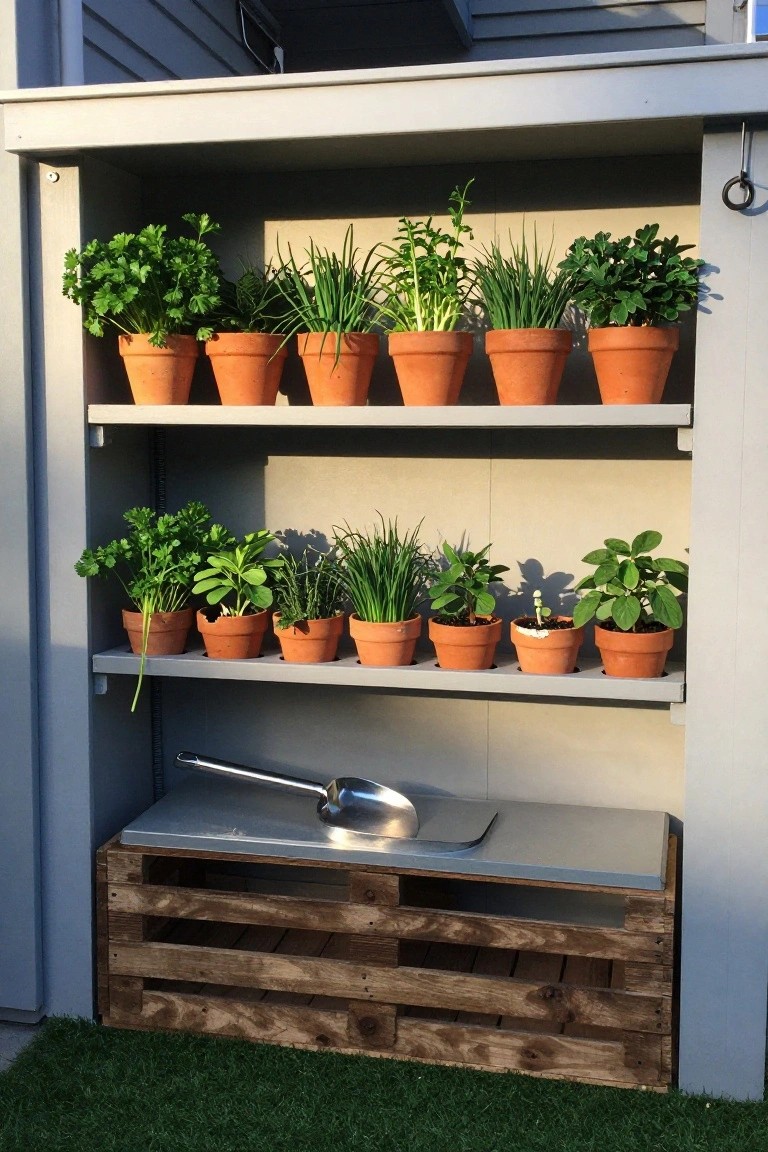
A simple pallet can turn into sturdy base for tiered shelves that hold plenty of pots without taking up much ground space. This setup keeps herbs and greens at a comfortable height so you can water and harvest without bending over all the time.
It works best against a wall or fence where the shelves get steady light. Just make sure the wood is treated for outdoor use and add a metal tray on the bottom level to catch any mess from soil or watering.
Raised Pallet Beds For Compact Vegetable Crops
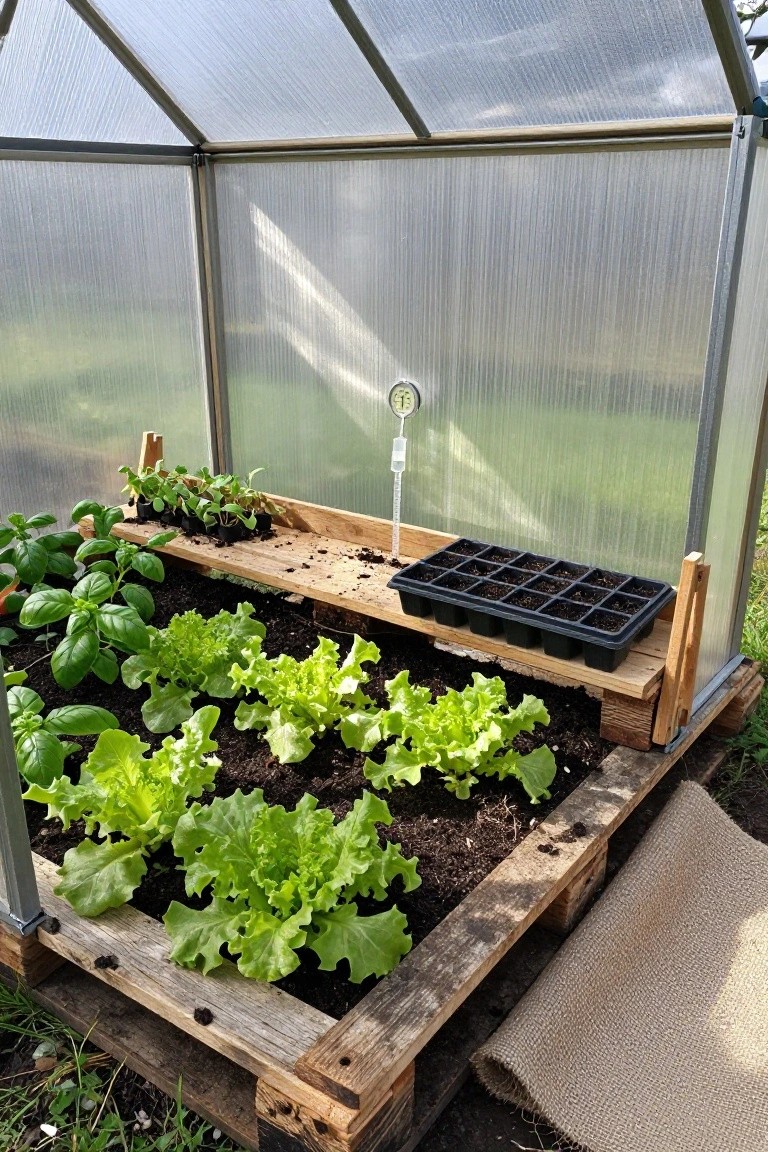
Pallet raised beds give you a quick way to set up growing space without buying new lumber. The wood frames hold the soil in place and make it easier to reach plants without stepping on the beds. This setup works especially well when you want to grow a few crops in a small greenhouse or corner of the yard.
You can build them to fit whatever space you have and line them with landscape fabric if needed. Just check that the pallets have not been treated with chemicals before you use them for food crops. Many people start with a single bed and add more as they go.
Painted Pallets for Balcony Vegetables
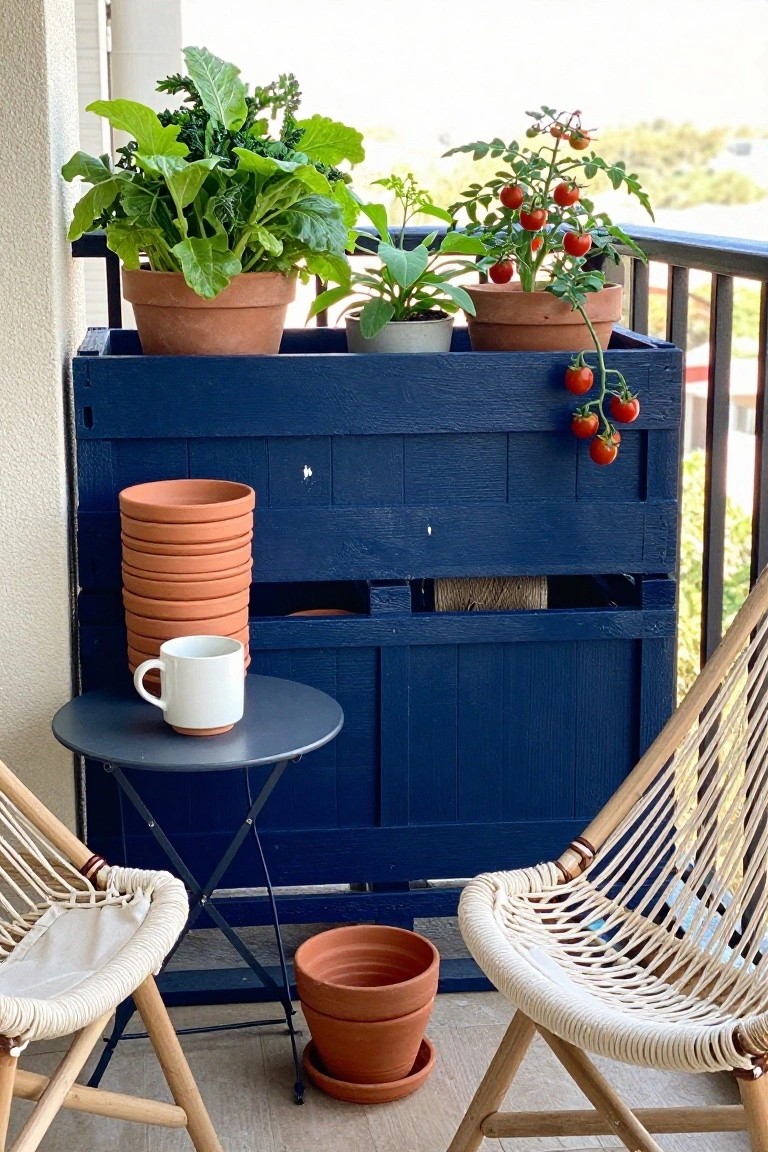
A painted pallet gives you an easy way to grow vegetables on a small balcony without buying fancy planters. The wood creates a simple raised structure that holds several pots or a bit of soil, and the color helps it look more like part of the outdoor space rather than just a leftover crate.
This setup works best on balconies or patios where floor space is limited. Place it along the railing, tuck smaller pots into the slats, and choose compact crops like tomatoes or leafy greens. Make sure the pallet is clean and untreated if you plan to grow food directly in it.
Frequently Asked Questions
Q: How do I stop soil from washing out the bottom of the pallet?
A: Line the inside with landscape fabric or an old burlap sack before adding dirt. This holds everything in place while still letting water drain through. Check it every few weeks and add more soil if it settles.
Q: Which compact crops grow best in these pallet setups?
A: Leafy greens like lettuce and spinach work great because they do not need deep roots. Cherry tomatoes and radishes also fit well in the small pockets. Stick to one or two types per pallet so they do not compete for space.
Q: Can these pallet gardens work on a balcony?
A: Yes if you choose a sturdy pallet and keep the weight in mind. Add wheels to the bottom so you can roll it around for sun.
