

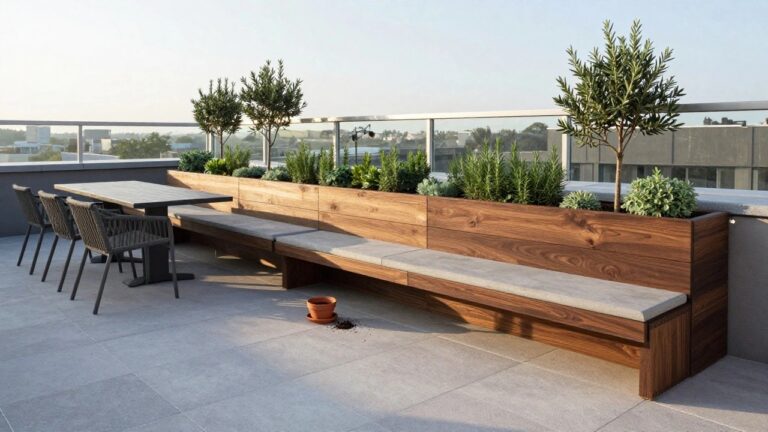
I’ve found that adding a few well-made planter boxes can shift how a backyard actually feels day to day, especially when the lines stay simple and the wood sits comfortably against existing fences or paving.
Pallet builds give a practical starting point for that kind of change without needing a big budget or heavy materials.
Some ideas stand out more than others.
I keep coming back to the ones that leave room for the plants to grow into the design instead of fighting it, since those tend to look better after the first summer.
Matching the height and placement to how people move through the space makes the biggest difference in whether the boxes end up useful or just sit there.
Planter Boxes That Double As Seating
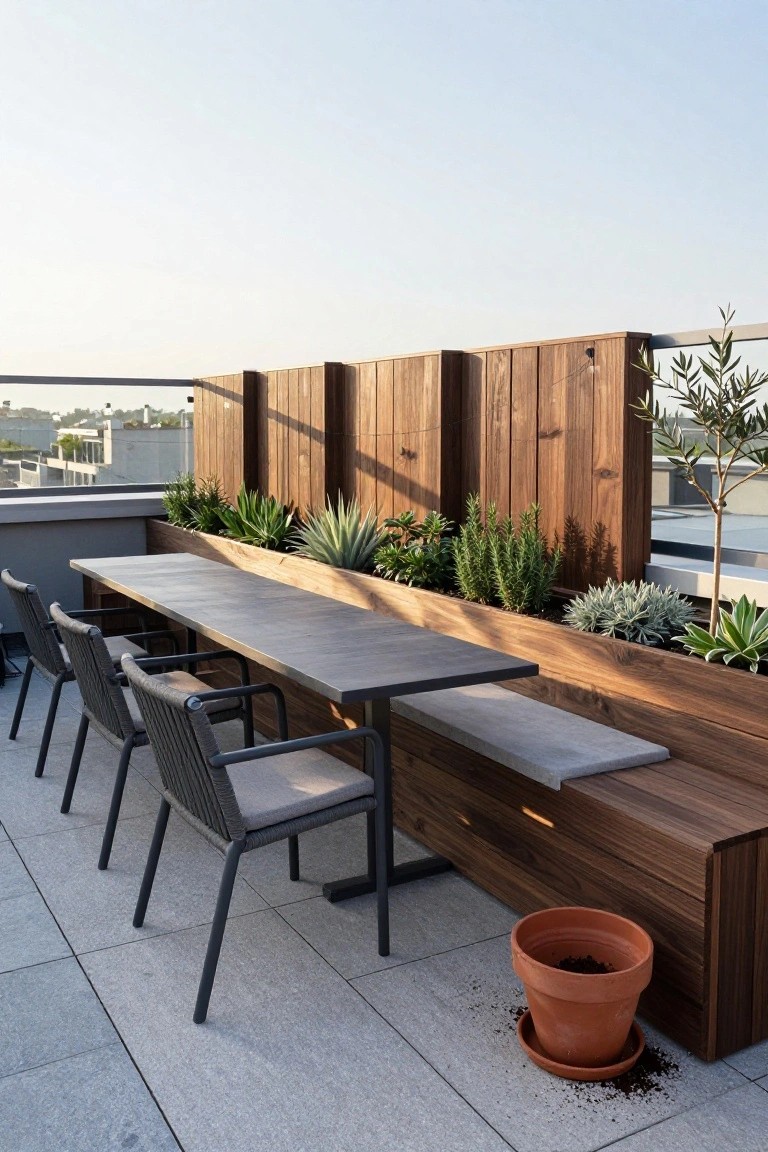
Running a long planter box along one side of an outdoor table gives you planting space without crowding the floor. The wood ties the seating area together and the top edge works as a simple bench for extra guests.
This layout suits rooftops and patios where every inch counts. Keep the box narrow and the wood finish plain so it stays in the background while the plants add color and softness.
Mount Pallet Planters Above a Bench
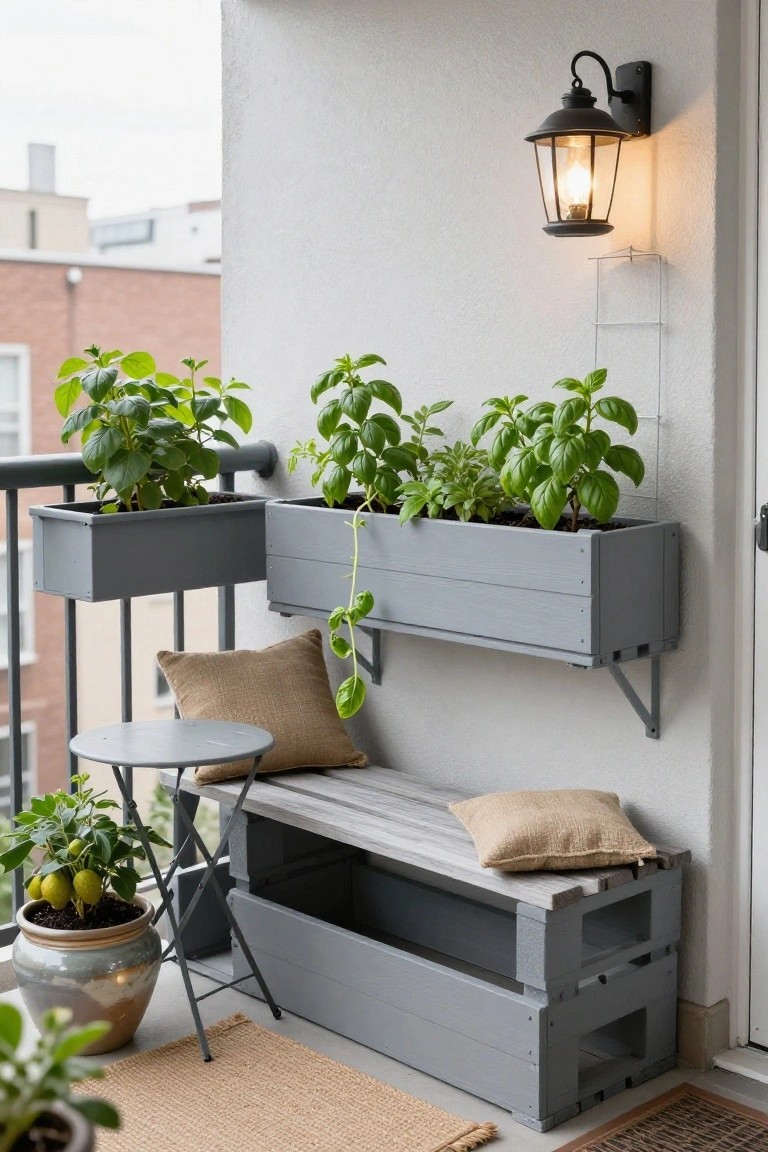
One simple way to add growing space on a balcony is to mount a long pallet planter box on the wall and build a matching bench below it. The bench gives you a place to sit while the raised planters keep herbs and greens within easy reach without taking up floor room.
This setup works best on small balconies where every inch counts. Use the same paint color on both pieces so they read as one unit, and leave the bench open underneath if you want extra storage for cushions or tools.
Pallet Planters Beside Porch Seating
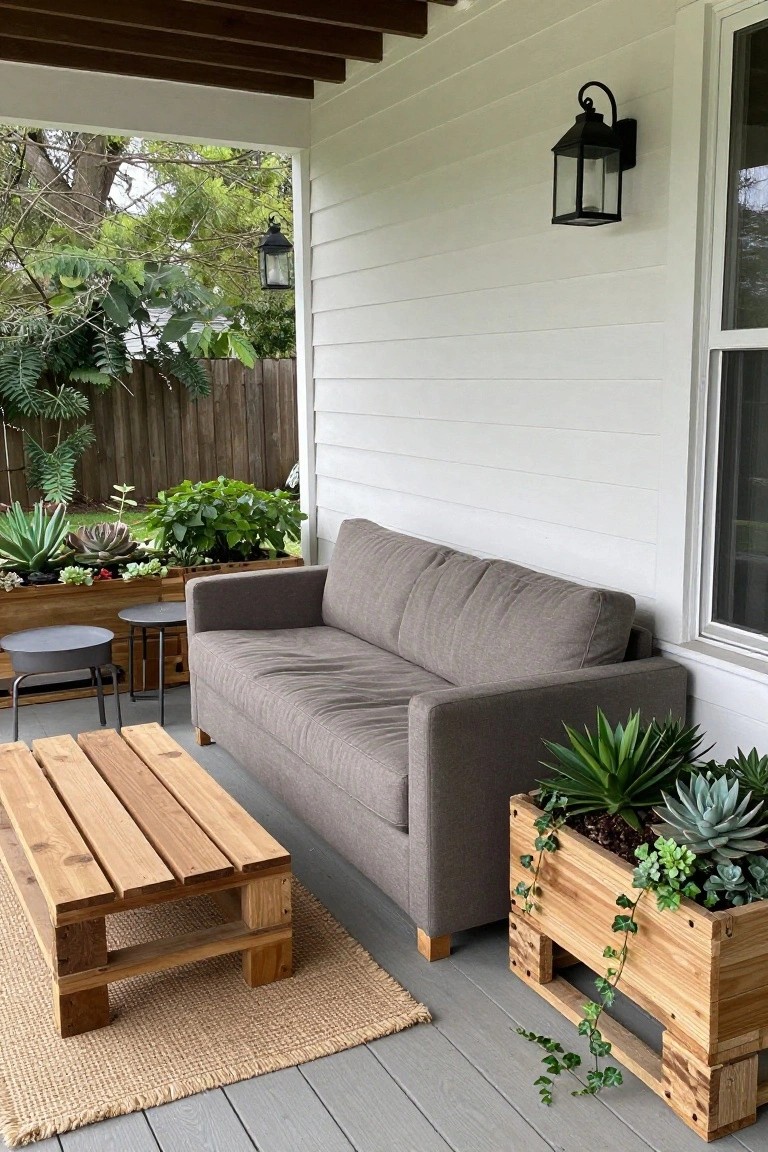
One simple way to bring plants closer without crowding a porch is to set a pallet planter right next to the sofa. The box shape holds the soil and plants in a tidy block while the wood matches basic outdoor furniture. It keeps the greenery at a comfortable height and leaves the floor clear for walking or extra seating.
This setup works best on covered porches or decks where the plants get some shelter but still feel part of the outdoor space. Use it on a smaller porch if you want a few succulents or trailing vines without adding separate pots that might tip or scatter.
Frame the Front Door With Matching Planter Boxes
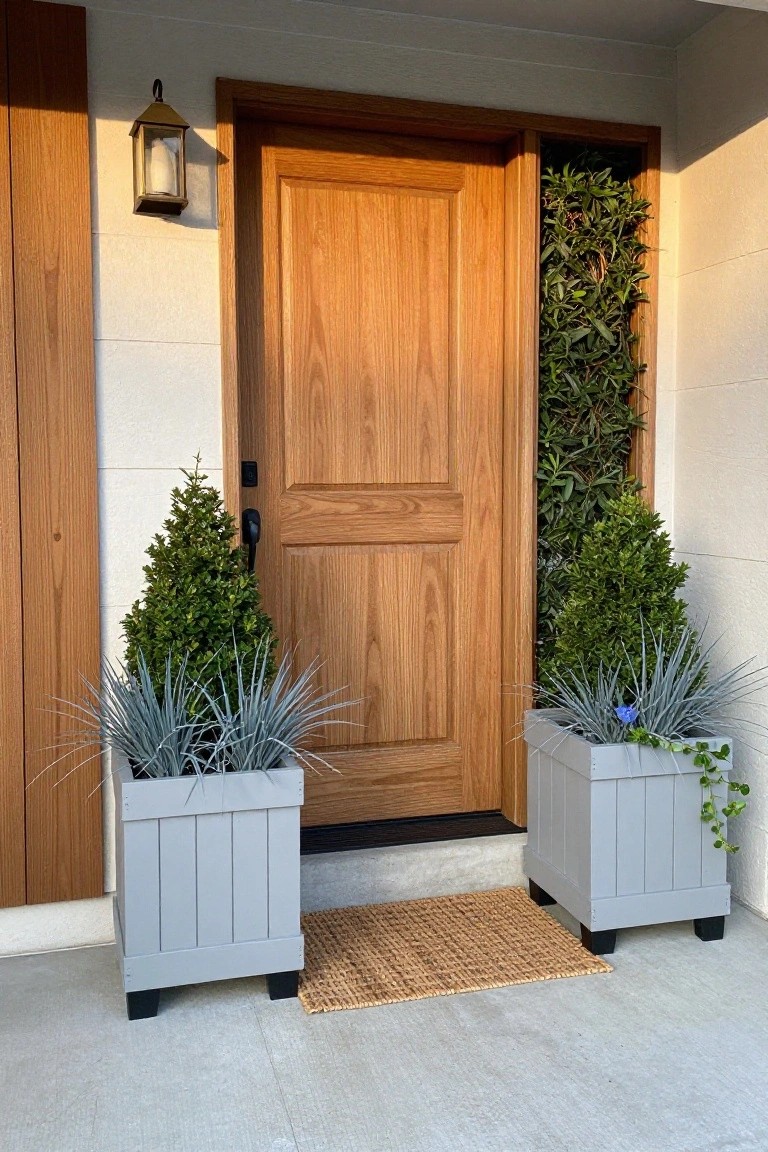
A pair of matching planter boxes can give a front entry a tidy, finished look without much effort. The clean lines keep the plants contained and the walkway clear, which works better than scattered pots when space is limited.
This approach suits homes with simple facades and straightforward entries. Pick boxes in a color that echoes the trim or siding, and use them to add height on either side of the door so the plants feel balanced rather than crowded.
Long Pallet Planters Along Pool Edges
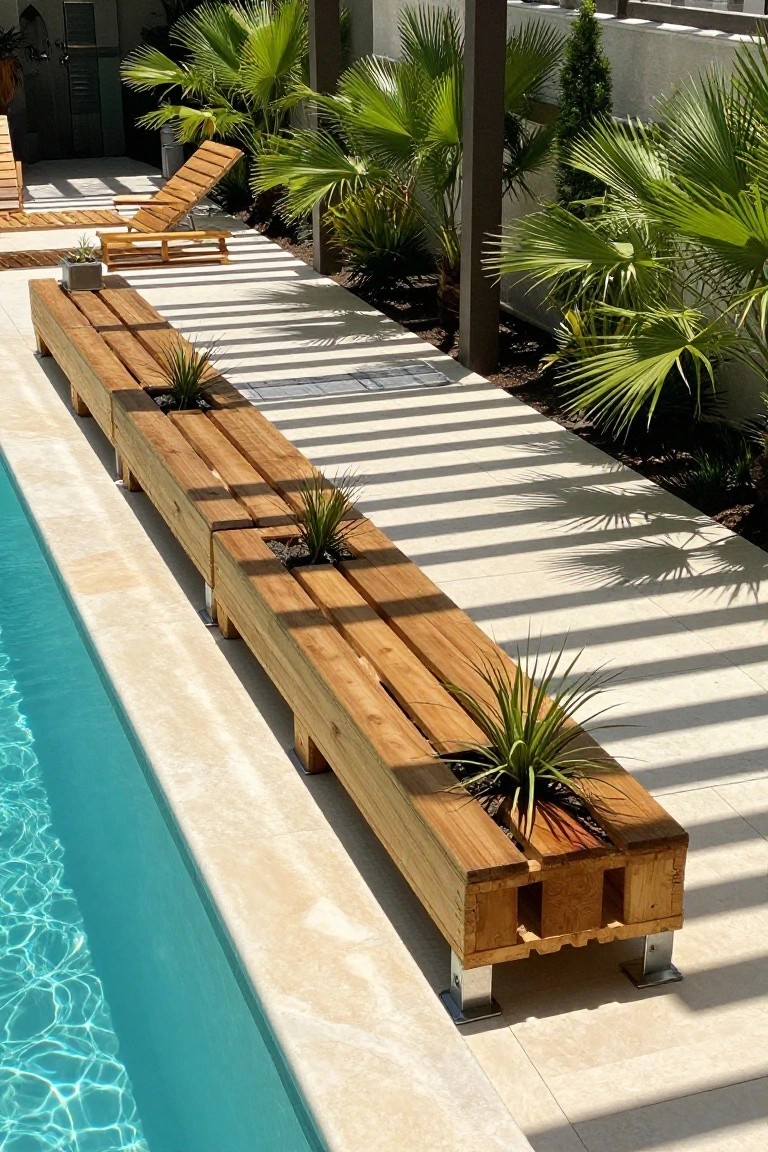
One simple way to use pallets outdoors is to turn them into a long, low planter that runs right along the edge of a pool. The straight lines keep the look clean, and the built-in planting spots add greenery without needing extra beds or pots scattered around.
This setup works best in smaller yards or modern homes where you want planting and seating in one piece. Use pressure-treated wood or a good sealer, and raise the whole thing slightly on metal brackets so air can move underneath and the base stays dry.
Line an Outdoor Kitchen With Pallet Planters
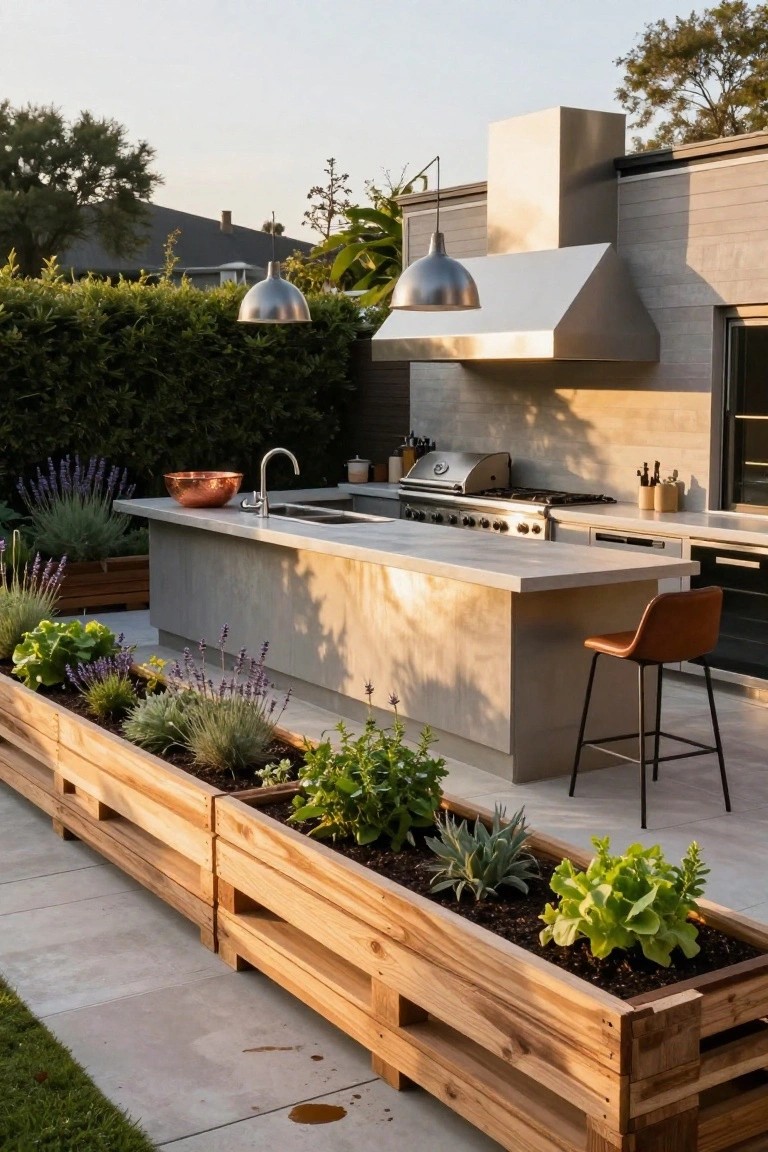
Pallet wood works well for long, low planter boxes placed right along the edge of an outdoor kitchen counter. The simple construction adds a bit of garden space without taking up much room, and the wood brings a natural texture next to the concrete and steel.
This setup suits homes where the kitchen opens onto a patio or yard. Keep the boxes narrow so they stay out of the main walking path, and fill them with herbs or vegetables you reach for often while cooking.
Pallet Planters Over Gravel
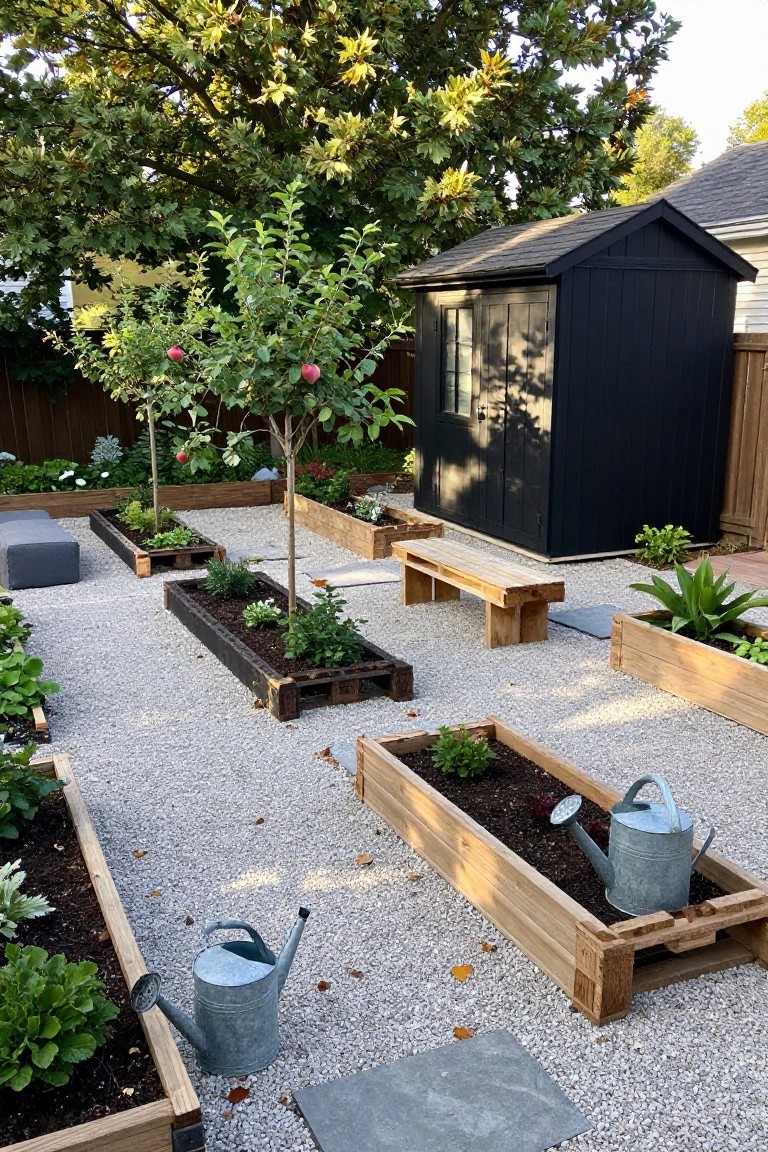
Many gardeners like the way pallet planters sit directly on gravel. It gives the beds a simple raised edge and keeps the whole layout looking organized without extra borders or paving.
This works best in smaller yards where drainage matters and you want easy access between beds. Keep the gravel layer thick enough for good footing and choose pallets that can handle moisture.
Pallet Planters Built Into Corner Seating
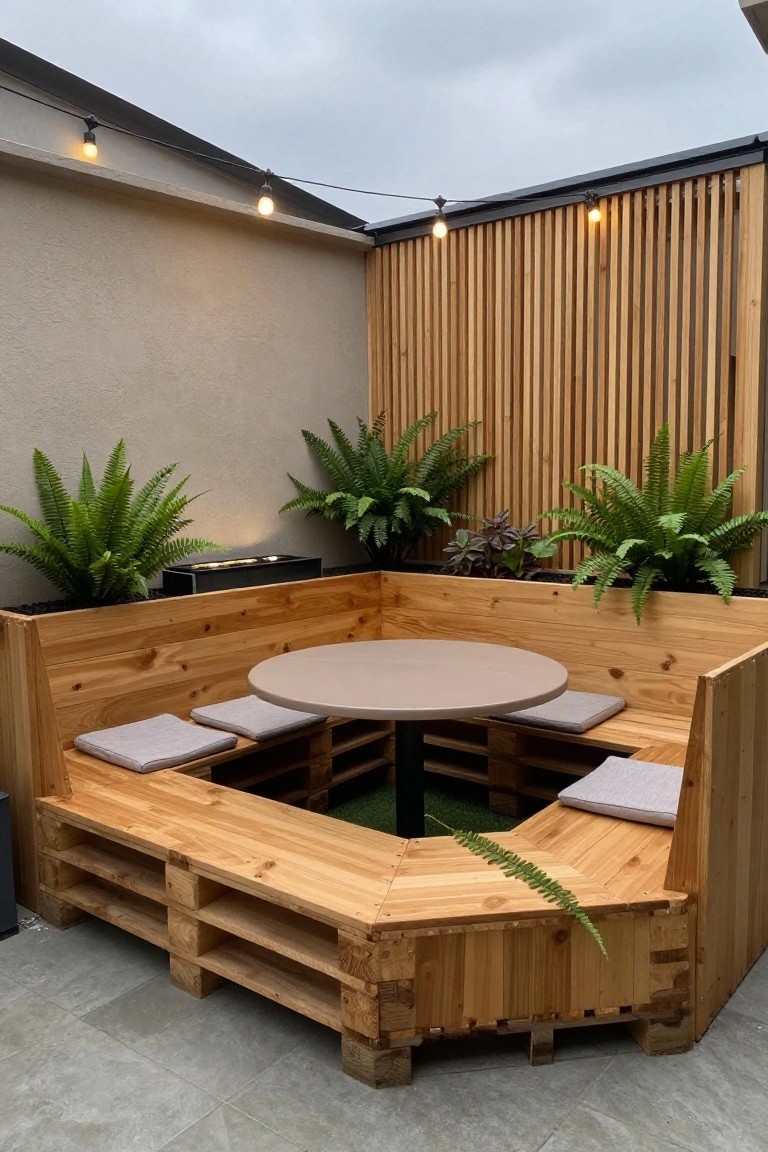
One simple way to add seating and planting at the same time is to let pallet planter boxes form the base for the benches. The wood stays low and clean, and the plants sit right at seating height so the whole setup feels connected without extra furniture.
This approach works best on small patios or side yards where you want defined edges but still need room to move. Treat the pallets for weather and add a liner inside each box so the soil does not rot the wood over time.
Pallet Benches With Window Planters
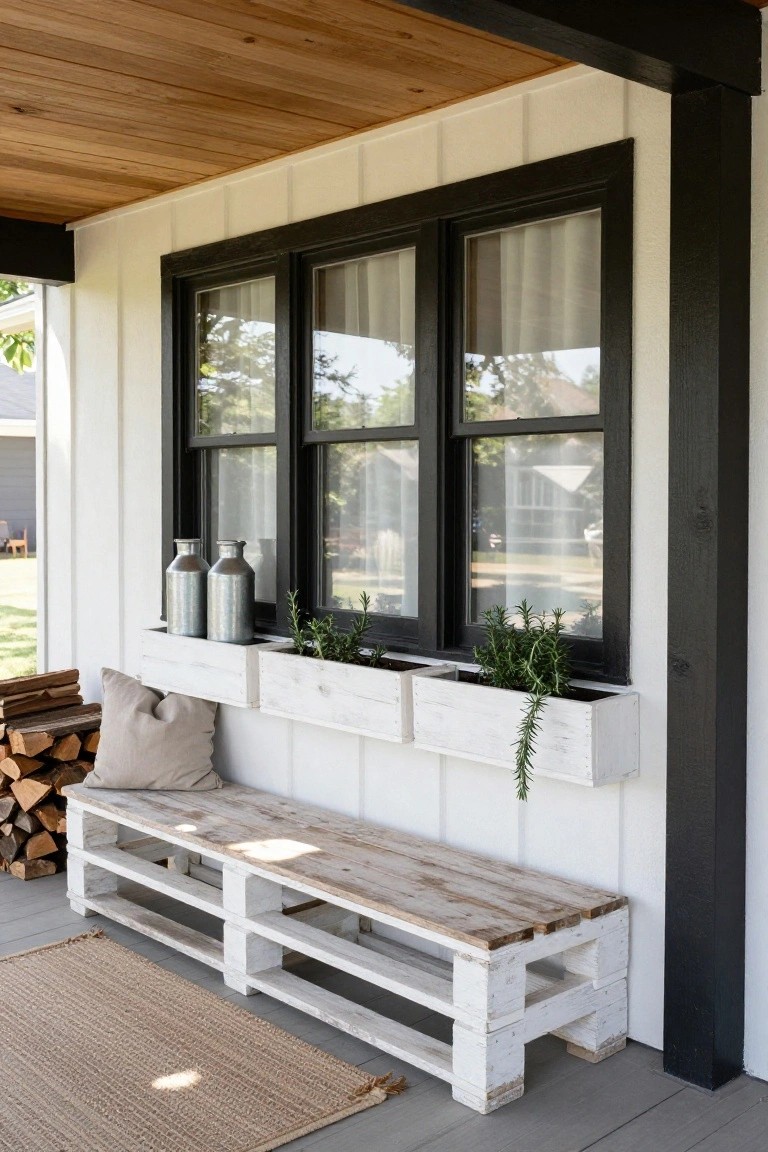
One approach that feels practical is building a bench and planters from the same pallet wood so they sit together naturally under the windows. The bench gives you a place to rest while the planters add a row of greenery without taking up extra floor space.
This works best on a covered porch or deck where you already have wall space below the windows. Keep the wood finish simple and pick plants that suit the amount of sun the spot gets.
Pallet Wood Makes Straightforward Raised Beds
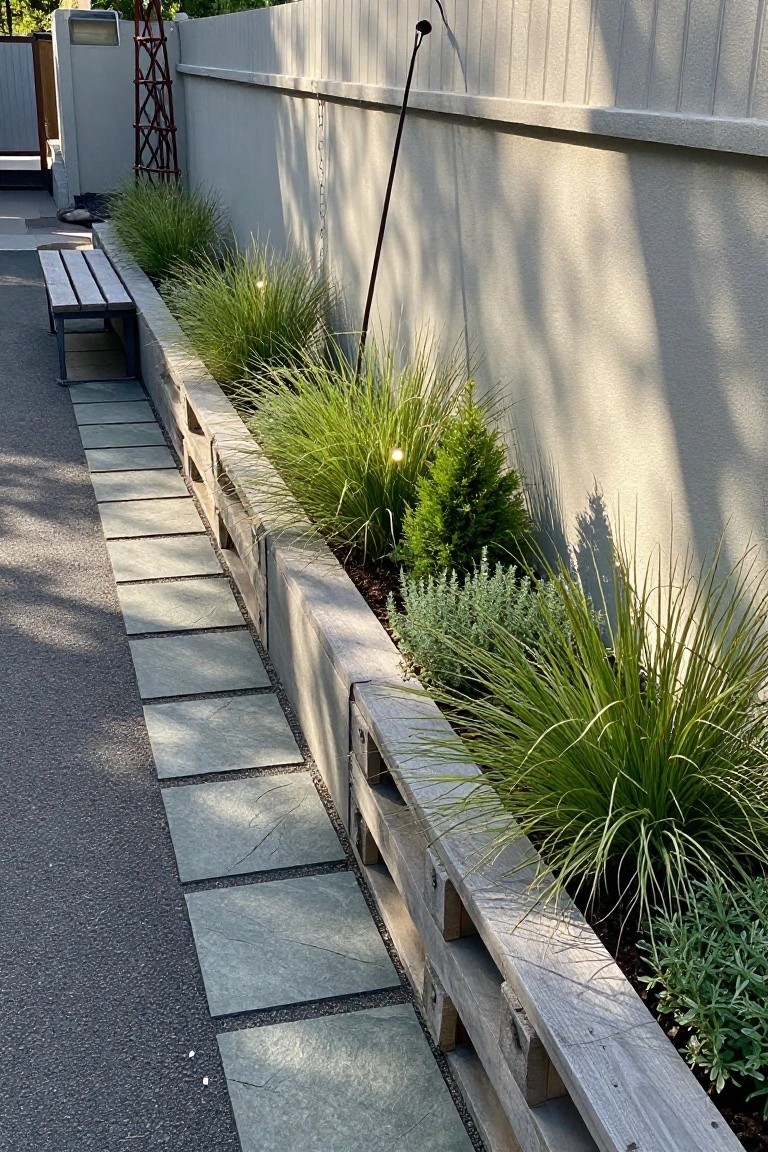
Many people turn to pallet wood when they want raised beds that stay simple and straight. The lumber lines up neatly to form low sides that follow the edge of a path or wall without looking fussy.
This setup suits narrow side yards or back garden strips where you need planting space but want to keep things tidy. Use untreated or properly sealed wood so it lasts, and keep the beds narrow enough for easy weeding from one side.
Pallet Coffee Tables For Outdoor Patios
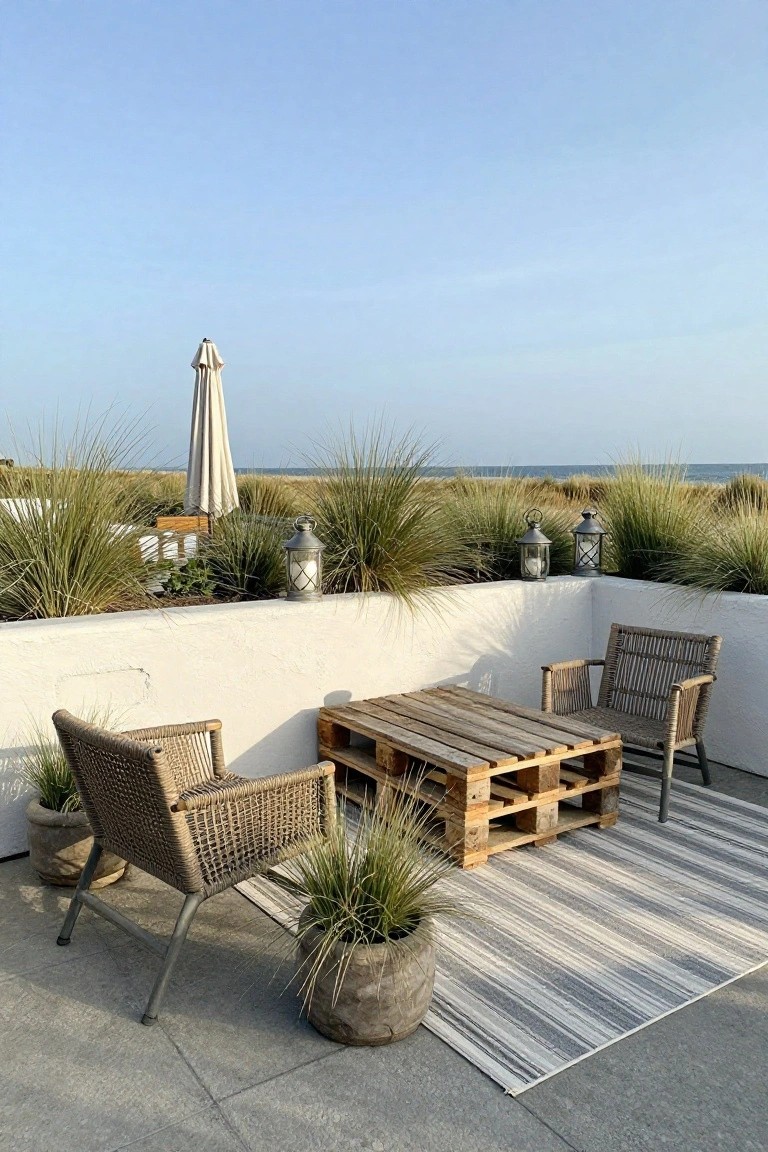
A wooden pallet turned into a low coffee table gives an outdoor seating area a relaxed, unfussy base without much cost. It sits flat on the ground, holds up well in weather, and leaves room around it for chairs and plants to feel open rather than crowded.
This works best on concrete or stone patios where you want simple lines and easy movement. Keep the pallet unfinished or give it a light seal, add a striped rug underneath if the surface feels too hard, and place taller planters nearby to soften the edges. It suits homes near the coast or any spot where furniture takes a lot of sun and salt air.
Using Planter Boxes as Patio Boundaries
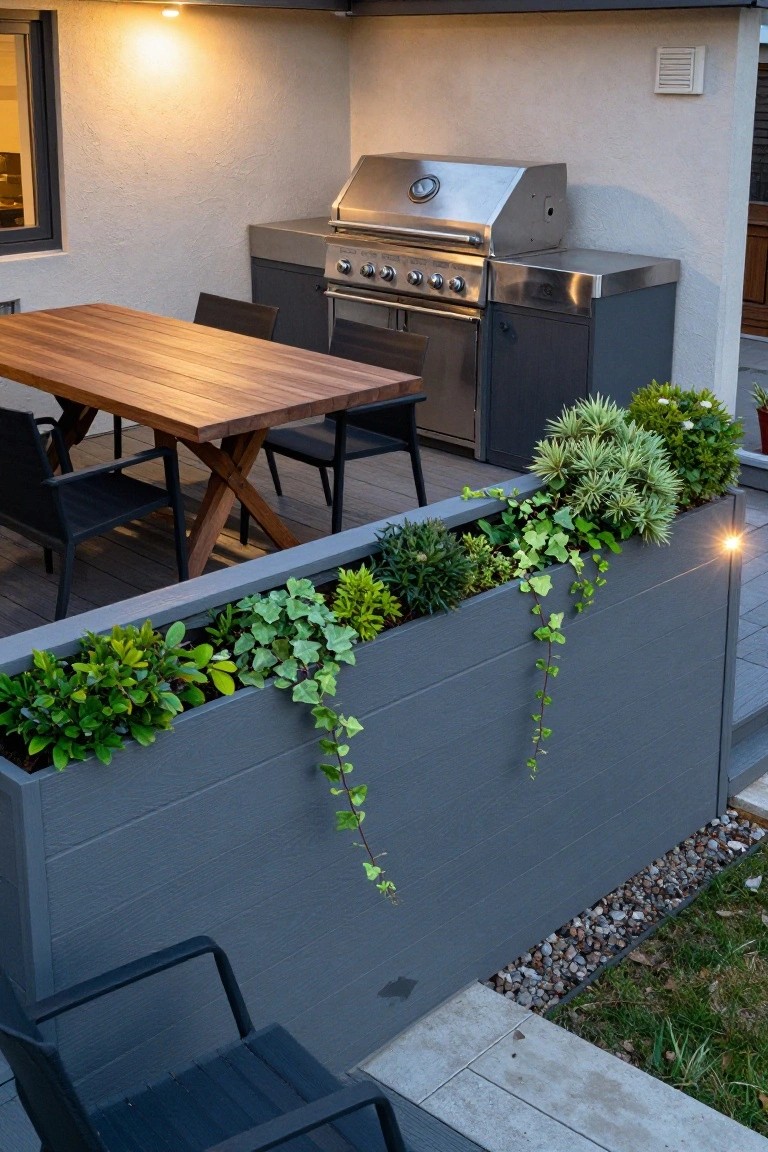
A long, low planter box makes a simple way to mark the edge of an outdoor seating area without closing it in. The horizontal lines keep the look clean, and the plants add some softness while still letting the space feel open to the rest of the yard.
This approach works best on decks or patios that sit a step or two above ground level. Match the box material and color to the decking so it reads as part of the structure rather than an added piece. Just be sure the box is deep enough for the plants you want and that water can drain properly.
Raised Planters That Edge The Lawn
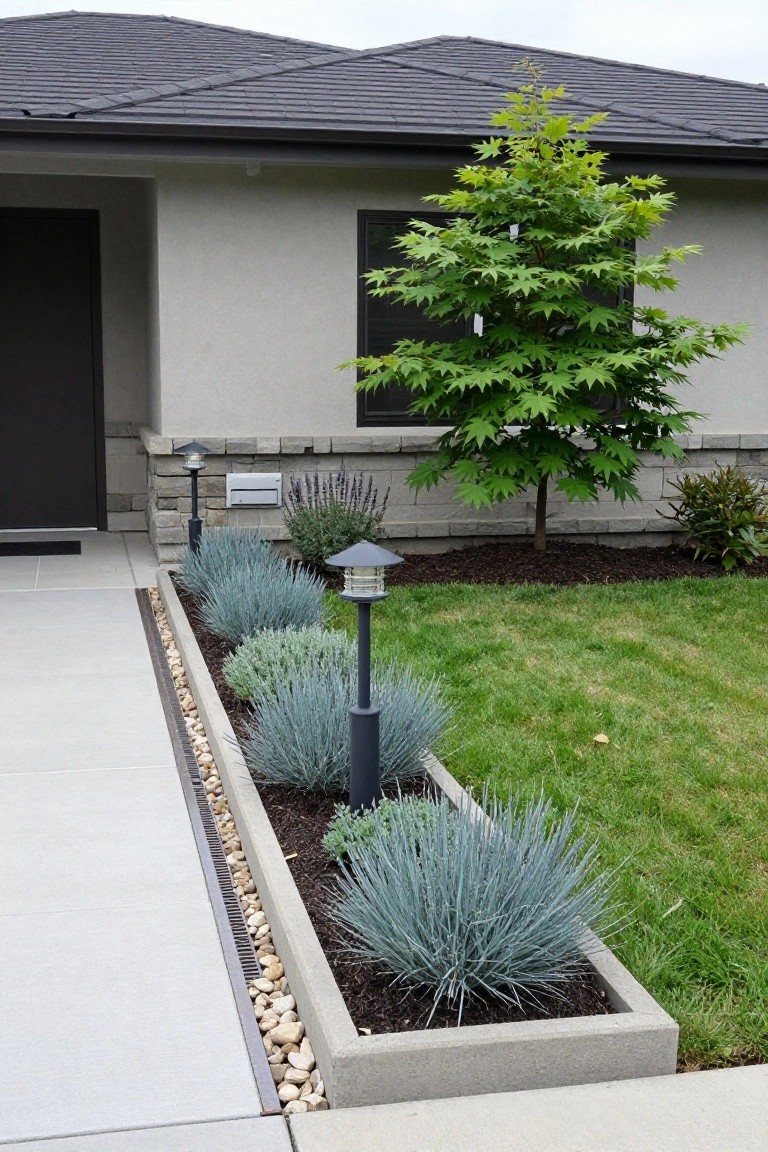
A long raised planter gives the front yard a simple border that feels intentional. It keeps the grass from creeping onto the path and gives you a spot to add plants that stay neat without constant work.
This setup suits homes with straight lines and low-maintenance yards. Use a sturdy material that matches nearby walls or paths, and stick with grasses or similar plants that hold their shape.
A Simple Wood Table for Outdoor Dining
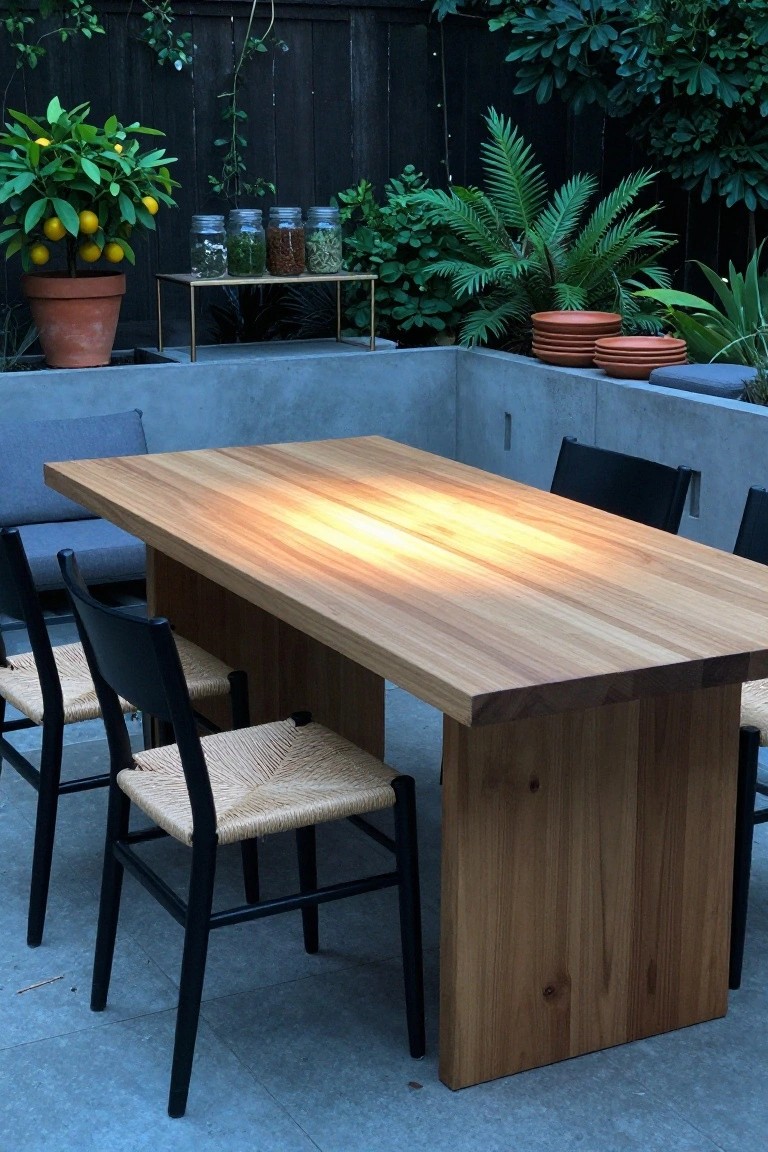
A long wood table gives an outdoor space a clear spot to gather without adding much else. The straight lines and solid top keep things practical while the natural grain adds enough warmth to feel comfortable next to plants and concrete.
This setup works best on a patio or deck where you already have some greenery around the edges. Stick with basic chairs so the table stays the main piece and the whole area stays easy to keep clean.
Built-In Planters For Defined Outdoor Seating
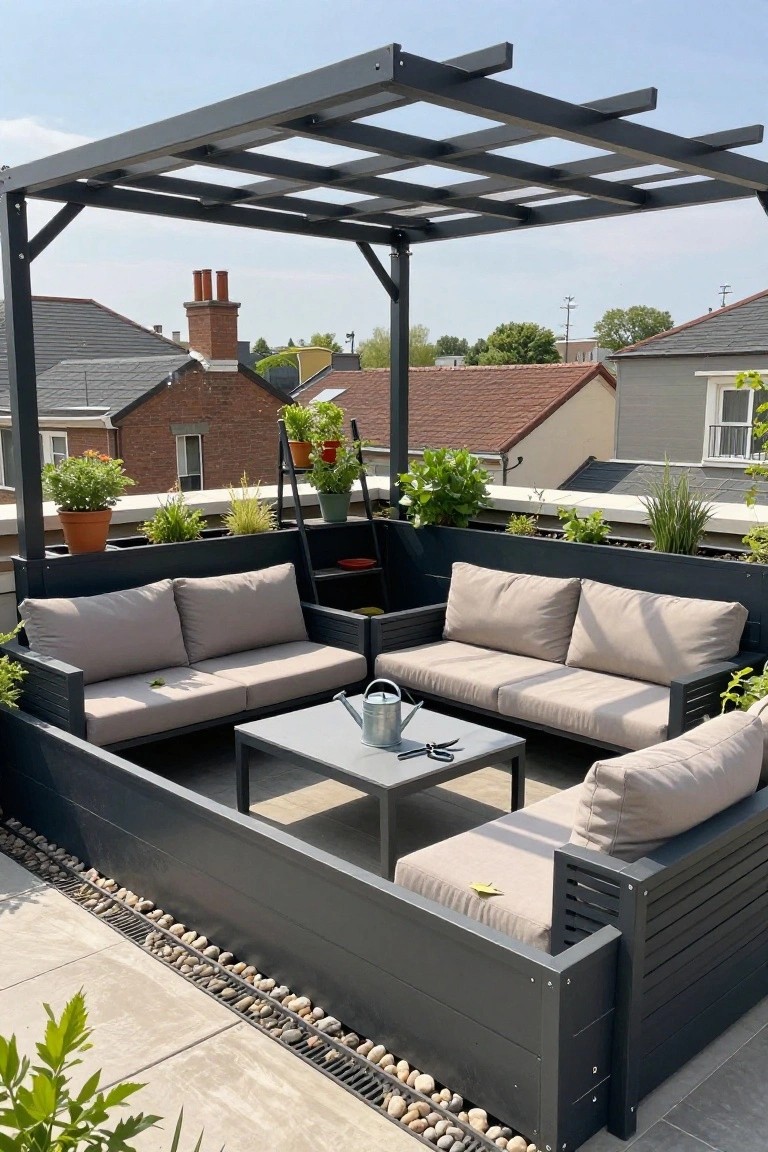
Building planter boxes directly into the edges of outdoor seating keeps the whole area looking neat and contained. The raised boxes act as low walls that frame the space without adding separate screens or railings, and they let the greenery become part of the seating layout itself.
This approach suits rooftops, terraces, and smaller patios where every inch counts. Match the box material and color to the bench frame, keep the lines straight, and choose plants that stay tidy rather than sprawling.
Building A Raised Sandbox From Pallets
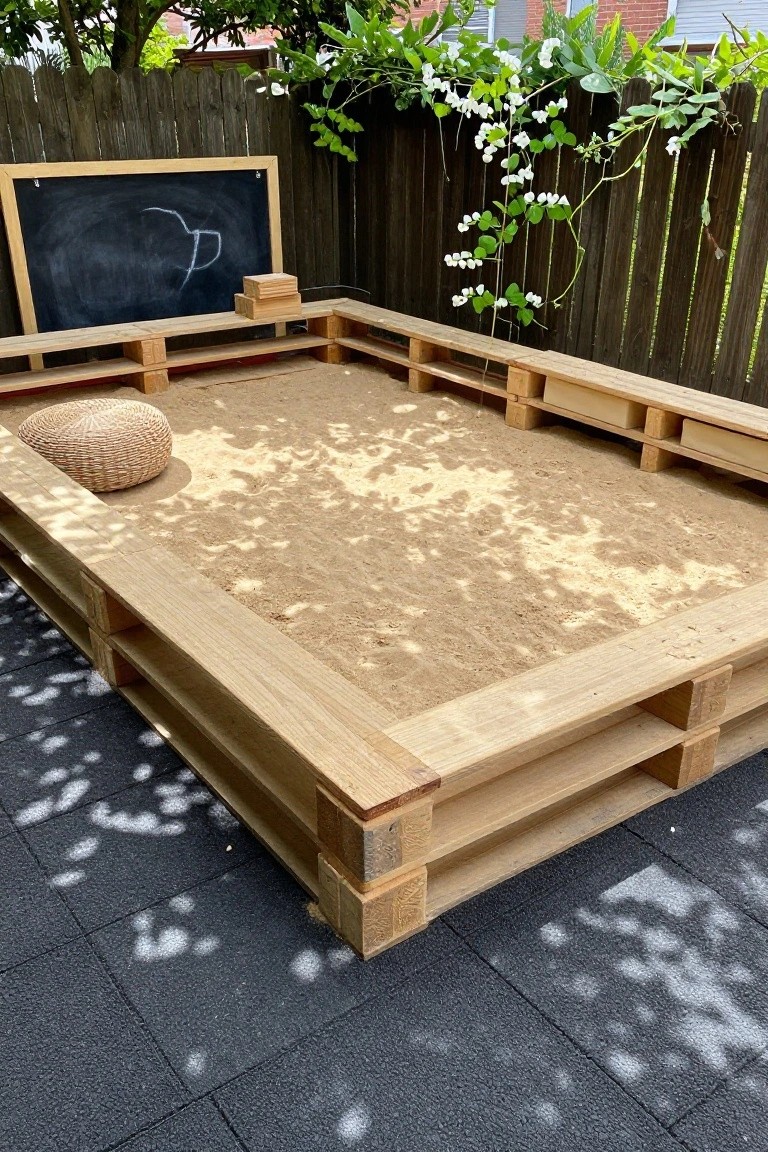
A raised sandbox made from pallets keeps the sand in one spot and gives the area a finished look without much extra work. The wood frame sits low to the ground so kids can step in easily, and the whole thing blends into a simple backyard setting.
This setup works best in a small yard or on a patio where you want a clear play zone. Just line the inside, fill it with sand, and add a cover when it is not in use to keep debris out. It suits homes with young children who need a dedicated space that still looks tidy.
Place a Tall Planter Next to Lounge Seating
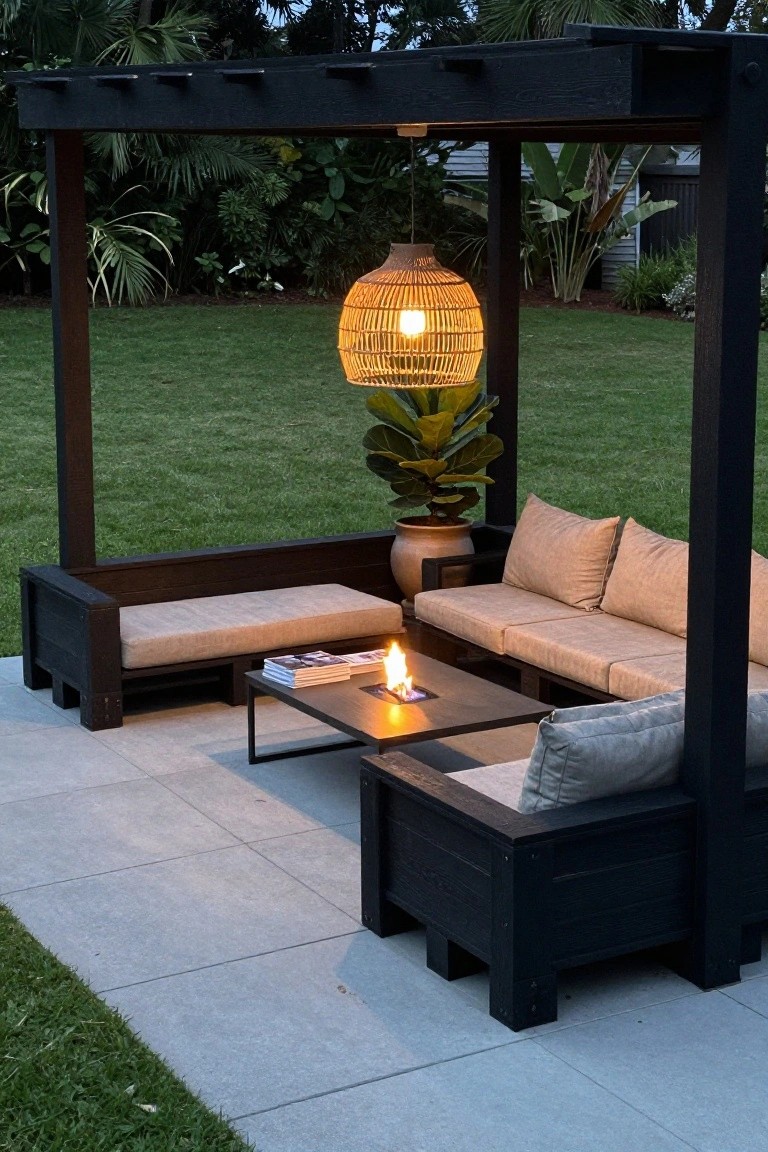
A large planter adds height and life to an outdoor seating area without needing extra garden beds. It works especially well on patios or decks where the surface is mostly hardscape, and the dark wood furniture keeps the whole setup feeling clean and simple.
This approach suits homes with smaller yards or mostly paved spaces. Keep the planter in scale with the seating so it feels like part of the layout rather than an afterthought, and choose a plant that can handle the light conditions in that spot.
Frequently Asked Questions
Q: Are old pallets safe to use around food plants?
A: Check that the pallets are stamped HT for heat treated. Skip any marked with MB since that means chemicals were used.
Q: How can I keep the lines clean when I build one of these boxes?
A: Cut the boards to the same lengths and sand every edge smooth before assembly. Skip any extra trim that might break up the simple shape.
Q: Do these planters need drainage holes right away?
A: Drill a few holes in the bottom before you add soil. This stops water from pooling and rotting the wood from the inside out.
