

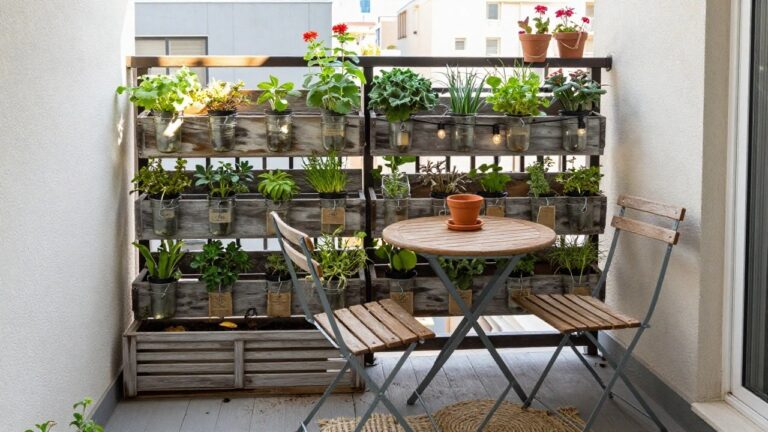
I have found that starting a garden usually comes down to creating clear boundaries and levels so the plants have room to settle without everything spilling into the paths.
When I look at my own yard the way soil gets contained and the edges line up makes more difference than any single plant choice.
Pallets give a basic frame that can handle both of those needs without requiring special tools.
I would test one or two of the simpler builds in a back corner first to watch how they settle after a few rains.
Adjusting the height and placement to match the actual slope and light in my space has been the step that keeps the layout feeling workable instead of temporary.
Mount A Pallet On The Railing For Hanging Plants
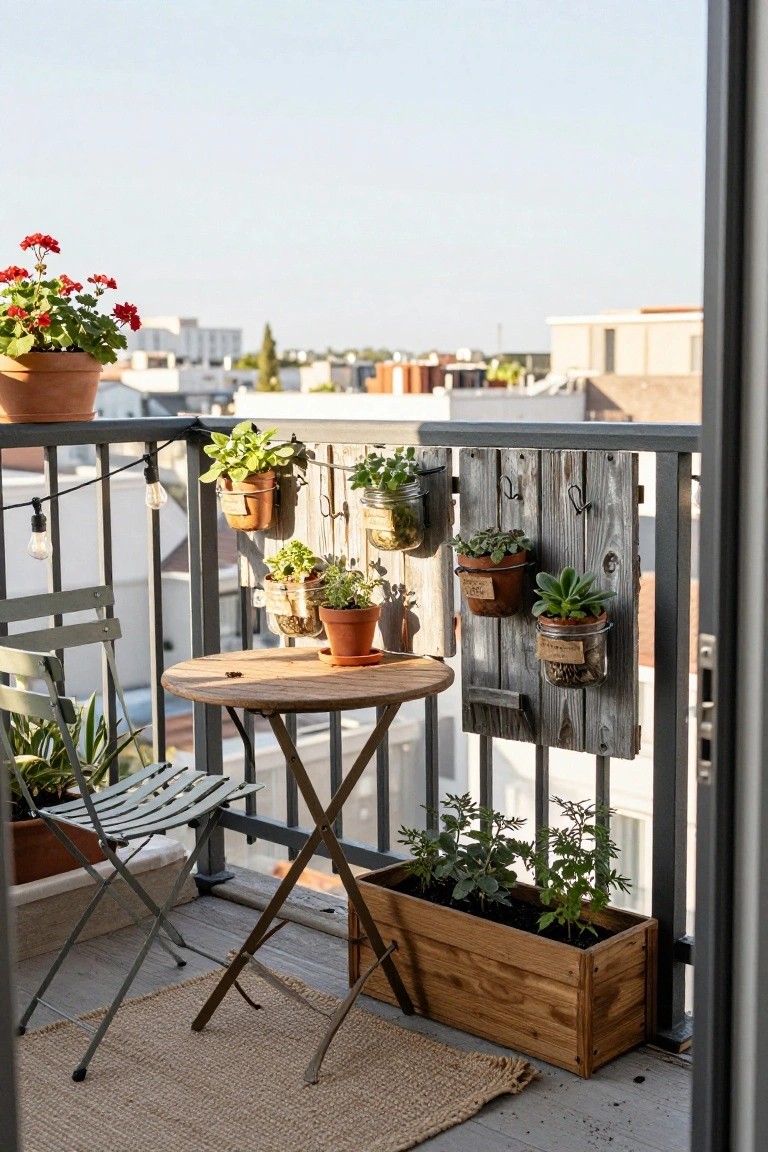
A simple pallet screwed to the balcony railing gives you an easy way to hang several pots at once without taking up floor space. It works especially well on small balconies where every inch counts and you still want more greenery than a few pots on the ground can provide.
You can add hooks or small shelves to the pallet and move plants around as they grow or as seasons change. This setup suits apartments and rentals because it needs no permanent changes to the building and comes down just as easily as it goes up.
Build A Raised Bed Using Pallets
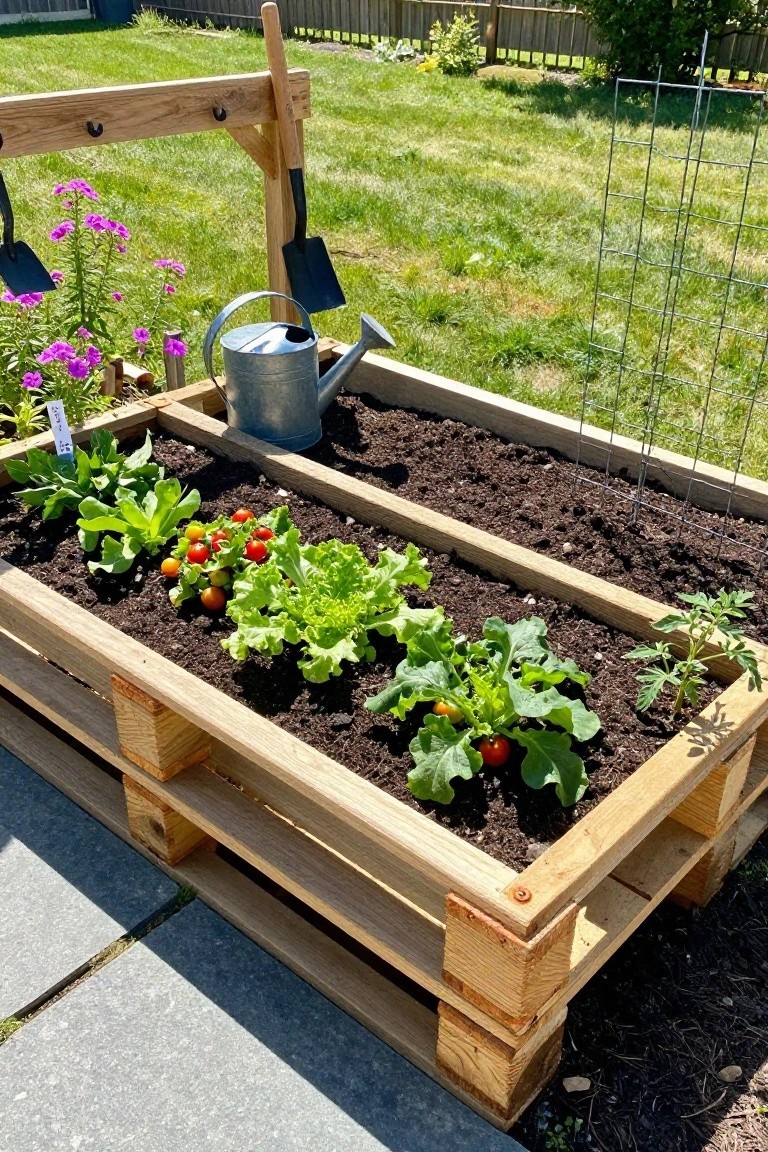
A raised bed built from pallets gives beginners an easy way to start a garden without buying fancy materials or doing heavy construction. The wood holds the soil in place and lifts the plants off the ground so drainage stays better and weeds stay fewer.
This works well in a small yard or along a fence where space is tight. Stack two pallets on their sides, add a liner if you want, and fill it with soil. It suits anyone who wants a sturdy bed that can be put together in an afternoon.
Build A Pallet Bench With Integrated Planters
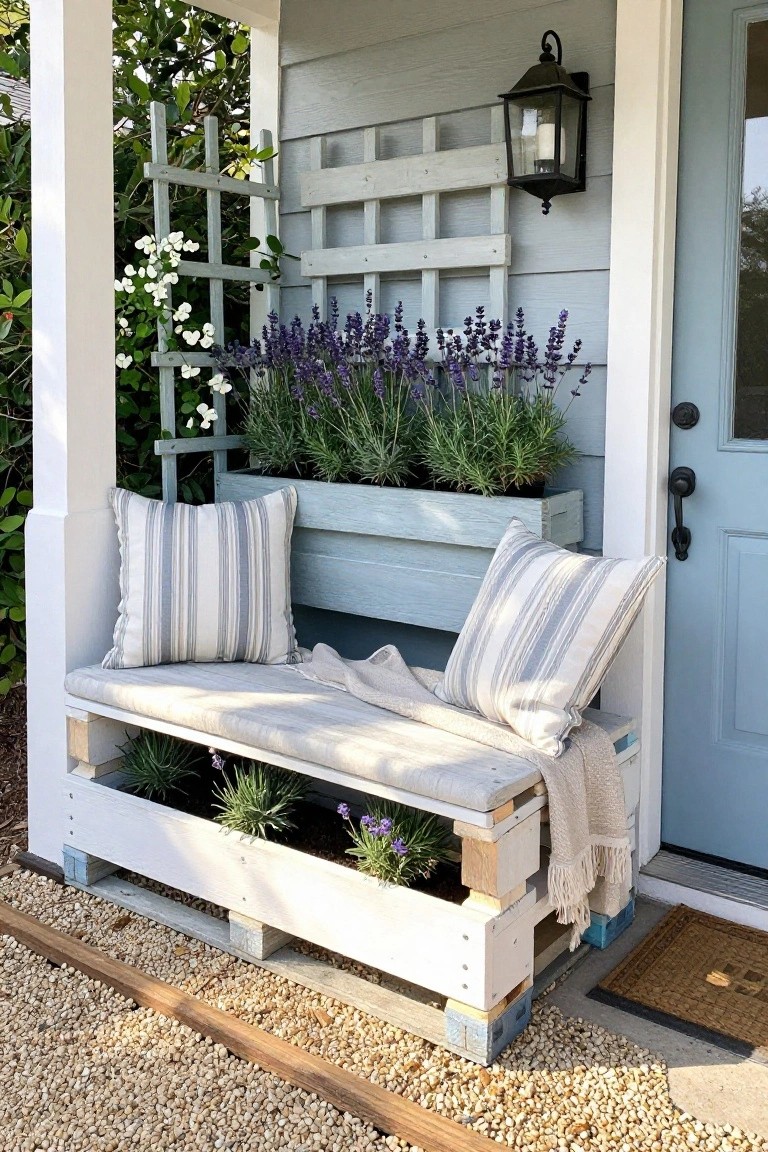
One idea that works well for beginners is turning pallets into a bench that also holds plants. It gives you seating and growing space in the same piece without much skill or cost. The bench shown uses the lower section for small plants while the seat stays flat and comfortable.
This setup works best on a porch or near an entry where you want both a place to sit and some color from flowers. Paint the wood to match your house and add cushions for everyday use. Just check that the pallets are sturdy and clean before building.
A Pallet Planter Box for the Outdoor Table
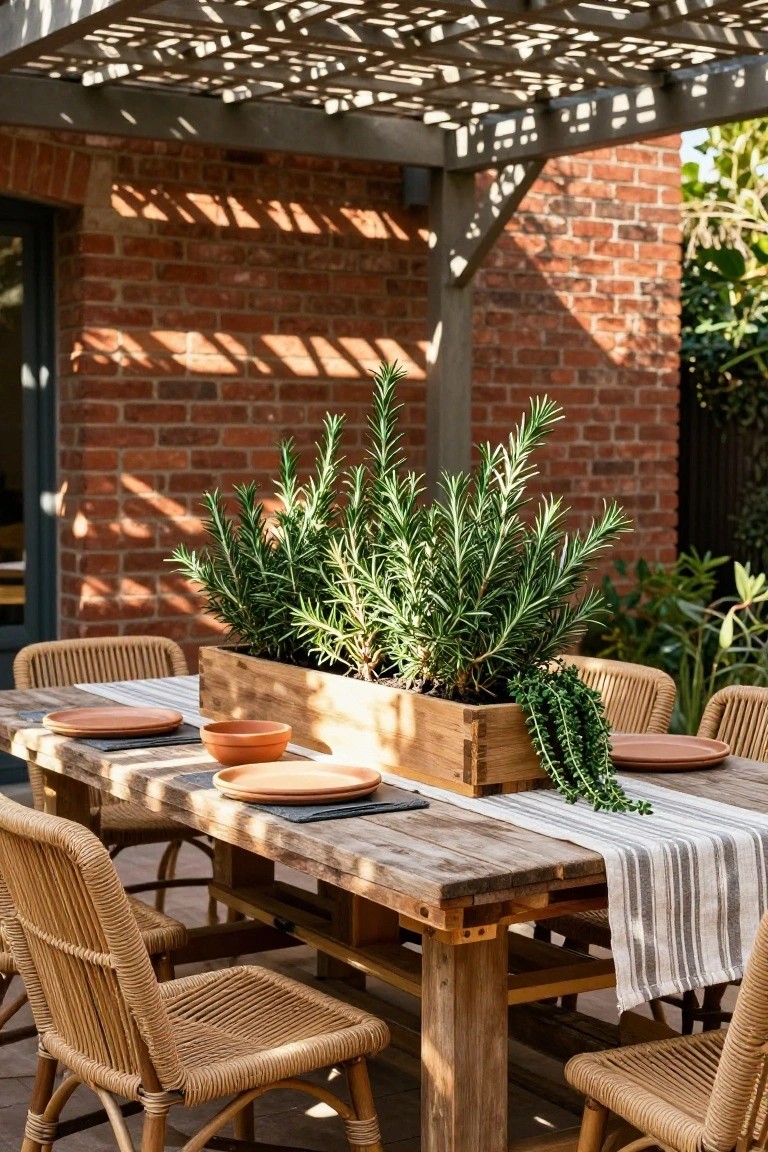
One simple way to add fresh herbs to outdoor meals is to build a long wooden planter that sits right down the center of the table. It keeps the plants within easy reach and turns the table into a small working garden without taking up extra floor space.
This setup works best on a patio or deck where the table gets some sun during the day. Use untreated wood for the box, add drainage holes, and choose herbs that handle the local climate so the planter stays useful through the season.
Vertical Pallet Gardens On Walls
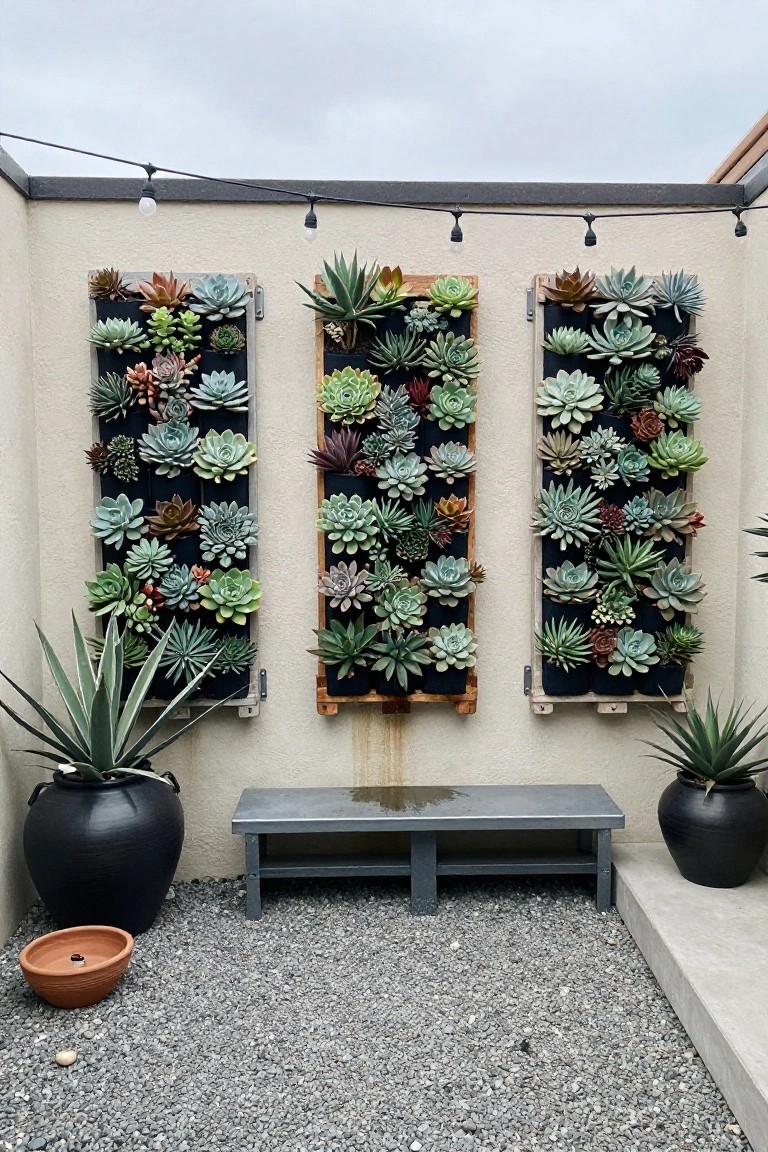
Mounting old pallets on a wall gives you an easy way to grow a lot of plants without taking up floor space. The wood frames hold pockets or small containers that keep succulents in place and let them get plenty of light. Many people like this setup because it turns a plain wall into a living display while keeping everything off the ground.
This approach works well on patios, side yards, or any spot with a solid wall and good sun. You can start small with one or two frames and add more later if you want. Just make sure the pallets are clean and the pockets drain properly so the plants stay healthy.
Pallet Bases For Container Gardens
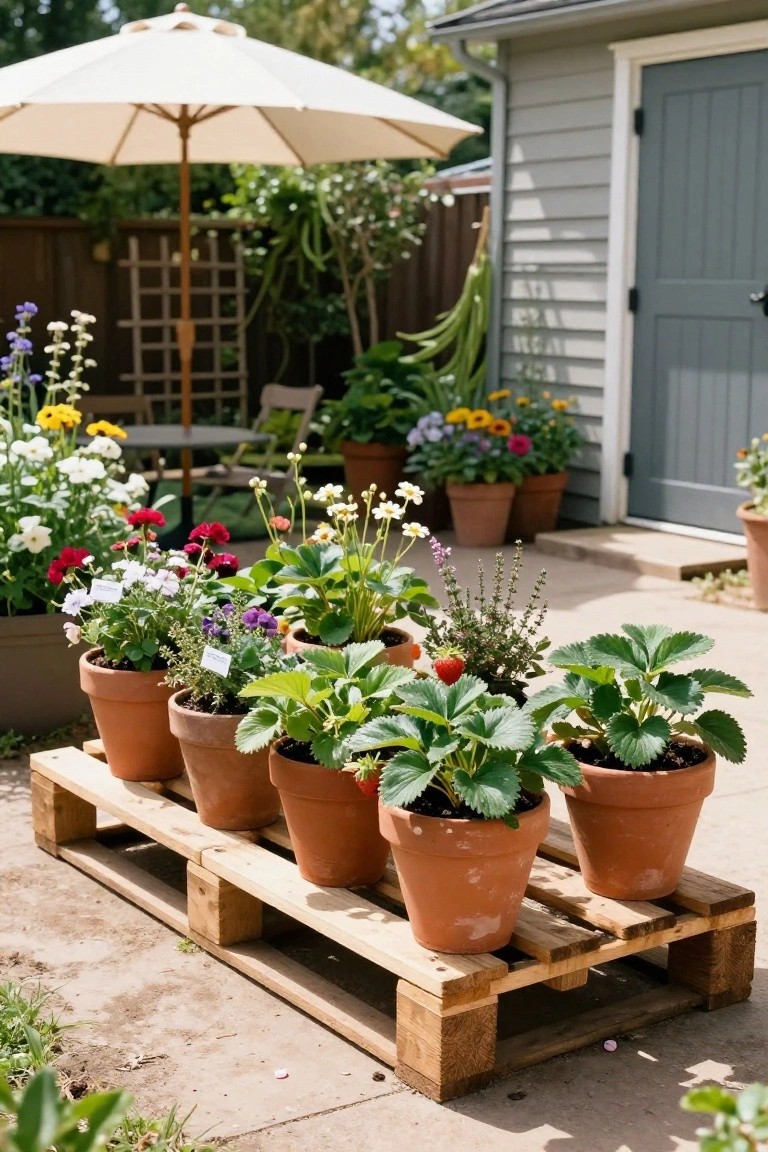
Setting pots on a wooden pallet lifts them off the ground and keeps the area underneath cleaner. It also makes it easier to move a whole group of plants at once if you need to rearrange or protect them from weather.
This works best in small yards or along a patio edge where you want simple organization without digging beds. Use a standard pallet, place your pots on top, and add a liner underneath if you want to catch extra soil or water.
Mount Planters On A Simple Wood Panel
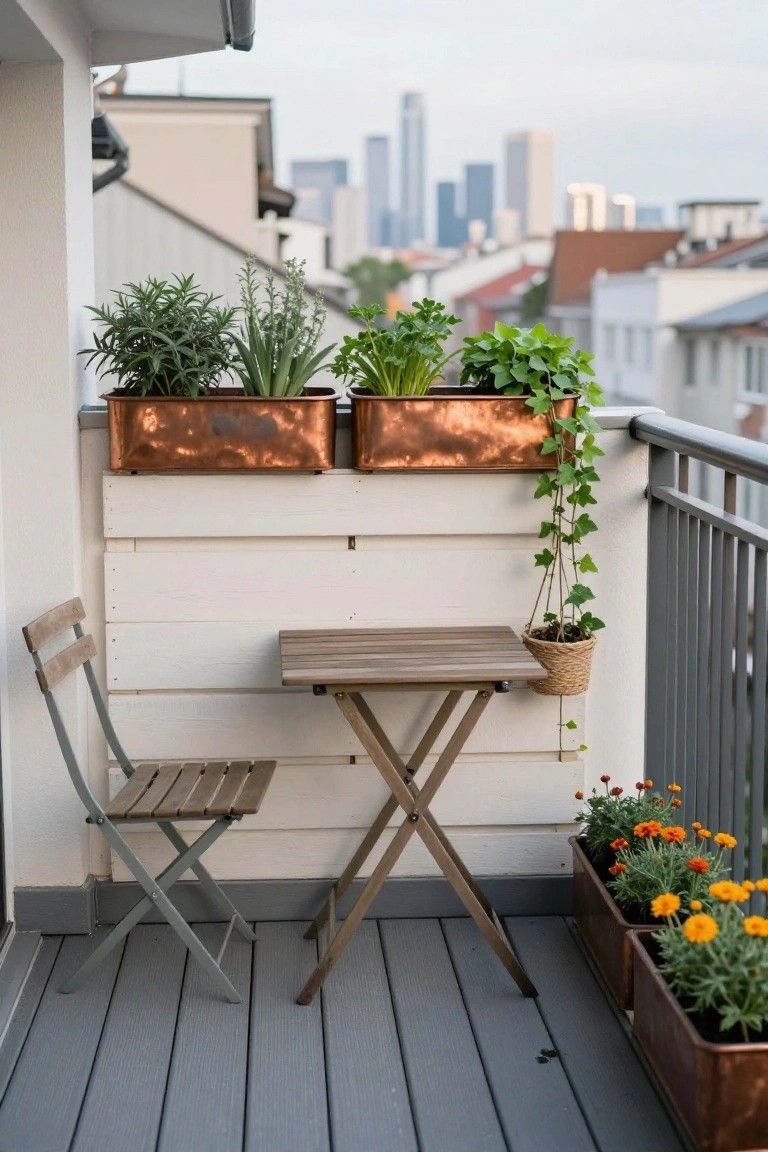
Many balconies have railings that make it hard to set planters at a comfortable height. Adding a basic wood backing gives you a flat surface to attach or rest them on, and it keeps everything looking neat without taking up floor space.
This works especially well on rentals or small balconies where you cannot build big structures. Use scrap wood or pallet boards cut to fit between the posts, secure them lightly, and place your planters along the top edge. Just check local rules before attaching anything permanent.
Raised Beds Simplify Planting For Beginners
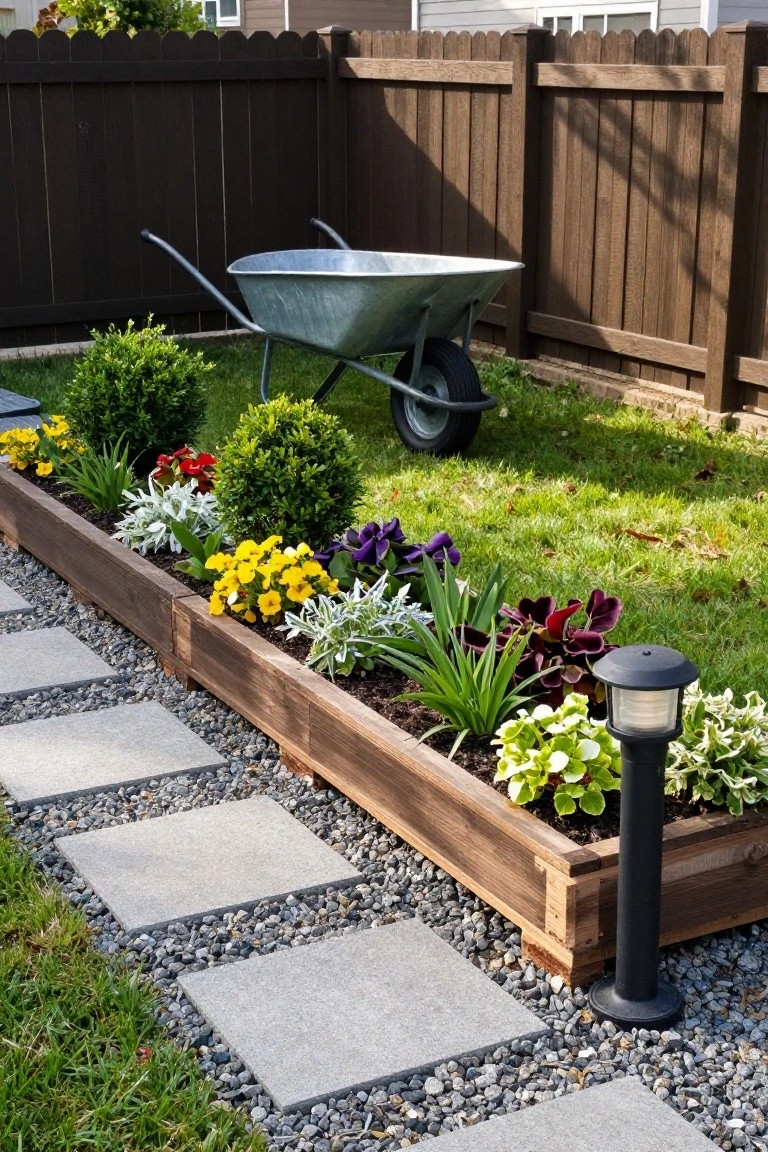
A raised bed gives you a clear planting area that stays neat without much effort. The wooden frame holds soil in place and makes it easier to reach plants without bending too far or dealing with poor ground conditions.
This setup works best along a fence or property line where space is limited. Start with basic lumber or pallets to keep costs down, and add a simple gravel path beside it so you can walk through the garden without compacting the soil.
Make a Pallet Potting Bench for Your Garden
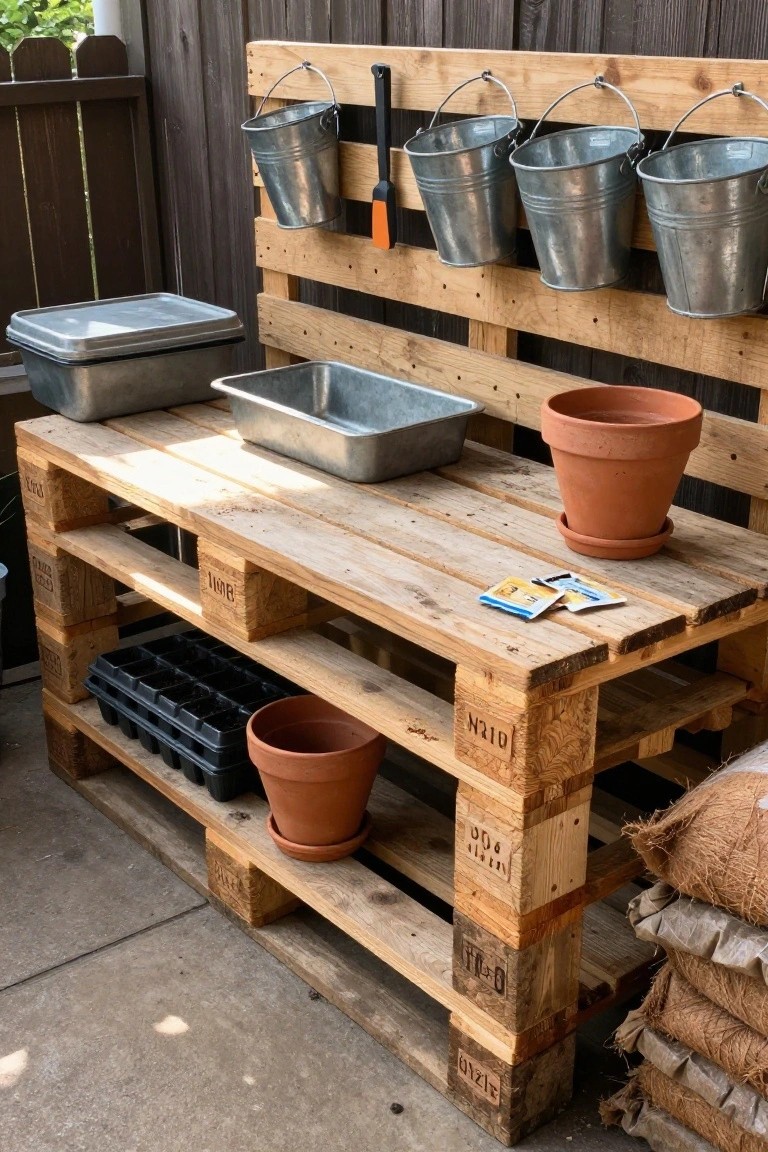
A pallet potting bench gives you a solid surface at a good height for mixing soil and handling plants without bending over. It keeps everything in one spot so tools and supplies stay easy to reach while you work.
This setup works well in a small yard or on a patio where space is limited. Stack two pallets for the base and add a flat top, then hang a few buckets along the back for extra storage. It suits beginners who want something quick to build and move if needed.
Vertical Pallet Planters Add Layers Without Extra Space
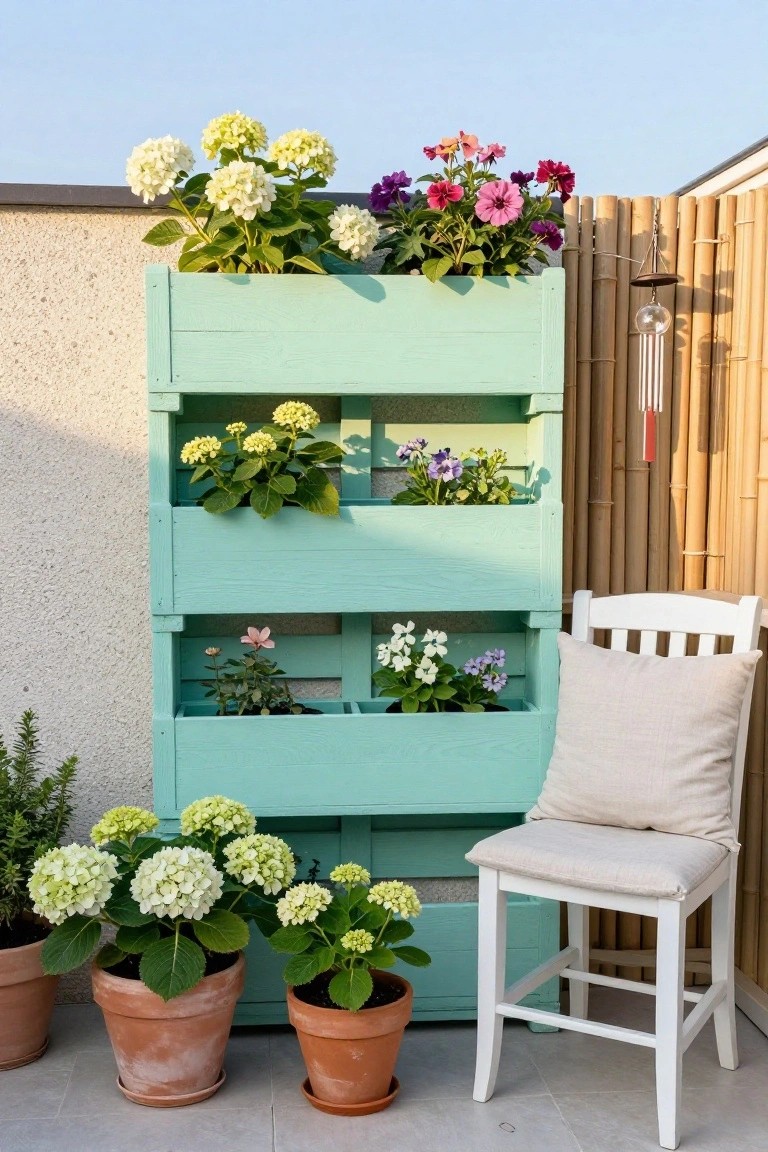
Standing a pallet upright turns it into a simple tiered planter that holds several plants in one narrow spot. The different levels let you mix plant heights and types while keeping the whole thing easy to reach and water.
This approach fits well on patios or along fences where floor room is tight. Line the back and base sections, fill them with soil, and start with hardy flowers or herbs. It stays beginner friendly but still creates a full planting display in a small area.
Building Raised Beds With Pallets
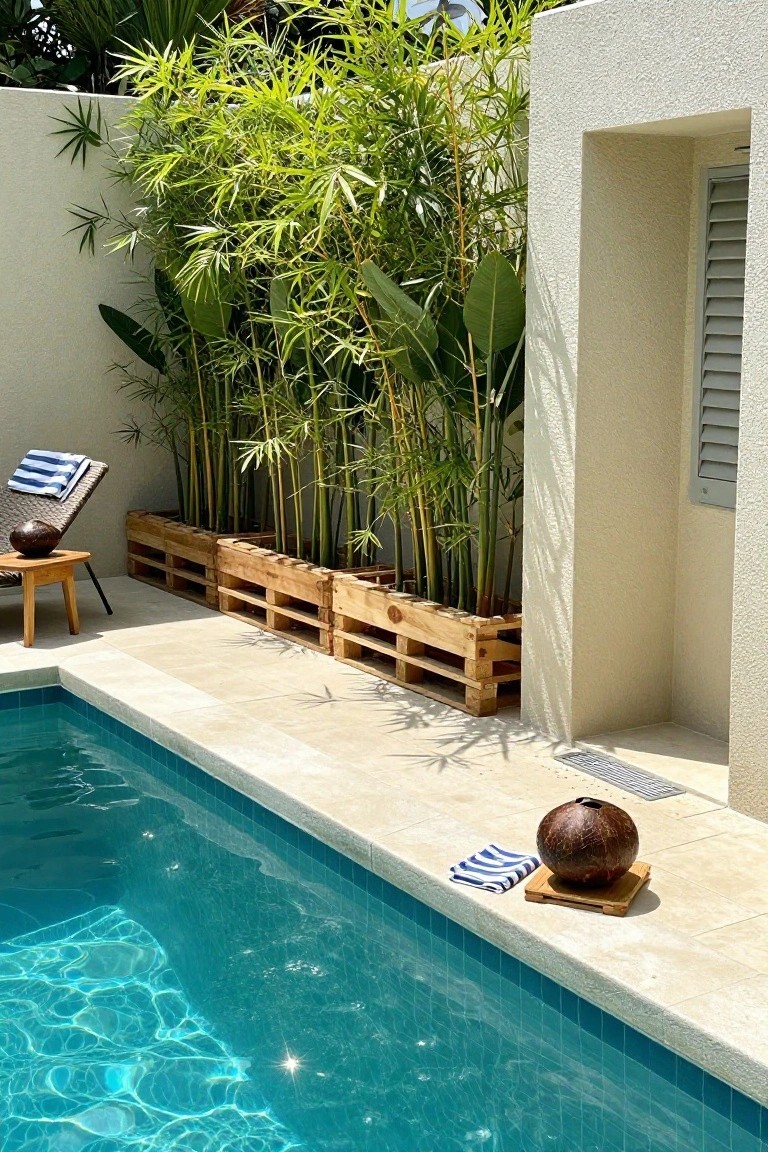
Raised beds made from pallets give you a fast way to add height and structure to a garden without much building skill. The open slats let you stack or line them up along an edge, then fill them with soil for taller plants that create a natural screen.
This setup works best in small yards or along a pool where you want quick privacy or separation. Use one or two pallets side by side, add a liner, and choose sturdy plants that can handle the contained space. Just keep the wood off wet ground so it lasts longer.
Curved Raised Beds For Easier Planting
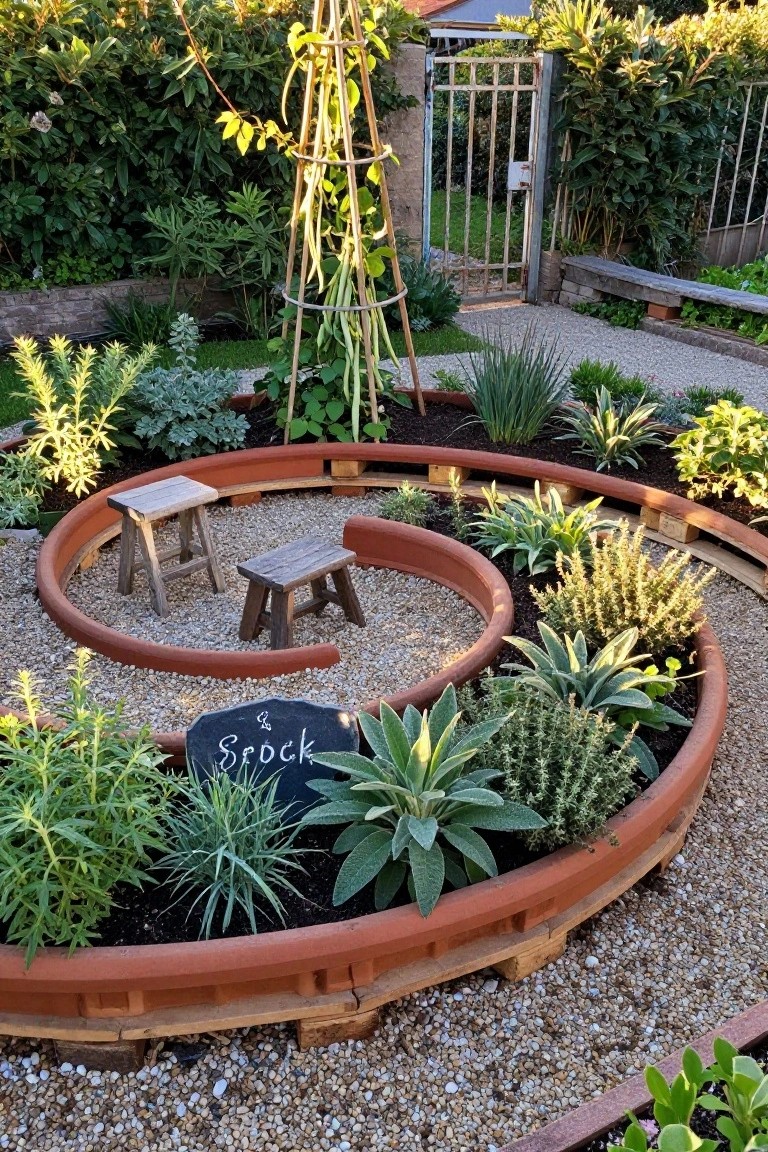
Curved raised beds give you more planting room without taking up extra space. The rounded shape makes it simple to reach plants from different angles and keeps the soil contained even on uneven ground.
This layout works best in smaller yards or corner spots where straight beds would feel cramped. Use basic wood framing and add edging to hold everything steady. Keep the height low so you can tend the plants without bending too much.
Hanging Vertical Gardens On Balconies
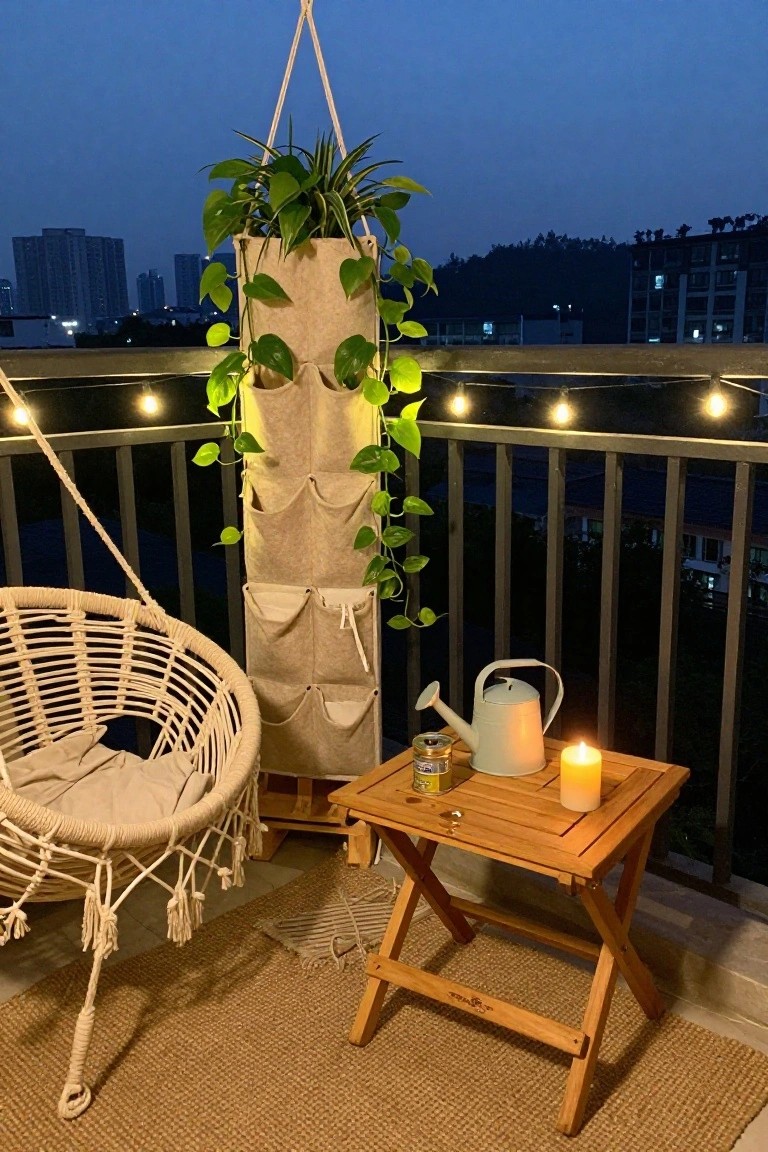
A hanging vertical garden is one of the easiest ways to add plants to a small balcony without taking up floor space. It turns an empty railing area into a productive spot for herbs or trailing greens, and it works especially well when you want to keep the seating area open.
You can build one from a simple pallet frame with fabric pockets or reuse an old hanging organizer. Just make sure it is secured firmly overhead and check the weight once the soil is wet. This setup suits apartments or townhomes where ground space is limited.
Build a Simple Pallet Trellis
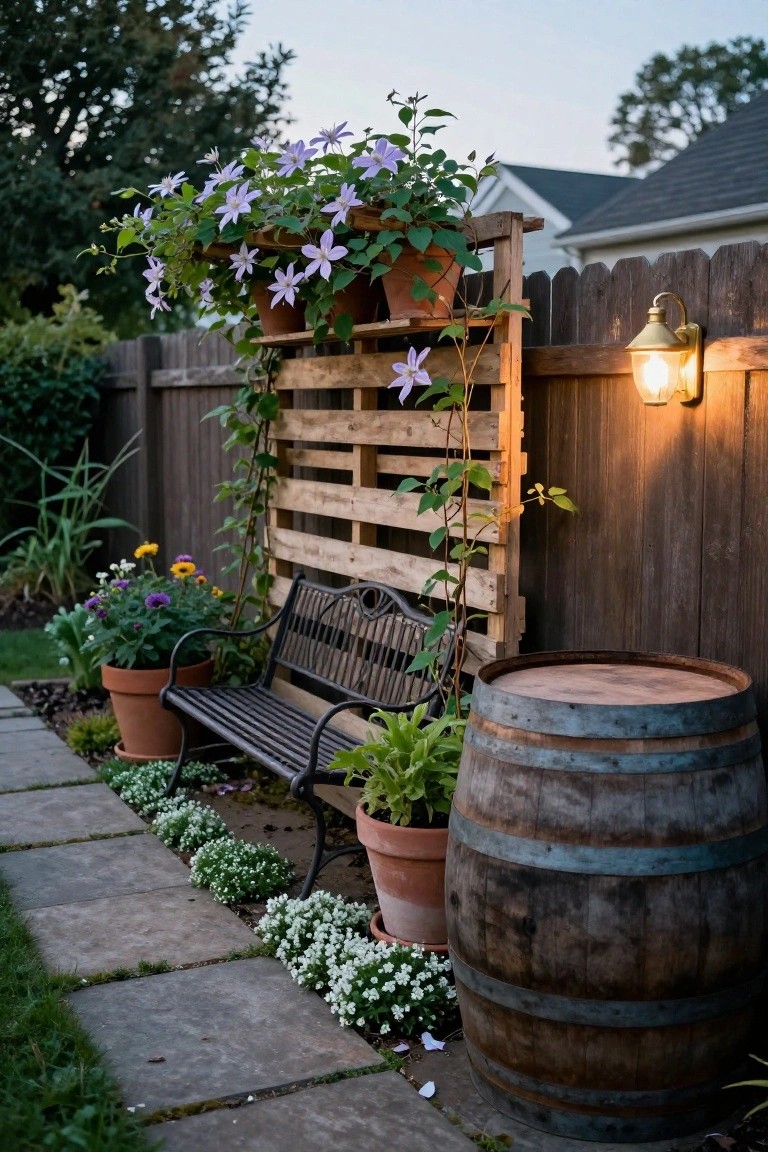
A pallet trellis gives climbing plants a sturdy frame without taking up much room on the ground. It works especially well in narrow beds or along a fence where you want some vertical interest but do not have space for a full structure.
Mount the pallet flat against an existing fence or wall, then set pots on the slats or tuck small plants into the gaps. The setup suits first time gardeners who want something quick, cheap, and easy to adjust later.
Use A Pallet Base For A Small Greenhouse
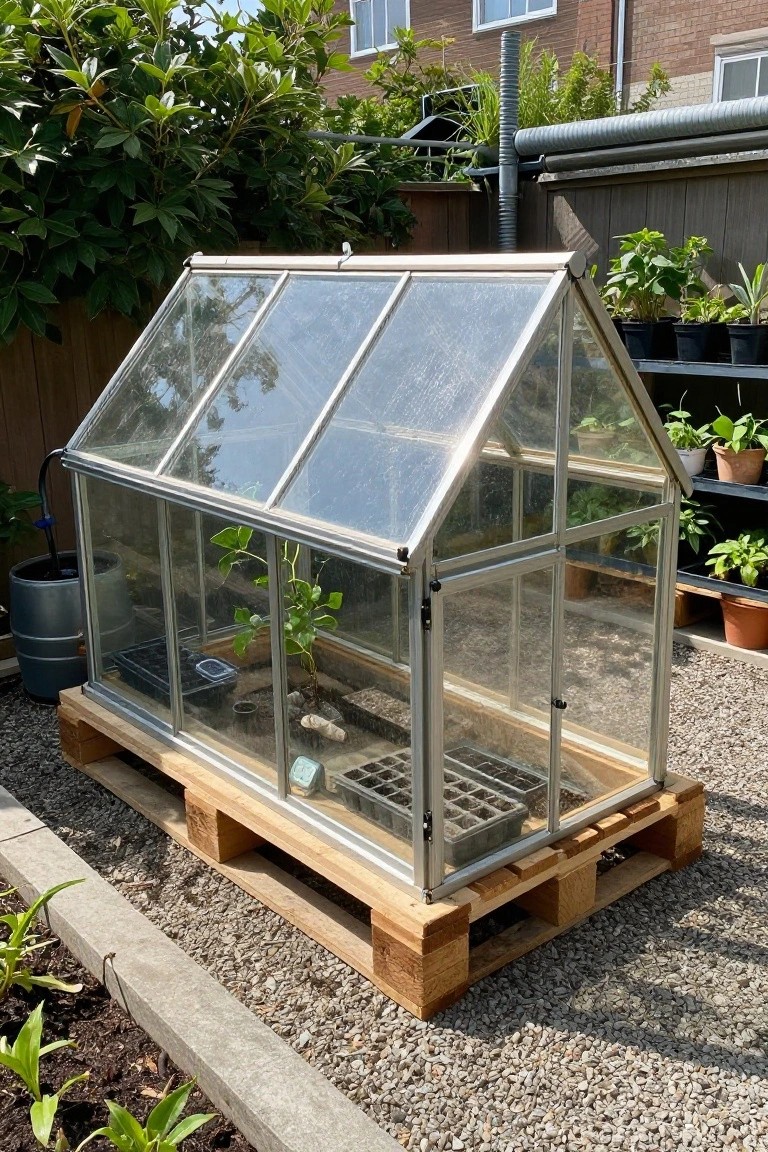
Many people start a greenhouse project with a pallet because it gives the structure a solid, level foundation without much extra work. The wood keeps everything raised off the ground, which helps prevent rot and makes it simpler to move later if the spot does not work out.
This approach suits small yards or first-time builders who want something quick and low cost. Just check that the pallet is sturdy and set on level ground before you add the greenhouse frame on top.
Frequently Asked Questions
Q: Where can I find pallets that are safe for growing food? A: Walk around the back of grocery stores or small factories and ask the manager if the wood came from untreated shipments. Look for stamps that say HT instead of MB. Skip any pallets that feel oily or have dark stains.
Q: How do I stop the soil from falling out the back of a vertical pallet planter? A: Staple thick plastic sheeting or an old tarp across the back before you add dirt. Cut small slits only where you plan to plant. This keeps everything in place while still letting water drain.
Q: Should I paint my pallets before I start building? A: Use exterior paint or a simple stain if you want the wood to last longer in the weather. Let it dry fully for a day or two so it does not touch your plants. One coat is usually enough for most backyard setups.
Q: What happens if the pallet starts to sag once it is full of soil? A: Add an extra brace across the middle before you load it. Check the weight after the first watering and tighten any loose nails. A quick fix now saves you from rebuilding later.
