

I have walked out to my patio many evenings and realized the dining table never quite fits the way it should because the paved area ends too soon.
Extending it even by a few feet changes how the whole space functions when friends come over or when we want to eat outside without moving furniture around constantly.
The best solutions balance the materials with the existing layout so nothing feels tacked on later.
Some work better than others once you live with them.
I tend to picture how each option would look from the back door before deciding which one to try in my own yard.
Add A Covered Table To Your Patio

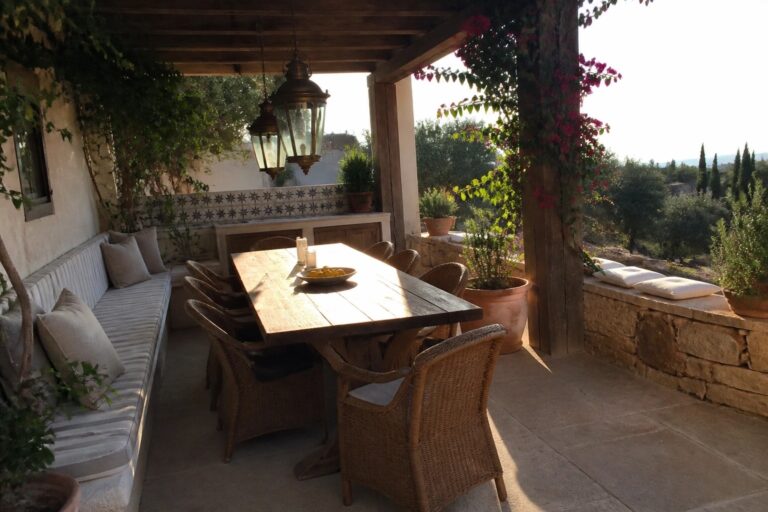
A covered section makes it easy to keep an outdoor table in regular use. The roof keeps off direct sun and light rain, so meals can happen without checking the forecast every hour.
This setup works best on a patio that already has some wall or structure to attach to. A long table with a mix of chairs and built-in benches gives plenty of seats without needing to buy everything new.
String Lights Over the Dining Table
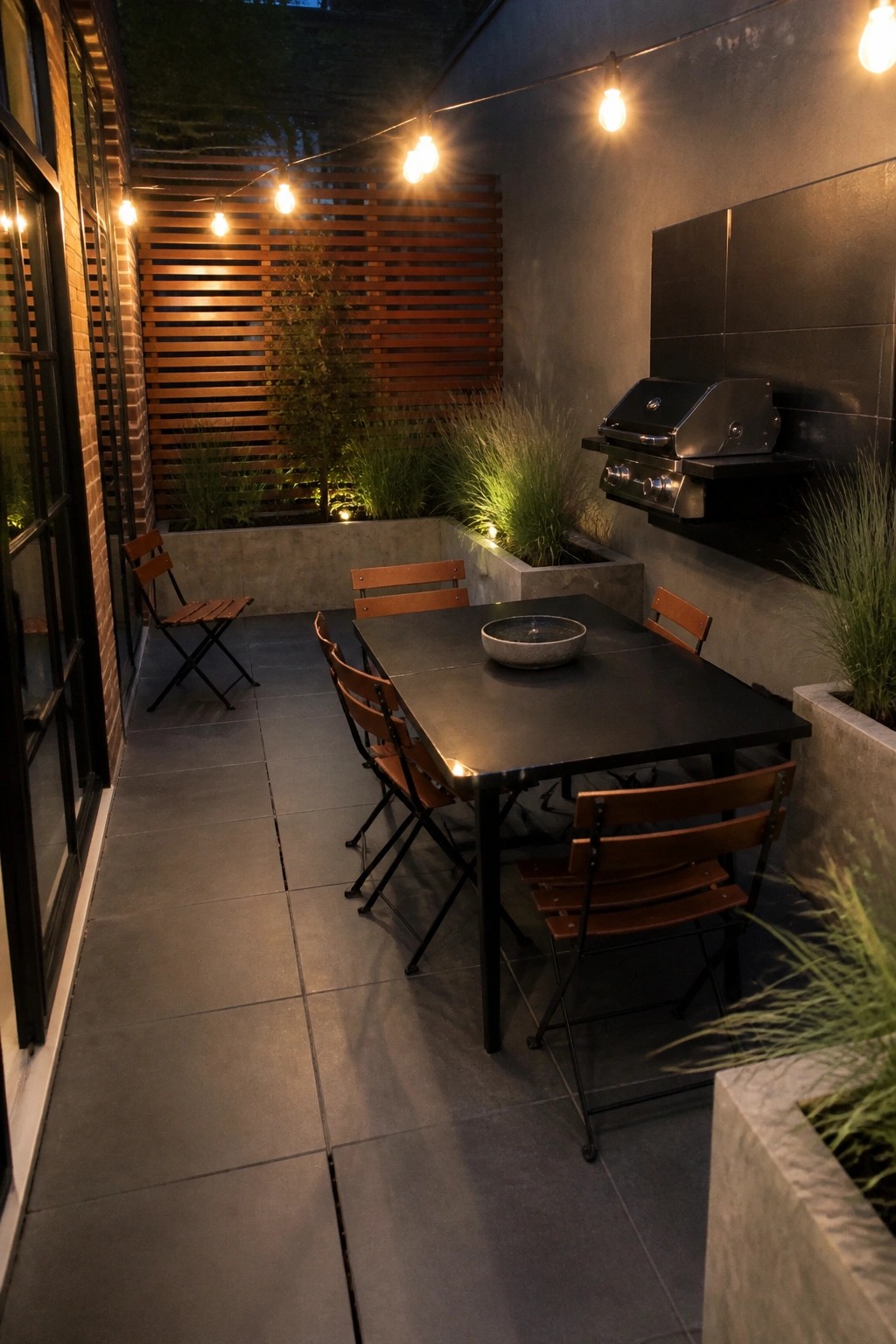
String lights give an outdoor dining table a simple way to stay useful after dark. They cast a soft glow across the surface without needing big fixtures or built-in wiring, and they work even in narrow side yards or small patios.
Run the lights along one long wall or from the house to a far post so the table sits directly underneath. This layout keeps the seating clear and makes the space feel ready for meals without extra effort.
Add Shade Over Your Outdoor Dining Table

A simple roof extension or pergola over the table makes the whole setup feel more permanent and usable. It turns a basic patio into a spot where meals can happen without worrying about harsh sun or a quick shower.
This works best on homes with flat or low-sloped roofs that can tie into the existing structure. Keep the table long enough for six to eight people and mix in a few different chair styles so the area does not feel too matchy.
Built-In Bench Seating For Outdoor Dining Areas

One easy way to fit more people at an outdoor table is to run a built-in bench along the house wall. It takes up less floor space than extra chairs and gives the whole setup a settled look.
This works best on patios that sit right against the house and do not have much width. Keep the bench height close to your dining chairs so the seating feels balanced, and add cushions only if you plan to use the spot often.
Add a Pergola for Shade Over the Table

A pergola overhead turns an open deck into a spot where you can actually sit for meals without worrying about sun or a quick shower. The structure gives just enough cover while still letting in air and light, which makes the whole area feel more like a real room than a patch of boards.
It suits most backyards that already have a deck or patio, especially if you let vines grow across the top for extra shade as the seasons change. Keep the posts clear of the table edges so chairs can move freely and people can walk around without ducking.
Add Outdoor Dining Right Outside the Doors
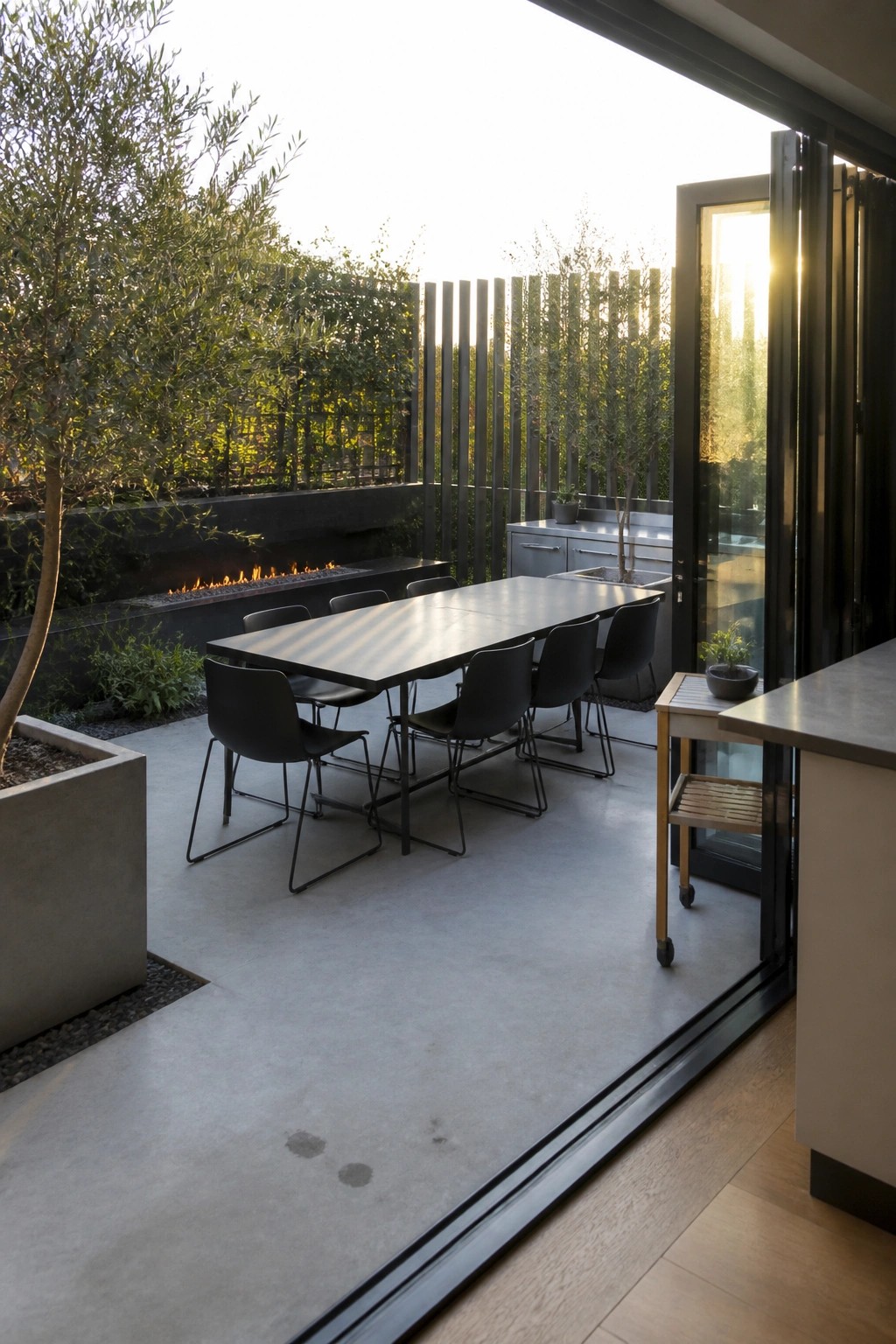
Placing a long dining table right by the open sliding doors turns the patio into an easy extension of the indoor space. People can carry food out and sit down without extra steps or barriers in the way.
This works best on patios that sit level with the house floor and get steady use in good weather. Keep a cover handy for the table and chairs if the space stays open most of the year.
Pair Built-In Bench Seating With A Long Table

A built-in bench along one side of the table makes outdoor dining feel more open without losing seats. It works especially well when space is tight or when you want the area to handle groups without a full set of chairs on every side.
This layout fits homes that already have a covered patio or roof overhang near the kitchen. Keep the cushions in a durable fabric and leave enough room on the open side for chairs to pull out easily.
Anchor An Outdoor Dining Zone With A Round Tiled Table

A round table with a tiled top gives an outdoor dining area a clear center without crowding the space. The pattern on the table blends with the patio floor and makes the whole spot feel more finished and ready for meals.
This works best on existing patios or under a covered section where you want a durable surface that handles weather. Match the tile colors to the floor if you can, and keep chairs simple so the table stays the main feature.
Add a Pergola to Shade the Dining Table
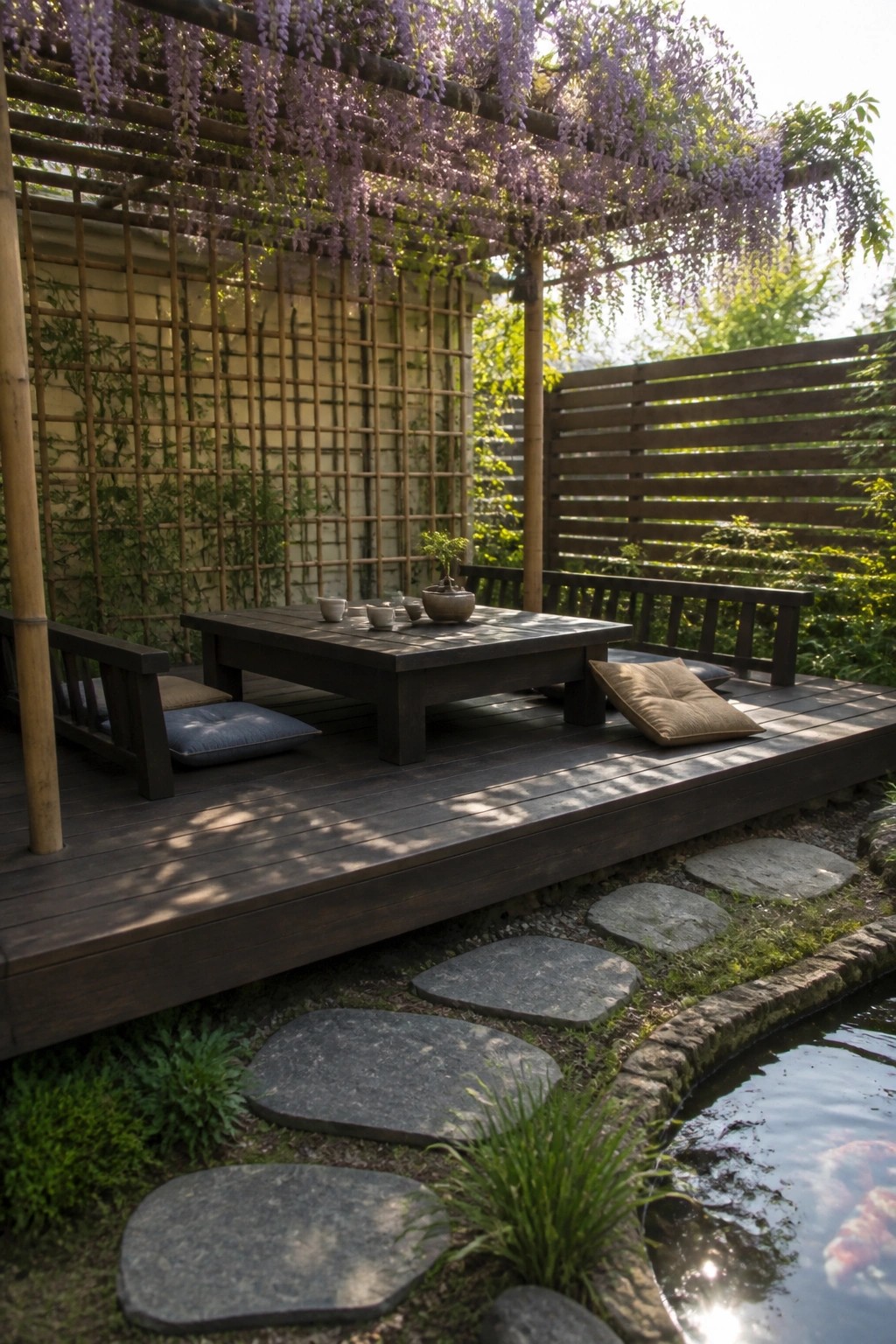
A pergola gives the dining area a clear sense of place without making the patio feel closed off. It creates shade during the day and lets you enjoy meals outside even when the sun is strong.
This works best on a deck that sits next to the garden or a water feature. Grow climbing plants over the top for extra cover and let the structure blend with the surrounding plants and paths.
Gravel Works Well For Outdoor Dining Areas

A gravel base under a dining table and chairs keeps the setup simple and connected to the garden around it. It drains easily after rain and avoids the look of a big solid slab, which suits many homes that want their patio to feel like an extension of the yard rather than a separate floor.
This approach fits best in smaller or partly shaded spaces where you already have planting nearby. Keep the gravel edged so it stays in place, and choose sturdy furniture that sits level on the uneven surface.
Add a Retractable Awning for Shade

A retractable awning lets you decide how much sun or protection the dining area gets. It works especially well on rooftops or open patios where fixed roofs are not an option, and it keeps the table usable during bright afternoons or light rain.
Mount it above the seating zone so it covers the table without blocking the view. This approach suits homes that already have an outdoor kitchen nearby, since the shade makes the whole space feel more like an extension of the indoors.
Round Table with Mixed Seating
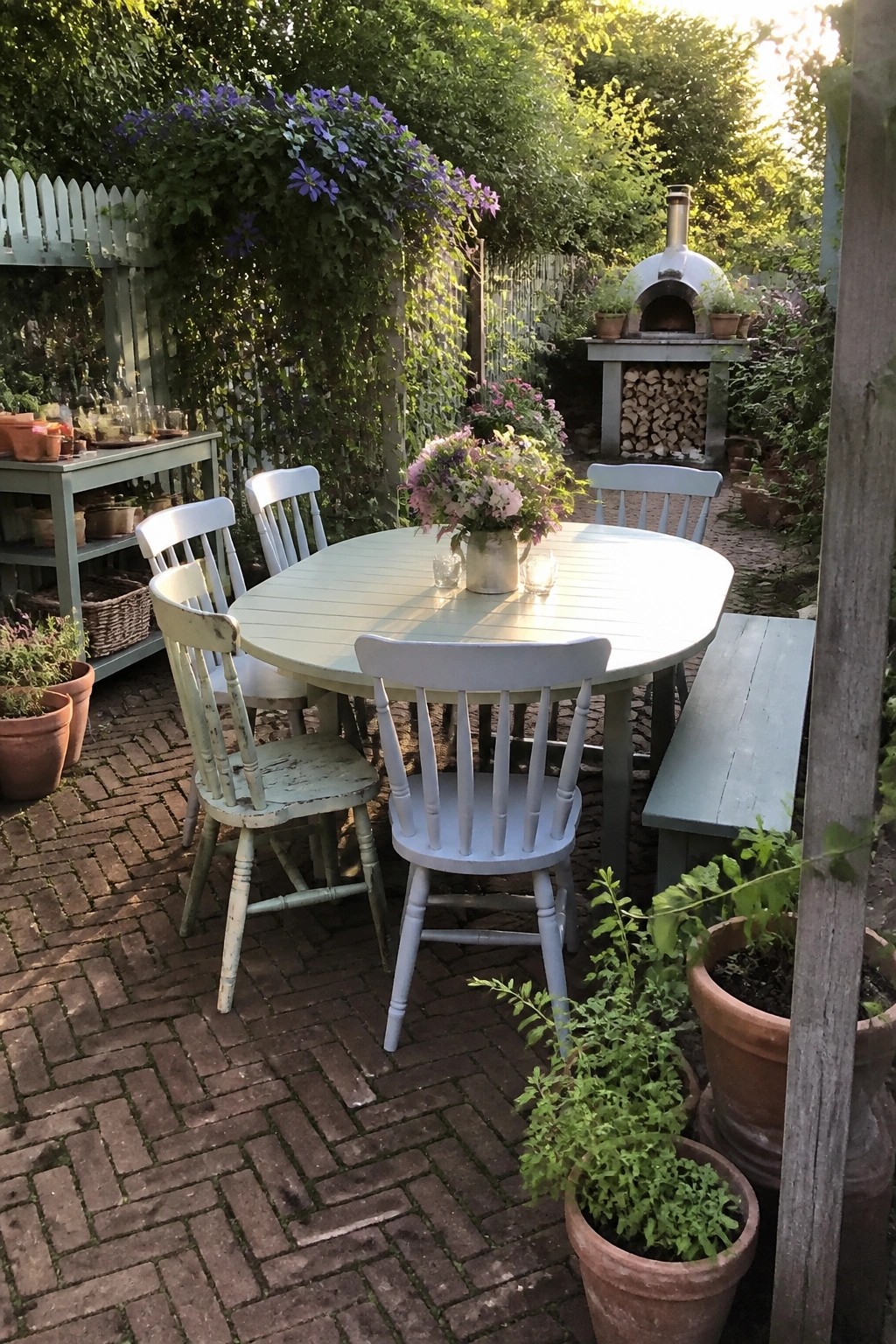
A round table keeps an outdoor dining spot feeling open and easy to move around. Pairing it with a mix of chairs and a bench lets you seat different group sizes without needing a perfectly matched set.
This setup works best on a simple brick or stone patio where the garden sits close by. It suits smaller yards or side areas where you want the table to feel like part of the planting rather than a separate room.
Add a Fire Table to Your Outdoor Dining Area

Placing a fire feature directly into the dining table helps keep the heat right where people are sitting. It turns a regular outdoor meal into something you can enjoy even after the sun goes down without adding extra furniture or a separate fire pit.
This works best on a covered patio where you already have some overhead protection and simple lighting. It suits homes that want to use their outdoor space more often without making the setup feel complicated or taking up extra room on the patio.
Drop Leaf Tables For Small Balcony Dining

A drop leaf table gives you a real dining spot even when the space is tight. The hinged side can stay folded down most days and flip up only when you need the extra room, which keeps the walkway clear on a narrow balcony.
This setup works best on urban balconies or small patios where a full table would block movement. Mount a small shelf nearby for serving pieces and keep seating light so the whole area can be rearranged quickly.
Cover Your Outdoor Dining Table With A Pergola

A pergola overhead gives an outdoor dining area a clear sense of place without closing it in. It adds shade during the day and a spot to hang lights for evening use, which makes the table feel like the main feature rather than just furniture set out on the patio.
This works best on a flat paved area right beside the house or an outdoor kitchen. Keep the pergola size close to the table length so the space stays balanced, and leave enough room on the sides for chairs to move freely.
Use a Large Rug to Define the Dining Area

A large rug pulls the table and chairs together into one clear spot. It stops the seating from feeling like it is just floating on the open patio floor.
This works best on bigger patios where the surface runs wide and open. Make sure the rug is big enough for chairs to slide back without catching the edge, and pick a flat weave that is easy to clean.
Add A Woven Canopy Overhead

A simple overhead canopy made from woven or macrame material can turn an open patio into a more usable dining spot. It filters sunlight without blocking the view completely, and the texture makes the area feel a little more finished than bare beams or open sky.
This works best on patios that already have some kind of roof structure or posts you can attach to. Keep the rest of the setup simple with a round table and natural chairs so the canopy stays the main feature. Just check that the material can handle weather before you hang it.
Extend Your Patio with a Glass Roof

A glass roof turns part of a patio into a usable dining spot without losing the outdoor feel. It brings in plenty of light and keeps the space sheltered while still letting you open it up to the garden on good days.
This setup suits homes that already have a basic patio or terrace but want to use it more months of the year. Wide opening doors help the most, so the area does not start to feel like an indoor room.
Add a Pergola to Create a Defined Dining Spot

A pergola helps turn an open garden corner into a usable outdoor dining area without building walls. It marks the space clearly while still letting in light and air, which makes meals feel connected to the surroundings rather than closed off.
This setup works best in backyards where you already have some planting and a bit of level ground. Place the table and chairs on gravel with a few stepping stones so the surface stays practical, and use the beams overhead for simple hanging plants or lights. Keep the style simple so the structure feels like an extension of the garden rather than a separate room.
Built-In Curved Seating For Patio Dining

Curved built-in seating makes a patio feel like it was made for meals. It pulls the dining area together without a bunch of loose chairs taking up space or needing constant moving.
This layout works best on patios that already have some depth and a slight change in level. It suits homes where you want a more permanent spot for outdoor meals and can add a simple overhead structure for shade. Keep the curve gentle so the seating does not crowd the table or block movement around it.
Connect Your Kitchen Directly to an Outdoor Table

Placing a large stone dining table right outside the kitchen makes outdoor meals feel like a natural extension of indoor cooking. The heavy top holds up well to weather and daily use, while the simple wood benches keep things practical without adding clutter.
This setup works best on smaller patios or in gardens where you want the cooking and eating areas close together. Keep the table surface clear and match the material to any nearby paths or walls so the whole space feels connected rather than separate.
Add a Pergola for Covered Outdoor Dining

A pergola overhead turns an open deck into a space that feels more like a real dining room. The slatted roof gives enough shade and a bit of weather protection while still letting in air and light, so meals feel comfortable even on warmer evenings or light rain days.
This setup works best on homes with easy access from the kitchen or living area through wide doors. Keep the table long and simple so it fits the scale of the cover, and add just enough seating like a bench on one side to keep the flow open.
Add a Pergola Over the Dining Area

Putting a pergola over an outdoor table helps turn a plain patio into a spot that feels set up for meals. The overhead structure gives a bit of shelter and makes the dining zone feel more intentional instead of just furniture sitting in the open.
This works best on patios that already have decent space but need some definition. Keep the lighting simple and low so people can stay outside after dark without it feeling like a spotlight. It suits homes where the backyard gets regular use and the owners want the table to stay inviting even when the weather shifts a little.
Frequently Asked Questions
Q: How much room should I leave around the table so people can pull out their chairs easily?
A: Aim for at least two feet of open space on each side of the seating. Walk around the spot yourself with a chair to test the flow before you lay the final surface. That extra step prevents cramped meals later.
Q: What if my yard slopes and I want a level dining spot?
A: Build up the low side with a simple retaining edge and fill it with compacted gravel. Lay your pavers or decking on top once the base feels solid underfoot. The level surface makes dining feel more comfortable right away.
Q: How can I add some privacy to my new dining area without tall fences?
A: Plant a row of tall grasses or shrubs along one side of the extension (they block the view nicely). Water them well the first season so they fill in fast.
