

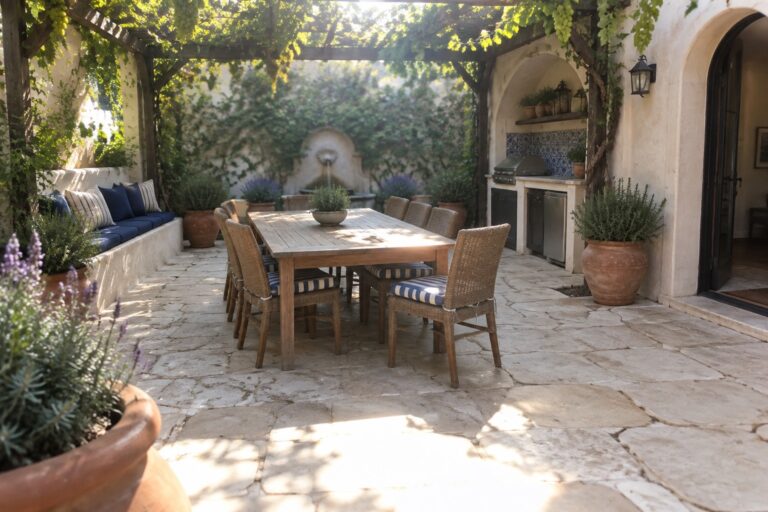
A patio can look well furnished and still feel awkward if chairs block the path or leave no room to pull up a seat.
I’ve found that the best arrangements make it easy to move between the house, the seating area, and any table without having to sidestep furniture.
The shape of the patio, the way people use it, and even where the sun falls can all affect which layout feels right.
A small shift in the position of a sofa or dining set can make the space work better without adding anything new.
These ideas offer practical layouts to test and adapt to the patio you actually have.
Make Room for Easy Patio Dining
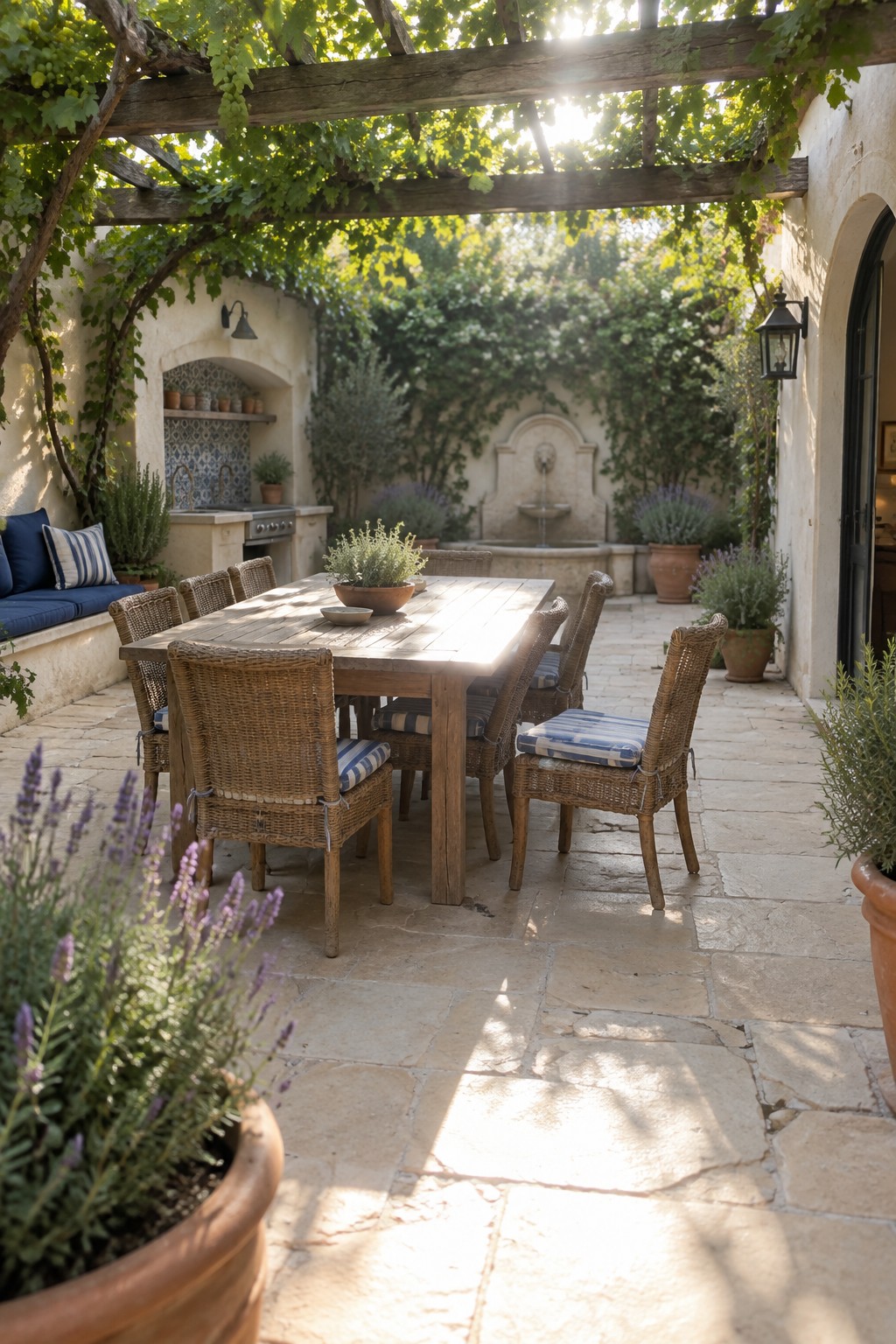
A dining table works best when chairs can slide back without blocking the main path. Here, the table sits near the center of the patio, while the stone walkway remains open along the side.
Leave enough space around the table for people to move between seats and pass through comfortably. This arrangement suits a long, narrow patio, but keep the table small enough that it does not pinch the route.
Make A Small Balcony Work For Dining
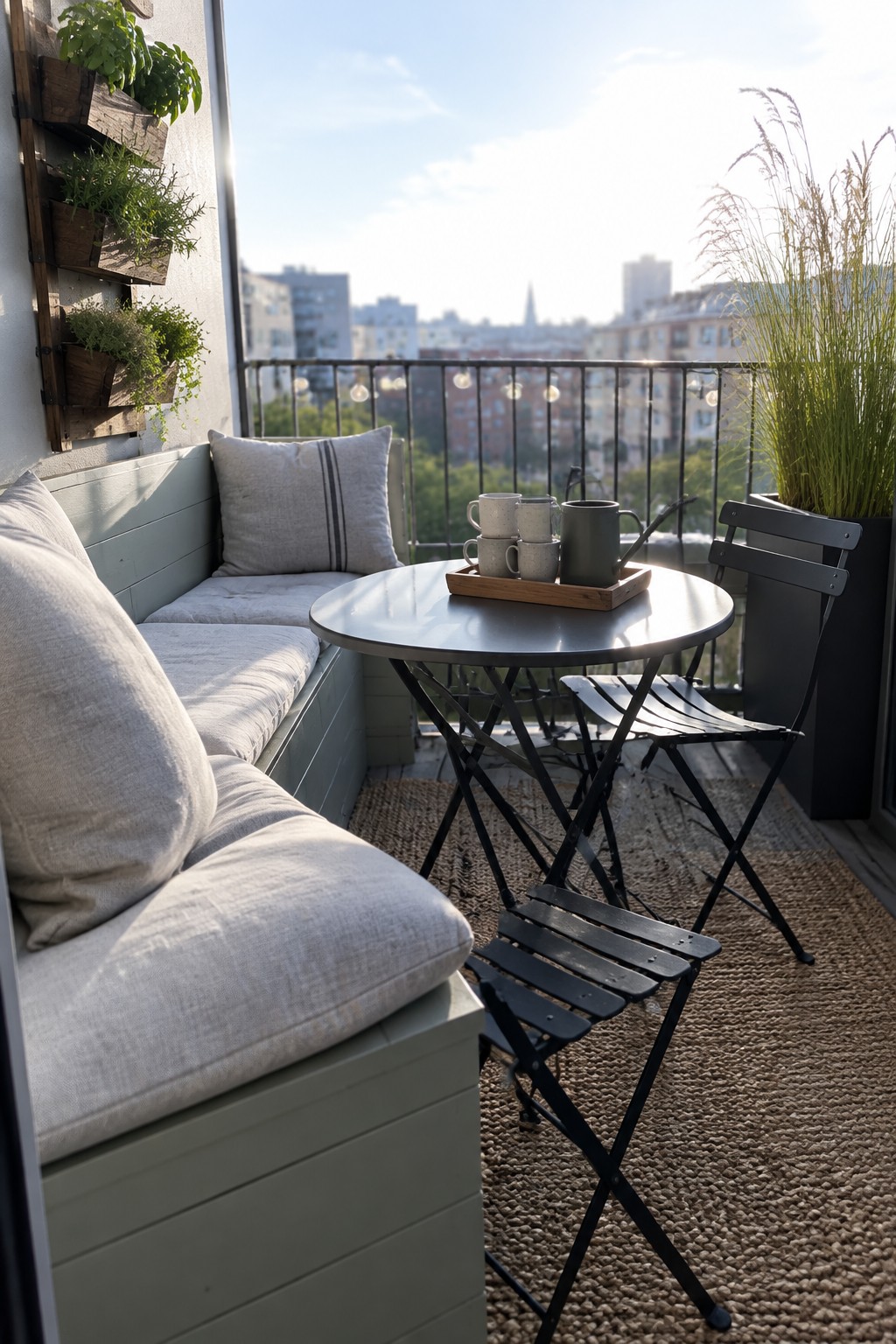
A small balcony can handle both lounging and meals when the seating runs along one side and the table stays near the center. The built-in bench leaves more floor space open than a row of separate chairs, so it is easier to move around.
Use a compact round table that can be shifted or folded away when it is not needed. This layout suits narrow balconies, but leave enough room to pull out a chair without blocking the main path.
Arrange Patio Seating Around a Clear Walking Route
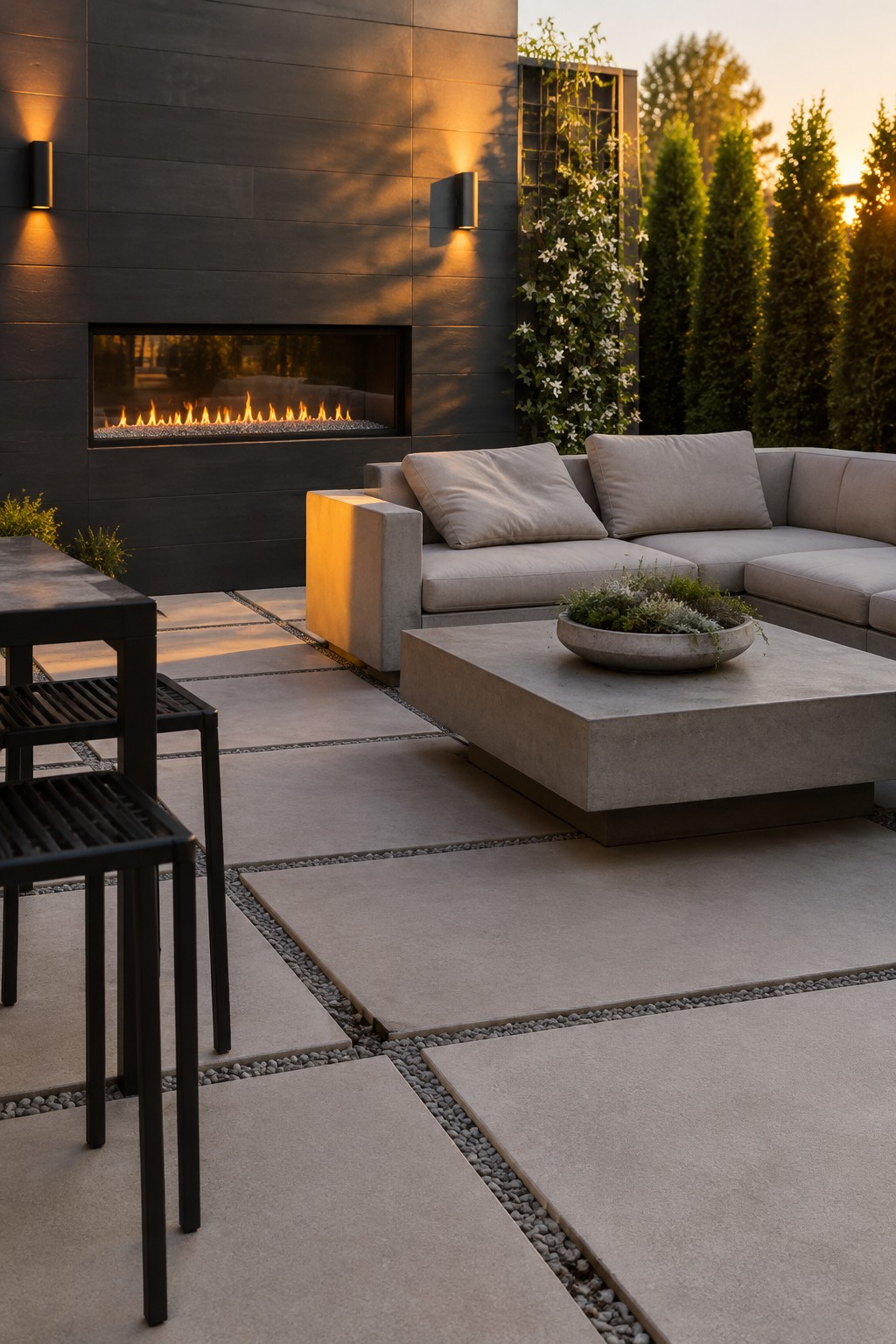
A patio seating area works better when people can move through it without squeezing between furniture. Here, the sofa and low coffee table sit together as one zone, while the open paving keeps a route around the seating.
Use this approach on a larger terrace, leaving enough space between the sofa, table, and nearby dining furniture for easy passage. A low table can suit the lounge area, but avoid making it so large that it blocks the main path.
Arrange Patio Seating Around a Dining Table
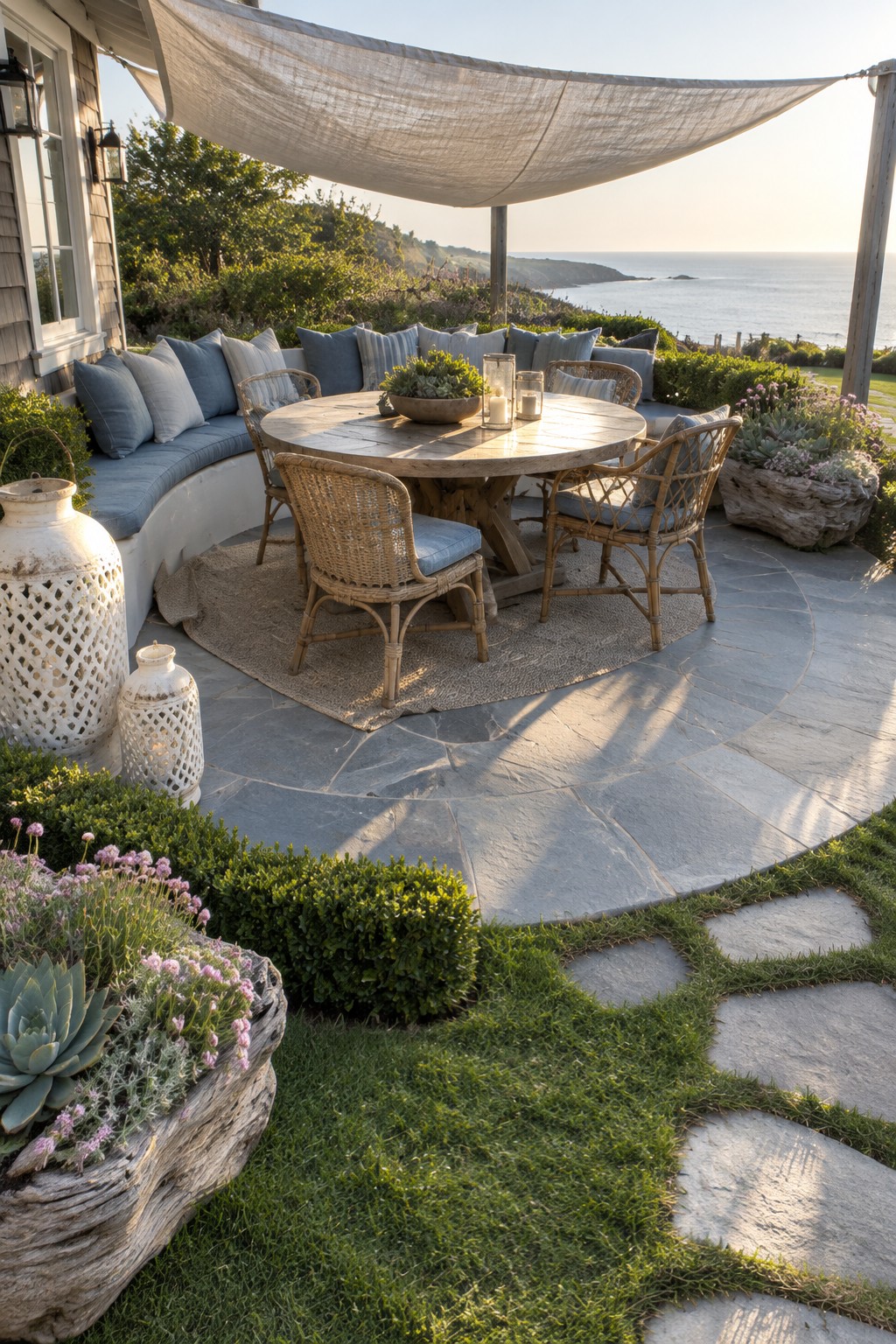
A round dining table makes it easier to move around a patio and lets people talk across the table. In this setup, the nearby curved bench adds extra seating without taking up a separate corner.
Leave enough room to pull chairs back and walk behind them. This kind of arrangement works well on a compact patio, especially when a built-in bench can follow the edge of the space.
Use a Built-In Bench To Save Patio Space

A built-in bench keeps patio seating in one tidy line, leaving more room to walk through the space. It works especially well in a narrow patio where separate chairs might crowd the main route.
Add cushions for comfort and keep the bench along an edge rather than facing into the walking path. A small side table can serve the seats without taking up much floor space.
Keep a Clear Path Beside the Pool
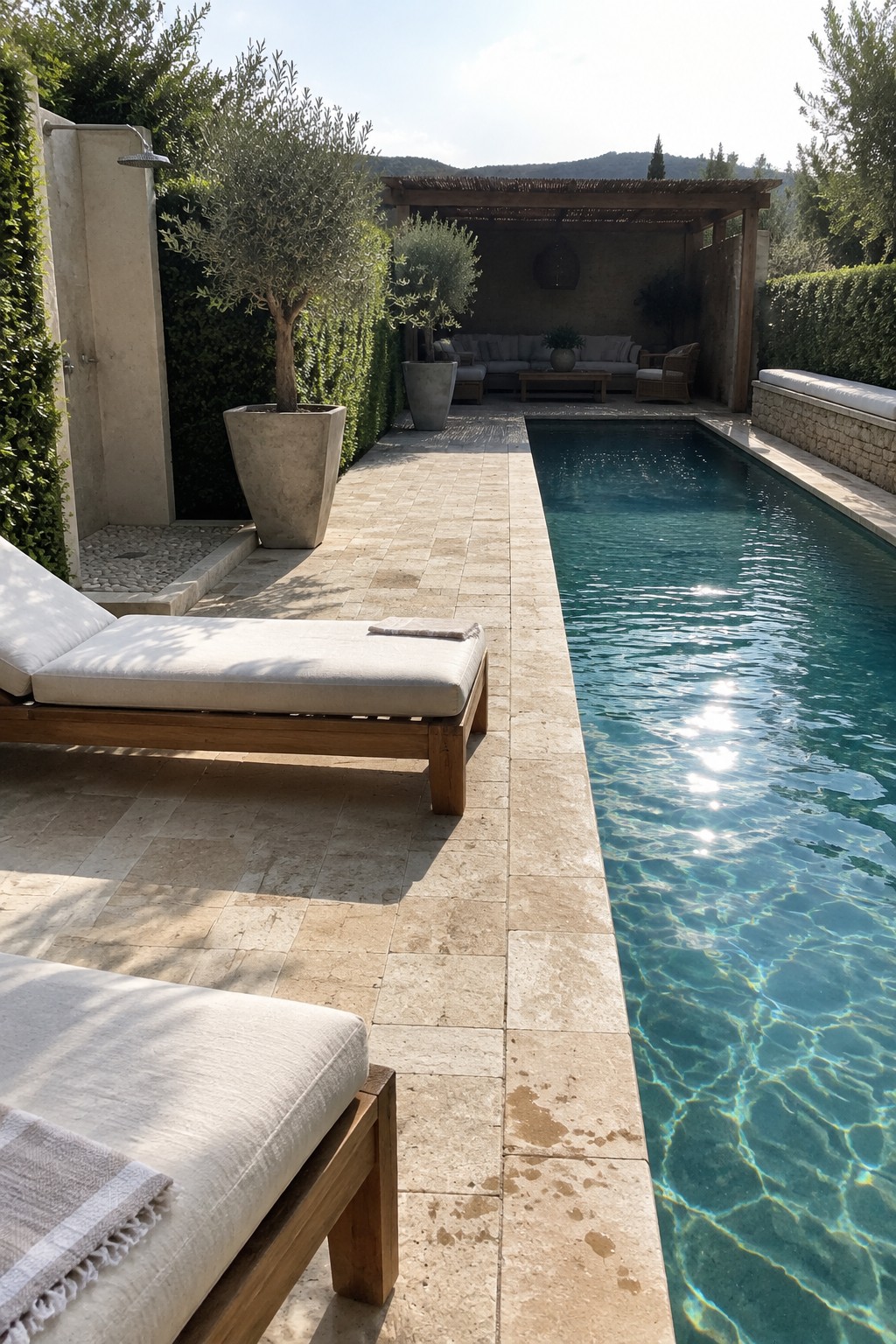
A narrow patio can feel easy to use when the seating stays to one side and the main route remains open. Here, loungers sit beside the pool rather than across the walkway, leaving room to move between the seating area and the covered lounge.
This arrangement works well around a long pool or on a compact terrace. Keep chairs and tables out of the walking lane, and leave enough space to pass without squeezing by.
Keep Patio Dining Clear Of The Main Path

A long dining table works well on a patio when it sits to one side of the main walking route. That gives everyone room to sit and eat without making people weave between chairs to get across the space.
Leave a clear strip of paving beside the table, and allow enough space to pull chairs back. This arrangement suits a narrow patio, especially when the table runs lengthwise toward a feature such as an outdoor oven.
Keep Patio Dining Clear Of The Main Path

A separate dining spot can make a narrow patio easier to use. Here, the table sits beside the brick walkway rather than in the middle of it, leaving a clear route through the space.
Try placing the table on a gravel or paved area just off the main path, and keep chairs from blocking the route when pulled out. This works well in a courtyard or small patio where people need to move between the seating area and the house.
Arrange Lounge Seating Around a Low Table
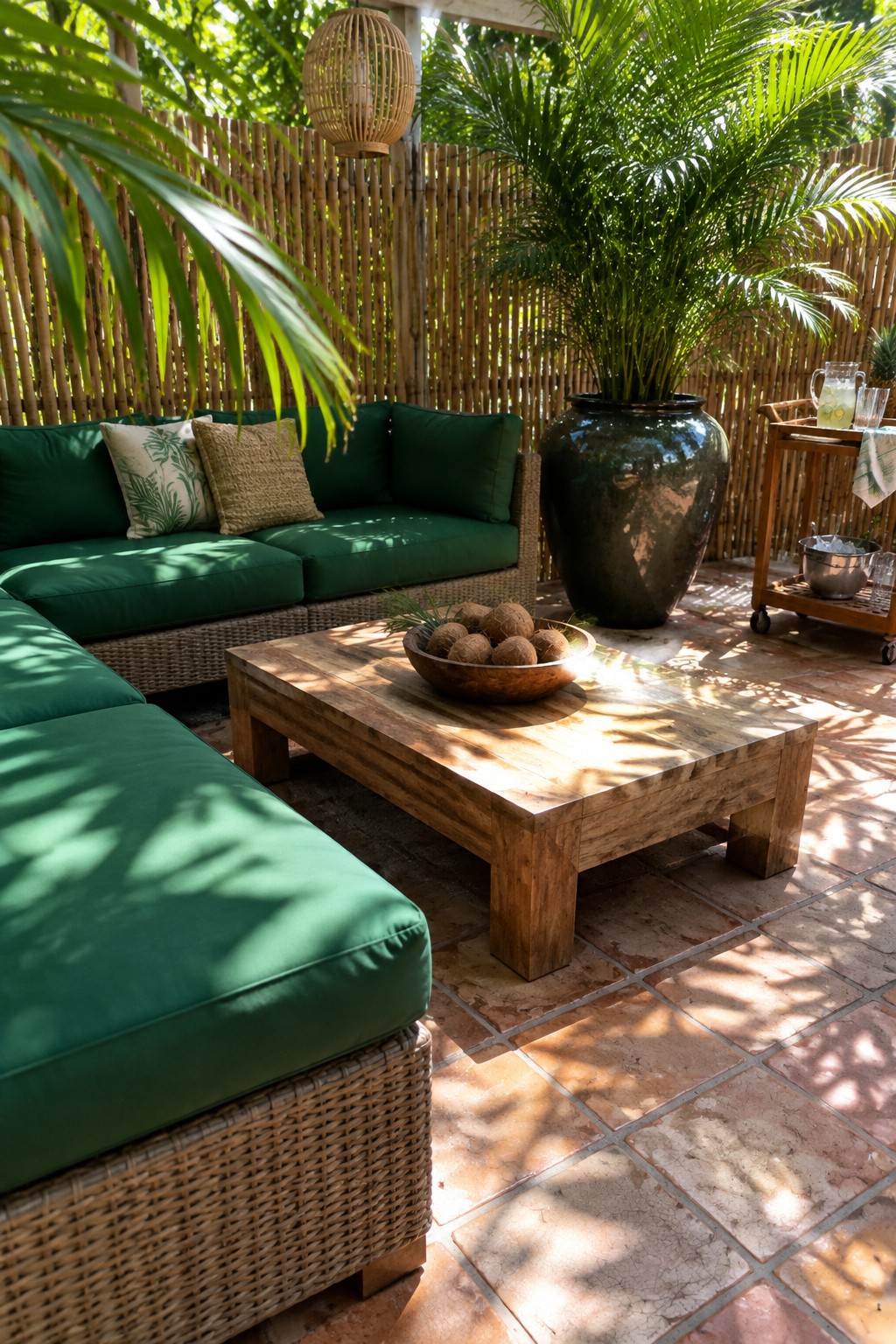
A low coffee table gives patio seating a useful center without blocking the flow through the space. Here, the sectional wraps around the table, so people can sit and chat while keeping the open side easy to reach.
This arrangement works well on a medium or large patio where lounging matters more than fitting in a full dining set. Leave enough room to walk around the table, and keep it close enough to the seats for drinks or snacks.
Arrange Patio Seating Around a Central Fire Pit
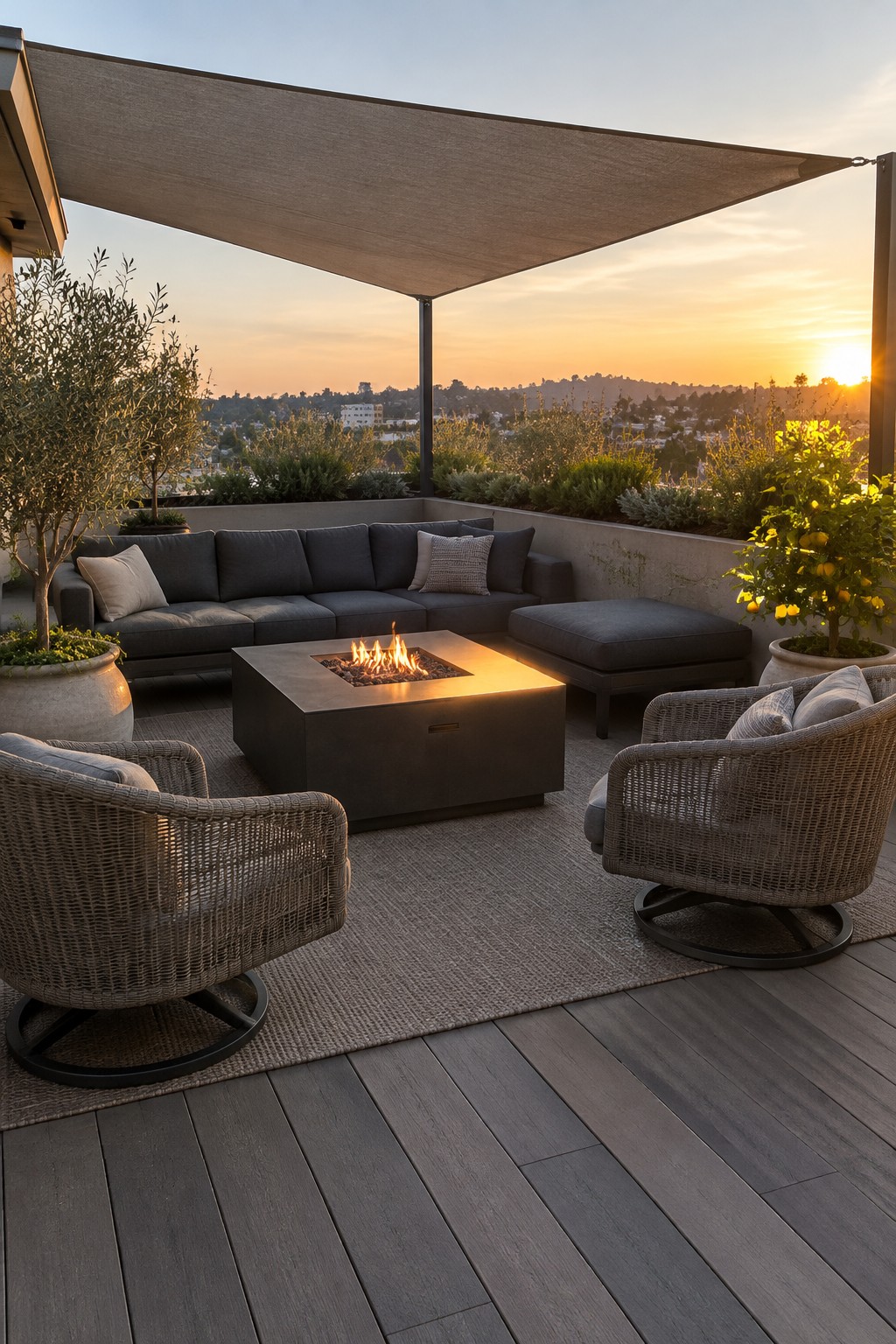
A central fire pit gives patio seating a clear gathering point without blocking the route through the space. Here, the sofa and swivel chairs face inward, so people can talk comfortably while still having room to move around the seating area.
Leave enough space between the chairs and the fire pit for safe use and easy access. This arrangement works well on a deck or terrace with a few flexible seats; swivel chairs make it easier to turn toward the conversation or the view.
Keep Patio Dining Beside the Seating
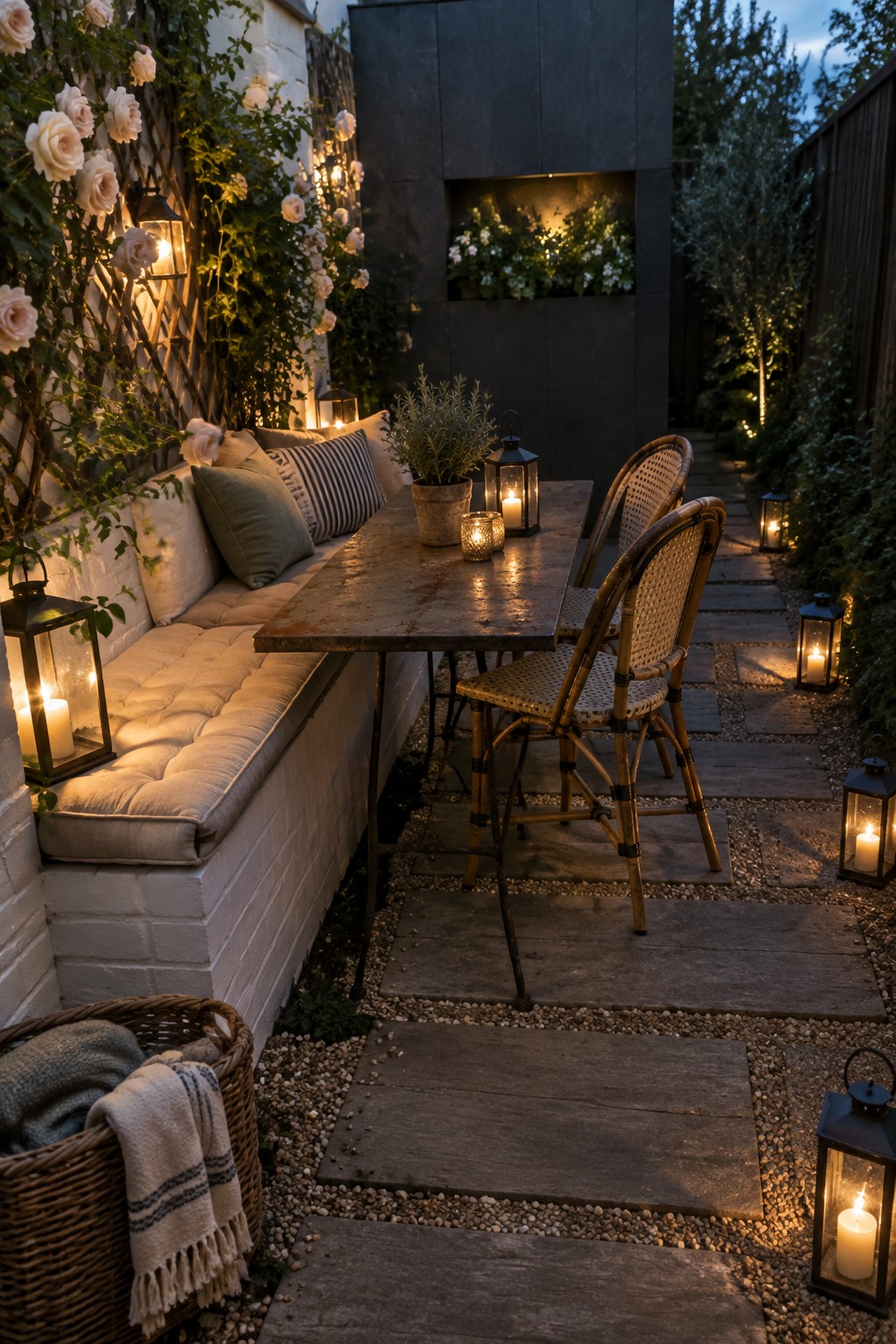
A dining table can sit close to a built-in bench, so one side of the patio does double duty for meals and lounging. This arrangement suits a narrow space, where spreading seating and dining across the whole patio would make walking through awkward.
Place the table parallel to the bench and leave enough room on the opposite side to pull out chairs. Here, the open route runs beside the table, with stepping stones guiding people through. Check that chairs do not block the main walkway when occupied.
Keep Poolside Loungers Clear Of The Dining Area
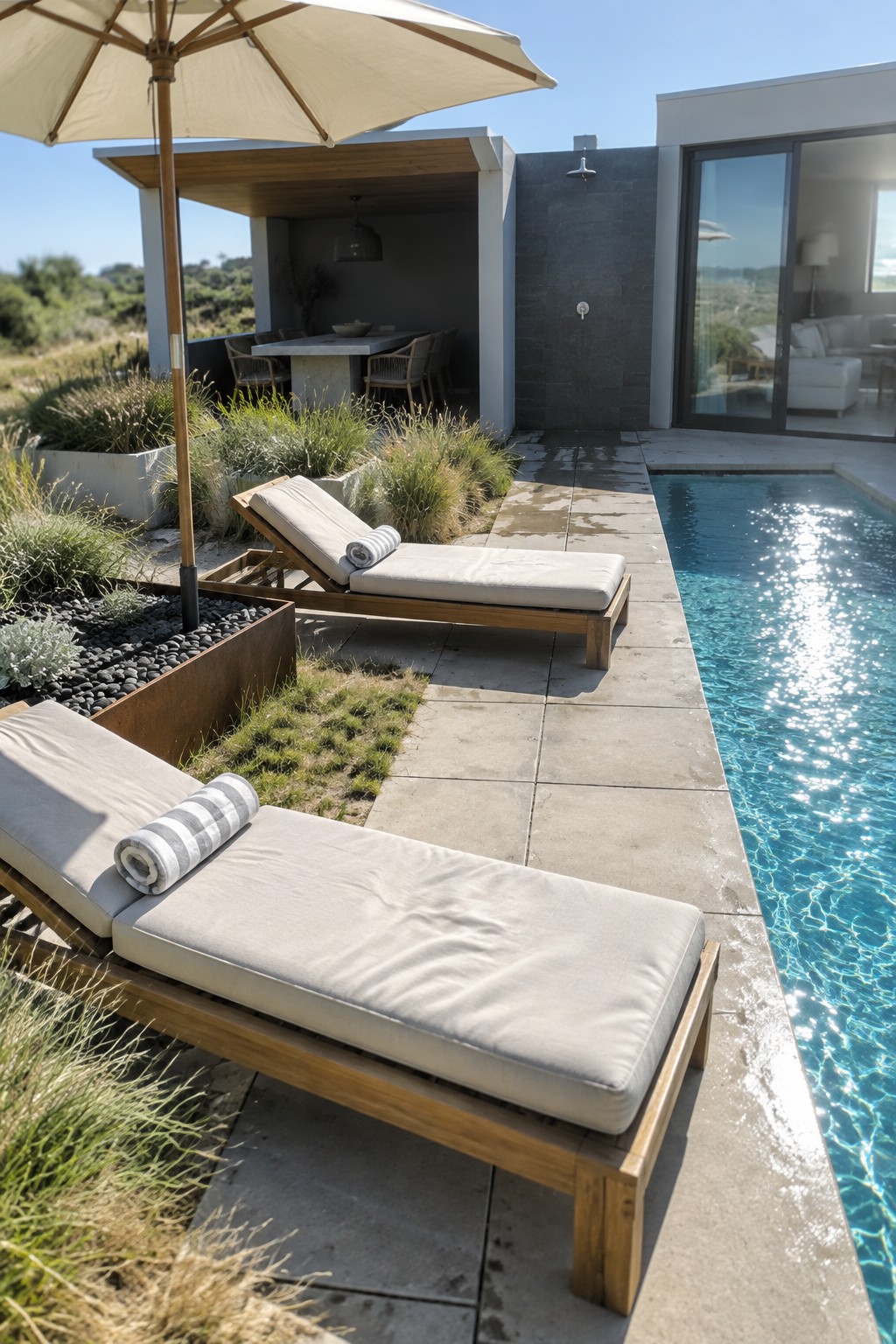
A separate spot for lounging and dining helps a patio feel easier to use. Here, the loungers sit along the pool path while the dining table is tucked beneath a covered section, so each area has a clear purpose.
For a similar layout, keep the route between the house and pool open, then place dining furniture off to one side. It works well on patios with enough room for distinct zones, but leave space to walk around the loungers without stepping into the dining area.
Use a Long Table To Keep Patio Dining Simple
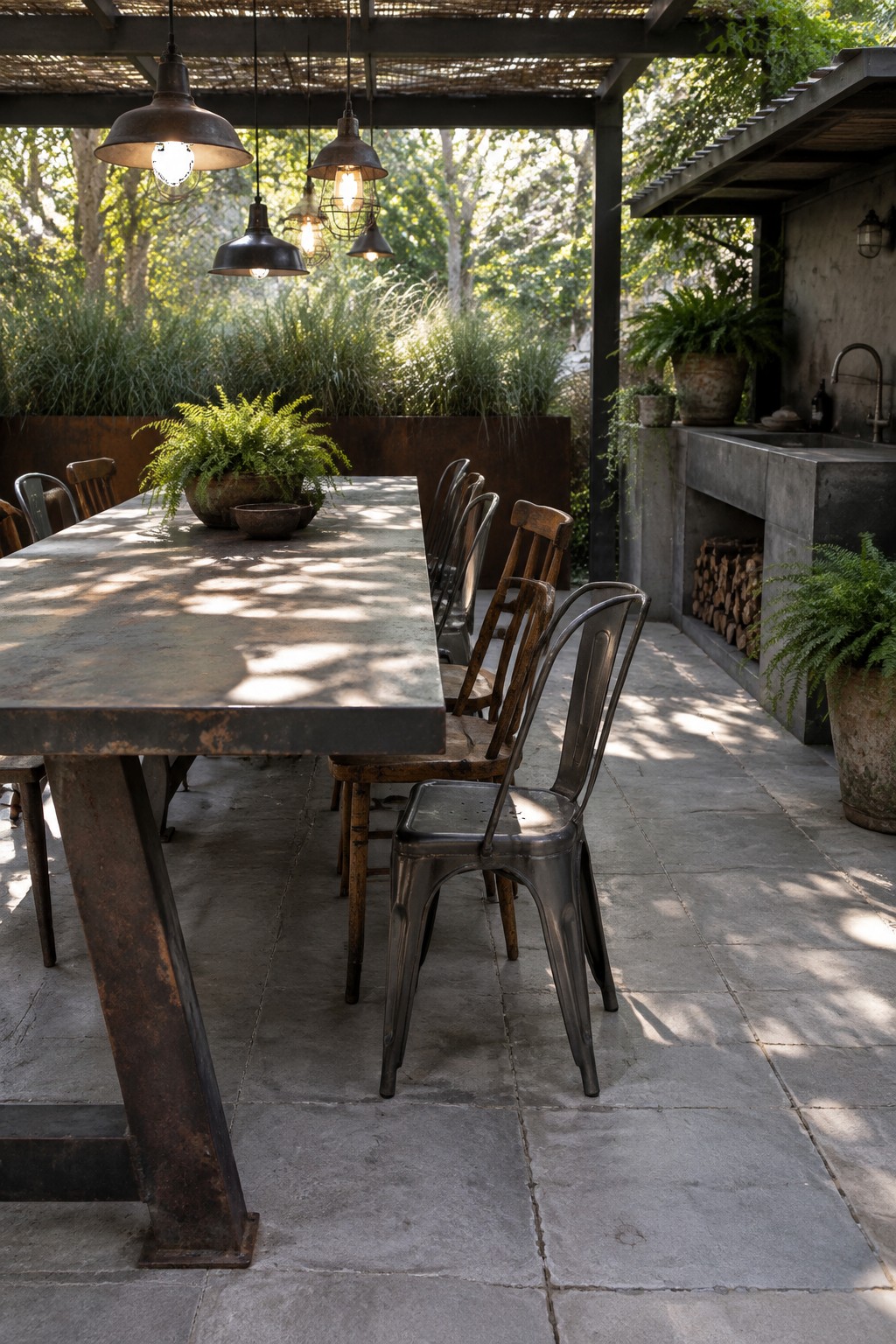
A long dining table makes good use of a narrow patio and gives everyone a clear place to sit. Here, chairs line the sides rather than spreading around the space, leaving room to move along the table.
This setup works well for outdoor meals with a larger group, especially under a pergola or other shade structure. Leave enough space behind the chairs to pull them out without blocking the main walkway.
Use a Small Patio for Dining
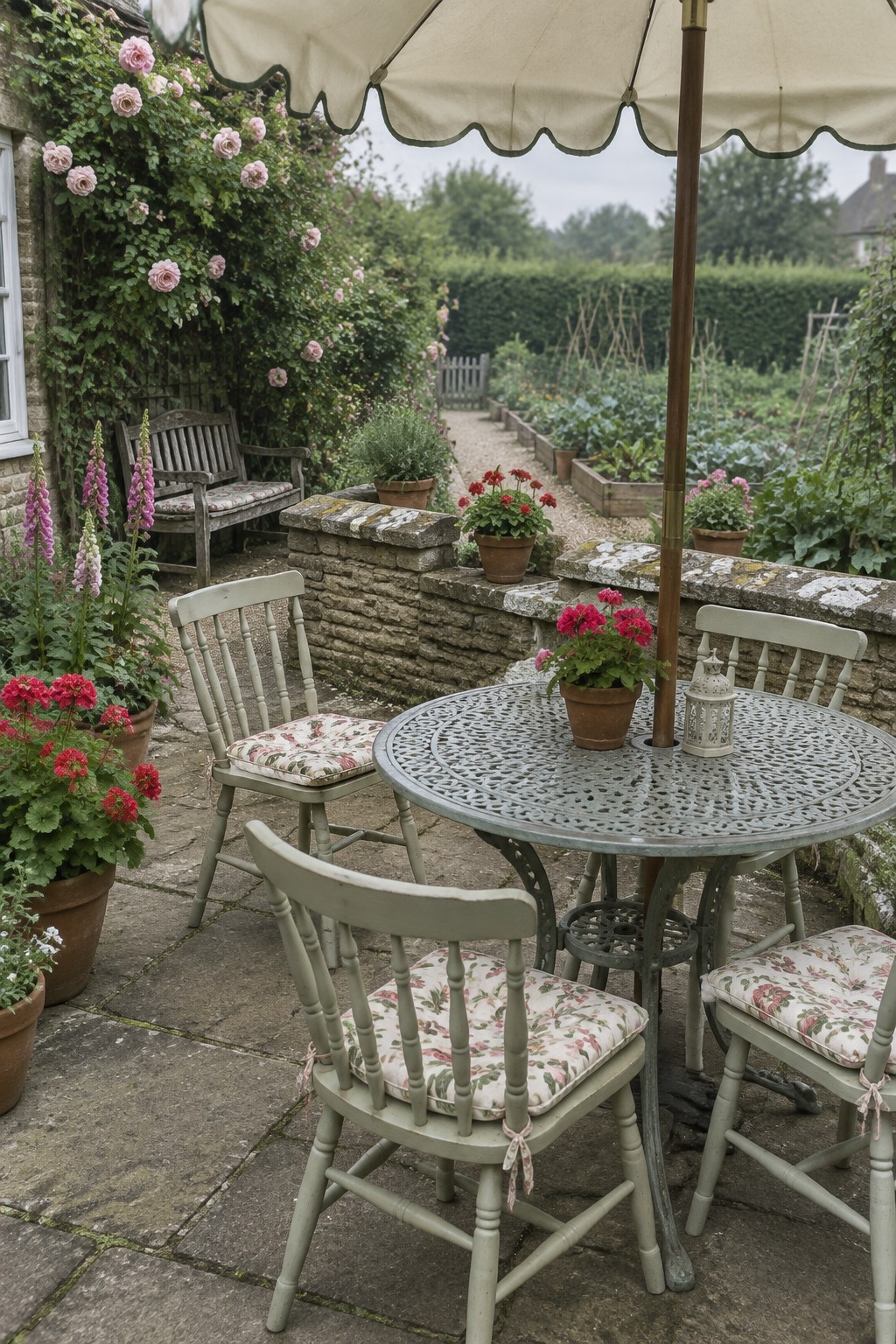
A round table can make a compact patio easier to move around. Its curved edge leaves less of a tight corner to navigate, while chairs can be pulled out from different sides as needed.
Keep the table modest in size and leave a clear route past the chairs to the garden or back door. This setup suits a narrow terrace or courtyard, where a large rectangular table could interrupt the flow.
Use a Garden Path to Keep Patio Traffic Clear
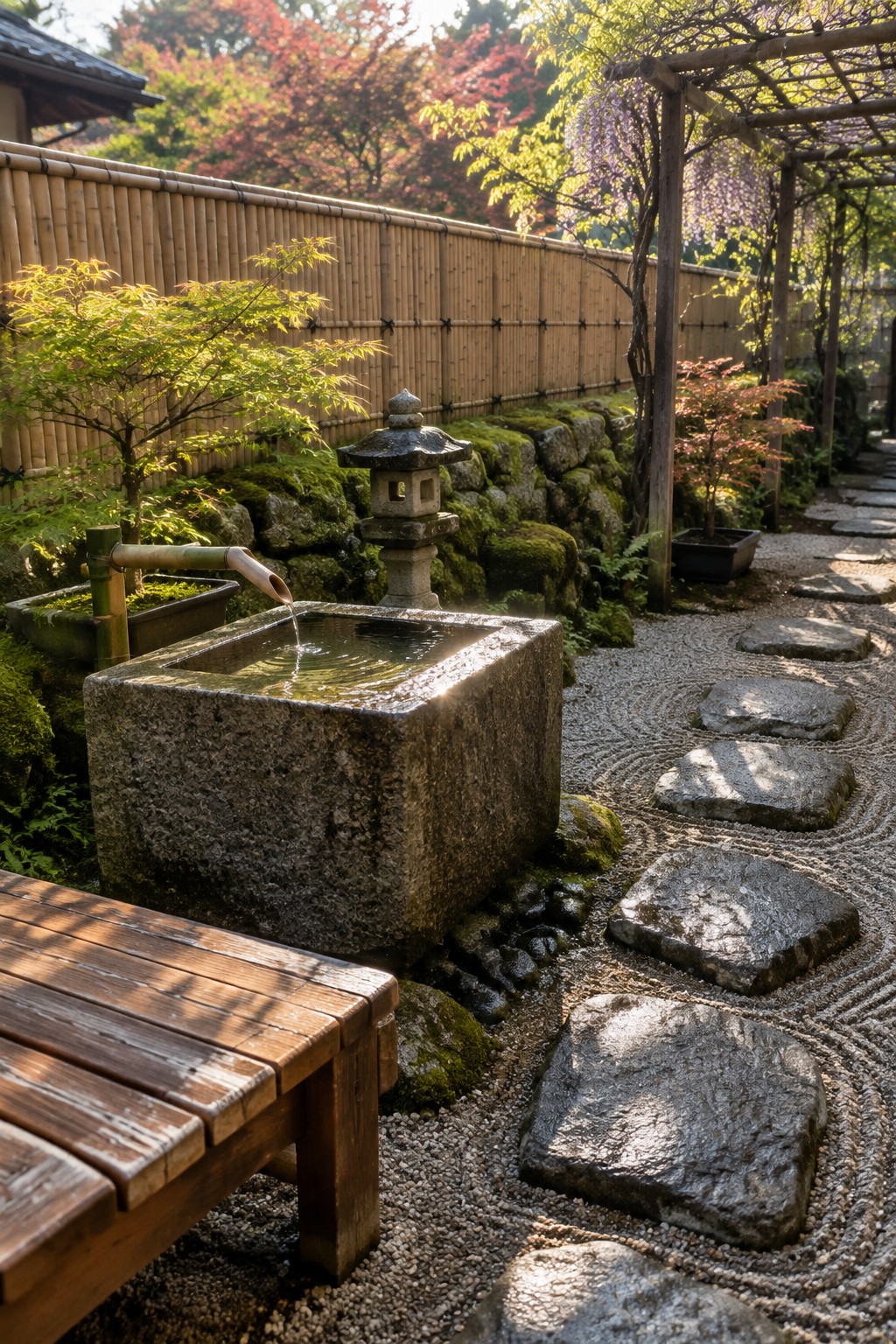
A clear path makes an outdoor space easier to move through, even when the garden is full of features. Here, stepping stones create a simple route through the gravel without cutting across the water basin area.
Use this approach when you want to connect a patio or seating spot to another part of the garden. Leave enough room beside the stones for people to walk comfortably, and keep furniture out of the main route.
Set Up an Outdoor Kitchen Beside the Dining Area
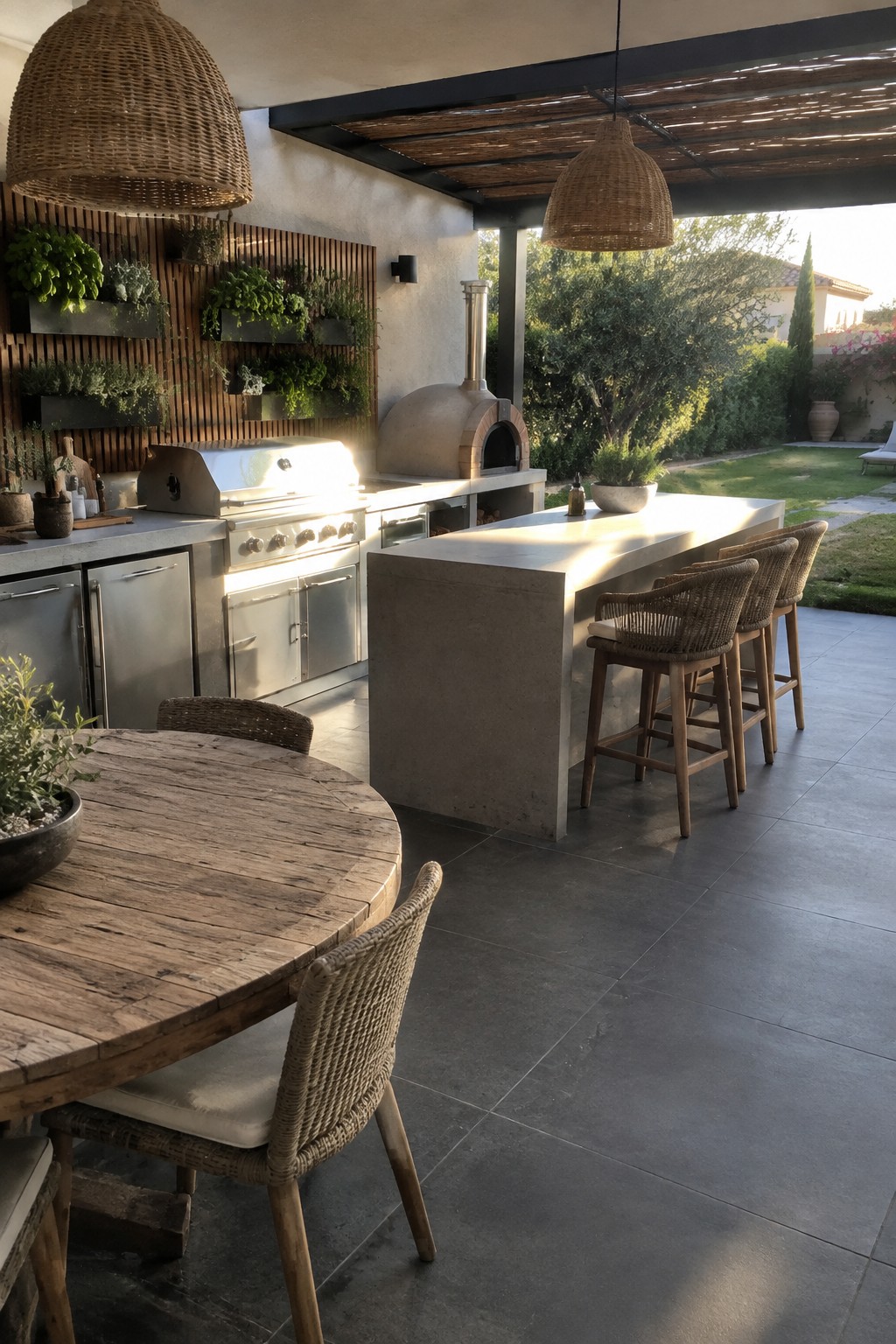
An outdoor kitchen works best when the cooking and eating areas are close but still have room to move between them. Here, a long island provides a place for guests to sit while keeping the main cooking counter nearby.
This arrangement suits a covered patio with enough space for both a dining table and bar seating. Leave a clear route behind the stools so people can come and go without crowding the cook.
Arrange Porch Seating Around a Shared Table
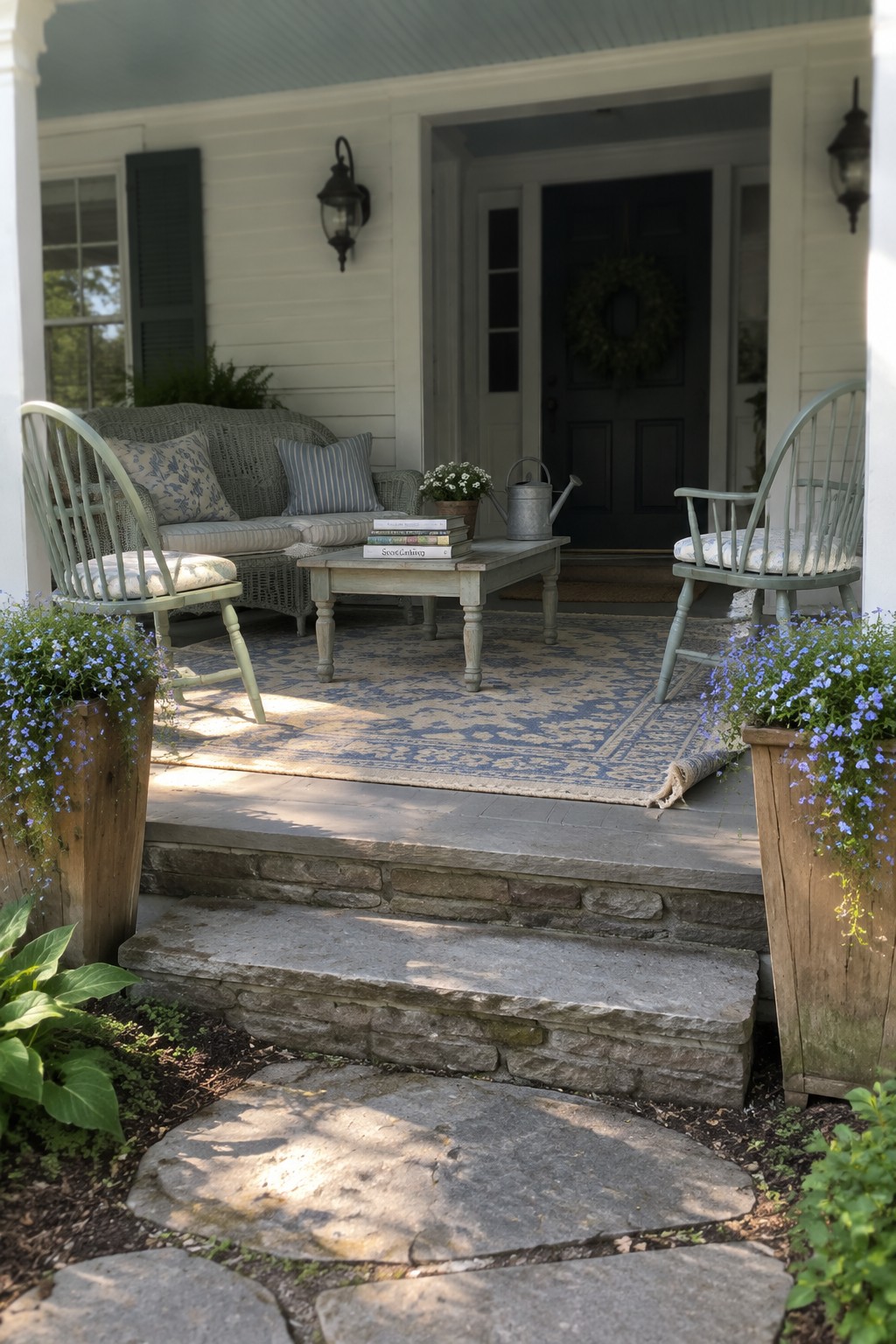
A small table between the seats gives porch seating a clear center and makes the area useful for more than lounging. It offers a spot for books or drinks without blocking the route across the porch.
Keep the chairs close enough to reach the table, but leave a comfortable gap for people to move through. This arrangement works well on covered porches where a larger dining setup would take up too much room.
Use Compact Seating to Keep the Patio Open
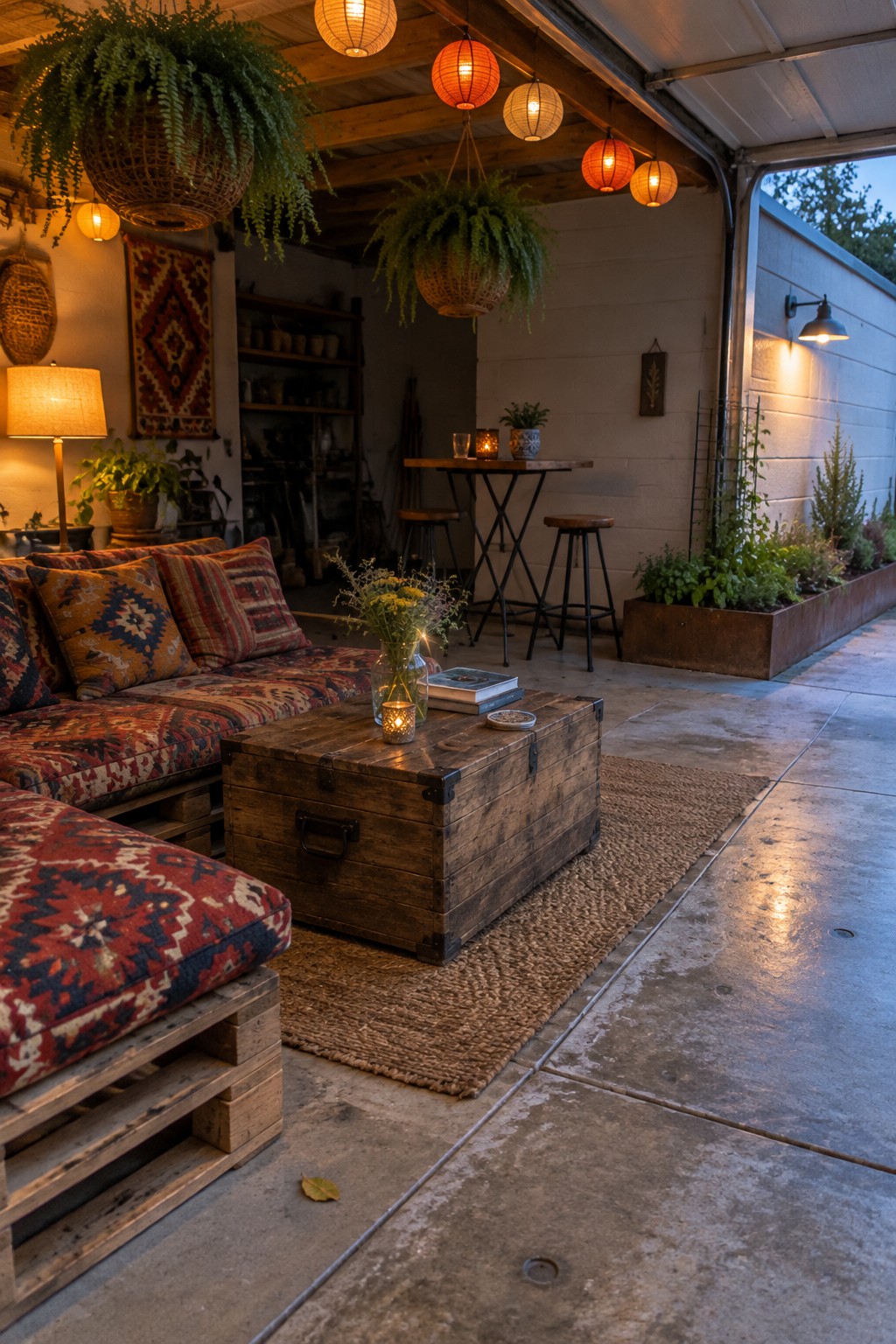
A compact seating area can make a covered patio feel comfortable without blocking the route through it. Here, the sofa and low trunk table sit to one side, leaving a broad strip of floor clear for walking.
This setup works well in a long patio or garage-style space that also serves as a passage. Keep the table close enough to reach from the seats, but leave a clear lane beside the rug so people can move through easily.
Separate Patio Zones With Steps
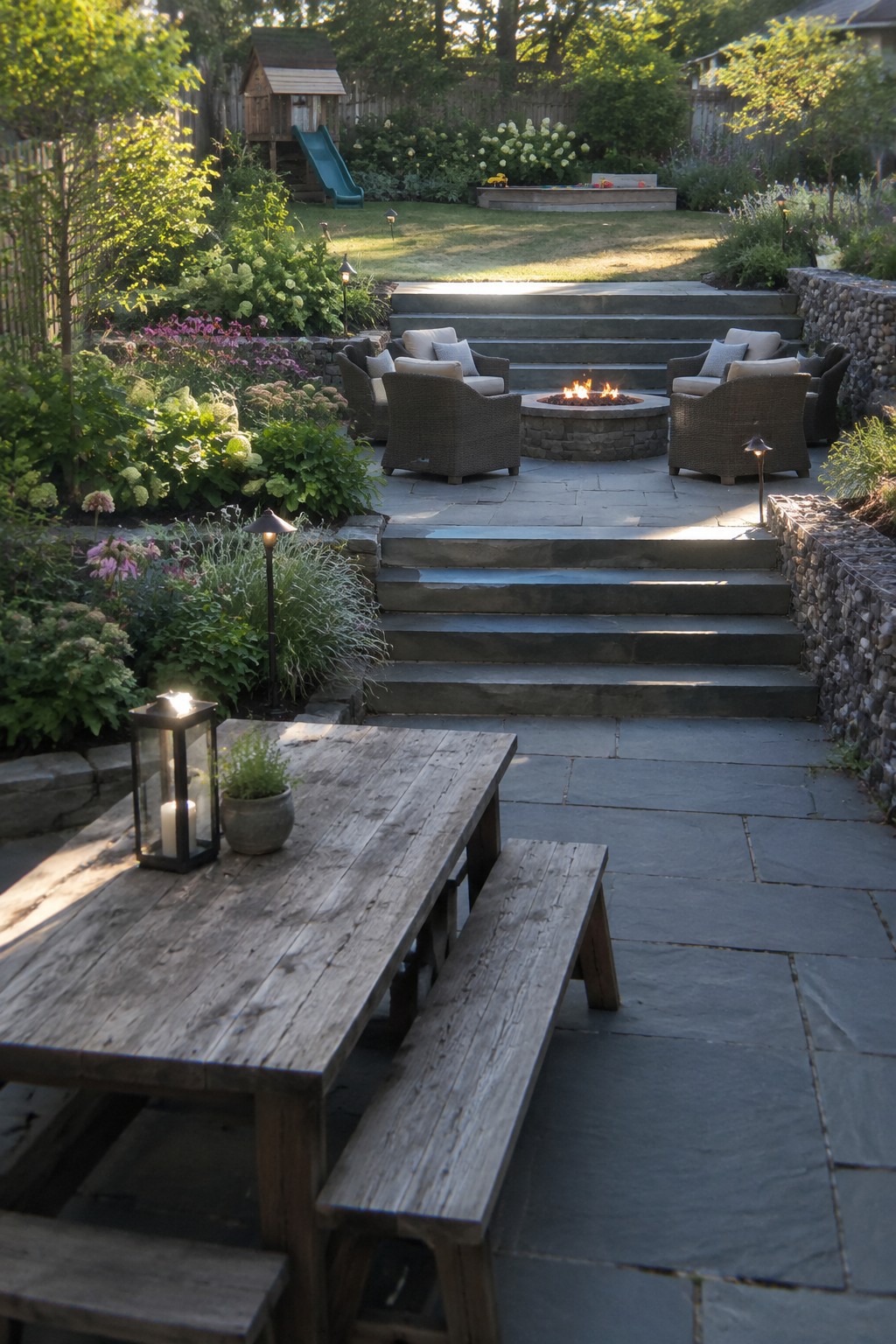
A few broad steps can divide a sloped patio into useful areas without blocking the route between them. Here, the fire pit seating sits above a lower dining spot, so each group has room to gather without crowding the other.
This layout works well in a long or sloping garden where one flat patio would feel awkward. Keep the steps wide and easy to use, and leave a clear walkway alongside the seating.
Use Compact Seating to Keep Patio Flow Open
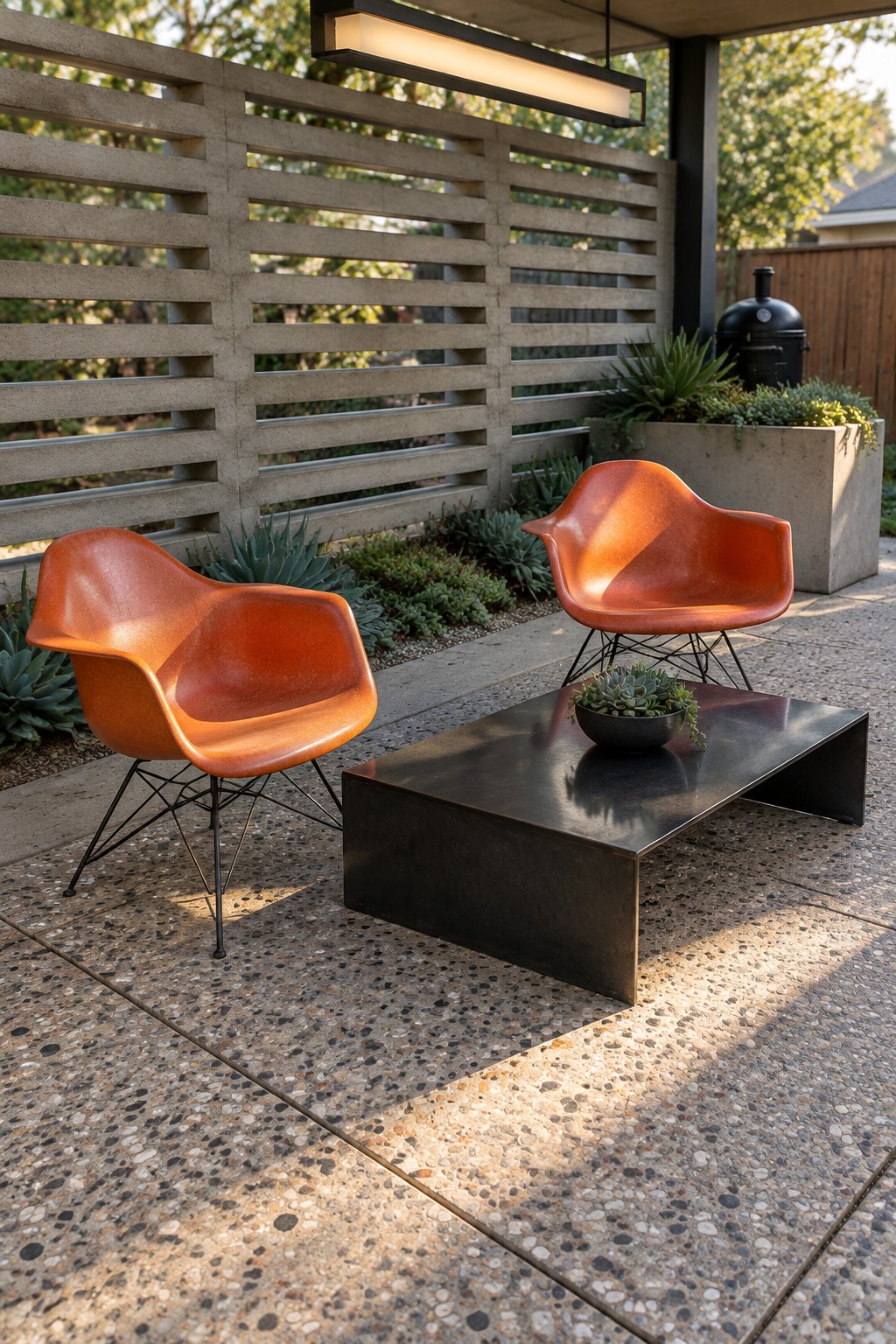
A pair of armchairs and a low coffee table make a comfortable spot to sit without taking over the patio. The chairs face each other, so conversation feels easy, while the open space around them keeps the area from feeling crowded.
This kind of setup works well on a narrow terrace or beside a garden bed. Leave enough room to walk around the chairs, and choose a low table that does not block the route between the seating area and the rest of the patio.
Use a Garden Path to Keep Patio Traffic Clear
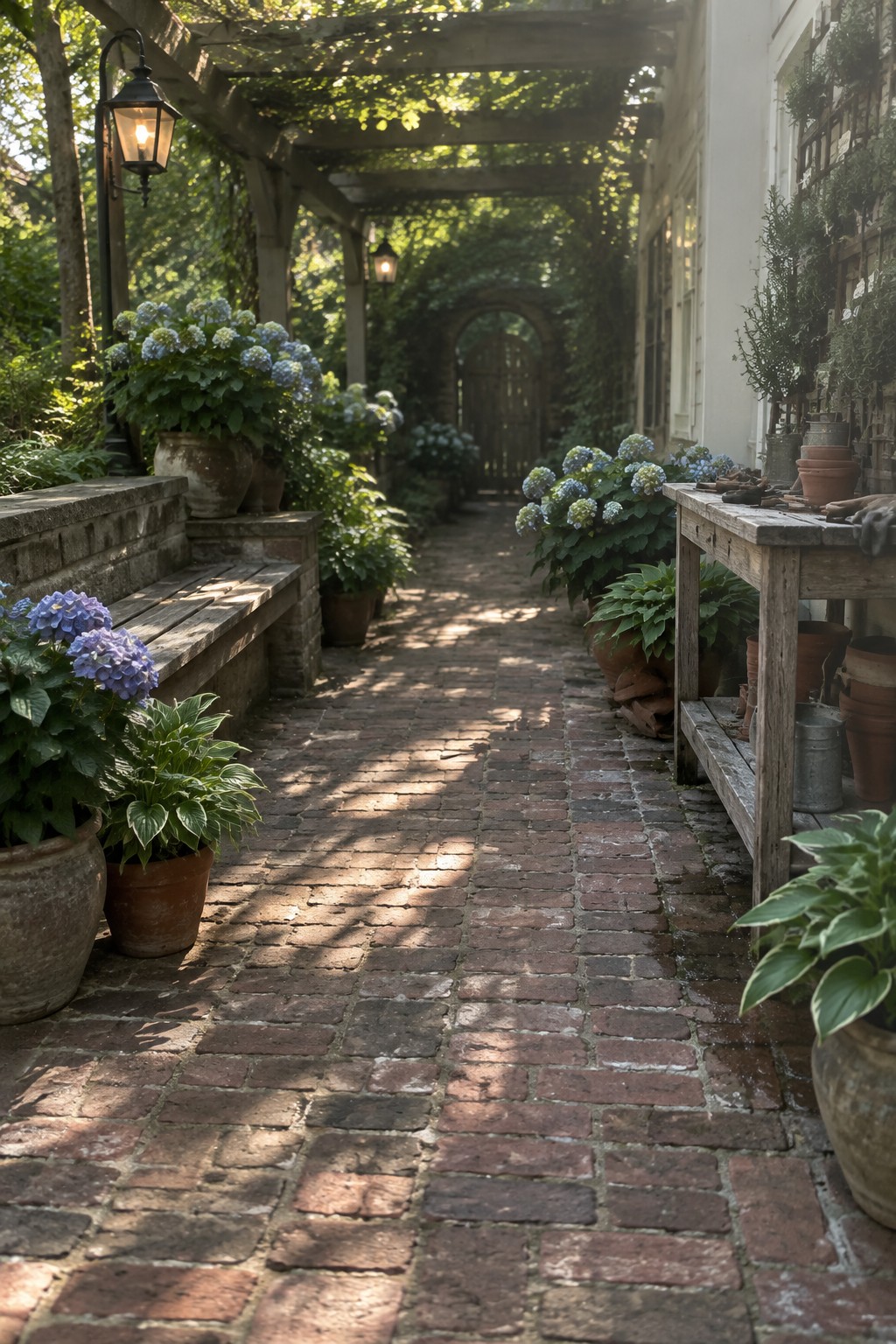
A defined path helps people move through a garden without cutting across planting or bumping into furniture. Here, the brick walkway runs between the house and the garden, keeping the route easy to follow.
This approach works well in a narrow patio or courtyard where space is shared by pots, seating, or a work area. Keep the path wide enough for comfortable passing, and place furniture and planters along its edges rather than in the walking line.
Make the Fire Pit the Center of Patio Seating
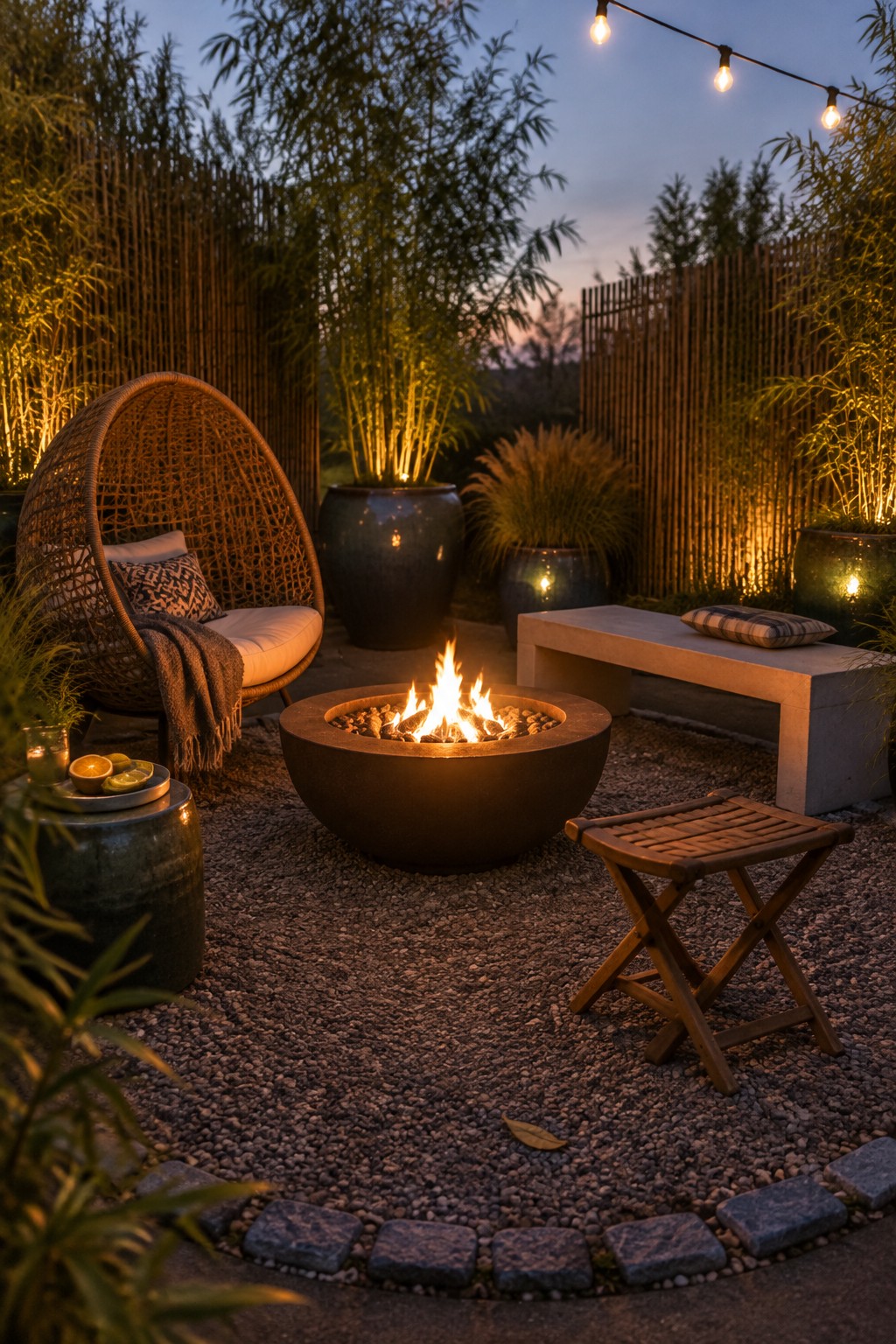
Arranging seats around a fire pit gives a patio one clear gathering spot and makes conversation feel natural. Here, a low round fire pit sits between a lounge chair and a bench, so people can settle in without crowding one another.
Leave enough room to walk around the seating, especially on a small patio. A round pit works well in a compact area because it has no sharp corners, but keep chairs far enough back for safe use.
Use a Narrow Patio for Dining

A small patio can still make room for a useful dining spot when the table and chairs sit along one side, leaving a clear route through the middle. Here, the simple table-and-chair setup fits beside the fence without taking over the brick path.
This arrangement works well in long, narrow gardens where people need to pass through to reach the back. Choose slim chairs and a modest table, and leave enough space to pull out a chair without blocking the walkway.
Use a Long Table for Patio Dining
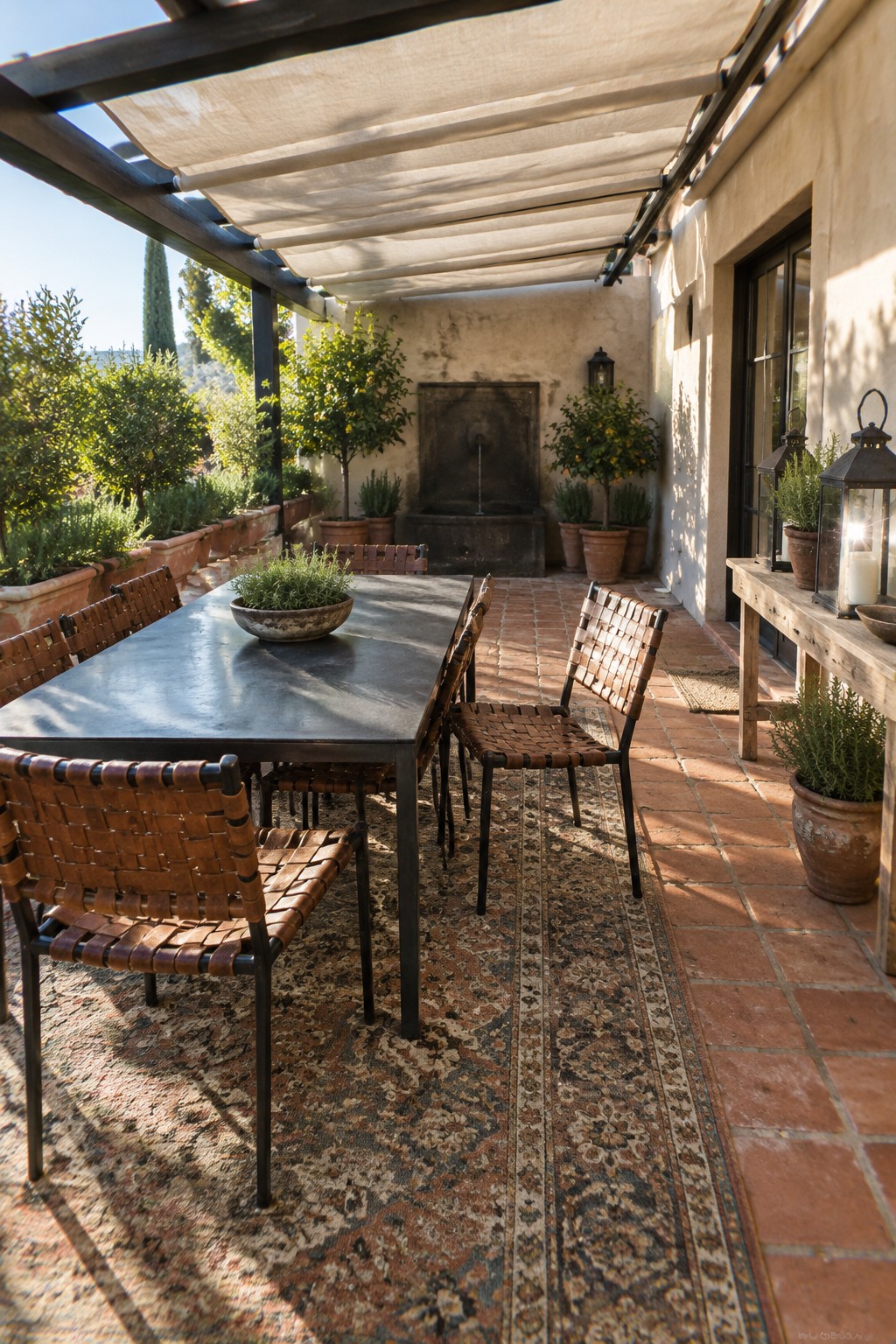
A long dining table makes good use of a narrow patio and gives everyone a clear place to gather. Here, chairs sit along both sides, while the table stays in the main dining area rather than blocking the route beside the house.
This arrangement suits covered terraces and other long outdoor spaces. Leave enough room to pull chairs back, and keep the walkway to one side open so people can move through without squeezing past diners.
Arrange Curved Seating Around a Fire Pit
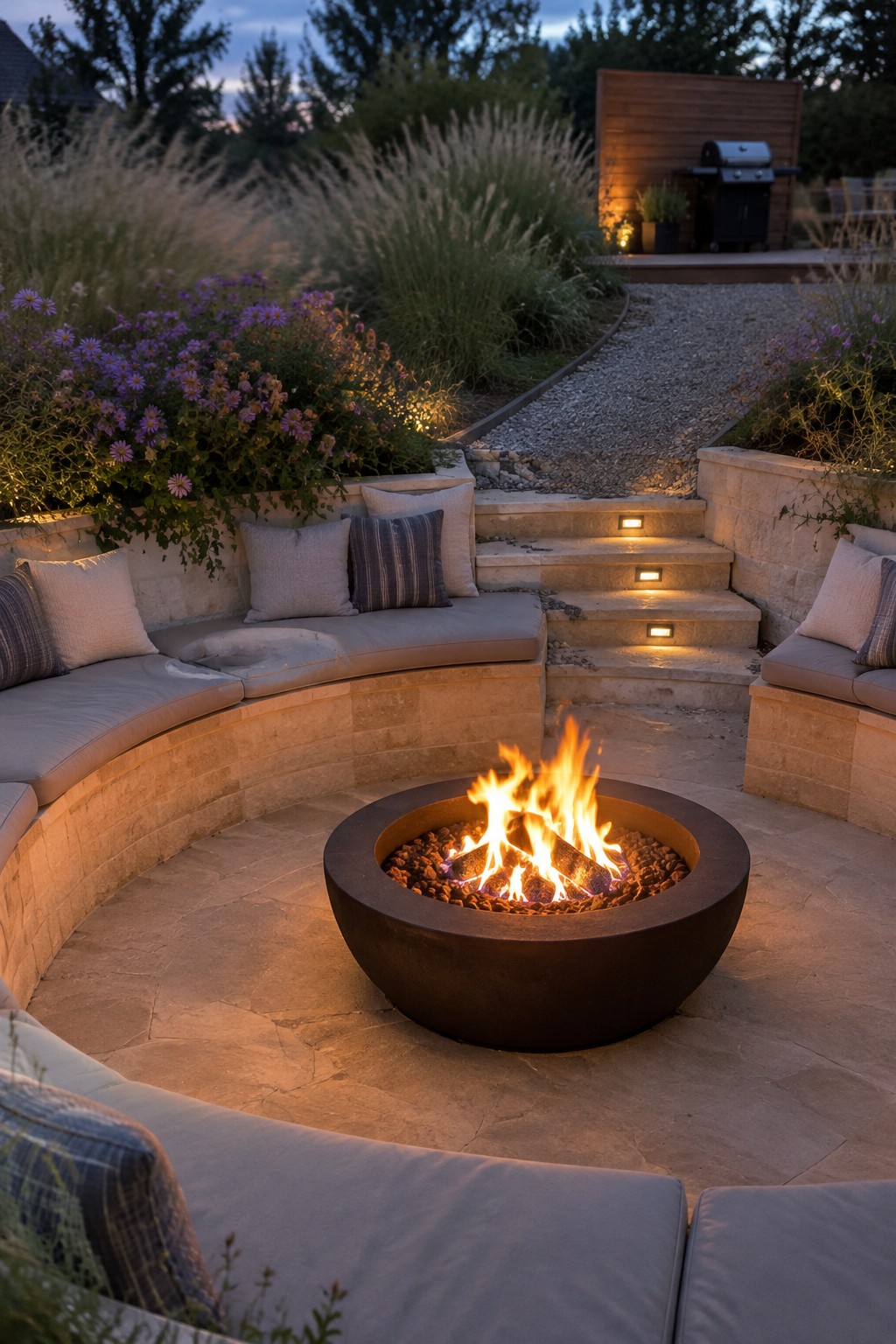
A curved seating layout makes a fire pit easy to share, since people can face one another without arranging extra chairs around the edge. The built-in bench also keeps the main seating area in one clear shape.
This works well in a sunken patio or a yard with enough room for a generous seating curve. Leave a comfortable gap around the fire pit and keep a clear route to steps or other parts of the patio.
Frequently Asked Questions
Q: How much space should I leave between patio furniture pieces?
A: Leave enough room to walk through without turning sideways or bumping a chair. If your patio is small, keep one clear route from the door to the main seating area and let the rest of the furniture sit a little closer together.
Q: What’s the best way to arrange furniture on a narrow patio?
A: Place larger pieces along the long edges and keep the center open for an easy walkway. A compact bench or slim chairs can fit better than a deep sofa, especially near the door.
Q: How can I fit dining and lounging areas on one patio?
A: Give each activity its own spot, even if the zones are small. Put the dining set near the kitchen or grill, then use a rug or a pair of chairs to mark a separate place to relax.
Q: What should I move if my patio feels cramped?
A: Start with anything that blocks the main walking path, such as an extra side table or a chair that rarely gets used. A little open floor often makes the whole arrangement feel more comfortable.
