

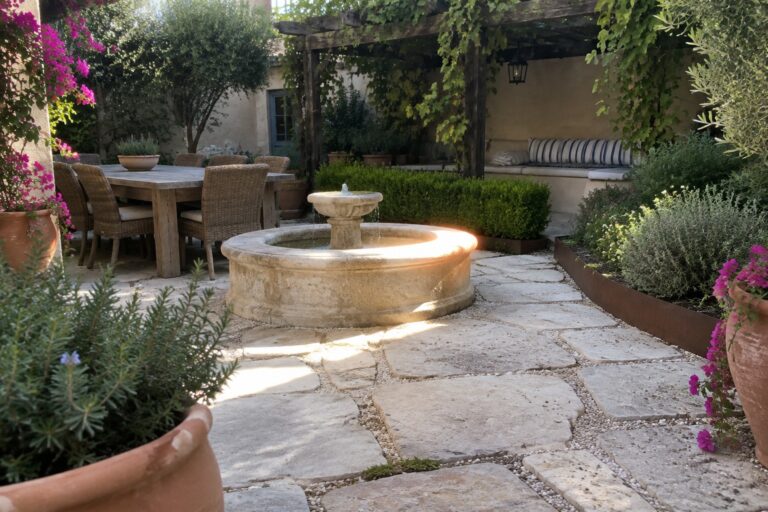
A paved patio can look finished on paper yet feel awkward if the paths, seating, and planting do not work together.
I find that the first thing I notice is how the paving guides movement and whether there is a comfortable place to pause.
Stone brings texture and a solid base, while gravel can soften edges and help define smaller zones.
Greenery matters just as much, since plants can cool a hard surface and make the patio feel connected to the rest of the garden.
I would pay close attention to ideas that balance easy upkeep with enough shade, color, and room to use the space day to day.
Use Irregular Stone Paving for a Garden Path
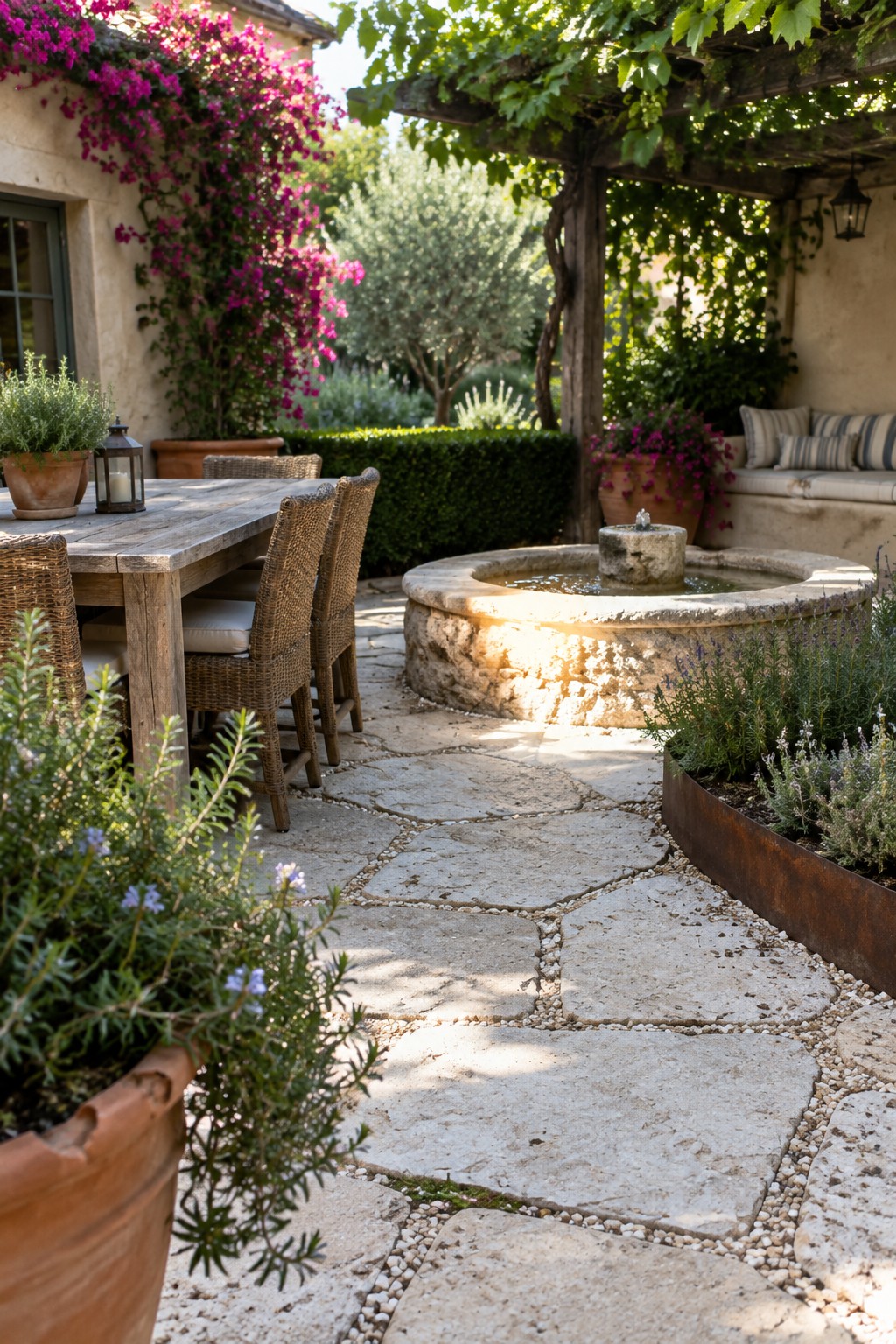
An irregular stone path gives a patio garden a relaxed, established look. The varied shapes feel less formal than a straight run of matching pavers, while gravel between the stones helps define the path and keeps the surface from looking crowded.
This approach works well when you want a clear route through a planted yard without paving every inch. Choose stones with fairly even surfaces for comfortable walking, and keep the gaps manageable so the path stays easy to maintain.
Use Large Pavers To Shape A Patio Seating Area
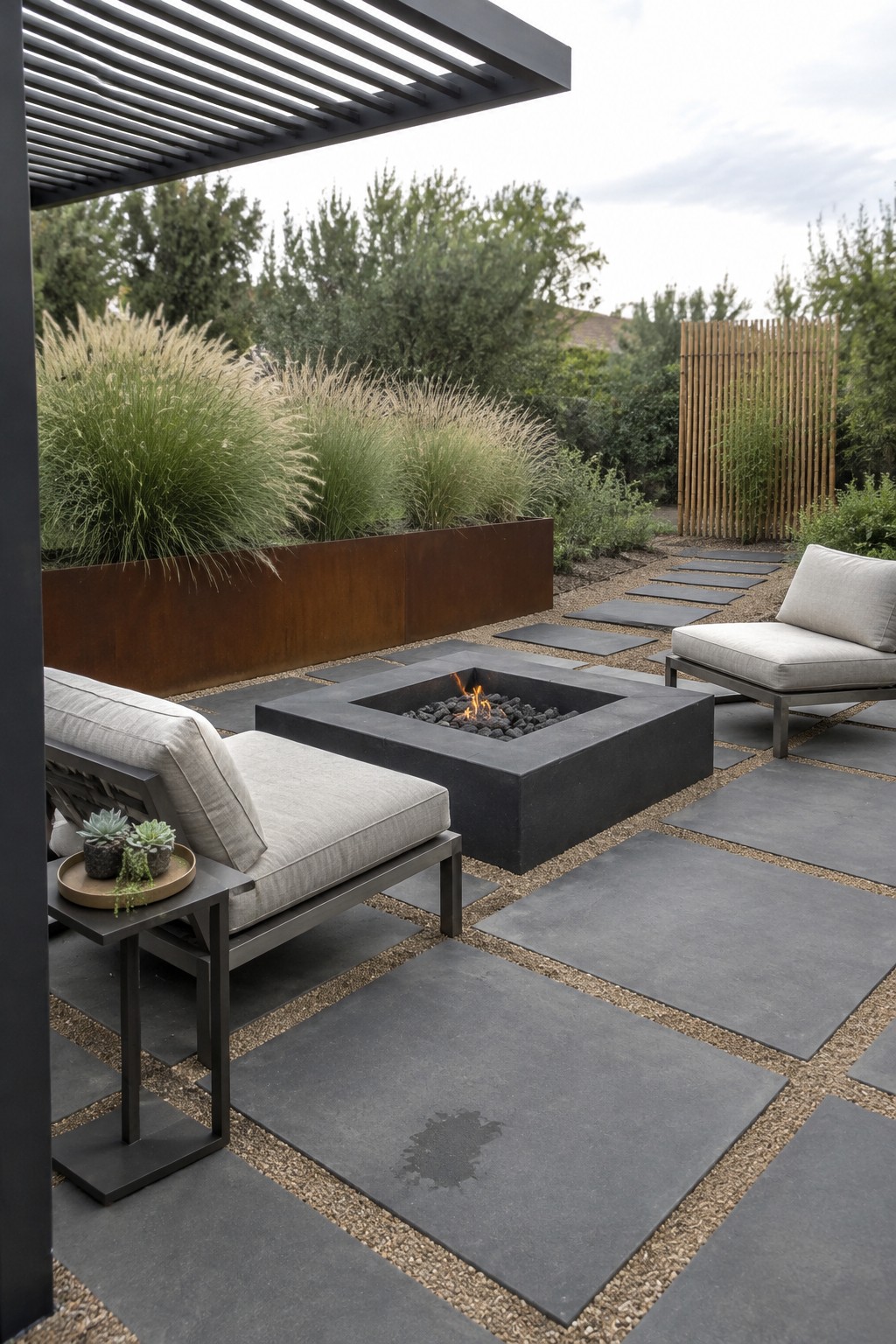
Large stone pavers make a patio feel organized without covering every inch of ground. The gravel joints give the surface a little breathing room, while a fire pit helps define the seating area.
This layout works well in a modern garden where you want a clear place to sit without a solid concrete slab. Leave enough space around the pavers for comfortable walking, and use a stable, compacted base so they stay level.
Use Brick Paving To Define A Patio Seating Area
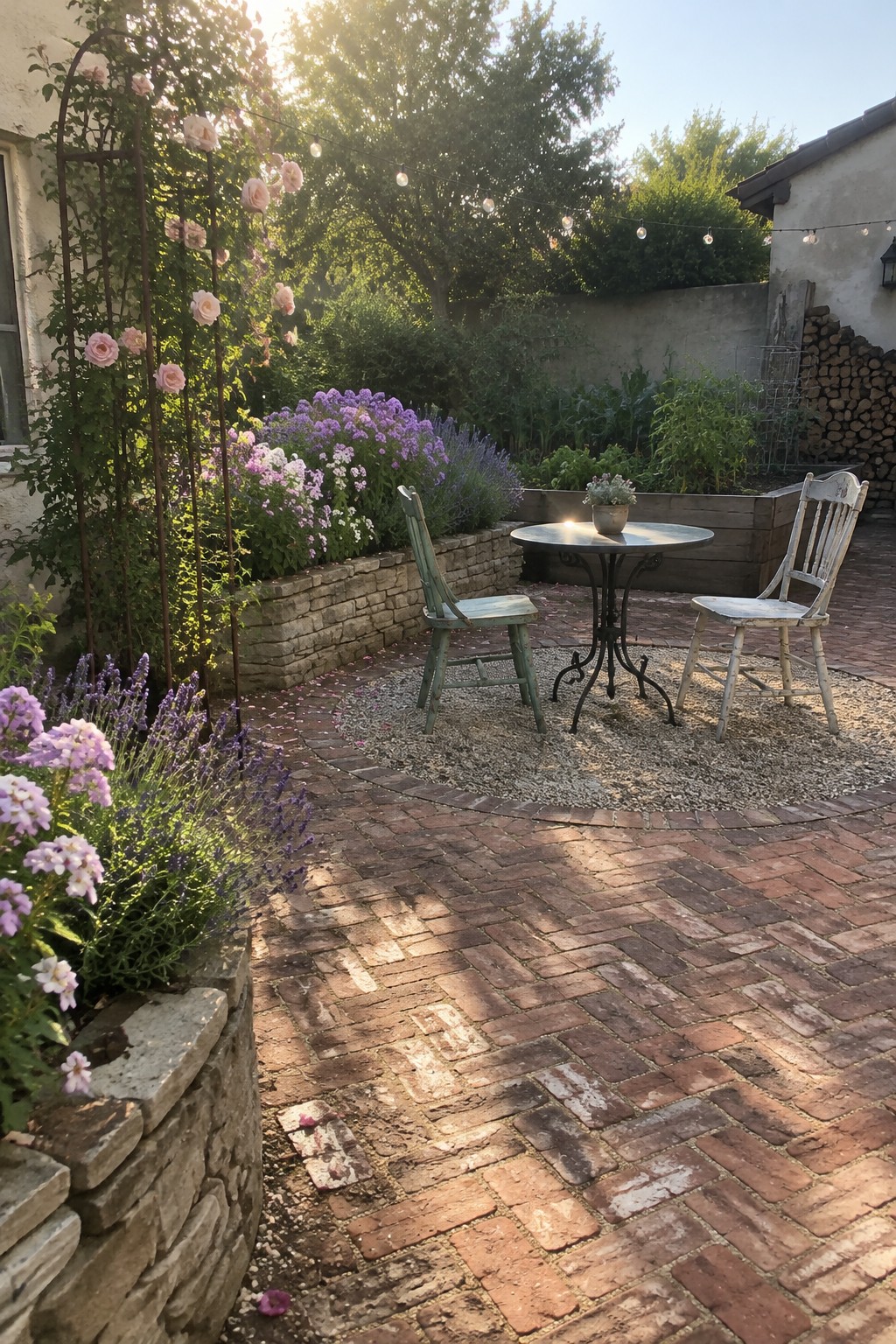
Brick paving can give a garden patio a clear place for sitting without making the whole yard feel hard or overly formal. Here, the round gravel area breaks up the brick surface and makes room for a small table and chairs.
This approach works well in a cottage-style garden or a compact courtyard. Use a brick border to mark the seating zone, and leave enough space around the furniture for chairs to move comfortably.
Use Stone Pavers To Define Patio Zones
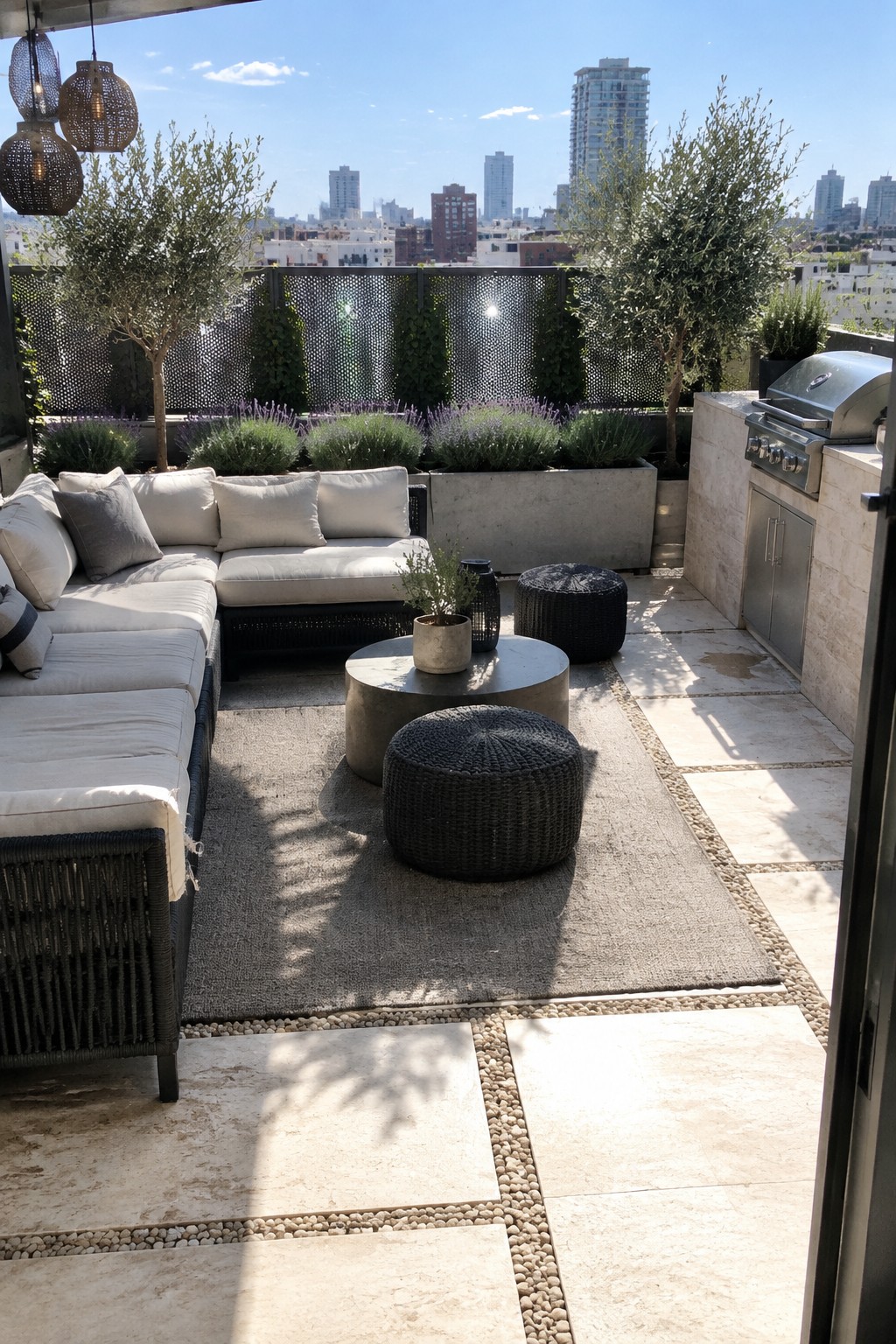
Large stone pavers can make an outdoor seating area feel organized without closing it off. Here, narrow strips of pale gravel between the stones add a clear pattern while keeping the patio connected to its planted edges.
This approach works well on terraces where you want a defined path around a rug or seating area. Choose pavers with a practical, slip-resistant finish, and keep the gravel joints narrow enough to walk across comfortably.
Build a Patio Around a Stone Fire Pit
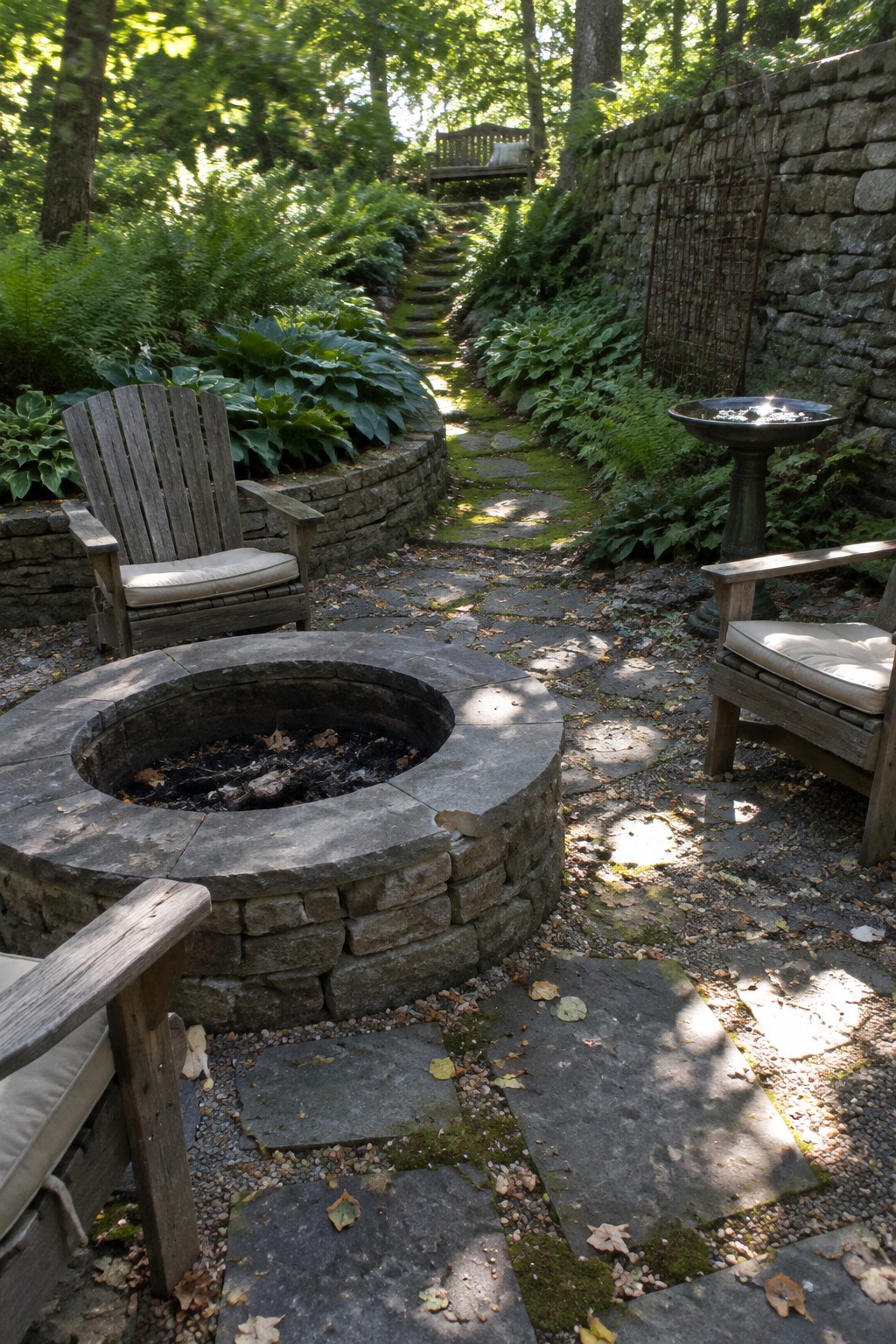
A round stone fire pit gives a patio a clear place to gather. Its low, sturdy shape works especially well in a garden where a simple paved area might otherwise feel like a path rather than a spot to sit.
Leave enough room around the pit for chairs and easy movement, and use paving that can handle heat and stray sparks. This layout suits a tucked-away garden patio, but check local fire rules and keep the pit a safe distance from plants and walls.
Use Large Stone Slabs for a Patio Path
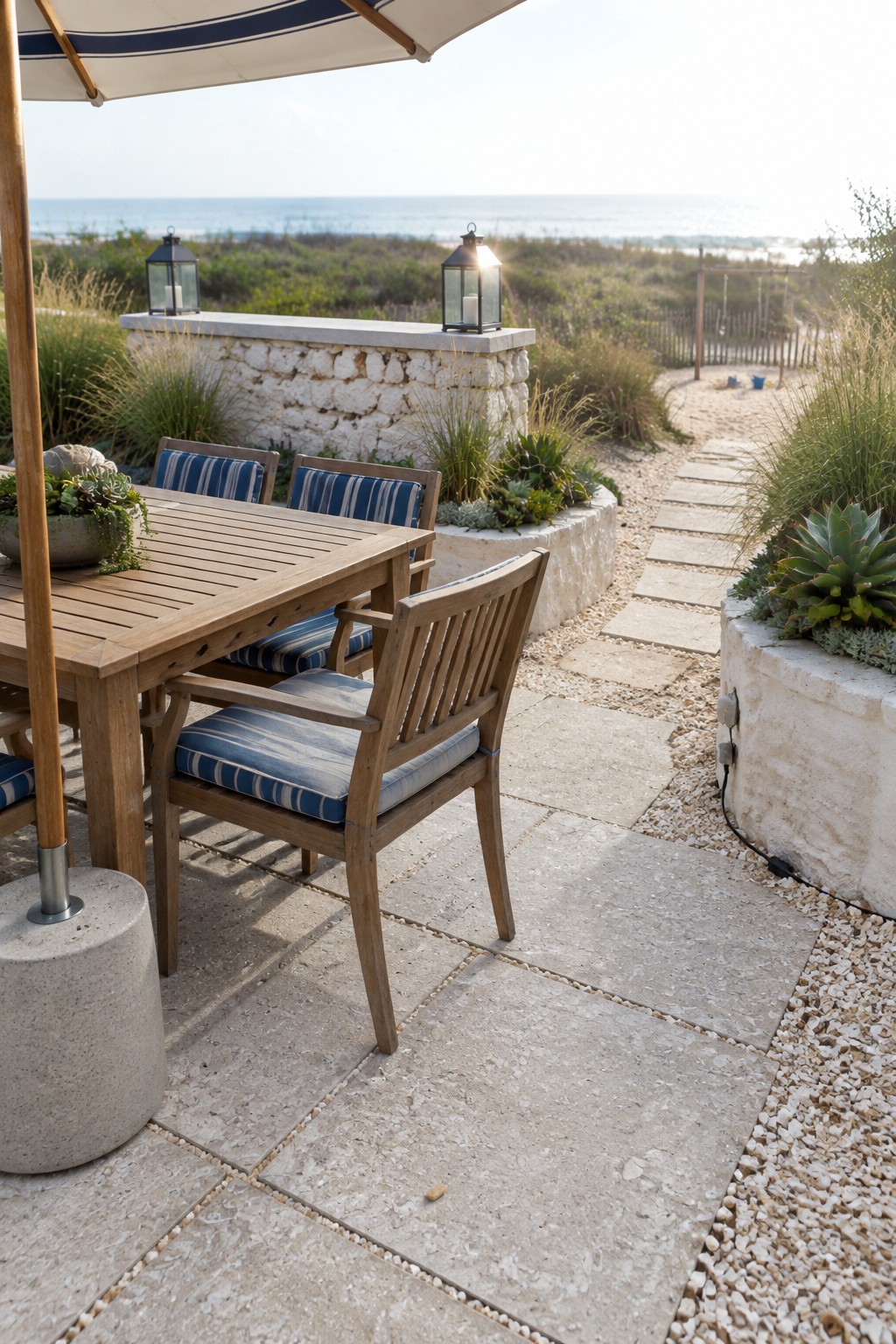
Large stone slabs make a garden path easy to follow while keeping the patio connected to the rest of the yard. The broad stepping stones suit a coastal garden and leave room for gravel between them.
For a similar path, choose slabs with a lightly textured surface and leave enough space between stones for comfortable steps. Gravel is a practical filler, but keep it level so it does not spill onto the paving.
Use Gravel Joints Between Large Stone Pavers
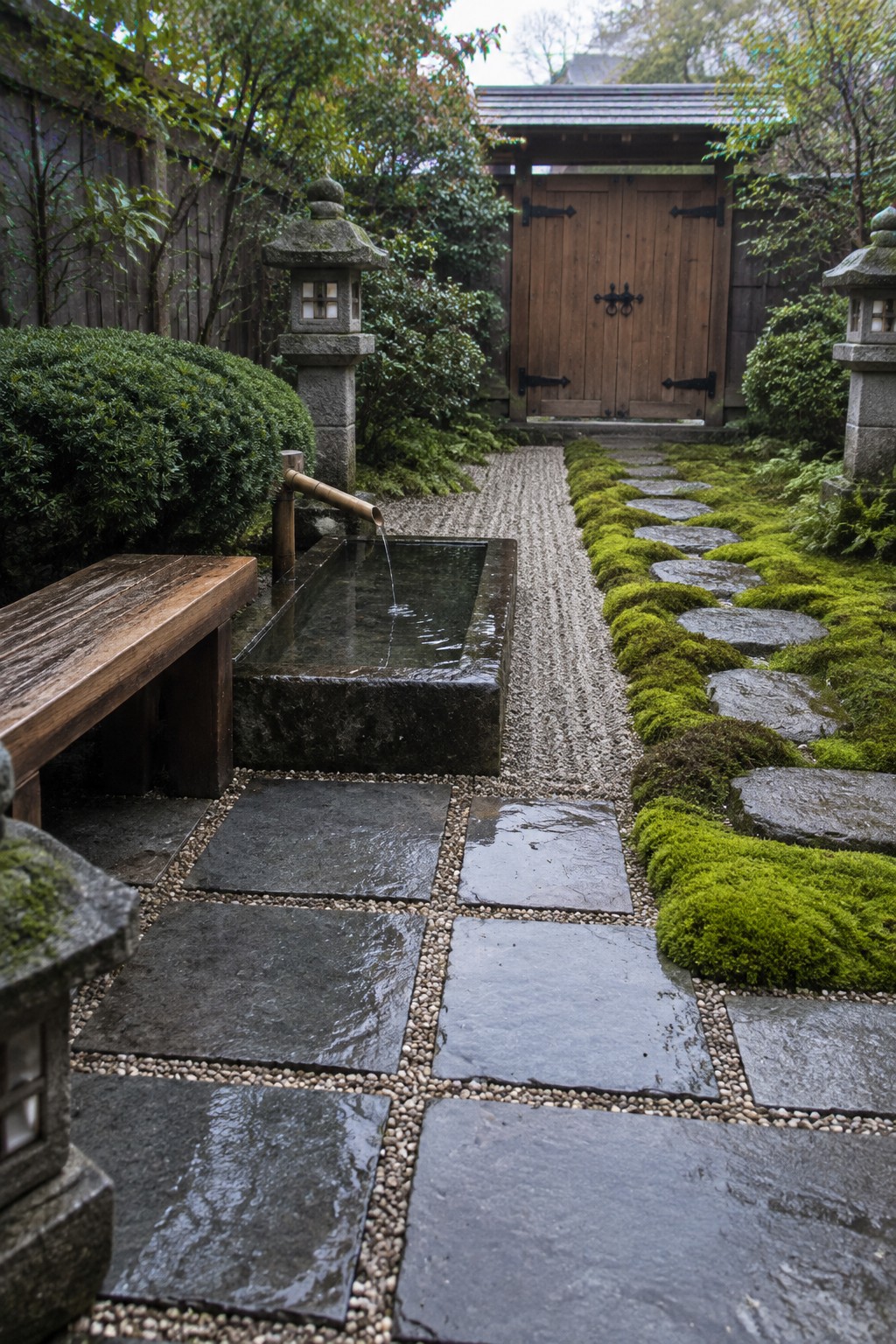
Gravel joints are a simple way to give a paved garden path a more relaxed, natural look. Here, broad stone slabs sit among small pale pebbles, so the path feels structured without looking like one solid surface.
This approach works well in a courtyard or narrow garden where you want a clear walking route that still blends with the planting. Choose stones with even edges for steady footing, and keep the gravel joints narrow enough that they are easy to maintain.
Make Room For Outdoor Dining
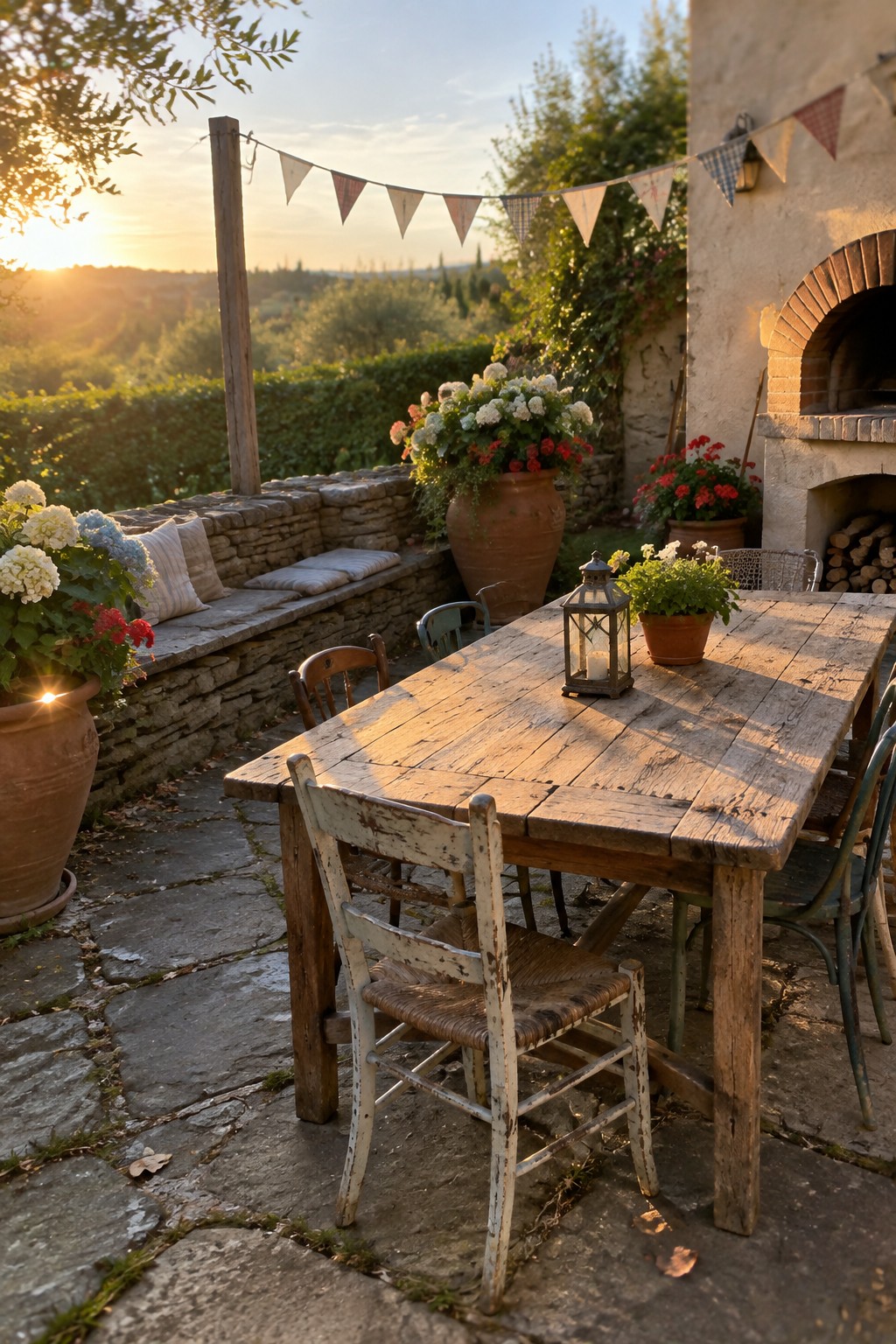
A paved patio can be more useful when it has space for a proper dining table. The stone surface gives the table a steady place to sit, while the open layout makes it easy to pull out chairs and gather for a meal.
This setup works well beside a garden wall or near an outdoor cooking area. Leave enough room around the table for people to move comfortably, and choose sturdy furniture that can handle outdoor use.
Use Decorative Pavers To Define a Fire Pit Patio
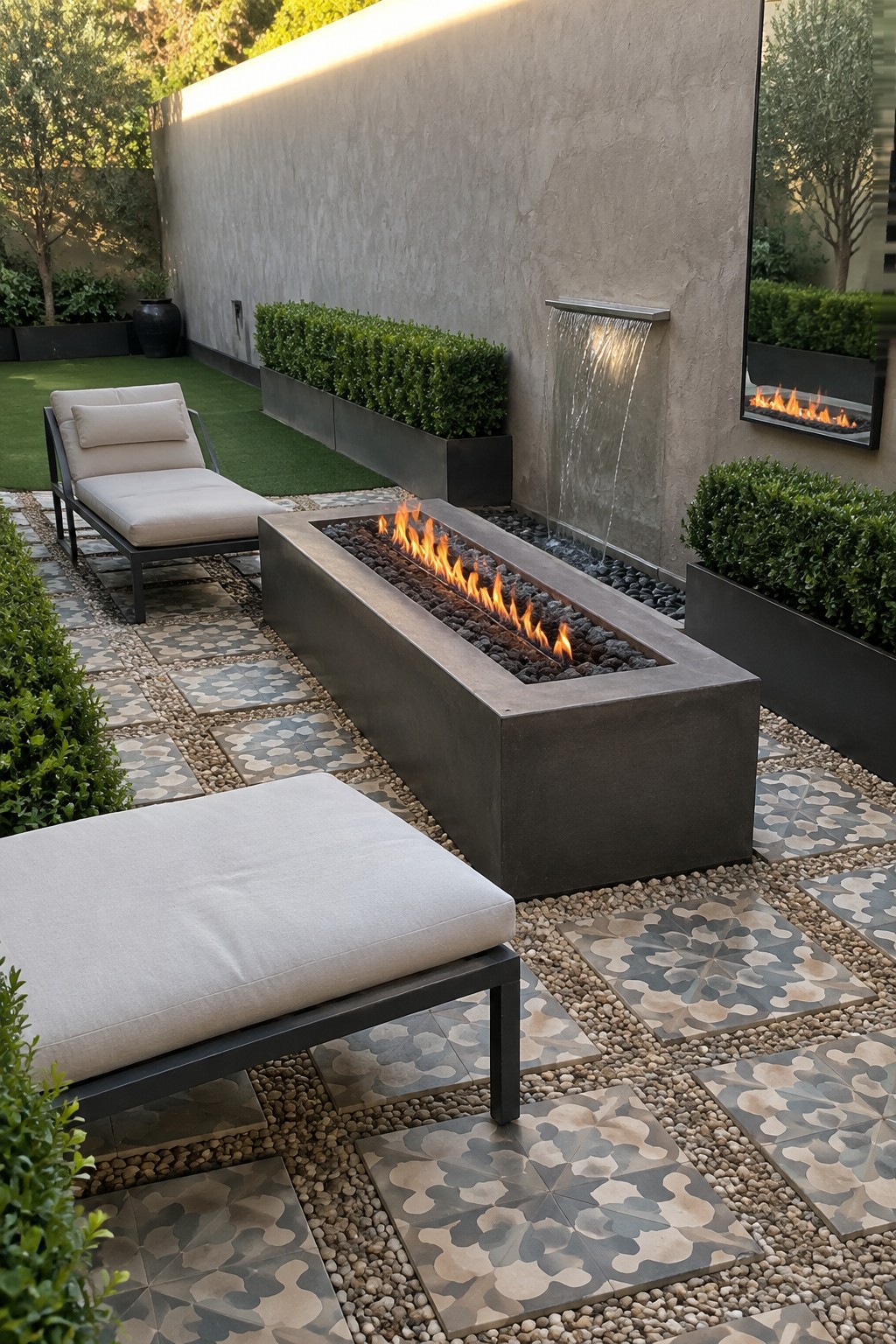
A fire pit can give a paved patio a clear place to gather. Here, patterned square pavers set into gravel mark the seating area, while the long fire pit runs through its center.
This layout suits a compact courtyard where you want seating close to the fire without crowding the walkway. Leave enough room around the pit for chairs and safe passage, and choose outdoor-rated pavers with a surface that stays practical underfoot.
Create a Shaded Patio Dining Area
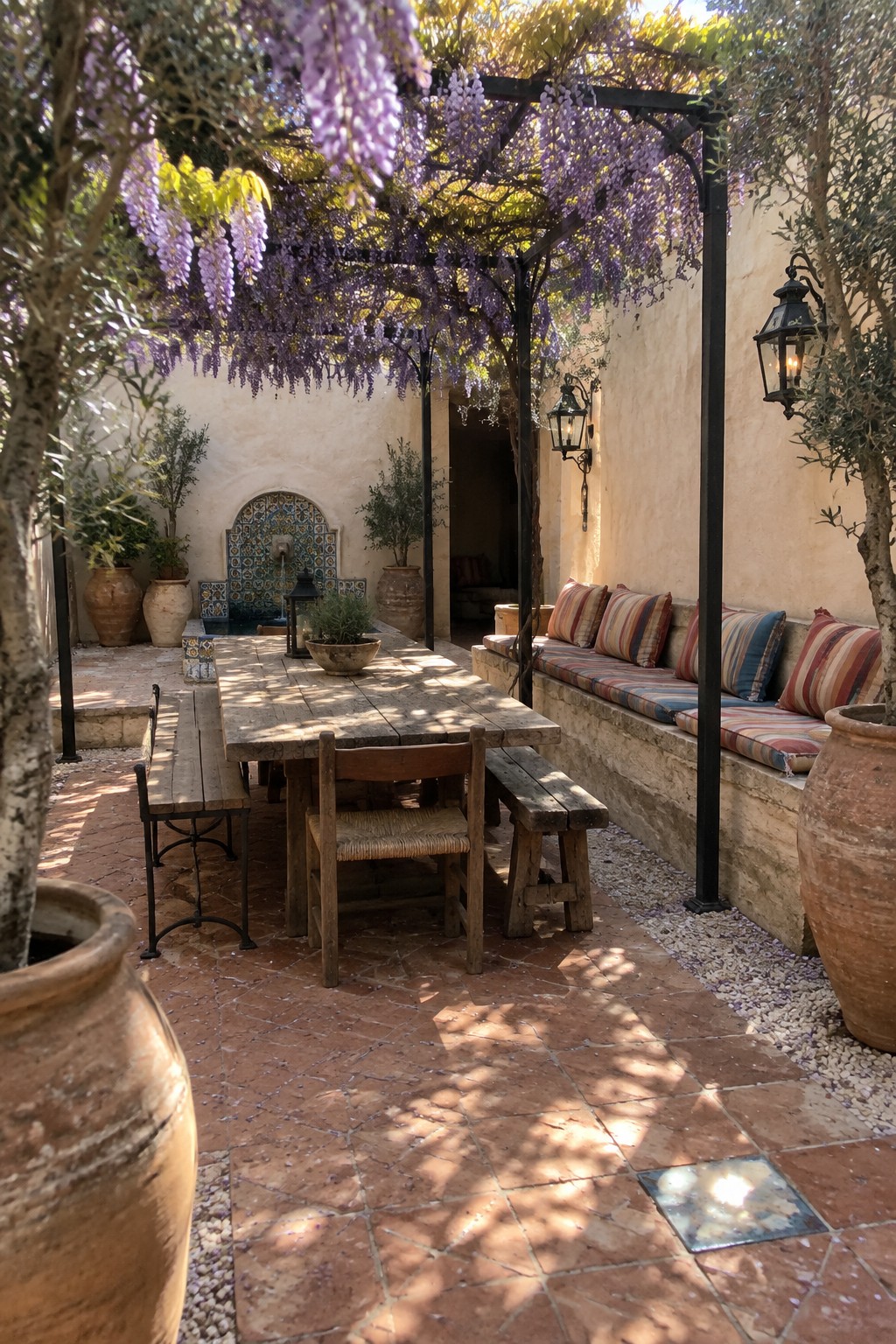
A dining table beneath a pergola makes a paved patio useful for meals as well as sitting. The overhead structure gives the table a clear place in the garden and offers some shade.
This layout works well in a courtyard or narrow patio where space is limited. Choose paving that’s easy to sweep around the table, and leave enough room to pull out chairs comfortably.
Use a Gravel Path To Connect Garden Spaces
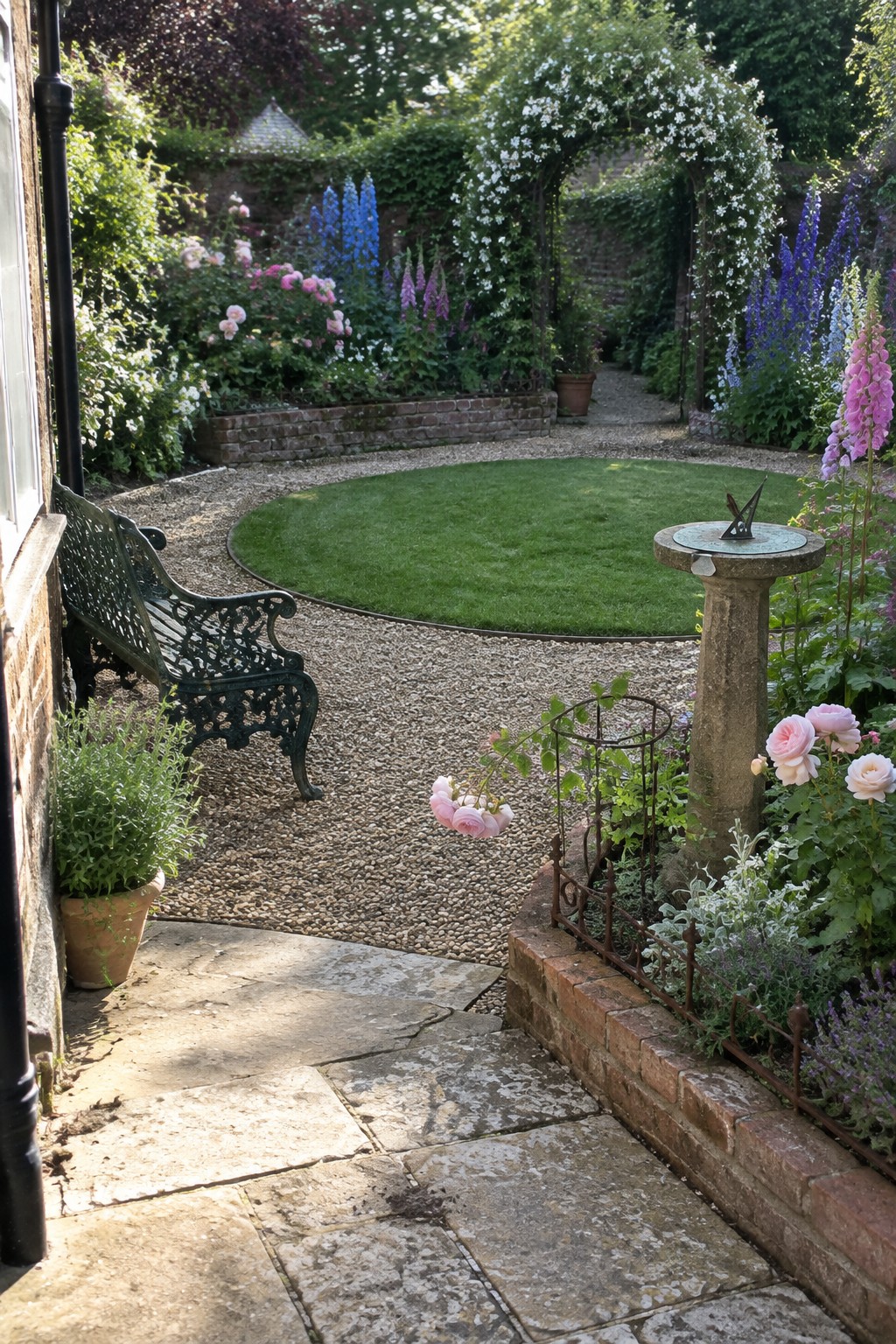
A gravel path can make a garden feel easy to move through without taking attention away from the planting. Here, it curves around a small lawn, giving the garden a clear route while keeping the overall layout relaxed.
This approach suits cottage gardens and smaller yards where a fully paved surface might feel too formal. Use a firm, compacted base and a clear edge to help keep the gravel in place, especially where the path meets planting beds.
Use Stone Pavers Alongside a Pool
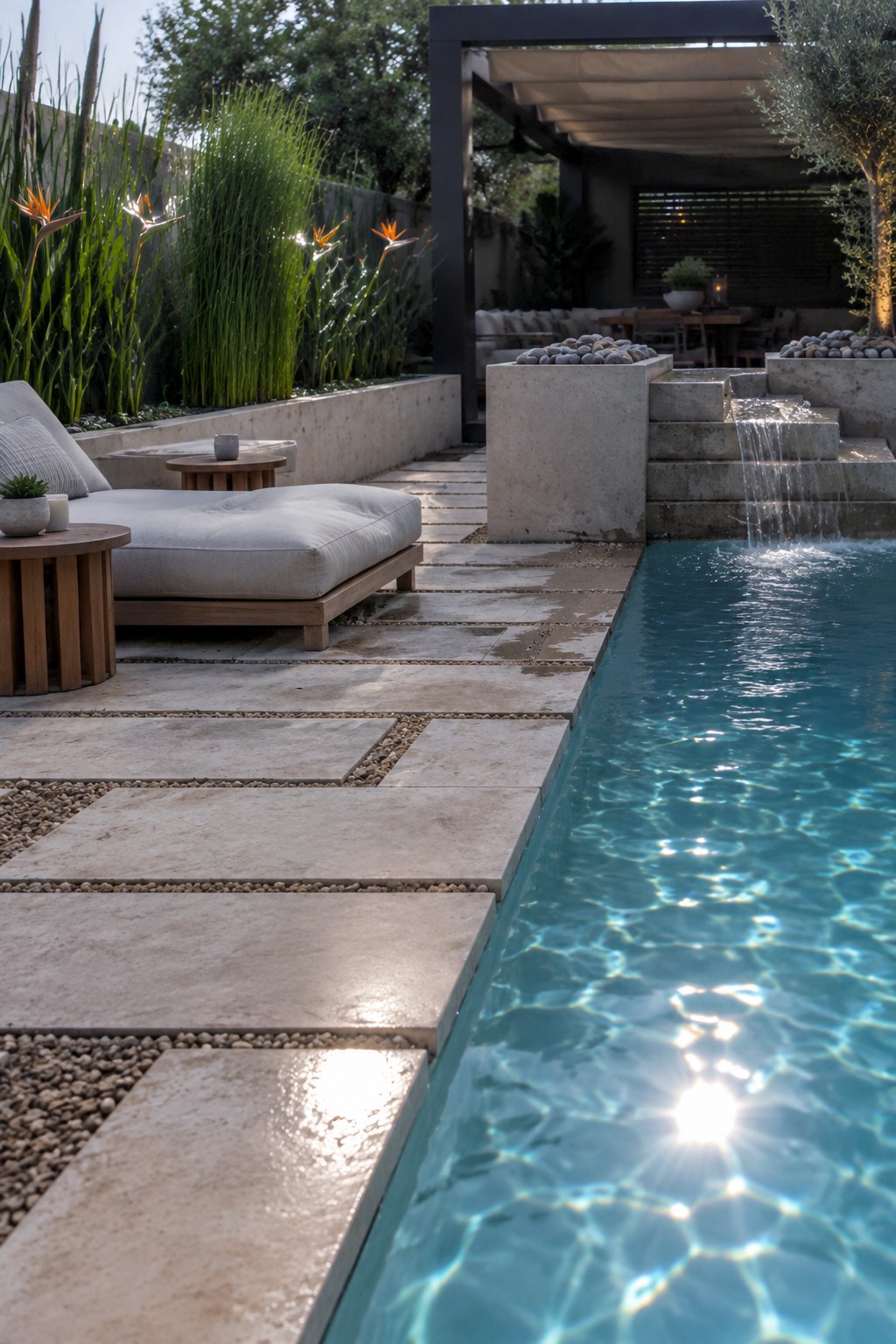
Large stone slabs make a practical patio surface beside a pool. Their broad, steady footing is comfortable for moving between the water and a seating area, while the gravel joints give the paving a more relaxed garden feel.
For a similar layout, choose a textured stone that is suitable for wet areas and leave enough room for chairs or loungers without narrowing the path. This approach works especially well in a long, narrow poolside space.
Use Patterned Stone to Give a Patio Character
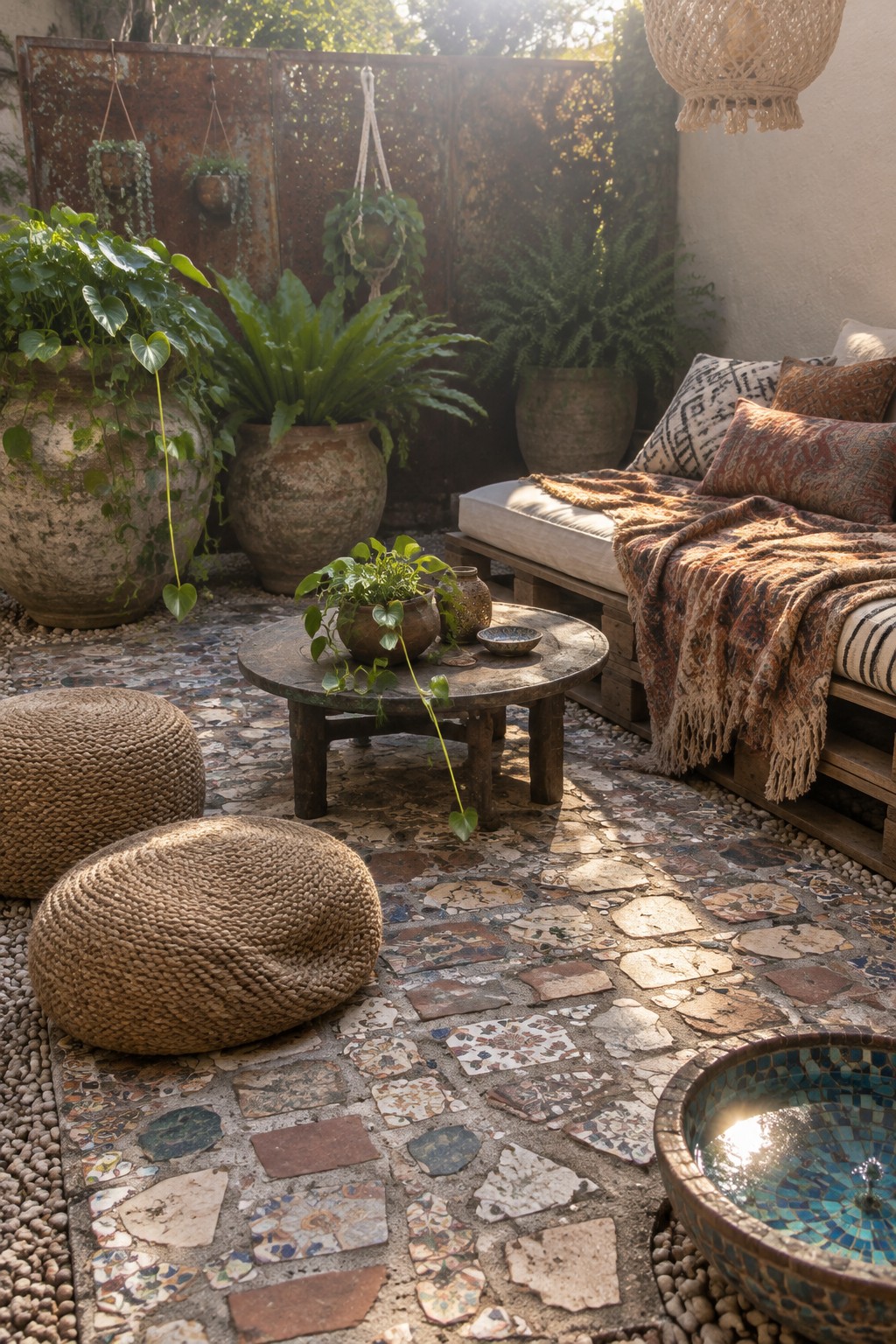
A patio floor made from varied stone pieces can bring plenty of interest without needing a complicated layout. The different shapes and muted colors make the paving feel collected over time, while still giving the seating area a solid, usable surface.
This approach suits a small courtyard where the paving is a big part of the design. Keep the grout or joints consistent, and let the stone be the main pattern rather than adding several competing designs nearby.
Use a Narrow Stone Path to Connect a Garden
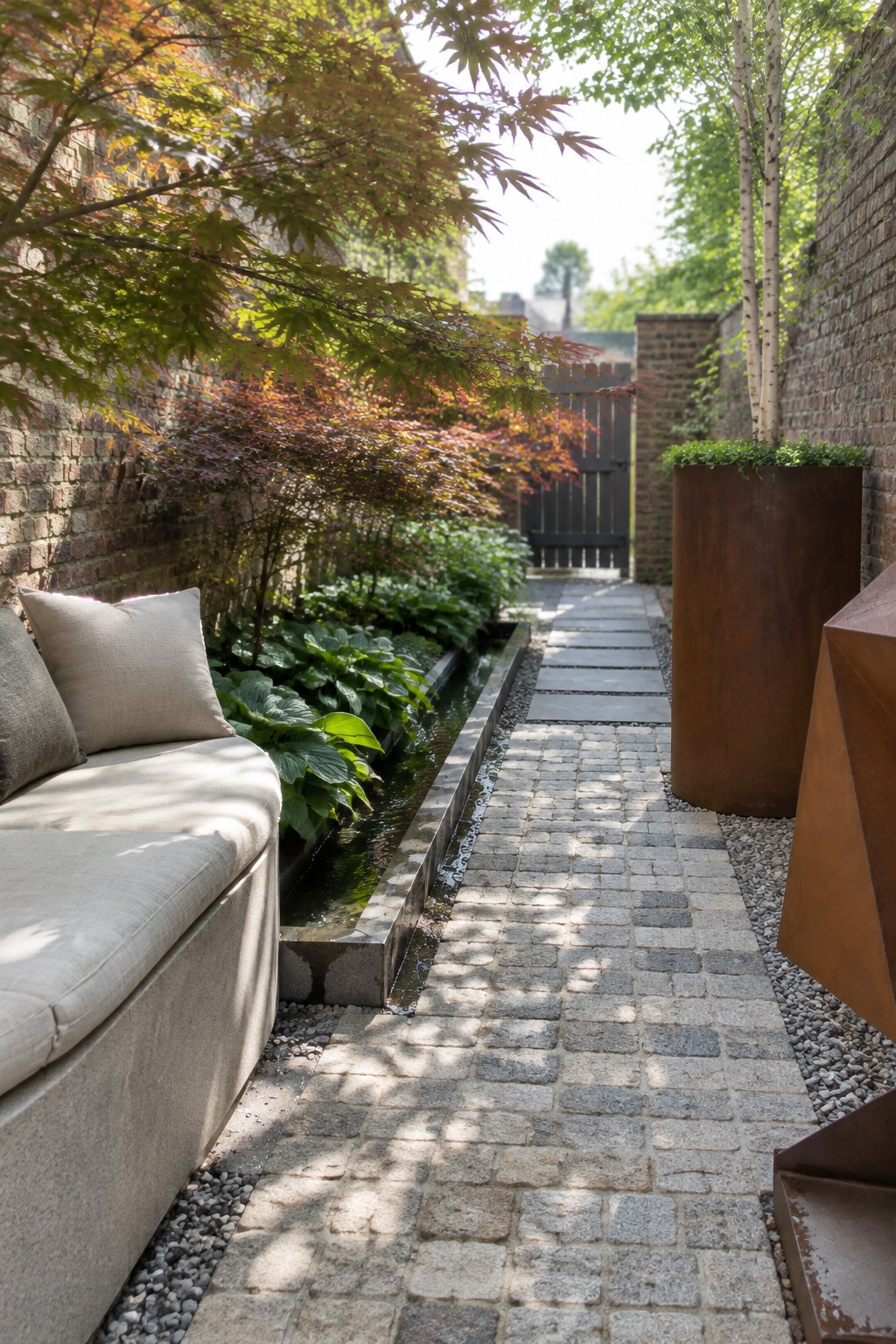
A narrow paved path is a good way to make a small garden easier to use without taking over the planting space. Here, light stone pavers form a clear route beside a slim water channel, while greenery stays close along the edges.
This approach suits courtyard gardens and side yards where a wider walkway would feel cramped. Leave small gaps between the stones for a softer look, but keep the walking surface stable and level.
Use Terracotta Pavers to Connect Patio Seating Areas
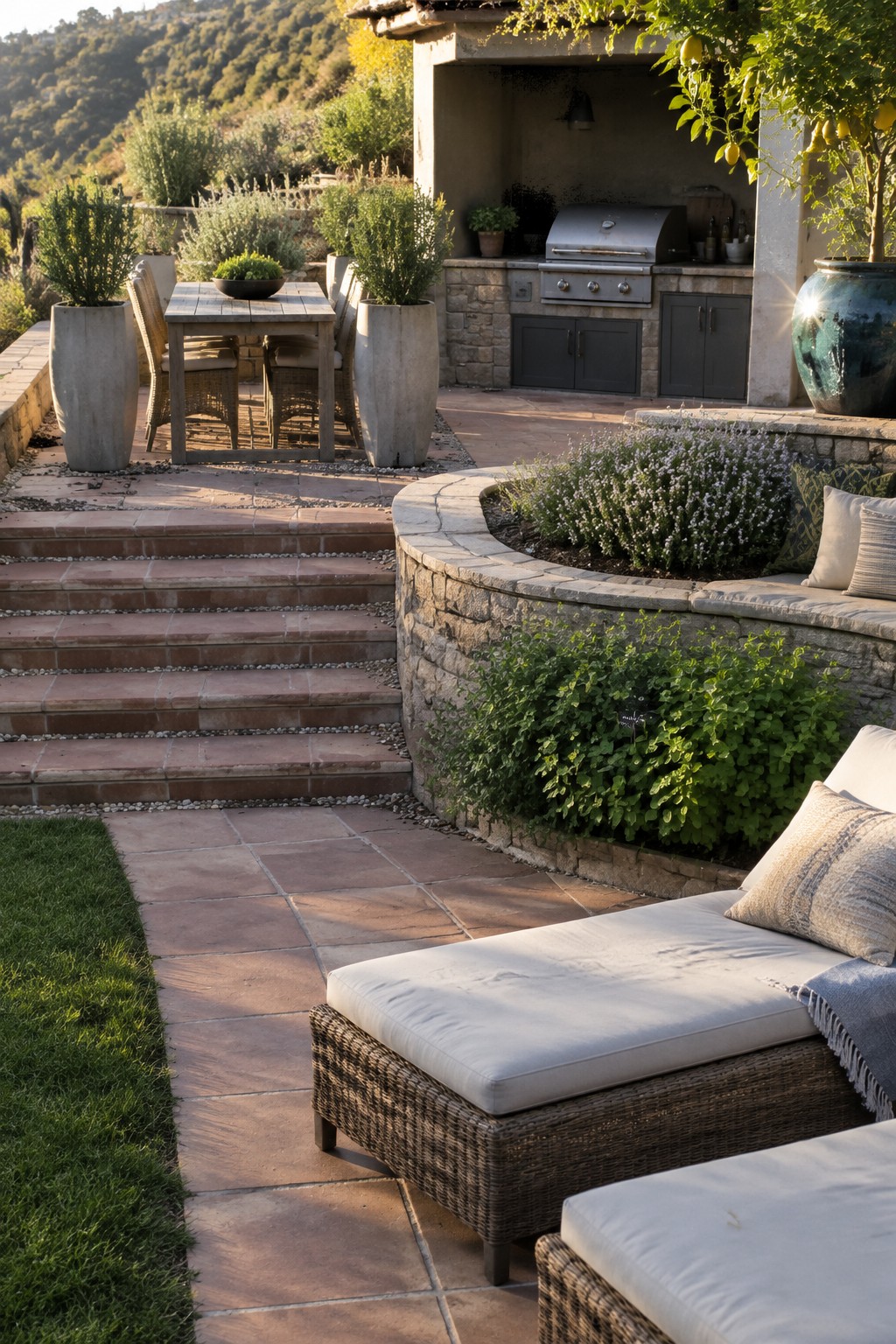
Terracotta pavers can link different parts of a garden patio without making each area feel separate. Here, the same paving leads from the steps toward both the dining spot and the lounge seating, so the space feels easy to move through.
This approach suits patios with a few distinct uses, especially where the ground changes level. Keep the pavers consistent along the main route, and use planting or a low stone wall to mark where one seating area ends and another begins.
Arrange Patio Seating Around a Fire Pit
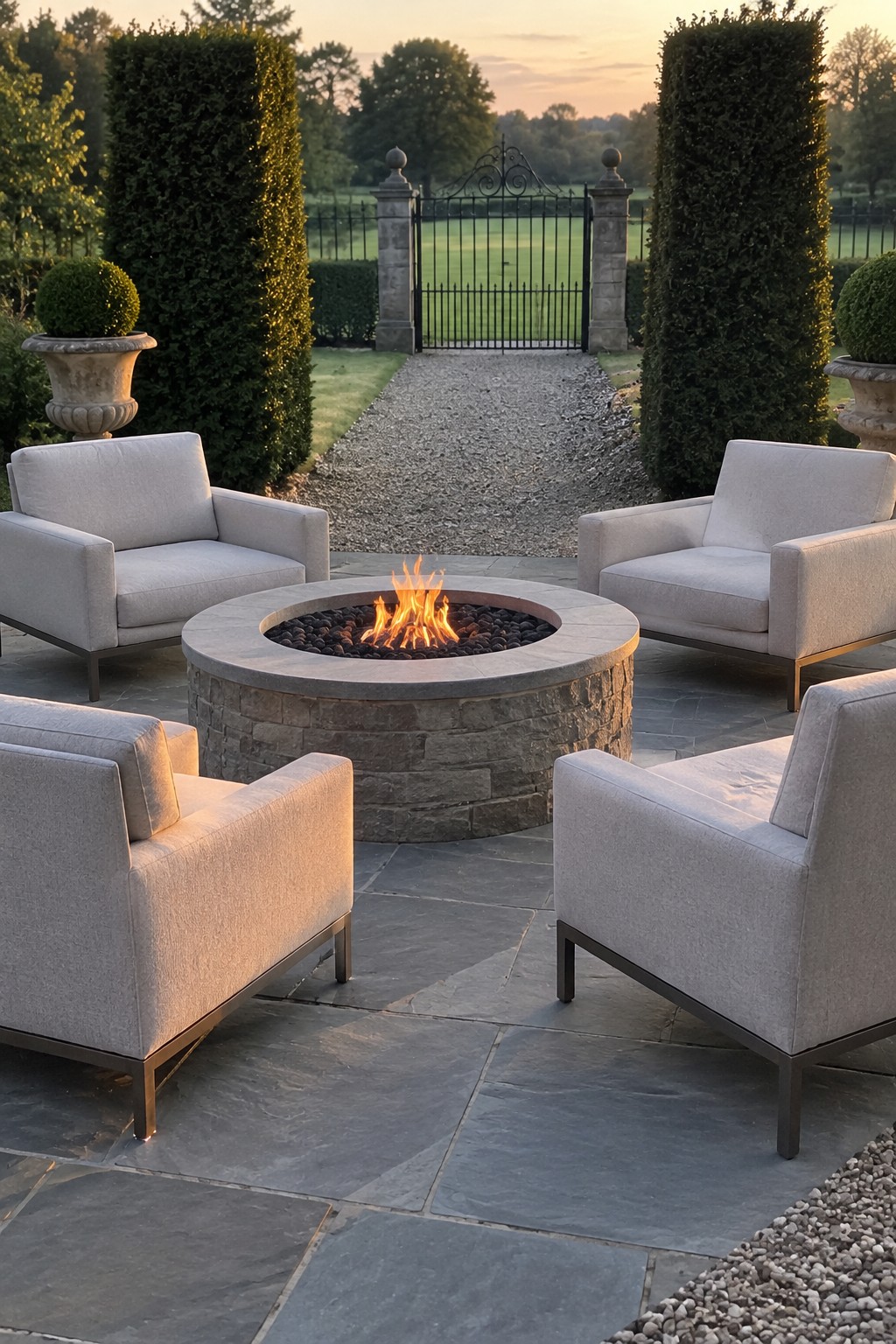
A circular fire pit makes a natural center for patio seating, giving everyone a place to gather without needing a separate table. Leave enough room between the chairs and the fire for comfortable conversation and safe movement.
This layout works well on a paved patio where the seating can stay in place through the season. Choose sturdy outdoor chairs, and check the fire pit’s clearance requirements before setting them nearby.
Use a Curved Bench to Make the Patio More Usable
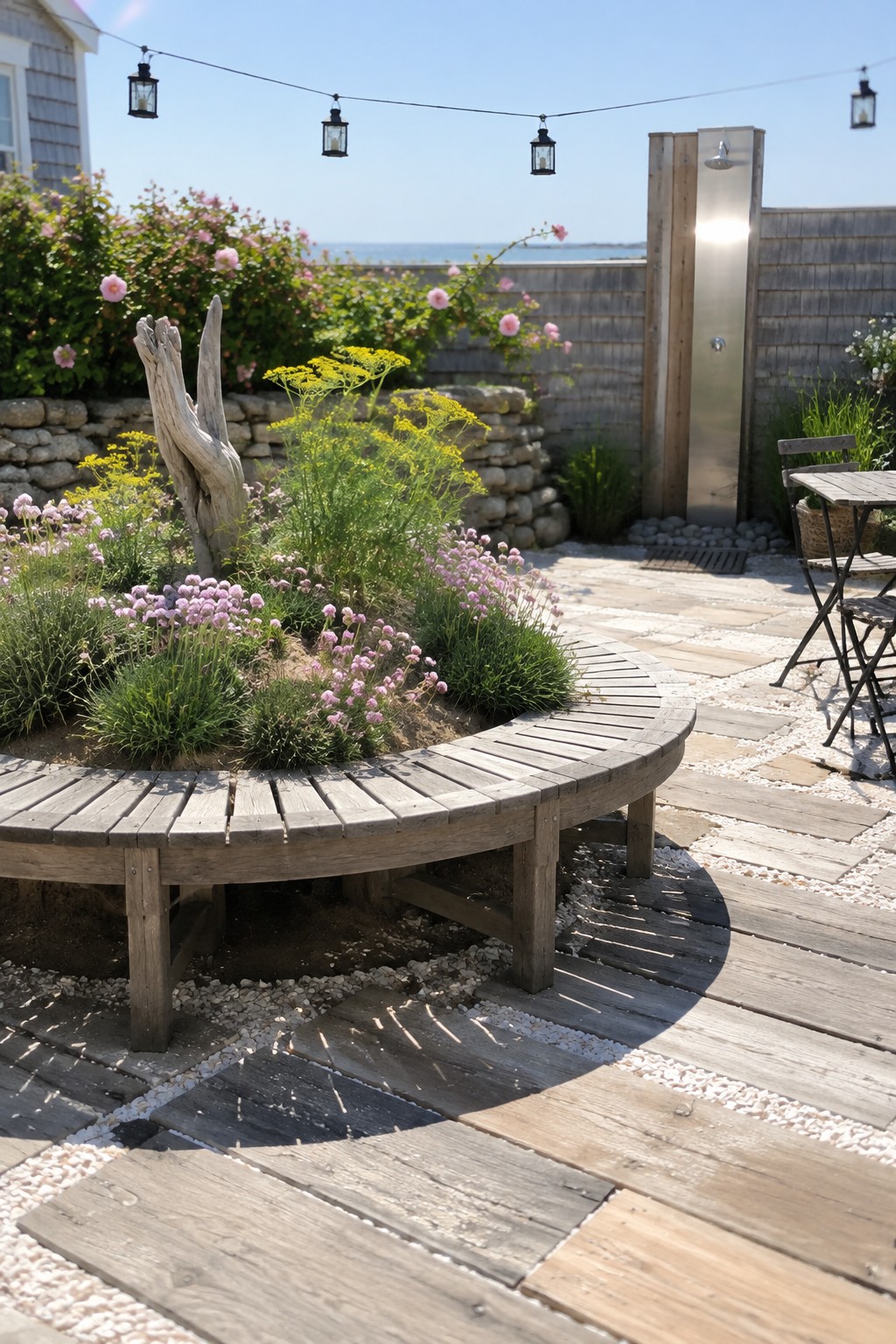
A built-in curved bench can make a garden patio feel like a place to pause, not just a path through the yard. Here, the wooden seat follows the edge of the planting bed, providing seating without taking up the open paved area.
This approach works well in smaller patios where separate chairs might crowd the space. Leave enough room for people to walk comfortably around the bench, and choose outdoor-rated timber that can handle weather.
Use Patterned Tiles for a Narrow Garden Path
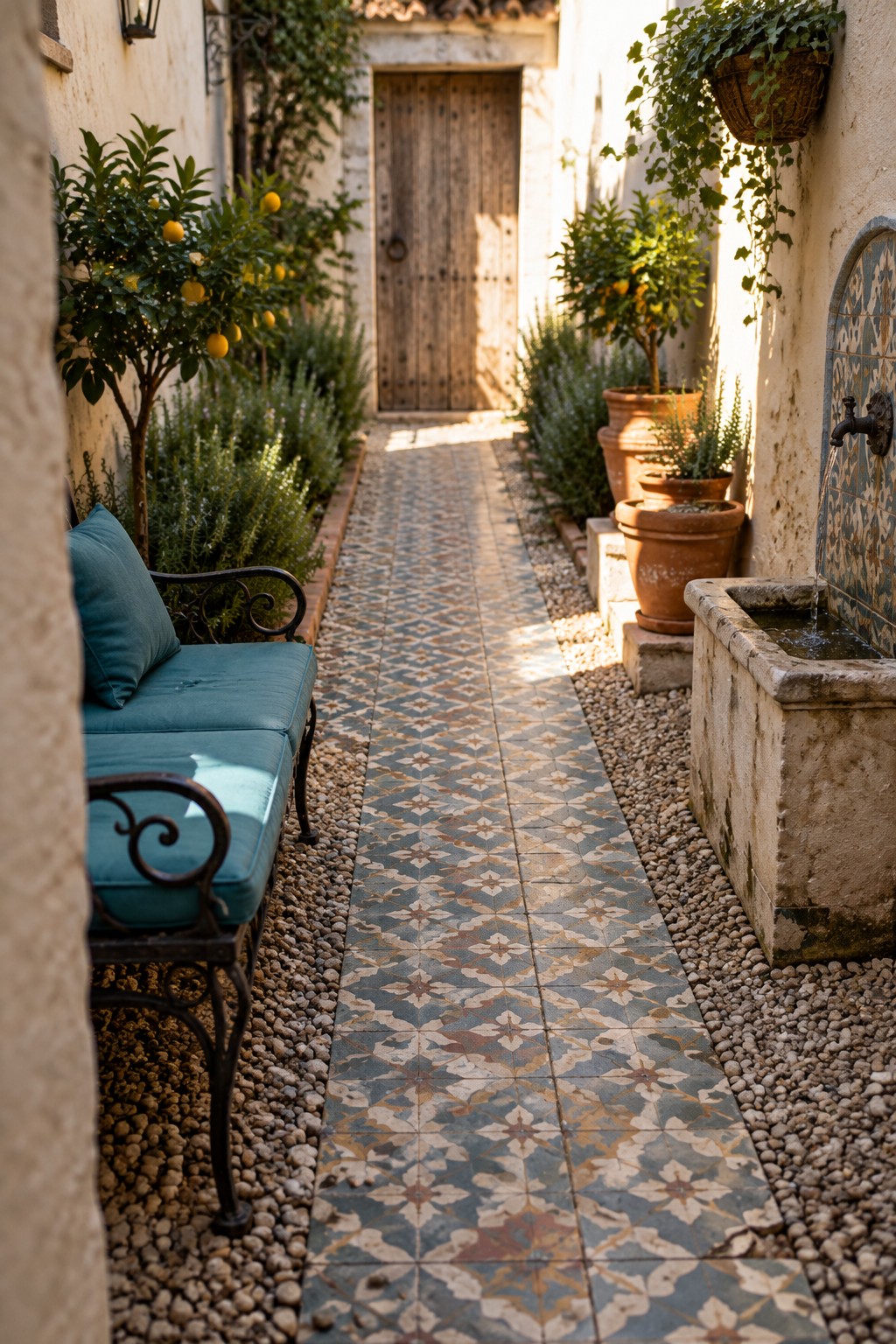
A patterned path can give a small courtyard a clear route through the garden without needing a wide paved area. The repeating tile design makes even a narrow walkway feel intentional, while gravel along the sides lets the planting beds stay distinct.
This approach suits compact courtyards and side gardens, especially where a path leads to a door or seating spot. Choose outdoor-rated tiles with a surface that stays grippy when wet, and keep the pattern simple enough that it does not compete with nearby plants.
Use Geometric Pavers to Give a Patio Flow
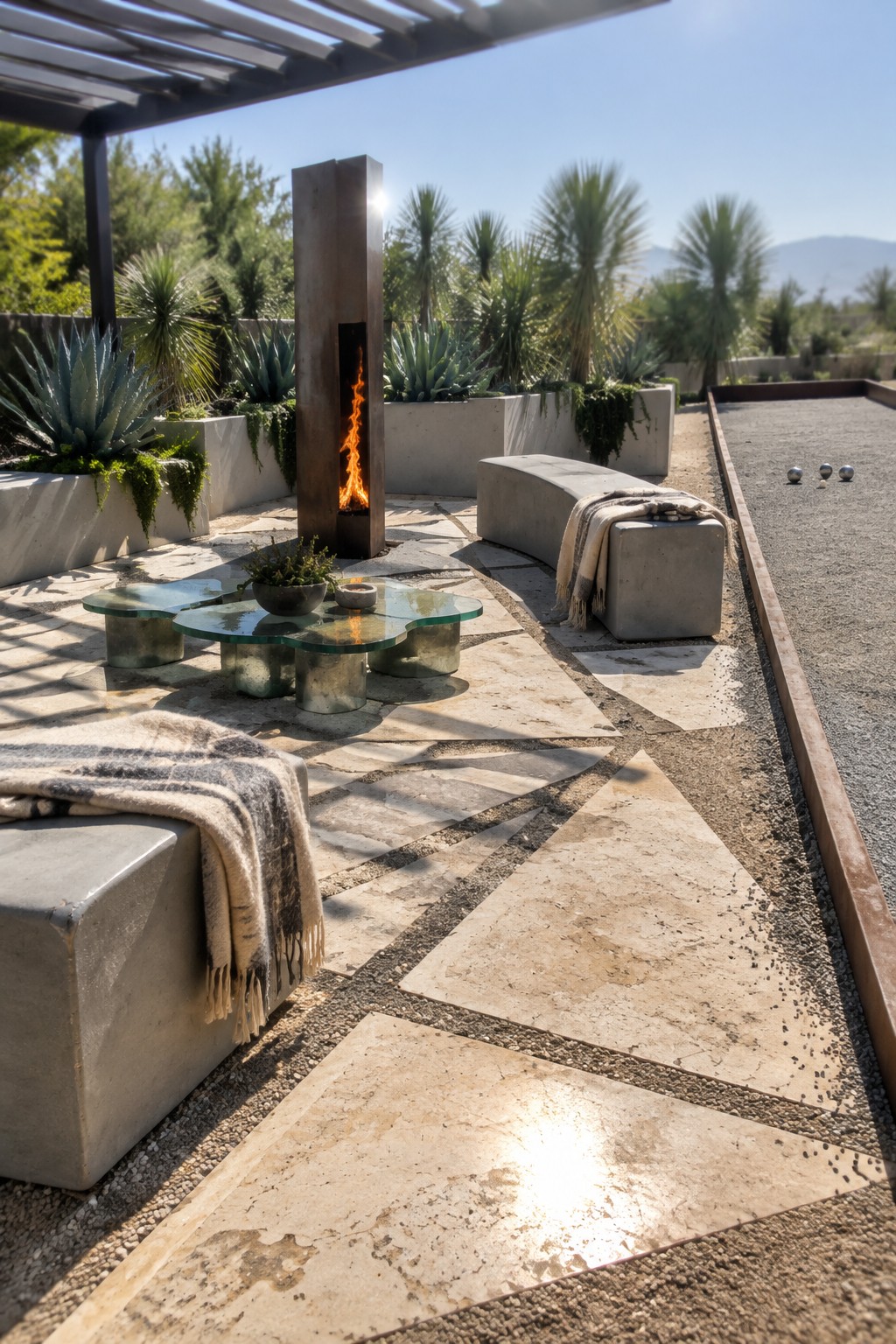
Large stone pavers set into gravel can make a patio feel connected without covering the whole area in solid paving. The changing shapes create a clear route through the space while leaving room for a more relaxed, open layout.
For a similar look, choose pavers in a consistent stone color and leave even gravel joints between them. This works well in a spacious patio, but keep the walking line easy to follow and the stones steady underfoot.
Use a Stone Path to Connect a Courtyard Garden
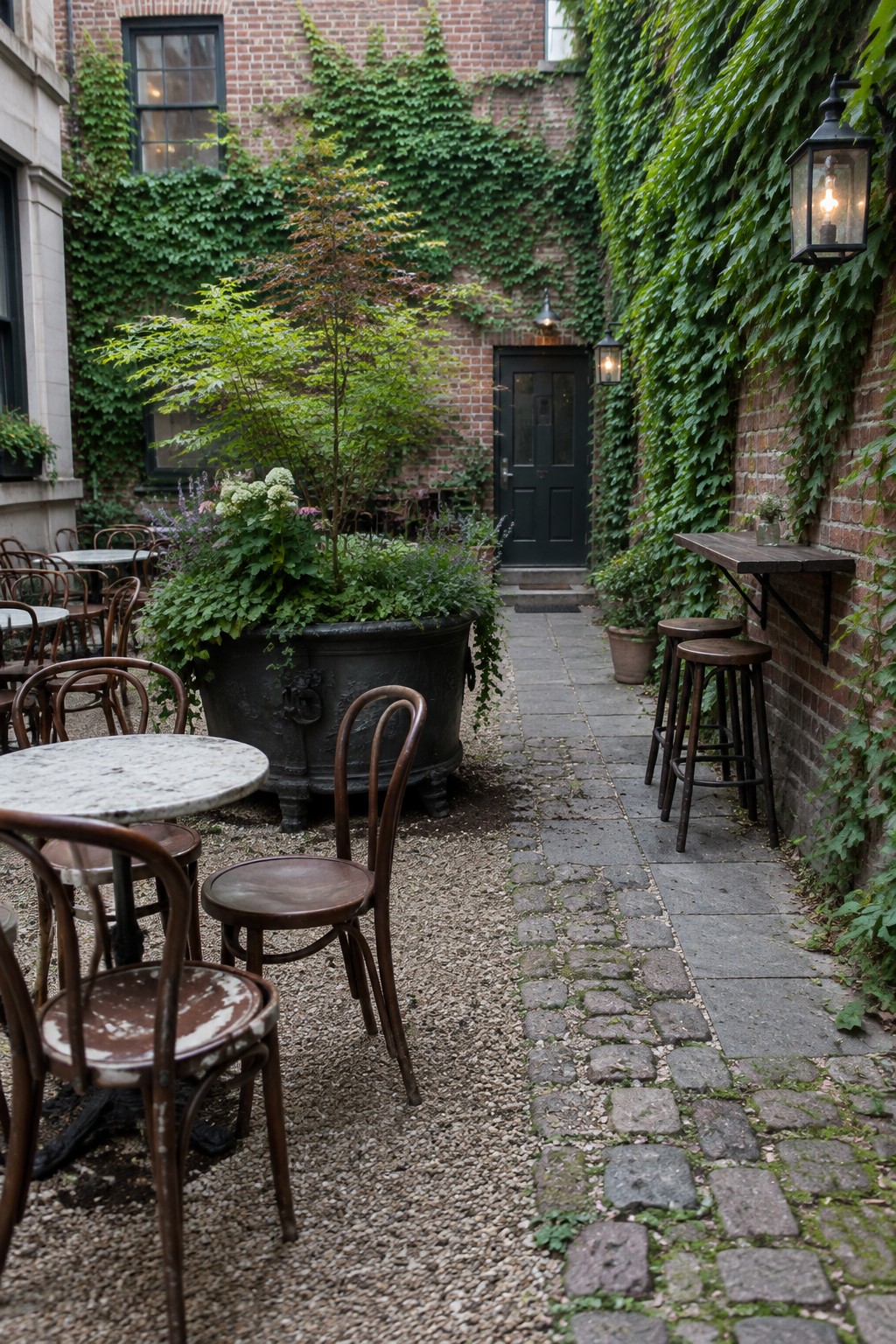
A narrow stone walkway can make a small courtyard easier to use without taking space away from planting or seating. Here, the path leads straight to the back door, giving the garden a clear route through the different areas.
For a similar layout, lay broad stones along the main walking line and fill the edges with gravel or low ground cover. This works especially well in enclosed gardens, where a simple path can keep foot traffic off the planting beds.
Use Pale Gravel To Outline Large Patio Pavers
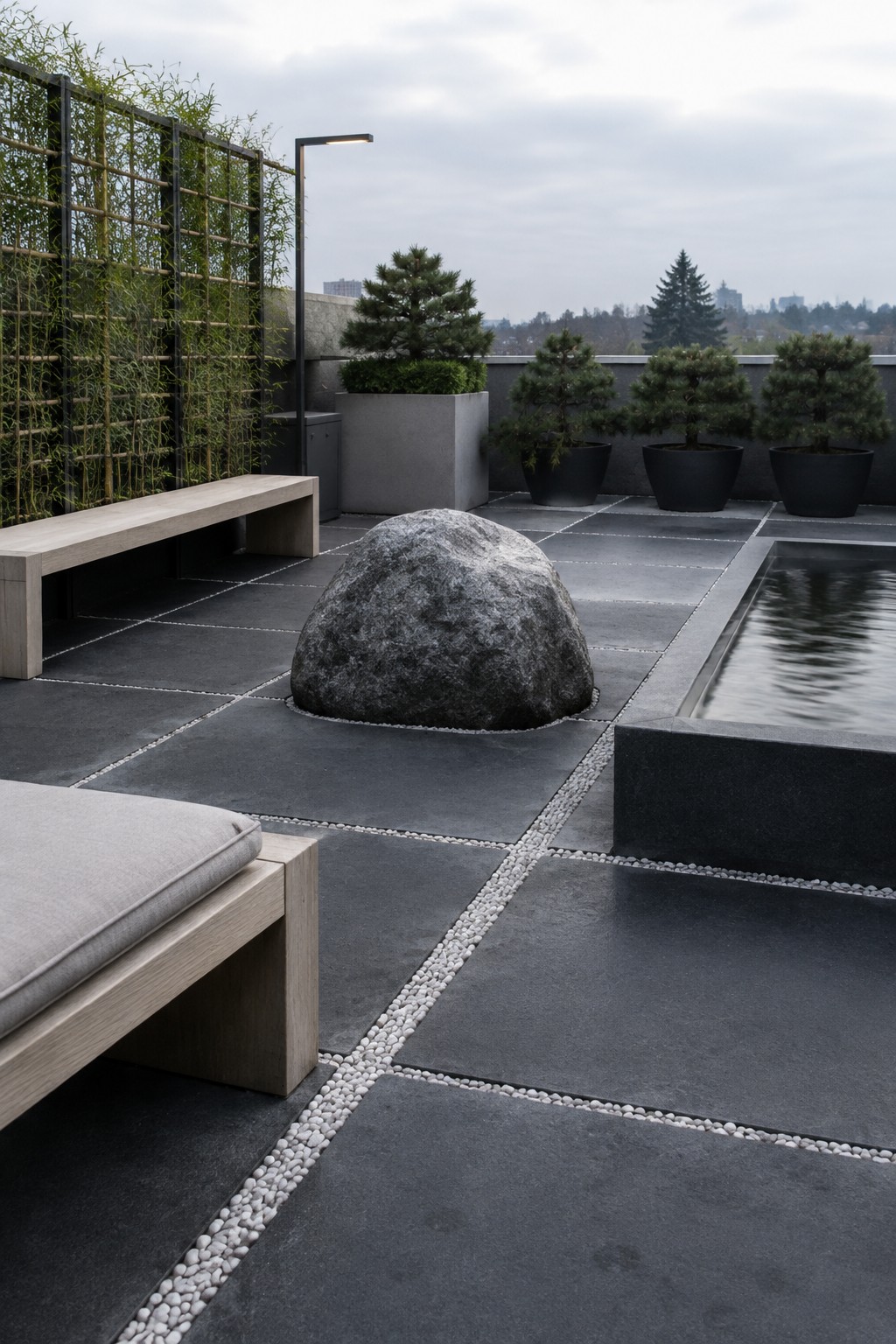
Large stone pavers can make a patio feel orderly without adding a busy pattern. Narrow bands of pale gravel between the dark slabs give each one a clear edge and add a little texture underfoot.
This approach works well in a modern terrace or a small seating area. Keep the gaps even, and choose gravel that stays put rather than spilling onto the paving. A few larger pavers are easier to maintain than lots of narrow joints.
Use a Gravel Circle to Break Up Brick Paving
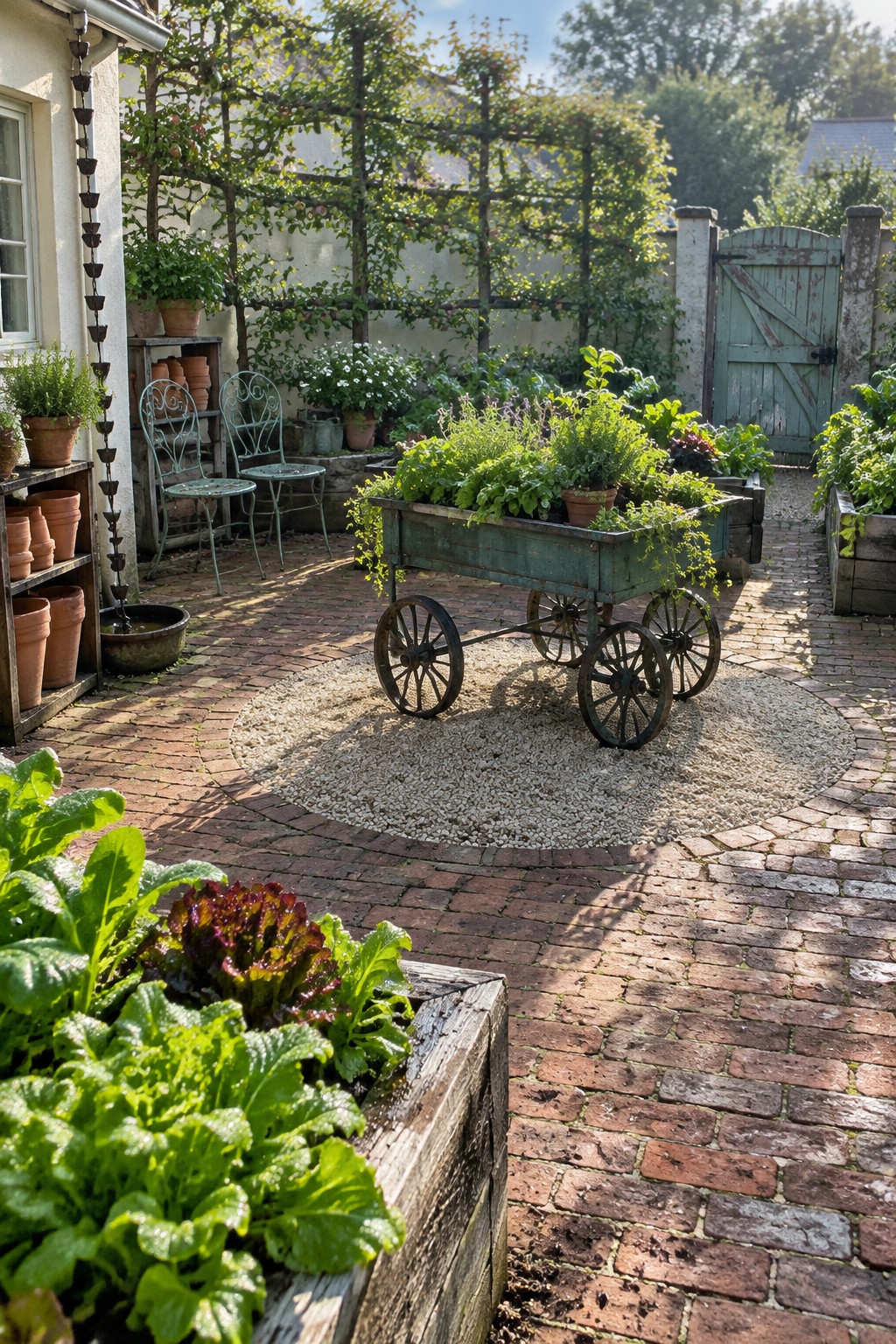
A round gravel inset gives a brick patio a clear focal point without needing a separate seating area. It also makes a simple change in surface feel like a deliberate part of the garden.
Try this approach in a small courtyard or beside a garden path, where a circle can mark a spot for a planter or garden cart. Set a firm edge between the gravel and bricks so the stones stay in place and the outline remains tidy.
Create a Small Courtyard for Outdoor Dining
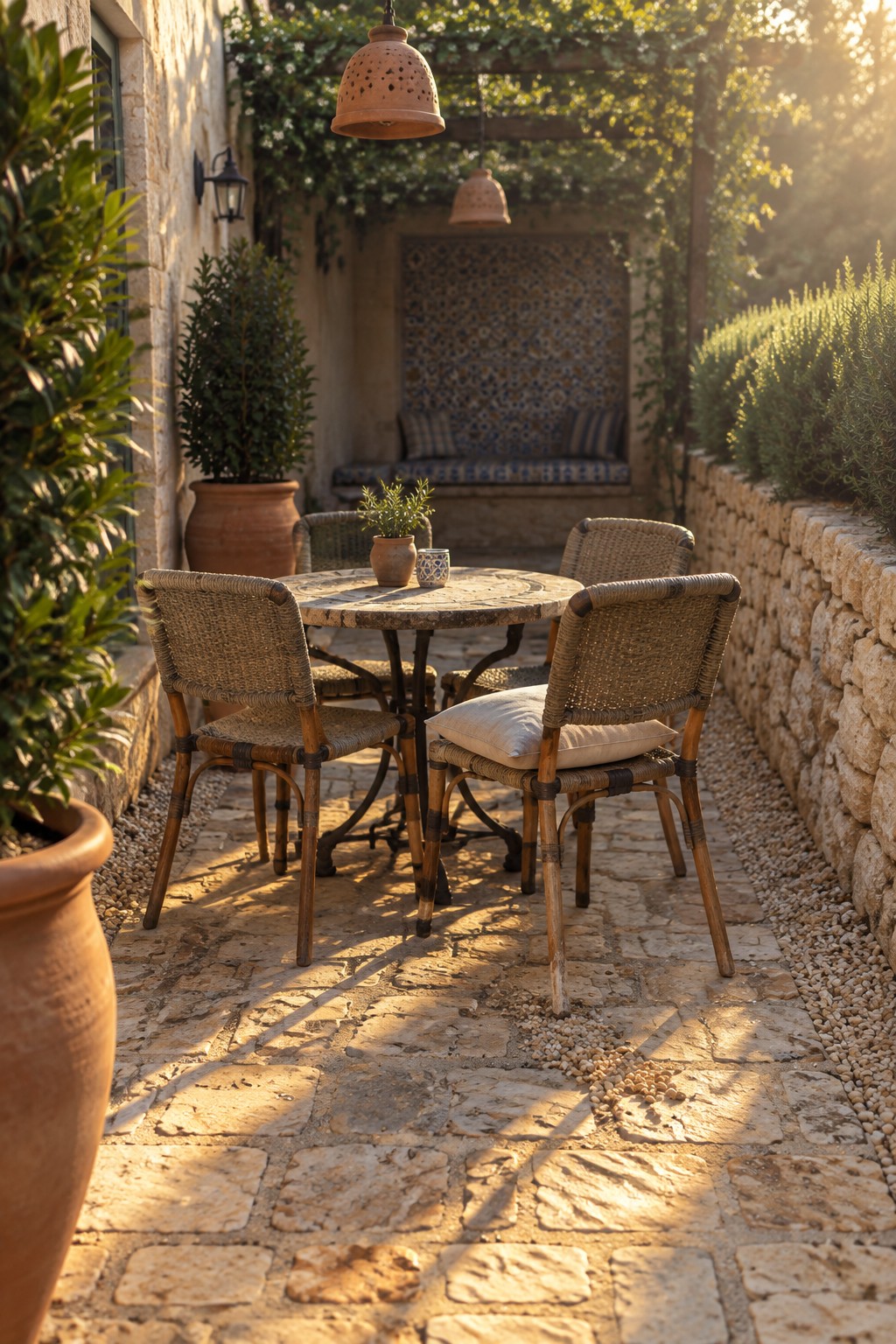
A small paved courtyard can make room for a proper outdoor dining spot without needing a large yard. Stone paving gives the table a level, solid surface, while gravel along the edges helps define the space.
A round table works well in a narrow courtyard because chairs can move around it without blocking the path. Leave enough room to pull chairs back, and use a wall or trellis for a little privacy if the patio is close to neighboring homes.
Use Pale Pavers for a Garden Dining Patio
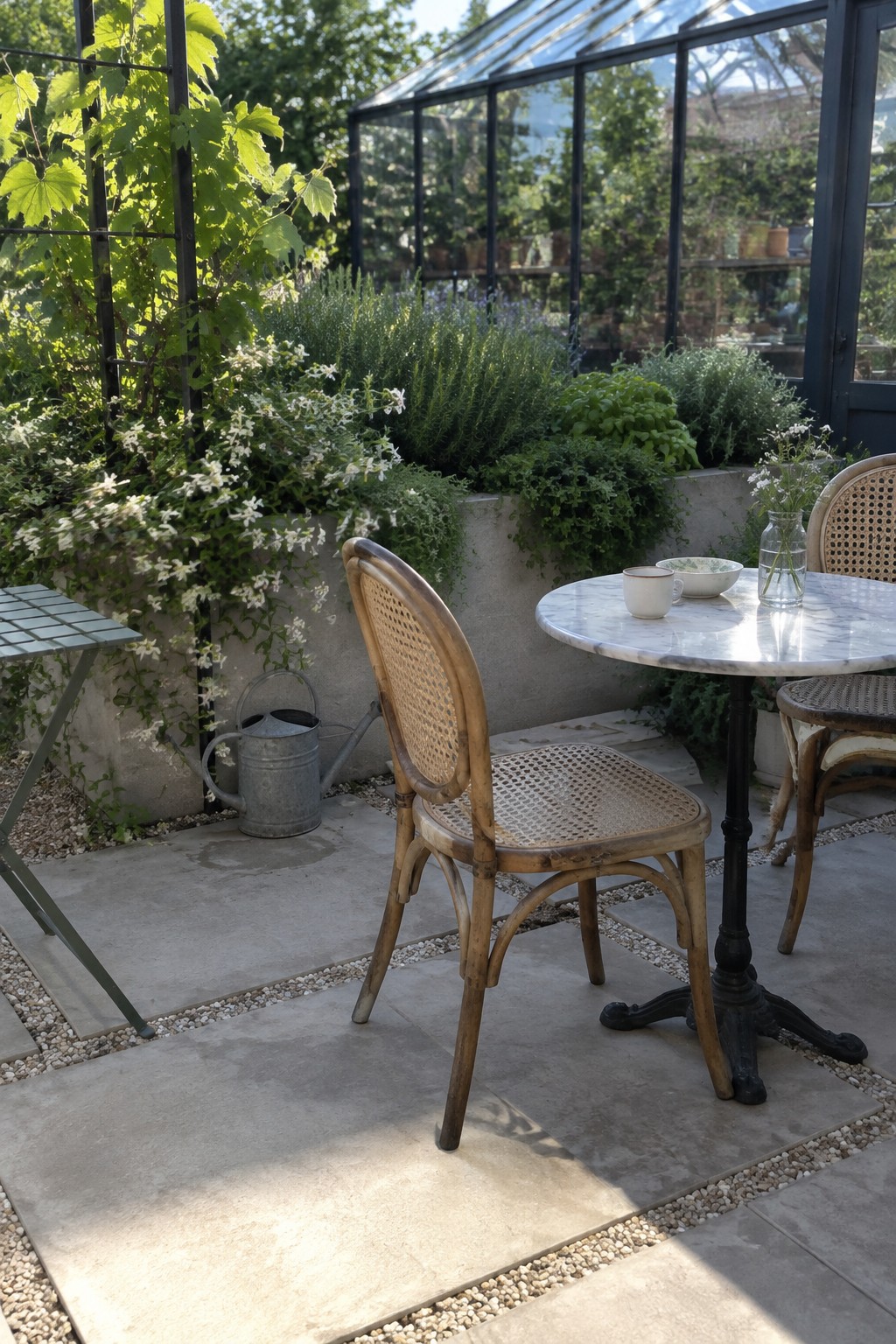
A simple paved surface gives a small outdoor dining area a practical place to sit without taking away the garden feel. Large pale slabs, separated by narrow gravel joints, keep the patio easy to use and let the planting remain the main feature.
This approach suits a compact courtyard or a spot beside the house. Leave enough space around the table to move chairs comfortably, and use gravel in the joints to help define the paving without making the surface feel too busy.
Frequently Asked Questions
Q: What’s the easiest way to keep weeds from growing between patio stones?
A: Start with a firm, well-prepared base and fill the joints with polymeric sand or fine gravel. Sweep away leaves and soil regularly, since weeds often take hold where debris collects.
Q: Can I use gravel for a patio if I have outdoor furniture?
A: Yes. Choose compactable gravel and add edging to keep it in place. A few stone pavers under chair and table legs will stop them from wobbling.
Q: Which plants work well around a paved patio?
A: Look for plants that suit your climate and the amount of sun the patio gets. Low-growing herbs, ornamental grasses, and hardy ground covers can soften stone edges without taking over the seating area.
Q: How do I keep a paved patio from feeling too hot in summer?
A: Add shade with a tree, umbrella, or pergola, and use plants around the edges. Lighter-colored paving also tends to feel cooler underfoot than dark stone.
