

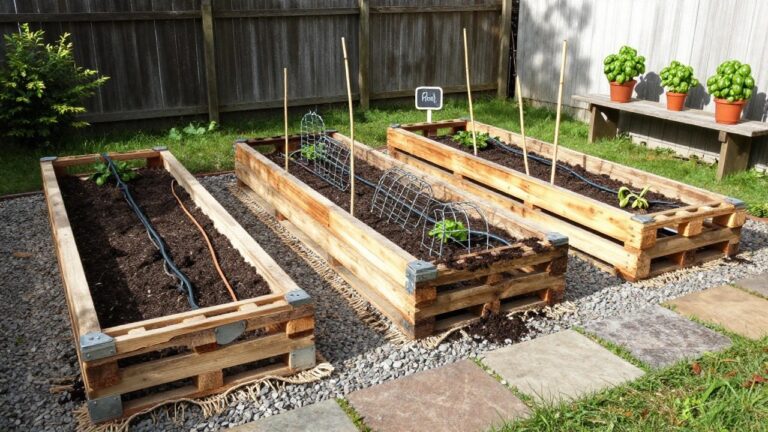
When I first tried growing vegetables at ground level the harvesting always seemed to take longer than it should because of how much bending was involved.
Raised pallet beds change that by bringing the plants up to a level where reaching feels natural instead of a chore.
What tends to matter most is how the beds sit within the overall yard layout so that you can move between them without stepping on soil or crowding the edges.
Not every build gets this right.
I usually look for designs that keep the structure sturdy while leaving enough room to work comfortably around each bed.
Elevated Pallet Beds For Easier Harvesting
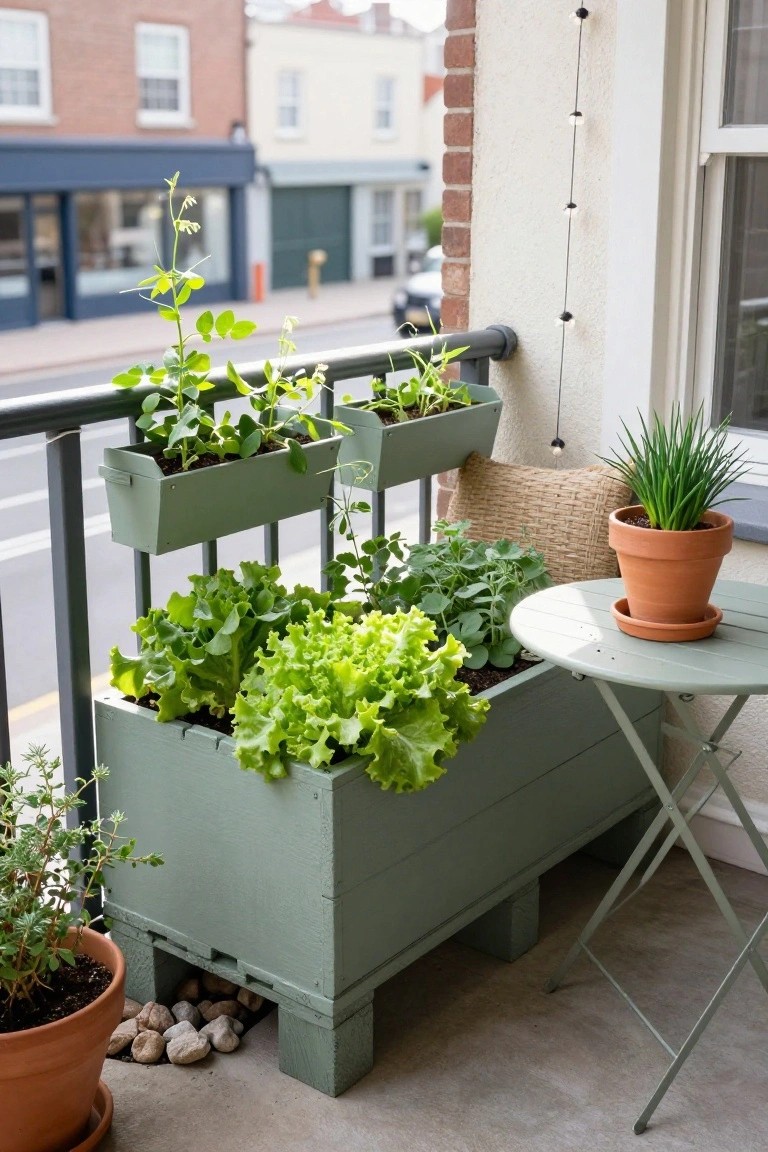
Raised pallet beds lift the soil and plants up so you can tend them without bending or kneeling. This makes a big difference when you want to check on things or grab a few leaves for dinner each day.
The approach works well on balconies or small patios where floor space is tight. Mount a few sections on the railing and set the larger bed on short legs or blocks to keep everything at a comfortable height while still fitting the layout.
Add Wheels To Your Raised Pallet Bed
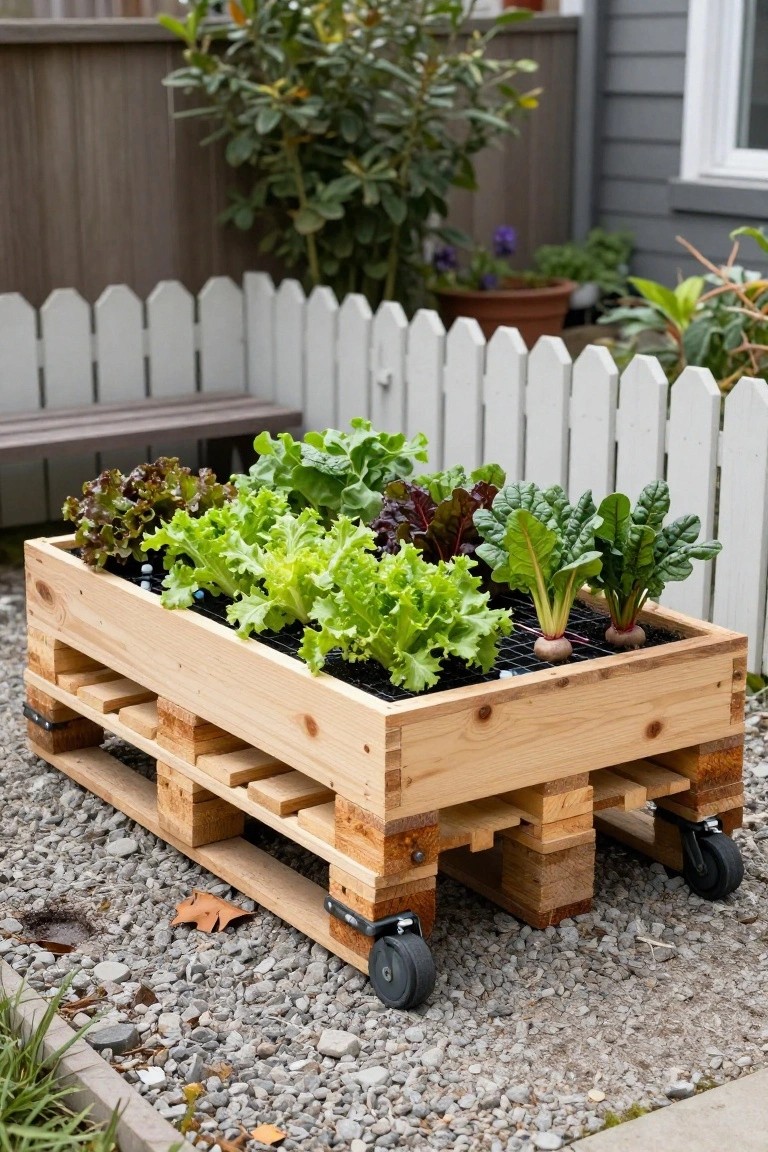
One simple way to make a raised pallet bed more useful is to put it on wheels. This lets you roll the whole thing to a better spot when the light changes or when you need easier reach during harvest.
It works best in smaller yards or on gravel where moving a heavy bed by hand would be tough. Just check that the wheels are sturdy enough once the soil and plants are added.
Raised Pallet Stands for Easier Access
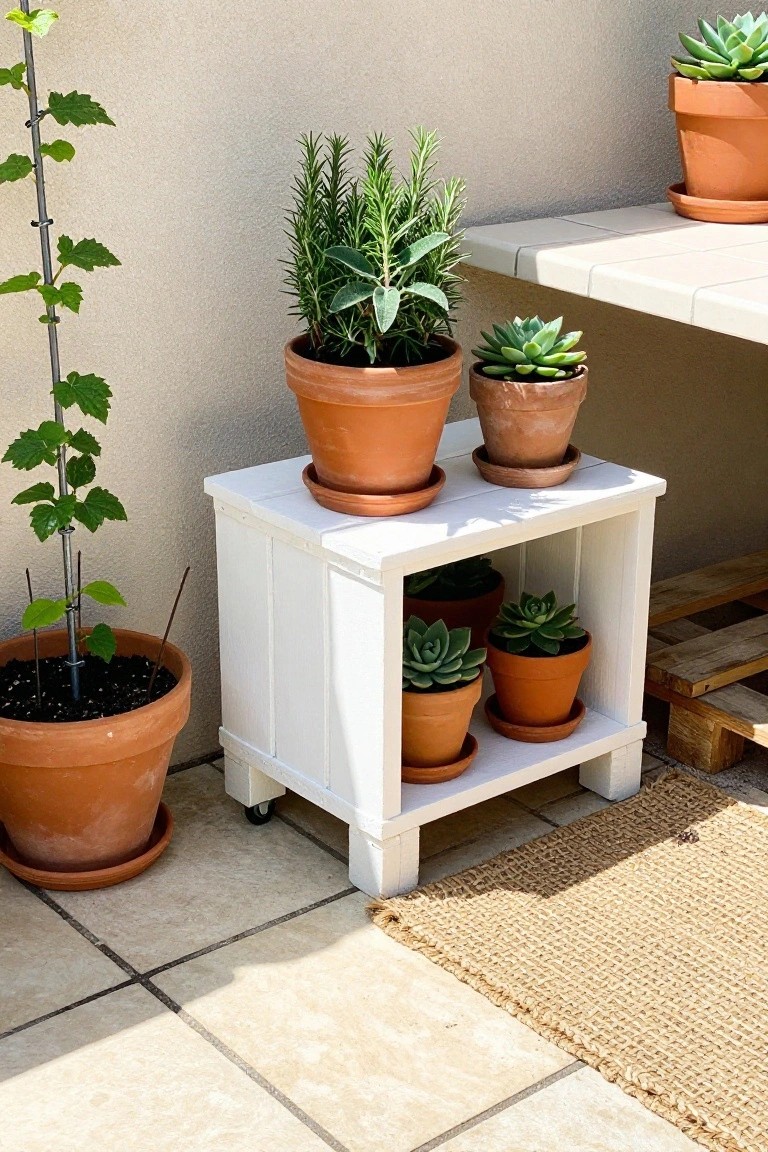
A simple pallet crate turned into a stand gives you two or three levels for pots without taking up much floor space. The height means you can water and pick from the plants without kneeling or bending far, which helps a lot on a patio or balcony where space is tight.
Place it where you can roll it into sun or shade as needed, and keep the lower shelf for smaller pots that do not need daily attention. It works best with herbs or compact vegetables in containers, and the open sides let air move around the roots.
Raised Pallet Beds For Easier Harvesting
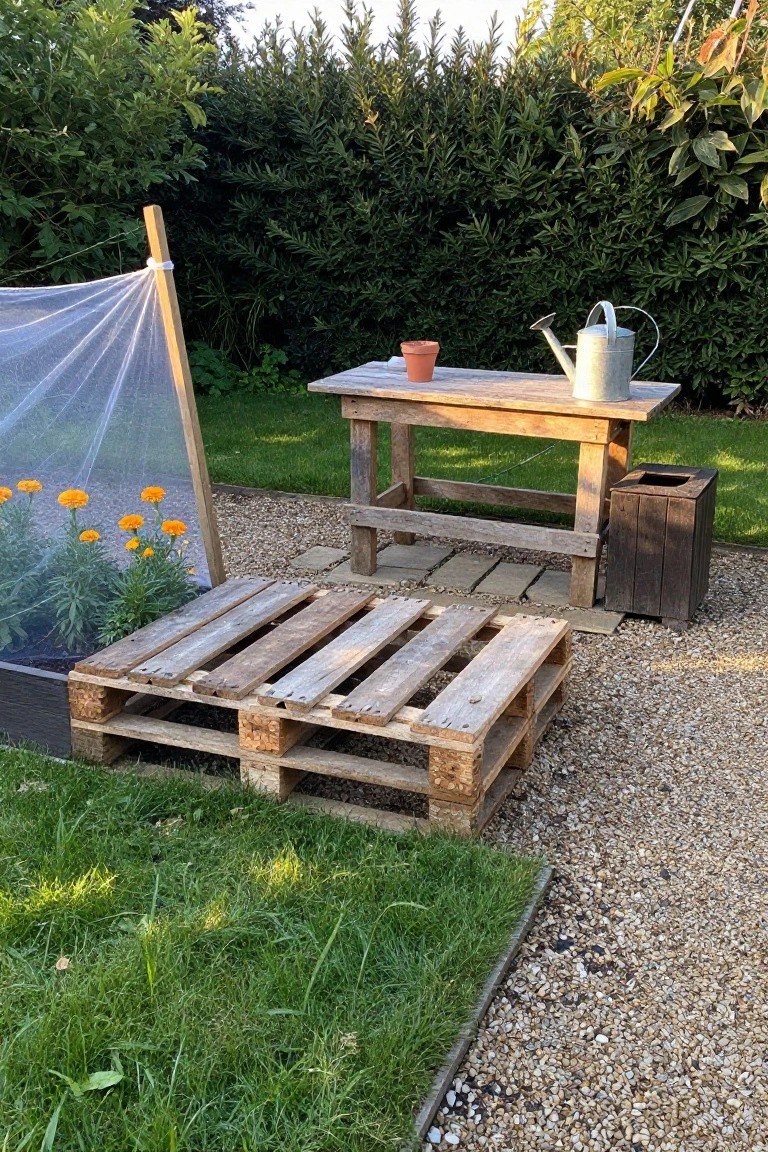
Old pallets make a simple way to lift plants off the ground without much cost. They create a raised surface that keeps the soil contained and brings the plants closer to hand level during harvest.
This setup works best in smaller yards or along the edge of a lawn where you want quick access. Place the pallets on a gravel base so water drains well and the wood stays drier over time.
Raised Beds Built Higher For Easier Harvesting
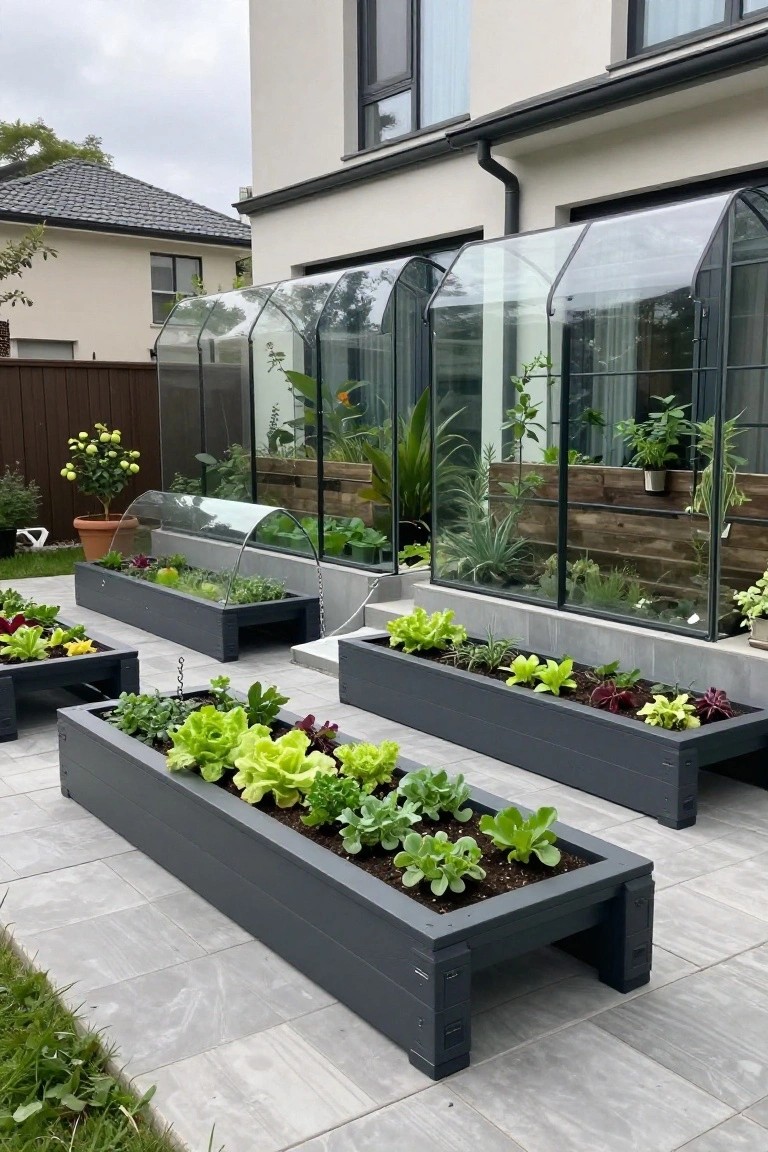
These raised beds sit up off the ground so you can reach the plants without kneeling or bending over. That makes a real difference when you are checking on things or picking greens every few days.
They suit patios and paved areas where digging into the ground is not an option. Keep the width narrow enough to reach across and use covers like the ones shown if you want to protect the plants from weather.
Raised Beds Made From Pallets
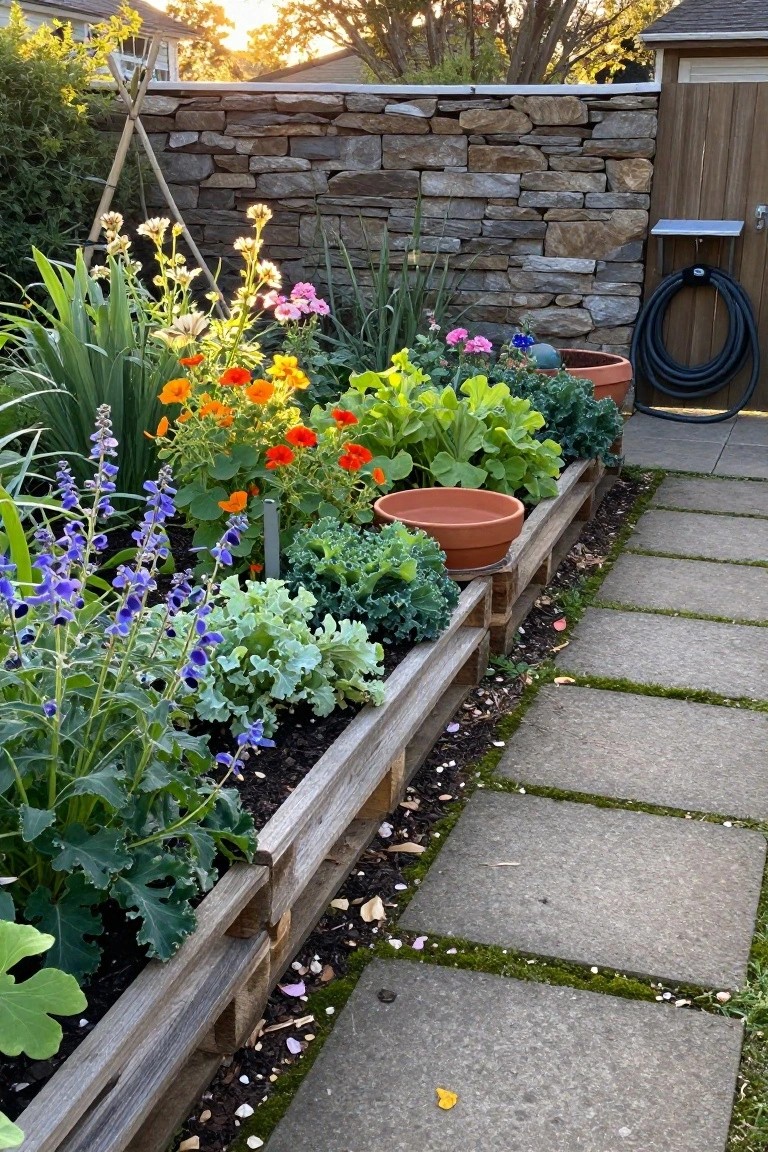
One simple way to make harvesting easier is to build raised beds from wooden pallets. The height lifts the soil and plants up so you can reach everything without kneeling or bending over as far.
This setup works best in narrow spaces or right beside a path where you need steady access. Line the inside of the pallets first and check that the wood has not been treated with chemicals before you add soil.
Pallet Raised Beds With Built-In Seating
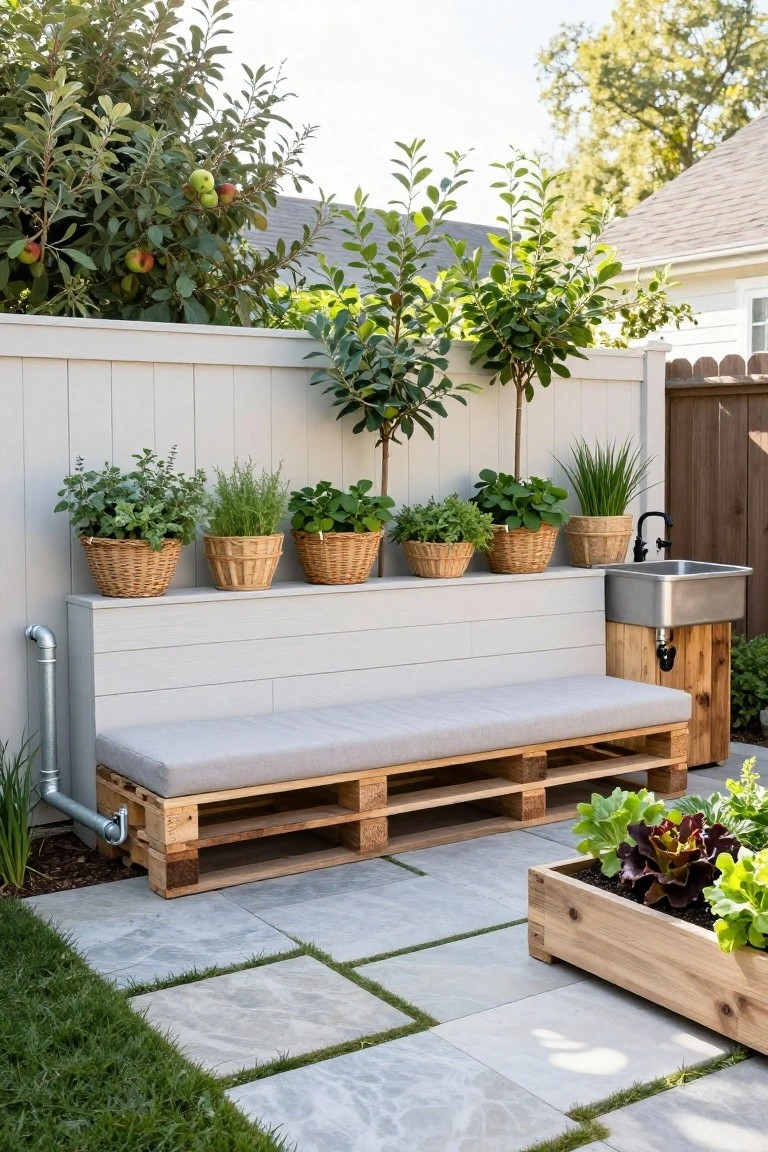
One way to make harvesting easier is to build raised beds from pallets and add a simple cushion on top. This turns the structure into both a garden bed and a place to sit, so you can work without bending over or kneeling on the ground.
It suits small yards or spots along a fence where space is limited. Place pots or baskets along the top edge and keep a sink nearby for rinsing tools and produce.
Raised Beds Built With Pallets
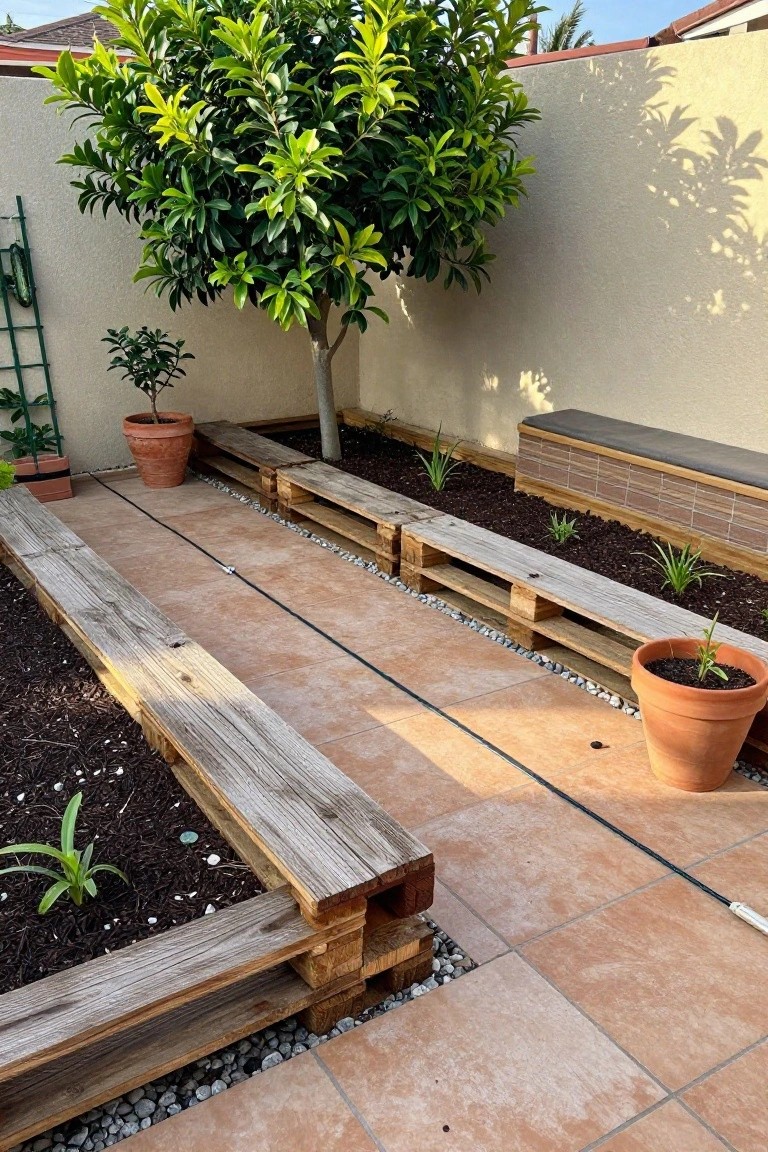
Using pallets to frame raised beds gives you a sturdy border that lifts the soil and plants off the ground. This setup makes it easier to reach in and harvest without kneeling or bending too far, especially when the beds run alongside a paved path.
The approach works best in smaller yards or along the side of a patio where you want clear walking space. Stack two or three pallets high, secure them at the corners, and add a liner before filling with soil. Keep the beds narrow enough to reach across from one side.
Raised Beds Along a Path
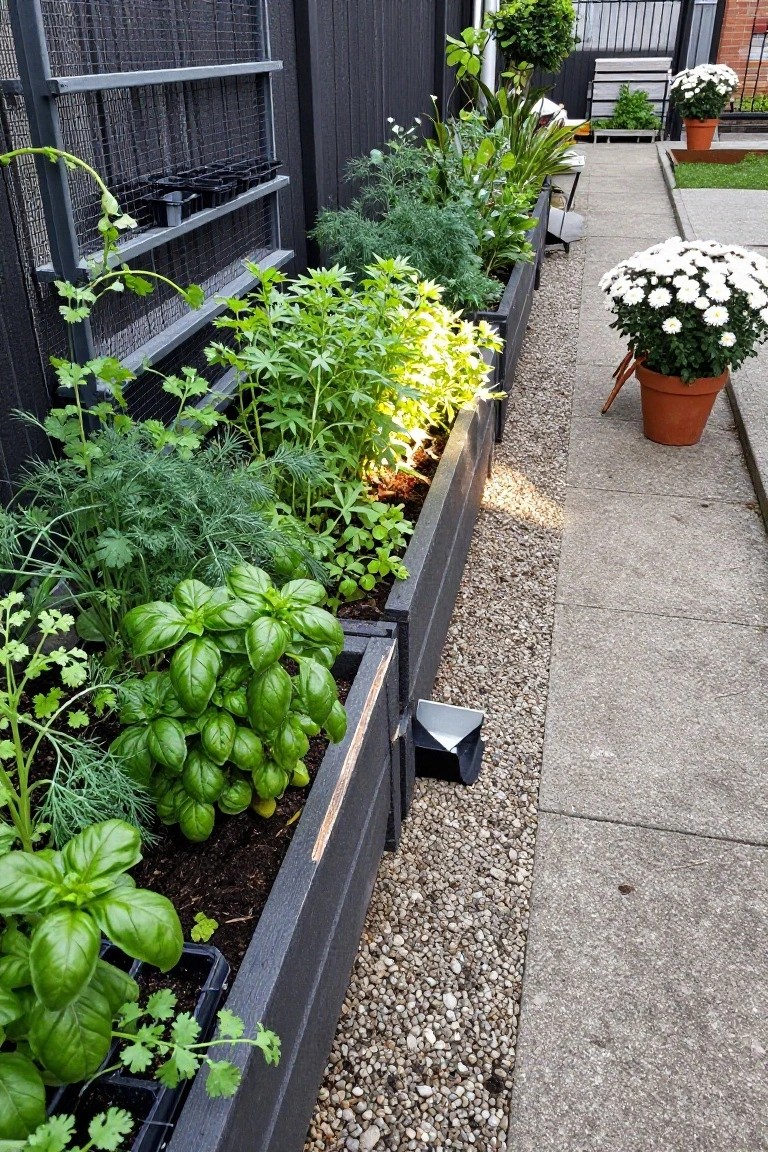
Raised beds set right next to a walkway keep the plants within easy reach. You can water and harvest without stepping into the soil or leaning far over the edge, which makes daily care feel much simpler.
This works best in narrow side yards or along the edge of a house where space is tight. Keep the beds no wider than an arm’s reach so everything stays accessible from one side.
Pallet Raised Beds Keep Plants Within Easy Reach
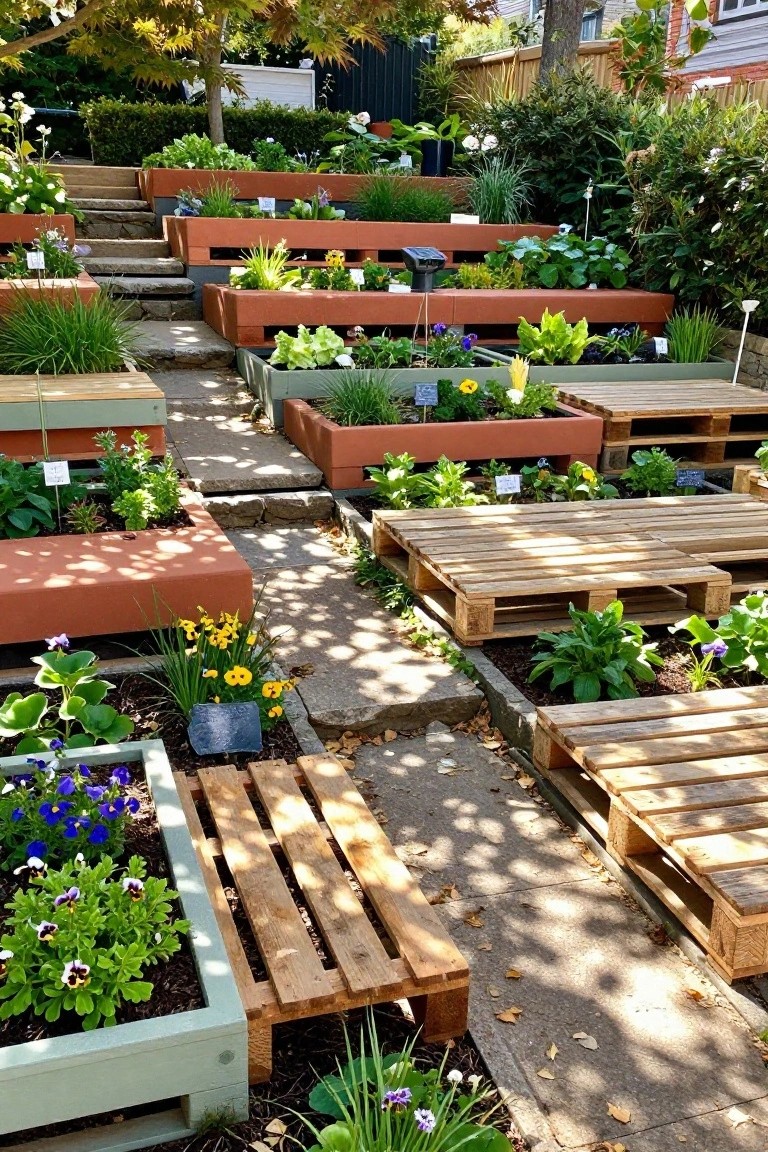
Many gardeners turn to pallets because they lift the soil to a height that cuts down on bending and kneeling during daily care. The frames are simple to put together and the open design lets you stack or combine them to get the depth you need for different crops.
Place the beds along stone paths so you can reach every side without stepping into the soil. This setup works well in small yards or on slopes where space is tight and you want to keep harvesting quick and comfortable.
Using Pallet Raised Beds On A Deck
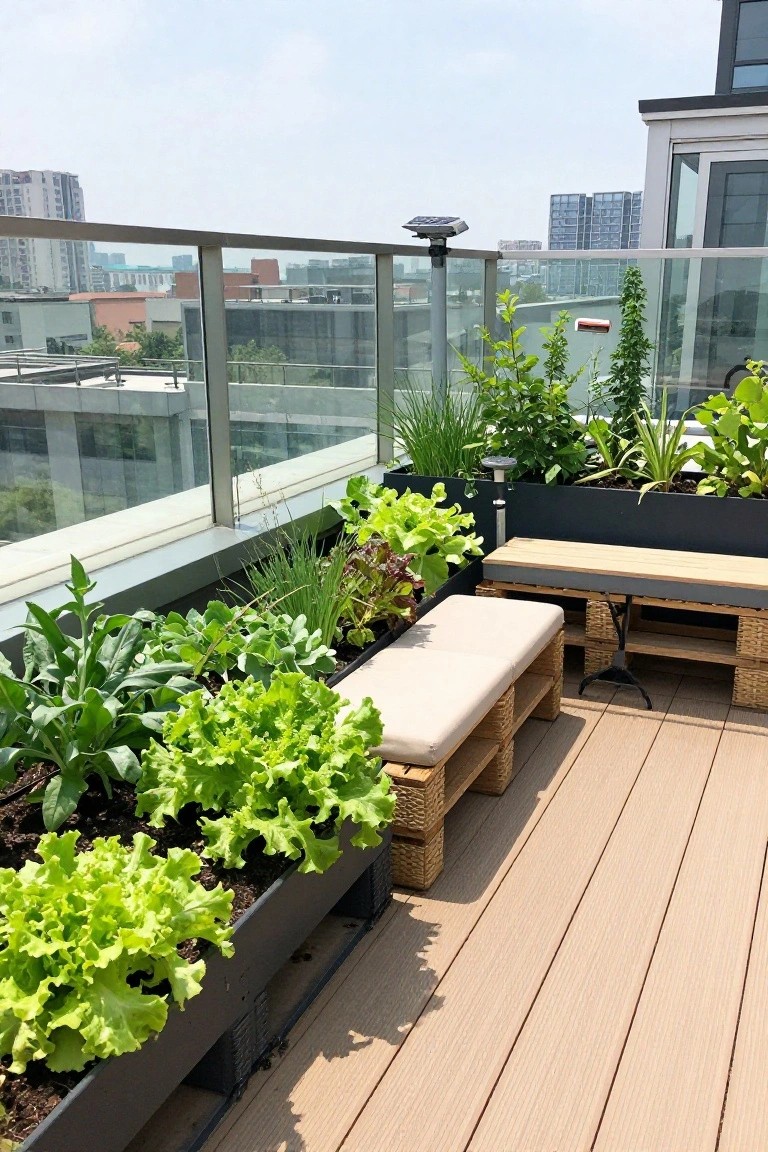
Raised beds made from pallets work well on a deck because they lift the plants up to a comfortable height. You can reach the greens without kneeling or bending over much, which makes daily harvesting feel easier and quicker.
This setup fits best on balconies or rooftops where space is limited but you still want fresh vegetables. Keep the beds narrow enough to reach across and place them near seating so you can tend the plants while sitting. Watch the weight on upper decks and make sure the wood is treated for outdoor use.
Wide Ledges Make Raised Beds Easier To Work
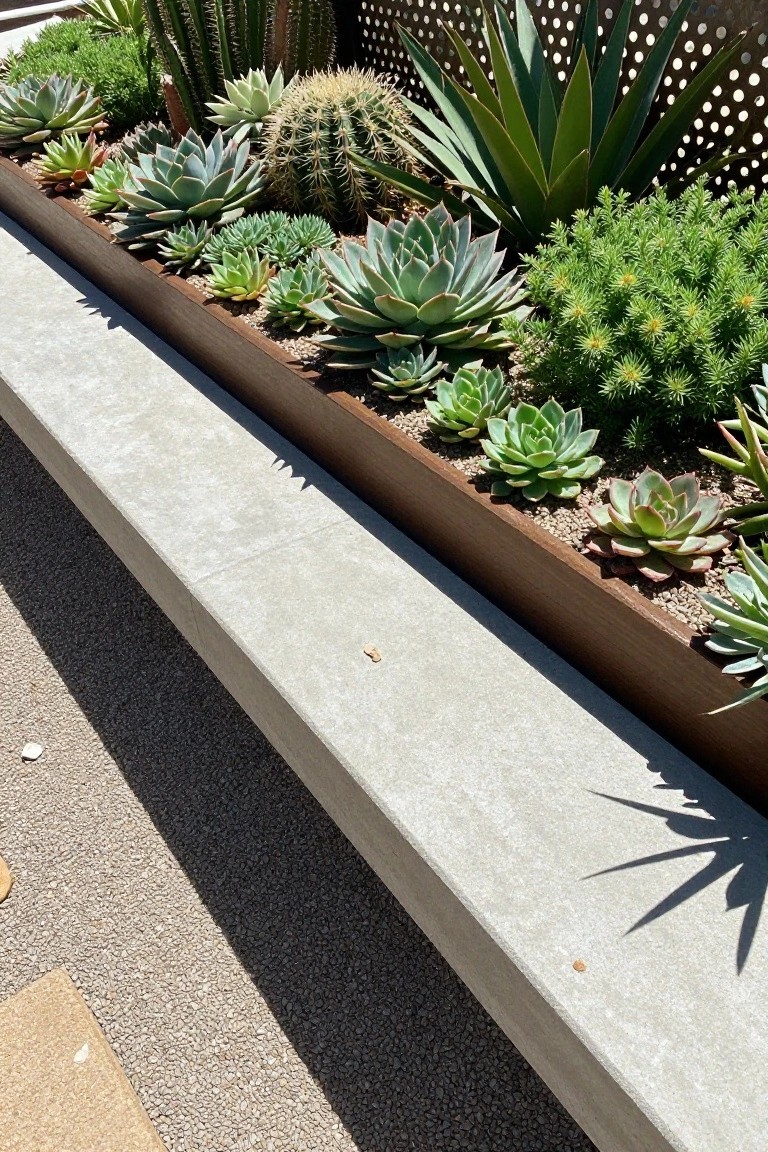
A wide ledge along the edge of a raised bed gives you a place to set tools or rest while picking produce. It cuts down on bending and makes the whole bed feel more practical for daily use.
This style works best in smaller yards or along paths where you need quick access. The ledge also helps hold the soil in place and gives the bed a finished look without extra framing.
Frequently Asked Questions
Q: Are those free pallets from stores actually safe for veggies?
A: Check for the HT stamp to skip any chemical treatments. Then give them a quick sand and seal if you want extra peace of mind. Most work fine once you know the source.
Q: How tall do the beds need to be to reach without bending?
A: Aim for about waist high so you can pick without much strain. Stack two pallets for most adults. Shorter folks might do better with one layer plus legs.
Q: What goes at the bottom to keep soil from falling out?
A: Staple some landscape fabric or old burlap sacks across the openings. It holds everything in while letting water drain.
Q: Can I grow the same plants as in regular beds?
A: Yes, just about anything fits as long as the depth works for the roots. Tomatoes love the extra warmth from the wood. But test the height first with a few reaches.
