

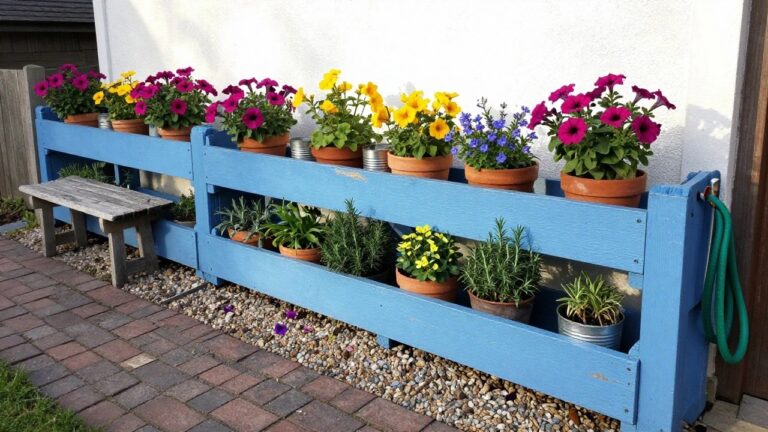
I often find that the edges along a fence end up looking bare unless you give them some kind of vertical structure.
Pallets stacked or stood upright can create pockets for soil and flowers that bring color right up against the boundary.
My fence line needed exactly that kind of lift.
When I look at different ways to arrange the wood and blooms, I notice the ones that leave room for weeding and watering tend to last longer in a real garden.
Testing a few simple patterns first helps show which ones fit the space without crowding the path beside the fence.
Mount Pallet Shelves On Fences For Extra Flower Space
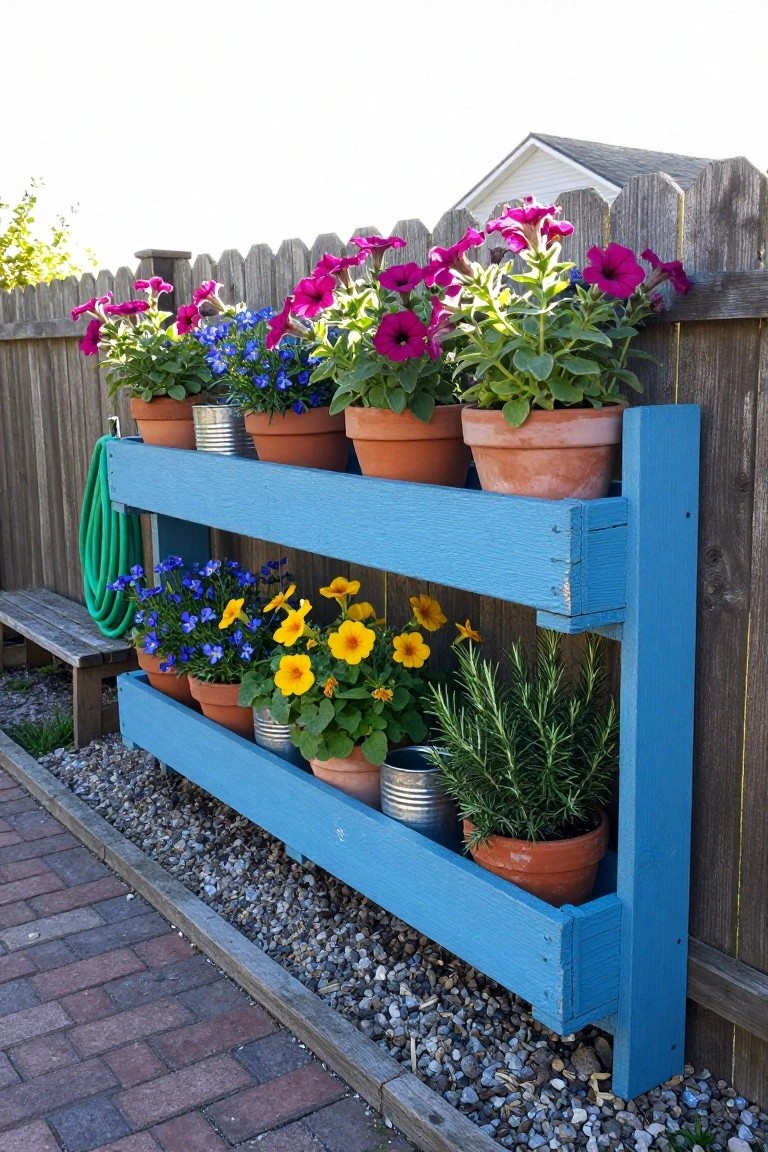
This setup turns a plain fence into a useful planting area by adding simple shelves made from painted wood. It keeps pots off the ground, shows off more blooms at once, and works without digging new beds or taking up walkway room.
It suits narrow yards or side yards where ground space is limited. Secure the pallets firmly at two or three heights, use a durable outdoor paint, and stick to lighter pots so the weight stays manageable over time.
Fence Shelves Hold Plenty Of Potted Plants
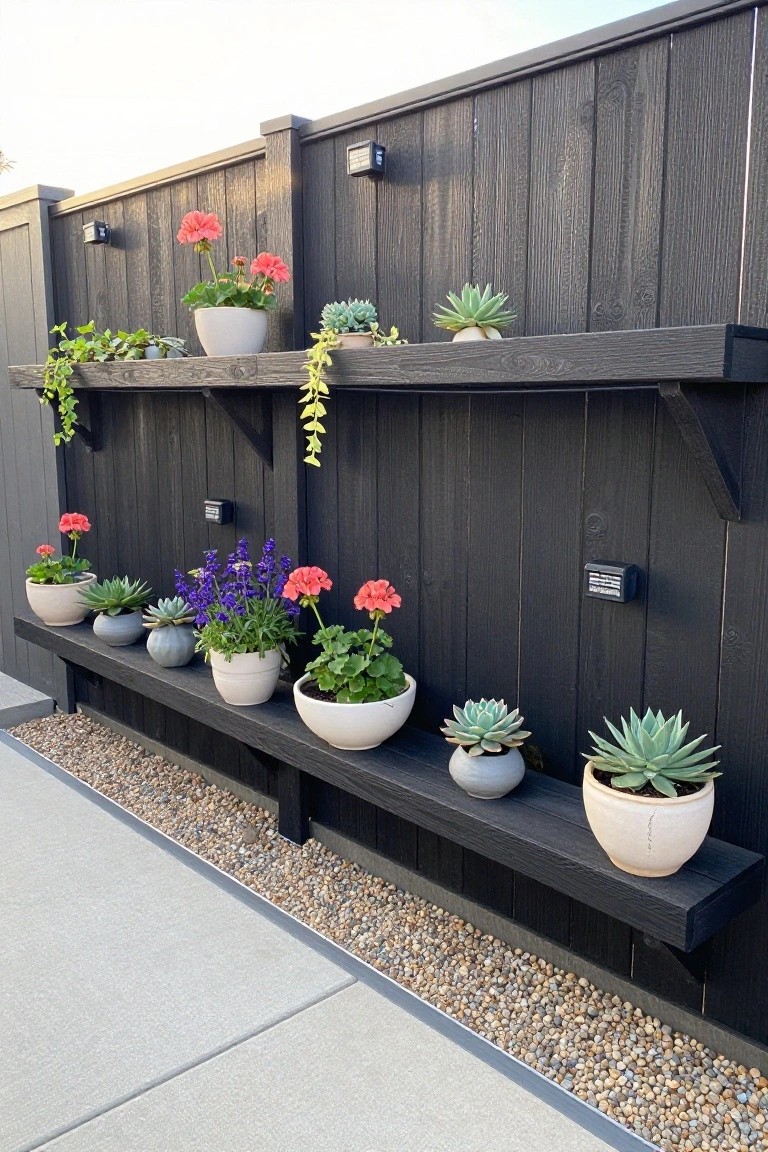
Mounting shelves along a fence gives you a simple way to show off more plants without crowding the ground. The different levels let shorter pots sit in front while taller ones go higher up, so everything stays visible and the fence itself stays useful instead of just sitting there blank.
This setup works best on a solid fence that can take the weight and in yards where space is tight. Use sturdy brackets and check the wood every year or two, especially if you live where it rains a lot.
Colorful Painted Pallets for Fence Displays
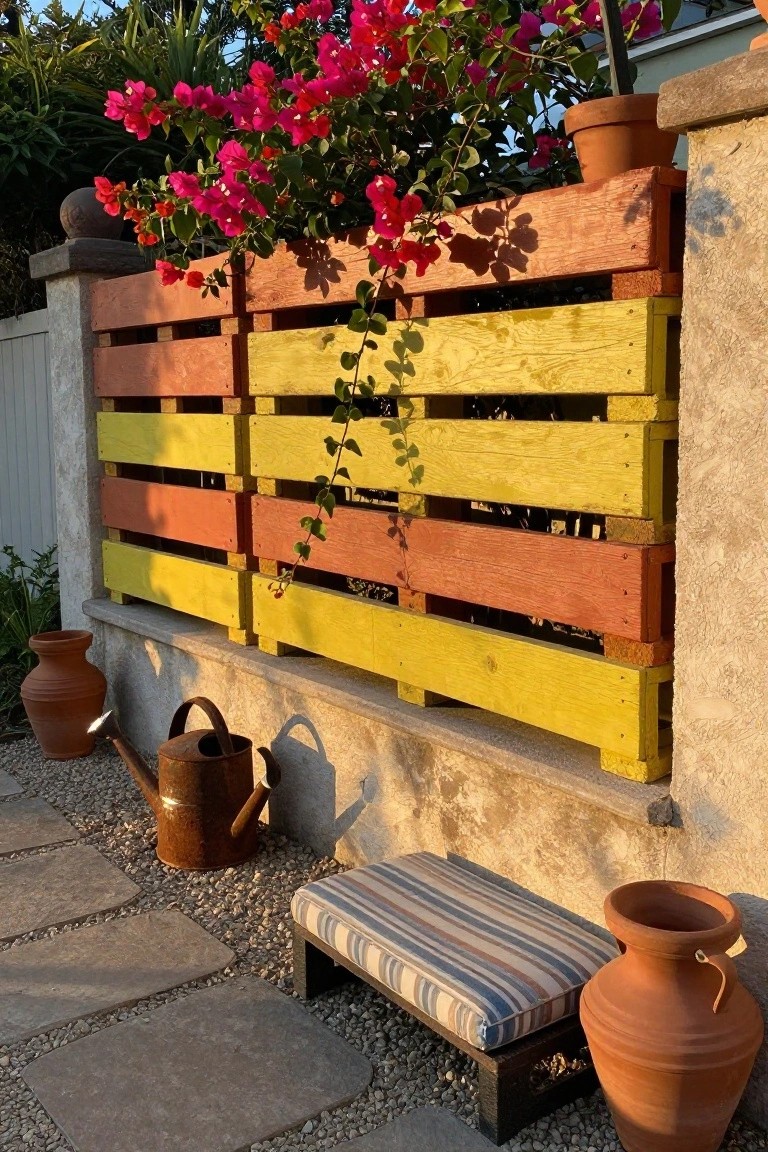
Painting old pallets in bold shades turns a basic fence line into a strong vertical garden feature. The different colors help the structure stand out while still letting plants take the lead, and the gaps between the boards make it easy to tuck in soil or let vines trail through.
This works well in smaller yards or along a side boundary where you want some color without building a full wall. Just make sure the pallets are secured firmly and treated for weather if you live in a wet area.
Pallet Planters For Vertical Color
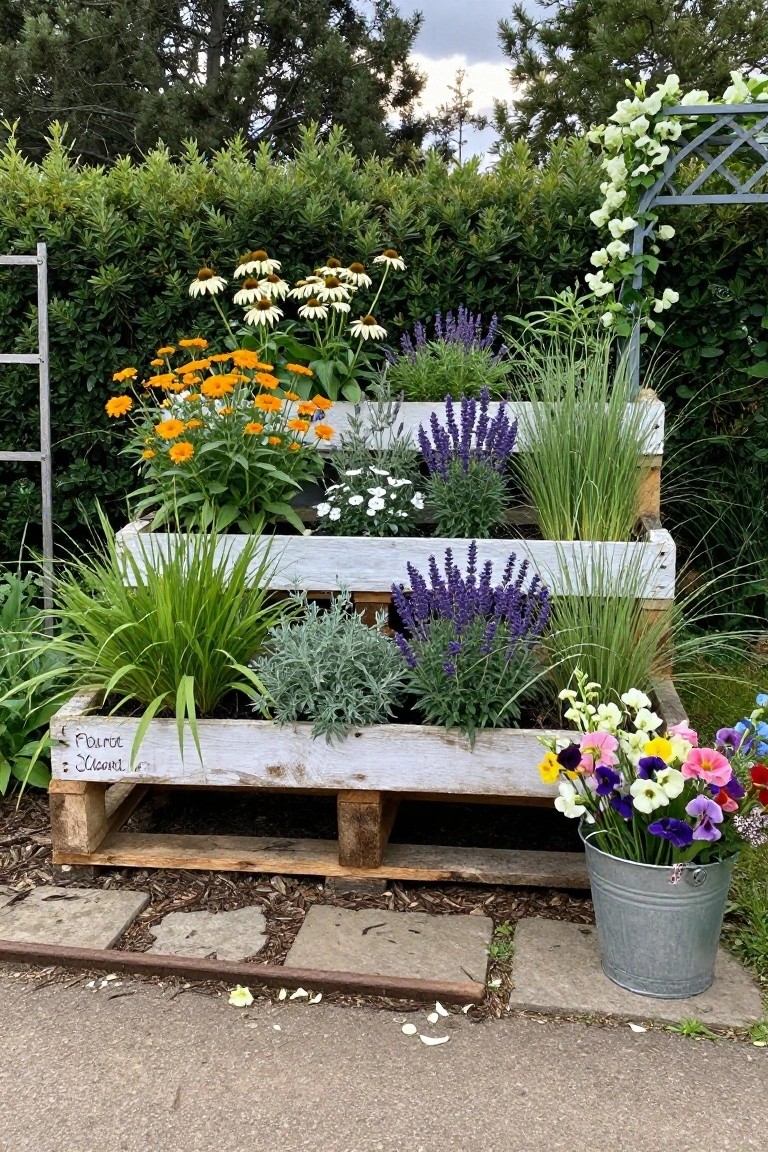
A simple wooden pallet can turn into a practical multi-level planter that holds plenty of flowers in one spot. This setup works well when space is tight or when you want to add height without building new beds from scratch. The tiers let you group plants by size and color, and the whole thing leans right against a fence or hedge for support.
It suits smaller yards or along property lines where a full garden bed would take up too much room. Just make sure the pallet is sturdy and lined properly so soil stays in place. You can move it later if needed or add more sections as your plant collection grows.
Painted Pallets Turn Fences Into Flower Displays
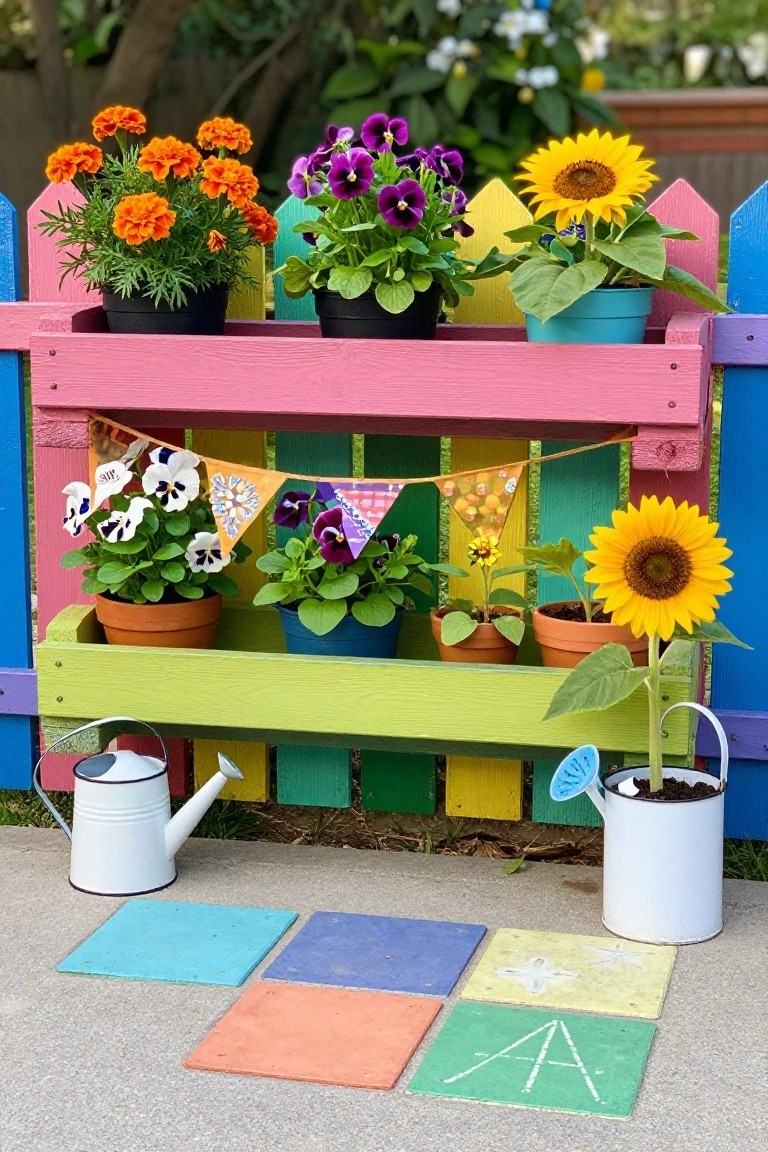
Many gardeners like this setup because it adds height and color without needing extra ground space. The pallets create simple shelves that hold pots at different levels along the fence line.
It works best in smaller yards or along side boundaries where you want more plants in view. Secure the pallets well, use bright paint, and choose pots that fit the gaps so everything stays stable.
Raised Beds Along Fence Lines
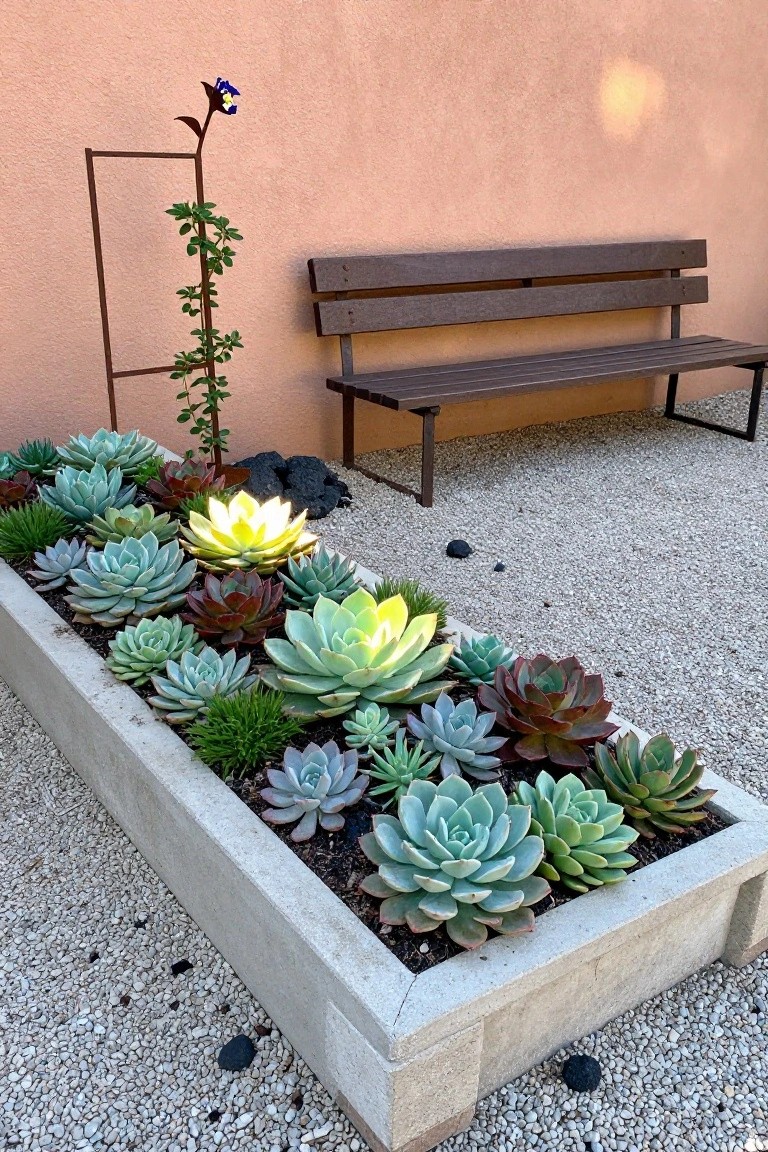
A long raised bed gives a fence line garden clear shape and makes it simple to grow a mix of plants in one spot. The concrete edges keep everything contained so the bed stays neat even when the plants fill in.
This setup works best against a solid wall or fence where you want color without digging into the ground. Succulents do well here because the bed drains well and needs little watering once established.
Painted Pallets Make Simple Flower Planters
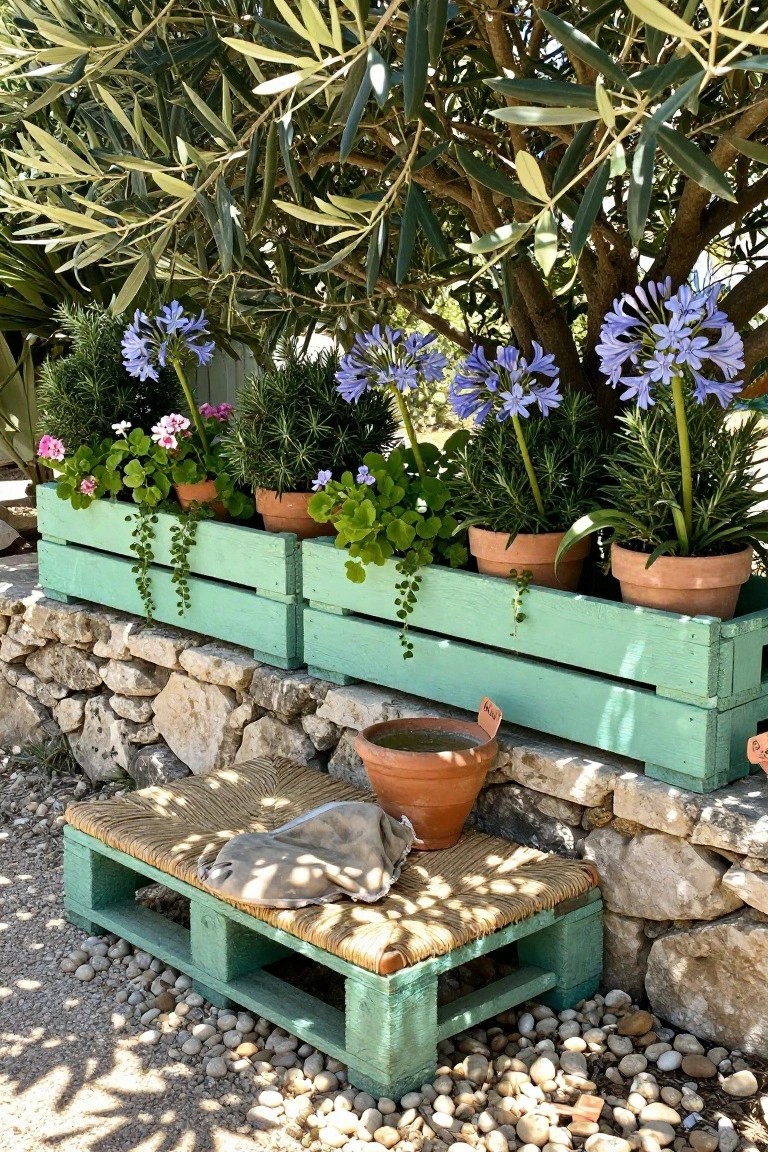
Many people like using old pallets because they turn into quick raised beds without much work. Painting them adds color that stands out against stone or fencing, and the open slats let you tuck in pots or soil easily. This setup works well along a low wall or fence line where space is tight.
It suits homes with gravel yards or narrow side areas that need some planting without digging beds. Just stack or place the pallets level, add drainage, and group plants by height so nothing crowds out the rest. Keep the colors bright but few so the flowers stay the main focus.
Stacking Pallets for a Layered Fence Garden
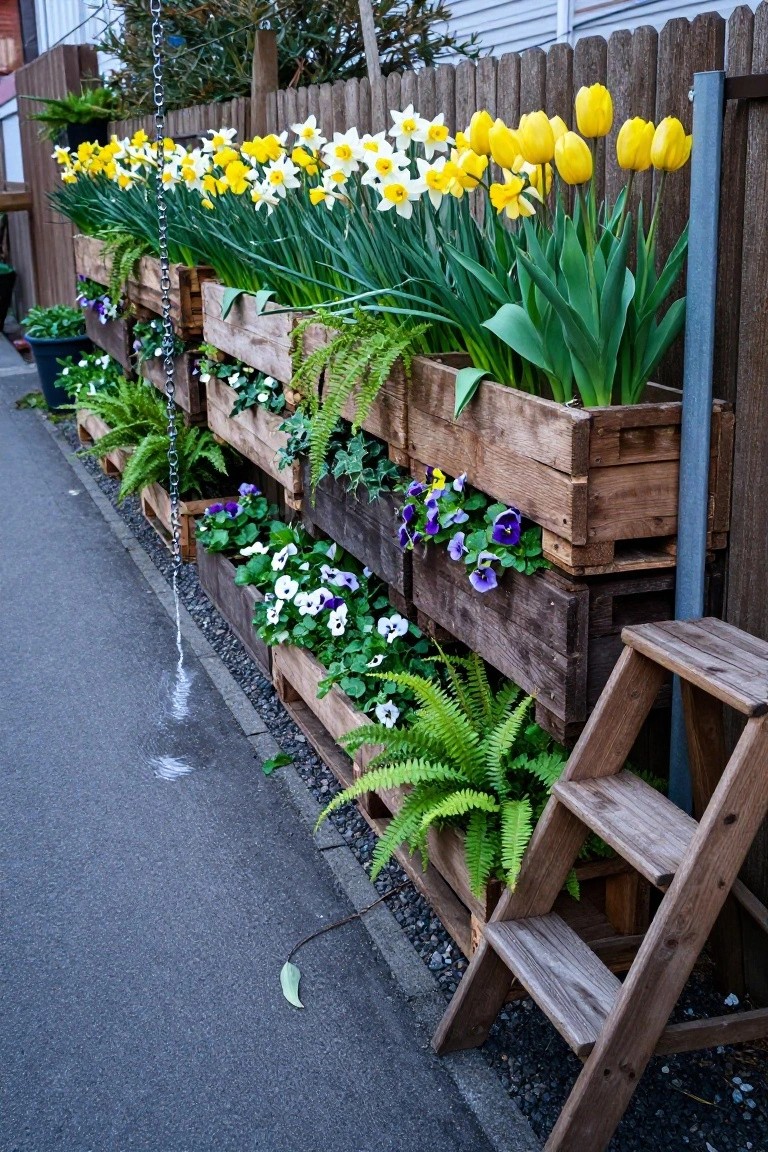
Stacking pallets along a fence gives you a simple way to grow lots of flowers in a narrow space. The tiers let taller plants like daffodils sit higher while lower rows hold smaller flowers, so everything shows instead of getting hidden behind each other.
This setup works best in side yards or along driveways where ground space is tight. Secure the pallets well and line them so the soil stays in place through rain and watering.
Pallet Supports For Fence Planters
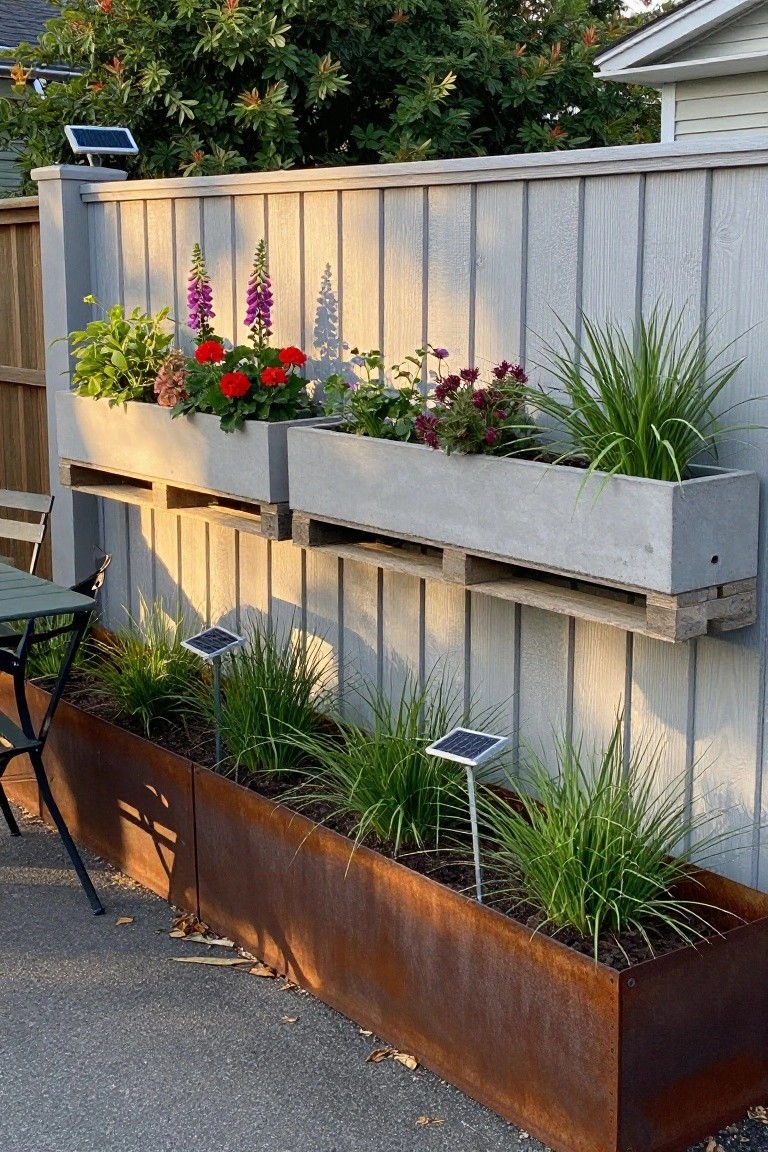
Many people turn to pallets when they want to lift planters off the ground and run them along a fence. The wood creates simple brackets that hold heavier troughs in place, which keeps the display neat and adds planting height without extra posts or frames.
This setup works best on a straight fence that already gets decent sun. Secure the pallets firmly, check that the planters sit level, and leave room below for a lower bed if you want more layers.
Line Up Pallet Planters Along Your Fence
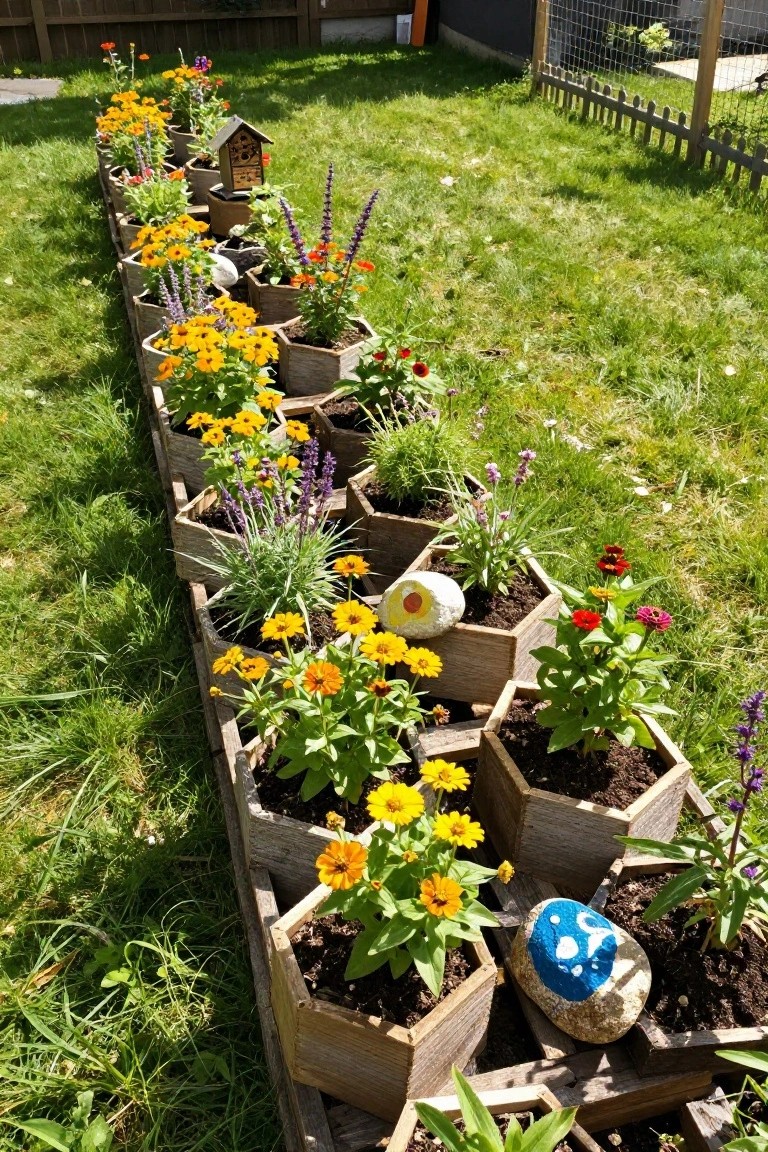
This setup uses old pallets turned into connected boxes that run in a straight line right beside the fence. It gives you a clean edge without digging beds or pouring concrete, and the wood keeps everything contained while still letting the flowers spill over a bit.
It suits long narrow strips of grass where you want color but not a lot of upkeep. Set the pallets on level ground, add soil, and plant whatever you like in each section. The wood will gray over time, so the look stays simple rather than fussy.
Add a Pallet Bench to Your Fence Garden
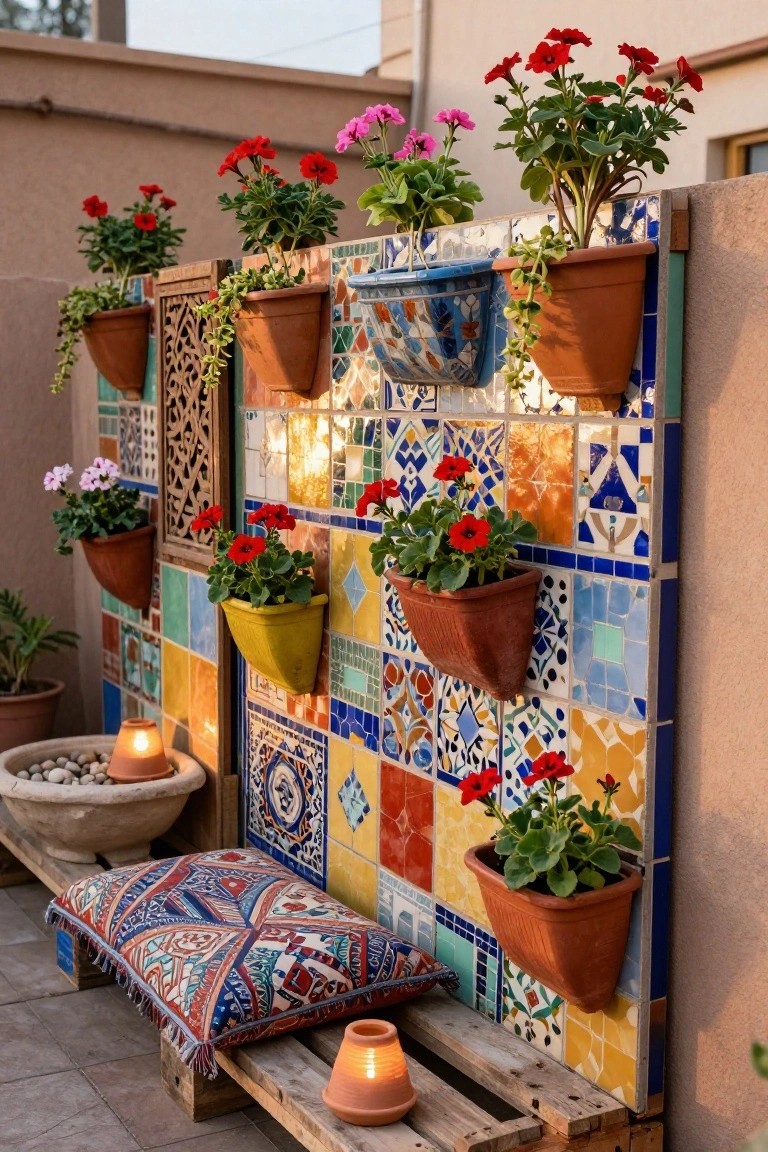
A pallet bench turns a vertical flower display into a place where you can actually sit and enjoy the plants. It keeps the setup simple and low cost while making the whole area feel more usable.
This idea works best along a fence or wall that already has pots or tiles. Secure the pallet well and add a cushion so it stays comfortable through the seasons.
Mount A Fence Panel For Vertical Color
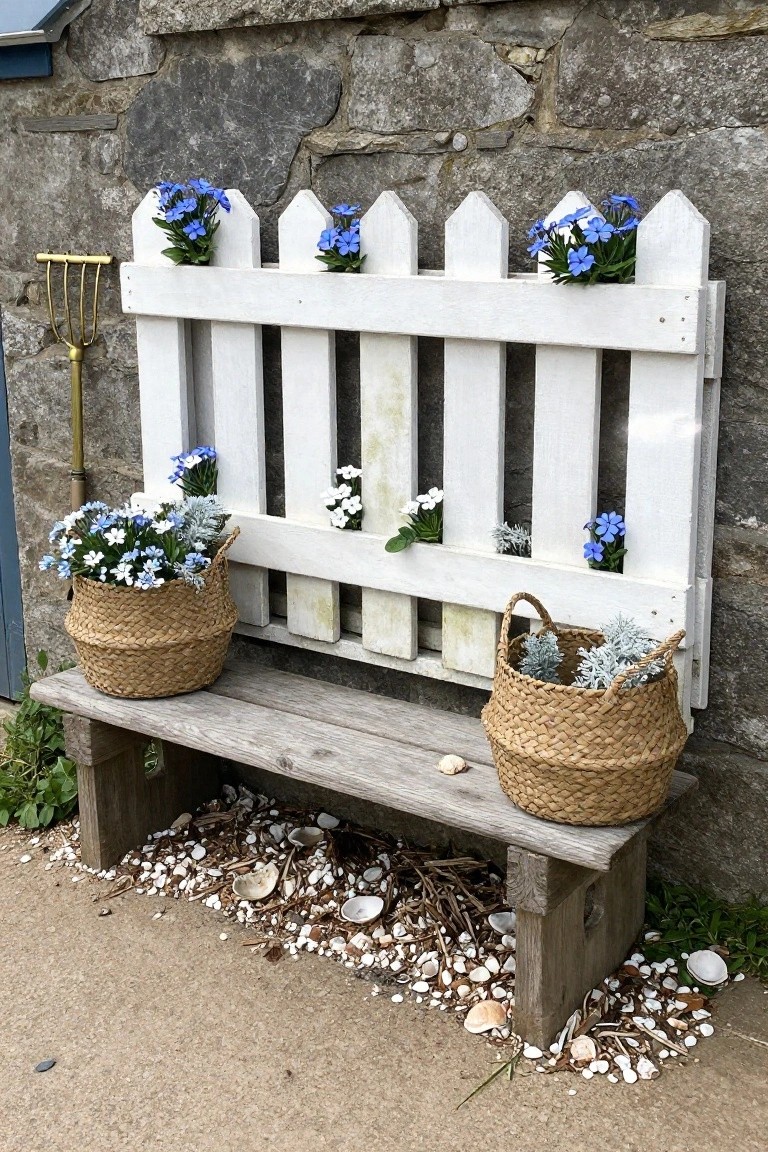
One easy way to add height and color along a fence line is to mount a short painted picket panel directly on a wall or existing structure. The vertical slats create natural spots for tucking in small pots or letting vines trail, which keeps the display off the ground and easy to reach.
This setup works best in narrow side yards or against stone walls where ground space is limited. Secure it with strong brackets and use weather resistant paint so it holds up over time without much upkeep.
Layer Ferns And Hostas Along A Fence
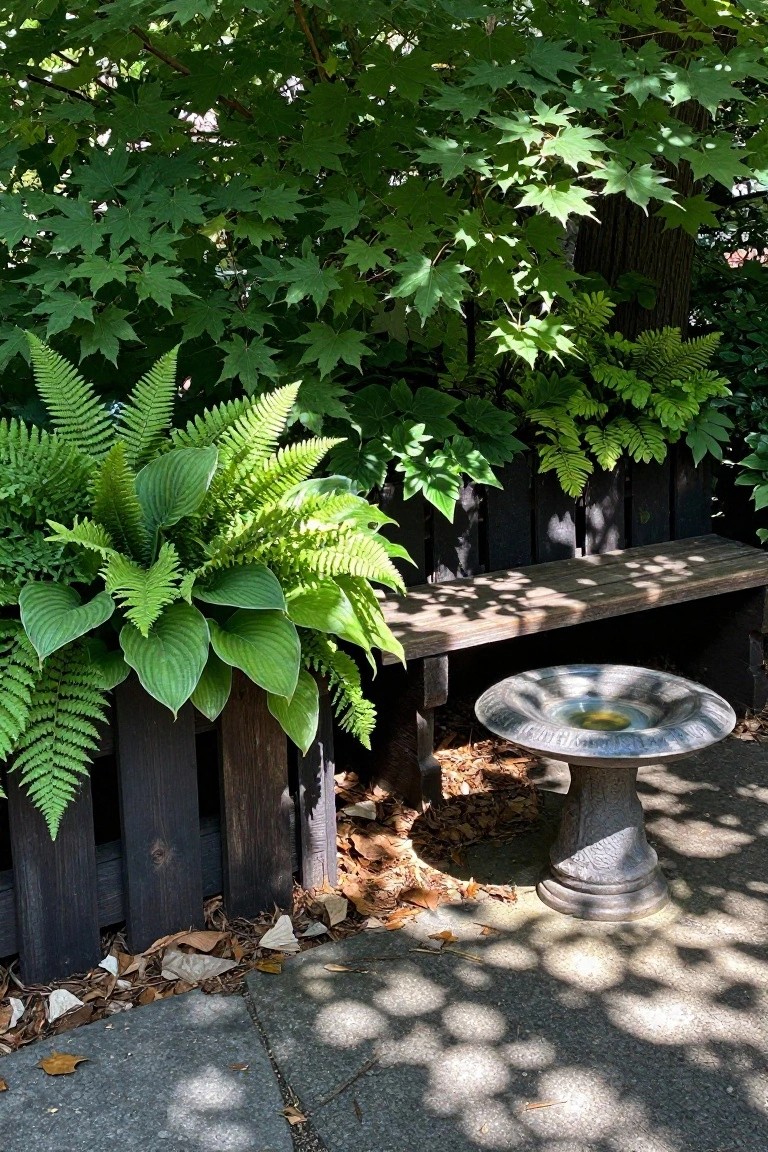
Ferns and hostas make a strong pair when you want to fill the space right in front of a fence. The tall fronds bring height while the broad leaves cover the ground, and together they create a full look without needing a lot of color.
This approach works best in shady corners where bright flowers fade. Keep the bed narrow so the plants stay against the fence rather than spilling out, and water regularly during dry spells.
Run a Row of Pots Along Your Fence Line
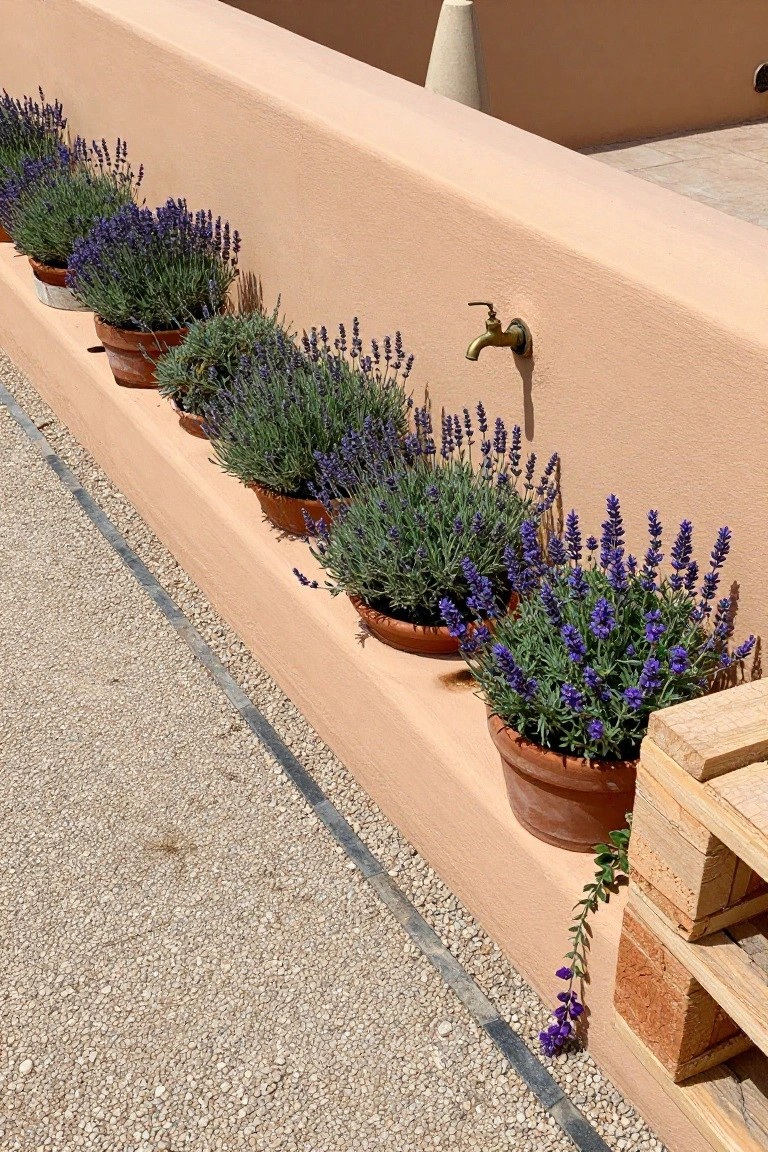
A straight line of matching pots makes a simple and effective display along a low wall or fence. It keeps the plants visible without taking up much ground space and gives the area a tidy look that still feels full.
This works well in sunny spots where lavender or similar plants can thrive in containers. Use the same pot style for a clean repeat, and keep the row at a height that makes watering easy without much bending. A pallet can help prop up the end of the line if the ground drops away.
Tiered Planters Add Vertical Color Along a Fence
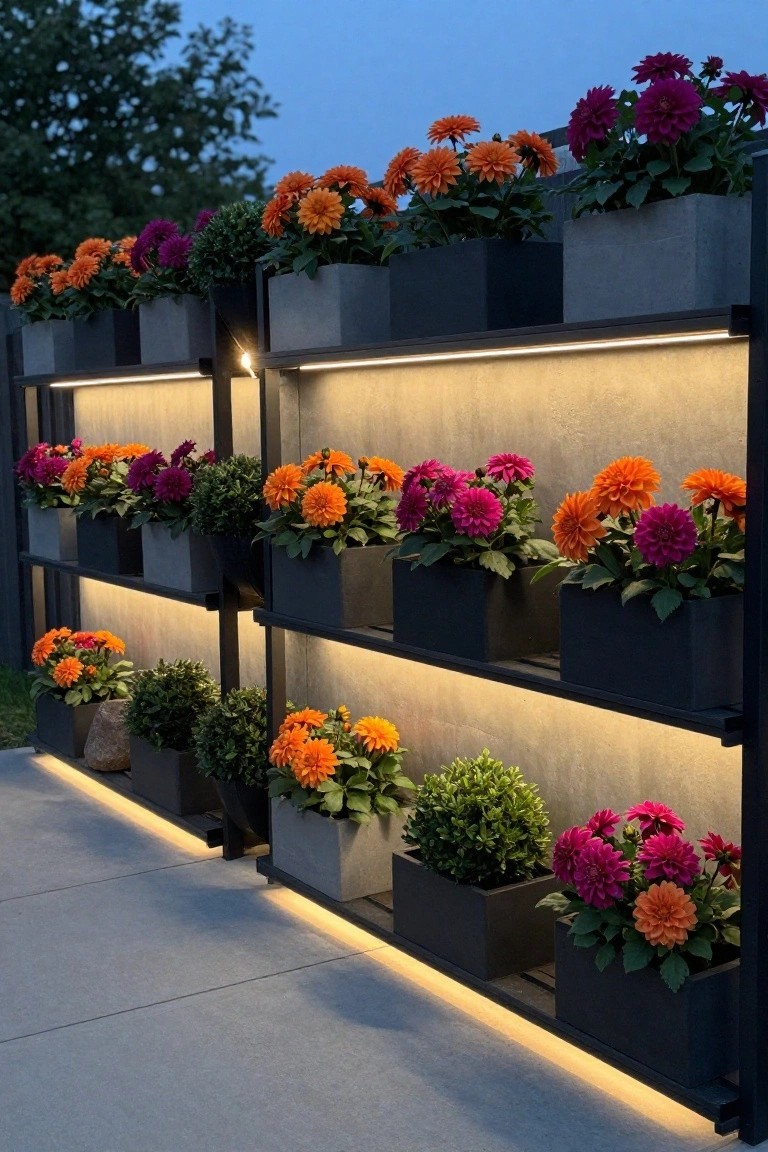
Stacking planters in rows along a fence gives you a full wall of flowers without eating up ground space. The different levels keep blooms visible from several angles and let you mix taller and shorter plants in one spot.
This approach suits narrow side yards or modern homes where a flat bed would feel too plain. Choose sturdy boxes that can handle the weight, and add simple strip lighting at each shelf so the display stays useful after dark.
Painted Fences For Vertical Pot Displays
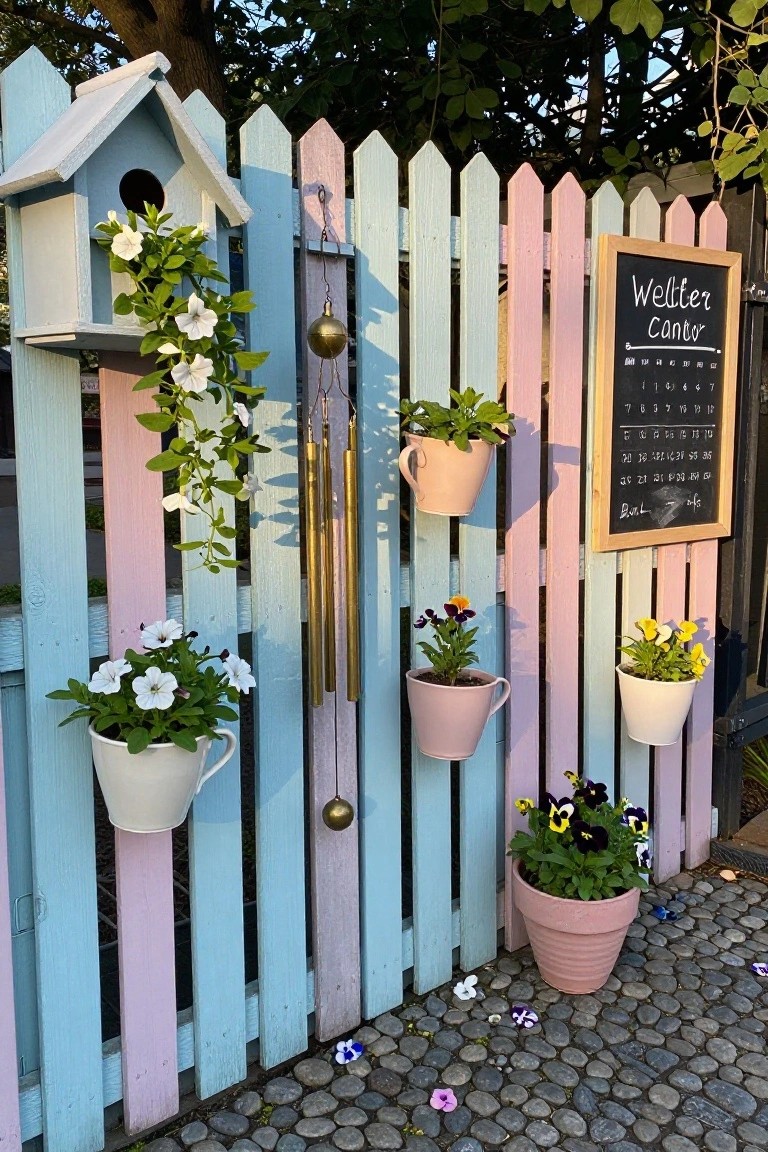
A painted fence works well as a base for vertical plant displays because it turns an ordinary boundary into a growing surface. Mounting pots directly on the slats lets you add layers of flowers without taking up ground space, and the color of the fence makes the plants stand out more clearly.
This approach suits small yards or narrow side areas where beds would feel cramped. Use sturdy hooks or brackets so the pots stay secure, and choose lightweight containers that are easy to swap out when seasons change.
Mount Flower Boxes Along Your Fence
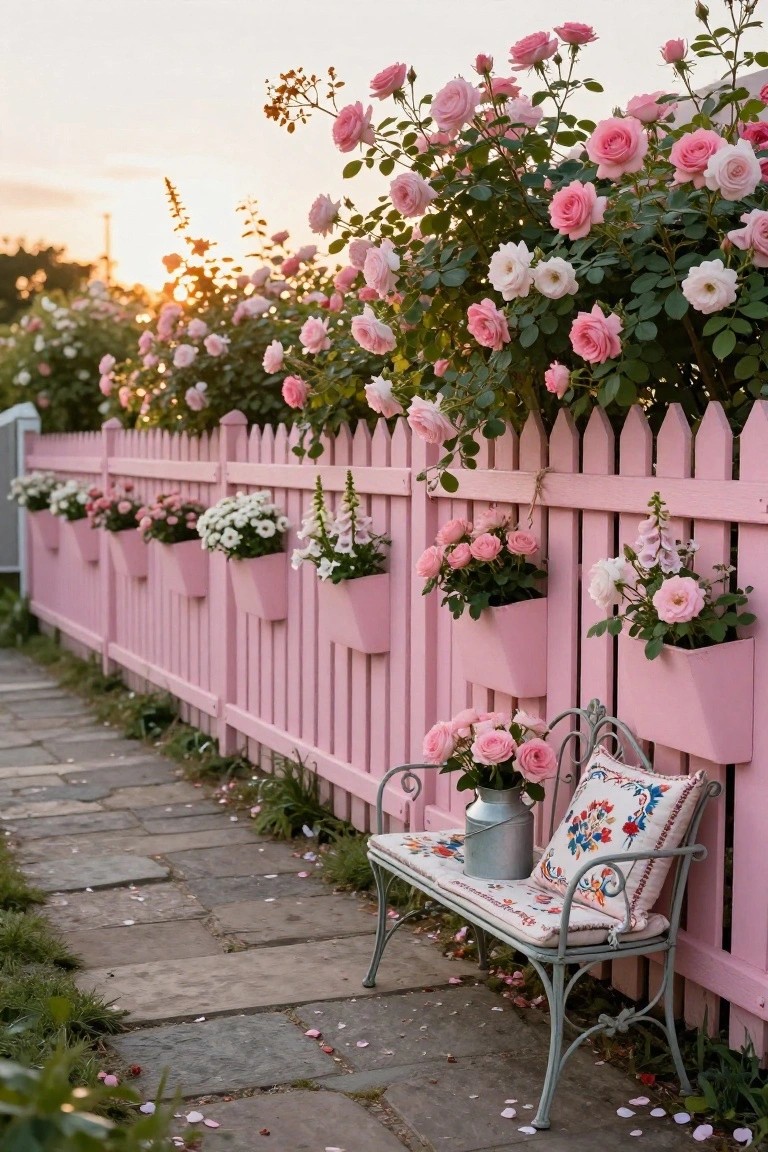
This setup turns a basic fence into a full height flower display without crowding the ground. The boxes sit right on the fence boards so blooms run the full length and soften the whole line.
It suits narrow side yards or paths where you still want color but need the walkway left open. Stick with sturdy boxes that match the fence color and choose roses or similar climbers so the display fills in quickly.
Raised Pallet Beds Along A Fence
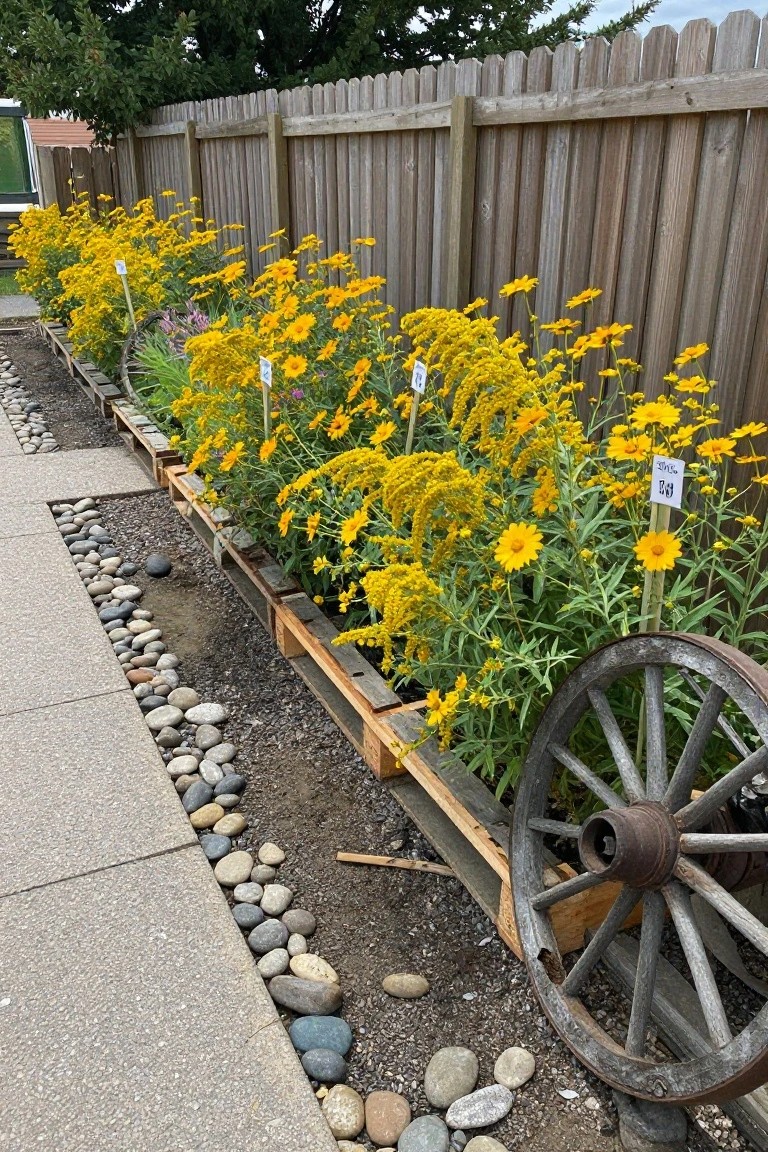
Pallets give you a fast way to build raised beds that sit right against a fence without taking up much extra space. The wood creates a clean edge, holds the soil in place, and lets the flowers stand out in a neat row.
This works best in narrow side yards or along property lines where you want color but still need to keep the ground clear. Line the pallets up end to end, secure them well, and fill them with good soil so the plants stay healthy through the season.
Frequently Asked Questions
Q: How do I keep soil from spilling out of the pallet pockets once I hang it up? A: Stuff the back and sides with landscape fabric before you add dirt. This holds everything in place while still letting water drain through.
Q: What flowers actually do well in those shallow pallet spaces on a fence? A: Try compact plants like pansies or lobelia that do not need deep roots. They spread nicely across the front and give steady color without crowding each other out.
Q: How often should I water a pallet garden once the plants are in? A: Feel the soil each morning and water when the top inch feels dry. Morning watering helps the roots soak it up before the sun gets strong.
