

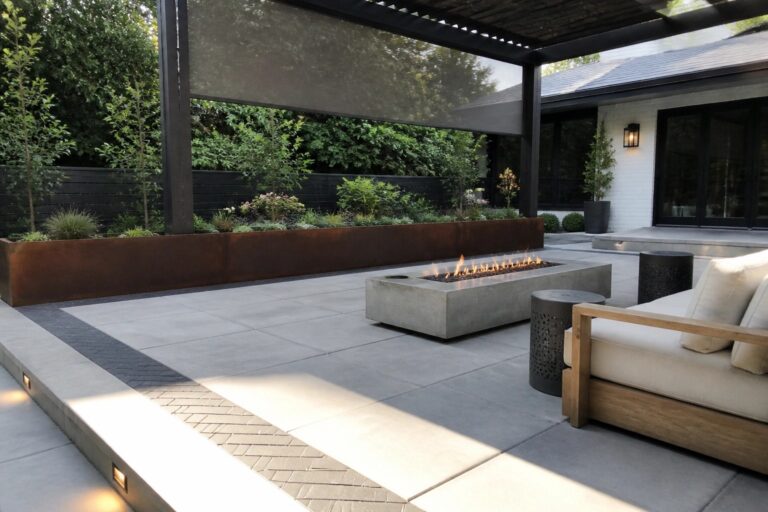
Over the years I have seen plenty of patios where the paving just ends abruptly and the space never quite feels settled.
Adding a defined border pattern changes that by giving the eye a clear stopping point and making the whole area read as one complete surface.
That small change matters more than most people expect.
I keep coming back to ideas that use simple repeating shapes because they hold up better when grass or mulch starts to creep in around the edges.
Testing a couple of these patterns on paper first helps me picture how the patio will actually function for daily use rather than just looking good in photos.
Circular Patios With Defined Borders
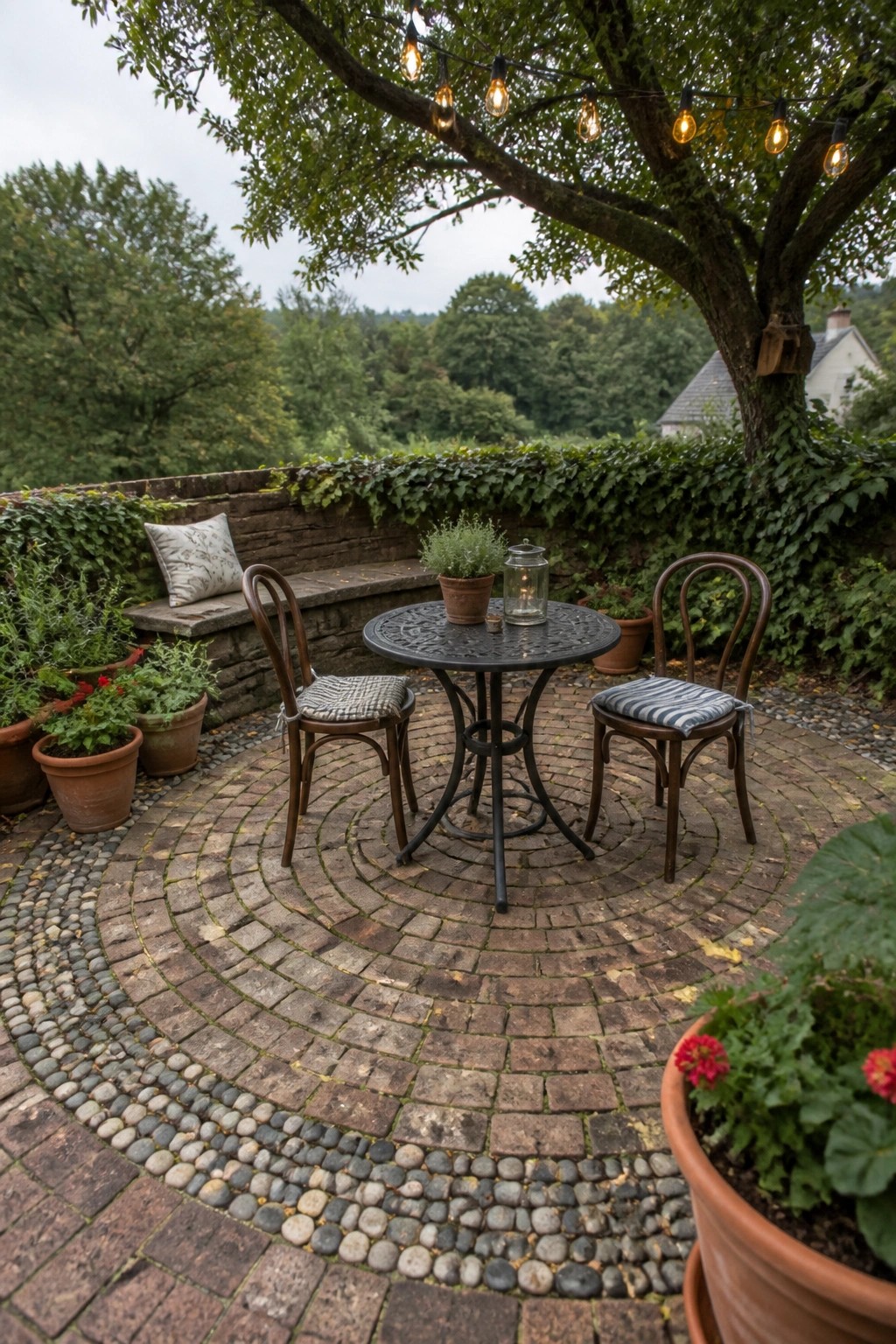
A circular paver layout stands out more when you add a clear border around the edge. The mix of brick pavers inside and smaller stones along the outside creates a clean stop that keeps the whole area from looking like it just runs into the garden.
This works best in smaller yards where you want one defined spot for a table and chairs. Keep the border simple with pebbles or cobblestones and match the paver color to your house or existing paths so it feels like it belongs.
Use Contrasting Borders to Frame the Patio
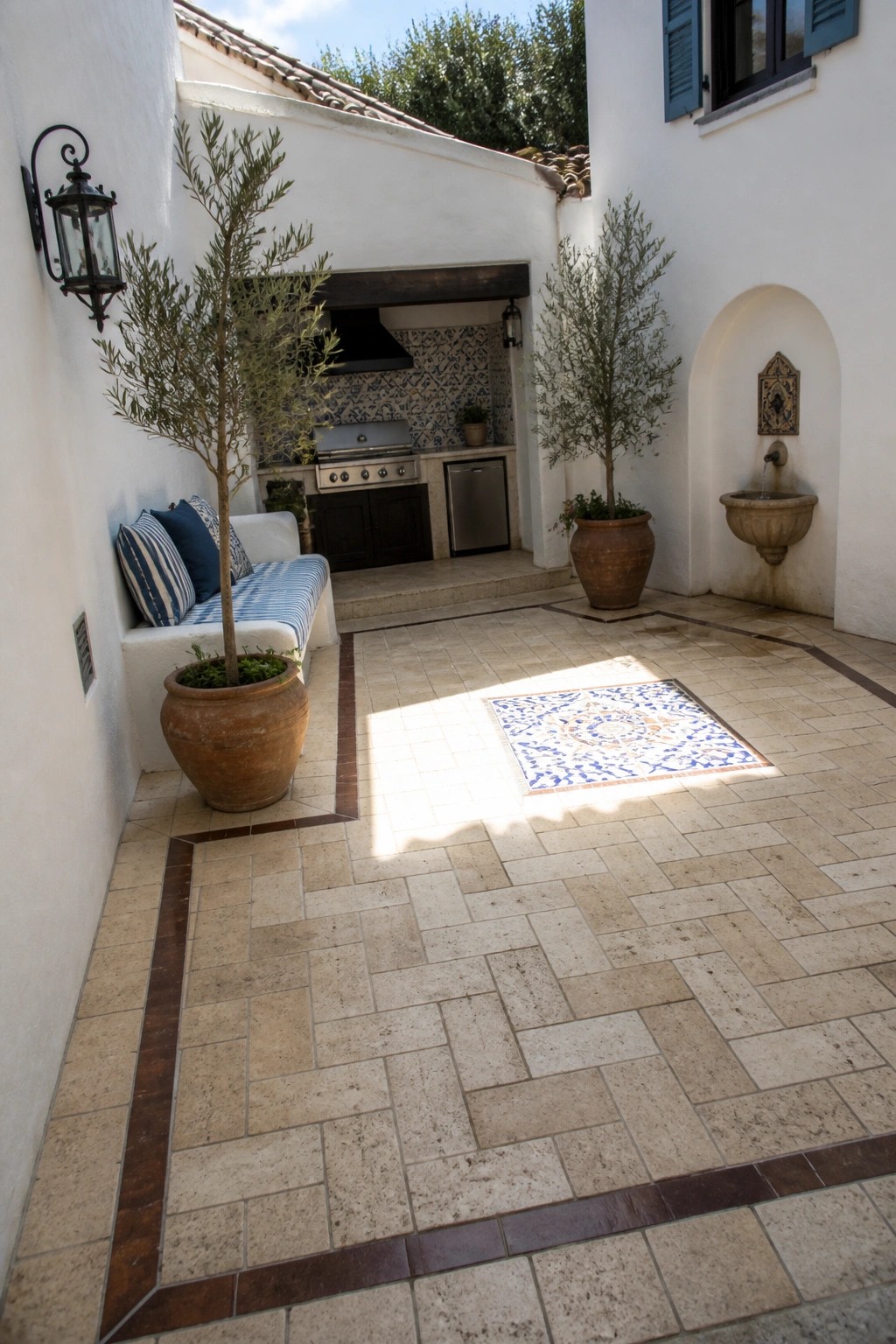
A simple border of darker tiles around the main paver area gives the whole patio a clean, finished edge. It stops the pattern from looking like it just stops at the wall and makes the space feel more intentional without adding extra structures.
This approach works best on medium to large patios where you want to separate the main floor from planting beds or walkways. It pairs well with light-colored pavers and suits homes that already have some tile or stone detail elsewhere outside.
Border Your Pavers With Gravel
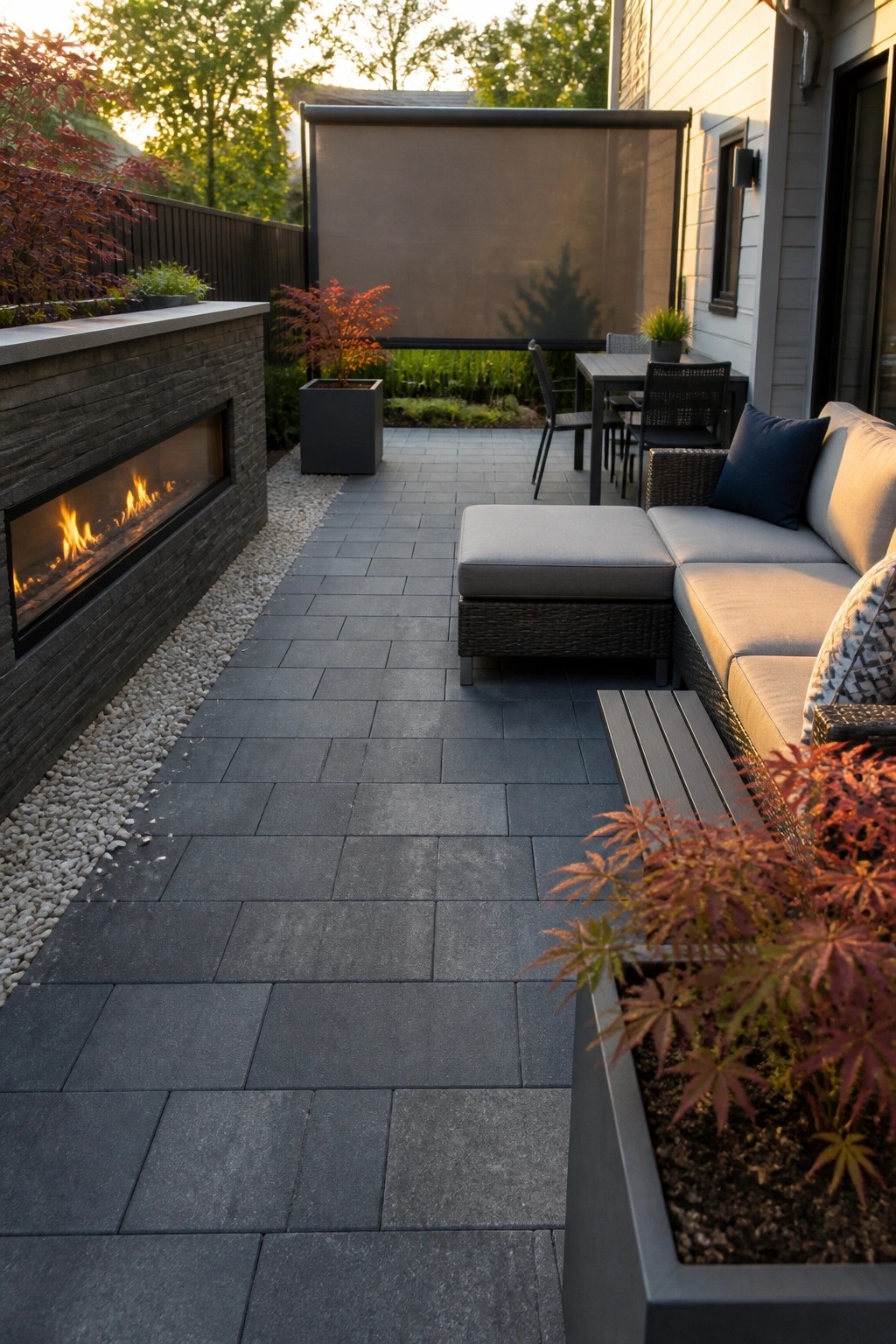
A gravel border gives the paver patio a clear edge without needing extra walls or edging materials. The light gravel next to the dark pavers makes the shape of the seating area stand out and keeps the whole layout looking tidy even when nearby plants grow out.
This works best on smaller patios or narrow side yards where you want separation from planting beds but still need the space to feel open. Keep the gravel layer thin and contained so it stays put and does not track onto the main surface.
Frame the Patio With a Contrasting Border
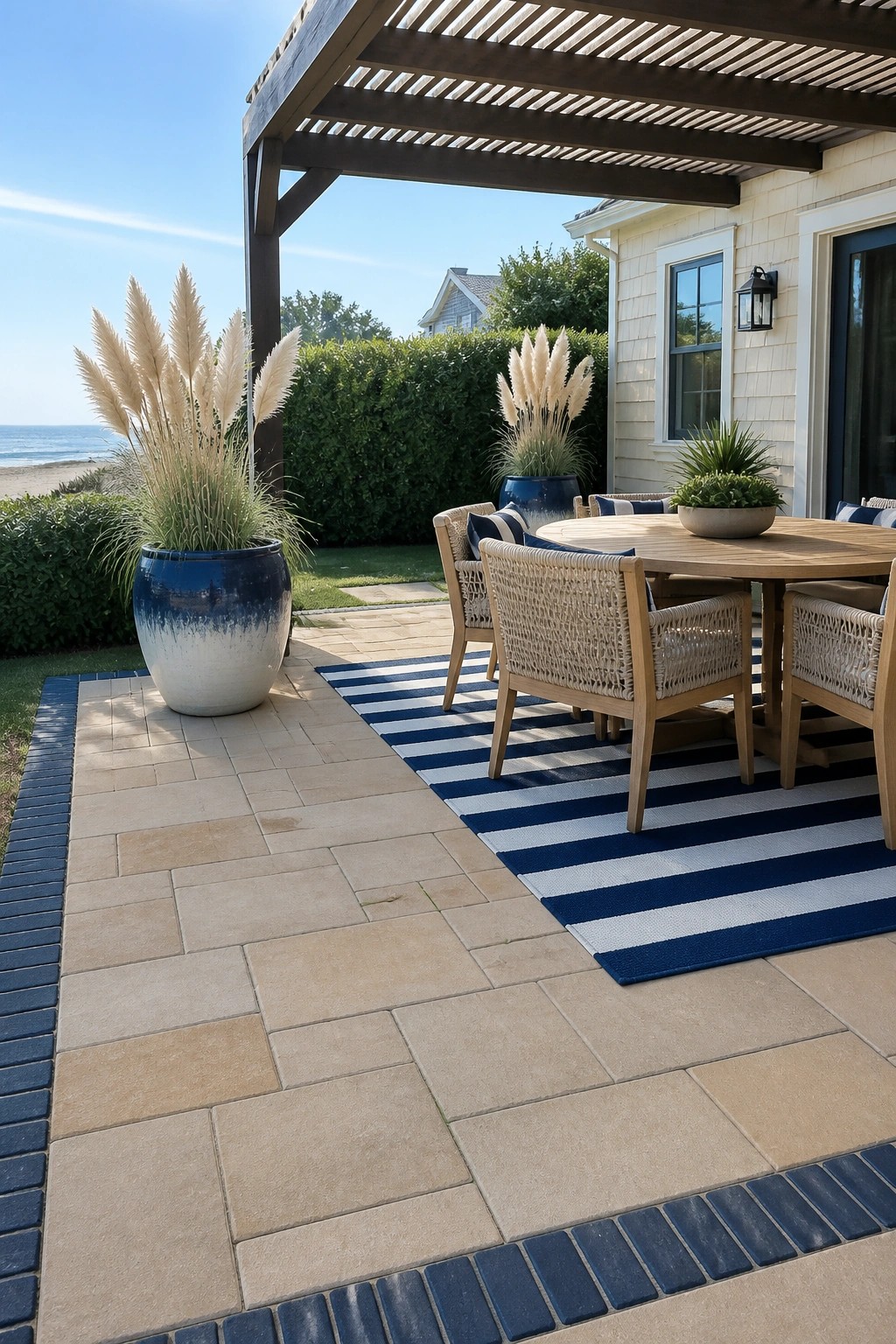
A darker border around lighter pavers gives the patio a clean, finished edge without much extra work. It stops the surface from looking like it just runs into the grass and makes the whole area feel more like a separate room outdoors.
This approach works best on patios that sit next to lawns or garden beds. Pick a border color that picks up something else nearby, like the blue in a rug or the pots, so the space feels connected without looking busy.
Add a Border to Your Paver Patio
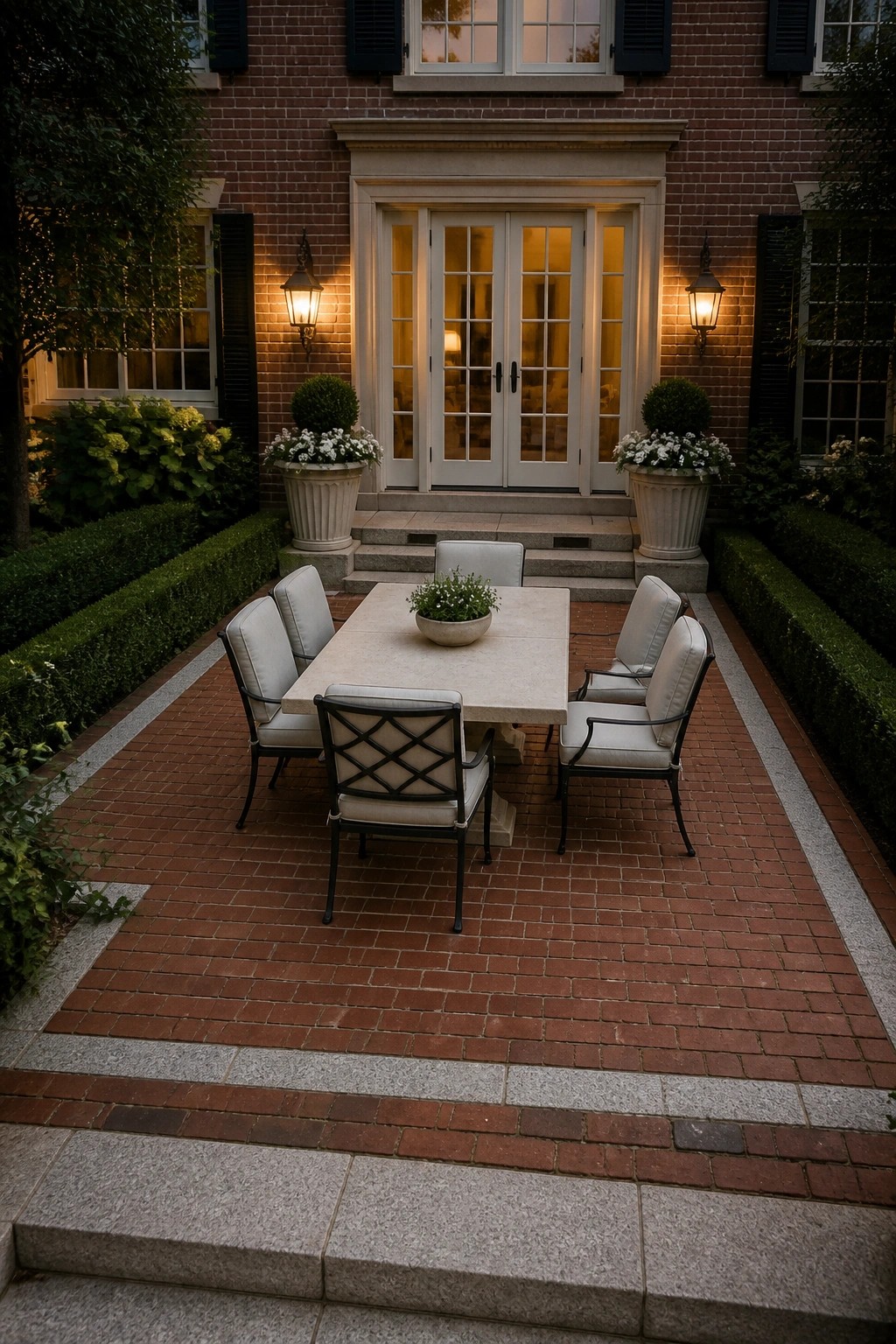
A border gives the patio a clear shape and stops the surface from looking like it just runs off into the yard. It also makes the space feel more intentional without adding walls or extra furniture.
This approach works best on smaller or mid-size patios where you want the seating area to read as its own room. Keep the border width even and choose a material that contrasts just enough with the main pavers so the line stays visible over time.
Circular Paver Patios With Gravel Borders
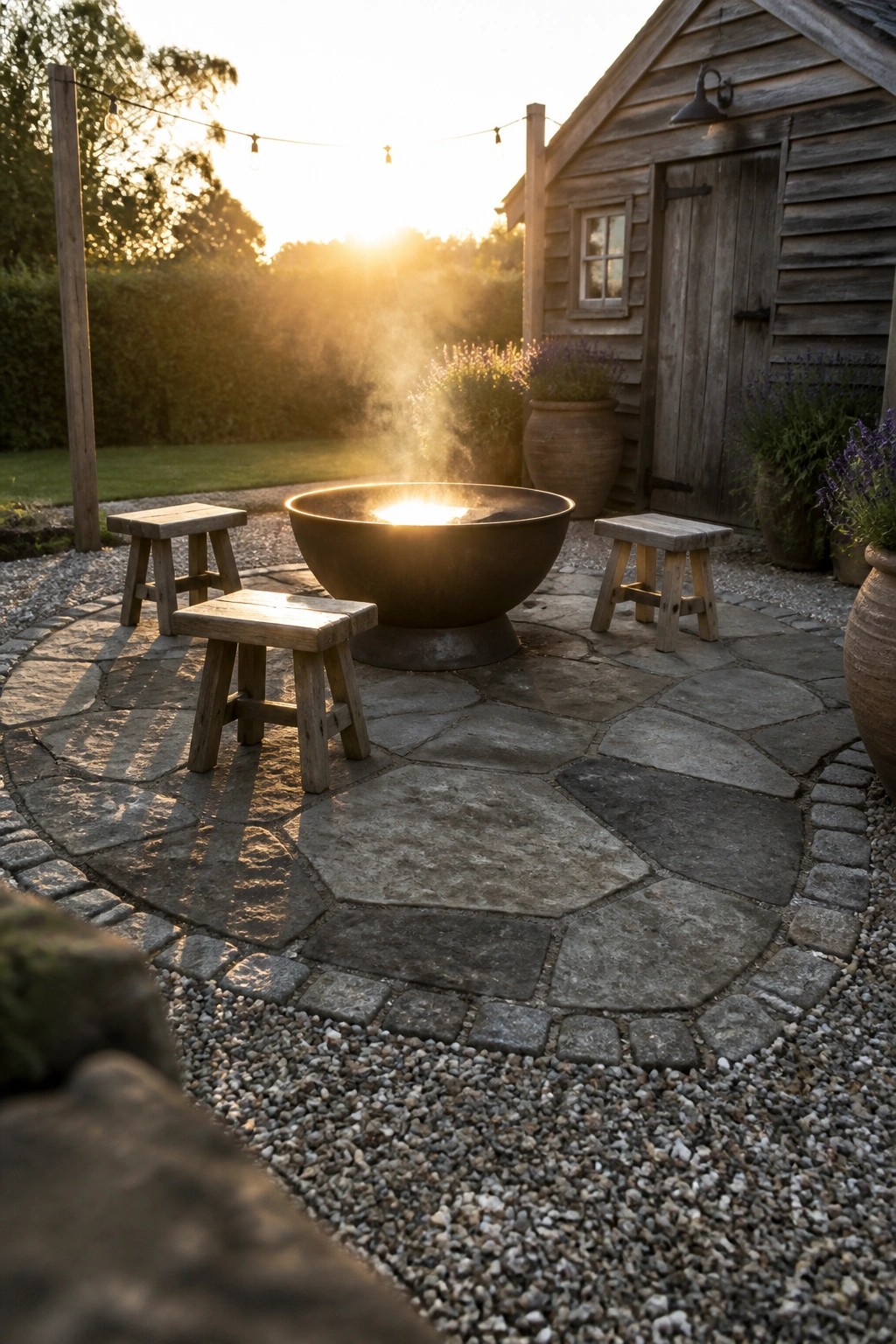
A round paver layout with a clear gravel edge keeps the fire pit zone from feeling scattered across the yard. The border gives the seating area a finished look while making the whole space easier to sweep and maintain.
This style works best in modest backyards where you want a defined spot without building walls or raised beds. It pairs well with simple plantings and sheds already in place, and it avoids the need for heavy materials that might crowd the area.
Defined Border Patterns On Patio Pavers
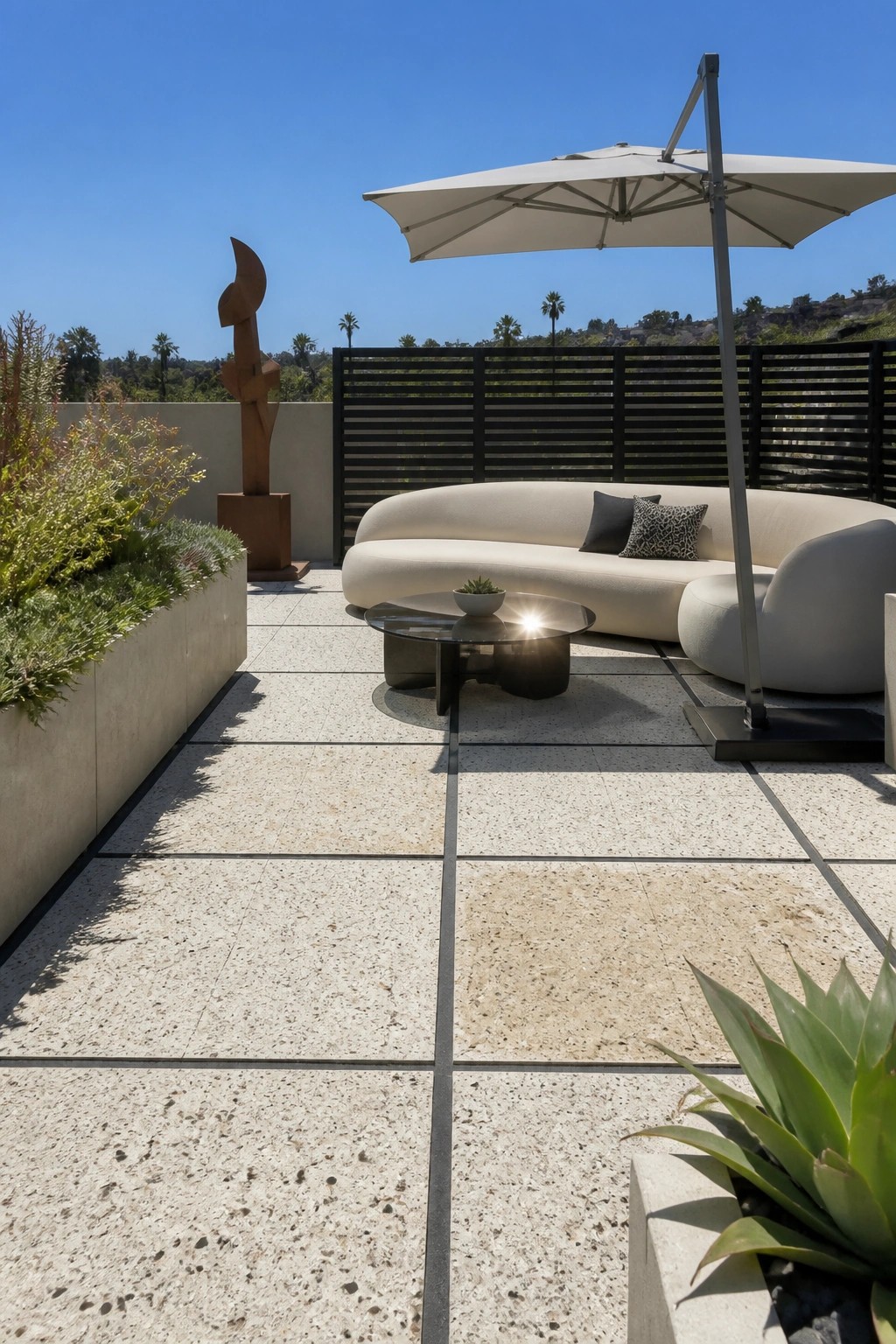
Large square pavers with dark lines between them give a patio a clear, organized layout. The borders keep the surface from looking too plain while still feeling simple and open.
This works best on flat outdoor spaces where you want structure without adding walls or extra features. It suits homes with modern or minimalist style and pairs well with curved seating or low planters.
Define Patio Edges With A Pebble Border
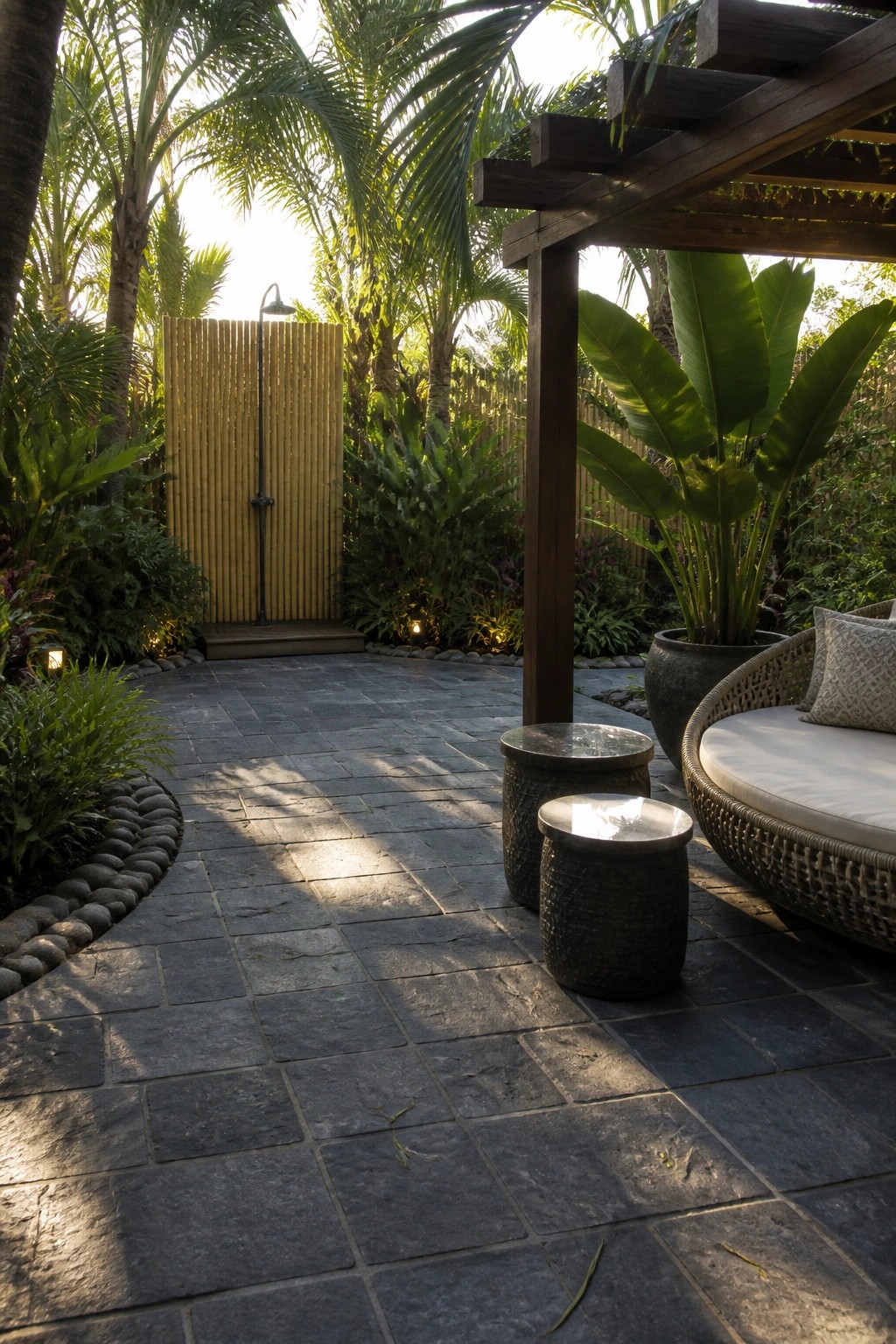
A pebble border around paver patios gives the surface a finished edge that feels deliberate rather than accidental. It keeps the stones from blending into the surrounding beds and helps the whole area read as one clean zone.
This approach works best in garden style yards where the patio sits right next to planting. Lay the border stones in a gentle curve and keep them level with the pavers so the transition stays smooth.
Use A Border Pattern To Define The Patio
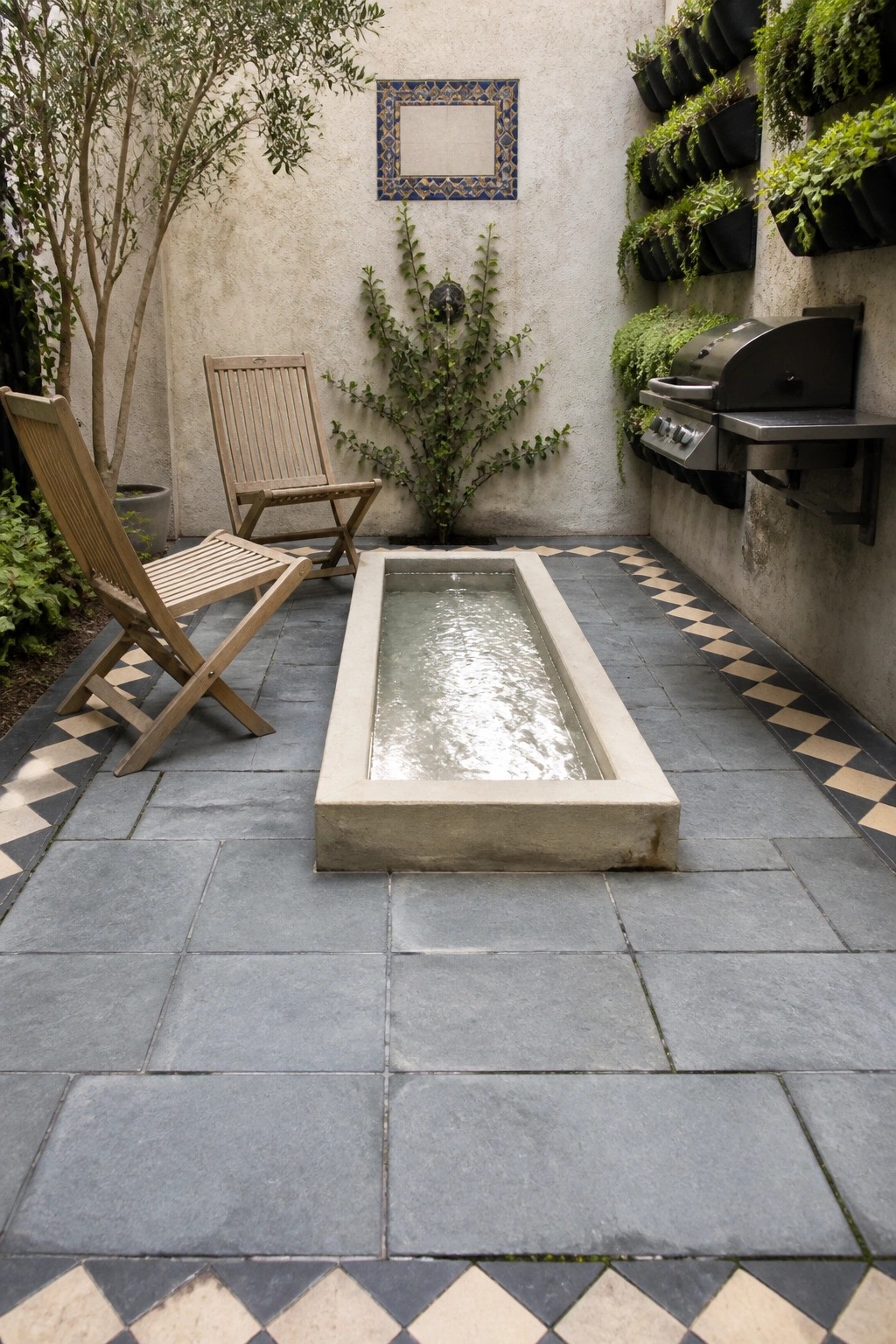
A border pattern gives the whole patio a finished look without needing a lot of extra structure. In this setup the dark and light tiles run along the edges and keep the gray pavers from feeling like they just stop. It makes the space read as one clear area even when other features like a long water basin sit in the middle.
This works best on smaller or medium patios where you want the layout to feel intentional. Keep the border simple so it does not compete with seating or plants, and match the colors to the main pavers so the whole surface stays calm.
Grass Borders Between Large Pavers
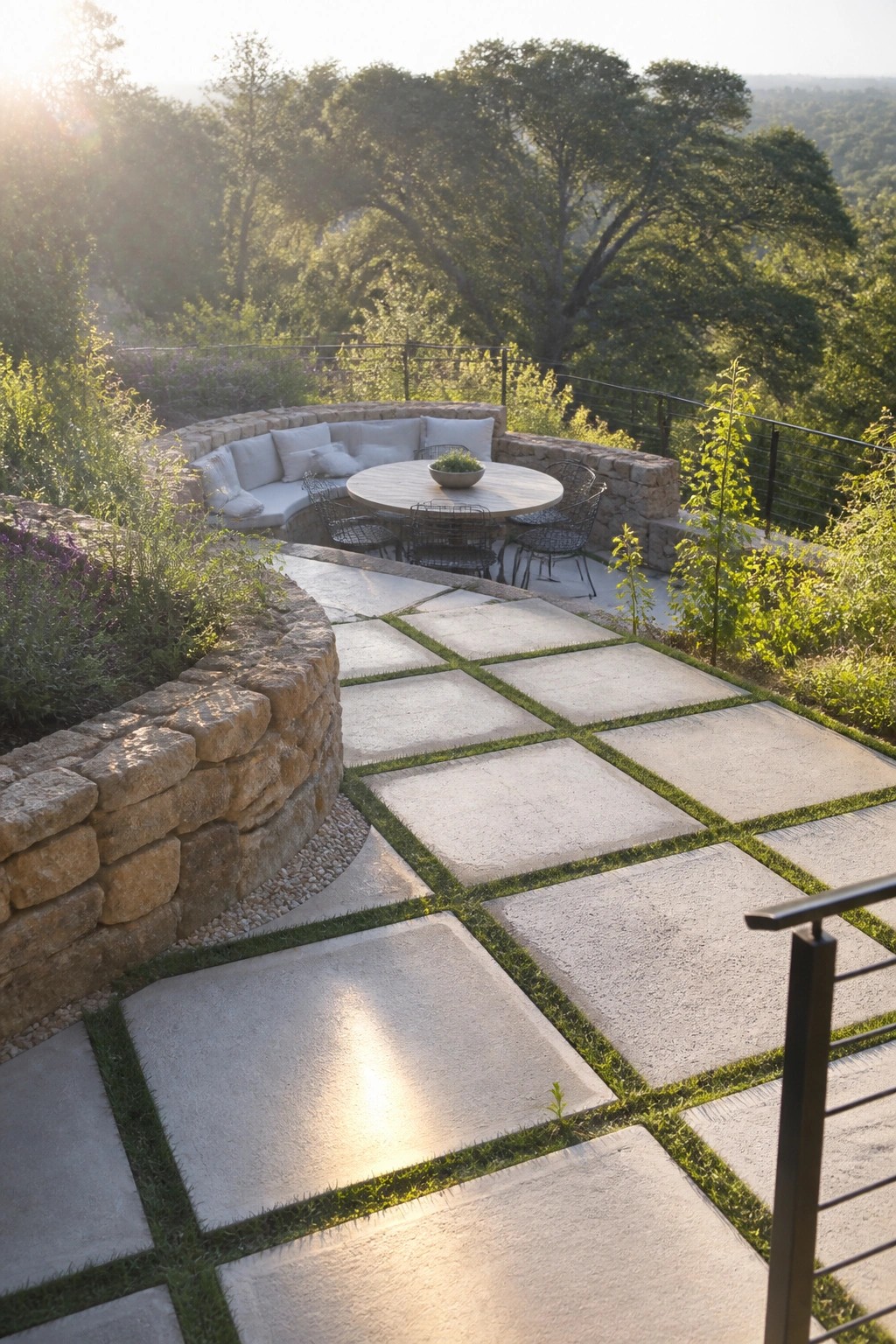
A simple grid of large pavers with grass running through the joints gives a patio a clean, structured look without feeling too formal. The grass lines act as soft borders that keep the whole surface feeling open while still defining each section clearly. This approach works especially well on sites with a slight slope or curve, where rigid materials might fight the shape of the space.
It suits homes with natural surroundings or where you want the patio to blend into the yard rather than stand out as a hard block. Keep the paver size consistent and the grass strips narrow so mowing stays easy. Avoid this layout if the area gets heavy shade, since the grass can thin out over time.
Define Patio Edges With A Border Pattern
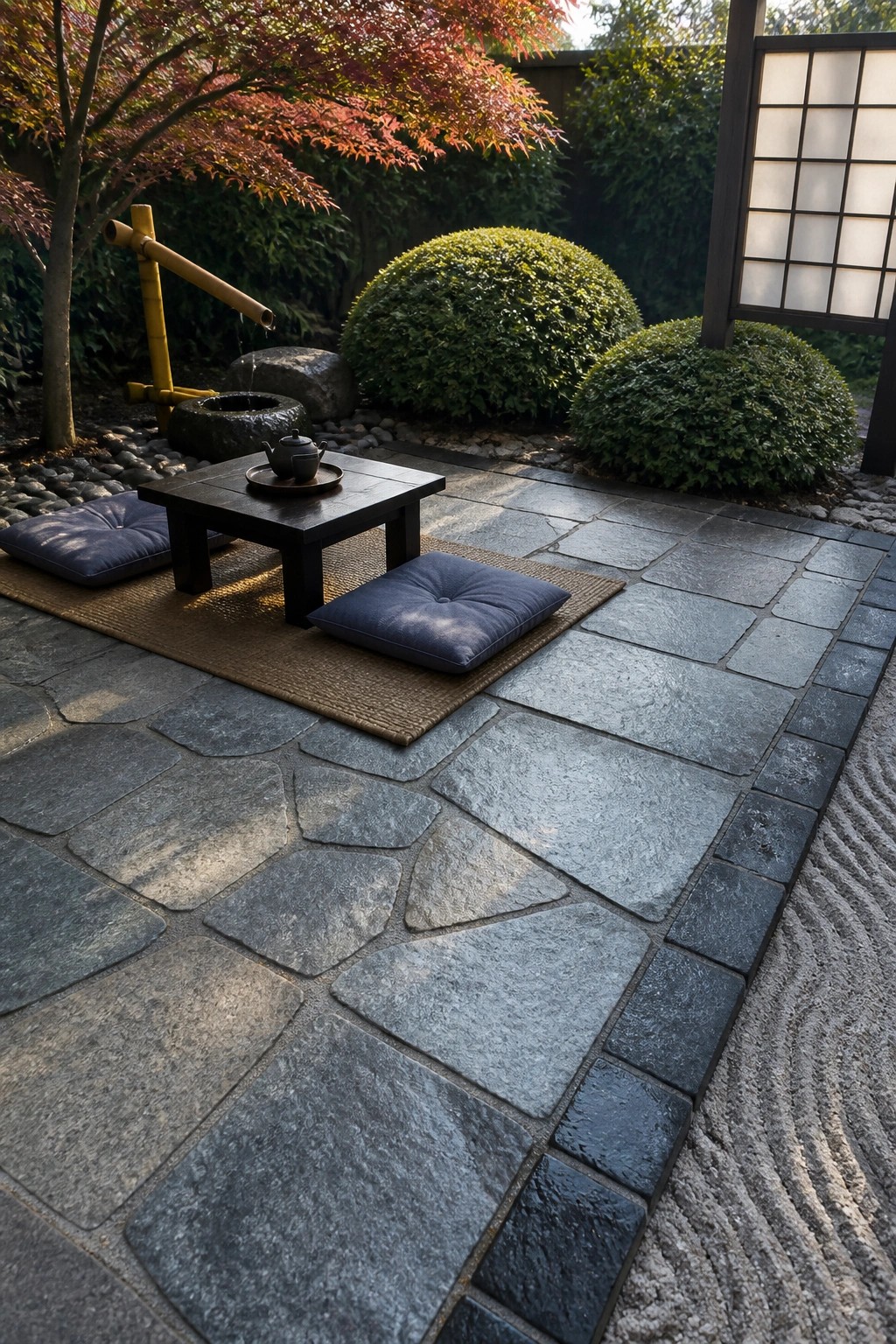
A simple border of darker rectangular pavers gives the whole patio a finished look without much extra work. It keeps the irregular stones from running into the gravel and makes the seating area feel like its own zone.
This approach suits smaller gardens or any space where you want a clear line between the patio and the surrounding landscape. Use a single contrasting paver size and keep the layout straight so the border stays easy to maintain over time.
Border Your Paver Patio With Decorative Tiles
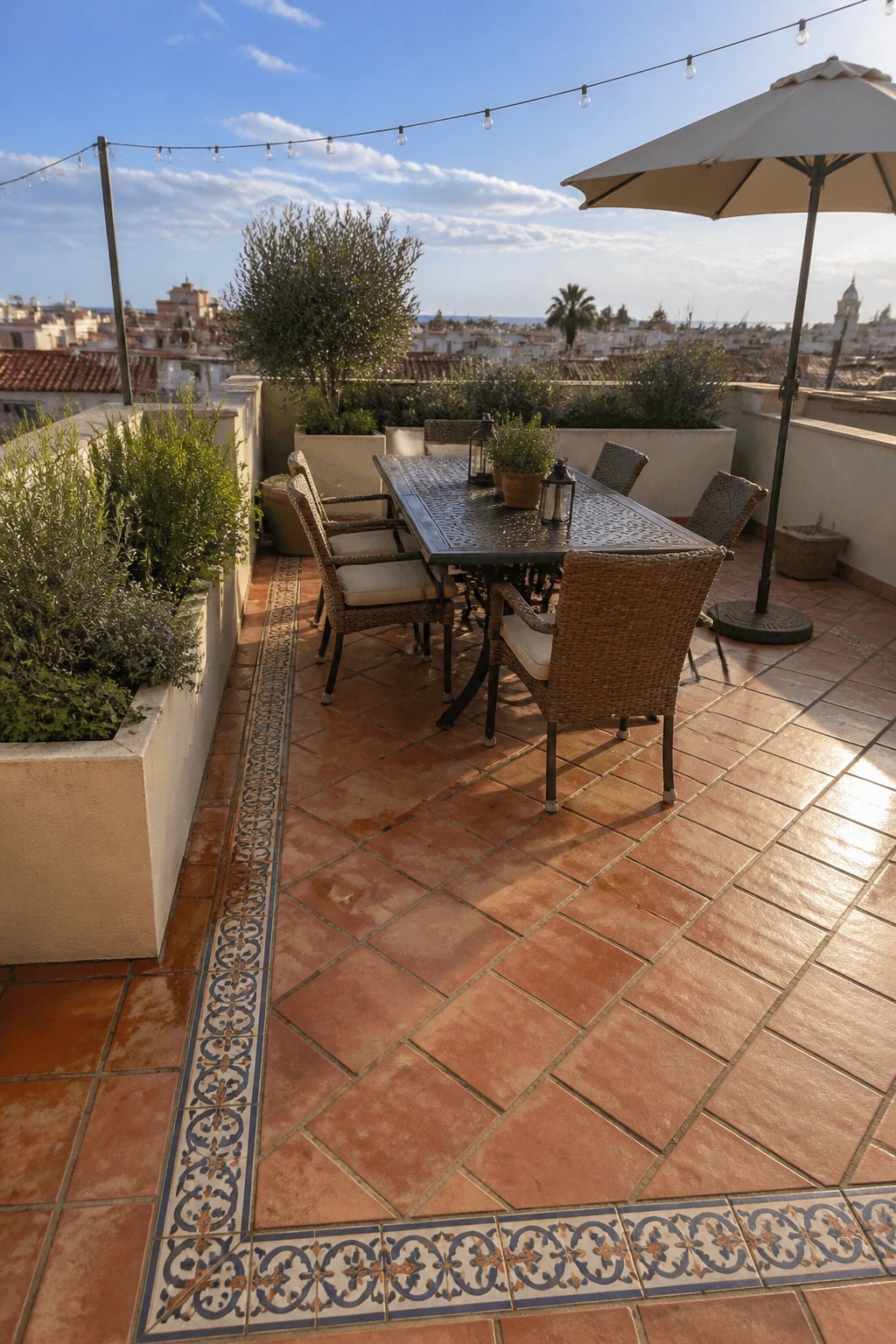
A patterned tile border gives a paver patio a clear frame and keeps the whole surface from feeling unfinished. The border also helps mark where the seating area ends, which is useful on rooftops or raised terraces where the edges are open.
This works best on smaller or medium patios that need a bit of definition without adding walls or railings. Stick with simple furniture so the border stays the main detail, and choose colors that match the surrounding pots or planters.
Defined Borders on Paver Patios
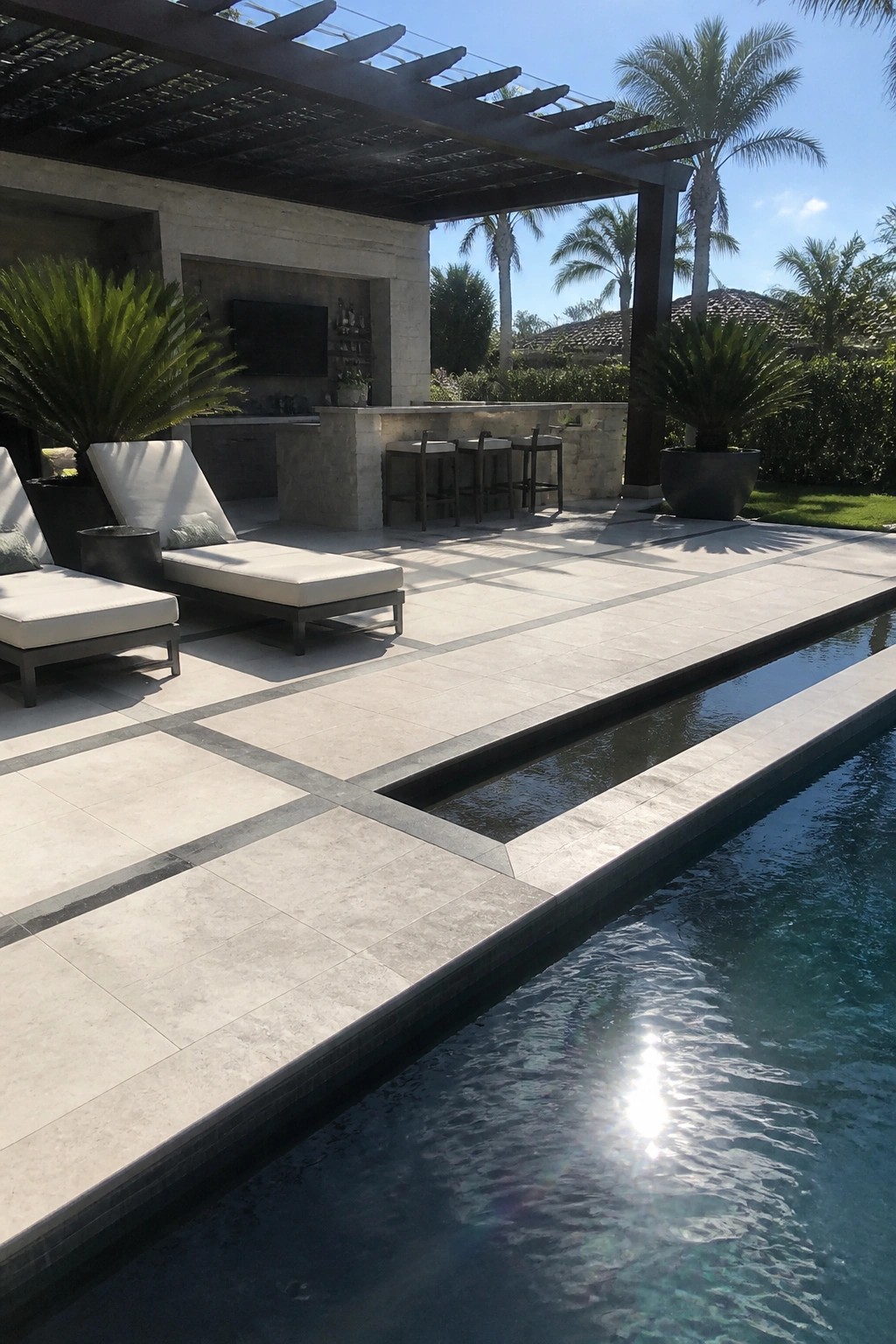
Defined borders on pavers help mark off different zones on a large patio without adding walls or extra furniture. The contrast makes the layout feel organized and keeps foot traffic flowing in the right directions, especially near a pool or seating area.
This approach works best on flat, open spaces where you want a clean look that still shows where one section ends and another begins. It suits homes with modern outdoor kitchens or poolside setups and holds up well with minimal upkeep.
Define Patio Edges With Contrasting Pavers
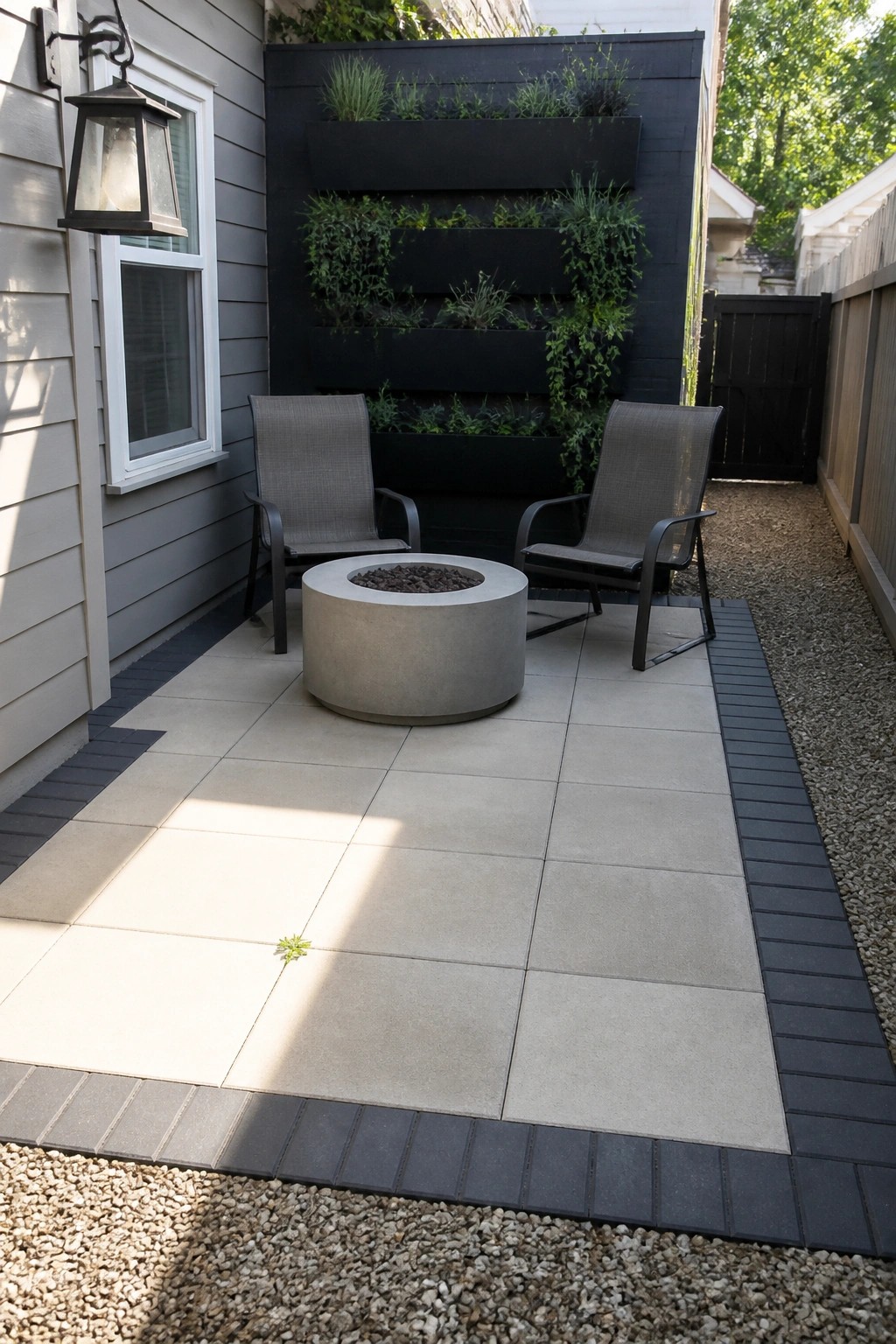
A simple border in a darker paver color gives the whole patio a clean, finished edge that feels intentional. It keeps the main seating area looking separate from the gravel beyond and stops the layout from drifting visually.
This approach works best on smaller or narrow patios where clear boundaries help the space feel more usable. Keep the main field in a light tone and let the darker border run in a straight, consistent width around it.
Pebble Borders Define Patio Zones
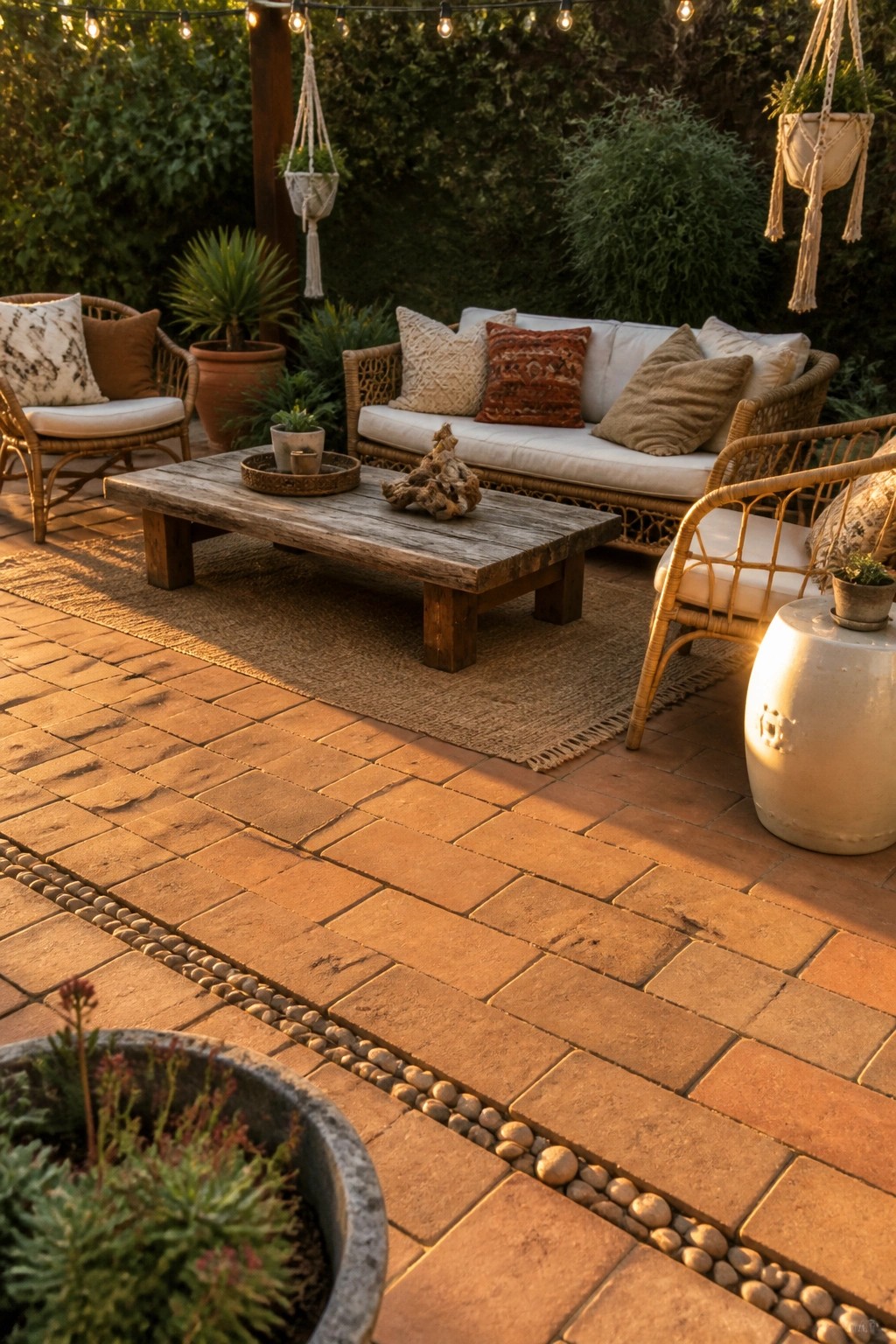
A pebble border gives a paver patio a finished edge that feels intentional. It marks off the main seating area from the rest of the yard without needing extra walls or raised beds.
This approach works best on flat outdoor spaces where you want simple separation between walking paths and lounge zones. It pairs well with warm-toned pavers and keeps the whole layout looking organized even when furniture and plants are added around the edges.
Define The Patio With A Stone Border
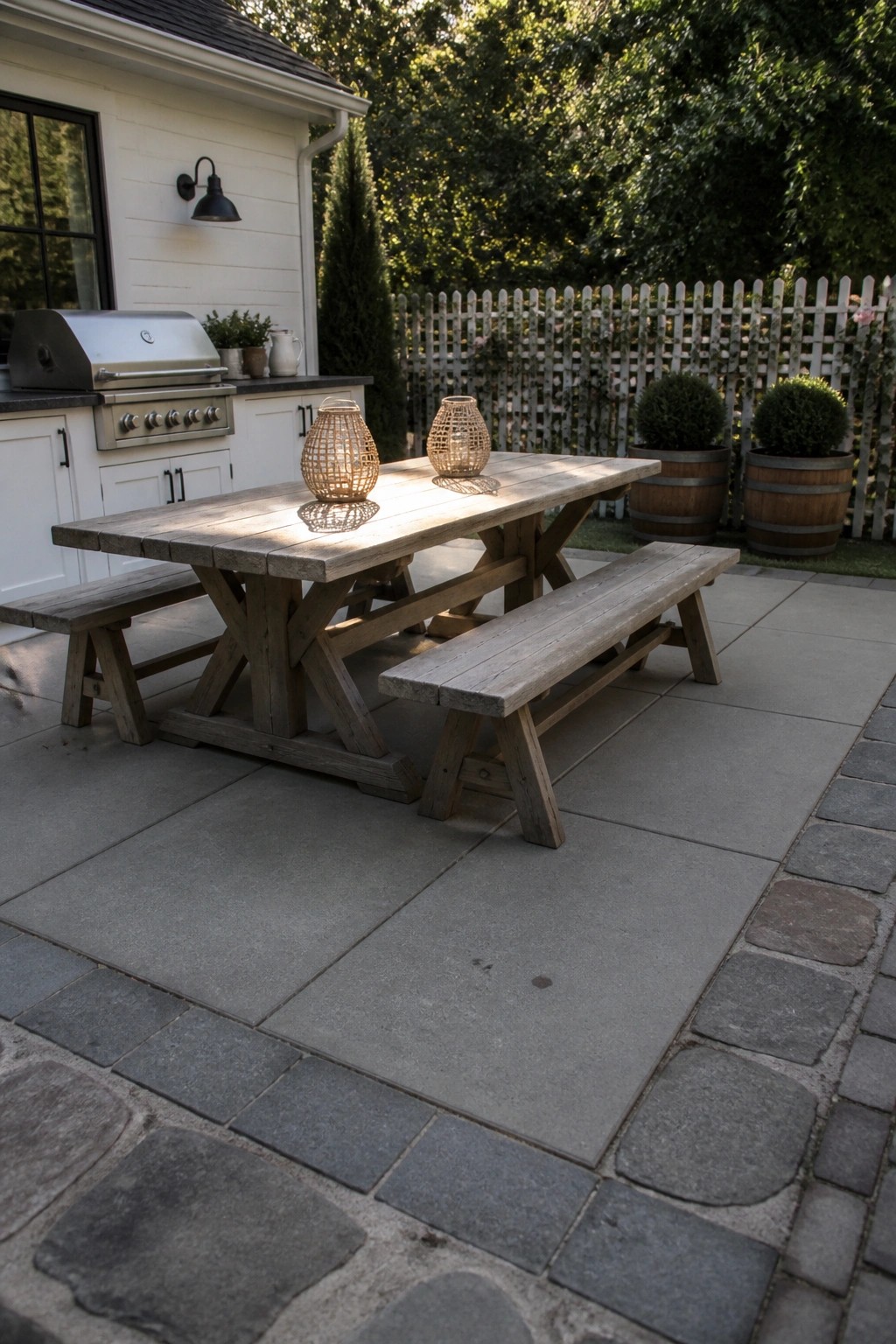
A stone border around paver patios keeps the whole surface looking clean and contained. It stops the pavers from fading into the grass or garden beds and gives the seating area a clear shape that feels more finished.
This works best on patios that sit next to lawn or plantings. The border also helps hold the pavers in place over time and makes mowing easier since the edge stays straight. Stick with a simple material like cobblestone so it does not compete with the main paver color.
Checkerboard Pavers With Defined Borders
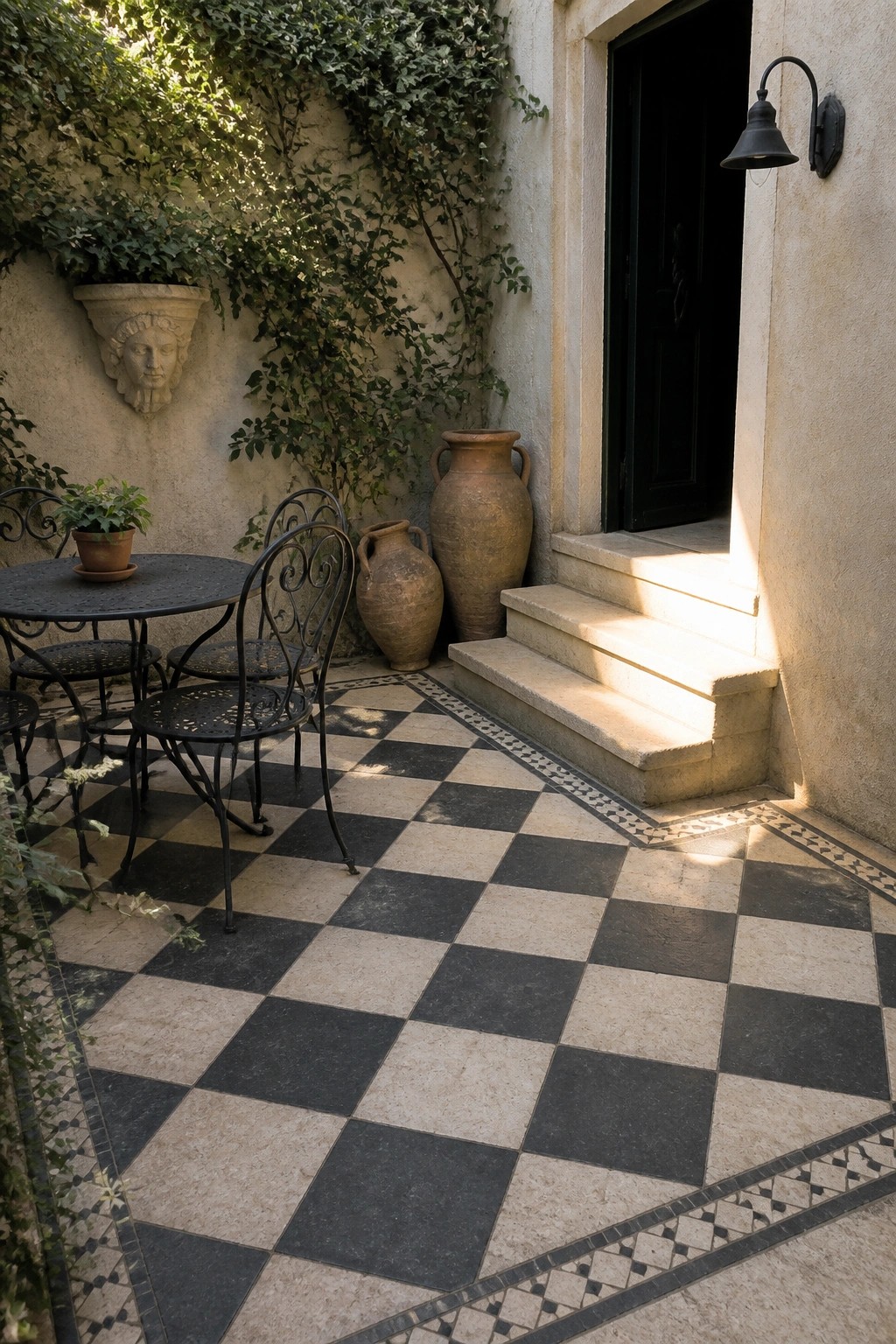
A checkerboard layout on pavers gives a patio a clear structure that feels organized rather than scattered. The borders around the edges help contain the pattern so it reads as one intentional space instead of a random floor treatment.
This approach works best on smaller or medium patios where you want the seating area to stand out from the surrounding yard. It suits homes with traditional or Mediterranean details and pairs well with simple metal furniture that does not compete with the floor.
Pebble Borders That Frame Patio Sections
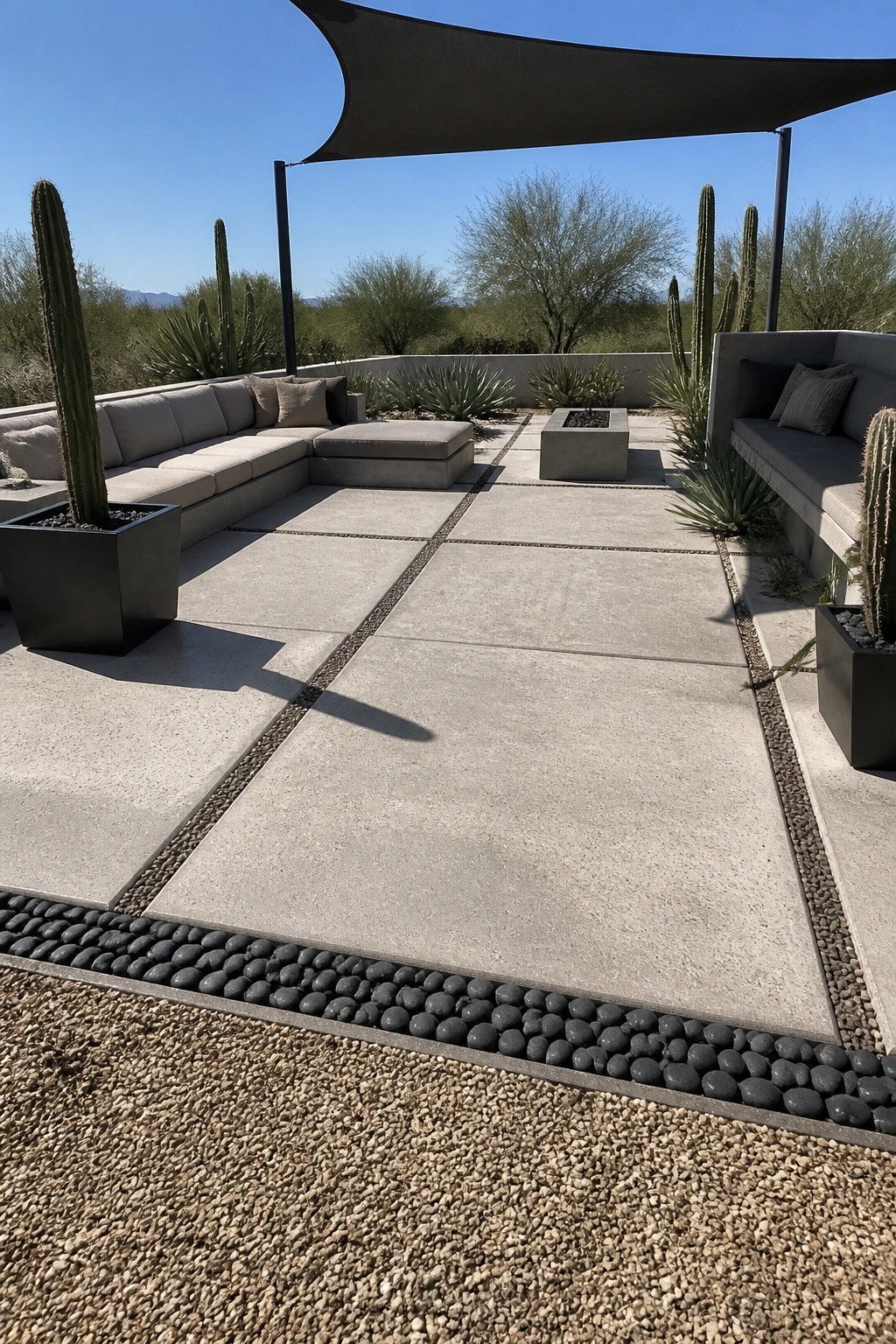
Adding narrow bands of dark pebbles along the edges of large pavers gives the whole surface a finished look without extra structures. The borders create clear separation between seating zones and open areas, which keeps the layout easy to read even in a big open space.
This approach suits dry climates and modern homes where you want simple lines that still feel natural. It also makes sweeping or hosing off the patio simpler since the stones stay in place and mark the edges clearly.
Defining A Patio With A Border Pattern
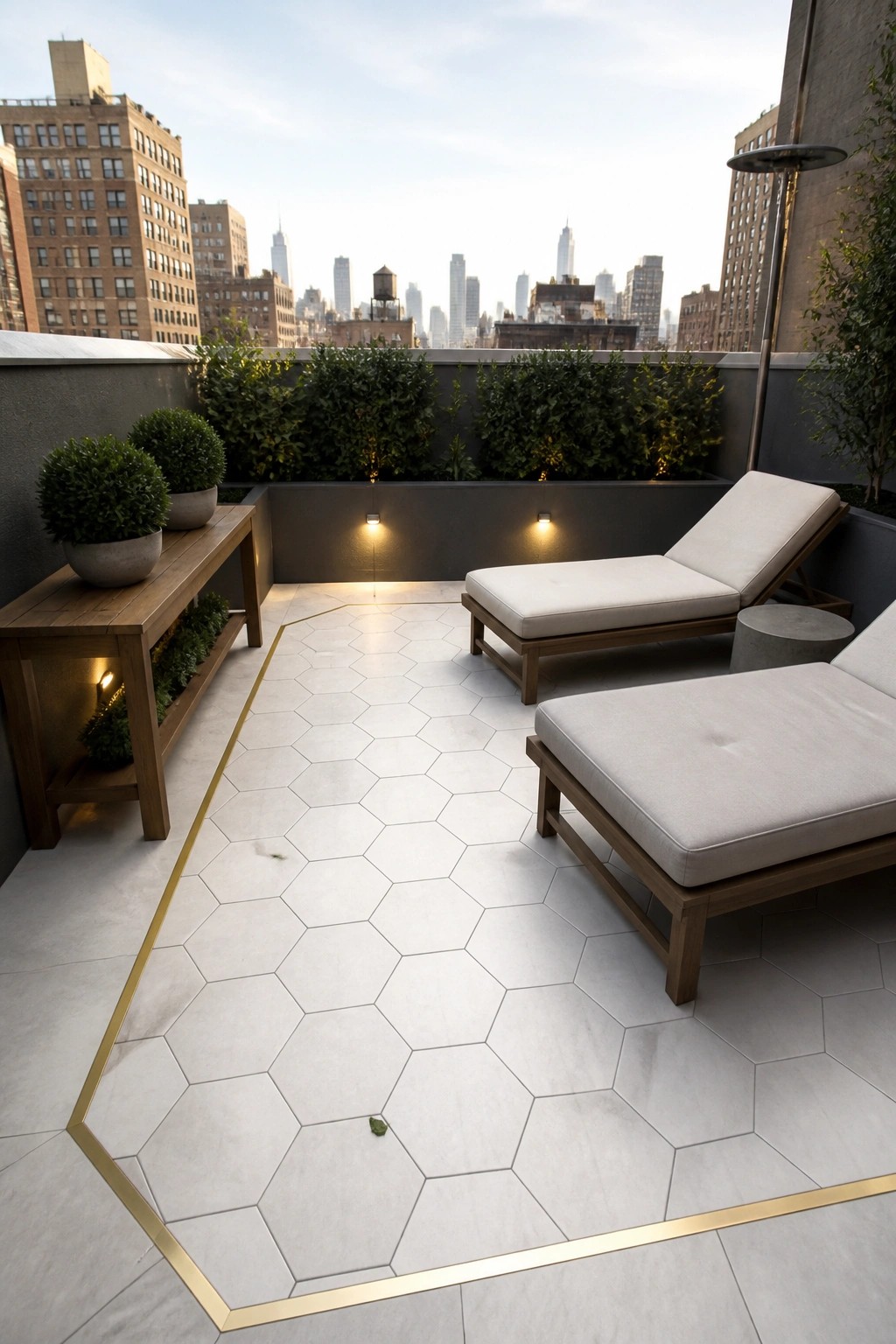
A border around paver tiles helps the whole patio feel more intentional and put together. It keeps the edges clean and stops the surface from looking like it just stops at random.
This approach works best on rooftops or small outdoor spaces where you want the seating area to read as its own zone. Use a material that contrasts with the pavers but still holds up outside.
Define The Patio With A Border Of Smaller Tiles
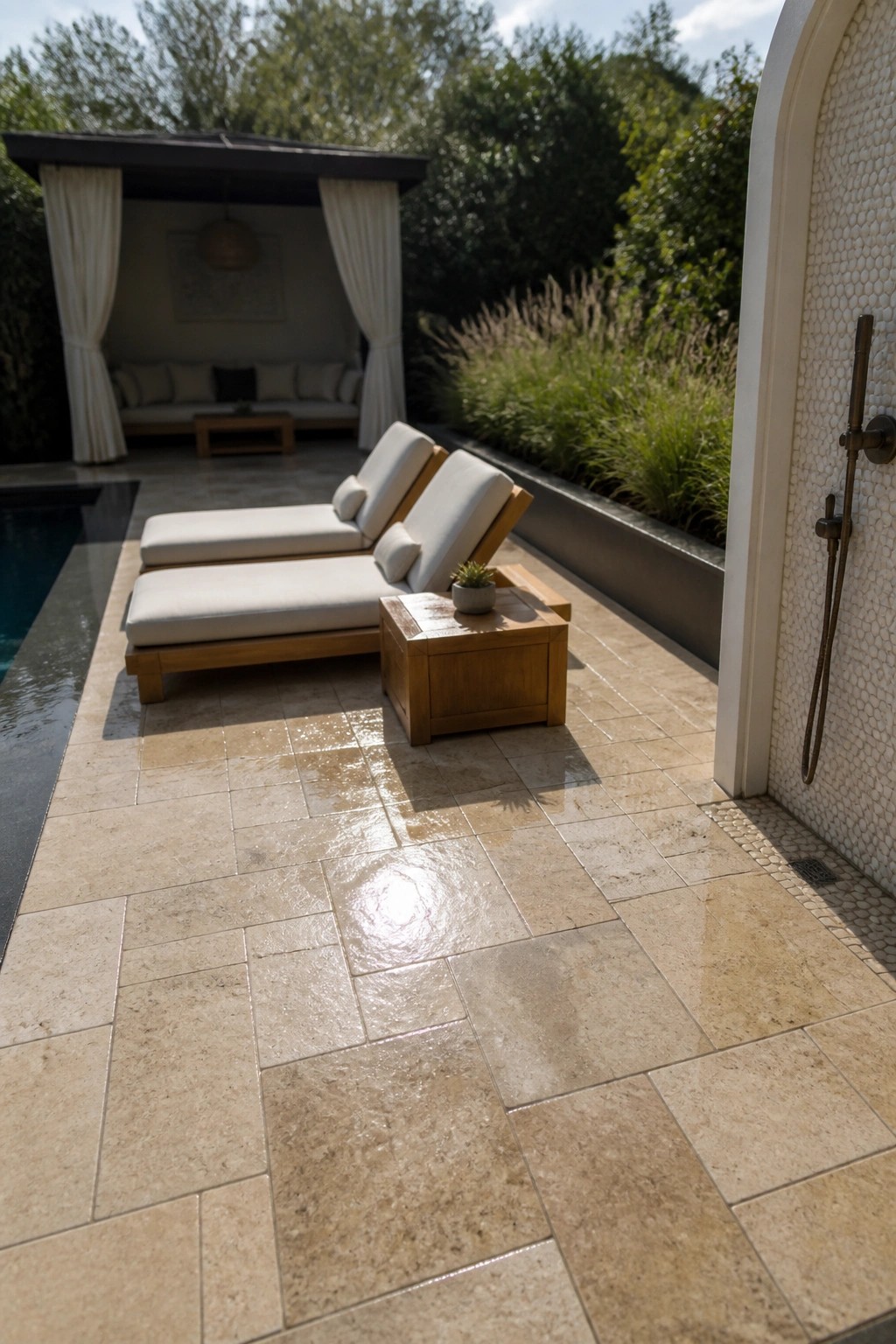
Large pavers work best when they stay simple and open across the main area. A border made from smaller tiles gives the space a finished edge and keeps the layout from looking loose.
This approach suits patios next to pools or outdoor showers. It marks the transition clearly without adding much pattern to the main floor, which helps the space stay easy to clean and walk on.
Gravel Strips Define Paver Path Edges
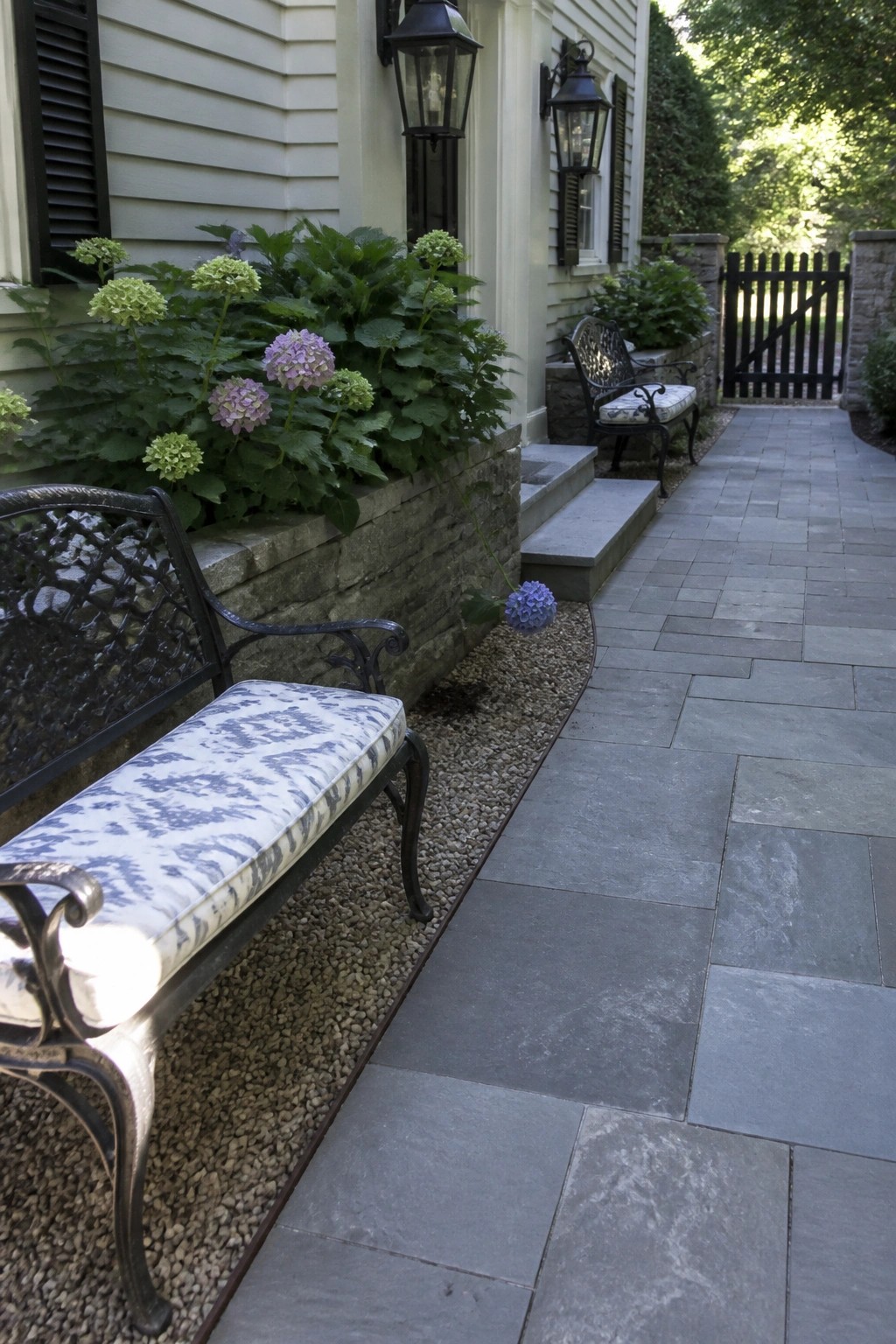
A narrow gravel strip along the sides of a paver path gives the whole walkway a finished, intentional look. It keeps the edges straight and stops soil or mulch from creeping onto the stones, which makes the path feel more structured without adding extra materials.
This approach works best on homes with traditional stonework or established gardens where you want a simple separation between the paving and the beds. Keep the gravel width narrow so it reads as a border rather than a second surface, and match the color to the pavers for a quiet, cohesive result.
Frequently Asked Questions
Q: How do I stop weeds from popping up along the border edges?
A: Start with a compacted gravel base under the whole area. This keeps things stable and blocks most growth. Finish by filling joints with polymeric sand.
Q: Which paver shape works best for creating sharp border lines?
A: Go with straight rectangular pavers for the border. They create crisp lines and need fewer cuts to fit together.
Q: Can I add borders later to an existing patio?
A: You can add them by cutting back the current edge carefully. Match the new pavers to your original ones for a seamless update. Compact the soil well before setting them in.
