

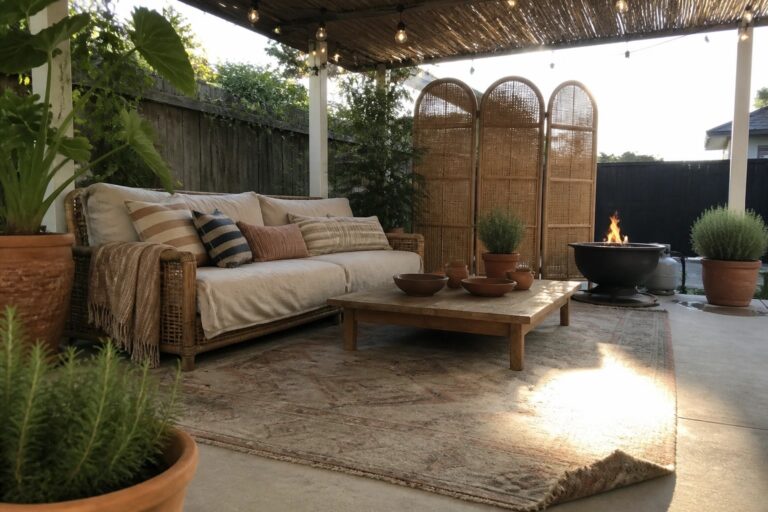
Patios end up being the places where daily life spills outside, but they often fall flat when the focus stays on replacing what is already underfoot.
I have noticed that the surface itself rarely causes the main problem once a few practical layers get added to make the space feel settled.
Usability comes first.
What tends to stand out is whether there is actually room to sit without rearranging everything each time someone steps out, and that usually comes down to simple additions rather than a full redo.
A couple of the adjustments I tried on my own patio shifted how the area gets used without any heavy work.
Add a Large Outdoor Rug
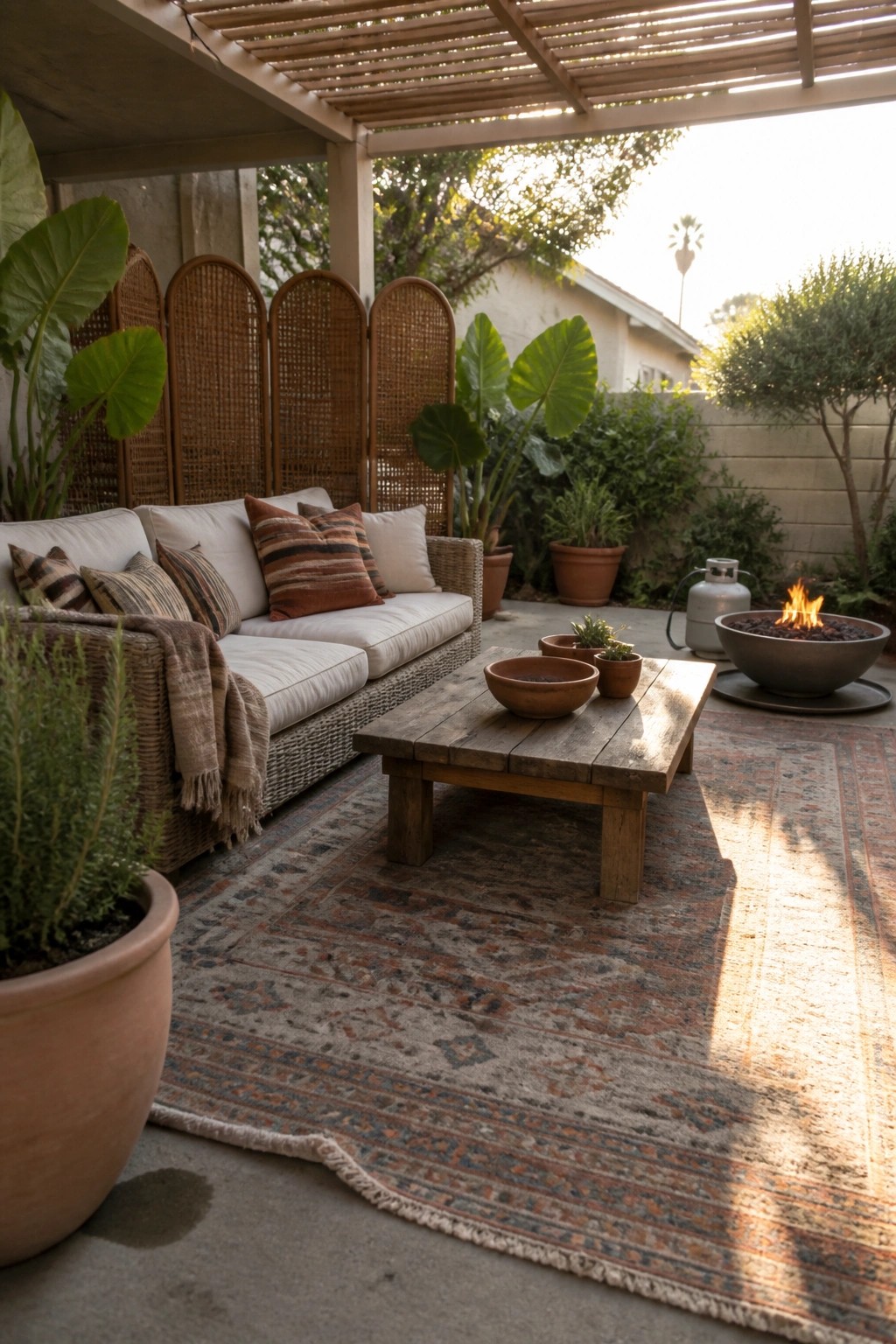
A big rug can turn an ordinary patio into a defined living area without any demolition or new paving. It adds color and softness underfoot while pulling the furniture together into one spot. The patterned rug in this setup shows how it can handle the wear of an outdoor space and still look inviting.
This works especially well on concrete or stone that you want to keep as is. Choose a rug made for outdoors so it can handle sun and rain, and make sure it is large enough to fit under the main seating and table. It suits most backyard patios and needs very little upkeep beyond occasional sweeping.
Lay Modular Deck Tiles
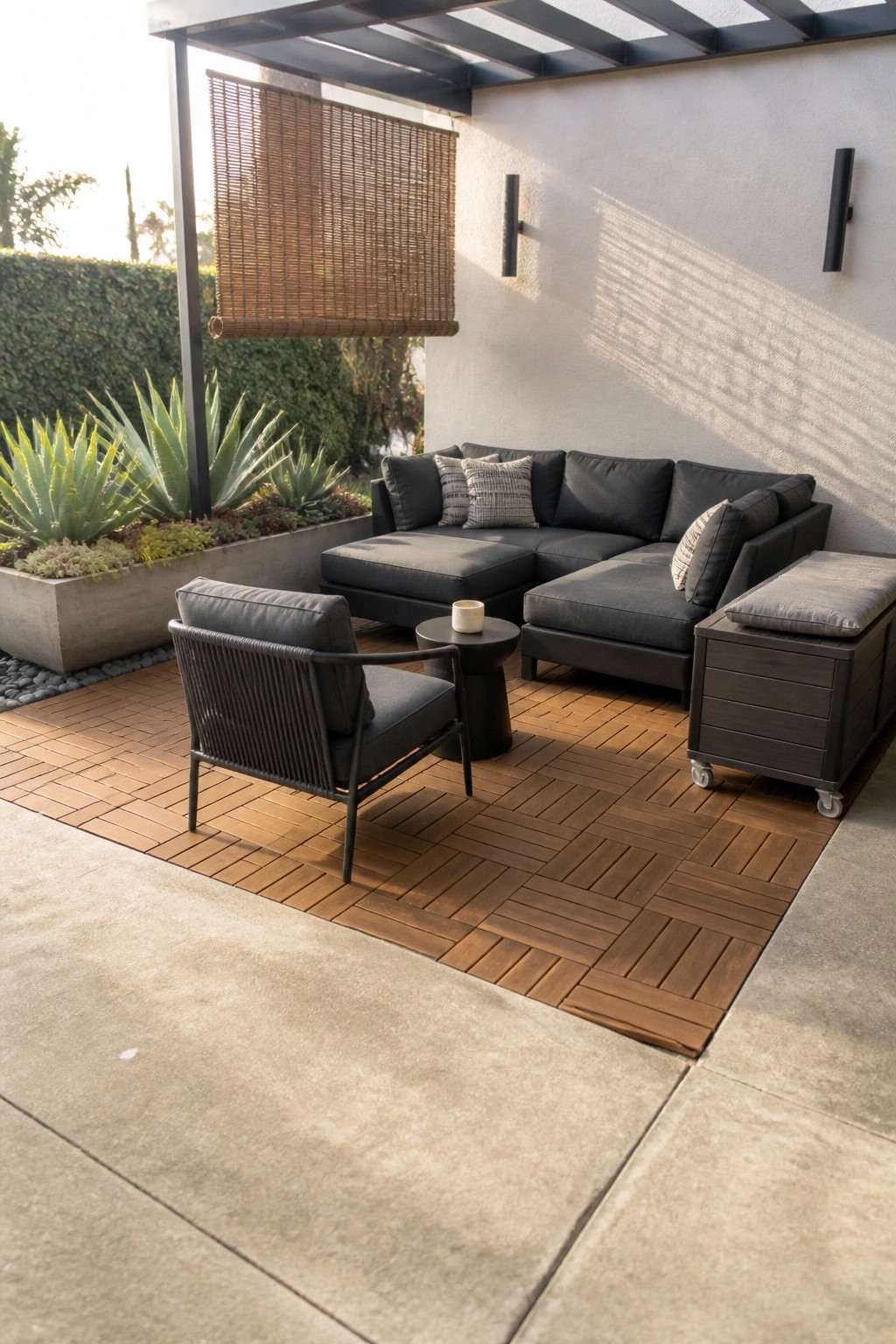
Many patios sit on old concrete that still feels solid but looks tired. Modular deck tiles give you a wood surface without ripping anything out. They click together in a grid and sit right on top, so the project stays simple and reversible.
These tiles suit any flat outdoor spot that needs a quick refresh, especially if you want the look of wood without a full rebuild. Check that the base drains well and pick tiles rated for sun and rain. The ones in the photo show how the pattern can stop right at the edge and leave the original surface exposed around it.
Use Rugs To Refresh An Existing Patio
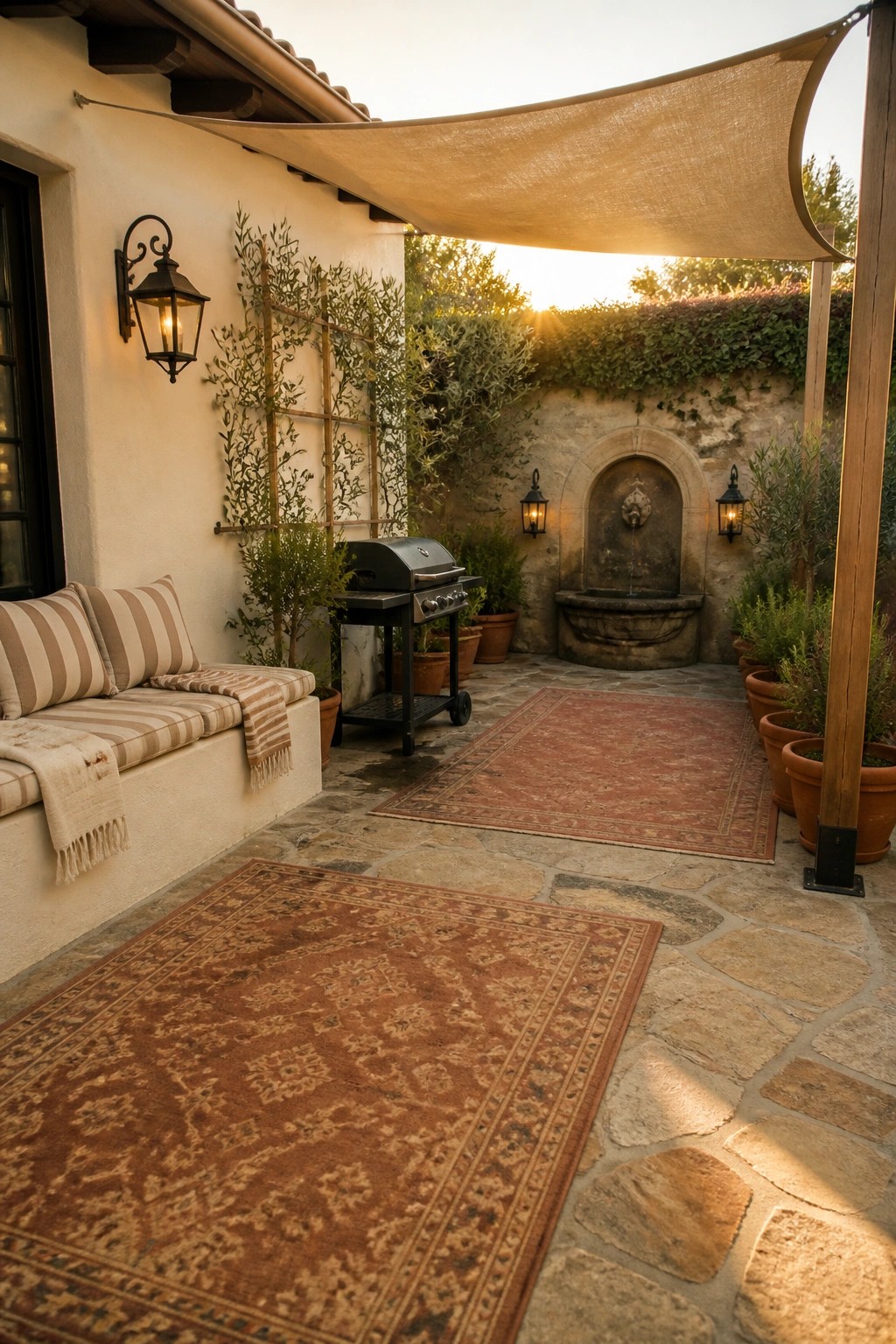
Rugs work well when you want to add color and softness to a patio without touching the floor itself. They help break up a large stone or concrete area into smaller zones that feel more finished and comfortable to walk on.
This approach suits homes with older patios that still have solid surfaces but need a quick lift. Choose weather-resistant rugs in simple patterns and layer two if the space is big, so the look feels balanced rather than busy.
Define Your Patio With a Large Area Rug
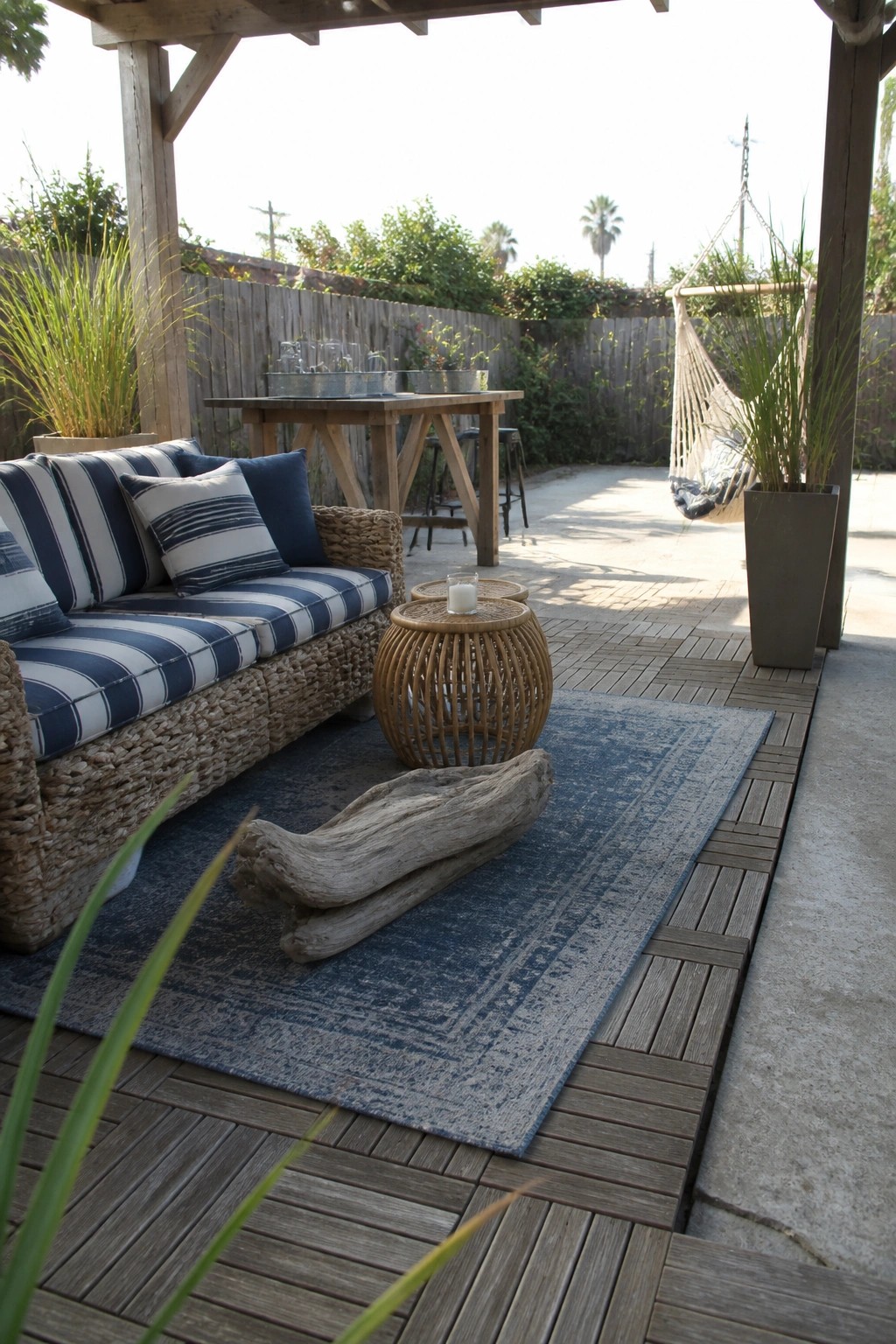
One simple way to give an old patio new life is to place a large outdoor rug directly over the existing surface. It pulls the seating area together and makes the space feel more finished without any demolition or new decking.
This approach works best on decks or concrete pads where the original material is still sound. Pick a rug sized to fit under the main furniture pieces so the whole arrangement feels grounded and stays put in the wind.
Add a Gravel Circle for a Fire Pit Zone
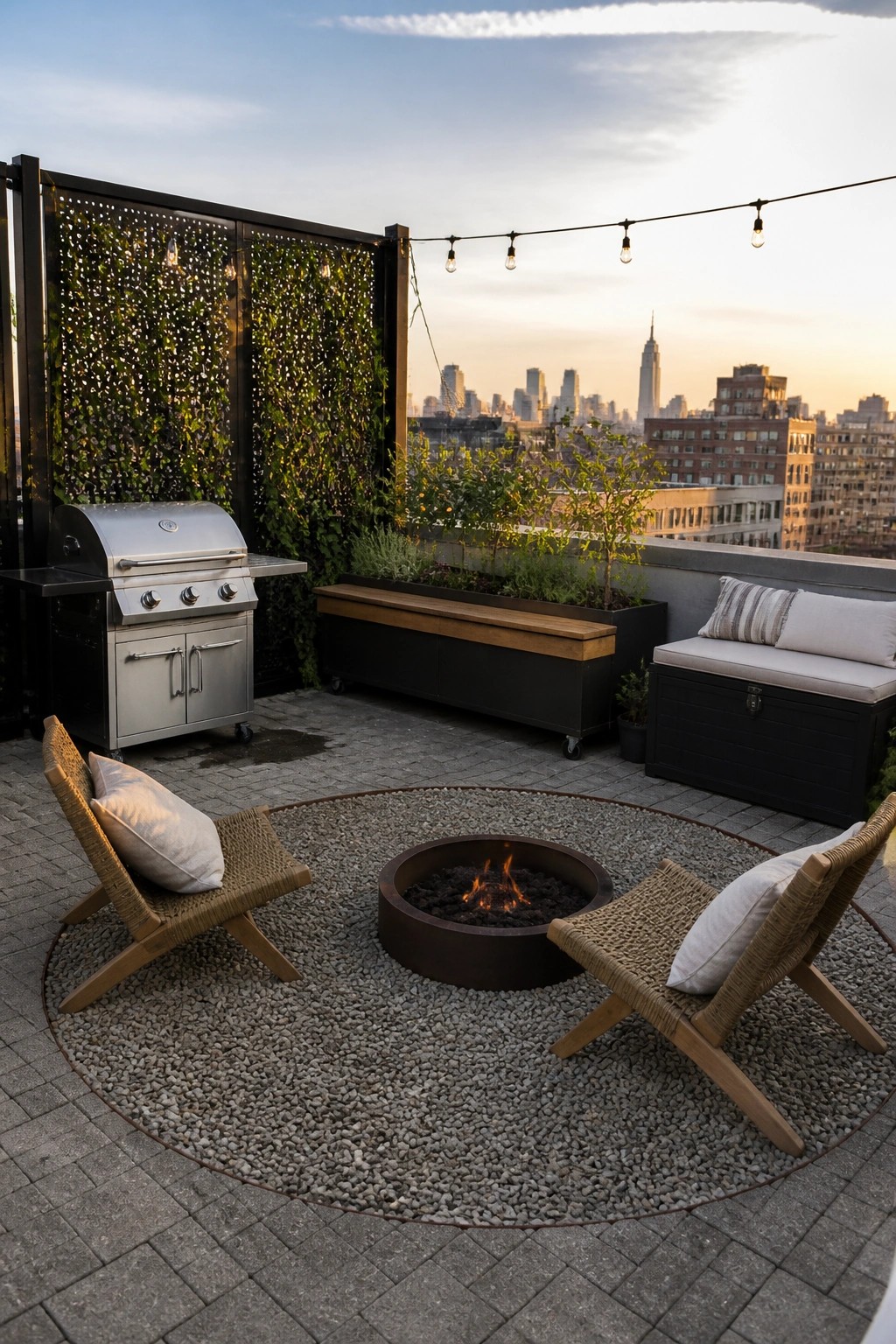
A gravel circle gives you a clear way to set aside space for a fire pit without touching the existing patio surface. It creates a simple boundary that feels intentional and separates the seating area from the rest of the paved space.
This works on most hard surfaces and suits small city patios or rooftops where you want one defined spot for gathering. Keep the circle modest in size so it does not crowd the rest of the area, and use edging if you want the gravel to stay put over time.
Lay an Outdoor Rug Over Concrete
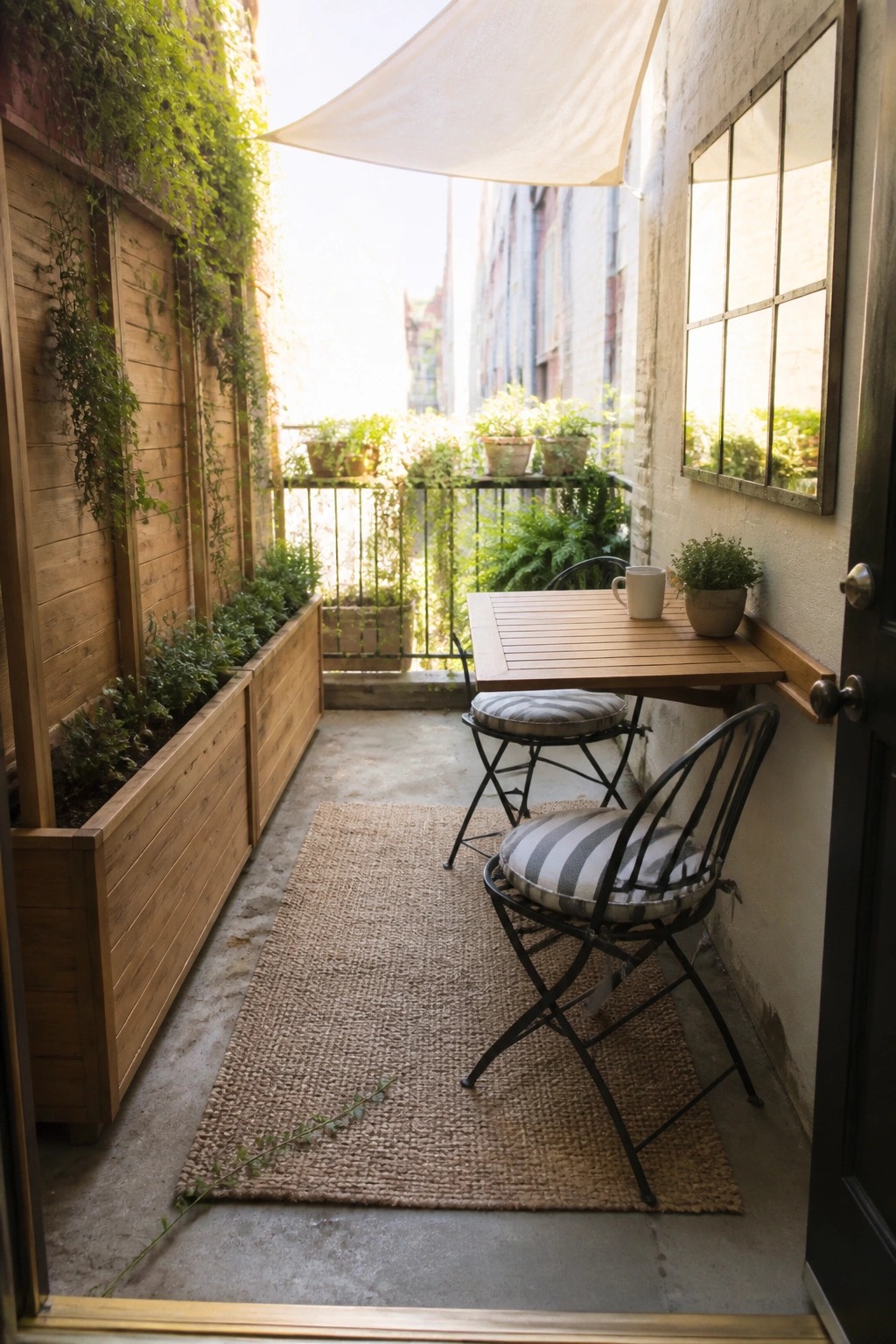
An outdoor rug is one of the easiest ways to make a plain concrete patio feel like an actual room. It adds texture underfoot, defines the seating area, and keeps the space from feeling so hard and bare without any permanent changes.
This works especially well on small patios or balconies where you already have a table and chairs set up. Just choose a durable rug that can handle weather and lay it flat so it does not shift underfoot. It suits most homes with existing hard surfaces and gives you a simple way to refresh the look each season.
Center A Fire Pit On Your Existing Patio
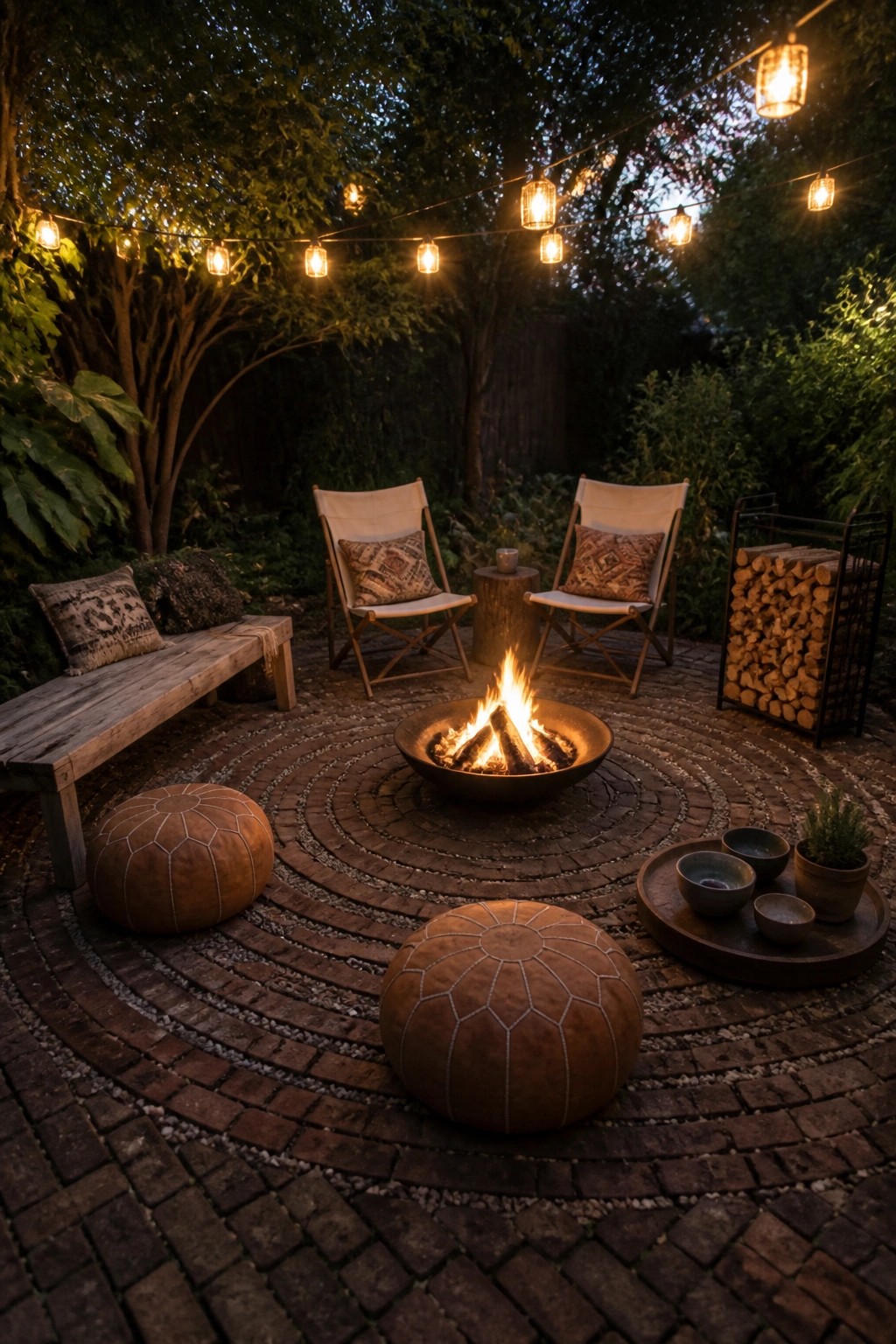
A fire pit gives an outdoor space a clear purpose without any need to tear up or replace the paving underneath. People tend to gather around it naturally, and it turns a flat surface into something that feels more like a room.
Set the fire pit toward the middle of the area and arrange a few low seats or floor cushions around it. This works on brick, concrete, or stone and lets you keep the original surface intact while still making the space feel finished.
Hang a Pendant to Define the Dining Area
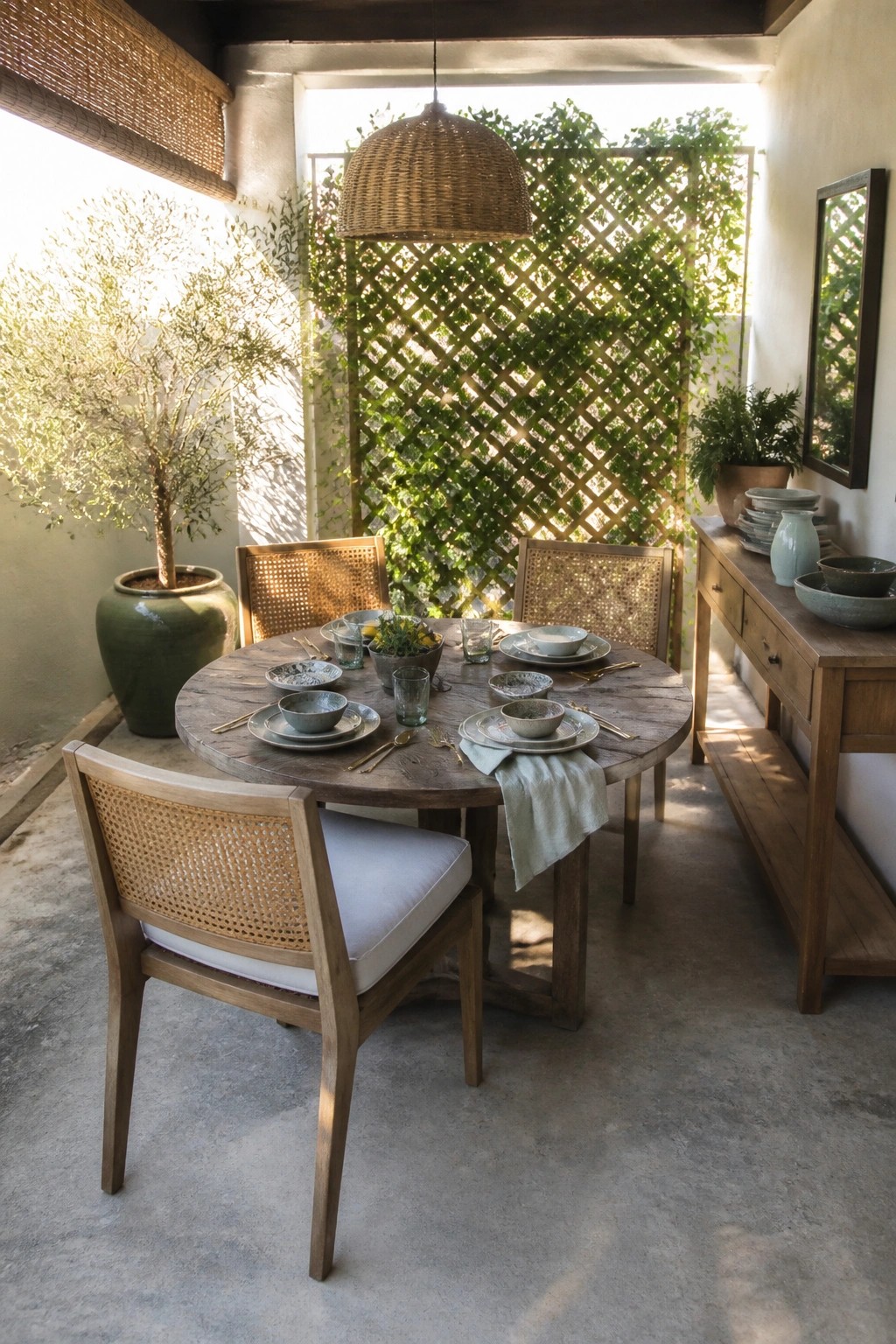
A single large overhead light can turn an open patio into a clear dining spot without touching the floor at all. It draws the eye down to the table and makes the seating feel settled even when the surface stays plain concrete.
Place the fixture right above the center of the table and choose a wide shade that gives some visual weight. This works well on most existing patios as long as you have a sturdy beam or hook overhead and pick a light made for outdoor use.
Add Simple Curtains to Soften the Patio
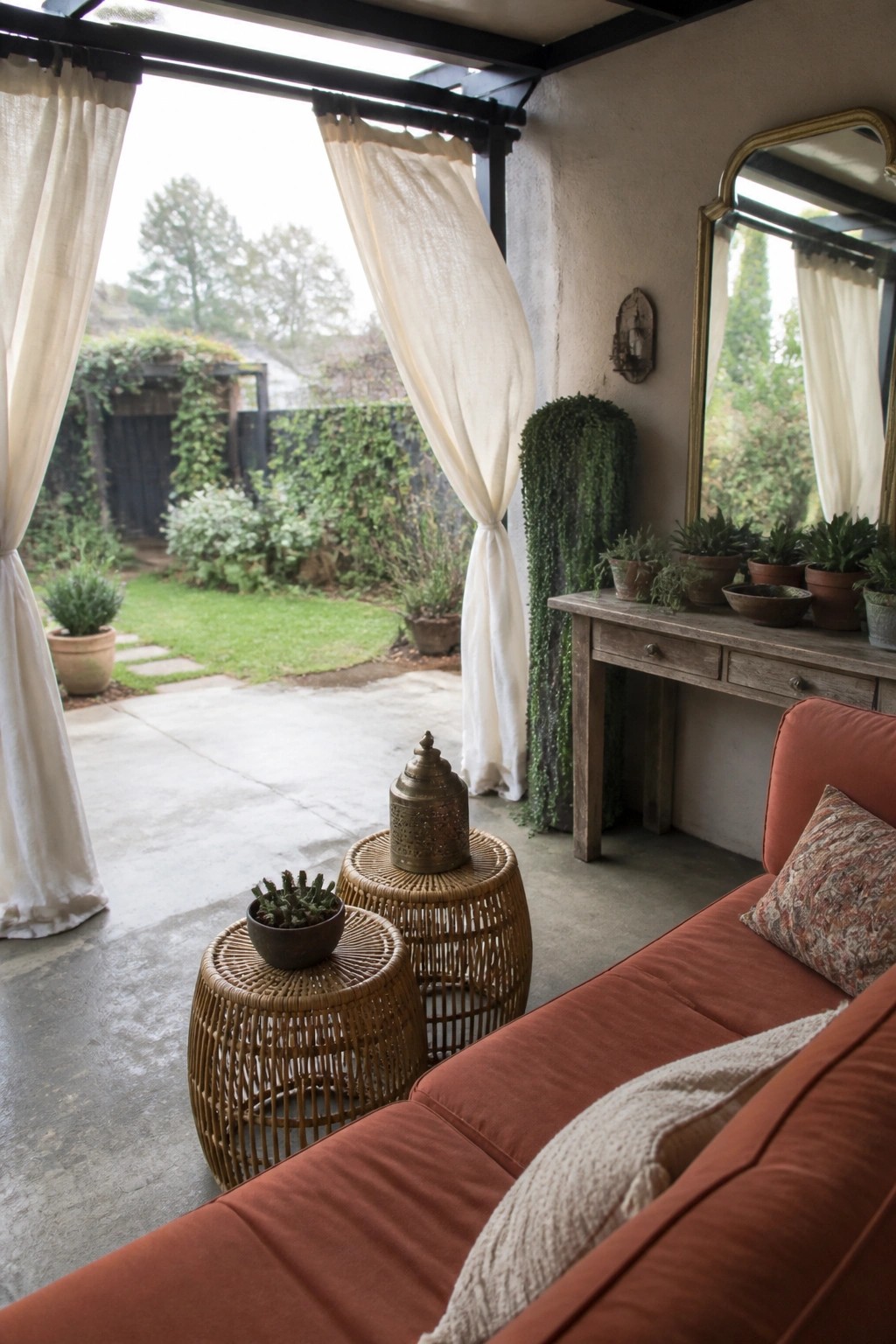
One easy way to make an existing patio feel more like an actual room is to hang lightweight curtains along the open sides. They add softness, cut down on glare, and give a bit of privacy without touching the floor at all.
This works best on patios that already have some kind of overhead structure or posts to hang from. Stick with outdoor fabric, keep the color light, and tie the panels back during the day so the space still feels open and connected to the yard.
Add a Large Outdoor Rug
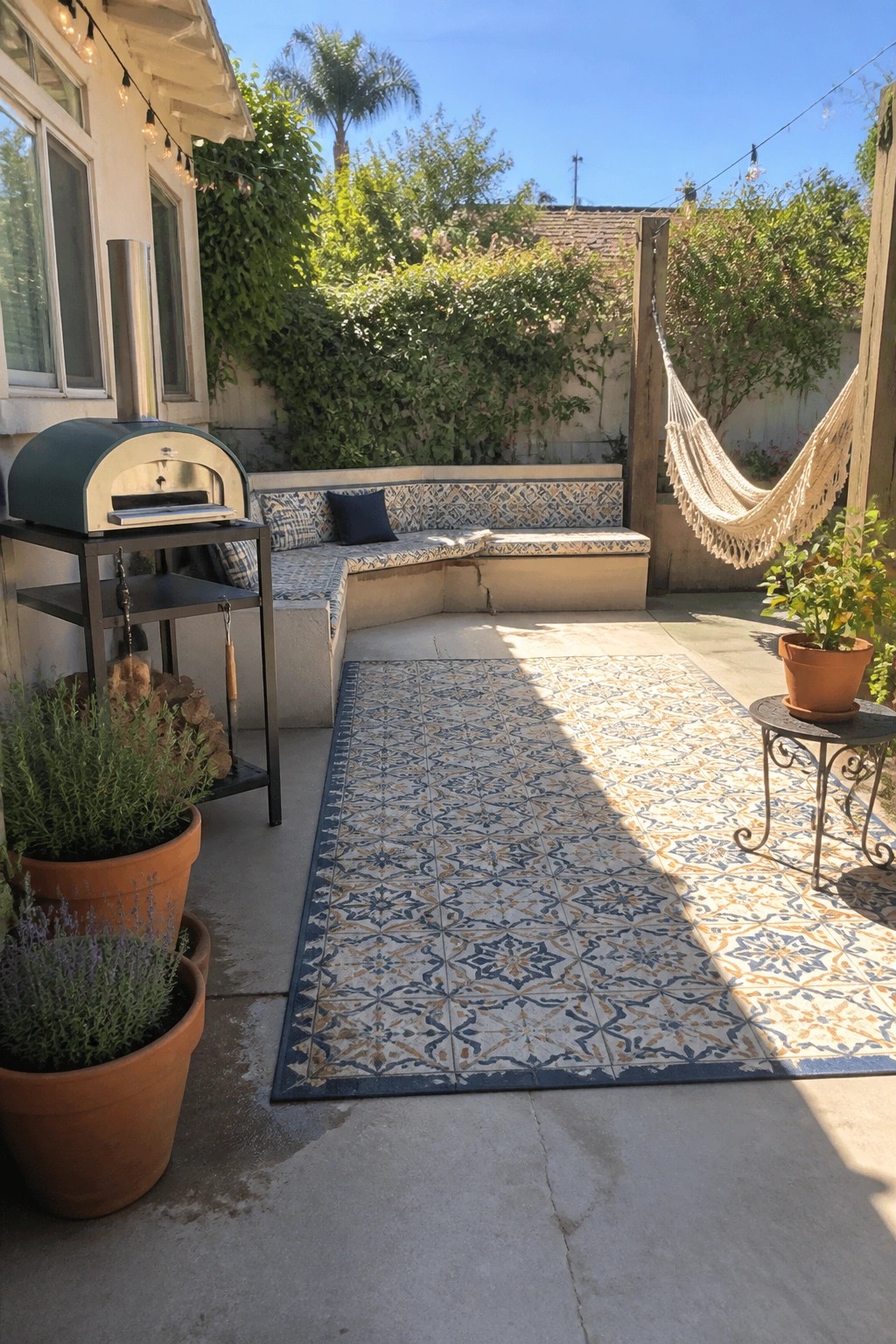
One simple way to refresh a concrete patio is to cover part of it with a big outdoor rug. The rug adds color and pattern right away, and it makes the space feel more like an actual room instead of just a hard slab.
This works best on flat concrete that is still in decent shape. Pick a rug sized to fit under the main seating area so the edges do not trip anyone, and choose a material made for outdoor use so it lasts through sun and rain.
Add Large Planters to Frame the Patio
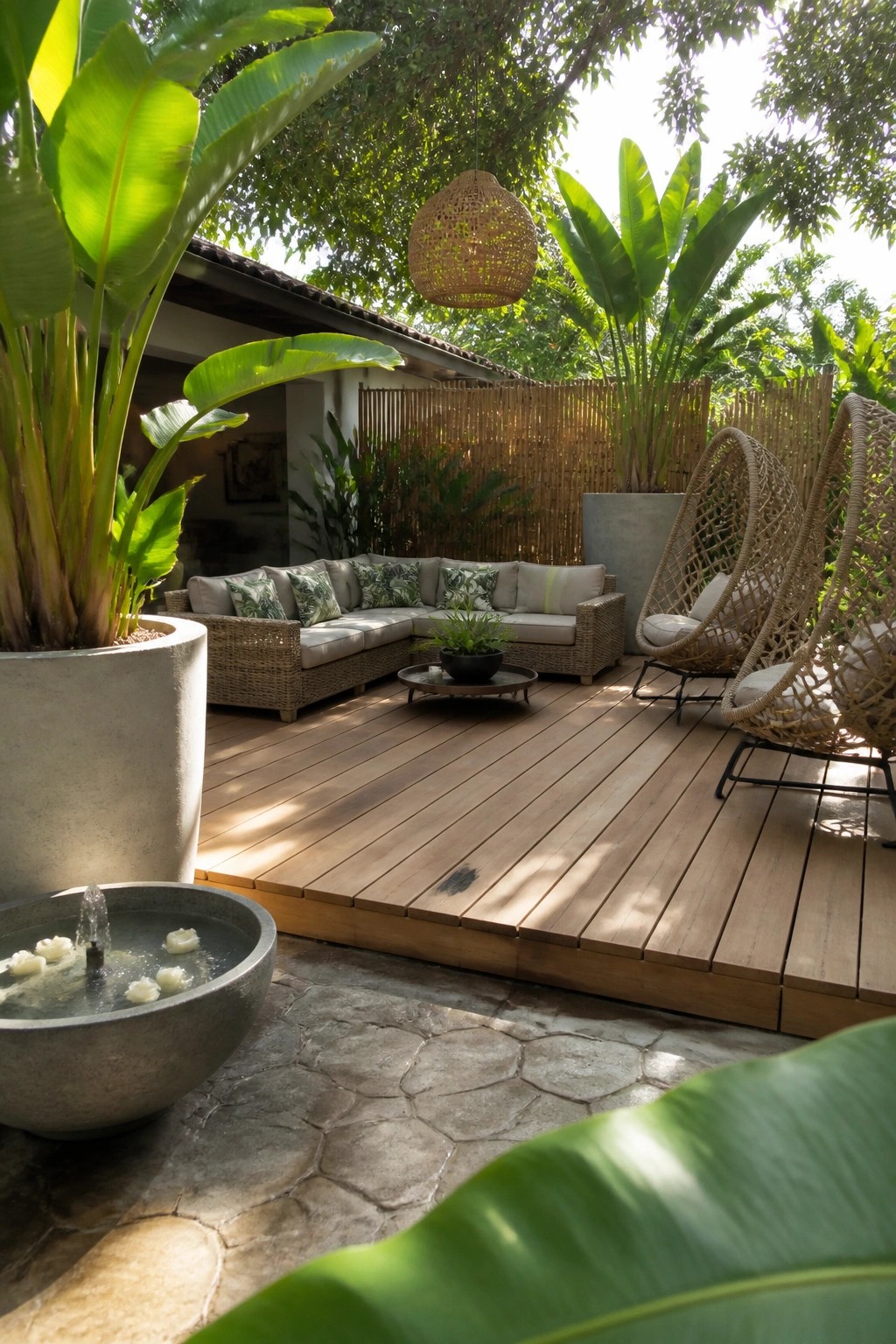
Large planters give an existing deck instant structure and a finished look. They let you add height and greenery right where you need it, without touching the surface underneath.
Place a few oversized pots along the edges or near seating areas to mark off zones. This works especially well on wood decks that already feel solid but need more definition. Stick with simple concrete or woven styles so the focus stays on the plants.
Anchor the Space With an Outdoor Rug
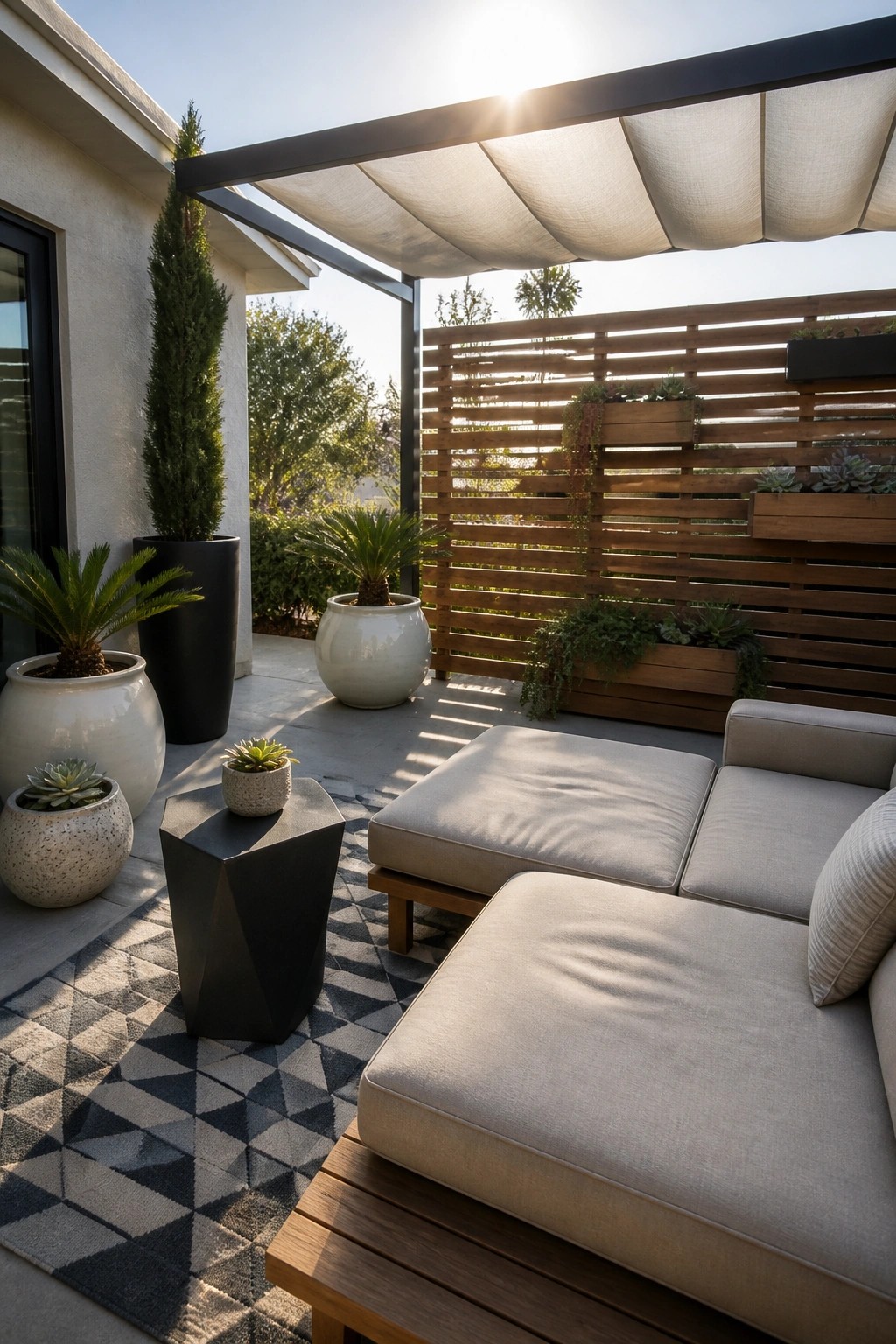
An outdoor rug is one of the simplest ways to make an existing patio feel more like a real room. It pulls the furniture together, softens the hard surface underfoot, and creates a clear seating zone without any demolition or new paving.
This works especially well on concrete or stone patios where the surface is still sound but looks plain. Choose a rug that is large enough to fit under the main seating pieces and a bit beyond, so the whole arrangement feels grounded. A durable, weather-resistant material will hold up better than indoor rugs, and a simple pattern helps hide everyday dirt.
Add a Long Table With Benches
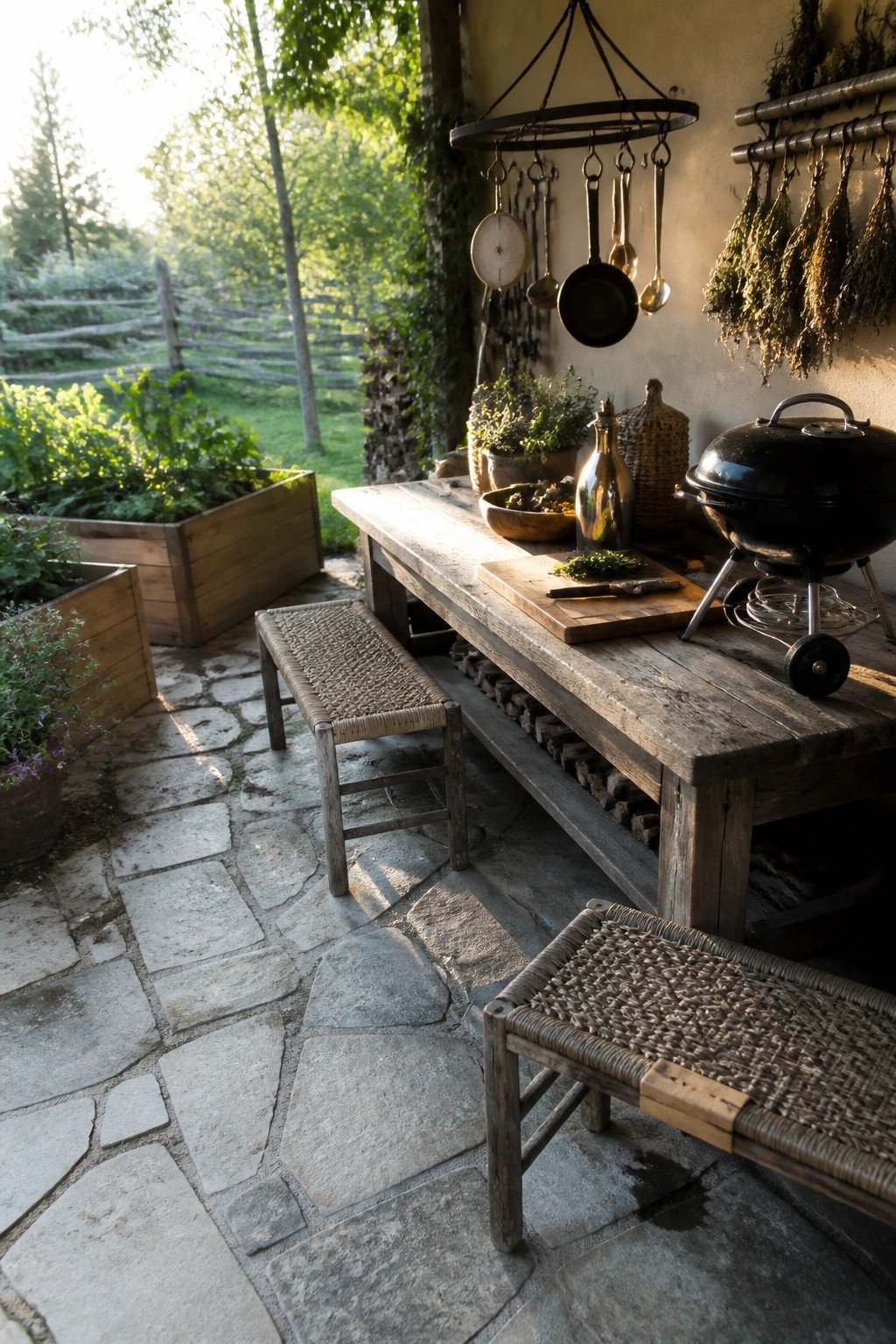
One easy way to make an existing patio more useful is to set a long wooden table and a couple of benches right on the stone. The surface stays untouched, yet the space suddenly works for meals, chopping herbs, or just sitting outside.
This setup suits any paved patio that already has good drainage and sun exposure. Keep the table simple and sturdy so it can handle weather and daily use without needing extra anchors or changes to the floor.
Add a Large Outdoor Rug
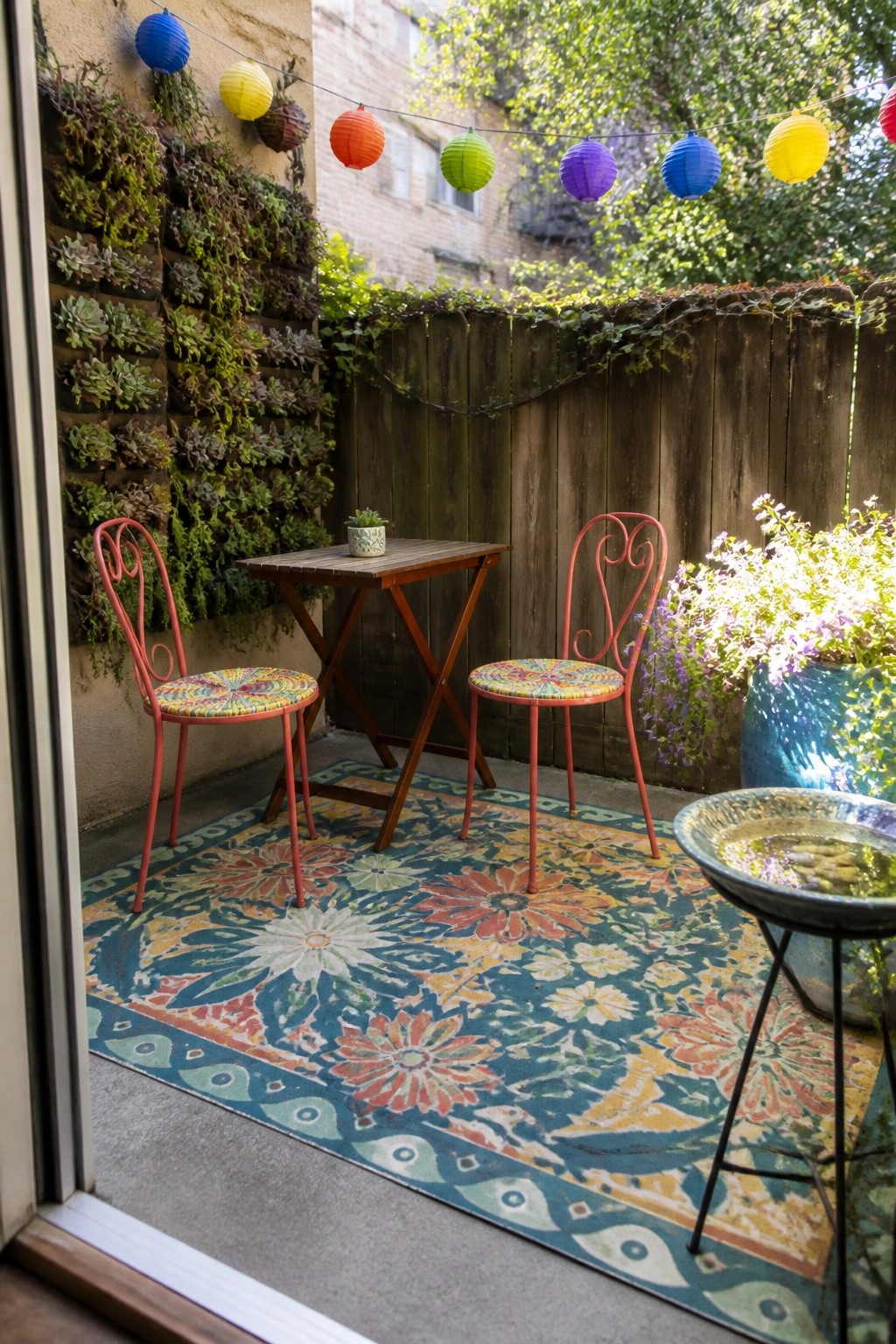
One simple way to refresh a patio is to place a large rug over the existing surface. It adds color and pattern without any demolition or new flooring work.
This approach suits concrete or stone patios that are still sound but look tired. Choose a rug rated for outdoor use so it can handle sun, rain, and regular foot traffic.
Add a Hanging Chair for Easy Seating
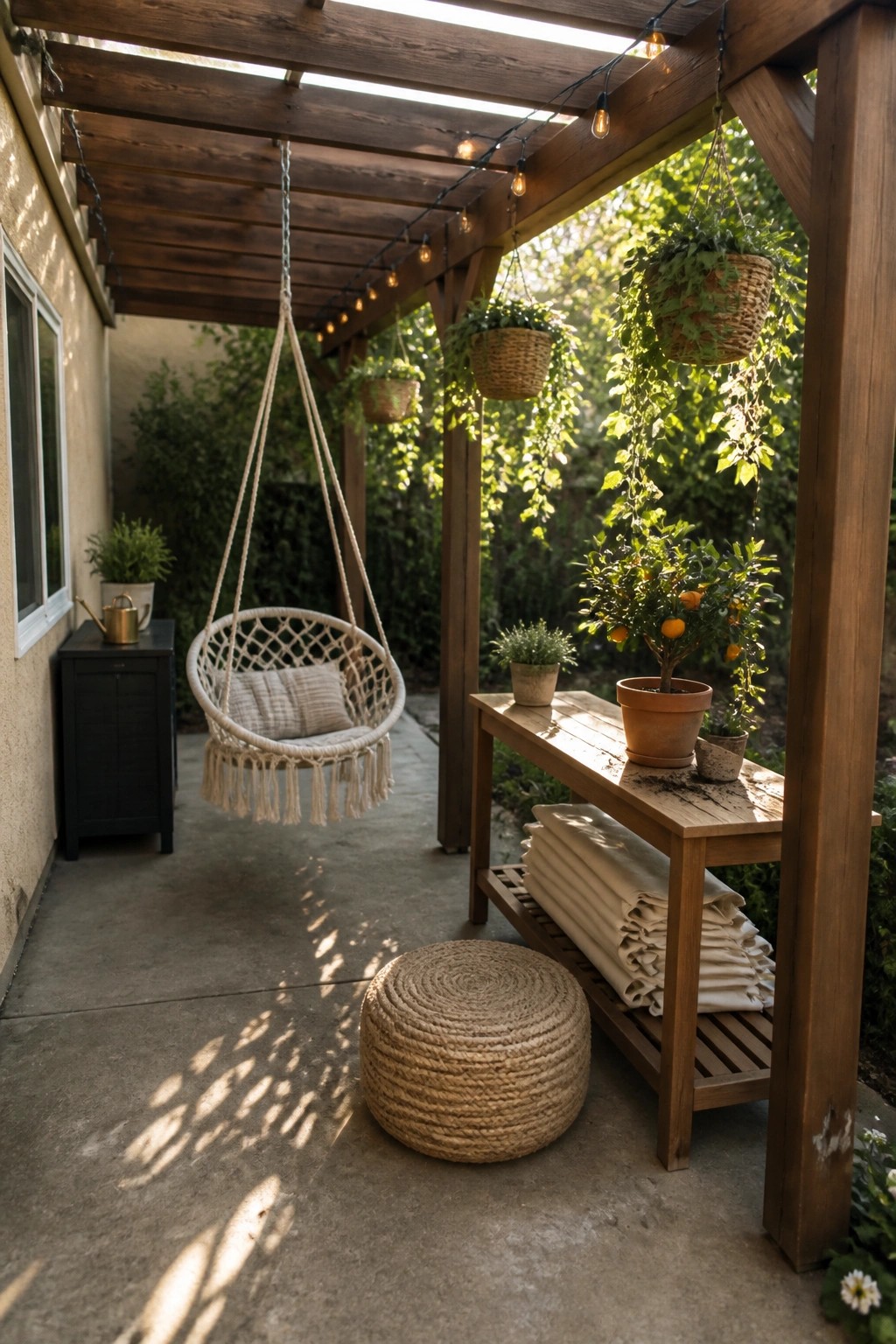
A hanging chair works well on an existing patio because it needs almost no floor space and leaves the surface untouched. It gives you a comfortable spot to sit while keeping the area open underneath, which helps the space feel less crowded on a small or basic concrete pad.
Place the chair under a pergola or sturdy beam and add a couple of potted plants nearby if you want more softness. This setup suits most homes with a covered outdoor area and works even better when you keep the rest of the furniture simple and movable.
Add Wheeled Planters For Moveable Garden Beds
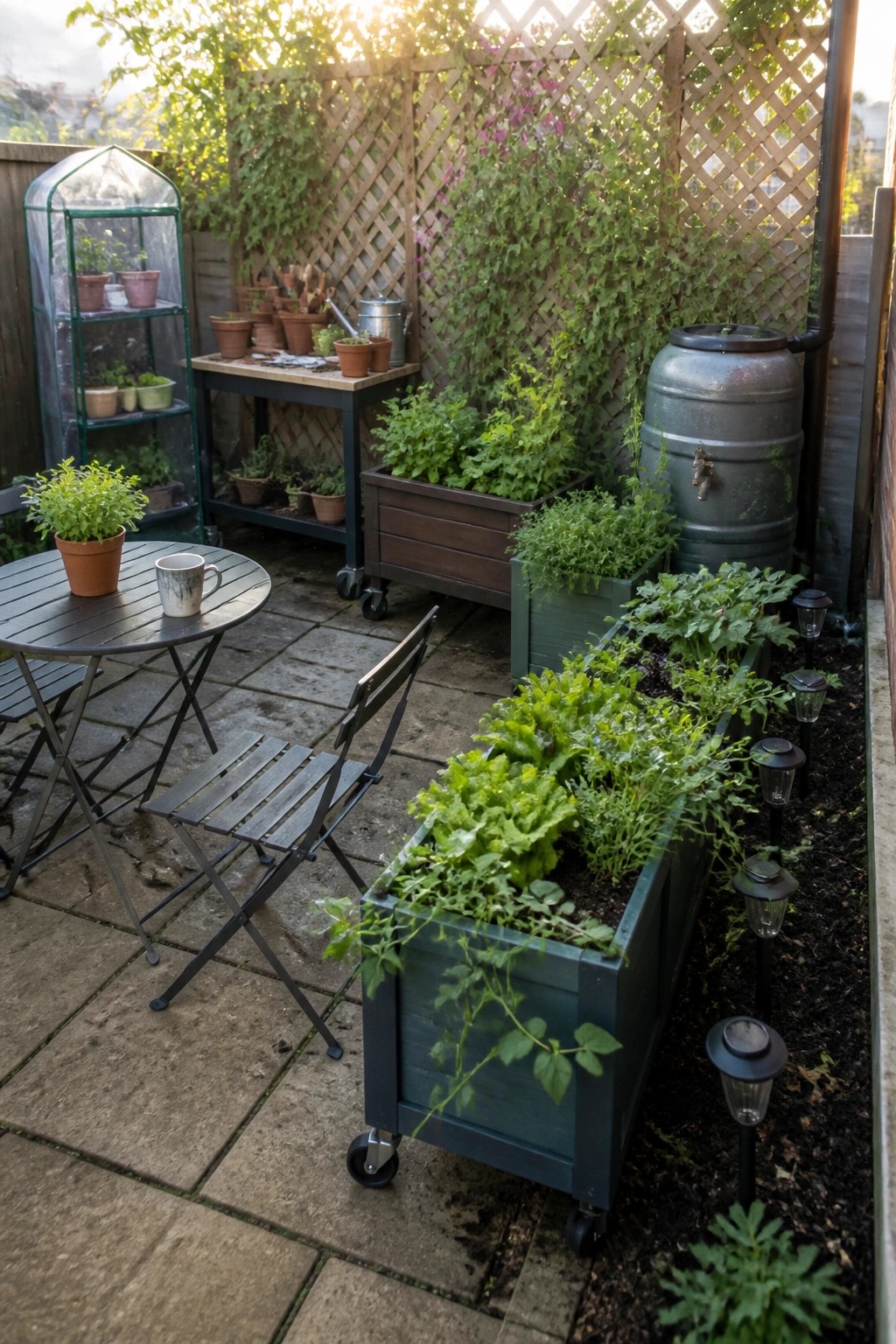
Wheeled planters let you bring in real growing space without touching the patio surface underneath. They roll where you need them, hold plenty of soil, and can be shifted around when you want a different layout or need to clear an area for guests.
This works especially well on small patios or when you rent and cannot make permanent changes. Group a few along one edge to mark off a seating spot, or line them up to make a simple kitchen garden right outside the door. Just check the wheels can handle the weight once the boxes are filled with soil and plants.
Define Seating Areas With Low Deck Platforms
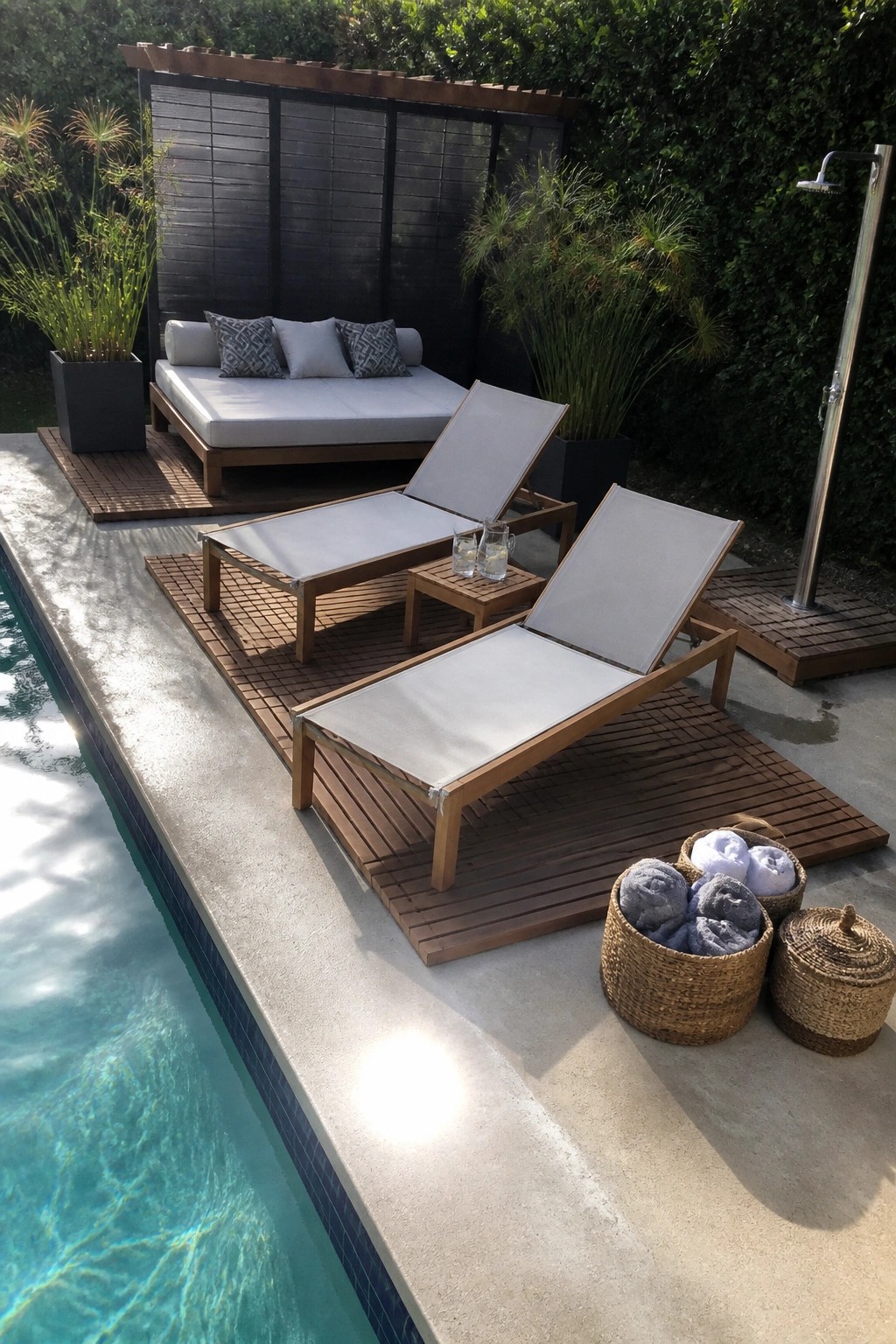
One easy way to refresh a patio without replacing the surface is to add low wooden platforms. They create clear zones for chairs and loungers while keeping everything off the original concrete or stone.
These platforms suit poolside areas especially well because they are simple to place and can be rearranged later. Keep the rest of the space open so the platforms stand out as the main seating spots.
Define Zones With Outdoor Rugs
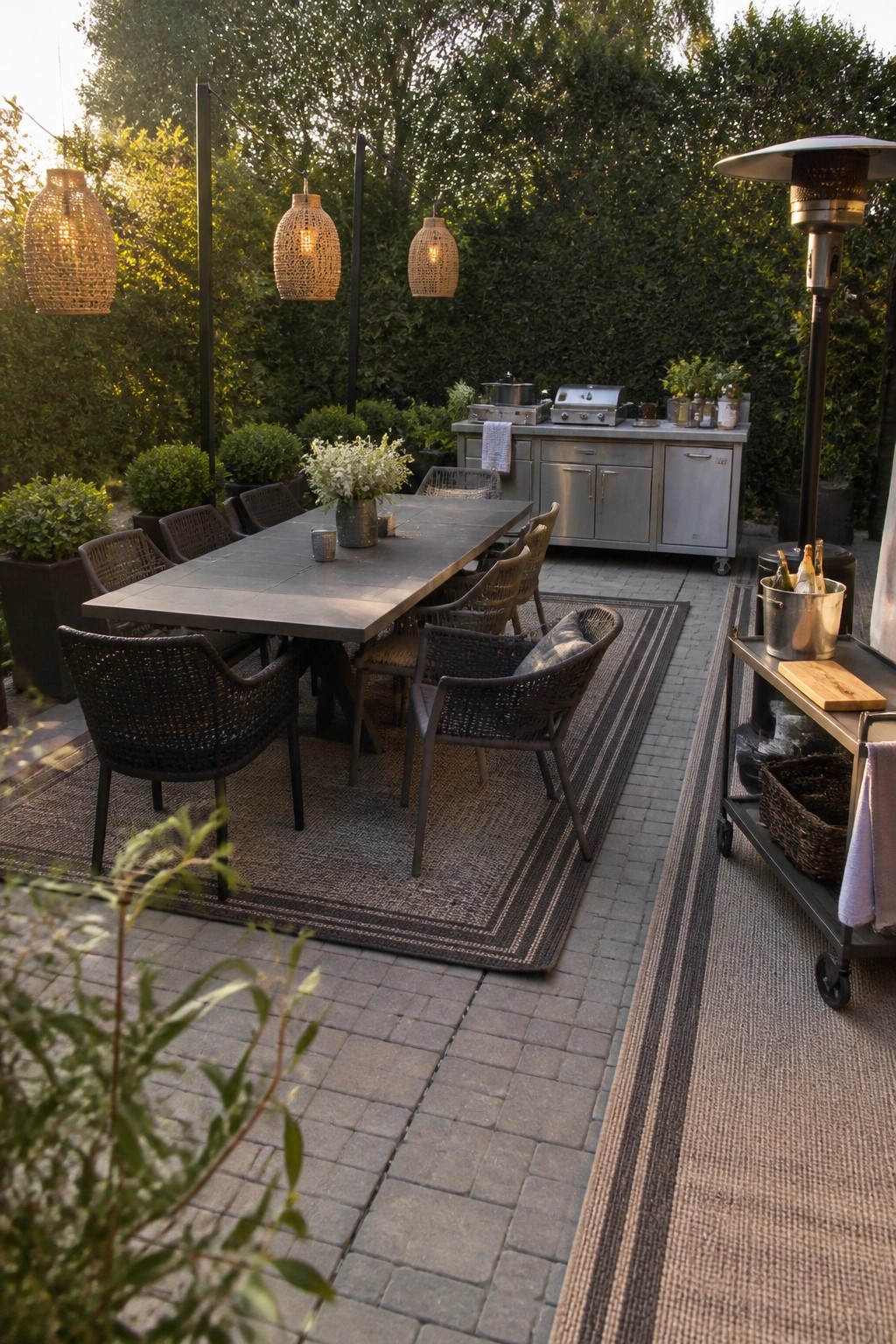
Rugs give an existing patio a quick sense of structure. Laying one large rug under a dining table and chairs turns that section into its own area without touching the pavers underneath.
This approach works on any hard surface you want to leave alone. Pick durable outdoor rugs in simple patterns and keep the size generous enough to fit the full table and chair layout so the zone feels intentional.
Frequently Asked Questions
Q: How do I keep outdoor rugs from sliding around on a smooth concrete patio? A: Weigh down the corners with a couple of heavy planters or the legs of your chairs. Pick a rug with a rubber backing made for outdoor use so it grips better on its own.
Q: What if weeds start growing through the cracks after I add gravel or mulch? A: Pull them out by hand first and lay landscape fabric right on the existing surface. The fabric stops most new growth while still letting water drain through.
Q: Can I paint my concrete without the color wearing off fast? A: But clean the surface really well and use a primer made for concrete. Apply two thin coats of exterior paint instead of one thick layer.
Q: How do I add shade without putting up a big pergola? A: Set up a couple of large umbrellas in sturdy bases near your seating area. Move them around as the sun shifts during the day.
