

I have seen too many patios that start out looking sharp but quickly turn into weeds and cracks because the base materials were not built to last.
Over time I learned that choosing hard surfaces that hold up without constant work changes how often I actually use the space outside.
Durability matters more than it seems at first.
When I plan changes to my own yard now I always ask whether the setup will stay easy to keep clean after a few seasons of rain and sun.
Ideas that focus on solid foundations rather than fussy details tend to be the ones I end up trying first because they match the way real life happens outdoors.
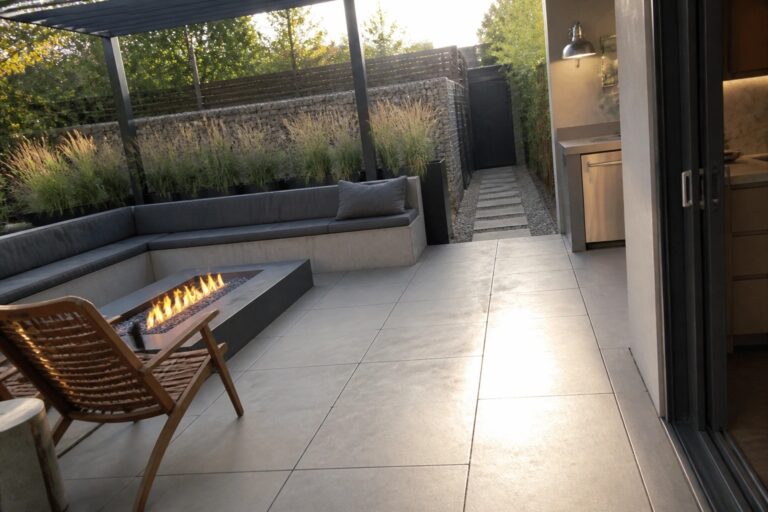
Large Pavers Make Patios Easier to Maintain

Large concrete pavers give a patio a solid, simple surface that holds up without much work. They cut down on weeding and sweeping compared to gravel or smaller stones, and they pair well with built-in seating so everything feels connected.
This approach works best in spaces where you want a clean look that lasts through heavy use. It suits homes with modern or minimal outdoor areas, and it keeps the focus on the fire pit and seating instead of constant upkeep.
Built In Bench Seating From Matching Hardscape

A built in bench made from the same stone or concrete as the patio floor cuts down on separate furniture that needs moving or replacing. It stays put through weather and use, which makes the whole space feel more settled without extra upkeep.
This works best on patios that already use durable pavers or poured surfaces. Keep the bench low and simple so it does not fight the flooring, and add cushions only when needed. It suits homes where people want seating that lasts without constant care.
Add A Concrete Base Around The Fire Pit

A concrete platform gives the fire pit a solid spot that holds up well without constant attention. It keeps the area clean, handles heat and weather, and cuts down on the need for frequent fixes or replacements in a small patio.
This setup works best in tight outdoor spaces where you want one clear focal point. Pair the base with simple pavers for the surrounding floor so the whole area stays low maintenance and easy to walk on.
Stone Pavers Offer A Practical Patio Surface

Stone pavers stand out because they handle heavy use and weather without much fuss. The large format keeps weeds down and makes sweeping or rinsing simple, which fits the low-maintenance goal many homeowners want.
This approach works best on flat outdoor living areas where you need a solid base for seating and tables. It suits homes near the coast or in regions with freeze-thaw cycles, and it pairs easily with built-in benches so the whole space stays tidy year after year.
Build Around a Stone Fire Pit

A stone fire pit gives the patio a clear center that draws people in without needing much extra setup. It pairs well with durable paving that handles weather and foot traffic while keeping the whole area easy to care for over time.
This approach works best on patios that have room for both seating and a separate dining spot. It suits homes where the outdoor space gets used across seasons and the owners want materials that do not demand constant upkeep.
Stone Slabs Set Into Gravel

Large stone slabs paired with gravel make a patio surface that stays solid underfoot while letting water drain right through. The gaps filled with gravel cut down on the need for constant sweeping or weeding, and a little moss can settle in without taking over.
This layout suits compact side yards or courtyard spaces where full paving would feel too heavy. Keep the gravel layer a few inches deep and edged so it does not spill onto nearby planting beds.
Concrete Patios With Linear Drains

A solid concrete surface paired with linear drains keeps water moving off the patio without pooling or creating extra work. It handles rain and spills cleanly, which matters when the space gets regular use. The material also holds up well under furniture and foot traffic without showing wear quickly.
This setup works best on flat lots where you want a simple, open layout rather than multiple levels or loose materials. It suits homes that already lean modern or minimalist, since the clean lines stay low fuss. Just make sure the slope is set right during installation so the drains actually do their job.
Terracotta Tile With Gravel Beds

Terracotta tile holds up well under sun and foot traffic without needing much care. Pairing it with a narrow gravel strip along the edge lets you add some planting without creating extra weeding or mowing work.
This setup works best on flat patios where you want clear walking space but still like a bit of green nearby. Keep the gravel bed about a foot wide and edge it with a simple metal strip so the stones stay put over time.
Stone Hardscaping Around A Fire Pit

A fire pit set into durable stone hardscaping gives you a solid outdoor spot that holds up to heat and weather without much work. The paving stays in place year after year, and there is no need to worry about rotting wood or constant sealing.
This layout works well on any patio where you want a simple gathering area that does not require weekly upkeep. It suits homes with dry climates or busy owners who prefer materials that age without showing wear.
Center the Patio on a Fire Pit
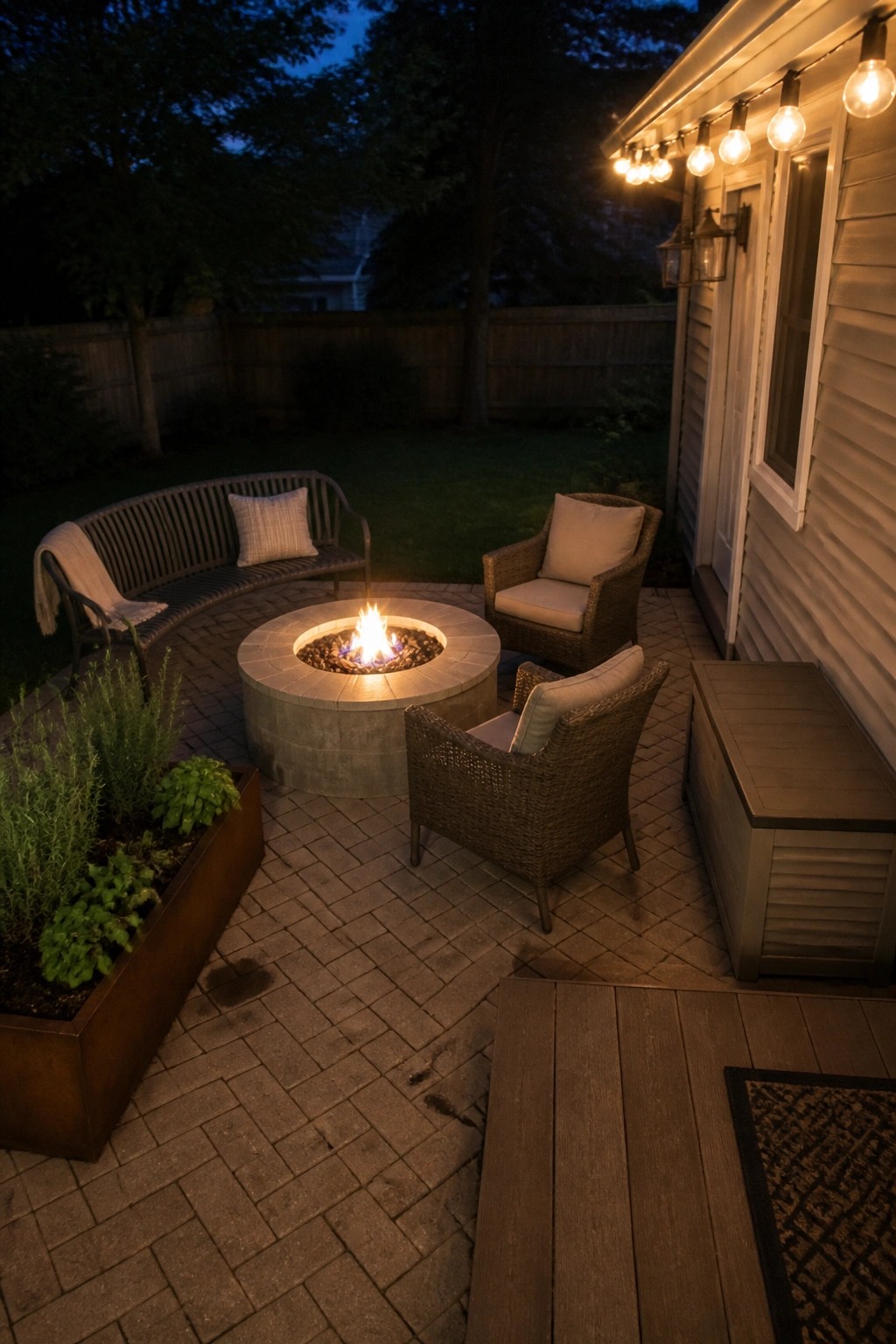
A fire pit set into durable pavers gives the whole patio a clear focus point while cutting down on weekly care. The solid base handles foot traffic and weather without turning into mud or weeds, so the space stays usable even after heavy use.
This approach fits homes with a simple backyard layout and works best when the seating stays close to the pit. Keep the surrounding materials limited to stone or brick so the area does not need much beyond occasional sweeping.
Concrete Flooring Makes Patios Easy To Maintain

Concrete slabs hold up well in outdoor spaces because they resist weather and daily use without needing much attention. The large gray tiles here create a solid base that stays clean around the pool and handles wet feet without issues.
This approach works best on homes where the patio sees regular traffic. Keep the surface simple and avoid adding too many seams so sweeping and occasional rinsing stay straightforward.
Composite Decking Tiles for Everyday Patios

Composite deck tiles give a patio a solid base that holds up without constant work. The material resists fading, water damage, and heavy foot traffic, so the surface stays even and clean season after season. Many people like how the tiles lock together over an existing roof or slab, which keeps installation straightforward.
This setup works best on rooftops, balconies, or ground-level decks where you want low upkeep. Pair the tiles with simple built-in seating and a fire pit to define the space without adding lots of furniture that needs storing or sealing. Just check drainage underneath so water does not pool after rain.
Pavers And Gravel Work Well For Patios

Many people like pairing concrete pavers with gravel because it creates a solid surface that drains well and needs little care. The gravel fills in around the pavers to make the whole area feel connected without adding much work over time.
This setup suits homes with outdoor fire features since the gravel circle keeps the heat zone clear and the pavers give stable spots for chairs. It works best in sunny backyards where you want something that lasts through weather changes.
Integrate A Fireplace Into Your Patio Hardscape

One way to cut down on patio upkeep is to build the fireplace straight into the hardscape so the materials all work together. Stone tiles and simple stucco walls hold up to weather without much attention, and the fire feature gives you a focal point that stays useful across seasons.
This approach suits homes that already have solid outdoor space and want to avoid adding separate furniture or soft surfaces that need replacing. Keep the surrounding paving wide enough for chairs and tables so the whole area feels connected and easy to clean.
Built-In Benches Along Stone Walls

A built-in bench set into a stone wall gives you solid seating without adding extra furniture that needs care. The stone holds up well over time and the wood slats stay simple to clean or replace if needed. This setup works especially well in narrow side yards or tight patios where freestanding chairs would crowd the space.
It suits homes that already have stone or masonry details and want to keep the whole area low upkeep. Just make sure the bench height feels comfortable for sitting and that the wood has good drainage underneath so it lasts longer.
Large Pavers In Gravel Beds Cut Down On Maintenance

Large pavers set into gravel give you a solid walking surface without the hassle of sealing or weeding a full slab. The gravel fills the gaps so water drains away, which helps prevent cracks and keeps the area looking neat even after heavy use around a fire pit.
This approach works especially well on slightly sloped lots or in spots where you want to add an outdoor kitchen later. Just make sure the base is compacted well before laying the pavers so they stay level over the years.
Stone Fire Pits Set Into Paver Patios

A fire pit built right into a stone paver surface gives you a solid spot for evenings outside that does not need constant fixes. The hard materials stand up to weather and daily use, so the area stays usable without much attention.
This works well on homes with a bit of backyard space where the goal is simple gathering rather than high upkeep. Use thick pavers and a recessed fire ring so the whole layout drains properly and weeds stay minimal.
Build a Fire Pit Into the Hardscape

A built-in fire pit made from the same durable material as the patio floor cuts down on upkeep while giving the space a clear focal point. It handles weather and heavy use without needing constant cleaning or repairs.
This approach works best on compact patios where you want one main feature instead of scattered furniture. Keep the pit low and wide so it stays easy to reach from the chairs without crowding the walkway.
Durable Deck Tiles for Small Patios

Composite deck tiles give a patio or balcony a finished look without the upkeep wood usually demands. They handle sun, rain, and foot traffic well, which makes them a practical choice when you want the space to stay usable year round with minimal work.
These tiles suit apartment balconies and compact outdoor areas especially well since they are lightweight and snap into place over existing surfaces. Just make sure the subfloor allows for drainage so water does not pool underneath.
Frequently Asked Questions
Q: Will weeds still sneak through the pavers after a few seasons?
A: Lay down a solid weed barrier fabric right under the gravel base before you set the pavers. Sweep any loose dirt off the surface regularly so seeds have nowhere to settle. Most people find this keeps the problem down to almost nothing.
Q: What happens if heavy rain pools on the patio?
A: Slope the surface just a little when you install so water runs off toward the yard. Add a simple French drain along one edge if your yard stays soggy. That setup moves water away fast without extra work later.
Q: Can I skip sealing the stone altogether?
A: Durable hardscaping like brick or concrete pavers often stays fine without it. Just clean spills right away and the surface holds up on its own.
