


I have found that patios often sit empty once the weather turns nice because the layout does not support real meals outside.
Many people add seating and lighting first and then notice there is no steady surface for plates or room to move around a table.
Some setups work better in photos than they do when you try to serve food there.
I tend to look for ideas that include shade that can shift and storage that keeps things within reach during a meal.
Adapting a few of these details has made my own patio a place we actually use instead of just walk past.
Long Tables With Mixed Seating Under A Pergola

A long table gives you a clear spot for meals outside without needing to rearrange furniture every time. Pairing it with a mix of chairs on one side and a built in bench on the other makes the space feel more relaxed and lets you seat more people without crowding.
This works best on a covered patio or deck where you already have some overhead structure. Keep the table simple and sturdy, add cushions to the bench for comfort, and make sure the path around the ends stays clear so people can move easily during meals.
Pair Outdoor Dining With a Built-In Fire Pit

A raised concrete patio works well when you want the dining area to feel separate but still connected to the rest of the yard. Building the fire pit into the edge keeps the flame close to the table without taking up floor space or needing a separate zone.
This setup suits homes with a slight slope or where you want to define the dining spot clearly. Keep the seating simple and make sure the fire pit height lines up with the patio so people can sit around it comfortably after the meal.
Long Tables Anchor Outdoor Dining

A long wooden table gives you real room to gather for meals without squeezing people in. It works especially well when you set it up near a cooking feature like a brick oven so everything stays close and practical.
Try using a mix of chairs so the space feels relaxed rather than formal. This kind of layout suits homes with decent patio space where you want to eat outside often instead of just on special occasions.
Use Built-In Bench Seating for Outdoor Dining

A built-in bench along one side of the table makes the whole setup feel more settled and practical. It frees up floor space, gives you room for extra guests without adding more chairs, and creates a clear edge that helps define the dining area on a patio.
This works especially well on smaller or narrow patios where every inch counts. Keep the bench low and simple, add a few cushions for comfort, and place the table close enough that people can reach across easily. It suits homes that already have a wall or low structure to build against.
Shade The Dining Table With A Large Umbrella

A big umbrella over the table is one of the easiest ways to keep an outdoor dining spot usable during the day. It blocks direct sun so meals do not get cut short when it gets too bright or warm.
This setup works best on rooftops and open patios that lack trees or overhangs. Pick a sturdy base and position the umbrella so it covers the whole table without blocking the view or the walkway around the chairs.
Add a Pizza Oven to the Patio

A pizza oven turns a regular dining setup into something you can actually use for cooking outside. It keeps the whole meal in one spot instead of running back and forth to the kitchen.
This works best on a sheltered patio with room for both the table and the oven. Keep the seating a safe distance from the heat and store wood nearby so everything stays convenient during longer meals.
Shade The Dining Table With A Thatched Roof

A covered spot over the table makes outdoor meals more practical in most weather. The simple roof keeps the area cooler during the day and gives some protection if a quick shower passes through.
This setup works well on patios that already have a cooking area nearby. Keep the structure basic so it does not block views or light, and use materials that match the rest of the yard.
Center Your Patio Around A Long Dining Table

A long table gives an outdoor space a clear purpose. It turns the patio into the spot where people actually gather to eat instead of just standing around. In this setup the table sits right next to the cooking area so food moves straight from the oven to the seats without extra steps.
This layout works best on a covered patio that gets regular use. Keep the table simple and sturdy, add a few backless stools for easy movement, and place the main cooking element close by so one person can manage both cooking and serving. Avoid filling the rest of the space with too many side pieces that break up the flow.
A Round Table For Everyday Patio Dining

A round table makes a patio feel more welcoming for regular meals outside. It fits easily into a garden setting without taking over the space and lets people sit close enough to talk comfortably while still leaving room to move around the chairs.
This setup works especially well on brick paving where the surface stays level and drains well. Place it near a few large pots or a simple sink station so everything stays practical for daily use without needing a lot of extra furniture.
Anchor The Patio With A Large Wood Table
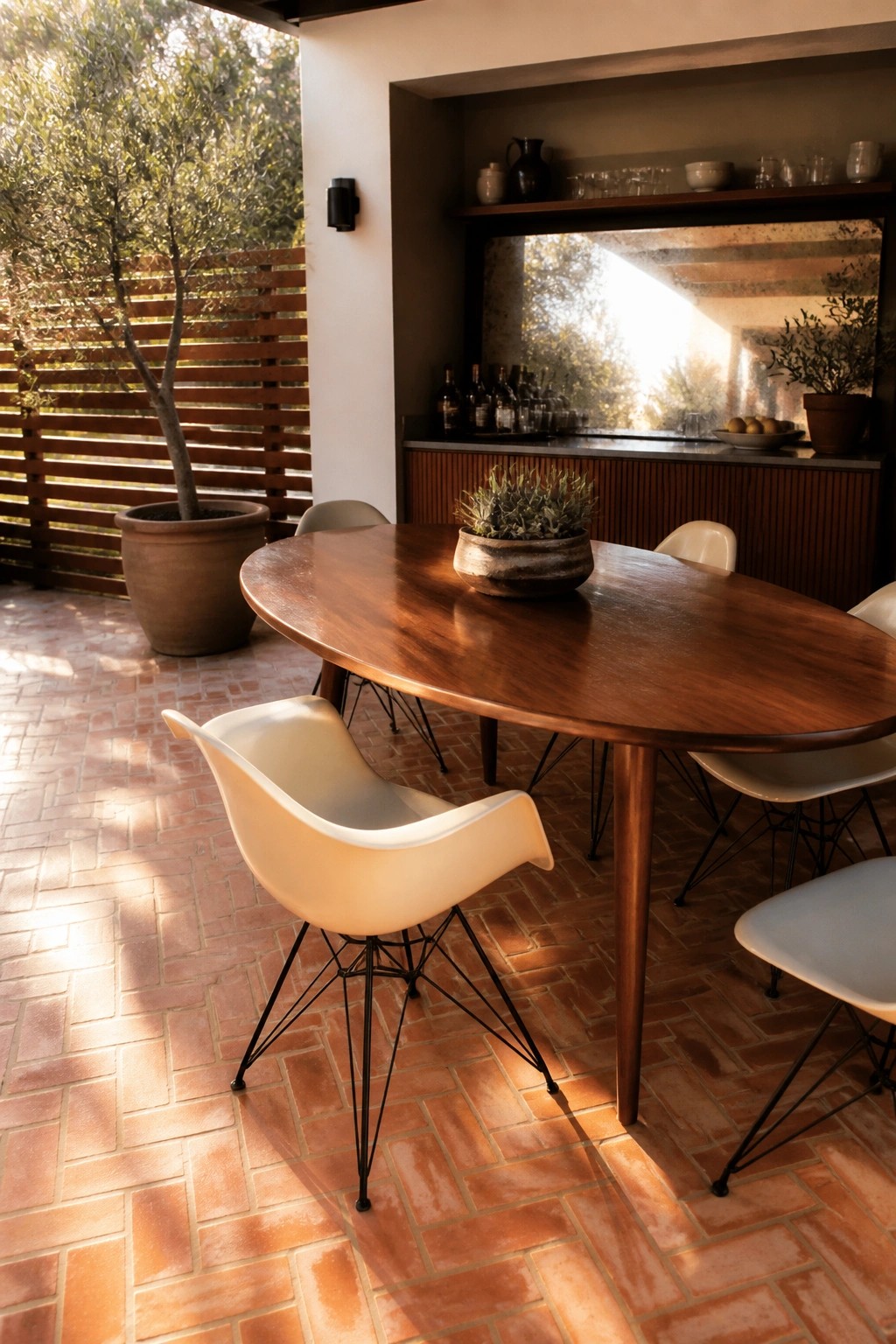
A big solid wood table gives an outdoor dining space real purpose. It feels like the area is meant for meals rather than just extra seating, and the weight of the piece helps it stay put even when the weather changes.
This setup works best on a covered patio with a durable floor like brick. Keep the surrounding pieces light so you can rearrange them, and place the table near a counter or serving area to make everyday use easier.
Anchor Outdoor Dining With a Large Rug

A big rug under the table and chairs turns an open patio into a clear dining spot. It gives the area a finished feel, protects the floor underneath, and makes the space more comfortable for long meals.
This works best on stone or concrete surfaces where you want something softer underfoot. Pick a durable outdoor rug that is large enough for chairs to stay on it when pulled back, and keep the pattern simple so it does not compete with the food and lanterns.
Curved Built-In Seating For Patio Dining

A curved built-in bench can turn an ordinary patio into a real spot for meals. It gives you plenty of seating without needing a lot of extra furniture, and the shape naturally pulls everyone toward the table in the middle.
This setup works best on patios that are a bit tucked away or stepped down from the main yard. It suits homes that already have stone or gravel underfoot, and it helps keep the dining area feeling contained even when the rest of the yard is open.
Fold-Down Tables For Small Balconies
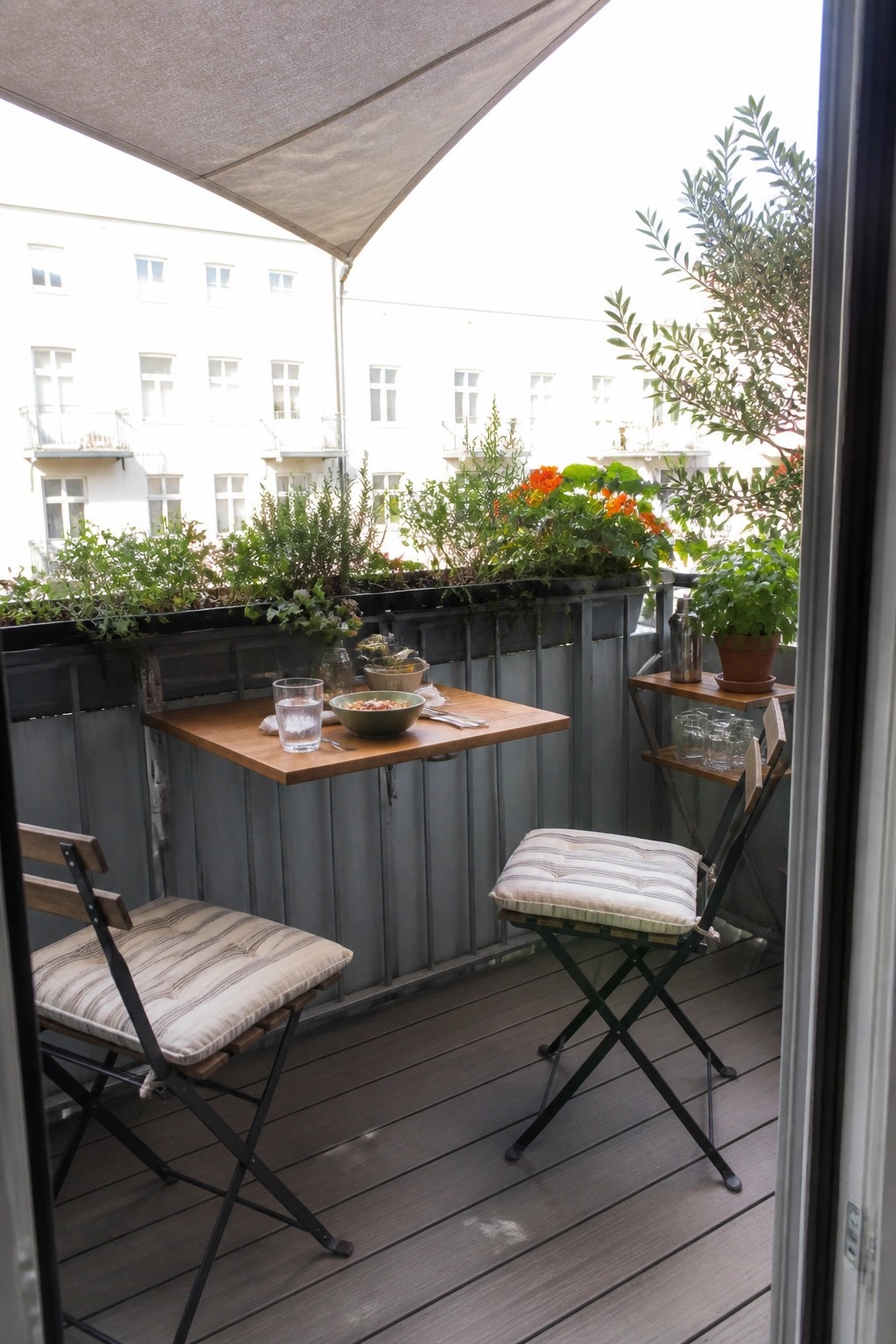
A fold-down table mounted to the railing turns a narrow balcony into a workable spot for meals. It stays out of the way when not needed and gives you a flat surface right where you want it without blocking floor space.
This approach suits apartment balconies or any tight outdoor area where a full table would feel cramped. Secure the brackets well and choose a surface that can handle weather if you plan to leave it out year-round.
Use a Large Tiled Table for Outdoor Dining

A big table with a durable tiled top turns the patio into a real spot for meals instead of just a place to grab a quick bite. It holds up to weather and gives the space a settled, permanent feel that encourages people to sit and stay awhile.
This kind of table works best on a paved patio with enough room for chairs to pull out easily. It suits homes that like to eat outside often, especially if the surface can handle daily use without much fuss.
Center the Patio Around a Fire Pit

A round fire pit placed right in the middle of the patio gives the whole space a clear purpose. It turns the dining table and chairs into something more than just a place to eat, since the fire keeps people comfortable longer into the evening and creates a natural spot for everyone to gather.
This setup works especially well on smaller or enclosed patios where every element needs to earn its space. The key is keeping the seating close enough to the fire without crowding the table, and choosing a simple material like concrete or stone so the pit does not fight with the brick underfoot.
Add a Serving Bar Next to the Dining Table

Placing a simple bar counter beside the main dining table makes outdoor meals much easier to manage. Guests can grab drinks without leaving the table, and the host spends less time running back and forth.
This works best on patios that already have good flow to a pool or seating area. Keep the bar stocked with ice and basic glassware so it stays useful without taking up too much space.
Add A Sink To Your Outdoor Dining Area

Many patios feel incomplete once you start serving meals outside because you still need to run inside for water or cleanup. Adding a simple sink right on the patio keeps the whole process in one place and makes longer meals much easier to manage.
This works best on patios that already have some structure along the house wall where a small counter can fit without crowding the seating. It suits homes that eat outside often and want to avoid constant trips through the door with dirty plates.
Add A Fireplace To Your Covered Patio

A covered patio with a fireplace turns outdoor dining into something you can use on more days of the year. The glass roof keeps rain and wind out while still letting in light, and the fire adds warmth so meals do not have to stop when the temperature drops.
This setup works best on homes where the patio opens straight to the garden. Keep the dining table close to the fireplace so the heat stays with the seating. It suits spaces that already have a solid floor and good drainage under the covered area.
Define Your Patio Dining Area With a Large Rug

Placing a large outdoor rug under the table and chairs helps turn an open patio into a clear dining zone. It softens the hard surface below and keeps the seating area from feeling like it just floats on the stone.
This approach works best on patios or decks where the flooring runs continuously and you want a simple way to separate the dining spot from other uses. Choose a rug that is weatherproof and large enough for the chairs to stay fully on it even when pulled out.
Bar Seating Turns an Outdoor Kitchen Into a Gathering Spot

Placing a row of bar stools along the front of an outdoor kitchen counter gives people a place to sit while food cooks or to eat without moving to a separate table. The setup feels natural for casual meals and keeps the cook from being cut off from the group. It works especially well when the counter is at standard bar height and has enough overhang for knees.
This approach suits patios that already have an outdoor kitchen or room to add one. Make sure there is enough clearance behind the stools so traffic can move freely, and consider a shade structure overhead so the seats stay comfortable in warm weather. The metal stools in the photo show how simple and sturdy the seating can be without taking up much visual space.
Pergola Shade Turns a Patio Into a Daily Dining Spot

A pergola overhead gives the dining table a clear sense of place and keeps the area usable even when the sun is strong. Vines growing across the beams add a bit of cooling and make the space feel settled rather than temporary.
Place a long table and chairs directly beneath the structure so the whole setup reads as one outdoor room. This works best on patios that already have some wall or planting on at least one side, since the overhead cover alone is often enough to make meals feel comfortable through most of the day.
Frequently Asked Questions
Q: How much room do I need around the table so chairs pull out without bumping the railings? A: Measure your space before you pick a table size. Leave at least three feet on every side so people can move freely. That simple step keeps the whole area usable instead of cramped.
Q: What kind of chairs hold up best when they sit outside all year? A: Choose chairs made from materials that handle rain and sun without special covers. Metal or woven resin frames last longer than wood that needs constant sealing. Test the weight too so they do not tip on uneven pavers.
Q: How do I add shade when the afternoon sun hits the table directly? A: Hang a simple sail shade from the house to a post on the far side. It blocks the worst glare while still letting some light through. Move the table a few feet if the angle changes with the seasons.
