


A concrete slab can give a backyard patio a solid, low-maintenance base, but the layout and finishing details often determine whether it feels like part of the home or just a blank stretch of concrete.
I find that the most useful designs make room for everyday things, like a table, a clear path to the door, and a comfortable spot to sit in the shade.
Even a simple slab can feel warmer with thoughtful edging, a change in shape, or plants placed where they soften the hard lines without crowding the space.
The cost-conscious ideas here show practical ways to adapt a concrete patio to different yards, budgets, and routines.
I’d start by saving the designs that suit the way you actually use your backyard, then consider which details are realistic to build yourself.
Use a Concrete Slab To Define A Fire Pit Patio

A concrete slab gives a fire pit area a clear, sturdy place to gather. It also makes a practical surface for outdoor seating, without the cost or upkeep of a more elaborate patio.
For a cost-conscious project, keep the slab shape simple and size it to fit the seating you plan to use. A built-in bench can make the area feel settled, but leave enough room around the fire pit for safe movement and follow the fire pit maker’s clearance recommendations.
Use a Concrete Patio for Outdoor Dining
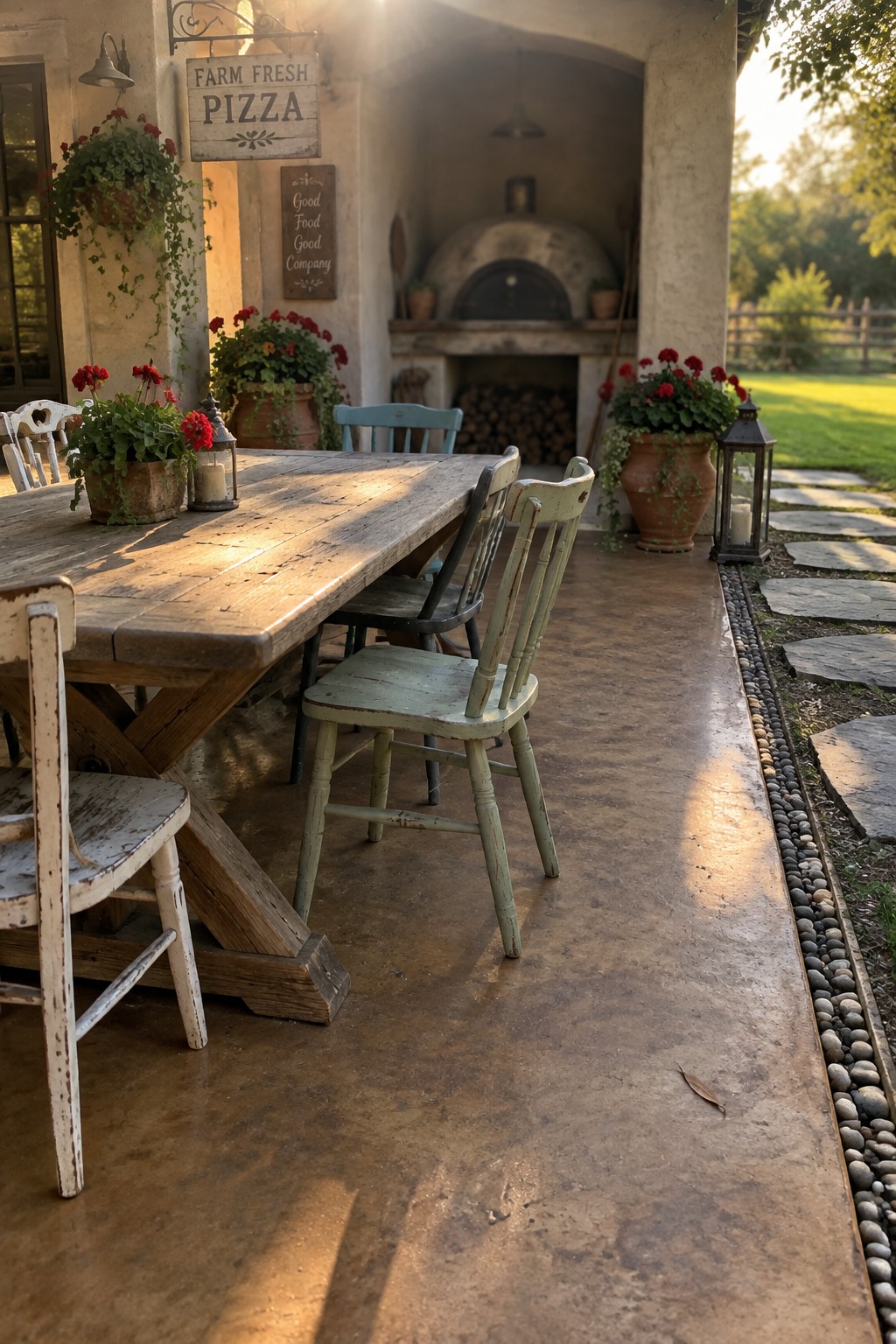
A concrete patio makes a practical base for an outdoor dining area. It gives the table and chairs a level surface, and it’s easier to care for than a large stretch of lawn.
Set the dining area near the house for easy trips back to the kitchen. A long table works well when you want room for family or guests, but leave enough space around the chairs to move them comfortably.
Build a Patio Around a Fire Pit
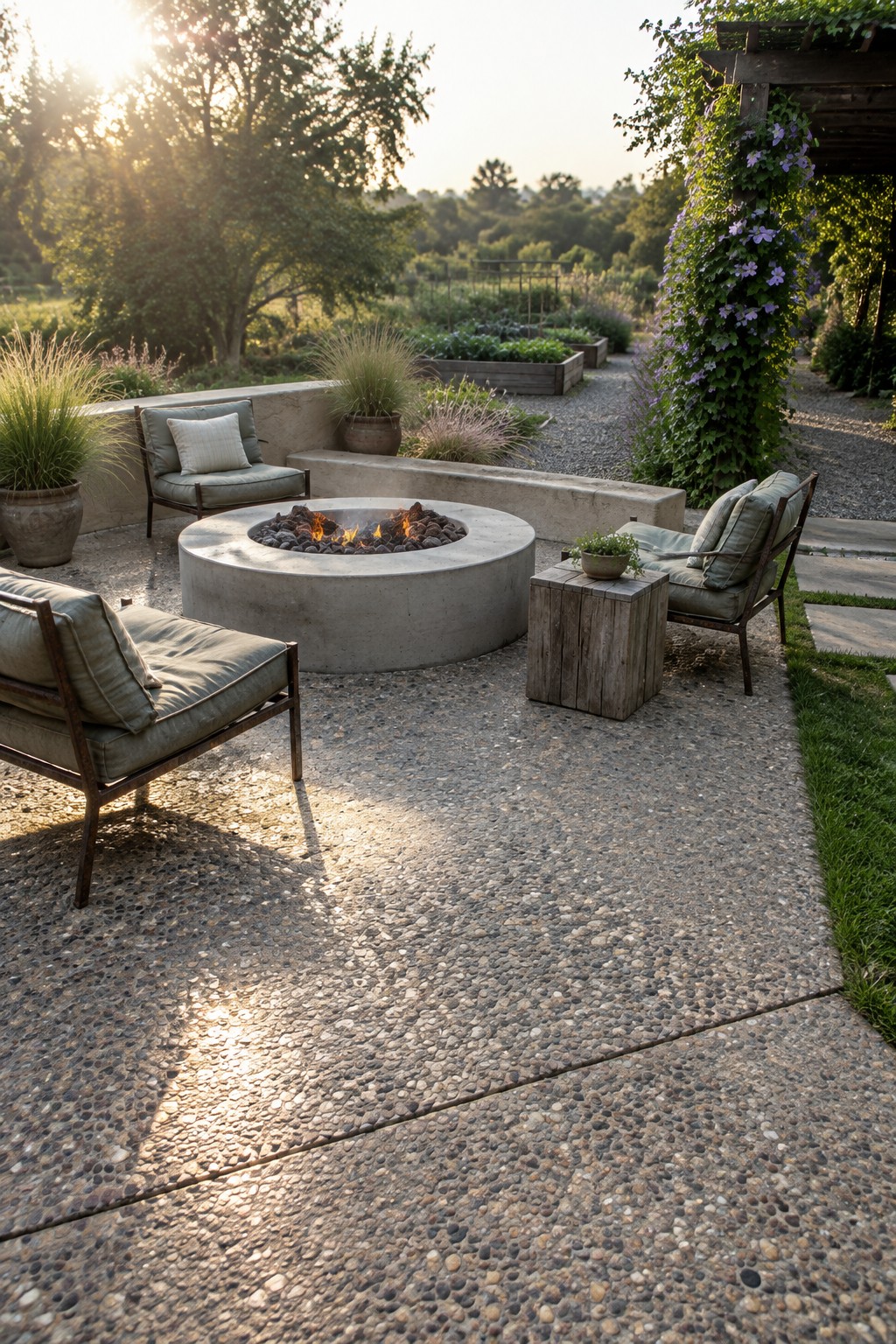
A round fire pit can make a concrete patio feel like a natural gathering spot. Set the seating around it so people can talk comfortably, and leave enough room to move chairs without crowding the edges.
A simple concrete surface works well for this kind of setup and can be finished in sections to suit a budget. Check local fire-safety rules and keep the pit a safe distance from plants, fences, and overhead structures.
Make a Dining Area Part Of The Patio
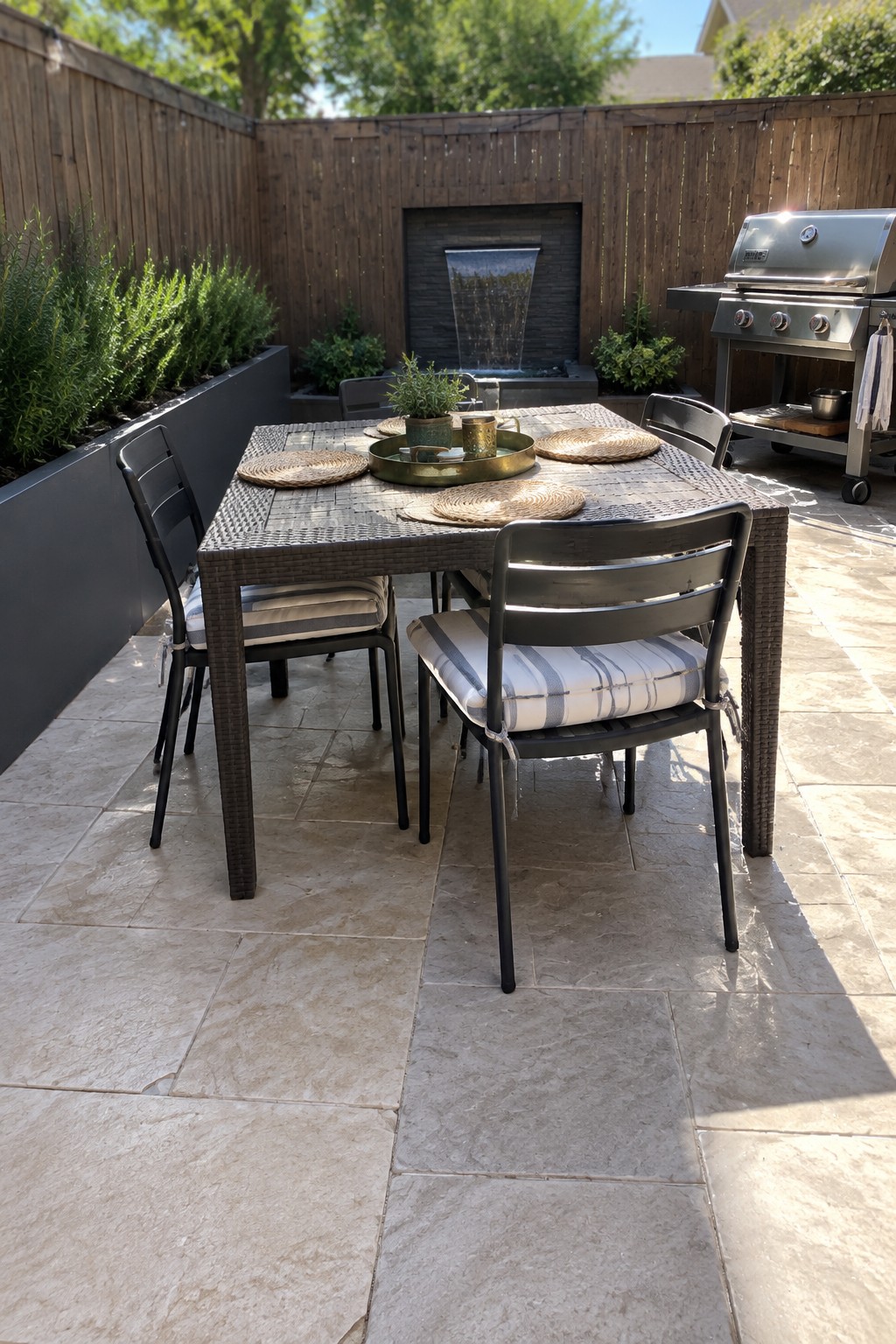
A simple concrete slab can give an outdoor dining area a sturdy, easy-to-clean base. Keeping the table and chairs on one level also makes the space practical for everyday meals.
Leave enough room to pull out the chairs and walk around the table comfortably. This setup works well in a compact backyard, where a defined dining spot can make a small patio more useful without adding costly features.
Create a Coastal Seating Area on a Concrete Patio

A simple concrete slab can make a practical spot for outdoor seating, even in a sandy beachside yard. It gives chairs a firm, level place to sit while keeping the overall patio easy to care for.
For a similar setup, leave enough room to move around the chairs and connect the slab to a path or boardwalk. A pair of weather-resistant chairs with outdoor cushions is plenty. Keep the concrete finish simple, since it can be costly to add details that do not improve how the patio works.
Create a Lounge Area on a Concrete Slab Patio
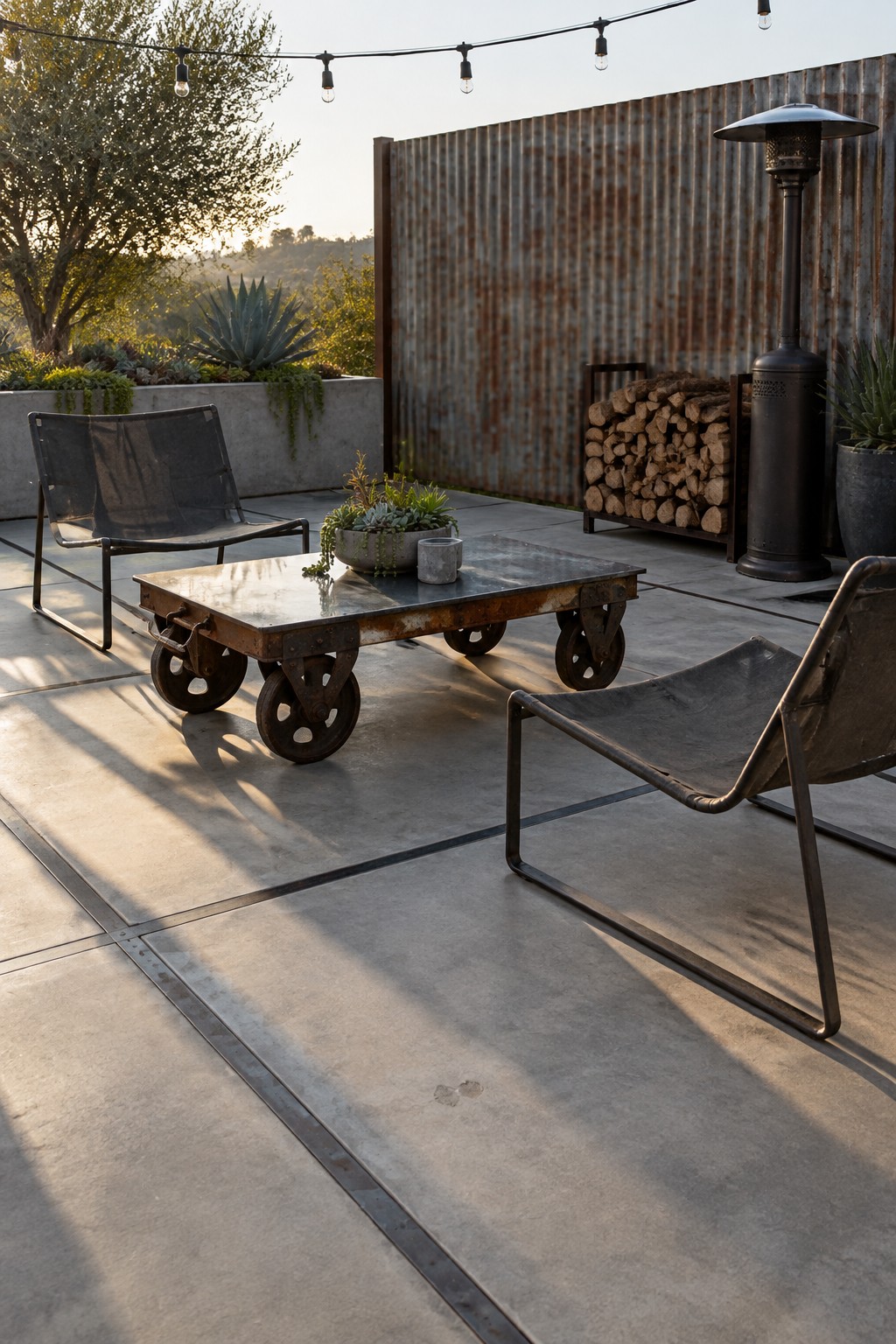
A concrete slab makes a practical base for a simple outdoor seating area. Set chairs around a low table and you have a spot for conversation without needing a raised deck or complicated patio design.
Keep the furniture arrangement open enough for people to move through comfortably. A slab patio suits many backyard styles, and you can add outdoor rugs or cushions later if you want a softer feel.
Create a Mediterranean-Style Concrete Patio

A simple concrete slab can give an outdoor seating area a practical base, while a few Mediterranean details make it feel more personal. Blue patterned cushions and warm-toned pots are easy ways to bring in that style without making the patio complicated.
This approach suits a small courtyard or a plain backyard patio. Keep the slab simple and let the seating or tile accents provide the pattern, so the space stays comfortable and the project stays manageable.
Use a Concrete Slab for a Simple Seating Area
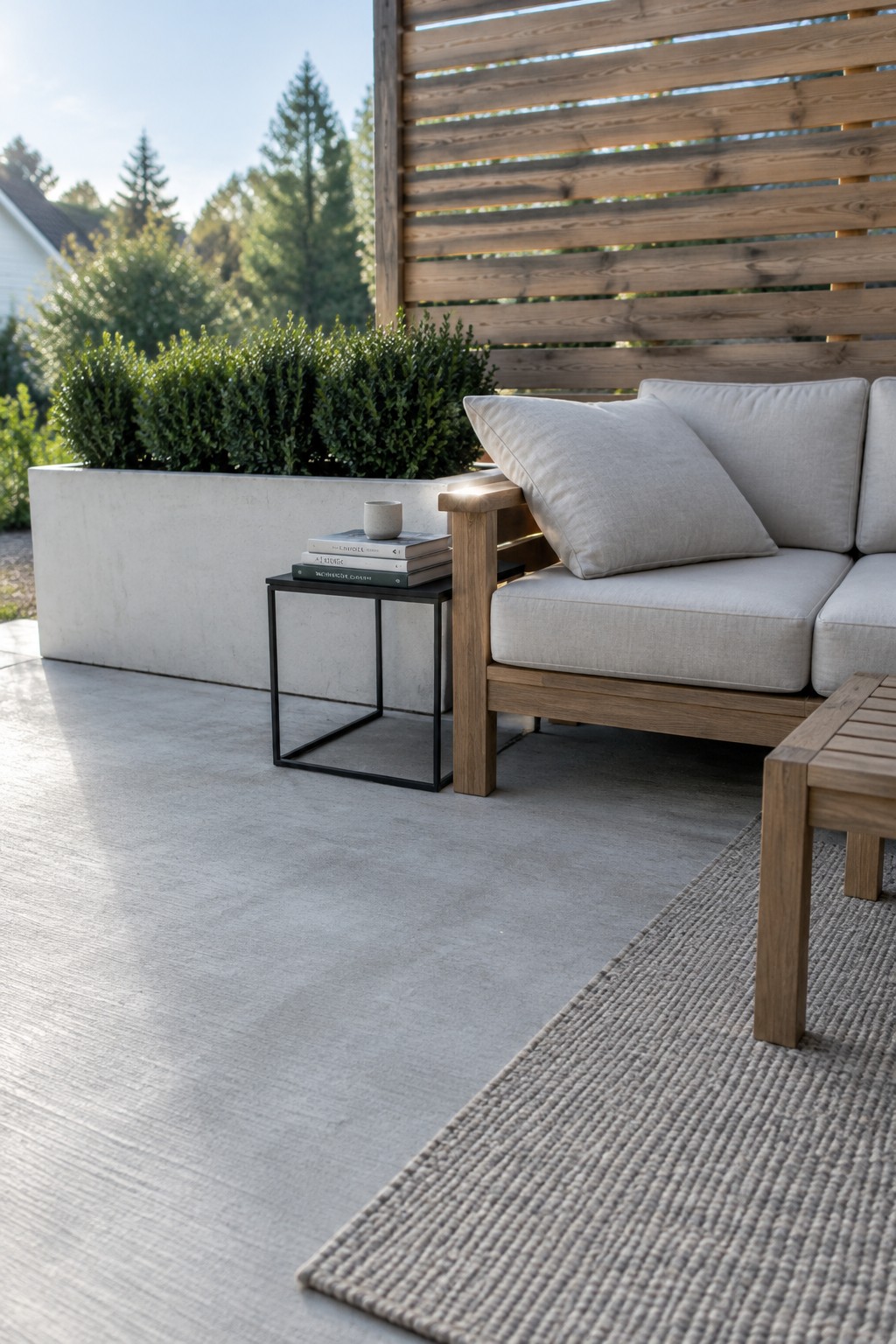
A concrete slab makes a practical base for outdoor seating, especially when you want room for a sofa without building a raised deck. Its plain surface also lets the furniture do most of the decorating.
For a similar setup, keep the seating close together so conversation feels easy, and use an outdoor rug to mark the area. A smooth slab can be slippery when wet, so choose a textured finish for better grip.
Add Shade to a Concrete Patio With a Pergola
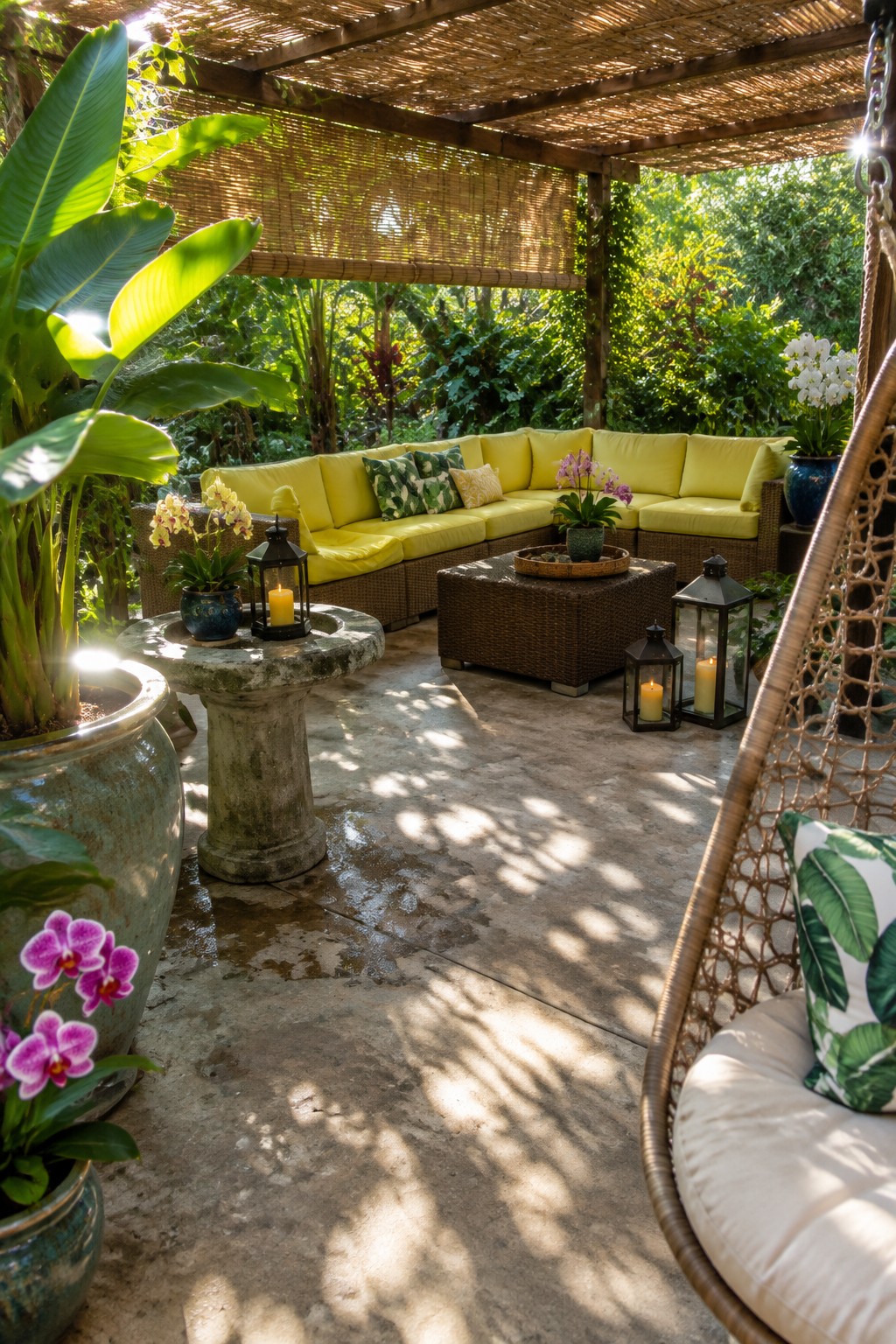
A pergola can make a concrete patio more comfortable for lounging by providing partial shade without closing off the space. Here, a woven cover filters the sun above a sectional seating area, so the patio still feels open.
For a similar setup, place the seating beneath the pergola and leave a clear path across the slab. A slatted or woven top works well when you want some shade but still want sunlight to reach nearby plants.
Add Shade to a Concrete Patio
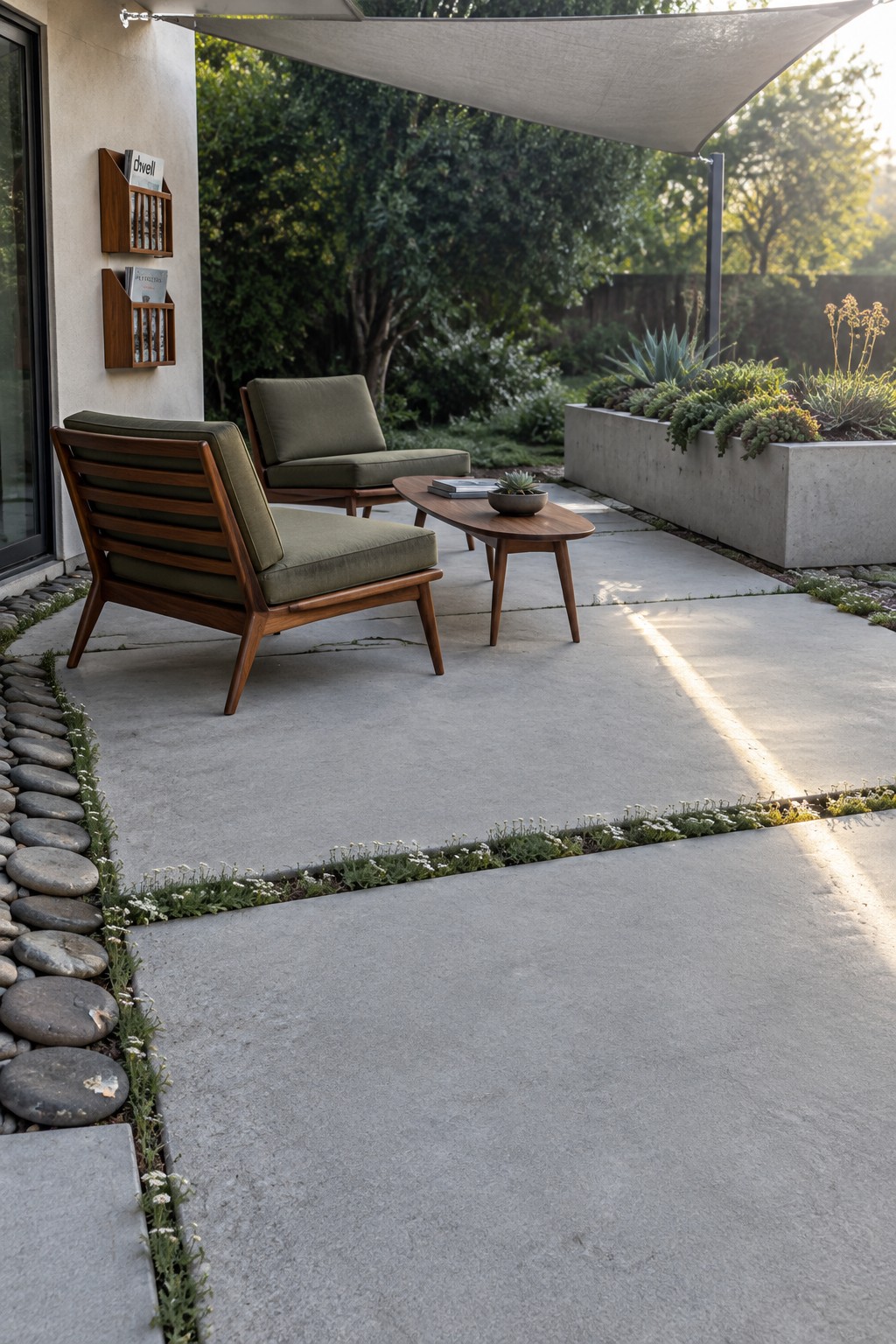
A shade sail can make a concrete patio more comfortable for sitting without taking up floor space. It also gives a small seating area a clear place in the yard, while leaving the rest of the slab open.
Before installing one, check where you can safely attach the sail and how the sun moves across the patio. A simple seating setup like this works well on a compact slab, but the sail needs to be sized and secured properly so it stays taut and drains rainwater.
Make a Small Patio Work for Outdoor Dining

A compact slab patio can be enough for a useful dining spot. A round table takes up less room than a long one, while still leaving space to pull out chairs and move around.
Keep the furniture modest in scale, and leave a clear route through the patio if it also leads to the garden. A metal table and chairs are easy to move when you need extra room.
Use Painted Concrete to Add Color to a Patio

A painted pattern can make a plain concrete patio feel more considered without the cost of replacing the slab. Here, broad geometric shapes add color around the seating area, while a patterned rug helps define the lounge zone.
For a DIY version, use concrete-rated porch and patio paint on a clean, dry slab, and keep the design simple enough to tape out. Test a small area first, since paint can wear where furniture moves or water collects.
Use Large Concrete Slabs for a Stepping-Stone Patio
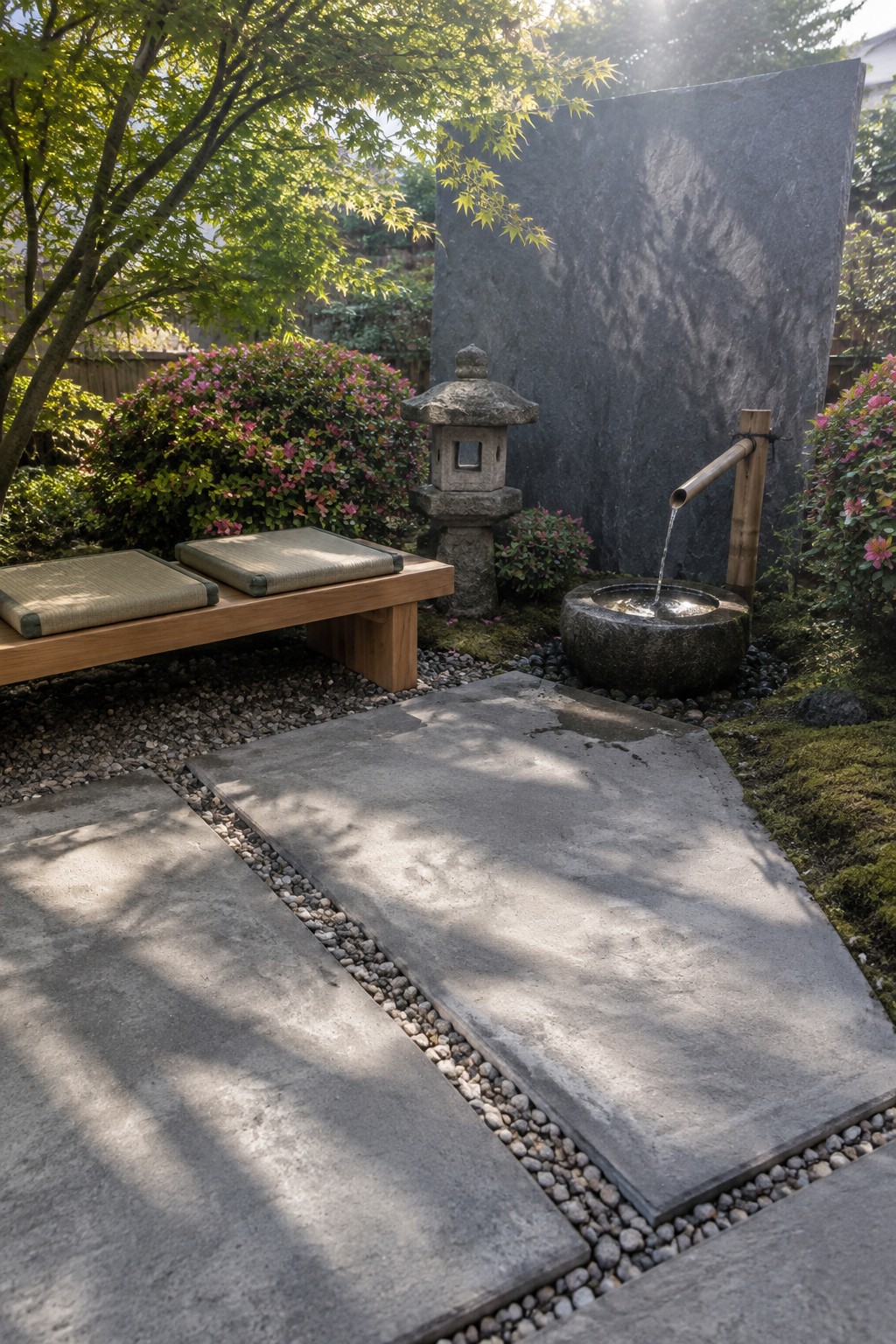
Large concrete slabs can make a patio feel open while keeping the build simple. Set them apart with narrow gravel joints, which add drainage and give the walking surface a clear pattern.
This approach works well in a small garden seating area or beside a water feature. Check that the slabs sit level and leave comfortable gaps for walking; the gravel may need occasional topping up.
Build a Concrete Patio Around a Fire Pit

A square concrete fire pit can give a small patio a clear center and make the seating feel more organized. Built-in concrete benches keep the layout compact, while a gravel surface around the slab is a practical way to define the fire pit area.
This setup works well in a courtyard or a narrow backyard where there isn’t room for a large patio. Leave enough space between the fire pit and chairs for people to move comfortably, and check local fire-safety guidance before choosing materials or placing the pit.
Use Concrete Patio Inserts to Break Up a Large Slab
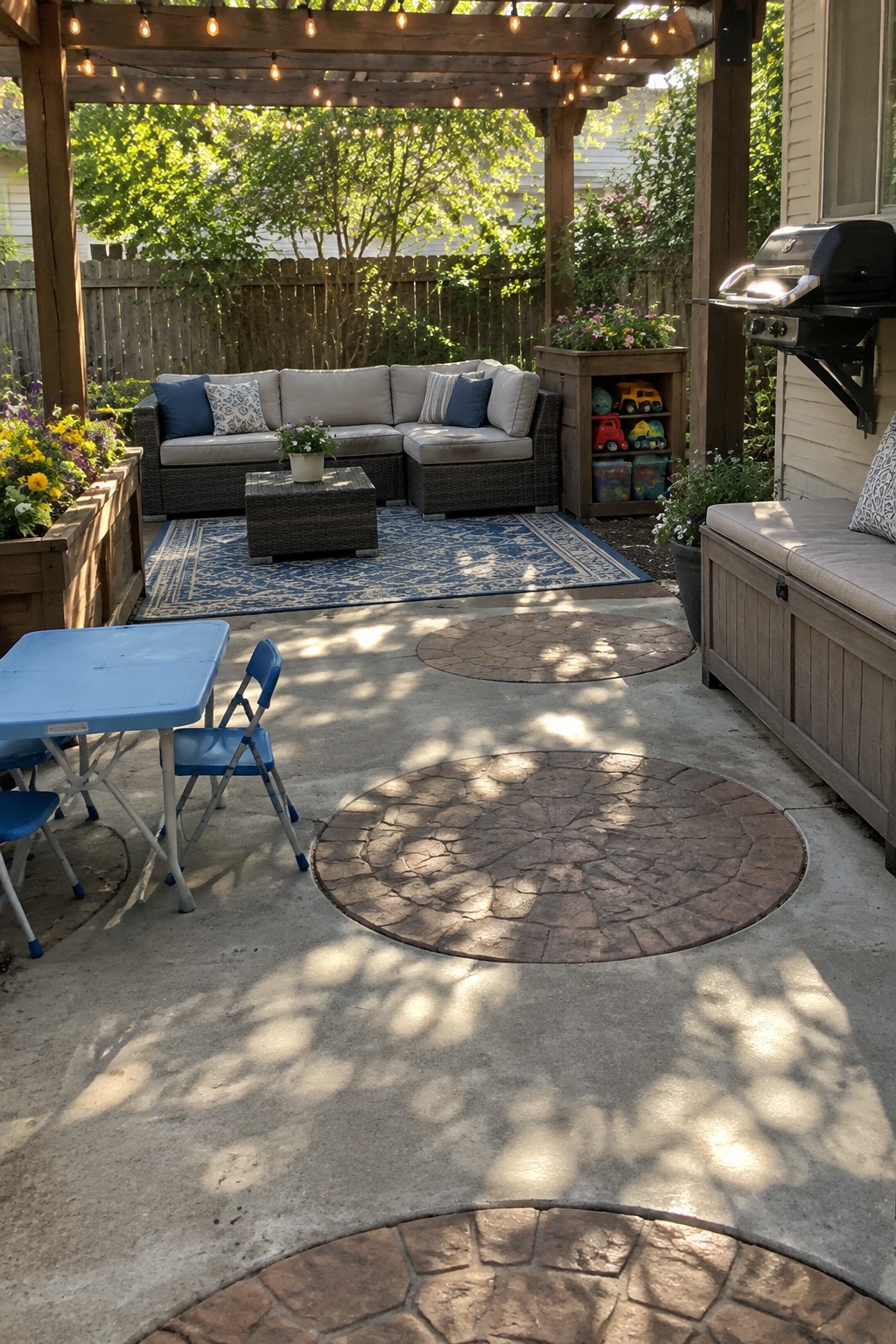
A broad concrete patio can feel more finished when a few sections of stamped concrete interrupt the plain surface. Here, the rounded inserts add a clear pattern without covering the whole patio in a more costly material.
This approach works well in a larger backyard where you want to mark out different areas without building separate patios. Keep the inserts spaced apart, and use a pattern that suits the rest of the yard so the concrete still feels connected.
Add Grass Between Concrete Patio Slabs

Concrete slabs separated by narrow strips of grass make a practical patio feel less like a solid expanse of paving. The simple grid gives the seating area a clear shape while leaving a little room for green between the slabs.
For a similar look, set the slabs on a firm, level base and keep the gaps wide enough for grass to grow. This works well in a small courtyard, though the strips may need trimming and can be harder to maintain in deep shade.
Make a Concrete Patio a Place to Gather
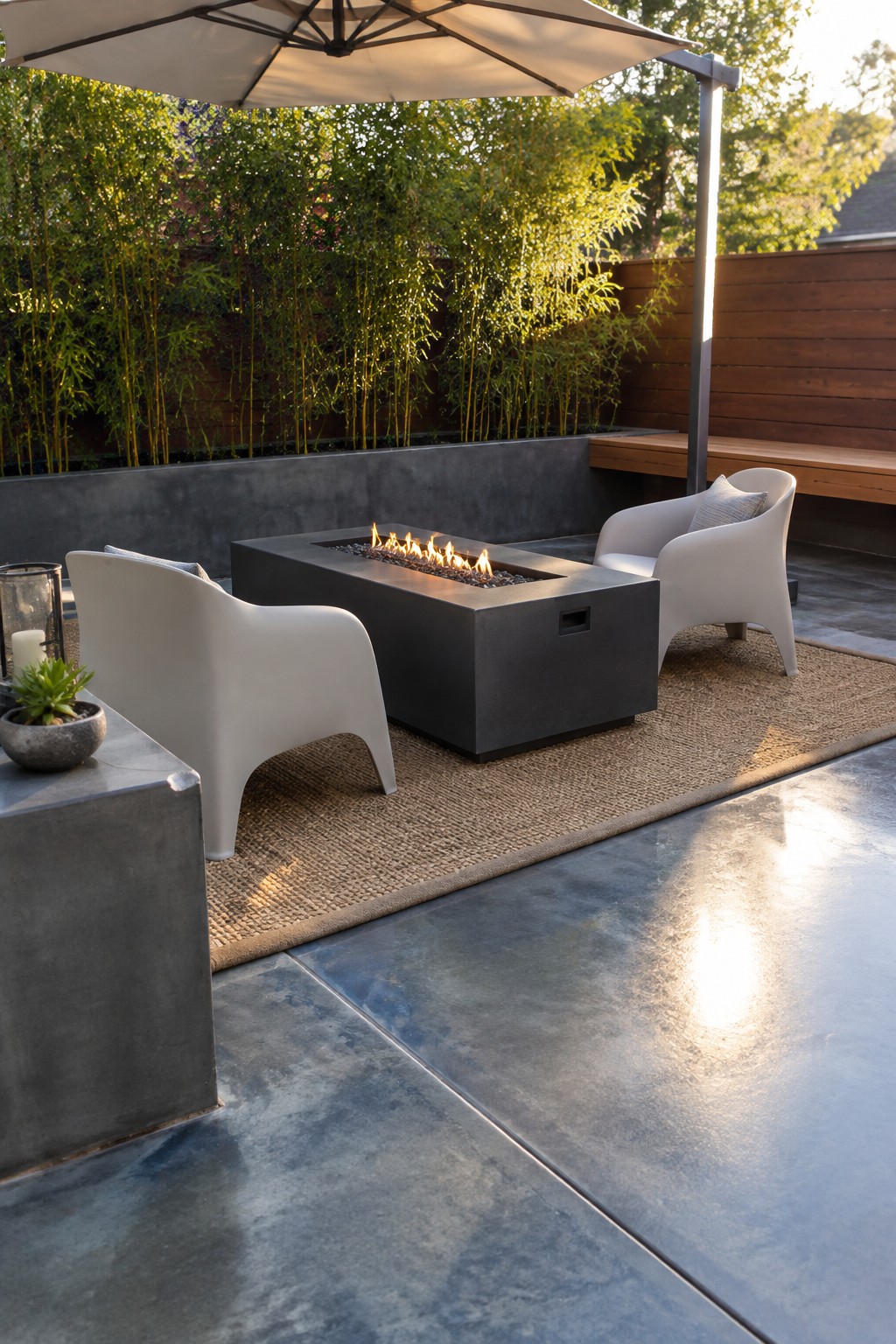
A concrete slab can do more than provide a level surface. Add a fire feature at the center and arrange a few chairs around it, and the patio becomes a natural spot for people to sit together.
A rectangular fire table suits a larger slab where chairs can sit comfortably on each side. Check local rules and leave enough clearance around the flame, especially if the seating area is covered by an umbrella.
Set Up a Small Patio Bar on Concrete
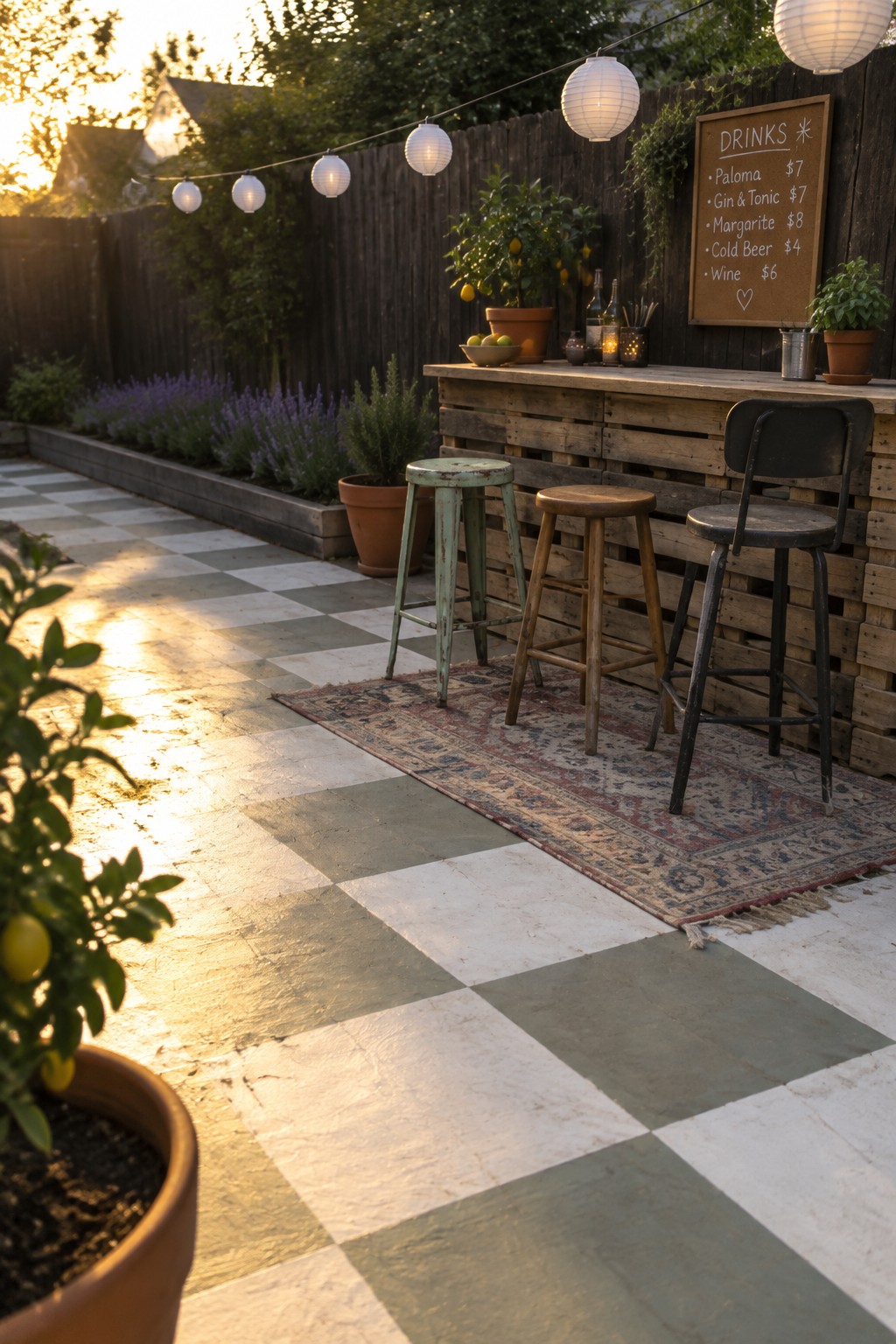
A simple bar area can give a concrete patio a clear purpose without taking up much room. A narrow counter and a few stools make a handy spot for serving drinks, and the open floor nearby keeps the patio easy to move through.
Use a sturdy outdoor counter or build one from reclaimed wood, then leave enough space behind the stools to pull them out comfortably. This setup works well along a fence or wall, where it can make use of an edge that might otherwise go unused.
Frequently Asked Questions
Q: How thick should a DIY concrete patio slab be?
A: A 4-inch slab works for most patios used for chairs, tables, and foot traffic. If you plan to park anything heavy on it, get advice on a thicker slab and stronger base before you pour.
Q: Can I pour a concrete patio right next to my house?
A: Yes, but slope the slab away from the house so rainwater drains outward. Keep the finished surface below siding and any other moisture-sensitive materials.
Q: Do I need to remove grass before pouring the slab?
A: Yes. Remove the sod and any loose organic material, then compact a level base of gravel. Pouring over grass can leave the slab uneven as the material underneath breaks down.
Q: How soon can I put patio furniture on new concrete?
A: Give the concrete at least a few days before setting out light furniture, and wait about a week before regular use. Keep it damp during the first few days so it cures more evenly.
