

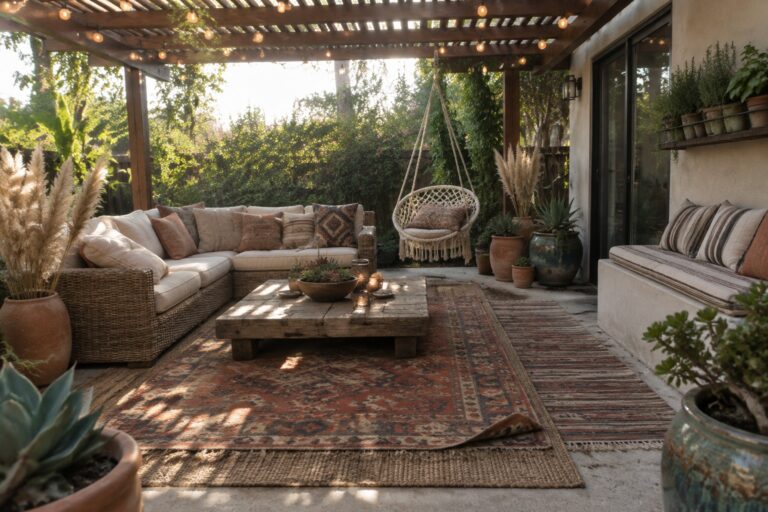
Over the years I have noticed that a patio tends to work best when it feels like an extension of the house rather than a separate zone that only looks good from the window.
My own space taught me this the hard way after I added seating that looked nice but left no room to walk around the table comfortably.
Usability matters more than most people expect because a spot that cannot handle everyday use ends up ignored no matter how it appears in photos.
Layout comes first.
Testing ideas on a small scale helps me see what actually fits the way we live outside.
Define Your Patio Seating With A Large Area Rug
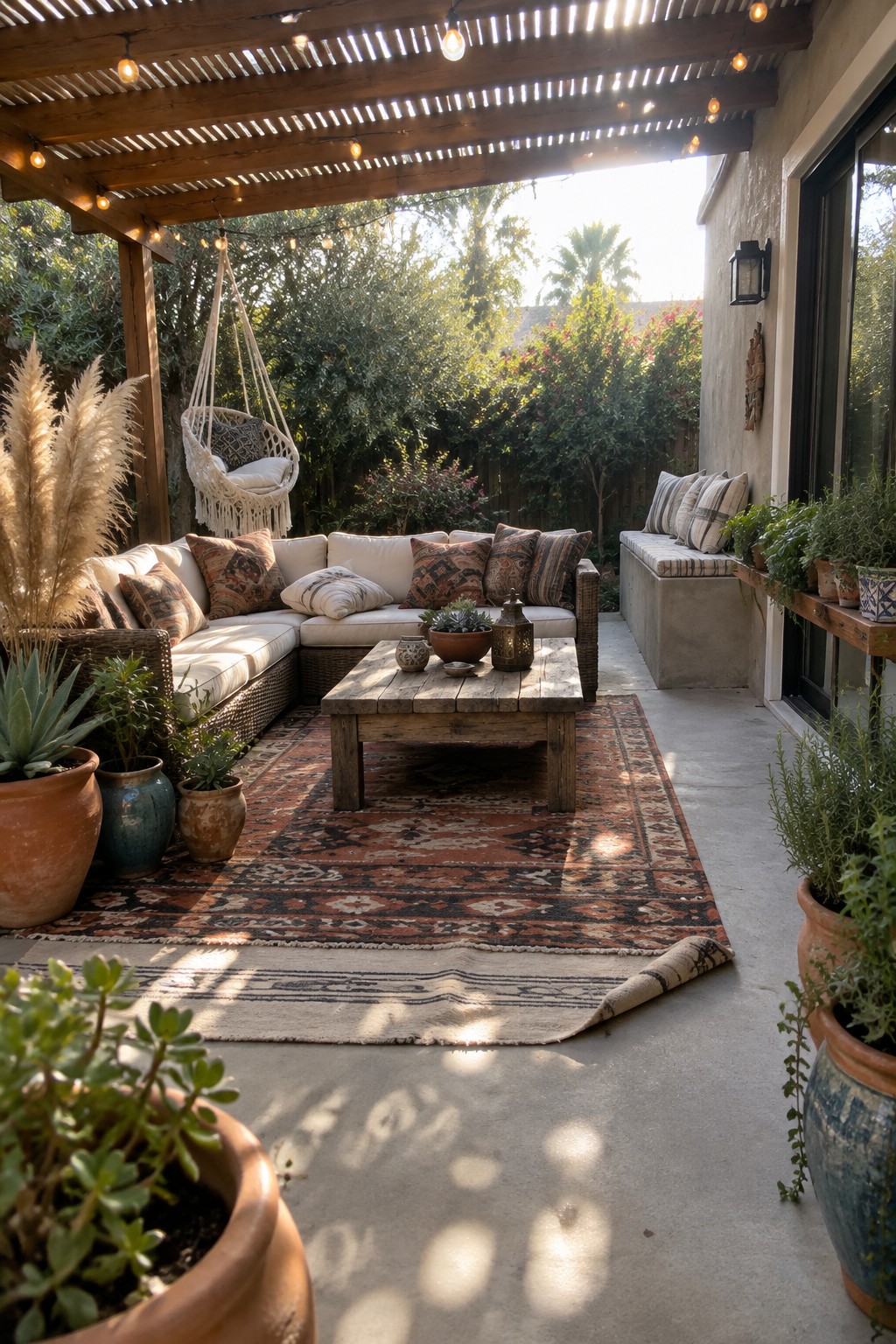
A big outdoor rug does a lot to make a patio feel like an actual room instead of just furniture set on concrete. It pulls the seating together, softens the hard surface underfoot, and creates a clear zone for relaxing or gathering.
This works best on patios that feel a little open or unfinished. Pick a rug large enough to fit under the main seating and coffee table, then add your usual pillows and plants around the edges. It is one of the simpler ways to make the space feel more finished without major changes.
Center Your Patio Seating Around A Fire Pit
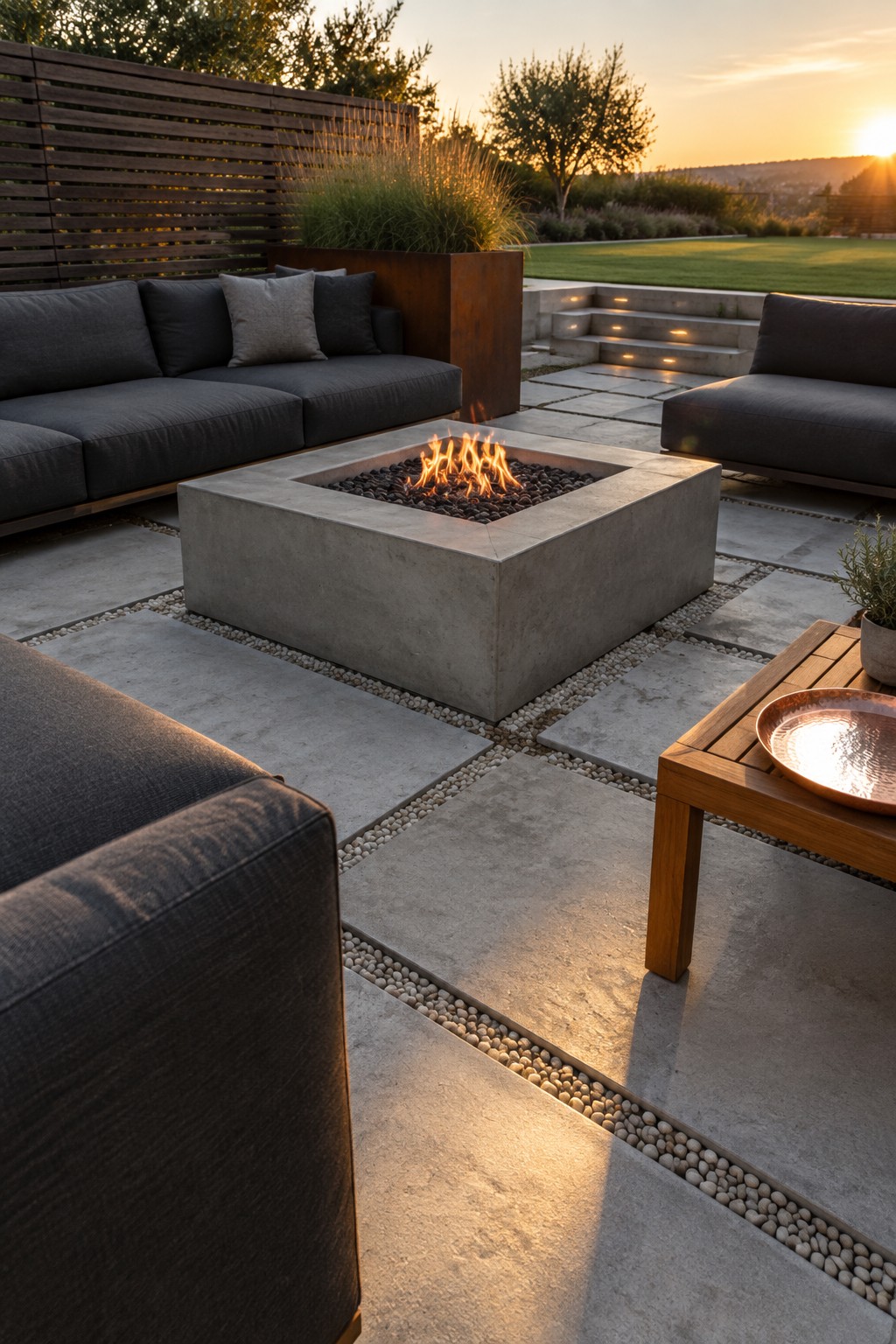
A central fire pit pulls an outdoor seating area together in a simple way. It gives everyone a reason to sit close and stay longer once the sun goes down.
This layout works best on patios that have enough open space for chairs to circle the pit without crowding the edges. It suits homes with flat yards or decks where you want one main gathering spot instead of scattered furniture. Keep the surrounding seating low so the fire stays visible from every angle.
Shade Your Patio Table With a Simple Umbrella
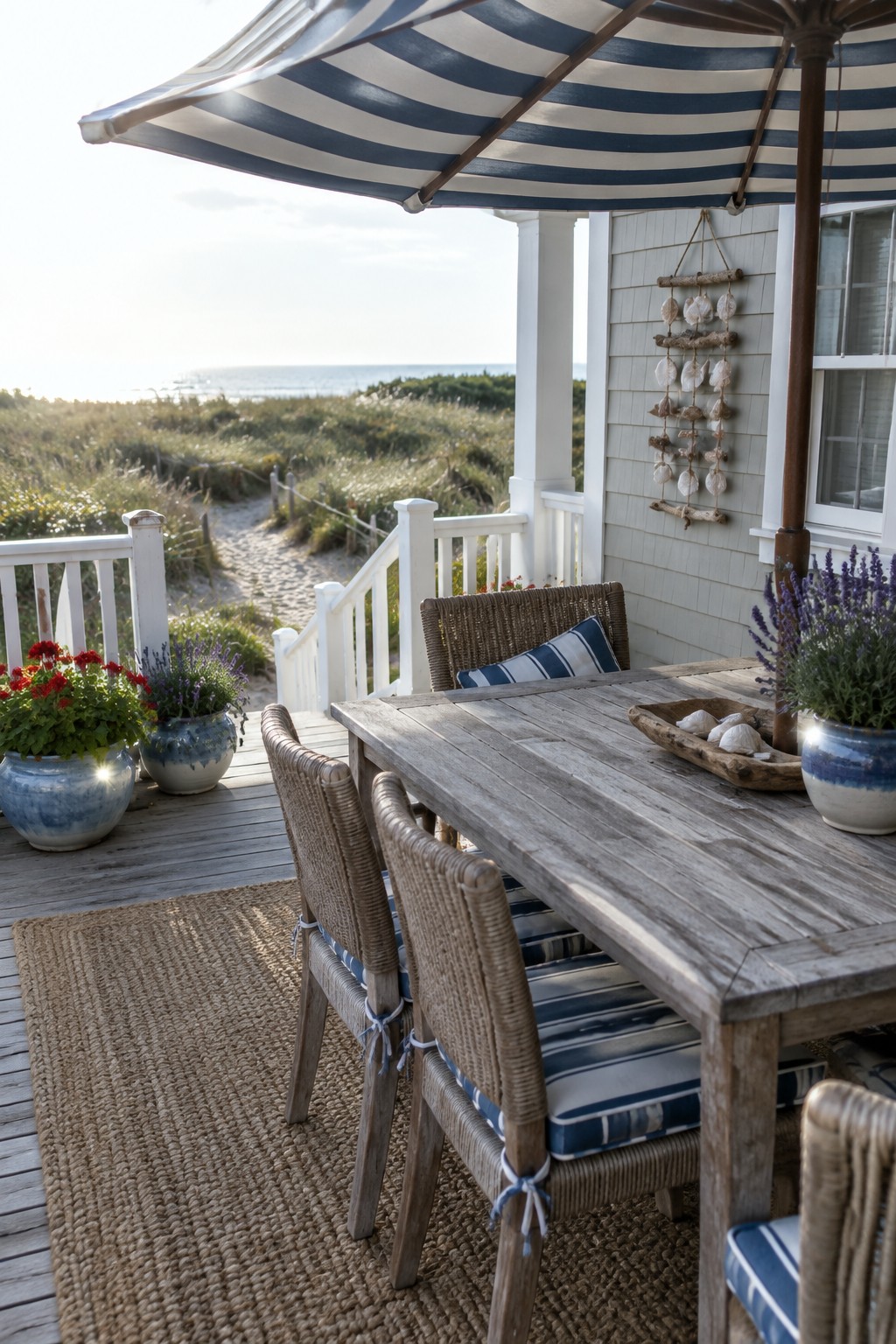
A large umbrella makes a big difference on a sunny deck. It turns an open table into a place where you can actually sit and eat without squinting or moving chairs around every hour.
This idea works on most patios or decks that face south or west. Choose a wide umbrella with a sturdy base, and make sure the pattern does not clash with your cushions or rug. Keep the rest of the setup light so the shade stays the main feature.
Add a Fountain to Your Patio
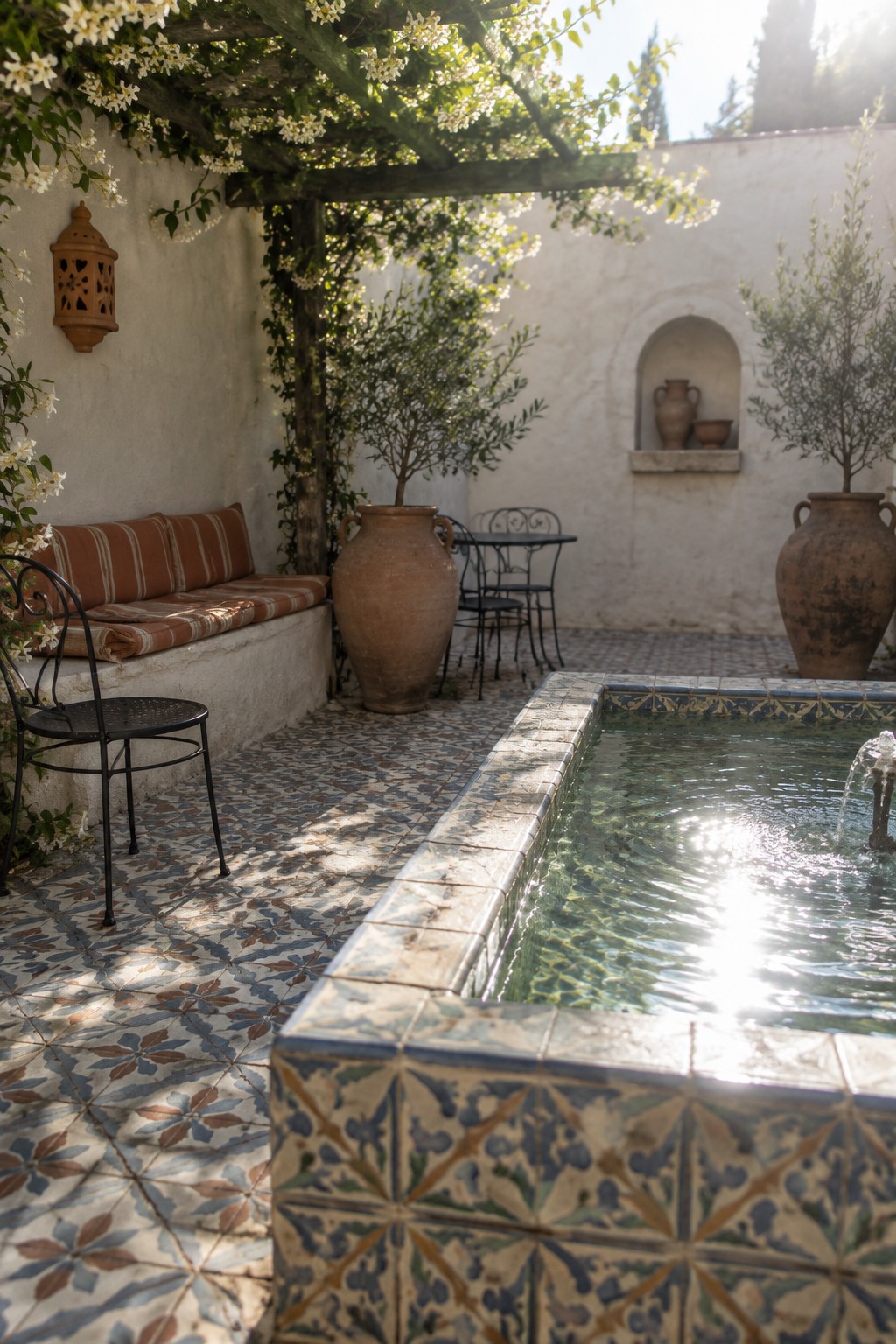
A small fountain brings a steady sound and a bit of movement that makes a patio feel more settled. It turns an ordinary outdoor spot into one people actually want to sit in for longer, especially on warm days when the air feels still.
This idea works best in courtyards or smaller paved areas where the water stays visible from the main seating spots. Keep the basin simple and match the tile or stone already on the ground so it blends in instead of standing out as a separate project.
Mixing Chairs Around an Outdoor Table
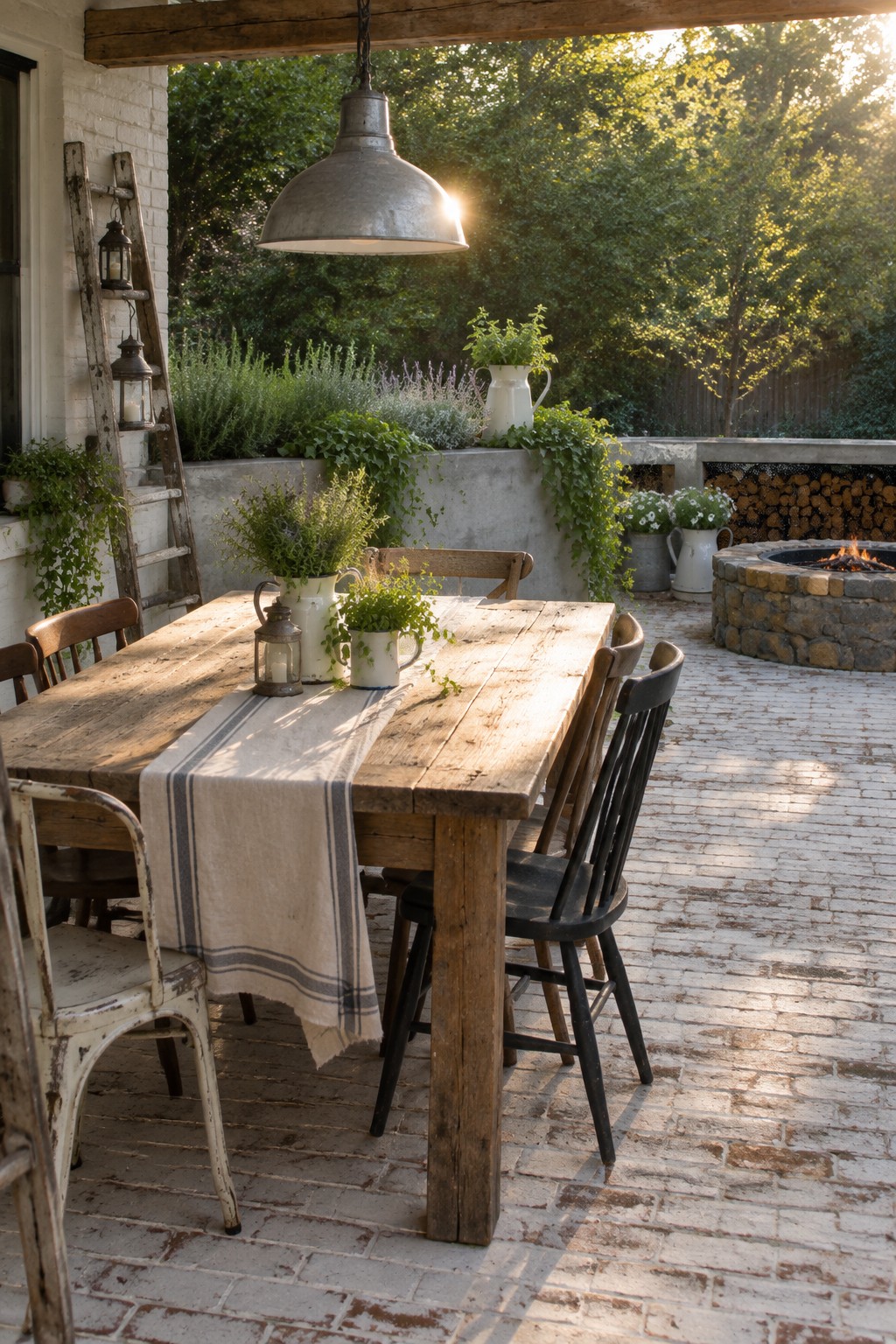
Mixing chairs around a big patio table gives the space a relaxed, lived-in feel without much effort. It lets you pull together whatever seating you already have or find secondhand, and the result still looks intentional because everything gathers around one strong table.
This works best on patios that get regular use for meals or gatherings. Keep the table simple with a basic runner and a few potted plants down the middle, then let the chairs vary in style and finish. It suits most homes with a decent-sized outdoor area and saves the trouble of hunting for a full matching set.
Anchor Your Patio With a Concrete Coffee Table
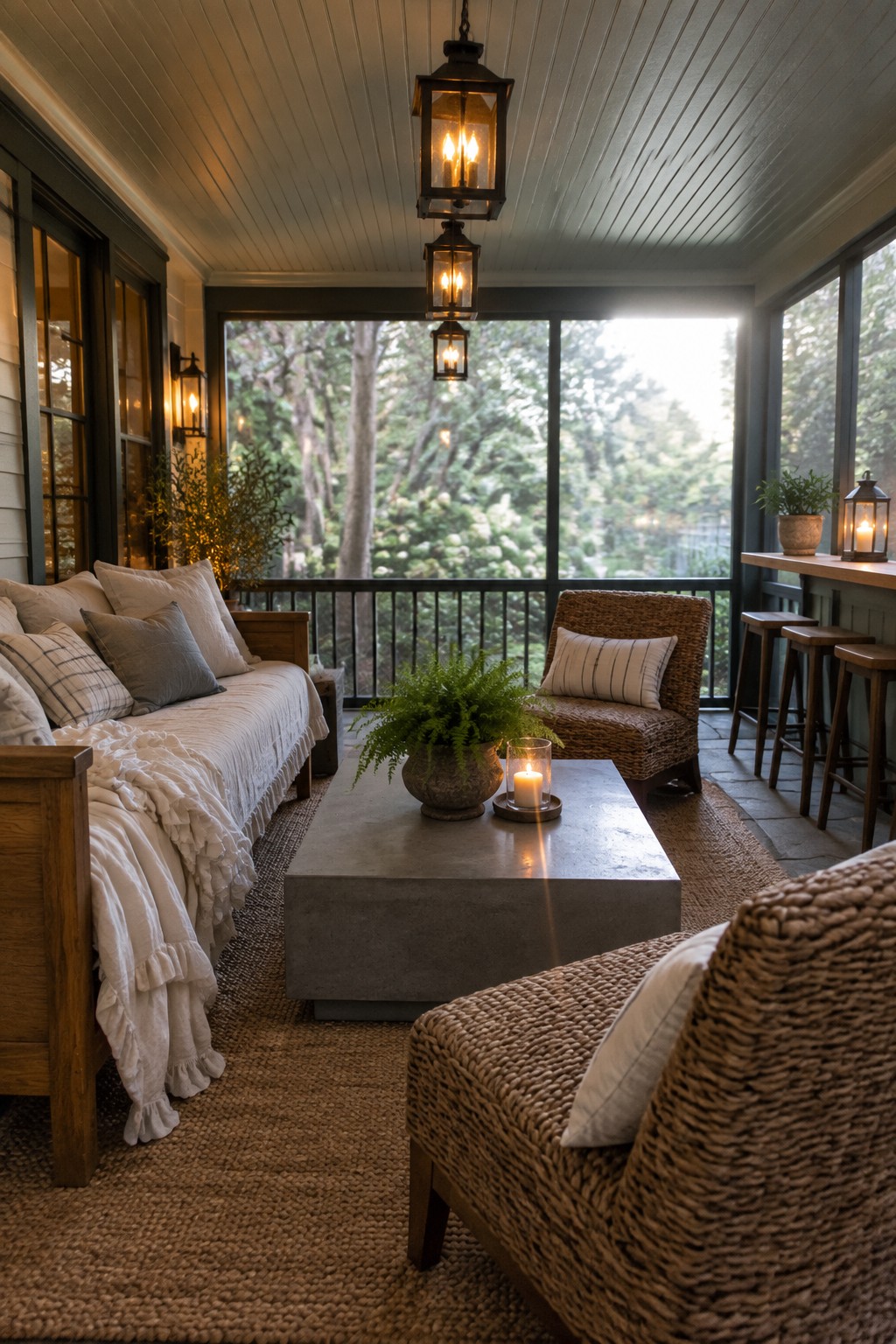
A concrete coffee table gives an outdoor seating area something solid to work around. It handles weather, holds up to regular use, and keeps the space from feeling too light or scattered.
Set one in the center of your seating and keep the surrounding pieces softer and more textured. Woven chairs, a simple rug, and a few cushions work well with it without fighting for attention.
Add Artificial Turf For A Lawn Feel On Your Patio

One easy way to make a patio feel more like a backyard is to cover the hard floor with artificial turf. It creates a soft surface that looks green year round and gives the space a relaxed outdoor vibe without the work of real grass.
This approach works well on rooftops, balconies, or any concrete area where growing lawn is not practical. Measure the space first, choose a durable turf made for outdoor use, and secure the edges so it stays flat. It pairs easily with simple seating and a grill setup.
Stepping Stones In Gravel
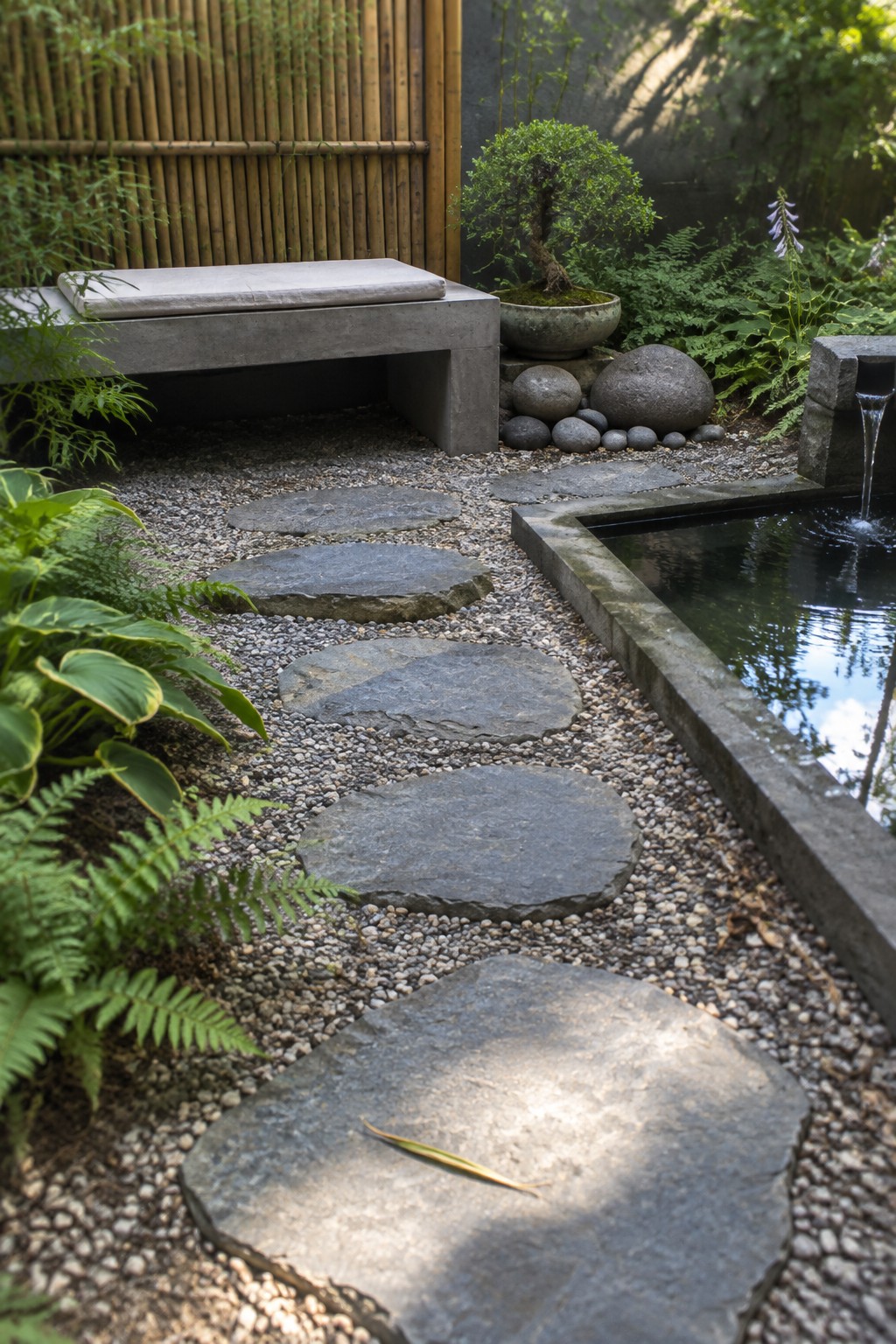
Stepping stones set into gravel give a garden path that feels natural and stays practical. The stones create solid footing while the gravel fills the gaps, drains well, and keeps weeds down without much effort.
This works best in smaller yards or along the side of a house where you want to link a bench area to a water feature. Keep the stones level and space them for comfortable strides so the path stays easy to walk.
Built-In Benches Give You More Seating Without Taking Up Extra Room
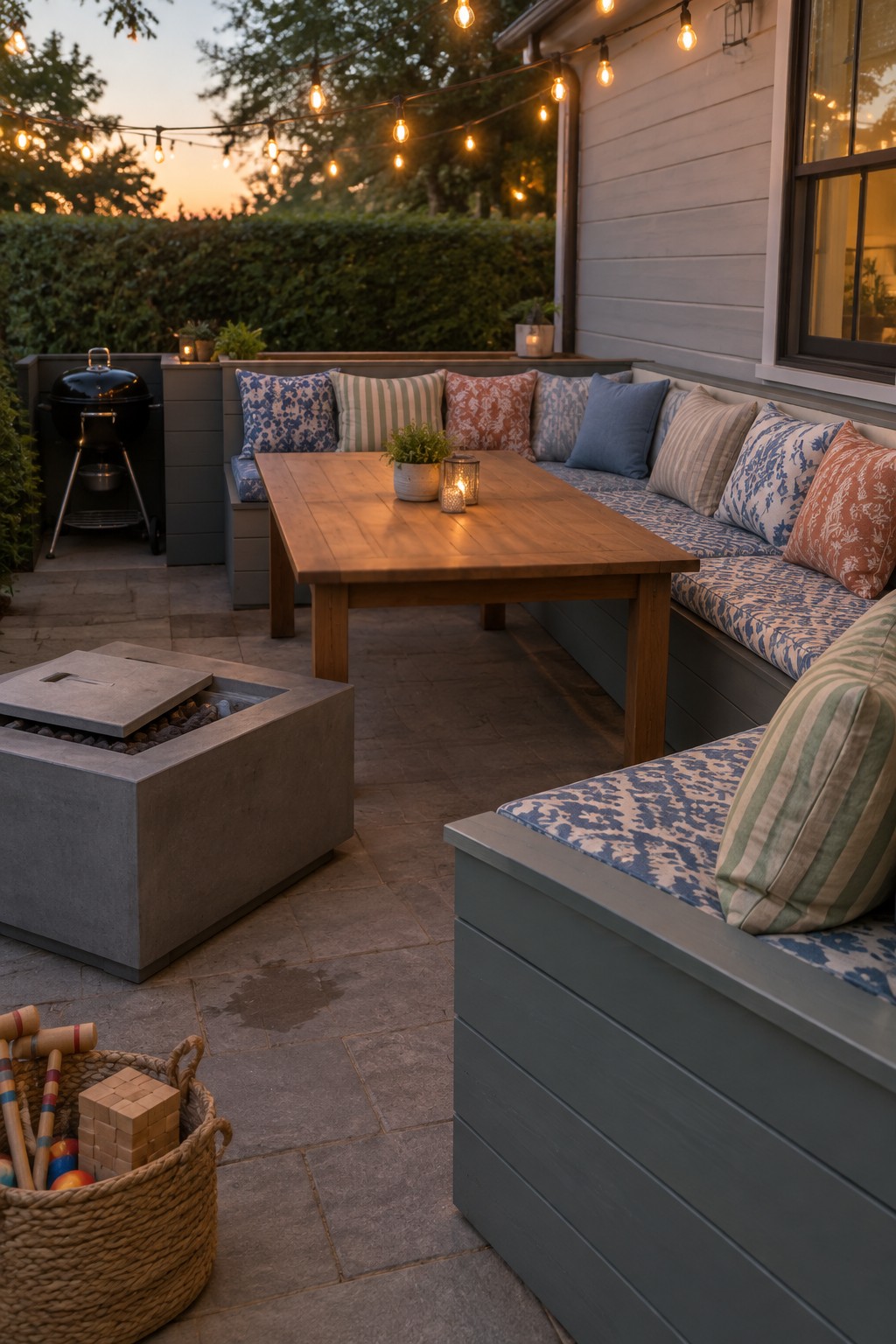
Built-in benches along the edges of a patio make the whole space feel more finished and useful. They turn an open area into a place where people can actually sit and stay awhile, especially when you add cushions in different patterns and colors. The setup works well because the benches follow the shape of the patio instead of floating in the middle.
This approach fits best on smaller or medium patios where you want to keep the center open for a table or fire pit. You can build the benches yourself with basic lumber and paint them to match your house or decking. Just make sure the height feels comfortable for sitting, and leave enough room for legs under the table.
Build a Vertical Pallet Garden for Your Patio
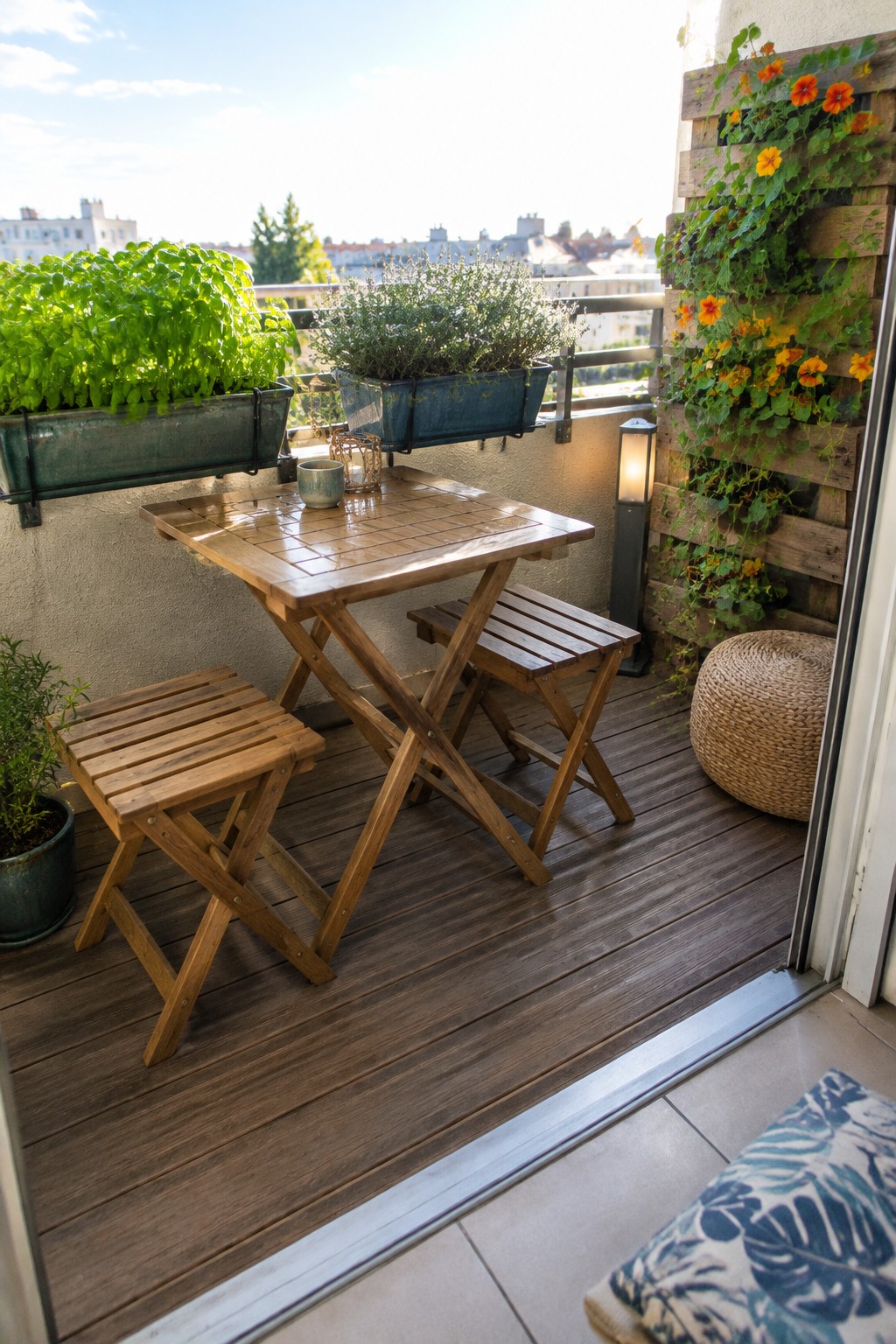
A vertical garden built from a simple wooden pallet gives you a way to add lots of plants without using up floor space on a small patio or balcony. It turns an otherwise blank wall into something green and lively that softens the whole area.
This setup works best on compact outdoor spaces where every inch counts. Secure the pallet firmly, tuck in soil and plants that can handle the exposure, and keep an eye on watering so it stays neat rather than messy.
Add a Mosaic Tile Table to Your Outdoor Dining Area
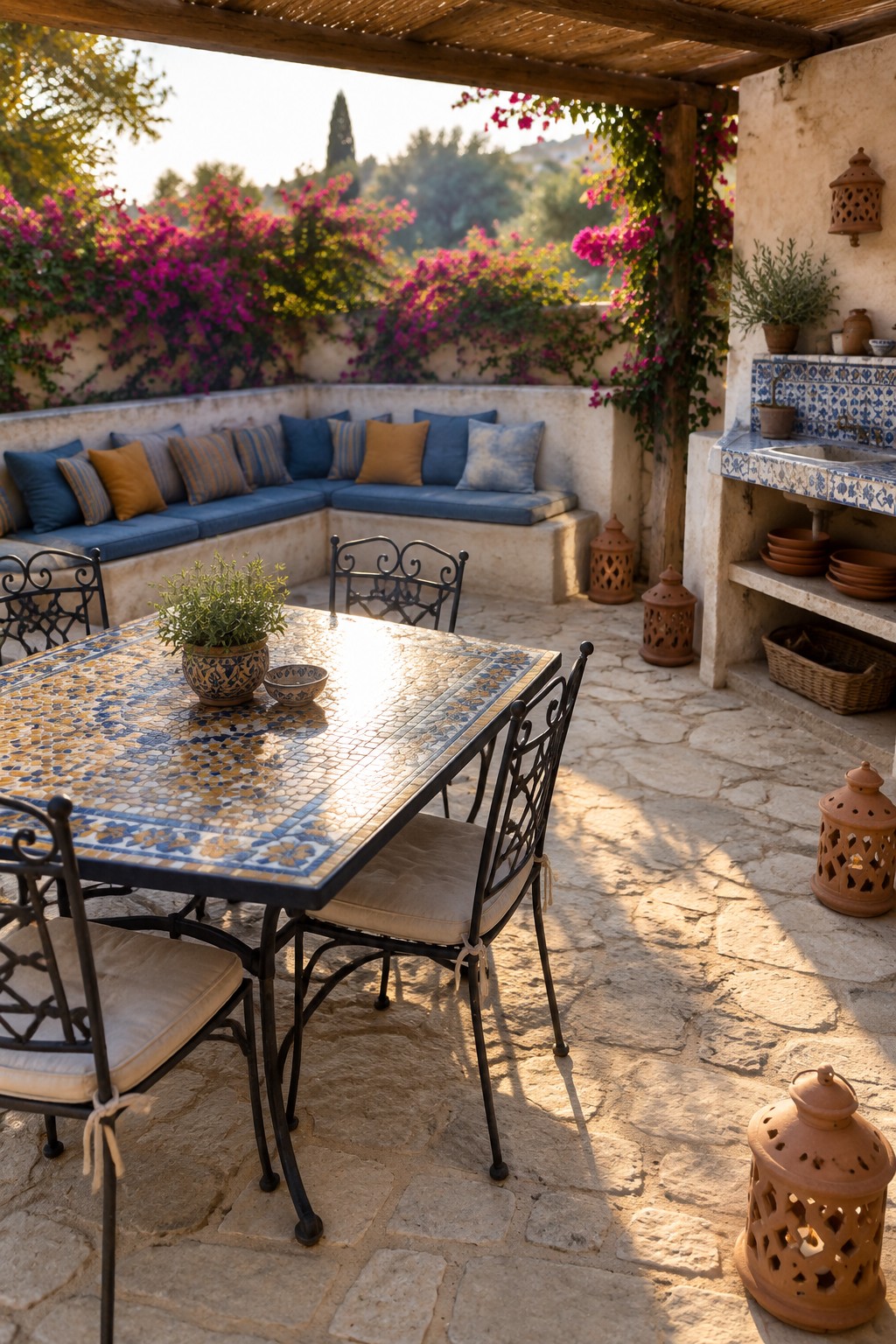
A mosaic tile table gives an outdoor dining space a solid focal point that feels both practical and personal. The surface holds up well to weather and use, and the pattern brings color without needing lots of extra decor.
Place the table in a spot that gets some shade, then add simple metal chairs and a bench along one side if the layout allows. This setup works especially well on smaller patios where you want seating for several people without crowding the floor space.
String Lights Overhead
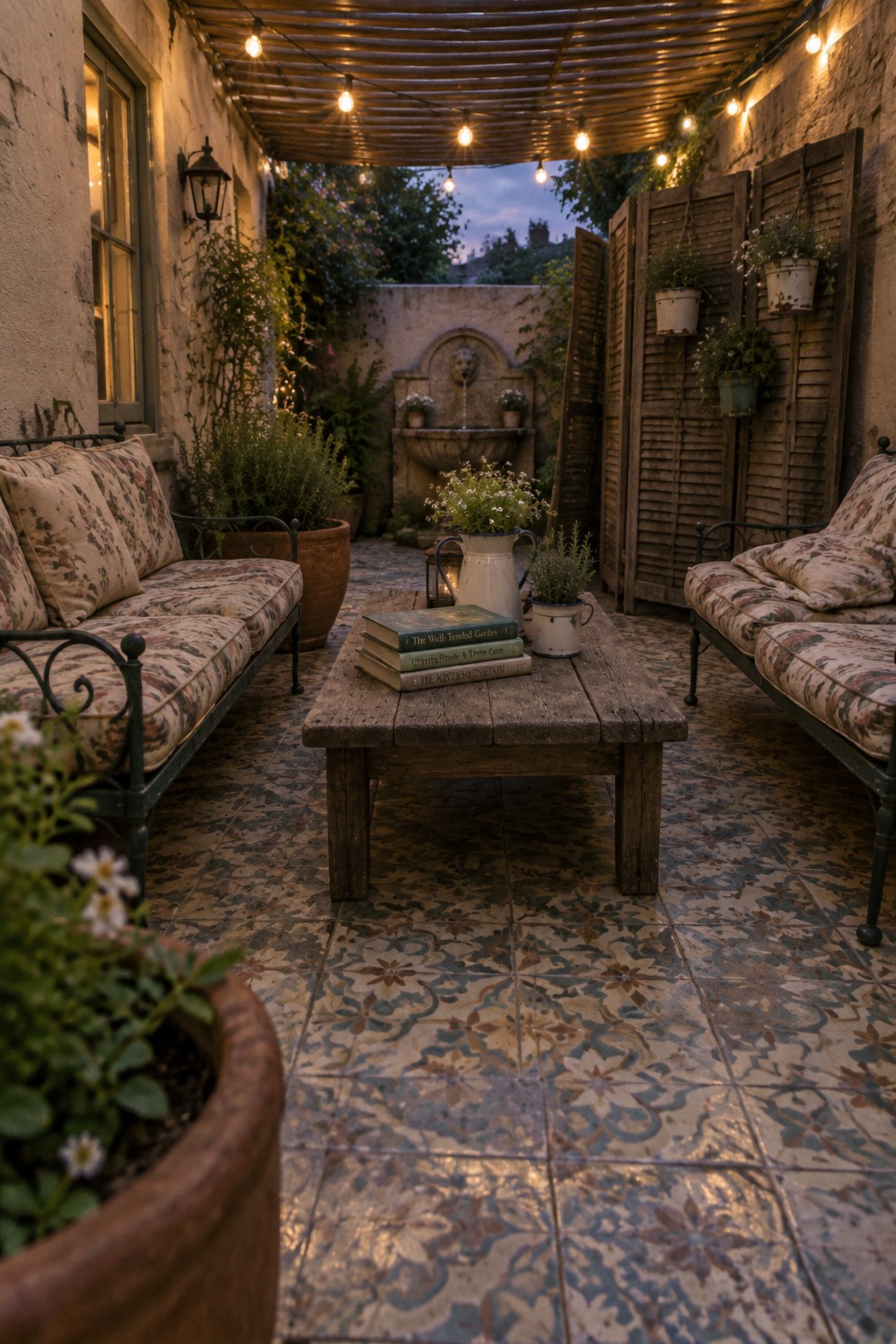
String lights are one of the easiest ways to make a patio feel usable after the sun goes down. They give off a soft, even glow that feels much friendlier than most wall or post lights, and they help mark the edges of the seating area without any extra construction.
Run them from one side of the patio to the other on a simple wire or existing beams. They work on almost any size space and suit homes that already have a bit of overhead cover or a place to anchor the ends. Just keep the bulbs spaced evenly so the light stays balanced.
Add a Living Wall to Your Patio
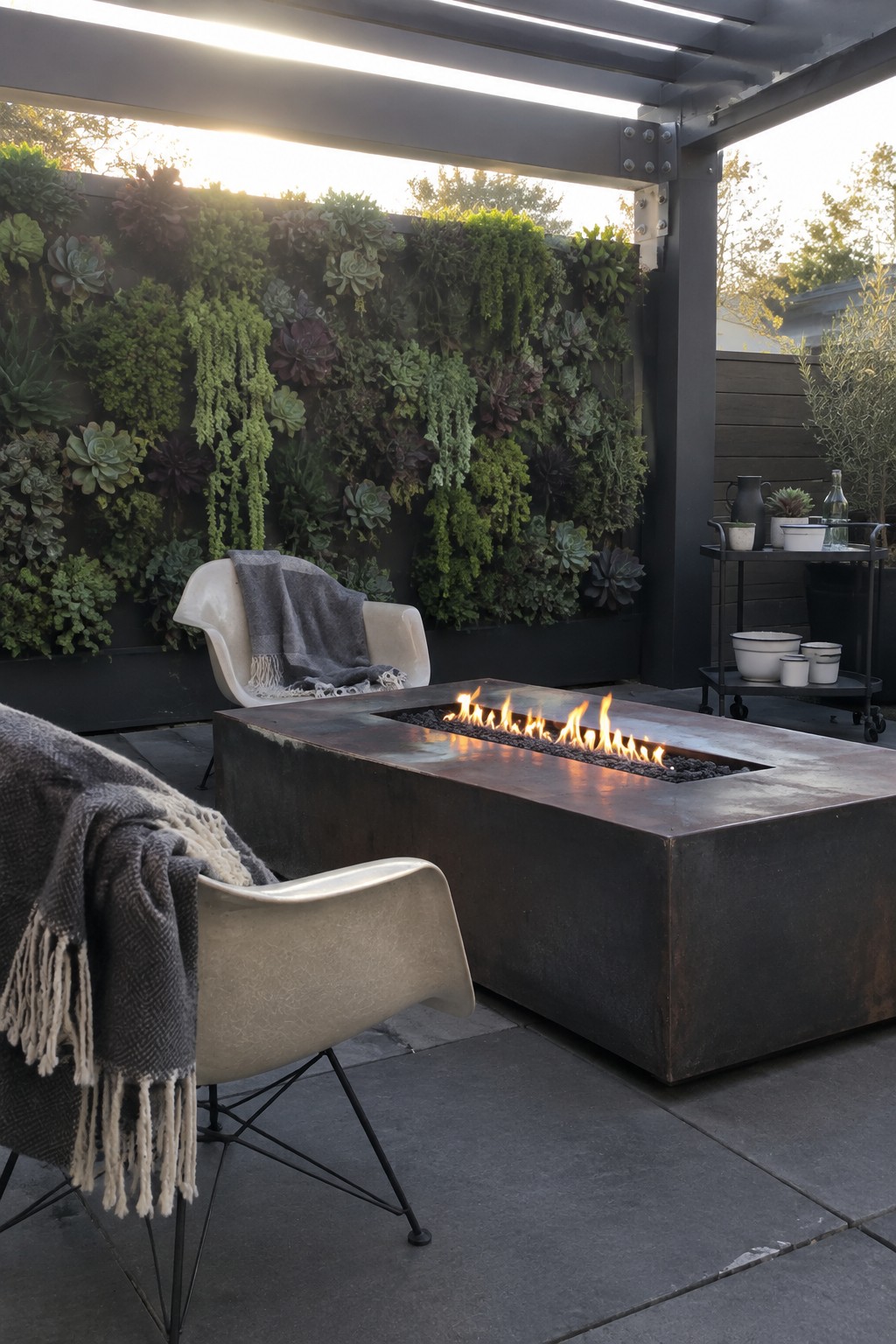
A living wall of succulents turns an ordinary patio wall into the main feature. It brings in plenty of greenery without taking up any floor space, which helps smaller outdoor areas feel fuller and more finished.
This works best on a patio that already has a solid seating zone, like one built around a fire pit. Start with a few modular panels if you want to test the look, and choose plants that match the light conditions on your wall.
Center Your Patio Around a Fire Pit
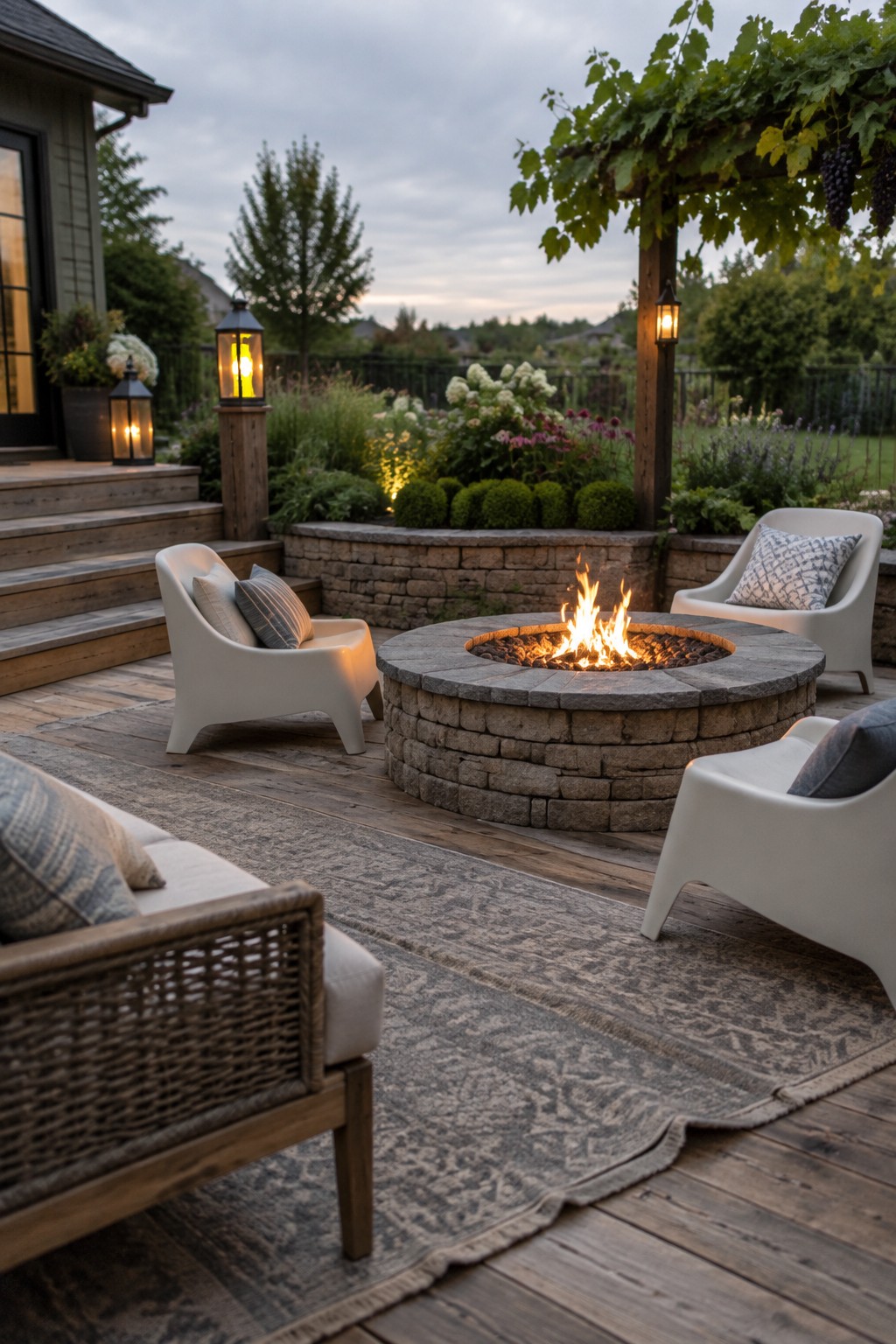
A fire pit gives an outdoor seating area a natural center that pulls people in without much extra effort. It works especially well on a deck because the open flames stand out against the wood and give the space a clear purpose once the sun goes down.
Place the pit in the middle of a large rug so the seating stays close and the zone feels defined. This approach suits most backyards and works best when the chairs stay simple so the fire remains the main draw. Just check that your rug can handle some weather.
Lounge Chairs Right by the Pool
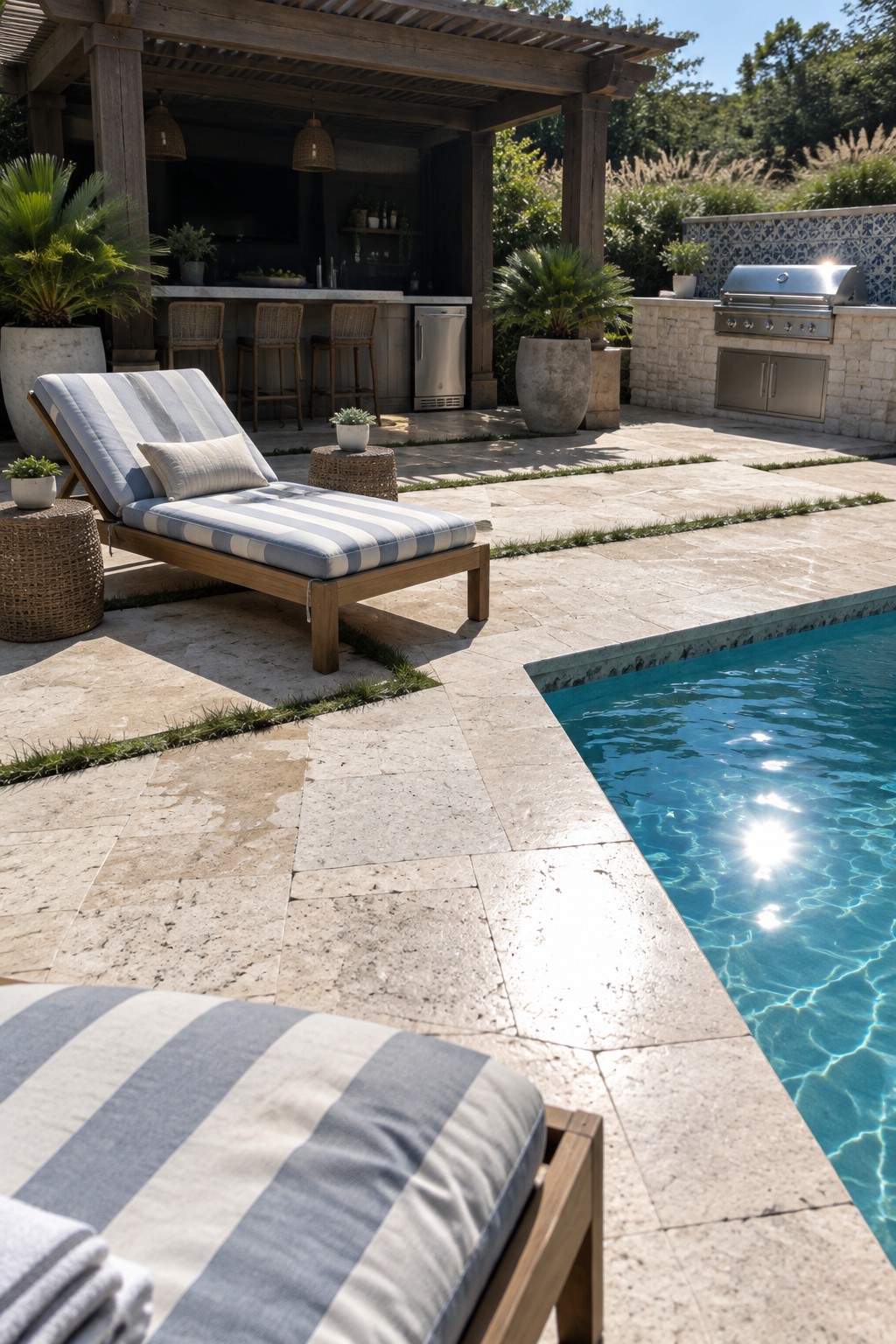
One easy way to make a pool patio more usable is to place a lounge chair close to the water. The wooden frame and striped cushions here show how a single piece can turn open stone into a spot meant for relaxing after a swim.
This setup works best when the chair has room to sit without blocking foot traffic around the pool. It suits homes where the patio sees daily use, and it helps if the cushions are made to handle sun and water so they last through the season.
Mix Different Chairs Around One Big Table
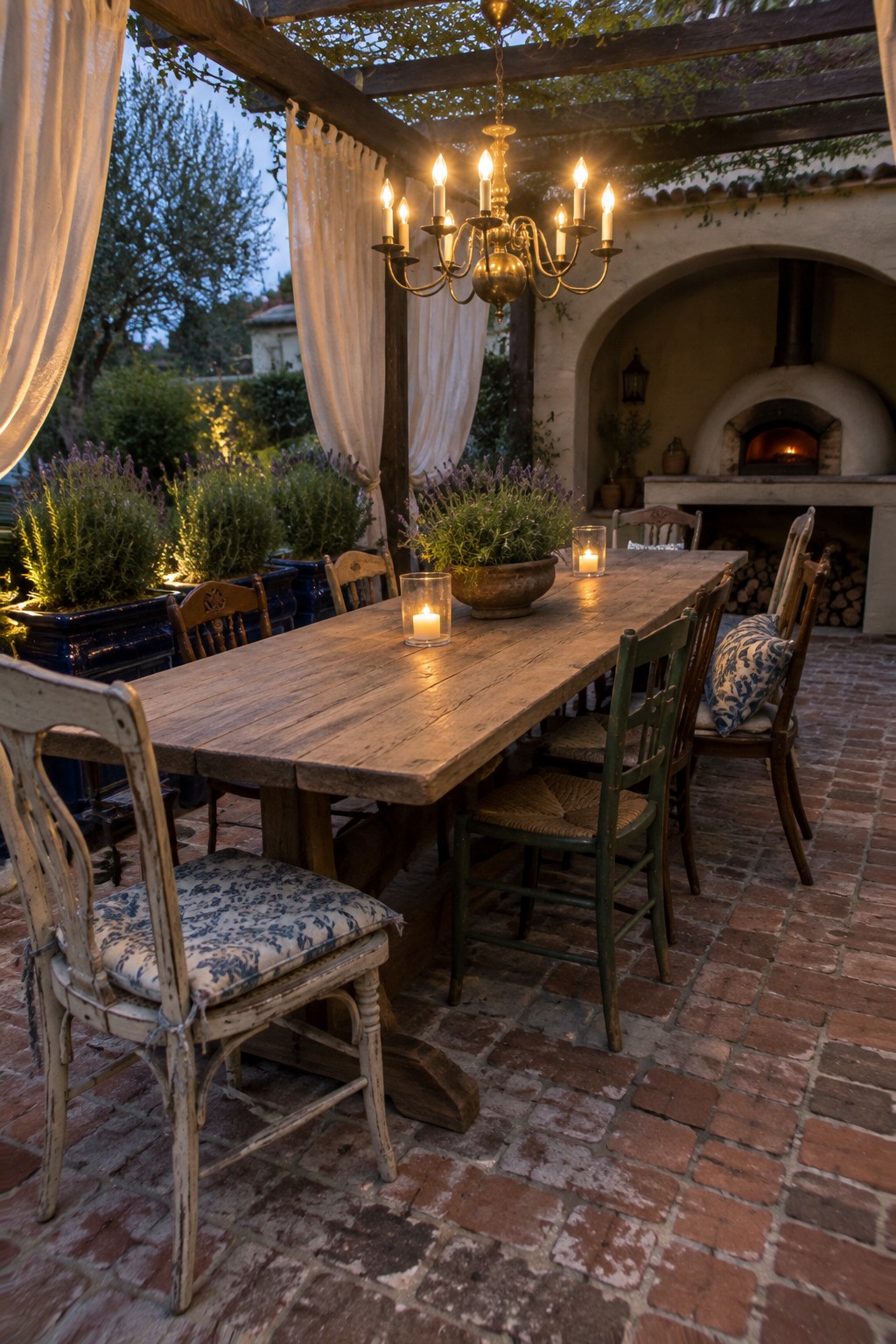
A long wooden table works well outdoors when you surround it with chairs that do not match. The variety keeps the setup from feeling too formal and gives the space a relaxed, collected look that suits most homes with a patio or deck.
Start with whatever seating you already have or can find secondhand. A few painted pieces, a couple of wooden ones, and one or two with cushions are enough. Place the table where you can run an extension cord for a hanging light or string of bulbs so the area stays usable after dark.
Zone Your Patio With Separate Lounge And Dining Areas
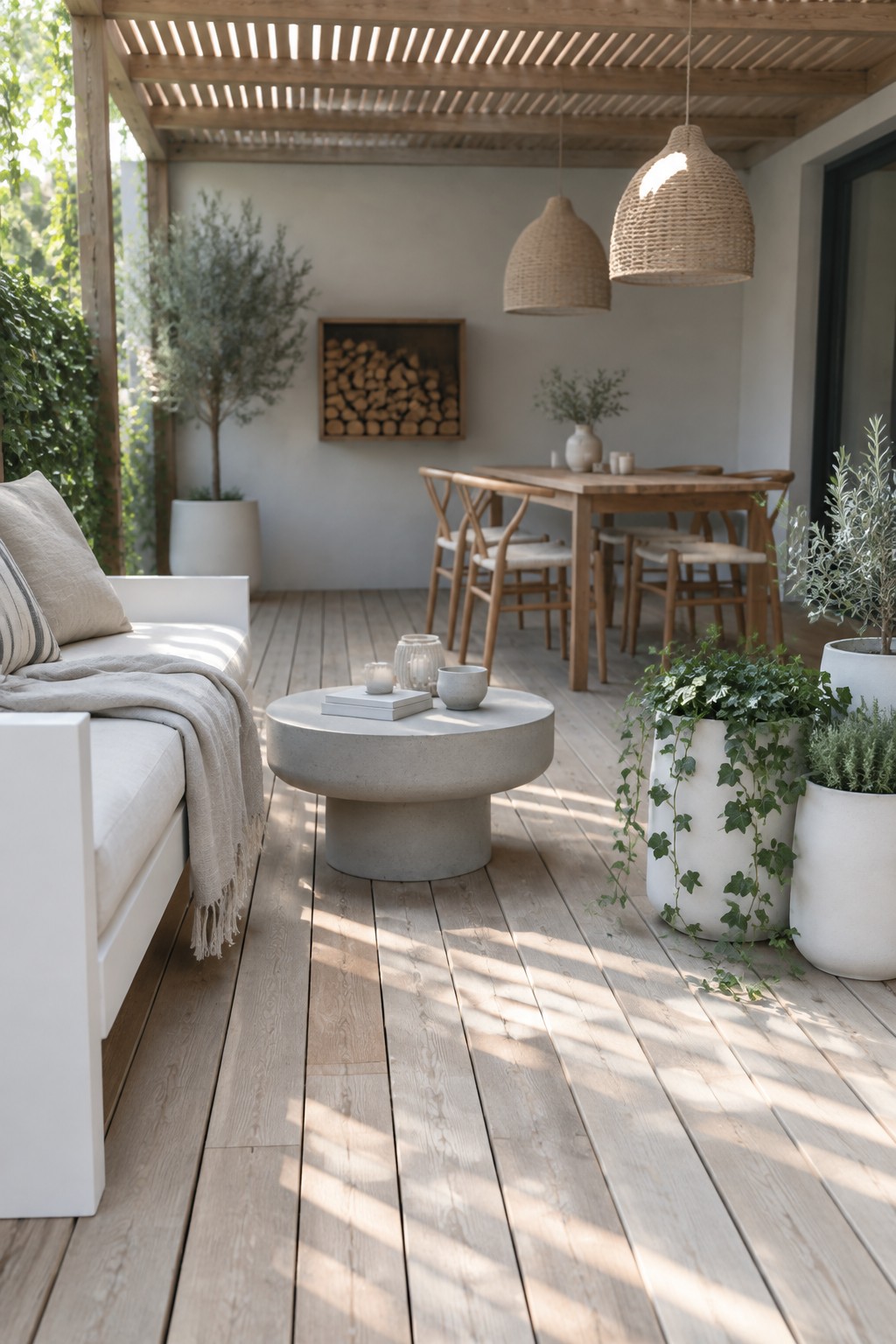
One of the simplest ways to make an outdoor space feel more useful is to split it into two clear zones. A lounge area with a sofa and low table gives you a place to relax, while a dining table nearby handles meals without the areas crowding each other. The setup works because both zones share the same deck and overhead cover, so the whole space still feels connected.
This approach suits medium or larger patios where you have enough room to move between the two functions. Keep the furniture in similar tones and materials so nothing clashes, and add a few potted plants along the edges to soften the division. It works on most decks as long as you leave clear walking space between the zones.
Frequently Asked Questions
Q: My patio is tiny so most big projects feel impossible. Can any of these ideas still work? A: Start with one small change like adding painted pots or a simple hanging garland. These take little space yet give the same personalized feel the bigger versions deliver. Keep the rest of the area clear so the one new piece stands out.
Q: How do I stop cushions and fabrics from fading fast in direct sun? A: Pick outdoor fabric or give regular pillows a quick spray with fabric protector before use. Rotate them every few weeks so no single side takes all the damage. Store them in a bin during the hottest months to stretch their life.
Q: What is the easiest way to test a look before I commit to buying supplies? A: Arrange what you already own in the space first and live with it for a day or two. Snap photos from different angles to spot what feels off. Then swap in just one new element at a time until the vibe clicks.
