

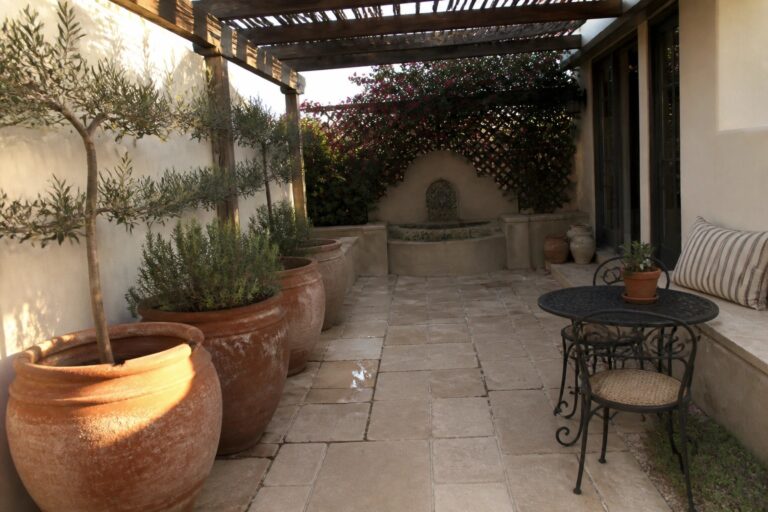
When I look at my own patio the areas that stay comfortable are the ones where I can shift planters around without tearing up the whole surface.
Container planting makes that kind of adjustment simple so the space can handle both morning coffee and evening meals without feeling crowded.
I have noticed that setups with too many fixed beds often end up as backdrops rather than places people actually sit.
Grouping pots at different heights tends to keep walkways clear while still giving the eye something to follow.
I usually test ideas first that let me reach every plant from a single chair so nothing gets neglected once the season gets busy.
Line Your Patio With Oversized Pots
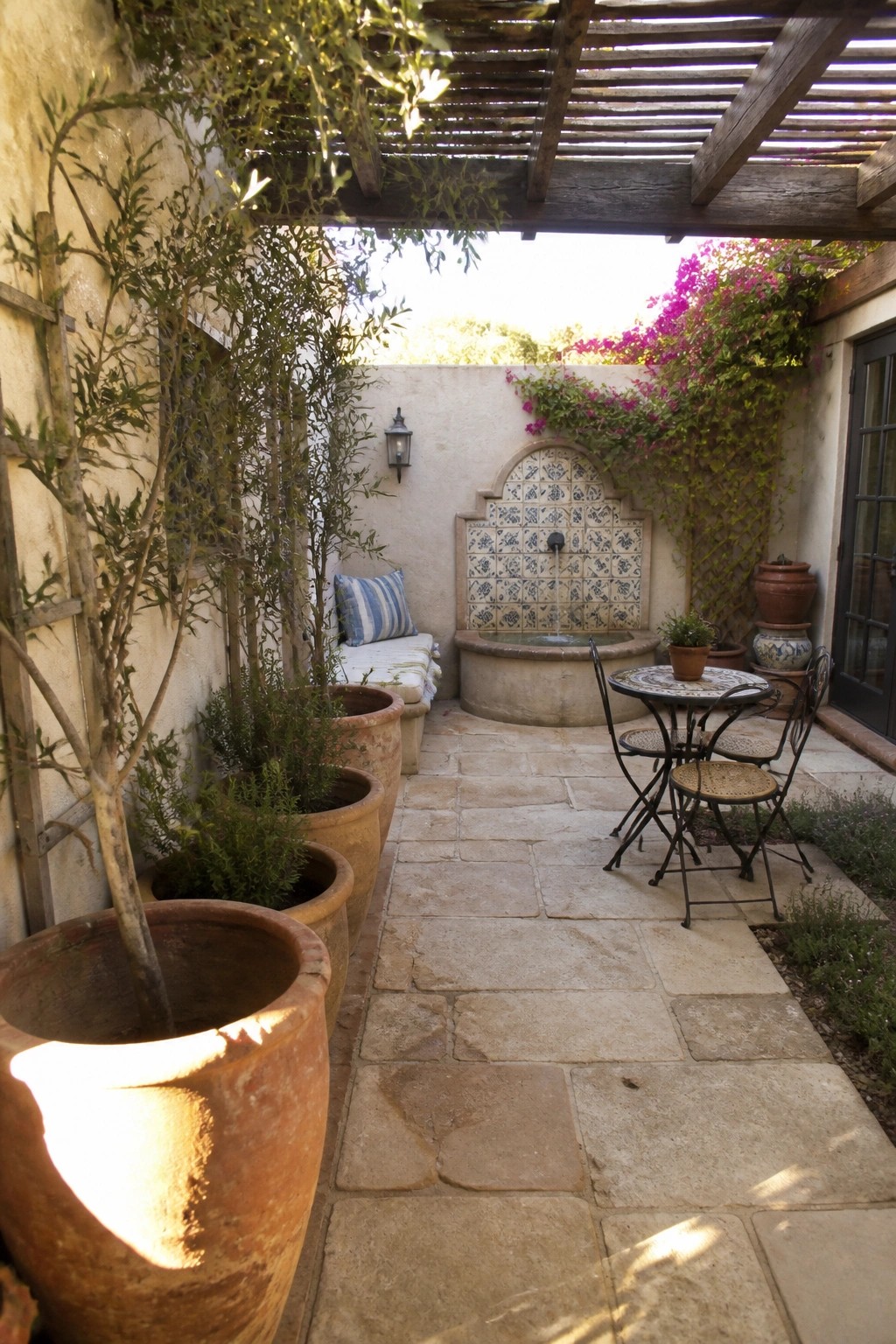
Large containers give you a way to add real plants to a paved patio without digging or building beds. A row of big pots along one edge creates height and softness while leaving the main walking area clear. The pots also let you move things around if the light shifts or you want a different look later.
This setup works best on stone or concrete surfaces where permanent planting is not possible. Stick with pots in the same material and color so they read as one group instead of random accents. Mix a tall plant or two with lower shrubs to keep the line interesting without crowding the space.
Vertical Pallet Planters For Small Balconies
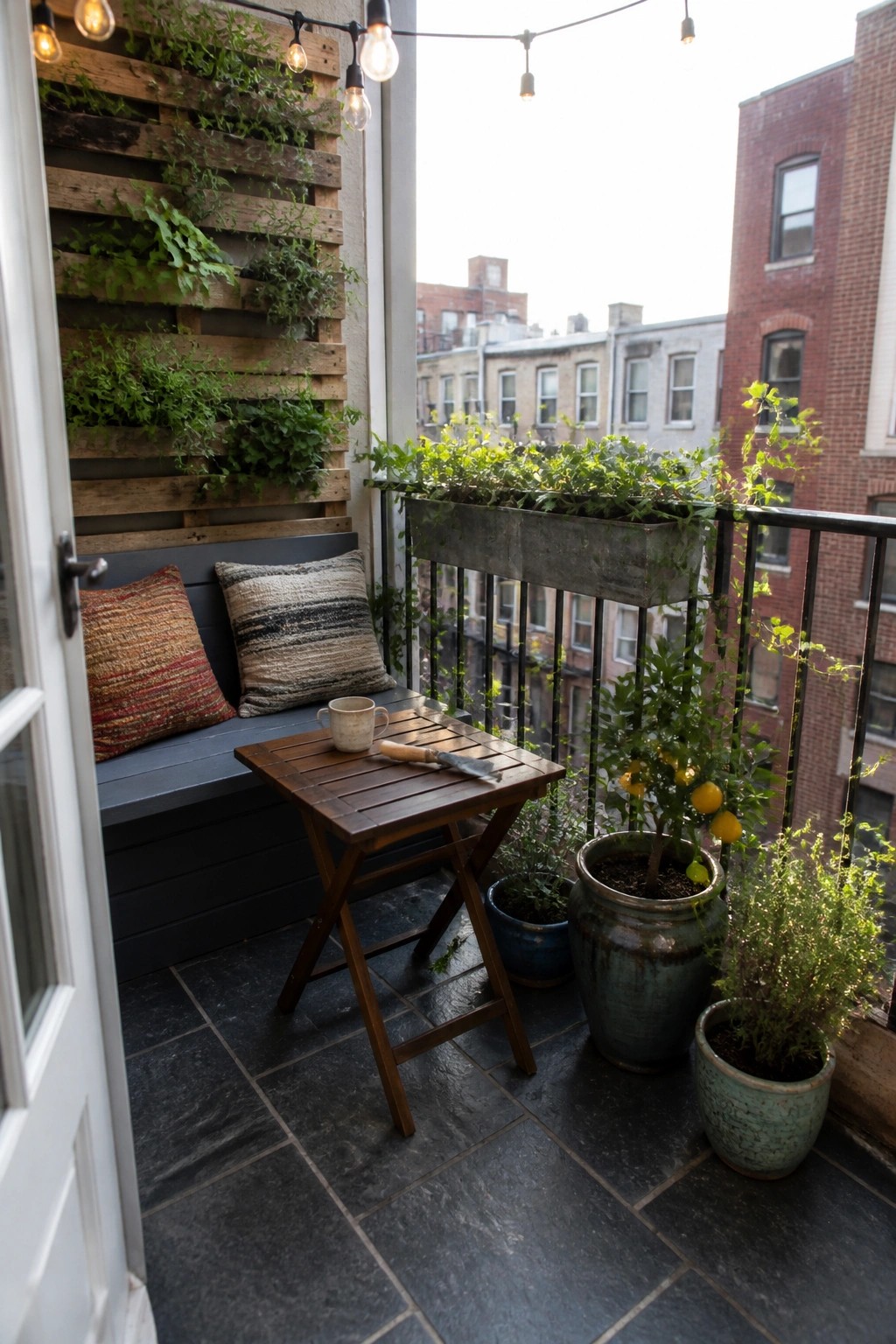
Many balconies stay bare because people assume there is not enough room for real planting. Mounting a wooden pallet on the wall changes that quickly since it turns unused vertical space into a place for herbs, vines, and leafy greens while leaving the floor clear for seating.
This approach suits apartment balconies and narrow patios best. Fill the pallet pockets with lightweight soil and choose plants that trail or stay compact, then add a few larger pots on the ground for contrast. Secure the pallet well and check drainage so water does not run onto the surface below.
Layering Containers Around a Patio Table
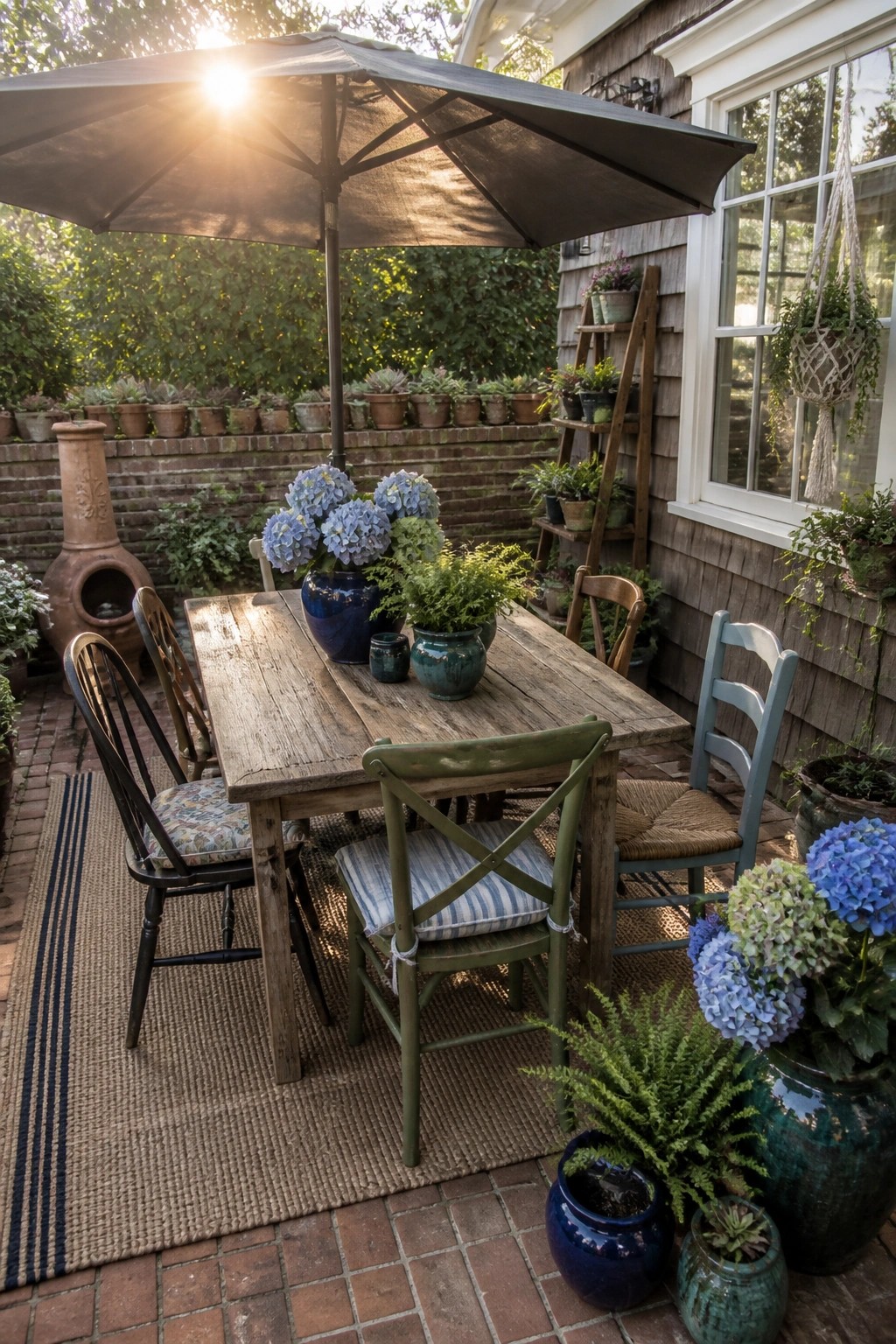
One easy way to make a patio feel like a real garden is to place pots at different heights right around the table and chairs. Tall ones on the ground, medium ones on a shelf or stand, and smaller ones tucked in between fill the space without needing any built-in beds. The mix keeps things looking full even on a hard surface like brick.
This works especially well on smaller patios or spots where digging is not an option. Try grouping the pots in odd numbers and leaving a clear path so the seating area stays usable. It suits most homes with outdoor dining space and makes it simple to swap plants with the seasons.
Tall Planters for Natural Screening
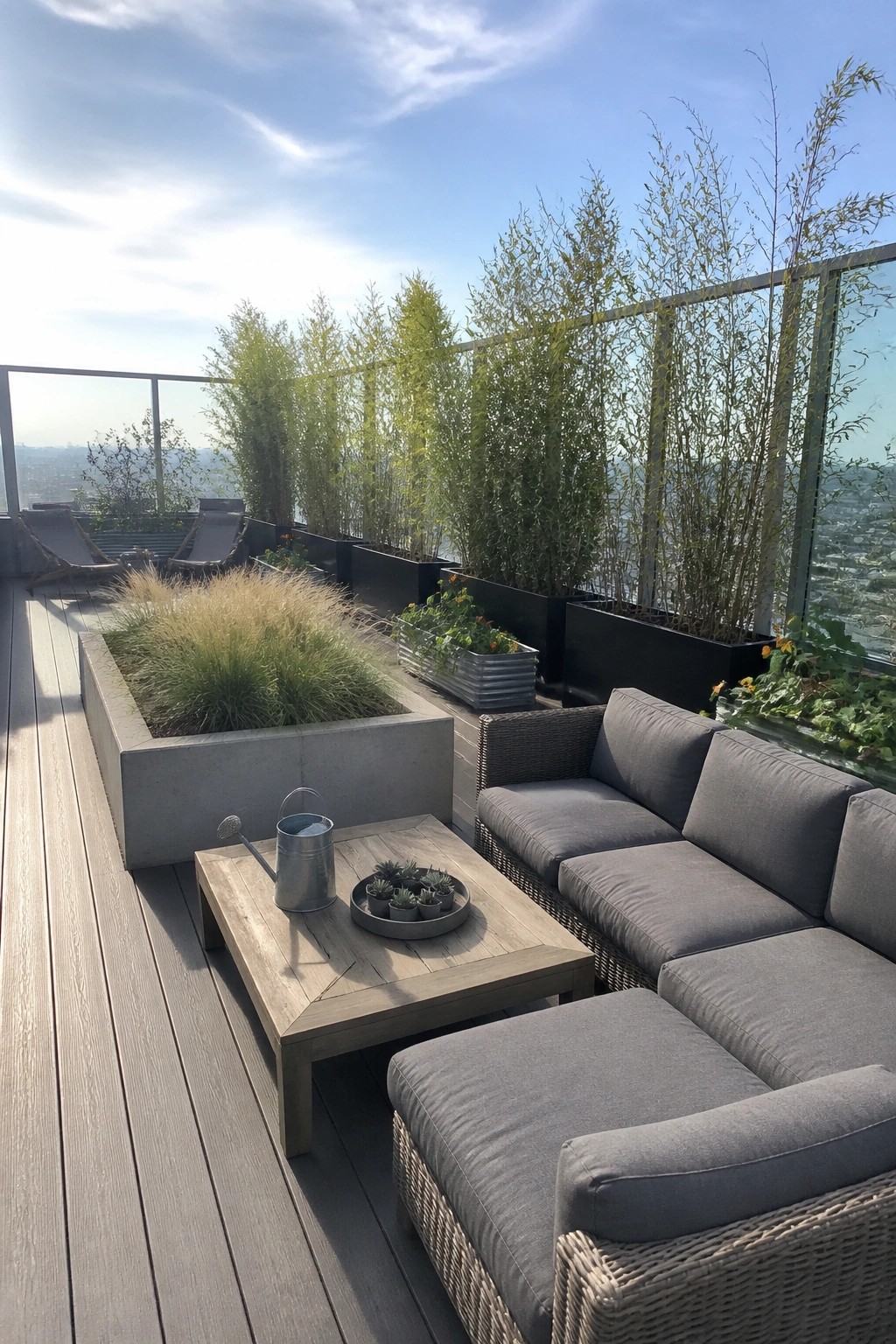
Large rectangular planters filled with upright grasses and trees can quickly turn an open deck into a more private space. Placing them along the railing creates a living barrier that softens the view outward while still letting in light and air.
This works especially well on rooftops or balconies where digging in the ground is not an option. Stick with a few matching shapes and sizes so the arrangement feels intentional rather than scattered.
Stack Containers for Added Height
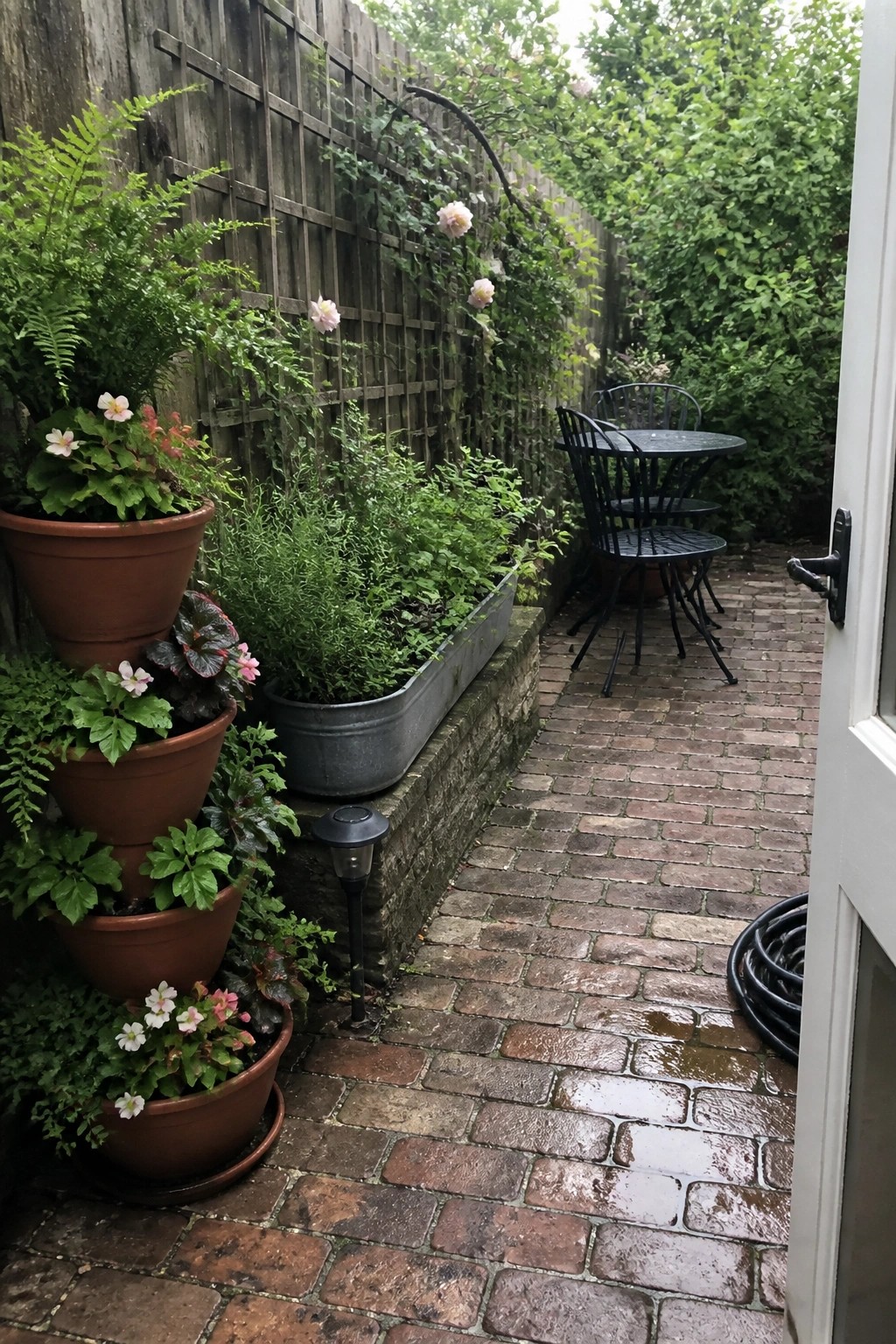
Stacking pots lets you fit more plants into a narrow space without crowding the ground. Different sizes and shapes create natural layers, so the planting feels full even when the actual area stays small. This approach works especially well along paths or against fences where a single row of pots would look thin.
Place the tallest stack at one end and step the heights down to keep the view open. Terracotta and metal containers mix easily here, and the arrangement stays movable if you need to rearrange later. It suits small patios or side yards that need more greenery without permanent beds.
Large Containers Add Greenery To Paved Patios
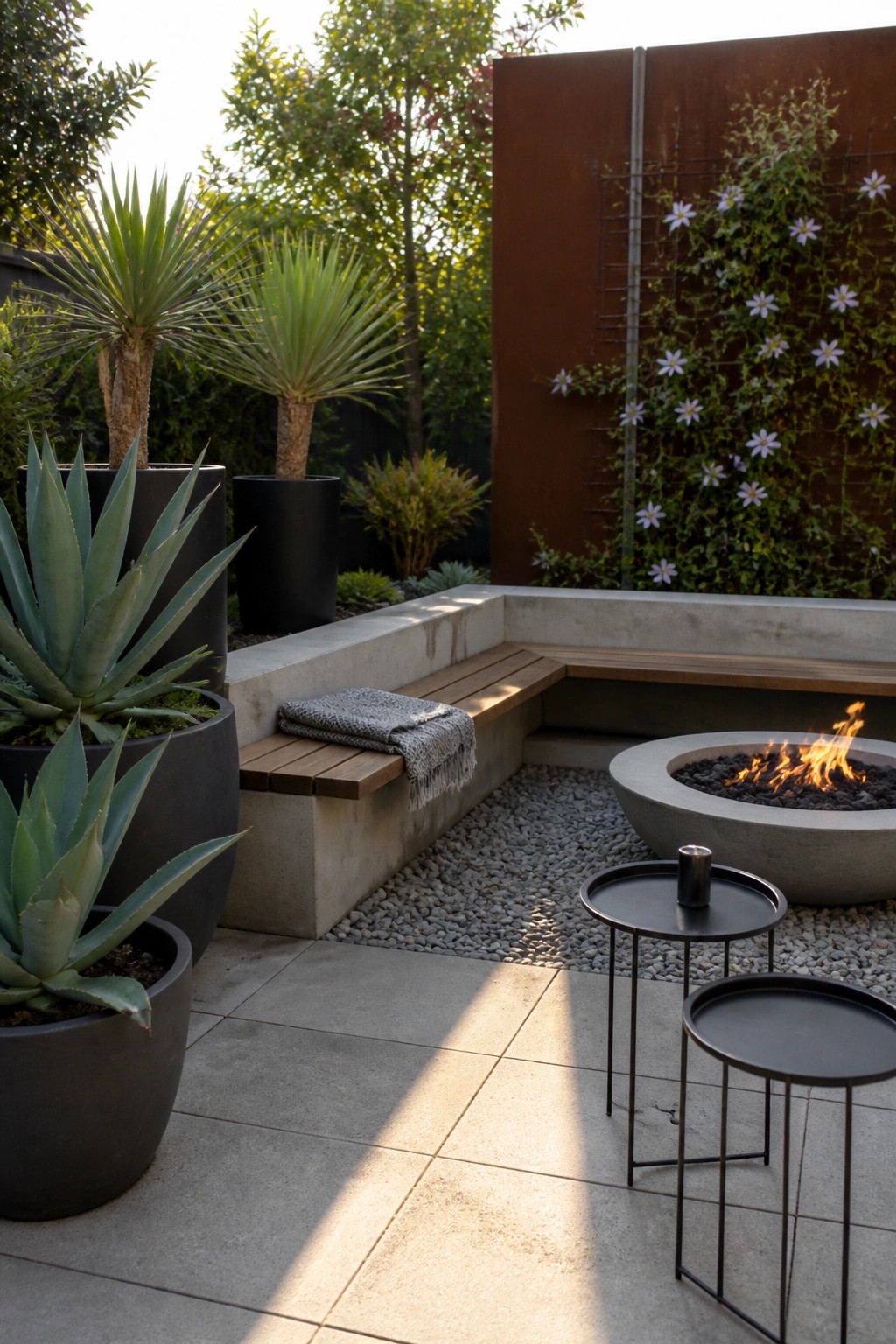
Large containers let you bring real planting into a patio that has no soil beds. They give height and structure without needing to dig, and they work especially well in spaces that stay mostly hardscaped.
Set a few big pots near seating so the plants feel like part of the layout instead of afterthoughts. This approach suits smaller yards or modern homes where you want flexibility and easy changes from season to season.
Layering Containers Around Outdoor Seating
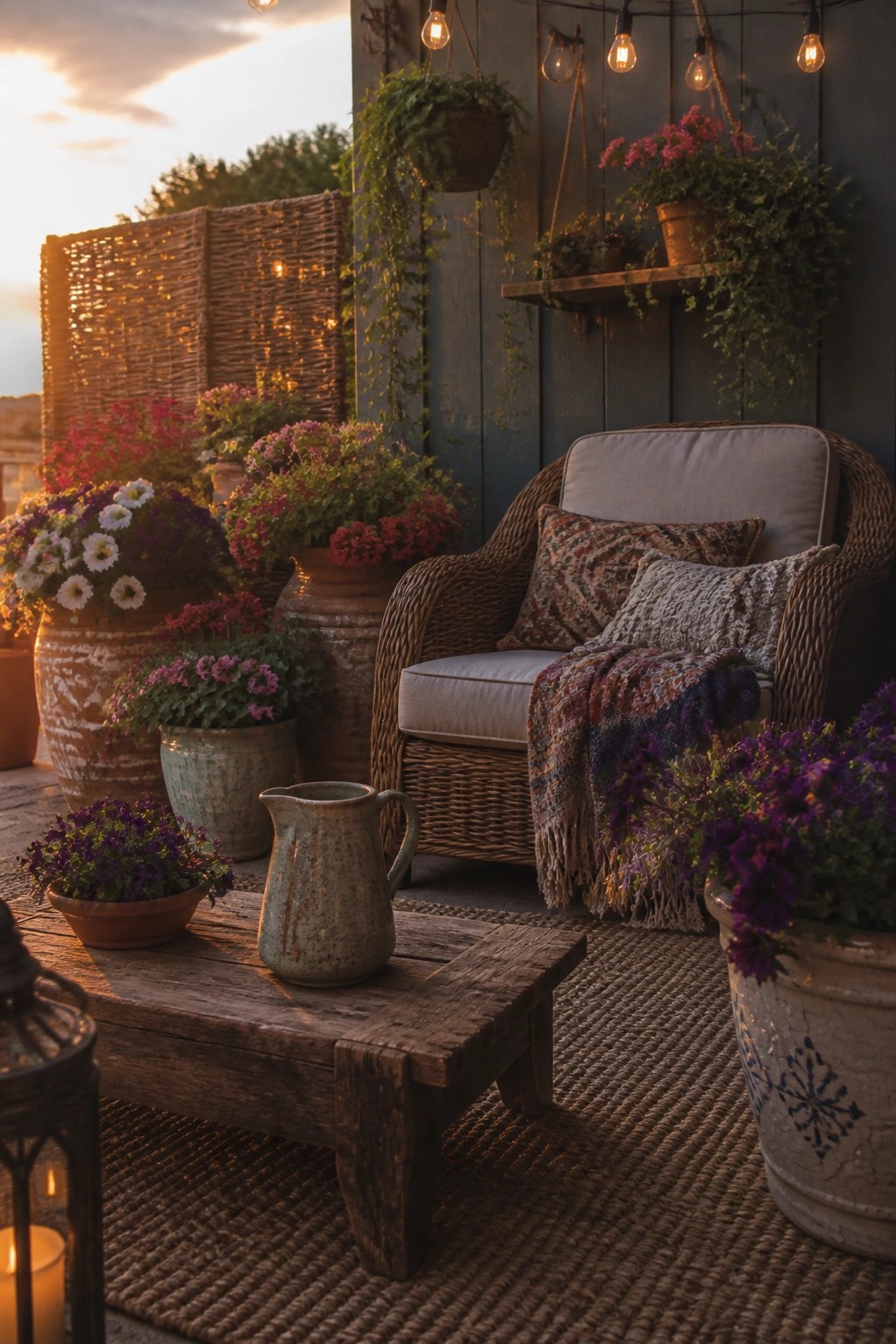
Placing containers of different heights right around a chair or bench turns a simple patio spot into something that feels more like a small garden. The mix of pots lets you add color and texture without digging up the ground, and it keeps everything easy to rearrange when the seasons change.
This approach works especially well on balconies, decks, or small patios where space is tight. Keep taller pots toward the back and lower ones in front so the seating stays open and comfortable.
Try Oversized Containers for Trees and Shrubs
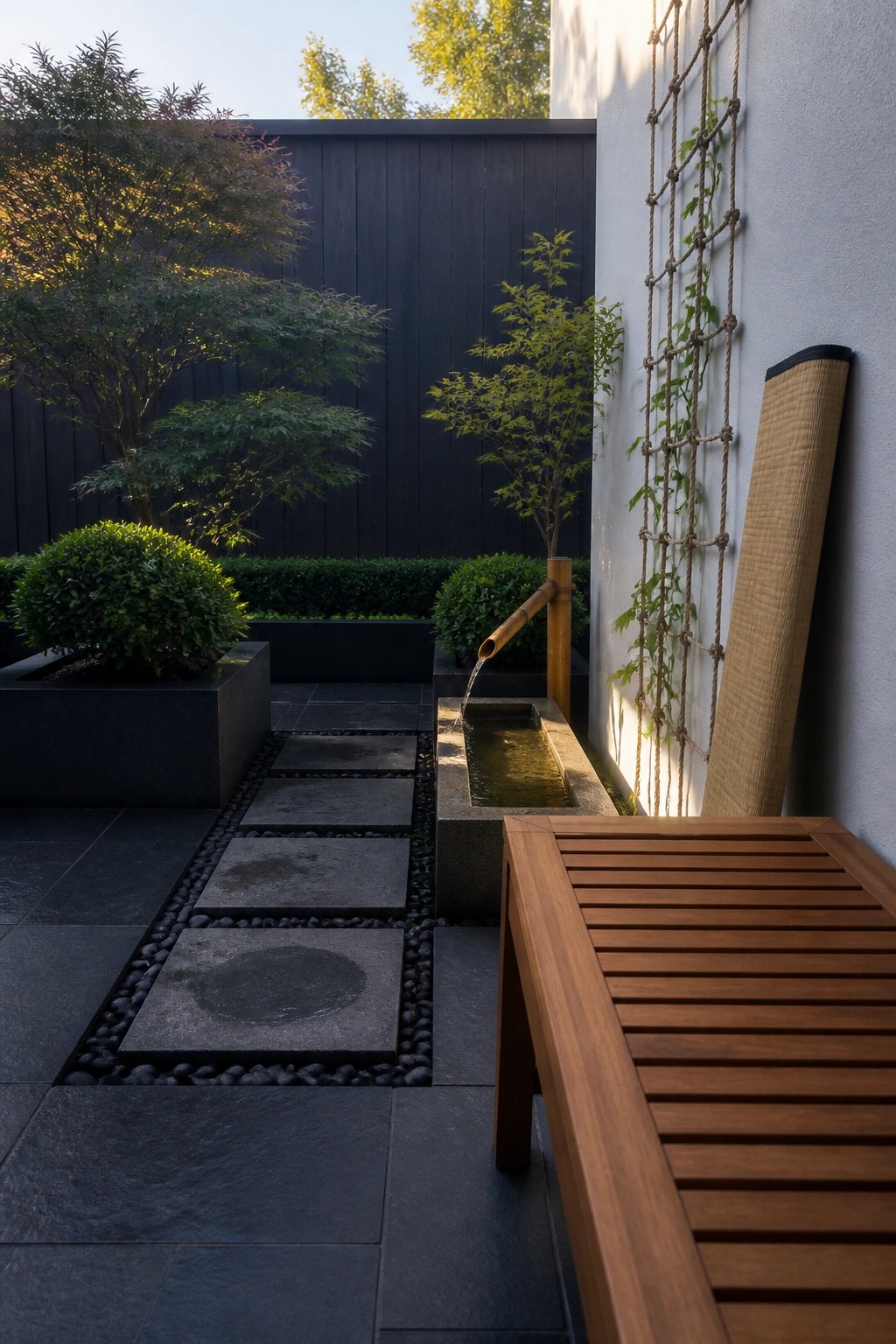
Large containers make it easy to add real height and structure to a patio garden without any digging. The dark square planters here hold small trees and rounded shrubs that give the space a layered look while keeping everything contained.
This approach suits compact yards or paved areas where in-ground planting is not an option. Choose pots at least two feet wide, pick slower-growing varieties, and group them along paths or near seating so the greenery feels intentional rather than scattered.
Large Pots Add Height Without Permanent Beds
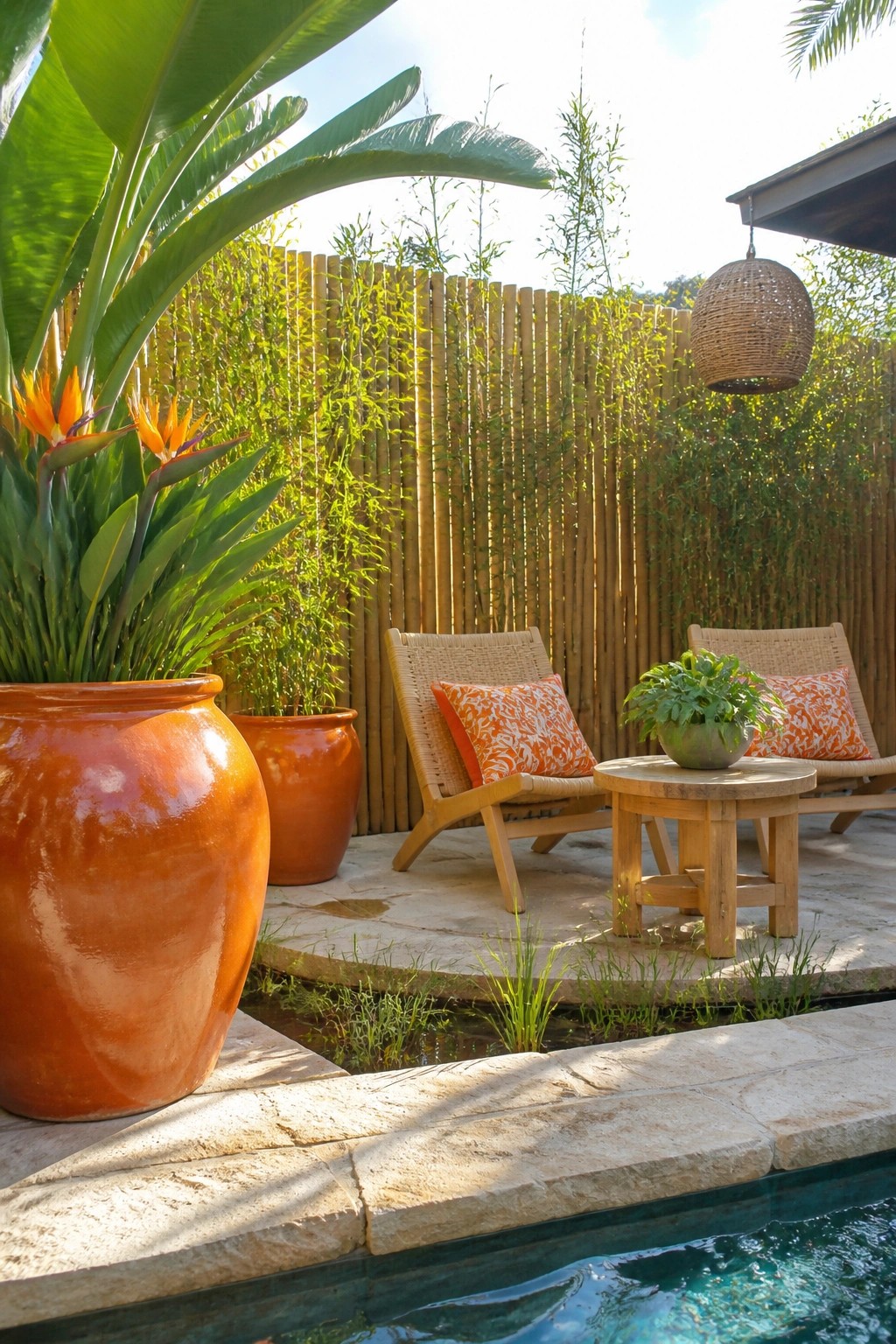
Big containers let you bring tall plants right onto a patio where digging beds is not an option. The large terracotta pots here hold bird of paradise that reach up and soften the edge of the seating area without taking over the stone floor.
They suit paved spaces next to pools or on decks where you want greenery that can move if needed. Group a couple of different sizes, keep the soil mix light, and water more often in hot weather so the plants stay full.
Mix Wall Boxes With Large Tubs
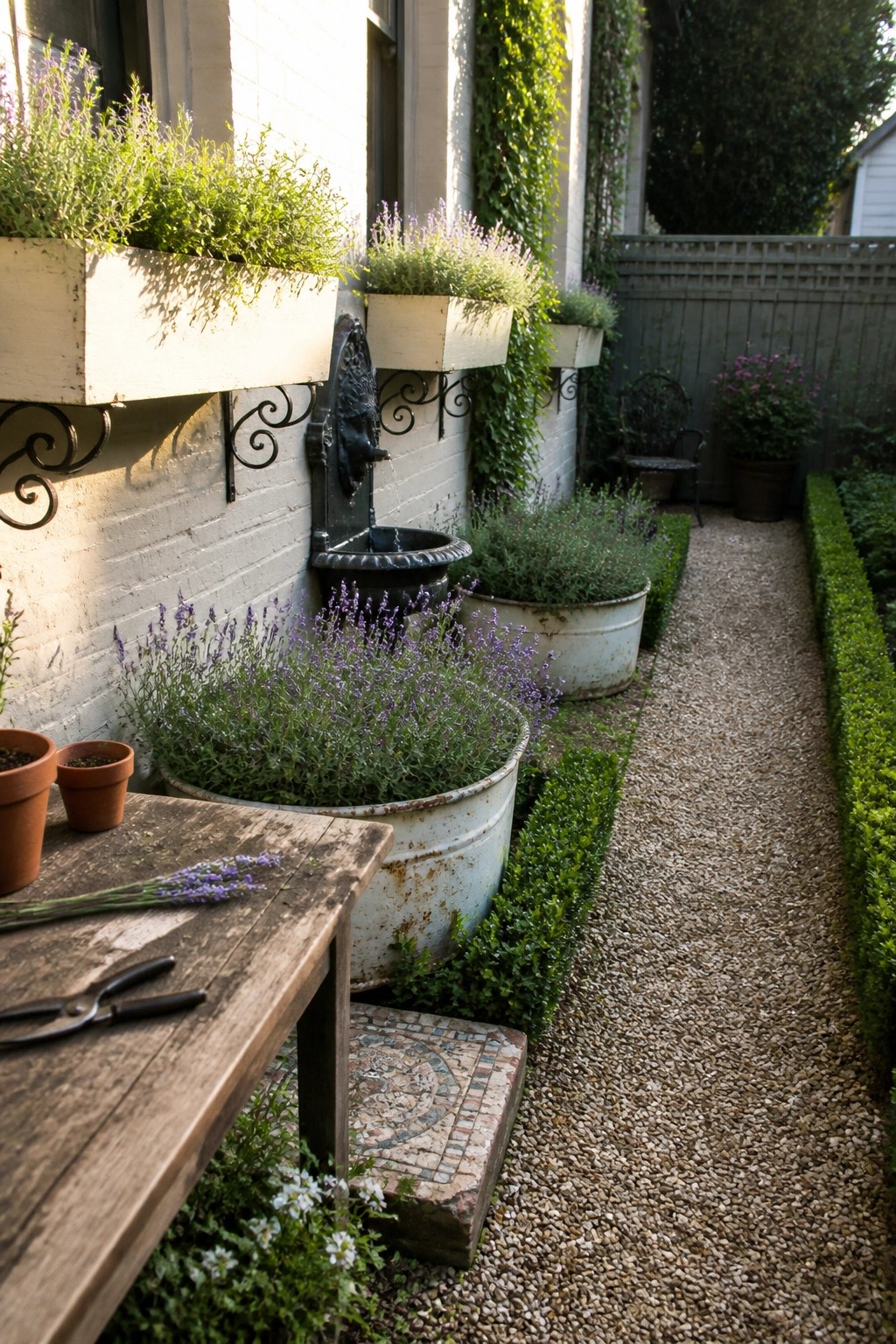
Placing containers at different heights makes a narrow side path feel fuller without crowding the walkway. Wall mounted boxes add greenery right at eye level while big tubs on the ground handle larger plants like lavender. This setup works especially well when space for real garden beds is limited.
It suits older homes with plain walls or tight side yards where digging beds would be difficult. Stick to two or three container styles so the look stays simple, and choose plants that can handle the sun exposure along the house.
Line Your Patio With Metal Planters
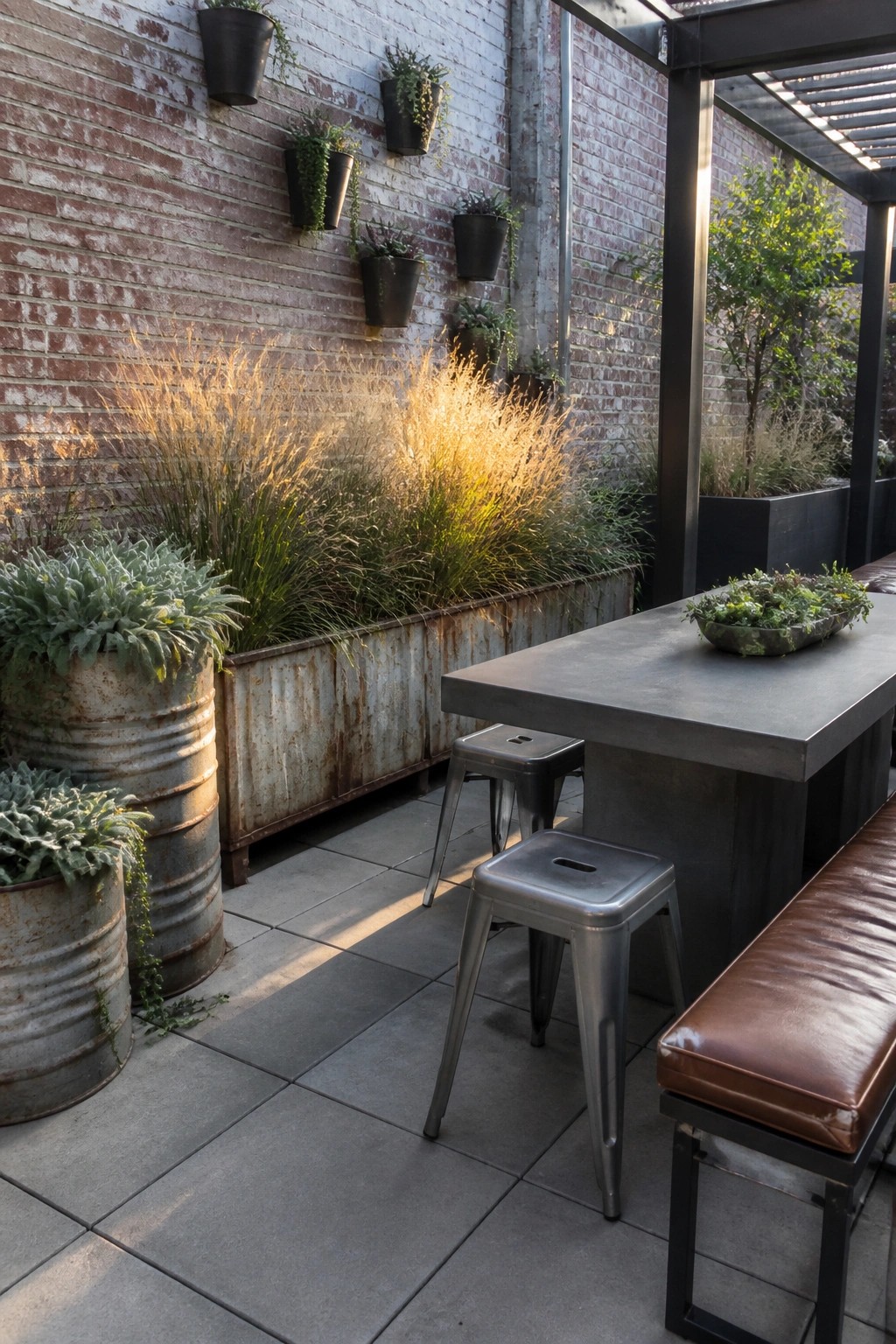
Metal containers give a patio garden a simple structure that holds up over time. They work especially well when you want to add a row of plants along a wall without building raised beds or disturbing the paving. The containers also keep the soil contained, which helps in spaces that see a lot of foot traffic.
Place them where they catch some sun but stay close to a water source. This setup suits small urban patios or side yards that already have a hard surface. Just make sure the containers have drainage holes so the plants do not sit in water after rain.
Use Containers Of Different Sizes Around Seating
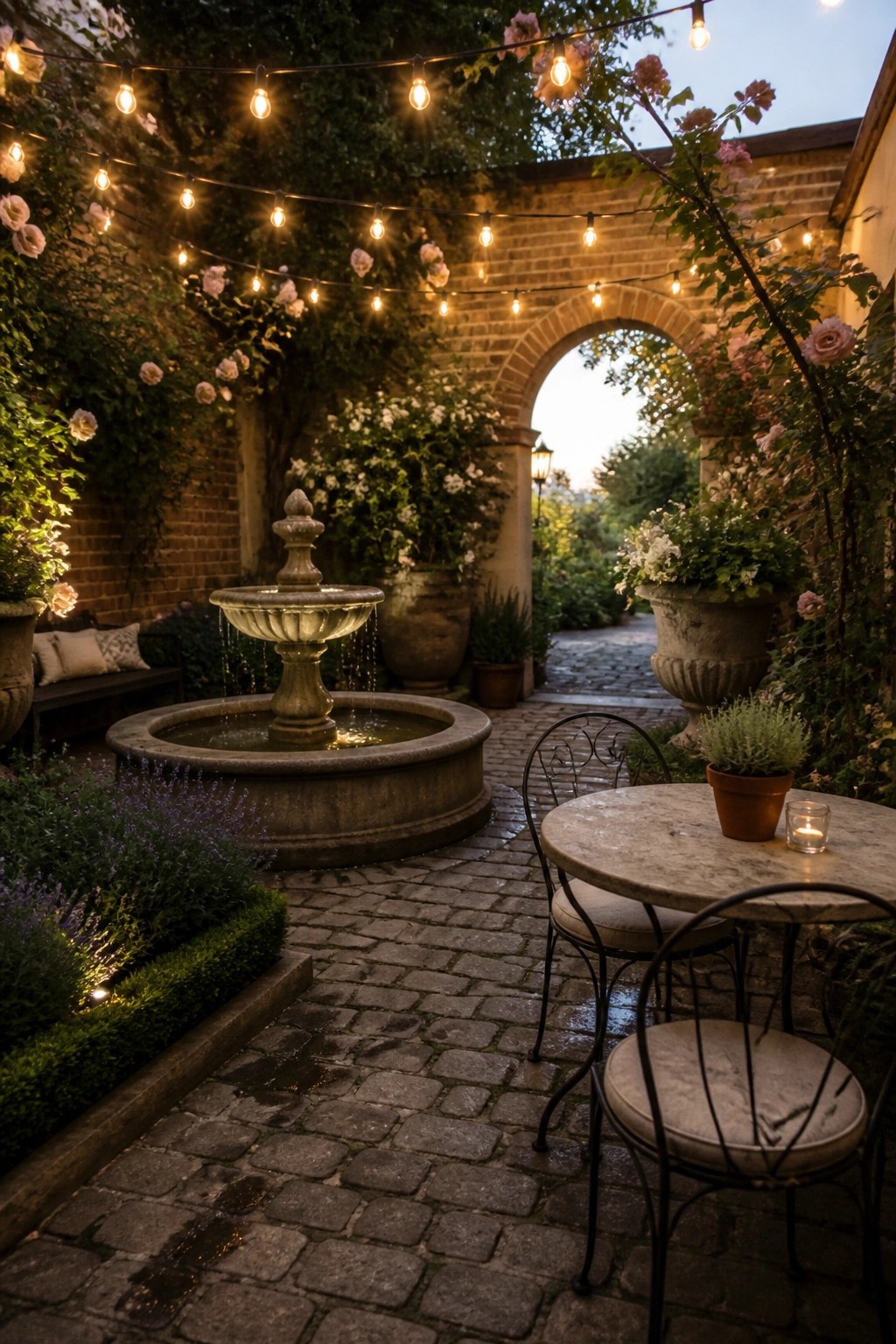
Placing pots of varying heights and widths around a patio table and chairs gives the space a garden feel even when the ground is all paving. The different sizes create layers of greenery without needing any digging or permanent beds.
Try a couple of large urns at the back and smaller pots right next to the seats so the plants feel close and welcoming. This setup works on any hard surface and lets you shift things easily when the light or seasons change.
Large Containers Let You Add Trees To Any Patio

One big pot with a tree changes the whole feel of a patio. It brings height and shade without needing to dig up the ground or build raised beds. The dark backdrop here makes the green stand out even more.
This works well on paved surfaces or balconies where permanent planting is not an option. Choose a wide, heavy pot so the tree stays stable, and keep smaller pots nearby for contrast. It suits modern homes and small yards that need greenery without a full garden.
Repurpose Everyday Items as Planters
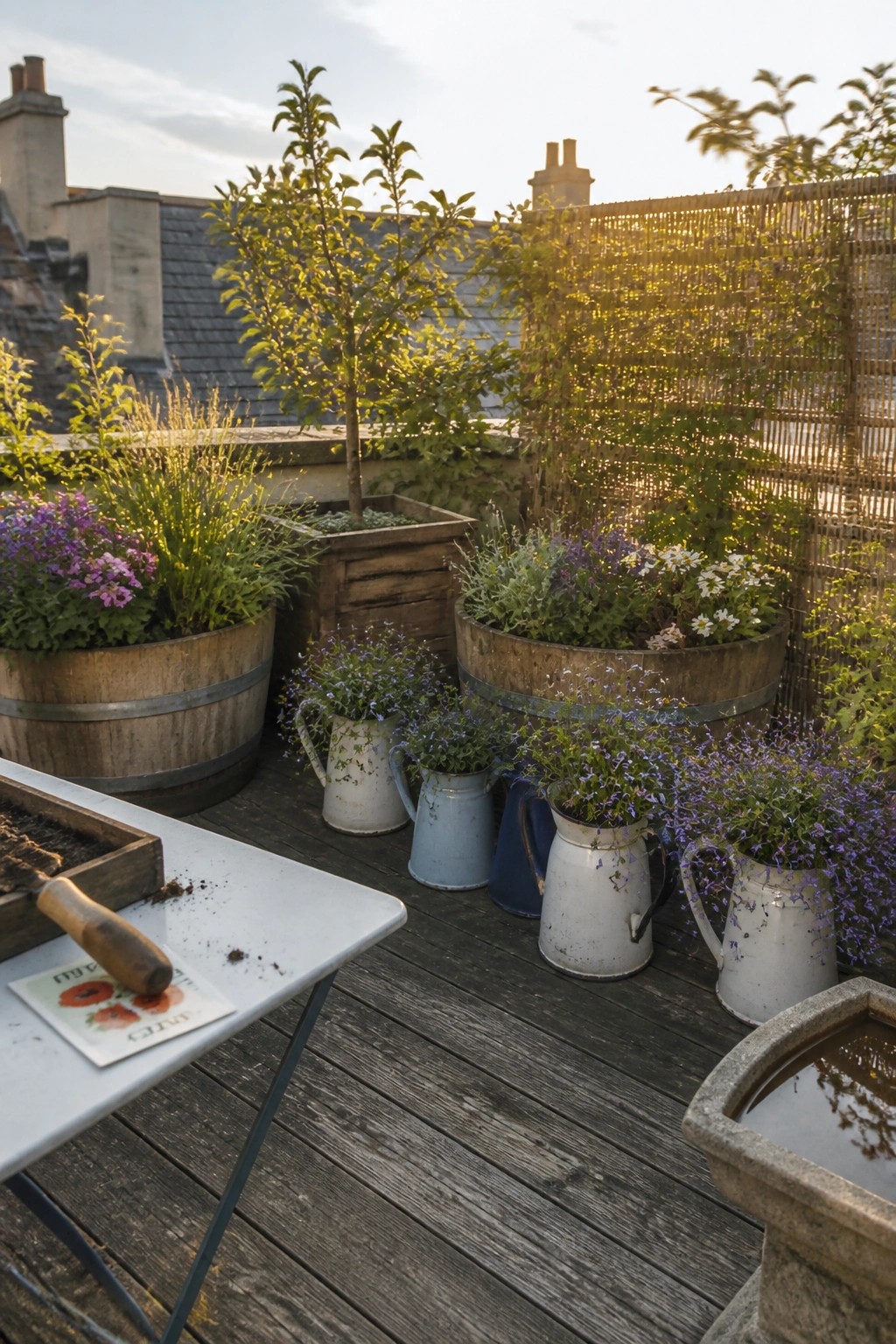
Using old metal pitchers or jugs as planters adds a simple way to bring plants onto a patio without buying new pots. They work well for smaller flowers and herbs, and the mix of shapes keeps the setup from looking too uniform. Wooden barrels handle larger plants and give some height next to the smaller ones.
This approach suits rooftops or decks where space is limited and you want to move things around easily. Just check that the containers have drainage so the soil does not stay too wet. It works on most homes with outdoor room for a few pots.
Cluster Containers Around the Fire Pit
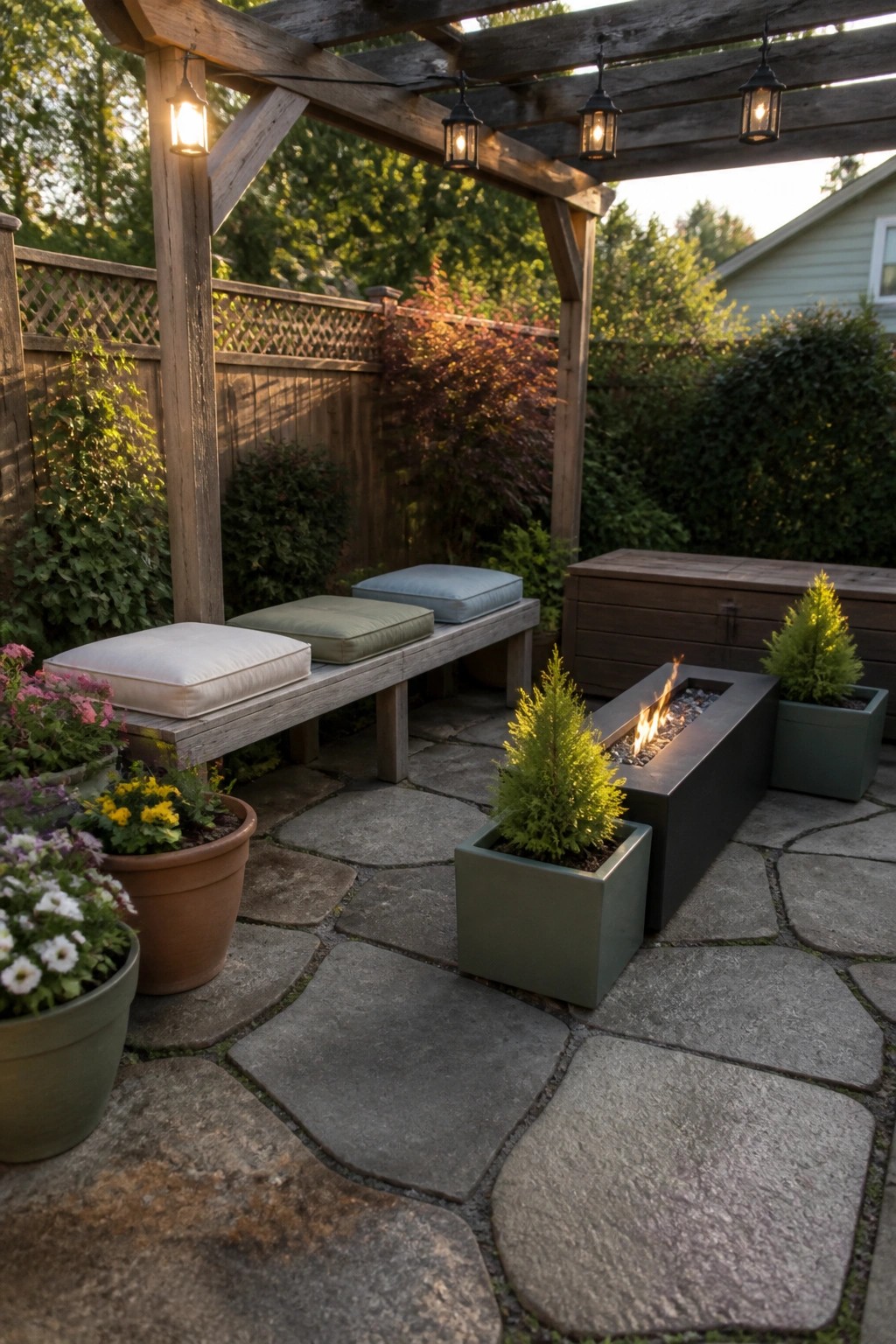
One easy way to add life to a paved patio is to group several pots right around the fire pit. The containers bring height and color without needing to cut into the stone or add permanent beds.
This setup works best on patios that get steady use in warmer months. Mix a few taller evergreens with lower flowering pots and shift them around as the seasons change or when you need more room for seating.
Group Containers Along Stone Paths
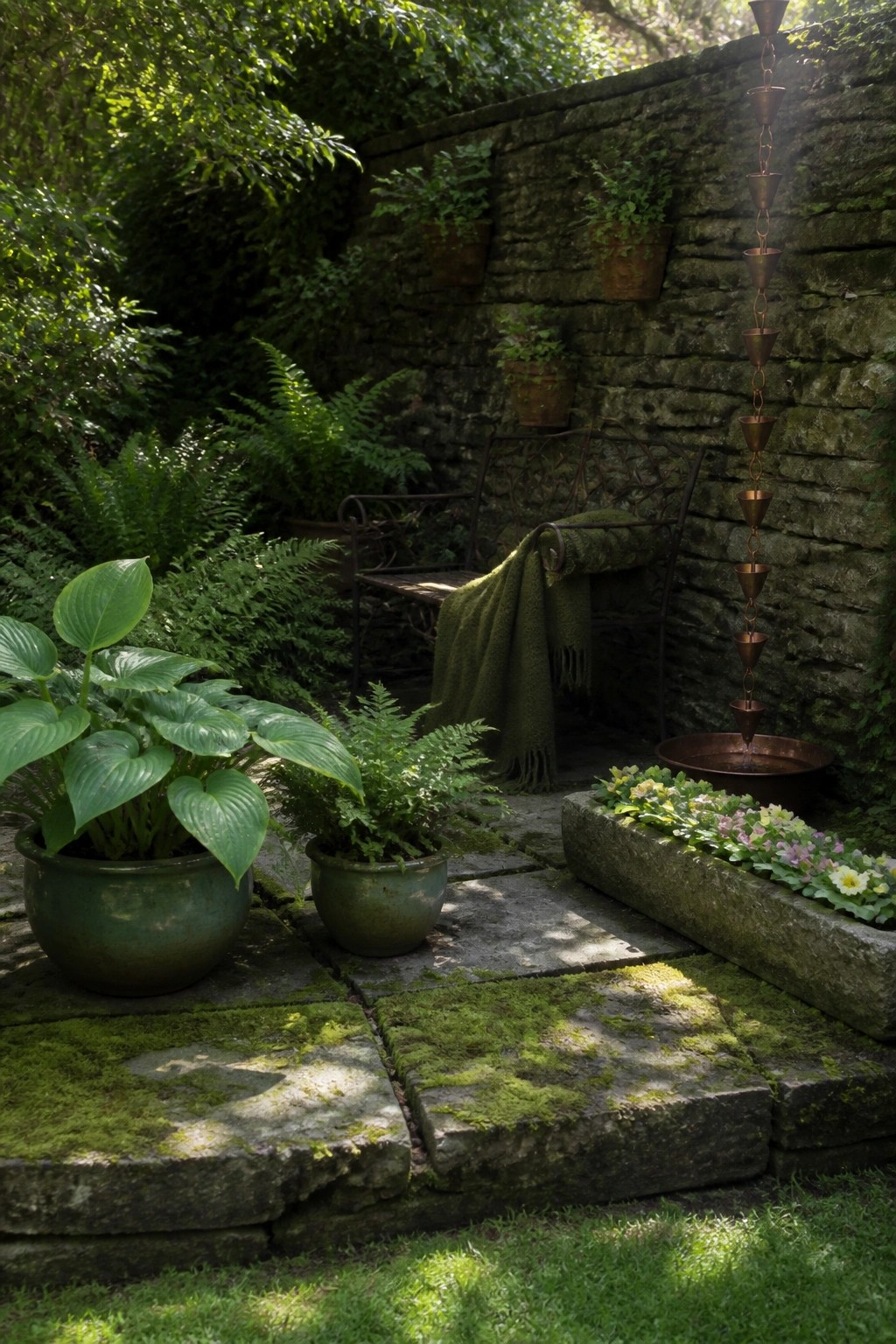
Placing pots of different sizes right on existing stone paving adds layers of greenery without needing new beds or soil. The mix of larger planters with bold foliage and smaller ones tucked in between fills out the space and keeps things feeling natural rather than arranged.
This approach works best in shaded corners or narrow side areas where digging is difficult. Choose plants that handle the same light conditions and let some spill over the edges so the containers blend into the path over time.
Built-In Planters Along Patio Seating
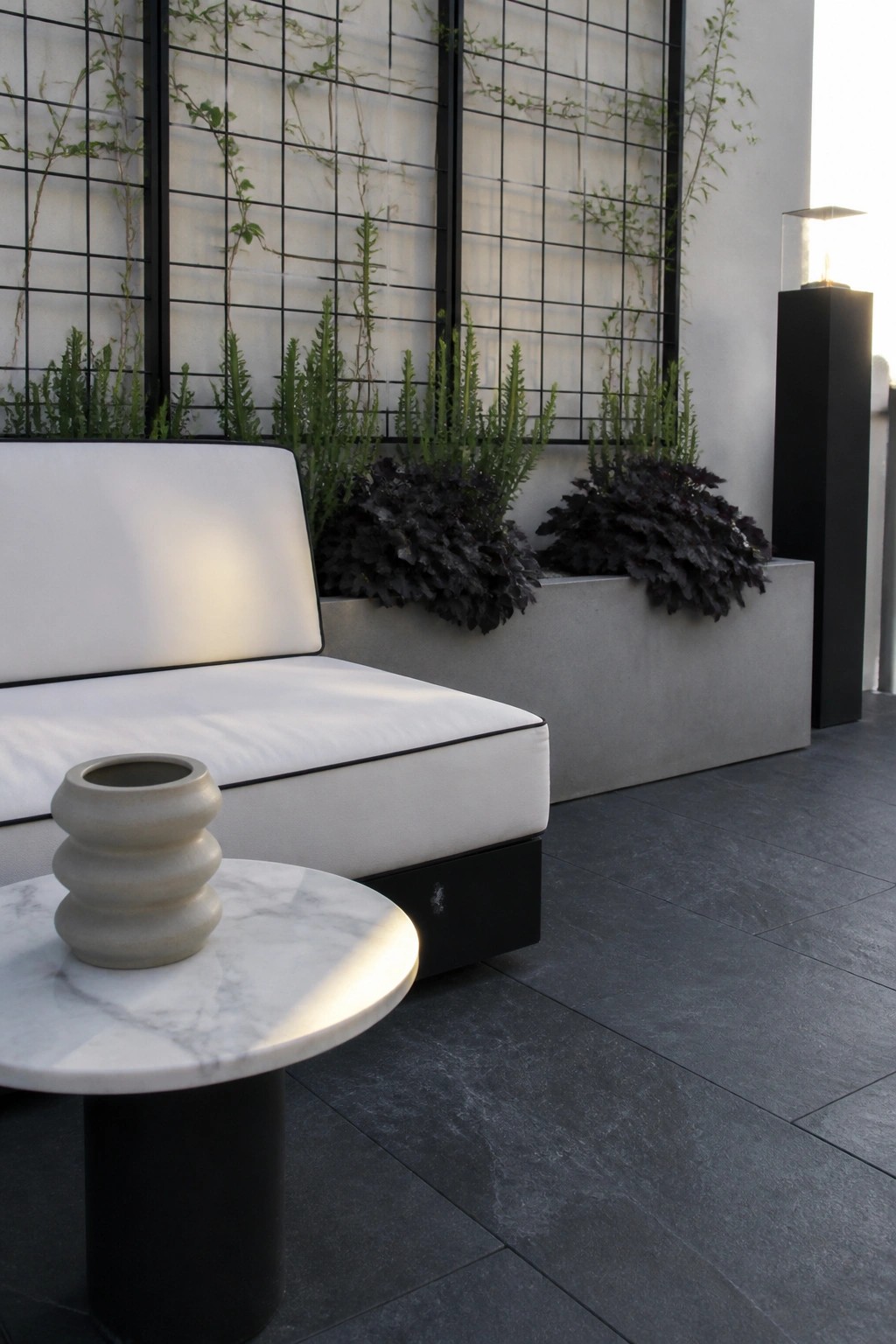
A long raised planter running right behind the seating keeps plants close without crowding the floor space. The concrete edge doubles as a low back wall, so the greenery feels built into the layout instead of added on later. This setup works especially well when you want a full look but still need room to walk around the chairs or sofa.
It suits small terraces, rooftops, or side patios where floor space is limited. Choose a simple rectangular planter in a neutral material and fill it with a mix of upright and trailing plants so the edge stays soft. Just make sure the planter has good drainage and is deep enough for the roots of whatever you choose to grow.
Mix Container Sizes For A Flexible Patio
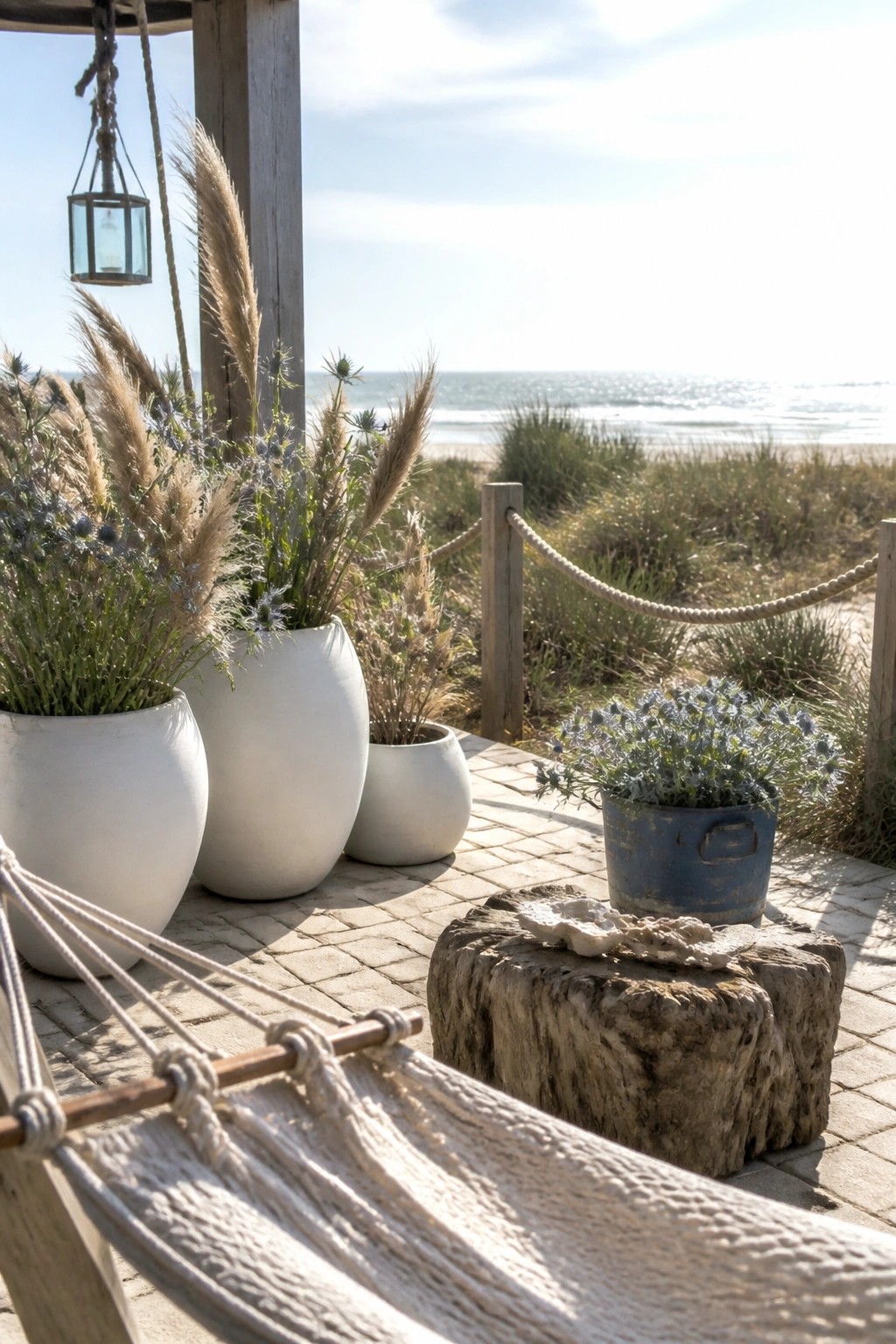
Using containers in different sizes makes it simple to build a patio garden that feels full but stays easy to adjust. Large pots give height and structure while smaller ones fill gaps and let you swap plants with the seasons.
This approach works best on patios that double as seating areas. Group the biggest pots along the edges or near railings and set smaller ones on low surfaces or steps. It suits homes where you want a relaxed look without permanent beds or heavy digging.
Mix Container Sizes For A Lush Patio Border
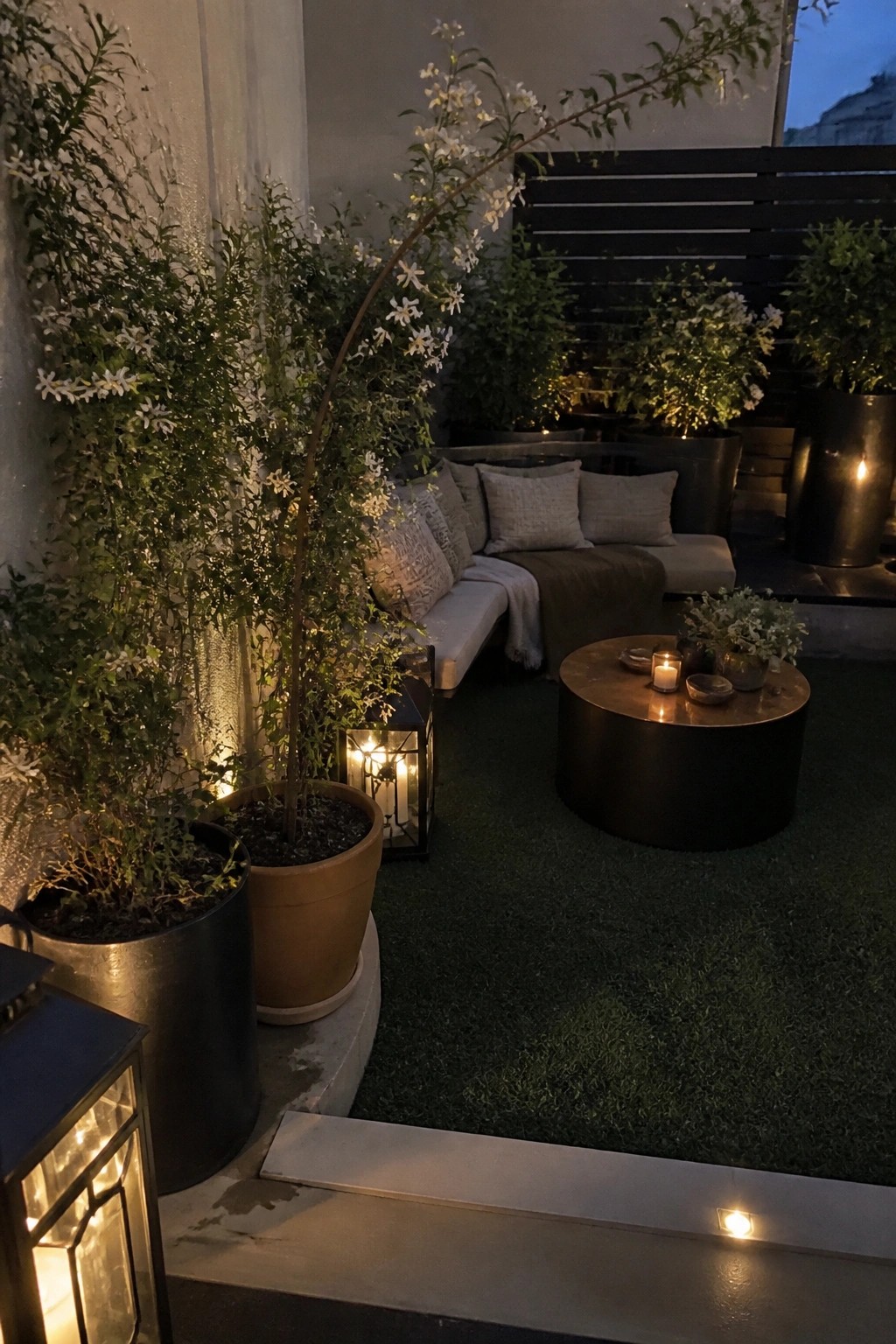
Grouping pots of different heights and materials is a simple way to bring depth to a small outdoor space. A few taller plants give structure while shorter ones fill in the lower areas and keep the look full without crowding the floor.
This setup works well on patios or terraces that have no room for in-ground beds. Stick to three or four main sizes and repeat the shapes so the arrangement feels balanced rather than scattered.
Grow Tomatoes In Large Containers On Gravel

Many people like growing tomatoes in big pots set right on a gravel patio. It turns a simple outdoor spot into a productive garden without needing to dig beds or clear much space. The containers keep the plants contained and let you adjust their spot for sun as the season changes.
This setup works well for small yards or homes with mostly paved areas. Choose pots that are deep enough for roots, add sturdy stakes early, and water regularly since pots dry out faster than ground soil.
Repurpose Old Furniture for Container Planting
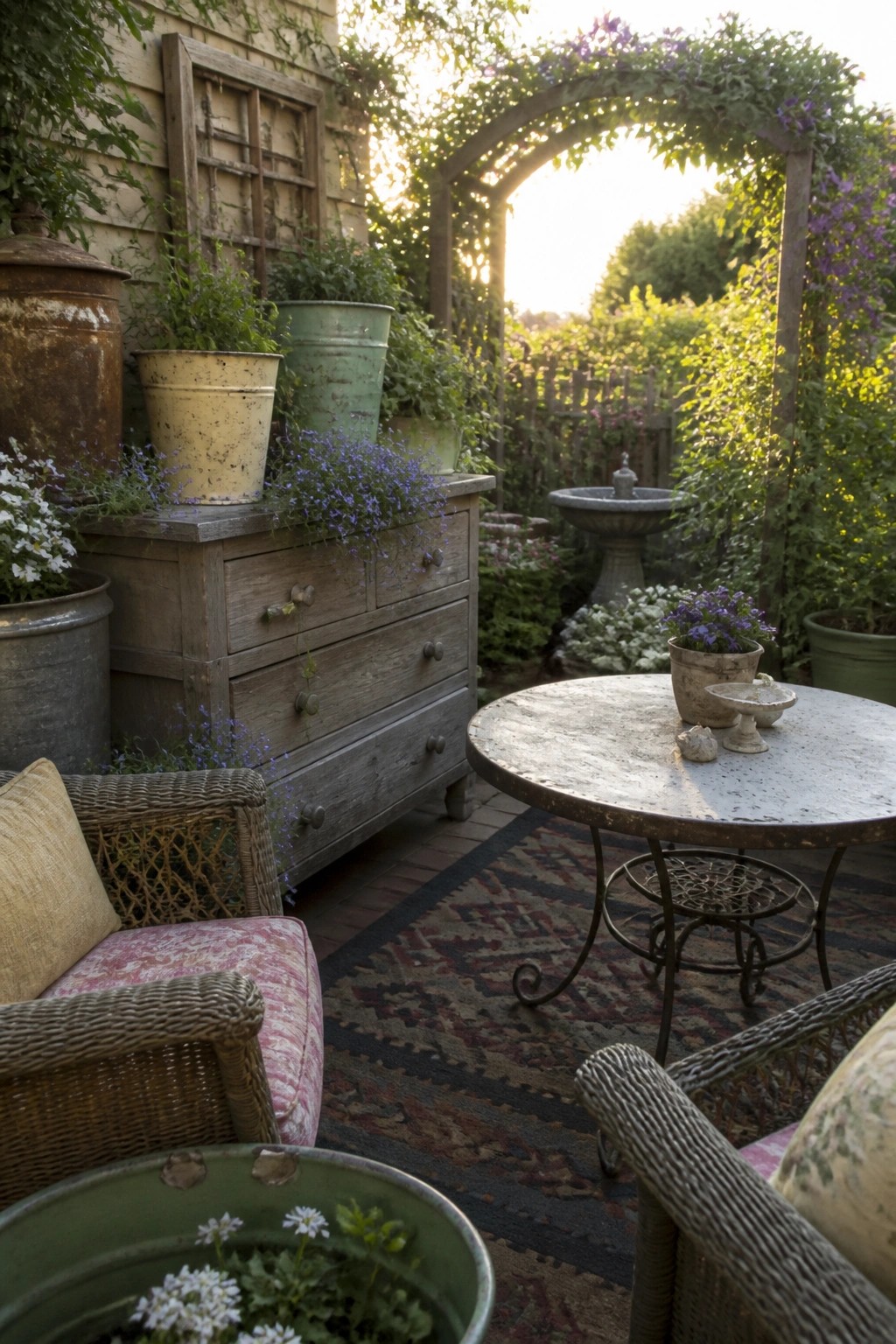
One simple way to fit more plants into a patio is to set containers on an old piece of furniture instead of crowding the floor. A dresser or chest gives you several surfaces at different heights, so you can group pots without them all sitting at the same level.
This works best on smaller patios where ground space needs to stay open for chairs and walking. Look for sturdy wood pieces that can handle moisture, and keep the pots from getting too heavy for the drawers.
Container Planting in Wooden Boxes
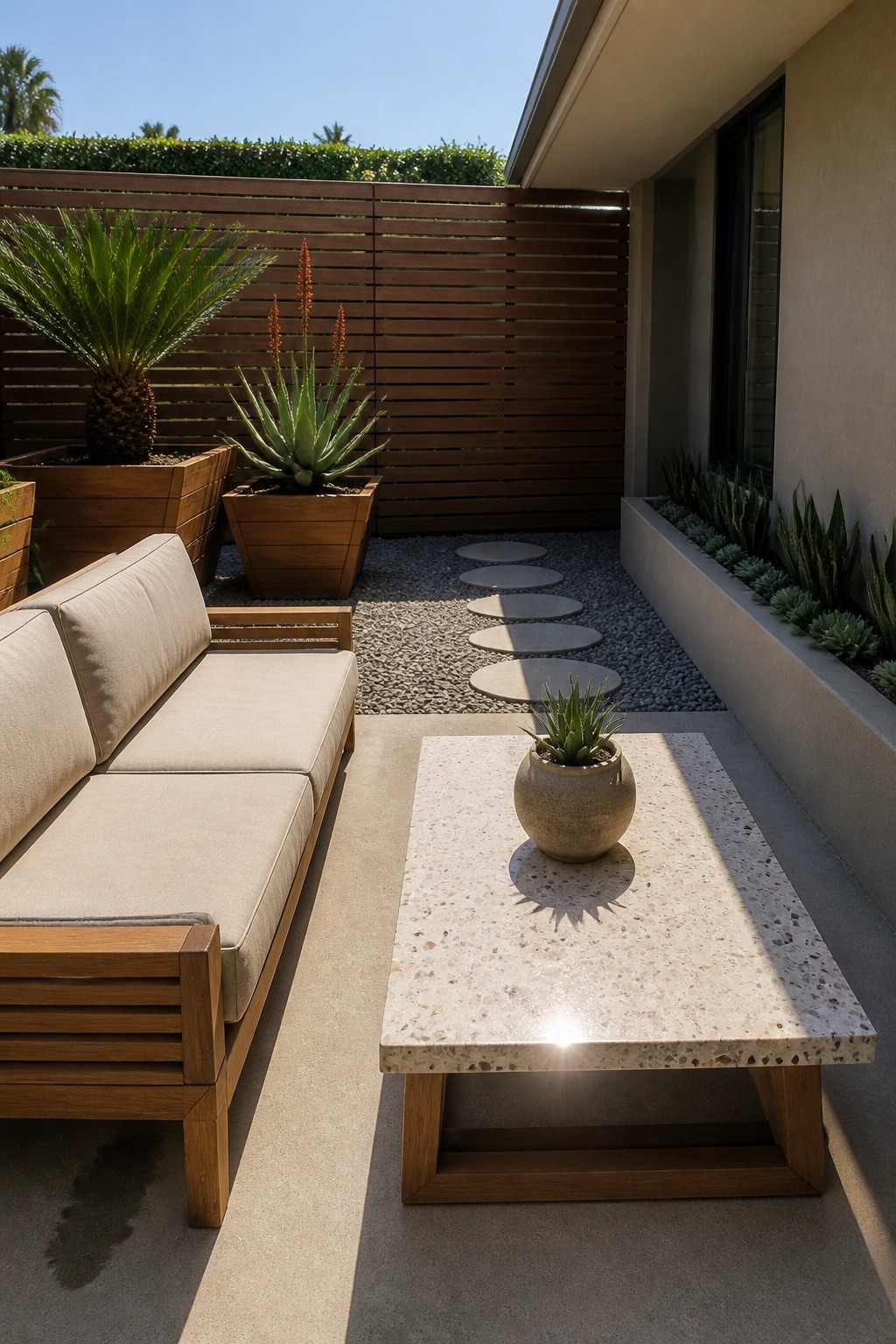
Wooden containers give you a simple way to add plants to a patio without digging beds or changing the hardscape. They work especially well on gravel or concrete where permanent planting is not practical, and they let you rearrange things as the seasons change.
Place the boxes along the edges or in corners to create a bit of enclosure around seating areas. Match the wood tone to your furniture so the containers feel like part of the space rather than an afterthought, and choose plants that match the amount of sun the patio gets.
Combine Built-In Planters With Large Containers
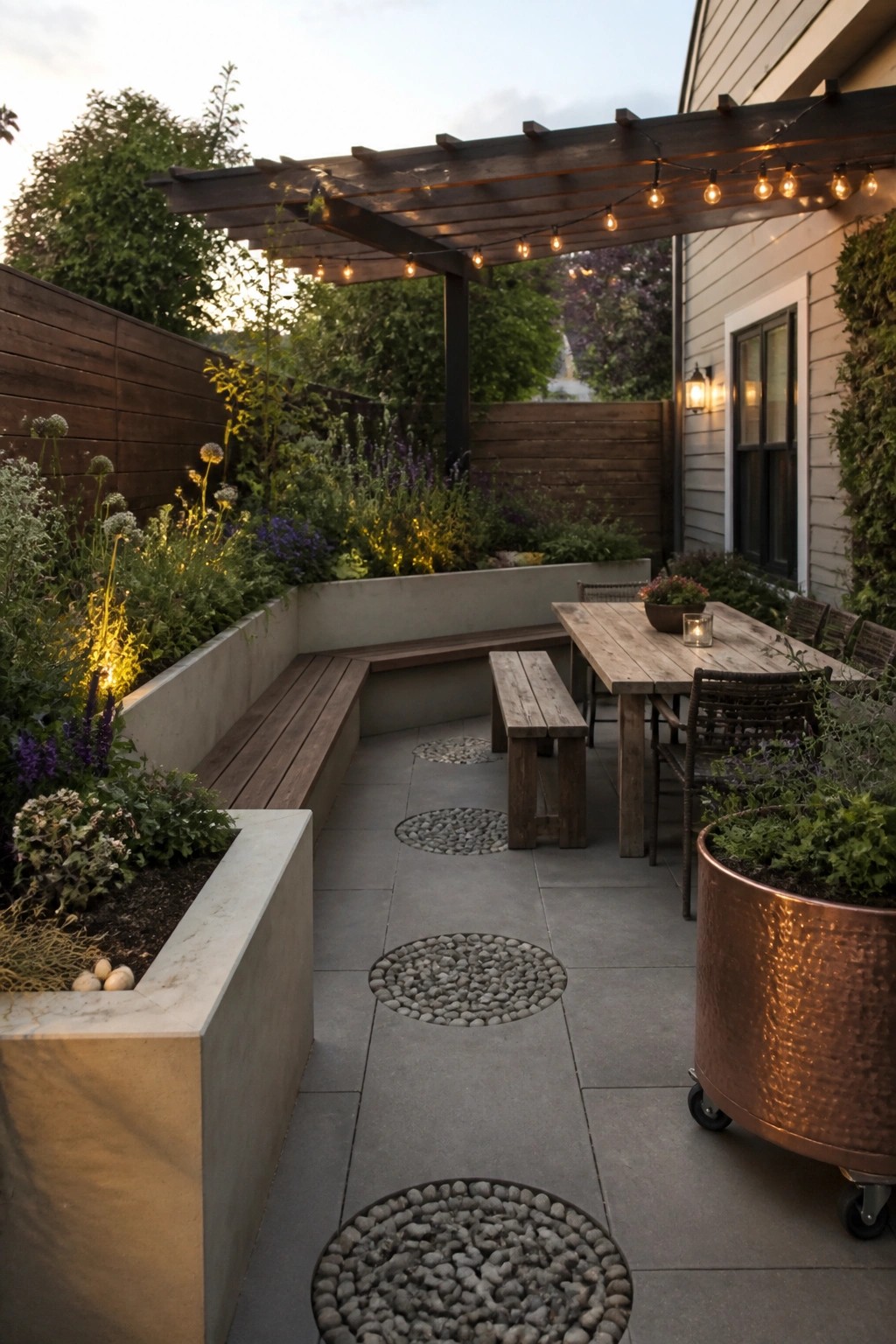
Mixing fixed planters with big movable containers gives a patio garden more flexibility. The built-ins create a steady structure and plenty of planting room, while the large pots let you move color and height around without any digging or replanting.
This setup works especially well on paved patios or small yards where you cannot add new beds. Place the movable containers near seating areas so the plants feel close at hand, then shift them as needed through the seasons.
Frequently Asked Questions
Q: How often should I water my patio containers? A: Stick your finger into the soil each morning. If the top inch feels dry, water until it drains out the bottom. This keeps roots happy without drowning them.
Q: Can I really mix flowers and veggies in one pot? A: Yes, just match plants that need similar sun and water. Basil grows fine next to marigolds and helps keep bugs away. Give each one enough space so they do not crowd.
Q: What happens if I skip drainage holes in my pots? A: Roots rot fast without a way for extra water to escape. Drill a few holes in the bottom before you fill the container. Then add a thin layer of gravel to keep soil from washing out.
Q: How do I move heavy pots around without hurting my back? A: Slide them on a piece of cardboard or use a plant dolly. Water them lightly first so they weigh less. Do the moving in the cool part of the day.
