


I keep coming back to the fact that a covered patio only feels like an extra room when the seating stays usable through rain or strong sun.
Many designs look appealing at first but do not account for how weather moves across an open area in real conditions.
That changes everything about daily use.
I have tested a few simple tweaks like angled roofing or side screens and they often turn a rarely used spot into one that works year round.
Ideas that focus on practical shelter without losing the outdoor connection are the ones I tend to adapt for my own space.
Anchor A Covered Patio With A Fireplace

A fireplace gives the whole patio a clear center and makes it comfortable on cooler nights or early mornings. It turns the space into something you can actually use instead of just looking at from inside.
Build it into a side wall so the seating can face it without blocking the view. Stone or brick works well because it handles weather and adds some texture that feels at home outdoors.
Covered Roofs With Wood Beams Extend Outdoor Dining

A wood beam ceiling over a patio gives real protection from sun and light rain. It turns an open space into one you can use through more of the year without constant worry about the weather.
This works best on homes that already lean rustic or Mediterranean. Keep the table and seating simple so the roof stays the main feature instead of competing with too many other details.
Add A Fireplace For Cooler Days
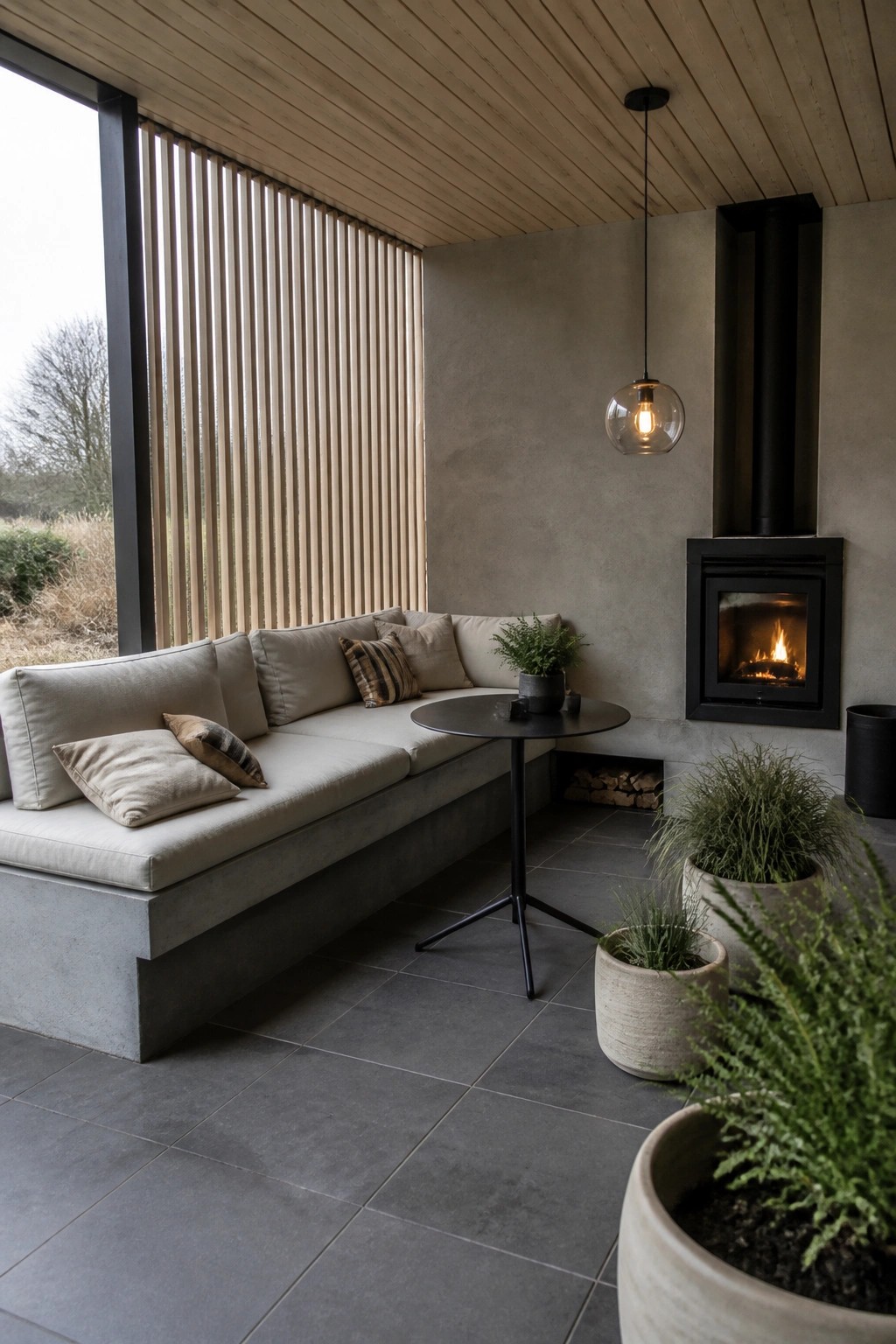
A fireplace gives a covered patio real staying power once the weather turns. It adds warmth without turning the space into an indoor room, and the simple black stove here sits right against the wall so it does not take up floor space.
This setup works best on patios that already have some enclosure on at least one side. Keep the seating low and built in so the heat stays at body level, and make sure the flue clears the roof properly. Avoid placing it where smoke could drift toward the main seating area.
Layer Rugs to Make a Patio Feel More Like a Room

Layering rugs is one of the simplest ways to turn a covered patio into a space that feels settled and comfortable. It defines where people should sit and adds some softness underfoot, which helps on cooler evenings when the concrete or stone starts to feel hard.
This approach works best on patios that stay mostly dry under a roof or overhang. Start with one large rug as the base and overlap a couple of smaller ones with different patterns. Just pick materials made for outdoor use so they do not fade or mildew too quickly.
Long Tables With Mixed Seating

A long table with a bench on one side and chairs on the other gives you flexible seating without needing a perfect match. This setup works especially well in a covered patio because it lets people slide in easily and makes room for extra guests when needed.
It suits homes that want simple outdoor dining that can handle different group sizes. Keep the table sturdy and the bench cushioned so the space stays comfortable in cooler weather.
Add an Island for Cooking and Casual Seating
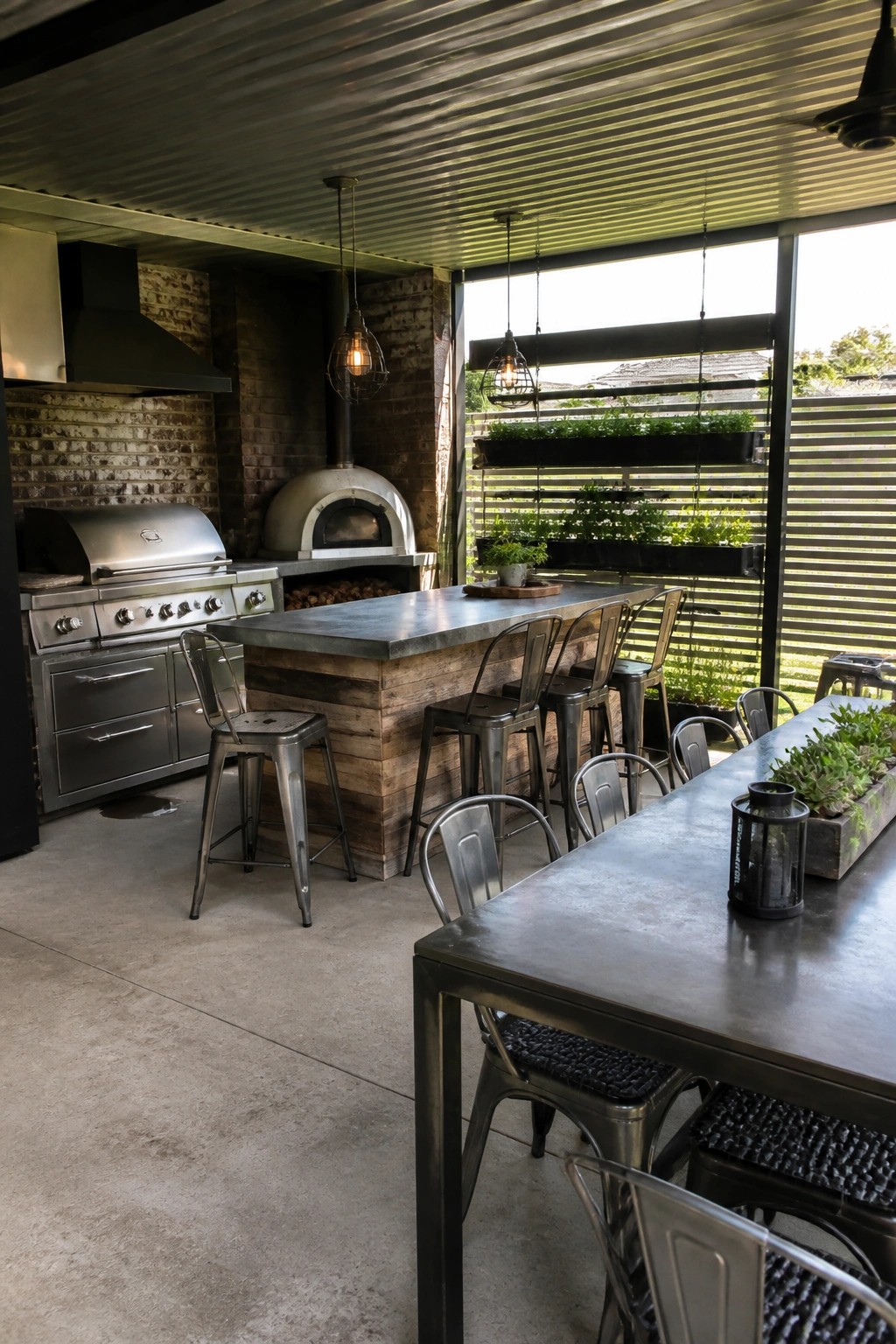
An island gives you a sturdy place to prep food right next to the grill and oven while also pulling in extra seats. People can sit and talk without getting in the way, and the whole setup stays usable even when the weather turns.
This works best in covered patios on homes that cook outside often. Build it from durable materials that hold up to daily use and keep the island positioned so it links the cooking area to the dining table without crowding the space.
Enclose the Patio with Glass Walls
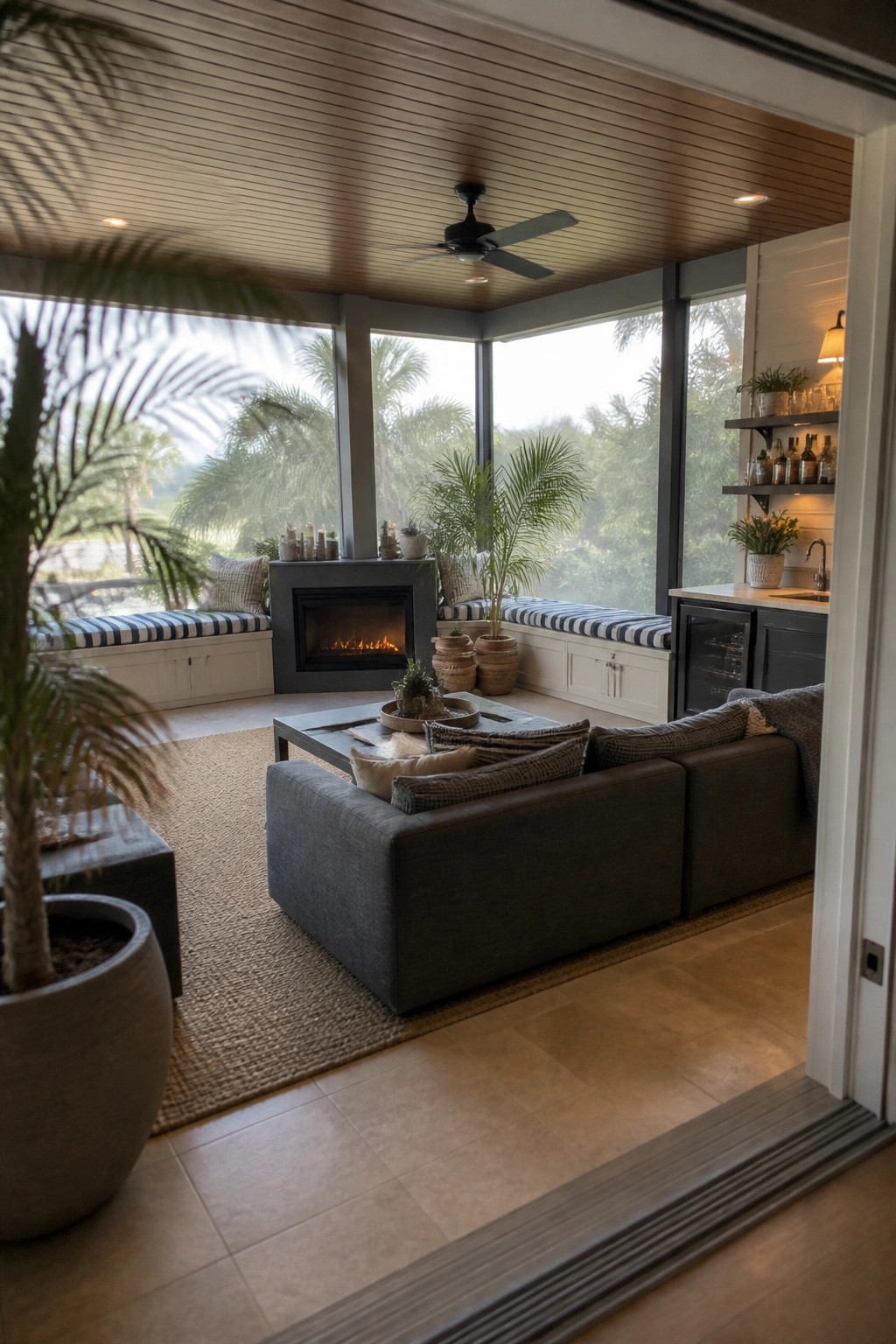
Glass walls turn a basic covered patio into a space you can use no matter the weather. They block wind and rain while still letting in light and keeping the view of the yard or trees. Many people like this setup because it feels more like an extra room than a typical open porch.
This works especially well on homes in areas with changing seasons or lots of bugs. Add a ceiling fan for air flow on warmer days and keep the flooring simple so the indoor and outdoor areas connect easily. Just make sure the windows can open or slide back when you want more fresh air.
Cover The Patio For All Weather Use

A solid roof over the patio keeps the seating area comfortable through changing weather. It protects the chairs and table from sun and light rain so the space stays usable longer without constant upkeep.
This works best on patios that sit close to the house and get regular use. Match the roof material and color to the existing structure so it blends in rather than looking added on later.
Wicker Furniture Grouped on a Natural Rug
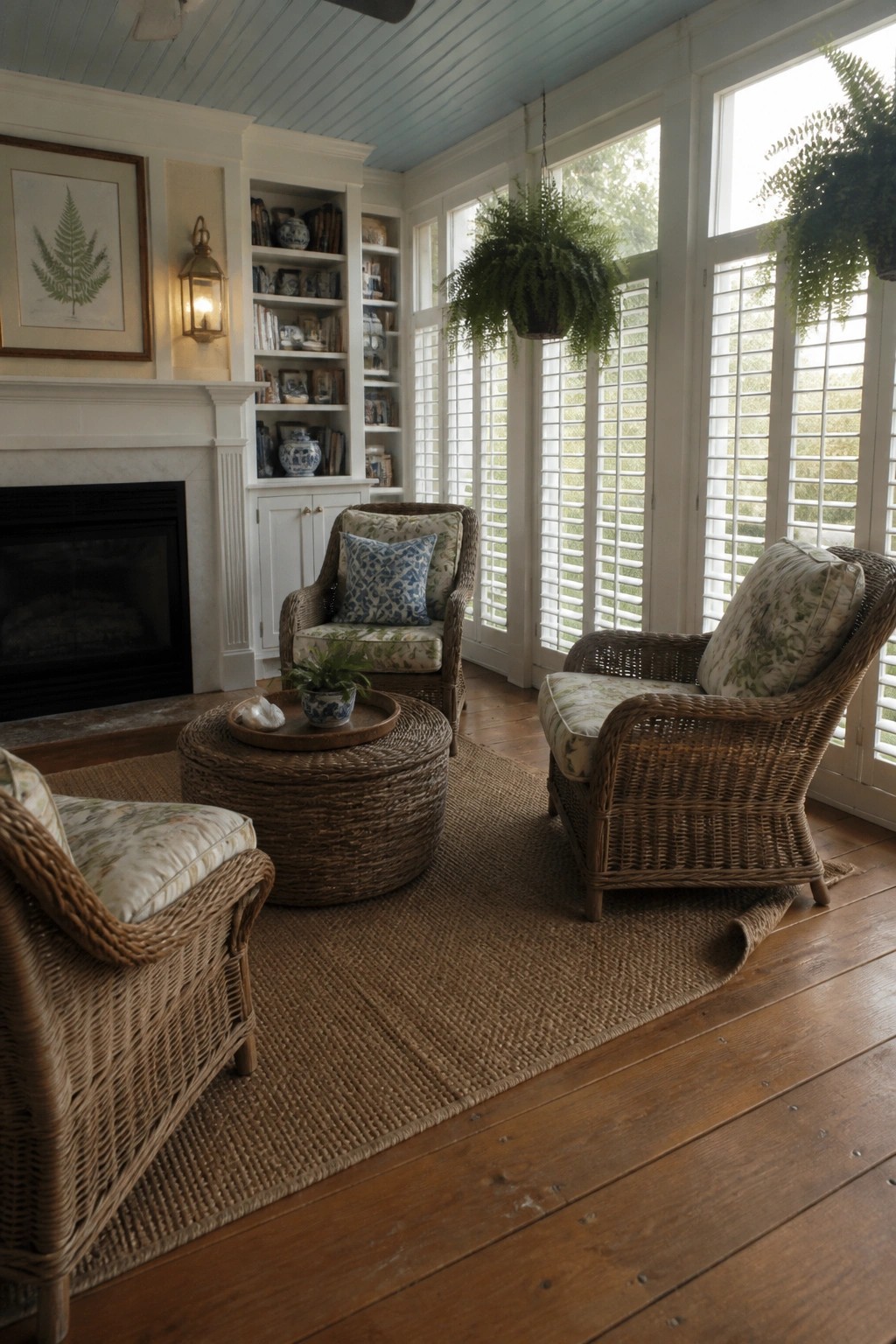
Wicker chairs hold up well on a covered porch because they handle humidity and temperature swings without much fuss. Placing them around a low central table on a large jute rug pulls the seating into one clear spot instead of letting it scatter across the wood floor.
This setup works best on porches that already have some protection from rain. It suits homes that want a relaxed look without bringing fully indoor pieces outside. Just make sure the rug is sturdy enough to stay flat and the cushions have removable covers for easy cleaning.
Add A Daybed Under Your Covered Patio

A daybed under a covered roof turns a patio into a place you can actually rest without worrying about sudden rain or harsh sun. The structure gives enough shelter while still keeping the space connected to the garden around it.
This setup works best on patios that already have a solid overhead cover like a thatched roof or pergola. Keep the bedding light and simple so it can handle outdoor conditions, and add sheer fabric if you need protection from bugs.
Built-In Benches Keep A Covered Patio Practical

Built-in seating works well on a covered patio because it gives you plenty of places to sit without adding extra furniture that takes up floor space. The benches also create a more permanent, room-like feel that holds up in changing weather.
This approach suits homes with a deck or porch that gets used often throughout the year. It helps when you need extra storage for cushions or small items and want the seating to stay in place rather than being moved around.
Arrange Seating Around a Central Fire Pit
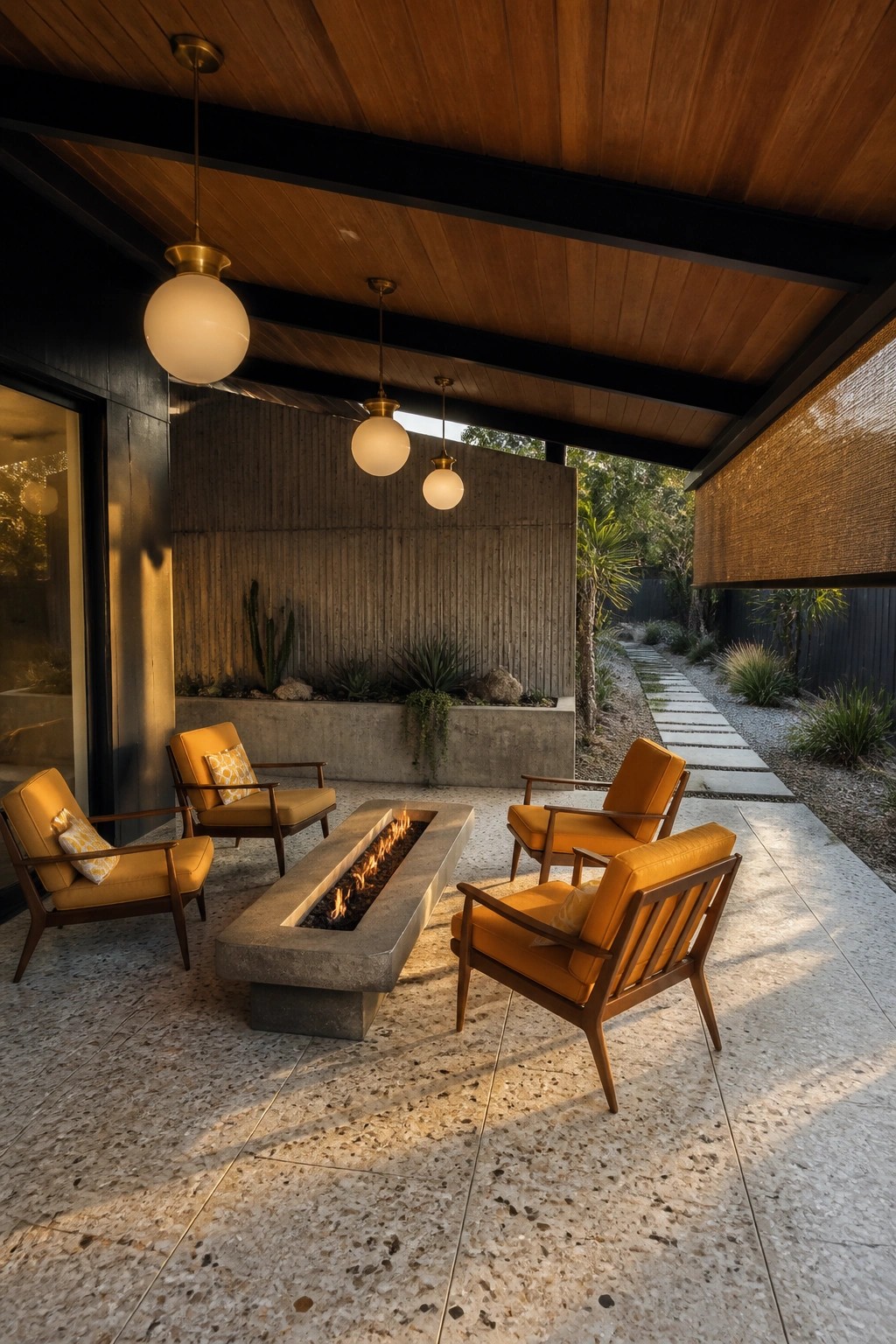
A fire pit placed right in the center of the seating area gives the whole patio a natural gathering spot. The chairs sit close enough for easy conversation, and the overhead cover keeps the space usable when the weather turns.
This setup works well on patios that already have solid roofing and good drainage. Leave enough walking room around the fire pit and pick chairs that can stay outside without much fuss.
A Translucent Roof for Covered Patios
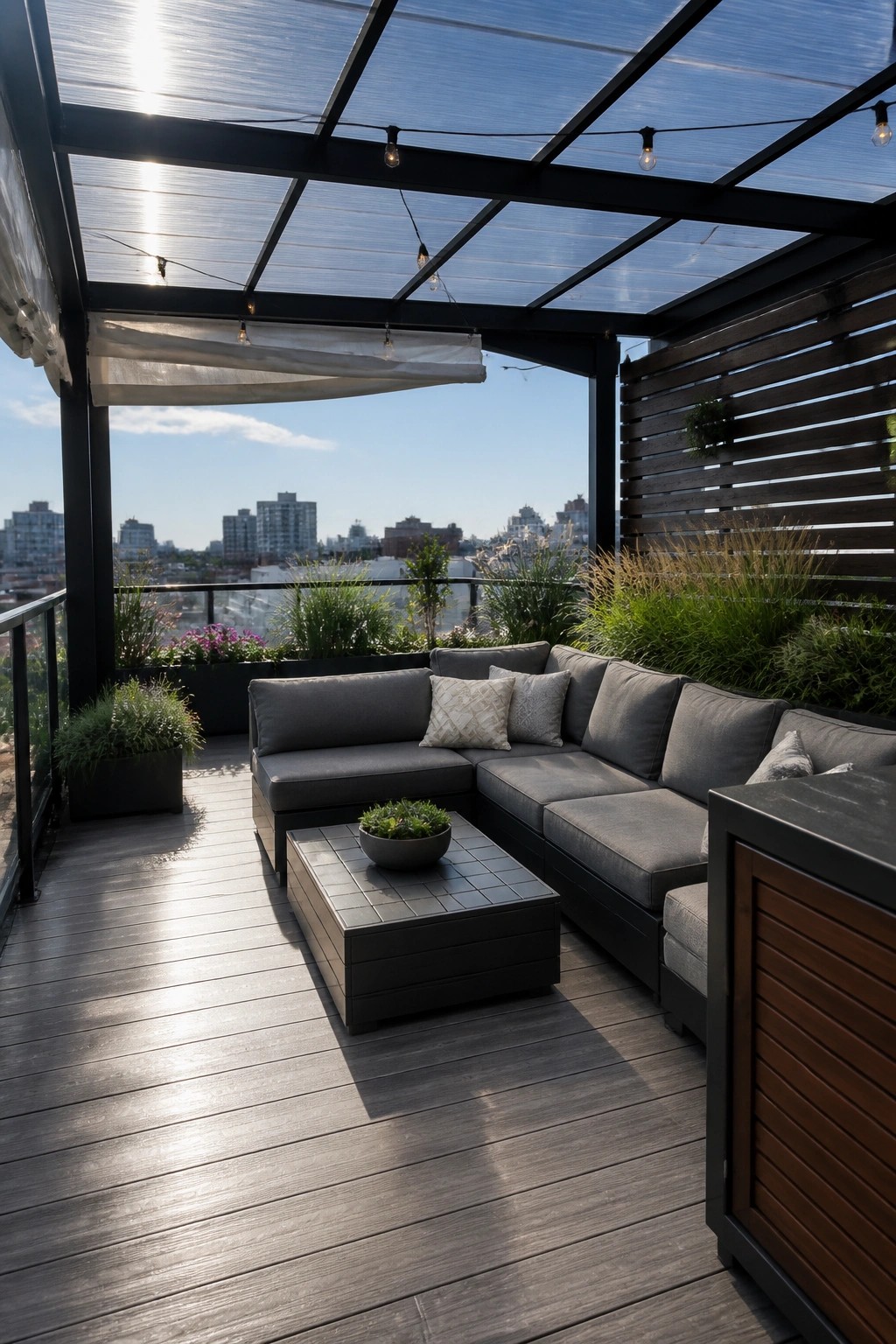
A translucent roof works well because it blocks rain and strong sun while still letting in daylight. The space feels open rather than boxed in, which makes it easier to use on more days of the year.
This approach suits rooftops or decks where you want shelter without losing the outdoor feel. Keep the rest of the setup simple so the light coming through stays the main feature.
Built In Bench Seating For Covered Patios
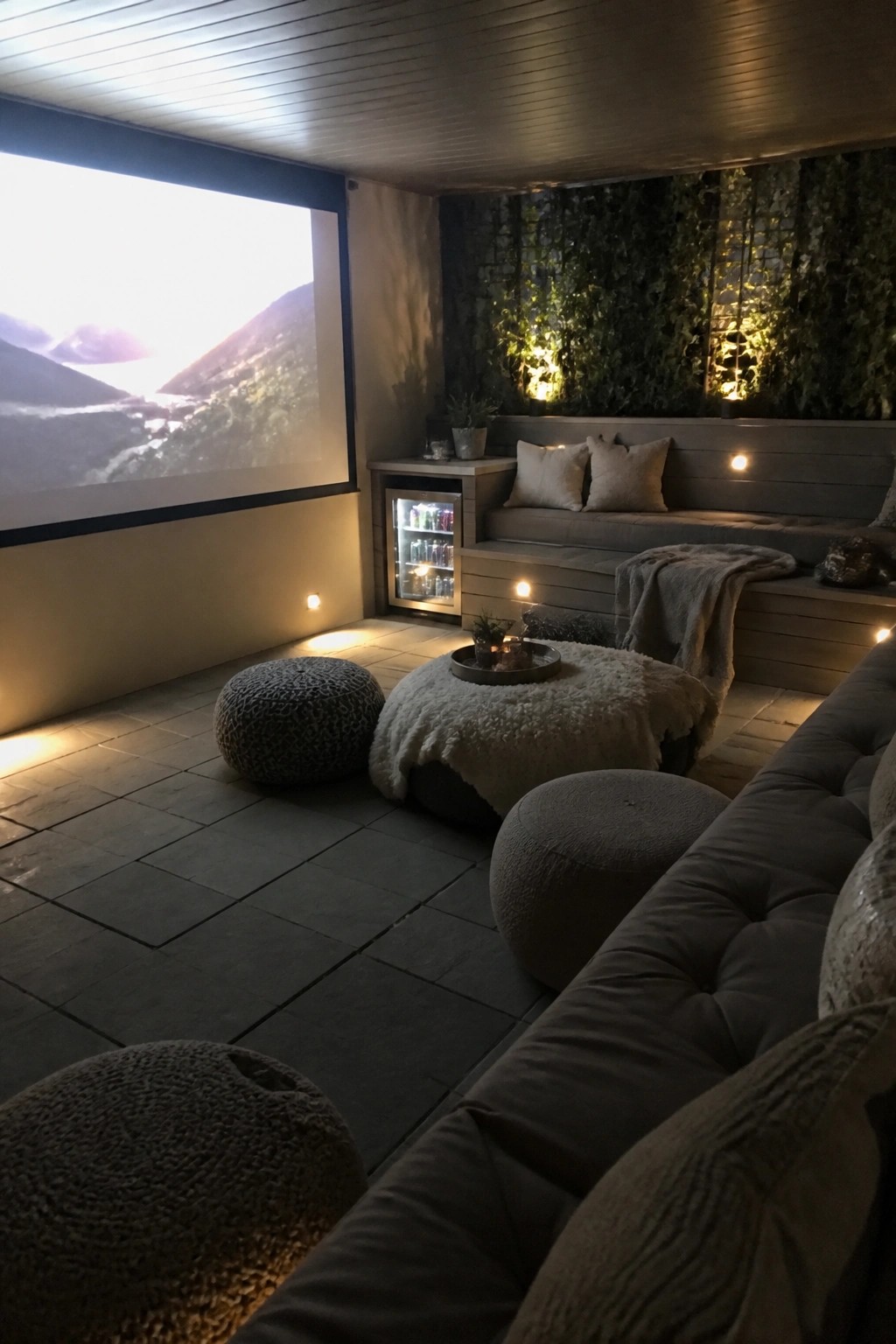
Built in benches give a covered patio a steady, practical base for seating that does not shift around with the weather. They fit neatly against walls or railings and leave more open floor space for extra chairs or footstools when needed.
This layout works best on patios that already have some overhead cover and side protection. Keep cushions and throws in a nearby bin so they can be brought out quickly and stored away just as fast.
Glass Walls for Year-Round Patio Use

Glass walls turn a basic covered patio into something you can actually use no matter the weather. They keep out rain and wind while still letting in the view, so the space feels connected to the outdoors instead of closed off.
This setup works best on homes that already have decent surroundings. Add a few built-in niches with lights for evening use, and keep furniture simple so you can move things around as needed. Just watch the size of the glass panels if your area gets heavy storms.
Add a Fireplace to Your Covered Patio

A fireplace gives a covered patio a real reason to get used in cooler months. It pulls seating around it and makes the whole area feel more like an extension of the house instead of just an outdoor spot.
This setup works best on homes that already have a solid roof overhead. Keep the fireplace against an outside wall so the chimney works right, and arrange seating so people can face the fire without blocking the path through the space.
Built-In Seating Under A Pergola
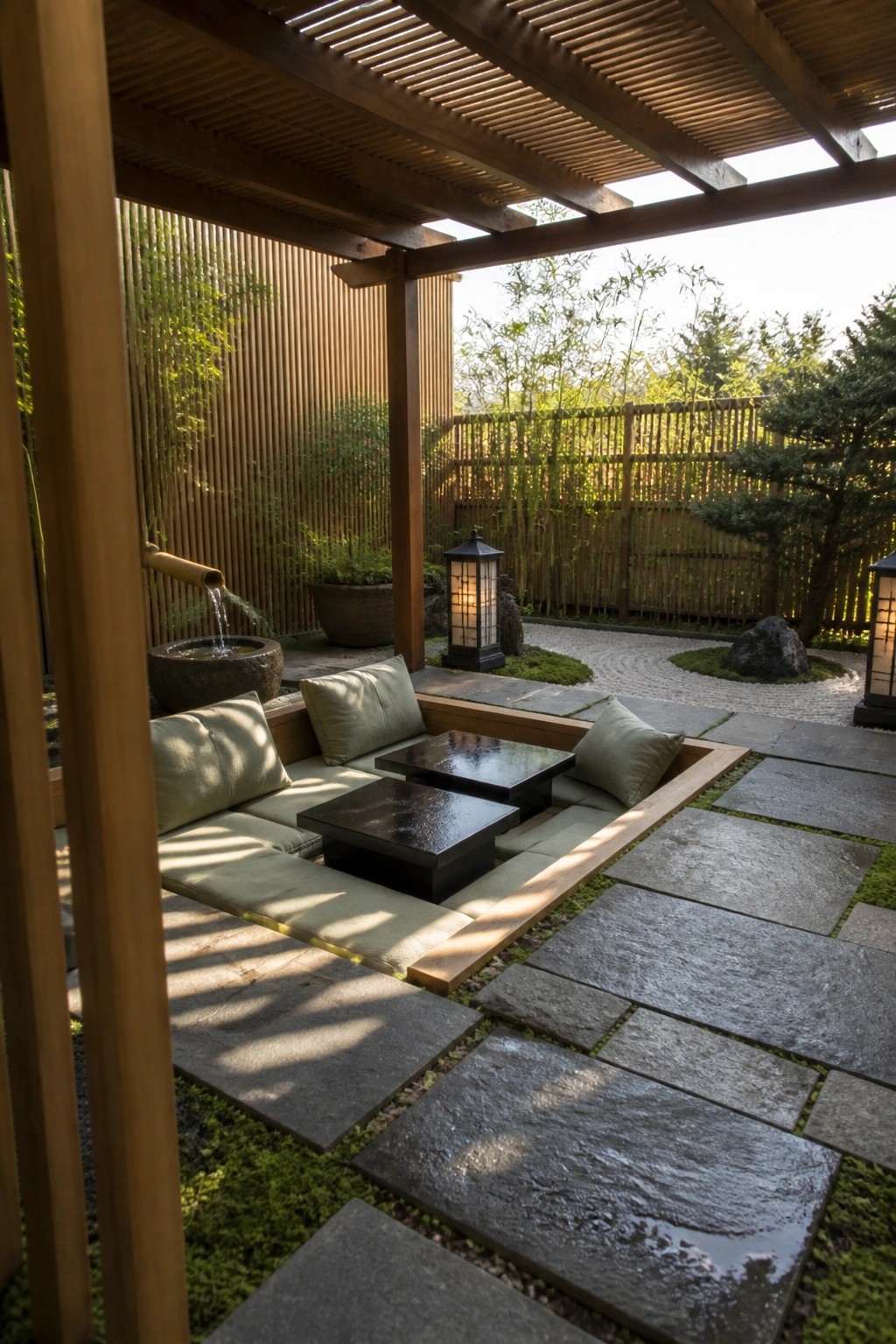
One simple way to improve a covered patio is to build the seating right into the structure itself. Low platforms with cushions and small tables keep the space open and make it feel more like a real room than a set of loose furniture.
This approach works well on smaller patios or in gardens where you want the seating to stay put through changing weather. It suits homes that already have wood tones and natural screening, though the wood needs proper sealing to hold up over time.
Group Seating Around a Central Fire Pit

Placing chairs in a loose circle around a fire pit makes the space feel more connected. Everyone can see the flames and join the conversation without turning around or craning their neck. The setup works especially well when the whole area sits under a covered roof so rain or cool evenings do not end the gathering.
This layout suits most backyard patios that already have a solid floor surface. Keep the chairs at a comfortable distance from the fire so no one overheats, and choose low tables that slide in easily when drinks are needed. It stays practical on smaller lots and still feels open.
Add Heating and Storage for All-Weather Use

A covered patio loses some of its appeal once temperatures drop. Placing a heater right in the seating area and keeping firewood stored nearby makes it possible to use the space on cooler evenings without much extra effort.
This approach works best on patios that already have a solid roof and good drainage. Keep the heater at a safe distance from the sofa and use a built-in rack so refills stay simple.
Mix Different Chairs Around an Outdoor Table

Many covered patios feel more welcoming when the seating does not all match. A round table with several different chairs keeps things casual and lets you use pieces you already have on hand.
This approach works best in spaces that get regular use for meals or gatherings. It suits homes with a relaxed garden style and avoids the stiffness that comes with full matching sets.
Build an Outdoor Bar Counter for Everyday Use

A bar counter under a covered patio gives you a simple spot to prepare food and sit with others without needing to move everything indoors when the weather changes. It makes the space feel more like an extension of the kitchen rather than just a place to stand around.
This setup works best on patios that already have some roof overhead. Keep the counter height comfortable for stools and choose materials that can handle rain and sun. It suits homes where people like to cook and gather outside on a regular basis.
Upholstered Seating for Covered Patios

Upholstered chairs hold up well in a covered patio because the roof keeps rain and direct sun off the fabric. This setup lets you use regular living room pieces outside without worrying about quick wear.
It works best on patios attached to the house where you can run power for lamps or a chandelier. Dark colors hide dirt better than light ones, and adding a couple of patterned pillows keeps the look relaxed.
Hanging Chairs Keep a Covered Patio Open

Hanging chairs work well in a covered patio because they take up almost no floor space while still giving you comfortable spots to sit. The suspended style leaves room for a table or extra seating below, which helps the whole area feel less crowded even when the roof overhead keeps things dry.
This approach suits patios that already have a solid structure in place, like a thatched or solid roof. It works best in milder climates where you want seating that can stay out year-round without blocking the walkway.
Built-In Bench Seating For A Covered Patio

A built-in bench along the wall turns a covered patio into a spot you can actually sit and stay awhile. It gives you permanent seating without bringing in extra furniture that has to be moved around or stored when the weather changes.
This works best on patios that already have a roof and solid walls on at least one side. Keep the bench depth around 18 inches so it feels comfortable without blocking the walking space, and add a few loose cushions for everyday use. The curved shape in this example also helps the seating follow the shape of the room instead of fighting it.
Cover Your Patio To Extend The Season
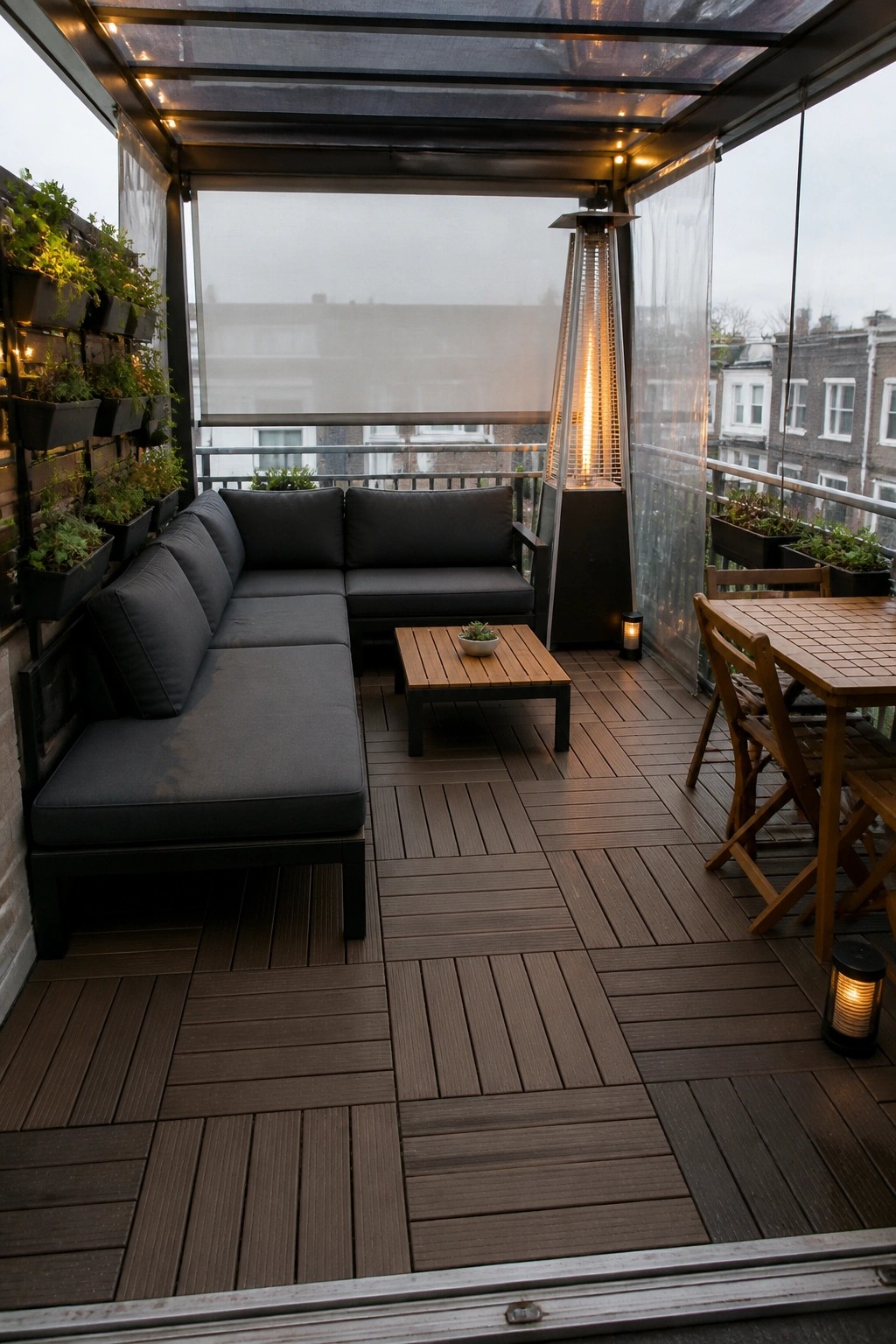
Adding a roof cover makes a big difference when you want to use outdoor space more often. The clear panels on top keep rain out while still letting in light, and the side screens help block wind without closing the area off completely.
This approach works especially well on balconies or small decks where full enclosure is not an option. A heater placed nearby adds enough warmth for cooler evenings, so the space stays comfortable without much extra effort.
Frequently Asked Questions
Q: How do I keep cushions from getting soaked even with a solid roof overhead? A: Angle the roof slightly so water runs off instead of pooling. Add a couple of quick-dry covers you can toss over the cushions during heavy storms. This setup keeps everything usable without constant hauling inside.
Q: What flooring holds up best when rain blows in sideways? A: Go with sealed concrete or composite decking that sheds water fast. Avoid smooth surfaces that turn slick. Sweep debris off regularly and the area stays safe for bare feet.
Q: Can I add lighting without running wires all over the place? A: Clip-on battery lanterns or solar string lights hung from the beams do the job. They give enough glow for evening meals and come down easily for storage. Test the placement once before committing to spots.
Q: How do I stop wind from whipping through and making the space unusable? A: Hang outdoor curtains on two or three sides to block gusts while still letting air move. Roll them up when the weather stays calm. The change turns the patio into a spot you actually sit in most days.
