

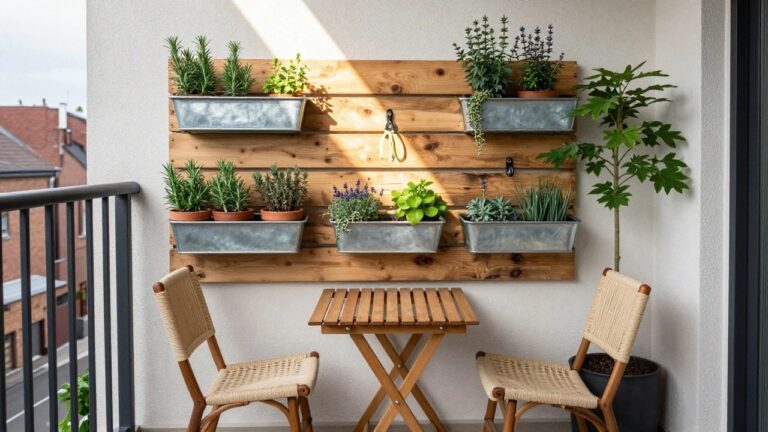
Blank exterior walls often end up looking like an afterthought once the rest of the house is finished.
I have found that adding any kind of vertical planting changes how the whole facade reads from the street, especially when the material feels like it belongs with the siding or brick.
Pallets offer an easy way to test that without committing to permanent construction right away.
The real test comes later when you see how the wood weathers and whether the plants actually fill in the way the photos suggest.
A few of these setups seem worth trying on a small section first to see what holds up through a full season.
Pallet Walls For Balcony Gardens
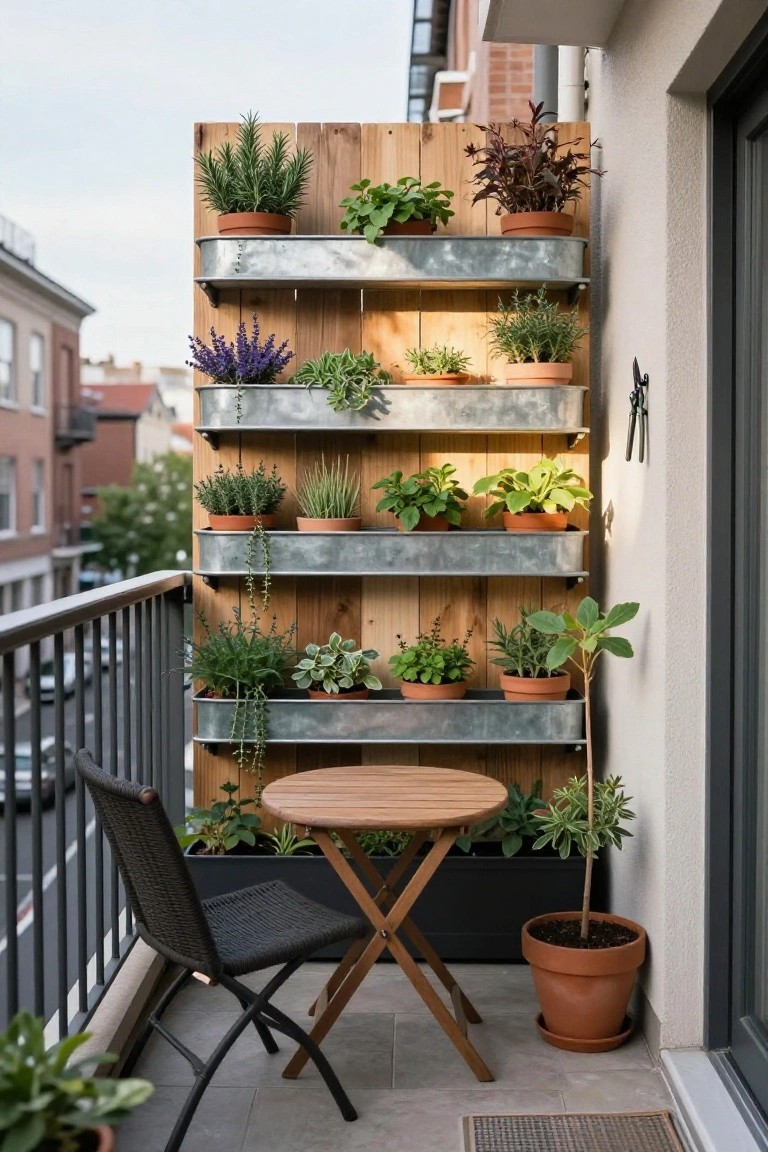
A simple wood backboard with metal troughs screwed on makes it easy to grow a lot of plants without taking up floor space. This setup works well on balconies where wall space is the main blank area available and floor room is limited.
It suits apartments or small homes that need extra growing room but still want to keep the area usable for seating. Just make sure the wall can handle the weight and that the troughs have good drainage so water does not run onto the floor below.
Using Pallets for Wall-Mounted Gardens
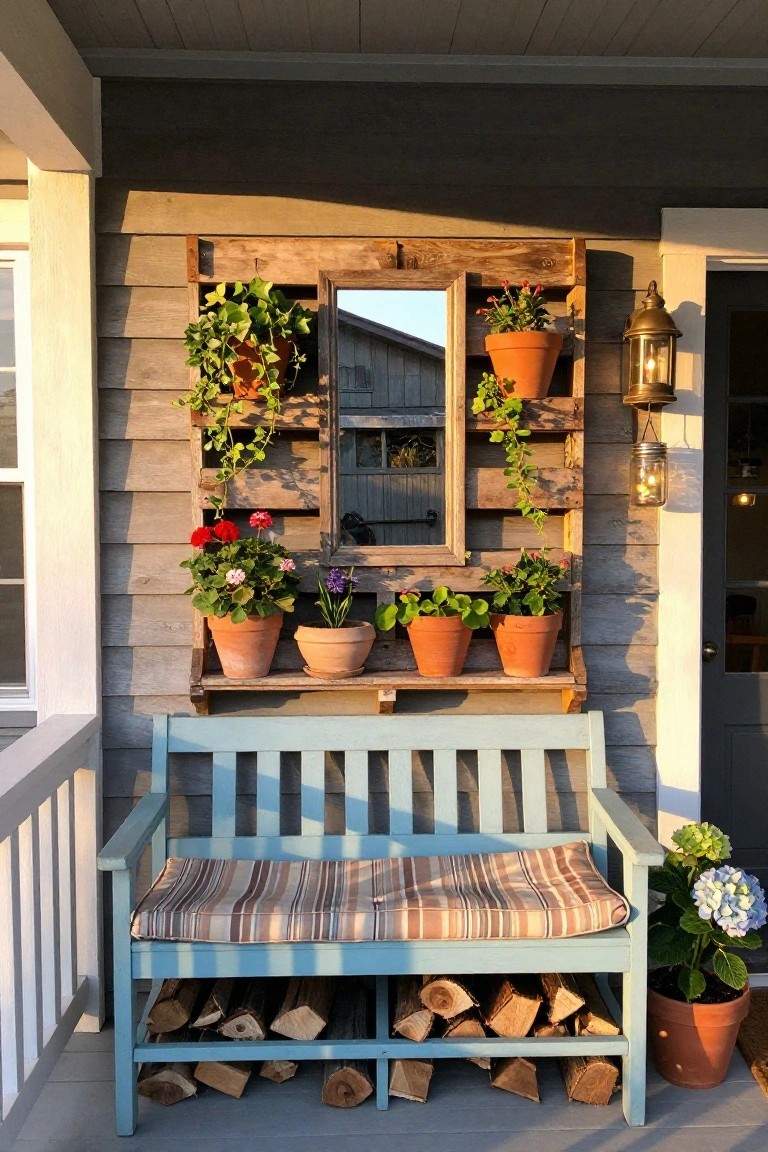
One simple way to bring life to a flat exterior wall is to hang a wooden pallet and turn it into a holder for potted plants. The open slats make it easy to set pots at different heights, and the whole thing takes up almost no floor space.
This setup works best on porches or house sides that get decent light. Secure the pallet firmly, choose weatherproof wood, and stick with pots that are easy to swap out when seasons change.
Pallet Walls Behind Outdoor Planters
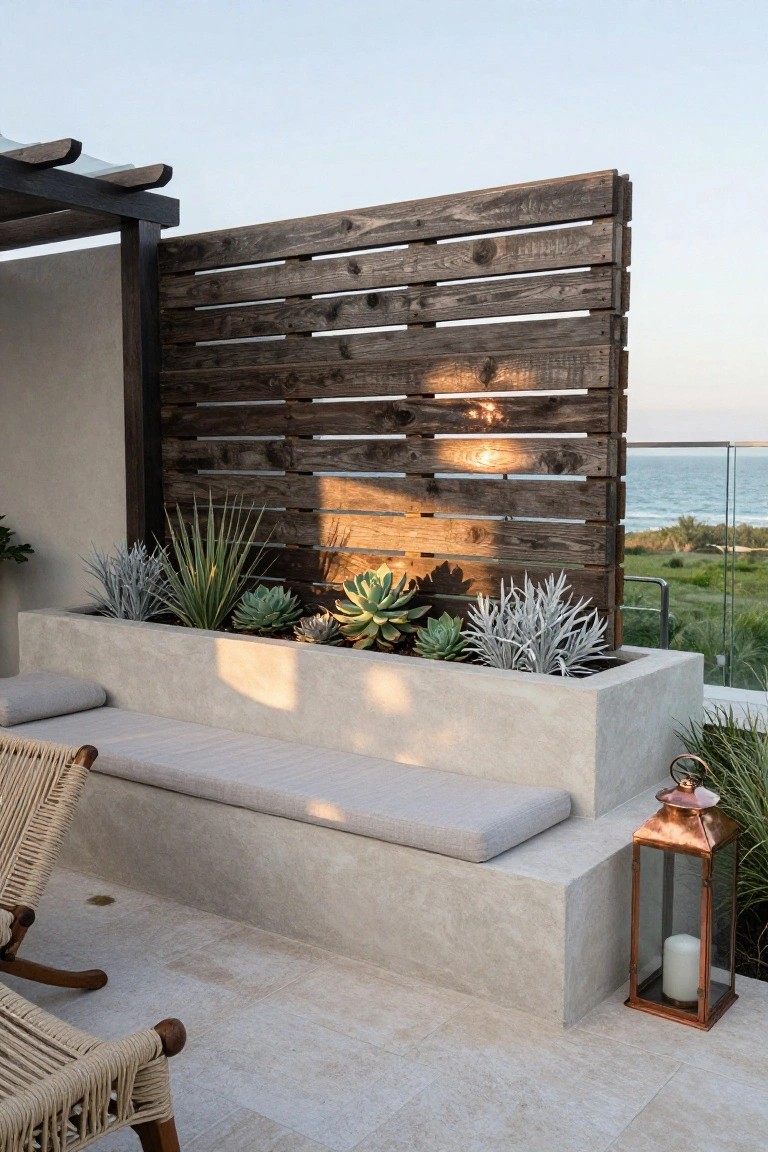
A pallet wall set directly behind a raised planter gives an outdoor seating area some texture and a clear sense of enclosure. The horizontal boards create a simple backdrop that makes the plants more noticeable without adding extra furniture or structures.
This approach works best on patios or terraces that need a bit of privacy or a finished edge. Use weather treated pallets and keep the planting low and drought tolerant so the whole setup stays easy to maintain over time.
Pallet Shelving for Wall Gardens
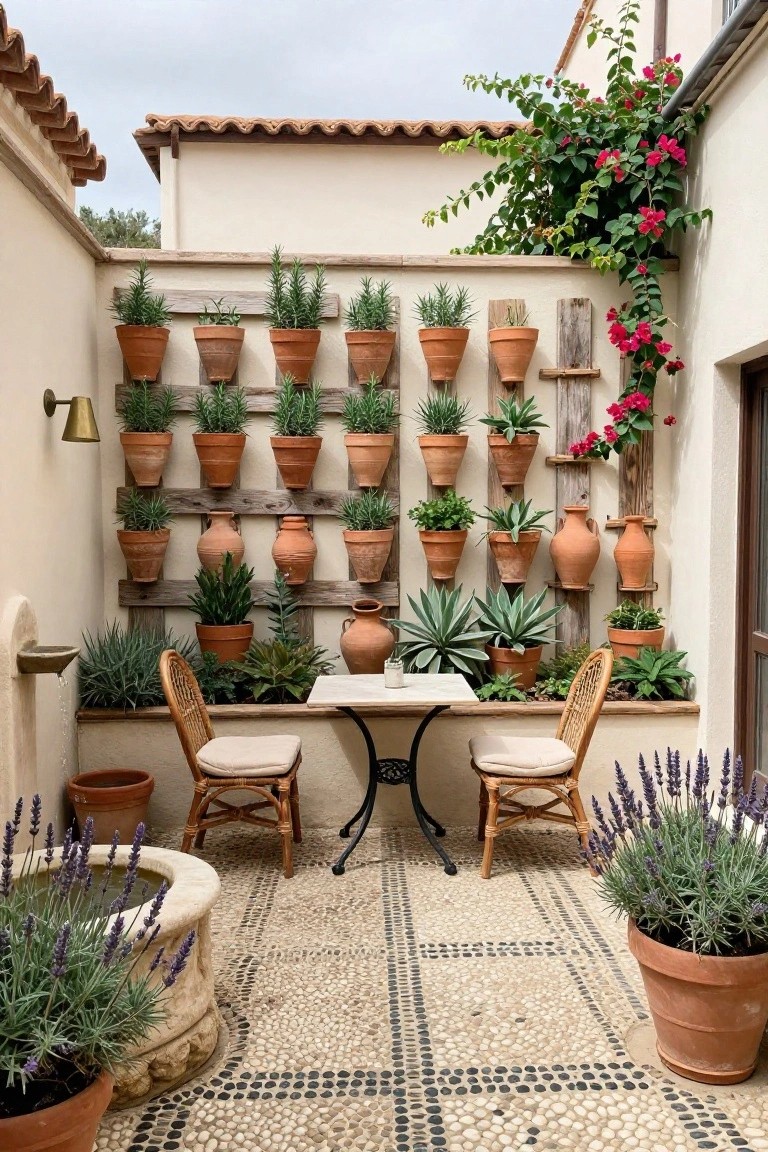
Many people use old pallets to turn a blank exterior wall into a place for lots of potted plants. The wood gives simple horizontal supports that let pots sit at different heights, so you get more growing space without crowding the ground.
This works best on sunny walls near a patio or small courtyard where floor room is tight. Treat the wood for weather and check that the brackets can handle the weight once the pots are full.
Mount Pallet Planters on Blank Walls
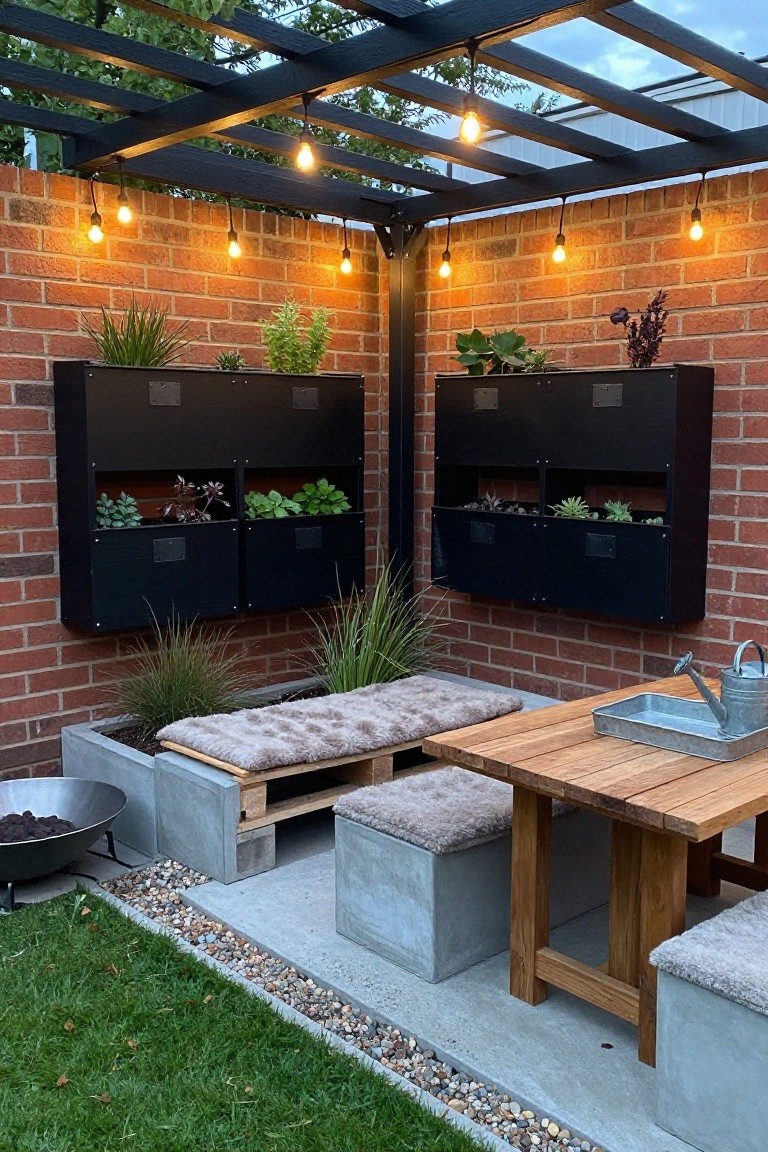
Mounting planters made from pallets straight onto an exterior wall gives you a simple way to add plants without losing floor space. It works especially well on brick or plain siding where there is nothing else going on, and it keeps the growing area off the ground so watering and weeding stay easier.
This setup suits patios, side yards, or small back gardens where you want some height without building big beds. Just check that the wall can hold the weight and that the wood is sealed for outdoor use.
Pallet Platforms for Potted Plants
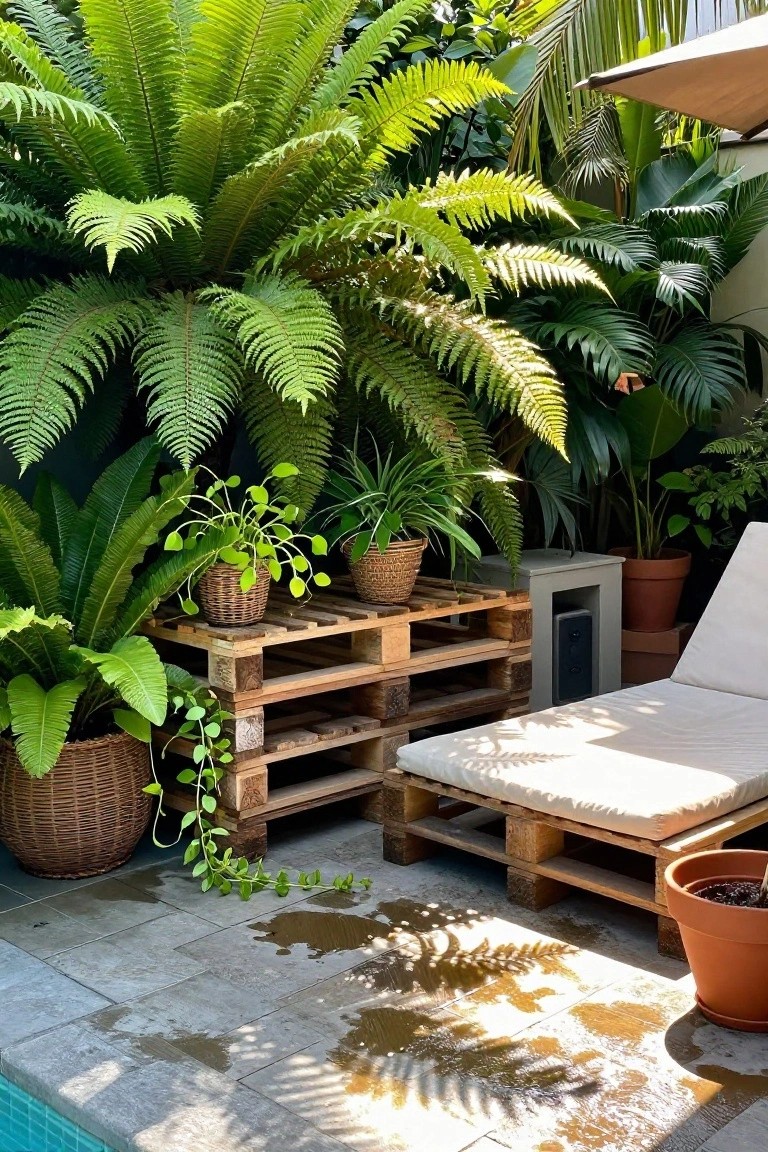
A simple stack of pallets makes a quick raised stand that lifts pots off the ground and puts them closer to eye level. This works especially well against a plain wall where you need height without building anything permanent.
It suits small patios or side yards that get decent sun. Two or three pallets give enough room for several pots, and you can move the whole thing if the layout changes later.
Line a Fence With Pallet Crates
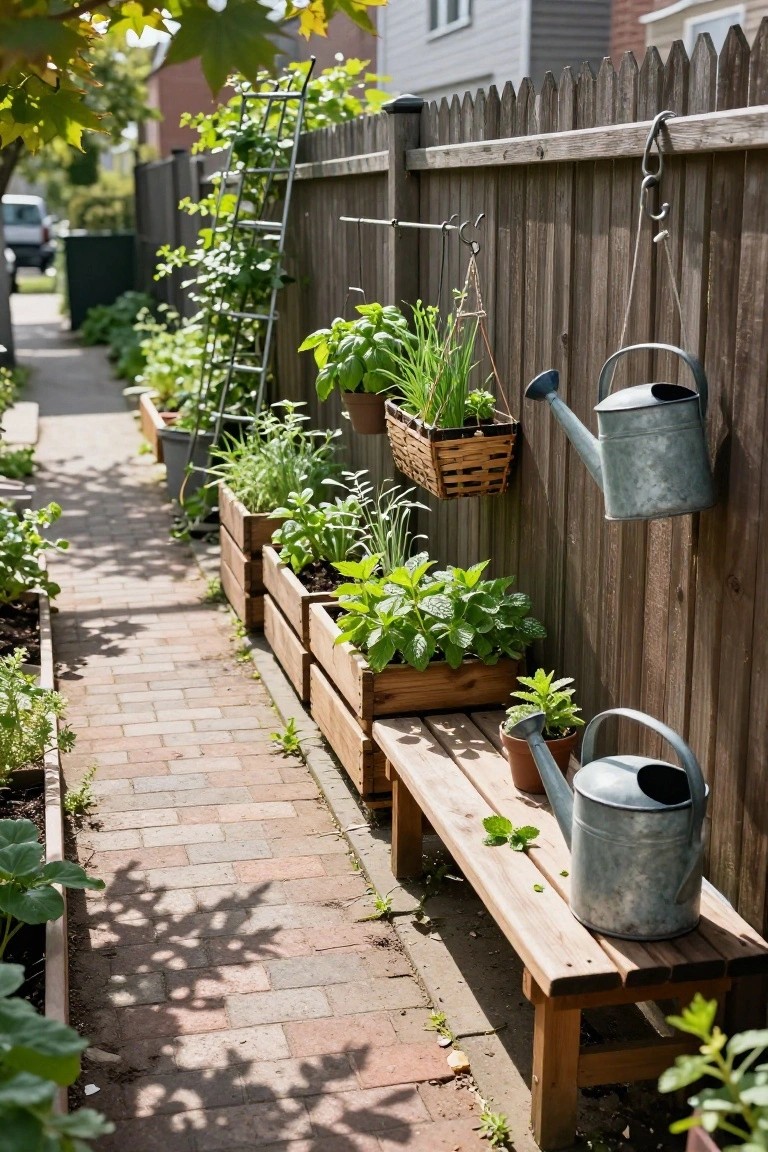
Many people use old pallet crates this way because it turns a plain fence into useful growing space without eating up much room. The crates sit on the ground and give herbs and vegetables a solid place to root while keeping everything easy to reach.
This setup works best along a side yard or the back fence of a smaller lot where you want fresh plants close to the house. Make sure the wood has some weather protection so the crates hold up over time.
Using Planters Along Blank Walls
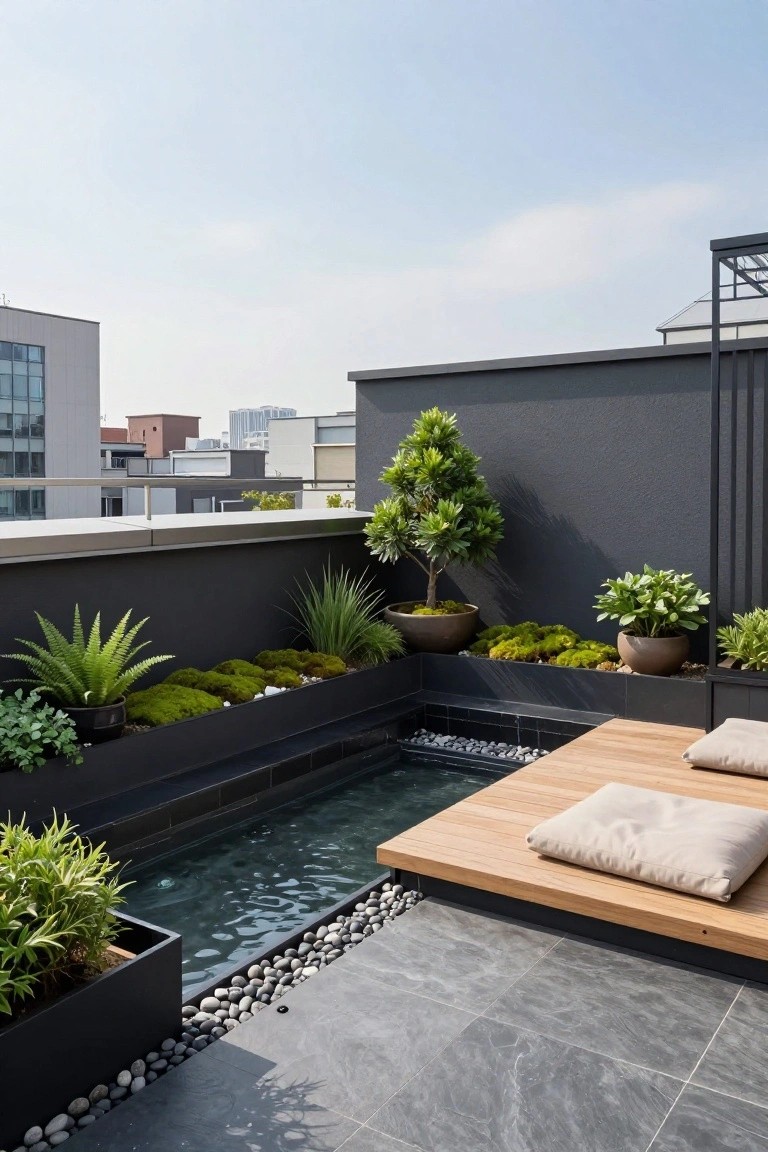
Placing a long planter at the base of an exterior wall adds greenery without covering the surface itself. It softens the look of a plain wall and brings some life to an outdoor seating area, especially on rooftops or small terraces where options are limited.
This setup works best when the planters stay low and the plants stay in scale with the space. Pick hardy varieties that match the sun exposure, and keep the arrangement simple so the focus stays on the seating and the wall rather than a busy mix of pots.
Use a Bench to Hold Wooden Crates
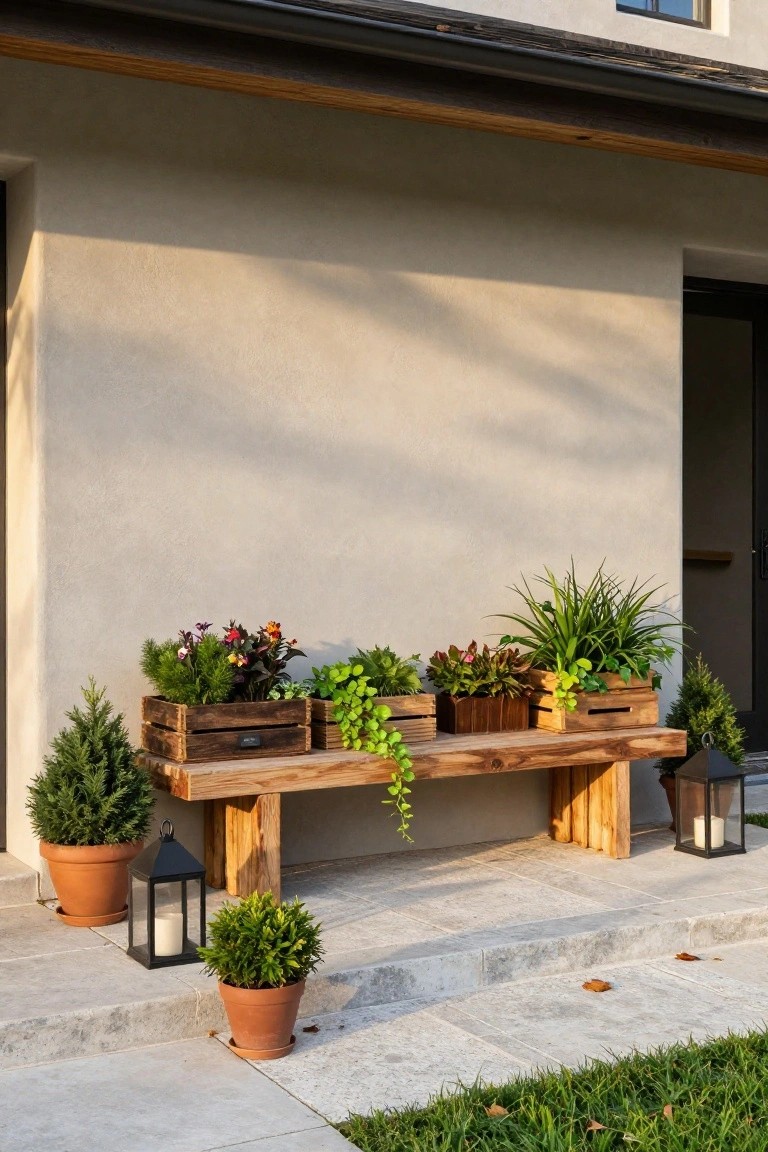
A bench makes a simple base for several wooden crates when you want to green up a blank exterior wall. The crates sit at a good height for the plants to show well, and you can move them around or swap them out without any permanent changes to the wall itself.
This works best along a patio, side entry, or front walkway where you need some planting but do not want to dig beds. Keep the bench low and sturdy, and choose crates that match in size so the whole row looks neat. Just watch how much sun hits the spot, since most crate plants will need decent light to stay full.
Hang Baskets on Blank Walls for Simple Vertical Gardens
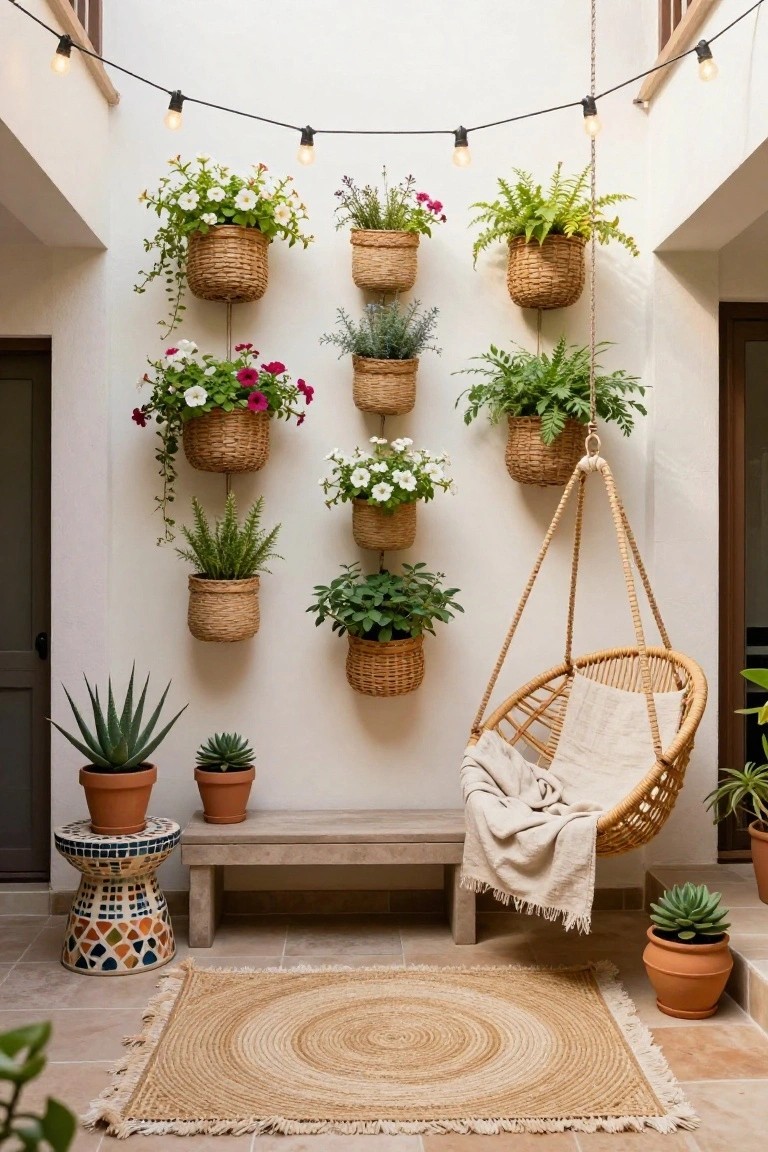
Hanging baskets give you a fast way to cover a plain exterior wall without building anything complicated. They work well in a small courtyard or along a patio because you can cluster them at different heights and swap plants easily when the seasons change. The woven style shown here blends into most outdoor settings and keeps the look casual rather than formal.
This approach suits homes with limited floor space or renters who cannot install permanent structures. Use sturdy hooks rated for outdoor weight and water the baskets regularly so the plants stay full. Avoid overcrowding the wall if you also want room for seating or a bench underneath.
Paint a Section of Your Wall as a Chalkboard
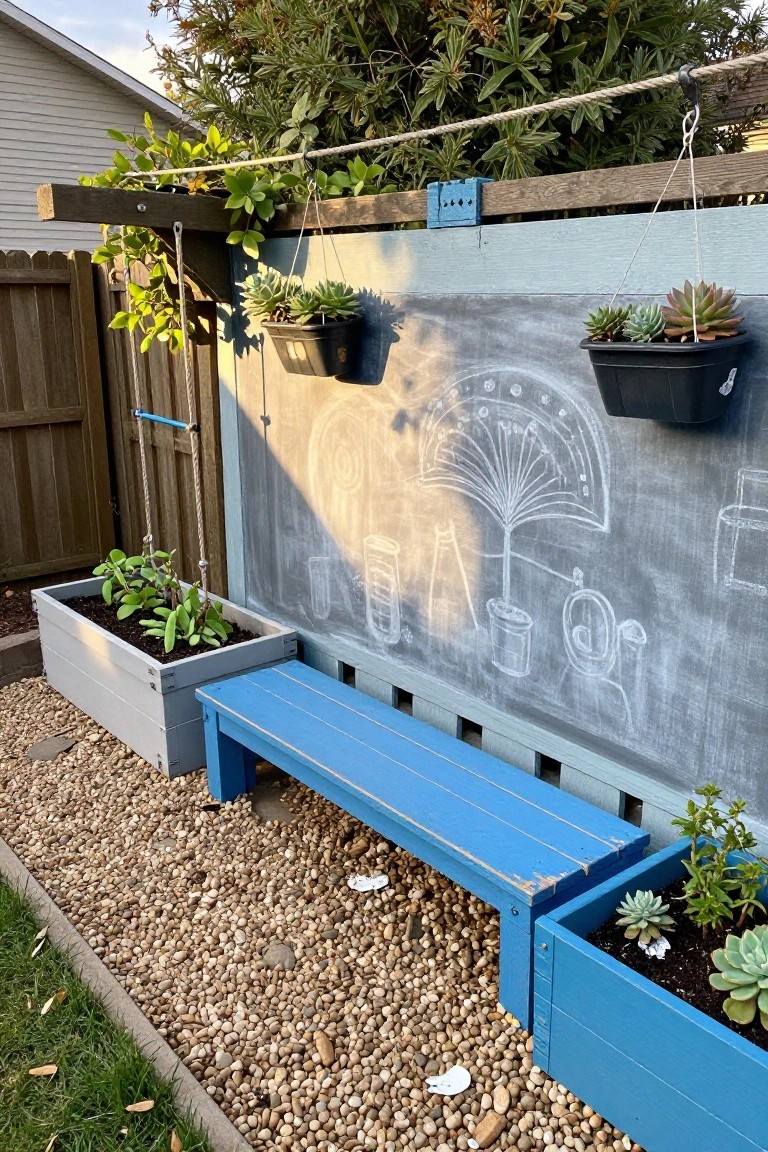
A chalkboard wall gives you a place to sketch ideas, label plants, or just add some quick decoration that you can change whenever you want. It works especially well behind a row of planters because the dark surface makes the greenery stand out while giving the whole setup a practical spot for notes or drawings.
This approach suits small yards or side areas where you want the wall to do more than just sit there. Seal the chalkboard paint so it holds up outdoors, and keep the planters simple so the board stays easy to reach and use.
Wooden Shelves Turn Blank Walls Into Herb Gardens
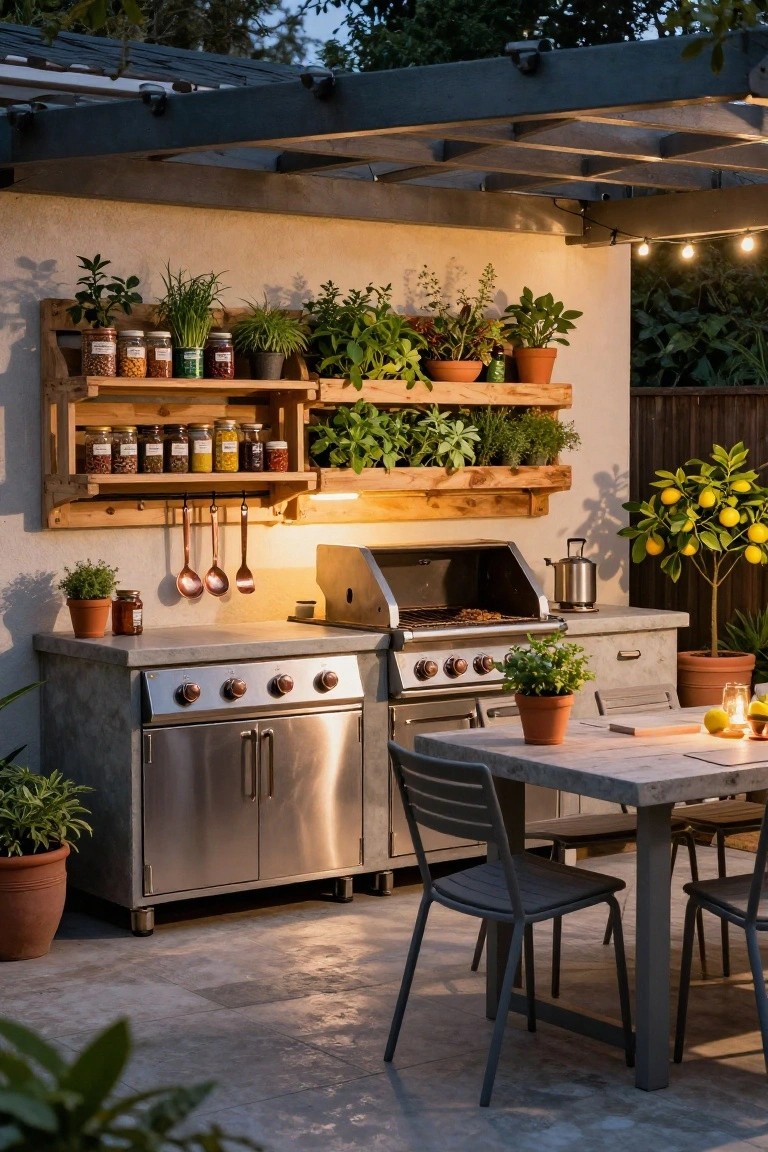
Many people add simple wooden shelves to blank exterior walls near an outdoor kitchen or seating area. The shelves create vertical space for potted herbs and small plants without using up floor room, and they keep fresh ingredients close to the grill.
This setup works best on sunny walls with easy access to water. Use sturdy brackets and treated wood so the shelves hold up outdoors, and group the pots by how often you use each herb.
Mount Planters Directly on the Wall
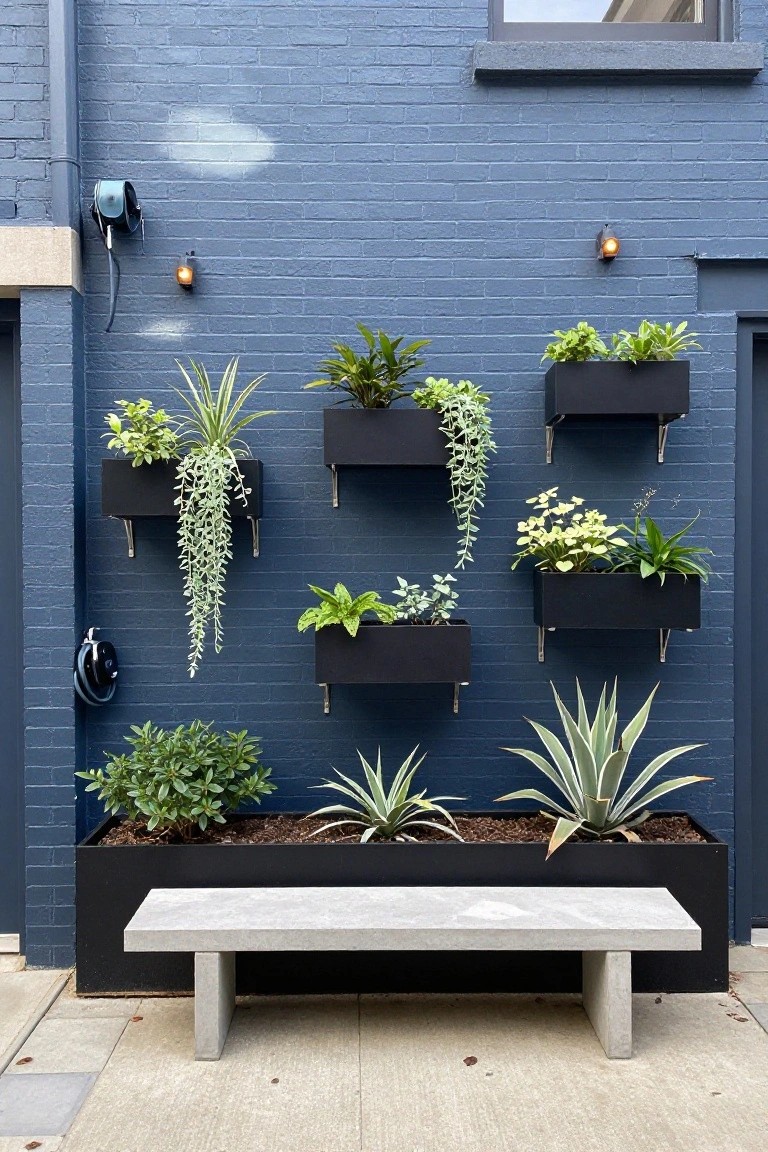
Mounting planters on a blank exterior wall gives you a simple way to add greenery without losing ground space. The staggered heights keep the look from feeling too rigid and let different plants get the light they need.
This works best on solid brick or block walls where brackets can be anchored securely. It suits smaller yards or side passages where a full garden bed would crowd the area, and it leaves room for a bench or path below.
Hang Planters Along Blank Walls
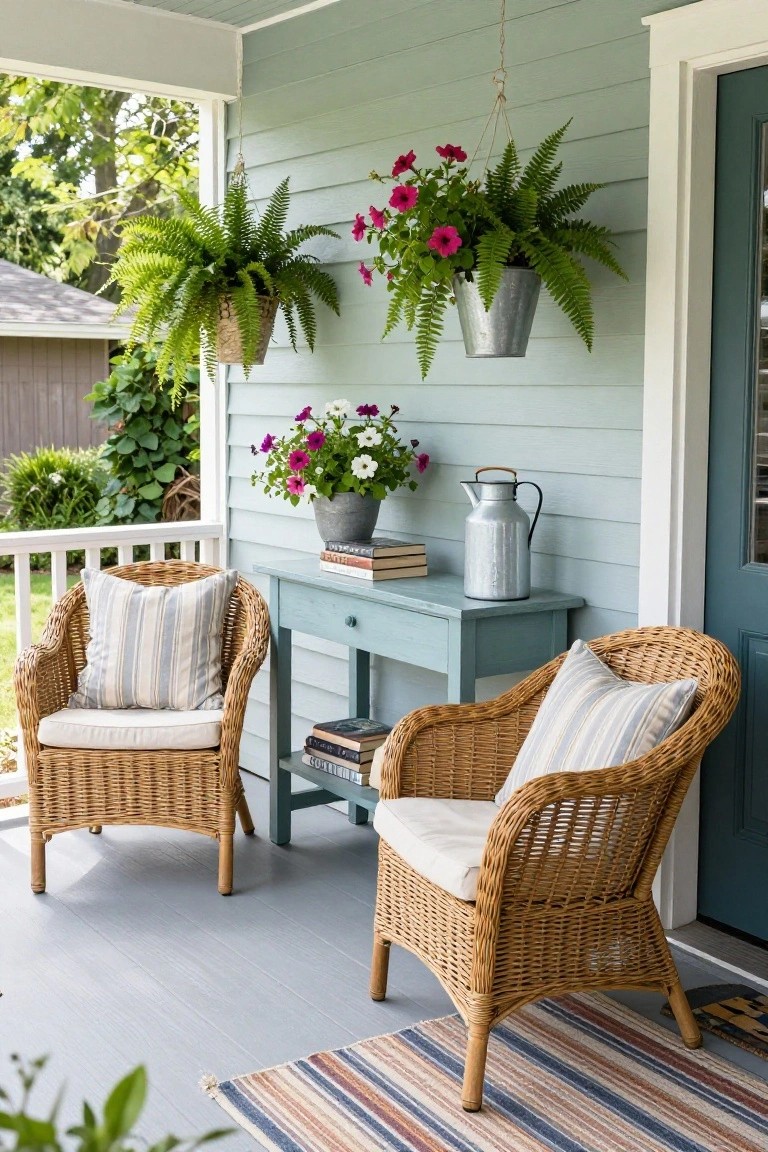
Hanging planters give you a simple way to add plants to a porch or patio without losing floor space. They work especially well on solid walls where there is not much room for big pots or beds, and they bring in greenery at eye level where it shows up right away.
This approach suits homes with covered outdoor areas that get some shade. Keep the planters lightweight and space them so air can move between them. Check the hooks or chains once in a while since weather can loosen them over time.
Trellis Planters For Blank Walls
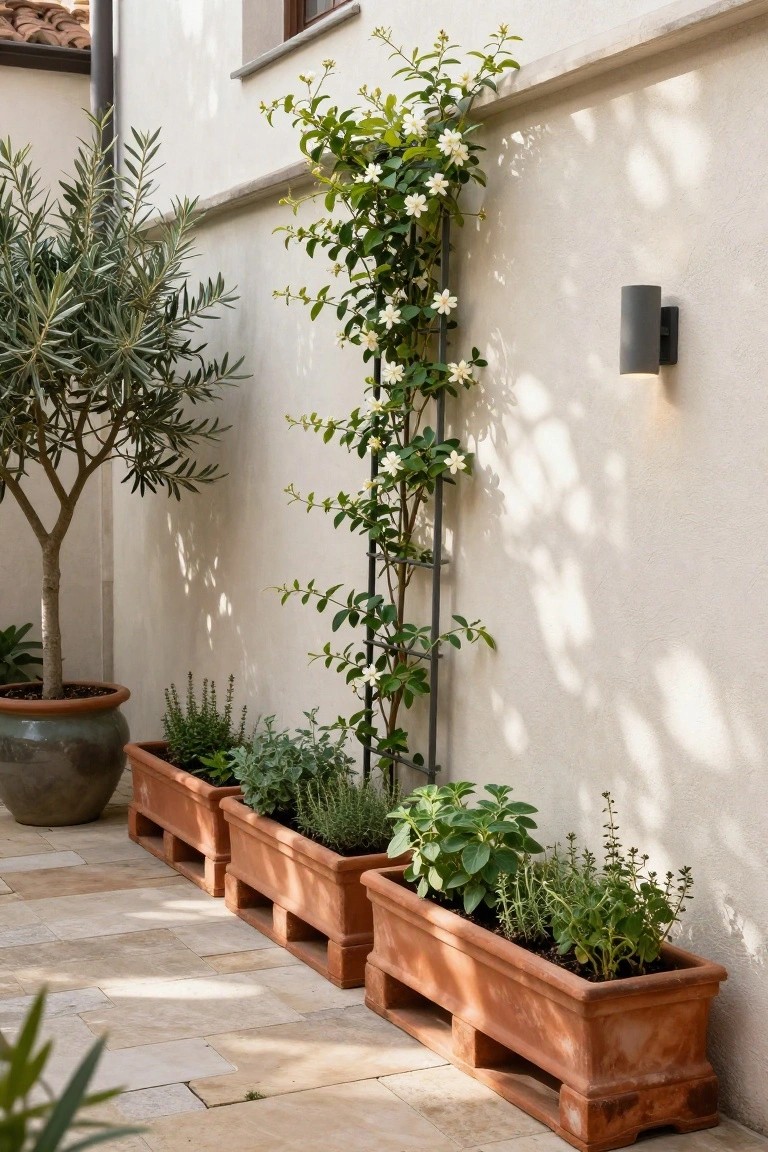
A row of long planters fitted with a simple trellis gives you an easy way to cover a plain exterior wall without building anything permanent. The climbing vines fill in the space over time and turn an empty stretch of wall into something green and living. It works especially well on narrow side yards or along a house where there is no room for wider beds.
This setup suits homes with stucco or concrete walls that need softening. Keep the planters in a line so the plants can grow upward together and create a more even screen. Just make sure the wall gets enough sun for whatever vines you choose.
Turn a Pallet Into a Garden Wall
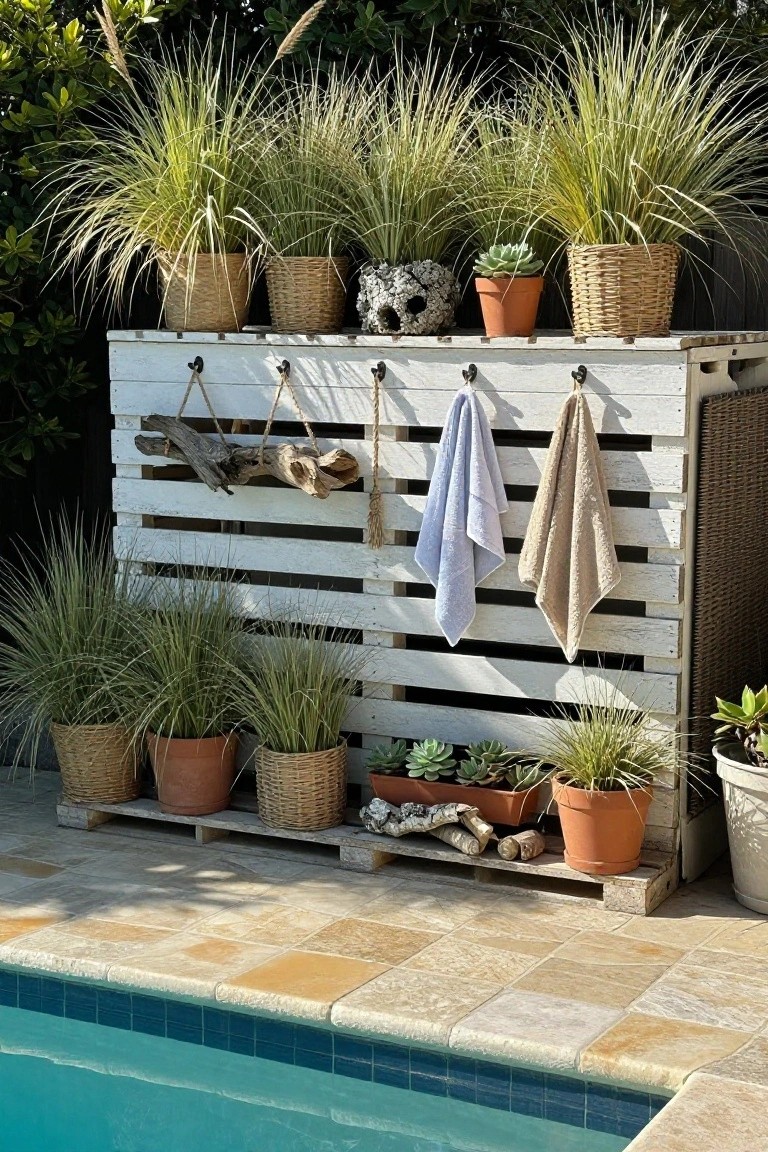
A pallet gives you an easy way to add height and structure to a blank wall without much cost. Mount it upright, paint it a light color if you want it to blend in, and use the slats for hooks and the top edge for pots. The result is a simple vertical display that holds plants at different levels.
This works best along a pool edge or side yard where you need some greenery but want to keep the floor clear. Place larger pots at the base for balance and hang lighter items higher up. Just make sure the pallet is secured well so it stays stable in wind or rain.
Edge Wall Gardens With a Wooden Bench
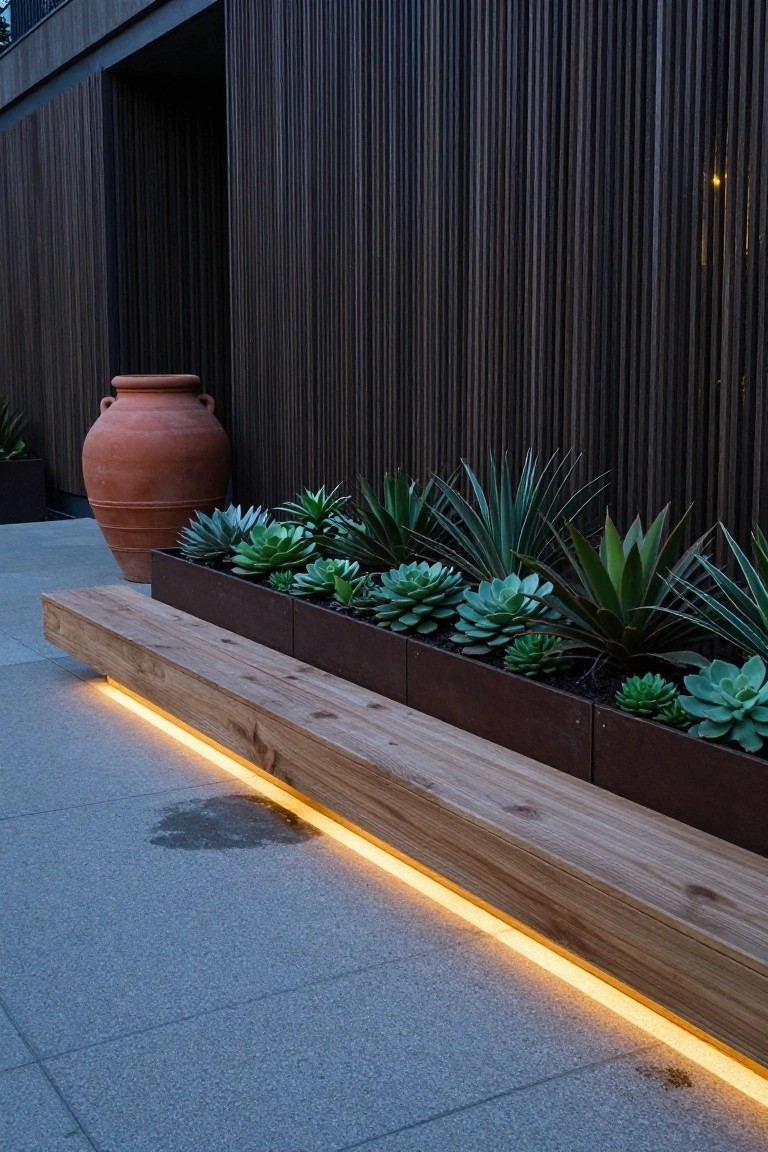
A low bench placed right against a planter gives the whole setup a finished edge and turns the garden into something you can actually use. The light strip underneath keeps the area usable after dark without needing separate fixtures or tall lamps.
This works best along a house wall or on a patio where space is tight. Keep the bench simple in wood so it does not compete with the plants, and make sure the height stays low enough for comfortable seating.
Mount Pallets on Blank Exterior Walls
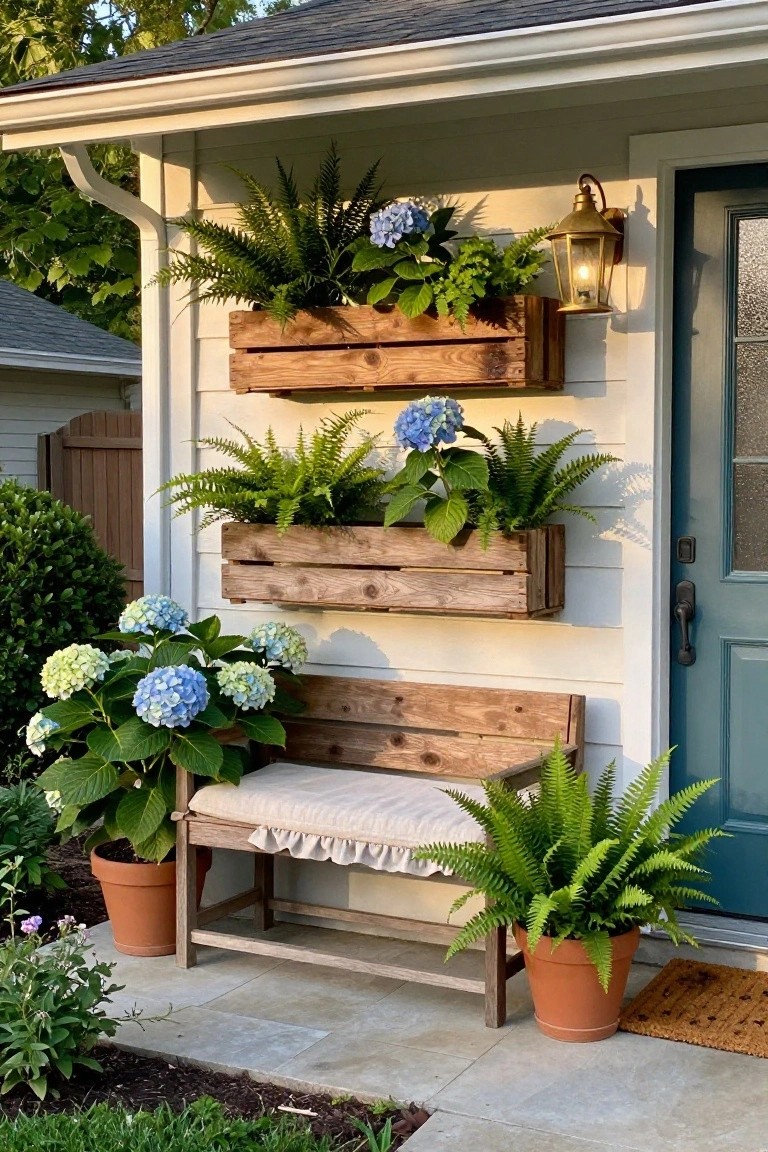
Attaching old pallets to a plain wall gives you an instant vertical garden without needing extra ground space. The wood adds texture and the plants soften the siding, which makes the whole front look more finished and welcoming.
This works best on houses with flat siding near an entry or along a path where you want some height without blocking windows. Use two or three pallets stacked or staggered, line them well, and choose plants that handle the light in that spot.
Hang Plants on a Painted Wall
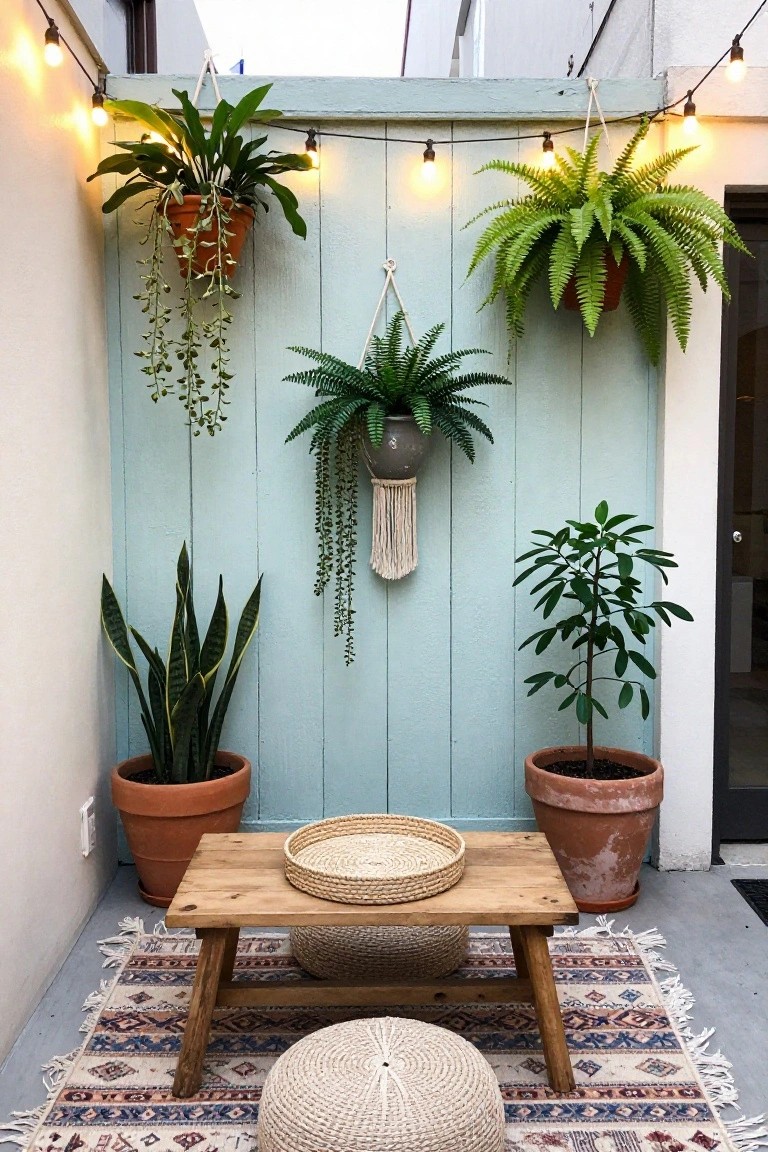
A painted wooden wall makes a good surface for hanging plants because it gives you a clean backdrop without much extra work. The plants stand out more and the whole area feels like a small garden instead of just an empty corner.
This works best on side yards or small patios where you want greenery but do not have room for big beds. Use simple hooks or macrame hangers and mix trailing vines with fuller plants like ferns so the display feels full without crowding the floor space.
Pallet Frames For Tiered Beds
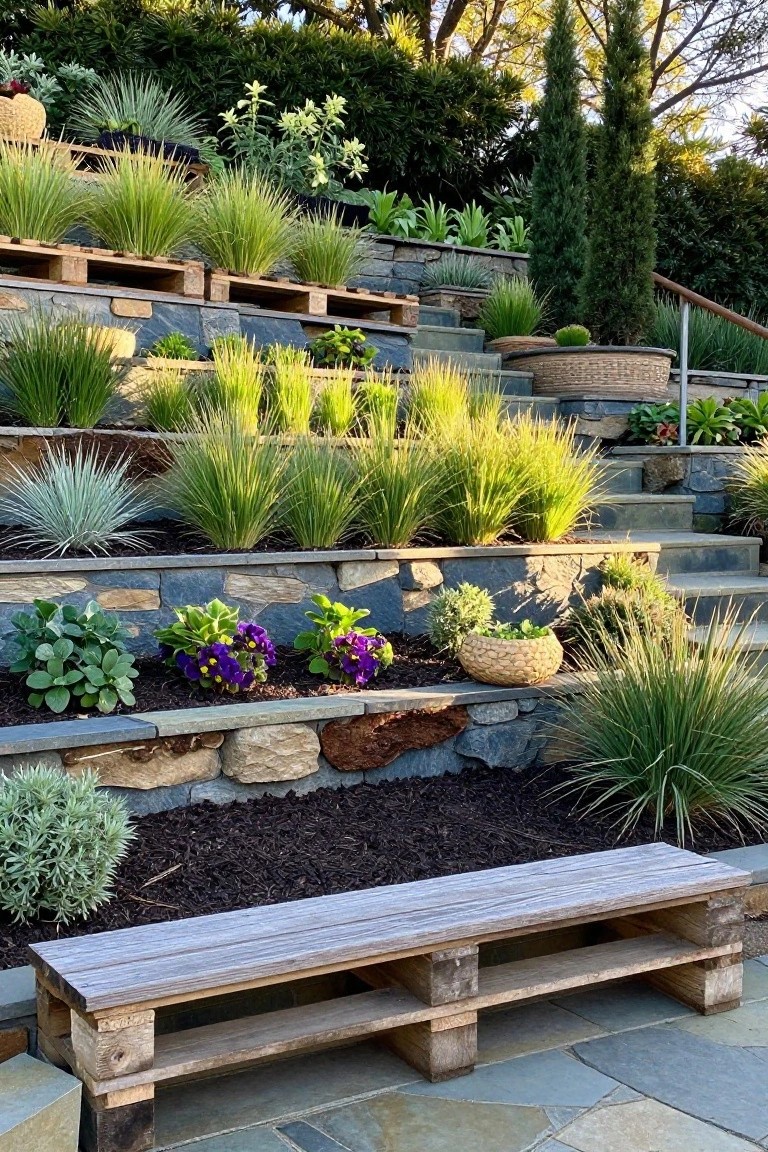
Pallets make a simple way to hold soil and create planting levels on a slope. They sit right against the stone and give each row a clear edge without much extra building.
This works best on backyards or side yards that drop away from the house. Make sure the pallets are sturdy and set level so the soil stays put after rain.
Run a Long Planter Along the Wall
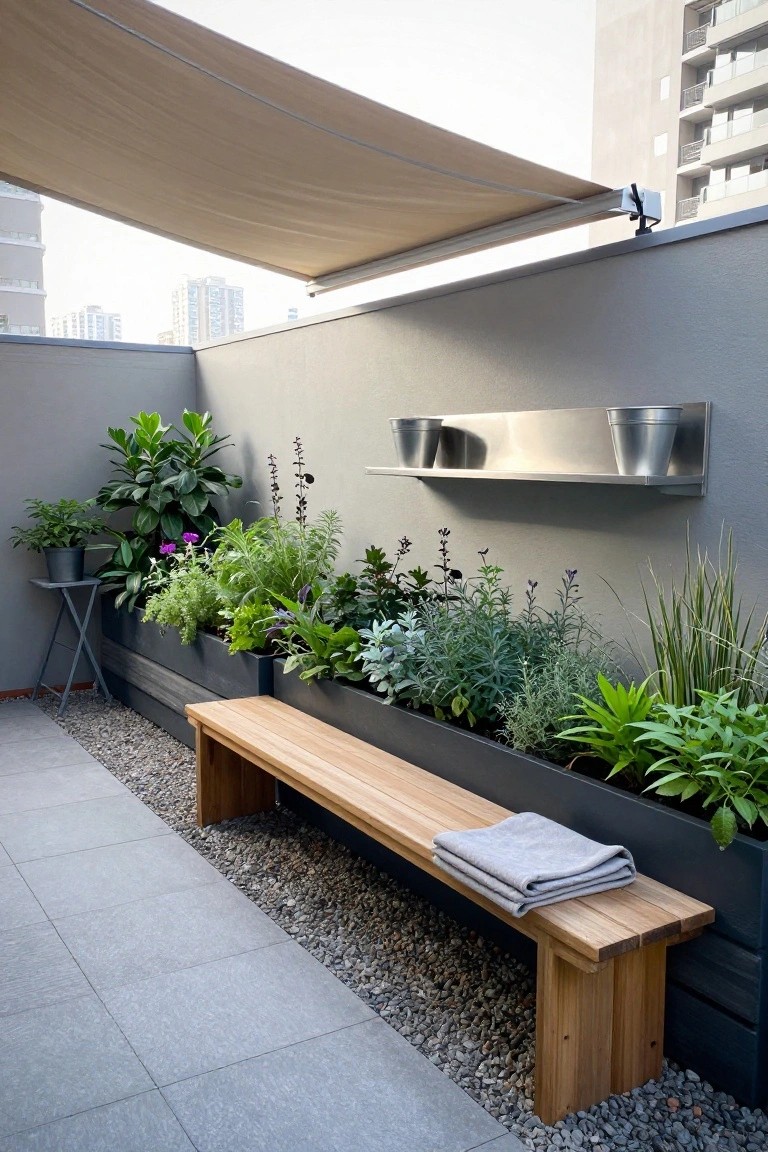
A long trough planter set right against a blank wall turns the surface into a growing area without taking up much room. It works because the plants sit at a consistent height and you can fit quite a few varieties side by side.
This idea suits small patios or narrow outdoor spaces where you still want a garden feel. Keep the bench in front simple so the focus stays on the planting.
Pallet Raised Beds Along A Fence
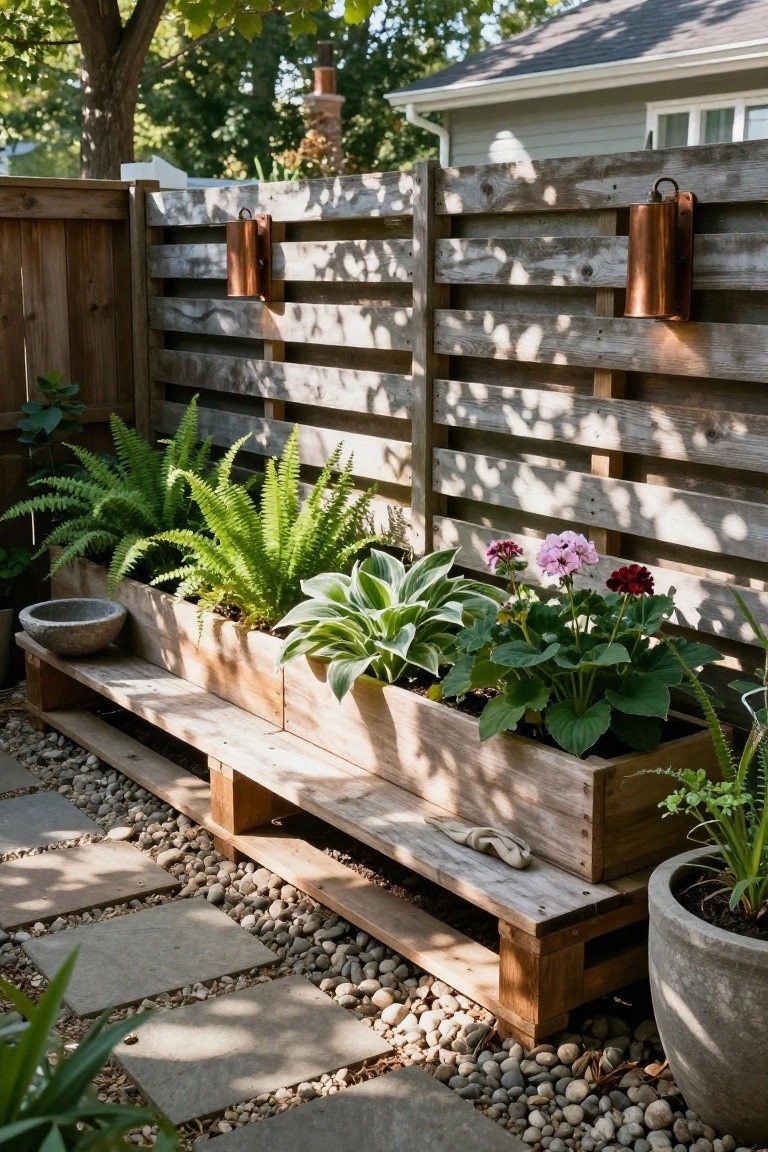
Old pallets make a quick raised bed that runs along a fence without eating up yard space. The wood creates a simple frame that holds soil at a good height for planting and keeps everything tidy against the wall.
This setup suits small yards or side areas where you want greenery but need to stay off the ground. Use untreated or properly sealed pallets, add drainage holes, and check that the fence can support the weight once the soil is in.
Pallet Shelves Create Simple Vertical Garden Space
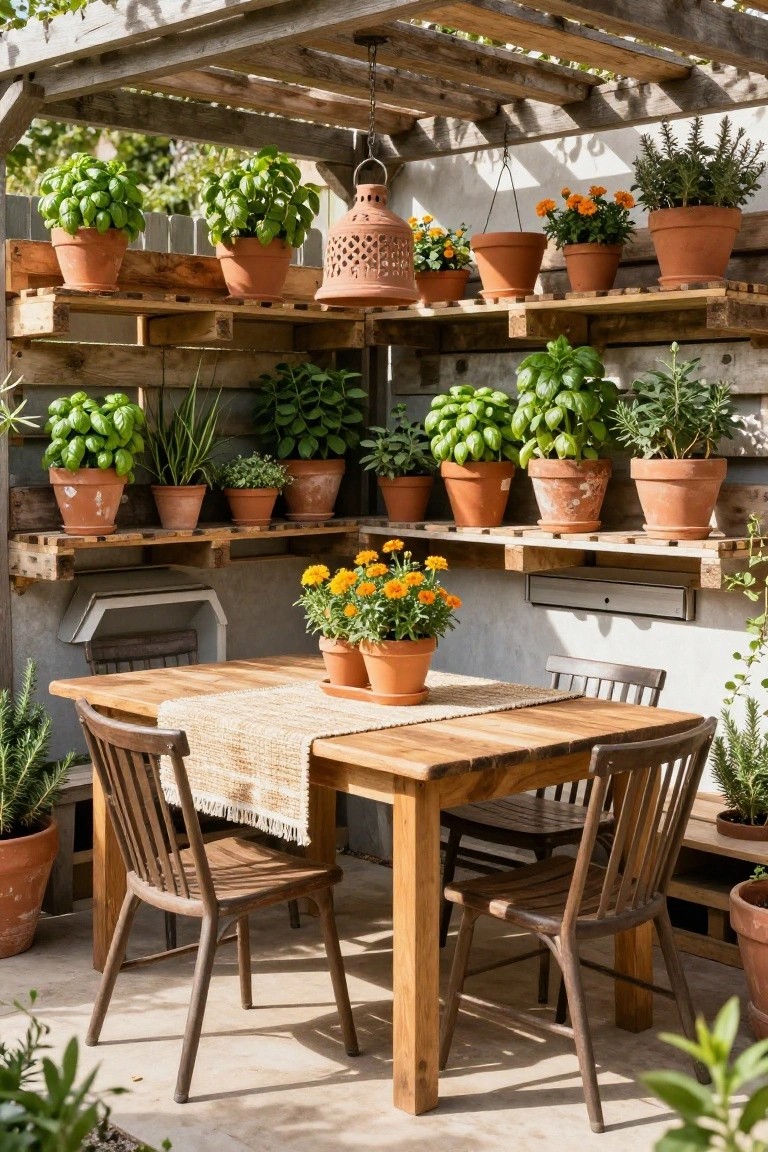
Mounting old pallets on an exterior wall gives you ready-made shelves for pots without much work. The wood already has the right spacing, so you can stack rows at different heights and fill them with herbs or flowers that stay within easy reach.
This works best on a patio or side wall near an outdoor table, where the plants add color without crowding the floor. Just make sure the pallets are secured well and the wood is treated for weather if you want them to last more than a season or two.
Frequently Asked Questions
Q: How do I keep the pallets from pulling away from an exterior wall once I load them with soil? A: Screw the pallets directly into wall studs or use heavy-duty masonry anchors for brick. Space the screws every six inches along the frame and test the hold before adding dirt. Revisit the screws after the first big rain to tighten anything that loosened.
Q: Which plants actually thrive in the shallow pockets of a pallet garden? A: Stick with low-root herbs such as thyme or chives that stay compact. Lettuce and strawberries also work well since they do not need much depth. Water them more often than ground plants because the soil dries out fast in the open slats.
Q: Should I seal the wood or just hang the pallets as they are? A: Brush on a clear outdoor wood sealer first so rain does not soak straight into the boards. Let it dry fully before you mount anything. Skip the sealer and the pallets will start to warp within a few months.
