

A patio can look tired even when its layout still works, and I usually find that the first things I notice are worn surfaces, awkward seating, or a lack of shade.
Keeping the existing footprint can make a makeover more manageable, since the focus stays on practical changes rather than major construction.
I’d start by thinking about how the space gets used through the day, then choose materials, lighting, and furniture that make it comfortable for those routines.
Small updates, such as adding planters along an edge or defining a dining area with an outdoor rug, can change the feel without crowding the patio.
Some ideas are easy to test in stages, so you can see what suits your home before committing to a bigger change.
Add Shade to a Patio Seating Area

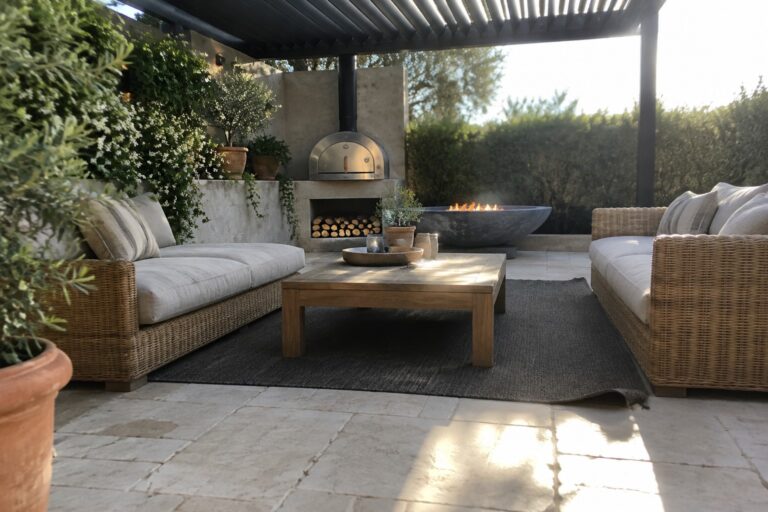
A pergola can make an open patio more comfortable without changing its footprint. Its slatted roof provides some shade while still letting in light, and the defined seating area feels easier to use for everyday lounging.
For a similar setup, place the seating beneath the pergola and keep a clear path through the space. A dark outdoor rug can help mark the seating zone, but choose one that suits your patio’s size and won’t block access.
Add Built-In Seating to a Small Patio

A built-in bench can make a narrow patio easier to use without changing its footprint. It provides plenty of seating while leaving room for a dining table, and it can feel more settled than trying to fit several separate chairs around the edges.
For a similar setup, run the bench along one or two walls and use slim chairs on the open side of the table. Keep the bench depth comfortable but modest, so it doesn’t crowd the walking space.
Make a Patio Seating Area Feel Cozy
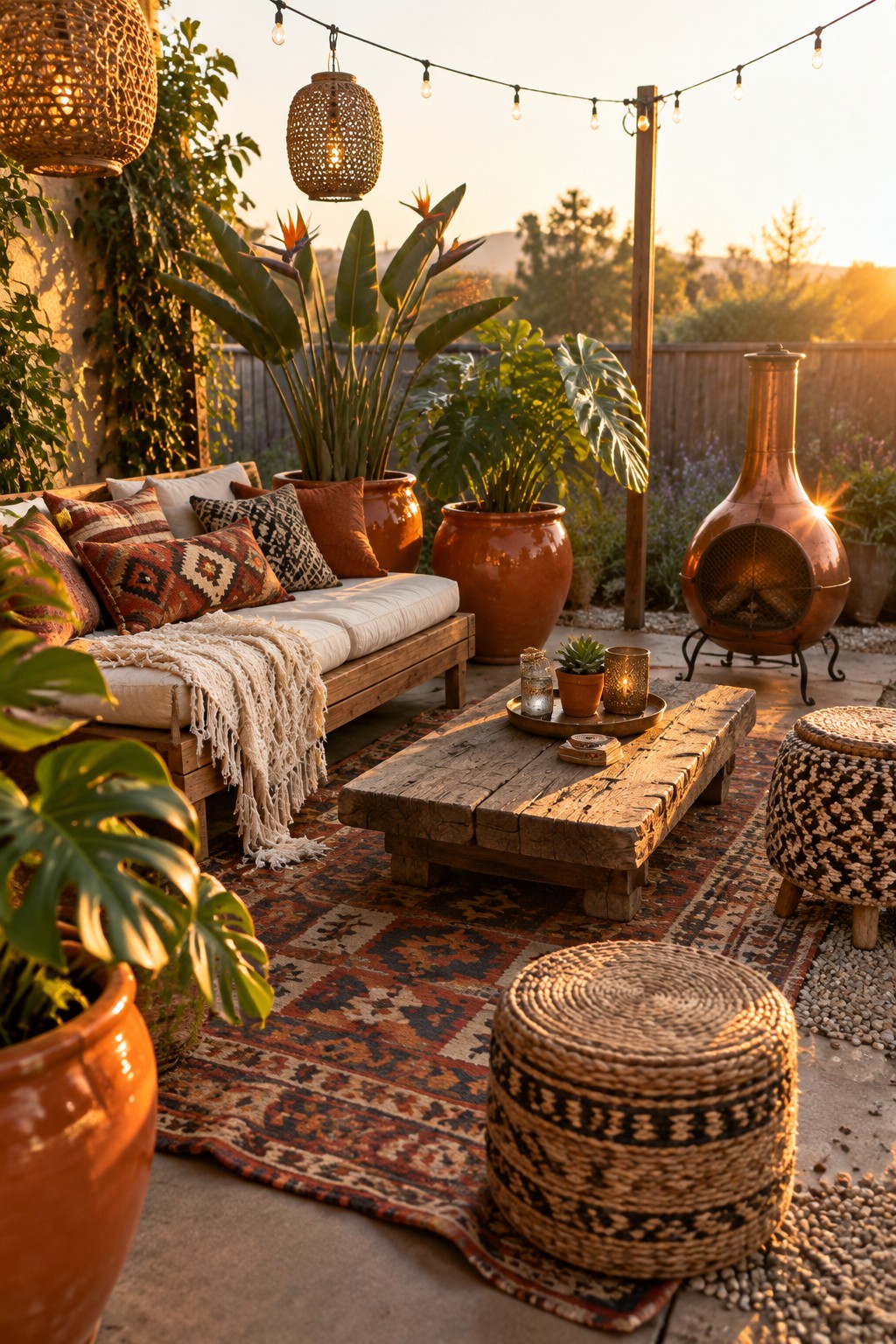
A simple way to make an existing patio feel more comfortable is to build the seating area around a rug. It gives the furniture a clear place to sit, even when the patio itself is just concrete or gravel.
Choose an outdoor rug that fits beneath the main seating, then add cushions in colors you enjoy. This works well on small patios where you want a defined sitting spot without changing the layout. Check that the rug is made for outdoor use and can dry properly after rain.
Make Room for a Patio Fire Feature
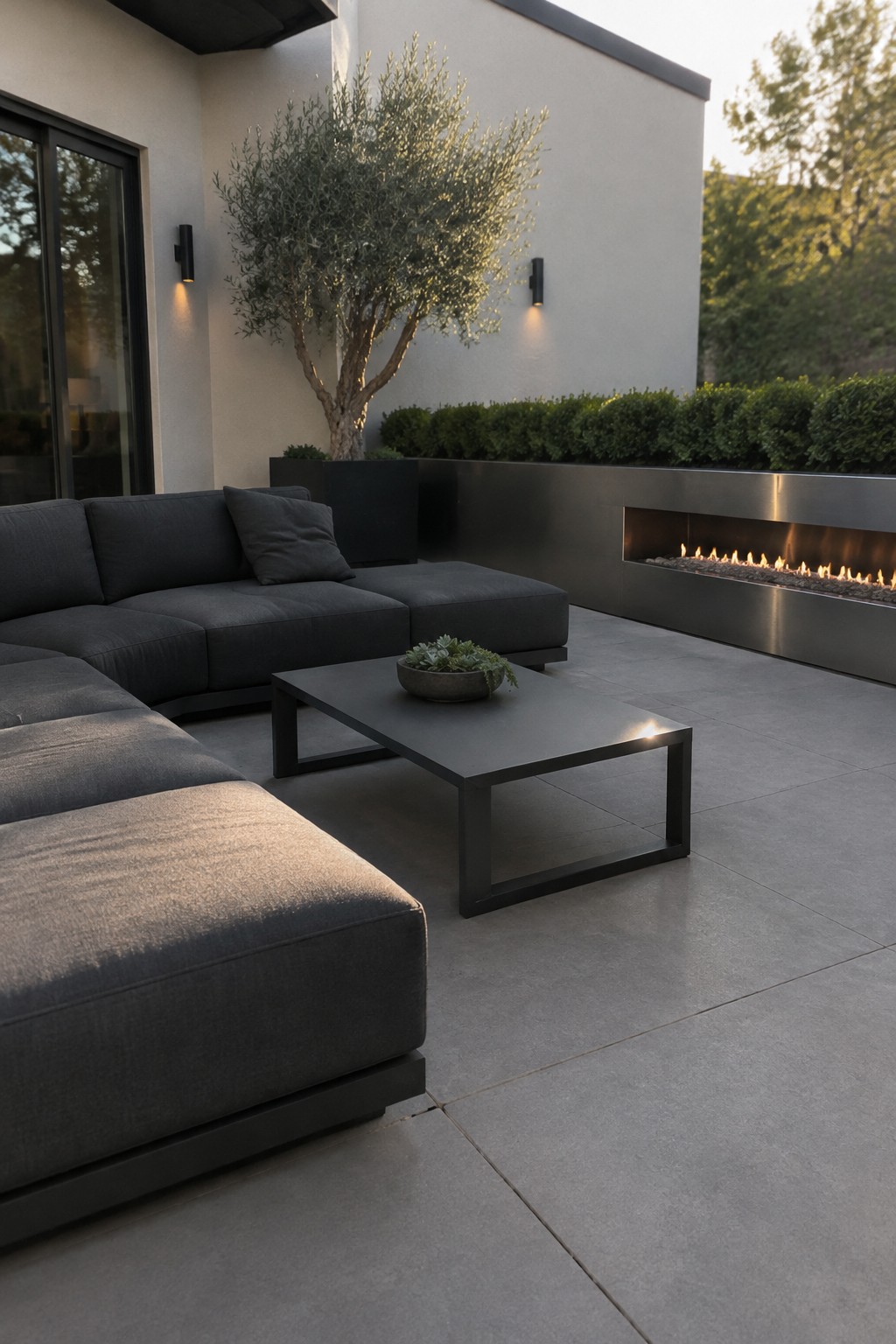
A built-in linear fire feature can give a patio a clear gathering spot without changing its footprint. It works especially well along the edge of a seating area, where people can enjoy the flame without blocking the main walkway.
For a similar setup, keep the seating close enough for conversation but leave comfortable space to pass through. A long, low fire feature suits a modern patio, and the dark charcoal sofa here shows how simple outdoor furniture can keep the layout relaxed.
Use a Corner Bench to Make Patio Seating Feel Built In

A corner bench makes good use of the edges of a patio and leaves the middle open for a table or clear walkway. It also gives you plenty of seating without needing several separate chairs.
For a similar setup, fit a simple bench along two sides of the patio and use cushions that can handle outdoor conditions. Striped cushions help tie the seating together, but keep the pattern to a couple of pieces so the bench still feels easy to use.
Add an Outdoor Dining Area
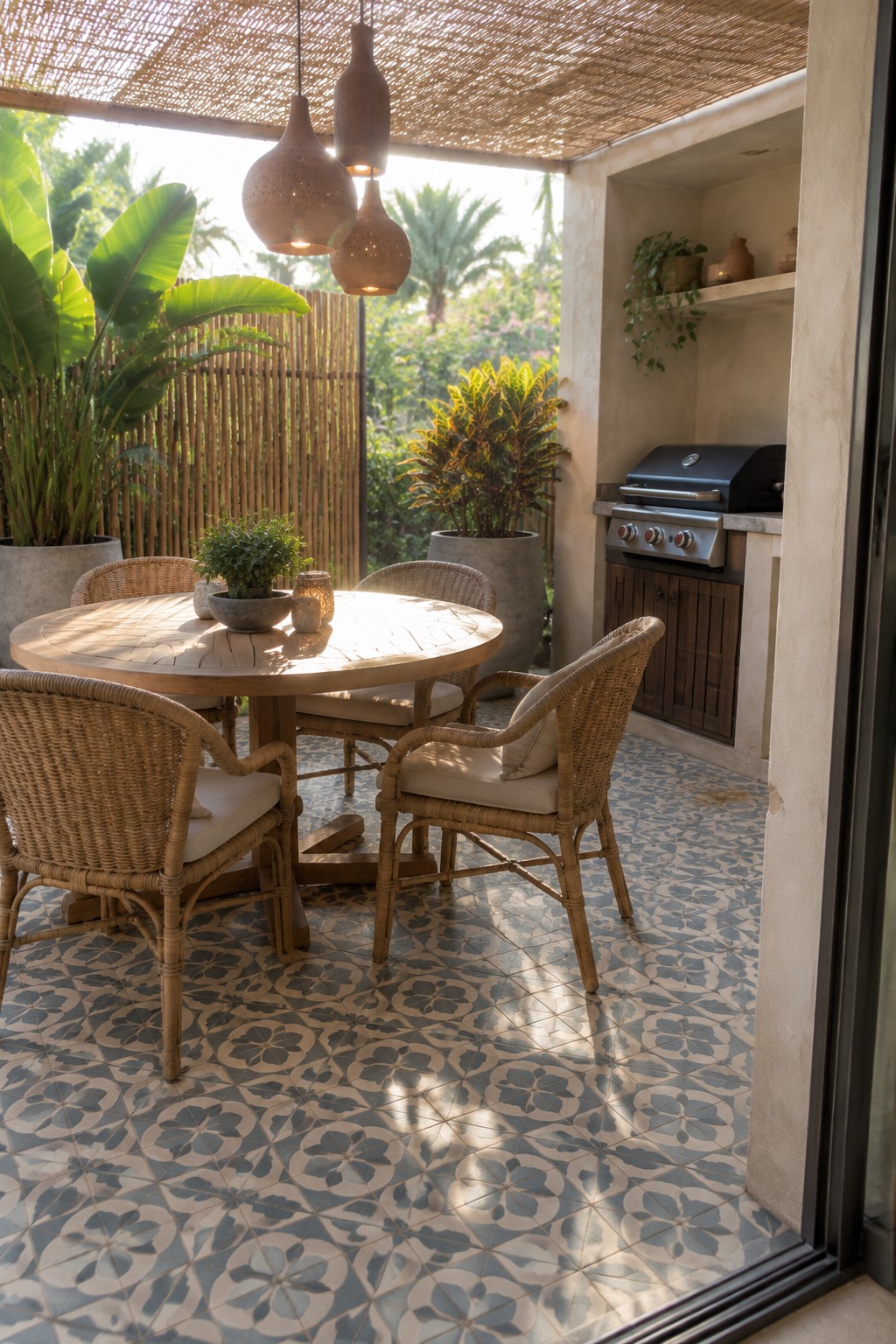
A small patio can work well as an outdoor dining spot without changing its footprint. A round table makes it easier to move around the seating, while wicker chairs keep the setup comfortable for everyday meals.
This idea suits a covered patio or terrace where you want a clear place to eat and gather. Choose a table that leaves enough room to pull out the chairs, and use the flooring you already have as the base for the new setup.
Use a Round Fire Pit to Shape Patio Seating
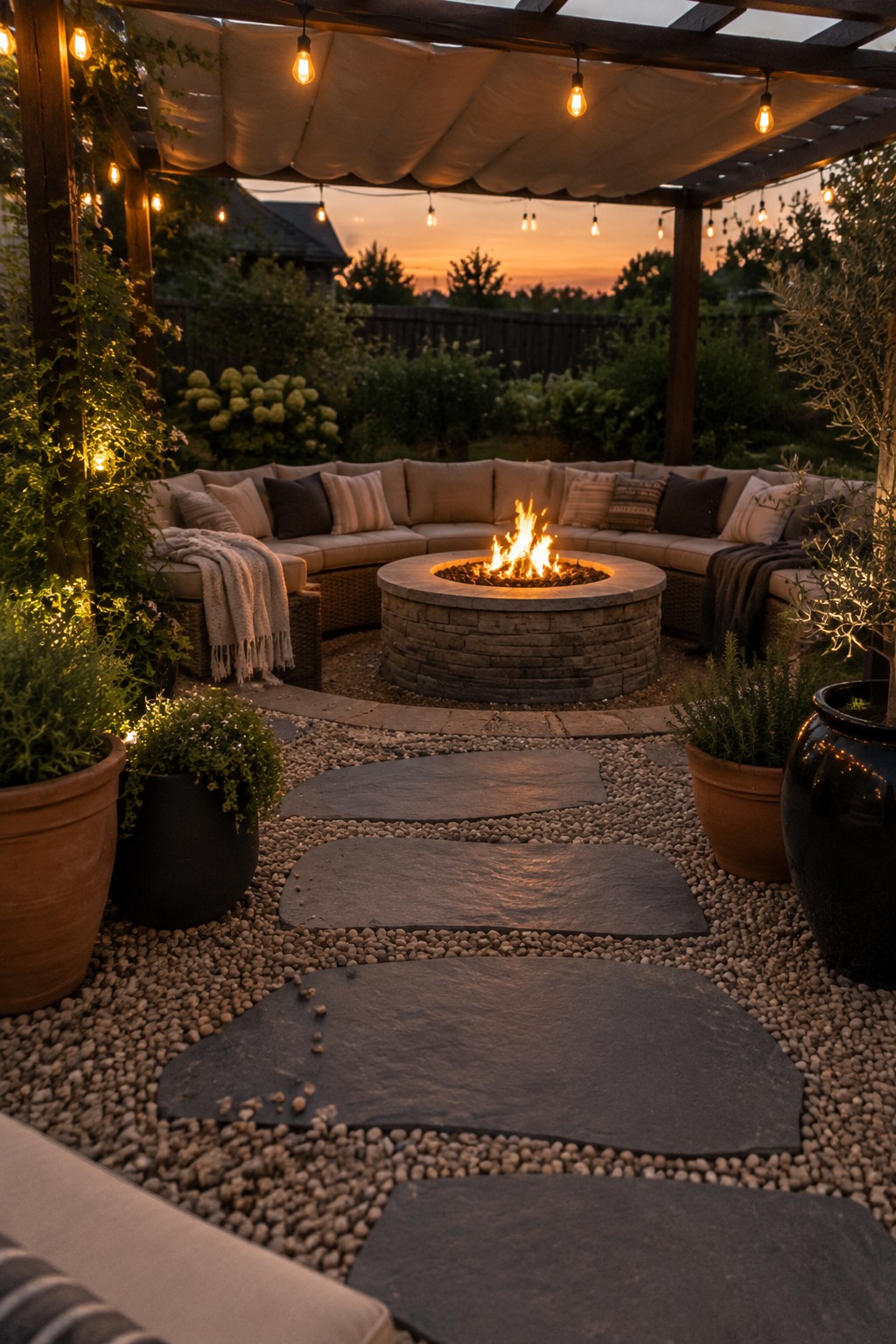
A round fire pit gives a patio seating area a clear center and makes it easy for everyone to gather around. It works especially well with curved or sectional seating, where the arrangement can feel natural without changing the patio’s footprint.
Keep enough room between the fire pit and the seats for safe movement, and check the fire feature’s clearance requirements. A built-in stone pit can suit a permanent setup, while a portable version offers more flexibility.
Build an Outdoor Kitchen Into the Patio

A built-in grill area can make a patio more useful without changing its footprint. A concrete counter gives you a steady place to prep food, while the grill stays close to the dining area.
This setup works best when there’s room to move between cooking and seating. If you’re updating an existing patio, a narrow counter or compact grill station can fit along an edge and keep the main walkway clear.
Use Vintage Pavers to Refresh a Patio

Brick pavers can give a patio an established, settled look without changing its footprint. Their varied colors and slightly irregular surface make a small seating area feel like it belongs to the home.
If the existing patio is sound, keep its layout and focus on repairing loose bricks or filling gaps. A round table and a simple bench can sit comfortably on this kind of surface, but check that the pavers are stable and level where chairs need to stand.
Use Large Stone Tiles to Update a Patio

Large stone-look tiles can give an existing patio a fresh, more finished look without changing its footprint. The broad hexagonal shapes here make the surface feel distinctive while keeping the overall pattern fairly simple.
This approach works well when the patio is structurally sound but its surface feels dated. Choose outdoor-rated tiles with a slip-resistant finish, and check that the base drains properly before installation.
Use Raised Beds to Define a Patio Path
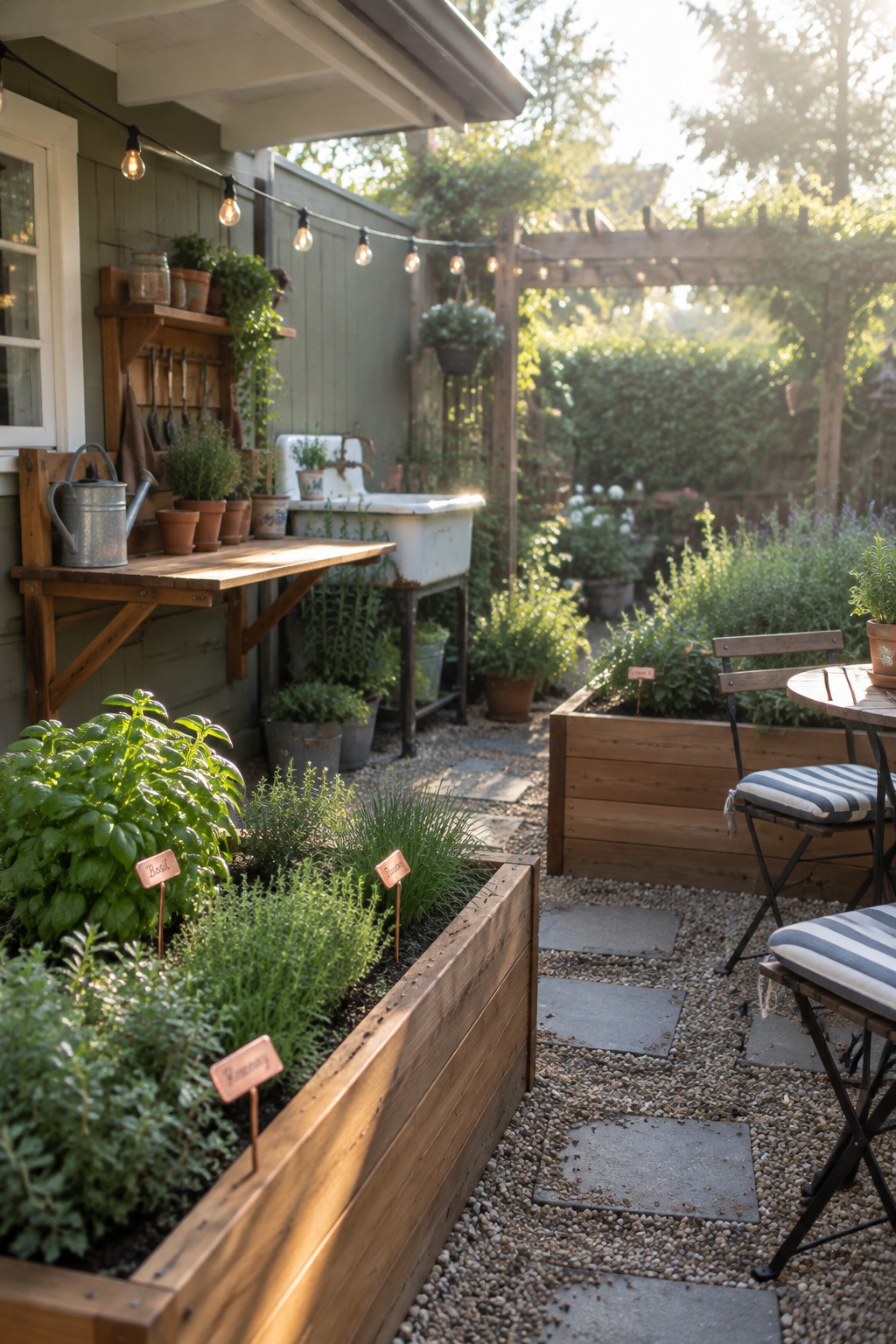
Raised garden beds can give a patio a clearer layout without changing its footprint. Here, a long wooden bed runs beside the stepping-stone path, separating the growing area from the seating space while keeping both easy to reach.
This approach suits a narrow patio or side yard where a wide garden bed would take up too much room. Keep the bed in proportion to the path, and leave enough space to walk and pull out a chair comfortably.
Use Wicker Seating to Define a Patio Lounge

Wicker seating can give a patio the feel of a comfortable outdoor room without changing its footprint. A sofa and chaise create a clear place to sit and stretch out, while cushions make the seating practical for longer visits.
This approach works well on a brick patio where you want a lounge area rather than a dining setup. Choose outdoor cushions and leave enough space around the furniture for people to move through easily.
Use a Trellis to Add Privacy to Patio Seating

A trellis behind a built-in patio bench can give the seating area a more tucked-away feel without changing the patio footprint. It also makes use of a wall that might otherwise be left bare.
Choose a trellis that suits the scale of the bench, then train a climbing plant across it for a living screen. This works especially well in a narrow patio beside the house, but leave enough room to reach the plants and keep them trimmed.
Use a Linear Fire Feature to Organize Patio Seating
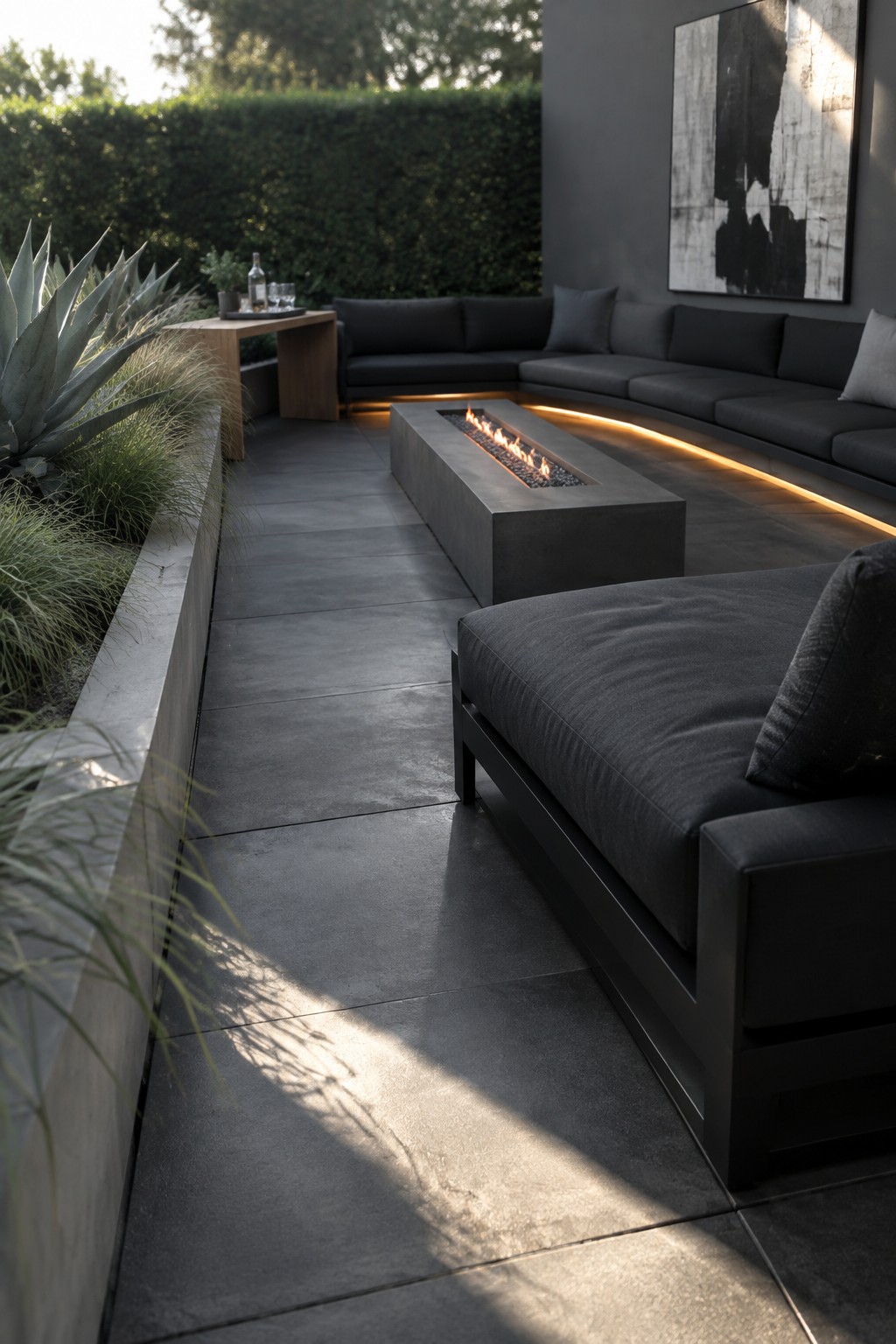
A long, narrow fire feature can help organize a patio seating area without changing its footprint. It gives people a shared focal point, while the surrounding sofa seating still feels open and easy to use.
This layout works especially well on a larger rectangular patio. Keep the fire feature low and leave enough room around it for comfortable movement; a built-in sofa can follow the patio’s edges to make good use of the space.
Add a Built-In Bench Along the Patio

A built-in bench can make a narrow patio more useful without changing its footprint. It keeps seating tucked along one side, leaving a clear path through the middle. A stone bench with cushions also feels like a natural part of the patio rather than extra furniture.
This idea works well in a long, enclosed space where freestanding chairs might get in the way. Keep the bench depth comfortable, and use outdoor cushions that can be brought inside during wet weather.
Use a Corner Sofa to Make a Patio Feel Like a Room

A corner sofa makes a patio easier to use by giving the seating area a clear shape. Here, the built-in bench follows two sides of the space, leaving the center open for a small table.
This layout works especially well on narrow patios where separate chairs can feel crowded. A cushioned bench along an existing wall or low brick edge can create a similar setup without changing the patio footprint.
Use Wood Deck Tiles to Refresh a Patio

Wood deck tiles can give an existing patio a more finished feel without changing its footprint. They create a distinct surface for the seating area, and the tile format makes them a practical option when you want to update a space without rebuilding the whole deck.
Use them over a firm, level surface, and check that water can still drain underneath. A woven outdoor rug can help define the lounge area, but leave enough room around its edges so the tiles remain visible.
Create a Quiet Patio Corner With a Water Feature
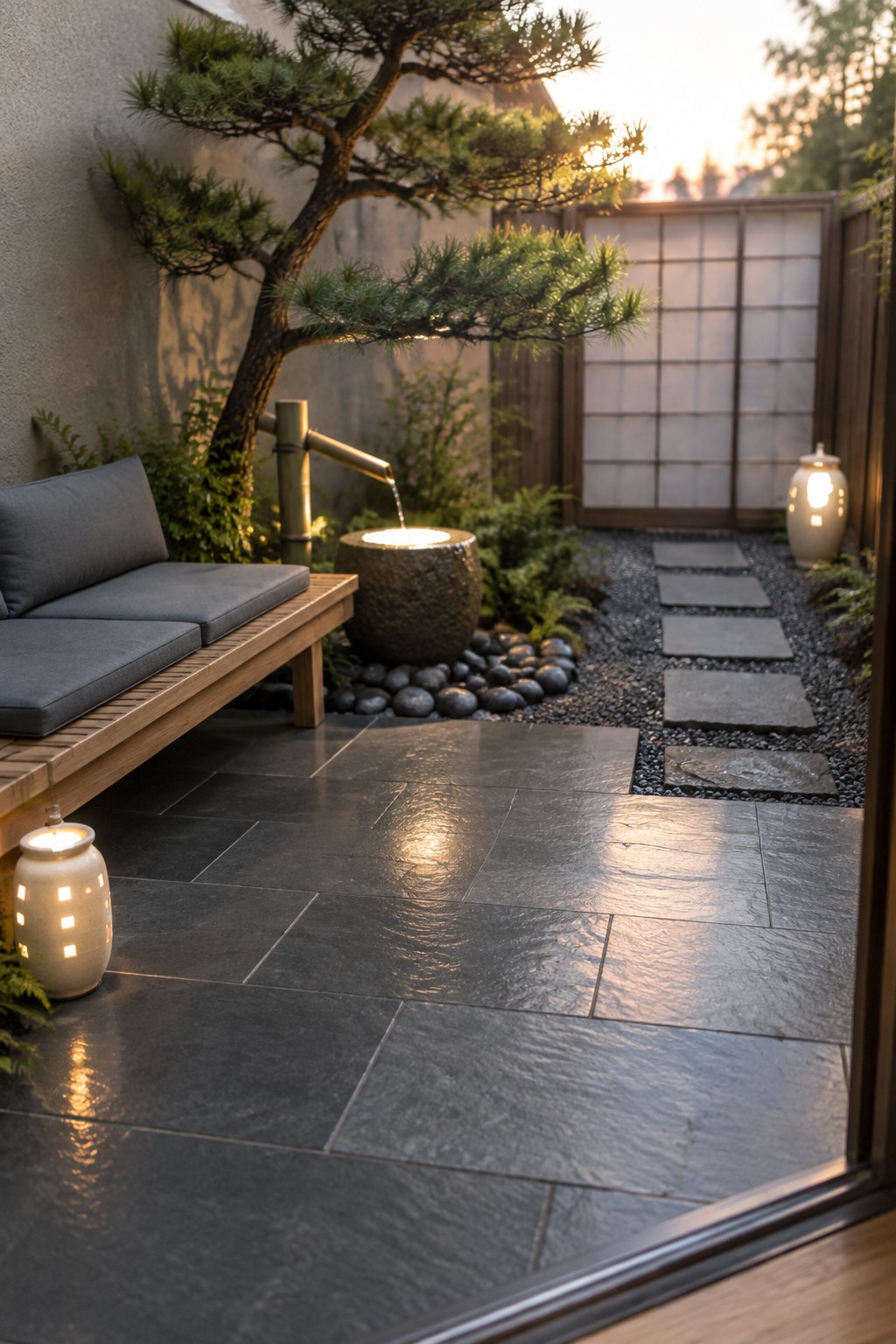
A small water feature can give a patio a clear focal point without changing its footprint. Here, the bamboo spout and stone basin sit beside the seating area, making the corner feel like a place to pause rather than just a walkway.
Use a compact fountain where it can be heard from a bench or chair, and keep the surrounding path easy to use. A recirculating model is a practical option for a small patio, though it will need occasional cleaning and a nearby power source if it uses a pump.
Grow Strawberries on a Patio Fence
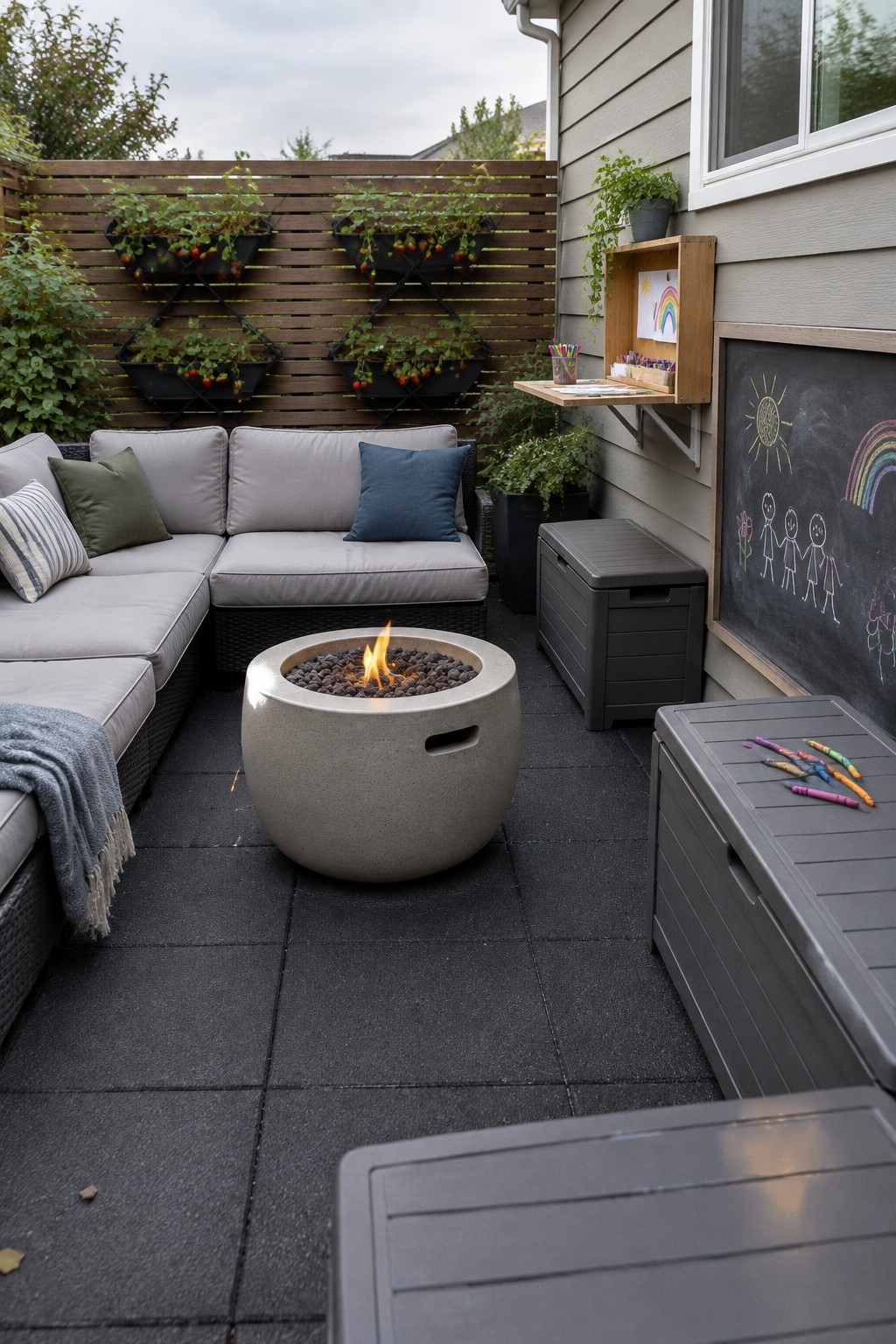
A vertical planter can make a small patio more useful without changing its footprint. Fence-mounted pockets let you grow strawberries where they are easy to reach, while leaving the floor clear for seating.
Choose a sturdy fence and secure the planters well, especially once they are filled with damp soil. This works best where the plants get enough sun and you can water them regularly.
Use a Pergola to Shade a Patio Dining Area

A pergola can make a patio more comfortable without changing its footprint. The overhead slats define the dining spot, while a fabric shade helps cut the direct sun but still lets some light through.
This works well over an existing paved patio where you want a clear place to eat or sit. If you add a shade cloth, choose one that can be adjusted or removed so the area stays useful as the seasons change.
Use a Pergola to Define a Patio Lounge

A pergola can make an open patio feel like a more settled place to sit without changing the patio’s footprint. Here, the slatted roof gives the corner sofa and fire pit a clear place of their own, while still leaving the yard open around it.
For a similar update, add lighting along the beams so the seating area stays useful after dark. Check the pergola’s size against your existing patio, and leave enough open space to move comfortably around the furniture.
Frequently Asked Questions
Q: How can I make the patio feel new without moving the furniture or changing the layout?
A: Start with one noticeable update, like an outdoor rug, fresh cushions, or a few large planters. Repeating one or two colors across those pieces can make the existing setup feel more intentional.
Q: What’s a good way to update a concrete patio without covering it?
A: Give it a thorough clean, then add color and softness with rugs, furniture, and plants. If you paint or stain the concrete, check that the product is made for outdoor use and prep the surface as directed.
Q: How do I make a small patio feel less cramped?
A: Leave clear walking paths and choose furniture that fits the space rather than squeezing in extra pieces. A bench along one edge can provide seating without taking up as much room.
Q: What should I update first if I’m on a tight budget?
A: Try lighting first: string lights or a few outdoor lanterns can change the mood without a major project. Add cushions or a secondhand side table later as your budget allows.
