

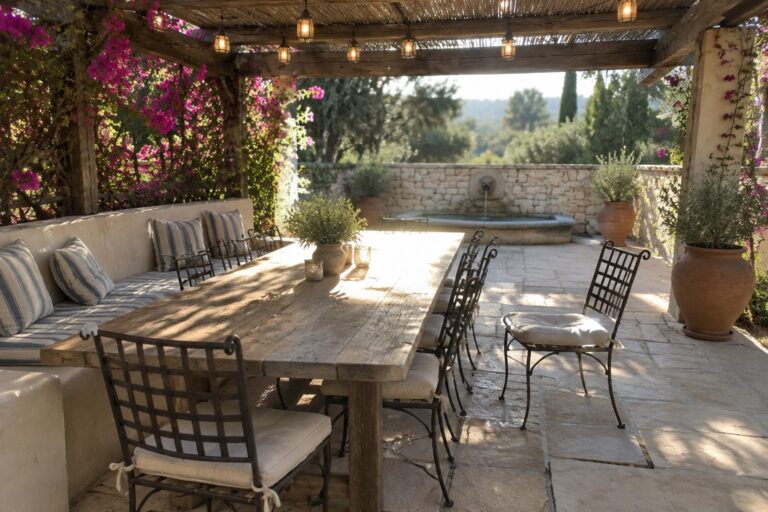
I often notice that patio dining spaces work best when the layout lets everyone reach the table without squeezing past chairs or stepping over plants.
Many people focus on looks first and then realize the chairs do not stay comfortable once the sun shifts or the wind picks up.
Small changes make a real difference in daily use.
I would test any new arrangement for a full weekend before committing to it.
That way the setup ends up matching how my family really eats outside rather than how it appears in photos.
Long Tables For Outdoor Meals
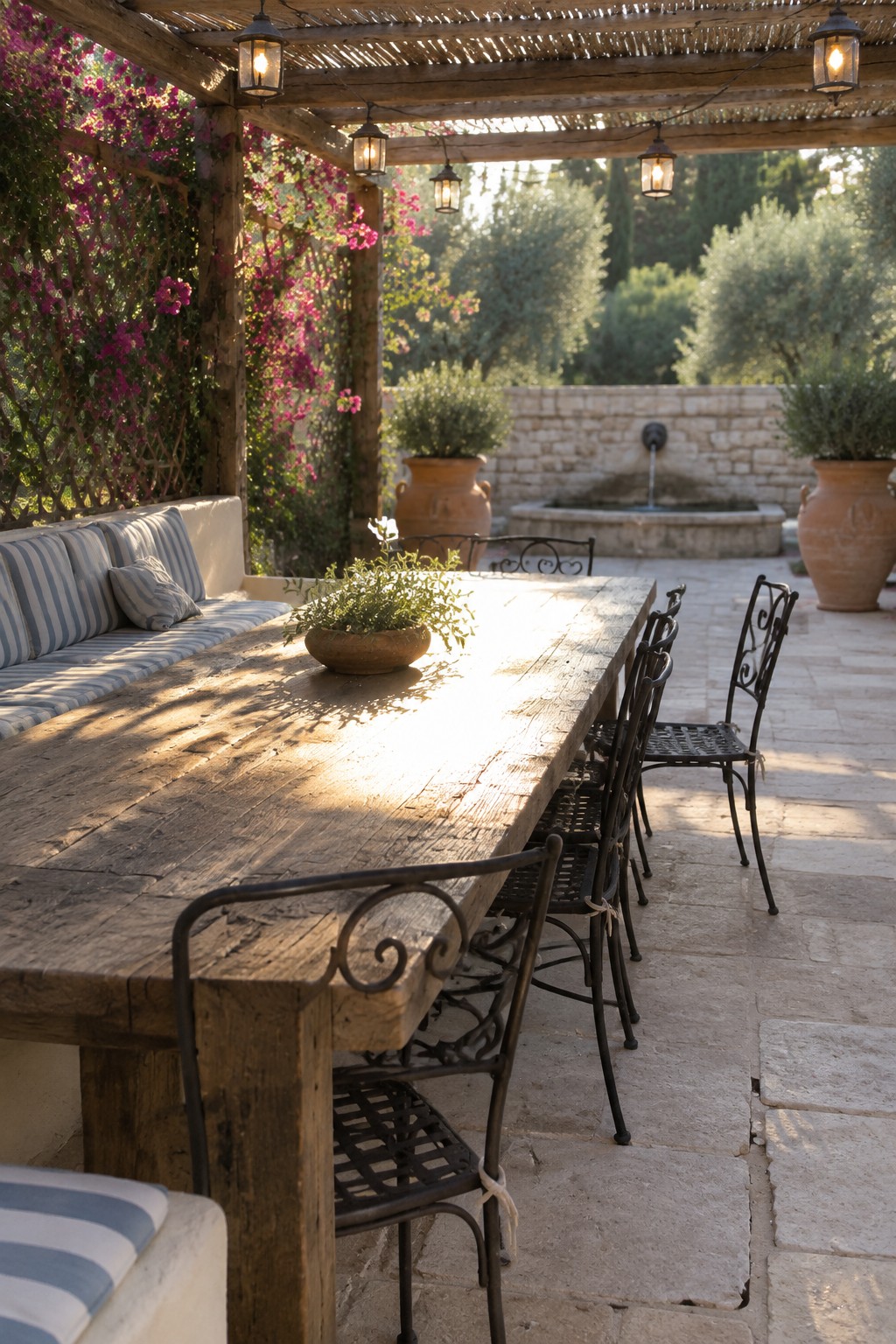
A long table gives you room to seat a bigger group without crowding things together. It works especially well when you have a pergola overhead, since the structure adds shade and a spot to hang lights for evening meals.
This setup fits homes that host family dinners or casual get-togethers outside on a regular basis. Keep the table simple and sturdy, and mix in a bench on one side if you want extra seating without adding more chairs.
Add Potted Herbs Near Your Outdoor Table
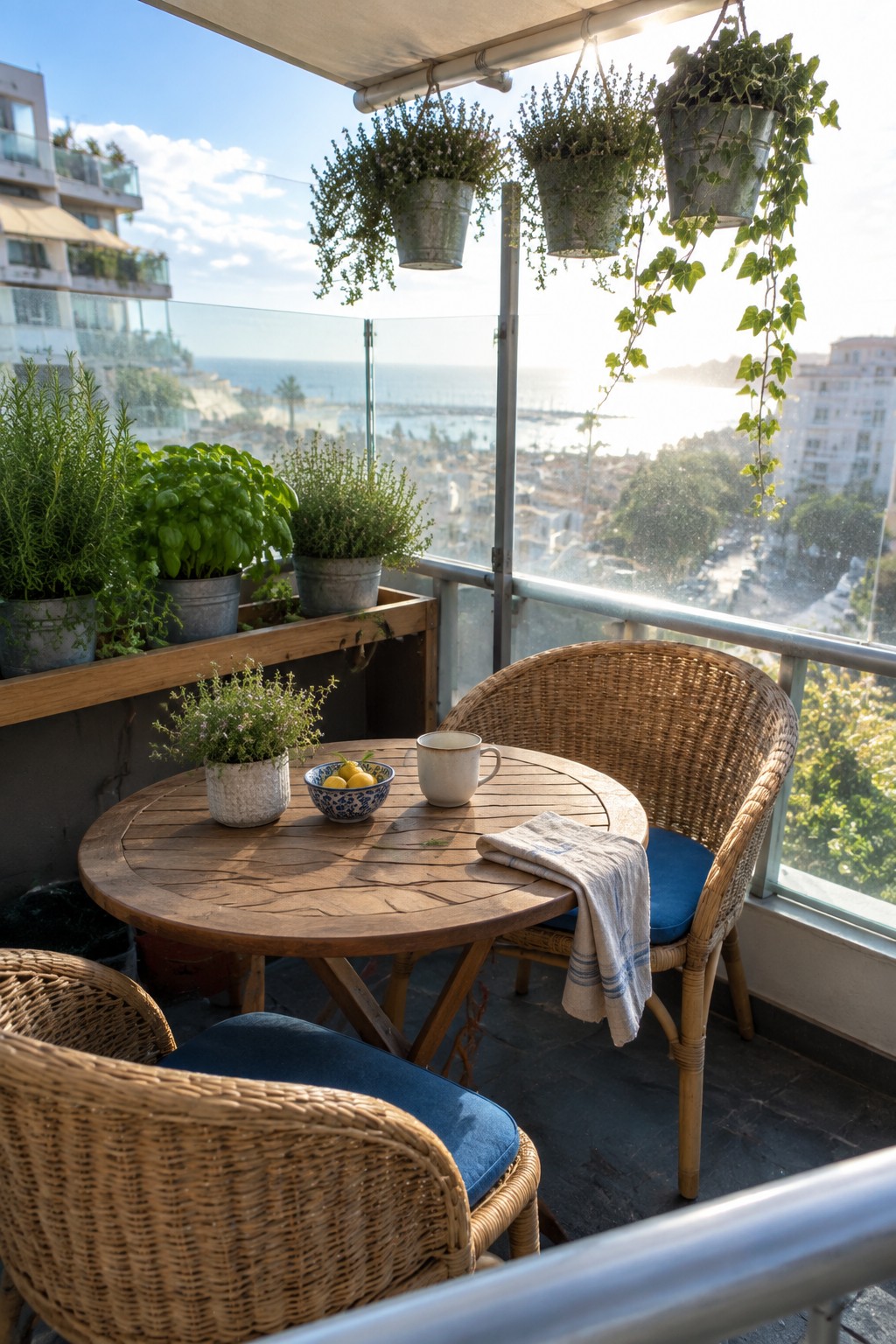
Many people find it handy to keep a few herb pots right beside the dining table when eating outside. It turns a simple meal into something more practical since you can reach over and snip what you need without leaving the spot.
This setup works best on balconies or compact patios where every inch counts. Choose sturdy containers like metal buckets that hang from the railing or sit along a ledge, and stick to easy growers such as basil and thyme that handle sun and wind well.
Bench Seating on One Side of the Patio Table
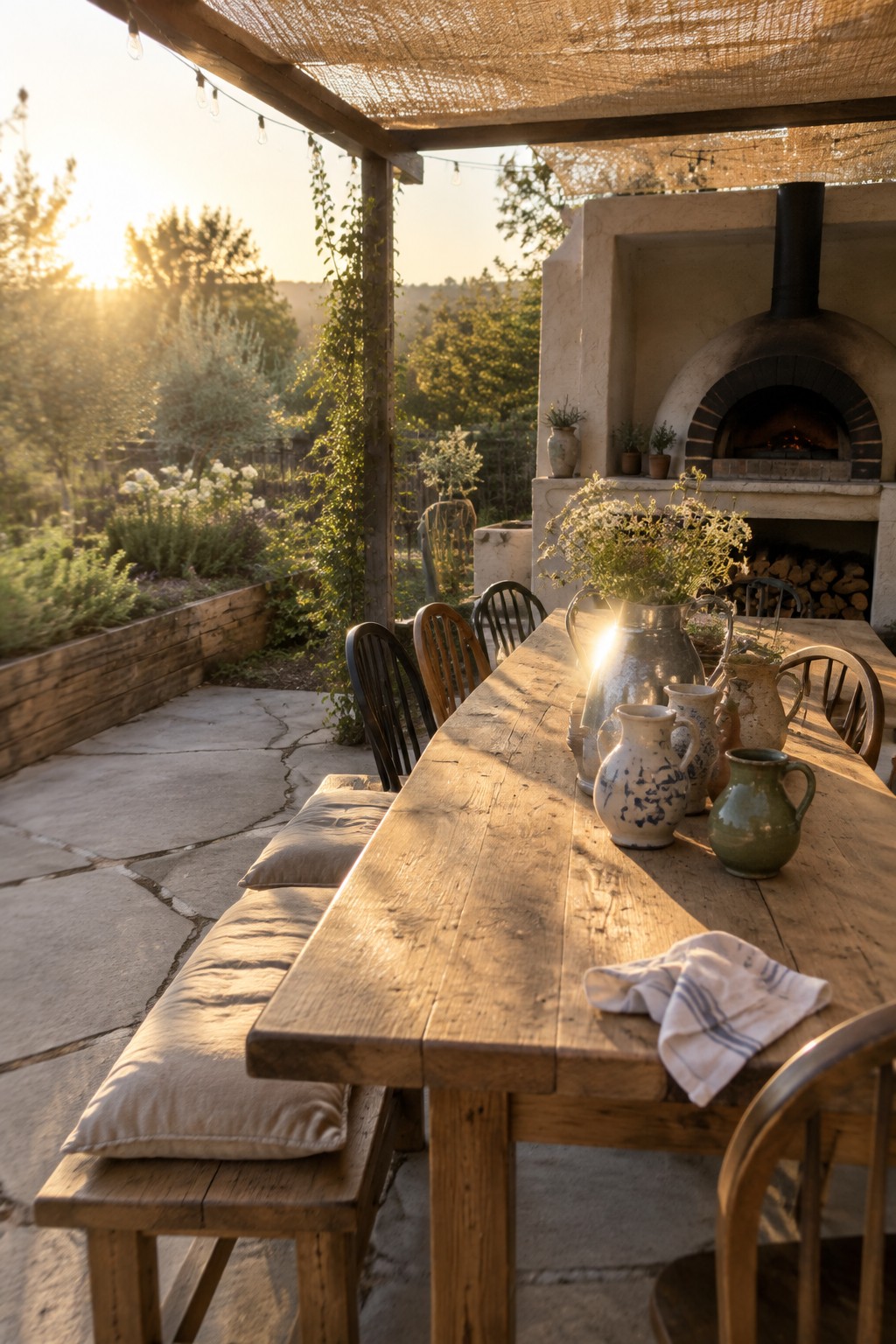
A bench along one side of a long table makes outdoor meals easier when the group size changes often. It frees up floor space on a patio and lets people slide in without rearranging chairs every time. The setup feels practical rather than styled, which suits spaces that get used daily rather than saved for special occasions.
This works best on a covered patio or deck where the table stays in place through the seasons. Use a simple wood bench with a cushion for comfort and mix in a few different chairs on the opposite side so the arrangement stays casual. Avoid heavy matching sets that can make the area feel too planned.
Concrete Tables That Handle Outdoor Use
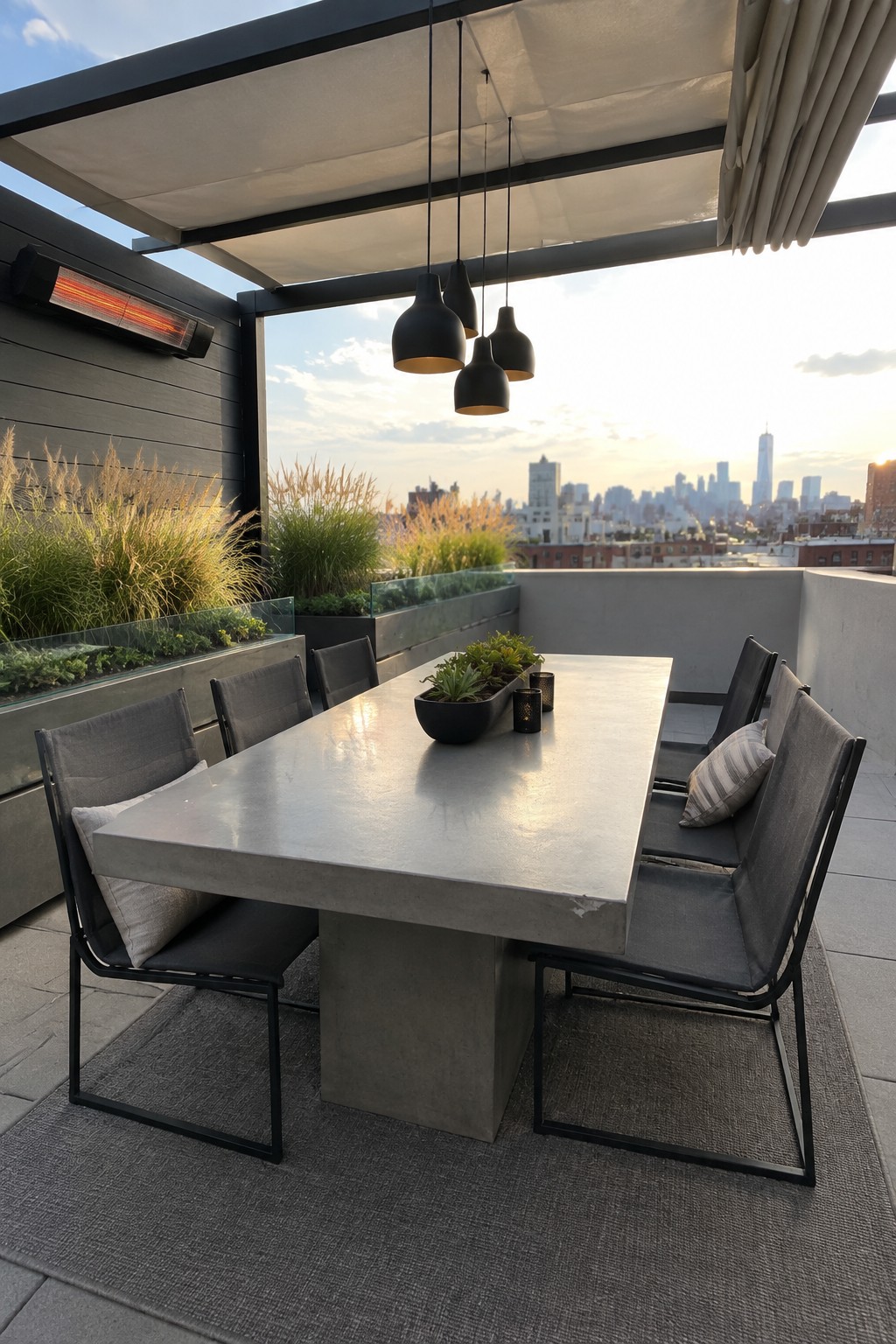
A heavy concrete dining table makes a lot of sense for patios and terraces. It stays put in wind, shrugs off rain, and gives you a flat, stable surface that works for everything from weeknight dinners to bigger gatherings.
This setup fits rooftops or open decks where furniture needs to stand up to weather without constant upkeep. Keep the chairs lightweight so they can be rearranged, and add a heater or shade if the space gets used across seasons.
Layer Rugs to Define an Outdoor Dining Spot
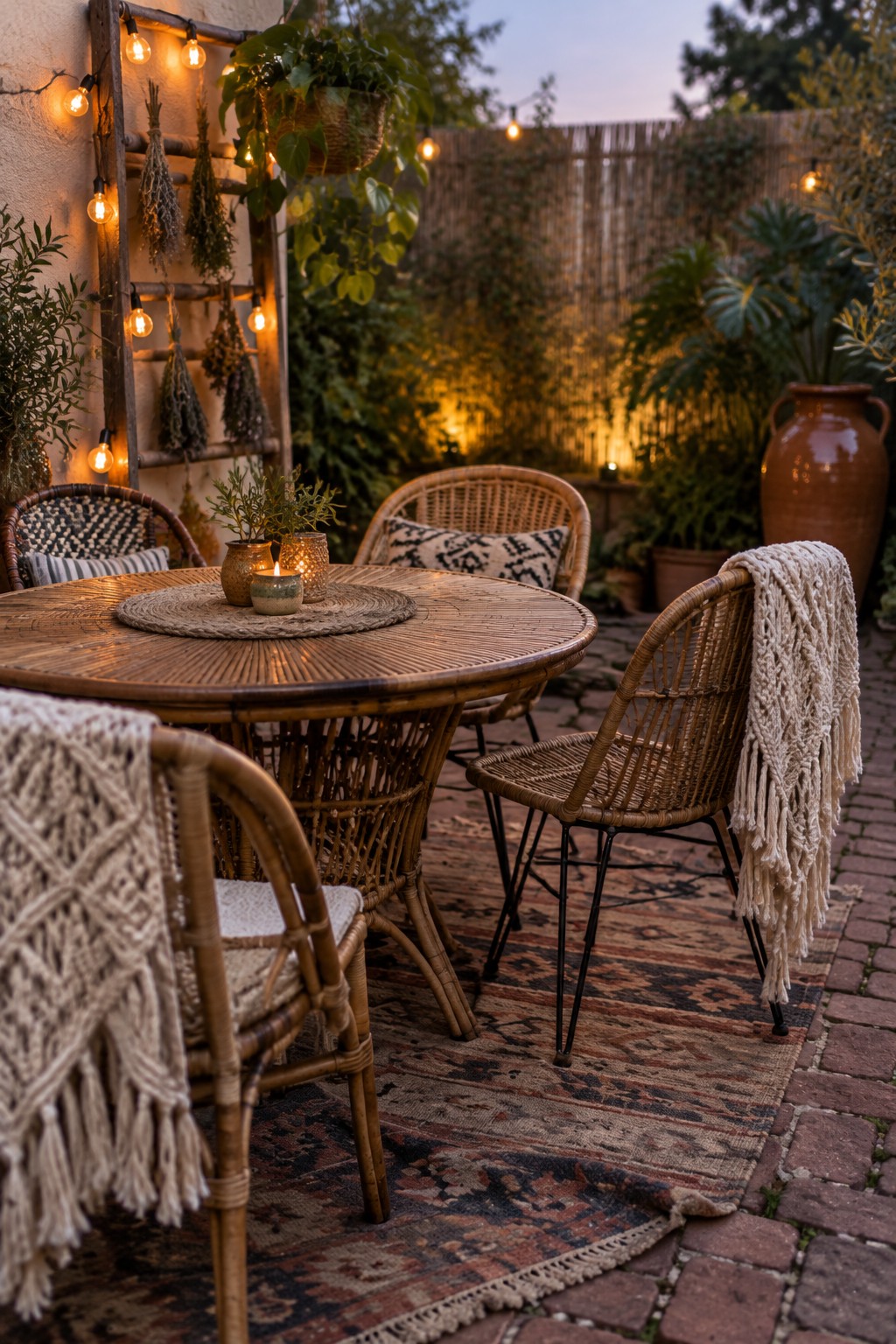
Rugs help turn a plain patio into a real dining area by giving the table and chairs a clear spot of their own. On brick or concrete, they add a softer surface underfoot and keep the whole setup from looking scattered.
They work best on patios that already have a solid floor but need a little extra comfort for meals. Pick durable outdoor rugs and make sure the legs of every chair stay on the fabric so the space feels pulled together.
Round Tables Fit Patio Dining Naturally
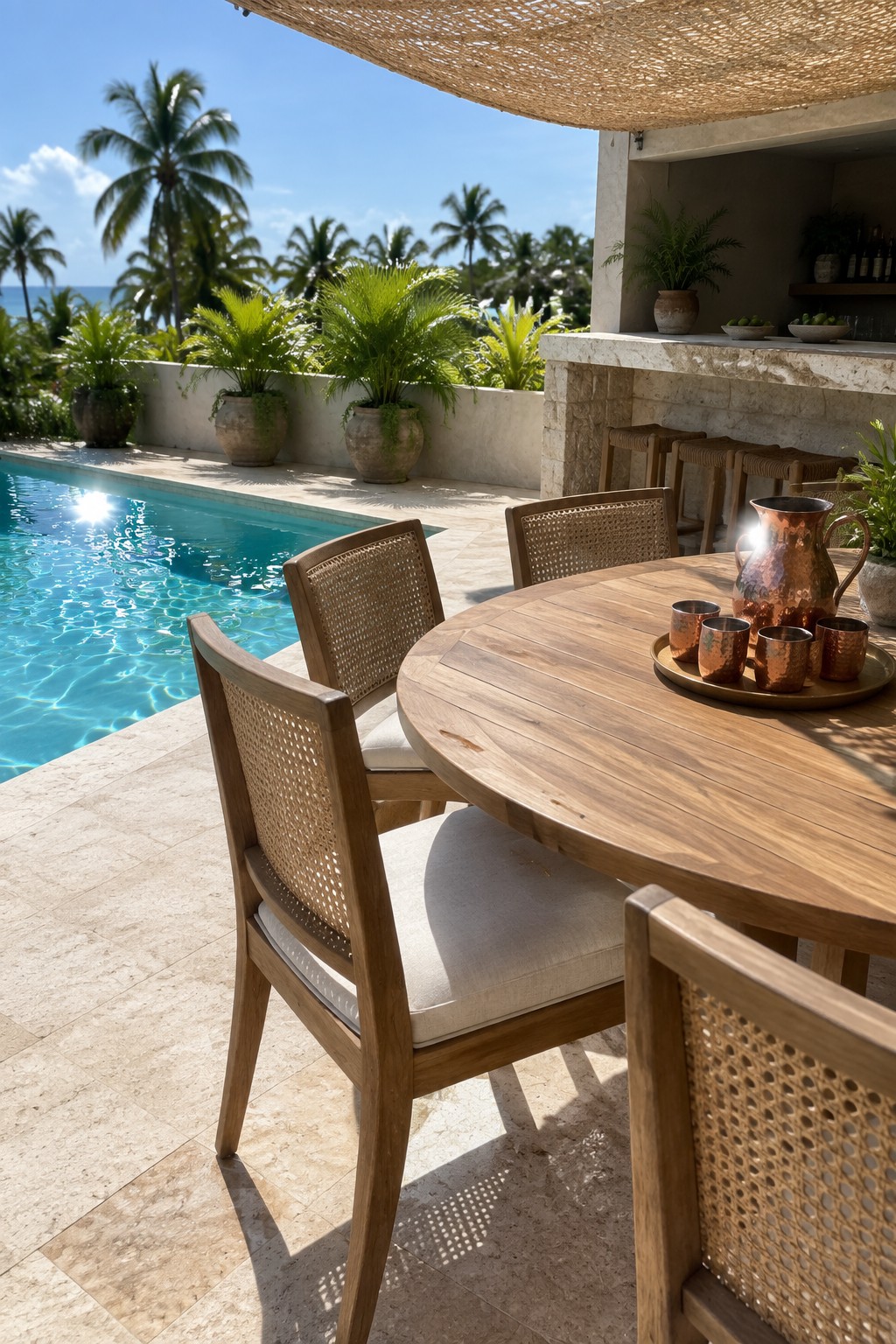
A round table helps outdoor meals feel more relaxed and connected. Everyone can reach the center easily, and the shape keeps the conversation flowing without anyone feeling stuck at the end of a long rectangle.
This works especially well on patios next to a pool or in open backyard spaces. Pair it with simple wooden chairs that have woven backs and add a shade overhead so the area stays comfortable through the day.
Using Climbing Vines For Natural Shade
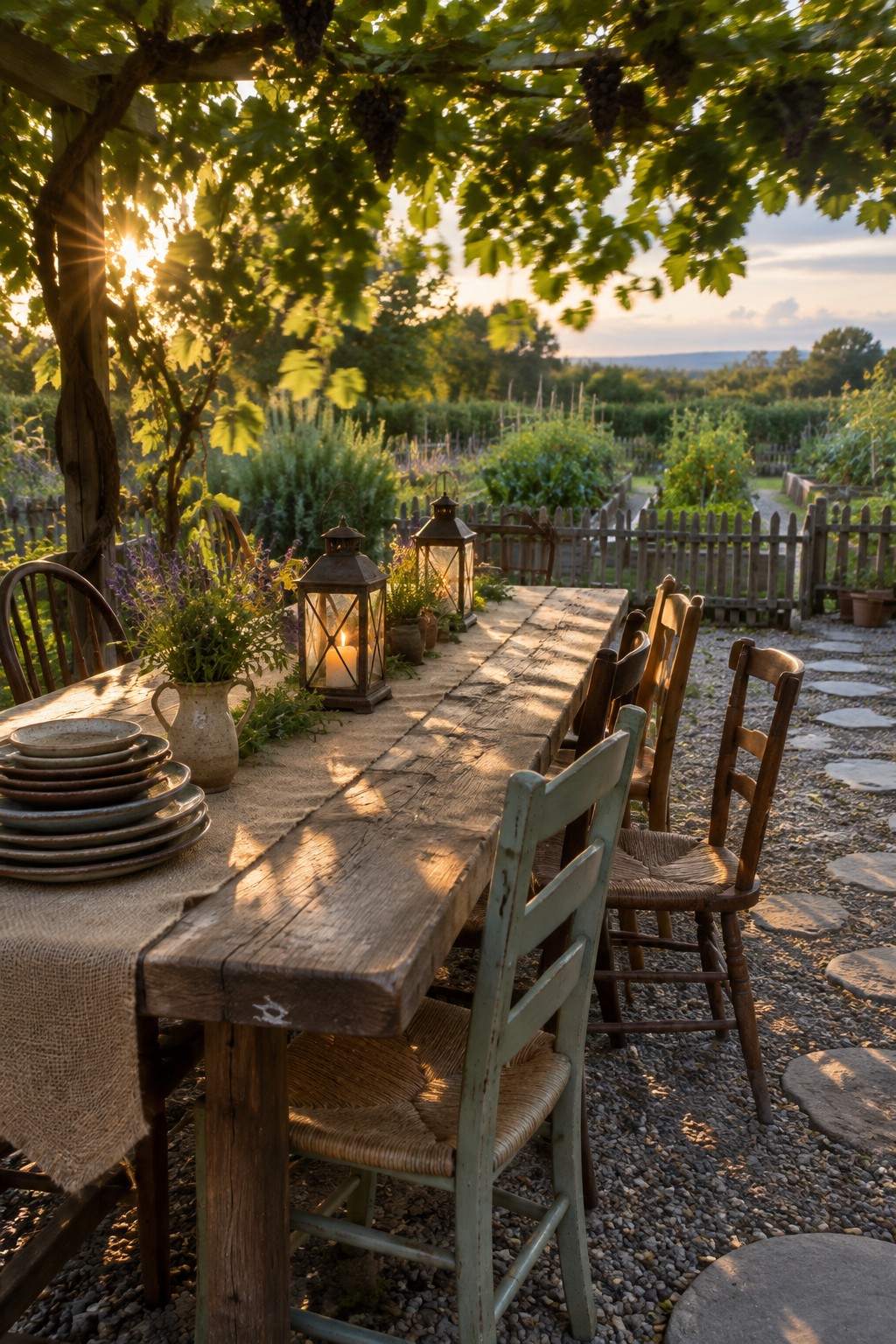
A vine-covered pergola gives an outdoor dining table real shelter without blocking all the light. The leaves create a soft canopy that keeps the space cooler during the day and adds a bit of privacy from above. Many people find this setup feels more comfortable than a bare table or one that relies only on an umbrella.
This idea works best in a garden or backyard where the structure can be permanent. Choose vines that suit your climate and give them a sturdy frame so they have something solid to grow on. Keep the table simple underneath so the vines stay the main feature.
Built-In Seating For Patio Dining Areas
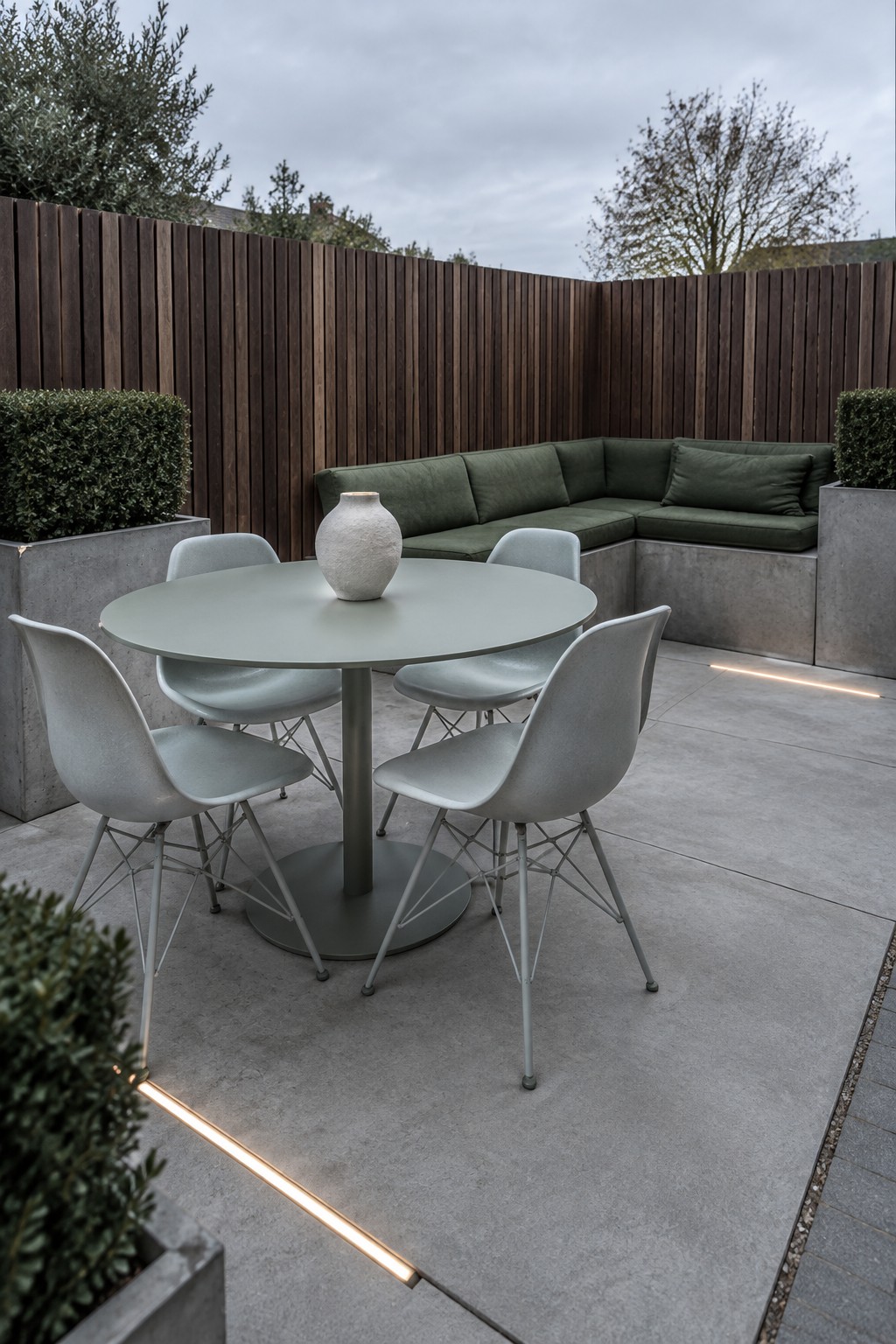
Built-in benches along the edges of a patio give you extra seating without crowding the main dining table. This layout keeps the center open for a round table and chairs while still offering room for larger groups to relax.
It suits homes with smaller outdoor spaces or those that already have a fence or wall to build against. Just make sure the benches sit at a comfortable height and leave enough clearance around the table for people to move freely.
Mosaic Tables Hold Up Well Outside
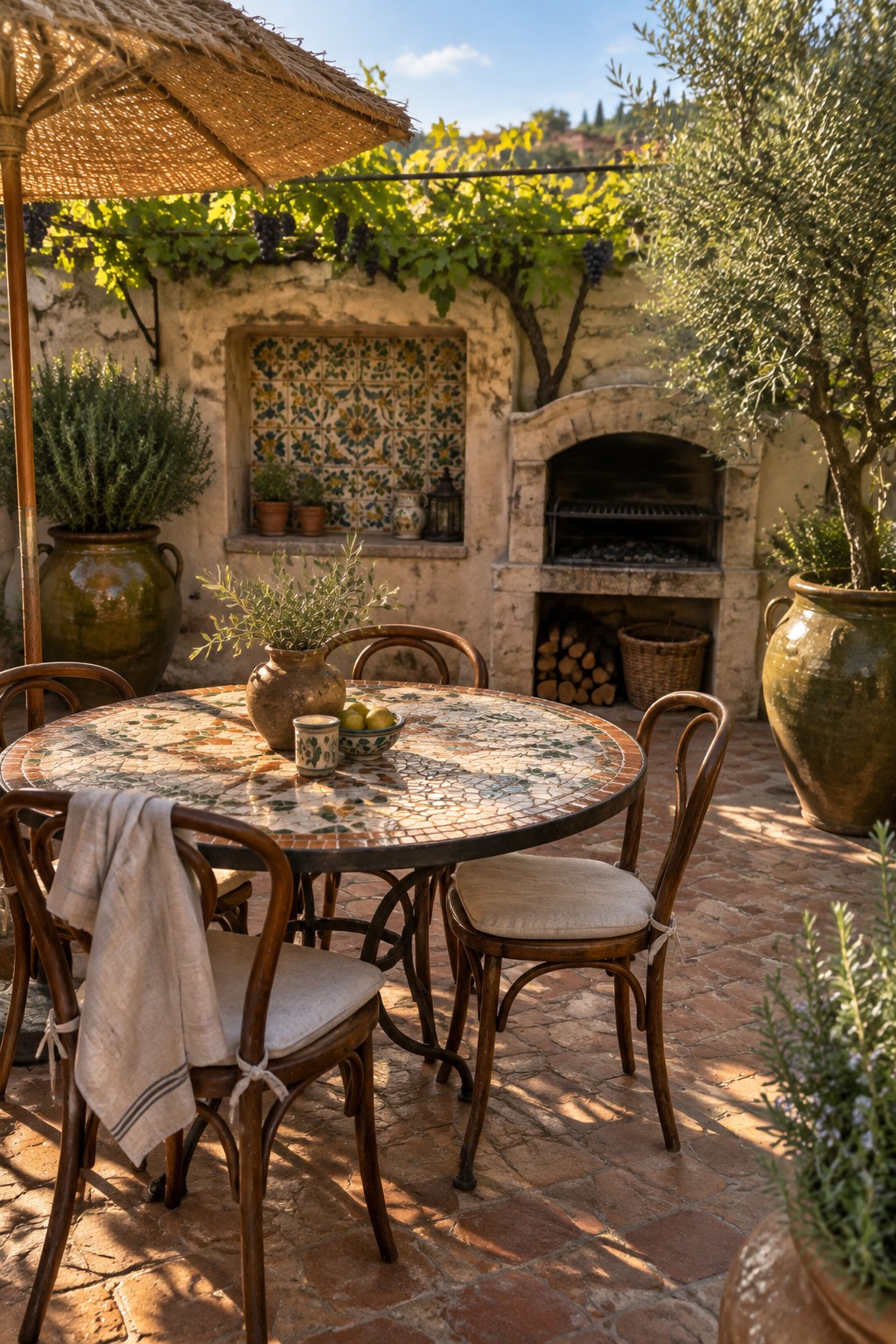
Mosaic tiled tables make sense for outdoor dining because the surface handles spills, sun, and changing weather without much fuss. The pattern also hides small scratches and wear that shows up fast on plain tops.
They work best on patios with stone, brick, or stucco nearby, and they pair easily with simple wooden chairs. Just check that the base is solid, since the tile adds real weight.
Mixing Chair Styles for Patio Dining
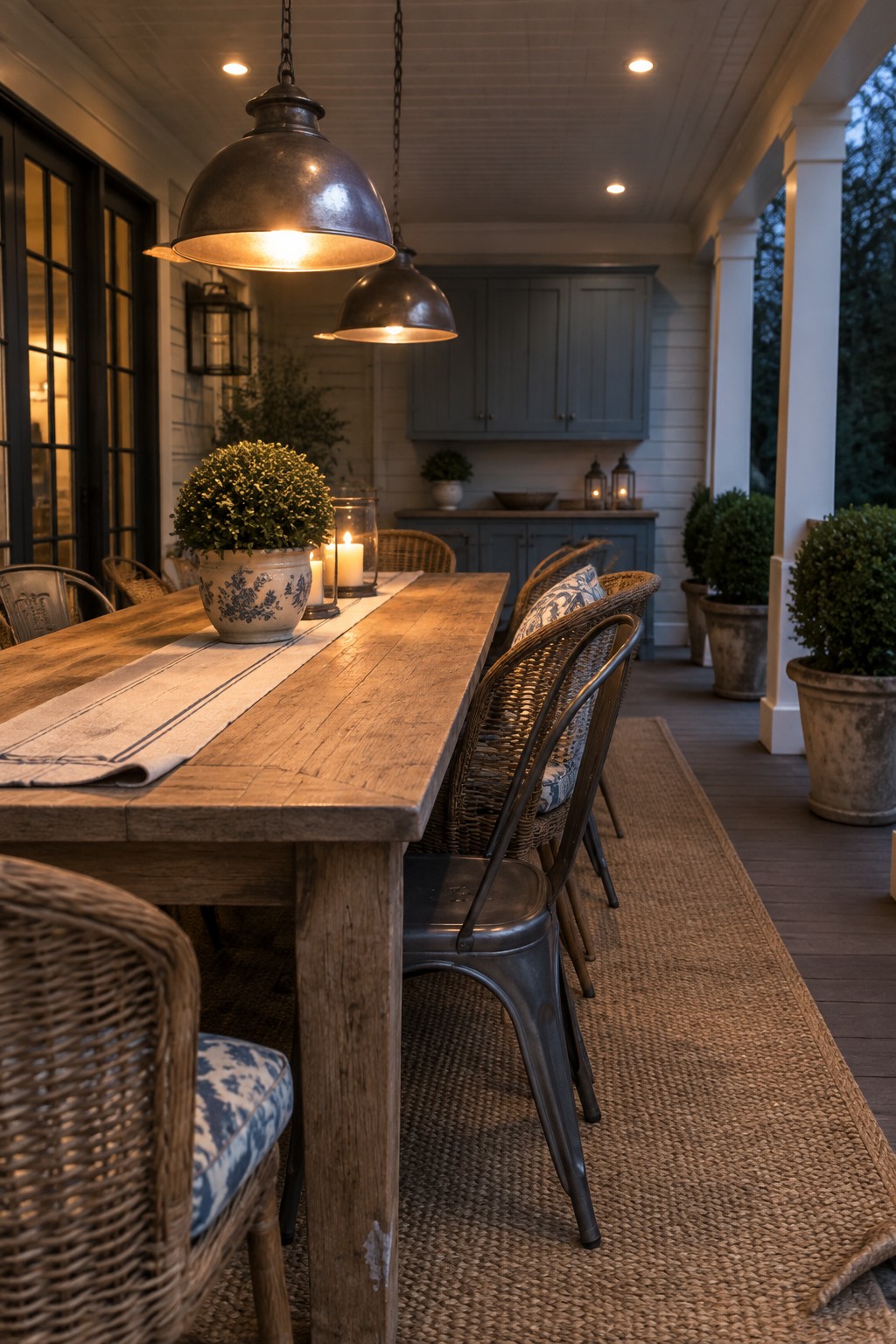
Mixing chair styles around one long table gives an outdoor dining area a relaxed, gathered-over-time feel. It works because not every seat has to match, and you can combine sturdier metal options with softer wicker pieces that already feel comfortable for longer meals.
This approach suits covered porches or patios where the space gets regular use. Start with a solid table and a simple runner for protection, then add whatever chairs fit the length and your budget. Just make sure the seats sit at a similar height so everyone stays comfortable.
Layer Cushions And Throws On Outdoor Chairs
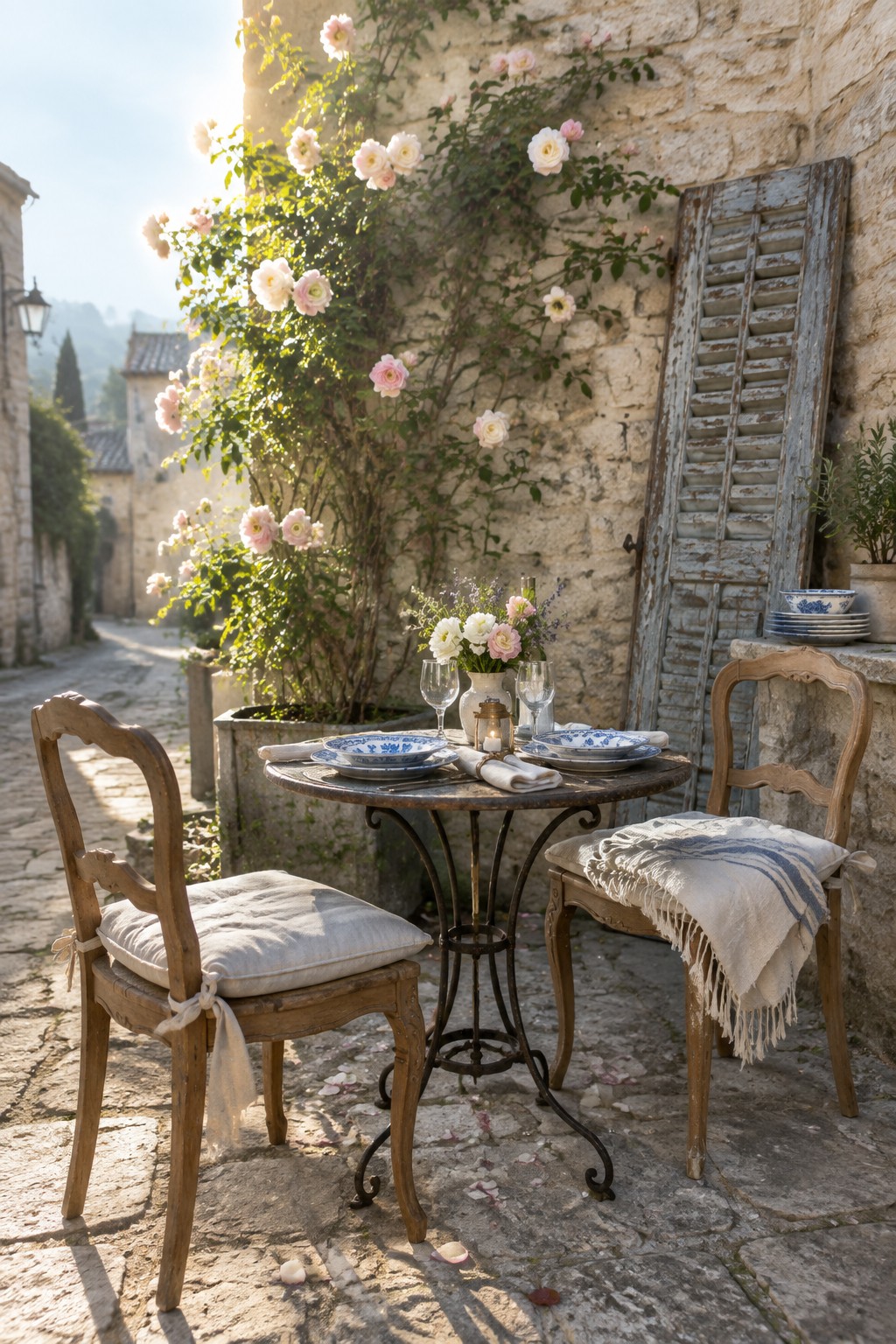
One easy way to improve an outdoor dining setup is to add seat cushions and a simple throw to the chairs. These textiles make the seating more comfortable for longer meals without needing new furniture or major changes.
This approach works best with older wooden chairs or basic bistro sets on a patio or terrace. Choose cushions that tie on securely and a lightweight throw that can handle some weather, then keep extras nearby for cooler evenings.
Choose a Large Table to Anchor Outdoor Dining
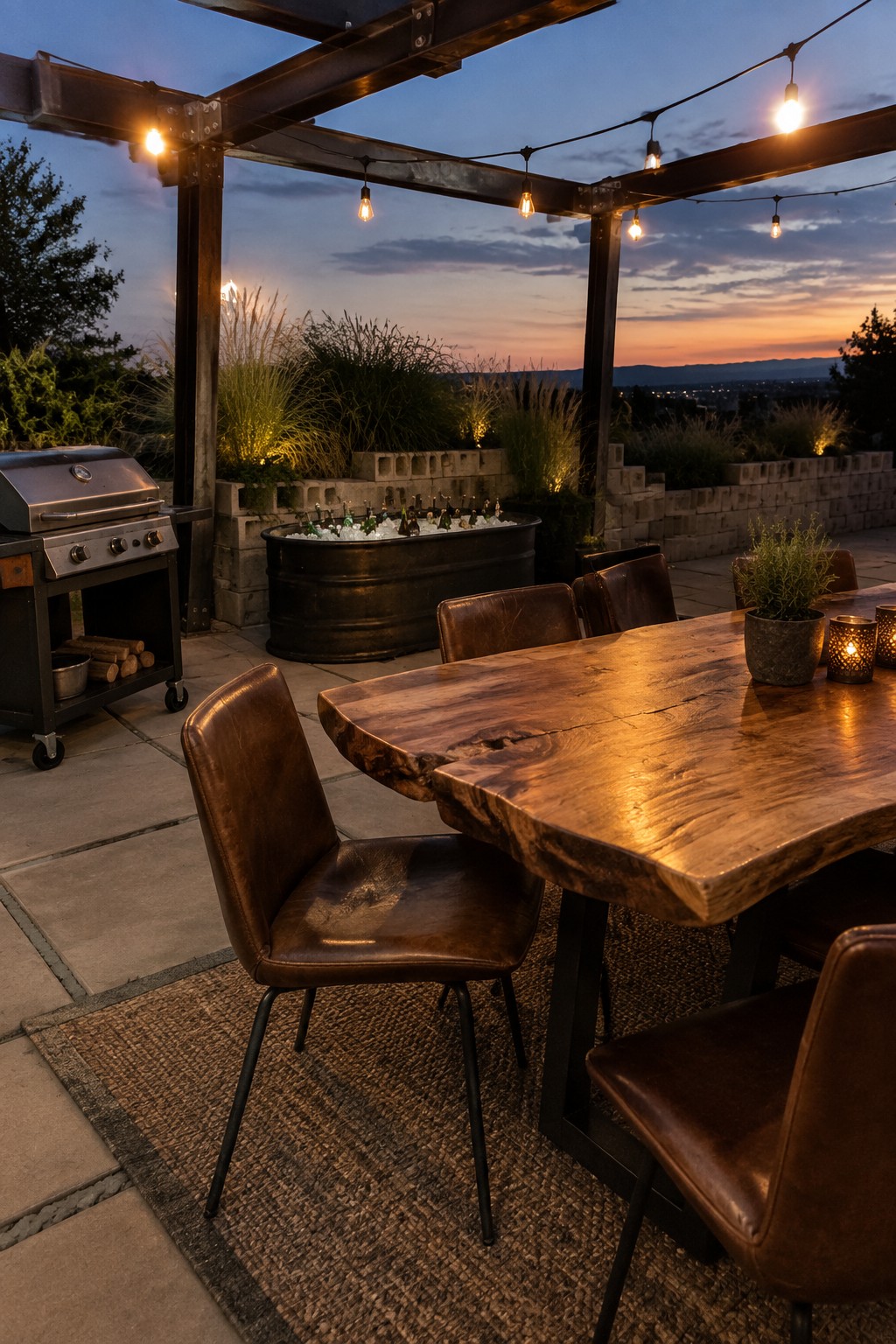
A big wooden table gives the whole patio a clear purpose. It creates a spot where plates, glasses, and serving dishes can spread out without crowding, and the solid surface makes the area feel ready for actual meals instead of just snacks.
Set the table on a rug to mark the dining zone, then keep the grill and a beverage station close by so everything stays within reach. This layout suits most covered patios that see evening use, as long as there is enough space for chairs to pull out comfortably.
Gravel Patios For Functional Outdoor Dining
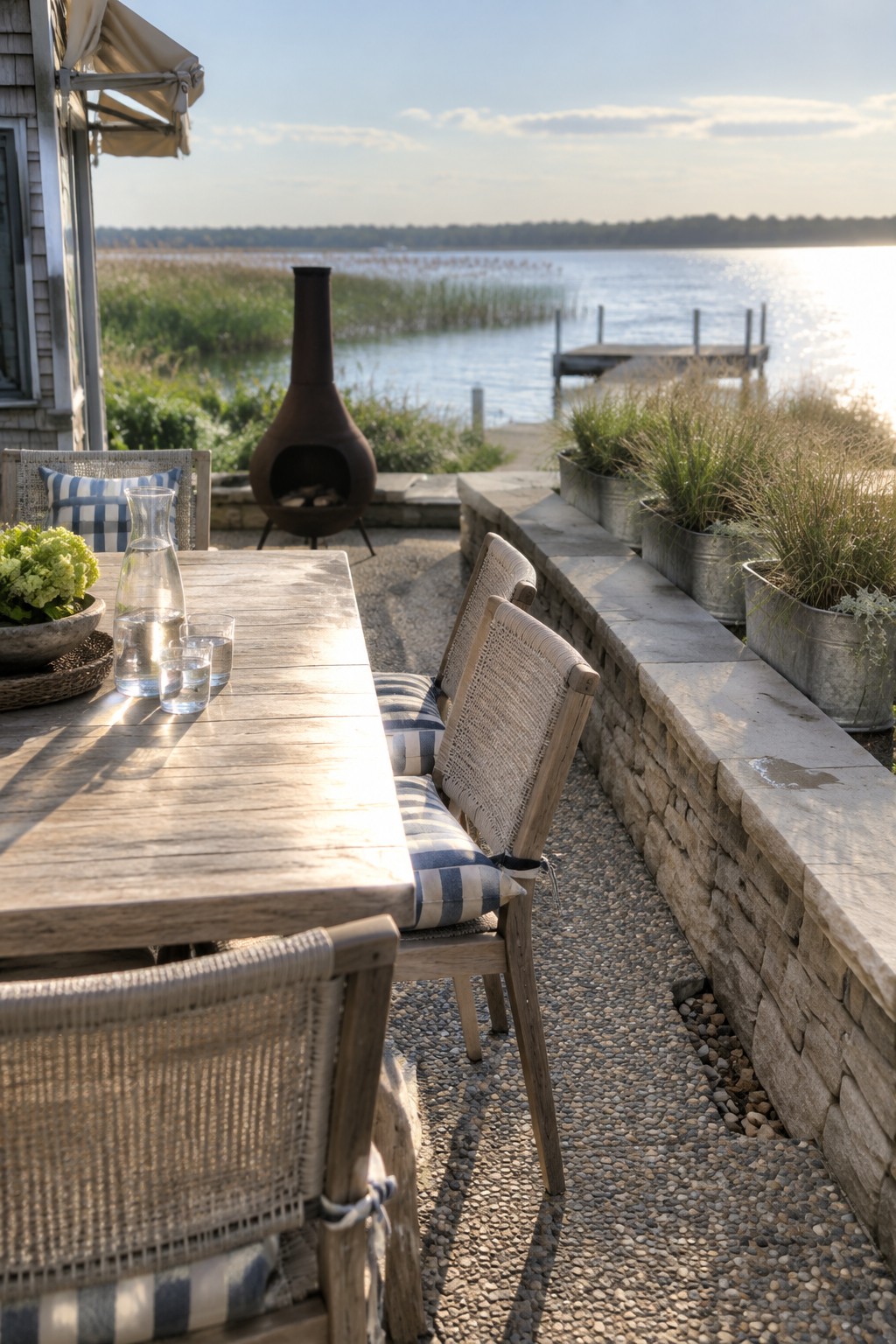
A gravel surface under a long dining table creates a simple, low-maintenance spot for meals outside. It feels less formal than stone or wood decking and lets the seating area blend into the yard without looking built up.
This works best on homes with open views or natural surroundings. Keep the gravel layer thick enough for stability and add a low stone edge if you want to stop it from spreading into planted areas.
Placing the Dining Table Near the Outdoor Kitchen
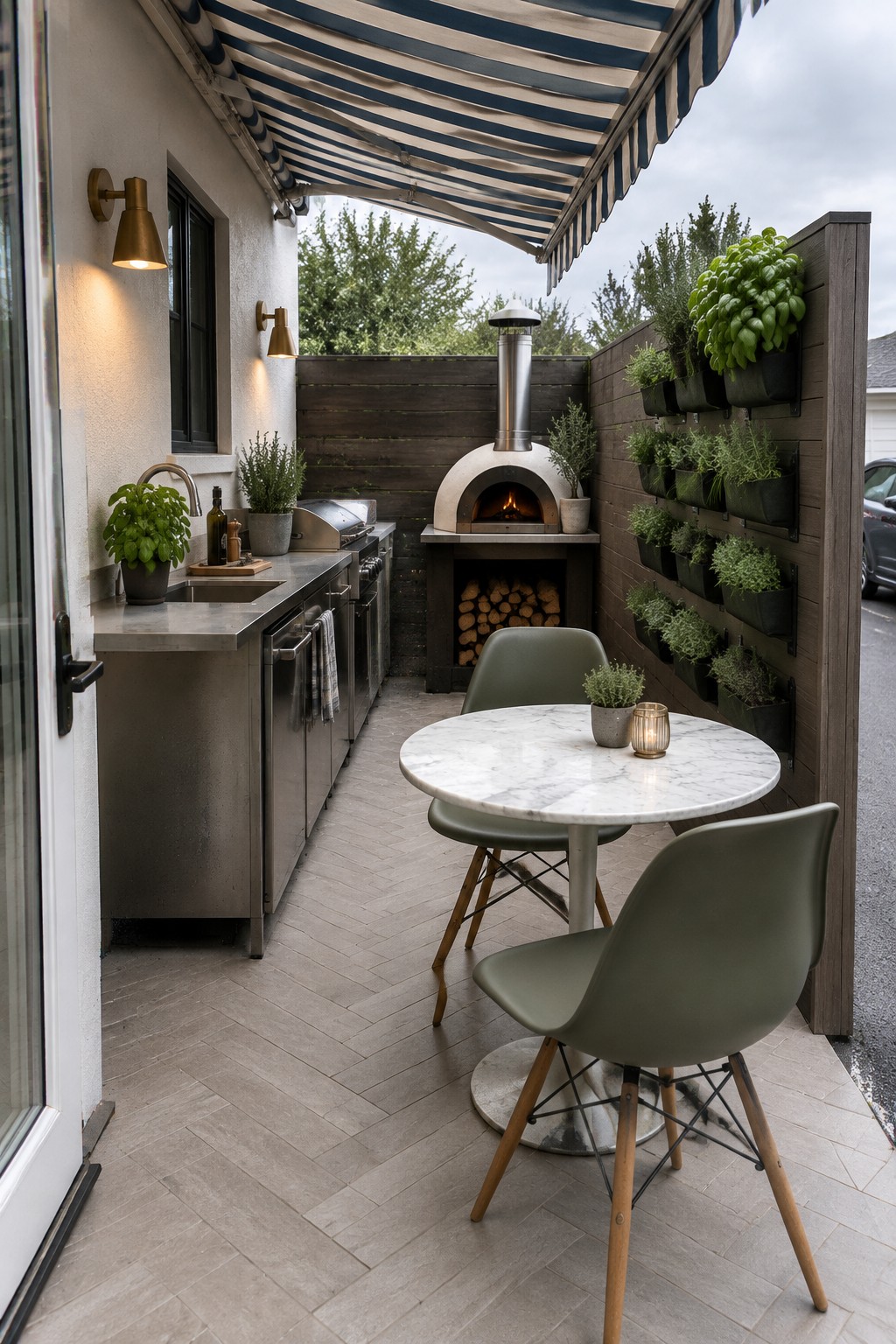
One setup that makes outdoor meals easier is keeping the dining table close to the cooking area. When the grill, oven, and sink sit right beside the table, you can serve food without walking back and forth across the patio, which keeps everything simpler during gatherings.
This works well on medium-sized patios where you want both cooking and eating in one zone. Just leave enough space around the chairs so people can sit comfortably without crowding the counters or the herb wall behind them.
Add Colorful Textiles to Liven Up Patio Dining

Colorful cushions and banners make an outdoor table feel ready for meals with others. The mix of patterns and bright stripes keeps the space from looking flat and gives it an easy, festive feel that works for casual gatherings.
This approach fits patios that get steady sun and suits homes with a relaxed style. Stick to fabrics that hold up outdoors and change the cushions with the seasons so the look stays fresh without much work.
Low Tables with Floor Cushions for Patio Dining
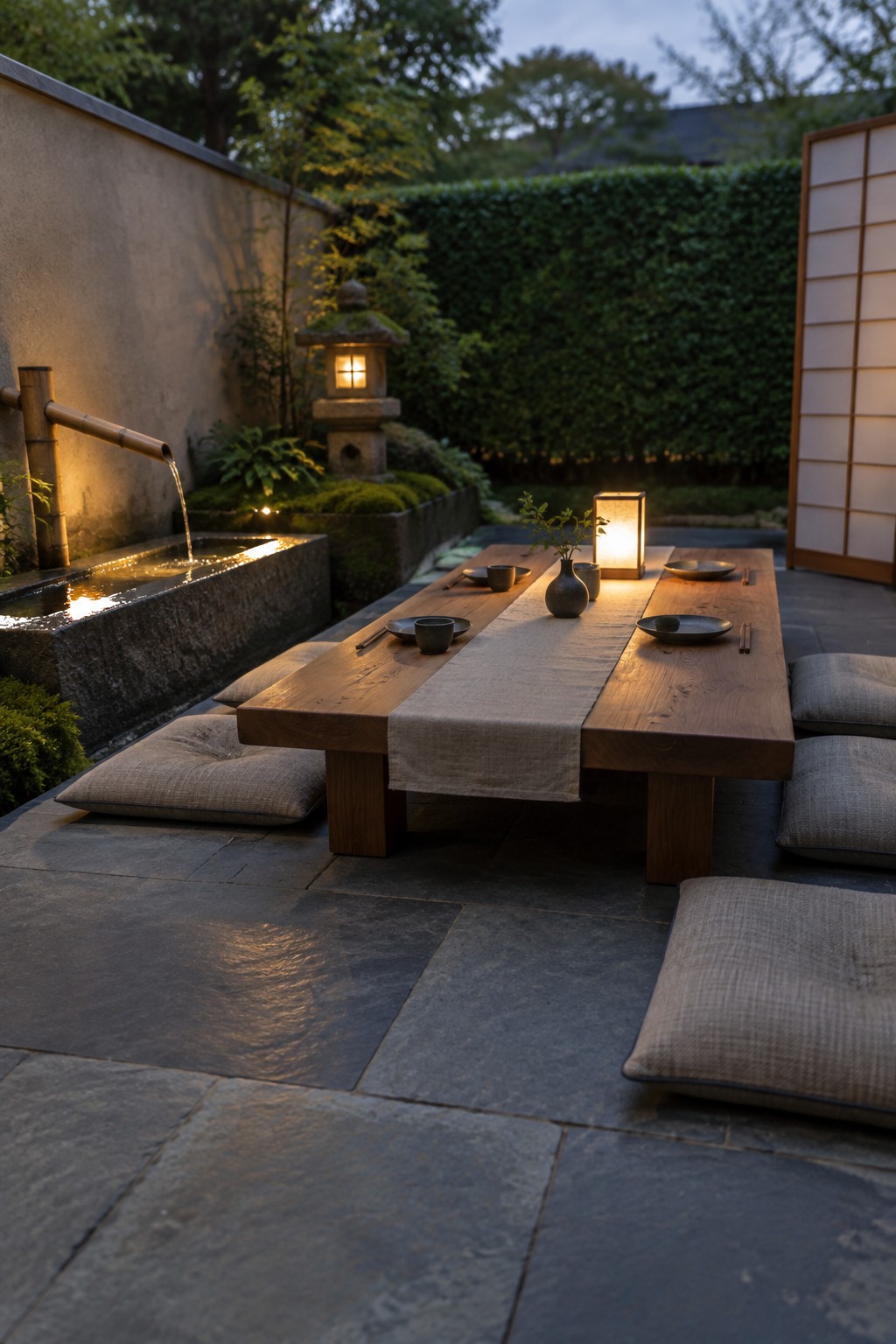
A low table paired with floor cushions creates a relaxed dining spot that feels connected to the garden. This setup works especially well on stone patios because it keeps everything close to the ground and avoids the stiff feel of standard chairs.
It suits homes with flat outdoor space and simple plantings nearby. Choose sturdy cushions that hold up to weather and leave enough room around the table so people can move easily during a meal.
Wood Tables With Woven Chairs Hold Up Well Outside

This mix of solid wood and woven seating gives an outdoor dining table a relaxed look that still feels practical. The wood handles sun and rain better than most painted pieces, while the cane seats stay comfortable without cushions that trap moisture.
It works best on patios with mixed paving or gravel because the natural tones blend right in. Keep the table size in scale with your space so there is still room to walk around the chairs.
Define Your Patio Dining Area With a Large Rug
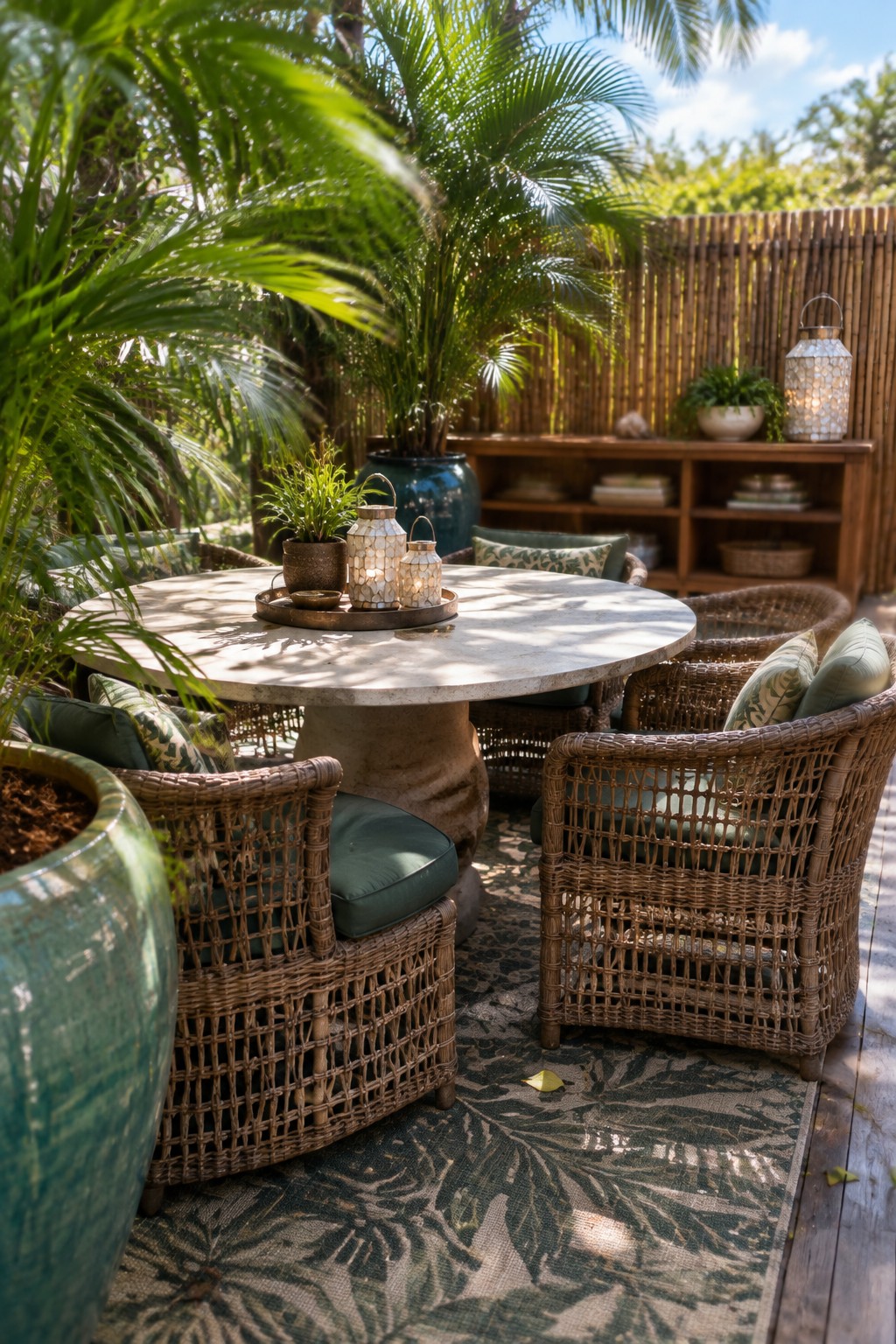
A large outdoor rug under the table and chairs turns an open patio into a clear dining zone. It anchors the furniture, adds comfort underfoot, and helps the space feel more like a real room instead of just furniture set on hard ground.
This works especially well on decks or concrete surfaces where you want a defined spot for meals without building anything permanent. Choose a rug made for outdoor use so it can handle sun, rain, and regular traffic.
String Lights For Evening Patio Meals
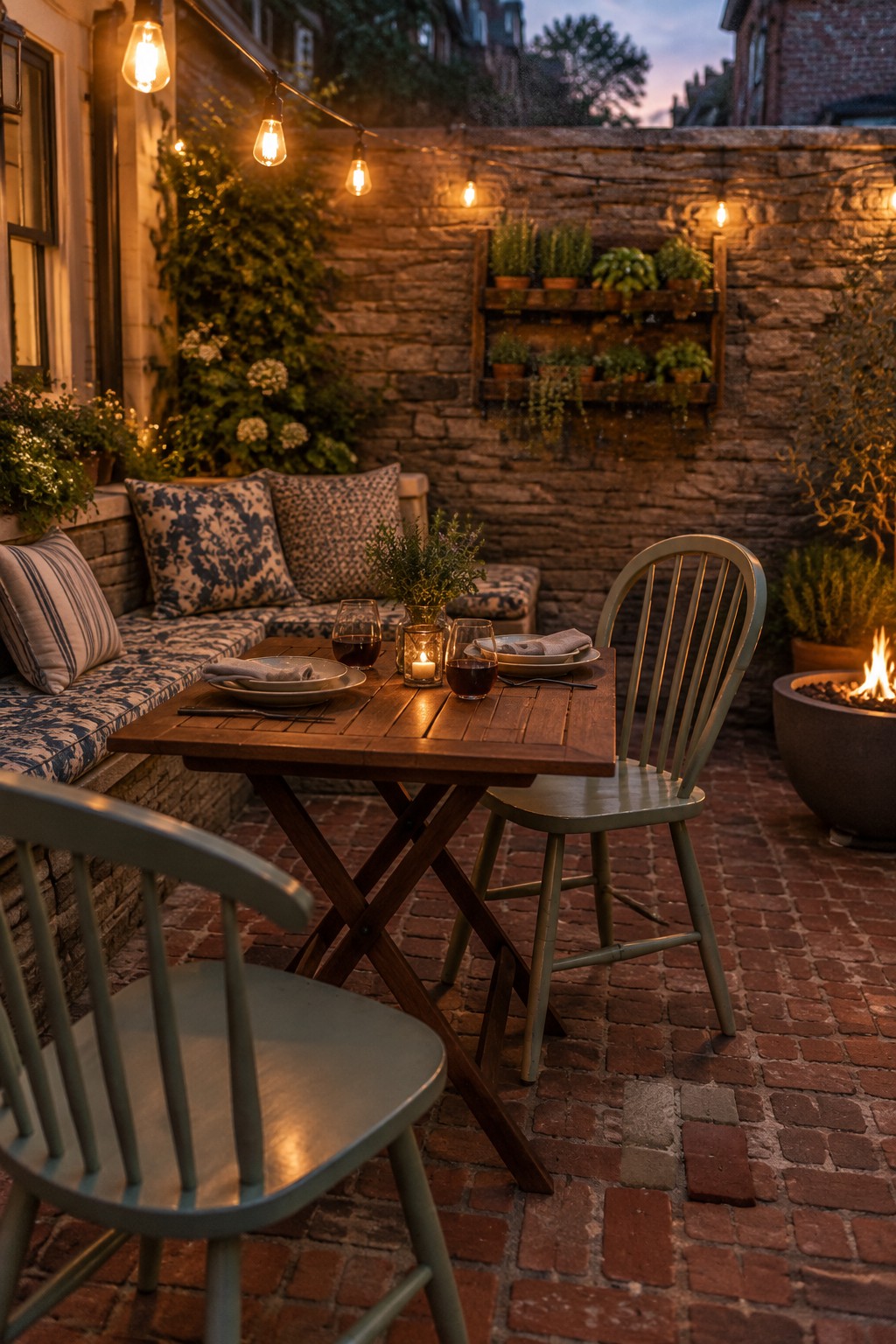
String lights turn a basic patio table into a spot where meals can stretch past sunset. The warm bulbs create enough light to see your plate without washing out the evening feel, and they work especially well over smaller dining setups on brick or stone surfaces.
Hang a simple strand from the house wall to a nearby post or tree so the light falls directly over the table. This approach suits homes with limited patio space, since it adds function without needing extra furniture or large fixtures.
Hang a Chandelier Over Your Patio Table
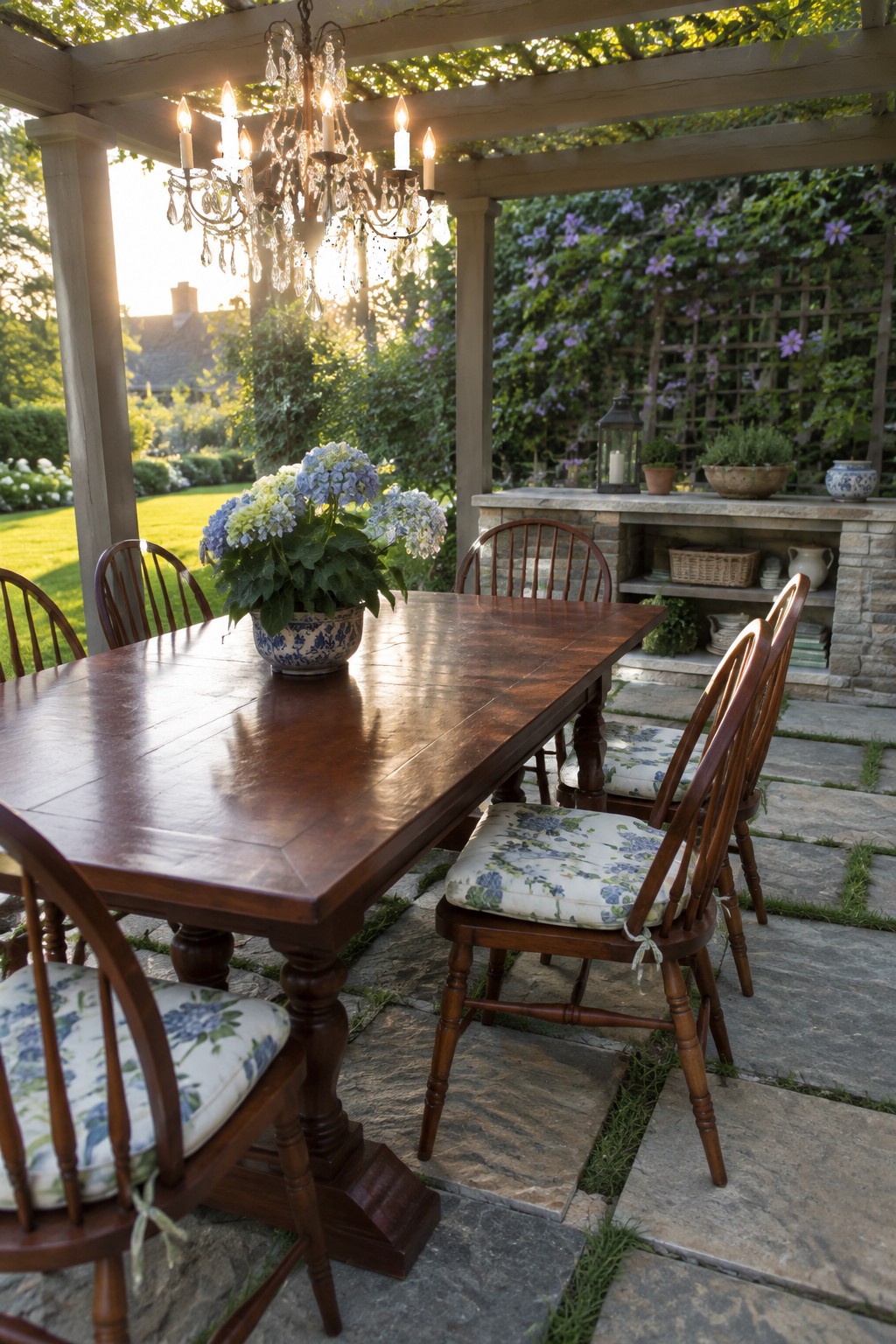
Many people stick to simple lanterns or string lights outside, but a chandelier can change how a patio dining area feels. It gives steady overhead light for evening meals and brings a bit of formality that still works with wooden furniture and garden surroundings.
This idea suits a covered patio or pergola where the fixture stays dry. Look for one rated for damp locations or plan to take it down in winter, and keep the rest of the setup simple so the light becomes the main feature rather than competing with too many other details.
Frequently Asked Questions
Q: What if my cushions get wet from sudden rain? A: Keep a lidded plastic bin tucked beside the patio door. Pull the cushions in as soon as clouds roll up and set them back out once the sky clears. The bin stays close so the whole swap takes under a minute.
Q: My table sits in full afternoon sun. How can I add shade without building a big structure? A: Clip a large market umbrella to one side of the table base. Angle it to cover the seats during peak heat and tilt it back after sunset. This keeps the view open while dinner stays comfortable.
Q: How do I fit six people on a narrow patio without crowding the walkway? A: Choose a rectangular table that hugs the longest wall and pair it with slim benches instead of wide chairs. The benches slide fully under the table when the meal ends and free up floor space right away.
Q: Bugs show up right at dusk. What is one simple fix that does not involve sprays? A: Place two small bowls of water with a drop of dish soap on the table edges. The scent and surface tension pull mosquitoes away from plates and guests without extra gadgets.
